Will and Debi Durst

0


Photograph by David Templeton

The King and Queen of Comedy: Will and Debi Durst mug for the camera.

Fun Club

Will and Debi Durst stand up and laugh back at the year 2002

Wow, it’s the storm of the century!” shouts Debi Durst, as 50 mph winds whip the trees and rooftops outside, and multiple lakefuls of rain slam down on the startled Bay Area. “It’s about time too,” she says. “This is only the first storm of the century of the season. But at least it’s a good one. Last year’s storm of the century was very disappointing.”

“Do you remember the last storm of the century of the last century?” Will Durst chimes in. “It was in ’97 or ’98. It was that storm of the century when we did the big Year-End Comedy Show at Luther Burbank, and nobody showed up.”

“Oh my God, yes!” sighs Debi, clearly recalling it very well.

“Everyone kept saying, ‘Oh, no! It’s the storm of the century!'” says Will, “But nothing happened–a little drizzle I think–and still nobody came to the show. Because, I guess, they were all afraid of getting caught at a comedy show in the middle of the storm of the century. But we were there, because even during the storm of the century, you can still tell jokes.”

Storm of the century or not, the Dursts will definitely be telling a few jokes in Petaluma this weekend, when they bring the 10th annual Big Fat Year-End Kiss-Off Comedy Show to the Mystic Theatre. In what has become a boisterous Bay Area tradition, Will Durst will be joined by a team of notorious local comedians including Johnny Steele and Steven Kravitz, plus the longtime improv team of Michael Bossier and Debi Durst.

Will Durst, of course, is the nationally renowned political satirist whose curmudgeonly views of current events have made him one of the most popular standup comics in America. Aside from his energetic touring schedule, he writes a daily Internet column, is a frequent commentator on NPR and CNN, is the host and creator of the Emmy-winning PBS series Livelyhood, and has appeared on nearly every major television comedy show.

Perhaps less well known, Debi Durst is an established Bay Area comedian who’s opened for everyone from George Carlin to, well, Will Durst. She’s also made vocal contributions to several movies, including Tim Burton’s Nightmare before Christmas, for which she provided the voice of the little corpse boy. Will and Debi Durst have been married for over 20 years.

The annual year-end show, which Durst admits was developed as an alternative to performing at rowdy comedy clubs at New Year’s, will do its thing at seven different Bay Area theaters between now and the end of the year. The show is extremely popular and tends to sell out.

“We’ll do skits and sketches and jokes,” describes Will. “We’ll scoff and mock and taunt–but in good taste.”

If the last few years are any indication, good taste shouldn’t necessarily be counted on. Johnny Steele–known to many as the former co-host of The Show on Bay TV and as the one-time morning DJ on LIVE-105–can be expected to wear his hat and use the word “mook” at least once while ranting about the state of the world in aggressively funny ways. Debi Durst and Michael Bossier will, at some point, offer spontaneous movie reviews, and Steven Kravitz will scare people.

It’s possible that someone will attempt to sing.

“Who really knows?” says Debi. “The show is always a bit unpredictable. We’ve been working together for 10 years now, but we never know what’s going to happen.”

“Are we doing the quiz show this year?” Will asks.

“Of course we’re doing the quiz show!” Debi replies, explaining, “It’s kind of a ‘To Tell the Truth’ thing, where we get a couple of people up out of the audience, and then we have these trivial questions, and it’s just really weird and interactive.”

The main order of business, of course, will be a vigorous skewering of the year 2002 and all it stood for. Based on the events of the last 12 months, the comics should have plenty of material to work with.

“2002 has provided an unusual number of opportunities for humor,” says Will. “There’s Trent Lott and George Bush and Henry Kissinger–lots of people to make fun of. Did you know that we now have England accusing the U.S. of imperialism? It’s true. South Africa is lecturing us on human rights. The justice minister of Germany recently called George Bush a Nazi. We’ve been more or less labeled a Nazi country–by Germany! I don’t know about you, but I don’t think that’s a good sign!”

“Everything is topsy-turvy,” agrees Debi. “Or is it turvy-topsy? Topsy or turvy? I don’t really care–but I’ll take a hot topsy, please.”

As a warm-up exercise, Will and Debi Durst agree to offer their views on some underreported news events of 2002, all gleaned from Internet sources and the odd official newsletter. Informed that the National Science Foundation has announced that tiger moths use “sonic defense” to trick bats, Will exclaims, “Really? Wow! My whole understanding of the bat-tiger-moth relationship has been irrevocably altered now.”

“I know something about this,” interjects Debi. “I heard that the military is looking into the sonar part of the tiger moth–so we may end up having nuclear subs with sonar systems made up of little tiger moths. I’ve heard that.”

“Uh, no honey,” interrupts Will, kindly. “I think what you heard was that the military will be trying to duplicate the moth’s sonar abilities with new technologies that–“

“Stop it up!” she cuts him off. Actually, this mainly makes him laugh.

The Dursts make each other laugh a lot.

“You see,” Debi is still explaining, “they’ll put these moths on the subs, see? And it’s a nuclear sub, see? So the moth will get really big, see? And the Navy will have these great big moths with captain’s wings on them.”

“Oh. Yeah. Right,” Will responds slowly. “And the only way to defeat it is with the giant turtle, right?”

“Right!”

Moving on. According to an article in the United Nations newsletter, Oct. 11 marked the 10th straight year of peace in Mozambique.

“Really?” whistles Will. “There’s peace in Mozambique?”

“See, it’s Mozambique,” says Debi. “It takes so long to say the name of the country, there isn’t any time to fight. Besides, what other country has a z and a qu in its name?”

“Good point,” says Will. “So Mozambique, if nothing else, is a great Scrabble word.”

The Dursts are especially amused to learn that Oregon State University recently published a study questioning the “moral underpinnings” of a strictly vegetarian diet. According to OSU researchers, millions of small animals die each year to provide the agricultural crop products used in vegan diets. The study claims that far fewer animals would die overall if vegans started eating grazing animals such as sheep and cattle.

“That’s hilarious,” Will says. “Who’d have thought? Vegans kill more animals than meat eaters do.”

“Why wasn’t this more widely reported?” demands Debi. “I’ll bet it’s because it was Oregon State University. There are a lot of vegans up there in Oregon.”

“That’s right,” Will agrees. “There’s an obvious conspiracy to keep this information from getting out.”

“The news will probably be uncovered that vegans have been eating vegetables that did not die of natural causes,” suggests Debi. “Maybe we’ll learn that those weren’t free-range cabbages after all.”

“Poor little cabbages,” says Will. “They couldn’t move their little heads.”

This proves too much for Debi, who takes her turn erupting in laughter, which only makes Will start laughing again, and the conversation deteriorates into a near hysterical volley of bad vegetable puns.

“My favorite story of the year,” Will says, once he’s finally recovered, “had to be Henry Kissinger being appointed to head up a fact-finding commission, which he then has to quit, citing a conflict of interest. Of course he had to quit. Because it was a fact-finding commission. He has no experience with that. If it had been a fact-quashing commission, he’s eminently qualified. Putting Kissinger on a fact-finding commission is like putting an Oswald Wing on the Kennedy Center.”

“Wow! Wow. Hello? Ouch,” replies Debi.

Or something like that.

It’s too hard to make out the words through all of that laughter.

Will and Debi Durst’s Big Fat Year-End Kiss-Off Comedy Show is Sunday, Dec. 29, at 8pm at the Mystic Theatre in Petaluma. $17. Tickets are available at the box office or through www.tickets.com.

From the December 26, 2002-January 1, 2003 issue issue of the North Bay Bohemian.

© Metro Publishing Inc.

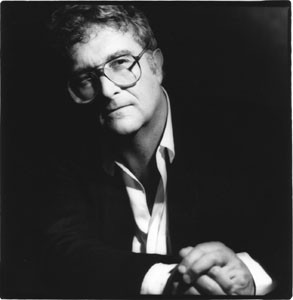
George Louie

0


Enforced Compliance

George Louie wants California safe for the disabled, and he wants it now

By Joy Lanzendorfer

George Louie is on a mission. Step by step, this Oakland disabled man is making the world (or at least California) accessible to the disabled. Targeting missing railings, nonfunctioning elevators, and incompatible restrooms, Louie wields the Americans with Disabilities Act like a sword, slicing through businesses with ease.

And Louie’s war is getting hard to ignore. He’s filed literally hundreds of lawsuits against Bay Area businesses for ADA violations. He’s nipped at the heels of powerful local entities, from wealthy wineries to major chains to disability rights lawyer Paul Rein, known for suing Clint Eastwood’s Mission Ranch Hotel in Carmel over disability accommodations.

No business is immune. Louie has targeted everything from “just about every bank in California,” according to Louie, to major chains such as Blockbusters and McDonald’s, and small businesses like local offices and restaurants. His lawsuits have stretched throughout the Bay Area, into Sacramento, San Joaquin County, and as far north as Mendocino County. In fact, he has set up his own nonprofit, Americans with Disabilities Advocates, with Louie as the executive director, to manage the lawsuits.

Louie is now taking aim at the wine country. In the past two years, he has filed suits against many wineries, including Louis M. Martini, Kendall-Jackson Wine Center, Fetzer Vineyards, Beringer Blass Wine Estates, Charles Krug, Rutherford Hill, Silver Oak Cellars, ZD Wines, and Mondavi and Sons.

But Louie’s brand of advocacy has left many questioning his motives. If he truly wants to help the disabled, some say, why not issue businesses a warning and give them time to comply before going straight to the checkbook? Does this man want to ensure equal rights for everyone, or is he misusing the law for his own reasons?

Litigation Itch

Americans with Disabilities Advocates is run out of Louie’s Oakland apartment. The room is cluttered with boxes, and stacks of files are scattered about the room. In each file is a new case being assembled against an offending business. The dining room table is covered with unopened bottles of wine, which Louie, who doesn’t drink, is required to buy before he can file a suit against a winery.

Aside from the wine, other food is scattered about the room: a watermelon is on the couch; a flat of nectarines is balanced on top of the filing cabinet; two giant freezers sit on the patio; and one of the living room cupboards is broken, and cans and boxes of food have spilled out on the floor. Louie explains that the food is a reward for law students and other volunteers who help his nonprofit.

“We don’t pay them a salary,” he says, “but there’s a catch: I’m a great cook.”

Louie himself sits in a wheelchair. One leg of his jeans hangs down empty. His leg was amputated in 1996 from diabetes-related gangrene.

“There was a blister on my toe, and I didn’t think nothing of it,” he says. “Six weeks later my leg was amputated below the knee.”

Though he owns a prosthesis, he says it is difficult to walk on, often causing sores that hurt for weeks. He pulls out the prosthesis and demonstrates how difficult it is to put on.

Americans with Disabilities Advocates became effective as a nonprofit in February 2000, but its conception began in 1998 when the Bank of Canton in Oakland snubbed Louie. The bank had six steps leading up to it, which barred Louie from entering in his wheelchair. He called the bank manager on the phone, asking him to come outside to help him open a direct deposit account.

According to Louie, the bank manager came out, took one look at Louie, turned around, and went back inside the bank. Louie contacted a lawyer and filed a discrimination suit against the bank, which he won. Several other suits soon followed. Since then, he says his organization has grown to 17 lawyers around the country, and he has established additional offices in Las Vegas, New Orleans, and Seattle.

Few of the cases have gone to trial, with most businesses opting to settle out of court. And while some businesses may be trying to avoid the high cost of trial, the main reason for the settlements is that Louie’s accusations are true. Many of the businesses are out of compliance, often lacking wheelchair ramps, proper paths of travel, or signage. And Louie has the pictures to prove it.

“Oh, look how nice this place is!” he says sarcastically, flipping through his files, each one a case against a winery complete with pictures of the violations. “The tasting room is downstairs six steps, and there’s no ramp. In this one, there’s no handicapped parking there at all. Regulations call for a concrete, asphalt, or flat surface that’s not broken, so you can push your wheelchair easily. Look at the gravel in that parking lot! It’s hard to push your chair through that.”

In most cases, the businesses in question are surprised that they are out of compliance, according to Rob Carrol, attorney at the San Francisco law office of Littler Mendelson, who has represented more than 25 defendants against Louie.

“I have not yet had a client who couldn’t be knocked over with a feather by Louie’s accusations,” he says. “Most of them truly thought they were in compliance. It certainly wasn’t intentional. They don’t want to alienate their customers; they want their business.”

Advance Notice

Businesses often believe they are compliant with the ADA because they rely on building inspectors or architects, who are supposed to check for violations. And disability law can be quite technical. For a bathroom alone, 95 things must be compliant, and failure on any one point puts the business at risk for lawsuits.

Compliance can also vary depending on when the building was built. The older disability law, which was put on the books in 1970, has different rules than the ADA, which was implemented in 1990. Thus, facilities built between 1970 and 1990 are subject to different rules than those built after 1990, according to Carrol.

In addition, smaller businesses simply cannot afford the cost of the settlement, driving some toward bankruptcy.

Because of this and other factors, businesses have asked Louie to give them 90 days’ notice before filing a lawsuit. If Louie is really after compliance, they say, why not give them a chance to fix what’s wrong before going to the courthouse?

In the last few years, legislation has been introduced on both the federal and state levels that considers altering the ADA to include the 90-day notification. Activists who fear erosion of their civil rights often oppose such proposed measures. Both federal and state legislation have failed, but the notion continues to be brought up by business groups.

Louie strongly refuses to implement the 90-day policy.

“I’ve said this a hundred times,” he says. “If you walk into a bank and rob it, you go to a federal penitentiary for a minimum of 25 years. If you get arrested by a peace office for driving drunk, you’re going to jail. Why do these businesses feel they need another 90 days when they have had a span between 32 and 12 years to comply with the law?”

And yet in the past, Louie has said that he would work with the wineries, saying in an interview that he would stop litigation “dead in its tracks” if they would send him a letter promising to have the facilities repaired within a year. When confronted with this fact, Louie says he would indeed work with some wineries, but “not with these guys who have a million dollar house on the property crying, ‘Oh, I’m a mom-and-pop organization!'”

The continuous litigation and reluctance to work with the business community has led to some questions about Louie’s motives.

“I believe he’s trying to make money off these businesses,” says Tim Fallis, a disabled activist who previously served as branch manager for Community Resources for Independence in Napa. “If he were truly after access, his primary concern would be ensuring that access is completed, not just to go in and hope to collect a settlement check.”

Settlement amounts are kept private, but Louie admits that in each case, the business pays to fix the accessibility problem, pays both attorney fees, and pays the plaintiff–often listed as both Americans with Disabilities Advocates and George Louie–damages. The amount of damages in these cases is generally reported to be between $10,000 and $30,000, but Louie says he asks for much less, starting at $4,000.

Though he does not deny that he makes money from the lawsuits, Louie says it goes right back into filing more claims. And a great deal of the money is spent simply running the nonprofit, he adds. A typical claim has a $150 filing fee, plus the cost for photos, supplies, and legal fees, which all adds up after multiple cases.

IRS filings for Americans with Disabilities Advocates lists total revenues in 2001 at $124,625, with only $200 left in net assets at the end of the year. This is down from $183,000 in 2000. Legal fees were $52,058, down as well from $87,300 in 2000. The form breaks down the total revenues as coming from Gottschalks, Doctors Associates Inc., Subway restaurants, Corral West Ranchwear, G&G Retail, Pacific Sunwear, and Brobeck law offices.

Louie claims to have filed “way more” than 100 cases in 2001, but “many of them are still pending.” He added that some of the damages awarded go to the plaintiff’s personal income, which can include him or other disabled people who have filed claims.

Louie is listed as Americans with Disabilities Advocates’ only employee. He worked 30 hours a week last year, up from 20 hours a week in 2000. He received no compensation, but had an expense account of $12,400. He now works full-time, he says, often from 6:30am until 11:30pm, seven days a week.

Louie claims that the nonprofit does not pay his living expenses. While occupancy is listed as an expense at $11,600, Louie says the amount was not for his Oakland apartment, but rather for his other offices located around the country. He points out that in most cases, the offices are no more than answering services, which is why the amount for occupancy is so low.

“It’s a great deal, getting all those offices for that price,” he says.

While he admits that he eats the food he buys under the nonprofit, Louie primarily lives off the life insurance policy left by his late wife for his son, and receives no social security or other aid from the government. His son lives in Sacramento with Louie’s sister, and visits his dad on the weekends.

Comply or Pay Up

Louie says that rather than money, he is seeking compliance.

“If a lawyer is out to make money, he wants to take a few cases at a time to string out the fees,” he says. “We’re after compliance. Everything gets parlayed back and parlayed back into more lawsuits.”

Other questions have been raised about Louie’s investigation methods. It has been said that in the past he has violated Rule 11 of the Federal Rules of Civil Procedure, which protects against unwarranted claims and allegations that have no evidentiary support, something that Louie denies.

“There has been some concern with Louie’s group that in the past he has not actually visited some of the businesses,” says Carrol. “He may not have included proper evidence in his files. Although his nonprofit now includes receipts and photos with every file, that may not always have been the case.”

There is also talk that the California attorney general is investigating Americans with Disabilities Advocates. When asked about it, Louie first said it was a rumor started by his former lawyer Paul Rein, but later admitted receiving a letter from the attorney general, which he referred to his lawyers.

The attorney general’s office says that they do not have pending investigation on Americans with Disabilities Advocates.

According to Louie, Rein contacted the attorney general after Louie filed a lawsuit against Rein alleging that his restrooms were not handicap accessible. Rein represented Louie in five cases, including his first one against the Bank of Canton. Three years later, Louie had a disagreement with his access consultant Barry Atwood over billing, and Rein intervened on Atwood’s behalf, writing a letter to Louie saying Atwood was severing professional ties with Louie.

“Paul writes me this letter and I says, ‘Ooh, I think I’ll sue him,'” Louie says. “It was retaliation time. But he deserved it–his bathrooms weren’t wheelchair accessible.”

The lawsuit never reached trial. By Louie’s own admission, his lawyer recommended he put a stop to the case. According to the court filings on the case in the U.S. District Court, the case was dismissed with each side bearing their attorney fees and costs. Rein said that Louie “made up the allegations.”

The lawsuit with Rein not only resulted in a call to the attorney general but also brought up questions about Louie’s character. Rein’s declarations attached to the lawsuit revealed that Louie is an ex-felon. He served time off and on from 1968 until 1990 in convictions that included robbery and grand theft.

Louie seems unruffled by revelations of his past, pointing out that it is, indeed, in the past. Now he is concentrating on activism.

“The past is the past,” he says. “I haven’t been in trouble since 1983. I have a son I have to take care of now.”

As for his motivation, Louie says that it stems from his difficulty living as a disabled person. He has experienced several urination accidents due to inaccessible handicapped stalls; he often can’t get into places he wants to go; and he has trouble wheeling his chair down aisles in stores. He feels like the plight of the handicapped is ignored.

“It’s sinful the way people in wheelchairs are treated,” he says. “I consider myself a spokesperson for the 43 million handicapped people in this country. It’s not one out of 10 businesses that are out of compliance; it’s 20 out of 19. We mean business. We’re going to keep coming and keep coming to sue all of you until you are in compliance.”

Fallis, for one, believes that if nothing else, Louie’s methods are harmful for the disabled. Fallis has worked with businesses for years fixing ADA violations and has found that for the most part businesses were grateful for the input. Though that doesn’t excuse noncompliance, he says, on the rare occasions he has pursued legal actions against a business for ADA violations, it has been as a last resort.

Louie’s method, Fallis believes, adds to the perception of businesses that the disabled are a liability, which in turn affects the already high unemployment rate of 75 percent among them.

“If you want to change something in our society, you don’t first go for a person’s pocketbook,” Fallis says. “It ends up hurting both the businesses and the disabled community, and destroys good will between the two groups.”

From the December 26, 2002-January 1, 2003 issue issue of the North Bay Bohemian.

© Metro Publishing Inc.
Open Mic

0

The foreign press shows a perspective absent from U.S. media

By Shepherd Bliss

Dark clouds loom over America, obscuring our vision. Though the shadows thickened on that terrible Sept. 11, they gathered earlier and have grown more ominous since. As the U.S. government engages in protracted preparations for a war with Iraq and the slaying of more innocent civilians, the dimness deepens. What a way to start a New Year.

From the middle of a volcanic fire storm–where we have been since Sept. 11–it can be difficult to see clearly. Both the bright fire and dim smoke blind. Hidden beneath the murky clouds and fueling the fire is the oil that runs America–a treasure that our leaders are willing to kill to secure.

I write this from a lunar, gloomy feeling, seeking to discern light in this blurry time. I feel a sense of dread about what the United States might do, allegedly in my name and with my tax dollars.

I crave for our allegedly free press to do more serious investigative journalism. Too little has been done by American journalists, and the hour is now late, as our freedoms and civil liberties recede. Important information, details, context, and analyses are not being offered to the public. Much is being concealed, rather than revealed.

Europeans and others overseas have greater clarity than our citizens about what the U.S. government does in the world. I trust some of the international press more than the corporate U.S. media to objectively report and independently analyze the news. As the U.S. mainstream media becomes more restrictive, more consolidated, and less free, we simultaneously have greater access to the international press because of the Internet.

Among the excellent foreign authors writing about America today I recommend writers like India’s Arundhati Roy and Vandana Shiva, England’s Robert Fisk, Uruguay’s Eduardo Galeano, and Chile’s Ariel Dorfman. Their insights round out what I read from the compromised writers who dominate our nation’s newspapers.

You can find their voices on the Internet by using a search engine, such as Google, and typing in their names. You can also read the U.N. Observer, published in The Hague, at www.unobserver.com. The United Kingdom’s Guardian newspaper (www.guardian.co.uk) has a number of excellent columnists. Among the best new online publications is the Crisis Papers at www.crisispapers.org. It provides links to articles from other online publications.

The corporate U.S. media’s censorship obscures the truth. We can demand that our daily newspapers and alternative press publish more diverse articles by European and other foreigners. Then the public would be better informed and able to make democratic decisions that could help guide us out of the blurry darkness.

I am not suggesting that we ignore American writers, especially those who remain independent. Mark Hertsgaard, for example, has just written an illuminating book, The Eagle’s Shadow: Why America Fascinates and Infuriates the World. It is based on interviews conducted overseas before and after Sept. 11.

America’s isolation and alienation from our European allies and the rest of the world grows. Any moral authority that we might have had is disappearing in a world increasingly angry at our abuse of power. The only similar dark crisis during my nearly 60 years was the Vietnam War. We made it through that tragic time, thanks in part to a free press willing to challenge Pentagon propaganda.

One of the best contemporary American authors on darkness is farmer Wendell Berry. His book In the Presence of Fear briefly made it onto some lists of 10 best-selling books. Berry writes from rural Kentucky, at a margin, rather than from the center, of the gray storm. Those outside the New-York-to-Washington corridor write from a different ground.

We need direct action in the tradition of American freedom fighters–like Martin Luther King Jr. and Philip Berrigan–to preserve a democracy that is endangered today as never before. We have work to do. May such actions clear our skies of the dark clouds and allow the light that is waiting to bathe us with its restorative powers.

Or, as poet Deena Metzger writes, “There are those who are trying to set fire to the world, / we are in danger, / there is time only to work slowly, / there is no time not to love.”

From the December 26, 2002-January 1, 2003 issue issue of the North Bay Bohemian.

© Metro Publishing Inc.
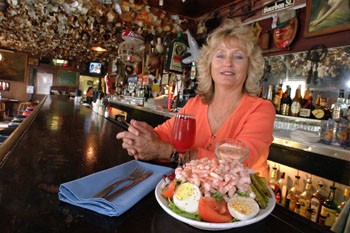
Antonia Allegra

0

Savory Possibilities

From a tree house in St. Helena, Toni Allegra coaches culinary professionals through a smorgasbord of career options

By Sara Bir

“I like to be a midwife,” says Antonia Allegra in the assuring, measured tones of her gently authoritative voice. “Not only for ideas, but associations and meetings and individuals. Letting them all come alive. If people are open to looking for help, that can only help their careers and how they think about themselves.”

Allegra is a career coach, as well as an author, teacher, and speaker, and quite possibly a few other things too–it’s hard to keep up. She’s served as president of the International Association of Culinary Professionals, founded the Symposium for Professional Food Writers, launched a few cooking schools, co-hosted a radio show, and written Napa Valley: The Ultimate Winery Guide. Allegra’s current primary focus, though, has been other people’s careers, not her own.

Allegra works one-on-one with writers and culinary professionals who wish to put a little spin on the direction of their life work. Or maybe a big one. And it all happens in a tree house in St. Helena, which serves as Allegra’s home office.

The tree house part may sound a little harebrained, but Toni Allegra’s only a maverick in the sense that she stands up for the culinary industry. The scope of her experience and her level-headed but risk-taking personality have guided chefs, writers, and would-be chefs and writers through dead-end paths to fertile valleys.

“There’s a whole world of careers in food that people don’t realize,” Allegra says, alluding to the exponentially blossoming fields of food writing, styling, consulting, and more. “It’s this huge, huge industry.”

That colossal diversity can be intimidating, though. Say you’ve always wanted to write a cookbook. Great. Where do you start? What do you write it about? How do you format the recipes? How do you discipline yourself to write it, and where can you look for honest, encouraging feedback?

That’s where Allegra comes in. “Folks come to me because they’re tired of being a chef, but yet they want to stay in food . . . and so they may go off into food styling or managing a catering company. That’s the fun thing, I think–seeing where people want to spin that kaleidoscope of choices that they have,” she says.

“Quite a few people come to me who are in another field and who want to write or add writing to their lives,” Allegra continues, “so I deal with a lot of writers as well. We have essayists, we have humorists, we have recipe developers, we have editors–it is a whole world unto itself, and it’s very exciting.”

What with scores of lavish cookbooks, special food issues of The New Yorker, and Anthony Bourdain becoming somewhat of a cult superstar, food writing is in a dynamic and promising place now. “First of all, first-person writing has been accepted again,” Allegra points out. “Writing often will work in cycles, and if you go back to the Victorian era, you will find quite a bit of writing in first person. Then there was a whole period of time, certainly including the last 20 years, where it was almost pure reportage. Now we’re finding it’s going back to that very personal ‘I,’ talking about how the writer tastes the food, experiences the place, smells the surroundings.

“Also, because of the Internet, writing is really in . . . I wouldn’t say chaos, but it’s definitely in an upheaved position. Writing for the Internet, you write in a short sentence style–staccato, actually–with a kind of a voice that is casual. And so that’s now starting to merge with the way writing is being done for food magazines. In the past, it never would have seen the light of ink.

“Writers like Elizabeth David and M. F. K. Fisher really opened the path to people taking food writing seriously. Even today, in a newsroom, on the other hand, food writers are still not considered equal to the other writers. There is a mental wall that has the food writers in a ‘you can go over and do your cake making’–kind of treating the food writers as lesser writers.”

The growing audience of foodies isn’t all because of food writing or the Internet. “The biggest thing that has been great for food,” says Allegra, “is television. Now, 24 hours a day you can watch food celebrities. Chefs and others on TV have become these sought-after characters, and therefore people want to read what they write.”

Allegra’s “a-ha” moment came in 1997-1998, the year she served as president of the International Association of Culinary Professionals. “During that year, so many people would call and say how fed up they were with their work, or they were struggling to get into another field in the food field,” she recalls. “It felt as if a good quarter of my time was talking to people, encouraging them into different ways.”

A serendipitous meeting with a coach on an airplane spawned what would become Allegra’s new direction. “She talked about this whole career of coaching, which I was oblivious to. It just felt like such a fit–that I could learn techniques to help people in a coaching way–and then I adapted that training directly to the culinary field. Teaching is a part of my soul, and I think that’s why the coaching is such a natural; it’s teaching in a different way, mostly by being silent and listening to what the other person has to say.”

Allegra has enjoyed seeing people she’s worked with go on to great things. “I’ve literally worked all the way through a book,” she says. “Cheryl Forberg’s book Stop the Clock! Cooking is coming out [this month], and when we first started, the last thing she thought of was writing a cookbook! And here she is, she’s going to be on national TV with her book.”

Allegra’s also there to see that people earn what their work is worth. “It’s kind of discouraging when you look at median salaries across the country and realize that people in the food industry generally do not make huge salaries unless they are executive chefs in big cities. I see myself as an advocate for the culinary industry. Somebody has to get out there and help people know how to negotiate for themselves.”

Allegra herself didn’t start out in food; her background is in early childhood development and children’s theater. A move to Paris in 1973 with her former husband and their three kids led Allegra to take cooking classes. “It was as simple as that,” she says. “I had no plan to do anything professional.”

Allegra and family next moved to San Diego, where she started throwing dinner parties for friends. Guests would ask Allegra to teach them how to make the food they enjoyed at the dinners and “that’s where the whole thing started,” she says. “I taught one class that merged and grew, and for eight years I had my own cooking school. I taught three classes a week for 13 people in our suburban house in San Diego. [My] kids grew up with little notes on the cakes and things that said ‘Do not touch–for the students.’ I feel terrible sometimes about that.”

Later, when the food editor of the San Diego Tribune departed, Allegra filled the position. “I’d never been in a newsroom in my life, and I’d never used a computer in my life. But it worked, and I loved it!”

Allegra moved up to Napa Valley in 1987 to be administrator and culinary director for the School for American Chefs at Beringer, with Madeline Kamman as the keystone chef. Allegra went on to be the founding editor of Appellation magazine (now Wine Country Living).

Soon Allegra will have some fellow culinary coaches to keep her company–a few of her colleagues are beginning to establish themselves as coaches too. “Now that there are three of us, I’ve started an association,” says Allegra of the Culinary Coaches Alliance–just more proof of Allegra’s belief that there’s strength in numbers.

Outside of that, who can say what’s next? “It’s really been these 15 years in the Napa Valley that have been the most creative,” she says. “[It’s] most unbelievable to me how things just keep opening up.”

Antonia Allegra can be reached through www.antoniaallegra.com.

From the December 19-25, 2002 issue of the North Bay Bohemian.

© Metro Publishing Inc.
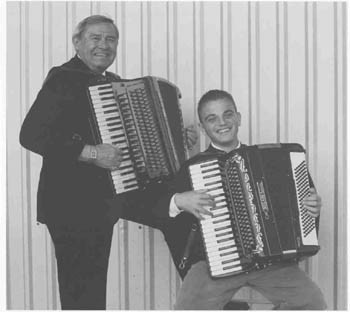
Crumbs at Midnight


Crumbs at Midnight

A Christmas Eve horror story

What happened, happened on Christmas Eve, just as the clock struck midnight. It took place one year ago–a year ago this very night. I know, because I was there. I saw it all. And believe me, it was terrible, and it was scary, and it was strange. It was also messy. Incredibly messy.

And it’s going to happen again.

Tonight.

There were six of us then. The angel, the reindeer, and the cute little star were sugar cookies. They were all sweet, but the angel was the sweetest, with a little wire halo and twice as much icing as the rest of us. There was a chocolate chip snowman–a little crusty around the edges, but still a pretty smart cookie–and there was a shortbread Teddy Bear, flaky on the outside, but tough in all the right places.

And then there was me. The Gingerbread Man.

We’d started out that morning as recipes in
a book. After eight to 10 minutes in a preheated oven and another half-hour on the cooling rack, we all ended up piled together on a big plate in the living room, where it was gloomy and dark. The fire in the fireplace had dwindled to a faint glimmer, and the only other light came from the little sparkly bulbs on the Christmas tree. A towering six-footer, the tree was covered in ornaments, shimmering glass balls, and tiny toys.

It was almost midnight. The house was locked up, the dog had been put away for the evening, and the people had all gone off to bed. It was very, very quiet.

Having determined that it was safe, we all sat up and looked around.

We were alone, just six warm cookies resting on the great plate, which–we quickly noticed–we’d been sharing with a large orange carrot. A carrot? Must have been some kind of mistake. Next to the plate there was a big glass full of milk, and on the table beside the glass was a folded piece of paper, with words scribbled in thick, red crayon.

“Dear Santa,” it read. “The carrot is for Rudolph, but these are for you. Merry Christmas.”

If only we’d realized what those mysterious words had meant, if only we’d run away and hid ourselves the moment we saw them, things might have turned out differently. But we didn’t know. We didn’t know anything. The snowman was dancing a jig on the tabletop. The reindeer was giving rides to the little star and the Teddy Bear. The angel, reluctant to leave the big plate, was content to stay there, calling out to the others, warning them to be careful. Me, I was eager to learn more about where we were–and why–so I stepped away to check things out.

The table we were on was long and low. Across the room was an old sofa. A grandfather clock stood against the far wall, and the fireplace was decorated with evergreen branches and had three bright red stockings hanging from the mantelpiece. A fourth stocking was lying on the floor, not far away. It must have fallen. There were other things in the room–furniture, packages, chewy dog toys–but I never had a chance to study them, because suddenly, from high above us, a raspy little voice called out.

“The fireplace,” said the voice, old and broken. “Watch the fireplace! At the stroke of midnight, it’ll happen. It’ll come down the chimney. It’ll come through the fireplace . . . and there’ll be nothing left but crumbs. Crumbs all over the carpet.”

Alarmed, we gathered on the big plate, huddling close as we stared up at the Christmas tree, where the voice had come from. Dangling from a branch, about five feet up, there was an old ornament, an ancient, half crumbling Christmas bangle gazing forlornly down at the six of us. He was handmade, crafted into the shape of a Christmas cookie–a Gingerbread Man, to be exact.

I liked him at once.

“What do you mean, old ornament?” I called up. “What will be coming through the fireplace?” Nervously, the other cookies glanced over at the smoldering coals on the hot bricks.

“Oh, it’s hard to say what it is,” croaked the old ornament slowly. “But it happens every year at the stroke of midnight. It’s always big; it’s always red; it’s always hungry–and it’ll be coming straight for you!”

“What kind of thing could it be?” stammered the reindeer.

“What kind of creature is so big and so red and so hungry?” asked the shortbread Teddy Bear, covering its eyes.

“What kind of monster would eat cookies?” wondered the star.

“And what are we going to do?” demanded the snowman. “It’s almost midnight!” The cookies all shouted out in fright and looked at the clock. It was, indeed, just one minute until midnight. The old ornament, from up in the tree, merely shook his head, repeating the terrible words: “Crumbs . . . nothing but crumbs . . .”

“We’ll fight it, then!” snapped the chocolate chip snowman.

“We’ll teach it a lesson!” growled the shortbread Teddy Bear.

“We’ll chase it right back up that chimney,” proclaimed the sugar cookie reindeer.

“No,” interjected the angel, a bit peevishly, “we should just stay on the big plate, right where they put us. What do we know? We’re only cookies. If we stay on the plate, we’re certain to be safe!”

“Oh, oh, oh!” cried the star. “What shall we do?”

But before anyone could answer, the clock gave a mighty blast of sound, and the first of 12 long, loud chimes sounded through the room. The second chime had barely faded in our ears when a brilliant, reddish glow began growing, brighter and brighter, inside the fireplace. We heard a rustling, scuffling sound and the ringing of tiny little bells. Yes, something was coming, and coming fast, right down the chimney.

The clock struck three.

“Run!” I shouted. In a flash, I raced across the table. Stopping at the very edge, I peered over, staring in dismay at the carpet, more than two-and-a-half feet below. As the little star ran about in circles, the reindeer and the snowman crowded in close behind at the edge–but there was nowhere for any of us to go.

The clock struck four.

The angel shouted, “Everyone back on the plate! We were put on this plate for a reason!” She flopped down on the plate and lay still, as the clock struck six. The Teddy Bear, frantically glancing over its shoulder at the fireplace, ran toward the rest of us, right up to where we stood cowering at the edge of the table. But the bear wasn’t looking and crashed into us with a mighty thump, sending the reindeer, the snowman, and me right over the side.

We fell to the carpet with a crunch. Fortunately, the carpet was soft enough to break our fall, and the snowman and I weren’t seriously injured. The reindeer, however, was wounded–one antler had been snapped off with a crisp pop. As the clock struck eight, I spied a bit of space beneath the sofa, enough to hide in, and as fast as I could, I led a charge across the floor, past the tree, toward the safety of the sofa. But the Teddy Bear and the star, poor things, were still stranded on the table, and the sounds from the fireplace were growing louder and louder.

“Jump!” I shouted to the trapped cookies. “Jump!” I’d reached the sofa, and as my two companions slipped under and out sight, the clock struck 10, then 11. Terrified, the little star closed its eyes and leaped from the table, but as it landed, it began to roll in a wide looping curve that turned away from the table and ran straight toward the fireplace. Finally, it bumped into the fallen stocking on the floor and came wobbling to a stop.

The cookie opened its eyes and yelped. Seeing that it was too far from the sofa, too far away to make it all the way across the room, the star spied the fallen stocking lying beside him. In a flash, the cookie ducked inside.

The clock struck 12.

“Oh, no,” muttered the old ornament.

Up on the table, the angel lay perfectly still, while the Teddy Bear, unable to think of a better plan, flung himself down beside the glass of milk, pulling the paper note up over himself like a blanket. I watched all of this in horror, but there was nothing I could do. I ducked under the sofa, lying low in the dust with the reindeer and the snowman, trying to stay out of sight while avoiding the wires and springs that protruded here and there from the underside of the couch.

We peeked out. From where we hid, we could see the table, the bottom of the tree, and the fireplace. The twelfth chime was still singing in the air when suddenly, in a roar of sound and a puff of light, a monster–part mammoth, part mountain–slid down the chimney and out into the room. The enormous man carried a huge, velvet bag, packed full of things that clicked and jingled. As he stood to his full height, I saw that he was everything the old ornament had said he would be. He was big. He was red.

And he was hungry.

After dropping the sack on the ground, not far away from where we were hiding, the enormous man turned to survey the room. Almost immediately, he saw the table, he saw the plate, he saw the cookie. With one mighty step, the thing moved forward, leaned over the plate, and snatched up the angel, lifting it to his face to examine it closely.

And then he bit off its head.

An explosion of crumbs scattered over the table, and the little wire halo popped into the air and went spinning down, bouncing off the table and onto the floor, where it skittered toward the sofa. Not noticing, the enormous man took another bite, and another, and by the time the little wire halo had slid to a halt–not two inches from where the snowman, the reindeer and I were hiding–the angel was all gone.

“So much for staying on the plate,” whispered the snowman.

“That sugar cookie never had a chance,” the reindeer said.

“Shhhh,” I warned them quietly. “If we all stay hidden, it might just go away.”

But the enormous man wasn’t going anywhere. He was still hungry. He was scanning the table, searching for more cookies. Picking up the plate, he peered beneath it. Then he stepped back, and leaned over to examine something at his feet. In the same instant that he saw it, I saw it too–a little pile of crumbs on the carpet, in the same spot where we had fallen from the table.

The crumbs belonged to the reindeer. He must have shed them when he lost his antler. With a shock of realization, I saw that a thin trail of crumbs led away from that spot and snaked across the carpet to where we were now crouching. On his hands and knees now, the enormous man was crawling, following the trail of crumbs.

In a few seconds, he would find us.

Unexpectedly, a loud, shrill clanking sound erupted from the direction of the table. The dog started barking somewhere deep inside the house, and the enormous man stopped crawling. With no time to lose, I beckoned to the reindeer and snowman, pointing to the giant sack that was now resting between the sofa and the tree. It was our only chance, and the reindeer, followed by the snowman, dashed out into the open and climbed beneath the sack. Distracted by the odd noises, the enormous man hadn’t seen a thing.

But I could see everything.

On the table, the shortbread Teddy Bear was banging loudly on the glass of milk, using the orange carrot as a drumstick. Bravely, the bear was trying to draw the enormous man away from us, risking his life so that we could get away. He was a brave cookie, I’ll tell you that.

Seeing that the enormous man had stopped searching for us, the Teddy Bear clutched the carrot and jumped behind the tall glass. Unable to hide himself there for long, knowing that he had but a few seconds before the hungry intruder would find him, the bear made a last, desperate attempt to save himself. Quick as anything, he stepped out onto the table and, using the carrot as a stick, vaulted up into the air and dropped down into the glass of milk–just as the enormous man stood up and turned back to face the table.

Who knows how long that cookie might have lasted in there. A minute. Two minutes? Long enough to stay out of sight until the monster went away, that’s possible. But it didn’t matter. Because now the enormous man was thirsty. Yes, thirsty. He reached for the glass of milk, lifted it to his lips, and guzzled with gusto.

Down went the bear, icing and all.

Everything after that is a blur.

How did the reindeer finally perish? I can barely remember. He was uncovered when the enormous man emptied the sack of packages and found him hiding there. All I remember is the mighty crunch that shook the night and the spattering of crumbs that dusted the floor. The little star–gobbled down in a single gulp, poor fellow–might have survived had the big, hungry man not discovered him in the stocking while filling it with nuts and trinkets. And the snowman–well, the snowman’s end was the biggest surprise of all.

I had only just jumped back beneath the sofa, scheming out ways to reach the others beneath the enormous man’s sack. But a stray sofa spring caught me in the head, and by the time I could free myself–leaving a terrible hole–the reindeer and the star were already gone, gone, gone, eaten by the enormous man. Determined that at least two of us would survive, I ducked behind the packages that had been left under the tree, and I looked around for the snowman.

Having escaped from under the sack while the enormous man was drinking the shortbread Teddy Bear, the snowman, after dashing past the tree and along the wall, had discovered a way out. There was a hallway, long and dark, leading away from the living room, far from the awful crumb bath that was taking place all around. The snowman stopped at the entrance of the hall and turned to face me, beckoning for me to follow.

He never saw it coming.

From out of the depths of the darkened hall, the dog appeared. A mastiff, I think, or perhaps a Chihuahua. What do I know about dogs? I’m just a Gingerbread Man. Without even stopping, the dog rushed upon the snowman from behind and, snapping him in half, gobbled both pieces without even swallowing. It was awful. From up in the tree, I could hear the old ornament mournfully muttering, “Every year the same. The dog always gets the one with chocolate chips.”

I was the last cookie standing. Nearly paralyzed with dread and disbelief, I ducked back behind the packages. “Well, at least the dog will drive off the monster,” I thought. But as I peered out, my heart sank to see the dog lying on its side, tail wagging with pleasure, as the enormous man stooped over to give it an affectionate pat. A few moments later, the dog trotted happily back up the hallway and disappeared into the darkness. Careful not to make a sound, I sat listening to the noises of the room. There was nothing but the ticking of the clock and the sizzle of the coals in the fireplace. From somewhere far away, I heard a faint jingling.

Still, I waited until I was certain that I was finally alone. Finally safe.

And then the clock struck. Once. It was one in the morning. The midnight hour was over. With a sigh of relief, I collapsed onto the carpet. But without warning, the packages suddenly parted all around me, flung aside by big, gloved hands, and there in front of me, smiling with glee, was the enormous man. Before I could move, he’d grabbed me. Those giant hands wrapped themselves around my middle, and I was brought closer and closer to his face, bearded and rosy-cheeked, with a mouth that was opening wider and wider. The mouth closed around me, and I knew it was all over.

But suddenly I was out again, a bit moist, but otherwise unharmed. The enormous man was holding me out at arm’s length, eyeing me suspiciously as an expression of disappointment appeared across his face.

Gingerbread?” the enormous man muttered in a low rumbling voice. “I hate gingerbread.” With that, he set me back down ever so gently among the packages and jumped away. I heard a final jingle of little bells and a whoosh like a warm wind up the chimney, and nothing more. When I finally found the courage to look again, the enormous man was gone, and he’d taken the carrot with him.

I was safe at last.

Or was I?

If I learned anything from that night–that long, terrible Christmas night–it is this: In a world such as this one, no cookie is ever safe. And there are worse dangers than hungry dogs and enormous men. There are children. There are mothers and fathers. There are aunts and uncles. They all eat cookies. And they’ll never stop.

The old ornament explained it all to me. He told me of the night, so many years before, when he too had survived the enormous man.

Yes, the old ornament was once a gingerbread cookie. He was once fresh from the oven, like me. He too was left on the plate to be eaten at midnight. And, having survived, he realized that, with sunrise, others would come, perhaps not so big and red and hungry, but hungry nevertheless.

So do you know what he did? He climbed into the towering tree and with a spare piece of wire made himself a little hook. To the people, he was just another Christmas ornament to be packed away with the lights and the bangles. Each year since then, he’s been brought out and hung once more in the tree. And each time he’s watched as the same events happen again.

Now there are two Gingerbread ornaments hanging in this tree. It was easy. I already had the hole in my head. With the wire from the angel’s little halo, I made a sturdy hook, found a good branch high up, and that was that. It was one year ago that I gave up being a cookie and became a Christmas tree ornament.

One year ago this very night.

So the question is, what are you going to do, little cookies–you shortbread bears and sugar cookie angels and crusty snowmen? Will you lie there on the plate and wait to see if my story is true, wait to see if the carpet is covered once again in a thousand crumbs? Or will you believe me? Will you get up now and run, run, run for your lives?

Whatever you decide, you’d better decide now. Because, my little cookies, the clock is about to strike. It’s midnight.

And here comes Santa Claus.

From the December 19-25, 2002 issue of the North Bay Bohemian.

© Metro Publishing Inc.

Songs About Henry Kissinger

0


Face the Nation: Henry Kissinger: inspiration for some angry music.

Silent Night–Kaboom!

Kissinger, the A-bomb, and me

By Greg Cahill

The ghosts of Christmas past paid a visit recently. Henry Kissinger, the former secretary of state under the Nixon and Ford administrations, resigned last week from the 9-11 commission–that ill-fated investigative body that is supposed to hold an independent inquiry into U.S. intelligence blunders leading up the 2001 terrorist attacks in New York, Pennsylvania, and Washington, D.C.

Potential conflicts of interest, Kissinger said, but critics knew otherwise. For the reemergence of Kissinger had revived the specter of one of the darkest chapters in U.S. history: the 1972 Christmas bombing of Hanoi, North Vietnam. At the time, Kissinger persuaded President Nixon to commit one of the most horrific acts of an astonishingly immoral war–a lengthy and particularly brutal bombing campaign that flattened the Bach Mai Hospital, killed 2,000 civilians, and maimed countless others.

The incident made Kissinger a hated figure and a target for satirical barbs. It also earned him a lampooning in songs by such diverse acts as Monty Python (“Henry Kissinger / How I’m missing yer / You’re the doctor of my dreams / With your crinkly hair and your glassy stare / and your Machiavellian schemes”) and the punk band Twisted Nixon, which once penned a song called “Kissinger Is Dead.”

Thirty years later, the grim events of America’s immoral actions during the Vietnam War continue to haunt us. Yet they were just a part of a creeping malaise that seemed to infect the country in the early to mid ’60s. You can hear a snippet of that disturbing turn on the song “Seven O’Clock News/Silent Night,” the performance piece that concludes Simon and Garfunkel’s breakthrough 1966 album Parsley, Sage, Rosemary, and Thyme, included in the newly remastered five-CD box set, Simon & Garfunkel: The Columbia Studio Recordings 1964-1970 (Sony/Legacy).

The chilling song finds Garfunkel lending his angelic choir-boy voice to the classic Christmas carol as a radio broadcast trumpets reports about the escalating war in Vietnam, the disturbing arrest of serial killer Richard Speck, and the rising tide of street violence and injustice. The song serves as a matching bookend for filmmaker and activist Michael Moore’s new documentary Bowling for Columbine, an examination of America’s obsession with guns.

Soon, the horror of those high school shootings may seem almost quaint. After all, here we sit with our collective fingers on the trigger, itching for a fight with Saddam Hussein, and faced with the appearance of an even graver apparition: the use of our vast nuclear arsenal on the Iraqi battlefield.

Suffice it to say, it’s not easy to find relevant holiday music this year, though there is an abundance of escapist confection. Last week I even heard a Muzak version of John Lennon’s touching antiwar song “Happy Xmas/War is Over” chiming over the sound system at a neighborhood supermarket –sort of the aisle five version of seeing a Grateful Dead sticker on a Cadillac.

Yet there are those in the music community willing to explore America’s infatuation with things that go boom in the night. While Kissinger was climbing back under that slimy rock from which he emerged last week, the San Francisco Symphony announced that it has commissioned classical composer John Adams to write an opera based on the creation of the atomic bomb.

Adams, America’s foremost contemporary classical composer, often works in seclusion at his Sonoma County ranch. He says the opera will focus on troubled genius Robert Oppenheimer, the remorseful father of the A-bomb and will be called Dr. Atomic, a title inspired by 1950s sci-fi movies.

Adams knows a thing or two about America’s ghosts. He is the composer of the critically acclaimed 1987 opera Nixon in China –in which Kissinger plays a key role–and most recently was commissioned by the New York Philharmonic to fashion a remembrance to the victims of the 9-11 attacks. His On the Transmigration of Souls incorporated text from missing-person posters and cell phone calls received as the tragedies unfolded.

So how do we express our hopes and ambitions for peace through song during this turbulent holiday season? I find myself listening to Jackson Browne’s defiant un-Christmas song “Rebel Jesus” and Bruce Cockburn’s 1991 CD Nothing But a Burning Light (Columbia), with its oddly comforting mix of born-again Christian sentiments, leftist radicalism, and reaffirmations of life and love.

How about you? What’s getting you through this dark night of the American soul?

From the December 19-25, 2002 issue of the North Bay Bohemian.

© Metro Publishing Inc.

It Takes a Gingerbread Village

0


Sweet Rewards: From gingerbread people to the much-loved kolachi, a plate of cookies means Christmas.

It Takes a Gingerbread Village

Christmas is all about the cookies

By Sara Bir

Last night my aunt called me to ask if there were any special kinds of Christmas cookies I’d like her to make for my family’s upcoming holiday visit. This is not too unusual a request, though it should be noted that instead of a traditional Christmas in front of the yule log, we are this year going camping for three days in Death Valley. No tree, no gift exchanges, no televised specials, no Mannheim Steamroller CDs–just us and God’s great breadth of nature. The elements.

She could have asked if I was bringing my Therm-a-Rest, or if I had enough long underwear or water bottles. Hydration, shelter–these things do not matter in my family as much as Christmas cookies, without which our reason for the season would quickly deteriorate.

So we may be out there, skin scalded from the spiteful sun or the relentlessly biting wind, throats aching and parched, but we’ll have cookies. And as long as there are plentiful quantities of Mexican wedding cakes and cranberry-date bars, everything will be fine.

You can pull off a Christmas without a tree or without snow or without presents–the Whos of Whoville did. But try, just try to have a Christmas with no cookies, not even one, not even a piddly snickerdoodle whisked from a platter and popped into the mouth with a dieter’s stealthy guilt. The shape of the season is so highly intertwined with cookies that gingerbread boys and sugar-cookie cutouts have become insignias for the holiday. How? Why? Easter endures without cookies; so does Halloween, New Year’s Eve, Valentine’s Day, Hanukkah, the Fourth of July, and President’s Day.

Oftentimes people grow up identifying with one special Christmas cookie in particular, a cookie whose presence it would not be Christmas without. Unfortunately, I grew up in a family that had about 15 cookies whose presence was required for Christmas to be Christmas. We packed cookies in the freezer, in tins stockpiled in the garage, and in Tupperware overrunning the cupboards. The closer to Christmas day
it got, the more peanut butter blossoms and seven-layer dream bars would appear on special Christmas-themed platters set out on the kitchen counter.

Come December, cookies became the primary food group, the base of Satan’s food pyramid. Bars, balls, bonbons, cutouts, pressed cookies, drop cookies, no-bake cookies–no branch of the cookie family tree went under-represented.

I grew up in the Midwest, where cookies functioned as an alternate wintertime currency. Tins and trays migrated from one neighborhood household to the next year after year, recycled, returned, and refilled, creating a window to other families’ holiday cookie habits. Some were highly anticipated and welcomed (Mrs. Hanf’s crème de menthe squares), while others (weird and sticky stained-glass cookies occasionally decorated unintentionally with a stray cat hair) were kindly accepted and promptly neglected.

And still, in these undomesticated times, all corners of the cookie universe are thrown into light come Christmas time, when usually forsaken Old World favorites–drowned out by an endless procession of coffeehouse biscotti and deli chocolate-chip cookies–are pulled from the yellowed depths of brittle recipe files. Their names are clunky to pronounce, and their origins give away a family’s background: lebkuchen, krusczyki, springerle, speculaas, pfeffernusse, cucidata, biscochitos, krumcake, sandkager.

Perhaps the oddest holiday cookies are the least obscure, the New World ones that have evolved since the advent of jello, canned fruit cocktail, gumdrops, gummy bears, Hershey’s Kisses, and M&Ms. With these cookies, artificial color–a frosted kaleidoscope of hues–is a plus. Candy cane cookies, tinted redder and whiter than the White Stripes’ stage getup, look like they were made out of Play-Doh.

Green cherry trees, a thick cutout cookie from Meredith Press’ Cookies for Christmas, requires one jar of green maraschino cherries, chopped and added to the dough. Does anyone over 10 eat stuff like that? Or the technicolor-bright Christmas Holli-Doodles, Wonderland Cookies, and Christmas Jewels of Betty Crocker’s 1963 classic Cooky Book, the holy grail of weird cookie recipes? Or those weird dragees, the edible metallic balls that grace cookies but mimic BBs?

There are cookies we make not because we want to, but because we have to. They are identity cookies, specialties so tied up in the makeup of our DNA that we might as well carry around a cookie in our wallets instead of a driver’s license. The cherry coconut bars (Betty Crocker’s Cooky Book again) that my grandmother used to make so haunt her that she has to make a pan every year, just to look at them because no one else will eat any (those festive maraschino cherries are once more to blame).

During the holidays, the bakers of the world are blessed and burdened, because a person who bakes cookies one Christmas becomes the person who is expected to the following year. But it is we the bakers who have the last laugh, for the true grace of cookies lies not in the eating but in the making: the repetition of motion, the coolness of the dough, the artistic possibilities of decorating, the satisfaction of creation.

For those whose relationship to cookies is of a precarious nature (love-hate or gluten-allergic), you can still make your cookies and not eat them; simply to be near cookies may be enough. Take them to work and become the most loved person in the office for the day. Cut your macrobiotic pressed salad into bell, tree, and angel shapes! Make Christmas sushi instead, and create exciting seasonal rolls whose cross sections form images of sleighs!

For me, it’s not Christmas without kolachi, which is a mutated version of the Polish yeasted bun kolazci. It’s basically a flaky, buttery cookie dough–not yeasted–rolled thin, filled with apricot, prune, or nut filling, and folded into a little bundle that bakes into a devilish miniature pie. As a young and craft-driven kid, I delighted in making kolachi, though it was the seven-layer bars and sugar cookies I ate while watching cartoons after school.

Maturity befits kolachi, though, and I grew to love eating the little pies as well. Somehow I became the designated kolachi maker in the family, and it is now my responsibility to make sure our Death Valley Christmas will be graced with kolachi.

Making kolachi is not difficult, but it is labor intensive–which I somehow manage to forget every year in the postbaking cookie-eating blitz. I got a cruel reminder when the bulk of a recent prime Sunday was spent rolling out dough, cutting it into 1 1/2-inch squares, filling them with apricot filling, tediously folding the corners over in an attractive manner, rolling the cookies in granulated sugar, baking the cookies, eating sample cookies, cooling the cookies, eating additional samples, scraping kolachi dough off of the floor, eating one last cookie, taking a respite with a beer, eating one more last cookie, finding an appropriate container in which to store the cookies, and doing a load of laundry that was speckled with apricot filling.

During this period of time, I was able to listen to Beck’s entire back catalogue. I got delirious and began to think how nice it would be if I could send Beck some kolachi to eat while he was on tour. I became a lean and efficient machine, a self-contained assembly line fussing tenderly over the conception of a tiny, edible fleet.

Then I went running, motivated by the day’s prolific kolachi intake. No wonder weight gain is a problem in the dark winter months, considering the prevalence of Christmas cookies, precisely portioned bundles of naughty high-carb, high-fat goodness. Dr. Atkins would surely have a heart attack just to hear of it, though he may appreciate the protein content of flourless almond macaroons.

Please note that while Dr. Atkins’ Christmas will be purportedly healthful, as he and the Atkins clan tuck into their Christmas dinner of steamed salmon and greens, the souls of their stomachs shall be empty, for no tender cookies will caress their lips. My family, we will this Christmas perish from exposure in the cruel desert, but we shall perish with an abundance of cookies, and our souls will be eternally nourished with kolachi.

From the December 19-25, 2002 issue of the North Bay Bohemian.

© Metro Publishing Inc.
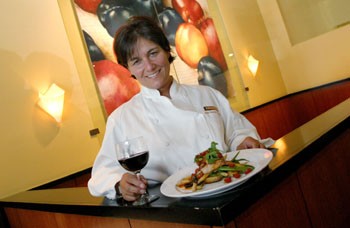
‘Skylight’


Photograph by Jeff Thomas

Playing Games: Danielle Cain and Dodds Delzell scramble to regain or relose their relationship in ‘Skylight.’

Passion Play

An old love gets a second shot in ‘Skylight’

By Patrick Sullivan

The lovers’ quarrel is a many splendored thing. It provokes outraged humanity to its profoundest poetry, illuminates every dark corner of our secretive souls, infuses our normally sluggish blood with a pulsating mix of wild wit and feral wickedness, sly malice and keen-eyed compassion.

That’s how it works onstage, anyway. In the real world, alas, most of us struggle on such occasions just to stick two syllables together. But if going to the theater was like looking in a mirror, how many of us would pay for seats?

Certainly, real life does not hold a candle to the titanic clash of personalities at the heart of Skylight, now onstage at Actors Theatre in a production directed by Kent Nicholson.

Set in Thatcher’s England, this offering from acclaimed British playwright David Hare pits two unlikely lovers against each other in a punishing but poetic encounter that takes place in a single room over a single night.

The room in question is the chilly, rundown flat belonging to Kyra (Danielle Cain), an idealistic school teacher laboring to improve minds and save souls in London’s impoverished East End. In a former life, Kyra was a waitress, and on this chilly evening, she receives an unexpected visit from her former boss and former lover, Tom (Dodds Delzell), a swaggering restaurateur with a burgeoning business empire, a recently deceased wife, and a badly broken heart.

She’s surprised to see him, and he’s almost as surprised to be there. But before long, they’re going at it hammer and tongs, trying love on for size again and arguing over everything from old romantic secrets to the social implications of her far-from-lucrative career choice. “You never accepted the nature of business,” he chides. “That’s why you had to leave.”

“Oh,” she muses in reply, “I thought I had to leave because your wife found out that I’d been sleeping with you for six years.”

Tom wants to ease his guilt over the affair and the way he subsequently dealt with his wife’s illness: he built her a beautiful bedroom, saw her settled comfortably into her deathbed, then ran off to open more hotels and restaurants. “It’s not like it was a test,” he grumbles. But he knows it was, and he knows he failed. Kyra has plenty of guilt of her own, but she’s also out to prove to Tom that her new life has as much merit as his career.

This might sound like a grudge match between two stereotypes, and that assessment isn’t totally off the mark. But Hare (currently at work on a film adaptation of Jonathan Franzen’s The Corrections) equips his characters with enough irony and ambiguity to keep them interesting, and Cain and Delzell find those crucial complexities and work them with ingenuity. In the process, they bring this passion play to sweaty, intimate life.

It should be noted that doubt and pain are only half the story here. Skylight is also a very funny play, full of the kind of banter that only exists between two people who know each other all too well.

But the play’s greatest strength is that it carefully maintains the central suspense: Is Tom and Kyra’s encounter a blast from the past or the wave of the future? The end, which comes after an emotional roller-coaster ride, is far from predictable–but it’s also more than satisfying.

Skylight continues through Jan. 18 at Actors Theatre at the Luther Burbank Center, 50 Mark West Springs Road, Santa Rosa. For details, call 707.523.4185.

From the December 19-25, 2002 issue of the North Bay Bohemian.

© Metro Publishing Inc.
Internet Filtering

0


Guilty Until Proven Innocent: Library filtering systems, faulty at best, assume the worst of library patrons.

Surf’s Up

Internet filtering systems, proven ineffective, may be required in libraries

By Joy Lanzendorfer

Did you hear about the library that unveiled its brand new website on its computers last month? The library’s own filtering software banned it.

You see, Flesh Public Library in Piqua, Ohio, was named more than 70 years ago after Leo Flesh, the library’s founder. The library’s filtering system, Net Nanny, didn’t like the words “flesh” combined with “public” in its new domain name www.fleshpublic.lib.oh.us, so the library couldn’t get on its own website.

But instead of changing the filtering system, the library changed its domain name to www.piqua.lib.oh.us.

This incident illustrates the basic problem with filtering systems, which often deny access to legitimate sites because they block sex-related terms like “condoms,” “abortion,” and “homosexuality.” A new study by the Henry J. Kaiser Family Foundation said that the filtering software that federal law requires in school and library computers blocks 25 percent of health sites when set on the most restrictive levels. The study also showed that the same filters set on the lowest restriction levels stopped only 1.4 percent of health sites while still blocking most pornography (91 percent of pornography at the most restrictive level and 87 percent at the least).

The Supreme Court just agreed to rule whether the government can restrict Internet surfing in libraries. The case concerns the Children’s Internet Protection Act, which requires library computers receiving certain kinds of federal funding to have a “technology protection measure” such as filters to shield children from online pornography. A federal district court in Pennsylvania declared that the act violated the First Amendment, ruling in favor of the ACLU and American Library Association, which challenged the act. This is the third case the Supreme Court has had concerning free speech and protecting children from Internet pornography.

The issue is very complicated, explains Tom Trice, library director for Sonoma County. “The conversation should be refocused on how information is provided to the public,” he says. “The library provides a variety of services to many people with different needs to consider. Then the whole issue about how information is sorted on the Internet is also complex. It’s a subject that requires a lot of patience and thought.”

Sonoma County public libraries do not provide filtering software on their computers, in part because it creates “a false sense of security” about the types of information that can be accessed, according to the library’s official policy. The library commission states that “no available filter or blocking software is effective in blocking what some might find objectionable, and all filters block access to much information which many would find useful or important.”

The library commission formed its Internet policy several years ago to much controversy. One antipornography group, Help Oppose Pornography’s Exploitation, was particularly vocal in efforts to convince the library commission to provide filtering software. The group has been dormant for the last few years but is now regrouping and starting new efforts in “educating the public against the harmful effects of pornography,” according to co-director Alice Bailey.

“I would like to see the library at least put filters in the children’s section, if not the entire library,” she says. “The library should be as safe as possible. Putting pornography in a public realm like that mixes stimulated men with women and children and can create a hostile or even dangerous situation.”

Do people actually view pornography in Sonoma County libraries, or has the whole thing been exaggerated? It’s hard to tell, but there have been anecdotal reports of people walking by and seeing pornography left on the screen after someone else has been viewing it. Bailey has several copies of letters parents wrote to the library complaining about their children seeing pornography on the computers or accidentally accessing it.

If the Supreme Court fails to overturn the Children’s Internet Protection Act, county libraries will remain unaffected because they do not take the federal funding the act targets. However, the act may affect school libraries and libraries in other counties, not to mention the 14 million people a year who use library computer systems in the United States.

“If the act is not overturned, libraries who don’t put filtering systems on the computers may become ineligible for certain federal funding opportunities,” says Trice. “They will have to look at what the impact will be on them financially.”

From the December 19-25, 2002 issue of the North Bay Bohemian.

© Metro Publishing Inc.

New Year’s Eve

0


10 . . . 9 . . . 8 . . .: The Zydeco Flames stomp in the new year at Rancho Nicasio.

Dropping the Ball

Places to go and people to see on New Year’s Eve

By Sara Bir

Party favors, champagne toasts, balloon showers, black tie, white glove, hors d’oeuvres, live music, midnight buffets–you know the drill. See a band, cut a rug, and don’t forget to eat black eyed peas for good luck. New Year’s Eve is all in what you make it, though; the most grandiose of plans can shatter if your attitude stinks, so keep on the sunny side and stay close to home or plan for a convenient sofa (in a friend’s place or a luxury suite) to crash on.

Clubs

Club FAB

DJ Mykel M. and “amazing live sculpture art,” whatever that is. Includes appetizer and dessert buffet, plus balloon drop at midnight. Whee! 9pm-2am. 16135 Main St., Guerneville. $15 advance; $20 door. 707.869.5708; www.clubfab.com.

Connolly’s Pub

Good Life Rhythm and Blues Revue. 1129 Main St., Guerneville. $5. 707.869.1916.

Flamingo Lounge

Country rock with Shannon Rider Band from 9pm-1am. 2777 Fourth St., Santa Rosa. $20. 707.545.8530, ext. 727.

Forestville Club

Sonoma County porch-punk with Stiff Dead Cat, a band whose mere name incites controversy. 9pm. 6250 Front St., Forestville. $10. 707.887.2594.

Jasper O’Farrells

Bonedaddy and the Skeleton Crew. 9:30pm. 6957 Sebastopol Ave., Sebastopol. Free. 707.823.1389.

Jenner Community Center

The Grapes of Wrath (a rock and roll band, not the book). 9pm-1am, Jenner Community Center, Jenner (behind gas station). $10. 707.865.2611.

Last Day Saloon

Jackson 5 covers and more from Wonderbread 5, special dinner, party favors, champagne toast–and free buffet at midnight, because dancing works up a fierce hunger. 9pm. 120 Fifth St., Santa Rosa. $50 advance; $75 day of show. 707.545.2343; www.lastdaysaloon.com.

Little Switzerland

Nothing better than a pair of lederhosen and an overflowing stein on New Year’s. Polka to Gary Siebert and Polka Power; special New Year’s Eve menu. 401 Grove St., Sonoma. 707.938.9990.

Main Street Station Ristorante-Cabaret

Multiply New Year’s fun with celebrations for every time zone on the hour. Entertainment from Vernelle Anders Jazz Trio . . . and, of course, champagne. 16280 Main St., Guerneville. $10. 707.869.0501; www.mainststation.com.

Monroe Dance Hall

Swing, country, nightclub, and ballroom dancing with DJ Steve. Balloon sculptures, truffles at midnight, refreshments included. 7:30pm-12:30am. 1400 W. College Ave., Santa Rosa. $20. 707.829.0234.

Murphy’s Irish Pub

Karaoke while counting down the hours to 2003. Wear formal attire and get a free pint! 9pm. 464 First St. E., Sonoma. 707.935.0660.

New George’s

Say goodbye to 2002 and to the Mother Hips, who will be playing their last show ever. Champagne toast and festive hats included. 9pm. 842 Fourth St., San Rafael. $30. 415.457.1515; www.newgeorges.net.

19 Broadway

Chrome Johnson, plus party favors, champagne toast at midnight, and snacks. 9:30pm. 19 Broadway, Fairfax. $15. 415.459.1091; www.19broadway.com.

The Old Vic

Double the rockabilly with Hopped Up! and the Royal Deuces. 9:30pm. 731 Fourth St., Santa Rosa. $5. 707.571.7555.

Old West Saloon

Funk and R&B from the Rolling Blackouts beginning at 9:30pm. Highway One, Point Reyes Station. $5. 415.663.1661.

Powerhouse Brewing Co.

Roy Rogers and the Delta Rhythm Kings. The “Master of the Blues Slide Guitar” returns to the Powerhouse to ring in another year. 10pm. 268 Petaluma Ave., Sebastopol. $40. 707.829.9171.

Rancho Nicasio

Stomp like it’s a swamp with the Zydeco Flames. 8:30pm. Town Square, Nicasio. $35-$45 (advance only). 415.662.2219; www.ranchonicasio.com.

Silverado Brewing Co.

Rock and roll with C4INC. 9pm. 3020-A North St. Helena Hwy., St. Helena. 707.967.9876; www.c4inc.net.

Spanky’s

Please note that in this area of Cotati, it is possible to stand outside and all at once hear music from not only Spanky’s, but Sweet Lou’s and the Tradewinds. Inside Spanky’s, Counter Balance will play some rock. 8201 Old Redwood Hwy., Cotati. Free. 707.664.0169.

Sweetwater Saloon

Aram Danesh and the Family of Band, jazzy guitar with world music influences. Champagne toast at midnight. 9:30pm. 153 Throckmorton Ave., Mill Valley. $35. 415.388.2820; www.sweetwatersaloon.com.

Ted’s Restaurant

Jackie Payne and Steve Edmunson Band (R&B), plus party favors. 9pm. 218 Sir Francis Drake Blvd., San Anselmo. $12. 415.453.8600; www.tedsrestaurants.com.

1351 Lounge

Jazz vocals from Annie Sampson and Friends, plus sparkling wine toast and party favors. 9pm. 1351 Main St., St. Helena. $25. 707.963.1969; www.1351lounge.com.

The Tradewinds

Gala party with live music by the Pulsators, with a champagne toast at midnight. 9:30pm. 8210 Old Redwood Hwy., Cotati. $10. 707.795.7878; www.tradewindsbar.com.

Zebulon’s Lounge

The North Bay’s swankiest jazz nightspot greets the year with Dayna Stephens, Emmanuel Vaughn-Lee Trio, Jeff Marrs, and champagne toast at midnight. Zebulon’s Lounge, 21 Fourth St., Petaluma. $25 advance; $30 door. 707.769.7948; www.zebulonslounge.com.

Restaurants

Giorgio’s Ristorante Italiano

Sit down to an elegant dinner prepared by chef Renzo Veronese. 300 Drakes Landing Road, Greenbrae. $65 for dinner only in the main room; $85 for dinner and midnight celebration in the ballroom. 415.925.0808.

La Strada

Special four-course dinner menu with party favors and a midnight champagne toast; music at 6pm and 1am. Seatings at 6pm, 8pm, and 10pm. 3660 Stony Point Road, Santa Rosa. $75 (reservation only). 707.585.1111.

Santi

Ring in the new year in Geyserville style. Santi is offering a special prix-fixe menu that includes delicacies like cannelloni with Dungeness crab, spinach, and fennel. 21047 Geyserville Ave., Geyserville. $55. Call for reservations. 707.857.1790.

Sparks

Welcome 2003 with an abundance of refined veganism. Sparks’ Special New Year’s Eve dinner boasts seven organic courses, from asparagus with hollandaise sauce to a satsuma mandarin coconut tart with lemon shortbread crust and cranberry sauce. 6-9pm. 16248 Main St., Guerneville. $40 seven-course dinner. 707.869.8206.

Sweet Lou’s Family Trattoria

The Heavies, modern jazz quartet with soulful vocals. 9:30pm-1am. 8201 Old Redwood Hwy., Cotati. Show free with dinner. Reservations required. 707.793.0955; www.heaviesjazz.com.


Stars Are Born: Go black tie for the Novato Theatre Restoration ‘On Broadway’ New Year’s Eve Gala.

Concerts

Blue Moon Band

Jump into the new year with Blue Moon’s rhythm and blues stylings. Love Choir, Mr. Music, and the Sebastopol All Star Band open. 8pm-2am. $20 advance; $25 door. Community Center, 390 Morris St., Sebastopol. 707.823.1511.

Konocti Harbor Inn

Konocti kindly supplies four different bands in one handy resort for all of your swing, country, rock, and R&B needs: California Cowboys, Jukebox Heroes, Code Blue, and the Bay Area Big Band. Buffet, cocktails, champagne, party favors–the whole bit. 8727 Soda Bay Road, Kelseyville. $375-$525 per couple. 800.660.LAKE.

McNear’s Mystic Theatre

Blues guy Charlie Musselwhite brings his band and his lil’ harmonica at 9pm. 21 Petaluma Blvd. N., Petaluma. $55 advance; $60 door. 707.765.2121; www.mcnears.com.

Napa Valley Opera House

It’s a big band to-do at the Napa Valley Opera House’s first New Year’s gala with Swing Shift. Dinner, beverages, and champagne included. 8:30pm. 1030 Main St., Napa. $300. 707.226.7372; www.napavalleyoperahouse.org.

‘The Spanish Hour’

Cinnabar Opera Theater presents Ravel’s The Spanish Hour, a bedroom farce set in a clock shop instead of a bedroom. Join the cast and crew with party favors, sparkling wine, desserts, and Spanish cuisine. 8:30pm. Cinnabar Theater, 3333 Petaluma Blvd. N., Petaluma. $50 general; $48 seniors and students. 707.763.8920; www.cinnabartheater.org.

Events

Best of the San Francisco Stand-Up Comedy Competition

The funniest comedians left standing from the 2002 San Francisco Stand-Up Comedy Competition get the belly laughs going. 9pm. Marin Center’s Showcase Theatre, 10 Avenue of the Flags, San Rafael. $25. 415.499.6800.

Dance Festival

Dance for peace at Harbin Hot Springs’ New Year’s Dance Festival with the Friends of the Unconditional Dance. You’ll be fueled by organic vegetarian meals and energized by live music with Shabaz, Native Tongue, and more throughout the weekend. $495 for five days; $295 for three days. Call Rainah for reservations. 707.987.4812; ra******@*******nk.net.

‘For Whom the Bridge Tolls’

This musical comedy revue by Rita Abrams and Stan Sinberg takes on Marin sacred cows in sketches like “Where’s Bolinas?” and “Not One Decent Deli.” The highlight just might be the ode to John Walker Lindh. 7pm and 10:30pm. Throckmorton Theatre, 142 Throckmorton Ave., Mill Valley. $45 early show; $75 late show. 415.499.4488; www.bridgetolls.com.

Huichol Shamanism New Year’s Retreat

Shaman-healer Brant Secunda presents a Huichol Shamanism New Year’s Retreat from Dec. 28 to Jan. 1. Head off to the hills of Sonoma to explore joy, beauty, and power in a rare opportunity to practice age-old shaman techniques in a natural setting. Learn the myths, cosmology, and sacred art of Huichol. Spend New Year’s Eve at an all-night Dance of the Deer ceremony. $725. 831.475.9560; www.shamanism.com.

Mayacamas Ranch

An all-inclusive New Year’s Eve getaway package with overnight accommodations, dinner, drinks, live music, and New Year’s Day brunch. 3975 Mountain Home Ranch Road, Calistoga. $520 and up per couple. 707.942.5127; www.mayacamasranch.com.

Napa Valley Wine Train

All aboard for white-glove Station Reception with passed appetizers and the Jazz Project performing live. Enjoy a gourmet five-course dinner with bottomless champagne, wine, or beer to wash it all down. 5pm-1am. Napa Valley Wine Train Depot, 1275 McKinstry St., Napa. $200. 800.427.4124; www.winetrain.com.

‘On Broadway’ Gala

The Novato Theatre Restoration Committee presents a black tie gala with television personality Jack Hudson as emcee. Tuxedo Junction Big Band and Grand Slam Mobile DJ provide the dancing beats. Hors d’oeuvres and dessert buffet, midnight champagne toast. 8pm-12:30am. Four Points Sheraton Hotel, 1010 Northgate Drive, San Rafael. $90. 415.897.0223; www.novatotheatre.org.

Safari West Dinner and Dance

Go wild on New Year’s at Safari West Wildlife Preserve. Make like Meryl Streep in Out of Africa and indulge in a gourmet dinner and dancing in the company of exotic animals. Split after midnight strikes or stay in a luxury safari tent to awaken to a tasty New Year’s brunch and a safari tour. 3115 Porter Creek Road, Santa Rosa. $75 dinner and dance; $500 per couple for dinner, dance, and overnight accommodations. 707.579.2551; www.safariwest.com.

Sheraton Petaluma’s Grand Ballroom

The sounds of oldies radio come to life, courtesy of Pride and Joy. Have dinner at Jellyfish Restaurant. There will be champagne, appetizers, and a midnight buffet. 7:30pm. 745 Baywood Drive, Petaluma. $125-$550. 707.283.2915.

Your House

It’s cheap, no reservations required, all ages, all hours, and any way you want it. You know the address.

From the December 19-25, 2002 issue of the North Bay Bohemian.

© Metro Publishing Inc.

Will and Debi Durst

Photograph by David TempletonThe King and Queen of Comedy: Will and Debi Durst mug for the camera.Fun ClubWill and Debi Durst stand up and laugh back at the year 2002 Wow, it's the storm of the century!" shouts Debi Durst, as 50 mph winds whip the trees and rooftops outside, and multiple lakefuls of rain slam down on the...

George Louie

Enforced ComplianceGeorge Louie wants California safe for the disabled, and he wants it nowBy Joy LanzendorferGeorge Louie is on a mission. Step by step, this Oakland disabled man is making the world (or at least California) accessible to the disabled. Targeting missing railings, nonfunctioning elevators, and incompatible restrooms, Louie wields the Americans with Disabilities Act like a sword, slicing...

Open Mic

The foreign press shows a perspective absent from U.S. mediaBy Shepherd BlissDark clouds loom over America, obscuring our vision. Though the shadows thickened on that terrible Sept. 11, they gathered earlier and have grown more ominous since. As the U.S. government engages in protracted preparations for a war with Iraq and the slaying of more innocent civilians, the dimness...

Antonia Allegra

Savory Possibilities From a tree house in St. Helena, Toni Allegra coaches culinary professionals through a smorgasbord of career options By Sara Bir "I like to be a midwife," says Antonia Allegra in the assuring, measured tones of her gently authoritative voice. "Not only for ideas, but...

Crumbs at Midnight

Crumbs at MidnightA Christmas Eve horror story What happened, happened on Christmas Eve, just as the clock struck midnight. It took place one year ago--a year ago this very night. I know, because I was there. I saw it all. And believe me, it was terrible, and it was scary, and it was strange. It was also messy. Incredibly...

Songs About Henry Kissinger

Face the Nation: Henry Kissinger: inspiration for some angry music.Silent Night--Kaboom!Kissinger, the A-bomb, and meBy Greg CahillThe ghosts of Christmas past paid a visit recently. Henry Kissinger, the former secretary of state under the Nixon and Ford administrations, resigned last week from the 9-11 commission--that ill-fated investigative body that is supposed to hold an independent inquiry into U.S. intelligence...

It Takes a Gingerbread Village

Sweet Rewards: From gingerbread people to the much-loved kolachi, a plate of cookies means Christmas.It Takes a Gingerbread VillageChristmas is all about the cookiesBy Sara BirLast night my aunt called me to ask if there were any special kinds of Christmas cookies I'd like her to make for my family's upcoming holiday visit. This is not too unusual a...

‘Skylight’

Photograph by Jeff ThomasPlaying Games: Danielle Cain and Dodds Delzell scramble to regain or relose their relationship in 'Skylight.' Passion PlayAn old love gets a second shot in 'Skylight'By Patrick SullivanThe lovers' quarrel is a many splendored thing. It provokes outraged humanity to its profoundest poetry, illuminates every dark corner of our secretive souls, infuses our normally...

Internet Filtering

Guilty Until Proven Innocent: Library filtering systems, faulty at best, assume the worst of library patrons.Surf's UpInternet filtering systems, proven ineffective, may be required in librariesBy Joy LanzendorferDid you hear about the library that unveiled its brand new website on its computers last month? The library's own filtering software banned it.You see, Flesh Public Library in Piqua, Ohio, was...

New Year’s Eve

10 . . . 9 . . . 8 . . .: The Zydeco Flames stomp in the new year at Rancho Nicasio.Dropping the BallPlaces to go and people to see on New Year's EveBy Sara BirParty favors, champagne toasts, balloon showers, black tie, white glove, hors d'oeuvres, live music, midnight buffets--you know the drill. See a band, cut...
11,084FansLike
4,446FollowersFollow
6,928FollowersFollow

