

‘Roman Candles’

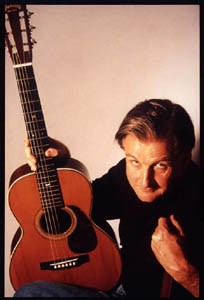
One-Man Show: Tommy Mierzwinski’s ‘Roman Candles’ literary magazine is modest, but full of good writing.

Shooting Stars

Tommy Mierzwinski’s literary magazine ‘Roman Candles’ is small but burns brightly

By Sara Bir

The wonderful, horrible thing about the Internet is that anyone with a computer and some patience can create a website. An enlightening, distinct purpose is not required, which is why there are sites like www.squirrelsex.com and www.belts.com.

Then there are websites that don’t dazzle the eye so much as the mind; the labyrinthine network of literary ephemera on the McSweeney’s site comes to mind, as does Word Riot and The Blue Moon Review. These are places where readers come to read.

Roman Candles is such a site. The brainchild of Tommy Mierzwinski, Roman Candles is very tiny, very new, and very modest-looking–all of which serves not to belittle its content, but rather to let its content speak for itself.

“It was an idea that I had for a long time,” says Mierzwinski, who lives in Mill Valley, a recent transplant from Santa Rosa. “In the height of the Internet frenzy, everyone was making websites. And I had this idea of a literary website, so I registered the name just to say that I did it, and the idea just hung around. With things like that, something will trigger some action and I’ll just go ahead and do it, without much premeditation.”

So Mierzwinski up and started his site, which he named after Jack Kerouac’s admiration of people who burn “like fabulous yellow roman candles” in On the Road. “Part of it is that I wanted to learn web building, because I think it’s an artistic endeavor and I have fun playing around with the programs, although I’m not a real tech weenie or anything. Other than that, the motivation is expression.

“There’s a lot of literary stuff on the web of varying degrees of sophistication and quality and design,” he adds, “and I think what appeals to me most is something that has more of a community feeling to it, an artists’ collective type of thing. And that’s what I’m trying to do with it–give a voice to the people who congregate at all the readings, just to get their work out there.”

The debut issue came out this February and features short fiction by Jordan E. Rosenfeld, Guy Biederman, Yosha Bourgea, Gary Carter, and Cynthia Robinson; and poetry by Penelope La Montagne, Barbara Jaffe, and Rosemary Passantino–all Bay Area writers. Mierzwinski has a short story on the website, too; titled “Albuquerque,” it’s a beat-style, whirlwind tale of transient no-goods who don’t give a crap about much of anything.

The website came together rather organically, with submissions coming “just through getting the word out, through Jordan [Rosenfeld, of the LiveWire Literary Salon in Petaluma] and other people. I know some of them, some of the people I don’t.” Mierzwinski was looking for “stuff that appealed to me, had something that I felt when I read it.”

All of the stories on Roman Candles are in PDF format, so they have a clean look and read more like the pages of a book than the cluttered text of an online magazine. “I have never read an HTML story on the Internet from beginning to end. It hurts my eye,” admits Mierzwinski. “That’s why I put them up in the PDF files, because there’s more white space. I designed the whole thing myself. I play around with a very basic program called Front Page, which anybody who’s into doing web building will say right away, ‘Oh, that’s a piece of shit, why do you use it?’ But I can work it, and I’ll migrate to something more sophisticated eventually.”

It’s true that the very utilitarian Roman Candles will not be winning design awards anytime soon. It’s also true that there are countless pretty-looking websites out there–literary and not–with utterly forgettable content. “I just wanted to make it simple,” he says. “There’s a little bit of my bully pulpit there. I get to put up my photos of people who I think are roman candles [including the dearly departed Joe Strummer], make little political statements.”

One of Roman Candles‘ most powerful offerings is also one of its most hidden. Mierzwinski is keeping an on-again, off-again chronicle of his radiation therapy for throat cancer called “Diary of a Disease.” The entries are a brutal, honest, and raw account of the ravages that radiation therapy and chemotherapy take on the mind and body. “I can’t write about it now,” he says. “There will be stories coming out of it later.”

Mierzwinski has been writing all his life and makes his living as a business writer. “I’ve been making attempts at poetry and fiction since I was a teenager, but never got seriously into writing until the early ’90s,” he says. He cites writer and teacher Guy Biederman and his Low-Fat Fiction class as an inspiration. “He’s an excellent teacher, and he knows how to draw talent out of people.

“The Bay Area has a very huge community of artists–writers, painters, photographers, thespians, you name it–but they all float in their separate spheres. Not everybody meshes and gets together. With writing circles, they’re very cliquey. They kind of feed on themselves. I don’t feel a lot of real community.”

Nevertheless, there is an active, if more or less independent, thicket of writers in the North Bay whose presence is becoming more evident as the years pass. “I see the community of writers–what Jordan created up at Zebulon’s, things like that–popping up all around. I’m fond of Sonoma County and the people up there. Roman Candles has sort of a Sonoma-Marin thing kicking it off; I think it will grow.

“I’m going to do it quarterly at first and see how it goes,” Mierzwinski continues, “and I’ve got another issue ready. I have been getting submissions in from all over the country because I got listed in a couple of search engines,” Mierzwinski says.

Roman Candles is just one of hundreds of literary websites whose collective power has given writers–particularly short-story writers–a forum and an outlet in a time when it’s less and less common to see short fiction get into widely-circulated print. It’s an odd circumstance, considering that magazines and books about every topic under the sun continue to mushroom.

“We’re flooded with all sorts of media and literature and nonfiction,” says Mierzwinski. “It’s just overload right now, so it’s hard for even some of the top writers in this country to have a good voice, never mind the people that are just emerging.”

Roman Candles counteracts the overload by contributing to it, focusing on the writers and their words.

Go to www.romancandles.com to read the stories mentioned here. A new issue of ‘Roman Candles’ will be posted May 1; the deadline for submissions is April 15. For additional listings of online literary magazines, go to www.newpages.com/npguides/litmags_online.htm.

From the April 3-9, 2003 issue of the North Bay Bohemian.
© Metro Publishing Inc.

‘Kuwait’

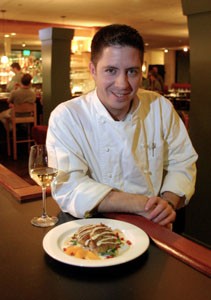
On the War Path: Dan Saski and Bonnie Jean Shelton fight it out.

War Is Hell

‘Kuwait’ serves up truth and consequences

By Patrick Sullivan

In wartime, truth is so precious that she should always be attended by a bodyguard of lies,” Winston Churchill once said. It may have been the only point on which the British bulldog would have agreed with Joseph Goebbels, Nazi propaganda minister and master of the big lie.

Such notions are taken to their logical conclusion by a character in Kuwait, now onstage at Sonoma County Repertory Theatre. In the play, someone asks a noted war correspondent if she likes telling the truth. “That,” the reporter says firmly, “is not my job.”

Is it coincidental that a drama about the first Gulf War hits the stage just as Gulf War II heats up? Probably not. But anyone imagining that Kuwait represents mere opportunism on the part of SCR will be quickly brought around by the above-average quality of playwright Vincent Delaney’s script. Political theater has a terrible reputation, but Delaney’s very political play, which took top honors at SCR’s New Drama Works Festival, avoids most (though not all) of that genre’s common mistakes.

The plot is a fairly deft piece of misdirection. The play, directed by Eric Thompson, opens with two characters onstage: a blindfolded and handcuffed American journalist named Rachel (Bonnie Jean Shelton), and her guard, a stern U.S. soldier (Dan Saski). The reporter’s crime? She went AWOL, breaking the strict rules of the pool coverage system set up by the Pentagon publicity machine. Captured while looking for real news in restricted territory, Rachel is now being interrogated by her captor.

But the soldier, who says his name is Joe, turns out to be something more interesting than a babysitter for wayward journalists. Citing a military emergency, he suddenly yanks Rachel out of her cell and takes his blindfolded captive on a bizarre and dangerous trip through the desert.

The playwright’s best move was keeping his cast small. Only four good actors are needed to stage this play, and SCR found them. Shelton’s bound hands hardly handicap her expressiveness: she manages to vividly portray her alternately frightened and ferocious character. Saski delivers almost as good a performance as the journalist’s mysterious and mercurial captor.

The plot is filled out by another duo: a military publicity officer facing off against a ruthlessly ambitious journalist who could be seen as Rachel’s evil twin. As these two do their dysfunctional dance through the press conferences that punctuate the play, Maria Giordano and Jessicah Larson achieve a nice comedic rhythm.

In fact, comedy plays a key role in making this play something more interesting than a screed against military doublespeak and lap-dog journalism. Delaney makes political points, but he tends to make through humor and plot development instead of preaching.

Kuwait does sound some false notes. Among the most serious come when the play’s characters act in jarringly implausible ways that seem mainly calculated to advance the plot or nail a punch line. For instance, playgoers may have a tough time imagining any blindfolded woman, even a brassy journalist, making as many sexy bondage jokes with her menacing captor as Rachel does with Joe. And would any ambitious journalist really tell a military official, “This war is funding my 401k”?

Still, for an original drama debuting at a community theater, Kuwait is remarkably good. And as the propaganda war waxes in the real world, this play’s concern with the flesh-and-blood consequences of lies couldn’t come at a better time.

‘Kuwait’ continues through April 5 at Sonoma County Repertory Theatre, 104 N. Main St., Sebastopol. For details, call 707.823.0177 or visit www.sonoma-county-rep.com.

From the April 3-9, 2003 issue of the North Bay Bohemian.

© Metro Publishing Inc.

Jean-Vi Lenthe

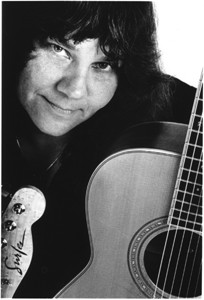
Orgy of Words: In ‘ODASea,’ author Jean-Vi Lenthe turns the hero myth upside down.

Power Trip

Mythic storyteller Jean-Vi Lenthe launches a feminized, bisexualized Odyssey, and presents it in her own voice–literally

By David Templeton

In the past, whenever poet Jean-Vi Lenthe took the stage to read any of her multisensory, lush, and labyrinthine poems, she’d be asked by certain dazzled audience members afterward for printed copies of her work. Though happy and quick to comply–“Hey, who doesn’t want their work to be wanted?” Lenthe asks with a laugh–she quickly discovered a little problem with this arrangement.

“I’d give her the poem,” she explains, “and she would say, ‘Um, this isn’t the one you performed last week. It’s not the same poem.’ But it was. It was the same poem. It just didn’t sound the same anymore, because the page couldn’t re-create the performance of my voice.”

In other words, the performance was the poem.

“If something is lively enough and has enough dramatic dialogue,” says the Petaluma-based Lenthe, “it really needs to be heard in the human voice. The sense of timing you have when you are speaking it and feeling it–the way you perform your words–it all contributes so much to the power of your piece.”

So intertwined are Lenthe’s words and Lenthe’s voice, that when it came time to publish her first novel–a sensual, epic lesbian dream-fantasy titled The ODASea: A Night Sea Journey (Wild Hare Press; $39.95)–she knew that an audio version would be far richer, and more Lenthe-like, than any printed book. With that in mind, she bucked tradition and set out to produce the audio version before the ink ever hit the press.

“I just knew it needed to be spoken,” she says. “Like the myths and epic tales of the great oral traditions of the world, some stories require more than mere words on a page.”

Not that she has anything against words.

Printed or spoken, Lenthe is clearly in love with words, their texture, their tone, their sound, and their power, and The ODASea–recorded, with music and sound effects, at the legendary Institute for the Musical Arts–is a wild, passionate, seven-hour-and-fifteen-minute orgy of words, all of them voiced by Lenthe herself.

That said, Lenthe’s six-CD novel is nearly impossible to describe, because, truly, there’s nothing quite like it. Characterized by Lenthe as “an extended dream sequence and/or mythic journey,” ODASea follows a seafaring Pagan adventuress named FaraJi, a refugee from her own emotional and physical addictions, who enters a fluid, nonlinear dream world populated by genies, mermaids, “perverse deities and sensual savages,” and goddesses of all shapes and flavors.

After meeting up, and swapping roles with her own love-hungry and sex-starved inner self–that would be the titular Oda–FaraJi endures a series of personal transformations above and beneath the ocean waves.

“It’s the whole ‘hero myth’ that the late Joseph Campbell went on about endlessly,” Lenthe says, naming the influential philosopher best known for his work with comparative mythology. “I’ve tried to feminize the hero myth,” she says, “and bisexualize it–even trisexualize it–and turn it all upside down.”

Lenthe, who followed a colorful career in live theater and cabaret with a stint in academia–she earned a masters in poetics from New College of California, writing her thesis on the oral traditions of voodoo–does things to Homer’s Odyssey that would make Campbell himself seriously hot and bothered (and probably delighted). Of course, Lenthe, whose own recovery from alcoholism fuels a significant portion of the novel, has always enjoyed turning things upside down a bit.

“I used to sit in AA meetings,” she recalls, “and read mythic poems aloud when it was my turn to speak. I talked about voodoo as much as I could. I couldn’t talk Jesus Christ, but I could talk voodoo. That was my higher power. I guess we had a pretty open AA group,” she acknowledges.

As to whom she hopes to reach with her atypical literary creation–lesbians? recovered addicts? fans of the works of Homer?–Lenthe just shrugs. “I’m curious what will happen with it myself,” she laughs. “Above all, I hope it inspires people. It’s like launching a journey and trying to get people to understand the momentum of journeying. Hopefully, people will hear this and believe they can do it themselves, that they can launch their own mythic journey.”

Jean-Vi Lenthe’s ‘ODASea: A Night Sea Journey’ is available through www.wildharepress.com. The official release party, book-signing, and performance (with music) is at Copperfields Books, 140 Kentucky St., Petaluma on Wednesday, June 4 at 7pm. 707.762.0563.

From the April 3-9, 2003 issue of the North Bay Bohemian.
© Metro Publishing Inc.

Lit to Be Tied

‘Drinking Coffee Elsewhere’ by ZZ Packer


‘The Master Butchers Singing Club’ by Louise Erdrich


‘Reading Water: Lessons from the River’ by Rebecca Lawton


‘The Only Girl in the Car’ by Kathy Dobie

Lit to be Tied

A bevy of recently released books to escape into

It’s hard to find time for pleasure reading these days. How can literature keep up with the stories available on TV or the web, stories more horrific and immediate than any writer could conjure up.

It’s a cliché to say that literature is an escape. But what are clichés, if not true? And while the bombs are falling, the writers are still writing, and the publishing industry is still churning out the books. Thankfully. As Jonah Raskin makes clear in his new release, reviewed below, writers are a hardy breed, their work braced to withstand all manner of world affairs. So when the reality TV gets a little too, well, real, rest your eyes upon one or more of the pages described below. –Davina Baum

Packer Punch

Now that the memoir form and chick-lit à la Bridget Jones are traipsing down the road of no-longer-trendy, the short story is having a renaissance. And to that end, award-winning writer ZZ Packer could be the poster child for how to deliver a dazzling emotional punch in a fraction of the pages needed for a novel.

If Raymond Carver and Toni Morrison could have spawned a protégé, she would look a lot like ZZ Packer, a writer about whom you want to say, “I knew her when . . .” With her elegant, even startling new collection of short stories, Drinking Coffee Elsewhere (Riverhead Books; $24.95), ZZ Packer has exploded onto the literary scene with gusto and raw talent. Readers of this hearty book will not be surprised to discover that this Yale and Iowa Writers’ Workshop graduate commenced her academic life as an engineering major; each story is a carefully wrought schematic of the inner life of its characters.

At times her characters are so visceral in their portrayals that you aren’t sure whether to laugh or clap and sing along with them, like Clareese and the other Pentacostals who dominate the pages of “Every Tongue Shall Confess.” Other times you are torn between despising or pitying them, as with Lynnaea in “Our Lady of Peace,” a high school teacher by default whose angry students enact a struggle for power in the face of hopeless odds.

Set in stark, mostly urban situations–an inner city high school, a religious summer camp, in the midst of the Million Man March in D.C.–these stories are peopled with characters who themselves have no choice but to become the landscape. Their inner worlds are so layered and complex that a 30-page story flashes by all too quickly.

Packer places her characters on polar ends of a continuum; they are either outspoken or reticent, and brimming with longing and devotion to ideals. Some are hung up on their beliefs to the point of absurdity, such as the father in “The Ant of the Self,” who, just out of jail, still expects his teenage son to pick up his slack.

In “Brownies,” Packer throws the question of discrimination under an entirely fresh light, as a Brownie troop of black girls confronts a troop of white girls–with an unforeseen twist. In both stories, the characters act audaciously, pushing past comfort zones so that you are cringing with dread at the outcome and eagerly reading on because you just have to know how it turns out.

One of the most touching and painful stories in the entire collection is the book’s namesake, “Drinking Coffee Elsewhere.” In it, a black college freshman tainted by her messy home life, and a chubby depressed white girl begin an unlikely friendship that presses up against the edges of taboo romance. As with all of Packer’s stories, it ends on a precipice, leaving the reader to take it the final step and fathom the plausible ending.

In this way, all of her stories have continuity. It is impossible not to keep thinking about her characters; they are so palpable, it seems they must have been lifted right out of the world around her. This, of course, is a sign of the careful and mischievous observer that Packer clearly is.

What makes Packer’s stories so extraordinary is the weight of simple truths hidden inside surprising and undeniable turns of phrase: “Indiana farmlands speed past in black and white. Beautiful. Until you remember that the world is supposed to be in color.” She uses substantial yet subtle metaphors to tailor a landscape that fits each character’s life, avoiding the facile and common clichés that seem to slip into so much fiction. From Tia the 14-year-old runaway to Spurge, the cowed son of a criminal, Packer’s characters leave you breathless and hungry for just one more story. –Jordan E. Rosenfeld

Something in the Water

As the title of Jonah Raskin’s new book, Natives, Newcomers, Exiles, Fugitives: Northern California Writers and Their Work (Running Wolf Press; $15), implies, it’s a volume for outsiders, wanderers, and hometown lifers alike. Numerous times throughout the book, Raskin, who moved here from New York, compares literary life on the two coasts, and I was stunned to read in the introduction, “When I first arrived from New York in 1975, our writers seemed few and far between. Folks ventured forth to see the prize pigs, sheep, and cows that the 4-H kids nurtured. . . . The fairs and fundraisers still go on, but now there’s a book culture to go with the agriculture.”

He’s right. Things have changed. When I first moved here three years ago, I was immediately struck by how you couldn’t swing a dead cat without hitting a person of the pen. Which is just Raskin’s point. Northern California has, in the past quarter-century, not fostered a literary scene as much as a loosely-affiliated community of writers, bound by a love of this place.

Natives, Newcomers pulls together Raskin’s Sunday book section columns from the Press Democrat over the past few years (his other work has also appeared in these pages), and the anthology covers a wide swath of writers: international bestsellers, local celebrities, cult favorites. Through profiles and interviews, Raskin takes a magnifying lens to 32 authors and their respective dots on the Northern California map, with a decided Sonoma County focus.

Unlike New York, Northern California has no one tiny slip of an island to pinpoint as the center of everything; our writers are spread out over valleys and mountains, from San Francisco to Mendocino. Sure, there are recluses, bohemians, lefties, hipsters, and showmen, but Raskin finds no distinct archetype, except that mélange of cultural experiences and values that California cradles.

Collectively, the columns form a vibrant tapestry. Every writer spins a thread, and a profound sense of place, rather than shared experience, binds them all together. Some of them no longer make their homes here, but there’s a stamp of golden, rolling hills and towering redwoods burnished on their brains that they can’t shake.

Natives, Newcomers also brings us closer to the region’s literary big guns–Alice Walker, Amy Tan, Isabel Allende–and introduces (or perhaps reintroduces) us to writers whose works deserve a wider audience, like Gerald Haslam and Greg Sarris. Raskin’s inclusion of nonfiction writers such as Alicia Bay Laurel (author of the back-to-the-land guide Living on Earth), celebrity chef Michael Chiarello (Napa Stories), and teen-guide writer Mavis Jukes (The Guy Book) keeps his book from having a cliquish “novelist’s club” tone.

Mystery fans will be delighted to find profiles of Sarah Andrews, Bill Moody, Bill Pronzini, and Marcia Muller, while poetry lovers will appreciate insights into Jim Dodge, Diane di Prima, Don Emblem, and others.

The one problem with the book is that, outside of the excellent introduction, it maintains a fresh-from-the-newspaper feel. The columns could have benefited from additional revisions, either as updates or expansions. The writing is a mite too breezy to ideally settle into a meaty book. But there’s a busybody delight in reading about all of the renowned authors whom we may be potentially rubbing elbows with at the supermarket. And Raskin’s supplemental list of selected books by Northern California writers is helpful and well-chosen.

For the curious reader, Natives, Newcomers, Fugitives, Exiles offers glimpses of writers whose lives may or may not be so different from ours. It’s constantly enlightening, and there is no way to escape the book’s covers without feeling the hunger to search out works by the writers therein. –Sara Bir

Singing for Sausage

I recall some months ago opening the latest New Yorker and seeing to my delight that there was a story by Louise Erdrich, a perennial favorite. “The Butcher’s Wife” was one of those stories with unpredictable characters, high emotion, odd details–the kind you loathe to finish, though once you have, you want to telephone everyone you know who loves fiction and insist they experience this fine thing too.

Happily, there was more to be had, as this was only an excerpt from her latest novel, The Master Butchers Singing Club (HarperCollins; $25.95), an ambitious book that begins on German soil at the wrecked finish of World War I and follows an intriguing population of German immigrants, traveling performers, scavengers, quirky Midwesterners, singing butchers, evil aunts, children, murderers, alcoholics, and veterans across many decades, even into and beyond the next “Great War.” For almost four hundred pages we are plunged into the world of Argus, N.D., where love and death seem to strike with random gusto, and where “butchers sing like angels.”

Erdrich’s first book was the extremely well received Love Medicine, and besides writing six more novels since then, she has also penned poetry, children’s books, and nonfiction. With her Ojibwe blood, many of her books have a Native American theme running through them, but The Master Butchers Singing Club is an exception. The book begins with Fidelis, a German sniper who manages to emerge from World War I intact, staggering into the hush of his childhood bedroom and sleeping for 38 hours, moved and shaken by a long-forgotten tranquillity and cleanliness.

Throughout the novel, Erdrich seems to define her characters by what they can endure. For Fidelis it is the slight guilt of the survivor; for his wife Eva, it is her illness; for their friend Delphine, it is never knowing her mother, and her slavish devotion to an alcoholic father; and for Delphine’s partner, Cyprian, it is all that he too has seen in the war, as well as the secret of his sexuality.

Fidelis arrives in Argus with nothing but his prized knives and the incomparable sausages his father taught him to make back in Germany. But this is enough to create a reputation, and he eventually opens his own butcher shop with Eva. Meanwhile, Delphine and Cyprian are perfecting a balancing act with a traveling show where Cyprian performs handstands on a chair balanced on Delphine’s stomach, for as she tells him, “My stomach’s tough. Why not? I am not ashamed I grew up on a goddamn farm. I’m strong all over.”

The two take their act on the road, pretending to be married so as not to provoke Midwestern disdain, but they eventually wind up back in Delphine’s hometown of Argus, where duty reels her back to her drunk father and the reeking pigsty the house she grew up in has become.

Eventually, Delphine ends up face to face with Eva, the woman who comes to affect every aspect of her life: “The first meeting of their minds was over lard. Delphine was a faceless customer standing in the entryway of Waldvogel’s Meats, breathing the odor of fir sawdust, coriander, pepper, apple-wood-smoked pork, a rich odor, clean and bloody and delicious. . . . She stood behind a display counter filled with every mood of red.”The friendship that forms between these two women is a palpable force, even in the face of the numerous trials that will confront them.

Aptly, in a book involving butchers, there is blood: blood devotion, blood rivalry, and spilt blood, the latter not just in the obvious sense of the slaughter of the two wars that bracket the novel. Argus has its small-town share of skeletons, metaphoric and literal. Step-and-a-Half, a sort of visionary character, a rag collector always on the periphery of the book, is privy to the secrets of the townspeople through the items they discard.

Step-and-a-half is also a keen observer as she walks relentlessly, “the only way to outdistance all that she remembered and did not remember, and the space into which she walked was comfortingly empty of human cruelty.” Yet ultimately, Erdrich reminds us, that earthly cruelty is always balanced with singing butchers. –Jill Koenigsdorf

A River Runs Through It

There are countless things in nature that capture our fascination. Flora and fauna instruct us on instinct and evolution; geology and geophysics council us on the vagaries of history and the truths of commuting energies.

But more often than not, the fascination with nature is less intellectual and more emotional, visceral. Rebecca Lawton, author of Reading Water: Lessons from the River (Capital Books; $18.95), echoes that instinctual attraction to a world free of concrete and rubber, an unconstructed world. In lyrical (sometimes purple) prose, she documents waterlogged, bumpy, yet joyous rides down the rivers of the western United States, weaving her rafting experience into a cohesive, nuanced portrait of a life spent loving the river. Part memoir, part geological and environmental primer, part meditation, and part adventure story, Reading Water truly earns its subtitle, “lessons from the river.”

From her first view of the river as a 17-year-old on a summer rafting trip–the Stanislaus, in fact, was her first love–Vineburg resident Lawton felt the pull. “I’d come to the river for a weekend,” she says in the introduction, “but I ended up staying for years.” Lawton became a professional river runner, leading rafting trips all over the western United States. Now retired from professional guiding, Lawton says, “I’m still steering the craft. Constantly adjusting course.”

The river as life. The rushing waters of the country’s rivers are ripe for the metaphor-plucking; Lawton gorges herself on them. The lessons from the river that Lawton relates ripple out poetically in even, smooth circles.

Each chapter in Reading Water is an education in river lore and geology, as well as a window into the life of a river guide, that curious creature whose summers are spent rafting and whose winters are spent waiting for summer. Using various fluvial properties–damns and reservoirs, floods, cobbles, and deltas–as metaphors, Lawton travels through the death of her mother, her marriage, the birth of her daughter, divorce, the suicide of a friend, and near-death experiences on the river. There are less dramatic events too: A kayaking trip in Baja with new friends, learning to meditate, and lessons from other guides populate Lawton’s tales.

One chapter introduces the idea of deliquescence, the “baroque divergence” of tree limbs or river tributaries. Lawton goes on to explain–via a narrative of her move to Pennsylvania, away from her beloved western rivers, and repeated trips back to California to watch her mother die of cancer–that deliquescence can mean becoming liquid through contact with the air; changing state. “Divorced spouses or deceased parents deliquesce, as certainly as ice melts in water, as they simultaneously never leave us.”

The prose-ready riches of Lawton’s chosen place of work do not escape her. She calls the river “a mother lode of metaphor” when turning the discussion to eddies, those swirling countercurrents in which a boat can get hopelessly stuck. An eddy “stands out as a precious diamond” in terms of metaphorical possibilities: “We can mine its real-life analogues endlessly, using language rooted in being stuck: backwater towns, dead-end love affairs, blind alleys.”

Lawton uses her discussion of eddies to relay a defining moment–a graduation of sorts, from assistant Grand Canyon guide and apprentice to her brother, to full-fledged guide. “I’m fortunate to have waited and trained as I did,” she explains, “because in all my rushing from river to river for experience, those days spent in limbo allowed me to reclaim my abandoned soul.”

The chapters are strong by themselves, and many were published previously as standalone essays in other collections (including Susan Bono’s literary journal, Tiny Lights). Taken as a whole, the essays create a composite portrait of the tenacity, passion, and dedication needed for a woman river guide (indeed, the gender gap plays a large role in many of the chapters)–as well as the tenacity, passion, and dedication of Lawton herself, on and off the river.

Yet taken as a whole the chapters also bombard the reader with metaphor after metaphor, and the repeated formula is somewhat tiring. While each chapter is a gem of experience and an education in river terminology, it becomes a guessing game to see how she will extend this geological term to that life lesson.

Luckily, the richness of Lawton’s prose and the obvious depth of her expertise keeps the book afloat and navigates its lessons with a steady oar. –D.B.

Lolita Tales

Hormones often grow and explode faster than adolescent bodies and minds develop, and the poignant and painful fallout can go on to shape lives. Kathy Dobie, at 14, suddenly noticed boys and men–and, to her marvel, they noticed her. Her lust awoke before her bookish innocence was prepared for it, and one day, determined to lose her virginity, Kathy donned a candy-striped halter top and hip huggers and sat on her lawn, waiting for adventure.

She got it. The unfolding of events that followed, Dobie funnels into her memoir, The Only Girl in the Car (Dial Press; $23.95). She relates a familiar tale–too much, too soon–in an amazingly transportive voice.

Dobie, a journalist who’s written for Vogue, Harper’s, and Salon, among others, was raised Catholic in Hamden, N.J. Her father was in charge of food service at Yale; her mother was a housewife whose life was consumed with raising six children. Though the Dobie family was loving and close, young Kathy longed for attention and strove to be mommy’s helper.

After years of being a pleaser and a good girl who was easily carried away by the potency of her own imagination, Kathy’s senses in the space of one summer became hyperalert to the downy blush of man-boy faces and the laughter of roughhousing teenage guys. “I was fourteen and the world was whispering, whispering. I though it was talking to me in particular,” she writes. Bold but guileless, she soon realized that the attention of males was easy to snag.

After her curiosity and longing led Dobie through an eye-opening series of sexual escapades (including an intentional encounter with a pedophile who clearly fancied her Catholic schoolgirl’s uniform over her burgeoning womanhood), she discovered how thrilling and ephemeral physical intimacy was.

She also got a fierce reputation as a slut, especially at the teen center where she had taken to hanging out with a ragtag pack of dropouts and party-goers. When Dobie began dating the leather-jacketed Jimmy, she was immediately seized with a sensation that went beyond their back-seat sex; it was the belonging she adored, the feeling of being a special sister or princess to all of the teen-center guys. But it was that willingness to please that triggered a series of events leading to Dobie’s gang-rape at 15.

Dobie uses the moment as the pivot for The Only Girl in the Car. With every cigarette the teenage Kathy smokes and every halter top she ties on, we can see her barreling toward that awful night. Though there are many cathartic memoirs out there, Dobie’s unbiased examination of the knotty, fumbling mess of young lust sets her book apart. Her recollection of wanting this vague, elusive interaction is so clear and immediate that it brings us back to our own fears and thrills. “I wanted boys, boys with light in their eyes, hoarse voices, hard arms, silky chests, bodies that were my size,” she writes.

Young Kathy finds sexuality wonderful, yet she has no idea of its depth–or its wrath. Even though she goes around dressed like a Lolita and acting out on her impulses without reservation, it still comes as a shock to her when she realizes that, both at school and especially at the teen center, she’s viewed as a cheap slut.

Though Dobie goes digging for the seeds of her frighteningly premature sexual revolution in her family life, she’s not assigning blame to anyone. You get the feeling that she became sexually active at such an early age because she couldn’t help herself. Her rape was not of her own will, but almost everything leading up to it was.

The Only Girl in the Car proves that not all girls who “go bad” do so out of ugly early traumas, but because curiosity drives them to. It’s an ultra-intimate case study of a situation whose horrible climax had its roots not in an abusive home or a deep sense of rejection, but in an unexceptional set of circumstances and in the mind of a girl who could not help but find out how it feels to feel. –S.B.

From the April 3-9, 2003 issue of the North Bay Bohemian.

© Metro Publishing Inc.

John Travolta

0

‘Pulp Fiction’ (1994)

Buy‘The Travolta Collection,’ a triple-pack of the ‘Saturday Night Fever,’ ‘Grease’ and ‘Urban Cowboy’ DVDs.

Photograph by Gene Page

Icon Status: John Travolta’s 31 films have made him the 20th biggest movie star of all time.

Greased Lightening

An American icon reflects on his status

Happy Birthday, John Travolta.

It’s Thursday, Feb. 18, 2003–Travolta’s 49th consecutive celebration of his own birth–and the big day has been a butt-kickingly busy one for the energetic birthday boy. Since early morning, the one-time TV Sweat Hog has been doing back-to-back interviews, working against the clock to promote his new movie–John McTiernan’s sneaky, military-themed whodunnit Basic–before he’s due on a movie set in Baltimore to film Touchstone’s big-budget fire-fighting epic Ladder 49 with Joaquin Phoenix and Robert Patrick.

Though he’s been rushing from appointment to appointment up and down the state of California, Travolta is the very picture of calm as he ambles into a San Francisco meeting room clad in black jeans, black T-shirt, close-cropped hair, and a smile big enough to land a jet plane on. Looking fit and trim, Travolta is in a playful, even philosophical mood, trotting out words like “frequencies” and “subcommunications” and “levels of complication” while picking and teasing at his quarter-century as a certified, shape-shifting American icon.

And John Travolta is an icon.

From the moment he walked down the street with a couple of paint cans in the opening of Saturday Night Fever, coerced Olivia Newton John into dressing up nasty in Grease, and rode that mechanical bull in Urban Cowboy, Travolta has fused himself into the culture. He survived several dark years appearing in talking-baby flicks and poorly conceived dramas (anyone remember Moment by Moment?), then pulled off a stunning, career-saving resurrection with Pulp Fiction, playing a heroin-addicted hit man alongside Samuel Jackson.

His fortunes revived, Travolta followed Pulp Fiction with an awe-inspiring stampede of a dozen films, most of them reasonably good: Get Shorty, Phenomenon, A Civil Action, Primary Colors, Battlefield Earth (OK, OK–we’re joking about the last one being good). In spite of the occasional misfire, if you look at box-office results, Travolta currently ranks as the 20th biggest movie star of all time. His 31 movies have earned a total of nearly $2 billion at the box office, an average of $60,583,274 per film, outperforming overall such powerhouses as Robert De Niro and Arnold Schwarzenegger. Not bad when you consider that many of his fellow ’70s-era icons such as Burt Reynolds and James Caan have all but disappeared, buried beneath the weight of their own legends.

“I’ve been thinking about this a lot lately,” Travolta says. “The icon thing, in some ways, has benefited me while it may have hurt others.” With Pulp Fiction (a film he jokingly calls “a two-hour-and-45-minute art film”) Travolta was playing against expectations, and it was a joy to watch. “Without the iconic baggage that I had going into Pulp Fiction,” he says, “it wouldn’t have been the thing that it was. It helped the film rise to a new communication of pop culture.”

With a laugh, he adds, “People were probably commenting on that at the time, but it only dawned on me recently.”

In Basic–set during a torrential hurricane on a U.S. Army base in Panama–Travolta plays Tom Hardy, a shady Army Ranger turned DEA agent investigating the disappearance of bad-ass sergeant Nathan West (Samuel Jackson), who was apparently killed, along with several of his Special Forces trainees, during a routine training exercise. While some viewers may not be able to follow the convolutions of the plot–think of it as The Usual Suspects on amphetamines, and in the rain–Travolta liked the script with its twists and turns and surprises.

Of course, the opportunity to reteam with Samuel Jackson was another of the project’s enticements. Unfortunately, since the action in Basic cuts back and forth between Hardy’s investigation and flashbacks involving Sergeant West and his Rangers, there isn’t a lot of union in this reunion. Even so, Travolta believes their alternating performances meshed well, since they share a similar rhythm as actors.

“There is an effortlessness to us together, which I always appreciate,” Travolta says. “There’s a frequency that we both tune into that’s different from a lot of actors, a chemistry that is difficult to explain–but happens to be a fact.”

In preparing to play an Army Ranger, Travolta trained with members of the 75th Ranger regiment at Hunter Army Air Field in Columbia, Ga. Though not mandatory–he’s played soldiers in several of his films–Travolta says he wanted to earn the Ranger tattoo he shows off in the film.

“It was awesome, training with those guys,” he nods. “They were very generous. But there was a poignancy to the experience as well, because the next week they were off to the Middle East. It’s one thing to go out and train with them, where it’s all movielike and it’s all fake–the guns are real and the grenades are real, but the targets are these pop up things, and it’s cool and it reminds you of Hollywood. But then they’re all packing up their bags to get on a plane to the Middle East, and you go, ‘Oh my God! This is what they’re actually going to do in maybe four or five days from now.’ They’re sweet guys, and I don’t know if they’ll be coming back.”

Asked what plans he has for his future, what roles he imagines that he’d like to play, his grin returns.

“My future lies in the imagination of writers,” Travolta laughs. “If you’d said to me, 20 years ago, ‘You’re going to play a heroin-addict hit man, then a president of the United States, then a lawyer, then a DEA agent, then a fireman–I never would have come up with that plan. If I ever slowed down enough to ask what kind of role I want to play, I feel like I’d miss out on something.

“But,” he adds, “I’m curious myself.”

Basic opens Friday, March 28, at theaters throughout the Bay Area.

From the March 27-April 2, 2003 issue of the North Bay Bohemian.

© Metro Publishing Inc.

‘Stone Reader’

0

All Lit Up: Filmmaker and avid reader Mark Moskowitz shows off his rare copy of ‘The Stones of Summer.’

Book Club

Author Lorna Landvik on addictive lit, writing prolifically, and the new documentary ‘Stone Reader’

Writer David Templeton takes interesting people to interesting movies in his ongoing quest for the ultimate postfilm conversation. This is not a review; rather, it’s a freewheeling, tangential discussion of art, alternative ideas, and popular culture.

Inside a tiny upstairs theater within the Rafael Film Center, Stone Reader, the stirring new documentary by Mark Moskowitz, has just come spinning to its bittersweet close. As the credits roll, Lorna Landvik–author, actress, occasional moviegoer, and devoted book-club member–rises to her feet to honor the film with her own one-woman standing ovation.

Of course, there are only three of us in the theater this morning: Landvik, myself, and Delores, a hired literary escort who is now gentling hustling Landvik from the theater–this was a private screening courtesy of the folks at the Rafael–and off to a bookstore appearance some 10 miles away. “What a great movie!” enthuses the Minneapolis-based Landvik as she scoots through the door and is gone.

Three hours later, after the well-attended bookstore gig has ended, Landvik and I–and Delores, who, incidentally, also loved the movie–are reunited at a quiet restaurant, where we finally get to talk about Stone Reader.

A word-of-mouth hit at the recent Slamdance Film Festival, Moskowitz’s offbeat film is an homage, of sorts, to the power of reading and the mystery of writing. One writer in particular forms the mystery at the heart of the film. He is Dow Mossman, whose 1972 Vietnam-era novel, The Stones of Summer, worked some major mojo on a then young Moskowitz. Throughout the lazily paced doc, Moskowitz attempts to locate the mysterious Mossman–who dropped out of sight after the novel emerged–and to learn why Mossman never published another book.

Landvik, by contrast, has published numerous books, including bestsellers like Patty Jane’s House of Curl, The Lone Pine Polka, and her latest quirky epic, Angry Housewives Eating Bon Bons, about the salty female founders of a decades-old monthly book club.

Landvik found Stone Reader to be funny, suspenseful, and intensely moving. “I love the way it got me,” she says, sipping a diet Coke. “I love the way the movie immerses you, somewhat voyeuristically, into the world of people who always talk about books–book agents, editors, crazy literature professors, people from Iowa City. It was such a wonderful movie for me to see. I could have bathed in it, it was so warm.”

She glances up at the waiter standing over us ready to take our order. After he has receded into the woodwork, Landvik announces her newly acquired eagerness to explore Mossman’s long lost novel.

“I’d definitely read it,” she says. “If I could find it. When I first heard about this movie, I went to my library and typed in the name Dow Mossman–and what kind of name is Dow, I’m asking you–but nothing came up. Maybe I’ll just have to find a copy at a church garage sale or something.

“It’s a great mystery to me,” she goes on, “why one book takes off and another doesn’t, or why one movie succeeds and another disappears before you know it was even out. I wish I knew what it was, ’cause then I’d be a heck of a lot more successful!”

In Angry Housewives–which introduces each chapter with the title of the book being read that month, and which character recommended it and why–Landvik taps into the whole book-club phenomenon that has become a niche market of the publishing industry.

“Book clubs have always been around,” she says, “but they’ve never been as big as they are now. I’ve always heard about so-and-so’s great aunt whose book club is reading the classics. Now you’re never in a group of 10 people without at least one of them saying, ‘Oh, my book club is reading blah-blah-blah.’ I’m in two different book groups myself.”

“In the movie,” I mention, “Moskowitz keeps stating that he’d like to see Stones of Summer be reissued. Would any of your book groups ever read a book like that?”

“Oh, absolutely,” she says. “If it ever does get reissued, I’ll be the first one to suggest it to my book group. I’m sure there would be a lot to talk about, lots of questions.”

“Such as?”

“Well, for starters,” Landvik says, “I’d ask, ‘What kind of name is Dow, anyway?'”

Web extra to the March 27-April 2, 2003 issue of the North Bay Bohemian.
© Metro Publishing Inc.

Open Mic

0


War Stories

Sonomans in Iraq give the unembedded view

Dr. April Hurley, who lives in Santa Rosa, is in Baghdad with the Iraq Peace Team, a group sponsored by Voices in the Wilderness, a joint U.S.-U.K. campaign that has been working to end the sanctions in Iraq since 1996. Another Sonoma County resident, Martin Edwards, is also there with IPT. Dr. Hurley has been sending messages home intermittently to update friends and family about the situation and give assurances of her safety. Here are some excerpts from her e-mails and those of her sister, Andrea Abbott.

March 24: E-mail from Dr. Hurley

If you’re not outraged, you’re not paying attention.

In Bagdhad, at Al Kindi Hospital, Fatima Abdullah is screaming in outrage: “Why do you do this to us?!”

Her eight-year-old, Fatehah, is dead, two other daughters are on stretchers, wounded by a missile that crushed her uncle’s home where they were staying outside Baghdad. An extended farming family, they have suffered with sanctions and economic devastation shrinking their stock of animals to one cow, a donkey, and chickens; they are barely able to feed themselves.

Nada Adnan, 13 years old and a student, states, “I wish that God would take Bush. Why did he do this to us? To me?” She has an open gash on her right cranium with underlying fracture and a large, deep shrapnel gouge cut into her upper-left thigh. She has no narcotic relief and cries out as aides press gauze into her leg wound. Nine-year-old Rana Adnan needs oxygen for a chest laceration and lung contusion with a concussion, head laceration, and shrapnel in her left arm.

And the list keeps going on. A 70-year-old man shopping for food for his family now has a compound fracture of his left upper arm and a chest wound through his lung.

He has rage and opinions, just as the multitude of families do these several days. How can I explain reasons to them? They know that Bush’s administration is interested in oil control and that they have no interest in democracy for these people. Why don’t Americans know this? Why did we elect this man without human feelings, they ask.

It’s not easy being an American in a Baghdad emergency room seeing victims and their families. I wish that George Bush was here with his answers to their outrage.

March 23: E-mail from Andrea

Dear Everyone,

I called the Andalus Apartments this morning at 10:30 (EST) and spoke to Wade Hudson. He said the IPT members have been given permission to begin visiting sites of damage and victims of the bombing attacks. According to Wade, April is a few miles from the apartments, camped out in the “Peace Tent” area; it is believed she will begin treating the injured.

Thank you again for all your support; I know April sends her love.

March 21: E-mail from Andrea

Everyone,

As family members know, April called at 11am (EST) to let me know she would be at the Andalus Apartments if anyone wanted to call her at 12:15pm. I didn’t have any success reaching her at that time; I think international lines were too congested.

March 20: E-mail from Dr. Hurley

Around 4am, on the fourth floor, Zahira Houfani and I were awakened in the Andalus Apartments by earth shaking, and noted explosions in the distance right away. The alarm sounded, and we grabbed our emergency kits and headed for the basement. Martin Edwards reported that he was on the roof when he saw jets in formation with running lights pass over from the south. Explosions were continuous for several hours but did not come close to our hotel, the other Iraq Peace Team hotel next door (Al Fanar), or the large, tall Palestine Hotel south of us where most journalists have moved.

Snipers were recognized in the Palestine Hotel and in the high-rise building north of my room. Photographs from windows of hotels are prohibited, and our hotel manager was forcibly removed this [morning] because some people–journalists for foreign TV or other news people residing at the Andalus, not our team–were seen taking photos or videos from the roof or windows. The Iraqis are always trying to warn us of transgressions that may compromise national security and draw official attention, and assert that this country is committed to our safety as foreign guests (they have selectively given us visas). Each of us working for Iraqi peace worry more about our own forces under the direction of war criminal Rumsfeld and civil-rights violator Ashcroft!

We have heard chanting of the people fired up for resistance in the distance, but our movements are limited and generally we are involved with the maternity hospital, children’s cancer hospital, orphanages, schools and writing/corresponding for Voices in the Wilderness. Iraqis have seen and conversed with us often, and our presence here is consistently appreciated; people have been adamant about that.

We laugh among ourselves that no matter how much Bush intends to “shock and awe” the Iraqis, he has no real knowledge of these people. They are so calm and methodical. Nothing will faze these men and women who have seen so much bombing, social devastation, war, and loss. We have remarked that the only ones shocked and awed are the Iraq Peace Team, journalists, foreigners, and our families back home!

I visited the maternity hospital again yesterday. Women have been pleading for cesarean sections to have their babies early–some too early–before the bombing. Many have miscarried from the stress of war threats of carpet bombing. Doctors have talked of needing to seek safety out of town with their families, leaving one midwife to do deliveries day and night during the siege.

George Bush Sr. did break the back of this country, and bomb and sanction this civilization back to the Stone Age. [They are] wonderful people, warm and generous, suffering in poverty and illness perpetrated by U.S. actions. Bush will never shock and awe an Iraqi!! What does he know?

Love, April

March 17: E-mail from Andrea

April called around 2pm this afternoon. She is well. The children held a candlelight vigil last night on the banks of the Tigris River. She said the people of Baghdad are resigned that war is 24 hours away. They are taping up windows and putting grills on doorways.

April sends her love and said not to worry, she is OK and in a good space with good people. She thinks that right now it is extremely important that we all take time to care for ourselves, as well.

March 17: E-mail from Dr. Hurley

I’m sorry that the news looks so grim after the Azores, my father’s base during WWII. He would be so upset that the islands were used this way. Those people held his heart, and he dreamed of returning before he died.

I went to the Almiriya Shelter, where more than 400 terrorized Iraqis waited out the bombing last time and were struck not once but twice by serial missiles which exploded and incinerated all who weren’t blown out of doorways. It’s no wonder that they don’t choose to go into bomb shelters this time. In fact, some of the 28 on the Iraq Peace Team won’t be staying in our hotel shelters just to honor the experience and fears of our neighbors, the Iraqis staying in their homes. I’m undecided right now, since I believe we will have locals in my hotel shelter, and those conditions may be more difficult. As a doctor, I need to be where the people and medical supplies are.

I believe that the Iraqis will try to defend Baghdad, and construction suggests some efforts. The troops patrol with machine guns and are friendly/appreciative of our presence. Young, earnest faces, efforts to speak to me in scant English words. I can’t stand the horrible view of our country.

The kids are dying of cancer in incredible numbers, much induced by our depleted uranium weapons radiation, our toxic exposure through starting refinery fires (our Special Forces soldiers have admitted to doing this assignment). There are few professional nurses, the mothers learn to administer platelets, intravenous drugs, and fluids.

What a forgiving people! Amazingly accepting and warm toward me, an American. I feel responsible for all the devastation that I allowed without civil disobedience sooner. I’m sorry for the risks that I didn’t take before.

The world is watching, and no one will tolerate what we plan to do. And on that note, my time is up here at the Internet cafe at the Hotel Palestine here in Baghdad, a block from my hotel, the Andalus Apartments.

Love, April

From the March 27-April 2, 2003 issue of the North Bay Bohemian.

© Metro Publishing Inc.

Household Finances


Photograph by Rory McNamara

Home, Sweet Home: The Soto family (from left, Luz Anabella, Socrates, Julio Jr., and Julio) must struggle to make ends meet in order to live in Sonoma County.

Household Finances

A jobs-housing linkage fee seeks to alleviate the lack of affordable housing

By Joy Lanzendorfer

Julio Soto has lived in Sonoma County for 11 years. He’s married with two children, and though both he and his wife work full time–he as an electrician’s apprentice and she as a housecleaner–they don’t have any hope of buying a home in the near future.

“At this point, it’s just unrealistic,” Soto says. “Someone who wants to buy a house in Sonoma County could not do it with the wages I’m earning.”

Soto is hoping that in four years, when he becomes a full-time electrician, he’ll be able to begin looking into buying a house. By then he will be making $30 an hour under the Local 551 International Brotherhood of Electrical Workers union. He’ll be 47.

“I am one of a good percentage of people who are all in the same boat,” he says. “Because they make low wages, it’s difficult for them to even contemplate buying a home. What are these people going to do, who can’t afford to buy a house or, in some cases, even pay rent?”

Soto’s story is a common one in Sonoma County. As one of many people making below the median income of $62,000, he is essentially locked out of the housing market. Many local people have no hope of buying a home for their families. Others are struggling just to pay rent, having to double up in apartments or commute for hours from cheaper areas like Mendocino or Lake counties.

These are the people who hold the county together: the people who pick the grapes, bag our groceries, teach our children, save our lives, or hold our hands when we’re sick. People born and raised in Sonoma County, who come back from college and find they can’t raise families where their roots are. Young and old, educated and not, more than 40 percent of the county’s population is staring the median $390,000 home price in the face and wondering how in the world they will ever be able to afford a home.

The need for affordable housing is urgent, especially lately with hundreds of people being roughly pushed out of jobs through layoffs. To help combat the problem, coalitions in Marin and Sonoma counties are pushing for adoption of a jobs-housing linkage fee, which would require new commercial development to contribute to affordable housing. Though all involved agree that the fee is just a drop in the bucket for a much larger problem, many feel that it is a step in the right direction.

Money for Housing

In Sonoma County, the jobs-housing linkage fee would be an incremental fee ranging between $1.80 to $3.50 per square foot for new commercial development. If a developer wanted to build a new retail complex, for example, he would have to pay a certain amount of money, depending on the size of the building. The money collected from the fee would go into a fund for affordable housing, and the developer could pass the fee on in the form of higher rent. The proposal is still in its early stages, though a coalition of advocacy groups staged their Housing Action Forum on March 22 to raise awareness of the campaign.

Marin County is currently drafting a proposal that tackles the need for affordable housing slightly differently. Though Marin initially considered a jobs-housing linkage fee, after much discussion with various groups, they opted to propose that developers build affordable housing units along with certain kinds of commercial construction.

“If a developer wanted to build a new 100,000 square-foot Costco, for example, he would have to calculate the number of retail employees and income ranges, and based on that, the planning department would figure out how many low and moderate-income housing units he would have to build,” says Barbara Collins, affordable housing strategist for the Marin County Planning Department. “Ideally, the units would be on the same land as the new development.”

Last year, Marin County released a study stating that since 86 percent of county land is devoted to open space, and the median housing price is $700,000, half of all local employees live outside the county and must commute to their jobs. About a quarter of these people drive for over 45 minutes each way to get to their jobs, adding to the traffic problem. With no affordable place to live, employers have trouble recruiting employees, and young people are fleeing the area, leaving an aging population behind.

“In Marin County, it’s been thoroughly established that employers lose employees due to the high real estate cost,” says Collins. “Employers here understand the relationship between affordable housing and jobs. It’s costly to everyone when an employee lives in Vallejo and drives three hours every day to get back and forth to work.”

Sonoma County’s circumstances are not that severe yet. Most of the people who work here live here, though a growing number of people are being forced to commute longer distances. It doesn’t take much imagination to see how Sonoma County’s situation could get worse in the near future, especially since housing prices continue to rise (the median price reached $391,250 in February).

According to a housing report from UC Berkeley, a third of homeowners spend more than 30 percent of their income on housing. And rent is too high for many incomes. To rent a two-bedroom apartment, a family needs to have a combined income of nearly $42,000, or $21.32 per hour. Yet in 2000, nearly half of the local jobs paid less than $26,500 per year. Low-wage jobs in the service and retail sectors accounted for 44 percent of all new jobs in the last seven years.

The jobs-housing linkage fee is not new to Sonoma County. In December 2001, a study by the consulting firm Economic & Planning Systems made a strong case for the fee, but Santa Rosa tabled it after business interests complained the fee would give the city a competitive disadvantage by driving up the cost of commercial real estate, forcing potential employers to go elsewhere. But the proposal is far from dead. A working group with a representative from each city is in the process of creating an ordinance to be adopted by the entire county.

“At this point, we are trying to come up with language that will work for all the cities,” says Larry Barnett, a Sonoma city councilmember and member of the jobs-housing linkage fee group. “We’re trying to develop an ordinance that provides flexibility. What applies to Santa Rosa doesn’t necessarily apply to Cotati, so there needs to be language that accounts for everyone. After we draft the ordinance, each city will vote on whether to adopt it.”

The fee is expected to raise $35.5 million over a five-year period if growth continues at the current rate, which is roughly 10 percent of the money needed to build affordable housing. Marin County’s jobs-housing ordinance accounts for 10 percent of the total problem as well.

Down to Business

Many in the business community say the jobs-housing linkage fee will hurt business because it would increase the price of real estate and keep new businesses from coming into the area. Though it is a small fee, it is one of many that developers have to pay. They are also required to pay environmental fees, design review fees, sewer fees, approval fees, and school district fees, among others. Though the fees are considered part of the building process, many say they contribute to the high cost of real estate.

“The argument could be made that there are already a number of regulatory barriers and hurdles for businesses to jump,” says Bill Arnone, an attorney with Merrill, Arnone & Jones, and chairman of the Santa Rosa Housing Authority. “Continuing to add them may pose significant problems for businesses wanting to come into the area.”

But housing advocates say the added affordable housing far outweighs the incremental fees.

“A jobs-housing linkage fee is not in the top 10 reasons why an employer would or wouldn’t come to Sonoma County,” says Kelly Brown, the Sonoma and Marin counties field representative for Greenbelt Alliance, which is promoting the proposal. “They are going to be more concerned about things like affordable housing for their work force, transportation, and healthcare.”

To protect independent businesses, Barnett hopes to add a size threshold to the ordinance so that smaller businesses won’t be squeezed out. But even if the fee does contribute to the high cost of real estate, the long-term benefit of affordable housing outweighs the short-term, as other communities that have initiated the fee have found out.

San Francisco has a jobs-housing linkage fee of roughly $7.50 per square foot on commercial real estate. Though the San Francisco business community was initially against the fee, they turned around when they did research on the cost of recruiting and the decreased productivity of people who commute long distances, according to Barnett.

Another benefit of the fee is that it holds employers responsible for their part in the affordable housing problem, believes Martin Bennett, a history professor at Santa Rosa Junior College and the head of New Economy Working Solutions.

“Shared prosperity is in everyone’s best interest,” says Bennett. “It’s pragmatically in the employer’s self-interest to provide affordable housing, because it helps the long-term economy. We don’t want this area to turn into Silicon Valley. If a company coming into this community doesn’t want to take on its fair share, maybe it would be better off somewhere else.”

But with the jobs-housing linkage fee only helping with 10 percent of the total problem, all sides agree that by itself the fee is just a drop in the housing-crisis bucket. But combined with other things, it is a useful tool. For one thing, it would help in lobbying for affordable housing funds from the state of California, which is tighter than ever, thanks to the current budget crisis.

“The jobs-housing linkage fee is not the whole picture,” says Brown. “But it’s still an important fee because it shows local support with sellers and the business community when we’re competing for state housing funds. It would help leverage further funds.”

Proponents of the jobs-housing linkage fee made additional recommendations for the affordable housing problem in a report by UC Berkeley in conjunction with several local groups, including the Service Employees International Union, the Faith Based Coalition, New Economy Working Solutions, Greenbelt Alliance, the Living Wage Coalition, and others.

Written by Ph.D. candidate Nari Rhee, some of the recommendations, in addition to the jobs-housing linkage fee, include creating a housing trust fund devoted to affordable housing; increasing redevelopment agencies fees from 20 percent to 30 percent to go to affordable housing; creating limited equity co-ops, which allow families to buy into a housing complex that gives them specific tax breaks; and reforming the local housing element, which is the amount of affordable housing the state requires local communities to build.

Running Out of Land

Rhee’s aggressive recommendations are based on what she sees as a serious land issue in Sonoma County. “One problem with Sonoma County is that there is a lot of single-family housing, which is basically housing for rich people,” she says. “If they don’t do something about that kind of housing, they are going to run out of land.”

While other parts of the Bay Area have had a housing crunch for decades, Sonoma County’s started in 1990 with the economic boom. Between 1988 and 2001, employment increased by 40 percent in Sonoma County. Santa Clara County, by contrast, added only 20 percent in new jobs. People flooded into the county for work, and though income increased, the price of housing rose much faster.

Because of the single-family developments, most of the land is already used up, according to developer Alan Strachan. “Even if you could build enough affordable housing to meet the demand, 80 [percent] to 85 percent of developable land is already used,” he says. “Even if you did a total build-out on the remaining 15 [percent] to 20 percent of land for multifamily subsidized affordable housing, you wouldn’t be able to meet the demand for the housing at the current rates.”

It doesn’t take a genius to see why people want to live here. The weather is perfect most of the time; it’s rural but within driving distance to a major city; and despite the current downturn, the economy is stable and diversified.

And it’s a beautiful place to live, something that is greatly underestimated. Beauty is the underlying tension in Sonoma County’s housing problem, with some groups trying to protect the beauty and others trying to harvest it. It’s a difficult balancing act for everyone involved. While environmental regulations protect the open space that so many people in Sonoma County love, it also limits the supply of land, driving up the cost of housing.

“With a mobile economy, people have more freedom to live where they want, where 50 years ago they had to live near wealth creators, like railroads, mines, or factories,” says Strachan. “Sonoma County’s beauty is fundamentally driving the cost of housing. It’s not so much a supply versus demand thing with housing. The real thing that is in short supply here is the beauty.”

As more land gets used up, more political pressure is put on the open space.

“In the future, the need for housing will put political pressure on the green land,” says Rhee. “That’s why affordable housing needs to be addressed now, before these issues become worse.”

Beyond the Government

No matter how you slice it, governmental fees and regulations won’t be able to completely solve the problem of affordable housing. How much they do or don’t help the situation is debatable, but almost all agree that it is just a part of the total solution.

Some believe that focusing on the economy may be the solution to the problem. When the economy is going well, employers find a need to create more housing for their employers, as some tech companies did during the telecom boom, with employers recruiting engineers with the promise of housing assistance.

“I’m a big believer in the free market,” says Arnone. “As the economy improves, people are more prosperous and it will raise the standard of living for people, and, as a byproduct of that, lessen the affordable housing problem.”

But an improved economy will still lock out the poorer part of the population from housing. With 57 percent of the population earning less than $12.50 per hour, one solution may be to increase wages through more unions or a living wage.

“You have to pursue the wage and benefit side of the affordable housing issue,” says Bennett. “You can’t build your way out of a crisis. You have to enable people on the bottom to earn a decent wage through developing high skills and high rate of unionization. You need to provide good jobs first. Affordable housing is the other side of the issue.”

The housing issue isn’t likely to go away soon. But as hard as it is, it has always been a concern for people living here, along with other issues, like crime, healthcare, and transportation.

“This is one generation’s version of an old issue,” says Arnone. “Housing is a problem that’s been here before we came along and will be here when we’re gone. All we can do is address the problem while we’re here, and do the best we can.”

From the March 27-April 2, 2003 issue of the North Bay Bohemian.

© Metro Publishing Inc.

SSU Budget Cuts

0


Photograph by Michael Amsler

Save Our Classes: SSU student Jason Spencer wants to lessen the impact of budget cuts on students.

Cutting Edge

SSU budget cuts–neither here nor there

By Joy Lanzendorfer

When it comes down to it, students at Sonoma State don’t want music centers, new dorms, and fancy pillars standing in the parking lot,” says SSU senior Marcia Simmons. “They want a good student-to-teacher ratio, a wide selection of classes, and to graduate within four years.”

Simmons is one of many Sonoma State University students unhappy about how the school is handling the state budget cuts. With $4.2 million, or 10 percent, to be cut from its budget, SSU has to make some tough decisions. Fees have already gone up $72 dollars per semester for in-state undergraduates, and may go up another 25 percent next year.

Even though the school promised not to lay off any full-time employees, including tenured professors, next year it won’t be rehiring 100 nontenured professors, called lecturers. In addition to these cuts, SSU had planned to drop 214 class sections, although they have slimmed that cut by 80 percent by dipping into an emergency reserve.

On March 26, SSU faculty and students held a rally to voice their concerns about the budget cuts. Many feel the planned changes will lessen SSU’s educational value. With fewer classes, the remaining classes will be crowded, in some cases accommodating up to 120 students. Professors will have heavier workloads, increasing the ratio of students to teachers. And with more competition for the remaining classes, students may be forced to take an extra year to graduate.

“Basically, the school is increasing fees but decreasing the level of services it’s offering the students,” says junior Jason Spencer, one of the rally organizers.

The administration admits that in addition to paying more in fees, students will have fewer classes, less time with overworked professors, and overcrowding. But as part of the state educational program, SSU’s budget is between a rock and a hard place. The cuts simply have to be made.

“We’re not alone in making these cuts,” says SSU spokesperson Susan Kashack. “Every university in the state has to make these kinds of decisions. It’s not just an SSU problem. It’s not even the governor’s fault. It’s a matter of the economy.”

If the economy doesn’t improve, schools may be facing even more trouble. If the legislature doesn’t accept the governor’s budget in May, even more cuts may be made to the university system.

But while everyone agrees the cuts are inevitable, some feel SSU’s current plan hurts students while protecting the administration. In a May 2002 article in California Faculty magazine, CalPERS board member George Diehr called SSU “the poster campus for management bloat” that spends “an excess of about $5.9 million on manager salaries and has a surplus of 95 managers.” Some students want to see more cuts in the administration rather than the current plan, asserting that cutting 10 percent of the top 25 administrator salaries would save over $300,000.

But Kashack says the administration is already being cut, with some departments losing 100 percent of their operating costs. Her department will see operating costs cut in half.

Still, others feel more could be done.

“We would like to see investigation into restructuring the administration,” says Andy Merrifield, a tenured political science professor who co-coordinated the rally. “Though we agree we should avoid laying off full-time employees, we would like to see if some administrative people could be used differently and if other areas could be made more efficient.”

Some are also complaining about all the new construction at SSU, including the Green Music Center, an acoustically advanced music facility that broke ground in October of 2000 and has had trouble reaching its goal of $48 million for construction costs. Many students are calling for a halt of the construction of the center, which they see as an unnecessary luxury in the face of reduced academics. But the Green Music Center is funded through donations, so the school is unable to redirect that money into anything else.

However, the employees who solicit donations for the Green Music Center are paid from the general fund, not from donations. Merrifield says that paying their salaries out of the center’s donations could shave several hundred thousand from the budget.

In addition to these suggestions, students and faculty are also talking about opening a nonprofit fund with the hope that SSU employees and students will donate. The money would go toward saving the jobs.

“Everyone pays a little so no one has to lose their job,” says Spencer. “We’ve all been put in a bad position with these budget cuts, and we hope we will be able to work together.”

From the March 27-April 2, 2003 issue of the North Bay Bohemian.

© Metro Publishing Inc.

Fumé Bistro

0


Photograph by Michael Amsler

Local Comfort: Chef and owner of Fumé Bistro Terry Letson focuses on well-conceived California bistro fare.

Bistro Aflame

Napa’s Fumé Bistro hits the high marks of Wine Country excellence

By Sara Bir

Just one year into its existence, Fumé Bistro in Napa has drawn in a neighborhood crowd of Napa Valley residents with its charm, atmosphere, and dependably satisfying food. Neither too elaborate nor too forced, chef-proprietor Terry Letson’s menu is chock-full of fairly common California bistro fare, but it’s all executed with thought and is welcoming to sit down to.

Letson and his wife Gigi (who looks after front-of-the-house matters) owned a few restaurants and a wine shop in Southern California before moving up north. In addition chef Letson spent four years working at places like Domaine Chandon, Bistro Don Giovanni, and Deuce before opening up Fumé Bistro, and if the restaurant’s good-naturedly buzzing dining room is any indication, the research paid off.

The restaurant, off a frontage road facing Highway 29 in north Napa, is not tucked away by any means, though it’s not in the most illustrious of locations. There’s a large outdoor dining area in the front that looks like a lovely place for dining al fresco in the warmer months, though it being winter still when we went, we found the patio in hibernation.

Inside, the restaurant is very open, with a tiered kind of flow from the long wood bar to the dining area. The kitchen is in view, but not nakedly or obtrusively so, creating a connection between the front and the back of the house that’s casual and not distracting (you know how some open kitchens can turn into The Chef Show!). A few splashy-bright still lifes of fruit (like Wayne Thiebaud, only without the pastel palette) hang on the walls, but otherwise the space is welcoming yet basic.

On the night we were there, a winemaker dinner event had the bar area packed with hobnobbing folks. Yet even so, for a Tuesday night, the regular tables were filled impressively with diners, and the background chatter hummed.

We started off with a roasted artichoke in a tarragon aioli, which came garnished with a grilled lemon ($6). An artichoke prepared well and served simply is a grand thing, but artichokes can be tricky. This artichoke, meaty and tender, was an artichoke to call home about, and we gobbled down its flesh doused in the not-too-garlicky aioli.

The oven-roasted mussels (Fumé gets a lot of mileage out of its wood-fired oven) with grilled sausage and roasted pepper vinaigrette ($8.50) also won us over quickly. Bright orange-red, the roasted pepper vinaigrette bathing the mussels was more like a brothy red pepper coulis, but it was wonderful, roundedly sweet, and just barely tart. I was quite content to dip my bread in the bowl to sop it all up. The bits of grilled sausage were a nice touch, but not fully necessary, given the quality of the rest of the dish.

The kitchen happily split our salads for us, which arrived at our table crisp and cool, and plated with much more care than most kitchens devote to the inconvenience of splitting salads. More or less traditional, the caesar salad ($7) suffered a bit from the overly citrusy addition of lemon zest to the dressing (reminding some diners at our table of furniture polish), but the fried capers dotting the romaine leaves were a welcome garnish. The comice pear salad ($7.50) with endive, maple-roasted walnuts, Point Reyes blue cheese, and pear vinaigrette was well-balanced and had just the right amount of walnuts and blue cheese gracing the greens.

Mr. Bir du Jour ordered a grilled chicken pizza ($13.50). Even though I am categorically opposed to chicken as a pizza topping, a lot of people are not, and this fine pizza, with roasted portobello mushrooms, smoked mozzarella, and pesto, will serve them well. The pesto added flavor and color, and lacked the massive amount of oil that usually accompanies pesto. The crust, crisp and not thick or doughy, was good enough to eat on its own.

The entrées presented plenty of choices for protein lovers: three seafood dishes; two each of pork, lamb, and beef; and one chicken. The American Kobe tri-tip steak and fries ($19.95) paired tender and note-perfect medium-rare meat (probably should have ordered it rare, natch) with golden, skinny little spears of fries that were like the world’s best fast-food fries recast in a bistro setting. The tarragon aioli from the roasted artichoke was back for an encore. An arugula salad came on the side, its peppery leaves cutting through the salt and grease of the beef and the fries.

The braised lamb shank ($18.50), served on rosemary white beans with a ragout of mushrooms, pearl onions, fennel, and baby carrots, shredded into rich, savory bits right off the bone, and its meaty red wine sauce only augmented the effect. We’d have preferred the beans to have been a little more cooked, though; another 10 minutes in the pot and they’d have been a lot creamier.

Every time I see Day Boat scallops on a menu I think of “The Banana Boat Song.” Am I alone in this? In any case, the seared Day Boat scallops with lemon parsley risotto, sweet pea coulis, and radish sprouts ($18.50) were good, if underseasoned. The risotto would have benefited from more of an acidic tang to stand up to the creamy pea coulis.

Pastry chef Vicki Garcia’s desserts ($6.50 each) were worth saving some room for. A chocolate almond cake with milk chocolate almond custard, mocha cream sauce, and candied almonds had a rich and homey soul dressed up in a classy presentation. The fudgey cake was great on its own, even without the creamy custard filling its center.

We stood divided on the trio of finely executed crème brûlées: I liked the understated orange cardamom; the Kobe-beef eater preferred the classic vanilla; and Mr. Bir du Jour sided with the puddinglike chocolate. Something for everyone, I guess.

We noticed more than a few parties toting along their own wine bottles, which communicates two things: people are in the habit of coming here and feel at home enough to bring their own wine; and the corkage is cheap ($10, unless you purchase a bottle from the house in addition, in which case it’s free). The Miner 2000 Viognier ($18 half bottle) was crisp and acidic, with mild mineral notes and a peachy ripeness in the mouth preceded by a prickliness on the tongue–lovely!

The wine list is appropriately heavy on Napa and Sonoma valleys and their most dominant varietals, though there are a few bottles and wines by the glass here and there from other regions and countries. It’s not a massive list by any means, but its assortment of styles and price points is well-chosen.

From the moment we set foot in the door, our service was outstanding–professional yet not stiffly formal. Considering that there was a huge party seated just prior to our arrival, I was impressed at how we were left wanting nothing during our whole stay. Also considering that we were sort of an obnoxious table–taking forever to make up our minds, then changing our minds, and then repeatedly asking our waitress questions about very minor aspects on the menu, like what farm the radish sprouts came from–I’d say the wait staff are doing their job smashingly.

Some past reviews of Fumé have been warm but not glowing, though based on our experience, I’d have to say that the Letsons and their team have hit a very good stride in creating the kind of restaurant where people can go for welcoming food prepared with care in an atmosphere that furnishes a sophisticated comfort rather than slippery-sleek style. Napa Valley has enough world-class destination restaurants for once-in-a-lifetime occasions. Fumé Bistro comes through as a notable, if not innovative, restaurant for the rest of our lifetimes.

Fumé Bistro & Bar, 4050 Byway East, Napa. Lunch daily, 11:30am-2:30pm; dinner, Sunday-Thursday, 4:30-9pm, and Friday-Saturday, 4:30-11pm. 707.257.1999 or www.fumebistro.com.

From the March 27-April 2, 2003 issue of the North Bay Bohemian.

© Metro Publishing Inc.

‘Roman Candles’

One-Man Show: Tommy Mierzwinski's 'Roman Candles' literary magazine is modest, but full of good writing. Shooting StarsTommy Mierzwinski's literary magazine 'Roman Candles' is small but burns brightlyBy Sara BirThe wonderful, horrible thing about the Internet is that anyone with a computer and some patience can create a website. An enlightening, distinct purpose is not required, which is why there...

‘Kuwait’

On the War Path: Dan Saski and Bonnie Jean Shelton fight it out.War Is Hell'Kuwait' serves up truth and consequencesBy Patrick SullivanIn wartime, truth is so precious that she should always be attended by a bodyguard of lies," Winston Churchill once said. It may have been the only point on which the British bulldog would have agreed with Joseph...

Jean-Vi Lenthe

Orgy of Words: In 'ODASea,' author Jean-Vi Lenthe turns the hero myth upside down. Power TripMythic storyteller Jean-Vi Lenthe launches a feminized, bisexualized Odyssey, and presents it in her own voice--literallyBy David TempletonIn the past, whenever poet Jean-Vi Lenthe took the stage to read any of her multisensory, lush, and labyrinthine poems, she'd be asked by certain dazzled audience...

Lit to Be Tied

'Drinking Coffee Elsewhere' by ZZ Packer'The Master Butchers Singing Club' by Louise Erdrich'Reading Water: Lessons from the River' by Rebecca Lawton'The Only Girl in the Car' by Kathy DobieLit to be TiedA bevy of recently released books to escape intoIt's hard to find time for pleasure reading these days. How can literature keep up with the stories available on...

John Travolta

'Pulp Fiction' (1994)Buy'The Travolta Collection,' a triple-pack of the 'Saturday Night Fever,' 'Grease' and 'Urban Cowboy' DVDs.Photograph by Gene PageIcon Status: John Travolta's 31 films have made him the 20th biggest movie star of all time.Greased LighteningAn American icon reflects on his status Happy Birthday, John Travolta.It's Thursday, Feb. 18, 2003--Travolta's 49th consecutive celebration of his own birth--and the...

‘Stone Reader’

All Lit Up: Filmmaker and avid reader Mark Moskowitz shows off his rare copy of 'The Stones of Summer.'Book ClubAuthor Lorna Landvik on addictive lit, writing prolifically, and the new documentary 'Stone Reader' Writer David Templeton takes interesting people to interesting movies in his ongoing quest for the ultimate postfilm conversation. This is not a review; rather, it's a...

Open Mic

War Stories Sonomans in Iraq give the unembedded viewDr. April Hurley, who lives in Santa Rosa, is in Baghdad with the Iraq Peace Team, a group sponsored by Voices in the Wilderness, a joint U.S.-U.K. campaign that has been working to end the sanctions in Iraq since 1996. Another Sonoma County resident, Martin Edwards, is also there with IPT....

Household Finances

Photograph by Rory McNamaraHome, Sweet Home: The Soto family (from left, Luz Anabella, Socrates, Julio Jr., and Julio) must struggle to make ends meet in order to live in Sonoma County.Household FinancesA jobs-housing linkage fee seeks to alleviate the lack of affordable housingBy Joy LanzendorferJulio Soto has lived in Sonoma County for 11 years. He's married with two children,...

SSU Budget Cuts

Photograph by Michael AmslerSave Our Classes: SSU student Jason Spencer wants to lessen the impact of budget cuts on students.Cutting EdgeSSU budget cuts--neither here nor thereBy Joy LanzendorferWhen it comes down to it, students at Sonoma State don't want music centers, new dorms, and fancy pillars standing in the parking lot," says SSU senior Marcia Simmons. "They want a...

Fumé Bistro

Photograph by Michael AmslerLocal Comfort: Chef and owner of Fumé Bistro Terry Letson focuses on well-conceived California bistro fare.Bistro AflameNapa's Fumé Bistro hits the high marks of Wine Country excellenceBy Sara BirJust one year into its existence, Fumé Bistro in Napa has drawn in a neighborhood crowd of Napa Valley residents with its charm, atmosphere, and dependably satisfying food....
11,084FansLike
4,446FollowersFollow
6,928FollowersFollow