Watermelon Molasses

0

Photograph by Rachel Robinson

The Mysteries of Watermelon: Not exactly pretty to look at and not exactly obvious in its uses, watermelon molasses is a relic of church-basement recipes.

Mining for Watermelon Ore

The mysteries of watermelon molasses, revealed. Sort of.

By Sara Bir

Watermelons are an icon of summer: the sitting out on doorsteps, the spitting of seeds into the thick summer air, and the slicing of cool, pink wedges for picnics and backyard cookouts.

Watermelon is not a condiment, nor a pantry staple–unless it is in molasses form, which not many people know about. This story tells why.

At a used book sale last summer I found an old self-published cookbook–Our Favorite Recipes, Compiled by the Friendly Aid Society of Free Evangelical Lutheran Cross Church, Fresno, California–whose 112 hand-typed pages had lain as a time capsule, now revealing recipes for things like leftover meat casserole, orange cheese salad, and mystery pudding. The cookbook itself is not that old, published in 1979; by that time, the majority of its luncheon jello salads and offbeat casseroles were already growing dated.

I became fascinated with this cookbook, which was initially unremarkable when compared to its plentiful spiral-bound kin–decades-old welfare-league, church-group, and investment-club cookbooks are hardly a rarity. But this one was different. It had typical recipes: classic “gimmick” cakes that feature mayonnaise or canned fruit cocktail as secret ingredients, and “international” casseroles from enchiladas to lasagna to Hong Kong pork chops, all requiring the addition of a can of cream of mushroom soup.

Beyond these charming throwbacks, though, were instructions for preparing some kind of fried pasties called grebbles (no fewer than six variations), savory dumplings called hava glase and merva glase, and berrocks (yeasted buns stuffed with ground beef and cabbage). The cookbook bothered with few explanations. Many times, half of the method would be missing, as if it was assumed the cookbook’s audience would instinctually know how to fry the batter for spatza grebbles.

The strangest discovery of all was watermelon molasses. Three coffee cake recipes called for its inclusion. Watermelon molasses? Where does one get such a thing, what on earth does it taste like, and why was an entire congregation of Lutheran women in Fresno putting it in their coffee cakes?

Combing through cookbooks of all ages and cuisines, no mention of watermelon syrup or molasses came up–not in The Fannie Farmer Cookbook, not in Larousse Gastronomique, not in The Joy of Cooking, not in any one of the dozen-plus Time-Life Foods of the World series.

Even the Internet yielded no insights, save a mention on the Watermelon Growers Association site stating that during the Civil War, people would boil down watermelon juice to use as a sweetener.

The whole concept sounded like something straight out of a Laura Ingalls Wilder book, with Ma boiling down gallons of watermelon in a cauldron over a fire so they’d be able to make cakes and sweeten their coffee when they couldn’t splurge on white sugar.

Our Favorite Recipes did contain directions for making watermelon molasses at home. Making it myself would be the only way to get to the bottom of the mystery. I felt it my duty as an amateur food historian to bring watermelon molasses back into culinary circulation, like it would suddenly become a hip, new ingredient for cutting-edge chefs to drizzle over foie gras.

Melons at Safeway were on sale for 59 cents a pound. I bought four. The cookbook said to mash the watermelon through a colander and then strain it into pots. This sounded a bit too old-world, so I roughly broke up huge chunks of blushing watermelon flesh with my hands and dumped it in batches into the blender, which I pulsed a few times before pushing the sludge through a strainer.

By the end of the hour and a half it took me to massacre four melons, the smell was overwhelming–a flash of memories smearing two and a half lost decades of sunburns, cutoff shorts, scabs on knees, firecrackers, and suntan lotion.

Watermelon, its flesh so wet and dense, bleeds and squirts upon every surface possible. The cabinets and walls were splattered with a rosy Jackson Pollock rip-off, and in the sunken pockets of our sagging kitchen counter were shallow, pink ponds floating black-seed canoes.

The book said to boil the juice down for seven hours, by which time I had just about finished cleaning up the kitchen. Perfect.

The two stockpots on the stove began with watery, translucent contents whose crest of foam was not unlike frappé. Tiny flecks of pulp dotted the surface. Just after the juice first reached a boil, it took on the deep orange hue of carrots and smelled undeniably vegetal. The evaporation from the stockpots hung balmy in the air, dampening the handrail on the stairway and rendering the kitchen an indoor jungle.

As the liquid reduced, its orange-rust color blossomed into a deep maroon, as saturated as Rit dye. It became opaque but no thicker, until it was just inches from the bottom of the pot; then, its simmering shifted from loose and rolling to sluggish and gurgling, bubbling densely like an alien caramel. It looked like runny strawberry jam–hardly the glossy-smooth mahogany molasses clone I had anticipated.

Once cooled and in the jar (a one-quart yield exactly), the stuff had the purple-red depth of a massive garnet. The stink of the whole operation still clung to the air, a puzzling approximation of the invisible cloud of scent a big field of squash, beans, and tomatoes give off when baking in the August sun.

The watermelon molasses confounded me. It was highly sweet and didn’t taste or smell of watermelon but of overcooked monster patty-pan squash. I made two of the coffee cakes from the cookbook, one yeasted and the other a quick bread. Their sweetness was subtle and their crumb was tinted the merest hint of ruby flush. The influence of watermelon was difficult to discern.

Ultimately, the vexing contents of the jar remain undisturbed on the highest shelf, only occasionally used or pondered–hardly the enlightening culinary discovery I was yearning for. I’ve come to appreciate the watermelon molasses’ confoundingly unfruity aromas and complex, otherworldly undertones in savory foods that beg for a kick of sweetness without the harshness of sugar. A tablespoon or two is nice in vinaigrettes, and a few random soups and barbecue sauces have been mellowed by its touch. But I see, smell, and taste the watermelon molasses on its own, and I wonder: Did I do something wrong?

Is watermelon molasses worth spending an entire day mutilating a stack of watermelons just to obtain this questionable nectar? Maybe if you’re Thomas Keller or one of his French Laundry externs, where watermelon molasses could meet its ideal application in a watermelon reduction sorbet or the vehicle for a pink peppercorn glaze on broiled quail.

But 10 years from now, when my quart jar finally runs out, you won’t find me boiling down any more batches. Not unless any of Fresno’s aging Lutheran community happen to be around. Then we’ll talk.

From the September 4-10, 2003 issue of the North Bay Bohemian.

© Metro Publishing Inc.

Rory Lynch

0

Here’s Rory!

How does 25 years translate into human time?

By Sara Bir

The Bohemian, at 25, has gone through many changes but is still North Bay at its heart. As is Rory Lynch, who has called Sonoma County home for 25 years. Figuratively speaking, when Lynch was just a baby, so was the paper (as The Paper). They’ve grown up together–not exactly as brother and sister, but more as members of the same community and generation.

We thought it would be fun to bring a more distinct human element to the Bohemian‘s silver anniversary proceedings: Zero in on one case study, if you will.

And Lynch–raised in Sebastopol, schooled at Sonoma State University, and presently living in St. Helena–is our man. This dude surges with positivity, welcomes new ideas, makes a concerted effort to get involved with the community he calls home, and is open to the world beyond that home.

Though Lynch’s immediate roots are local, his family history reaches across the seas to Ireland, where both of his parents hail from. They met at a dance at an Irish cultural center in San Francisco. His mother, Ann Lynch, a nurse, came to the States when she was 25.

“My father’s family were farmers living on the west coast of Ireland–there were 13 of them living in the same house. He came over before the Great Depression. So in that sense, I’ve really appreciated what my parents have done.”

When Lynch was young, his father, Denis, came to Sebastopol and planted Gravenstein and Golden Delicious apple trees. “That was his retirement and his solitude in life–to get back to the land and working.” Lynch’s older brother Patrick still runs the orchard. “My brother’s made a great life choice to farm,” says Lynch, “and in this day and age, to do that is incredible.”

Lynch got his West County education at El Molino high school in Forestville, where he was enriched by “the standard of teachers I received–they’re just really well-experienced and had leading ideas in the community.” He then studied accounting and marketing at SSU, spending his junior year studying abroad in New Zealand. “I saw this opportunity and thought, ‘What the hell–there’s no price difference,'” he says. “It was really interesting in terms of different lifestyles and meeting such humble people.”

And what has a quarter of a century in the North Bay impressed upon Lynch? “I think we’re more free-spirited,” he muses. He notes that Sonoma County has a unique identity, “yet [the county has] taken the opportunity for development. I’d like them to co-exist. I think one can’t exist without the other.”

As far as media in the North Bay goes, Lynch says, “I think people are more aware and more informed from papers like the Bohemian. I think we have a great voice of the alternative. It’s overwhelming what the media does to people–it’s so influential and so powerful. It divides people, and it should be bringing us together.”

So now Lynch has been immersing himself in close-but-different St. Helena, where he’s lived since January, working as a CPA after entertaining job offers halfway across the country. “I had no idea I’d live in St. Helena before visiting. A friend of mine showed me the area, and he grew up here and lives in Santa Rosa. And when he comes back [to St. Helena], he says, ‘I love this place. It’s so good to me.’ So much of him grew up there. Which, certainly, for anybody, wherever they grew up, they want to go back. I think that’s a natural magnet. Sonoma County’s comfortable for me–that’s where I grew up, had my childhood. And now I’m kind of setting my roots here.

“Having grown up in Sonoma County, I always thought Napa was the rival. They were like the complete opposite. People say there’s nothing to do in Napa. You have to create something. For me, I’ve just gotten out and gotten involved. It takes time to give, to really make an investment. I wish everyone did it. People work hard, society puts so much pressure on the working class. There’s almost not time to relax and live like rural Sonoma County used to be.”

Lynch’s own travels didn’t end with New Zealand. He’s spent time in Ireland, Morocco, Italy, and elsewhere. A member of the international organization Servas (“serve” in Esperanto), which connects travelers with host households, Lynch has stayed with many families during his periods abroad, and now that he’s settling in St. Helena, he’s opening his own home as a Servas host.

“Going home to the farm, picking some apples–it’s great. And sometimes I don’t even need to go there–I just find places here in St. Helena, in Napa Valley. For me, wherever I go and wherever I live, I have to contribute my part to the community. I like that principle: Think global, act local. And I think we all have it in us.”

So thanks, Rory Lynch. You’ve been a sport.

From the September 4-10, 2003 issue of the North Bay Bohemian.

© Metro Publishing Inc.

Migrant Worker Housing

0

Photograph by Rory McNamara

Toil and Trouble: As the harvest kicks into high gear, migrant workers flood the area, some sleeping in cars or packing into small apartments.

Bed Sores

For Napa’s farmworkers, a place to lay one’s head is hard to come by

By Joy Lanzendorfer

Every year they come as sure as the changing seasons. Migrant workers descend on the vineyards like a flock of birds, and when they have picked everything, they move on to parts unknown. They are a part of life in Napa County, and for as long as wine and tourism remain Napa’s major industries, the availability of the migrant workers is something the community–or the local economy, anyway–will continue to depend on.

However, while they are here, many of these men have nowhere to sleep. Some go to St. Helena Catholic Church, where from May through October there are 40 beds available for the workers. For $6 a night, they get a shower, a warm dinner, and a clean bed.

“I’ve had no problems at all with the men,” says Father John Brenkle. “I read in the paper that people don’t want farmworker housing near them because they fear crime and other problems. These men aren’t here for that. They are here to work. They are so exhausted at the end of the day, they just want to take a hot shower and go to bed.”

The church is one of several choices the farmworkers have for housing in Napa, none of which is exactly luxurious. Some rent apartments with four, five, or six other workers to make ends meet. Some take advantage of the farmworker camps, government-run, dormitory-style buildings that cost $11.50 a night. But since workers have to provide documentation to stay in the camps and often need credit or a rental history to get an apartment, many men have nowhere to go. Some go to the church. And others–no one knows how many–sleep out in the cold, alongside the river, under bridges or in cars.

This year the church has seen fewer men than usual. There was an influx in April as men flooded into Napa County looking for work. But the lagging economy and the grape glut, as well as factors like new mechanical innovations, have dried up the work. Many of the men left. At present, the church has around 20 workers, and the camps are only half full.

But this is perhaps an anomaly, part of a temporary, cyclical low point. In years past, the church and the camps have had to turn away workers. Though Brenkle says that this year the need for basic housing is pretty much covered between the camps and the church, there is still a major need for affordable housing in Napa, and not only for the farmworkers.

“We need more affordable housing, for service people and teachers and other workers too,” he says. “It’s a question of Napa County’s very strict land use, which is mostly zoned for agricultural use. The county doesn’t allow much housing.”

The affordable-housing problem has endured in Napa County for years. The issue carries over into Sonoma County, too, where recently workers faced a battle for 26 cots next to Sonoma’s St. Leo’s Catholic Church. Now six lawyers have filed a lawsuit against Napa County on behalf of two low-income plaintiffs demanding that Napa start fixing the affordable-housing situation. The complaint threatens Napa’s slow-growth policies and may force the county to revamp its agricultural-based zoning. The lawsuit also has the potential of stopping development and changing the landscape of Napa County forever.

Discriminating Tastes

The lawsuit against Napa County, which has been expected and feared by some for years, was filed in Napa Superior Court in early August. Six attorneys from Santa Rosa, Sebastopol, Marysville, and Oakland brought the complaint on behalf of two low-income plaintiffs, Hector Olvera and Jorge DeHaro. It is headed by California Rural Legal Assistance, the California Affordable Housing Law Project, and two private affordable-housing attorneys.

The private attorneys, Neil Herring and David Grabill, have led affordable-housing cases against Sonoma County, Healdsburg, and Rohnert Park, among others. Grabill was a lead affordable-housing attorney for the Laguna Vista housing project in Sebastopol, a case that pitted environmentalists wanting to protect precious land against affordable-housing proponents wanting to expand housing options in an emotional and drawn-out battle.

The lawsuit against Napa County takes a blunt stance, saying that there is a “severe shortage” of affordable housing in Napa County, and that the county has made no attempt to remedy the situation. It says Napa County is in violation of state law, has failed in its duties, and, if not enforced by the court, “will continue to refuse to perform said duties and continue to violate the law, and plaintiffs and other very-low- and low-income persons will be injured as a result.”

According to the complaint, the lack of affordable housing has an impact on people protected under the California Fair Employment and Housing Act, which makes it illegal to discriminate through public-land-use practices against people of race, color, religion, familial status, and other factors.

“What we want from Napa County is to first and foremost identify its housing needs,” says Nancy Palandati, a lawyer with CRLA. “It’s appropriate for a community to identify sites for affordable housing. Napa County hasn’t even started the planning process.”

Napa County has never adopted a housing element, a five-year plan appended to the county’s general plan that is designed to meet the community’s housing needs. The housing element is required by law and is supposed to be approved by the state of California. When a community neglects to adopt a housing element, the law is not heavily enforced. There are no fines or penalties. It just leaves the community wide open for lawsuits.

“Not having a housing element leaves Napa in glaring default,” says Herring. “And the problems for lower-income people in Napa because of it are very obvious.”

The lawsuit requires Napa County to develop a housing element to ensure, in part, that some land be put aside for affordable housing. In addition, the lawsuit wants the county to remove governmental barriers and fees for affordable-housing projects.

Napa did submit a housing element in December 2001 to the California Department of Housing and Community Development. It was rejected because of Napa’s slow-growth policies.

“The state rejected the housing element because of our local policies that restrict growth to 1 percent per year,” says Howard Siegel, housing specialist for Napa County. “There was no way to adopt a housing element without undoing the local policy initiated by the voters.”

With such restrictions in place, land in Napa is getting scarce. Only about a hundred permits are issued a year, and they tend to go to high-end projects. To make things worse, strict zoning laws keep multifamily buildings out of the agricultural zones that make up most of the county.

Without protection for affordable-housing projects, the wealthy high-end plans usually win the permits, according to Herring. Without the protection of designated affordable-housing sites and the removal of some of the government constraints, affordable-housing projects don’t have a fighting chance. For example, recently the Napa County Housing Authority tried to develop some land for affordable housing, but government red tape and zoning laws stopped the project dead in its tracks. The land went to a new winery for golfer Johnny Miller.

Palandati believes that the Miller winery situation is symbolic of what’s wrong with Napa’s housing laws. “The county says it has no more land left, but in the meantime, big wineries are being built and expanded, and big tourist attractions like resorts are being built and expanded,” she says. “If that can happen, why can’t there be affordable housing being built and expanded, too?”

Since the lawsuit was filed, Napa County has begun to look at where it might add more affordable housing. It has been in negotiations with American Canyon and the city of Napa to take on some of their affordable housing in exchange for other financial favors. If the cities take on some of the affordable housing, it would preserve the county’s agricultural zoning and keep housing in an urban area.

Though they are watching warily, the lawyers in the lawsuit seem to view this development as a positive first step.

“In principle, we don’t disagree with locating affordable housing in an urban area,” says Herring. “It’s not our position that affordable housing has to be out where the vineyards are. We agree with the county that it makes sense to locate the housing within an urban area, as long as it doesn’t diminish the city’s capacity for meeting their own low-income housing.”

Doing the Numbers

Though most people benefit from affordable housing, the lawsuit focuses on low- and very-low-income people, “particularly farmworkers and their families,” because they are the group the most hurt by the lack of housing. Very-low-income households have an income of up to 50 percent of the area median income; low-income households have between 50 percent and 80 percent of the area median income. A family of four making $33,800 can afford only $845 for rent, while rent for a two-bedroom apartment in Napa County hovers around $1,400. In fact, according to the suit, 84 percent of the dwellings in Napa County are only affordable to people with moderate incomes or higher.

Before filing the complaint, CRLA tried to work with the county to improve housing for the farmworkers, but they were not well-received.

“We were not welcomed, and that’s putting it mildly,” says Palandati. “There was an animosity there because we were seen as coming from outside the county. We were told, ‘These are our people, and you don’t have anything to do with it.'”

The plaintiffs in the case, Hector Olvera and Jorge DeHaro, were chosen because they are representative of the low-income group. Olvera has been working in Napa County for 12 years as a gardener, farmworker, and in other odd jobs. He is affiliated with Latinos Unidos de Napa, or LUNA, an unincorporated group of Hispanic Napa residents. Though he personally has had trouble renting in Napa County, his work with LUNA has also allowed him to see firsthand the trouble other workers have had trying to find housing.

“There are many apartment complexes where people live in overcrowded conditions because we can’t afford more,” Olvera says through a translator. “I have seen cases where families have to live apart because their finances don’t allow them to live together. There are various people living along the river and in cars.”

The complaint against Napa County cites similar conditions. Many workers commute long distances from Lake and Solano counties to work in Napa. And economic conditions keep them from their families.

“Many farmworkers are forced by the Napa housing shortage to stay in bunkhouses and leave their families in some other areas, often hundreds of miles away,” says the complaint.

Perhaps most disturbing of all this is the undefined number of homeless workers. The fact that there are homeless workers is a problem that everyone acknowledges. But just how big that problem is remains a matter of whom you believe.

“There is a gap in housing that we need to address,” says Siegel. “How big that gap is depends on what source you go by. However, it’s safe to say that during the harvest season there are several hundred people in need of a bed.”

In 2001, Napa County commissioned UC Davis agricultural economics professor Phillip Martin to do a study on farmworker housing conditions. He sent surveys to 1,200 members of the Napa County Farm Bureau and 270 vintners. He also interviewed 72 farmworkers. The study found that in 2001, more farmworkers were employed for more months in Napa County, and that in the late 1990s, the number of inspected beds fell 40 percent, from 400 to 250. It also said that between 400 and 600 people have “irregular housing,” which includes sleeping at the St. Helena Catholic Church, camping under bridges, and sleeping in cars.

But many say Martin’s numbers are much too low. A September 2001 study by Alice Larson of the U.S. Department of Health and Human Services estimates that there are 9,500 farmworkers in Napa County, 4,400 migrant workers, and 5,100 seasonal workers (permanent residents who work seasonal jobs).

Larson studied databases from the Department of Labor and the Association of Farmworker Opportunity Programs, among others. Based on that, the complaint estimates that there are “between 500 and 1,000” homeless workers in Napa County.

Martin, however, says there’s no proof the numbers are that high. “I’ve heard the figure that there are close to 10,000 farmworkers in Napa County, but no one has produced any numbers proving that,” he says. “There’s absolutely no evidence there are that many farmworkers in the county.”

Last year, voters passed a measure to add 300 new beds for homeless farmworkers, based on Martin’s study. In June, a new camp added 40 beds and another camp of 60 beds is in the early planning stages. Vintners Joseph Phelps and John Shafer donated the land for the camps. Together, the camps will add 100 new county-sponsored beds, though they are only available to workers who can provide documentation.

Martin’s study had other suggestions for dealing with the irregular housing problem beyond the addition of 300 beds. He suggested the camps more tightly verify all worker documentation, citing figures from the Department of Labor that said 55 percent of crop workers are unauthorized to work in the United States.

Martin also recommended raising the price of the camps from $11.50 a day to $18, or $540 a month, so that demand would no longer exceed supply. He suggested that farmworkers could save more money if they doubled the number of occupants in an apartment. And, he added, the situation would benefit if there were fewer cheap or free housing options, like the 40 beds at St. Helena Catholic Church.

“You’ll never eliminate the number of homeless people as long as there are free options available,” he says. “If there is an option to live for no charge, some people will want to do it. People are rational. If a person’s motive is to make as much money as possible, he will elect to stay for free if the option is available to him.”

Still, others maintain that most workers would rather not be homeless, with few of life’s basic necessities, like a shower, bed, and roof over their heads.

“It is sad to see people sleeping along the river and in cars because the rent is so high,” says Olvera. “I would be very happy that we would be able to get an apartment and that people don’t have to sleep near the river or in their cars. I would like people to live happily and equally and be able to afford an apartment with the salaries they have. There are many people that dream of buying a house, but for the poor, the dream is renting an apartment for their family, that they don’t have to share, that they can live in with dignity.”

Translation services for this article provided by California Rural Legal Assistance.

From the August 28-September 3, 2003 issue of the North Bay Bohemian.

© Metro Publishing Inc.

Local Gubernatorial Candidates

0

The Losing Battle

Sussing out the local candidates for governor

By Joy Lanzendorfer

The recall election has allowed anyone with $3,500 and 65 signatures a chance to run California. Whether that’s a good thing or a bad thing is up for interpretation, but the recall will certainly give California voters many options.

Of the 135 candidates angling to take over from Gray Davis, six are in the North Bay. Here’s the run-down.

Former World Boxing Champion Paul Nave (www.paulnave.com), from San Rafael, has had his eye on politics for a while. In 2000, he ran for and lost the 6th District Assembly, receiving 9,000 votes.

Though Nave is a Democrat, he stresses that he’s moderate. A businessman who founded Nave’s Limousine Service, he wants to make the state “a lot more business friendly.”

To tackle the budget deficit, he plans to cut as much spending as possible, including cutting prisons and legalizing “victimless crimes,” such as first-time drug offenses.

Nave is a realist. He knows he’s a long shot for governor. “But I’ve been a long shot before and won with the World Championship,” he says. “I’m going to give it my all, and if I don’t win, I’ll be back, too.”

Though Marin County’s Rich Gosse (the e is silent) is a registered Republican, he doesn’t affiliate with the party. The group Gosse is targeting is single people.

Between extra tax breaks and other perks for married people, Gosse, who is founder and chairman of American Singles Education, says single people are discriminated against in the United States. “Single people are treated like second-class citizens,” he says. “And nobody has come to their defense, until now.”

Gosse himself is married–he met his wife at a singles convention–but he remembers the single life vividly. However, his platform (www.richgosse.com) is not all about single people. Like Nave, he would make certain crimes legal, such as drugs, gambling, and prostitution.

Gosse believes his chances to win are “pretty good.” With 34 percent of Californians single, Gosse is wagering that he can sway their votes and win. “Normally, this would be political suicide,” he says. “But in this election, 34 percent of the vote is enough to get you elected.”

Gosse admits that usually people do not vote based on their marital status, but he believes his strategy is original. As the first candidate to stand up for single people, he’s willing to wager they will vote for him. “On election day, I’m either going to look like the most brilliant guy in the world or the biggest idiot in the world,” he says. “No one knows because no one has tried this before.”

Sonoma County candidate Vik Bajwa (go******@*ol.com) is also concerned about businesses in California. A businessman himself–he works in real estate in Santa Rosa–Bajwa plans to introduce legislation to keep companies from outsourcing jobs to other countries. “We have friends in Silicon Valley who say that if you don’t have people behind the counter, there’s very little to stop them from going out of state,” he says.

Bajwa looks at the election as a once-in-a-lifetime opportunity. He believes he is one of the top 20 candidates. “I’ve got a good agenda for the people of California,” he says. “My granddad used to say it’s not how much money you make, but how much you save. We need to save money for the budget.”

Bajwa came to California from India in 1981 and has lived here ever since. He is sincere in his affiliation with the Democrats. “The Democrats have a very balanced approach to all spheres of life– immigrants, the elderly, and other groups,” he says. “They promote jobs, healthcare. I believe in them.”

Dorene Musilli, who lives in Boyes Hot Springs, is less sure about her affiliation with the Republicans. If she could have, she would have registered as an Independent before the election.

Musilli (jd*@*om.com) was on the Sonoma County school board for 17 years and has been in business for 30 years. Her experience has given her extensive knowledge of budgets. “This whole election is based on the budget,” she says. “And I know budgets inside and out. When I was on the school board, I literally pinpointed to the day when there would be a half a million deficit.”

Musilli’s chances to win depend on if the media “continues to act like there’s just six or eight candidates,” she says. But she believes she would be a good governor. “Women are good at taking care of the checkbook,” she says. “Some men can do it, but usually it’s the woman who controls the finances.”

Napa Valley candidate Ned Roscoe (www.smokersparty.com) is president of Cigarettes Cheaper. He’s a Libertarian, but he really believes in the Smoker’s Party, which is exactly what it sounds like–a party for cigarette smokers. “There are four million smokers in California,” Roscoe says. “If one out of four of them votes their economic interest, I will be elected governor.”

Roscoe says that if elected, he would keep new cigarette taxes from passing. He would tackle the budget by cutting spending and encouraging business in California.

He says that if he doesn’t win, he will still be happy if someone with a similar platform gets elected or if his candidacy establishes that the smoker’s vote matters. “I’m not big into self-validation,” he says. “I’m happy just to get the work done.”

Santa Rosa candidate Michael Cheli did not return repeated attempts to contact him for this article. Cheli is a registered Independent candidate and works in an Indian casino.

From the August 28-September 3, 2003 issue of the North Bay Bohemian.

© Metro Publishing Inc.

Exene Cervenka

0

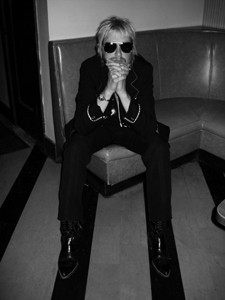
Words That Matter: Exene Cervenka puts her songwriting talents to use in her recent work.

Wild Gifts

Punk goddess Exene Cervenka marks the spot

By Greg Cahill

“I’m neither optimistic nor pessimistic about the future of the world,” says Exene Cervenka. “I’m an artist, a writer. For the most part, I just feel like an impartial observer. I watch and listen in on life and try to help people make some sense of it all, because sometimes you can’t get in touch with your feelings.

“I guess it’s my job to find the words that evade most people to help them express those feelings.”

As a singer and songwriter with the legendary L.A. punk band X and more recently as a solo performer, Cervenka has ridden the crest of the underground music scene in the ’80s and beyond. X wasn’t the first punk band to make the scene in Los Angeles, Rolling Stone once reasoned, but it definitely was the first one that mattered. At a time when most L.A. punk bands merely aped the sound of their London and New York counterparts, X invented a unique metal-edged, high-octane rockabilly-based sound that stood head and shoulders above the pack, thanks to deep roots in the storytelling tradition of Woody Guthrie.

Recent reissues reinforce the notion that Cervenka and her band mates were pioneers of an edgy brand of Americana rich in country-inflected harmonies and guitars, unafraid to explore the nation’s seamy underbelly, and inviting comparisons to film noir and the work of Bowery bum-cum-Beat poet Charles Bukowski.

Music writer J. D. Considine once opined that the band’s strong suit was that its early songs were “so obviously and audaciously intelligent, with verses that read more like poetry than punk doggerel.”

So it’s no surprise that Cervenka has a real talent for spoken-word performances and poetry. She brings her wild gifts to Petaluma this week at celebration of poetry and song.

Born in Illinois, Cervenka moved at age 16 to Florida. She attended a Catholic school, developing a deep mistrust of orthodox religions and a growing sense of rebelliousness. Around that time, an older sister inspired her to start writing poetry. “She was a very intelligent, creative person who was always handing me a blank journal and encouraging me to write,” Cervenka recalls. “You know, sometimes you look up to an older brother or sister like no one else, and no matter who you meet, that never changes.”

Cervenka later wrote about that relationship in “Come Back to Me,” an early X song about her sister’s suicide at age 26.

Her own music, first heard on 1990’s solo debut Old Wives’ Tales, an underappreciated post-punk classic, finds Cervenka shedding her rock veneer for a folksy raiment and draping her provocative song poetry in semiacoustic folk rock that leaves plenty of room for slyly turned lyrical phrases. It’s an unsentimental landscape of coyote-infested backyards peopled by gigolos, apocalyptic fanatics, and white-trash debutantes, all surveyed by a pretty though mournful voice.

In that work, the searing guitar solos, urban canniness, and existential allusions that were X’s trademark give way to predominantly countrified instrumentation, homespun common sense, and religious symbolism. The album also features a powerful spoken-word piece, “Gravel,” a prescient fantasy that gains new meaning in this post-9-11 era. It is a tense prose about a radical young couple who, loosened by liquor, decide to even the score on America’s trail of broken promises by dynamiting Mount Rushmore.

The song earned Cervenka a spot of the U.S. Secret Service hit list of potential wackos; the agency still checks on her whereabouts anytime the president is in the neighborhood.

Cervenka, who thinks of herself “as a writer first,” likes the directness of the spoken-word genre. “Music is a more complex way of receiving verbal information, but sometimes it’s great to just sit back and listen to spoken word,” she says. “And I think the growing interest is a good sign.”

Exene Cervenka performs Sunday, Aug. 31, at 4pm–along with Patti Trimble and Al Young, and others–at Rhyme, Rhythm, and Song III at the Phoenix Theatre, 201 Washington St., Petaluma. Tickets are $10. The event, sponsored by the Literary Arts Guild, is a benefit for the Petaluma Poetry Walk and Sonoma County Book Fair. 707.544.5913.

From the August 28-September 3, 2003 issue of the North Bay Bohemian.

© Metro Publishing Inc.

Cafe Andalusia

0

Photograph by Michael Amsler

Olive Groves and Rioja: Left to right: general manager Jeffery Cook, owner Anne Thornton, and wine buyer Adam Savin luxuriate in the bounties of southern Spain.

On Tapas the World

Enjoy bright and airy Mediterranean days or nights at Sonoma’s Cafe Andalusia

By Sara Bir

Sherry, serrano ham, the playwright and poet Federico García Lorca, flamenco, Moorish-influenced architecture–so many wonderful things hail from Andalusia, the southern region of Spain.

In Sonoma, there’s a Portuguese restaurant (La Salette), and up until recently Glen Ellen had a Latin-flaired restaurant (The Girl and the Gaucho), but no straight-ahead Spanish cuisine was to be found in Sonoma Valley–or, for that matter, the North Bay. That is, until Anne Thornton took over the old Wild Thyme Cafe in downtown Sonoma and converted it into Cafe Andalusia, a wine bar, marketplace, and restaurant with plates both big (sandwiches, salads, and paella, mostly) and small (yes, tapas).

The space is open and bright, with silk bougainvillea vines winding up its blue-tiled pillars. Images of bullfighting and flamenco dancing decorate the white walls. Brightly colored pillows line the bench seating along the front windows, adding a very subtle Moorish touch. Out back, there’s a patio with ample seating and a cloistered courtyard setting.

In the corner are three refrigerated display cased filled with cheeses, sausages, pickled items, and pastries. A Sonoma Valley day tripper could easily come in and get some supplies for a simple picnic lunch.

But I had come for an early dinner, alone, at the grossly unfashionable hour of 5:30 (even for Sonoma that’s early). The dining room was empty, save for two tittering older New York women who seemed to think of tapas as luncheon dishes.

Since the fun of tapas is sharing them, for this visit I steered toward the larger plates: a citrus salad ($7) and the sandwich special called the SAT ($8). A BLT with Iberian flair, the SAT featured serrano ham, arugula, and big, fat slices of ripe heirloom tomato. The name brought to mind standardized tests, though this SAT was the most enjoyable sandwich I’ve had in months.

The citrus salad, with its slices of orange, grapefruit, and red onion, tart vinaigrette, and cornichons on the side, was a little too acidic for my tastes; more of the contrasting avocado would have been welcome.

The next visit, Mr. Bir du Jour and I noticed how sparsely populated, once again, the dining room was, but out back, every single table on the patio was filled. Our server brought out bread and two ramekins, one filled with olives and the other with whole picked garlic cloves, surprisingly sweet and mellow.

On Friday nights, Cafe Andalusia offers Friday Night Flights–three food and wine pairings for $10–which turned out to be a wonderful way to start off the evening. That evening the flight consisted of Sonoma County pinot noirs, a wine I normally would not have picked to wash tapas down with, but hey, that’s the fun of a flight. The first pairing was a silky Robert Stemmler 2000 with an amazingly mild goat’s milk cheese from the Pyrenees, Jean Faup. “It’s a cheese for people who don’t like goat cheese,” said chef Niki Van Rthanyi.

The second pairing was of a jammy and tannic Acacia 2001 with serrano-ham-wrapped plums, salty-sweet morsels that I would have preferred paired with the velvety Benziger 2000 (that came with a tender chunk of grilled lamb whose paprika and cumin seasoning were too spicy-hot for the wine).

On to the tapas. Of course you have to order the tortilla Española ($6), just because it’s the quintessential Spanish tapa. Cafe Andalusia’s version is a wedge of thinly sliced and slightly underdone potatoes suspended in a firm egg mixture. I’m more inclined toward tortillas Españolas whose potatoes have been browned in more olive oil, though it’s hard to toe the line between too oily and undercooked. A handful of shredded romaine lettuce and a fresh tomato relish came on the side.

Mr. Bir du Jour had been ogling the cordero a la plancha ($11)–grilled lamb chop with pomegranate glaze–on the menu, and its reality was even better, with the pomegranate glaze not sticky-sweet but tart and complex. Three lamb chops rested atop a caper-studded couscous, which gave the whole works a nice Moorish flair.

Spanish meatballs (albondigas caseras, $6) came out in the traditional little round red earthenware dish familiar to tapas lovers. Fall-apart tender in a tomato-rich gravy, the meatballs were on the bready side, though perhaps that’s the way they’re intended to be.

Ensalada romana ($6.50) was basically a caesar salad, with whole, crisp heart of romaine leaves, an anchovy dressing, and big, crunchy croutons. Where the salad departed from the norm was in its topping of four fat anchovies, fleshier and not quite as salty as the Italian ones typically seen. I almost mistook them for skinny sardines at first.

Our little table filled up with plates fast; either more consistent clearing of empty plates or a bigger table would have been helpful. While the waitstaff was hit-and-miss in this area, they were friendly and courteous throughout our visit, and we were comfortable nonetheless.

Be smart if you go to Cafe Andalusia, and order the crema quemada ($6), the Spanish version of crème brûlée. Our crema quemada was better than any old silly crème brûlée I’ve had yet, rich and simple, its sugar crust perfectly caramelized.

Earlier we had noticed a huge bundt cake in the pastry case, and we were surprised when our server brought a towering piece of it over to us, on the house. “Jeff makes our cakes,” she said, referring to general manager and wine guy Jeffery Cook, “and we just give them away sometimes, because we like them to stay fresh.” After an entire meal dabbling in Spanish cuisine, digging into a bundt cake was a bit of an anomaly, but the tender, spicy apple cake was a perfect example of what makes American home baking so great.

The wine list is compact and organized into Sonoma/Spain sections, but it merited further exploration, which we’ll be happy to return for; we still have the paella and plenty more tapas to try.

Cafe Andalusia. 165 W. Napa St., Sonoma. Open daily, 11am-9pm. 707.996.5556. www.cafeandalusia.com.

From the August 28-September 3, 2003 issue of the North Bay Bohemian.

© Metro Publishing Inc.

Fall Guide

0

Autumnal Bounty:The cornucopia of fall events includes Al Jarreau at the Russian River Jazz Festival.

Fall Arts

As the days cool and grow shorter, there’s no lack of things to do

By Sara Bir

The raucous events of summer may be over once again, and cotton candy and fair rides, river days and gala auctions are perhaps receding into memory. But the calendar remains booked, weekends and evenings opening their yawning maws for theater and chamber music, lit events and festivals. Have at it: There’s never a dull moment in the North Bay.

[ September | October | November | Ongoing ]

September

‘The King and I’

Huge hoop skirts and sequin-encrusted Siamese king getups abound in The King and I, the opener for Santa Rosa Players’ 2003-2004 season. Aug. 29-Sept. 14. Luther Burbank Center for the Arts, 50 Mark West Springs Road, Santa Rosa. $10-$22. 707.523.4185. www.nbtg.org.

‘A Midsummer Night’s Dream’

This high-flying Marin Shakespeare Company version of A Midsummer Night’s Dream features veteran Cirque du Soleil and Pickle Family Circus performers playing various characters, adding a level of wonder to a play whose spirit is already very magical. Diane Wasnak–all 98 pounds of her–reprises her roll as Puck. Weekends, Aug. 29-Sept. 27. Forest Meadows Amphitheatre, Dominican University, San Rafael. $15-$25. 415.499.4488. www.marinshakespeare.org.

Labor Day Party in the Park

The Blue Monday Foundation presents a Marin City blues and soul block party with Napata and the Kisses, Al Rapone and the Zydeco Express, youth activities, and great soul food. Sept. 1, 1-6pm. The 100 block of Drake Avenue, Marin City. Free. 415.332.8316.

San Francisco Mime Troupe

There are two more chances in the North Bay to catch Veronique of the Mounties, in which the United States blocks the spread of terrorism through Operation Frozen Freedom. Sept. 3, 7pm, Sebastiani Theatre, 476 First St. E., Sonoma; Sept. 14, 2:30pm, Walnut Park, Fourth and D streets, Petaluma. 415.285.1717. www.sfmt.org.

Sonoma County Legal Aid Golf Classic

Putt and drive through a day of golf, fun contests, prizes, and raffle items at this annual fundraiser to support legal-aid programs in the community. Box lunch included. Sept. 5. Oakmont Golf Club, Oakmont. Entry fee: $160- $185. 707.542.6664.

Rhythms for Restoration

Help the Sonoma Community Garden Native Plant Nursery at a benefit concert featuring Jethro Jeremiah and the Spellmerchants. Sept. 5, 7pm. Andrews Hall, Sonoma Community Center, 276 E. Napa St., Sonoma. $5. 707.695.2164. www.spellmerchant.com.

KRSH Downtown Concert Series

Free music on Friday evenings in downtown Santa Rosa, presented by KRSH 95.9 FM: Will Bernard and Motherbug (Sept. 5), Eric Lindell (Sept. 12), 5AM (Sept. 19), Cannonball (Sept. 26), Scott Miller and the Commonwealth (Oct. 3), the Rancho All-Stars (Oct. 10.), and the Blazers (Oct. 17.). Courthouse Square, Santa Rosa. 707.588.0707.

Grow Biointensive

A three-day workshop offers gardeners a wealth of opportunity on sustainable minifarming. Presenters John Jeavons and Carol Cox will touch on composting, seed propagation, diet crops, and other topics. Sept. 5-7. Call for Willits location. $375, plus cost of reading materials. 707.459.0150. www.growbiointensive.org.

Dance around the World

The Women’s Voices collective presents an evening of dance to revitalize the spirit–bellydancing, Romani “Mask Dance,” flamenco, and more. After watching the dance, audience members will kick up their own heels to everyone’s favorite tunes. Sept. 6, 7:30pm. Ner Shalom, 85 La Plaza, Cotati. $15-$30. Benefits Women’s Voices. 707.575.5654.

Hands across the Valley

Hollywood celebrities and national sports figures infiltrate wineries of Napa Valley to raise big bucks for safety-net food programs. Bid on silent auction lots, dance up a storm to Butch Whacks and the Glass Packs, and enjoy food and wine. Sept. 6, 5:30-10pm. Niebaum-Coppola Estate Winery, 1991 St. Helena Hwy., Rutherford. $125. 707.226.6136.

Napa Valley Harvest Festival

Winetasting, food sampling, beer sipping, live entertainment, an art show, and a raffle will keep this popular event chugging along. Over 20 restaurants will have food available, plus the Kiwanis famous barbecue will provide steak, rolls, and beans. Sept. 6, noon-4pm. Carriage House, Charles Krug Winery, 2800 Main St., St. Helena. $40-$45 advance; $50 door. Benefits Kiwanis Club of Napa. 800.698.0997. www.napakiwanis.com.

Heirloom Tomato Festival

No regular tomatoes here! Garden tours, live music, wine tastings, and a juried art show are among the nontomato activities in store. Sept. 6, 11am-2pm. Kendall-Jackson Wine Center, 5007 Fulton Road, Santa Rosa. $40 advance purchase only. 800.769.3649. www.kj.com.

Jazz on the River

After last-minute emergency back surgery kept headliner Al Jarreau from last year’s Jazz on the River, Jarreau’s making good and will perform this year, along with Lavay Smith and Her Red Hot Skillet Lickers, George Benson, Norman Brown, Joyce Cooling, Orquesta la Moderna Tradición, and more. Sept. 6-7. Johnson’s Beach, Guerneville. $47.50-$190. 510.655.9471. www.jazzontheriver.com.

Art for Life Auction and Exhibit

Face to Face/Sonoma County AIDS Network and the North Bay art community team up–as they have for 16 years–to auction off contemporary art and raise funds to support Face to Face’s client services. Over 250 pieces will be on display Sept. 4-6. Free. Auction, Sept. 7, 2-6pm. $50. The Friedman Center, 4676 Mayette Ave., Santa Rosa. 707.544.1581.

Petaluma Art in the Park

Fine art ranging from garden goods to furniture fills up Walnut Park for a quaint outdoor marketplace. Sept. 6-7, 10am-5pm. Fourth and D streets, Petaluma. 707.773.1484.

Marin Poetry Center Traveling Show

Over 90 Marin Poetry Center members enlisted for readings at bookstores, galleries, and cultural centers throughout Marin County for this summer’s series of readings, the tail end of which stretches into late September. Aug. 26, Sept. 9, 16, 23, and 30. All shows at 7pm. 415.454.7644. www.marinpoetrycenter.com

The Robert Stewart Experience

Experience the Experience! A night of straight-ahead classic American jazz with self-taught saxophonist Robert “the Reverend” Stewart comes to you via the Sonoma County Jazz Society and the Tuesday Night Market in Sonoma’s plaza. Sept. 9, 6-8:15pm. Grindstead Amphitheater, Sonoma Plaza, Sonoma. Free. 707.938.5882.

San Francisco Comedy Competition

See promising comedians battle it out with laughs in this multivenue career-maker (1995 winner Doug Stanhope just replaced Jimmy Kimmel as host of Comedy Central’s Man Show). Sept. 9, Sonoma State University, Rohnert Park; Sept. 19, Marin Center, San Rafael; Oct. 3, Luther Burbank Center for the Arts, Santa Rosa; Oct. 10, Napa Valley Opera House. www.sanfranciscocomedycompetition.com.

Osmosis Moon-Viewing Ceremonies

Celebrate the rising of the full moon in a serene garden setting with Japanese bamboo flute music, haiku poetry readings, and meditation. Sept. 10, 7-9pm, and Oct. 9, 6-8pm. Osmosis Enzyme Bath and Massage, 209 Bohemian Hwy., Freestone. $12. 707.823.8231. www.osmosis.com.

Less-than-Amateur Film Festival

The first-ever edition of this film festival highlights local filmmakers as they bust out of their living rooms and onto a bigger screen. Benefits the Shop in Sonoma. Sept. 13, 7pm. MacArthur Place, 29 E. MacArthur St., Sonoma. $10. 707.935.0443.

Sonoma County Book Fair

The book fair takes over downtown Santa Rosa with readers and writers. Guest authors include Peter Beagle, Lynn Freed, Jesse Shepard, and locals Sara Andrews, Laurie Jacobson, and Michele Anna Jordan. Vendors, music, and the announcement of the new Sonoma County Poet Laureate round out the North Bay’s premiere literary event. Sept. 13, 10am-5pm. Old Courthouse Square, Santa Rosa. Free. 707.544.5913. www.sonomacountybookfair.org.

Napa Valley Open Studios Tour 2003

Get an up-close look at local artists’ studios and enjoy fine paintings, sculptures, ceramics, photographs, and more. North Valley Tour Weekend, Sept. 13-14, 10am-5pm. South Valley Tour Weekend, Sept. 20-21, 10am-5pm. Exhibition reception: Friday, Sept. 5, 6-8pm, St. Supéry Vineyards and Winery, 8440 St. Helena Hwy., Rutherford. 707.257.2117. www.artscouncilnapavalley.org

Mill Valley Fall Arts Festival

More than just quality exhibiting artists, this Mill Valley tradition also features stages of live entertainment for kids and adults. There’s even a free shuttle from Tamalpais High School to obliterate parking hassles. Sept. 13-14. Throckmorton Avenue at Cascade Drive, Mill Valley. $5 adults; free for children 12 and under. 415.383.7955. www.mvfaf.org.

A Celebration of the Russian River 2003

Come out to give some lovin’ to the river that winds through the North Bay. Music, picnics, workshops, creek walks, history, arts and crafts, and all sorts of other events to raise our consciousness of the Russian River occur in Mendocino, Sonoma, and Marin counties during this nine-day festival. Sept. 13-21. 707.874.2871. www.russianrivercelebration.org.

31st Annual Trade Feast Celebration

Native meals, storytellers, vendors, and traditional and contemporary dancers celebrate Native American cultural preservation through education at this family event. American Indian stars from screen and television will be there, too. Sept. 13-14. Marin Museum of the American Indian, 2200 Novato Blvd., Novato. 415.897.4064. www.marinindian.com.

Lucky Dog Theatre

Ensemble acting and singing that’s entirely off-the-cuff is in store from this improvisational Bay Area company’s Full Spectrum Improvisation, directed by founder Joya Cory. Sept. 14, 4pm, and Oct. 11, 8pm. Knights of Columbus Hall, 167 Tunstead Ave., San Anselmo. $12-$15. 415.564.4115.

Petaluma Progressive Festival

Hear activists on human rights, the environment, healthcare reform, and medical marijuana; see the San Francisco Mime Troupe; and groove to music from the Raging Grannies to hip-hop. Sept. 14, 11am-6pm. Free. 707.763.8184.

‘Postmortem’

In their 74th season (yikes!), Ross Valley Players provide a mystery full of murder and plot twists in Postmortem. Sept. 19-Oct. 26. The Barn Theater, Marin Art and Garden Center, 30 Sir Francis Drake Blvd., Ross. $12-$17. 415.456.9555. www.rossvalleyplayers.com.

Day on the Green

Spend a relaxing afternoon in the shade on the lawn of Friends House, a nonprofit Quaker-sponsored community for the elderly, for its annual fundraiser. A book, plant, and art sale, a barbecue lunch, an antiques evaluation corner, and Clo the Cow promise something for everyone. Sept. 20, 9:30am-3:30pm. 684 Benecia Drive, Santa Rosa. Free. 707.538.0152.

Bella Voce

Two evenings of operetta, arias, and show tunes featuring soprano Kathryn Zeager, baritone Shouvik Mondle, and accompanist Kristin Pankonin will benefit the Napa Valley Symphony. Dinner gala: Sept. 19, 6pm. $90. Sept. 20, 8pm. $30. The White Barn, 2727 Sulphur Springs Road, St. Helena. 707.963.7002.

Sonoma Plein Air 2003

After painting in various Sonoma County locations from Sept. 15 to Sept. 19, a juried group of 40 artists will show their work in the Sonoma Plaza at Sonoma Plein Air’s second annual all-day exhibition and sale of outdoor paintings. Sept. 20. Benefits Sonoma Valley Museum of Art’s education programs. 707.933.9756. www.sonomapleinair.com.

The Bard at Bundschu

Polish up on all of your rusty Shakespeare with Sandlot Shakespeare Company’s Complete Works of William Shakespeare (abridged), which returns to Gundlach Bundschu Winery for an encore two-week run. Sept. 20-21 and 27-28, 6:30pm. 2000 Denmark St., Sonoma. $12 general; free for children under 12. 707.938.5277. www.sandlotshakespeare.com.

Celebrate Sustainability

Talk about locally grown organics at a roundtable forum with John Ash, see a demonstration on biodiesel and veggie oil power, and hear keynote speaker John Ikerd discuss buying locally at “Our Garden of Eatin’,” presented by the city of Santa Rosa, Clover Stornetta Farms, and Occidental’s Ad Hoc Committee. Come for the lavish buffet of sustainably grown foods, stay for the education. Advance registration recommended. Sept. 20, 10am-2pm. Finley Center, 260 W. College Ave., Santa Rosa. Free; donations welcome. 707.874.3855.

Sebastopol Sustainability Conference and Festival

Back for a second year, like-minded folks gather in the green city of Sebastopol to exchange “blueprints, recipes, and remedies for optimal living.” Sept. 20-21. Downtown Sebastopol. 707.829.7153.

Petaluma Poetry Walk

Poets–including Diane di Prima, Brian Boldt, and Francesca Bell–infiltrate music halls, bookstores, and bakeries in downtown Petaluma to turn an ordinary Sunday afternoon into a celebration of the written and spoken word. Sept. 21, noon-7pm. Downtown Petaluma. Free. 707.769.0429. www.petalumapoetrywalk.com.

Glendi International Food Festival

Enjoy gyros, falafel, and other delightful street foods from Eritrea to Macedonia as Edessa performs live Balkan music for dancing (all the better to digest the international nosh). Sept. 20, 11am-9pm; Sept. 21, noon-6pm. Protection of the Holy Virgin Orthodox Church, 90 Mountain View Ave., Santa Rosa. $8 adults; free for children under 12. 707.584.9491.

Sebastopol Celtic Music Festival

Musicians from Ireland, Scotland, Wales, Quebec, and even Spain convene in Sebastopol for a four-day flurry of all things Celtic. Sept. 25-28. Sebastopol Community Center, 390 Morris St., Sebastopol. 707.823.1511. www.monitor.net/celtic.

Puppet Workshop and Festival

Strings are attached at the Jarvis Conservatory’s annual Puppet Festival, where nationally known puppeteers perform a variety of puppetry techniques. Shows this year include The Frog Prince and Father Goose’s Tales. Sept. 26-27. 1711 Main St., Napa. Performances: $10 children; $20 adults. Workshop: $10. 707.255.5445.

‘Boy Gets Girl’

A blind date turns into an unsettling connection for a New York journalist and her soon-to-be stalker in Rebecca Gilman’s Boy Gets Girl, presented by Actors Theatre. Sept. 26-Oct. 26. Luther Burbank Center for the Arts, 50 Mark West Springs Road, Santa Rosa. $15-$22. 707.523.4185. www.actorstheatre.com.

Morris Dancers on the Russian River

Morris dancers from up and down the West Coast convene to clog away the blues, Lancashire-style. Bufflehead, Iron Mountain Sword, Renegade Rose, and Sunset morris groups are all set to dance at various Russian River locations. Sept. 27-28. 510.612.1307.

Petaluma Downtown Antique Faire

One hundred eighty vendors join the existing antique stores of downtown Petaluma’s historic district for an endless variety of collectibles of yesteryear. Sept. 28, 8am-4pm. Free. 707.762.9348. www.petalumadowntown.com.

Lemony Snicket Himself

Get your tickets now to see massive literary failure Lemony Snicket, author of the Series of Unfortunate Events, live and in person. Sept. 29, 7pm. Santa Rosa High School Auditorium, 1235 Mendocino Ave., Santa Rosa. $12; free with purchase of Lemony Snicket book. Tickets available at all Copperfield’s locations starting Sept. 1. 707.823.8991. www.copperfields.net.

Sharpsteen Museum

This trove of Napa Valley history (recently recarpeted) is gearing up to celebrate its 25th anniversary on Sept. 30. 1311 Washington St., Calistoga. 707.942.5911. www.sharpsteen-museum.org.

October

Mill Valley Film Festival

Videos, films, seminars, special productions by youth, and tributes are in store for film fans and filmmakers at this extensive festival, now in its 26th year. This year’s festival features a focus on African cinema–a great opportunity to learn about some new filmmakers. 100 Days, directed by Nick Hughes, is the first fictional feature film to focus on the Rwandan genocide; other films alight on the shores of Mill Valley from South Africa, Senegal, Burkina Faso, and Cameroon. Oct. 2-12. 415.383.5256, ext. 146. www.finc.org.

Sonoma County Harvest Fair

Amateurs and professionals alike enter baked goods, wines, beers, and botanical bounties in the Harvest Fair, which also features the World Championship Grape Stomp, winetasting galore, fine art, and adorable livestock. Burn off all of those fair-food calories on Sunday morning’s 10K run. Oct. 3-5. Sonoma County Fairgrounds, Bennett Valley Road, Santa Rosa. $4 advance; $6 general; $2 kids. 707.545.4203. www.harvestfair.org.

‘My Gypsy’

Ten years in the making, Will Gordon’s new musical explores the hidden world of Roma culture in contemporary San Francisco by following the young Yalena through a star-crossed arranged marriage and love affair. Oct. 3-12. Throckmorton Theatre, 142 Throckmorton Ave., Mill Valley. $20-$25. 650.960.3536.

Fandango

Celebrate the end of the matanza (the yearly Spanish slaughter of the pigs) 1840s-style at the historic Petaluma Adobe with music and dancing. Oct. 4, 4-8pm. 3325 Adobe Road, Petaluma. 707.762.4871. www.parks.ca.gov.

Petaluma Invitational Band Review

It’s very hard work to be in a marching band–searing heat, heavy uniforms, burdensome instruments. But nothing gets a crowd going like the spirited sounds of a high school marching band. See area bands compete as the wheat is separated from the chaff in downtown Petaluma. Oct. 4. Sixth and B streets, Petaluma. Competition starts at 9am. 707.769.9650.

Calabash

A silent auction of gourd art, an exhibit of international gourd instruments, tours of Food for Thought’s organic gardens, and seasonal Sonoma County cuisine. Oct. 5, 1-5pm. Food for Thought, 6550 Railroad Ave., Forestville. $25-$30. Benefits Food for Thought AIDS food bank. 707.887.1647. www.calabashartfest.org.

Nineteenth Annual Sausalito Floating Homes Tour

Get a peek at the inside stories of the buoyant abodes crafty folks have made for themselves off the docks of the bay. Food, beverages, and entertainment will be handily located at the Kappas Marina green to wrap up the tour. Oct. 5, 11am-4pm. $25 advance; $30 gate. Shuttles depart from Gateway Shopping Center, Sausalito. 415.332.1916. www.floatinghomes.org.

‘The Good Doctor’

A composite of Neil Simon and Anton Chekov with music by Peter Link, the Broadway hit The Good Doctor features a roster of droll stories and affectionate portraits, presented by the Pacific Alliance Stage Company. Oct. 6-26. Spreckels Performing Arts Center, 5409 Snyder Lane, Rohnert Park. 707.588.3400. www.rpcity.org/performingarts.

Marin Classic Theatre

Marin Classic Theatre concludes its season with The Glass Menagerie. Oct. 10-26. The Playhouse, 27 Kensington Road, San Anselmo. 415.892.8551. www.mctheatre.com.

World Wristwrestling Championship

If you want to see world-class wristwrestling, Petaluma’s your town–and it has been for years. Come see the rough and ready vie for the coveted World Wristwrestling Champion title. Oct. 11. 707.778.1430.

Halloween and Vine

Madonna Estate’s annual Halloween folk art show will be marked by the release of the winery’s first Hallovine, a 2000 Cabernet Sauvignon. Oct. 11, 9am-3pm. Madonna Estate Winery, 5400 Old Sonoma Road, Napa. 707.255.8864. www.halloweenandvine.com.

ARTrails

Artists across Sonoma County open their studios to collectors who like to view art at its source. Oct. 11-12 and 18-19. Free. Call 707.579.ARTS or go to www.artrails.org for maps.

Vines and Wines

Big-time auction lots–a weeklong stay at a Paris flat, a 1947 classic Ford truck, and, of course, exciting premium wines–form the core of Wines and Vines, a fundraiser for the Northern Sonoma Healthcare Foundation. The three-day extravaganza of wine, food, and entertainment offers a variety of casual and gala events. Oct. 16-18. Various locations in Healdsburg and Windsor. 707.431.0560. www.vinesandwines.org.

Bioneers Conference

The preeminent gathering of environmental visionaries brings together practical solutions for social and environmental challenges. Workshops, lectures, panels, and films galore will leave brains churning with positive stimulation. Oct. 17-19. Marin Center, Avenue of the Flags, San Rafael. $109-$350. 505.986.0366. www.bioneers.org.

Cirque de la Lune

Broadway and soap-opera fans alike will delight in The Bold and the Beautiful leading man Jeff Trachta’s hosting of Spectrum’s annual gala Cirque de la Lune, a celebration of Spectrum Center for Lesbian, Gay, and Transgender Concerns’ 21st anniversary. Wines, a silent auction, DJs, and fine foods make this big top a tent worth pitching. Oct. 18, 7pm-midnight. Osher Marin JCC, 200 N. San Pedro Road, San Rafael. 415.457.1115, ext. 333. www.spectrummarin.org.

Conductor Alasdair Neale brings the Marin Symphony into its 51st season.

Marin Symphony

Kicking off its 51st season, the Marin Symphony presents “An Opening Night to Remember,” featuring violinist Chee-Yun. Alasdair Neale will conduct Kernis’ “Musica Celestis,” Prokofiev’s Violin Concerto no. 2 in G Minor, and Brahms’ Symphony no. 1. Oct. 26 and 28, 7:30pm. Preconcert talk at 6:30pm. Marin Center’s Veterans Memorial Auditorium, Avenue of the Flags, San Rafael. $11-$49. 415.479.8100. www.marinsymphony.org.

November

Shakespeare at the Raven

The Raven Players work up a sweat with The Complete Works of Shakespeare (abridged), Nov. 7-21. Raven Film Center, 415 Center St., Healdsburg. 707.433.7005. www.ravenplayers.org.

Holiday Craft Faire

Handcrafted gifts, Santa, and holiday fun abound, Nov. 7-9. Friday, noon-6pm; Saturday-Sunday, 10am-4pm. Petaluma Community Center, 320 N. McDowell Blvd., Petaluma. Free. 707.778.4380.

North Bay Veterans Day Parade

See the largest and most colorful parade of its kind in Northern California. Nov. 8, 1pm. Downtown Petaluma. 707.763.6688.

Ongoing

Film Night in the Park

Think summer is already packed up and out the door? Hardly! Live up the remainder of crisp, clear evenings by taking in movies en plein air. There’s classics (Psycho, Arsenic and Old Lace), recent animated gems (The Iron Giant, Monsters Inc.) and newfound cult faves (My Big Fat Greek Wedding; O Brother, Where Art Thou?). Showtimes are at 8pm in parks all over Marin County. Weekends, Aug. 29-Oct. 4. Suggested donation: $5 adults; $2 children (that’s some cheap fun!). 415.453.4333. www.filmnight.org.

Napa Riverfront Third Thursdays

Take in the renaissance of downtown Napa with merchants, galleries, and restaurants opening their doors from Jarvis Conservatory to the Napa Mill. Park at COPIA and take a trolley, or just enjoy the walk to the Riverfront District. Third Thursday evenings of the month. First and Main streets, Napa. www.napariverfront.com.

Cinnabar Theater’s 30th Season

From Sept. 18 to Oct. 11, Quicksilver II Theater Company presents The Road to Mecca— which is not a Bob Hope tribute, but rather Athol Fugard’s tale of an elderly woman’s attempts to re-create Mecca in her own garden. Then, Oct. 24-Nov. 8, it’s Cinnabar Opera Theater’s world premiere of Janis Wilson and playwright Harry Reid’s The Wedding, a fictionalized history of a Pennsylvania coal-mining village circa 1870. 3333 Petaluma Blvd. N., Petaluma. 707.763.8920. www.cinnabartheater.org.

Murder Mystery Dinner Theater

I’ll Take Murder for 100 is Get a Clue Production’s latest work-in-progress, starring game-show host Rex Ravenwood, who’s gathering trivia questions at restaurants throughout the country–making for an interactive quiz show/murder mystery. Plays Saturdays at 7pm until mid-November. Michele’s Restaurant, Seventh and Adams streets, Santa Rosa. $41-$51 dinner and play. 707.542.2577. www.getaclueproductions.com.

Sonoma County Repertory Theatre

Sept. 5-20, Betty Cole-Graham’s Mad about the Movies paints one woman’s paen to the cinema. Then, the world premiere of A Song for Vanya, with original music and lyrics by Sonoma County residents Bret Martin, John Shillington, and Robin Eschner, adapts Anton Chekhov’s Uncle Vanya to song. Oct. 3-Nov. 1. 104 N. Main St., Sebastapol. $18 general. 707.823.0177. www.sonoma-county-rep.com.

Santa Rosa Symphony

Oct. 18-20, Jeffrey Kahane conducts Berlioz’s “Royal Hunt and Storm” from Les Troyens and excerpts from Romeo and Juliet, as well as Prokofiev’s Piano Concerto no. 3 with pianist Simon Trpceski. Luther Burbank Center for the Arts, 50 Mark West Springs Road, Santa Rosa. $15-$54. And in November, there’s a special series of performances of Mozart’s Requiem, with Robert Worth conducting the Santa Rosa Symphony Honor Choir. Nov. 7-9, various churches in Sonoma County. $20. 707.54.MUSIC. www.santarosasymphony.com.

Russian River Chamber Music

The world-class young string quartet Miro Quartet opens the RRCM’s 12th season on Oct. 25. Healdsburg Community Church, 1100 University Ave., Healdsburg. On Nov. 15, brothers Garah and Gregory Landes collaborate in Synchronicity, a piano and percussion duo performing a blend of classical and jazz-fusion music. All concerts start at 7:30pm; preconcert talks begin at 7pm. Windsor High School’s Performing Arts Theater, 8695 Windsor Road, Windsor. $20 adults; $10 students. 707.524.8700. www.russianrivermusic.org.

Redwood Arts Council

World-class music comes to West County. Cello and piano duo Tanya Tomkins and Eric Zivian (Sept. 20), Bay Area chamber group the Streicher Trio (Oct. 11), and the Cypress String Quartet (Nov. 8) are all slated to perform. Various locations in West County. $20 general; $10 student. 707.874.1124. www.redwoodarts.org.

Sebastopol Center for the Arts

Sebastopol Center for the Arts offers its popular, interactive Sculpture Jam this year, Oct. 3-5; the winners live on with prominent placement downtown. The center also has a new performance series, Casual Concerts, held the third Friday of the month. On Sept. 19, David Fiel, Kathrin Williams, and Sonia Tubridy, and Michael and Evelyn McFadden perform at 7:30pm. 6780 Depot St., Sebastopol. $5-$10 donation. 707.829.4797.

Spreckels Performing Arts Center

On Oct. 4, hear the genre-bending Quartet San Francisco perform a delightful mix of humor-tinged music, with world-class tango dancers Sandor and Parissa of Forever Tango onstage during a portion of the program. On Oct. 18, the dazzling foursome the Scholars of London bring “Five Hundred Years of Song,” with Renaissance madrigals to folk songs. On Nov. 1, the Savage Jazz Dance Company returns to grace Spreckels’ stage; on Nov. 8, flutist Eugenia Zuckerman appears with the Jacques Thibaud String Trio. The annual Festival of Harps returns on Nov. 15. 5409 Snyder Lane, Rohnert Park. 707.588.3400. www.rpcity.org/performingarts.

Wynonna performs at the LBC on Sept. 20.

Luther Burbank Center

The LBC’s fall calendar presents plenty of reasons to drop in and get an earful of their new sound system. Darrell Hammond (Sept. 15), Wynonna with special guest Jimmy Wayne (Sept. 20), Jethro Tull flutist Ian Anderson (Sept. 26), comic George Carlin (Sept. 28), Mingus Big Band (Oct. 5), Dave Koz with the Saxophonic Tour (Oct. 8.), the Mystical Arts of Tibet (Oct. 23), This American Life‘s David Rakoff and Sarah Vowell (Oct 25), St. Martin in the Fields (Nov. 4), and the Umbilical Brothers (Nov. 12). 50 Mark West Springs Road, Santa Rosa. 707.546.3600. www.lbc.net.

Marin Center

Siberian dance troupe Krasnoyarsk (Sept. 7), the Drummers of West Africa (Sept. 28), the Shaolin Warriors (Oct. 4), Ladysmith Black Mambazo (Oct. 10), Buena Vista Social Club’s Omara Portuondo (Oct. 24), multi-instumentalist Burhan Öçal (Oct. 25), Momix Dance Theatre (Nov. 2), and Bob Newhart (Nov. 21) all grace the Marin Center this fall. Avenue of the Flags, San Rafael. 415.499.6800. www.marincenter.org.

Dance Palace Community Center

Wake the Dead jams Grateful Dead tunes Celtic-style (Sept. 6), Island Flavah performs Pacific Island dances (Sept. 13), Kathy Kallick and friends celebrate a CD release (Sept. 26), and performing artist, vocalist, and composer Russell Paul presents “Resounding Currents of Devotion” (Sept. 27). Fifth and B streets, Point Reyes Station. Annual rummage sale, Aug. 31-Sept. 1, 10am-4pm. Toby’s Feed Barn, Highway 1, Point Reyes Station. 415.663.1075. www.dancepalace.org.

Napa Valley Opera House

Paper doll Ennio stays on until Aug. 31, Eastern European folk music octet Les Yeux Noirs enchants on Sept. 3, and the patriotic and historic (kinda) musical 1776 runs Sept. 19-Oct. 5. Jim Gamble Puppets presents family fun on Sept. 21. 1030 Main St., Napa. 707.226.7372. www.nvoh.org.

Konocti Harbor

The B-52’s (Sept. 12), Kenny G (Sept. 21), Charlie Daniels Band with the Marshall Tucker Band (Oct. 3), George Jones (Oct. 26), and Eddie Money (Oct. 31-Nov. 1) will play Konocti’s intimate showroom, while Journey (Aug. 29), Chris Isaak (Aug. 30), Toby Keith (Aug. 31), the Goo Goo Dolls (Sept. 6), Brooks and Dunn (Sept. 13), Chicago (Sept. 14), and Alan Jackson (Sept. 27) are set to play the amphitheater. 8727 Soda Bay Road, Kelseyville. 800.660.LAKE. www.konoctiharbor.com.

Falkirk Cultural Center

“A Tribute to the Divine Divas of Jazz” honors the likes of Sarah Vaughn and Billie Holiday, and features local celebrity Harold Jones with guest vocalist Jackie Ryan. Aug. 29, 8pm. $15-$20. The exhibit “Small Firms/ Great Projects” showcases small Marin and San Francisco architectural firms’ excellence in design. Opening party: Sept. 12, 5:30-7:30pm. Exhibit runs through Oct. 17. Harold Jones returns for Falkirk’s benefit big-band bash, “Count Basie Swing,” with special guest George Young. Sept. 27, 7-11pm. $25-$35. Reservations recommended. 1408 Mission Ave. at E Street, San Rafael. 415.485.3327. www.falkirkculturalcenter.org.

Sonoma Valley Museum of Art

See the Latin American masterworks of “Colors of the Earth,” from Aug. 30 to Oct. 19. And on loan from the Mexican Museum in San Francisco will be pottery, textiles, religious paintings, masks, sculpture, and toys from the Nelson A. Rockefeller Collection. Then, from Oct. 30 to Nov. 3, SVMA’s annual “Dia de los Muertos” exhibition of commemorative altars takes up residence. 551 Broadway, Sonoma. 707.939.SVMA. www.svma.org.

William T. Wiley’s ‘Punch for Postulation’ is on display at SMOVA.

Sonoma Museum of Visual Art

The work of North Bay resident and icon of the ’60s and ’70s’ Funk Art movement William T. Wiley has been called “dude ranch dada” by the New York Times. On Oct. 4 at 7pm, join in “Conversation, Guitar, and a Microbrew” with Wiley, who will presumably play music, tell stories, and share a brewski or two. Wiley’s “Before Math and After Math” exhibit at SMOVA runs through Nov. 16. Also through Nov. 16, Santa Rosa artist David D’Andrade’s installation “The Garden of Earthly Delights” uses plastic tubing, wire, styrofoam, and hair to construct images that allude to Hieronymus Bosch’s famous Garden of Earthly Delights. Luther Burbank Center for the Arts, 50 Mark West Springs Road, Santa Rosa. 707.527.0297.

Sonoma County Museum

The SCM serves up an autumn bounty of programs: “A Sense of Place: Literary Sonoma,” a talk and reading by local authors Jonah Raskin, Kevin Brennan, and Greg Sarris (Sept. 5.); Book Arts Day with bookmaking, storytelling, and free admission (Sept. 6.); a panel discussion on “Vision and Light” at SRJC with a tour of “James Turrell: Light and Land” following (Sept. 15); an artist talk with James Turrell at SSU’s Evert B. Person Theatre (Sept. 16); Farming with the Wild book signing with Dan Imhoff (Oct. 2). “Over Sonoma: Aerial Views of Unusual and Exemplary Land Uses,” runs through Oct. 19. “James Turrell: Light and Land” runs though Jan. 4, 2004. 42 Seventh St., Santa Rosa. $7.50 general; $5 members. 707. 579.1500. www.sonomacountymuseum.org.

COPIA

“Salad Dressing: Food in Fashion” opens Sept. 19, while “Lunch Box Memories” opens Sept. 26, and “Delicate Deception: Delftware 1600-1800” opens Oct. 10. And keep your ears to the ground, because Jamie Oliver (aka the Naked Chef) will drop by COPIA on Oct. 18 (details to be announced). 500 First St., Napa. 888.51.COPIA. www.copia.org.

Bay Area Discovery Museum

Opening on Sept. 30, the new exhibit “Play It by Ear” features whimsical creations from Bay Area sound artists. Experiment with sound, using unusual materials to create your own sonic art works. Check out a keyboard that activates dancing Slinkies, a giant music box, and a soundscape where you can see your movements. Through February 2004. East Fort Baker, 557 McReynolds Road, Sausalito. $7 adults and children. 415.487.4398. www.badm.org.

Hand Fan Museum of Healdsburg

Experience the beauty of nature via hand fans at the Hand Fan Museum’s new exhibit, which features 75 vintage Asian and European hand fans decorated with flowers, birds, and landscapes. Through Oct. 31. 327 A Healdsburg Ave., Healdsburg. 707.431.2500. www.handfanmuseum.com.

Charles M. Schulz Museum

The creator of “Peanuts” inspired countless cartoonists, but who inspired Schulz? The work of Billy DeBeck (“Barney Google”), George Harriman (“Krazy Kat”), Al Capp (“Li’l Abner”), and others will be on display in the new exhibit “A Legacy Continued.” Through Nov. 19. 2301 Hardies Lane, Santa Rosa. 707.579.4452. www.schulzmuseum.org.

Di Rosa Preserve/Off the Preserve!

The Tibetan monks of Gyudmed Monastery are in residence at Off the Preserve, where their Green Tara sand mandala will be on view until Sept. 1 at 2pm. On Oct. 18 at Off the Preserve in Napa, it’s the Preserve’s second annual gala exhibition and auction, “Au Naturel,” with art from Viola Frey, David Best, Enrique Chagoya, and others celebrating the symbiotic relationship between art and nature. Reservations required. Off the Preserve: 1142 Main St. 707.253.8300. Di Rosa Preserve, 5200 Carneros Hwy., Napa. 707. 226.5991. www.dirosapreserve.org.

From the August 28-September 3, 2003 issue of the North Bay Bohemian.

© Metro Publishing Inc.

Shana Morrison

0

All Grown Up: Shana Morrison grew up steeped in the music industry, which has given her a unique perspective on her own career.

Family Values

Shana Morrison comes into her own

By John Aiello

Being a singer-songwriter when you are Van Morrison’s only child is a hard road to traverse–the terrain inherent with lofty public expectation and the hollow trappings of fame. Yet even with such obstacles to battle, Shana Morrison has met her challenges, distinguishing herself by virtue of a stunningly beautiful voice and original songs that reveal a woman on a path of self-discovery.

Last year, Shana released her second solo album, 7 Wishes. The record, on the Vanguard label, was produced by veteran Steve Buckingham (widely known for the pristine sound he’s created on Dolly Parton and Mary Chapin Carpenter albums) and features many blues-soaked arrangements, the silky, supple melodies intertwined in the long, smooth lines of Morrison’s vocals. Standout cuts on the record include the punchy “I Spy,” the contemplative Zen meditation “7 Wishes,” and the wistfully piercing “Song for the Broken”–with each verse perfectly framed in the delicate whisper of Matt Rollings’ B-3 organ.

Still, it’s the haunting duet Morrison performs with her father on his overlooked classic “Sometimes We Cry” that truly demonstrates the range of Shana’s singing: the song flooding the pores of her body, words half formed at the corners of her lips, slowly taking their whole shape in earthly space.

Shana’s Morrison’s life changed directions in 1993, when her father requested that she appear with him at several of his U.S. performances. The experience immediately carried Shana back to her roots. As a small girl, she had often found solace in her grandparent’s record store in Fairfax, exposed to countless blues and jazz classics heard through the hisses and pops of old vinyl.

After her parents separated, Shana spent her teenage years living in the Los Angeles area with her mother, Janet Minto (the former “Janet Planet” and subject of many of Van Morrison’s love songs), eventually enrolling at Pepperdine University to study business. Even though Shana continued to sing and write songs as a student, she kept her art secret.

Until Van Morrison summoned her to the stage.

In concert with this master musician, Shana was able to feel and see firsthand the impact that her music could have on a large audience. Suddenly, awash in the power of the moment, all the things she had kept hidden inside herself for so long were revealed.

Now recast in the image of her father–and in the image of a thousand other musicians who have preceded and influenced her–Shana Morrison is on a journey of infinite dimension. The only thing that matters now is to just keep moving steadily forward.

Can you tell me a little bit about your musical background?

Well, I sang in choirs when I was in school, in women’s chorals and in small groups. . . . I mainly just sang for fun. Back then it wasn’t an ambition or something I thought I’d be doing professionally.

But while you were in college studying business at Pepperdine, you were still writing songs privately?

That’s right. I’d perform them for family and some close friends, but that’s about it. I’ve always been a shy person, not wanting the spotlight.

Your musical beginnings actually extend back to your grandparent’s record store where you worked as a child, correct?

Yes, that’s true. My paternal grandparents had a small store, Caledonia Records, in Fairfax. On weekends when I was a child, the family would all go up there, and I would work behind the counter, handing out change at the register. I started doing that when I was about seven years old, I guess. I was exposed to all kinds of music in the store–things like Rickie Lee Jones and Steely Dan. I always wanted to get my hands on the Kiss and Led Zeppelin and AC/DC albums that all my friends at school were listening to [laughs], but my grandfather would have none of it. He said that stuff wasn’t really music, and he steered me back towards the jazz and blues LPs. And at the end of the day, I would get paid. But not in money. I would get to chose a record to take home as payment for working in the store.

On your latest album, Seven Wishes, the production work is truly stunning, the music so sharp and defined, so perfectly honed. What was it like working with a veteran producer like Steve Buckingham to achieve this particular sound?

Steve is wonderful to work with. He believes in letting the music and the artist shine through a record. I’ve actually known Steve for a long while. He’s been a strong supporter of mine, and we’ve always kept in touch. As far as making a record, he thinks more and talks less than most producers. He thinks before just throwing out an answer. He truly has respect for the artist he’s working with. And I respect that–I admire the way he carefully makes his decisions. He’s careful to ensure that you’re not there singing on his record. He just lays back and lets your music shine through, without trying to point you in any certain direction.

Your father’s contempt for the music business on the whole is widely known. How has this affected the decisions you have made in your own career?

I have been very hesitant. I grew up knowing a lot of music people and hearing a lot of stories. And it didn’t make the music business seem that attractive to me. . . . I did things my own way. I formed my own band and my own label. I managed myself, keeping control over what was happening. . . . And eventually I found Vanguard, and was able to make a record with a real producer. But it took me a long time to be convinced. It’s hard to go into this business, picturing yourself as a product, which is what you become once that record is released.

Your duet with Van Morrison on “Sometimes We Cry” is a definite highlight of the new record. Can you talk a bit about how that happened?

Well, Steve Buckingham and I decided to record that song while we were in the middle of making the album. I always liked the song–it’s one of those instant classics my father seems to always be able to write. But actually I didn’t cut the song with my father. Steve and I recorded “Sometimes We Cry” in the studio, and left two holes for solos to be over-dubbed later. My dad’s harmonica solo is over-dubbed. It came out so beautiful; I love the sound and the feel of his harmonica. I was actually kind of surprised he did it. He usually does things live in one take and is opposed to any over-dubbing. It just came about all of a sudden. I asked him to do it, and he said yes. Maybe he was in a good mood that day.

As a singer-songwriter, is there someone with whom you identify strongly, either on an emotional or creative level?

I always identify more with women, but as I’m sure you know, saying you write like someone is like saying you look like someone. We are all unique. All of the women [I’m influenced by have] qualities that I admired as a young girl, though. Rickie Lee Jones was street; Teena Marie was funky, even if she wasn’t black; Dolly Parton could tell a story that made you cry and inspired you to be a better person; Iris Dement (who I discovered in my 20s) was romance; Joni Mitchell was intellect; and Jann Arden was someone who would let all of her vulnerabilities show, who seemed strong for not cloaking her weaknesses.

Being Van Morrison’s daughter, growing up in the kind of creatively driven family that you grew up in, do you now feel a responsibility to make a mark with your work?

I think we all want to make a statement, a living, a career, rather than just have a “moment.” But we’re not all able to do it. Talent and drive alone don’t determine what happens. Intangibles play into it. All I can do is keep doing my best and try to keep it going. You can’t worry about the big picture. There’s no determining that. You just have to see what happens. There’s just no way of knowing what will happen.

Shana Morrison performs on Aug. 24 at 2pm at Healdsburg’s Music in the Square series. Check www.shanamorrison.com for more concert dates.

From the August 21-27, 2003 issue of the North Bay Bohemian.

© Metro Publishing Inc.

Reenactors

Photographs by David Templeton

Acting Civil: Participants in Civil War Days at Duncans Mills may be Union or Confederate fighters during the weekend, accountants or travel agents during the week.

Dress Reversal

In loyal groups across the country–and the county–adults are taking dress-up to the next level

‘Civil War–next right turn.”

Those words, emblazoned on a large, hand-painted sign not far from the sleepy town of Duncans Mills, have led me to a vast, entirely empty parking lot at 7:30 this morning. Another sign, hoisted up near a little creek-crossing bridge, announces “Civil War Days.” Sponsored by the National Civil War Association, one of several such organizations in the United States, this annual event is one of the state’s most popular homages to Civil War history, Civil War combat, and Civil War fashion.

“You’re early,” notes a sleepy parking attendant, having waved me across the lot and into a convenient parking spot.”Are you planning to stay for the battle?”

“I’m going to be in the battle,” I reply, pulling my brand-new black boots from the car and stepping out onto the dusty lot. Having accepted an invitation from my friend Walter Masten–who, with his wife, Bridgette, has been involved in Civil War reenacting for a little over three years–I’m about to become a recruit in the Richmond Fayette Artillery company. I’ll be fighting for the Confederacy today, and as I understand it, I’ve already been assigned to a regiment of gunners, as in “cannons.”

Nearby, I can see two men in blue Union uniforms, walking a horse toward the battlefield, and a row of tents wreathed in smoke from a hundred separate breakfast fires. The 1800s have apparently already begun. With a few short strides across a dew-slicked field, I leave the lot behind and step into the colorful, alternative reality known as Civil War reenactments.

In short order, I’ve located Walter and Bridgette of the Richmond Fayette Artillery (affiliated with the American Civil War Association), both of whom are dressed as soldiers–“As a woman,” says Bridgette, “I can dress as a woman or as a man”–and both of whom will be setting off the cannons with me when the battle begins in a few hours.

But first Walter says, “Let’s get you suited up.”

Outside the quartermaster’s tent, relaxing under a white canvass awning, a group of folks in Confederate soldier garb are sipping coffee at a wobbly wooden table. Nearby are several battered trunks. The quartermaster, a strapping fellow named Ken, stands up to eye me from head to toe, then tosses open a trunk and begins handing me various uniform pieces: a pair of gray trousers, a thick woolen shirt-jacket, a pair of suspenders, and a classic black-brimmed, gray wool Confederate soldier’s hat. Examining the well-worn items, I realize immediately that in the Civil War years, clothing size must have been a relative concept.

“If it’s too big or too small,” remarks one lounging soldier, “it’s perfectly period.”

Clutching my jerry-rigged uniform, I follow Masten back across the field, past a dozen tents where people–men and women, young and old–are relaxing, polishing guns and swords, scarfing food from metal plates, or generally milling about, all in various states of costumed readiness. Here and there, women in gingham dresses are hugging, talking, or flirting with men in gray uniform. After a few minutes in the Mastens’ relatively spacious officer’s tent–inside which not a hint of the 21st century is visible–I emerge and stand ready for my first inspection.

“Not bad,” says Masten, giving me a quick inspection before pulling me out to the field for cannon training. My cannon has been dubbed Nostradamus, and it’s the real thing. After training for an hour as the day grows warmer, I am required to take a written safety test. The first battle of the day is scheduled for 1 o’clock, so I have time to gather a few practical pointers from my fellow confederates, many of whom are seasoned reenactors.

“Battles generally last until somebody screws up,” jokes Chris Lacklan, who’s been doing reenactments for about five years. On the whole, he surmises, the average battle lasts between an hour and 90 minutes. “Though when people get into the heat of the thing,” he says, “a battle can last all day.”

I am told that, should I be shot by a Union gunnery squad during the battle, someone of higher rank will let me know and will tell me whether I’ve been killed outright or just mortally wounded. The cannons use real gunpowder, enough to sound a big bang but not enough to cause (real) mortal wounds–unless someone gets too close.

“Mortally wounded is more fun than dead,” says Paul Vankas. “If you’re mortally wounded, at least you can yell and scream and crawl around a little.”

“If you do get killed, make sure you fall face down,” someone else suggests. “Believe me, unless you have a lot of sunblock on, you don’t want to be lying there face up for an hour.”

Adds Masten, “Rule number one: Be safe. Rule number two: Have fun.”

Have fun.

Not everyone would agree that dressing in wool on a hot summer day and blasting cannons at people in similar outfits while taking turns pretending to die is fun. Still, few of us have not experienced the basic pleasure to be had in playing a little bit of dress-up, though most folks–actors, drag queens, and Rocky Horror fans excluded–put the urge aside after childhood, dragging it out again only at Halloween, perhaps for the benefit of the kids.

How then does one explain the fact that there are currently over a hundred independently produced Renaissance fairs taking place each year in the United States, along with hundreds of small city- or college-sponsored fairs and countless meetings of the Society for Creative Anachronism devoted to Medieval culture? There’s the Great Dickens Christmas Fair in San Francisco, the Roaring ’20s-themed Great Gatsby Festival in South Lake Tahoe, the Wild West-themed Topton Shoot in Pennsylvania, and the annual Black Powder Shoot and Mountain Man Rendezvous in Yosemite–and, of course, all those routinely occurring Civil War reenactments–all of which involve adults dressing up in historical outfits and acting as if they were characters from a history book.

One has to wonder if the steady rise of such freeform costumed spectacles can’t be attributed to a need some people have for a safe, socially sanctioned context in which to fulfill the innate desire to become another person for a weekend or two.

“It’s OK to dress up on Halloween,” muses costume aficionado Laura Brueckner, of Novato. “It’s OK to dress up for a parade or something like that, but any other time, it’s just not done, it’s not acceptable–not for adults. The Renaissance Faire, the Dickens Fair, the Civil War reenactments, all of these period events serve to give innately creative people a place where their research and their enthusiasm and their creativity are rewarded. Some people go at it from the historical reenactment standpoint, but that’s a creative urge itself–it’s creativity clothed in history.”

She speaks from experience.

Having spent nearly half her lifetime performing in costumed period events, Brueckner–who insists that she was once so shy she wouldn’t perform in public unless wearing a mask–is now a singing, dancing, and acting member of a “period musical comedy” troupe called the Stark Ravens Historical Players and serves as promotions manager for As You Like It Productions, the Novato-based company that produces the Heart of the Forest Renaissance Faire in Santa Barbara and Novato. To hear Brueckner speak, one might think she was describing a form of therapy rather than a historical reenactment.

“It’s true,” she says, “it’s like therapy sometimes. It’s like Dumbo’s magic feather! You put on a costume and a hat, and it’s just enough so that you can feel safe to step out and be creative. That’s all people need to express their creativity, a sense of safety. Everyone is able to inhabit a character that has attributes they’d like to express in their everyday lives but can’t. We have accountants with master’s degrees, people who make six figures a year, who come out here every week to dress up as a rowdy ale wench, because the life they’ve chosen holds no place for that kind of behavior.”

Such events as the Renaissance Faire and the Civil War Days, Brueckner argues, can and often do become incredible confidence boosters.

“The social environment at fair is incredibly, ridiculously supportive. It’s wonderful!” Brueckner says. “And once you start picking up confidence from all that support, it can’t help but start bleeding over into the rest of your life. You can’t stop it. There are now whole generations of people who, because they once got to put on this hat and this jerkin and this pair of trousers, because they were asked to hawk in front of a booth at the Renaissance Faire, they now have a different relationship with speaking to people.”

Alberto Melendez is the guild master of the Knights of Santiago (www.knightsofsantiago.org). The official Northern California Spanish guild, the Knights of Santiago appear at numerous smaller-scale Renaissance fairs around the state, where they get to play that group most hated by the Elizabethans–namely, the Spaniards.

As we speak, Melendez is packing for a weekend at the Pittsburg Scottish Renaissance Faire out in the East Bay, where he’ll be teaming up with about 25 of his fellow guild members, to set up camp and the fair and create a bit of historical mayhem.

“At the fairs, they like to use us as a catalyst,” says Melendez. “‘Ooh, watch your purses! The Spanish are around.'”

Born in Puerto Rico and raised on the East Coast, the 38-year-old Melendez is a bus operator for Golden Gate Transit. He began attending Ren fairs almost 13 years ago and was immediately drawn in, largely by the desire to dress as one of the actors.

Melendez admits he was never the kind of person who dressed up for Halloween or enjoyed going to costume parties. “As a kid, I was kind of deprived a lot,” he says, “so maybe this is my way of making up for that.” Melendez became hooked on Renaissance dress, trying on various styles and roles until his research revealed the Knights of Santiago, with their vaguely menacing black garments and capes and feathers. Now he spends most of his spare time attending fairs, developing his character or adding to the expanding costume collection of the guild.

“You have to be a bit of a history buff,” Melendez admits. “But it goes further than that. In my guild, what I hear the most is people saying, ‘We’re working five days a week, blah, blah, blah, all year long, and on fair weekends we get a chance to escape, to be somebody else, to play and be in the spotlight for a while.’ For two days, I can get away from work. I can be a Spaniard, I can be a rogue, I can flirt and drink and have fun. Also, after a while, seeing the same people at different fairs, it eventually becomes like going to a family reunion.”

Literally. Melendez met his wife at the Renaissance Faire, and even had a Renaissance wedding with 300 friends and family members attending in costume.

A naturally gregarious and friendly person, Melendez says that he was once much less outgoing and amiable. It was at the fair, he insists, that he developed a skill for interacting positively with other people.

“I learned that the more positive things you say about a person,” he says, “no matter what they look like or how they are behaving, they will respond positively to you. I use that almost every day now. If somebody gets on the bus and they’re in a bad mood, I say something positive, I pay them a compliment or something–I basically just charm them. I learned how to do that at the Renaissance Faire.”

No McDonald’s Here: Reenactors experience ‘living history’ whole hog, including sleeping in tent and cooking their own food.

Dr. John Amodeo, author of The Authentic Heart, is a psychotherapist with a special interest in how people lose touch with and regain a sense of their authentic selves. Even he affirms that pretending to be someone else can sometimes be a good thing.

“Dressing up as another person has the potential to expand a person’s sense of self, to get them out of their small egos for the moment,” Amodeo says. “Doing historical reenactments allows them to play with their sense of self, but it also helps take us back to a time–the Renaissance, the Civil War–when people did not have to wrestle with the high-stress corporate world or with the overpopulation, noise, pollution, and traffic that are routine pieces of the modern age.”

As for Brueckner’s observation that such events can help shy people learn to be more outspoken, or that by pretending to be charming and charismatic a person with bruised self-esteem can slowly embrace a sense of themselves as authentically charming and charismatic, Amodeo agrees.

“There’s a principle in therapy called ‘acting as if’ or ‘faking it till you make it,’ as they say in 12-Step Programs,” Amodeo says. “If you act as if you are confident, even if you don’t feel confident, gradually you can become that, you can develop that quality of confidence as you put it on. It’s a very powerful technique, and perhaps these dress-up events give people the opportunity to do that in a safe environment.

“The positive part of these kinds of events,” Amodeo adds, “is that they get people in touch with a different part of themselves and loosen their attachment to some unhealthy, rigid roles they might be playing in their life. Playing dress-up at the Dickens Fair or wherever really can be used to free up a larger sense of possibility in your day-to-day life.”

David William Entriken makes it perfectly clear. “The uniform I wear is clothing, not a costume,” he says following the battle, a relatively short affair, of which we Confederates, I am told, are the winners. From my vantage point on the battlefield, ears crammed with earplugs, all I can report is that war, even make-believe war, is very, very loud. As horses raced back and forth, and various squads of soldiers, Blue and Gray, advanced and retreated, I remained focused on old Nostradamus, careful to do my job properly and keep the thing from exploding and actually killing us all. That said, the whole experience is thrilling, and my inner reenactor, having long lain dormant, has now been reawakened.

I’d enlist again in a second.

A seven-year veteran of Civil War reenactments, Entriken, an electrician who lives off the grid near Sonora, has played the spectrum of costumed (er, make that historically clothed) period events. A former Society of Creative Anachronism member and a longtime participant in Ren fairs, he’s gone by a lot of different names. Today, as the Civil War Days begin, he’s First Sgt. D. William Entriken. At Mountain Man Rendezvous, he’s known as Electric Beaver, and he goes by Tin Horn for events sponsored by the Old West Living History Foundation. While he acknowledges that reenacting could be seen as a form of therapeutic dress-up, a grand-scale playtime for adults, he prefers to focus on the historical appeal of the thing.

“This is our hobby, sure,” Entriken says. “All hobbies are play-time–hiking, skiing, kayaking. It’s all play. But the reason we do this is because the history is important. The Civil War changed our country forever. But most people know almost nothing about it.”

Abraham Lincoln agrees. He’s been mingling with visitors over in the settlers encampment, where onlookers can view demonstrations of historic crafts, buy a book on Civil War battle strategy, or chat with the president of the Union and his wife, Mary Todd Lincoln. Played by Mike Ray and Alice Tripoli of Diamond Springs, Calif., the Lincolns consider themselves to be a walking-talking history lesson and gleefully affirm that reenacting is now less a hobby for them than a way of life.

“When a child reads a history book,” says Ray, “their eyes glaze over. But if they see history right in front of them, they’ll never forget it.” Approached by a couple in modern-day dress, he stops to swap a few jokes. (“The show was to die for,” he tells them conspiratorially, “but the view from the balcony gave me a headache.”) Though a bit shorter than Lincoln is reported to be, Ray looks remarkably like the real thing, and yet his repertoire extends far beyond playing just one character.

“Depending on the time of year and the particular event,” he says, “I am a president, a rebel cannoneer, a monk, a Mennonite, an Irish railroad worker, a mountain man, a town drunk, a ’49er, and a riverboat gambler.”

Others are content to be just two people–their modern-day selves and their Civil War selves–and for many, the history they are playing out and the distinct satisfaction they get from putting on that uniform cannot be separated.

“Men get into reenacting, and they all of a sudden get real creative. They start building things,” says Jim Andrakso of Sonora, who builds his own costumes, weapons, leather packs and other gear. “They start sewing! As a kid you dress up and play all the time, but as an adult, that’s harder to do. Life is stressful, and for a lot of us, there aren’t that many opportunities to be creative. Out here, I get to be someone else, and I get to enjoy being myself at the same time.

“Where else am I going to go to do all that?”

From the August 21-27, 2003 issue of Metro Santa Cruz.

© Metro Publishing Inc.

Quicksilver Mine Co.

0

Toying With Success: Work by Leslie Frierman Grunditz (shown: ‘Secrets’) is part of Quicksilver Mine Co.’s first show.

Dropping Anchor

Quicksilver Mine Co. makes the move to Forestville

By M. V. Wood

Khysie Horn is somewhat mystified by this whole concept of actually owning a parking lot.

She scrunches her nose a bit, slowly shakes her head and says, “Owning parking of all things, it’s so . . . bizarre, don’t you think?” She shakes her head a few more seconds and then continues on with the tour.

She’s showing me around her building on Forestville’s main road, to which she is relocating the Quicksilver Mine Co. from Sebastopol. The store, which carried some art in addition to all kinds of other products made exclusively in Sonoma County, will now be exclusively an art gallery. The grand opening celebration is Sunday, Aug. 24, 4pm to 7pm. The party also serves as the opening reception for the inaugural exhibit “Icons, Totems, and Fetishes,” which features work from 37 regional artists.

Although owning six parking spaces out back confounds Horn, she seems oddly nonplussed by the thought of owning this 1,400-square-foot gallery space. Her easy demeanor is especially surprising, considering that she never really set out to become a gallery owner in the first place.

There’s a time to ask what we want out of life, and there’s a time to accept what life wants out of us. Running an art gallery seems to be something Horn drifted into–something, perhaps, that life wanted out of her.

Horn’s original dreams were more civic-minded–at least more directly civic-minded. For a while, she was going to graduate from school with a master’s degree in higher education and social change. But the social changes that most readily sprang to mind had to do with local economy.

Horn tries to explain why it’s a good idea for neighbor to buy from neighbor instead of buying from large corporations. She gives examples of how we end up paying a huge price in order to spend less money. But as with any complex issue that’s given much thought, one concept flows to the next, and soon the words “money” and “freedom” and “responsibility” and “creativity” and “community” end up in the same pool of ideas.

“All of it is so intertwined that it’s hard to explain,” Horn finally says. “I guess I just find it important that communities help support their local artists, artisans, growers. And I would rather spend a little extra money and have something that has a story behind it, instead of buying something from a [big] box store.”

So with those ideas in mind, Horn opened the first incarnation of the Quicksilver Mine Co. in Guerneville in 1983, selling only products that were made within the borders of Sonoma County. There were handmade items, local wines, clothes, and since artists are a part of the Sonoma County community, Horn started carrying some of their works as well.

When Quicksilver relocated to Sebastopol from Guerneville, Horn dedicated half of that space to showing the works of Sonoma County artists. In that capacity, she started meeting more and more artists, introducing them to each other, helping them find buyers and holding shows. She also spearheaded the popular Sebastopol Art Walk. In the process, she became one of the leading figures within the local arts community.

Horn had no formal arts education or training, but little by little she started picking up on the basics. Then some of the area’s most respected artists, such as Don de Viveiros, Horst Trave, and Micah Schwaberow, among many others, took Horn under their wing and served as her mentors. Often when artists speak of gallery owners, it’s with the same mix of respect and derision that many use when speaking of employers. Whenever I’ve heard artists talk about Horn, it’s with the tone and words one uses to speak of a friend.

Slowly, the current of life led Horn to the decision to run a gallery. “When it came down to it, the part of the business I really enjoyed was my work with the artists,” she says. “And I figured if I spent all that time and energy I was using on the shop and I put it toward the arts instead, well then maybe owning a gallery could really work.”

If the career decision was something Horn drifted into, then the actual creation of the gallery was a goal that needed plenty of determination and drive.

Horn bought the Forestville building back in 2000, and the gallery is just now opening. It’s been a tough few years. There were county permits to be acquired, grading problems to be solved, walls to be built, windows to be made. “My office in Sebastopol didn’t have any windows,” Horn mentions, “so I made sure that this time around I had plenty of natural light.”

The end of my tour takes us out back to the garden in which Horn will display some outdoor art. “During the opening reception, we’re going to have the Ben Hill Jazz Quartet playing out here,” she says, nodding toward the garden.

Along with live music, oodles of art, and lots of interesting, artsy guests, there will be catered food and, if tradition holds, plenty of drink. Everyone knows that Khysie Horn knows how to throw a party. Well, everyone except for Khysie Horn.

“Oh God, the party part–that’s the worst,” she says rolling her eyes toward the heavens. “It’s still hard for me. I get nervous days in advance of any reception. Afterwards, I have to be alone for quite some time just to recoup.”

Horn, who relishes a sense of community, had spent a good deal of her life without it.

As an only child, Horn and her parents went on a long sailing voyage from the East Coast through the Panama Canal, and up through Tahiti, Fiji, New Zealand, and numerous ports along the way. Sometimes her parents would dock and her father would take odd jobs to support the next leg of their journey. But soon enough, the family would move on again. The trip ended up taking five years, from the time Horn was six until she was 11.

Horn remembers those five years as an interesting time, but somewhat lonely. At age 11, her family sailed back to the States, and Horn started sixth grade. “I was completely socially inept,” she says. “I just didn’t get it. On my first day of school, it took everything my dad had just to get a pair of shoes on me.”

Horn grew up on the East Coast, and after visiting some friends who moved to Sonoma County, she decided to give the West Coast a chance. “I figured I’d stay here for a year,” she says, “and see if I liked it.” She did. The current eventually led to the Russian River and Guerneville, then Sebastopol. And now, through a rather meandering route, she’s here in Forestville, the owner of an art gallery.

As the tour draws to an end, Horn turns away from her garden. “Well, here it is, my very own parking lot,” she says.

As I pull out and drive away, I wave back at Horn, who’s standing out on her parking lot, by her gallery, on her very own plot of solid ground.

From the August 21-27, 2003 issue of the North Bay Bohemian.

© Metro Publishing Inc.

Watermelon Molasses

Photograph by Rachel RobinsonThe Mysteries of Watermelon: Not exactly pretty to look at and not exactly obvious in its uses, watermelon molasses is a relic of church-basement recipes.Mining for Watermelon OreThe mysteries of watermelon molasses, revealed. Sort of.By Sara BirWatermelons are an icon of summer: the sitting out on doorsteps, the spitting of seeds into the thick summer air,...

Rory Lynch

Here's Rory!How does 25 years translate into human time?By Sara BirThe Bohemian, at 25, has gone through many changes but is still North Bay at its heart. As is Rory Lynch, who has called Sonoma County home for 25 years. Figuratively speaking, when Lynch was just a baby, so was the paper (as The Paper). They've grown up together--not...

Migrant Worker Housing

Photograph by Rory McNamaraToil and Trouble: As the harvest kicks into high gear, migrant workers flood the area, some sleeping in cars or packing into small apartments.Bed SoresFor Napa's farmworkers, a place to lay one's head is hard to come byBy Joy LanzendorferEvery year they come as sure as the changing seasons. Migrant workers descend on the vineyards like...

Local Gubernatorial Candidates

The Losing BattleSussing out the local candidates for governorBy Joy LanzendorferThe recall election has allowed anyone with $3,500 and 65 signatures a chance to run California. Whether that's a good thing or a bad thing is up for interpretation, but the recall will certainly give California voters many options.Of the 135 candidates angling to take over from Gray Davis,...

Exene Cervenka

Words That Matter: Exene Cervenka puts her songwriting talents to use in her recent work.Wild GiftsPunk goddess Exene Cervenka marks the spotBy Greg Cahill"I'm neither optimistic nor pessimistic about the future of the world," says Exene Cervenka. "I'm an artist, a writer. For the most part, I just feel like an impartial observer. I watch and listen in on...

Cafe Andalusia

Photograph by Michael AmslerOlive Groves and Rioja: Left to right: general manager Jeffery Cook, owner Anne Thornton, and wine buyer Adam Savin luxuriate in the bounties of southern Spain.On Tapas the WorldEnjoy bright and airy Mediterranean days or nights at Sonoma's Cafe AndalusiaBy Sara BirSherry, serrano ham, the playwright and poet Federico García Lorca, flamenco, Moorish-influenced architecture--so many wonderful...

Fall Guide

Autumnal Bounty:The cornucopia of fall events includes Al Jarreau at the Russian River Jazz Festival. Fall ArtsAs the days cool and grow shorter, there's no lack of things to doBy Sara BirThe raucous events of summer may be over once again, and cotton candy and fair rides, river days and gala auctions are perhaps receding into memory. But...

Shana Morrison

All Grown Up: Shana Morrison grew up steeped in the music industry, which has given her a unique perspective on her own career.Family ValuesShana Morrison comes into her ownBy John AielloBeing a singer-songwriter when you are Van Morrison's only child is a hard road to traverse--the terrain inherent with lofty public expectation and the hollow trappings of fame. Yet...

Reenactors

Photographs by David TempletonActing Civil: Participants in Civil War Days at Duncans Mills may be Union or Confederate fighters during the weekend, accountants or travel agents during the week.Dress ReversalIn loyal groups across the country--and the county--adults are taking dress-up to the next level 'Civil War--next right turn."Those words, emblazoned on a large, hand-painted sign not far from the...

Quicksilver Mine Co.

Toying With Success: Work by Leslie Frierman Grunditz (shown: 'Secrets') is part of Quicksilver Mine Co.'s first show.Dropping AnchorQuicksilver Mine Co. makes the move to ForestvilleBy M. V. WoodKhysie Horn is somewhat mystified by this whole concept of actually owning a parking lot.She scrunches her nose a bit, slowly shakes her head and says, "Owning parking of all things,...
11,084FansLike
4,446FollowersFollow
6,928FollowersFollow