
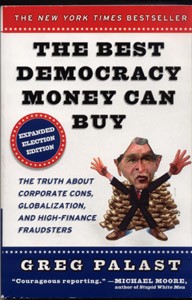
Greg Palast

Every Reason to Be Paranoid: It’s actually worse than you think.

Mightier than the Sword

Journalist Greg Palast is one of truth’s last crusaders

In these days of money-poisoned politicians, oil-hungry corporations and the hysterically unbalanced corporate media, Greg Palast remains one of the few real investigative journalists left on this planet. He asks questions people don’t want to answer, and he writes stories that people don’t want to talk about: how Katherine Harris stole the Florida election for Bush by illegally purging thousands of legitimate voters from the rolls; how Ken Lay persuaded Arnold Schwarzenegger to settle the state’s lawsuits against the energy companies for pennies on the dime, letting Enron off the hook for the $9 billion they stole from California; how, in the summer of 2001, Bush deliberately shut down the intelligence unit tracking Saudi funding of al Qaida.

That last story, in particular, topped the BBC Nightly News and took home Sonoma State University’s Project Censored Prize for a report simply too hot for the U.S. media. Accordingly, Palast appears at SSU in benefit of Project Censored on Wednesday, April 28.

Palast presents rock-solid evidence to back these stories up, yet you’ll never see his name in the mainstream press. An American, he publishes most often in Europe because his reports are ignored by the watered-down American news organizations. The networks won’t touch him with a 10,000-foot pole.

And to the sheer ire of the powers that be, Palast is not going away. Just a few days ago he released an “expanded election edition” of his book The Best Democracy Money Can Buy: The Truth about Corporate Cons, Globalization and High-Finance Fraudsters (Plume; $14). The book contains new material just in time for an election season shaping up to be a bloodbath.

Perhaps the scariest new material discloses the machinations behind the Help America Vote Act, a law passed by Congress instructing every state to computerize, centralize and purge voter rolls before the 2004 election–which means the Florida scenario could be replicated nationwide, and we might see the most questionable and unverifiable election in this nation’s history. And as folks are finally starting to point out, the companies who manufacture the electronic voting machines are huge contributors to the Republican Party.

As if that wasn’t disturbing enough, Palast also managed to get a hold of 100 pages of the State Department’s secret “Iraq Strategy,” dealing with the “postconflict” economy of Iraq, written long before we were told there’d be a war there. Quoting the State Department’s document, Palast reports that their “strategy” lays out a detailed 270-day schedule for grabbing all “asset sales, concessions, leases and management contracts, especially those in the oil and supporting industries.” He says what this tells us is that “if Bush didn’t go into Iraq for the oil, he sure as hell ain’t leaving without it.”

Undoubtedly, Palast is written off by mainstream conservatives as one more clown engaging in attack-Bush hysteria, as if there was nothing to attack. But he goes after Clinton as well. His investigation of Clinton’s secret Indonesian money trail–six-figure payments to Hillary’s former law partners by the Riady family of that country and Entergy International of Little Rock, Ark.,–is something, again, that- never made it to any mainstream media outlet. According to Palast, that mess alone would have resulted in Clinton’s impeachment, but the Republicans on the Senate Governmental Affairs Committee called off their investigation as a trade-off for the Clinton Justice Department’s scrapping an investigation of potential criminal activity by Koch Industries, a monster secret benefactor of the Republican party.

Palast, consistently about two years ahead of the U.S. media, is one of the last true outlaw journalists not afraid to take on the big boys. His methodical Columbo-like snooping continues to irritate corrupt officials, and he should be applauded for it. We need more folks like him.

Greg Palast appears at SSU on Wednesday, April 28, at 7pm to read from and discuss ‘The Best Democracy Money Can Buy.’ The Cooperage, SSU, 1801 E. Cotati Ave., Rohnert Park. $7-$12. Benefits Project Censored and ‘Flashpoints’ radio show. 707.664.2500.

From the April 21-27, 2004 issue of the North Bay Bohemian.

© Metro Publishing Inc.

eBay

Lamb Sheep Animal Pink Cute Salt Pepper Shakers: Only $5! Auction ends 4/21 at 20:00 hours.

eBay Ate My Soul

Confessions of a rabid collector

By Jill Koenigsdorf

It’s 2am and DozeetOats, Giraffreak and I are in a frenzied bidding war for a chip art lint-brush holder from Amsterdam. There are only three minutes left to bid, and I am biting my nails, rocking back and forth, and cursing the way the computer always seems to freeze during the last minutes of an item’s availability. I am feeling slightly paranoid about DozeetOats. Does s/he just log on to auctions that are about to end, trumping serious bidders simply for the rush of squashing the competition?

Giraffreak and I are listed in the bidding history. We’ve wanted this puppy from the get-go, so there is that curious camaraderie/ rivalry that auctions spawn. But this DozeetOats interloper, s/he is a wild card. Around these parts, they’re called “snipers” and they get their jollies by swooping down at the last minute and carrying off the prize in their talons.

The bar at the bottom of my screen is making a ticking noise in its staccato struggle to beat the clock and download the crucial photos and info. One minute left. I push “Remit?” sending what will surely be the last-chance bid. The screen flickers torturously, then I see the words materialize that, I have discovered over these past weeks, have the power to send me heavenward. “Congratulations, Copasthetic, you are the winner of the Dutch chip art lint-brush holder!”

“Nobody messes with Copasthetic!” I crow, doing a little victory dance in the direction of my bored dogs, whose walks have become less frequent since the addiction began.

Nobody!” I reiterate to the boyfriend in the next room, who has taken to wearing earplugs to bed so when I need to bid late at night he will not be disturbed. It is then that I see what I have paid for the Dutch chip art lint-brush holder: $140. Whoa! How the hell did that happen? It seems like only yesterday that my maximum bid was $12. I wonder, only briefly, if I have crossed some sort of line.

I do not have an addictive personality. During the days of contraband, I could make last for weeks what others snarfed down in a single Saturday night. I sip my wine. I masticate thoroughly. I am allergic to shopping malls and am not a rabid consumer, except, perhaps, at yard sales. Yet ever since my friend Suzan introduced me to eBay several months ago, I have known craving, greed, obsession and, yes, the need to possess something at any cost.

I have also known sacrifice, turning down appealing invitations because they conflict with the closing minutes of an auction. And loss–boy, have I known loss. Sometimes I find myself staring wistfully at the “Items You Did Not Win” section of the “My eBay” screen, much in the same way a fisherman might look at the snapped fishing line now slack in his hands.

I’ll admit that I am tardy in jumping aboard many national trends. I am a stalled jalopy on the shoulder of the cyber highway, a techno-dinosaur. I am guilty of that suspicion of new things often attributed to the elderly, who often believe the older, more outdated ways to be superior. Hence, my friend Suzan shouldn’t have been so aghast when, after going on and on about the steal she had gotten on a Gucci bag from the ’60s that she’d bought on eBay, I asked her what that was.

“You’ve never heard of eBay?” she asked, truly incredulous. “How could you not have heard of eBay?” Seconds later she had pulled up a chair next to my iBook and helped me pick out my username and password. It was all so friendly, so innocent at the time, these first baby steps. And it seemed like a simple enough equation: seek, find, own.

“Hmmm,” I would say to myself, “there’s a set of Roadrunner juice glasses. I’d sure like those. I can afford $20. Let’s see, the auction doesn’t end until 5pm next Saturday, but I’ll just bring the bid up to $20 now so these glasses will be mine for sure.”

Imagine my shock and dismay that next Saturday when I booted up my computer at 5:05pm and there was a message reading, “We’re sorry. You have been outbid on the Roadrunner juice glasses. The current price is $20.50. Don’t let this item get away! Try again by . . . ,” etc. But of course I could not try again, I could never try again, as the auction on my item was over and I had been outbid by 50 cents.

Now that I am more jaded, I am wilier. I take my time. I leave such odd encrypted messages to myself on my own answering machine as, “Copasthetic, boot up 1700 hours, Monday. Welsh wedding spoon. $28. Go.” I may not be the blushing rube I was when this whole ride began, but I’ll tell you what: that Welsh wedding spoon is hanging above my sink right this minute.

Ever since Antiques Roadshow began airing, everybody and their Aunt May thinks that the shoehorn they found in the back of some drawer in their basement might once have belonged to Melville. I find it mind-boggling that you can type virtually anything, be it animal, vegetable or mineral, into the eBay “Search” box, and a moment later there will be at least one listing, no matter how obscure your quest. When I am allowing eBay to devour the time I should be writing, I will occasionally punch in curious pairings of words simply for their musical appeal, such as “pirate trivet” (two listings!) or “silly skunk saltshaker” (say it four times fast). It is a wonder that someone saved such items thinking they might one day be worth something; it is a wonder that they are now worth something.

When people came to our house they would comment archly to my mother, “You sure like to collect things,” turning their noses up at the tea cozies bursting forth from the linen closet or the battered old editions of Tennyson and Wordsworth on the bookshelf. She would look them straight in the eye and sigh, “Oh, I know, but I’d hate to throw them away and then realize later on that I needed them.”

And now, lo these many years later, when some less politic friend enters my own home and quips, “How the hell can you live with all this junk?” I smile sweetly, the feather duster pausing over my Eiffel Tower collection long enough to turn and airily joke, “Oh, I know. It’s a sickness.”

But what I’m really thinking is, “It’s time for you to go now. I need to be in the final bidding war for the vintage dashboard hula boy in 10 minutes, and you are distracting me.”

But of course, I do not say this aloud. After all, isn’t contact with our fellow human beings more important than e-commerce, more essential than adding some quirky figurine to a shelf already densely populated with quirky figurines? I am aware of all this. I am a reasonable person.

Then again, a vintage dashboard hula boy might only come around once in a lifetime.

From the April 21-27, 2004 issue of the North Bay Bohemian.

© Metro Publishing Inc.

White Supremacists

0

A Thin Line

Desperate for new recruits, national hate group turns to love

By R. V. Scheide

Still reeling from the death of its founder two years ago, National Alliance, the largest white supremacist group in the United States, turned to a new tactic this Valentine’s Day. In an effort to boost a reported decline in membership, the West Virginia-based neo-Nazi organization began distributing thousands of fliers encouraging whites to “Love Your Race” in neighborhoods across the country.

The fliers began turning up in Sebastopol, Petaluma and Rohnert Park in late March, according to Sonoma County Commission on Human Rights chairman Ernesto Olivares. “Our job is to report incidents like this so that we know that it’s here,” Olivares said, adding that while the leafleting was protected free speech, the commission “alerted local law enforcement, just in case.”

“We got a couple of reports from people who complained about the leafleting,” said Petaluma Police Department’s Lt. Dan Fish. “It’s protected by freedom of speech and nothing has happened since.”

Fish recalls several similar incidents of leafleting during the 15 years he’s served on the force. Petaluma is hardly a neo-Nazi hotbed. In fact, it’s one of several Sonoma County cities that have signed on to the Human Rights Commission’s “Hate-Free Community” program. Nevertheless, National Alliance spokesman Shaun Walker claims that members of the hate group who live in Petaluma were responsible for the leafleting.

“We have members in Petaluma who just started downloading the flier from the website,” Walker says. They then printed the fliers and handed them out. He estimated 115,000 fliers had been distributed in Sonoma County, the largest distribution nationwide. “The response has been phenomenal.”

But other than taking Walker’s word for it, judging the actual response is difficult.

“There have been at least a half-dozen leafleting incidents in California,” said Rose Gabaeff, assistant director of the Anti-Defamation League’s (ADL) San Francisco office. “How effective it is, we do not know, but we are concerned about their activities.”

Walker would not say specifically how many people responded, but the fliers offered a “white person of good moral character, with no disqualifying characteristics” several ways to reply, including an e-mail address, a link to the National Alliance’s website and a phone number with a Sacramento area code.

Those who call the number are welcomed by a recorded voice message from National Alliance founder William Pierce, author of the infamous Turner Diaries, a fictional work about the coming white revolution that provided inspiration to, among others, executed Oklahoma City bomber Timothy McVeigh. But Pierce died in July of 2002.

According to the ADL, Pierce’s death has led to infighting among National Alliance leaders that threatens to topple the group, which is estimated to have more than 1,500 members nationwide. Several board members have resigned and other former members are openly critical of current National Alliance chairman Erich Gliebe. In its 2004 update on the group, the ADL reported, “the National Alliance has clearly been damaged and its future remains tenuous.”

The aggressive leafleting campaign began last year on the anniversary of Pierce’s death, the ADL says, as an effort to shore up flagging membership. Walker, who serves as the National Alliance’s chief operations officer, says that it’s the group’s policy not to discuss official membership numbers, but insisted support remains strong.

“We’ve got more members in California than anyplace else,” he says. Now 35, Walker grew up in Hayward and experienced “dirty looks and a feeling of unwantedness” as nonwhites moved into his neighborhood and became a majority at his high school. “Why did that happen?” he asks rhetorically, responding, “This is what is going to happen until white people start thinking on a racial level.”

That’s why for the past 21 years Walker has been working with the National Alliance “for the long-term interest of white America.” Superficially, as he discusses issues such as better pay, working conditions and health benefits, Walker sounds not unlike a typical liberal politician. But when it comes to the National Alliance, ugliness is never too far below the surface.

In Florida the neo-Nazi group has even put up billboards featuring such slogans as “Who Rule$ Amerika?” alongside major roadways. Go to the website listed on the billboard, scroll down and the answer to that question is revealed in a seven-page PDF file: the Jews, via alleged dominance of the mainstream media.

“Once we have absorbed and understood the fact of Jewish media control, it our inescapable responsibility to do whatever is necessary [italics theirs] to break that control,” the National Alliance report concludes.

No doubt “whatever is necessary” includes a second Holocaust–that is, if National Alliance members could agree that the first Holocaust actually occurred. The group’s website contains numerous links to holocaust revisionist literature, and the distribution of such tracts remains one of its major sources of income.

“We’re a pro-white organization, not a Holocaust revisionist organization,” Walker insists. When Asians, Latinos or Jews build say, a new community center, it’s celebrated, he says. “If you try to find anything that’s pro-white, you get demonized.”

“Love Your Race,” the National Alliance extols whites. But as the song goes, there’s a thin line between love and hate. In the case of the National Alliance, that line is virtually nonexistent.

From the April 21-27, 2004 issue of the North Bay Bohemian.

© Metro Publishing Inc.

Latitude

0

Interior Life: Colonial Vietnam meets Key Largo meets ambitious late-90s conference center at Latitude.

Every Port on the Plate

Latitude is all over the map

By Heather Irwin

It’s hard not to feel a little conspicuous eating in a restaurant that bills itself as “sexy.” I’m reminded of this when cramming an unarousing handful of calamari in my mouth. As I drip aioli and oily crumbs everywhere, my date takes the opportunity to do his own rendition of Latitude’s latest radio spot: “It’s sexy! Latituuude!” he growls.

Chipmunk-cheeked, with greasy fingers, I’m not feeling the heat. Neither are the 60-year-old guys in golf shirts lunching next to us. Engrossed in their Manhattans, they seem to have missed the memo that this Rohnert Park hot spot is supposed to be seductive. I remind them as gently as possible of the advertisement. “Latitude. It’s fun! Latitude. It’s sexy!” They pretend to ignore me, but next time I think they’ll give a little more thought to their wardrobe before coming to such a titillating place.

Opened in December, Latitude’s early publicity made the restaurant seem rife with possibilities. With a pricey facelift on the former Wine Visitors Center, Latitude’s lakeside dining and ultra-loungey bar in the midst of Rohnert Park’s ubiquitous strip-mall chain restaurants sounded intriguing and new. Get past the mind-numbingly stupid radio ads, and you’re promised a cool, unique experience. But after two visits, we were still seeking out the elusive libidinousness we’ve been promised.

By the third visit, the signature pink drinks seemed pretty sexy. During Friday night’s “Ultra Lounge” late-night happy hour, plenty of boys and girls were drinking Latitude Lemon Drops ($7.50), a treacly, cotton-candy-pink mixture of vodka, lemon juice, sugar, Triple Sec and Chambord. But sticky fingers, a nasty sugar high and the sticker shock of $15 for two drinks killed the sexy party mood fast. My date needed several shots of Wild Turkey to fully restore his testosterone level.

Each time we visited, the bar staff was polite but not overly helpful, tending to chat with friends and acquaintances. In fact, the folks at the bar seemed so chummy with their pals that we sometimes felt like the only outsiders in the place.

An indoor waterfall cascades behind the bar (very sexy), giving Latitude some major snaps in the design department. The ceiling soars in the center of the bar, culminating in a stained-glass skylight. The tables and chairs have a rattan, plantation-thing going on, while origami-like light fixtures lend an Asian flair.

Crackled-glass dividers lit from below echo the blue water of the nearby lake. But mosaic tiles on tables and floors confuse the whole thing by bringing in a Caribbean feel. At the end of the visual inspection, you’re left scratching your head (not sexy!) as to what the theme of the place is. My closest guess: colonial Vietnam meets Key Largo meets an ambitious late-90s conference center.

At its heart, Latitude is a convenient hotel restaurant that does a heavy traffic with corporate expense accounts, the over-45 crowd and after-golf lunchers who want a decent steak and a stiff gin and tonic. But does this core contingency really want a sexy experience, or food that comes with a healthy dollop of “L’atitude” (sic)?

It’s doubtful. And the crowd reflects that. The ratio of older to younger patrons, even at night, was marked. On repeated visits to the bar, the room ranged from being nearly empty to hosting only a table of giggling women celebrating a bachelorette party, to thirty- and forty-something couples huddled over drinks. And then there are all those twenty-something girls with the forty-something guys. After seeing several May-December couples and obvious nooners, we’re wondering if Latitude has become, well, a special meeting spot for such lovers. Perhaps the place is sexier than we thought.

Foiled in our own search for sexiness, we got down to the next best thing: eating. There’s nothing to complain about, but there’s nothing to really get excited about, either. The menu vacillates between Pan-Asian fusion and meat and potatoes. Both styles are good, but a bit overplayed.

The restaurant’s own website describes itself as serving “diverse lunch, dinner and cafe menus to satisfy everyone’s palate.” And herein lies the problem. The food is OK in a vanilla sort of way. There aren’t any big risks. There aren’t any huge standouts. The wine list is Napa- and Sonoma-centric, with a good selection of moderately expensive ($35-$54) bottles. Again, no big surprises.

For lunch, the Asian-marinated hangar steak ($15), cooked medium-rare, was rich and buttery, served with a pile of crunchy julienne vegetables and plenty of cilantro. We tried the duck spring rolls with plum dipping sauce ($9) and calamari with chipotle aioli ($9). The rolls were crisp without being overly greasy and were stuffed with exotic mushrooms and sweet duck. The calamari was generously served, tender and chewy without being rubbery or tough.

We also tried the pan-fried half chicken served with potato-spinach puree and raisin, lemon and jalapeño chutney ($14). Good, but lacking a bit in cohesion and flavor. Lunch service was acceptable, while a bit brusque. When we asked for help deciding between two entrées, our server answered with a shrug, “Everything is good.” There is no worse answer.

For dinner, the standout winner among our table of four was the blue-cheese-crusted beef fillet with shrimp. However, when the plates arrived, we were told it was “surf and turf” which, for a moment, felt as if we’d been transported to Sizzler. For $28, I want to be charmed a bit more. The generous and tender slab of meat sat atop a lusty pile of caramelized onions and was served with a red-wine reduction sauce. The shrimp, perched on a sweet-potato purée, lacked finesse and were tough and rubbery. The ahi tuna steak ($19), served rare, was tender and fresh.

Our appetizers, however, fell far short of our expectations. Oysters served on the half-shell with lemongrass mignonette ($1.50 each) were unremarkable in size or flavor. The chicken satay ($8) was unimaginative and a bit paltry. Dinner service was attentive and helpful, from assistance selecting entrées to a perfect wine pairing. Our waiter claimed to have sampled all the restaurant’s wines, an impressive feat.

We were told the restaurant expected 600 for brunch the following morning, Easter. That tells me that people–brunch-eating people, who I’m guessing are not looking for a romantic rave spot after church–like this place. And sitting out on the lake sipping my $7.50 mojito, I like this place, too, for what it is.

Latitude is a somewhat bland, mom-and-grandma-pleasing restaurant that has something for every palate. This is the fourth restaurant for the Left Coast restaurant group, which includes Brannans, the Flat Iron Grill and Checkers. It’s Outback Deluxe, and at some level, that’s OK. It’s just not sexy.

Where’s the Loo?

The devil is in the details. After the impressive design of the interior space, the bathrooms at Latitude are a visual black hole. A truly great interior design carries the themes of the exterior space into every public space. The restrooms (and I can only speak of the ladies’ room) are bland and institutional, with ugly tiling and colors that ruin the visual continuity of the exterior. A unique window and architectural ceiling in the women’s restroom cried out to be utilized in a more pleasing way. The cavernous sink area made for disturbing acoustics. A row of chairs outside the restroom area also made for a strange experience–were they merely extra chairs or some sort of bathroom staging area? Frankly, after a few cocktails, we found them to be a tripping hazard.

–H.I.

From the April 21-27, 2004 issue of the North Bay Bohemian.
© Metro Publishing Inc.

American Music Club

0

Out of Oblivion

AMC’s Danny Pearson has it both ways

By Sara Bir

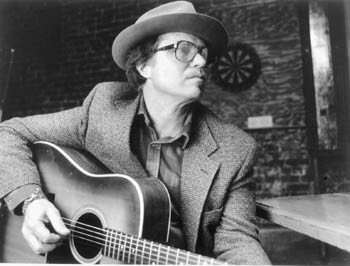
If you drive out to Danny Pearson’s house and back your car into a ditch, he can get you out again. Having spent 10 years in a little band called American Music Club–who stand as a prime example of a group that went everywhere and nowhere, so loaded were they with unwieldy, package-challenging potential–Pearson knows how to roll with the punches. I back my car into a ditch in his Sebastopol driveway, and instead of answering stilted interviewer-type questions, he spends the next hour jerry-rigging a jack, some rocks and firewood together to get me out. In the end, I probably learned more about him from that than from our interview.

The recent regrouping of the American Music Club, who played the closing night at San Francisco’s Noise Pop festival this past February and are heading to England next month, has so far been a feat of jerry-rigging as well. It’s not a triumphant return for the band as much as a familiarly precarious new beginning.

Formed in San Francisco in the mid-’80s, AMC were always the unintentionally perfect band for obsessive music geeks. Imagine the surliest, most eccentric gang of singer-songwriter types possible and inject them with punk credo. With infamously hard-drinking frontman Mark Eitzel and a hopscotching disregard for musical genres, AMC drew in audiences based on the guttural poetry of Eitzel’s lyrics and the unpredictability of the band’s live shows, at which Eitzel might rant at the crowd or just up and take off.

Between the critically acclaimed albums Everclear and Mercury, the band stood poised for a mainstream breakthrough that never arrived. Their label, Virgin, dropped them, and AMC gradually dissolved into miscellaneous musical projects. Pearson played bass with AMC from 1985 to 1994, and he is with them again now, though that’s not the entire reason I drove into a ditch. A few months ago he quietly released a solo album, The Oblivion Seeker, to which electro-folkster Karry Walker of the criminally overlooked Ultralash contributed backing vocals.

The Oblivion Seeker does not sound like American Music Club Jr. The album deserves attention in its own right, with its quivering, almost vulnerable vocals and bare-naked arrangements culminating into bedtime stories for grownups. Pearsons’ lyrical non sequiturs are nearly childlike; somehow he manages to make the line “Won’t you suspend your disbelief / for just one more day” insanely catchy and quietly poignant.

Pearson speaks almost dismissively about his solo efforts, instead reverting to AMC’s renewed activity of late with tones of apprehension, excitement and disbelief. Things were never easy for that band, and for safety’s sake, the band members aren’t anticipating them getting any easier during Round Two.

“It’s been kind of an experiment, and anyone could bow out when they can’t take it anymore,” says Pearson. “It’s not a reunion just for the sake of reunion. Mark doesn’t stop [writing], so there’s always material and there’s always a way to present it. But it’s good that it’s a shambles, because everyone goes off in their own directions and they have the freedom to do whatever they want.”

AMC’s shows have so far been erratic instead of full-blown tours. That may change, especially since the band have a new album in the can. Recorded at AMC drummer Tim Mooney’s studio in San Francisco (where Pearson recorded his solo album), the new material is still being mixed and will probably be released later this year under the tentative title You Better Watch What You Say (a nod to the Patriot Act).

Pearson plays some mixes of AMC’s new songs, which I semibootleg on my crappy microcassette recorder. I realize I haven’t sat down with someone else with the sole purpose of listening to a meaningful song since I was in high school, and I’d forgotten how singular and pure it is, like going to church. The new tracks are vintage AMC: moody, turbulent, angrily comic at times; the density of the instrumentation only deepens the effect.

Pearson says that AMC’s new gigs have all been loud, which doesn’t always run with his more acoustic tastes. “Mark’s been having a hard time wanting to do a quiet song. I like to do my own stuff, and then I’m in control of it.”

Well, yeah. But complete and utter lack of control obviously has its thrill as well. For the time being, Pearson can have it both ways.

Danny Pearson will play at Cafe Du Nord in San Francisco on Monday, April 26, with Ultralash and Adrian Beatty.

From the April 21-27, 2004 issue of the North Bay Bohemian.

© Metro Publishing Inc.

Swirl ‘n’ Spit

0

Swirl ‘n’ Spit
Tasting Room of the Week

Gundlach Bundschu Winery

By Heather Irwin

Lowdown: There are those who thought that Jim Bundschu’s Napa Valley Wine Train hijacking caper was hilarious. And then there are those who got their bow ties and Armani cummerbunds in a knot over the whole escapade. We’ll let you guess who’s who, because there are the Falcon Crest wine-family dynasties, and then there are the Bundschus. Though the estate sprawls some 250 acres, the winery bottles just 50,000 cases a year–less than one-12th of what neighbor Sebastiani and Sons does. They’re less shoulder pads and big hair than blue jeans and, well, masks. Jim Bundschu’s famous Napa heist occurred in 1990 when he decided junketing journalists riding the Napa-centric wine train deserved an Old West holdup which turned into more of a “tasteup.” The bemused riders were given samples of nearby Sonoma wines, much to the astonishment and horror of a number of some ruffled Napans. But when Bacchus is your patron saint, grapeish mischief can only be expected.

Vibe: Fourteen years later, the train heist is history, though the Napa/Sonoma feud rages on–as does the party at GunBun. The Gundlach Bundschu (pronounced “gun lock bun shoe”) of today is a winery in transition, but holding tight to its roots with kicked-back, approachable wines. They’re not A-list wines for the most part; they’re picnic, Superbowl, housewarming wines that are made to enjoy rather than impress. The tasting room takes on the same feeling–small and casual, with music blaring and the clink of the bottling room (they were doing a value-priced new label, Block 13, on the day we visited) accompanying the generous six to eight pours for $5. If you’re looking for something a little more upscale, the Bundschu family also owns Bartholomew Park, just down the road, making more premium Merlots. The estate shares some grapes, though the majority of Bartholomew Park’s come from leased Buena Vista land.

Mouth value: Head straight for the reds and don’t look back. The most unique wine is the 2000 Tempranillo ($28)–a Spanish-style red with lots of spice and lusty, peppery flavors. The 2001 Morse Vineyard Zinfandel ($20) is a charming little coquette, pleasingly unrefined and saucy, while the 2001 Rhinefarm Cabernet Sauvignon ($32) and Merlot ($28) saunter around the palate like the plump, classy dames they are. The winery’s dry Gewurztraminer is sold-out (like many of the winery’s other premium Rhinefarm wines), but is an award-winning perennial favorite.

Don’t miss: All that tasting is bound to work up an appetite. Before hitting the winery, stop by the Cheese Maker’s Daughter (127 E. Napa St., Sonoma, 707.996.4060) for the $4.50 lunch special, a skinny baguette slathered with butter and fig spread, then draped with cheese and Serrano ham. Treat yourself to some Turkish yogurt out of the back refrigerator ($1.99), to make your lactose-laden meal complete, and a small container (75 cents) of Spanish almonds with olive oil and sea salt. The winery has some of the most spectacular picnic grounds in Sonoma, and eating in the car just won’t do.

Five-second snob: An oak is not just an oak. Wine is aged in oak barrels that usually come from France or the United States. But there’s more to the science: American oak barrels are labeled with the state the oak came from–Minnesota, Michigan, etc.–to let the vintner know the quality of the oak. Northern American oak is less porous, letting less oxidation occur. Southern oak is more porous, giving the opposite effect.

Spot: Gundlach Bundschu Winery, 2000 Denmark St., Sonoma. Open daily, 10am to 5pm. 707.938.5277.

From the April 14-20, 2004 issue of the North Bay Bohemian.

© Metro Publishing Inc.

Country Joe McDonald

0

Gimme an ‘F’: Country Joe McDonald knows what’s worth fighting for.

Free Radical

Country Joe McDonald still leans left

By Greg Cahill

There’s a pungent whiff of ’60s counterculture emanating from Country Joe McDonald’s website (www.countryjoe.com)–and this Berkeley-based hippie-era rock icon isn’t apologizing for any of it. Click on over to Country Joe’s Place, as the site is called, and catch the latest “news flashes and acid flashes”; read a transcript of Joe’s testimony at the infamous 1970 Chicago Seven trial; find a link to the Rag Baby e-zine. Or drop a little spare change.

This cyber bazaar offers everything from Avalon Ballroom psychedelic poster art to imported Italian-vinyl pressings of the 1967 Country Joe and the Fish album Electric Music for the Mind and Body to Country Joe’s own 1987 Honda Accord LX, the one with the GIMEANF license plates.

If you’re still not feeling the vibe, consider that McDonald–who is headed to Hanoi, Vietnam, on June 26, where he will be a recipient (along with Bob Dylan and Joan Baez) at the World Peace Music Awards–is reuniting most of the original band for an upcoming show at the Sebastopol Community Center. (Barry “the Fish” Melton is sitting this one out.)

During a phone interview from his Berkeley home, the 62-year-old McDonald sounds slightly, uh, stoned, but enthusiastic about politics and especially the prospect of reuniting with his former band mates. “I’ve played with a lot of guys over the years,” he says, “but to get musicians together who can make the ’60s stuff come alive and breathe has proved just about impossible.”

These days, McDonald’s own musical tastes run further afield than the acid rock that launched his career. Musically speaking, he’s come a long way since his appearance in the 1970 film Woodstock, which captured McDonald–a Navy veteran and prominent antiwar protester–delivering the famous Fish cheer for which he is so closely identified (“Gimme an F. Gimme a U. Gimme a C. Gimme a K. What’s that spell? What’s that spell?”).

His 21 solo albums run the gamut from folk to blues to art music. They include the acclaimed 1969 album Thinking of Woody Guthrie, which showcased his talent as a folk interpreter; Superstitious Blues, a strong 1991 set of folk and country blues that featured Jerry Garcia on several tracks; 1995’s Vietnam Experience, a dozen powerful antiwar songs, including a new rendition of his “I-Feel-Like-I’m-Fixin’-to-Die Rag”; and 1996’s ambitious album Carry On, which includes a four-song cycle devoted to nurse Florence Nightingale.

Most recently, he has collaborated with bio-acoustic specialist Bernie Krause, a pioneering electronic musician now living in Sonoma County, to blend acoustic guitar and harmonica instrumentals with the sounds of nature for an upcoming album of meditative tracks titled Natural Imperfections. McDonald’s commitment to his counterculture ideals is the unifying theme in all these projects.

“I grew up in a family that held strong beliefs in peace and love and working together, so it was pretty easy for me to adapt to the ’60s goals,” he says, noting that his parents were left-wing activists during his childhood in Washington, D.C. “My mother later became politically active in Berkeley and my father was involved in unions. Others grew up with those same influences but later went over to the dark side, but I do what I do because it keeps me sane. I play music for myself, always have, though I enjoy it if the audience appreciates it, too. And I enjoy doing service for the community. It keeps me centered and I have no plans to change.”

Contrary to his image, however, McDonald is not the kind of person who attends demonstrations or carries picket signs. “But as people can see from my website,” he explains, “I have a wide variety of causes that I support, especially veterans and healthcare workers.”

Another cause is gay rights, especially same-sex marriage. “Coming down on same-sex marriage will certainly make us look like the Taliban, won’t it?” he ponders. “I mean, we’re in this funny historical place right now in that we’re waging war against the Taliban, and yet we have our own uprising right here among people who don’t quite fit the mold.”

That notion excites a machine-gun burst of laughter from McDonald and the conversation turns back to his used car, which was stolen and recovered last month after San Francisco Chronicle columnist Leah Garchik took up his cause. “The adventures of my Honda Accord, yeah,” he muses. “Eventually it will get sold–maybe I ought to lower the price.”

Will he consider throwing the personalized license plates into the deal? “I’m trying to hold on to those license plates,” he says thoughtfully. “I think that those license plates are going to be pretty valuable someday. . . .”

The Country Joe Band perform Saturday, April 17, at the Sebastopol Community Center, 390 Morris St., Sebastopol. 8pm. $15-$20. 707.829.7067.

From the April 14-20, 2004 issue of the North Bay Bohemian.

© Metro Publishing Inc.

Cellophane

0

Photograph by twistedlens.com

Tangled Up in Goo: As with so many good things, the invention of cellophane was pure accident.

Wrap Star

Let us now sing the praises of cellophane

Jenny Compton has recently become a dedicated fan of cellophane. A waitress at the popular Aram’s Cafe in downtown Petaluma, she’s been intimately familiar with the stuff for years, as plastic wrap clearly ranks among the most commonplace item in any restaurant kitchen. Throughout the day, little parades of perishable food ingredients are endlessly wrapped and unwrapped and rewrapped again, each new wrapping underscored by the sharp, sibilant snap-and-hiss of folding, crinkling, overlapping cellophane, snapping cellophane, tearing cellophane, occasional big wads of cellophane lazily unbunching itself on the counter or in the trashcan with the sweetly sizzling sound of a far-off campfire. It’s cellophane city in there, and after so many years engaged up to her elbows in various food-service activities, one can assume that Compton has spent dozens, maybe hundreds, of hours playing with the stuff.

“It’s probably true,” she grins. “I’ve got my hands on cellophane all day long.”

Still, Compton admits that she’s never really thought about cellophane all that much–until two weeks ago, when she and her fellow employees were enrolled in a daylong food-safety class. The class, she says, was all about “washing your hands and not touching stuff”–sensible lessons, to be sure–but during that eight-hour training there was also plenty to learn about the amazing, unsung, transparent, pleasantly-filmy-yet-largely-taken-for-granted plastic product that’s been unobtrusively playing a part in humanity’s existence for almost 100 years.

“If it weren’t for cellophane,” Compton says, “there would be much more cross-contamination. That’s my new big word: ‘cross-contamination.’ Germs just jump from everybody, all the time. There are a lot of germs out there. Cellophane stops the germs. Cellophane,” she pronounces firmly, “is good.”

While certainly good, cellophane’s creation, like vulcanized rubber and the potato chip, was ultimately an accident.

According to historians, a Swiss chemist and textile engineer named Jacques Edwin Brandenberger, working in France in the year 1900, was seated in a restaurant, enjoying his meal, when a particularly clumsy patron spilled a bottle of good red wine all over the pristine white tablecloth. “Wouldn’t it be useful,” he surely thought to himself, “to find a way to make such fabrics waterproof? Stain-resistant? Impervious to the ravages of good red wine?” (Actually, no one know the specific words M. Brandenberger was thinking, but what’s clear is that witnessing the destruction of that tablecloth in that little restaurant was like lightning on his brain.)

By the year 1908–the same year Henry Ford unveiled the first Model T–the Swiss tinkerer had experimented with several different materials in his quest to create repellant tablecloths. Various people had been playing with a derivative of cellulose and alcoholized camphor called “celluloid” at that time. An inventor named John Wesley Hyatt first came up with the stuff in 1868, hoping to find a substitute for ivory in billiard balls, and scientists had been testing out other applications ever since. Ultimately, Brandenberger tried applying liquid viscose (a cellulose material derived from wood or cotton fibers) to the fabric, but the viscose only acted as a stiffening agent, making the tablecloths difficult to fold but certainly no safer from cataclysmic spillage.

Worse yet, the stuff wouldn’t stay affixed to the cloth; the plastic coating kept sloughing off in great big sheets of thin transparent film. Like any good inventor, Brandenberger eventually gave up on saving the tablecloths of France, having realized that the weird byproduct of his failed experiments was a lot more interesting.

His next task was to develop a machine that could produce regenerated cellulose in attractive, see-through sheets. It took him nearly 10 years, but by 1908 the world’s first cellophane machine was born. The process employs an alkaline solution of viscose, extruded through a very narrow slit into a bath of acid. The acid regenerates the celluloid, resulting in a thin film. After the additional processed of washing and bleaching the material, it becomes cellophane.

Having perfected the machine, Brandenberger only needed to find a practical use for the product it made. By 1912 he had formed a company, La Cellophane–combining the words “cello” from “cellulose” with “phane” from the French word diaphane, meaning “transparent”–and had begun producing and selling thin cellulose film to be used in the manufacture of gas masks. By the time it became available to the general public, cellophane was being produced by several companies in France, each finding neat new uses for it, and the excitement surrounding the material was so high that an organization, La Cellophane Société Anonyme, was formed to promote and explore its potential.

Cellophane’s usefulness as a packaging material had become clear, and on Dec. 26, 1923, Brandenberger entered into an agreement with Du Pont to make and distribute cellophane throughout North and South America. Five years later, Du Pont scientist William Hale Church finally figured out how to make cellophane waterproof, instantly creating countless new opportunities in food packaging.

This had a remarkable effect on the food industry. With cellophane wrapping suddenly available to keep bugs out of products like candies and chocolates, such treats could be shipped across the country. The omnipresence of the Whitman’s Sampler owes a lot to Brandenberger and his invention. Today, according to the National Plastics Center and Museum in Leominster, Mass., cellophane is produced in more than 2,000 forms. In addition to having revolutionized the medical world with the various sanitary applications of sealable bags and other products, cellophane changed the way people cook and eat. Leftovers suddenly became feasible and safe to eat a few days after that first meal. It is difficult to imagine a modern-day kitchen without a roll or two of plastic wrap banging around in the pantry.

Nearly 100 happy years after its arrival on the scene, cellophane continues to evolve as scientists and inventors find ways to improve upon Brandenberger’s flexible invention.

Jennifer Barnhart, a media representative for the Glad Products Company, a subsidiary of Clorox Inc. in Oakland, Calif., is paid to be excited about plastic wrap, and she does her job well. When reached by phone, she seems genuinely thrilled to be talking about a favorite subject. She knows, for example, that a sheet of Glad Cling Wrap is exactly .5 millimeters thick.

“Are you familiar with our newest innovation?” Barnhart cheerfully asks. “As much as your may love plastic wrap, you have to admit you also have a few frustrations with it, don’t you? Some people are frustrated because plastic wrap, while it’s very good at clinging to itself, hasn’t always been good at clinging to other surfaces. When a Tupperware container is missing a lid, for example, plastic wrap isn’t always good at covering the container, because it won’t cling to the plastic surface.”

Glad’s newest product, she enthusiastically explains, is a sealable wrap, chemically engineered to seal to practically any surface, merely by pressing against the wrap. “Regular wraps cling,” she says. “[This] actually seals.”

Asked to muse upon the vast social significance of plastic wrap and other cellophane products, Barnhart’s professional observation is sweetly succinct.

“Cellophane,” she says, “has clearly made a lot people’s lives easier, in and out of the kitchen.” And finally, asked to speculate as to what Jacques Brandenberger would think about Glad’s latest twist on his invention, she says, “I don’t know, but I bet he’d like it.”

Of course he’d like it. But he’d probably have one burning question: “How does this stuff work on tablecloths?”

From the April 14-20, 2004 issue of the North Bay Bohemian.

© Metro Publishing Inc.

Medical Marijuana

0

The Right Medicine

Local entrepreneurs make the case for more medical marijuana dispensaries

By Joy Lanzendorfer

Whatever you think about James Blair’s proposal to bring a medical marijuana dispensary to Sebastopol, don’t dare call it a pot store. It’s not a pot store, Blair will insist. “Repeat after me: med-i-cal mar-i-juan-a dis-pen-sar-y.”

It’s safe to say that Blair is a little defensive about his pot sto–er, medical marijuana dispensary. His reaction is somewhat surprising, considering how little opposition the proposal has generated so far. Currently in the process of looking for the right location and applying for a use permit, Blair has met with Sebastopol officials, who seem cautiously optimistic about the proposed dispensary.

“I would have to look at the plan before I could say whether I support this project,” says Sebastopol City Council member Craig Litwin. “But I do support the rights of patients to have access to medical marijuana.”

In 1994 Blair broke his neck in an accident and began to smoke marijuana for medical purposes. Two years later, he founded the nonprofit Cannabis Buyers’ Cooperative of Berkeley. He decided to locate the new dispensary in Sebastopol because he wants to serve the county’s estimated 450 medical-marijuana patients. The only other medical-marijuana dispensaries in Sonoma County are both located in Guerneville. Blair also wants to send a statement to the federal government.

“A few years ago, a medical cannabis dispensary in Sonoma County closed down because of the federal government,” he says. “This is a way to show the federal government it is not effective in eradicating medical cannabis in California.”

Despite his message, Blair believes the media is making too much out of medical marijuana. “Next year you’re going to be reading about how they are selling it at Walgreens and Rite Aid,” he says.

In 1996 California voters approved Proposition 215, which allowed the use of medicinal marijuana. The law contradicts federal legislation, leading to some sticky legal questions. Shortly before leaving office, Gray Davis signed SB 420 into law, which among other things established the creation of identification cards for medical marijuana users.

But though California’s laws are more favorable toward medical marijuana these days, plenty of people still oppose it. Take the medical marijuana dispensary Aaron James Mitchell and his mother Karen van Kayne are proposing for the town of Sonoma. Mitchell is the son of Artie Mitchell, San Francisco’s “king of porn,” who along with his brother Jim opened the O’Farrell Theater in San Francisco and produced the influential porn flick Behind the Green Door. In 1991 Jim drove to Artie’s Corte Madera home and shot him dead. He was later convicted of voluntary manslaughter and served three years in San Quentin. He now lives in Petaluma.

Aaron Mitchell got the idea for the Sonoma Cannabis Co-op when he was arrested for possession of crystallized hash oil in Contra Costa County, which he says he was carrying to treat an unspecified medical condition relating to his father’s death. “The police refused to recognize that I was a medical patient when they arrested me, and they charged me with one-third of a million dollars bail,” he says. “After I paid the bail, they let me go and dropped the charges.”

Angry at his treatment, Mitchell decided to make medical marijuana more available to patients. He approached his mother, a mortgage broker, with the proposal for the co-op. They signed a lease with a landlord for a space south of the Sonoma Plaza and met with city officials to discuss the idea.

“We presented them with a long document that answered all their legal questions,” says van Kayne. “They had very few questions for us. At this time in California, we are very well protected by the law.”

But in late March the co-op hit a setback when the landlord, John Powers, backed out of the deal. Mitchell and van Kayne believe Police Chief John Gurney intimidated and threatened Powers so that he grew afraid to rent to them.

“Powers told me that he was too old to be harassed like this,” says van Kayne. “He’s old and scared. Gurney has also said that even if our proposal does pass the hearings, everyone at the co-op will be arrested the day it opens.” Powers has denied that Gurney ever harassed or intimidated him. Gurney did not return the Bohemian’s phone calls.

Regardless, the Sonoma Cannabis Co-op is looking for another location. “No one else has opposed the co-op except for Gurney,” Mitchell says. “We’re looking for a new location. We’re hoping to have one by June or July.”

From the April 14-20, 2004 issue of the North Bay Bohemian.

© Metro Publishing Inc.

Fringe of Marin Festival

0

Omigod!: An unidentified actress realizes that this is actually the press photo intended for publication.

Fringe on Top

Dominican’s annual celebration of undiscovered one-acts

From Edinburgh to New York, fringe festivals are a growing phenomenon, springing up anywhere there is a sizable theater community. Essentially, they are edgy, offbeat celebrations of new, independent and marginalized voices; fringe festivals are the theatrical equivalent to the modern film festival. Case in point: Dominican University’s Fringe of Marin Festival, an 11-year-old series of staged short plays by writers, directors and actors from across the North Bay area.

“In this case, ‘fringe’ refers to works by artists who normally aren’t given a chance,” says Dr. Annette Lust, author of the book From the Greek Mimes to Marcel Marceau and Beyond. Lust (rhymes with “roost”) is the festival’s artistic director and coordinator, and the founder of the Dominican University Players.

“In the arts and in theater, the fringe is the outskirts,” Lust explains, “it’s that place out on the edge of the mainstream. The Fringe of Marin Festival gives audiences an opportunity to discover new works, to find undiscovered artists, writers and performers–people who are very, very talented, with interesting, spontaneous voices–and to give those artists important feedback, since many of these works are being performed here for the very first time anywhere.”

In its early years, Dominican’s Fringe of Marin Festival was open to Dominican students and professors only. After several seasons, Lust decided to open up the festival to writers and performers from outside the Dominican community as well. This year’s festival features two complete programs of short plays. Program one includes, among others, Ralf Orth’s The Roach (all about workplace ethics), Steve North’s After the Audition, Pat Milton’s comedic Power Plays and Carlos Rodriguez’s compelling-sounding Manorexia, a play about, ahem, “male heaviness.”

Among the pieces in the second program are Dominican student Autum Brown’s autobiographical My Crown, Geraldine Boyce’s 19th-century farce Does It Really Matter? and Nancy Long’s straightforwardly named Love Story. According to Long, a resident of Petaluma and the published author of numerous short stories, the Dominican fringe festival gives encouragement to local theater artists and playwrights, by offering them the one thing they need most: a theater in which to stage their works.

“What makes the Dominican festival a unique venue,” Long says, “is that it honors local artists and gives us the opportunity to do our thing.”

The Fringe of Marin Festival runs Friday-Sunday, April 16-May 2. Friday-Saturday at 7:30pm, and Sunday at 2pm. A one-time Saturday matinee is scheduled for April 24 at 2pm. Meadowlands Assembly Hall, Dominican University, 50 Acacia Ave., San Rafael. $8-$10. 415.673.3131.

Pop Opera

For a show about prostitution, scandal, betrayal, broken hearts, terminal illness and untimely death, Cinnabar Opera Theater’s current staging of Verdi’s La Traviata is remarkably fun. Under Ellie Lichenstein’s visually oriented direction, every corner of Cinnabar’s small stage is put to use, as lascivious Parisians play, flirt and grope from one side of it to the other.

As the doomed courtesan Violetta, Jillian Khuner literally hits all the right notes, also turning in a first-rate acting performance, often playing several emotions at once as Violetta lets down her professional guard and takes a chance at love. Though ultimately a tragedy, the energy and wit with which the cast and compact orchestra engage Verdi’s music and Lichenstein’s staging ensure that this popular opera is anything but a downer.

‘La Traviata’ plays Friday-Sunday, April 16-18; Wednesday, April 21; and Friday-Saturday, April 23-24. Friday-Saturday at 8pm; Sunday, April 18, at 2pm; Wednesday, April 21, at 7:30pm. Saturday, April 24 is a special benefit performance with wine and dessert ($38-$40). Cinnabar Theater, 3333 Petaluma Blvd. N., Petaluma. $14-$24. 707.763.8920.

–D.T.

From the April 14-20, 2004 issue of the North Bay Bohemian.

© Metro Publishing Inc.

Greg Palast

Every Reason to Be Paranoid: It's actually worse than you think.Mightier than the SwordJournalist Greg Palast is one of truth's last crusaders In these days of money-poisoned politicians, oil-hungry corporations and the hysterically unbalanced corporate media, Greg Palast remains one of the few real investigative journalists left on this planet. He asks questions people don't want to answer, and...

eBay

Lamb Sheep Animal Pink Cute Salt Pepper Shakers: Only $5! Auction ends 4/21 at 20:00 hours. eBay Ate My SoulConfessions of a rabid collectorBy Jill KoenigsdorfIt's 2am and DozeetOats, Giraffreak and I are in a frenzied bidding war for a chip art lint-brush holder from Amsterdam. There are only three minutes left to bid, and I am biting my...

White Supremacists

A Thin LineDesperate for new recruits, national hate group turns to loveBy R. V. ScheideStill reeling from the death of its founder two years ago, National Alliance, the largest white supremacist group in the United States, turned to a new tactic this Valentine's Day. In an effort to boost a reported decline in membership, the West Virginia-based neo-Nazi organization...

Latitude

Interior Life: Colonial Vietnam meets Key Largo meets ambitious late-90s conference center at Latitude.Every Port on the PlateLatitude is all over the mapBy Heather IrwinIt's hard not to feel a little conspicuous eating in a restaurant that bills itself as "sexy." I'm reminded of this when cramming an unarousing handful of calamari in my mouth. As I drip aioli...

American Music Club

Out of OblivionAMC's Danny Pearson has it both waysBy Sara BirIf you drive out to Danny Pearson's house and back your car into a ditch, he can get you out again. Having spent 10 years in a little band called American Music Club--who stand as a prime example of a group that went everywhere and nowhere, so loaded were...

Swirl ‘n’ Spit

Swirl 'n' SpitTasting Room of the WeekGundlach Bundschu WineryBy Heather IrwinLowdown: There are those who thought that Jim Bundschu's Napa Valley Wine Train hijacking caper was hilarious. And then there are those who got their bow ties and Armani cummerbunds in a knot over the whole escapade. We'll let you guess who's who, because there are the Falcon Crest...

Country Joe McDonald

Gimme an 'F': Country Joe McDonald knows what's worth fighting for.Free RadicalCountry Joe McDonald still leans leftBy Greg CahillThere's a pungent whiff of '60s counterculture emanating from Country Joe McDonald's website (www.countryjoe.com)--and this Berkeley-based hippie-era rock icon isn't apologizing for any of it. Click on over to Country Joe's Place, as the site is called, and catch the latest...

Cellophane

Photograph by twistedlens.comTangled Up in Goo: As with so many good things, the invention of cellophane was pure accident.Wrap StarLet us now sing the praises of cellophane Jenny Compton has recently become a dedicated fan of cellophane. A waitress at the popular Aram's Cafe in downtown Petaluma, she's been intimately familiar with the stuff for years, as plastic wrap...

Medical Marijuana

The Right MedicineLocal entrepreneurs make the case for more medical marijuana dispensariesBy Joy LanzendorferWhatever you think about James Blair's proposal to bring a medical marijuana dispensary to Sebastopol, don't dare call it a pot store. It's not a pot store, Blair will insist. "Repeat after me: med-i-cal mar-i-juan-a dis-pen-sar-y."It's safe to say that Blair is a little defensive about...

Fringe of Marin Festival

Omigod!: An unidentified actress realizes that this is actually the press photo intended for publication.Fringe on TopDominican's annual celebration of undiscovered one-acts From Edinburgh to New York, fringe festivals are a growing phenomenon, springing up anywhere there is a sizable theater community. Essentially, they are edgy, offbeat celebrations of new, independent and marginalized voices; fringe festivals are the theatrical...
11,084FansLike
4,606FollowersFollow
6,928FollowersFollow