
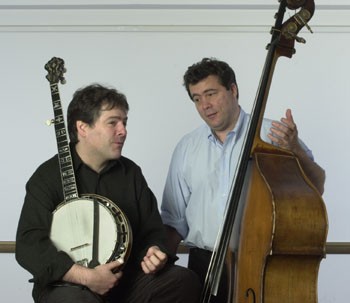
Bela Fleck/Edgar Meyer

0

Strange Soundfellows: Bela Fleck’s banjo and Edgar Meyer’s bass sound better together than perhaps they should.

String Theory

Fleck and Meyer are two of a kind

By Bruce Robinson

Banjo and string bass are not your usual lead instruments, but in the virtuosic hands of Béla Fleck and Edgar Meyer, they shed their lowly status to become vehicles of astonishing musical fusion. In their newly released Music for Two (Sony Classical), the duo cover material from Bach to Miles, touching musical reference points that range even further afield while maintaining a sweet, improbable coherence.

Consider the opening track, titled, with characteristic Fleckian whimsy, “Bug Tussle.” It starts with a bright, lively melody, briskly plucked with pizzicato bass counterpoint, then it quickly shifts into a new melodic line, this time lyric and legato with bowed underpinnings. And back again. Then, as the melodies begin to merge, the playing styles intertwine, everything melds into a completely natural cadence, and it’s over. A burst of applause confirms that it was all done live, and then they’re off on a Bach invention. And so on.

Although Fleck and Meyer have occasionally made music together over the past 20 years (including their shared membership in the progressive bluegrass band Strength in Numbers in the late 1980s), this is their first pure duet recording. But both men have a history of pushing the limits of their instruments far beyond traditional roles. Fleck’s jazzy explorations with the Flecktones earned him a higher profile with popular-music fans, who have come to embrace that ensemble as an unconventional jam band.

“I think our music has a little bit too much structure to really legitimately be called ‘jam band’ music,” Fleck told interviewer Daniel Taylor, “because there are a lot of jazz elements to it and bluegrass elements, and just a lot of structure. But there’s a lot of improvisation, too, which is where we do fit.”

Meyer, on the other hand, approaches their collaboration from a deep background in classical music that began with bass lessons at age five. The only bassist ever to win the prestigious Avery Fisher Prize, Meyer was lauded by The New Yorker magazine as “the most remarkable virtuoso in the relatively unchronicled history of his instrument.”

Meyer has been a featured soloist with many major orchestras, and performed his own Double Concerto for Double Bass and Cello with Jeffrey Kahane and the Santa Rosa Symphony back in January 1999. At the same time, he has done session work for such disparate pop artists as Garth Brooks, Bruce Cockburn, Lyle Lovett and the Chieftains. He even earned a MacArthur Foundation “genius grant” in 2002.

While Fleck honed his improvisational chops, Meyer flexed his compositional skills in projects blending classical and traditional styles and players, such as the Grammy-winning Appalachian Journey disc, on which he played with cellist Yo-Yo Ma and fiddler Mark O’Connor. He also toured extensively in a trio with Fleck and mandolinist Mike Marshall in the late 1990s.

Fleck was among the featured players on Meyer’s 1997 recording project Uncommon Ritual, and the two reversed roles for Fleck’s classical crossover disc Perpetual Motion in 2001. The notion of paring things down to a bass-banjo duo grew out of those sessions, and the two set out on tour together. That worked, so they did it again, adding new compositions to augment the classical repertoire they had adapted, ultimately recording the performances that make up the new disc.

It’s an impressive showcase, including classical improvisation (Meyer’s “Canon”), crystalline readings of Bach keyboard works transcribed for their instruments, a few unorthodox moments where Meyer’s agile bass takes the melodic lead and a furious, breakneck showdown on their joint composition “Woolly Mammoth.” (While his occasional moves to the piano provide some welcome tonal variety, Meyer’s keyboard work invokes too much George Winston and not enough Schumann.) Fleck also plays a little guitar, just for a change, here and there.

Throughout, the compatibility of their two primary instruments is uncanny. As they comment in the liner notes, “Both instruments overlap in register considerably, while retaining a large register that is their own. Both instruments have idiomatic methods of accompanying and of carrying the melody. Both instruments have played notable roles in 20th-century American music, the five-string banjo in bluegrass and the bass in jazz. But most of all, they just sound good together.”

Local listeners will be able to judge that for themselves, when Béla Fleck and Edgar Meyer perform together at the Mystic Theatre in Petaluma on June 1, capping a series of three Bay Area concert dates on their current tour.

Béla Fleck and Edgar Meyer appear Tuesday, June 1, at 8pm at the Mystic Theatre, 21 Petaluma Blvd. N., Petaluma. $32.50. 707.765.2121.

From the May 26-June 1, 2004 issue of the North Bay Bohemian.
© Metro Publishing Inc.

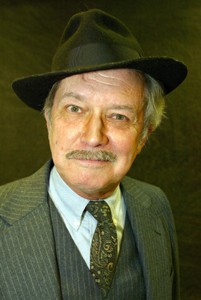
James Dunn

0

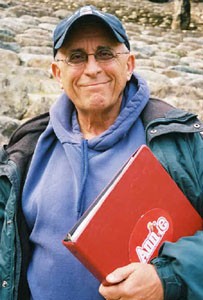
Mountain Man: James Dunn prepares for his 21st Mountain Play.

Play’s the Thing

To director James Dunn, theater is forever

James Dunn, the Marin County director, teacher and actor whose storied reputation now borders on the legendary, believes in the power of theater the way that some people believe in love or goodness or democracy. If the world ended tomorrow, if society devolved into a Mad Max apocalypse of epic proportions, Dunn is certain that, though all other shreds of civilization might vanish in flames and dust, people will find a way to continue staging important theatrical productions. The evidence, Dunn suggests, is all around us.

Literally.

We’re about to have lunch in Mill Valley, in the shadow of Mt. Tamalpais, where the famous Mountain Play has been staged every spring for 91 years. The first Mountain Play took place in 1913, and though there was a short break during WWII, it still stands as one of the most enduring and beloved theatrical events in Bay Area history, each year attracting thousands to the spectacular Cushing Memorial Amphitheater. This year, under Dunn’s direction–his 21st mountain play in a row–throngs of sunblock-scented folks will gather to witness a massive staging of My Fair Lady, the enduringly popular Lerner and Lowe musical about misogyny and speech therapy in Victorian England.

“Did you read about what happened in Sarajevo?” Dunn asks, still thinking about the powerful attraction of theater. “It was several years ago,” he says, “when they were having all the trouble in the Balkans, in Kosovo and Sarajevo, when the Serbs were fighting the Croatians. Sarajevo, you know, had once been a very beautiful city, but it had been reduced to rubble. In spite of that, they were doing theater in the basements of burned-out buildings. They did Waiting for Godot. I read an article about it and it tore my heart out. They had no lighting. People would come in with candles at night to watch a play in the basement of a blown-up building.

“That,” he says with a grin, “is appreciating the power of theater.”

It’s going to be a busy summer for Dunn. Once the six-show run of Lady is over, Dunn–who taught for decades at the College of Marin–will be restaging his signature piece, a spaghetti-Western version of Shakespeare’s Taming of the Shrew, first performed at the College of Marin in 1970, in an award-winning production that featured a young Robin Williams.

“A bunch of my students wanted to do something in our small studio theater,” he recalls. “A lot of us had grown up nuts about old Westerns, and I found that you could take every character in Taming of the Shrew and put a Western movie stereotype on them–and it works! Petruchio becomes the Clint Eastwood character with a serape and a cigar, Kate becomes a Calamity Jane type and her father is the town marshal and saloonkeeper.”

After that first staging of the show in 1970, Dunn and company were invited to perform the piece at the Edinburgh Fringe Festival. “The Brits went nuts for it,” says Dunn. Since then, he’s been invited to stage similar Western versions of Shrew at theaters all over the country, including a run at the Old Globe in San Diego.

The piece has evolved a bit, of course. According to Dunn–who insists this will be the last time he stages the Western version–he’s now added a major, no-holds-barred bar brawl. “It’s a lot of fun,” he says, laughing. “That play says something about human nature, and My Fair Lady says something about human nature. And then you get to laugh. All of that is important.”

Though unable to name the exact characteristics of theater that make it so compelling, both to him and to the thousands of people who’ve attended his shows over the years, Dunn is certain of one thing.

“Theater,” he says, “is important. If society ever did fall apart like in the Mad Max movies,” he says, “I definitely believe people would still get together to do Our Town and Fiddler on the Roof and My Fair Lady and Taming of the Shrew. Theater gives our lives meaning. It always has and it always will.”

The Mountain Play production of ‘My Fair Lady’ runs May 23-June 16, Sundays at 1pm. Special Saturday performance on June 15. $20-$28. Call 415.383.1100 for tickets and information on free shuttle service to the amphitheater. ‘Taming of the Shrew’ plays as part of the Marin Shakespeare Festival, Aug. 27-Sept. 25, at the Forest Meadows Amphitheater at Dominican College, 50 Acacia Ave., San Rafael. 415.499.4488.

From the May 26-June 1, 2004 issue of the North Bay Bohemian.

© Metro Publishing Inc.

Napa Chef’s Market

0

Photograph by Bob Ecker

Triple Way: Charles Diegel’s barbecued oysters are cooked three different ways before serving.

Half-Shell Hero

Charles Diegel is Napa’s barbecued-oyster king

By Bob Ecker

The most important thing,” says Charles Diegel, “is to have a good glove.” And with that, using his heavy canvas glove and an old sturdy knife, Diegel expertly shucks a steaming oyster. The juices run out hot and clear, and he lays the oyster shell on the next grill to simmer.

Diegel is known around town as the “barbecued-oyster king,” whose unique, three-step cooking process has made his oysters legendary throughout Napa Valley. A familiar face at the Friday night Chef’s Market in downtown Napa, which begins this year on Friday, May 28, Diegel is used to customers lining up at the sight and smell of these marvelous mollusks. “The oysters sell themselves,” he laughs with a tidy wave of his gloved hand.

Most of the oysters Diegel sells come from Washington state, but any kind can be used. He prefers Pacific Coast and Miyagi oysters, though he didn’t even eat oysters himself until a few years ago, when a Samoan friend turned him on to the taste. “We started by cooking them in butter and garlic at first. It was great for people like me who were afraid of oysters.” His entire family learned to love them, and he even cooked thousands of oysters for his own wedding. Diegel explains his culinary philosophy: “I love to cook and eat, it’s a simple as that.”

The Napa Chef’s Market brings together many styles of food, but clearly Diegel’s stand is a hit with the crowd. “These oysters are amazing, really mouth-watering. I love the pesto,” says Tina Brite, who visited the Chef’s Market last year from nearby American Canyon. Diegel, along with his wife, Molly, and his father and father-in-law, usually sells over 700 oysters each Friday night. For a private event or gathering, Diegel estimates a dozen oysters per person.

His customers have a number of sauces to choose from, including teriyaki, butter and garlic, sesame soy, a homemade pesto, a barbecue sauce and special hot sauce. Depending on the sauce, Diegel suggests complementing the oysters with a Sauvignon Blanc or hearty Zinfandel. His father, Chuck, also known as the “Mother Shucker,” recommends cold beer to help wash down a passel of oysters.

Diegel utilizes a no-nonsense yet tried-and-true method for barbecuing his oysters. He employs three separate grills, each with a separate function. The first pops open the shell, the second is used for simmering the oysters and the third is where the sauces get blended into the oyster. “You can use any barbecue,” he says, “but the best bet is propane to control the heat.” The three-grill system, Diegel explains, helps keeps oyster shells from getting into the finished product. Indeed, it’s fun watching Diegel in action, as he effortlessly places, shucks, steams and sauces his oysters.

Keeping the grills clean is the toughest part of the job, according to Diegel. He’s always on the lookout for small pieces of oyster shells that can get into the burners. He also swears that oysters are, indeed, the ocean’s aphrodisiac. “It’s nature’s Viagra,” he says with a grin. (He and his wife have five children.)

Diegel is pleased that people enjoy his oysters, and has high hopes for the future. “I’d like to open a little restaurant one of these days, and of course, oysters will be a prominently featured item on the menu.”

You can’t miss the Diegel’s Barbecued Oyster stand at the Chef’s Market–it’s the one with the healthy line. However, don’t worry–the line does move, and the oysters are definitely worth a taste.

The Napa Chef’s Market is open each Friday evening through August from 4pm to 9pm. First Street and Napa Town Center, downtown Napa. Free. 707.257.0322.


Charles Diegel’s Three-Step Barbecue Process

1. Take the oysters straight from the cooler and put them directly on the first grill, on high heat. Close the cover. After three to five minutes, remove oysters from the grill, “whether they’ve popped open or not,” Diegel says. Using a strong glove and a knife, open the shells. Diegel uses a stiff, stainless steel knife and has also used bait knives to open the oysters. “Good, cheap knives are great for shucking,” he says. Cut the muscle on the oyster to release it from the upper portion of the shell.
2. Put remaining oysters in the bottom half-shell directly on the second grill, on medium heat. The oysters should gently bubble in a combination of seawater and their own juices, steaming slightly. This warming station gets them ready for the last stage. Leave on no more than 10 minutes.
3. This is the sauce stage. Put warm oysters in the half-shell directly on to third grill, on medium heat. Pour sauces over the oysters. When all the oysters have been sauced, close the cover. Cook for approximately five minutes. Remove from heat, serve and eat immediately.

Molly Diegel’s Pesto Sauce

basil leaves
1 1/2 c. extra virgin olive oil
10 cloves of fresh garlic, peeled
1/4 c. pine nuts
1/2 c. Parmesan cheese, grated
1 whole stick of softened butter

Begin with a blender full of fresh basil leaves. Add olive oil and blend until well mixed. Next, add garlic and blend. Finally, add the pine nuts, Parmesan cheese and butter, and blend until entire mixture is thick. Pour approximately 1/2 tablespoon of pesto sauce onto each cooked oyster. Grill on medium heat about two minutes, until mixture melts into oyster. Serve immediately and enjoy. This recipe makes enough sauce for about two dozen oysters.

–B.E.

From the May 26-June 1, 2004 issue of the North Bay Bohemian.

© Metro Publishing Inc.

‘Saved!’

0

Do Unto Others: ‘Saved!’ loves children, too.

Original Sinners

Former ‘kid Christians’ discuss the inspired new teen comedy ‘Saved!’

In its ongoing quest for the ultimate postfilm conversation, this expanded edition of Talking Pictures once again takes interesting people to interesting movies.

“All right then,” grins Chris Sawyer, approaching the table with a beer in each hand and sliding one of them over to me as he settles into a chair. “Let’s talk about Jesus.”

“Let’s do it,” I reply. “But maybe we should pray first.”

I’m joking, of course.

Sawyer and I have just seen Saved! Brian Dannelly’s subversively brilliant new comedy about born-again teenagers at an all-Christian high school, starring Jena Malone, Mandy Moore, Patrick Fugit (of Almost Famous), Eva Amurri and a seriously post-Home Alone Macaulay Culkin. The film delves into the world of teenage faith with humor and insight, confronting a whole laundry list of contemporary Christian issues–friendship, homosexuality, pregnancy, prejudice, loyalty, love, disappointing parents–and miraculously makes it all funny. Saved! is like Fast Times at Ridgemont High or American Pie, but with Bible studies, teen prayer meetings and a pumped-up minister/principal who likes to shout things like “Who’s down with G-O-D?”

The story takes place over the course of a year at the fictional American Eagle Christian high school, where Mary (Malone) and her best friend Hillary Faye (Moore) are the two most popular seniors, devoted young Christians who know a little less about the world than they think they do. When Mary accidentally gets pregnant while trying to convince her conflicted boyfriend, Dean, that he isn’t really gay, she finds herself an outcast.

Even Hillary, who holds prayer rallies for Dean (“We pray for all the perverts, Lord”), won’t speak to her, and with Dean having been sent to a “gay recovery” center, Mary finds herself taking refuge in the company of the school’s other outcasts, including Hillary’s cynical, disabled brother Roland (Culkin) and gleeful troublemaker Cassandra (Amurri), the school’s lone Jew. Mary’s subsequent crisis of faith is touching and believable, and though the film ends up being pro-faith, it is clearly antiprejudice.

“I was just fascinated with this movie,” says Sawyer. “Everyone was so real. I could have been one of those characters, easily. What am I saying? I was one of those characters.”

“You and me both,” I say.

That is not a joke.

Sawyer, a Petaluma-based writer for Wine X magazine, as well as a busy wine consultant and skilled sommelier, became a born-again Christian as a child. He attended Christian Life Church and Christian Life School in Santa Rosa (where the Luther Burbank Center for the Arts is now), attended those aforementioned prayer meetings, spoke in tongues, learned the lingo–and as a teenager, eventually grew out of it.

At about the age Sawyer was evolving into a broader view of faith (he minored in religious studies in college), I was just getting started as a teenaged born-again, an experience that lasted until a disintegration of faith in my early 20s. Both agnostic now, we share a view of ourselves as “recovered Christians.” When we heard about Saved! we made a date to check it out together, and having just seen it, everything about the film strikes a major chord with each of us.

“I’m having a lot of memories, sitting here after that movie,” Sawyer says. “The fact that this movie is set in present times doesn’t make it any less familiar to me. You could just change the clothes on the teenagers and it would be the same thing I experienced, the same exact dialogue coming out of these kids’ mouths, pretty much.

“But I think anyone can watch this movie and apply it to their lives,” he continues. “Everyone has had some experience with Christianity. Either they are a Christian or have been a Christian or they’ve had a bias against Christianity or know people who are Christian. Everyone has had some experience with Christianity, either pro or con. But to look at it through the eyes of high school students, it’s very juicy and very illuminating.”

“I loved the moment where Jena Malone is really beginning to question her faith,” I say, “and she stands there in front of that cross and tests the waters by starting to use profanity, saying ‘shit,’ then ‘fuck,’ and after a long dramatic pause–and you knew she was crossing a big line here–she finally says ‘goddamn.'”

“It’s a big moment for her,” laughs Sawyer. “Most people can’t remember the first time they said ‘goddamn it.’ But for a teen Christian, it’s a big barrier to cross.”

“I remember the first time I used profanity,” I confess. “I was 20 years old and was definitely making a choice. It was crossing a big line. Losing my virginity was less of a rite of passage than saying ‘goddamn’ for the first time.”

“You were probably waiting to be struck by lightning,” Sawyer says. “I can identify with that. It’s hard when you are taught to see things in black and white, because the real world isn’t black and white. How was I affected by my Christian beliefs and by my religious schooling? I accepted that there was sin and that I was a sinner–the whole guilt-trip thing–but then I accepted that you should do to others as you’d have them to do unto you. That’s probably the major, No. 1 most important thing I learned from being a Christian, and as far as I’m concerned, that’s the most important piece of advice in the whole entire Christian scripture.”

“In the movie,” I interject, “the outcast kids are better at doing unto others than the Christians who cast them out.”

“And isn’t that interesting?” Sawyer says. “It was also fascinating to watch the pastor-principal guy and to see how closed-minded he was, while this group of kids was expanding in their knowledge and their beliefs. His mind was closed, but we get to watch some of these kids as their minds begin to open. It’s a beautiful thing.”

The movie begins with Jena Malone being baptized. Sawyer remarks that he was baptized as an eight-year-old. I was 15. “To be baptized as a kid is very interesting,” Sawyer says. “It’s kind of dangerous thing. You are being immersed into a rigid belief system right away, before you have any idea that there are any other ways of thinking or believing, and you don’t have any say in it. How is that good? You have to make your own choice on how to prepare for whatever is waiting after death, if anything, and religions should let us work it out for ourselves instead of insisting that one view be accepted by all.

“At least you were 15,” he points out. “You knew what you were doing.”

“The problem is that teens don’t know what they’re doing,” I reply. “At least, they don’t know nearly as much as they think they do. And then these older Christians come along, get you saved and tell you there’s nothing else you need to know about the ways of the world. They tell you the world outside of Christianity is dark and dangerous, and only within Christianity will you find true peace.”

“And that’s the big lie!” Sawyer says. “The world does have its dark side, but so does the Christian world. It’s a lie that everything in the Christian world is beauty and light and goodness and love, and everything outside Christianity is death and pain and sadness and horror.

“Everything I thought I knew about life–everything about life that frightened me–I learned in Church,” he adds. “A lot of it was a lie. So what a shock when I actually began to experience life and learned that most of what was supposed to kill me and make me miserable and leave me all empty inside was actually not so bad at all. In fact, sin–so-called sin–has been really good to me.”

“Praise the Lord!” I say, clinking our mugs together.

“Exactly,” Sawyer laughs. “Praise the Lord! Let’s drink to that.”

‘Saved!’ opens Friday, May 28, at the Century Northgate 15 (7000 Northgate Drive, San Rafael, 415.491.0608) and at selected other North Bay theaters.

From the May 26-June 1, 2004 issue of the North Bay Bohemian.
© Metro Publishing Inc.

Swirl ‘n’ Spit

0

Swirl ‘n’ Spit
Tasting Room of the Week

Korbel Champagne Cellars

By Heather Irwin

Lowdown: “Hey, I know that place!” yells Aunt Mabel, rounding a bend halfway to Guerneville. According to the tasting-room staff, Aunt Mabel, Uncle Jim and Grandpa Gus, along with most of the rest of the country, know the name Korbel. Synonymous with anything that involves a rented limo–proms, engagements, weddings and 50th anniversaries–Korbel produces some 1.5 million cases each year, making it one of the largest wineries in the country. That’s a lot of bubbly good times.

Vibe: The winery, off River Road about 12 miles from Santa Rosa, features a huge tasting bar with a friendly, jovial staff ready to pour from their considerable menu. The idyllic, ivy-covered winery is a favorite of the walker and stroller sets, with educational tours running every hour and tours of the gardens twice daily. There’s an on-site restaurant for those post-bubbly hungries.

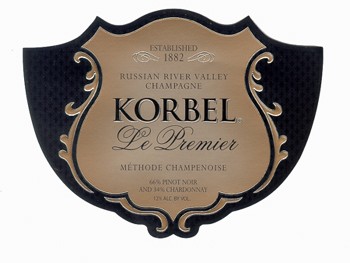
Mouth value: If you’re wondering about the whole Champagne vs. sparkling wine thing . . . fuhgeddaboutit. Korbel calls its wines “California Champagne,” or simply Champagne, casting aside the brouhaha over whether sparkling wines made outside of the Champagne region of France can actually be called that. Like other wines, Champagne can be either sweet or dry (not sweet), and we tried both, most of which are only available in the tasting room. The driest, the Korbel Vintage Reserve 1998 Blanc de Noir ($14.99), is made only from Pinot Noir grapes and has a puckery crisp flavor with hints of raspberry. The Korbel Le Premier 1997 ($24.99) is aged six years, with a yeastier, nuttier flavor that pairs well with cheese. The Pinot Gris Champagne ($19.99) is the spiciest of the wines we tried, with flavors of green apple and citrus. If you want to taste the most traditional of champagnes, try the Korbel Sec ($9.99), made the same way for more than 100 years and just slightly sweet. The most candylike are the Blanc de Noirs ($9.99) or the Moscato Frizzante ($19.99), with lots of flowery-sweet bubbles.

Don’t miss: Sneak in a lovers stroll among the redwoods at Armstrong Redwoods, just down the road. With all that bubbly going to your head, who knows what daring romantic gestures await you in the wilds of the forest?

Five-second snob: How many twists does it take to get the “cage” (that wire contraption that keeps the lid on) off the bottle? Tasting-room staff say that’s one of the most popular questions and, in fact, it turned up on Jeopardy a few years ago. The answer: just a few more than the number of licks to get to the center of a Tootsie Pop. It’s six half turns, to be exact. After removing the cage and foil, gently twist off the cork–don’t launch it off Hollywood-style. You’ll end up with less to clean up off the floor later. And that strawberry you romantics like to stick in the bottom of the glass? It usually just makes a big fizzy mess when you pour in the bubbly and doesn’t add a whole lot to the taste. If you must have your fruit, stick it on the rim.

Spot: Korbel Winery, 13250 River Road. Open 10am to 5pm daily. No tasting fee. 707.824.7316.

From the May 26-June 1, 2004 issue of the North Bay Bohemian.
© Metro Publishing Inc.

Stats of the Union

0

Stats of the Union

Just a few numbers to give pause

Reprinted with permission from ‘Who’s Better Off? A Special Report on the State of the Union,’ in the May/June issue of ‘Mother Jones’ magazine, online at www.motherjones.com.

* The U.S. government is going into the red at the rate of $991,000 per minute.

* The IRS website is maintained by a company incorporated in Bermuda.

* Since 2001, corporate tax collections have fallen by $11 billion.

* The cost of the Bush tax cuts this year alone is enough to give $9,793 to each of the 2.9 million people who’ve lost their jobs since he took office.

* Revenue loss from the Bush tax cuts over the next decade equals Social Security’s baby-boomer reserve.

* Without Social Security, 48 percent of senior citizens would live in poverty.

* Less than 10 percent of the SUVs sold in America today will meet China’s proposed fuel-economy standards.

* If global-warming trends continue, 15 percent to 37 percent of the world’s species will be extinct by 2050.

* Halliburton has 15,000 workers in Iraq and Kuwait, 4,000 more than the number of British soldiers deployed there.

* In 2001, 476 more Americans died of malnutrition than from terrorism.

* American adults have gained an estimated total of 150 million pounds in the last year.

* Suburbanites weigh an average of six pounds more than city dwellers.

* Sixty-one percent of Americans think the Biblical story of the world being created in six days is “literally true.”

* Seventy-five thousand The Passion of the Christ “nail pendants” were sold the week Mel Gibson’s film opened.

* Sixty-one percent of American workers say they received “no meaningful rewards or recognition” for their work last year.

* Seventy-one percent consider themselves “disengaged” clock-watchers.

* One in every 115 Americans works for Wal-Mart.

* Wal-Mart offers workers $1,000 in catastrophic health coverage, but they must pay at least $500 a year for it.

* Alabama became the last state to repeal a ban against interracial marriage–in 2000.

* Forty-one percent of Alabamans voted against lifting that ban.

* Paperless voting machines were named the worst technology of 2003 by Fortune magazine.

* The odds that two members of Yale’s Skull and Bones society, such as George W. Bush and John Kerry, could face each other in a presidential election are 1 in 26 billion.

What Did Bush Give to You?

We all know that the Bush income-tax cuts were a boon to the richest Americans. But did you know that an executive making $1 million gets an annual tax savings of $63,211–more than the pretax salaries of three Wal-Mart associates combined? Here, the Bush income-tax cuts represented as an hourly take-home raise, across the income spectrum:

Annual income $10,000
Take-home raise from Bush tax cuts: 5 cents/hour
That’s like $8 every month: a medium Domino’s pizza

Annual income $20,000
Take-home raise from Bush tax cuts: 21 cents/hour
That’s like $36 every month: a basic cable bill

Annual income $35,000
Take-home raise from Bush tax cuts: 43 cents/hour
That’s like $71 every month: two Pampers Baby-Dry value packs

Annual income $55,000
Take-home raise from Bush tax cuts: 74 cents/hour
That’s like $123 every month: car insurance on a ’99 Accord

Annual income $100,000
Take-home raise from Bush tax cuts: $1.73/hour
That’s like $289 every month: an iPod mini with 40 iTunes

Annual income $200,000
Take-home raise from Bush tax cuts: $3.72/hour
That’s like $620 every month: a pair of Manolo Blahnik Sedara d’Orsay pumps

Annual income $1,000,000
Take-home raise from Bush tax cuts: $31.61/ hour
That’s like $5,268 every month: a 12-day cruise for two on the Queen Mary 2

Still Glass, Getting Lower

Working women currently make 79.7 cents on the male dollar, down from 80.4 cents in 1983. That’s already adjusting for maternity leave and other child-rearing factors. If such choices are not factored in, women make only 44 cents on the male dollar. Female professionals average $10,000 less than their male counterparts. Over a 40-year career, that difference (compounded 10 percent annually) costs each of them $4 million.

From the May 26-June 1, 2004 issue of the North Bay Bohemian.

© Metro Publishing Inc.

Rodd Keith

0

High on Life: Rodd Keith garners a cult following in death.

Sound Poems

Experimental, weird and firmly dead, Rodd Keith is hot again

By Sara Bir

The fruits of the recording studio are inherently refined ones, because that’s what a studio is for: refining music, making songs sound clean and good. Even reclusive singer-songwriters hunkering down over the four-tracks in their bedrooms sculpt and refine sound. All of the wonderful three-minute songs on your mix tape and the little pop symphonies oozing out of the radio have been crafted with care to deliver the maximum amount of euphoria per second, like yummy audio crack.

There’s something lost in the process, though–the looseness, the freedom, the spark of creation, the happening. Every now and then a recording comes along with such qualities in spades, but it demands a good hunk of commitment from the listener for maximum payoff: the tantric sex of the music world.

A truly bizarre CD from obscure legend Rodd Keith offers both the tantra and the crack. Released on the defiant Tzadik label, the posthumous Ecstacy [sic] to Frenzy will easily be one of the most far-out discs of the year, and probably fewer than a thousand people will ever hear it. Such long-lost pathos is the underlying appeal of musician Rodd Keith, however. In the ’60s and early ’70s, Keith applied his palatably skewed musical genius to composing, performing and recording song poems (strange fruit of those “send us your lyrics” ads seen in magazines) to make ends meet.

Keith’s love of hallucinogens literally became his downfall when, in 1974, he fell to his death from an L.A. freeway overpass in a drug-addled haze. The song poems left behind– whose heavy reliance on Chamberlain organs give them an intoxicatingly woozy, hurdy-gurdy wobble–are the bulk of Keith’s musical legacy, and their accidental juxtaposition of pop-music conventions with avant-garde experimentalism have garnered Keith a cult following in the decades since his death.

Ecstacy to Frenzy does contain a few song poems, but it’s an entirely different trip that allows us to glimpse pure, unmitigated Rodd Keith. Prone to all-night solo recording sessions, Keith once cut a tape reel containing an epic 33-minute jam embedded with echo-laden hiccups, nonsensical babble and childlike sing-song scat.

After filling up one side, Keith flipped the tape over and proceeded to record on the other side. Thus, the resulting track, dubbed “Shome Howe Jehovason Plays,” appears in two versions on Ecstacy to Frenzy: on one, the right channel plays in reverse; on the second, the track is actually played backward (so that the left channel is in reverse). Whether Keith listened to the playback of the first side in reverse as he recorded the second side remains a mystery, but there’s more than enough synchronicity happening between the two channels to back this theory up.

In any case, either version of “Shome Howe Jehovason Plays” is befuddling enough for one sitting. Set against a backdrop of meandering organ drones and sudden piano tinklings, it’s like hallucinogenic funeral-parlor music, fascinating and exasperating in the same way that Lou Reed’s Metal Machine Music can be.

After slogging through Keith’s journey to the center of the mind, the three song-poem tracks on the CD seem abrupt, even if the maniacally jerky “Beat of the Traps” (not without a touch of Screamin’ Jay Hawkins-esque spook and stagger) is hardly in keeping with what was coming out of most everything else on the pop radar at the time. Oddly enough, the titular “Ecstacy to Frenzy”–doubtlessly the result of a song-poem client’s drug trip–is suave and catchy enough to suit Barry Manilow’s catalogue.

The shamelessly irresistible two minutes and 26 seconds of “Little Rugbug” stick out like a sweet pinkie in a sea of sore thumbs; perhaps the finest example of the song-poem genre, the vapid Hallmark card lyrics dote over the anonymous scribe’s toddler (“Playing on the floor / Someone I adore / Creeping, crawling, going to explore”), while Keith’s inspired Chamberlain pipes out sappy yet achingly sentimental sprightly flute, oboe and organ lines.

For complete music dorks only, Ecstacy to Frenzy offers a rare chance to hear music isolated from any commercial context. Keith didn’t record “Shome Howe Jehovason Plays” for anything other than his own utter enjoyment, and the version heard on the CD remains blissfully unaltered.

From the May 19-25, 2004 issue of the North Bay Bohemian.

© Metro Publishing Inc.

Ice Cream

0

Sweet Shout: We kindly remind that ‘stressed’ is just ‘desserts’ spelled backwards.

Cold Is Good

This time of year, we all scream

By Gretchen Giles

Ice cream is so lovely, so yummy and so highly desired that most of the stories about it are complete lies. Take the fable, for example, of Charles I of England. In the early 1600s, before refrigeration and rudimentary sanitation were known to the English court, Charles is said to have had fortune smile upon him in the form of a chef who had concocted a delicious frozen dessert.

Anxious to keep the comestible a royal secret, Chuck reportedly paid the good man 500 pounds a year–in pre-Shakespearean coinage–to stay mum. When Charles later lost his head, the chef lost his stipend and loosed his tongue, and soon any groundling with an ear for gossip could chill sweetened cream.

Nero is said to have exercised his slaves by sending them dashing up chilly Roman mountainsides to scoop up snow and rush it back for mixing with nectar, fruit pulp and honey, an assuredly sadistic exercise considering the terrible trickle of melt following the desperate runners home. The reliable Marco Polo, seeming discoverer of everything from pasta to the Titanic, allegedly imported the cold secret directly from China to Italy, where it promptly became gelato. Catherine de Medici is said to have then whisked the recipe with her as a dowry when she married the French Duc d’Orleans, resulting, bien sur, in sorbet.

All of which causes most gastronomical historians to sweetly hiss: bosh.

Dolly Madison did in fact serve the stuff in 1812 at her husband James’ second inauguration, causing a delicious stir among the good people of the colonies. But whether her fancy dessert was actually invented by freed Pennsylvania slave Aunt Sallie Shadd, a butcher’s wife who worked as a caterer, remains shrouded. And as for the edible cone that shelters most on-the-hoof ice cream, at least a hundred thousand million people–perhaps the entire population of early-20th-century America–have claimed its invention, with the general nod falling upon one Italo Marchiony, a Manhattan ice-cream vendor who, tired of washing the glass dishes in which he served his wares, simply cooked up a waffle instead.

Refrigeration, electric machinery, chocolate sauce and raw cookie dough followed in fast order, bringing ice cream to its height in a frenzied bevy of sundaes, bars, pies, sodas, shakes, frozen cakes and pies, and baked meringue goo named for a yukon state. Americans who consumed a dainty four quarts per year in 1904 now dig into a full 15 quarts per person per year. A ceiling has been reached. Perhaps the best way for ice cream to turn was straight back to where it began.

One can bet, for example, that the cow that gave the milk to Charles I’s chef was hormone-, additive- and antibiotic-free. Similarly, the sweetener and fruit available in the pre-Elizabethan court were, for lack of choice, perhaps more organic than any single item a 21st-century American has ever put in her mouth.

Such a statement, of course, grants the possible exception of Maraline Olson. Olson–who established her Sebastopol consumer temple to ice cream, Screamin’ Mimi’s, some eight years ago–is all about ingredients. Belgian chocolate, please. Hellishly expensive vanilla, not the cheaper stuff from Mexico, if you would. Fresh peaches just a sweeter whiff past ripeness, thanks so much. And lavender, oh-lavender-yes-lavender, exactly the day it was brought in from the fields.

While purveying such wonderful reliables as strawberry and chocolate ice cream year-round, Olson also salutes the seasons in a cup by making such local flavors as Crane melon ice cream and rose petal ice cream and, yes, lavender ice cream.

An herbalist who introduced Olson to the joys of herb-flavored desserts picks the flowers for Olson and receives in recompense as much ice cream as she can stagger away with. The lavender flowers are left to infuse fresh cream for one to three days, depending on their headiness, before being strained out, leaving behind a delicacy that some people could happily bathe in.

A self-described “professional eater” of ice cream before she opened Screamin’ Mimi’s, Olson is a veteran of the kitchen-made wars. As anyone who’s ever openly wept while squatting next to a home freezing device knows, making ice cream oneself does not guarantee the good moods Olson might see in her shop. Things seem to go wrong, ice suddenly becoming a difficult mystery and kosher salt seeming to suffer a magnetic pull toward fresh strawberries. Plus, it’s loud.

Or rather, it was. Since Catherine de Medici’s time, the Italians have worked feverishly on perfecting homemade ice cream. While the reliable Cuisinart Corp. offers an assuredly useable machine in the mid-$50 range, Musso Lusino is happy to help customers chill out with makers ranging from $500 to $1,000.

For such a squadge of dosh, self-refrigeration is expected and indeed, rewarded. No more hauling seeping bags of ice around the kitchen floor and coaxing strawberry-seeking salt into small confines. With the Musso Lusino, one smilingly tips excellent ingredients into a galvanized bowl, pushes a button and retires with champagne until all is coldly done.

Less luxurious appliances don’t come equipped with their own cold compressors but bear a sleek designer aspect never seen in the wood-barrelled makers of old. In either case, it’s likely that what eventually hits the dessert bowl will be different than what’s bought in a shop.

Olson is sympathetic, confirming that ours will never taste as good as hers because we didn’t take out a small business loan before concocting dessert. “We freeze our product over eight hours at 40 degrees below zero,” she explains. “The average home freezer is probably around 25 degrees above zero. The reason that the homemade ice cream we make at the shop is so different than what people make at home is the equipment.”

But when she did mix it up at home, Olson had one trick to call on: “I would run an extension cord into the freezer and run [the ice cream maker] in the freezer.

“Cold,” she pronounces firmly, “is good.”

Even Nero would agree with that.

From the May 19-25, 2004 issue of the North Bay Bohemian.
© Metro Publishing Inc.

‘Festival!’

0

Both Sides Now: ‘Festival!’ and a new CD capture Dylan.

Body Electric

Rafael Film Center screens rare folk documentary

By Greg Cahill

It’s the ultimate rock myth. A 23-year-old Bob Dylan, the high priest of the ’60s urban-folk music boom and heir-apparent to folk legend Woody Guthrie, takes the stage at the 1965 Newport Folk Festival with an electric guitar in hand, accompanied by blues-rock guitar phenom Michael Bloomfield and other members of the Paul Butterfield Blues Band. It’s the second half of Dylan’s much-anticipated set. He hadn’t attended the festival with the intention of going electric–it was the first year that amplifiers were permitted–but Dylan had been offended by the rudeness of musicologist Alan Lomax toward the Butterfield Blues Band at a workshop earlier in the afternoon. That night Dylan and his hastily assembled cohorts launch into an amphetamine- paced version of “Maggie’s Farm,” the defiant anthem from Bringing It All Back Home, Dylan’s latest album at the time.

Chaos erupts in the darkened outdoor theater. The purists in the crowd boo. Pete Seeger, the lanky dean of the folk-revivalists, grabs an ax and tries to cut the cables from the soundboard. (He now denies this.) Or at least that’s how the myth goes.

After a frenetic three-song set that also included the then-unreleased “Like a Rolling Stone” and “It Takes a Lot to Laugh, It Takes a Train to Cry,” Dylan abruptly mutters, “Let’s go, man, that’s all.”

In the crackle of the electrified maelstrom, modern rock is born.

The exact details are shrouded in mist, depending on whose version you believe of the events that transpired on that hot Rhode Island night. In his authoritative book Turn! Turn! Turn!: The ’60s Folk-Rock Revolution, San Francisco author Richie Unterberger likens the flap surrounding Dylan’s landmark performance to the plot of the classic Akira Kurosawa film Rashomon, in which four characters give vastly different accounts of the same murder.

“It is tempting to view Dylan’s appearance at the 1965 Newport Folk Festival as one in which the telling similarly varies,” Unterberger writes, “according to the musical and social tastes, values and prejudices of the narrator. There are few other incidents that set the fusion–and the conflict–of tradition and innovation, young and old, and art and commerce, in such bold relief.”

The truth may be elusive, but North Bay audiences will get a rare chance to glimpse the only known visual document of that performance on May 25 when the Rafael Film Center screens Festival! a long-lost film documentary by Murray Lerner comprised of footage from the 1963 to 1966 Newport Folk Festivals and including scenes from Dylan’s historic plugged-in performance.

The newly restored documentary (scheduled for an upcoming DVD release) is being shown as a benefit for the Marin-based charitable organization Bread and Roses, whose late founder Mimi Fariña was a pivotal member of the folk scene and performed at Newport with her dulcimer strumming husband Richard. Festival! doesn’t answer any of the questions lingering in the wake of Dylan’s performance, which found him moving steadily away from the topical songs that first endeared him to folkies in favor of his more personal and often surreal lyricism. But it does provide a better understanding of the tone and tenor of those turbulent times.

Lerner, who filmed Dylan that night from just a few feet away on stage, tells Unterberger in Turn! Turn! Turn! that he was in no position to gauge the ratio of boos to cheers, but he was privy to the visceral reaction provoked by the performance. “I was stunned, actually,” he notes. “I had a sociological reaction, in addition to a musical reaction–it was that intense for me. It felt like I was entering a new world, and I didn’t know what it was going to lead to. I’d heard electric music with Butterfield but it was different. It was like I could sense that something new was being created with [Dylan’s] look and method of singing and the response of some of the people around me.

“It was exciting and scary.”

The Smith Rafael Film Center screens ‘Festival!’ on Tuesday, May 25, at 7:30pm. Director Murray Lerne and singer Joan Baez will appear in conversation following the film. $20. 1118 Fourth St., San Rafael. 415.454.1222.

Spin Du Jour

Bob Dylan Live, 1964: Concert at Philharmonic Hall, the Bootleg Series, Vol. 6 (Columbia/Legacy)

This recently released two-CD set captures Dylan at his zenith as a folk artist. Recorded on Halloween night, these performances find the musician in high spirits, trading jokes with the fans and at one point even asking for help when he forgets the lyrics to “I Don¹t Believe You.” This is the often enigmatic Dylan at his most engaging.

-G.C.

From the May 19-25, 2004 issue of the North Bay Bohemian.

© Metro Publishing Inc.

‘Barrymore’

0

Terrible Thirst: John Barrymore’s lust for drink makes for a better play than it did a life.

American Idol

‘Barrymore’ proves that a single great performance is all a one-man show needs

Eighty-four years ago in New York City, the hottest ticket in town was Shakespeare’s Richard III, staged at the Plymouth Theater. The show opened on March 6, 1920, and each night for several weeks after, more than a thousand people showed up to pack the downtown venue, waiting in hyperventilating anticipation for the show to begin. What drew them there night after night was not William Shakespeare, and it had little do with Richard III. What they came for was one thing and one thing only: to see John Barrymore, the star of the show.

Wildly famous for his drunken extracurricular antics and of course for the light comedies and insubstantial dramas he’d played in on stage and screen, Barrymore’s appearance in Richard III was initially considered scandalous; at first, no one believed that he had the chops to pull off so demanding a role. So when the critics stumbled away on opening night in a state of bedazzled awe, proclaiming in print that Barrymore’s Richard was among the greatest Shakespearean performances ever given (the Tribune called it “the most inspired performance this generation has ever seen!”), the theatergoing public began clamoring for a chance to see this amazing performance for themselves.

Little else is known about the production. The only thing that mattered, it seems, was John Barrymore.

In the Sonoma County Repertory Theatre’s current production of Barrymore–the surprisingly humorous one-man show by playwright William Luce, directed by Jennifer King–history seems to be repeating itself, though on a somewhat smaller scale. Whatever else one says about the play itself–that it’s central characterization is a bit simplistic or that Luce’s script is a tad too dependent on groan-inducing one-liners–what matters most is the show’s astonishing performance by William Wilson, whose portrayal of the aging, obscene, appallingly alcoholic Barrymore is masterfully assured and dazzling from beginning to end.

“Things are beginning to click for me,” Barrymore says early on in the show, impishly adding, “my knees, my elbows, my neck.” This is a Barrymore whose many years of carousing and whose four unhappy marriages have left him literally jittery, his hands shaking as he joylessly slams back glasses of medicinal whiskey. As he prepares for a one-night-only restaging of Richard III, a desperate attempt to win back the public respect (and self-respect) that has slipped away from him, Barrymore talks to Frank (Jack Weaver), his exasperated unseen prompter.

Barrymore recounts various anecdotes from his life and runs through a series of bad wife jokes (“Divorces cost more than marriages, but dammit, they’re worth it”; “For 20 years, Catherine and I were ecstatically happy, then we met”). Eventually, he comes face to face with the awful truth: alcohol abuse has robbed him of the ability to remember his lines and has cost him the greatness he came so very close to achieving.

Wilson never manages to make Barrymore seem likable or sympathetic–not that anyone could; by all accounts, the man was a self-loathing bastard. Still, Wilson bounces amiably through the various ribald reminiscences in the script: Barrymore teaching a parakeet to say “Fuck you!”; Barrymore bad-mouthing his famous brother and sister, Lionel and Ethyl; Barrymore musing on the length of his marriages: “Each marriage lasted seven years–like a skin rash.”

Then, suddenly, in those moments when his forced jocularity fails him–as when he recalls fetching his drunken father home from a brothel or admits, with rising terror, that he knows his life is essentially over–Wilson’s Barrymore slides into those depths of despair and desperation with such skill, compassion and effortlessness that I found myself forgiving the script’s occasional cliché’s and recognized that I was observing one of the finest performances of the year.

Like that fabled production of Richard III all those years ago, it’s not the play or the staging that matters. What counts is the performance of a great actor at the height of his powers. William Wilson’s riveting John Barrymore is one such portrayal, and though the material is occasionally unworthy of the actor, this is quite definitely a performance that should not be missed.

‘Barrymore’ runs through May 29, Thursday–Saturday at 8pm at the Sonoma County Repertory Theatre, 104 N. Main St., Sebastopol. Special 2pm matinee on Sunday, May 30. $8–$15; Thursdays, pay what you can. 707.823.0177.

From the May 19-25, 2004 issue of the North Bay Bohemian.

© Metro Publishing Inc.

Bela Fleck/Edgar Meyer

Strange Soundfellows: Bela Fleck's banjo and Edgar Meyer's bass sound better together than perhaps they should.String TheoryFleck and Meyer are two of a kindBy Bruce RobinsonBanjo and string bass are not your usual lead instruments, but in the virtuosic hands of Béla Fleck and Edgar Meyer, they shed their lowly status to become vehicles of astonishing musical fusion. In...

James Dunn

Mountain Man: James Dunn prepares for his 21st Mountain Play.Play's the ThingTo director James Dunn, theater is forever James Dunn, the Marin County director, teacher and actor whose storied reputation now borders on the legendary, believes in the power of theater the way that some people believe in love or goodness or democracy. If the world ended tomorrow, if...

Napa Chef’s Market

Photograph by Bob EckerTriple Way: Charles Diegel's barbecued oysters are cooked three different ways before serving.Half-Shell HeroCharles Diegel is Napa's barbecued-oyster kingBy Bob Ecker The most important thing," says Charles Diegel, "is to have a good glove." And with that, using his heavy canvas glove and an old sturdy knife, Diegel expertly shucks a steaming oyster. The juices run...

‘Saved!’

Do Unto Others: 'Saved!' loves children, too.Original SinnersFormer 'kid Christians' discuss the inspired new teen comedy 'Saved!' In its ongoing quest for the ultimate postfilm conversation, this expanded edition of Talking Pictures once again takes interesting people to interesting movies."All right then," grins Chris Sawyer, approaching the table with a beer in each hand and sliding one of them...

Swirl ‘n’ Spit

Swirl 'n' SpitTasting Room of the WeekKorbel Champagne CellarsBy Heather IrwinLowdown: "Hey, I know that place!" yells Aunt Mabel, rounding a bend halfway to Guerneville. According to the tasting-room staff, Aunt Mabel, Uncle Jim and Grandpa Gus, along with most of the rest of the country, know the name Korbel. Synonymous with anything that involves a rented limo--proms, engagements,...

Stats of the Union

Stats of the UnionJust a few numbers to give pauseReprinted with permission from 'Who's Better Off? A Special Report on the State of the Union,' in the May/June issue of 'Mother Jones' magazine, online at www.motherjones.com.* The U.S. government is going into the red at the rate of $991,000 per minute. * The IRS website is maintained by a...

Rodd Keith

High on Life: Rodd Keith garners a cult following in death.Sound PoemsExperimental, weird and firmly dead, Rodd Keith is hot againBy Sara BirThe fruits of the recording studio are inherently refined ones, because that's what a studio is for: refining music, making songs sound clean and good. Even reclusive singer-songwriters hunkering down over the four-tracks in their bedrooms sculpt...

Ice Cream

Sweet Shout: We kindly remind that 'stressed' is just 'desserts' spelled backwards.Cold Is GoodThis time of year, we all screamBy Gretchen GilesIce cream is so lovely, so yummy and so highly desired that most of the stories about it are complete lies. Take the fable, for example, of Charles I of England. In the early 1600s, before refrigeration and...

‘Festival!’

Both Sides Now: 'Festival!' and a new CD capture Dylan.Body ElectricRafael Film Center screens rare folk documentaryBy Greg CahillIt's the ultimate rock myth. A 23-year-old Bob Dylan, the high priest of the '60s urban-folk music boom and heir-apparent to folk legend Woody Guthrie, takes the stage at the 1965 Newport Folk Festival with an electric guitar in hand, accompanied...

‘Barrymore’

Terrible Thirst: John Barrymore's lust for drink makes for a better play than it did a life.American Idol'Barrymore' proves that a single great performance is all a one-man show needs Eighty-four years ago in New York City, the hottest ticket in town was Shakespeare's Richard III, staged at the Plymouth Theater. The show opened on March 6, 1920, and...
11,084FansLike
4,606FollowersFollow
6,928FollowersFollow
