Wine Tasting Room of the Week

0


There are endless permutations of ye olde “friends don’t let friends [insert your clever verbiage here]” trope, but what friends should certainly never do is let their pals drink shitty wine. To wit, whenever someone suggests a wine to me, I patiently explain that our friendship hangs in the balance should I find their palate wanting. So it was with some trepidation that I visited Healdsburg’s Wilson Winery.

Wilson, of course, is the name of a volleyball manufacturer, whose popularity spiked when one of its balls cameoed as Tom Hanks’ desert isle pal in Cast Away. That a replica of this placid prop was grinning from a corner of the tasting room momentarily caused me to want to flee and forever bid my friends adieu.

The notion was permanently washed away, however, upon tasting the 2001 Sydney’s Vineyard Cabernet Sauvignon ($28), the snake-oil pitch for which could be “an elixir that buttresses the soul, raises the spirit and gives you moxie.” I believed every sip. Its earthy aroma recalled the rich scent of baker’s chocolate. Remember when you were a kid and discovered this lost treasure in the pantry only to bite into a brick of bitter? This wine completely makes up for it–put some in your inner child’s ba-ba.

If paired with a grapefruit, the 2004 Blushing Flamingo Merlot rosé ($16) would make the perfect Breakfast of Champions lite. A fine rosé with exotic guava and melon notes to spare, it’s a fine way to start the day, particularly when friends don’t let friends dry out. This bird is merely a curtain opener, however, for the 2004 Tori’s Vineyard Zinfandel ($26), which makes such an honest stab at divinity that the blood of Christ looks like Kool-Aid in comparison. This deep, creamy flush of blackberries, freshly roasted coffee and pepper is a French kiss direct from God. Only 336 cases were produced–shall we go in on some together? And do you have a truck? After all, friends don’t let friends drink alone.

Wilson Winery, 1960 Dry Creek Road, Healdsburg. Open daily, 11am to 5pm. Tastings are $5; $10 for reserves. 707.433.4355.


View All

Morsels

October 4-10, 2006

Black angus beef. Fresh organic milk. Creamy goat cheeses. Ripe wine grapes. Year-round oysters. German butterball potatoes. Sweet onions and strawberries. Jerusalem artichokes, heirloom tomatoes, grass-fed beef and lamb. Free-range chickens and eggs. Purple eggplants, golden peppers, succulent melons, artisanal olive oil. Those are just some of the local farm products mentioned in the newly released Marin Farm Families: Stories and Recipes published by the Marin Agricultural Land Trust (MALT).

Thanks to its dedicated practitioners, agriculture is thriving in Marin County. This book highlights 22 businesses, farms and ranches where folks move to the rhythm of the seasons and depend on the bounty of Mother Nature to produce their flavorful and succulent merchandise. Each detailed profile is accompanied by one or more recipes.

Officially listed as a “supporting document” for Marin’s Countywide Plan 2006, this gorgeous large-format paperback is about as unbureaucratic a publication as anyone can imagine. With text by Barbara Marino, photographs by Ken Smith, and design and illustration by Susan Bercu, Marin Farm Families presents a visual and written paean to lives lived on the land and the results of their labors, while also providing ways to blend that bounty in one’s own exurban kitchen.

Produced by MALT in collaboration with the Marin County Community Development Agency, the book sells for $12 in stores and farmers markets throughout the Bay Area. The Land Trust joins the Center for Urban Education About Sustainable Agriculture (CUESA) to host a book-signing party on Saturday, Oct. 7, at 11am at San Francisco’s Ferry Building (North Arcade, CUESA’s Dacor teaching kitchen; free).

Four of the people featured in the book will be on hand to share their farming stories and sign copies of the publication: Janet Brown of Allstar Organics, David Evans of Marin Sun Farms, David Little of Little Organic Farm and Jill Giacomini Besch of Point Reyes Farmstead Cheese Company. Elizabeth Ptak, who edited the publication and is also associate director of MALT, will introduce the book and the farmers. For more details, go to www.malt.org or call 415.663.1158, ext. 2.

Quick dining snapshots by Bohemian staffers.

Winery news and reviews.

Food-related comings and goings, openings and closings, and other essays for those who love the kitchen and what it produces.

Recipes for food that you can actually make.

Working Class Hero

0

October 4-10, 2006

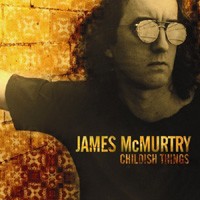
Savoring a plate of piping hot chicken gizzards at a Nashville eatery, Texas singer and songwriter James McMurtry chooses his words carefully as he also forks over bits of political commentary and insights into his songwriting process. “Sometimes you get lucky and you write something that people already are thinking,” he says, speaking on his cell phone. “You’re just giving words to the thoughts and feelings that they have. But it’s pretty rare.”

Fortunately for a growing legion of fans, at least one of those “rare” songs came to a full boil for McMurtry–who appears Oct. 5 at the Mystic–in the past year. There’s no question that the seven-minute epic protest song “Can’t Make It Here,” from the recent album Childish Things, has struck a chord with its angry indictment of the Iraq War, outsourced factory jobs, rising gas prices and social neglect.

The song, delivered in a snarling spoken-sung style, has prompted rave reviews, captured radio play on stations pushing the burgeoning Americana format and driven bloggers to ponder the depth of this blue-collar anthem. Author Stephen King called McMurtry “the truest, fiercest songwriter of his generation” and hailed “Can’t Make It Here” as “the best protest song since Bob Dylan’s ‘Masters of War.'”

That’s unusual, in part because McMurtry is best known for deeply personal portraits that capture the vulnerable side of human nature. Certainly, he can now step out of the shadow of his famous father, Texas author Larry McMurtry, who just picked up an Oscar for his screenplay to Brokeback Mountain and who penned Lonesome Dove and other novels of the Old West.

On the night I spoke to McMurtry, he later picked up Album of the Year (Childish Things) and Song of the Year (“Can’t Make It Here”) honors at the fifth annual Americana Music Awards show at the Ryman Auditorium.

He acknowledges that “Can’t Make It Here” is something of an anomaly. “Nothing turns me off more than a songwriter trying to make a point or trying to save the world,” he says. “But things have just gotten so weird and the press really hasn’t been doing its job in terms of questioning the powers that be, so that leaves it up to the artists.”

While the Bush administration’s constant bullying prompted him to speak out, McMurtry’s dissatisfaction had been brewing for a while. “One of the most disturbing things I’d seen was in the fall of 2000, well before Florida even came into play in the election,” he recalls. “At the time, Pennsylvania was hanging in the balance and a CNN reporter was interviewing then-Pennsylvania governor Tom Ridge, who later became the head of Homeland Security.

“The CNN reporter asked, ‘How do you plan to deliver Pennsylvania?’ Ridge looked him right in the eye and said, ‘Well, we’re currently trying to hold down a massive turnout in Philadelphia that could hurt us.’

“The disturbing part is that nobody said, ‘Excuse me, governor, what the hell do you mean that you are trying to hold down a turnout?’ They just said, ‘Thank you for your time, governor.'”

That might help explain why “Can’t Make It Here” has grabbed the attention of those who feel disconnected with the electoral process and unsure that elected officials are capable of, or even interested in, the challenges facing so many people every day.

Of course, the music community’s role in speaking out on political, cultural and social issues is a subject of heated debate, especially in the mainstream news media. The Dixie Chicks caught plenty of flack for speaking out early on, criticizing Bush for invading Iraq (Natalie Maines later tried to backpedal from her statements during an ABC-TV interview). And more recently, Harp music magazine blasted Neil Young’s Living in War protest album as too little, too late.

But McMurtry says that the public shouldn’t wait for movie stars, musicians and other artists to lead the charge. “Everybody has a responsibility as citizens, so it’s unfair to pick on the musicians,” he says. “But the press certainly has a responsibility to question the actions of our leaders; it’s their job to question and to expose, but they have not done it. That’s what the fifth estate is supposed to do.”

Maybe, but fired-up bloggers on McMurtry’s MySpace.com page are making it clear that they’re happy to have found a kindred rebel spirit in this Texas singer and songwriter. As one blogger reminded, “A working-class hero is something to be.”

James McMurtry and the Heartless Bastards perform Thursday, Oct. 5, at the Mystic Theatre. Lansdale Station opens. 21 Petaluma Blvd. N., Petaluma. 8pm. $12-$15. 707.765.2121.


News Briefs

October 4-10, 2006

Growing dirt

The ground’s getting higher north of Port Sonoma off Highway 37, prompting legal action by the Sonoma Land Trust. The port currently dumps dredged mud onto its 528-acre Lower Ranch. Sonoma Land Trust recently filed a lawsuit claiming this violates the property’s agricultural-only easement. Port officials say they have a 10-year permit from the Army Corps of Engineers to dredge 80,000 cubic yards annually. They claim the practice is safe, legal and agriculturally sound because it creates conditions for growing higher-grade hay and safflower. The lawsuit counters that dumping a predicted 5.4 million cubic feet of dredged material will raise the land five feet, and that the salty mud will degrade the soil quality, cause flooding and make the ranch unusable for farming. Sonoma Land Trust bought the property in 1986 to prevent development other than agriculture, then sold it in 1989 with a conservation easement requiring permanent and exclusive agricultural use. The property was subsequently bought by previous owners of Port Sonoma. A dredged-material disposal facility is not farming, says Ralph Benson, executive director of the Sonoma Land Trust. “Everything we have indicates that it’s just not an agricultural use, particularly when you look at it in light of [Port Sonoma’s] announced plans for a ferry terminal and transportation hub there.”

Prepping for flights

After a five-year lapse, commercial air flights may return to the Charles M. Schulz Sonoma County Airport in Santa Rosa next year, thanks to congressional assistance. Horizon Air plans to offer daily flights to Los Angeles and Seattle. The U.S. Department of Homeland Security refused to provide the county-owned regional airport with screening personnel due to budget woes and a limit on the number of screeners nationwide. Screeners inspect baggage and search passengers preparing to board the aircraft. Airport officials appealed to Sonoma County’s national representatives. A homeland security appropriations bill approved Friday mandates screeners at three California airports, including the Schulz.

More West Nile

A 52-year-old Calistoga man’s flu-like symptoms turned out to be West Nile virus, making him the first Napa County human to catch the mosquito-borne disease. In Marin, a 17-year-old Novato girl was diagnosed Sept. 10, and in Sonoma County, a 58-year-old Petaluma man had West Nile last fall. All three recovered. Statewide, 237 people contracted the disease this year, compared to 742 last year. Few have serious symptoms, but three people have died. Officials say there is still a serious problem with this illness, which is transmitted from birds to equines and humans via mosquito bites. Residents are urged to dump, drain or otherwise dispose of any standing water where mosquitoes could lay their eggs.


Fabric of Lies

October 4-10, 2006

With fall creeping in and winter just around the corner, it’s time for my favorite seasonal wardrobe: the comfy sweater, the long-sleeved knit-top and the button-up coat. Boots are back on the display tables and fashions for work are looking long and elegant.

But wait. There’s a slight problem. For too long now there’s been a disturbing trend round and about the mall. I call it “attack of the thin clothes.” “Thin” here does not refer to the clothes worn when one has been subjected to the horrors of the South Beach diet; rather, it refers to the actual fabric used to construct the clothes themselves.

Remember the “wear 13 tank tops at once to prevent flashing your mother” look of this past summer? Or that double-T-shirt look that Express (571 Santa Rosa Plaza, Santa Rosa, 707.523.0483; the Village at Corte Madera, 1520 Redwood Hwy., Corte Madera, 415.924.1499) insisted was so hot? How about the white “J-Lo skirt that shows my panties” look?

Clothes it seems, especially those popular among young women, have come down with a severe attack of threadbare chic. The rise of such popular retailers as Citiwear and Forever 21 where every scrap of clothing seems to have been stitched together with the shapeless despair typical of an enslaved worker in a Third World country, have only cemented this unfortunate trend.

Times were, a shirt actually concealed a bra. Yet in stores from Macy’s (1000 Northgate Mall, San Rafael, 415.499.5200; 800 Santa Rosa Plaza, Santa Rosa, 707.523.3333; 555 Coddingtown Mall, Santa Rosa, 707.579.3333; the Village at Corte Madera, 1400 Redwood Hwy., Corte Madera, 415.927.3333) to Abercrombie & Fitch (2024-A Santa Rosa Plaza, Santa Rosa; 707.575.5310), see-through fabrics continue to sell for ridiculous amounts of money.

This has not changed as winter approaches. Indeed, the last Abercrombie shirt I bought, naively thinking it might somehow protect me from wintry gusts, has, in the seven times I’ve worn it, come apart like a pair of stockings attacked by a cat. As I can clearly see every detail of my hand through this “superfine” fabric, I wonder at my surprise.

What is up with this? Just what exactly are we clothing ourselves in, anyway? A foray into the deeper mystery of thin clothing reveals its own language and culture. As Ned Flanders might say, “What in the hi-diddley heck is ‘modal’?” (And since when has the term “nylon” meant “cloth to be worn as a charming-if-threadbare frock?”) Mysteries abound.

As for actually wearing the clothes, well . . . Thin clothes can’t be worn to work. Thin clothes reveal bra color, make, model and texture; you can usually read the washing directions clearly through the gauze. Belly rings, cleavage and whale tails float horribly under the scrim. In addition to the expected transparency, thin clothes purchased from Abercrombie & Fitch are guaranteed to be indecently low-cut. This makes thin clothes an ally when you’re trying to score but turns you into a pariah when you’re trying to 10-key your way to another paycheck.

Of course, enough consumers flock to the looks advertised on retail mannequins that clothing companies have no reason to repent their bad decisions. Long, shapeless swathes of gym-short material continue to haunt the racks at Express, masquerading as sundresses. Anthropologie‘s (the Village at Corte Madera, 1848 Redwood Hwy., Corte Madera; 415.924.4197) shirt dresses and shirt skirts–the later looking, indeed, as if you buttoned the neck of one of your mother’s 30-year-old blouses around your waist and called it a day–smack strongly of dumpster chic. Looking like a homeless person or Sienna Miller is synonymous with those who shop thin. The comeback of stripes and ’80s day-glow often hideously combined on the same smock has helped nothing.

So what are we paying for this stuff? Anthropologie boasts a “Hide and Seek” sweater for $158 whose total thread count weighs less than that pile of cash. On the website, it clearly displays the flesh of the mannequin through its gaping latticework weave–but, hey, 158 bucks is nothing in the pursuit of chic. Abercrombie & Fitch, of course, has a slew of “super soft” sweaters for $49.50 each, where the word “soft” should be taken to mean “wouldn’t clothe a Barbie.”

My favorite, however, is J. Crew (the Village at Corte Madera, 1524 Redwood Hwy., Corte Madera; 415.927.2005), home of a million “tissue tees” (two for $35!), “featherweight sweaters” ($68) and bra-baring Henleys ($29.50). As research for this article, I tried on a few of these shirts at my local J. Crew. The catalogue, I’ll be the first to admit, is the epitome of casual elegance. The clothes look warm, soft and not at all see-through. They also look decently tailored.

Slipping a small tissue tee over my head, I was rewarded not only with a garish glimpse of my own anatomy, but a swath of fabric akin to a pup tent. Where was the casual relaxation and warmth promised by the ads? Hell, where was the shirt? I have a sneaking suspicion that if I were to weigh the mass of that tissue tee with the mass of a standard dish towel, the dish towel would come out swinging.

What, then, should the young and hip do to combat this mockery of what Abercrombie calls “casual luxury”? Well, some retailers are better than others. Express, while guilty of transparent summer tees, also has a collection of opaque camisoles and button-up business-casual shirts, and has just released a collection of T-shirts ($16.50 each) and light-weight cardigans whose darker colors–gray, black, brown and magenta (no one is perfect)–will not leave you dangling in the wind. Going for darker colors is always a safe bet, and being a tad maudlin-looking can be tolerated as temperatures drop.

The Limited (www.limitedbrands.com)–which I like to think of as being Express for non-nudists–is a decent purveyor of quality clothing with better business-casual than Express and is currently sporting a relief-inducing collection of sweater shirts and long-sleeved knit tops in the $25-$35 price range. Its white knit tops are still a bit iffy but can be combated by purchasing a flesh-tone bra which will not be visible beneath the shirt.

Anthropologie, unfortunately, is right out. I have owned two items from them in my time and given a significantly higher number as gifts. Every last one was see-through and hardly worthy of a three-figure price. For serious winter wear, you may be forced to shop at Macy’s. Their INC section can get expensive, but it is full of durable cold combatants. Just be careful of the adjoining impulse department and the juniors section, where hundred-dollar prices for transparent shirt dresses and itty-bitty shrugs abound.

And if you must visit A&F in support of your local child molester, invest (somewhere else) in a camisole to be worn under the T-shirts and “super soft” cardigans. A camisole in winter, you say?

Yup. In the land of see-through designer duds, camisoles just might be our last hope for non-naked commerce.


Letters to the Editor

October 4-10, 2006

Coalition responds

We must take exception to the misinformed article about the Petaluma living wage campaign in (“Living Wage Scam,” Sept. 27). This article clearly shows a lack of understanding of the new labor movement, and is not connected to the real ground-level struggle to raise the wage floor for working people in the North Bay.

The real story here is the role of the major nonprofit service providers in persuading the council to grant an exemption to the Living Wage ordinance, but the article focuses mostly on the one group, the Living Wage Coalition, that has been most visible and effective in Sonoma County as an advocate for living wages, affordable housing and low-wage worker organizing. It’s also amusing to see my modest salary lumped in with the handsome sums earned by the big nonprofit service agency directors. If I’m part of a “labor aristocracy,” then I definitely need a raise.

For the record, I will list a few of the low-wage worker organizing efforts that the Living Wage Coalition has been key players in over the last few years, in order to refute the baseless allegation that we “sacrificed the needs of the low-wage workers”:

  • The successful unionization of the 100 low-wage workers at the Petaluma Sheraton was a direct consequence of the agreement brokered by the Living Wage Coalition between the city and the hotel owners in 2000
  • Ongoing support for the organizing drive of the nursing home workers at the Sonoma Valley Health Center
  • Public and effective community organizing on behalf of the county homecare workers, who we helped move from rock-bottom minimum wage to closer to a living wage
  • Key solidarity role with the parking lot attendants for the city of Santa Rosa
  • Byrne’s column is misleading and totally misses the point. Savaging the Living Wage Coalition because all we could take off the table for low-wage workers this round is half a loaf is unfair and short-sighted. The Byrne Report lacks credibility because it’s looking for the shock and awe effect rather than doing the research and getting the real story. Mr. Byrne demonstrates a lack of strategic vision and this article calls into question his role as a professed ally of the progressive movement.

    Ben Boyce, Living Wage Coalition, Santa Rosa

    Peter Byrne replies: Boyce criticizes my research, yet he cannot find a single fact to fault. I urge the Living Wage Coalition to reinstate nonprofit workers into the Petaluma living wage ordinance.

    Valuable facts

    I was disappointed to see Peter Byrne’s mean-spirited personal attack on the Sonoma County Living Wage Coalition and its chief organizers Ben Boyce and Marty Bennett. As an employee of Santa Rosa Memorial Hospital, I know first-hand that the Living Wage Coalition is not afraid to stand up for the rights of workers at Sonoma County’s non-profit enterprises. For the past three years, myself and my co-workers have been engaged in a difficult fight to have a fair ground rules for organizing our union at Santa Rosa Memorial Hospital. From the beginning, the Living Wage Coalition has stood with us, mobilizing community support, informing their members about our cause and consistently joining us in every action we’ve undertaken to win a union at our hospital.

    I hope that Mr. Byrne would consider facts like these before smearing such a valuable community organization as the Living Wage Coalition.

    Don Fugate, Santa Rosa

    THEY CARE, THEY REALLY CARE

    The article in last week’s Bohemian about the Living Wage Coalition did not tell the real story. The article says that they don’t care about low-wage workers. This is not true, because I have seen them standing up for me and all the workers at the Sonoma Healthcare Center, right from the beginning of our union organizing drive over three years ago. Their coordinator, Ben Boyce, and his friends at St. Leo’s Peace and Social Justice Committee have shown up in solidarity with our struggle at rallies and marches time after time. They have attended difficult negotiating sessions with the management, written letters to the editor and full-length articles for local newspapers about us. They took the lead in persuading the Sonoma City Council to pass a resolution urging Ensign Corp., the owners of the nursing home, to settle with us and grant a fair contract. We are all low-wage workers who came together to form our union to improve our working conditions and our ability to care for the nursing-home residents. Over many years now we have benefited from the commitment of the Living Wage Coalition to our cause.

    AlejandrA Recendiz, Petaluma

    And Now: Back to us

    “Life in Hell’s” mysterious disappearance last week can be directly linked to our production designer having the gall to take time off. Rest easy–that won’t happen again. And yes: we’re talking vacations, uh huh.

    are Oct. 4 at the Glaser Center (547 Mendocino Ave., Santa Rosa), from 5:30 to 7:30pm. Trailer Park Rangers! Free! Help us celebrate!

    WRITERS: Prick up your ears. Our Exquisite Jive contest is baaaack.

    The ed., BOSSY BOSSY BOSSY


    Secret Histories

    0

    October 4-10, 2006

    Fashion–pah!– what do we know? There are hundreds, if not thousands, of entities dying to tell you what to wear. We’re far more interested in what you actually end up in. And so it was that on Friday, Sept. 22, intrepid photographer Sara Sanger, all-around genius Kendra Ciardiello and this editorial fraidy-cat struck out into the wilds of Santa Rosa’s Railroad Square to accost perfect strangers and ask them to tell us about their clothes. What we learned was so intriguing and just plain fun that this may become a regular feature. Here are some of this fall’s secret histories.

    –Gretchen Giles

    Jordan Moore, 18
    The story: The most fashion-forward of all of our victims, er, subjects, Jordan wants to move to New York and be a model. A recent graduate of Santa Rosa High School, he works at both the Banana Republic and Abercrombie & Fitch. He was innocently trying to have a quiet coffee with a friend when we pulled him from his seat and marched him outside for the low-down.
    The look: Jordan is wearing Gravis tennies, which can retail in the mid-$80s. He found his pair at Marshall’s for a measly $20 and snapped them up. His Abercrombie discount took 30 percent off his jeans, making them merely $52. Jordan chose this pair for their dark color, because he can “use them for fall.” He adds, “The boot cut is in.” He bought his belt at work three weeks ago but got his super-soft T-shirt at Macy’s for $32. “Most of my paycheck goes to clothes,” he admits sheepishly. His chain is from Banana Republic, but he added a garage sale charm to it to personalize the look. “Gotta get a little bit of bling in there,” he counsels.

    Daniela Herman, 22
    The story: Daniela was trying to grab an iced coffee at Flying Goat when our icy-hot team of procurers swarmed her. Why? She was wearing cute pants with full wide legs, and we’re very big on full, wide-legged pants right now. A full-time SSU student, Daniela was getting a late-afternoon pick-her-up before heading out to Occidental to flyer the town with ads for her upcoming production of Judas Iscariot.
    The look: Daniela’s clothes have mostly been donated to her after she recently lost all of her belongings in a Santa Rosa house fire. Her top, however, is new, a half-off purchase from Fleet Feet, the owner giving her a discount due to her smoldering circumstances. We didn’t ask her the cost because she was our first victim and we weren’t yet seasoned fashion reporters.
    The surprise: Daniela’s mother is Mikki Herman, the once-beleaguered owner of the Guerneville vintage clothing store Kings and Queens, targeted by PETA for its unapologetic sale of used and vintage furs. We even took a picture of Daniela (and misspelled her name–sorry!) with her mom for this paper in January 2005.

    Roland Hankerson
    The story: Roland looked slightly aghast as we cased the joint, otherwise known as the Wine Spectrum Shop & Bar, where he is a manager. Beautiful people are known to sip wine and eat yummy lovely nibbly things at the Spectrum–but on this afternoon, there was just Roland, alone and vulnerable to our terrible ministrations.
    The look: Wearing a green Chaps shirt that he bought for himself, a pair of nondescript comfortable work shoes that he’s had for about six months and a $15 pair of jeans, all that matters to Roland is the watch. (And the wedding ring, about which he laughs, “Every man has to have one.”) This is one serious watch, a Citizen Eco-Drive that he purchased to wear when diving, but that looks good enough for dry-land activities, too. Battery-free, the Citizen is light-powered, has two dials, keeps a calendar through 2100 and retails at roughly the cost of a month’s college tuition. We salute a good-looking man in a good-looking watch.

    Kerri Valentine, 29
    The story: A hair stylist at the Elle Lui salon, Kerri was in one of those crazy-busy vortices of organized mayhem that only a beauty salon on a Friday afternoon can create. At least 40 women covered every available surface–draped in protective capes, pieces of foil in their hair, reading magazines. Kerri talked to us as she began the coloring process on a gracious tween girl.
    The look: Spending as many as 10 hours a day on her feet, Kerri relies on her black Dansko clogs to absorb the punishment. “These,” she says with a laugh, “are my Friday shoes.” She has just lost “some weight,” so is back in her $100 Meltin’ Pot jeans, and glad of it. Her doubled-up look is achieved by layering an LA Made shirt over an Old Navy tank. Her cuff is made by a local artist, a copper and brass creation enlivened with acrylics. Obviously, the biggest statement that Kerri makes is on her skin, which is liberally covered with tattoos. Her favorite tat is a simple black outline of California inked on the inside of one wrist. “Whenever I leave the state,” she says, “it helps me to remember how much I love it here.”

    Sadie Kaufman, 35
    The story: We spotted Sadie’s curls and colorful skirt and followed her directly into A’roma Roasters, where she and her equally adorable friend Tamaka Takefushi were meeting for coffee. Former SRJC students, the two hadn’t seen each other in 12 years. Takefushi had flown up from L.A., where she is a production coordinator in the film business, for the visit. Sadie was in town from New York City, where she’s lived for over a decade, regrouping before a planned move to Mexico. She is a writer who intends to start her own clothing line. Need we convince you further that bothering strangers for personal details is fun?
    The look: Takefushi was simply dressed in Juicy-type comfort wear, but Sadie’s look was more elaborate. Her snub-toed Western boots were purchased from an online saddlery store. “I spray-painted them gold,” she said, lifting a foot up for inspection. “All of my shoes eventually have a gold phase.” Her jacket is similarly stenciled, tagged by a “young friend from Chile.” Her brightly colored skirt was ordered online from an African importer. “I am obsessed,” Sadie confided, “with wrap skirts.”

    Lynn Bickert-Coyle and Richard Coyle
    The story: When we see a man sockless in loafers, we pay attention. And so it was that we chased the Coyles around three intersections before catching them and assuring them that we weren’t half as crazy as we looked. As for them, well, they looked foreign: conservative, classic, big on gold–we could tell that they were from far-off climes. And indeed, hailing from Franklin Lakes, N.J., Lynn and Richard were in town to attend the Petrino wedding at the Ledson Winery. We forgot to ask about their clothing and neglected to get their ages, but we did learn that Richard is a retired PR executive and that Lynn, after a career as a dental hygienist, is now a volunteer emergency medical technician, which is very cool. We directed them to several area restaurants, assured their breakfast plans were in order for the following morning and just generally behaved like decent good will ambassadors. Whatever.

    Achilles Poloynis, 29
    Avery Poloynis-Graham, 18 months
    Madison Buchannon-Graham, 6
    The story: We were still staking out the Flying Goat when Achilles and his daughters made the mistake of thinking that it was safe to go out for coffee. This web was surprisingly well-baited. Our photographer went to high school with Achilles, and the girls’ mother, Lacey, used to work at the Bohemian. Taking his daughters out for the afternoon may never seem safe to Achilles again.
    The look: Speaking of high school, Achilles has had his shirt since he was 15, but did just purchase those stylin’ jeans at Ross Dress for Less for 17 big ones. Avery is attired in the grunge style favored by second-borns, clothes whose origin their parents have long forgotten. Preparing to be the flower girl in a wedding the next day, Madison is wearing new school clothes and sporting accessories from Claire’s, loftily holding out a wish box on one dainty finger. Touching the ornament, one of us made a sad and foolish wish about a man, something we dared not tell a six-year-old girl.


    Hoist a Pint

    0

    October 4-10, 2006

    They fought their way out of a King’s Cross pub to international acclaim. By demonstrating that the spirit of punk could live in traditional Irish folk music, critic Stephen Thomas Erlewine has opined, the Pogues “were one of the most radical bands of the mid-’80s,” attracting Elvis Costello (who produced the band’s second album and married their onetime singer Cait O’Riordan) and the Clash’s Joe Strummer, who produced their album Hell’s Ditch.

    But the drunken fury that at the heart of the Pogues is found, not in high-profile co-conspirators, but in frontman Shane MacGowan, whose self-destructive alcoholic binges swamped the 2001 documentary If I Should Fall from Grace from God: The Shane MacGowan Story. It is the erratic MacGowan who best embodies the band’s politically charged lyrics, punk swagger, poetic soul and boozy, brawling demeanor. And while that stark film portrait left many expecting MacGowan wasn’t long for this old world, he’s still standing and heading up a reunion of original members that brings the Pogues to the Fillmore Auditorium in San Francisco on Oct. 9, 10 and 12.

    The lineup includes MacGowan, Philip Chevron, Darryl Hunt, Spider Stacy, Andrew Ranken, Terry Woods and James Fearnley.

    Meanwhile, Rhino Records has reissued five of the band’s best recordings, each remastered and expanded with additional tracks.

    The raw and rowdy pleasure of the Pogues’ unadorned 1984 debut Red Roses for Me—with its memorable “Streams of Whiskey” and “Down in the Ground Where the Dead Men Go”—is bolstered by six bonus tracks. But it is their sophomore release that proved the charm. The 1985 Costello-produced breakthrough album, Rum, Sodomy & the Lash, with the exceptional ballad “Dirty Old Town,” gets an extra five tracks here, including the strong “London Girl” and “The Body of an American.”

    Of course, the real winner came four years after their debut when superstar producer Steve Lillywhite captured the band’s rough-and-tumble spirit on 1988 masterwork If I Should fall from Grace from God. That disc found MacGowan contemplating the tenuous state of mortality while displaying his maturing songwriting skills on such classic tracks as “Fairytale of New York” and “The Broad Majestic Shannon.” The jaunty, theatrical sea shanty “Turkish Song of the Damned” is quintessential Pogues. The bonus track “Sketches of Spain”—an upbeat Klezmer, polka, ska, mariachi hybrid—shows just how skilled this former bar band had become by the end of the decade.

    Lillywhite returned a year later for Peace and Love and tempered the band’s traditional Irish sound even more, adding swing-inspired horn arrangements to the opening instrumental track “Gridlock.” The overall result is a finely tuned album that is the band’s most accessible—a far cry from the brawling fight songs of the Pogue’s first two releases. Still, the album’s five bonus tracks include a rowdy cover of the Rolling Stones’ “Honky Tonk Woman.”

    The 1990 comeback album Hell’s Ditch, helmed by Strummer after one of the band’s more turbulent periods, is downright cheerful and even poppish thanks to the lead off track “The Sunny Side of the Street.” The band sounds uncharacteristically relaxed throughout with MacGowan slurring his words on the ironic Celtic love ballad “Sayonara” (reportedly the tale of a US soldier and a Thai hooker) and the wistful “Summer in Siam.” The album—the last fronted by the firey MacGowan—picks up seven additional tracks, all of which are equal to the strong original material.

    With sea shanties making a comeback, thanks to Hal Wilner’s recent all-star tribute to pirates and drinking songs Rogue’s Gallery, the time is ripe for a Pogue’s revival.

    After all, who’s got better sea legs than Shane MacGowan in these unsteady times?


    Murder Most Nice

    October 4-10, 2006

    Imagine the voice of a syrupy narrator: “What happens when a trunk murderess sets things right at a dysfunctional household? And what happens if she’s played by Dame Maggie Smith?” British director Niall Johnson (Let’s Talk About Sex) transplanted this civilized Richard Russo script to England–the Isle of Man, apparently. Keeping Mum is a balm to those longing for peaceful green fields and real estate that has at last got the dampness chased out of it.

    The village of Little Wallop is ministered to by the Rev. Goodman (Rowan Atkinson), whose jejune sermons are but the outward sign of a man abstracted by some underwritten spiritual crisis. He’s got it so bad that he’s given up on bonking his slender, fine-boned wife, Gloria (the slender, fine-boned Kristin Scott Thomas). Distracted by her nun’s life, she is forced into the arms of a Yankee (hiss), the local golf instructor played by Patrick Swayze who wears unfortunate underwear and who’s evidently been aging like prime rib in a meat locker.

    The Rev. Goodman, like many ministers, is a nice enough person as long as you keep him off the subject of religion. He is oblivious to the seduction of his wife, as well as the problem of schoolyard bullies working over his son (Toby Parkes). And he’s somehow overlooked the matter of his daughter (Tamsin Egerton), who is running half-dressed and amok with the local boys.

    At last, to correct this out-of-balance life comes Mary Poppins, or rather, the new housekeeper–a frighteningly calm, recently paroled trunk murderess. She still has her trunk ready, and the ability to rationalize a necessary murder or two or three.

    Grace Hawkins is played by Dame Maggie Smith, and Smith is the hook upon which this tidy but tiny farcical film hangs. The lady’s face is quite kaleidoscopic, and one can find a killer’s malice as well as lilac-scented gentility in her, depending on how the light hits her. There’s only one point where the film is extreme enough to justify Keeping Mum‘s aims at being a black comedy: when we’re invited to share Smith’s smile at the injury of a child. The child was a bully, so I accepted that invitation.

    As in Mrs. Palfrey at the Claremont, Keeping Mum intends to be a late-period example of British steadfastness in the face of American mania, the kind of film in which the extreme of sensual pleasure is indicated as the treat of sleeping late. Notice that, despite Swayze’s meaty caresses, Scott Thomas looks most rapt when covered by cozy blankets.

    Smith is the center of the film, but because of the too-well-bred script, Atkinson doesn’t get to provide some drama by counter-example; he never raises a pastoral objection to the idea of killing one’s noisy or nosy neighbors, for instance. Atkinson can’t really get a toehold amid the film’s smoothness. He has a small portion of physical comedy as an amateur soccer goalie who can’t keep his head out of the net. But mostly, Johnson forces this marvelous comedian into Dick Van Dyke levels of sententiousness.

    Grace fixes the minister’s marital problems by advising him of the romantic implications of the Song of Solomon. Apparently Goodman never heard this in seminary school. Atkinson’s voice, buttering over that fulsome Biblical poetry, is of a constant ookiness, compared to which murder is only a misdemeanor.

    ‘Keeping Mum’ opens Friday, Oct. 6, at Rialto Cinemas Lakeside, 551 Summerfield Road, Santa Rosa. 707.525.4840.


    New and upcoming film releases.

    Browse all movie reviews.

    The Byrne Report

    October 4-10, 2006

    In mid-September, the Central Santa Rosa Library sponsored a forum on immigration reform. Congresswoman Lynn Woolsey told a crowd of about a hundred that she hopes the immigration reform bills pending in the House and Senate will fail. The House bill criminalizes the innocent, she says, and the Senate bill is not far behind in pandering to the age-old disease of American nativism.

    “America is not a privilege to be hoarded,” Woolsey said. “It is a gift to be shared.” Woolsey’s humanitarian-internationalist point of view was opposed by Yeh Ling-Ling, executive director of Diversity Alliance for a Sustainable America (DASA). In her presentation, Yeh rattled off a ream of questionable statistics in support of her thesis that immigrants without official papers are responsible for sprawl, gridlock, rising energy prices, deficits, crappy education, overpopulation, ethnic tensions, crime and 9-11.

    The Oakland-based DASA’s board of directors includes Frank Morris, who has received awards from the NAACP; Peter Nuñez, a former U.S. attorney; Huey Johnson, former regional director of the Nature Conservancy; and Vishwas More, former president of the California Community Colleges. Yeh earns $70,000 a year to carry their message of exclusion, deportation and selfishness in the service of “sustainability.”

    Panelist Vicki Mayster of Catholic Charities countered Yeh’s rant. “The root of illegal immigration is economic injustice,” she correctly observed. As an example, she cited the impoverishment of farmworkers in Mexico by NAFTA. She skewered Yeh’s claim that illegal immigration negatively impacts the American economy. She pointed out that immigrant laborers, documented and otherwise, revitalize our moribund consumer-based system.

    Mayster had more supporters in the audience than Yeh. They clapped vociferously when she called for legalizing all immigrants and reuniting families torn apart by poverty. Yeh sputtered something about not deporting everybody all at once, but she lost the crowd.

    A main theme of questions from audience members revolved around fear of losing jobs to immigrants. Some expressed terror that lax immigration polices will undermine the American economy and cause a country that exports unequal trade treaties, carbon pollution, McDonald’s and cluster bombs to the Third World to become a Third World country itself.

    The Sept. 16 issue of The Economist magazine ran a special section addressing such an approaching fate. But the capitalist pragmatists at The Economist do not blame illegal immigrants for the downfall of America; they blame selfish U.S. consumers: “The world does not have the resources for another 5 billion or so people to behave the way Americans do today.”

    The Economist points out several salient facts:

  • Real wages in the United States are falling because of the spectacular growth of the Third World’s “emerging economies,” led by China, India, Russia, Brazil and Mexico.
  • That growth is partly fueled by the off-shoring of U.S.-based jobs to these lower-wage emerging economies. This results in a flood of cheap consumer goods into our air-conditioned malls for purchase on low-interest credit. Ironically, the price of subsidizing our consumer frenzy is the loss of high-wage industrial jobs in the United States to Latin America and Asia, not illegal immigrants.
  • Even though poverty is endemic in the Third World, national elites there are getting megarich and buying U.S. Treasury bonds, thereby subsidizing our gargantuan trade deficit, our deficit war-budget and our ridiculously low consumer-interest rates. That could literally change over night if those groups sell these bonds or go off the dollar standard.
  • The Economist argues that one result of our addiction to commodities produced by super-low-waged Third World workers is that “corporate America has increased its share of the national income from 7 percent in mid-2001 to 13 percent this year. America’s top 1 percent of earners now receive 16 percent of all income, up from 8 percent in 1980.”
  • Yep: endless war, corporate thievery, mounting consumer debt and off-shoring jobs have sent corporate profits soaring. But still, America sleeps. “[T]he stagnation of real wages in America has been masked by surging house prices,” charges The Economist. As the housing bubble bursts, consumers are running out of easy cash–the economic dominoes are teetering.

    The Economist worries that a deep recession will produce a political backlash against free trade. The last thing that international financial institutions want to see is America sealing off its borders and promoting tariff protectionism to keep wages and house prices artificially high for a few more years.

    The piper will be paid sooner than later. But it is insane to blame immigrants for these problems. Of course, we spendthrift Americans never blame ourselves. We always find convenient scapegoats: Indians, blacks, gays, Muslims, the Vietnamese, Iraqis, Iranians and freshly minted immigrants ad infinitum.

    Want to see the real problem? Look in the mirror, America.

    or


    Morsels

    October 4-10, 2006 Black angus beef. Fresh organic milk. Creamy goat cheeses. Ripe wine grapes. Year-round oysters. German butterball potatoes. Sweet onions and strawberries. Jerusalem artichokes, heirloom tomatoes, grass-fed beef and lamb. Free-range chickens and eggs. Purple eggplants, golden peppers, succulent melons, artisanal olive oil. Those are just some of the local farm products mentioned in the newly released Marin...

    Working Class Hero

    October 4-10, 2006Savoring a plate of piping hot chicken gizzards at a Nashville eatery, Texas singer and songwriter James McMurtry chooses his words carefully as he also forks over bits of political commentary and insights into his songwriting process. "Sometimes you get lucky and you write something that people already are thinking," he says, speaking on his cell phone....

    News Briefs

    October 4-10, 2006 Growing dirt The ground's getting higher north of Port Sonoma off Highway 37, prompting legal action by the Sonoma Land Trust. The port currently dumps dredged mud onto its 528-acre Lower Ranch. Sonoma Land Trust recently filed a lawsuit claiming this violates the property's agricultural-only easement. Port officials say they have a 10-year permit from the Army...

    Fabric of Lies

    October 4-10, 2006 With fall creeping in and winter just around the corner, it's time for my favorite seasonal wardrobe: the comfy sweater, the long-sleeved knit-top and the button-up coat. Boots are back on the display tables and fashions for work are looking long and elegant. But wait. There's a slight problem. For too long now there's been a disturbing...

    Letters to the Editor

    October 4-10, 2006Coalition respondsWe must take exception to the misinformed article about the Petaluma living wage campaign in ("Living Wage Scam," Sept. 27). This article clearly shows a lack of understanding of the new labor movement, and is not connected to the real ground-level struggle to raise the wage floor for working people in the North Bay. The...

    Secret Histories

    October 4-10, 2006 Fashion--pah!-- what do we know? There are hundreds, if not thousands, of entities dying to tell you what to wear. We're far more interested in what you actually end up in. And so it was that on Friday, Sept. 22, intrepid photographer Sara Sanger, all-around genius Kendra Ciardiello and this editorial fraidy-cat struck out into the wilds...

    Hoist a Pint

    October 4-10, 2006 They fought their way out of a King's Cross pub to international acclaim. By demonstrating that the spirit of punk could live in traditional Irish folk music, critic Stephen Thomas Erlewine has opined, the Pogues "were one of the most radical bands of the mid-'80s," attracting Elvis Costello (who produced the band's second album and married their...

    Murder Most Nice

    October 4-10, 2006Imagine the voice of a syrupy narrator: "What happens when a trunk murderess sets things right at a dysfunctional household? And what happens if she's played by Dame Maggie Smith?" British director Niall Johnson (Let's Talk About Sex) transplanted this civilized Richard Russo script to England--the Isle of Man, apparently. Keeping Mum is a balm to those...

    The Byrne Report

    October 4-10, 2006In mid-September, the Central Santa Rosa Library sponsored a forum on immigration reform. Congresswoman Lynn Woolsey told a crowd of about a hundred that she hopes the immigration reform bills pending in the House and Senate will fail. The House bill criminalizes the innocent, she says, and the Senate bill is not far behind in pandering to...
    11,084FansLike
    4,606FollowersFollow
    6,928FollowersFollow