Meet Mike

2

the arts | visual arts |

Photograph courtesy Michael Cooper
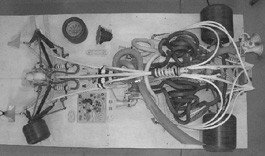
Chassis: Nearing completion, Cooper’s massive car is entirely made of cunningly design wood pieces.

By Gretchen Giles

Sculptor Michael Cooper has lived with his wife, Gayle, in their west Sonoma County home for some 26 years, but to hear him tell it, he’s just now arrived in the North Bay. “This is my introduction,” he says modestly. “Walter brought me into the county.”

The “Walter” in this instance is Dr. Walter Byck, owner of Santa Rosa’s Paradise Ridge Winery and the main driving force behind last year’s vastly successful countywide Sculpture Sonoma. Byck says that he just wanted to make friends, so he invited all of his favorite sculptors to participate in the yearlong multi-venue event. That way, he reasoned, he’d get to know them better. Along the way, Byck urged visitors to meet Mike Cooper, visit Mike Cooper, become familiar with Mike Cooper’s work. Byck’s eyes held a certain gleam that those who know the good doctor understand means this advice should be heeded.

Cooper’s second introduction, perhaps, comes on Oct. 28, when he is one of nine artists showing work for auction at the Keller Estate Winery at the Art + Architecture fundraiser for the burgeoning Petaluma Arts Council. The recipient of a $1 million grant from an anonymous donor this June, the council is moving ahead with plans to build a permanent arts center. Having identified the former railroad depot smack downtown as the best location, the council is trying to raise matching funds that will eventually total between $2 million and $4 million, depending on the resulting scope of their project.

Compared by the AMS consulting group hired to guide them to such other worthies as San Rafael’s ArtWorks Downtown space and the Sebastopol Center for the Arts, the proposed Petaluma Art Center would provide exhibition opportunities to area artists as well as classroom time to those interested in learning to create. Currently, it is a newly painted but defunct depot near an unused railroad track across from Long’s Drugs.

Such tumbledown description is a contrast to the serene order that Cooper instills in his work and his life. Trained as a sculptor at San Jose State University and UC Berkeley, Cooper taught art for some 34 years at De Anza College in the South Bay. Fascinated with cars, such Western mythology as Hopalong Cassidy and guns, as well as the functional beauty found in chairs, Cooper mixes his sculptural training with a woodworker’s sensibility and an unremitting sense of the perverse. He uses metal-working tools to cut wood; he weds exquisite quilted maple pieces to aluminum sprayed with auto paint; and he puts toothy spikes into his chairs just where a casual sitter might mistakenly lean to relax.

On a recent sunny morning, his rural oversized studio allows light and grudging warmth in through the open doors. Cooper shows a photograph of a 7-by-8-foot sculpture currently on loan to the Oakland Museum. Whenever, he says, “they kick it out of the museum,” he’ll bring the contraption home. Ostensibly a chair, but so tricked out with engines and widgets that it will literally hop when revved, the piece, called Ride, is one of the only works that Cooper has placed out in the art world.

Which brings us back to his introduction.

While Cooper has lived in Sonoma County for decades, his life has been focused on teaching and family. He’s had little contact with the traditional barbs of the art world and even less with the many artists who populate the North Bay. When Byck found him last year and began beaming that meaningful gleam, Cooper barely knew anyone north of the Golden Gate and had not shown much at all.

“I’ve basically given my stuff away over the years,” he says sheepishly. The visitor looks around the studio. In progress on a massive table is an equally massive wooden sculpture consisting of thousands of pieces, each cunningly co-joined and made of different woods–many of them wooden strips ingeniously fitted together by Cooper to reveal clever interior designs when carved–that form the engine and chassis of an elaborate vehicle. “A car person will be able to figure out everything on this,” he chuckles, rubbing a piece thoughtfully.

Elsewhere in the studio sits GMO, a hybrid chair that has a seat and a back and two arms, but whose manifestation as a possible piece of furniture ends there. Cooper has created “horns” of sorts with aluminum and given the sculpture the appearance of kinesis by adding soft rounded metal forms like wheels whose shape repeat themselves as ball-bearing-type forms elsewhere on the piece. Generally eschewing ready-mades, Cooper even creates such details as wooden gear linkage when making a carlike sculpture. Across the room, another piece uses pneumatic pressure to raise an oversized gun that, when fully extended, protects an oil derrick on a platform. “It’s obscure,” Cooper chuckles. “It’s exactly the kind of piece you can never sell.”

Selling, of course, has its pleasures, particularly when it’s for a good cause. In organizing the Petaluma Arts Council fundraiser that will see Cooper’s massive wooden car chassis on auction, stone sculptor Edwin Hamilton curated the work of seven other colleagues whom he particularly esteems.

In addition to his own and Cooper’s sculptures, contributing are Sonoma painter Chester Arnold, Santa Rosa ceramicist Todd Barricklow, Sonoma Valley stone sculptor Gilham Erickson, Napa sculptor Gordon Huether, Cazadero wood sculptor Bruce Johnson, Sebastopol environmental artist Ned Kahn and Sonoma Valley found-metal sculptor Brian Tedrick. “I got to consider exactly who I would want to show,” Hamilton says with a broad grin, standing on a recent rainy day at the Keller Estates Winery.

Designed by renowned Mexican architect Ricardo Legorreta, Keller is currently only open to the public by appointment, though plans to have a regular tasting schedule are in the works for next year. Specializing in Pinot Noir and Chardonnay, the Keller family made their fortune in automobiles and live mostly in Mexico. Walking through the chilly wine caves with Keller staffer Sandy Maus, Hamilton says that the proposed Petaluma Arts Center is “one of the best community-minded projects I know of.”

Pausing in the winery’s handsome tasting room, looking through French doors out into a courtyard that will allow Art + Architecture revelers to spill out among the evening’s special sculpture, Maus sighs. “Art,” she says directly, “is what makes us civilized.”

Which is why, of course, we’re so eager to make the introduction.

The Art + Architecture fundraiser for the Petaluma Art Center is slated for Saturday, Oct. 28, from 5pm to 8pm. Keller Estate Winery, 5875 Lakeville Hwy., Petaluma. $125; includes shuttle to the winery, live entertainment, food, wine and many surprises. 707.766.5200.


View All


Museums and gallery notes.


Reviews of new book releases.


Reviews and previews of new plays, operas and symphony performances.


Reviews and previews of new dance performances and events.

Zut, Abhors!

0

Splitting his time between Guerneville and Manhattan, acclaimed consultant Clark Wolf graces these pages with the occasional diatribe from the periodic local.

Who cares what the French think?! Well, lots of people do, but when it comes to restaurants in the Bay Area, the recently published Michelin Guide seems like it was written for an elite coterie of reserved French businessmen–circa 1964.

When I first discovered the Guide Michelin (geed-misch-lahn, as I was instructed to call it), it was the ’70s. My formerly waist-length raven hair was clipped to a sort of television bob eerily reminiscent of Suzanne Pleshette’s. I’d been a waiter on the railroad between Oakland and Chicago–on the Silver Zephyr, no less–where some of the dining cars still sported woodburning stoves. Really.

I won’t discuss my long nights in Mafia-run dance clubs, but I will admit that dinner in the Windy City was often at the Pump Room, after a languid amble through the stunning galleries of the Art Institute. I was starved for urban and world-class culture.

Back in the City by the Bay, I got hired to open a cheese and wine shop at the base of Nob Hill, from which I was plucked to help open the legendary Oakville Grocery in San Francisco.

Yes, I was the first to bring arugula to the West Coast. I swear it wasn’t my idea–I just did it. But in the quick bit between a cute little shop and the big time that led to a world of now-accepted up-market staples, I was a curious, quick study with a keen interest in useful cultural history and any chance at a really good meal. I’d had my fill of mom’s tater tots and the impoverished college years of clutching boxes of Kraft Dinner.

I got myself to Europe a few times, occasionally invited by trade boards that helped cushion and cosset. I was long past the sleeping-bag-and-hitchhiking portion of our show and started on my list of must-try temples of excess: Caviar Kaspia (before the Caspian was endangered) in Paris; Alain Chapel (by the side of the road in an exurban French village, and the inspiration for the Inn at Little Washington, outside of D.C., as well as for a generation of culinary drama queens); and some solid one-star treasures that served stuff like tripe and pigeon.

I also got to eat–six times in two years, I’m embarrassed to confess–at a Parisian place called Jamin, where the chef was a guy called Joël Robuchon, who was soon after pronounced, and arguably so, the best chef in the world.

These days, Joël spoons up the rare and wondrous at a couple of stylish counters: one in Paris, one in Las Vegas (natch) and one in Manhattan, at the Four Seasons Hotel. They’re called L’Atelier de Joël Robuchon. An atelier is usually a sort of design workshop or studio. I guess after all his success, it’s the tinkering he really craves.

The great Alain Senderen has sent back his stars from his exquisite spot on Paris’ Place de Madeline and gone more casual, renaming his restaurant Senderen’s at a hallowed location that once housed the legendary Lucas Carton. I mean, really, if these guys are turning in their tuxes and starched toques for jeans and flip-flops, who are we to hold out for tiaras?

Don’t get me wrong. The French Laundry is arguably a classic, American-based, three-star Michelin restaurant. Cyrus is clearly a two-star by wise choice. They both bridge old world and new in commendable and often transporting ways.

But my long favorite, solid, heartfelt and delicious one-star category choices would clearly include Santa Rosa’s ZaZu and Graton’s Underwood; San Francisco’s Zuni Cafe and the Slanted Door; Oakland’s Oliveto; and a whole lot more. This recently published book was light on reality and devoid of saucy treasure. Unlike old France, where one star was the road to two and two was hoping for three, these restaurants and many others are delightfully fulfilling–and fulfilled–just as they are.

Truth is, Marin has some major dairy and organic farming going on. Sonoma has so many sorts of brilliant, down-to-earth agriculture that restaurants are almost an afterthought, or for visitors, or for an occasional celebration. Good, solid, local spots abound or are popping up from Alameda to San Jose (really!), and have always been a part of life in Berkeley.

Our show-off corridors are mostly clustered in San Francisco and the Napa Valley, but the food splendor of Northern California is most often at home, on our own table.

So, I’ll keep calling them French–not freedom–fries (even though they really oughta be Belgian) and enjoy an occasional big deal meal, but I’ll buy American tires for my hybrid car (let’s face it: the Michelin Guide was designed to promote their rubber meeting the road) and take my cue about where and what to eat from friends, the assorted trustworthy critic and my own experience of nibble and sip.

And as far as the Michelin Guide’s sense of photography, factual detail and critical viewpoint? No stars, honey. Not even a satisfactory.


SEARCH AVAILABLE RESERVATIONS & BOOK A TABLE

View All


Quick dining snapshots by Bohemian staffers.


Winery news and reviews.


Food-related comings and goings, openings and closings, and other essays for those who love the kitchen and what it produces.


Recipes for food that you can actually make.

Guns and Arias

0

the arts | stage |

Photograph by Jim Johnson
Fine romance: Kathleen Sisco and William Neely.

By David Templeton

Opera is a fundamentally silly art form, and its silliness is its essential strength–though many of its fans take opera much too seriously to agree. Like Japanese animé, another fundamentally silly yet dependably entertaining medium, those elements that first-timers might see as weaknesses are, in fact, the medium’s primary appeal. In both art forms, people tend to express themselves differently than in real life; artificiality replaces realism from the first note sung or the first line delivered; the plots are always far less important than the poignancy and colorfulness of the characters; and every single emotion is played way over the top.

In spite of these excesses and eccentricities–or, more likely, because of them–both animé and opera are able to reach in and move us, take control of our brains and hearts, and spin them like tops in ways that are profoundly satisfying. Someday, enterprising folks will realize this and we will see splashy animé versions of Madame Butterfly, Carmen, Don Giovanni and the Ring cycle. Until then, we who appreciate both opera and animé must experience our art forms separately, one at a time.

Puccini’s Girl of the Golden West–currently playing at the Cinnabar Theater–is not as well-known as many of Puccini’s other masterworks and is not among his most lyrically memorable creations, musically speaking. But it has an inherent charm that keeps it from disappearing from the opera repertoire, and, much like the notion of an animé version of The Flying Dutchman or Die Fledermaus, the very idea of an Italian opera set in the Wild West is enough to induce curiosity.

Since its inception, Cinnabar has been committed to making opera accessible to new audiences–largely by presenting them in English–and this production, directed by Elly Lichenstein with musical direction by Nina Shuman, is a fine example, for which Shuman has contributed a new English translation. It’s a crowd-pleasing trifle packed with barroom brawls, high-stakes poker, angry lynch mobs and a dash of frontier bad language. There is no way to describe the perverse delight of hearing an operatic baritone singing the phrase, “You son of a bitch!” It’s not exactly Deadwood, but it’s kind of a kick, and the opening-night audience reacted to each random instance of cowboy-opera profanity with appreciative laughter and applause.

The opera, which first appeared in 1910, was based on a play by David Belasco, the American author who also wrote the play on which Puccini’s Madame Butterfly was based. The story is reasonably predictable, and unlike some operas, it is pleasingly uncomplicated. In a mining camp in the California Sierras, rifle-toting Minnie (impressively portrayed by San Francisco-based soprano Kathleen Sisco) is one of the town’s few females, so her barroom is the most popular drinking and gambling establishment for miles around. All the men have proposed marriage, none more forcefully than the local sheriff, the dark and dangerous, occasionally violent Jack Rance (a believably grounded William Neely, who looks like Burt Reynolds and sings with a soothing baritone that could lull a bear to sleep).

Insisting that she will only marry for love, Minnie manages to keep her suitors and customers in balance until the unexpected arrival of legendary bandit Ramerrez, disguised as a dashing Marlboro-man-type known only as Dick Johnson from Sacramento, a fine fit for tenor John Davey Hatcher. Minnie falls for him instantly, and as the hard-bitten salty Wells Fargo agent Ashby (Sonoma’s John Bonnoitt) rallies the miners to join his Ramerrez-hunting posse, Rance becomes increasingly jealous of Dick Johnson from Sacramento.

Working with an impressive set by John Connole (especially splendid in the first act barroom scene), director Lichenstein has created a believably seedy world for her ensemble, who look the part down to the last dirty jacket and grizzled beard. With one of the best blends of voices and actors in recent Cinnabar memory, Girl of the Golden West–silliness and all–is worth gambling on, even if you’ve never seen an opera before.

After all, who knows how long you’ll have to wait for the animé version.

‘Girl of the Golden West’ runs through Nov. 11. Friday-Saturday, Oct. 28, Nov. 3 and 10-11 at 8pm; Sunday, Oct. 29 and Nov. 5 at 2pm; Wednesday, Nov. 1 and 8 at 7:30pm. Cinnabar Theater, 3333 Petaluma Blvd. N., Petaluma. $30-$32. 707.763.8920.


View All


Museums and gallery notes.


Reviews of new book releases.


Reviews and previews of new plays, operas and symphony performances.


Reviews and previews of new dance performances and events.

Judicial Review

0

Ikes!: Yep, scared us, too. Up for reapproval, Associate Justice Paul R. Haerle served under Ronald Reagan’s gubernatorial guidance.

By Patricia Lynn Henley

There’s a mind-numbingly long list of uncontested judicial offices on California’s Nov. 7 ballot. While it might seem odd to have so many positions with only one candidate each, that’s pretty much par for the course in a gubernatorial election year when voters are asked to say thumbs up or thumbs down to California’s new or continuing supreme and appellate court justices.

“We can get a lot of questions from voters,” says Debra Russotti, Sonoma County’s election services supervisor. “It’s confusing when there are all those names and no candidate statements.”

What exactly is going on?

The California Supreme Court is the state’s highest court; its decisions are binding on all other state courts. There is one chief justice and six associate justices. According to the nonprofit National Center for State Courts’ annual Survey of Judicial Salaries, California’s chief justice pulls down $199,000 annually; the six associate justices each earn $182,000.

The Courts of Appeal provide what’s considered an intermediate review, evaluating lower courts’ rulings to ensure the law was interpreted and applied consistently and uniformly. The state is split into six appellate districts. Most of these are broken down into divisions, each with one presiding justice and three or more associate justices. Appellate cases are heard before panels of three judges. The national salary survey pegs their income at $178,000 for presiding justices and $171,000 for associates.

That gives us seven well-paid Supreme Court positions with another 105 at the appellate level. All are considered nonpartisan, and voters don’t get to pick their favorites; they are merely asked to approve or disapprove a preselected appointee who is already serving on the bench.

Here’s how it works: First, the governor chooses potential candidates for any supreme or appellate vacancies. Those candidates’ backgrounds and qualifications are reviewed by the Judicial Nomination Evaluation Commission, which includes lawyers and members of the public. This commission’s evaluations are then sent back to the governor, who then officially nominates the candidates.

Those nominations are forwarded to the Commission on Judicial Appointments, which consists of California’s chief justice, attorney general and a senior presiding justice of the Courts of Appeal. After another public review of the candidates’ qualifications and experience, the commission either confirms or rejects the nominations.

If confirmed, the candidate becomes a justice and takes his or her seat in court. Each serves 12-year terms or, if replacing another justice, however many years are left in that judge’s term.

Every four years during a gubernatorial election, California voters are presented with a list of justices–those appointed to the bench within the past four years; those who have moved up a step within this judicial hierarchy; and any finishing their current term and want to serve another 12 years.

All of which is to explain why there are so many judicial names on the Nov. 7 ballot with voters asked only to mark “yes” or “no” to each one. Still not sure how to vote? One semiblind way to determine preference is to pay attention to which governor appointed the judge.

The exact appellate candidates listed on a specific ballot vary depending on the area. For example, there are 10 candidates in the 1st District, which has 20 justices in five divisions covering 12 counties: Alameda, Contra Costa, Del Norte, Humboldt, Lake, Marin, Mendocino, Napa, San Francisco, San Mateo, Solano and Sonoma. Voters in those counties will receive ballots with the names of all 10 1st District candidates.

State law prohibits printing explanatory candidates’ statements for these judicial elections in the official voters’ guides. However, detailed official biographies for both the supreme and appellate courts are online at www.courtinfo.ca.gov.

That’s all folks. Civics class is dismissed. Here come da judges.

On Nov. 7, North Bay voters will be presented with a faceless list of justices up for approval; two at the Supreme Court level and 10 in the 1st District appellate courts. Here’s a quick overview of who’s who.

Associate Justice Carol A. Corrigan is a Stockton native who previously served as a district attorney and an associate justice at the appellate level. She was appointed to the Supreme Court by Gov. Schwarzenegger in December and confirmed last January.

Associate Justice Joyce L. Kennard, previously a deputy attorney general and Los Angeles Superior Court judge, was appointed by Gov. Deukmejian in April 1989 to fill a Supreme Court vacancy, and is wrapping up a 12-year term that began in 1994.

Specific to District 1, the following are on your ballot:

Division One Presiding Justice James J. Marchiano: Named presiding justice, January 2002; appointed associate justice by Gov. Pete Wilson in 1998; served 10 years on the Contra Costa County Superior Court; was a practicing civil litigator.

Division Three Presiding Justice William R. McGuiness: Named presiding justice in January 2002; appointed associate justice by Gov. Wilson in 1997; served 11 years as an Alameda County Superior Court judge.

Division Four Presiding Justice Ignazio John Ruvolo: Named presiding justice by Gov. Arnold Schwarzenegger in January; appointed associate justice by Gov. Wilson in 1996; appointed to Contra Costa Superior Court by Wilson in 1994.

Division Five Presiding Justice Barbara Jones: Confirmed as presiding justice in 1998; appointed to appellate court by Gov. Wilson in 1996; served on San Francisco Superior Court 1992-’96; practiced general business and personal-injury litigation for 16 years.

Associate Justice Sandra L. Margulies: Appointed to the appellate level by Gov. Gray Davis in January 2002; previously served as a deputy district attorney and an Alameda County Superior Court judge.

Associate Justice Paul R. Haerle: Appointed to the Courts of Appeal by Gov. Wilson in 1994; practiced law before and after serving as appointments secretary to Gov. Ronald Reagan, 1967-’69.

Associate Justice James A. Richman: Appointed to the appellate court by Gov. Schwarzenegger and confirmed in February; 10 years on Alameda County Superior Court; was a partner in an Alameda law.

Associate Justice Peter Siggins: Appointed by Gov. Schwarzenegger last December; practiced civil law and worked in the California Attorney General’s office before becoming Schwarzenegger’s legal affairs secretary (2003-’05) and interim chief of staff (September-November 2005).

Associate Justice Maria P. Rivera: Appointed by Gov. Gray Davis in January 2002; served on Contra Costa County Superior Court 1997-2002; previously worked in private practice, for the Department of Justice and as a deputy district attorney in San Francisco.

Associate Justice Patricia K. Sepulveda: Appointed by Gov. Wilson December 1998; appointed to the Contra Costa Superior Court by Gov. George Deukmejian October 1989; deputy district attorney in Contra Costa County for 11 years.

–PLH


‘Rat’ Tales

0

October 18-24, 2006

‘Ed Roth was not just an icon of the hot rod,” says artist and pin-striping master Nat Quick. “Roth was, and still is, an icon of American ingenuity and creativity. He looked at something everyone else was looking at—the automobile—and he saw something different. Ed Roth did for the car what Andy Warhol did for cans of soup.”

In fact the late Ed “Big Daddy” Roth was a legendary “kustom kar” pioneer whose life and accomplishments include the creation of several outrageous hot rods, the off-the-cuff invention of the airbrushed T-shirt and the gleefully grotesque Rat Fink cartoon character, all of which are vibrantly honored in Ron Mann’s new illustrated documentary Tales of the Rat Fink, opening at the Rafael Film Center for a one-week run beginning Oct. 20.

Nat Quick began painting cars himself in Oklahoma in the 1960s, where he was known to hang out in drive-in parking lots with his paint kit, offering to do speedy pinstripe dash jobs for a quart of beer or a few bucks. Years later, he was painting hot rods for some of the best-known racers on the streets and tracks. In Los Angeles, where he established his own shop, Quick became known for his inventive airbrush style and his pin-striping accuracy. Any car that carried the recognizable Nat Quick signature was considered more than just a car with a cool paint job—it was a work of art.

Quick, who now lives in Petaluma, just finished watching Tales of the Rat Fink at his apartment studio. The space is crammed with the various accoutrements of the professional “pinhead”: airbrush equipment and compressors; paint boxes crammed with pin-striping brushes; framed covers of car magazines bearing Quick’s work. The walls are covered with Quick’s latest works of art, superbly realistic oil paintings depicting real-life WW II aviation battles. These are his major artistic efforts these days, though he still occasionally takes on a pin-striping job if it seems interesting enough. Watching Rat Fink, however, has left him happily nostalgic for the days when every young guy’s car was cool, and the heroes of the hot-rod world were the guys with the paints and the crazy ideas.

“Roth really was the first guy to ever airbrush an image on a T-shirt, and that is what got me started doing airbrush art,” says Quick, who finally was introduced to Roth at a “brush meet,” sort of like a convention for car artists, back in 1985. “I was so honored that he knew who I was. He’d heard of me back in the ’60s. It was nice because, though I probably always would have become an artist, Ed Roth is the guy who inspired me to become an airbrush artist. Later on, it was Von Dutch [the pinstripe guru also mentioned in the movie] who inspired me to do pin-striping. These guys created this art form. They began a huge phenomenon that is still alive today.”

One of the film’s more fanciful touches is the way it shows classic hot rods from the ’50s and ’60s, including some of Roth’s better-known creations, such as the Outsider and the Beatnik Bandit, and gives them voices, with people like Jay Leno, Ann-Margret, Matt Groening and the Smothers Brothers taking on the classic cars’ personalities to tell pieces of the Ed Roth story.

“The one car the movie left out is the dragster Roth built,” Quick points out. “It was named Yellow Fang. It was all triangles.” He reaches over to his drawing table, pulls off a piece of paper and a pencil, and in 10 seconds produces a rough sketch of Yellow Fang. “It was driven by a guy who lived about a half-mile from my shop in L.A. He moved it in a glass-sided trailer with gold leaf trim. Yellow Fang was just something fun and bizarre among dragsters. Ed Roth was the master of bizarre.”

Intriguingly, as the film points out, many of these fabled machines seldom had the chance to put any actual rubber to the road, and many couldn’t have handled high speeds even if given the chance.

“A lot of these cars weren’t really meant to race or even to drive much,” says Quick. “They were created as pieces art. That’s really all they were good for. But listen, in my book, being a piece of art, adored by generations—that’s plenty enough.”

‘Tales of the Rat Fink’ opens Friday, Oct. 20, at the Smith Rafael Film Center, 1118 Fourth St., San Rafael. 415.454.1222.


New and upcoming film releases.

Browse all movie reviews.

Morsels

October 18-24, 2006

Just what was Hemingway drinking when he pulled the trigger? The name Ernest Hemingway probably evokes at least one of the following images: men boxing, men watching bull fights, men fishing, men in battle, men drinking in cafes. For more avid Hemingway readers, the last image may contain particular details, such as a man drinking a Pernod, a neat Scotch or a coffee. However, few, if any, would imagine Hemingway prissily sipping from a plastic bottle of water.

This will change. Coming soon to a grocery or convenience store near you is Ernest Hemingway One True Water, a new brand promising to be “pure water, free of additives” that is bottled straight from the rapidly diminishing “glaciers of Alaska.” Even more absurd than suburban teens proudly sporting Che “Ernesto” Guevara on mass-market T-shirts, Papa is now on a plastic bottle of potable pap.

While it may not be illegal to appropriate cultural icons for marketing purposes, this is one of the more laughable examples in recent memory. Putting aside the inappropriateness of using Hemingway’s name to perpetuate an unsustainable water delivery system, the brains behind this operation could of at least fashioned a better title. Why, for example, Alaska? At the very least, the bottles could contain a small portion of water from Mount Kilimanjaro—or is it all melted away?

As for the name, did marketers actually consider and reject “A Clean, Well-Filtered Sip,” “The Waters Also Rise” or “A Moveable Drink”? And finally, Hem’s moniker seems least apt for selling water in light of the fact that he drank more like a fish then he actually caught one. Why distilleries have yet to buy rights to his name is baffling. Who wouldn’t put back a double “big two-hearted sour mash” on the rocks?

Hemingway might have only been trying to write “one good sentence,” as is oft-repeated, but he was most keen on advising people to develop a “bullshit detector.”

This water? Bullshit.

Quick dining snapshots by Bohemian staffers.

Winery news and reviews.

Food-related comings and goings, openings and closings, and other essays for those who love the kitchen and what it produces.

Recipes for food that you can actually make.

Letters to the Editor

October 18-24, 2006

Plundering and Robbing

is right on the mark, which is more than can be said about smart bombs (“Bush Whacked,” Oct. 11). Is Byrne the only writer with the guts to spell out to the voters how this shower of legalized graysuits are–by their misguided actions and policies–plundering and robbing every man, woman and child in this country of their basic rights, namely, a good education, good medical care, good salaries and a toxic-free environment?

This is not a lot to ask, really, when you consider the billions of taxpayer dollars that are being squandered on the illegal invasion of Iraq. The voter never wins; only the government wins. This, in turn, translates into companies such as Halliburton walking away with the spoils of war. In this case, those spoils are contracts and more billions of dollars going to the very few who are inside the special boys club. Wake up, America, and spread the word!

John Clifton, Sebastopol

A groupie born every second

I didn’t read Peter Byrne’s articles at first, writing him off as another young Turk with a tendency to blow with the prevailing and ironic idiocy of the post-boomer crowd. And then I read a recent piece a few weeks ago that was as good as Hunter Thompson ever wrote. OK, close. But this last (“Bush Whacked”) made me a convert, and if I was ever that kind of person who looks to bestow adulation, I would be a Byrne groupie. He nailed it beautifully and courageously.

Eugene Hill, Geyserville

Dum Dee Dum Dum Dumb

Your editorial response to the two writers who complained about your fall fashion issue (, Oct. 11) included the remark that “we have been forced . . . to produce fashion issues.” What I would like to know is: who forces you?

Ever since the Sonoma County Independent was taken over and its name changed to the North Bay Bohemian, I have been dismayed to see that, overall, the standard of investigative journalism has gone down. I was also saddened to note on takeover that the mission statement of the Independent, which was to provide in-depth, quality journalism on serious issues, was quietly dropped.

True, there have been one or two bright spots, a few crumbs thrown to the masses to keep them pacified, but they are paltry compared to all the lightweight stuff you produce, such as the fall fashion issue. This lack of serious journalism has led to the stunning success of locally owned newspapers such as the Russian River Times and the Forestville Gazette.

Study your competitors, and stop dumbing down the news!

Dee Cope, Sebastopol

There is a common misconception that the transition from the Independent to the Bohemian involved staff or ownership changes. It did not. It was a name change and a redesign. We are the same fine paper run by the same fine people after the name change as we were before.

Dad didn’t amount to much

How do you possibly figure is a “Working Class Hero” when his dad is a rich and famous author and Hollywood screenwriter? (Music, Oct. 4.) McMurtry junior is a very, very wealthy and privileged man. Not taking away from his songs, but there are a lot of us out here with great songs who you’ll never hear because our parents are not well-connected names in the entertainment industry. Norah Jones, Rufus Wainwright, Lenny Kravitz–the list of familial cronyism-determined success stories is grossly long.

Mark Weigle, New York

Stories and faces

Thank you for (“Sweat and Tortillas,” Oct. 11). The photos of these hard-working men are some of the few images we receive of these people in our midst that work hard to better their lives and ours.

The current media is fraught with images of immigrant laborers as dangerous, threatening our borders and a problem. I for one am far more afraid of the vigilantes and their racist ideas and methods than I ever have been of these workers.

Some community people and the obreros themselves have worked for years to help this community by providing free English classes and establishing a hiring hall. Go to Graton to see what can happen in an atmosphere of humane support, instead of a one of fear and threats.

Thank you for your humane piece. By making these people more visible, you have added to the effort toward acceptance. We have a long way to go toward a peaceful world.

Vicki Smith, Graton


News Briefs

October 18-24, 2006

Meditate on this . . .

Plans for a Transcendental Meditation club at Terra Linda High School sparked a heated confrontation, abruptly ending a parent-information meeting. Parent Susan Crittenden reportedly leapt on stage and denounced TM as a religious cult that she belonged to for 35 years. Crittenden could not be reached for comment. Principal Carole Ramsey, who obtained a $175,000 grant from the David Lynch Foundation to pay for TM training, says the daily meditative practice will reduce students’ stress and aid learning, especially for students with attention deficit disorder. “There are people who believe [TM] is religious in nature; there are people who believe it isn’t,” Ramsey says. “I don’t see the connection to religion.” Out of a total enrollment of 1,060, more than a hundred students have expressed interest in the voluntary after-school club, Ramsey says. The campus already hosts a Christian club and a Jewish club.

Park hopes

Speeches, a march down Petaluma’s Windsor Drive and an anonymous donation of $1 million kicked off a campaign to raise enough money to buy the 58-acre Scott ranch before developers turn it into 93 luxury homes. Project opponents want the property’s oak woodland habitat used to expand the adjacent Helen Putnam County Regional Park. The $1 million contribution was announced Monday at a celebration hosted by the Bay Institute and Petalumans for Responsible Planning (PetRP). “This property marks Petaluma’s western gateway to the rolling hills and farmlands on the edge of town,” PetRP spokeswoman Susan Jaderstrom says of the parcel at D and Windsor streets. The goal is to purchase the land, which Davidon Homes of Walnut Creek bought for $7.8 million in December 2004. “The question facing us is when or at what price they might be a willing seller. We want to be prepared.”

More jobs coming?

A recent study predicts a 23 percent increase in jobs in Northern California in the next few months. Conducted quarterly for the past 40 years by Manpower Inc., the survey contacts 14,000 U.S. employers, asking if they expect to hire more employees, maintain current levels or reduce payrolls. For the final quarter of 2006, 31 percent of California companies contacted expect an increase, 50 percent say no change, 9 percent plan to reduce staff and 10 percent don’t know. In Northern California, the figures are 31 percent hiring, 49 percent no change and 8 percent with reductions. In the Santa Rosa area, 29 percent expect expansion, 63 percent will stay the same and 8 percent plan cuts. For Napa and Solano counties, 37 percent say more hires, 39 say no changes and 17 percent foresee cuts. In San Rafael, 70 percent expect to hire, 20 percent will stay the same and 10 percent plan fewer employees.


Ask Sydney

October 18-24, 2006

Dear Sydney, can a long-distance relationship last for seven years? What do you think is the absolute maximum number of years that a long-distance relationship can work? Please help!!

Dear LD: There is no formula for this type of thing. Technically, you can maintain a long-distance relationship for your entire life. The question is not how long can it last, but how long are you willing to put up with it? From the number of question marks and exclamation points in your question, it seems safe to say not much longer. Unless you really love freedom to such an extent that you are willing to put up with only occasional intimacy, not to mention ridiculous phone bills, then at some point someone has got to move. If neither of you can or will–if locale is more important than being with each other–maybe you just shouldn’t be.

Ultimately, your love for each other has got to be more important than everything else, and if it isn’t, maybe you should both take a look at that. Then again, maybe you like things the way they are. Maybe the distance keeps everything fresh and exciting. But if what you want is to enmesh your life with your lovers’, then both of you are going to have to make some kind of adjustment and compromise. If living together is absolutely not an option, then you need to decide how much longer you can keep this thing going while maintaining your happiness and, if necessary, let it go and look for something closer to home.

Dear Sydney, I want to come out to my family but I don’t know how to come out. See, it’s really hard for me because my family is Christian, and I know they will hate me. I need advice. Thank you.–Stuck in the Closet

Dear Closeted: More then anything, I would love to be able to tell you that a parent’s love is impervious to change, that no parent would ever stop loving a child because of his or her sexual identity. But you and I both know that’s just wishful thinking. This does not mean that your parents will stop loving you. You have no way of knowing how they will react until you tell them. And so while I cannot in good conscience tell you that your fear is unfounded, you need to consider that, despite the religiosity in which your parents are currently ensnared, they still might be able to love you as you are.

This is a heterocentric society, which means you will always live a double life to some degree. So it’s not out of the question for you to consider not telling your parents. Perhaps the cost is too great. And that’s OK. You don’t have to tell them–or anybody, for that matter. Sometimes it’s necessary to protect yourself against other people’s harmful belief systems. On the other hand, it’s exhausting to lead a double life, and the more you insist that there is absolutely nothing wrong with who you are, the stronger you will be. And no matter what, if and when you do tell your parents, do not apologize. You have nothing to apologize for.

Dear Sydney, I have a 13-year-old daughter, and I don’t know what to do about clothes. I have always dressed her as I’ve seen fit. I don’t really agree with a lot of the clothing the other girls wear–too sleazy! My daughter was picked on because her jeans were worn too high and her style was, well, not showing her body (no belly shirts, etc.). I don’t let my daughter wear makeup, and although her friends are doing it, I won’t allow body piercing. I don’t want my daughter to be picked on, but first of all, I don’t have the kind of money to spend on sleazy clothes, and secondly, I don’t want my daughter to look sleazy. But I do want my daughter to be happy! Her happiness is the most important thing to me. What do I do?–Worried Mom

Dear Mom: The overt sexualization of girls at seemingly younger and younger ages is not something to take lightly, any more than it is avoidable. Every generation presents its horrors to the one that came before it, and your daughter’s is no different. There’s the world you wish you could provide for her, and then there’s the world she actually gets. Unfortunately, in the world she gets, many girls wear skimpy clothes and are taught that their power resides in their sexuality. But your daughter doesn’t care about any of that; she’s entering adolescence. She wants to fit in and look like her friends, and you have to support her in this.

This doesn’t mean let her put on a micro-mini and stiletto heels to go to school, but let her try out a more hip cut of jean. She doesn’t think she looks sleazy; she just looks like the other girls, and that’s what’s most important to her. Don’t go buy her an entire new wardrobe, but cut her a little slack next time she needs something new. Let her pick out what she wants. Being made fun of, at her vulnerable age, is so much more damaging then showing a little bit of tummy. If she wants to wear make-up, teach her how she can wear just a little bit. Then teach her how to be safe, no matter what she has on. Remind her that she’s beautiful and likable not because of what she wears, but because of who she is. She probably won’t believe you, but never stop telling her.

Dear Sydney, about four years ago my Grandmother died. I am a teen. However, I never got to speak to her before she died nor attend her funeral. She was cremated. I still find it difficult to deal with and feel like I need to say goodbye properly. Do you have any suggestions as to how I can say goodbye to her?–Miss Sarah O

Dear Miss O: You are suffering from the elusive sense of loss that so often accompanies the death of someone we love. In a way, it can feel like they just went on a trip, maybe moved to another country, and that they are still out there somewhere. Except that they never visit and never write. In order to keep your grandmother close to your heart, and to avoid feeling so lost, put mementos of her–a picture, a letter, a gift she once gave you, something to think of her by–somewhere that you can see them daily. If you have anyone you can tell stories to about your grandmother and your memories of her, then tell them; if you don’t, write them down. Plan a ceremony of your own. Set up an altar, with candles and special things in your room or out in the garden. Invite your best friend or your dog, and tell your grandmother goodbye. Sometimes we have to create our own rituals, and now is a time for you to create one for yourself.

No question too big, too small or too off-the-wall.


Local Lit

Meet Mike

the arts | visual arts | Photograph courtesy Michael...

Zut, Abhors!

Guns and Arias

the arts | stage | Photograph by Jim Johnson Fine...

Judicial Review

Ikes!: Yep, scared us, too. Up for reapproval, Associate...

‘Rat’ Tales

October 18-24, 2006'Ed Roth was not just an icon of the hot rod," says artist and pin-striping master Nat Quick. "Roth was, and still is, an icon of American ingenuity and creativity. He looked at something everyone else was looking at—the automobile—and he saw something different. Ed Roth did for the car what Andy Warhol did for cans of...

Morsels

October 18-24, 2006Just what was Hemingway drinking when he pulled the trigger? The name Ernest Hemingway probably evokes at least one of the following images: men boxing, men watching bull fights, men fishing, men in battle, men drinking in cafes. For more avid Hemingway readers, the last image may contain particular details, such as a man drinking a Pernod,...

Letters to the Editor

October 18-24, 2006Plundering and Robbing is right on the mark, which is more than can be said about smart bombs ("Bush Whacked," Oct. 11). Is Byrne the only writer with the guts to spell out to the voters how this shower of legalized graysuits are--by their misguided actions and policies--plundering and robbing every man, woman and child in this...

News Briefs

October 18-24, 2006 Meditate on this . . .Plans for a Transcendental Meditation club at Terra Linda High School sparked a heated confrontation, abruptly ending a parent-information meeting. Parent Susan Crittenden reportedly leapt on stage and denounced TM as a religious cult that she belonged to for 35 years. Crittenden could not be reached for comment. Principal Carole Ramsey, who...

Ask Sydney

October 18-24, 2006 Dear Sydney, can a long-distance relationship last for seven years? What do you think is the absolute maximum number of years that a long-distance relationship can work? Please help!!Dear LD: There is no formula for this type of thing. Technically, you can maintain a long-distance relationship for your entire life. The question is not how long can...

Local Lit

11,084FansLike
4,606FollowersFollow
6,928FollowersFollow