
Sidestepping all the hype from that movie, Pinot Noir’s resurgence is actually quite deserved. Unlike the Godfather-like commitment that Cabernet Sauvignon requires, drinking Pinot is like watching a light-hearted caper with a subplot. It’s refreshing, but red; it’s light, but spicy. To bathe gourmets in this jaunty sensation, the second annual Pinot on the River festival gathers fans Oct. 26-29 for a celebration in the Russian River Valley, the heart of Pinot country. High rollers can fork out $625 to attend almost all of the events, from a gala winemaker dinner and winery field trips, to blind and vertical tasting seminars and a buffet lunch, and the list goes on. For $59, Pinot-loving peons can just attend Sunday’s Artisanal Pinot Noir Grand Tasting event from noon to 4pm. It features wines from over 75 Pinot producers, along with gourmet samples concocted by local chefs. The long, lush-ious weekend rages red from Thursday, Oct. 26, through Sunday, Oct. 29, at the Vintners Inn/John Ash & Co. Culinary Center, 4350 Barnes Road, Santa Rosa. For full schedule, call 707.922.1096 or visit www.pinotfestival.com . . .
As Thanksgiving draws nigh, 1350 KSRO radio throws a little healthy, American competition our way. The radio station’s 20th annual Good Food Hour Recipe Contest will be sifting through your stuffing recipes, looking not only for traditional standouts, but also for those with “real personalities, and even family histories.” Entries must be received by Wednesday, Nov. 1 (mail those un-stuffy, stuffing gems to NEWSTALK 1350 KSRO Stuffing Contest, P.O. Box 2158, Santa Rosa, CA 95405; fax them to 707.571.1097; or e-mail them to jo*****@**ro.com). Five finalists will meet for the taste-off (Saturday, Nov. 4, at G&G Supermarket, 1211 West College Ave., Santa Rosa; 11am-noon), which will travel the airwaves during the Good Food Hour. Judging the contest are co-hosts Chef John Ash and Steve Garner, along with a panel of others. Prizes include $250 cash, cooking classes, cookbooks, wine and gifts.
Quick dining snapshots by Bohemian staffers.
Winery news and reviews.
Food-related comings and goings, openings and closings, and other essays for those who love the kitchen and what it produces.
Recipes for food that you can actually make.
American Psychos
Dead cats hanging from poles / Little dead are out in droves / I remember Halloween
–the Misfits, “Halloween”
Every year, as the frost spreads its proverbial icy fingers across the pumpkins, and drug stores haul out garish, cutesy battery-operated skeleton hands, the urge comes. No, not the urge to eat candy–that never goes away–but one more sinister, seductive, inescapable: the urge to listen to the Misfits.
Halloween belongs to the Misfits. You can play “Monster Mash” and “Thriller” and your novelty CD of spooky sound effects till the zombies come home. They are but trifles, trinkets as unthreatening as itinerant nuggets of candy corn. The Misfits meant business–horror business, in fact. This is a band that named their signature coiffure–the “devil lock,” a twisted, greased-up shock of hair that dangled down between the eyebrows of each Misfit–after Satan.
The band formed in Lodi, N.J., in 1977 and saw their share of nom de punks–Bobby Steele, Joey Image, Robo–pass through their ranks before their demise in 1983. But it was the charisma and outlandish pseudo-toughness of 5’4″ lead singer Glenn Danzig that solidified the Misfits’ image. Danzig is the embodiment of the scrawny kid in high school who sat in the back of the classroom doodling winged demons and flying skulls on his notebook–only he started a legendary punk band, lifted weights to bulk up and gained a cult following. Show me a punker kid loitering in front of the local all-ages venue who doesn’t have a Misfits patch safety-pinned to the ass-flap of her black jacket and I’ll show you someone who hasn’t done her homework.
I bought my first Misfits cassette at a combination gift shop/record store in Cody, Wyo., the summer I worked in Yellowstone National Park. The store featured mostly moose-motif fleece throws and overpriced lilac-scented lotions, and among this was the eerie skull cover art of Collection II. I felt a duty to rescue the tape from this otherwise frilly store, and the rest of the summer I spent driving past geothermal attractions with names like Sulfur Cauldron and the Boiling River while blaring “Devil’s Whorehouse” and “Children in Heat.” It felt so right.
The allure of the Misfits lies divided between the primal thrash of the band’s elementary musicianship in contrast to Danzig’s dexterous navigation from croon to bellow–the dude isn’t nicknamed Evil Elvis for nothing. There’s something genuinely desperate and sinister in the Misfits’ scrappy punk, enough to convert their blatant campiness to credible menace. Something dark and unwieldy lurked beneath their panda-bear eye makeup and monster-flick posturing.
Perhaps it was the abysmally tinny recording quality of their singles, which seemed to be beamed in from another planet via an Outer Limits episode. Or it could be the almost naÔve Gothic grandiosity of Danzig’s lyrics, which, at their best, are simultaneously absurd and acutely poetic. Take, for instance, this couplet from “Where Eagles Dare”: “Her omelet of disease awaits your noontime meal / Her mouth of germicide seducing all your glands.” Um, what?
The Misfits’ original discography is scattershot with now-rare singles and EPs, making compilations the best option for neophytes. A 1996 Caroline Records box set came packaged in a coffin, natch, but the CDs Misfits, Collection II and Legacy of Brutality offer the cream of the Misfits’ crop, and should satisfy all but the most fiendish of fans.
Post-Misfits, Danzig is an interesting figure, a caricature of himself–as is the current manifestation of the band, which guitarist Jerry Only reformed in 1996 with extra emphasis on their cartoonish B-movie aspect. Though Misfits Mach II have their fans, their albums don’t resonate with the same lo-fi growl and youthful, standoffish spirit; in short, they don’t sound like they were recorded in a cave or underground bunker. Of course, caves and underground bunkers are exactly the places you’d expect to find a Misfit.
So in between TiVo-ing It’s the Great Pumpkin, Charlie Brown and purchasing an unnecessarily large bag of Fun Size Snickers, don’t forget to listen to the Misfits and revel in death, decay, spiritual corruption and punk rock–the true spirit of Halloween.
From the Ground Up
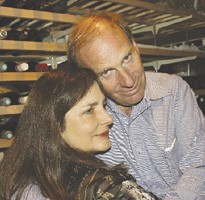
This story about failure and success begins on a 30-acre ranch. Here, on the outskirts of Sebastopol, Dan Smith–local kid turned wizard and farmer–grows all organic strawberries, raspberries, escarole, frisée, corn, peppers, leeks, cherry tomatoes, zucchini and much more. Over the last year, he’s poured tons of compost–a mix of rice hulls and duck manure–into the soil to make it more productive. He’s invented a precision seeder that makes the sowing of vegetable seeds nearly effortless. He’s built a huge barn, restored a couple of 1946 tractors–built the same year he was born–and put up a Japanese tea house near the top of the ridge.
This sunny morning in October, he’s running late, and as usual is doing more than one thing at the same time: brushing his teeth while fastening the belt that holds up his faded jeans. Summer squash has to be harvested, winter cabbage planted, weeds weeded. Smith wants to figure out how to grow frisée without brown spots, and the best way to serve the Bosc pears and the Mission figs from his farm at the French Garden, his new restaurant in Sebastopol, one that he intends to make into a destination for foodies from around the world.
Smith thrives on adversity, and over the past 30 years, he’s provided himself with an array of problems to work out in his head and with his hands. He’s failed, perhaps as often as he’s succeeded, and his failures, he says, have led to his success. A college dropout from Sonoma State University and a conscientious objector during the Vietnam War, he’s been a building contractor, a computer programmer, a financial whiz, a founder of the Sonoma County Beekeepers’ Association and the president of the Laguna de Santa Rosa Foundation.
“The creative element gets me up every morning,” he says. “Learning excites me.” He pauses a moment, gazes at the sunflowers in the field and adds, “I think of myself as a painter. I paint in vegetables, software, bee hives and buildings.”
Smith, who has lived almost all his life in Sonoma County, was born to 20th-century pioneers. His mother, Jean Farmer, worked as a potter and an artist. His father, Ralph Smith, painted movie sets in Hollywood, including the Yellow Brick Road for The Wizard of Oz. Then, during the Red Scare and the congressional committees that investigated subversives in the movie industry, his father lost his job, and moved with his wife to Petaluma, where he became a housepainter.
Dan Smith grew up poor in the 1950s. For three years, while his parents built a home, the family lived in a canvas tent with a wood stove for heat and cooking. Dan, his two brothers and his sister did almost all of the gardening, with shovels. They planted and harvested, took care of the goats and sheep, and almost all of the food they put on the table came from the garden and the farm.
“I never saw or even heard of a TV dinner,” he says. “We ate our own goat meat and drank goat’s milk. Mornings, I milked the goats before I went to school. In the fall, my brothers, my sister and I picked pears and apples. My mother gave us big cans and sent us out to pick blackberries. ‘Don’t come home until they’re filled,’ she’d say.”
When he wasn’t doing chores at home, he worked for the neighboring Petaluma chicken ranchers, many of them socialists like his parents.
Dan graduated from Petaluma High School in 1963, the time depicted in the movie American Graffiti. He attended college briefly, studied math, physics and biology, then moved to Mendocino County, where he lived on a commune, worked in a lumber mill and operated a fork lift.
“I had no plan whatsoever,” he says. “Jesus, man, it was the 1960s! I wanted to stay out of Vietnam, and I did almost anything and everything that came along. When I received my induction into the military, I appealed to the draft board in Santa Rosa. ‘I won’t take orders to kill someone else,’ I told them. They gave me conscientious objector status, and I worked at Pacific State Hospital for the mentally ill to fulfill my service.”
When he returned to Sonoma County, he started a construction company and built houses, and commercial structures at Matanzas Creek Winery on Bennett Valley Road, and La Gare French restaurant in Santa Rosa. Then, on a rainy winter morning, he fell off the roof of a building and landed in the mud.
“I couldn’t move,” he says. “I thought I was paralyzed. The woman who owned the house we were remodeling came out and stared. ‘Can I do something?’ she asked. I told her to call an ambulance and bring me a blanket.”
During the year it took him to recover, he created the Master Builder, a software program for builders that includes accounting, bookkeeping, payroll and estimates for jobs. Though he didn’t know anything about computers when he started, he learned quickly, and, like almost everything else in his life, he learned by failing and failing again, until he succeeded. In 2001, he sold the company, which had grown to over a hundred employees, to Intuit for a bushel of money, though the deal, which was set for Sept. 13, had to be postponed in the wake of 9-11.
“I’ve learned there are no straight paths in life,” Smith says. “Opportunities come along. We seize them or we don’t. The gifts we’re born with are not ours to keep for ourselves.”
In 2001, his life took another radical turn, while waiting for a flight at San Francisco Airport. By coincidence, Smith met an 84-year-old cancer survivor named Woody Strong who wore a baseball cap that said, “Be a Doer, Not a Talker.”
“I was 55,” Smith remembers. “I listened to Strong describe the schools, hospitals and water systems he helped to build in Nepal, and I could see I was a slacker. I said to myself, ‘This is who I want to be,’ and I thought, ‘It is possible to do the impossible.'” Within weeks, Smith came up with the funds to build a monastery for the Tibetan Buddhist monks living in exile in Kalimpong, India. It’s going up right now.
Closer to home, on a Yellow Brick Road he’s paving himself, Smith hopes to create a local model for sustainable agriculture that might be applicable around the country, and around the world. Along with his wife, Joan Marler, a sixth-generation Californian, and a pioneer in the field of archaeomythology, he’s determined to buck big agribusiness, cultivate crops, bring back lost varieties and transform the ways we eat.
“I know we’re not the first to try,” he says. “But we have an ideal spot. We can grow food that tastes incredibly good and that’s healthy. We’re learning every day. Sometimes, we try to grow something–like Napa cabbage–that doesn’t work. It’s as though the land says, ‘Look, stupid, you can’t grow Napa cabbage in the summer. You have to plant it early in fall and cultivate all winter.'”
Later, the same day, at the French Garden, his elegant Sebastopol restaurant, Smith wears his best shirt and pants. In the kitchen, chef Stephane Roy prepares a soup from cauliflower and apples grown on the farm. The menu features a beet salad with homegrown ingredients and there’s a gazpacho made from tomatoes, cucumbers, purple onions and chives picked just that morning.
“Nothing on the menu has pesticide,” Smith says. “Nothing has been trucked from far away or stored in a warehouse for weeks. This is as fresh as it gets, anywhere. We’re going to keep on making connections from the ground up. We’re going to bring people together, and to link all of us to the land, and to the food we eat.”
The French Garden Restaurant and Brasserie is located in the former Marty’s Top of the Hill historic structure, 8050 Bodega Ave., Sebastopol. Open for dinner Wednesday-Sunday. 707.824.2030.
Quick dining snapshots by Bohemian staffers.
Winery news and reviews.
Food-related comings and goings, openings and closings, and other essays for those who love the kitchen and what it produces.
Recipes for food that you can actually make.
Fiery Activism

Director Phillip Noyce has always been politically charged; his big break was, after all, helming Patriot Games. But although his latest contains more than a few thrilling moments, it is a message-laden film far closer to the power of his 2002 award winner, Rabbit Proof Fence. Clear allusions to U.S. foreign policy pepper the true story of Patrick Chamusson and his journey to the South African militant group the African National Congress (ANC).
It is 1980 when we catch up with Chamusson (Derek Luke). He is a successful foreman at an oil refinery. Life is good for Patrick, his wife, Precious (Bonnie Henna), and their two daughters. But all is not well in South Africa. This is the age of apartheid, and apartheid brings with it inevitable (but ultimately necessary) terrorist attacks from the oppressed blacks of the nation. When the refinery where Patrick is employed becomes the target for terrorists who somehow gained entry to the locked facility, he becomes the prime suspect.
Unfortunately, Patrick is unable to disclose his alibi without also uncovering a past marital indiscretion, and so to protect Precious, he finds himself held captive and tortured for information. When he finally breaks, his story is too little, too late for chief investigator Nic Vos (Tim Robbins), and Precious is tortured. Eventually the couple are cleared and released, but this experience has so changed the previously apolitical Patrick that he abandons his family to join the rebel ANC and fight for his people’s freedom.
Noyce manages to skillfully imbue this tale of political activism with a share of engaging entertainment, melding the style of his earlier films with the lessons of his more recent work. But the emphasis rightly remains on topic. A violent firefight between ANC terrorists and South African officials, for example, could have been shot as a thrilling and action-packed sequence akin to something from Black Hawk Down. But Noyce keeps the violence unsettling and even upsetting, not glamorizing or glorifying the painful situations that are his true subject.
The most obvious theme in Catch a Fire is the notion that fighting terrorism through unjust means ultimately creates new terrorists. In the story of Patrick Chamusson, we see how even an ordinary man who is only concerned with carving out a good life for his family can be pushed toward lawlessness. While comparisons to current U.S. policy are inevitable, the messages in Catch a Fire are muddied by an overabundance of well-intentioned humanizing.
The attempt to fully tell the tale of Chamusson, infidelity and all, adds unnecessary grays to the black-and-white issues at hand. Attempts to juxtapose the daily lives of Chamusson and Vos in a compelling fashion also accomplish little. A particular instance of cross-cutting between an ANC funeral and a commendation ceremony for Vos in recognition of killing the ANC members is a powerful trick, but ultimately it confuses the film’s true intentions.
Nonetheless, the irony that Chamusson’s first terrorist act is a plan to attack the very refinery he was falsely accused of bombing earlier in the film should not be lost on anyone. Catch a Fire also succeeds as an involving portrait of a real-life hero, with end credit interviews with Patrick Chamusson. Early in the film, a happier Precious plucks a beautiful flower from a barren hillside and asks her husband, “How can such a thing grow here?” As Catch a Fire successfully proves, ultimately it cannot.
‘Catch a Fire’ opens at theaters around the North Bay on Friday, Oct. 27.
New and upcoming film releases.
Browse all movie reviews.
News Briefs
Coping at COPIA
With its fifth anniversary approaching, COPIA in Napa is making cuts and sharpening its focus to emphasize fee-based wine and food education. The goal is to break even after losing as much as $10 million annually because of operating costs and loan payments. The center is selling its five-acre South Garden to a developer for an undisclosed amount. COPIA has also laid off about 25 of its 85 workers. The main exhibit art area will be converted into a conference center (although a spokesperson says there will still be plenty of arts programs), and the center is refinancing $68 million it owes on a $70 million tax-exempt bond. COPIA opened Nov. 18, 2001 on 12 acres provided by Robert and Margrit Mondavi, who also donated $20 million. About $45 million was raised by 2000, and the bond money covered the rest.
Med pot rules
Sonoma County’s medical marijuana users have new guidelines effective Nov. 1. “It’s pretty much the same, they just increased the plant number from 25 to 30,” explains Sgt. Chris Bertoli of the Sonoma County Sheriff’s Department. Bertoli says deputies try to enforce the spirit rather than the letter of the law. “When we go into these houses, we do all we can to determine if it’s a medical need.” Sonoma County created medical pot rules 10 years ago, but users were subsequently arrested under harsher federal standards. On Sept. 26, the Sonoma County Board of Supervisors approved new rules. Qualified patients can have up to three pounds and grow a maximum of 30 plants within 100 square feet. California law allows counties to set more liberal standards than the state limits of eight ounces or 18 plants.
Affordable Marin?
Habitat for Humanity, which uses volunteer labor and sweat equity to build affordable homes for low-income families, is eyeing Marin County. A Habitat affiliate in Marin closed its doors in the 1990s because of difficulties getting community approval for proposed projects. Habitat for Humanity San Francisco is now actively pursuing leads in Marin County. “We adopted the area in 2003,” says executive director Phillip Kilbridge. “In 2005, we established a steering committee of Marin County residents who are working diligently to find land.” They’re talking with county and city officials about potential projects on government-owned properties. In addition, the county requires new housing projects to devote 20 percent to affordable units, so developer Pan Pacific Ocean Inc. hopes to satisfy that rule by giving Habitat 0.85 acres in an unincorporated area of Tiburon. Habitat would build four affordable three-bedroom homes and Pan Pacific Ocean would construct three market-rate houses on the remaining 15.7 acres.
Deep Roots
By Bruce Robinson
The man was old, dark-skinned and blind, wearing a blue suit as he stood singing on a D.C. street corner. Four-year-old Markus James was entranced.
“It’s the first memory I have of music,” the bluesman recalls. “It was as if he was in his own world, and all this noise and bustle on the street, which was louder than him, somehow went away and I could hear his sound, even though he was singing very quietly and plaintively. It was like time stood still and I heard only him, like he was some kind of an angel.”
Fast-forward a couple of decades to another pivotal experience: “The Smithsonian Folklife Festival where I first heard West African string music and singing. That was Alhaji Bai Konte, and I was completely mesmerized by him,” James says, seeming a bit distant as he revisits the moment.
It’s a short hop from those memories to the present, where they form the foundation for a rare and wonderful cross-cultural synthesis. For the past dozen years, James has traveled frequently from his west Sonoma County home to the West African nation of Mali, where he has performed, written and recorded with some of that region’s most revered traditional musicians. Those collaborations, which explore a hypnotic linkage between acoustic delta blues and the timeless modalities of the desert instruments, have been captured in a series of four self-released CDs (with two more due out on a national label early next year) and the award-winning video documentary, Timbuktoubab.
“It’s been about creating something that’s based on blues music from my end,” James says, citing Charley Patton, Bukka White, Skip James, Howlin’ Wolf and John Lee Hooker as influences, “[and] based on traditional music from their end.” James performs such a melding on Nov. 3 at the Sebastopol Community Center.
That also involves such ancient instruments as the calabash (a hollowed gourd drummed on with small sticks), the njarka (a sort of one-stringed violin) and the eight-stringed kamele n’goni, known as the hunter’s harp of the Wassalou people. But for the Wassalou, these instruments are not for entertainment, James explains. The harp, for instance, is played “to get into a trancelike state to commune with the spirits of the animals they’re gonna go hunt. Or the njarka is used in traditional music for healing and to call the jinn, the spirits of the river, for all kinds of purposes–to get people in a trace, to heal people, to bless the crop or play for rain or whatever.”
Significantly, this unique musical merging was first validated in Mali among the players themselves, and then in public performances, including one in a public market in Timbuktu, which is featured in the film. “The people who had come into the market that day, they had honestly never seen anything like that–a toubab, as white people are called there, playing live music, and certainly not with their traditional musicians.”
The resulting hybrid defies definition.
“A lot of people have said, ‘What is this, what do you call it?’ James admits. For American performances, he presents it as “Desert Blues,” a title that begins to evoke the music’s transcultural melding. In this rare Nov. 3 return to his home turf, James will perform with Mamadou Sidibe, an acknowledged master of the kamele n’goni; Amadou Camara, who plays both the calabash and the three-stringed bass called bolon; and Karamba Dioubaté on calabash and djembe, a goblet-shaped, skin-covered hand drum. The East Bay’s didgeridoo ace, Stephen Kent, will also sit in. All this swirls around James’ spare guitar and gruff, half-whispered vocals, which alternate verses in English and Sorai, one of Mali’s dozen or more dialects.
Within the five-note pentatonic scale the ancient instruments employ, and the emphasis on cadence, which James defines as “a melodic rhythmic segment that repeats itself,” the music is ethereal and hypnotic, exotic and transcendent. Even for the musicians themselves.
“That’s a very mysterious thing,” James muses, “because it sometimes seems that there’s no rhyme or reason to which shows really transcend. Some of my African friends will say things like, ‘Well, the jinn visited us tonight.’ Or they will say, ‘I felt my heart open tonight.’ For me, that’s what you’re always looking and hoping for. I honestly think of it as getting lucky.”
Markus James appears with the Wassonrai, including Mamadou Sidibe, Amadou Camara, Karamba Dioubaté, with special guest Stephen Kent and Senegalese singer-songwriter Guelel Kumba, and Afrissippi with Kinney Kimbrough and Justin Showah on Friday, Nov. 3, at the Sebastopol Community Center. 390 Morris St. 8pm. $13-$15. 707.823.1511.
Wine Tasting Room of the Week
In 2001: A Space Odyssey, computer superbrain Hal asks a researcher, “Will I dream?” before getting his plug pulled. If researchers at Japan’s NEC Technologies have it their way, the next great artificial intelligence might inquire, “Will I drink?” They’ve created a winetasting robot that uses an infrared spectrometer to analyze the contents of a glass and report on its flavor profile (sommeliers the world over collectively shudder). Bomb squads have long used robots to go where humans fear to tread. Is the day far off now when robots are sent into tasting rooms in lieu of, say, wine writers? Not, dear readers, if I can help it. I promise that I will always venture heedlessly into any tasting room, any time–for you–even at the risk of getting bombed (in the blotto, not blammo!, sense of the word).
This nearly happened on a recent visit to Sonoma’s Buena Vista Carneros tasting room, which is likely the oldest such establishment in California. The winery’s history is recounted in a wall-sized story board that recounts its founding in 1857 by Count Agoston Haraszthy, a member of the Hungarian Royal Guard, who, among other disparate pursuits, also ran a ferryboat and founded a city in Wisconsin before launching the local wine industry. Despite the rich heritage of Buena Vista’s location, the winery sources its grapes down the road a few miles at the lauded Carneros appellation, where it owns a thousand acres of the prime real estate. Recent efforts by viticulturist Craig Weaver have borne fruit, which was summarily crushed and expertly turned into award-winning vino by winemaker Jeff Stewart.
The 2004 Syrah ($25) is rife with leather and tar, and satisfies an olfactory addiction for the deep, smoky aroma of hot asphalt about to be bulldozed. The 2002 Merlot ($25) is an inky, peppery wine with a alluring dusty quality, not unlike the cozy smell of a recently reignited furnace. Likewise, the 2003 Pinot Noir ($35) has a toffee nose that gives way to cherry and wood notes, which finishes in a flush of Mexican chocolate. In contrast, the 2004 Chardonnay ($22) is like eating a caramel apple from the inside out. It begins with the crisp hues of green apple, but finishes with a broad caramel flavor–perfect Halloween sipper.
Buena Vista Carneros, 18000 Winery Road, Sonoma. Open daily,10am to 4pm. Tasting fee, $5. 707.938.1266.
Open Mic
In spite of the Foley pedophile scandal and GOP cover-up, Republicans will retain the House and Senate this November. Why? The GOP and their corporate allies have control and the security of the voting machines we have been forced to use without our consent.
The most fundamental and primary consideration for this country and the world is voter disenfranchisement and fraud in the vote count. This crime occurred in 2000 and 2004, and nothing has changed for this election or 2008.
Ohio and Florida are being stolen again, and other states are vulnerable. On a near daily basis, the fraud and corruption of the voting machines is now being exposed for what it really is: a GOP power play to monopolize all aspects of voting.
The system now in place was created by a corporate/government program called the Help America Vote Act (HAVA), which is essentially a federally mandated program of vote counting without any independent security oversight, done by machines made and controlled by GOP supporters, including Diebold, whose CEO publicly guaranteed Ohio to Bush in 2004. A Princeton computer professor took 10 seconds to hack into a Diebold voting machine.
That was the presidency and they knew it. But none of the $3.9 billion HAVA funding may be used to purchase new punchcard machines or to update an existing punchcard system. In simple terms, there is no verifiable vote-counting process in these machines or in this GOP controlled process, nor are other systems permitted.
Burger King can count the number of french fries sold daily, and all other major industrial countries have accurate and fair voting systems, but we do not. This is intentional.
The question, then, should be asked: What is the purpose of government and who controls it? The corporations or the people? Lincoln wrote, “Government of the people, by the people and for the people . . . shall not perish.”
Well, folks, this administration is not for the people, and we are perishing. Not one single piece of legislation has been passed willingly by the GOP where the people benefit over profit. The charade of helping America vote is in fact a velvet coup d’etat, ignoring what this country was founded on: no taxation without representation. The Declaration of Independence reminds us, “Governments . . . deriving their just powers from the consent of the governed.” We have no representation if we can’t vote, and the consent of the governed has been hijacked by GOP/corporate/government manipulation under the guise of fair voting.
The freedom our forefathers fought for has been prostituted by no-bid private profiteering, our values and ideals perverted, our resources plundered, our treasury emptied and our hopes dashed by corporate greed lubricated with this administration’s planning and collaboration.
The solution? Today and tomorrow and the day after, ask every official representing you, from the local city council to your senators, for emergency legislation for this coming election that requires all voting equipment, regardless of the cost or inconvenience, to produce a paper record that lets voters verify how they voted and to de-certify the voting machines in their current configuration, as they are attempting to do in Colorado.
Do not relent. Create a groundswell. If enough towns, cities, counties and states refuse to accept this stranglehold, we will make a difference. Ultimately, this outcry will go up the political food chain, forcing a fair federal system of vote counting.
It is time to take this country back, demanding now that the charade for this November’s election cannot continue under the current stacked deck. Anything less is acceptance of what Mussolini called “the merger of state and corporate power”–also known as fascism.
Stuart Kiehl lives in Sonoma County. The Byrne Report will return next week.
Letters to the Editor
Santa Rosa City Council recs
Santa Rosa voters can improve our city council by voting for a set of leaders who are independent of development industry influence, and who have the political will to enforce policies already on the books that has been missing in recent city decisions.
Susan Gorin, Veronica Jacobi and Caroline Banuelos have been endorsed by Concerned Citizens for Santa Rosa. We are a 20-year-old community interest organization whose members work to ensure that whole community interests are represented in city planning and policy-making. Business interests are already well represented by a majority of the council, and a balance is needed in coming years when city decisions on development policy must respond to the needs of the widest spectrum of our population.
Susan Gorin, Veronica Jacobi and Caroline Banuelos represent that balance, and they deserve your votes on Election Day.
Anne E. Seeley, Co-Chair, Concerned Citizens for Santa Rosa
Yes on Guardino
Recently I ran into an acquaintance outside of North Light Bookstore from my days as a soccer/baseball mom. She inquired about my John Guardino bumper stickers. Why was I not supporting the incumbents, she wondered. Weren’t they OK? I stood in the sun for a minute to compose my thoughts.
To me, the city council is like a symphony and a few new instruments can sometimes make all the difference. If you don’t give them a try, you won’t know what a great sound you can have?
For me, John’s education in science brings a few new notes to the score and his life experience adds a subtle nuance that can broaden the entire Wednesday evening performance. As first chair violin players Pat and Lisa have performed well but I want to hear something special like a bass or a cello ? something different. I believe John has special talents and can bring an exciting new dimension to our city council. We’re a multifaceted city and we should have richly complex music on our council. That is why John is music to my ears and I will vote for John Guardino on Nov. 7.
Linell Hardy, Cotati
Online voter recs rec
I just filled out my absentee ballot, and I was greatly helped by knowing what various organizations that I respect recommend for each proposition. Sixteen major statewide groups from progressive to conservative, including the Democratic, Green, Libertarian and Republican parties, various unions, the Sierra Club and the Farm Bureaus have their recommendations neatly listed on one chart, which can be seen and printed out at the website ElectionInfo.org
As a liberal, I saw that most of the left-of-center groups recommend “yes” votes for all propositions except these four, which get “no”s: 83, 85, 88 and 90.
I highly urge concerned citizens to check out the Ballot Propositions Recommendation chart. It helps! Tell your friends, since informed voters make better choices for all of us.
Sharon Hansen, Albion
Yes on Bowen
Debra Bowen is the only candidate for Secretary of State who is expressive on the subject of fraudulent elections. The Secretary of State office has newly become very pivotal because it is the elected office which controls the state electoral process, and contracts with private voting machine companies. As in Florida in 2000 and Ohio in 2004, mass manipulations are slated to take place in California to turn this into a swing state which happens to swing uncharacteristically. As Bush will say, “How could anyone have predicted this?”
Awake ye California dreamers, and at least get out of your fog to vote Debra Bowen as Secretary of State. She’s been a state senator for years and before that a grass roots organizer from southern California.
T. S. Siegel, Santa Rosa
Stingingly smart
The proposed North Bay commuter train, SMART, sounds like a sane and pleasant alternative to the below song’s portrayal of our own modern rush hour hell on Highway 101, unless the lemmings are committed to going over the cliff en masse in one fashion or another.
“Another working day has ended, / only the rush hour Hell to face. / Packed like lemmings into shiny metal boxes, / contestants in a suicidal race….”
From the song “Synchronicity II,” The Police, lyrics by Sting.
Keith Bramstedt, San Anselmo
Iraq the Vote
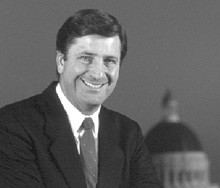
See John Run: Forget about the gubernatorial race. John Garamendi’s bid for lieutenant governor is the most important office on the ballot.
By Bohemian Staff
For those keeping track, this is the 10th election that California has held in the last six years, costing us some $2 billion to enact, mostly because the governor and legislators refuse to do their jobs. The recurring theme is that if there is an unpleasant decision to be made, the voters have to make it; if such infrastructure items as roads and schools need attention, borrow it from the grandkids.
Money issues aside, this election is important for other reasons. With the pileup of GOP scandals–each more sickening than the last–this is an opportunity to shake up our elected offices and regain a moral center in those offices currently open. With even President Bush admitting last week that the violence in Iraq resembles the Tet offensive of Vietnam, strong midterm voter turnout will remind the neocons that U.S. citizens still carry a mantle of humanity. Change must come.
You’ll find some of the usual knee-jerk reactions you’d expect below, as well as surprises. We’re quite sour on the bond issues this year, flat-out angry about them, as a matter of fact. In our Nov. 1 issue, we’ll reprise these selections as a quick clip ‘n’ go guide to take to the polls. Please vote.
Clearly, a Schwarzenegger victory on Nov. 7 is inevitable. Is it any surprise? Phil Angelides never seemed qualified or dynamic enough to make a legitimate run for the governorship, and his unsavory relationship with developer Angelo Tsakopoulos–a story broken in these pages–made him a shady choice for the Democratic party nominee. Green candidate Peter Camejo, a conscientious candidate who gave the seat his best shot during the 2003 recall election, is practically a no-show this time around. We might endorse him if we could find him.
Instead, it’s clear that most of the heavy lifting for socially conscious voters will come in some of the state’s other offices. While we can do little about a Schwarzenegger landslide, we can exhort voters to pay careful attention to the supporting offices in this race, which will line candidates up for the next gubernatorial bid.
Schwarzenegger’s attempts at a political left turn since his disgraceful special election last year have resulted in a new level of bipartisan progressive governance in Sacramento. We grudgingly applaud the Schwarzenegger of Nov. 7; we fear and distrust the Schwarzenegger of Nov. 8. We don’t believe that he will continue this unusual display of character once he is a lame duck incumbent.
Neither can we in good faith support Angelides, whose lackluster reforms, inability to mount an effective campaign, outrageous Tsakopoulos transactions (skirting law to pave over vernal pools and inflicting other environmental degradation in the name of gross wealth) concerns us greatly about his ability to subsequently lead this state. We wring our hands.
Recommendation: No endorsement
This is absolutely the most exciting race among the state offices. As insurance commissioner, and in his campaign this year, John Garamendi has been a force to reckon with, a bright spot in a mostly disappointing slate of candidates. In defending the rights of Californians against big insurance companies, he’s been fearless; he’s got the fighting spirit that has eluded most of the Democratic party’s slick Gray Davis types over the last several years.
People often complain that the California lieutenant governor doesn’t do anything; Garamendi has big plans to change that. He’d like to exert his influence in education and environmental issues, revolutionizing the importance of the office. At a time when the UC system is out of control and California is on the brink of sealing the deal as the leading state for alternative-energy solutions, both changes could be critical. Garamendi is the man to get them done.
Recommendation: John Garamendi
Republican candidate Bruce McPherson is running on the notion that he has cleaned up this office in his short time there; and indeed, he has. When he was appointed by Gov. Schwarzenegger last year, the secretary of state’s office was a mess, with Kevin Shelley having resigned in disgrace. That said, McPherson certified the Diebold voting systems pushed upon the state by the Bush administration and implemented the Help America Vote Act without comment, meaning that this election itself is in peril of being compromised by machines that provide no record. Challenger Debra Bowen is an upstanding legislator whose crusade as an open-government advocate wins her high marks. We foresee great things for her.
Recommendation: Debra Bowen
Eminently qualified, State Board of Equalization member John Chiang is perfectly poised to move up the ranks. Endorsed by outgoing controller Steve Westly, Chiang has fought for fair property-tax assessment for domestic partners, helped organize the janitors union for those workers who clean the Board of Equalization’s offices and is a former board member of Planned Parenthood. His decisions and actions are fair and balanced, progressive and far-sighted, and his devotion to the welfare of children and the indigent is to be praised. We welcome Chiang to the higher ranks of government.
Recommendation: John Chiang
This office is another important choice for voters who want state government to actually get things done. Bill Lockyer has been an effective attorney general with a bipartisan popularity. Just look at the comprehensive list of endorsements he’s won from progressive officials, law-enforcement organizations, environmental groups, women’s organizations–you name it. The reason? He’s shown courage and tenacity, whether it’s fighting for $5 billion in refunds for consumers victimized by energy companies in the artificial energy “crisis” or doubling the size of the elder-abuse prosecution program. We think he’ll bring the same relentless energy to the office of the treasury.
Recommendation: Bill Lockyer
Get off the “Moonbeam” thing, already. Here’s the difference between the two main candidates for attorney general. State senator Chuck Poochigian is the kind of right-wing candidate who sees this office as strictly severe law-and-order. His campaign for this office is like something from another age, one that we don’t want to go back to. He calls his opponent “soft on crime” and mocks him for not supporting the death penalty, yet he himself opposes the banning of ammunition for assault weapons. Jerry Brown is a thinker with progressive values who wants to innovate within the office; for instance, using its powers not only to protect Californians from violent crime, but also from environmental crime and corporate crime, legacies begun by outgoing attorney general Bill Lockyer. Brown is the only choice for an all-around safer California.
Recommendation: Jerry Brown
Why is Silicon Valley entrepreneur Steve Poizner a better choice for insurance commissioner than Cruz Bustamante? Perhaps a better question is, why in the world is Bustamante running for this office in the first place, other than to make a safe landing in another state job? He’s one of the worst choices we can think of. He landed on the side of insurance companies far too often as a legislator and has taken large sums of money from the industry. He still has not made good on his promise to return hundreds of thousands of special-interest insurance monies that he should never have taken in the first place. Graft, scandal and back-door deals are surprisingly out of favor this election year.
By refreshing contrast, Poizner has cast himself in the mold of the outgoing John Garamendi–a protector of consumers’ rights and a staunch defender of hard-won state regulations. It’s true he has yet to prove himself, but his reputation in the business world is outstanding collateral on his upright agenda.
Recommendation: Steve Poizner
The Measures
This ballot measure ties up the loose ends on 2002’s voter-approved Proposition 42, which says all of the state’s gas-tax revenues have to be used solely for transportation purposes–constructing, maintaining and operating public streets and highways, building public transit and mitigating the environmental impacts of these efforts. Unfortunately, Proposition 42 lets the legislature “borrow” this money in an “emergency,” without precisely defining those terms. Big surprise: the state has already siphoned off this money for other uses, taking part of the funds in the 2003-’04 fiscal year and all of it in 2004-’05.
Proposition 1A will fix that by putting strict limits on any borrowing and requiring repayment within three years, with interest. Generally it’s not a good idea to earmark money for only one purpose, because it limits flexibility in a true emergency. Do we really want highway funds to be sacrosanct while vital social programs are cut? However, Proposition 1A is merely tweaking the law to make our state leaders act the way the voters intended when they passed Proposition 42.
Recommendation: Yes on 1A
These initiatives all pay for extremely worthy causes by having the state sell general obligation bonds to raise money that has to be repaid, with interest, over many, many years. Over the 30-year life of the bonds, Proposition 1B is estimated to cost $38.9 billion in principal and interest for street, highway and transit projects with an annual repayment cost of $1.3 billion; 1C would spend some $6 billion total to fund low-income housing in urban areas near public transportation and would require a yearly repayment of some $204 million; 1D would tally up $20.3 billion for repairing and upgrading public school facilities statewide for K-12, community colleges and universities; and 1E calls for an approximate debt of $8 billion for disaster preparedness and flood-prevention projects at the state and local level.
What’s not to like in these ballot measures? Debt, that’s what. Hundreds of billions of dollars that will have to be repaid by our grandchildren because the governor and the legislature are unwilling to do their jobs in an election year. Bringing bond measures to the voters is the easiest way for politicians to wipe their hands clean and still make everyone happy. Except, of course, those Californians footing the bill in 2036.
It’s important to support these vital projects, but having the state go deeper into debt by selling more bonds shouldn’t become standard operating procedure. Depending on how France is doing on any given day, California is reported to be either the fourth or fifth largest economy in the world. We should be able to pay as we go instead of incurring crushing debt. At the risk of sounding (shudder) like the knee-jerk, no-more-taxes folks, enough is enough. The proposed projects are great ideas; financing them through bonds is an extremely bad idea.
Recommendation: No on 1B, 1C, 1D, 1E
This election is all about targeting bad guys: pedophiles, smokers, sexually active teens and oil companies. While we are outraged by the heightened wave of sex crimes against adults and children, Proposition 83, which attempts to get tough on sex offenders, is seriously flawed in its sweeping scope and lacks foresight in planning. Whereas current law provides for global positioning system (GPS) monitoring of roughly 1,000 sex offender parolees who are deemed at high risk to commit sex crimes again, Proposition 83 would require GPS monitoring of nearly all felony registered sex offenders throughout their lives–even if they are unlikely to re-offend and even if their crime had been nonviolent.
For example, a 19-year-old boy who has consensual sex with his 17-year-old girlfriend but is convicted of statutory rape would be subject to lifetime GPS monitoring. Proposition 83 would also require many registered sex offenders to live further away from schools and parks than is currently mandated, pushing them into rural areas. Guess where there’s a lot of rural area? Yep, the North Bay. According to the ACLU, this provision could also be used retroactively to force someone guilty of indecent exposure decades ago to move from his current community, with very few options for resettling. Who will fund, track and oversee this growing nation of the GPS braceleted, and where will they live? We side with the ACLU and the Green Party on this one, unpopular a decision as it may be.
Recommendation: No on Proposition 83
Air, water, earth. All should be provided in excellent condition to Californians by the state’s general fund, yet once again, legislators and the governor come to us shaking and scared, afraid to pass funding to ensure clean water for every citizen. Rather, they want citizens to go into debt to the tune of $10.5 billion over 30 years to possibly ensure safe water, a bond measure that doesn’t provide for dams, storage or adequate flood control. We are not in a spending mood for bond measures this election, particularly not at future generation’s expense, particularly as none of them outline a payment plan. Clean water is a given right, and we demand that our politicians do their jobs.
Recommendation: No on Proposition 84
More creeping antirights legislation, this proposition was introduced under different guise last November and roundly rejected. Proposition 85 seeks to permanently amend the state constitution to prohibit a minor from having an abortion until 48 hours after the physician has notified her parents in writing. The sole exception is if the minor can prove to a juvenile court that she’s mature enough to make the abortion decision for herself. Most adults would have difficulty navigating such a legal maze, let alone a panicked teenaged girl who might be carrying her father’s child. This amendment pushes teens to seek illegal and potentially dangerous abortions. Proposition 85 aims to destabilize a young woman’s right to self-determination. The era of the coat hanger must never return.
Recommendation: No on Proposition 85
Aimed squarely at reducing teen smoking rates, Proposition 86 requires a $2.60 per pack excise tax on cigarettes. The ensuing money will be spent on hospital and health services, children’s health coverage and to combat cigarette-related illness in those who can still afford to smoke. This is another instance of California demonizing one segment of society to fund another segment–again providing monies that should come from our general fund. It is also a harsh, regressive tax against those who can least afford it, the less educated and the underemployed who make up the majority of California’s remaining smokers. However, cigarettes are not milk, meat or fruit. They are not housing, clean water or winter heat. Regardless of how some of us may feel, they are not necessities. This is a tough fiscal pinch that promotes better health for the state at large and pays for important programs. We don’t like it but we can’t deny it.
Recommendation: Yes on Proposition 86
Proposition 87 aims to raise $4 billion by levying a “severance” tax on oil producers in California to fund research, production and use of alternative energy sources. The law forbids oil producers to pass the tax on to consumers, an abuse admittedly difficult to determine. However, according to the legislative analysis of the proposition, the very nature of economic competition will discourage oil producers from marking up the price of their product. By helping consumers afford alternative fuels and by setting up an infrastructure that will make using efficient energy more practical, Proposition 87 has the potential to make great strides toward reducing emissions and our dependence on foreign oil in the long run. California, the nation’s third largest oil-producing state, would be setting a long-term precedent for the whole country to live greener. Oil companies aren’t happy about Proposition 87, but Al Gore is, and we’re going to side with him on this one.
Recommendation: Yes on Proposition 87
There are those of us who remember the exact day that John F. Kennedy was shot or where they were on 9-11. Then there are those who have an acute memory of the day that Proposition 13, California’s disastrous property-tax revision, kicked in for California’s schools. Poof! Gone were foreign language, art instruction, choir and music. Poof! Science became an elective in high schools. Poof! School nurses and guidance counselors and library hours and teacher’s aides disappeared. Devised in part by the same evil brains that brought us Proposition 13, Proposition 88 aims to impose a $50 tax on most land parcels in California to fund schools, with exemptions to seniors–the biggest voting bloc–and the disabled. It will prove disastrous to small districts who ordinarily go to their constituents in time of need, and is opposed by the California State PTA.
Recommendation: No on Proposition 88
Proposition 89 seeks to institute cleaner political campaigning by divorcing candidates from corporate and labor interests. Through a 0.2 percent tax increase on corporations and financial institutions, Proposition 89 would create a public fund to pay for both primary and general election campaigns. Candidates could opt into the fund after demonstrating adequate public support through collecting a certain number of signatures and $5 donations from the public. The proposition also moves to decrease campaign contributions dramatically for candidates who decide to go the traditional, private funding route.
Proposition 89 would be a positive step in many respects. By scrambling up money that corporations would have spent on political candidates anyway, the strings would detach. However, Proposition 89 privileges select interest groups, and according to the NAACP, this violates both First Amendment and Fourteenth Amendment rights and will prompt a legal mess. Furthermore, this proposition is written by one set of special interests as a volley against others. For these reasons, we must recommend against this flawed proposition. It aims toward where we should be going but falls far short.
Recommendation: No on Proposition 89
Eminent domain is certainly on the minds of Sonoma County voters, who worry that the city of Santa Rosa will use it rashly to annex a proposed vast swathe of town. Eminent domain, however, built our national highway system for better or for worse and, used judiciously, gives us stronger, better local economies and places to live. Proposition 90 preys on Californian’s fears that the government aims to swoop down at any time and snatch our property away. While such fear is not groundless, this particular proposition is written in such a way as to be a field day not for developers, but for attorneys. Witness the billions of dollars of lawsuits tying up Oregon courts right now after the passage of a similarly flawed measure. What a mess!
Recommendation: No on Proposition 90
This will extend a quarter-cent sales tax for another 20 years, from 2011 to 2031, to support the efforts of the Sonoma County Agricultural Preservation and Open Space District. Since voters first approved this tax in 1990, the district has preserved more than 69,000 acres. The district is asking for early approval of an extension so it can enter into real estate negotiations (always with willing sellers) with proof that it has ongoing funding available.
There’s been some criticism that the district hasn’t provided enough public-access opportunities. Right now, the open space district can’t use any of its money to operate and maintain any recreational lands it buys. That means it has to find a partner, such as the state parks department, to open these sites to the public. Under Measure F, up to 10 percent of the funds can be used to cover the costs of ongoing public access on these properties, which will increase recreational opportunities.
Other changes include adding “agriculturally productive lands” as an official category; allowing funding for urban greenspace, trails and athletic fields; and having the county collect the sales tax as required under current state law. In general, we’re against increasing sales taxes, because it puts a larger burden on low-income folks, who can afford it the least. But the open space district is working well–not to everyone’s perfect satisfaction, but it’s working. Approving the original quarter-cent sales tax was one of the better decisions Sonoma County voters have made. Let’s keep it going.
Recommendation: Yes on Measure F
The Sonoma-Marin Area Rail Transit District, or SMART, ordinance is the premiere bone of contention among voters in Marin and Sonoma counties this election. Many Marinites, particularly members of the Marin Conservation League–whose forefathers opposed construction of the Golden Gate Bridge–are against it. Marinites have been quoted in the local media making foolish statements about the exclusive loveliness of their slice of heaven, as though the establishment of a light rail system would send hordes of unwashed Sonomans to the gilded streets of Tiburon. But it’s time to put all such pettiness aside and look at our future.
Population growth in the North Bay shows no signs of abating, but our environment is in undeniable decline. Measure R proposes a quarter-cent sales tax to fund a light rail system with an adjacent bike path from Cloverdale to Larkspur. Much of the rail and many of the stations have already been built. Will SMART solve the snarl that is Highway 101 at 3:30pm? Absolutely not. Will it solve global warming or overcrowding or reduce the majority of commuters who travel alone each day? Nope. Is it a perfect solution with a perect train attached? No way. But it is a sensible step for a more sensible future and will make a positive impact on life in the North Bay. It’s time to move forward into the 21st century. We look forward to riding SMART.
Recommendation: Yes on Measure R
Currently, roughly one-quarter of Napa County is protected as public open space, yet very little of it is actually accessible for public recreation. Amazingly, scenic Napa is one of only five counties in all of California without its own park department. Although the Napa Board of Supervisors came up with a master plan for parks in 1975, it didn’t get funding and never came to fruition. Measure I would create a parks and open space district aiming to finally make more of this land actually available for the public.
The district would be run by five elected volunteers. It would be funded in the first few years with between $350,000 and $500,000 annually from an existing hotel tax, but would likely need more money–potentially obtained through grant–to follow through its maximum potential. However, it would not be able to levy a tax without permission from voters, and it would not have the right to exercise eminent domain.
The measure’s opponents, scared of bureaucracy and the potential for an increase in taxes, threaten that Measure I would create “an extremist single issue board that only promotes parks to the exclusion of everything else.” We can imagine worse things.
Recommendation: Yes on Measure I
Morsels
American Psychos
From the Ground Up
Fiery Activism
News Briefs
Open Mic
Letters to the Editor



FOLLOW US
Copyright © Weeklys All rights reserved.
Our Publications
