Wine Tasting Room of the Week

0


The term “sommelier,” or “som” as those in the biz like to breezily abbreviate it, loosely translates from the French as “wine dude.” It hails from an Old French expression for “an officer in charge of provisions” or “a pack-animal driver.” This second definition seems especially apropos, since “sommelier” is a variation of sommier, meaning “beast of burden.”

I witnessed the burden firsthand when sommelier pal Christopher Sawyer (recently seen pairing wines and films in Esquire magazine, of all things), called late in the evening last week and invited the Contessa and me to an impromptu 42-bottle tasting at a local bistro. Apparently, an eager-beaver publicist had delivered the cache of wines (some sourced from Monte Rosso vineyards on the Sonoma side of Mount Veeder) with the hope, I suppose, that Sawyer would approve selections for his list.

The bottles covered every square inch of a cocktail table, save for the space reserved for a dump bucket mercifully wedged into the center. Sawyer had recruited a motley coalition of the willing from the bistro staff–among them a competitive “flair bartender,” a woman named Christy, a moonlighting ortho-tech and a photographer.

Good wines, bad wines–you know I’ve had my share. But my philosophy is why chase bad wine with good ink? To wit, I write about the wines that make my puss purr, and living in our bucolic wine country, that means a lot of purring. In The Sotheby’s Wine Encyclopedia, under a chapter helmed by the starchy heading “Vinification,” Tom Stevenson makes the declaration that “with modern technology, good everyday-drinking wines can be made anywhere that grapes are grown.” The scientific determinist in me is inclined to believe this notion, though I’m not as convinced when he later chides, “When not even good everyday-drinking wines are made from fine-wine vineyards, it is usually due to a combination of excessive yields and poor winemaking, and there is no excuse for either.”

Winemaker Ed Sbragia, however, doesn’t need any excuses. Consider the flavor profile of his soon-to-be-released Sbragia Family Vineyard 2004 Cabernet Monte Rosso, which uncannily recalls raisin bread French toast, patted with powdered sugar and doused in fine maple syrup. Though not a breakfast wine by strictest definition (trust me, there are some), this cab is a “come over for dinner, stay for breakfast” wine. If appropriately applied, this sexy, ambrosial elixir will raise more than merely eyebrows. Ahem. It will raise awareness of Sbragia’s fine family winery.

Now, only 41 more wines to go.

Sbragia Family Vineyards can be tasted at Cellar 360, 308-B Center St., Healdsburg. Open daily from 11am to 6pm. 707.433.2822. www.sbragia.com.


View All

Letters to the Editor

November 1-8, 2006

Where there’s smoke . . .

Ah, the irony. I read with dismay your half-assed endorsement of Proposition 86 (Oct. 25), which essentially said, “Geez, guys, it’s a harsh tax for all of you unwashed masses, but shut up and pay it.” Then I turn the page to a pullquote from (Open Mic, “Insecure Voting” ) that reads, in part, “[W]hat this country was founded on: no taxation without representation.” From where I sit, this “harsh, regressive” excise tax is taxation without representation. But I guess that fact doesn’t count, since the only ones being taxed will be, as you put it, “those who can least afford it, the less educated and the underemployed.”

Marilyn Rysiewicz, Santa Rosa

Geed Misch Lahn

Perhaps Mr. Wolf needs to stay in Manhattan and enjoy the overpriced, overglorified and over-reviewed restaurants available there ( Oct. 25). Instead of rejoicing in the local restaurants that were honored with a star by Michelin, he only notes several that were not (and in my opinion don’t deserve one). The people of West County have shown their good taste and appreciation for K&L Bistro and the Farmhouse Inn, which both offer consistently excellent fare at reasonable prices. Ask anyone in the area, and they invariably mention K&L Bistro as an absolute favorite in the area. Did Mr. Wolf even visit it? I do, often, and have done since it opened. I hope I can get a reservation soon.

Shirley Liberman, Sebastopol

Clark Wolf responds: I did not mean to disparage K&L (which I love) or the Farmhouse Inn (which I like), only that Michelin seemed to miss the big picture. Any positive attention for nice places is swell. Glad your feelings are so passionate. And, oh–any intimation that I am not local had better be coming from a member of Graton Rancheria.

Hospital hell

Regarding the travesty wrought upon little Sara Caddell at Petaluma Valley Hospital (, “Hospital Hell,” Oct. 18), I strongly recommend that Dr. Stephen Krickl be fired, stripped of his medical license and charged with child endangerment himself, not only for his failure to act appropriately and expeditiously on Sara’s behalf, but for his ass-backward judgment regarding the actions of Sara’s mother, Cathy, who is obviously an extremely well-informed and caring parent who acted completely within the realm of reason in regard to the safety of her child. For Dr. Krickl and Dr. Martha Cueto-Salas to treat Cathy Caddell as though she were somehow irresponsible is unforgivable. At the very least, Petaluma Valley Hospital should erase most, if not all, of the $12,000 bill, most of which was due to Dr. Krickl’s unconscionable action of forcing a seven-year-old girl, who displayed absolutely no ill symptoms, to endure a night in the intensive care unit, not because of her condition, but due to his own ill-informed opinions regarding Sara’s mother. I applaud Cathy and Craig Caddell for maintaining a level of restraint that I, a father of two girls, am not sure that I could have.

Regarding the related issue of “undervaccination,” I implore readers to seek out the plethora of information available that discusses the extreme dangers inherent in many vaccines and prescription medications being shoved into the bloodstreams of children in the name of pharmaceutical company greed. The recent sharp rise in autism rates alone (linked to vaccines) should have parents and doctors alike screaming “No!” to overvaccination.

Mark Fassett, Sebastopol

Tough medicine

I felt infuriated reading “Hospital Hell” this morning. I have seen this sort of corporate arrogance before, and it is really frightening. Institutions forcing Western medicine on people who do not want it and labeling them negligent if they do not follow the corporate paradigm of drugs. It seems that most people in this country have relinquished their authority to doctors. Many doctors are altruistic healers, but as in any profession, there will be the few who are dysfunctional egotistical power mongers run amok in their position of authority.

In attempt be fair to Dr. Steven Krickl, whom I do not know, he may have had other patients in the ER who were dying fast from major trauma, cardiac arrest or both. Perhaps he was stressed to the max and an uppity mom (which I am too, by the way) put him over the top. He did not have the time to assess the situation fully, so called in other resources to pass it on. Better safe than sorry.

Still, the child being admitted to ICU in no apparent distress? Symptoms of pennyroyal oil poisoning usually come on soon after ingestion in the form of stomach discomfort and or rash in the mouth. The fact that Cathy Caddell selectively vaccinated tells me she is an informed mother who cares deeply about the welfare of her children. Too bad the threats of “calling the authorities” worked so well against her. Now I know not to use poison control if I ever need it, but Google instead.

Pam Lewis, Sebastopol


Positive Rebellion

0

music & nightlife |

Ready for a Mystery Date? Sonic Temple Live takes the hype and spin out of the music biz.

By Gretchen Giles

Last year in the tiny Humboldt County hamlet of Ferndale, population 1,390, a series of concerts sold out at the town’s only venue six consecutive times. Residents filled the small 1920s-era Ferndale Repertory Theatre to hear live music produced with millions of dollars worth of equipment, including a full light show and elaborately dressed stage. They paid $25 to $40 a ticket, absolutely rabid to hear this music. And at each and every single concert, the audience had absolutely no idea who was going to play until they arrived.

Called Lost Coast Live, the series was an experiment, and it was a hit. Now redubbed Sonic Temple Live, this same experiment is poised to rock the North Bay, with three concerts planned for the month of November in San Rafael, Napa and Santa Rosa, all featuring unnamed musicians performing in the highest-end concert conditions possible.

The audience will not know until it is seated and a short documentary film introduces the artist who it is that will come onto the stage and perform for the next two hours. The idea is to take the preconcert hype and spin away and return intelligent appreciation to the work of a musical artist.

As the promoters could never begin to realize a return on their investment, the idea is also to funnel 100 percent of the ticket sales to the community. And furthermore, according to Jon Phelps, the genius behind the project, the idea is to “see artistic music find its way sanely to much larger audiences. Lots of artists don’t have any way to build; if the audience knew of them, they’d love them, but they’d never heard of them. And they’re not going to find their way onto radio. There’s great art out there that no one’s aware of.”

Performers who participated in Ferndale’s Lost Coast Live slate included slide guitar master Sonny Landreth, former Frank Zappa “stunt” guitarist Mike Keneally and singer-songwriter Mindy Smith, who Phelps says might ordinarily spend her nights “fighting with blenders at the bar and espresso machines” in order to make herself heard to an audience. Framed by the velvet curtains that are part of the series’ traveling show, Smith was instead resonant in a full-blown sound system and bathed in lighting designed by professional engineers flown in from New York and Los Angeles just for her.

Sonic Temple Live tour director Azurae Willis brings the concept back to community. “In Ferndale,” she emphasizes, “we really saw people take a risk with us. Every time they went, they were taking a risk. The interesting thing was to watch this eclectic group of people–different in age range and income and interest; the thing they had in common is that they live there–responding to something. And we want to create a platform where these artists have a chance to excel. The artist gets a brand new audience and the audience gets a brand new experience.”

Two unnamed artists will perform this first round of North Bay concerts. In Ferndale, the local radio station KHUM 104.3-FM cooperated with the program, dropping musical hints as to the performer’s identities and interviewing them anonymously on the day of the show.

“I’d never heard of any of them,” admits Ferdale Repertory Theatre directorMarilyn McCormick, speaking of the musicians who took her stage. “I’m so absorbed in what I’m doing at the theater here. The radio doesn’t even work in my car. I don’t know these artists, but I was blown away.

“Because not knowing who was going to be playing turned people off at the beginning, we really praised the brave hearts who came down,” she says. “Once word got out that the people who did perform were no hicks, that these were exceptional entertainers, we were packed.”

Jon Phelps founded Full Sail College in Orlando, Fla., in 1979. A fully accredited media production school and college, Full Sail is one-of-a-kind in the world, allowing students the opportunity to receive a college degree in such subjects as producing a traveling rock show.

“I didn’t like education,” Phelps says by phone from his Seattle office, explaining the impetus to start Full Sail. “I wasn’t good at it, and when I wanted to get into sound and production and music and film, I felt like most things I experienced were very detached from reality, very theory-based. If you wanted to study media education, for example, you’d get a communications degree. Full Sail was like a positive rebellion.

“That’s kind of the same passion and mentality looking at great sonic art and thinking what nobody else is thinking: how would you do this so that musicians have sane careers that are composed of a life and a career at the same time? If you look at the world of classical music, they do that. They build halls and sponsor it and endow it. But if you look at singer-songwriters or jazz musicians, they’re just kind of troubadours hanging out there.”

Phelps and his team pick the musicians themselves. Explaining his deep roots in the music business, he says, “We have a lot of inroads to that. Most of the artists have established their own world, but their world could and should be 10 times its size.”

Full Sail has allowed Phelps, who is based in Seattle but with his wife keeps a home in Ferndale, the opportunity to do exactly as he wishes with his life and his money.

A co-owner of Paste magazine as well as the entertainment company DC3, what Phelps wishes to do at the moment is to launch a coffee company. Which curiously enough ties back into the Sonic Temple Live series. Looking at the way that Red Bull has aligned itself with aviation and Formula One racing and Coca-Cola has aligned itself with everything else, Phelps aims to launch a subscription-based line of Storyville Coffee products in conjunction with Sonic Temple Live’s mystery concert series.

“Instead of being the typical type of start-up that needs to make a profit right away, we’re looking at it as an investment,” Phelps explains. “There is no deep secret to it other than we believe in what we’re doing and we’re willing to look to the long term.” Storyville Coffee, which Phelps assures will be so fresh as to have only a 12-day shelf life, will be served at each event in a miniature porcelain coffee mug that concertgoers can take home.

“It’s a beautifully done vision of a company,” he says with evident satisfaction. The Storyville brand and the Sonic Temple Live brand will grow at the same time, allowing the coffee company to offer a positive interface with the community and support the singer-songwriters that Phelps likens to small businesses unto themselves.

“The idea for us, when we looked at all the economics of it, is that since it’s not going to live or die based on ticket sales, what a great idea to have a new brand that’s being built and give to every town that it visits,” he says. “I watched that Wal-Mart movie and it was all about taking from towns. How about giving to every town and leaving it better than it was when we got there?”

Tour director Willis explains that the organization contacted 10 communities in the Bay Area to see who might support the idea of the anonymous concerts. Three cities in the North Bay as well as Santa Clara in the South Bay responded. Ticket receipts in Ferndale totaled some $30,000, all of which was given away, most significantly to school music programs. “We’re like, why not stir it up a little?” Willis says. “Why not give something back to your community? Buy a ticket and give it back. It’s something in your community that has an impact. Hopefully, there’s a ripple effect in a lot of different areas.”

Reflecting on the series, Phelps says, “I love music, I love art, I have found myself wildly frustrated at how dark and dysfunctional the music business can be. I love the idea of the positive rebellion approach, where rather than bitching about it, we actually do something about it. I get a big thrill out of where this could go.”

He chuckles. “I’m one of those people who wakes up every day with ideas and you’ve just got to go carry some of them out.”

Sonic Temple Live plans three North Bay concerts with unannounced musicians. All gigs are $25 and begin at 7:30pm. Thursday, Nov. 9, at the Marin Center’s Showcase Theater, 10 Avenue of the Flags, San Rafael. 415.499.6800. Friday, Nov. 17, at the Napa District Auditorium, Napa Valley Unified School District, 2425 Jefferson St., Napa. 707.253.3711. Saturday, Nov. 18, at the Glaser Center, 547 Mendocino Ave., Santa Rosa. 707.568.5381. Ticket info: 1.888.323.3349. www.sonictemplelive.com.


FIND A MUSIC REVIEW

Watery Report Card

0

Big rig: Richard Pombo, R-Tracy, wants to see the coast opened for oil drilling.

Two little-known bills headed for congressional vote intend to drastically extend the size of North Bay marine sanctuaries to protect the coastline from any oil or gas drilling. If they prevail, nearly 1,100 square nautical miles of new marine sanctuary would be established from the southern end of Marin County all the way north to the Gualala River.

Local representative Lynn Woolsey and Sen. Barbara Boxer introduced parallel measures, HR 1712 and S 880, respectively, into the House and Senate in April of 2005. The bills are currently in committee. If their boundary expansions pass, 233 miles of protected area would be added to the Cordell Bank National Marine Sanctuary and 866 miles to the Farallones Marine Sanctuary, nearly doubling it to include all of Sonoma County.

The boundary expansion is a response to Republican lawmakers who want to start oil drilling on the West Coast. While Marin County’s coast is protected, most of Sonoma County is wide open, should laws change and drilling suddenly be allowed.

“The Republican plan for offshore drilling consists of unchecked and endless drilling for more and more oil by stripping states such as California of virtually any oversight,” Woolsey says. “The result will be less beautiful coastlines and an unsustainable energy policy.”

The sanctuary expansion is one of several recent attempts to protect the local marine environment from threats, legislative or otherwise. The Gulf of the Farallones, Cordell Bank and the Monterey Bay National Marine Sanctuary in October released a joint management plan detailing 11 categories of potential threats to the coastal environment, ranging from vessel spills to invasive species to resource protection. A series of public-information workshops was held at points all along the coast last month. Beginning in late November, public hearings commence, including Nov. 29 in Bodega Bay and Nov. 30 in Pt. Reyes Station. From there, they will establish plans of action for each one.

With all this talk of danger, it’s easy to wonder: Just how safe is our coastline, anyway? What are these threats, exactly, and should we be concerned?

Oil with Water

In a time when the phrase “dependence on foreign oil” is a common warning on TV, some people are chomping at the bit to dig into our domestic oil supply. Rep. Richard Pombo, R-Tracy, who is in a tight race for re-election against opponent Democrat Jerry McNerney, recently proposed a national bill, HR 4761, that would make oil drilling on the North Coast a possibility.

The bill would remove the bipartisan congressional moratorium on oil drilling, where every year for the last 24 years, Congress has banned drilling on the California coast and in other states. In its place, the bill would shift the power so each state would make the decision about oil drilling individually, meaning that governors and state legislatures would have to continually agree to maintain protection of the water. To sweeten the honey pot, the bill also gives 50 percent of all oil profits to the states.

“If the Pombo bill prevails, it means that not only Sonoma and Mendocino counties, but the whole West Coast, could be exposed to oil drilling,” says Richard Charter, co-chairman of the environmental group National Outer Continental Shelf Coalition.

For his part, Pombo maintains that his bill would increase jobs and take energy decisions out of the hands of the U.S. Congress and put it into the hands of each individual state.

“Environmental protection and American energy production are not mutually exclusive,” he says in a statement. “This bill delivers to Sacramento the power to protect, so California will not have to rely on the whims of Washington, extending unprecedented power to protect its coasts.” (It is perhaps instructive to note that Florida’s St. Petersburg Times recently called Pombo “the oil industry’s errand boy.”)

The bill, which is opposed by Gov. Schwarzenegger, is one of two trying to make oil drilling in U.S. waters more of a likelihood. The other focuses on the Florida coast and parts of the Gulf of Mexico, but doesn’t affect California. At this point, it’s unlikely that Congress will work out the differences between the two bills before next week’s elections, meaning they will most likely resolve them in the lame-duck session, the session that happens after the elections have been held but before the newly elected Congress convenes.

This makes environmentalists nervous.

“The danger of the lame-duck session is that if the House of Representatives flips and is controlled by the Democrats, lingering committee chairs like Pombo will be an endangered species in charge of a session,” says Charter. “Sometimes dangerous, malicious things can happen in a lame-duck session, because nobody has anything to lose.”

Economically speaking, California stands to lose a lot by allowing oil drilling on the coast, including tourism and fishing. In addition, there simply may not be that much oil out there. While some oil traces have been found around the Pt. Reyes National Seashore, one estimate says there is probably only 25 to 30 days of a national oil supply on the entire North Coast, according to Charter.

On the other hand, lawmakers are also looking at alternative energy sources. Some of those, like wave and tide generation, look to the sea for answers to our energy problem. But those resources can also have a negative impact on our coastline, according to Dan Howard, superintendent of Cordell Bank.

“More proposals are looking toward the ocean to provide alternative energy sources,” he says. “But what you don’t hear is that they also have user conflicts that occur with the marine environment.”

Just a Little Spill

Most people remember the oil spills of the late ’60s and ’70s, such as the Santa Barbara disaster of 1969, when a loss of well control led to a massive spill. Mats of tar stretched a hundred miles down the coastline, killing everything in their path.

Today, new technology and tougher regulations mean spills like that are unlikely to happen in the North Bay. The biggest oil-related threat we face is from boats that sunk 40 to 50 years ago. For example, the S.S. Jacob Luckenbach collided with another ship in 1953 and sunk in the San Francisco Bay. The boat was carrying 457,000 gallons of bunker fuel. As it has sat under the water, the fuel has leaked intermittently, leading to mysterious-seeming oil spills from San Mateo up through the Pt. Reyes National Seashore. Between 1990 and 2003, the Luckenbach was responsible for the death of almost 52,000 birds and at least eight sea otters. In 2002, officials finally discovered that the boat was the source of the pollution.

“The California Department of Fish and Game had a major, major project with that,” says Howard. “But taking the oil off that vessel has gone a long way. We’re not seeing nearly the same issues we were seeing before. There have been a few small spills, but no large catastrophes.”

Of course, oil spills aren’t the only things that pollute the ocean. One new concern is the amount of plastic in the water. According to the United Nations environmental program, there are 46,000 pieces of plastic floating on the surface of every square mile of the sea.

Jennifer Stock, a scientist at Cordell Bank, recently did a study looking into this problem. She tracked black-footed albatrosses, which migrate from their nests in Hawaii to the Bay Area, where they forage for food. They then return to Hawaii and regurgitate the food to their chicks. When Stock examined refuse from the chicks, she didn’t find the concentrated fish oil she was expecting. Instead, she found an astounding amount of plastic–parts of cigarette lighters, caps from drinking bottles, tampon applicators, you name it.

“Instead of high-protein, they are regurgitating Bic lighters to their young,” says Howard. “Some of the chicks even died in the nest because of it.”

In the middle of the Pacific Ocean is the North Pacific Gyre, a churning vortex of ocean currents where trash meets and spins like a toilet that never flushes. The plastic, then, is from all over. Some of it is in the form of small pellets from recycling plants, which somehow made their way into the water. Other pieces migrated here from Asia. Lots of plastic comes from ships or storm drains, and still more from people throwing things into the ocean.

“If you go to any store and look at the packaging, it’s covered with plastic,” says Howard. “This is not something that is going to go away any time soon. It’s the great Pacific garbage patch out there.”

While plastic is a problem all over the coast, the North Bay is blessedly free of other issues. For example, we don’t have problems with human waste in our water, because little direct storm water drains onto our beaches. As a result, our beaches are clean and there are few closures.

Well, except for one: Campbell Cove State Beach in Bodega Bay. Campbell Cove is among the dirtiest beaches in California and is closed several times a year. Testing reveals that the beach often has high levels of the bacteria found in fecal matter.

However, the bacteria aren’t from humans, but animals.

Experts aren’t sure exactly how copious amounts of animal and bird feces are ending up on Campbell Cove. It may simply be a quirk of nature that the beach doesn’t flush itself well. Then again, it could be coming from agriculture and grazing land.

“It’s not clear if the bacteria represents a risk to humans,” says Gary Cherr, professor of Environmental Toxicology at UC Davis’ Bodega Marine Lab. “There hasn’t been any sort of concern about the animal strains of e-coli and the risk of bathing in the water. You wouldn’t want to drink the water, but in the case of simply bathing in it, you would probably be OK.”

Oil Help You: Richard Pombo has been called the No. 1 enemy of our oceans.

While humans can do something about reducing plastic and oil in the water, other issues seem bafflingly out of our control. One of these is the sudden drop of zooplankton–small, often microscopic animals that float in the water. They are an important first level of the food chain, with many smaller fish feeding on them. When a low level of the food chain drops off, it affects all the marine life that depends on it.

The reason for the drop in plankton is because of the unusual weather patterns we have had the last two years or so. Our ocean system is fertilized by upwellings–cold, nutrient-rich water that is pushed to the top of the ocean. When the upwelling is hit by the sun, microscopic algae plants bloom, feeding the marine creatures. The North Bay is located near one of four such upwellings in the world.

For the last few years, the upwellings have been late. This, in turn, has affected the whole ecosystem. Certain fish, like herring, are so thin they are swimming through fishermen’s nets. Bird reproduction is down. And while predators that feed on fish, like humpback whales and pelicans, are in abundance, the ones that feed on the plankton, like blue whales and Cassin’s auklets, are not.

“When that upwelling comes late, it throws off the whole process, and the marine wildlife is not as productive,” says Maria Brown, superintendent for the Gulf of the Farallones. “But why did it come late this year? That’s the million-dollar question. You can make a lot of hypotheses about it, but no one really knows.”

The late arrival of the upwelling may simply be a peculiarity that nature will compensate for later on. On the other hand, some scientists worry it’s a sign of global warming. After all, they are finding that ocean temperature is rising on average, which some believe is related to climate change. Could the lateness of the upwellings also be a sign of that same issue?

“It’s not conclusive yet why there is this sudden change,” says Cherr. “It’s hard to know if this has happened in the past or not. But it is not gradual. It has happened very quickly.”

In the case of local seabirds, the lack of plankton is not the only thing interfering with their breeding habits. Many birds nest on rocks, which are sometimes flushed out when boats approach too closely and splash the rocks, knocking off the eggs and frightening the birds away.

The Gulf of the Farallones is developing a strategy to help increase breeding among the birds.

“If the situation with the boats happens enough, it could wipe out entire rookeries,” says Brown. “As it is, it happens frequently enough to be a concern. So we are taking steps with that.”

Invading Species

Like the non-native mistletoe that suffocates our oak trees, or the starlings that swoop in clouds over our fields, non-native species, once here, want to stay. In the ocean, the same principle applies. Sometimes they come over on boats or are introduced because of the aquarium trade. Animals that looked lovely in a fish tank can be a real problem once in the actual ocean. However they come, invasive species can end up competing with local wildlife for habitat, and sometimes end up taking over completely.

“They are really difficult to get rid of,” says Cherr. “Once they are out in the bay, there’s nothing you can do because you can’t go and poison everything, obviously. They can be a real problem.”

In the 1980s, the Asian clam was brought into the San Francisco delta system where it established itself so well it carpeted the bottom of the bay. In the process, it pushed out native species and changed the water’s ecosystem.

Another case is the mitten crab, which is a popular food in Asian and was probably brought over so it could be fished here. The crabs have burrowed into the sides of the Sacramento River and are thought to be destabilizing the banks and damaging the levees.

Though the North Bay has had less of a problem with invasive marine creatures, the European green crab recently appeared in the Bodega Harbor, something that is worrying local scientists. The crab, with its brown back and algae-colored tints, seems to be competing with the Dungeness crab for habitat. So far, however, it looks like it will not cause a serious environmental problem.

“But even though by itself the crab is not necessarily destructive, it does compete with native species and can cause a decline,” says Cherr.

Despite the threats, general scientific consensus is that our coastline seems to be in good shape overall. With the area’s agricultural history, there has been less damage on our marine environment than industrial and urban locations like San Francisco or Los Angeles. And the environmental practices of the last few decades have repaired much of the damage caused by outdated fishing practices. Some marine mammal populations are even approaching their historical levels, including gray whales, humpback whales and rock fish.

Most of all, people seem more aware that their actions impact the ocean. It’s more common for them to realize that if you throw something in the water, it doesn’t just disappear, according to Howard.

“I would say our oceans are relatively healthy,” he says. “It’s a slow process, but it’s heading in the right direction. I think people are starting to understand that the ocean is not this unlimited resource that we can never impact. And we’re incredibly lucky to have that resource right out our back door.”



News Briefs

November 1-7, 2006

Phil Lesh ill

Grateful Dead bassist Phil Lesh, 66, is scheduled for prostate cancer surgery in early December. “Since we’ve caught it very early, and it’s small and slow-growing, I fully expect to have a rapid and complete recovery,” Lesh says in an Oct. 26 announcement on his website (www.phillesh.net). A longtime Marin County resident, Lesh underwent a liver transplant in 1998. Routine tests revealed the cancer. “I urge everyone to become an organ donor to help save lives,” Lesh says. “Now I am also urging all men: speak to your doctor about having periodic regular PSA screening for early detection of prostate cancer–you may save your own life.”

$7,500 letter to editor

In June, Napa resident and constant city council critic Jarvis Peay gave the city a doctor’s letter outlining the particulars of his disability in order to receive special accommodation at meetings. Copies were apparently given to city council members, including Napa Sentinel publisher Harry Martin, who is running for his fourth term on the council. Among his activities, Peay is a constant letter writer to the Sentinel, and in a recent one he accused Martin of racism. Martin’s wife responded with her own letter to the editor, concluding that Peay couldn’t help himself due to his specific disabilities. Peay filed a claim against the city for revealing his confidential diagnosis, settling for $7,500 and an apology. “It was one of those situations where we felt we needed to move as quickly as possible in order to limit the city’s liability,” says mayor Jill Techel. Martin, who lost last year’s mayor’s race to Techel, claims he got a copy of the letter but never showed it to his wife, who says she learned of Peay’s problems from other people. Martin alleges Techel authorized distribution of the doctor’s letter, which Techel denies.

Cracking down in S.R.

Santa Rosa police officers begin watching this week for dangerous drivers on Stony Point Road between Sebastopol to Occidental roads, the site of at least 25 collisions from January 2004 to December 2005. This is the first safety crack-down funded by $347,000 in state and federal grants, says Sgt. Don Hasemeyer of Santa Rosa’s traffic bureau. The two-year grant will pay for salaries and equipment to increase enforcement, including eight DUI checkpoints and 12 DUI saturation patrols. Among other items, a new “Hot Sheet” program will help identify chronic DUI offenders. “Anything that we as a department can do to try to reduce traffic violations, accidents and DUI offenders is a benefit to the community,” says Hasemeyer. “That’s our ultimate goal.”


Ghee Whiz

0

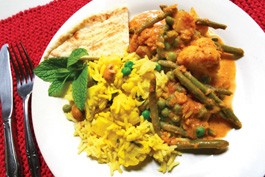
Photograph by Felipe Buitrago
Bar Naan: When it comes to hot Indian bread, follow this secret culinary technique: buy it.

By Audrey Gardiner

As a culinary-school student, a willful prep cook and, now, a line cook at a busy restaurant, I spend most nights in a hot kitchen next to a bunch of sweaty men showing off my mastery of Western culinary technique. On a nightly basis, I steam mussels, sauté greens and coax risotto into creamy perfection. All that cooking at work means I rarely cook at home, but I still enjoy it when I have the time. I can cook just about anything I set my mind to. Anything, it seems, but Indian food.

In spite of my professional training, mastering the complex sauces and techniques has always eluded me. And so, in a recent fit of culinary pride, I determined to wrestle Indian food into submission.

My first stop was an Indian grocery store. Not finding what I needed in the North Bay, I drove to Dana Bazar in Fremont. But standing there in the store amid fresh produce, an array of spices, a wide variety of lentils and rice, an extensive frozen food section and a helpful staff, I was lost. I had originally thought that I could shop the way I shop at other grocery stores: Go in, see what looks good and work from there. This is not the case with Indian markets.

I learned my first lesson: Be prepared. It’s tough to wing it, so I returned armed with recipes and found just about everything I needed, except something called jeera. What the hell is jeera?

I dug through piles of spice bags, jars and boxes at multiple stores but came up empty handed and stuffy headed. I Googled the word at home and learned that jeera is cumin–something I keep in my cupboard at home. Lesson No. 2: Look foreign words up first.

During my foray into Indian cooking, I made the serendipitous acquaintance of an Indian woman who loves to cook and talk about cooking. Determined to pick her brain, I told her of my Indian cooking quest and my misadventures with naan, the soft bread that’s a staple of Indian food. Naan, she told me, is difficult to make at home, but using the right amount of yeast and yogurt is key. Or so she said. My efforts failed. Clearly, I was not ready to master the great secrets of naan.

We chatted about food, and she described how she makes perfect Indian rice. I’d like to pass the technique on to you, but she lost me in the first two minutes. The only thing I got was that onions should be cooked with the patience many Americans lack, and to use lots of butter. In fact, the most valuable and surprising thing I learned from this confident woman is everything needs butter or the clarified butter known as ghee, and lots of it. I guess I shouldn’t be surprised, as butter is the “secret” ingredient that makes nearly all restaurant food delicious.

Slowly, I was beginning to see that, like so many things, good Indian cooking is the result of trial and error, and I would have to wander the path on my own.

There are two ways to go about making Indian food at home: starting from scratch or taking a short cut and using prepackaged mixes to which meat, rice and/or vegetables are added. I wanted to try both, so I set out to make a meal that included some of my favorites: biryani rice, mili juli sabzi (a vegetable dish), chicken tikka masala, naan and tandoori lamb. I tried biryani rice two ways: one with a spice packet and one without. Both ways are easy and delicious, provided you actually know how to make rice.

You’d think a professional cook like me could make rice with my eyes closed. Making it in the microwave should have posed no problem. But it did. I’m a bit of a purist and always cook rice on the stove, but hoping to save a little time, I grabbed a microwavable container and followed the directions on the basmati rice package. When the timer beeped, I peeked to see how my easy, no-fuss rice had turned out.

The lid of my so-called microwave container had melted like lava over the burnt grains. The charred rice had fused the bottom of the container to the rotating glass plate. An acrid smell accompanied the sight of the formerly white interior of the microwave. I closed the door and made rice on the stove. Once I’d finally made a batch of edible rice, I added frozen peas, French green beans, potatoes and cauliflower, and then finished it with cashews. Turmeric, garam masala, bay leaves and a little ghee helped produce fluffy, mild, yellow rice.

Some of my efforts yielded food that wasn’t quite right. The flavor was off or the sauce had an unusual texture. The chicken tikka masala proved to be one of these difficulties. The marinade turned the chicken into pale, brownish gray chunks, which were difficult to avoid overcooking in the simmering liquid. The mili juli sabzi took me a couple tries to get right. The vegetables, I learned, have to be blanched and then simmered in the sauce. I like my vegetables somewhere in between California crunchy and Midwest mush, so the challenge lay in cooking them so that they weren’t too mushy or too al dente. Eventual success came from blanching raw vegetables to just underdone and defrosting frozen vegetables with a one-minute dunk in the water. This allowed them to soak up flavor in the sauce later without turning them into a squishy, unidentifiable mess.

I don’t have an oven that reaches the blast furnace temperatures needed to make naan and tandoori meats, but I was determined to give it a try. The recipe for lamb that I finally came up with works best for chops on the grill. It’s crusty, spicy and downright delicious. My adventures with unattainable homemade naan drove me to near insanity. I thought it would be like making bread, a time-consuming but ultimately easy process. At home in my regular old gas oven I produced cooked rounds of dough that looked like badly made pita. But the restaurant I work in has a brick oven that hovers around 600 degrees, so hot that holding your arm in it for 10 seconds yields a burn that looks like a sunburn and feels like a bruise.

Under the watchful eye of my chef, I attempted to make naan in his brick oven. If you have ever tried to make tortillas at home, you can imagine the thick, flour-flavored disks produced by this failed experiment. This experience led me to a third and final lesson: you can buy naan. It’s available fresh at the farmers market, frozen at the store or piping hot from your local restaurant. Skip the microwave, throw it in the oven and let the smell fill your home–as though you had made it yourself. That’s what I will be doing.

Tandoori Lamb Chops
Adapted from ‘The Best American Recipes 2005-2006’ by Mario Batali, Fran McCullough and Molly Stevens

2 pounds lamb rib chops, 1-1 1/2 inches thick
8 medium garlic cloves, minced into a paste
1/3 inch piece of ginger, minced into a paste
1 tbsp. paprika
1 tbsp. garam masala
1 tbsp. toasted cumin seeds, coarsely ground
1 tsp. salt
1/2 tsp. cayenne
1/4 tsp. mace
1/4 tsp. nutmeg
3/4 c. plain yogurt, drained in a cheesecloth or coffee filter (save time by substituting 1/2 cup Greek yogurt)
1/4 c. malt vinegar
2 tbsp. canola oil
3 tbsp. melted butter
juice of 1 lemon

Method
Cut three to four slashes in each of the chops. Mix all the remaining ingredients except oil and butter in a bowl large enough to hold the chops. Add the chops and toss to coat with marinade. Put the chops in a large resealable bag and refrigerate overnight.

Light the grill. Add the oil to the bag with the chops and reseal. Massage the bag between your hands to oil the chops. To grill the chops, remove from marinade and grill five minutes on each side. Let rest five minutes off the grill. Brush with butter and grill five minutes more on each side for medium rare.

Passage to India
A few places to pick up the good stuff

Apna Bazaar, 7500 Commerce Blvd., Cotati. 707.665.0333.
Asia Market, 1774 Piner Road, Santa Rosa. 707.542.3513.
Asian Market, 5 Mary St., between Third and Fourth streets, San Rafael. 415.459.7133.
Dana Bazar, 5113 Mowry Ave., Fremont. 510.742.0555.
Hatam Restaurant & Grocery, 821 B St., San Rafael. 415.454.8888.
New Asian Market, 1390 N. McDowell Blvd., Petaluma. 707.794.9532.


SEARCH AVAILABLE RESERVATIONS & BOOK A TABLE

View All


Quick dining snapshots by Bohemian staffers.


Winery news and reviews.


Food-related comings and goings, openings and closings, and other essays for those who love the kitchen and what it produces.


Recipes for food that you can actually make.

New Weird America

0

November 1-7, 2006

Imagine what popular music would sound like if Harry Smith hadn’t turned the world on to the old weird America. Smith, an irascible record collector and musicologist with encyclopedic powers, compiled the multi-album Anthology of American Folk Music, released in 1952, and provided a road map for a generation of folk revivalists and their progeny. Without Smith’s offbeat collection of eccentric hill-country ballads, field hollers, spirituals and blues, Bob Dylan might have stayed in Hibbing, Minn., selling used cars; the Carter Family could have slipped into obscurity; John Fahey may have failed to spark the solo-acoustic-guitar revolution; and the editors of No Depression magazine probably would be waiting tables.

There would be no alt-country movement. No Gillian Welch. No Uncle Tupelo. No Moby delving into folktronica.

The anthology remains an essential set for any serious Americana aficionado, and required listening if you have even a passing interest in freewheeling hillbilly music. “The Anthology was our bible,” folk guitar great Dave Van Ronk once said. “We knew every word of every song on it.”

The newly released four-disc box set The Harry Smith Project: Anthology of American Folk Music Revisited, produced by Rani Singh and Hal Willner, pays homage to that legacy in a neatly packaged audio and video celebration of the folk arts, replete with a 40-page annotated booklet.

The two audio discs feature 33 tracks recorded at a series of tribute concerts held between 1999 and 2001 in New York, Los Angeles and London. Among the rock, blues, alt-country and jazz performers are Elvis Costello, Wilco, Richard Thompson, Beck, Steve Earle, Beth Orton, Nick Cave, Marianne Faithfull, Geoff Muldaur and Lou Reed, to name a few.

There are once-in-a-lifetime pairings: Sonic Youth teams up with avant-jazz trombonist Roswell Rudd; Todd Rundgren joins Seattle art-house singer Robin Holcomb; and Van Dyke Parks meets the Mondrian String Quartet.

The supporting bands included guitarist Bill Frisell, keyboardist Garth Hudson of the Band and drummer DJ Bonebrake of X, among others.

The mostly acoustic-oriented material is pure Americana, though oen delivered by rootsy Brits, Canadians and Australians, a testament to the far-reaching influence of Smith’s original Anthology.

The result is a richly satisfying musical experience, celebrating not only the great American songbook, but the eccentricity that permeates this nation’s psyche—just check out Dave Thomas of Pere Ubu’s wildman delivery of “Way Down the Old Plank Road.”

The concert footage can be seen on a companion DVD; a second DVD features the film documentary The Old Weird America and includes three of Smith’s own films and interactive music selection by Philip Glass, DJ Spooky and Mocean Worker.

Despite this tribute, Smith remains an unheralded bohemian genius. He moved to the Bay Area in 1948, smoked pot and developed an insatiable appetite for vintage vinyl. He eventually sold many of his best records to the New York Public Library and Folkways label chief Moe Asch, whose own voluminous archive is curated by the Smithsonian Institution.

While Smith is little known outside of hardcore collectors, academics and a small circle of musicians, this new box set is hardly the first time he’s been feted. If you have a chance to pick one up, revisit The Harry Smith Connection: A Live Tribute to the Anthology of American Folk Music (Smithsonian/Folkways). That excellent 1997 single CD, recorded live at the barns at the Wolf Trap, includes unique collaborations with Roger McGuinn, Jeff Tweedy and Jay Bennett.

And don’t ignore the original source material.

As Rolling Stone magazine noted at the time of the 1997 reissues, “It’s impossible to overstate the historic worth, sociocultural impact and undiminished vitality of the music in [Harry Smith’s Anthology].”


First Bite

0

October 25-31, 2006

I came to Pazzo to experience Moroccan cuisine as it’s presented in the heart of historic downtown Petaluma. And why not? The new restaurant also features food from Spain, Southern France, Italy and Greece, but to my stomach, Morocco seemed to have the most interesting address.

Mmm. A bit of Pazzo’s chicken Marrakech ($18), perhaps, the young bird goosed with Moroccan spices, garlic, onions, tomatoes, eggplant and almonds. My sister Elisabeth, visiting from Japan and burned out on sushi and such, was all over it when I suggested the full-flavored African stuff for dinner.

My mom would always be in the mood, you betcha, for Pazzo’s couscous primavera ($14), envisioning aromatic grains tossed with sautÈed seasonal vegetables, tomatoes, fresh herbs and a drizzle of rich, nutty argan oil.Blame it on a seductively written menu. We never got past Italy that night. Pazzo owners Bill and Beverly Woodbridge are as skilled with their pens as they are with their cooking, and their name for a veal dish layered with prosciutto, mozzarella and sage sautéed in a Marsala demi-glace was simply too sexy to pass up: “Veal That’ll Jump into Your Mouth” ($18).

After my first bite, I wasn’t sorry I had defected, either. The dish was exquisite, altogether mellow, salty, creamy, smoky-wine-kissed and briskly pungent with fresh herb. A mound of basil-flecked mashed potatoes demonstrated what all ambitious spuds dream of becoming.

Elisabeth had been stopped in her tracks by the linguini prawns ($18), smitten by the ravishing-sounding sauce of sun-dried tomatoes, shiitake mushrooms, arugula, roasted garlic and olive oil topped with crumbled feta. It was beautiful, in fact, with four meaty shrimp and so much tangy cheese that we spread the extra feta on our bread, dipping it in excellent (not sugar-sodden!) balsamic.

As for mom, well, she had abandoned our African adventure just as soon as our waiter described an evening special of a “huge, juicy filet mignon, crusted in black peppercorn, over creamy risotto with mixed vegetables.” Food like this, he swore, was one of the reasons he works at Pazzo–that steak ($28), his favorite lobster bisque ($7). It was “all so good, I’m not lying,” he promised with such charming sincerity that I had to boost his tip when the bill came.

Bless the sampler platter ($14). The dish, whose composition can change depending on the mood of the kitchen, was on this night anchored by intensely herby grilled lamb slices, and redeemed our mission by allowing us to claim at least a taste of Morocco in our meal. Sharing the big plate were lovely fluffy spinach-stuffed spanokopita, more feta, lemony dolmades, hummus that was pleasantly chunky like cookie dough, and a mound of dried apricots, dried figs and mixed olives.

It’s a fine place, this Pazzo, set in a vibrant space of cobalt and mustard walls pulsing with Putumayo global music. I came here to explore Africa, and discovered much broader continents of outstanding cuisine.

What a wonderful world.

Pazzo, 132 Keller St., Petaluma. Open for lunch, Monday-Friday; dinner, daily. 707.763.3333.


Quick-and-dirty dashes through North Bay restaurants. These aren’t your standard “bring five friends and order everything on the menu” dining reviews.

Ask Sydney

October 25-31, 2006

Dear Sydney, about six months ago, I loaned my cousin some money. She and her husband had fallen on hard times, and at the time, the $500 I loaned them was a lot to them and something I could afford. Since then, things have stabilized for them, but they have made no effort to pay back the debt. I am a very understanding person. I have tried asking for it directly and have made indirect comments on my current lack of money. All of this has only been made worse by the fact that my cousin, who is what I would call “high maintenance,” is constantly showing off her new clothes, shoes, hair colors and–my favorite–a handbag costing more than the amount she owes me.

I know that all of these items are bought with credit cards and not real money, but it still bugs the crap out of me. What should I try that I haven’t already? We are a very close family and see each other often, so I feel torn. Should I just chalk it up to a lesson learned and forget about the money? It’s not the money as much as just feeling disrespected–that and the fact that I would love a handbag like hers, but I can’t afford it.–Funny with Money

Dear Funny Money: This is one of those tragic situations where, discovering that you have loaned money to the wrong person, you now have to figure out how to get it back. Well, here’s the thing: You can’t get it back. The only way to get it back is for your cousin to give it to you, and it doesn’t seem that she is planning on it. And honestly, even if she did give it to you now, after you have been forced to raise a stink about it, you will never trust her with money again.

Your cousin may be wrong to behave in this manner, but some people are just funny about money, and the best thing you can do is not loan them money ever again. Just consider it a lesson learned. Five hundred dollars is a nice bundle of cash–who wouldn’t want $500? But it’s also not irreplaceable.

Try to let it go. Even consider it a gift. It’s not worth losing family over. Let her know you feel let down, but don’t give up on her entirely. In other words, don’t give her the PIN to your ATM card, and don’t buy her an expensive Christmas gift, but when it comes to Thanksgiving, have her over and ignore the stupid purse. It’s only a purse, and you should feel nothing but pity for someone with such appalling spending habits, as things will undoubtedly continue to be difficult for her.

Dear Sydney, why must we feel so much pain? My insides are hollowing out and there is so much emptiness. I feel as if I’ll never again be happy.–Seeker

Dear Seeker: Picture your mind as a complex and very expensive video game. Twenty-four hours a day, 365 days a year, you are playing your mind. You move from level to level, you process information quickly, you never stop overcoming obstacles and gaining and losing points. Some levels are fun, some lonely, some incredibly hard, some are scary. This is not life that I’m talking about here; it’s your mind, your thoughts and feelings, and how you process what comes at you from the outside on the inside.

Life can be miserable, I’m not going to deny you that. And constantly comparing yourself to someone living in Iraq never helps. Whoever spread the false rumor that you can feel better about yourself by imagining the suffering of others had her head up her ass. But what you can do is to keep getting better at the game and gain some control. Figure out the cheat for happiness. Switch levels. Make changes. Upgrade your expectations. In other words, don’t let yourself become hollow inside. You can see life as it is, but then you have to make something better out of it. Otherwise there’s just nothing to look forward to in playing the game.

Dear Sydney, my partner and I have a three-year-old. I work full-time and my partner stays home with the kid and tends house and cooks, but does not have a steady job that brings in money. We are pretty happy with this set-up. Aside from being a little broke, we feel like our kid is getting a good beginning in a rather rough world. However, both of our folks (and our grandparents, too) think my sweetie should get a job. This would entail putting our daughter in daycare. At this point she does go to a daycare just a few hours a week, which gives my partner some freedom (I work about 80 hours a week, so they don’t get much space from one another). Also, in a year or so, my partner is planning on going back to school. At that point, our kid will need to start a more formal and time-consuming daycare. The question is, are our parents right? Or, do we continue with our lifestyle that makes us happy? Money is a stress, I will not lie, but we think having our kid have this great start is worth the struggle. Also, how do we make it more palatable to our parents? Thanks.–Broke and Happy

Dear BAH: Pursue the lifestyle that makes you happy! If your partner wants to stay home with the baby, if this is what you want as well, and you can do it without ending up starving or homeless, then keep it up, and congratulations! It’s not an easy feat to support a family on one income. In fact, many believe it to be a near impossibility unless one of you is making the big bucks. Good for you, for being willing to make time with your child the priority.

On the other hand, there is the reality of bills to pay, and to that end, things could be a little easier if your partner made just a little income. Even an extra couple hundred bucks a month can make a difference, and if you keep your monetary expectations modest, there are many ways to pull in extra cash.

But either way, it’s up to the three of you, and making it palatable for your parents is unnecessary. It’s not any of their business to tell you who should be working and who should be staying home and when the baby should go into daycare. Unless, of course, they’re giving you regular sums of money–but then you have another question on your hands entirely.

No question too big, too small or too off-the-wall.


Melodies of Jack

0

October 25-31, 2006

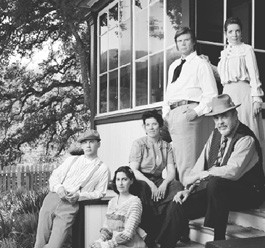
Keep a tight hold on your opera glasses. Beginning Nov. 11, this stereotypically staid art form gets a lively update in Every Man Jack, which uses a vaudeville format, a cast of six who perform 50 different roles and everything from a harmonica to a chamber ensemble to present the compelling story of author and adventurer Jack London, his life and times, and his struggle with alcohol. Commissioned by the Sonoma City Opera, this original work is created and performed right here in the North Bay–where London lived and worked–by talented national and international artists. Renowned tenor Rod Gilfry plays the title role.

Grammy award-winning composer Libby Larsen and librettist Philip Littell were commissioned to craft this new work for the Sonoma City Opera, to be performed as part of the Green Music Festival.

“What I wanted is a palette of the kind of musical world that surrounded Jack London, so that when I created music for London himself, I could create a very human music placing London in the framework of the world in which he lives,” Larsen explains by phone from her Southern California home.

The bulk of London’s writing was completed at the turn of the last century, from the early 1900s to 1916, when he died at age 40.

“That particular period of time is a real fascination of mine for many reasons,” she says, “most of them having to do with the fact that the world we live in now–which is the world of transportation, roads, music brought to us by electricity and the communications system–were all at the crossroads of their beginnings during Jack London’s life.”

The gramophone was the iPod of its day, Larsen reminds, bringing with it the notion that you could have the world of music at your fingertips in a boxed set of RCA Victor red-seal records. London himself owned a gramophone, and took it with him on his sailing ship, the Snark.

“One of the reasons I became so interested in Jack London and the world in which he lived is that it feels very similar to what we’re experiencing right now,” Larsen says. “It’s a world of great change. We don’t have many anchors.”

Based on London’s own John Barleycorn, which is as close as London ever came to writing his autobiography, the opera is performed in American English. “What excites me is that by really working with the language itself, we have come up with a piece that is genuinely 21st-century American without any Americana in it. The singers are so excited about the fact that the words and the music have an energy that speaks to us right here, right now. It’s in modern language.”

Such modernism was written by librettist Philip Littell, who created the Sonoma City Opera’s first original work, 1996’s The Dreamers, an opera detailing the later life of General Mariano G. Vallejo. Speaking to this paper a decade ago, Littell said, “I think that human beings get very big when they’re painted very real. The warts-and-all really does give [them] much more stature than the idealized father-of-our-country stuff.” With London’s vibrant life, of course, Littell had plenty to work from.

Larsen explains that the words that Littell penned shaped her melodies. “The music of any culture comes from the language the people speak, both their verbal language and their body language,” she says. “That’s really what makes Italian opera sound Italian and French opera sound French. American English produces its own music in the rhythms and the shapes of the melodies.”

It’s been a five-year process putting together the highly collaborative new piece, says Antoinette J. Kuhry, artistic director of the Sonoma City Opera. “I think [Every Man Jack] is a really important event because of the level of the artists and because of the subject matter,” she says.

For Every Man Jack, Sonoma City Opera has brought together Littell, who wrote the libretto for the San Francisco Opera’s acclaimed staging of The Dangerous Liaisons and Andre Previn’s A Streetcar Named Desire; Larsen, who has created a catalogue of more than 200 works spanning virtually every genre; musical director Mary Chun, who is principal conductor for the San Francisco-based ensemble Earplay; and stage director Joseph Graves, the artistic director of the Beijing Institute of World Theatre and Film in China. Lyric soprano Ilana Davidson is a Grammy winner. This is no regional small-town affair.

Pulling this all together on a $400,000 budget takes tremendous effort for this teeny-tiny semiprofessional opera company, says Hillary Costin, executive producer and board president. The company scrimped by such measures as having the artists housed by host families in the Sonoma Valley.

“Commissioning an opera on Jack London and hiring the caliber of artists we have hired took Sonoma City Opera out of its comfort zone and into regional and national opera, and international opera,” Costin says. “The way we arrived at Every Man Jack was much more in the mode of ‘Hey, kids, let’s put on a show’ and less like a huge opera company which turns to its million-dollar donors.”

Among other funding, there’s a federal grant to bring four Russian opera company directors here to view a rehearsal, speak with the artists and watch one of the shows. Jack London is a popular author in Russia.

“We hope that they will be interested enough in Every Man Jack to bring it to their companies in Russia, and that we will continue to have this kind of cultural exchange in Sonoma County,” Costin says.

She adds, “Everyone who is involved in this is at the peak of their profession. They are professionals, and they are used to dealing with difficult situations. Having them here for six weeks is incredible.”

‘Every Man Jack’ runs Saturday-Sunday, Nov. 11-12 and 18-19 and Wednesday, Nov. 15, at the Sonoma State University’s Person Theater. Saturday at 8pm; Sunday at 3pm; Wednesday at 7:30pm. 1801 E. Cotati Ave., Rohnert Park. Opening night admission with reception, $75-$99; other performances, $34-$68. 707.939.8288. Philip Littell appears to discuss the ‘Confessions of Jack London’ on Monday, Oct. 30, at the Jack London Reading Room of the SSU Library. Noon. Free. 707.664.4240. www.sonomacityopera.org.

Legend of John Barleycorn

There has always been a great deal of confusion and controversy about Jack London’s drinking. Several biographers have painted him as not much more than a fall-down drunk. But the fact remains that he did die at a relatively young age from kidney failure. His kidney problems may have been caused by the mercury-based medication (Salversan 606) he was taking for venereal disease, but London wrote quite often, usually with unapologetic bravado, about his drinking:

“By truly heroic perseverance, I finally forced myself to write the daily thousand words without the spur of John Barleycorn. But all the time I wrote I was keenly aware of the craving for a drink. And as soon as the morning’s work was done, I was out of the house and away down-town to get my first drink. Merciful goodness!–if John Barleycorn could get sway over me, a non-alcoholic, what must be the suffering of the true alcoholic, battling against the organic demands of his chemistry while those closest to him sympathize little, understand less, and despise and deride him!”

Jack went long stretches, usually at sea, completely sober. He also built a farm, tramped around the world and was a productive and prolific writer. Was he truly alcoholic or was it just bravado, hype and his own need to be a man’s man? We’ll never know, but his contemporary Oliver Madox Hueffer succinctly explains Jack’s relationship to booze:

“Among the apocryphal legends attached to his name, and founded very possibly on his own statements, was that of his almost superhuman drunkenness. That at one time or another he drank too much I can believe–certainly in all the time of our acquaintance he never showed any sign of it. He was by no means a teetotaler; but I never saw him drunk. Nor did he boast of his drinking prowess in my presence.”

–Rob Loughran

Rob Loughran’s screenplay about Jack and Charmian London, ‘Voyage of the Snark,’ is in preproduction with the Piper Down Production Company.


Museums and gallery notes.

Reviews of new book releases.

Reviews and previews of new plays, operas and symphony performances.

Reviews and previews of new dance performances and events.

Letters to the Editor

November 1-8, 2006Where there's smoke . . .Ah, the irony. I read with dismay your half-assed endorsement of Proposition 86 (Oct. 25), which essentially said, "Geez, guys, it's a harsh tax for all of you unwashed masses, but shut up and pay it." Then I turn the page to a pullquote from (Open Mic, "Insecure Voting" ) that...

Positive Rebellion

music & nightlife | Ready for a Mystery Date?...

Watery Report Card

Big rig: Richard Pombo, R-Tracy, wants to see the...

News Briefs

November 1-7, 2006 Phil Lesh ill Grateful Dead bassist Phil Lesh, 66, is scheduled for prostate cancer surgery in early December. "Since we've caught it very early, and it's small and slow-growing, I fully expect to have a rapid and complete recovery," Lesh says in an Oct. 26 announcement on his website (www.phillesh.net). A longtime Marin County resident, Lesh underwent...

Ghee Whiz

Photograph by Felipe Buitrago Bar Naan: When it comes to hot Indian bread, follow...

New Weird America

November 1-7, 2006Imagine what popular music would sound like if Harry Smith hadn't turned the world on to the old weird America. Smith, an irascible record collector and musicologist with encyclopedic powers, compiled the multi-album Anthology of American Folk Music, released in 1952, and provided a road map for a generation of folk revivalists and their progeny. Without Smith's...

First Bite

October 25-31, 2006I came to Pazzo to experience Moroccan cuisine as it's presented in the heart of historic downtown Petaluma. And why not? The new restaurant also features food from Spain, Southern France, Italy and Greece, but to my stomach, Morocco seemed to have the most interesting address.Mmm. A bit of Pazzo's chicken Marrakech ($18), perhaps, the young bird...

Ask Sydney

October 25-31, 2006 Dear Sydney, about six months ago, I loaned my cousin some money. She and her husband had fallen on hard times, and at the time, the $500 I loaned them was a lot to them and something I could afford. Since then, things have stabilized for them, but they have made no effort to pay back the...

Melodies of Jack

October 25-31, 2006Keep a tight hold on your opera glasses. Beginning Nov. 11, this stereotypically staid art form gets a lively update in Every Man Jack, which uses a vaudeville format, a cast of six who perform 50 different roles and everything from a harmonica to a chamber ensemble to present the compelling story of author and adventurer Jack...
11,084FansLike
4,606FollowersFollow
6,928FollowersFollow