Georgia Rules

10.31.07

Aside from the fact that it makes you feel like human scum, Jimmy Carter: The Man from Plains is an inspiring film. “How does a man of 83 have such energy,” you think, feeling appendicitis-like stabs of remorse over time wasted in dissipation and Halo sessions. Director Jonathan Demme is granted access that probably no president, current or ex-, has ever given a filmmaker. Looking over Carter’s shoulder, he scurries to keep up with the peppery ex-prez during a multicity book-flogging tour last winter.

For the most part, Carter meets a love fest. Demme’s film seems to wonder at a man who can accept all of this praise and thanks without feeling unworthy of it. (After you see this movie, you’ll know why the Lone Ranger always rode off before someone could thank them.) Fortunately for the film’s dynamic, there’s also plenty of scorn in store. It’s worst at a large protest rally in Phoenix, where a combination of evangelicals, Jews for Jesus and Israeli pressure groups wait for him.

They, like many commentators, can’t get past the title of Carter’s bestseller Palestine: Peace Not Apartheid. He is forced to explain repeatedly that the apartheid in question is not in Israel, “a country universally admired,” he says, which is laying it on thick. Rather, he refers to the discrimination in the occupied territories in the West Bank and Gaza.

In breaking with his party’s policy of going along quietly with the wall-builders, Carter is condemned by Nancy Pelosi, John Conyers and Bill Clinton. Some members of the Carter Center resign—14 out of 224. As The Nation’s Alexander Cockburn noted, “The headlines could be saying, ‘More than 90 Percent of Carter Board Members Support Former President.'”

With great patience, Carter suffers himself to be made up for the TV cameras. He meets his opponents, though declining a debate with Alan “the Torture Never Stops” Dershowitz at Brandeis, prompting Dershowitz to accuse Carter of “hard left anti-Israeli zealotry.” When an al Jazeerah interviewer tries to sweeten Carter, the ex-president also comes down with asperity against terror bombers.

For recreation during the tour, the ultraspry Nobel laureate wields a hammer in New Orleans for Habitat for Humanity. At night, he keeps up midnight Bible-reading sessions via telephone to his wife back in the small Georgia town of Plains.

In flashbacks, we see Carter’s biggest accomplishment, engineering the Camp David accords. (At the time, Menachem Begin jested that Carter worked harder on that than the Jews worked on the pyramids.) The then-president closed the deal, we’re assured, by passing around photos of his grandchildren to Begin and Sadat.

Live long enough and you’ll see political figures make an entire circuit from demonization to canonization. When first elected, Carter seemed like the Spirit of the Bicentennial. On Saturday Night Live, Carter was impersonated by Dan Aykroyd as a man who could fix anything from a nuclear power plant to a bad LSD trip. His work-shirts and Levis, his love of the Allman Brothers, his winning admission that he “lusted after women in his heart” in Playboy magazine, made him an alternative to the venom and skullduggery of the Nixon years.

Carter’s diagnosis of national “malaise”—and the blasphemy of asking Americans to reduce their energy consumption (indeed!)—led to the palmier days of restored innocence and unslaked greed in the 1980s. Forget Carter’s failure to smite Tehran with great vengeance. During his Phoenix stop, for instance, Demme shows Carter being thanked profusely by retired Air Force colonel Thomas Schaefer, a former hostage of the Iranians. Carter reiterates that nuking Tehran (as our blood-thirstier commentators wanted, then as now) would have ended up with the hostages dead.

Unfortunately, Demme is so rapt by his subject’s energy, charm and humility that he doesn’t follow the money. The words “Paul Volcker,” “cold-bath recession” or “double-digit prime rate” do not figure in this movie. A director as left-wing as Demme could have got in a word about how the labor movement met some cruel defeats under the Carter regime.

The film illustrates Carter’s toughness. “This is the first time I’ve been called a liar, a bigot and an anti-Semite,” he says. Demme captures the way Carter gets a bruising for saying what only the Israeli—not the American—media are permitted to say. And in the end, Jimmy Carter just looks like the stronger man for taking it.

‘Jimmy Carter: The Man from Plains’ opens Friday, Nov. 2, at Rialto Cinemas Lakeside, 551 Summerfield Road, Santa Rosa. 707.525.4840.


New and upcoming film releases.

Browse all movie reviews.

Wine Tasting Room of the Week

0


For this All Hallow’s Eve, I was going to regale the reader with a tale of an unusual tasting in the hills just above Santa Rosa. Some of the state’s finest Zinfandels were made here over a century ago, and in the great stone cellar, I enjoyed barrel samples of the latest vintage of Mountain Claret drawn from huge oak ovals. The 1934 Chablis was still showing remarkable crispness, if a bit dry. I was going to say that when I turned around to ask the kindly and dapper winemaker if the date on that bottle was a mistake, he faded like an apparition into the dank and rubble-strewn cellar. The ceiling had collapsed and the ovals were empty and rotting. I heard the sound of footsteps, or was it the gnarled branches of trees scraping against the ruined Champagne cellar? I fled under a waning moon, for while I’ve indeed drunk wine at Fountaingrove Winery on a dark and stormy night, there’s been no service, no tasting fee and no earthly person at all there for more than 60 years.

Spooky, but why dwell on the dusty past? Not in a town that shuns such venerable landmarks, that buries the past in headstones of monolithic blandness and whose most treasured history is commemorated by a brass dog. Let us flee the haunted hillsides of Santa Rosa and instead embrace life, sweet life, in this darkest of night, in a town that builds for the future, that treats citizens to a whole new downtown district out of vacant lots instead of only tricking, and tricking again.

Let us pay a visit to La Dolce Vita Wine Lounge in Petaluma’s Theatre District. Brand-new last month, this modern and classy joint is airy but suitably dark, with a variety of seating arrangements. Recessed, lighted alcoves highlight the spare decor. The music is loungey, and the flat screen above the bar plays movies like Breakfast at Tiffany’s subtitled in Spanish. Before I forget to mention that this is an ultimo spot for a date or long chat with a good friend, let it be said now.

Wine is available in all sorts of combinations, by flights of three-ounce pours, by the glass, half carafe or bottle. Appetizers include insalata, bruschetta and crostini con funghi. We chose the piatti di formaggio ($9) with a choice of three local and imported cheeses, baguette and sliced pear. The Petaluma Gap Flight ($16) features local producers like Keller Estate’s 2005 Casa de la Cruz Chardonnay and Kastania’s 2004 Proprietor’s Reserve Bordeaux blend. Other flights include Exotic Whites and Around the World Reds; sparkling and dessert wines are offered by the glass.

Pours can be sipped and shared by two, flights can be custom-mixed to your preference—owner Sahar Gharai is gracious to the indecisive. She’s attentive and clearly excited about making her business a comfortable, low-key and efficiently run place, with some extras like live music and winemaker tasting dates coming up. If the wall of wine bottles is covered in cobwebs, it’s not just another fleeting phantasm, it’s for the lounge’s Halloween party. We wouldn’t want to see this place fade from view anytime soon.

La Dolce Vita Wine Lounge, 151 Petaluma Blvd. S., Theatre Square, Petaluma. Open Tuesday–Sunday from 11am; closing varies, 10pm-ish to 11pm-ish. 707.763.6363.


View All

School for Soul

0

10.31.07

There is no record label in the country today reissuing decades-old soul recordings with more avidity, frequency and sense for archaeology than the Numero Group, an academic and semi-mysterious company possessing the secret added ingredient of impeccable taste. While soul and funk reissue labels have flourished since the turn of the millennium, many of them, particularly of the highly elastic “heavy funk” or “northern soul” persuasion, are perfect examples of curators who confuse mediocrity with authenticity. The Numero Group got off on a similar foot, focusing on arcane recordings from the Capsoul and Bandit labels, which at best were historical facsimiles (the sounds of copied sounds) and at worst, painful to listen to (poorly recorded a cappella tracks).

But then the Numero Group took a vacation to Belize, which most Americans know as a trendy and inexpensive getaway offering empty beaches, scuba diving and, if you know where to look, cheap blow. Who could have guessed that there was such a rich musical legacy down there? The unearthed music from Belize City Boil Up, released early this year, runs the gamut, covering funk, soul, reggae, calypso and highlife, all with a hard-to-define Belizean twist that is as peculiar as it is intoxicating.

Next came the label’s foray to the Bahamas, which produced the incredible Grand Bahama Goombay, the gold star of the label’s work so far. Outputted from a single studio on the island, the tracks envelop everything attractive about music: rhythm, politics, love, sex and poetry, all done in such an innocent, unaffected fashion that you almost feel guilty listening to it, like traipsing uninvited into a private party. But by providing extensive liner notes and reproduced cover art from the original Bahaman albums, the Numero Group essentially shoves the invitation into your hands.

The latest addition to the label’s catalogue is Home Schooled: The Sound of Kid Soul, which revisits American shores by spotlighting the attempts of grade-school children to capitalize on the Jackson 5’s 1970 breakthrough success. Most of these recordings were masterminded by overzealous parents, but it’s clear that the kids of Home Schooled are the ones in charge. The songs are largely sweet and unrefined, as in the particular case of the sublime and otherworldly “Time After Time” by a group of forgotten Milwaukee brothers called Step by Step, though other tracks flirt with youth empowerment, like the leadoff track “Trust Your Child” and the campy “Now That School Is Through” by a group called Cindy and the Playmates.

How did all of this great music come to suddenly see the light of day with proper licensing, royalties and historical perspective? Ken Shipley, head of the Numero Group, credits the curiosity of his small group of record-collector friends, who for purely personal reasons had taken to tracking down the original artists of obscure 45s that they had collectively discovered, pored over and fallen in love with. “I figured that as long as we’re finding these people,” Shipley says from his Chicago office, “why don’t we document what we’re doing?”

Part hoarder, part musicologist, part detective, Shipley as a child collected baseball cards and comic books and, more obsessively, G.I. Joes and Transformers (he still boasts owning complete sets of both). Coming of age in the early ’90s San Jose punk scene, he started collecting records, booking shows and running a small indie label, all by the age of 18.

Around 10 years ago, Shipley discovered soul music, particularly of the unknown, thrift-store, what-the-hell-is-this variety, and after a stint at reissue label Rykodisc, he finally launched his dream label in Chicago. Right next to the Jackson 5’s hometown of Gary, Ind., there’s possibly no better city in which to compile the kid-group sounds of Home Schooled.

“The Jackson 5 actually set off something pretty important,” Shipley emphasizes. “When you think about the Jackson 5, you think, ‘OK, there might have been a couple other groups, like the Osmonds.’ But you don’t realize that hundreds and hundreds of groups were set off! People were really trying to ride this phenomenon.”

The obstacles involved in finding now-grown singers on records made 30 years ago are myriad. The children of famed organist Merl Saunders, who contribute to Home Schooled a psychedelic, black-power jam in “Right On,” were relatively easy to locate. But the adults often retained the rights, and in some cases, like the Three Simmons’ playfully innocent “You Are My Dream (School Time),” the copyright holders turned out to be drug-smuggling criminals using record production as a tax shelter.

“Here’s the real rub with the record: we were only able to find half the actual kids,” Shipley says. “Like the Atons, for instance—nobody knows who that group is. Nobody knows who the Triads are. But these producers, they were just pumping kid groups out. They were like, ‘You got some kids? All right, let’s throw these three kids in the studio and see what happens.'”

Another problem Shipley faced was the Embarrassing Childhood Photos factor. The Eight Minutes’ Wendell Sudduth was easy to find—he still lives in Chicago—but nearly impossible to convince that reissuing his group’s killer track “Here’s Some Dances” was a good idea. “A lot of this stuff, it isn’t a positive note for most people,” Shipley admits. “When they think about this stuff, they don’t think, ‘This is exactly how I want to be viewed in my life.'”

The Numero Group makes deluxe packaging, especially for vinyl releases, which always include extra tracks, heavy gatefolds, inner sleeves and full-color illustrated liner notes. There’s a cohesion of style in the label’s design, inspired by the matching spines of Impulse Records and Jim Thompson’s crime books, and a variety of projects on deck for the future (this year’s Ladies of the Canyon explores unknown female singers from the era of Joni Mitchell’s Blue, which Shipley cites as his favorite album).

But the biggest task, always at hand, is the musical detective work, the Indiana Jones&–like passion for discovery. Shipley knows that even the tiniest clues from seemingly insignificant people can lead to goldmines, like the box of original tapes from long-lost soul singer Helene Smith that he listens to in the background during our interview, which he recently rescued from someone’s ex-wife’s basement in Miami, or the singers in the Bahamas who opened the nooks and crannies of their archives and shared every minute detail of their lives with him for Grand Bahama Goombay.

“If you keep cataloguing it and cataloguing it,” Shipley says, referring to his reams of notes and boxes of old photos, “you get a real database of weirdness.”


Express Yourself

0

10.31.07

When you can count Jimi Hendrix as a member of your fan club and look back on a musical history that includes stints with Ray Charles, Sam Cooke and Otis Rush, there isn’t much left to prove. Nevertheless, 68-year-old Guitar Shorty is still on the road and coming to Santa Rosa after pocketing a 2007 Blues Music Award for Best Contemporary Blues Album. Though Living Blues magazine has called him “a blues-rock original,” he says in a recent phone interview that his new release, We the People, strays a little into soul and R&B, something he confesses he’s been wanting to do for a while.

“Record companies tend to keep artists _locked into one category. They don’t get an artist _to express themselves.”

Houston-born Guitar Shorty (David Kearney to his mom) was only 17 when he joined Walter Johnson’s _18-piece orchestra in Tampa as guitarist and vocalist. _One night in 1957, Willie Dixon approached him after a show and invited him to Chicago where they recorded Shorty’s first single with Otis Rush backing him up.

Still a teenager, he then moved to the West Coast for a job touring as Sam Cooke’s guitarist and was a featured member of Ray Charles’ road band. “I learned quite a lot from Ray, especially about delivery,” Shorty says. “He used to love listening to me do ‘Sweet Little Angel.'” While a member of Guitar Slim’s band at the Dew Drop Inn in New Orleans, Shorty caught on to Slim’s acrobatic style, doing flips and somersaults while playing onstage.

In the early 1960s, Shorty lived in Seattle and married Jimi Hendrix’s stepsister. Hendrix went AWOL several times from his Army base to catch Shorty’s shows, picking up ideas for new licks and the use of dramatics to work up the crowd. Hendrix once told him, “I learned a lot from you, a whole lot.”

By the ’90s Shorty’s career was on the wane, but a 1991 release, My Way or the Highway, won a W. C. Handy Award (now known as the Blues Music Awards) and led to contracts with Black Top and Alligator Records. In 1995, in the act of doing a flip, he got tangled in the monitor cords and dislocated his shoulder. Not that it’s slowed him down much. “Sometimes I still do them,” he muses. “I did one back in January. I plan to keep right on playing music. I can’t lay it down.”

Guitar Shorty tears it up at the Last Day Saloon on Saturday, Nov. 3, at 8:30pm. The Aces open. 120 Fifth St., Santa Rosa. $12&–$15. 707.545.2343.


Dead with Hunger

0

the arts | visual arts |

Altar Vision: Yowza East Bay artist Susan Danis is among those contributing to the Art Works Downtown exhibit celebrating Day of the Dead.

By Amanda Yskamp

What do the dead hunger for? What could tempt them back from the other side? For the Días de los Muertos holiday, officially observed Nov. 1–2, celebrants throughout Mexico, here and Central America make ofrendas, or offerings, of the deceased’s favorite food and drink. If the aromas of the traditional copal (an incense made of tree resin) or flores de cempazuchitl (marigolds) aren’t enough to draw the dead back, then the food—heaps of fruit, loaves of bread, plates of tamales and mole—or the sight of their own brand of liquor or cigarettes certainly will.

Día de los Muertos actually starts on Oct. 31, when the souls begin to arrive. The first guests are the deceased children on Día de los Angelitos. In Aztec times, it was believed that those little angels who died while still breastfeeding went to a part of Paradise where there grew a tree of sustenance covered in human breasts. Los angelitos sat under it, open-mouthed, drinking their fill of the nourishing breast milk. Today, dead children’s altars are laden with sweets of all kinds: golletes, a pink doughnut-type bread, symbolizing the cycle of life and death; chocolates; and cups of milk or atole, a warm cornmeal beverage. Nov. 2 is reserved for adults and those who died in war.

No altar is complete without the four elements of water, earth, wind and fire. The long passage back to the land of the living tires a soul and creates a great thirst. For that, a glass of water is necessary. Bread and other foods are made from earthly ingredients. The papel picado, intricately cut paper banners, catch in the wind. Candles lit for the dead harness the element of fire at the altar and invoke the spirit of the deceased. And for all the dead there must be salt for purification. Calaveras de azucar, sugar skulls, are also essential, bearing the name of the deceased written in frosting. This symbolic consumption of death makes it one’s own, in recognition of death’s constant presence in life.

It’s customary during these days to share memories of the deceased, either at home or at the cemetery, to tell jokes, to reflect on the nature of mortality, and to celebrate the bounty and beauty of life’s riches—one of which, of course, is eating. The ofrendas may lure the dead back, but without bodies, the dead are unable to actually consume the tempting dishes. That lucky task belongs to the living. Why not try your hand at some of the traditional dishes? After all, hay más tiempo que vida (“there’s more time than life”).

Atole de Leche
2 c. water
1/2 c. ground white corn meal (masa)
1 1-inch cinnamon stick
4 c. milk
1 c. sugar
Mix corn meal and water together. Add cinnamon and boil the mixture for about 10 minutes. Add milk and sugar and bring to a boil again, stirring constantly. Remove cinnamon stick and serve warm.

Variations:
— Purée a cup of fruit (strawberries or pineapple are particularly good) and stir in, or spoon on top of, mixture.
— Add 2 3-ounce disks of Mexican chocolate (Nestle’s Abuelita and the Mexican Ibarra brands are found in Mexican markets and Safeway) for champurrado or chocolate atole.

Calaveras de Azucar (Sugar Skulls)
2 c. powdered sugar
1 egg white
1 tbsp. light corn syrup
1/2 tsp. vanilla
1/3 c. corn starch
Food coloring and fine paintbrush or colored frosting
Sift powdered sugar. Combine egg white, syrup and vanilla. Add sugar to wet mixture gradually. Mix with fingers until the mixture forms a ball.
Sprinkle cornstarch on table. Shape mixture into smooth ball. Wrap tightly in plastic and chill until ready to use. (Mixture will keep for months.) Shape into skulls. When dry, color them as you wish.

Days of the Dead
El Día de los Muertos has rapidly grown in popularity, with Petaluma leading the way in the North Bay, offering a huge slate of daily activities as well as filling the downtown area richly with community altars. Here are some of the upcoming Day of the Dead celebrations you won’t want to miss.

Art Works Downtown Through Nov. 2, Day of the Dead invitational art exhibit with work by Armando Quintero, Tessie Barrera-Scharaga, Cindy Pavlinac, C. J. Grossman, Susan Danis, Zoe Harris, Kathleen Hanna, Ellen Litwiller, Katya McCulloch, Kathleen Edwards, Wende Stitt, Susan Danis and the Bohemian‘s own “Slice of Life” cartoonist Jaime Crespo. Reception: Thursday, Oct. 25, 5pm to 7pm. (1337 Fourth St., San Rafael. 415.451.8119.)

Petaluma Through Nov. 3, art and altars throughout town; map available at the Petaluma Historical Museum & Library (20 Fourth St.). Oct. 24 at 7pm, “The Path of Life and Death,” bilingual storytelling with Marcela Ronan and Barbara Spicer and music of ancient Mexico with Carlos Lopez (Copperfield’s Bookstore, 140 Kentucky St.). Oct. 25 at 7pm, reception for “Soul Parade: The Art of Day of the Dead” (Mail Depot, 40 Fourth St.). Oct. 26 at 7pm, Tengo No Me Dejas Nunca, a film exploring the world of tango (Mahoney Library, SRJC Petaluma Campus, 680 Sonoma Mountain Pkwy.). Oct. 27 at noon, make traditional sugar skulls, paper flowers and masks (St. Vincent de Paul Church hall, Western and Howard streets). Oct. 30 at 6:30pm, reception and masquerade party (Aurora Colors Gallery, 145 Kentucky St.). Nov. 1 at 7pm, musical celebration with Cuyu, altars and special foods to honor those who have passed (SRJC Petaluma Campus, room 191, 680 Sonoma Mountain Pkwy.). Nov. 2 at 10am, bilingual story time for preschoolers (Petaluma Library, 100 Fairgrounds Drive). Nov. 2 at 6pm, traditional procession with giant puppets and mariachis, food and dance by the Folkloric Ballet Netzahualcoyotl follow (from Helen Putnam Plaza to St. Vincent de Paul Plaza). Nov. 3 at 2pm, “CantaFlor: A Journey Through My Country” musical event (Petaluma Library, 100 Fairgrounds Drive). Nov. 3 at 7pm, sacred circle dance (St. Vincent de Paul Church hall, Western and Howard streets). For more info, go to www.petalumaartscouncil.org.

Santa Rosa Dia de los Muertos celebration in Old Courthouse Square, Thursday–Friday, Nov. 1–2. Pomo and Aztec dancers, Ballet Folklorico and zumba group as well as children’s circles, storytelling, arts and crafts, movies, poetry, live music and more. Thursday, 9am to 8pm; Friday, 9am to 7pm. Courthouse Square, Mendocino Avenue between Third and Fourth streets, Santa Rosa. Free. 707.524.1559.

Sonoma County Museum Through Nov. 4, Day of the Dead altar exhibition. 425 Seventh St., Santa Rosa. 707.579.1500.

Sonoma Valley Museum of Art Oct. 31–Nov. 4. SVMA’s eighth annual exhibition of commemorative altars celebrating departed generations and family members staged in partnership with local Latino families and Sonoma’s La Luz Center. Community Day: Saturday, Nov. 3, 1pm to 4pm. Free. 551 Broadway, Sonoma. 707.939.7862.


View All


Museums and gallery notes.


Reviews of new book releases.


Reviews and previews of new plays, operas and symphony performances.


Reviews and previews of new dance performances and events.

Water Wars

0

10.24.07

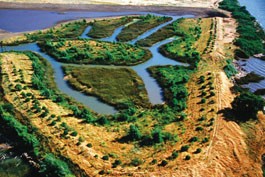
Arbitrary, capricious and contrary to law.” That’s what federal judge Oliver Wanger of Sacramento, in rulings on May 25 and Aug. 31, called state and federal agency plans to pump yet more water out of the state’s already overpumped giant northern Delta.

Wanger not only put a complete stop to these plans, he ordered such a massive cut in Delta pumping that the entire statewide water supply is now decreasing by somewhere between 14 percent and 35 percent, with San Diego losing as much as 30 percent of its supply and the Santa Clara Valley as much as 50 percent, a loss its water agency worries will deplete “our reserves for a major catastrophe.”

Noting that the Delta’s 738,000 acres make it the largest estuary on the West Coast and that California’s State Water Project, which pumps and distributes Delta water, is “among the world’s largest water-diversion projects,” Judge Wanger demanded that the system’s administrators stop destroying it in the quest to irrigate 5 million acres of farmland and provide drinking water for 23 million people. Specifically, he ordered that the federal and state agencies in charge stop killing off the Delta smelt, the once-teeming tiny red fish whose population serves as an aqueous version of the canary in the coal mine, and which is now nearly extinct.

What produced the ruling, and the lawsuit that triggered it, is classic early-21st-century bureaucratic willful blindness.

For years, the state of California overtapped rivers from other states until forced in 2003 to stop. At that point, the State Water Project, needing to fill its 600-mile system of dams, storage reservoirs and pipelines, simply turned to the Delta. And with federal agencies looking the other way, it pumped until the area’s islands began sinking, salt water began intruding, pollution increased, water quality dropped and fish began dying in droves.

In 2005, a number of sport-fishing groups teamed up with the National Resources Defense Council to take legal action, and virtually every state and federal agency involved weighed in to stop them. The Bureau of Reclamation, the U.S. Fish and Wildlife Service, the state Department of Water Resources, water contractors and the Farm Bureau all stepped up to quash the suit.

It is the arbitrariness of the Fish and Wildlife Service, which in 2005 issued an opinion that everything was just fine with the fish and with the Delta, that made up the core of the case. The agency claimed that no one can really tell whether the Delta smelt or other fish are reaching extinction because “not enough is known about the species” due to its two-year life span, which keeps the smelt from living long enough to study, and that therefore it was in “no jeopardy.” The fact that Delta smelt have, in fact, been studied and counted for decades and are at the lowest count ever was apparently an irrelevant detail.

Wanger was having none of it. “Although the process must be implemented by holding meetings and making recommendations, nothing” in the U.S. Fish and Wildlife Service’s policy “requires that any actions ever be taken,” he wrote in his ruling. And that’s not good enough. “The Endangered Species Act requires more.”

When state water agencies offered to cut pumping by a meager 7 percent, Wanger said they would need to cut severely—and hinted that they shouldn’t bother appealing to the Ninth Circuit, either. This, he appeared to say, stops here.

So throughout the state, water agencies are drawing up mandatory rationing plans. San Diego and Los Angeles officials are talking about moratoriums on construction, and Gov. Schwarzenegger has called for a double-topic special legislative session to deal with both statewide healthcare reform and now, as of Wanger’s ruling, the immediate water-supply crisis.

In the meantime, Schwarzenegger, who saw this coming long ago, has both been lobbying for a $5.9 billion plan for a statewide water infrastructure expansion plan that would, among other improvements, build two new reservoirs (with $1 billion solely dedicated to shoring up the Delta), and separately, appointed a Blue Ribbon Task Force on saving the Delta’s water quality, sinking islands, challenged levees and dying fish. Its recommendations are due in November.


No More Coal, Pt. II

10.24.07

The Step It Up 2007 website guides me through the process of sending an invitation to a politician of my choice. I choose Sen. Hilary Clinton, because she is the person I would most like to take out to lunch. I can either call her on the phone, post a letter or send an e-mail. I decide to try calling first. I have left a message for the president before, and it’s just an answering machine; as long as you know what you want to say, it’s not too stressful.

At Hillary’s office, however, things are obviously more bustling than at the White House, and I am given many different extensions to choose from, none of which are specifically for “invitations.” Petrified that a real person might pick up if I press the wrong extension, I hang up and decide to e-mail her instead.

“Dear Ms. Clinton: I would like to invite you to Step It Up 2007 in Santa Rosa, Calif. Step It Up calls for a moratorium on coal and an 80 percent lowering of CO2 levels by 2050.

“As a high school teacher, I can assure you that the next generation is concerned about our imminent doom, very concerned. The time to take action is now. Please come. I will take you out to lunch, on me. Best Wishes, Gianna De Persiis Vona.”

After sending my e-mail to the senator, I return to the Step It Up website, where I am instructed to add my invitation to the overall count. So far, 3,800 invitations have been sent out to our elected officials, inviting them to attend a Step It Up action, including 528 members of congress and 12 presidential candidates. Of those invited, 11 have accepted, including Dennis Kucinich and John Edwards. So far, Hillary Clinton and Barack Obama are conspicuously missing from the list. These gatherings are happening all across the country. In California alone, there are 27 different actions taking place.

Step It Up is a “citizens movement” that was launched April 14, 2007. This is a national day of climate action, and a chance for our politicians to prove whether or not they are climate leaders.

A few days before my adventures on the Step It Up website, I talk to Nabeel al-Shamma, a local activist and chairperson on the Climate and Energy Committee of the local Sierra Club. The Sierra Club, along with the Climate Protection Campaign, the city of Santa Rosa and others are sponsoring Santa Rosa’s Step It Up 2007 event Nov. 3 in Juilliard Park (there are events in Petaluma and Greenbrae, too; see below). Al-Shamma tells me that this is a largely unfunded event, and volunteers are welcomed and needed. This is a community gathering, and our chance to show up, en masse, to send a direct message to our leaders in Washington that the Step It Up demands must be met: 80 percent CO2 reduction by 2050, no more coal and the creation of green jobs for millions.

Al-Shamma, who says that he “pushes the boundaries of software” when he’s not pushing for species survival, considers climate change the biggest crisis we are currently facing, which is pretty scary if you think about the competition. According to al-Shamma, we have the technology, and now is the time to use it.

I never seem to have enough time, so attending events isn’t usually very high on my list of things to do unless there’s free food, and I can already feel my resolve fading as I search for an excuse to stay home. I have to keep reminding myself that if I care about the future of our planet, I’m going to have to go to Juilliard Park on Nov. 3, even if there’s nothing to eat there at all. I have to be strict. Not going is not an option. If all goes well, there will be media coverage and thousands of people, plus me, waving signs. We will send a message that can not be ignored. If all goes really well, Hillary will scroll through her mailbox see my invitation, and e-mail me back.

When she does, I think her message will say something like this: “Dear Gianna: It just so happens that I will be in your area around the first of November. I have decided to extend my stay for a few days, so that I can make it the Step It Up 2007 event. What fun! Why don’t we meet first for lunch? You pick the spot. Ciao, Hillary.”

Step It Up actions occur around the North Bay on Saturday, Nov. 3. In Juilliard Park, 227 Santa Rosa Ave., Santa Rosa from noon to 4pm. In Petaluma, it’s a locavore potluck from noon to 3pm at Helen Putnam Park; carpool from Walnut Park (D Street at Petaluma Boulevard South) at 11:30am. In Greenbrae, Step It Up hosts a slide presentation and action discussion at 9 Altamira Ave., Greenbrae. To RSVP, get more information on Step It Up 2007 or to send an invitation to an elected official, go to www.stepitup2007.org.


Sick Wax

0

music & nightlife |

By Brian Griffith

We have all heard how hard life is for record companies. Sales of CDs have steadily dropped for several years, while downloads are way up; iTunes sells more music than Wal-Mart. Collectively, the three remaining major labels are suing their own customers for sharing music. And now, Radiohead, one of the biggest bands on the planet, have bypassed the traditional distribution process by releasing their new product on the Internet, letting their fans set the price.

The web has also had a hand in one of the biggest hits of 2007. Colbie Caillat and her song “Bubbly” have been an online force for the last 18 months. Just 22, Caillat (rhymes with “ballet”) began writing songs three years ago after her very first guitar lesson. Inspired by the great singer-songwriters of the ’70s like Joni Mitchell and Bob Marley, Caillat collaborated with friends Mikal Blue and Jason Reeves to craft snappy and, yes, frothy tunes reminiscent of the music heard on the radio 30 years ago. No surprise, really, considering that her dad, Ken Caillat, co-produced the 1977 Grammy-winning Fleetwood Mac classic Rumours.

Growing up in Malibu, Caillat began singing in earnest at age 11 after hearing the Fugee’s Lauryn Hill. The youngster sang “Killing Me Softly” at a local talent show, and caught the performing bug. Although she was blessed with a sweet soprano, her father advised that she learn an instrument and develop the storytelling abilities needed for writing her own songs. It took a couple of years, but Caillat and her two cohorts began to shape a sound to match the lyrics of the fledgling songwriter.

Here is where the web comes in. Caillat put the new tunes on her Myspace page. For several months, not much happened. Then in the summer of 2006, she uploaded “Bubbly” to the social network. A huge response followed, with several thousand hits a day. She became the No. 1 unsigned artist on the site for four straight months, reaping an incredible 10 million plays. Needless to say, the record companies couldn’t deny this new paradigm and began to sniff around.

She signed with Universal, because they allowed her total creative control; after all, she had already developed a legion of fans on the web, and her sound was tried and tested. Caillat’s dad offered his expertise in the studio, and in July her debut, Coco, was released, immediately entering (and remaining on) not only Billboard‘s Top 10, but iTunes as well.

Here is a rare chance to see a young performer who stands at the edge of either being an effervescent one-hit wonder or a true developing talent.

Colbie Caillat and her band come to Petaluma’s Mystic Theatre on Thursday, Oct. 25. 23 Petaluma Blvd. N., Petaluma. 8pm. All ages; sold-out. 707.765.2121.


FIND A MUSIC REVIEW

Bad 13 Challenge

0

10.24.07

Last year, you sent us your sexy songs. The year before that, you sent us your sad songs. Now our third annual mix-CD contest crests upon the horizon like a phoenix ablaze, and we want your bad songs.

Let us tell you what the Bad 13 Challenge is not. This summer, the comedy troupe Human Giant produced a video in which two members challenged each other to make the worst five-song mix tape. The loser (I’m not sure if it was the person who made the best worst tape or the worst worst tape) had to walk around Manhattan blasting all 10 songs from a clunky old-school boom box.

The ruse was mildly amusing, but the songs they chose—Miami Sound Machine’s “Conga,” Paula Cole’s “I Don’t Want to Wait”—were merely dorky and annoying songs. If “Conga” is among our century’s worst songs, this world can’t be all so bad.

Ah, but the world is indeed rife with evil and hatred, and in the Bad 13 Challenge, we want you to plumb much, much deeper. While awful is a matter of taste, we’re not looking for pedestrian bad music; we want songs so uniquely bad they scar the soul, so bad their audio stench lingers cruelly like the putrid aroma of rotting meat.

We want our ears to cry for mercy.

Our lives are filled with mediocre music—we hear it on television commercials, at the grocery store, while on hold waiting to ask goddamn Sprint why they overcharged us on our last bill. But truly bad music usually does not make it very far to begin with and can be harder to come across. Those in possession of other people’s bad music tend to keep it at bay, like a wild animal, because lord knows what havoc may befall us if its awesome destructive power were set free.

Now is the time, friends. Set that bad music free. We only want the suckiest pieces of sucking suck.

Beyond that, it’s up to you. The bad music can be any bad music, as long as it complies with the below guidelines:

1. No artist may be represented more than twice on one entry.

2. Thirteen songs per entry. Not 12 songs, not 14 songs.

3. One entry per person, please, though if you are dedicated enough to bad music that creating a pseudonym in order to submit a second entry seems like a good idea, no one’s stopping you.

4. Though we live in an age of technological ease, and it would be so easy to send us an iTunes playlist, your entry must arrive in the form of a cassette tape or compact disc. Sound files will not be accepted.

5. Include a list of songs and their corresponding unfortunate artists with your entry.

6. Cover art is strictly optional, but appreciated. Please do not, however, send us scary items like garbage, animal excrement, amateur pornography and the like along with your entry. Let the music speak for its awful self.

7. Yes, we just said you should let the music speak for itself, but do know that liner notes are welcomed with open arms.

8. Entries must be received by Dec. 31, 2007, thus ending a fairly crappy year on a decidedly bad note.

In the weeks leading up to the announcing of the Bad 13 Challenge champion, we will post entrants’ track lists and liner notes at http://bad13challenge.blogspot.com. Our esteemed Bohemian arts staff will listen to every single song on every single CD, probably with a decent amount of grog in our bellies, and announce a winner early next year. That means you have months—months!—to suss out the worst of the worst. What a way to weather the gray days ahead of us.

We’ll send each entrant a pin reading “Ask Me About My Shitty Music.” The winner will receive a prize that we promise, despite the inherent badness of this contest, will be really cool.

Send your Bad 13 Challenge CD to the Bohemian, 847 Fifth St., Santa Rosa, CA 95404.


Conquering Portugal

0

10.24.07


The call came in late August, as I prepared for a five-week solo bicycle journey from Portugal to Spain. It seemed that the Portuguese Tourism Board demanded my assistance for an upcoming exploratory expedition through the eastern highlands of this small Mediterranean country. The plan: to travel with a dozen other journalists and cyclists for eight dangerous days through 12 historic villages and along 335 miles of farm roads, foot trails and cobbled Roman highways; to brave a wilderness shadowed by remnants of the Medieval, guarded in its many corners by castles. Our mission: to lift the veil of the centuries from this little-known nation and reveal its inner secrets to the wider world. Clearly, I was needed.

The expedition included a very remarkable feature in the form of Gary Fisher, inventor of the mountain bike and a Marin County native, who was riding along. Eager to meet the king of the trail and to be a part of this high-stakes assignment, I told the Board that I would gladly be waiting at the appointed meeting place, the first-rate Hotel Principe Beira in Fundao, eastern Portugal, on Sept. 3. I flew to Lisbon and from there cycled for a week north and east, over the Rio Tejo valley and up into the high Serra Estrella, where I spent several days riding in circles and swearing at the yapping dogs that shadowed me every foot of the way.

On the appointed day, I descended from the mountains into Fundao and to the hotel, where I waited in the lobby, chuckling over Twain’s Innocents Abroad for an hour before a van marked A2Z Adventures pulled up out front and disgorged a jetlagged gaggle of men and women who would become my friends and partners in the next week’s journey. We introduced ourselves and chatted at the hotel bar, a tall dapperly dressed gentleman named Gary slyly among us, as though he weren’t a superstar.

We checked into our rooms and then went by van to the town tourism agency for a brief conference with the local press. Our guides, A2Z owners Pedro Carvalho and Pedro Pedrosa, and a suited rep from the federal tourism board explained to us and the local newspaperwoman the trials of our challenge: a rough, bumpy week on the “Grande Rota das Aldeias Historicas”—the Grand Route of Historic Villages.

The trail, first routed in 2000, would take us in a counterclockwise circle from Castelo Novo around the Serra Estrella and back again to the starting point in eight days. We would see largely unvisited country, some nearly desert, some green and lush, and all of it brimming with historical antecedents of the Moors and Spaniards, as well as invincible castles and hungry packs of dogs.

“We’re trying to bring tourists to this part of the country, which really needs the economic boost,” said Carvalho, translating for the Tourism Board agent. “The beaches get an unfair share of the visitors.”

Matthew Kadey, journalist and photographer from Toronto, asked if there was any concern about spoiling the region by taking this fabulous free trip and then writing home about it. What’s Kadey trying to do, I thought, ruin our vacation? But then I glanced over at Fisher. He kept a heroic silence. I followed suit.

“We’ve thought about it,” said Pedrosa, a lean and muscular native of Leiria. “That’s why we’re using the bicycle. It’s inoffensive, quiet and takes people away again with almost no impact to the land.” Our team was fine with that.

Our perilous journey began bright and early at 10am the next morning, after native rations of fresh fruit, omelettes, sausage, granola, artisan cheeses, ham, warm bread, pastries, coffee and milk. Our destination was Monsanto, a Medieval village 38 miles to the west, set high on a hill with a castle on top. In our first kilometer, we had a casualty when Pedro Trindade, a Brazilian bike-shop owner, wiped out and skinned his knee. A pack of dark-eyed, scartchy-backed mongrels circled watchfully in the brush as Carvalho stopped the bleeding; his wounds were not quite fatal.

Under the hot, blue skies, I rode beside Fisher and chatted. A calm and meditative man, he said that now that he had conquered the world, it was his goal as a businessman to push the bicycle as a means of primary transportation, not just a toy for shredding trails.

“The mountain bike has become ironic,” he said with mild irritation. “First, it’s an SUV ornament. Second, our president loves his. This was not our original idea.”

I asked him how it felt to see his own name on every bike, bottle, shirt, sock, dog, child, tree and rock in sight, and he shrugged. “It’s like a third person now.”

I was crawling along on a skinny-tired, inadequate bike with no suspension, and Fisher soon tore ahead. Then Shannon Mominee of Dirt Rag magazine blasted past and dusted me, as did Alexandre Silva of BIKE magazine, Renata Falzoni, a television producer from Brazil, and Kadey and several assistant guides. It’s a lonely road the traveler wends when he has no magazine credentials and didn’t therefore receive a brand-new, smoking-hot mountain bike to review for the gear department.

The road meandered past scattered cork trees, olives, figs and groves of eucalyptus. We saw not a vehicle all day—just mean, mangy mutts that ran circles around us. Monsanto was splendid, a tiny stone village of miniature homes, huts and mules, plus a few old folks who peered out their doorways as our team of Spandexed aliens zipped about the streets and performed wheelies at the castle gate.

Day two was a 55-mile northward push to Sortelha with over 6,000 feet of climbing. Our guides drove along in the van with our luggage and met us at appointed spots along the way to feed us cookies and make sure no one got lost. After all, if there is one thing a team of adventurers does not wish to face, it’s misadventure. Yet one member of our expedition vanished that day: Gary Fisher. He did not show up at the village, and we eventually all went to the hotel without him while our guides went searching.

We checked in, showered, had drinks in the parlor, and at 8 o’clock, sat down to eat. We feasted on mounds of potatoes and venison, beef and soup, water and wine, and speculated upon where Gary might be and if he was cold and whether he could scrounge up something to eat and keep it from the animals. We wished him well, and were happy. We were enjoying dessert when the search party arrived with Gary. He’d had a flat tire and no water, but managed to find a phone and was now one big smile in a blazing white jumpsuit and bandana.

Each day grew longer and more difficult, and the team began to tire. Our Brazilian videographers showed up later and later each night as they skirmished for winning footage of each other barreling along the dusty roads with castles in the background. We could never get enough water; we were endlessly dehydrated, guzzling as fast as we could at each village fountain and sweating it all out again in the next few miles. I lost the route on day four, a scorcher, and wound up in a dusty, windswept desert ghost town on the Spanish border. My rations had expired and I had no water, but I found free Internet access at the town library. I Google-Earthed my approximate coordinates and managed to escape that blistering widlerness with the kind help of those good folks in Silicon Valley. A traveler must travel.

The next day, we journeyed along abandoned dirt roads in the Douro River region, a dry land saturated with a bittersweet beauty. Jumbled boulder piles lay strewn over the low hills, while long and winding stone walls snaked through centuries-old orchards of stubby olives and figs. At frequent intervals, we came through crumbling villages where the citizens sat in the square and waited for something to happen in a country beaten silent by the ever-present Portuguese sun.

We headed south into the Serra Estrella, and the land grew markedly greener with the elevation. It was a refreshing change of scenery, but the exhausting week had reduced us to a ragged troop of sunburns and bloody bandages, always thirsty, breathing dust, in fear of dogs and tiring by the day. Press junkets aren’t always just fresh cookies and prime beef. A glance at several passages from my journal aptly illustrates our heightening despair:

Sept. 6: The team grows weary. Have traveled 45 miles today, under a blistering sun and through swarms of yapping mutts. A wonder no one has been eaten. Water scarce. All parties report persistent fatigue and withering strength. Team Brazil arrived at hotel after 9pm. No festivities after dinner.

Sept. 7: Paolo took a dangerous header over his handlebars after hitting a rock. Ricardo sprained his ankle in a crash and has been left for the dogs. Hope all but lost.

Sept. 8: Cafe severely overcharged us at lunch. Spirits at rock bottom. The van was out of cookies when I arrived at the rest stop, but at last—the hotel! A warm contemporary space that “Deluxe Living Magazine” hails as being “a perfect balance of the rustic and regal.”

Sept. 9: The longest day—11,000 feet of elevation. Six of the party lost in avalanche, Shannon vanished over a cliff. Tortuous ascents on unrelenting shale roads while quaint traditional villages charm the eye. Buffet-style dinner in historic Piodao features ample portions of cod and beef. Fine vintage Porto, fruit forward with essence of passion fruit. Long, soft finish.

The horror!

In spite of such odds, our valiant A2Z guides rescued all stragglers, and we miraculously reached Fundao with a full head count. Only six of the group, however, managed the last day’s ride, a 60-mile ordeal in the Serra de Acor under gloomy gray skies and over nearly endless ridges and valleys, but thoughts of the multi-star hotel in Fundao beckoned us bravely forward, and by midafternoon, the journey was over. Bikes were disassembled, bags packed, e-mail addresses exchanged.

At our last supper, Gary delivered a toast to the courage of the team, commending spirits that never faltered and the journey’s accomplishments. We had dissolved a frontier and discovered an alluring Italy-like nation of quaint villages, wild dogs, grapevines and espresso machines certain to provide reams of glowing magazine copy and full minutes of TV airtime.

But at least one person at the table was crying inside: me. My own trip would go another three weeks, 2,000 kilometers farther. I would cycle up the length of Portugal, across many great rivers and into the green highlands of northern Spain. I had a whole world to ride but no one to share it with. Gone would be the grand banquets, the sense of direction, the social breakfasts and the midday beer stops that come with a free, guided press-group bicycle ride. In fact, I reasoned I would never see most of my comrades again, though I could still run into Fisher on the roads of Marin and perhaps stop in at Iron Springs Brewpub or Cafe Gratitude to revisit the days when we were heroes and conquered a wilderness together.

Or perhaps we never will. But darn it, Gary, we’ll always have Portugal.


Georgia Rules

10.31.07Aside from the fact that it makes you feel like human scum, Jimmy Carter: The Man from Plains is an inspiring film. "How does a man of 83 have such energy," you think, feeling appendicitis-like stabs of remorse over time wasted in dissipation and Halo sessions. Director Jonathan Demme is granted access that probably no president, current or ex-,...

School for Soul

10.31.07There is no record label in the country today reissuing decades-old soul recordings with more avidity, frequency and sense for archaeology than the Numero Group, an academic and semi-mysterious company possessing the secret added ingredient of impeccable taste. While soul and funk reissue labels have flourished since the turn of the millennium, many of them, particularly of the highly...

Express Yourself

10.31.07When you can count Jimi Hendrix as a member of your fan club and look back on a musical history that includes stints with Ray Charles, Sam Cooke and Otis Rush, there isn't much left to prove. Nevertheless, 68-year-old Guitar Shorty is still on the road and coming to Santa Rosa after pocketing a 2007 Blues Music Award for...

Dead with Hunger

the arts | visual arts | Altar Vision: Yowza...

Water Wars

10.24.07Arbitrary, capricious and contrary to law." That's what federal judge Oliver Wanger of Sacramento, in rulings on May 25 and Aug. 31, called state and federal agency plans to pump yet more water out of the state's already overpumped giant northern Delta.Wanger not only put a complete stop to these plans, he ordered such a massive cut in Delta...

No More Coal, Pt. II

10.24.07 The Step It Up 2007 website guides me through the process of sending an invitation to a politician of my choice. I choose Sen. Hilary Clinton, because she is the person I would most like to take out to lunch. I can either call her on the phone, post a letter or send an e-mail. I decide to try...

Sick Wax

music & nightlife | By...

Bad 13 Challenge

10.24.07Last year, you sent us your sexy songs. The year before that, you sent us your sad songs. Now our third annual mix-CD contest crests upon the horizon like a phoenix ablaze, and we want your bad songs.Let us tell you what the Bad 13 Challenge is not. This summer, the comedy troupe Human Giant produced a video in...

Conquering Portugal

10.24.07The call came in late August, as I prepared for a five-week solo bicycle journey from Portugal to Spain. It seemed that the Portuguese Tourism Board demanded my assistance for an upcoming exploratory expedition through the eastern highlands of this small Mediterranean country. The plan: to travel with a dozen other journalists and cyclists for eight dangerous days through...
11,084FansLike
4,446FollowersFollow
6,928FollowersFollow