Wine Tasting Room of the Week

0


It’s been a quiet week here in Healdsburg, on the edge of the Dry Creek Valley. The last wine warrior weekend was the closest thing they’d had to maximum capacity since, probably, the weekend before. There are plenty of seats down at the Flying Goat Cafe, where three telecommuters are lined up, laptops flipped open, like a pop-art triptych. Nice time to catch up on work.

Just outside of town, there’s a little mill that looks like it was lifted right off a tin of holiday cookies and plunked down on Westside Road. If you had holiday visitors to entertain, it’s the kind of quaint spot you might take them, and they might wonder aloud, “Is this from the old days, when they used water power to crush the grapes?” It’s a delightful notion.

You might wonder to yourself, is this rustic scene merely a branding concept of the liquor and spirits division of some corporation? No, sir. I report to you with confidence that since the 1970s the Kreck family has run the entire operation lock, stock and barrel—medium toast. While the historically inspired building is just spinning a decorative wheel, here at Mill Creek Vineyards and Winery, quaint is just a footnote to quality.

The dry Estate Gewürztraminer ($16) is a regular award winner and perennial favorite. Some folks from out of state stopped by for the express purpose of tasting it. Yeasty spiciness is imbued with honeydew melon and mango notes, with just a little residual sugar. Pair it with spicy Asian food, and you might not go too wrong. The 2005 Estate Reserve Chardonnay ($25) is a sweet, cool mouthful of frosted coffee cake with roasted nuts.

The 2004 Estate Merlot ($22) is a bright, warm scoop of cranberry and raspberry fruit. It’s a fine Merlot with, you know, soft tannins—but the out-of-staters sipping down the bar from me would have none of it. Seems That Movie has corrupted even our Deep South friends. Alas, this Dry Creek winery is a Pinot-free zone. (Too warm here, don’t ya know, although they’re just a stone’s throw from where Dry Creek make its appointment with the Russian River—OK, if it was a small stone, and you had a good arm and you drove a half mile down the road to get a better shot at it.)

The newest member of their family of wines is the standout 2004 Estate Syrah ($27), with its dark scents of berries, ink, violets and vanilla, and a hint of smoked blackberry pie. If, on a whim, you got the bright idea to put a pie in the smokehouse, it might come out something like this. You wonder if God made Pinot to give Frenchmen who couldn’t grow Syrah something to do with their hands, and keep them out of trouble.

Plan a visit Thanksgiving weekend. If it’s a lousy, cold day, a little wood-burning stove makes the tasting room quite toasty. I visited on a gorgeous, warm day. Better luck to you.

All the wines are above average at Mill Creek Vineyards and Winery, 1401 Westside Road, Healdsburg. Open daily, 10am to 4pm. Tasting fee for reserve wines. 707.431.2121.


View All

First Bite

0

11.14.07

Editor’s note: First Bite is a new concept in restaurant writing. This is not a go-three-times, try-everything-on-the-menu report; rather, this is a quick snapshot of a single experience. We invite you to come along with our writers as they&–informed, intelligent eaters like yourselves&–have a simple meal at an area restaurant, just like you do.

The legendary John McReynolds no longer cooks at Cafe La Haye, just off the plaza in Sonoma, but his ghost seems to haunt this intimate restaurant where you could spend as much as $750 on a dinner for two or less than $100 if you order carefully and don’t get the wine list’s $400 bottle of Sauternes. McReynolds, who has moved on to greener kitchens elsewhere, made many of his signature dishes and a reputation that went far beyond Sonoma at La Haye by cooking with fresh produce from Sonoma farms.

Norman Owens, who cut his eyeteeth as a chef in Seattle, isn’t afraid to feature local onions, grapes, beets, arugula, peppers and more. But the vegetables aren’t the stars of the impressive show he puts on; the produce plays a supporting role to his pan-seared chicken breast ($17.95), hangar steak ($19.95) and pork tenderloin ($21.95). You can even watch Owens at work in the postage stamp-sized kitchen, especially when seated on the upper level of the dining room.

Tables at La Haye are snapped up quickly, and reservations are recommended, though seats are almost always available at the counter. Tourists sit elbow-to-elbow with local writers and chefs&–they were out in force on a recent Tuesday night&–but the noise level doesn’t drown out conversations, and the art on the walls is pleasing to the eye.

There are specials every night, including the soup of the day, recently featuring Swiss chard, mixed peppers and bacon ($7). The seared scallops, on a bed of shaved Brussels sprouts and golden raisins with homemade grain mustard ($12.95), were cooked to perfection and elegantly presented. The bacon-and-egg starter that featured a soft-boiled egg over spinach and a celery root pancake, topped with crispy pancetta ($9.95), might not have been appetizing at breakfast, but the combination works well at dinner. The quail stuffed with figs and accompanied by a puff pastry filled with Pt. Reyes blue cheese and caramelized onions ($23.95) was very tasty indeed, and the tender, juicy lamb with Moroccan couscous, mint and pistachio pesto ($32.95) brought together rich, complex flavors.

To drink, I brought a Valley of the Moon 2005 Pinot Noir; the corkage fee is $20. (The least expensive wine on Cafe La Haye’s list, a Zinfandel, runs $30.) The pumpkin financier with quince caramel and walnut whipped cream ($7) was sweet but not sugary, and sorbets and seasonal crisps are usually available.

La Haye, which rhymes with “cafe,” turns out to be the name of the owner of the building, not an exotic village in France, as one might think. But the town of Sonoma, of course, has long had a romance with France, and at La Haye, Norman Owens marries the very best Sonoma ingredients with nouvelle French cooking styles. He’s clearly carved out his niche as a chef, and put his own unique stamp on dishes that will bring in tourists from around the world, who come to Sonoma for the wine and the history, as well as locals looking for something above and beyond the usual fare.

Cafe La Haye. Open for dinner, Tuesday&–Saturday. 140 E. Napa St., Sonoma. 707.935.5994.


Quick-and-dirty dashes through North Bay restaurants. These aren’t your standard “bring five friends and order everything on the menu” dining reviews.

Sagebrush Logic

11.14.07

I would have thought that seven years of Texas metaphysics were enough for any country, whether it was filled with old men or not. But the new Joel and Ethan Coen film is already being heralded as a masterpiece and one of the best movies of the year. It certainly has punch, and if punch alone is what draws you to the cinema, it delivers.

In Texas, circa 1980, following a desert massacre, some killers and lawmen circle one another. All that’s left is a bundle of money, a group of bullet-ridden Mexican corpses and a truck full of contraband powder. A cagey Vietnam vet, Llewelyn Moss (Josh Brolin), out hunting antelope, discovers the mess, takes the money and leaves the drugs.

Then Moss puts himself on the criminals’ radar when he returns to the scene of the crime. He barely makes it out alive. Stalked by the worst of the drug runners, it would seem that his only hope of protection is rugged third-generation lawman Sheriff Tom Bell (Tommy Lee Jones), who is drawn into the case after a deputy is killed.

Trailing Moss is death itself: Javier Bardem, playing Anton Chigurh, a freakazoid with a black Prince Valiant haircut. He is a serial-killer-cum-professional-hit-man. “I gave my word,” he says, carrying out one murder just on the principle of the thing. That’s Texas metaphysics: you’re either for him or against him.

Chigurh is the proactive one in this movie, always going forward even as the other characters go into hiding, follow red herrings and turn up at the wrong places or too late. He displays superhuman abilities and a truly baroque murder weapon—he is a familiar figure from grindhouse cinema.

The human cattle who fall under his slaughterhouse killing machinery are grindhouse fodder: they’re peevish, old, obese or as trusting as village idiots. Chigurh is just culling the herd. Sometimes he gets cosmic on his victims in order to show them the transitory quality of their lives. It’s what Jigsaw does in the Saw movies—enlightenment through torture. If Chigurh uses psychological torture instead of a dungeon, he is still a torturer. The threat of death lies behind all torture. (An interrogator who says something like “I’m pulling out your fingernails, but then I’ll let you go” isn’t going to succeed in his career.)

Chigurh’s gambit appears less superficially ghastly: he allows some of his victims to flip a coin for their lives. True, his coin game with one aged gas station owner in the middle of nowhere is brutally suspenseful, almost as full of impact as the film’s finest moment, a brilliantly directed pit-bull attack on a riverbank.

The Coens approach Cormac McCarthy’s novel like kneeling penitents, crawling across Texas to follow his plot points. They are taken by Bell’s musings on the end of the old ways and how much weaker we are than those who came before us—and who wouldn’t be, when Tommy Lee Jones utters them. The Coens go flat and dry to heighten the tense set pieces; the movie is all motel blocks, vast skies scribbled with thin white clouds, tires soughing on roads instead of music.

It all leads to nada, to a postmodern finale, an action movie’s version of coitus interruptus. Like American Gangster and, to a lesser extent, 3:10 to Yuma, No Country for Old Men is a genre picture that has lost its faith in catharsis. Morose vagueness will get No Country for Old Men called a classic, instead of what it is: an often effective but pompous grindhouser. Its pretensions are so big, you couldn’t fit them in Texas.

‘No Country for Old Men’ opens on Friday, Nov. 19, at the Rialto Lakeside Cinemas, 551 Summerfield Road, Santa Rosa. 707.525.4840.


New and upcoming film releases.

Browse all movie reviews.

Forest for the Trees

11.14.07

I don’t spend too many of my waking hours thinking about flooring, though I do ponder the linoleum in my bathroom upon occasion. I have begun to wonder, for example, if perhaps the dark stains spreading from the vicinity of the bathtub could be due to moisture seeping underneath the floorboards. This is one of the perks of being a renter: rotting floorboards, while perhaps unattractive, are not that much of a personal concern. The reality of environmental responsibility, however, is that the choices other people make, the choices we all make, even in regards to something as seemingly insignificant as what type of flooring to use, have an impact that spreads well beyond the confines of my, or anyone else’s, personal domain. So while I may be stuck with rotting floorboards, my neighbors could be replacing theirs, and the choices they make in what type of flooring to use has an impact not only on their personal aesthetic surroundings, but on the world.

I speak to Lewis Buchner, CEO of San Rafael’s EcoTimber, about his company’s commitment to ensuring that its products are certified by the Forest Stewardship Council (FSC), that the glues are formaldehyde-free and that only zero-VOC (volatile organic compound) adhesives are used. There are a couple of significant issues to consider regarding building materials, one of which is the nontoxic issue (outgassing can continue for years, well beyond the time when the consumer has stopped noticing the stench), and the other, the responsibility for understanding where the materials are coming from and who, if anyone, is being hurt in the process. While putting in new flooring may be very satisfying on a personal level, the U.S. International Trade Commission estimates that 30 percent of hardwood products imported into the United States are from “suspicious or illegal” sources. Greenpeace reports that wood is being logged and exported illegally in Russia, Brazil and Indonesia, to sketch only a short list. Illegally harvested wood often results in deforestation, which, considering our current climate issues—not to mention the devastation of ecosystems across the globe—is something far more worthy of consideration than whether or not cherry or oak flooring will look better with the new couch.

The FSC is an international nonprofit organization working to ensure that forests are managed as ecosystems rather than as agricultural crops. Lewis tells me that much of the wood on the market today is grown through a process of clearcutting and chemical spraying, where the land is treated like an industrial corn field rather than a natural forest.

The woods used in EcoTimber are the result of a delicate balance where the land, the trees, the animals and the people who live there are respected and protected. This is a complex process that involves not just monitoring the harvesting of the wood, but tracking the “chain of custody” of the certified wood from the forest to the saw mill to the flooring mill, so that when the flooring finally arrives in the store, there is no question that what lies within the box is actually FSC-certified. With “greenwashing” on the rise, it is important to look beyond the claims made on boxes and brochures. To this end, Lewis travels around the world, searching for factories that can consistently maintain both FSC and EcoTimber standards. Ever the realist, I try not to lose sight of the single most pressing concern that stands between all Americans and their products: money. Recently, I painted my home with regular old house paint. I could have gone out of my way to buy VOC-free paint, and in the process respected not only myself and my family, but the people developing the paints and anyone who enters my house and breathes the air. But I didn’t, because I didn’t think I could afford it. With this in mind, I ask Lewis how much, exactly, this EcoTimber is going to set me back. One could argue that if you own your own home and can afford to put in new flooring, you can afford the monetary sacrifice. The reality is that we are a country consumed by the need for a better deal, even at the expense of ourselves, our children, our neighbors and the people we hire to do our work.

Lewis assures me that, due to increased demand for natural flooring, prices are becoming extremely competitive. More demand equals a mature market, which means more volume, more leverage and the availability of sustainable flooring that costs only zero to 10 percent more than the chemical-laden, forest-raping alternatives. Taken from the long-view vantage, few would argue that it’s expensive being green.

For more information on EcoTimber and to find a dealer near you, go to www.ecotimber.com. For details on the Forest Stewardship Council, go to www.fsc.org.


Sister Act

0

11.14.07

Christmas was the starting point for the Roches.

“We traditionally did Christmas shows in New York for years. That’s how we started singing as a trio, on the streets at Christmas,” Suzzy Roche recounts cheerfully by phone from her Manhattan home. “That was when you used to be able to hear things on the street in New York,” she adds, “before it was just a complete sound of trucks and construction.”

Eventually the trio—Suzzy and her older sisters, Maggie and Terre—released a full-fledged Christmas album, We Three Kings, a 1990 disc that features their choral harmonies on the second-best known chorus from Handel’s Messiah, “For Unto Us a Child Is Born.”

“That was one of the first things we started doing way back when,” Roche confirms. “It was something we learned in high school, and we just figured out how to do it on the street.”

Not that they improvised their arrangement on the fly, she adds. Like all of their vocalizations, it was the product of a determined, sometimes difficult effort.

“It’s very, very painstaking,” Roche says of their collaborative creative process. “I think it’s one of the reasons why nobody else sounds like us. I can’t imagine that anybody would be crazy enough to sit down and do what we do. It’s note by note and everybody picks their own note, and it can get pretty heated up there, deciding who’s going to sing what. But it’s the way we’ve always done it, and we have a kind of common musical language at this point.” The Roches appear at the Mystic Theater on Nov. 17.

All three sisters write, individually and in multiple combinations, but authorship is rarely a point of contention. “Sometimes we purposely will do something like, somebody will write lyrics, give them to somebody else to write music and then somebody else will sing the main melody,” Roche explains. “In that way, you take it out of singular voice and put it in the group’s voice, and that’s really what the Roches is. It’s a sound of three parts.”

The three sisters came together earlier this year to write and record Moonswept, the first new Roches album in more than a decade. Not that they’d been sloughing off in the meantime. “Since the last trio record [1995’s Can We Go Home Now ], I’ve been involved in four records, two solo ones and two with Maggie, and Terre’s made a solo record, too,” Roche notes. “So there’s been a lot of activity, just not as the trio.”

Why now? “It just kind of happened organically,” she laughs. “In some ways, the project decides for you, whether people are up for it or not. These projects are enormous undertakings, and you never know where they’re going to lead, so it takes a certain amount of commitment. This last one, we were all three on board right away”

Moonswept is a seamless addition to the Roches catalogue, with characteristically spare production, close but unconventional harmonies, and a brace of new songs with the sisters’ usual off-center humor and unexpected insights. The surprise is four tunes from outside sources: “Long Before” is written and lovingly sung by Lucy Wainwright Roche (Suzzy’s daughter with Loudon Wainwright III, who will open the Mystic show), while the old Ames Brothers tune, “The Naughty Lady of Shady Lane,” was a family favorite when the sisters were young and still sharing a room at home.

The other two, “Jesus Shaves” and “No Shoes”—the latter, an energetic, absurdist riff on the revelation of a shoeless man who met another who lacked feet—were both contributed by a New York character known as Paranoid Larry, with whom Maggie Roche sometimes performs.

Now, as the year winds down, the Roches are touring in support of the new album, with a few holiday shows soon to be sprinkled into their schedule. But the road is just a change of scene for their daily interactions. “We see each other pretty much every day,” Roche explains. “We sorta have to. It’s a full-time type of thing.”

The Roches perform on Saturday, Nov. 17, at the Mystic Theater. Lucy Wainwright Roche opens. 23 Petaluma Blvd. N., Petaluma. 8pm. $25. 707.765.2121.


News Brief

11.14.07

Spilling it Forward

Oil-soaked birds being carefully cleaned by human volunteers are just the beginning. The 58,000 gallons of bunker oil dumped into the waters of San Francisco Bay on Nov. 7 when the container ship the Cosco Busan smashed into the Bay Bridge is more than a one-time spill; it’s a long-term traumatic jolt to an already environmentally stressed region, says Mark Holmes of the Bay Institute.

“The [San Francisco] Bay is part of a much larger estuary that is a very fragile coastal ecosystem,” Holmes explains. “This is the worst possible place for an oil spill of this nature to occur.”

The timing’s also poor. Dungeness crabs are migrating. Herring are spawning—or would be if the water weren’t fouled up. The rains will start soon, and all the crud that has built up on local roadways will be washed directly into the Bay.

Fall is also the avian migratory season, when birds of all types trek to the Bay Area, either staying for a few months or simply stopping for a few days to eat and refuel before pressing on to a destination farther south. Those traveling fowl will be eating large quantities of food, which means large amounts of oil toxins.

“It’s the worst time of the year for the birds,” Holmes notes. “The birds would prefer that this happened in July—they wouldn’t be here.”

The oil has spread as far out to sea as the Farallon Islands, is already present in San Pablo Bay and has crept up the coastline to Stinson Beach and Bolinas Lagoon.

Clams, oysters and other mollusks eat by filtering water—which under the current conditions, means absorbing oil toxins. If they survive, birds, fish or even humans will eat them, thereby passing the toxins up the food chain and poisoning the ecosystem.

Holmes says some birds will sicken and die later on. Others will be unable to reproduce or their immune systems will be compromised. And while the oil may be contained to a certain area, the critters aren’t. Mollusks, fish and birds can travel to other regions, bringing the impact of the oil spill with them.

Conventional wisdom predicts that, based on spills of similar magnitude, it will take two to three years for this area to recover.

“That presumes that there are no similar kinds of insults to the system within the three-year period as these toxins work their way through the system,” Holmes says thoughtfully.

“If it’s over in two or three years, we’d be grateful.—Br


Zep Now!

0

11.14.07

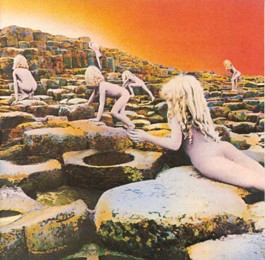
Once the greatest, always the greatest? I felt this about the Ramones when I saw them on their 1996 Adios Amigos Tour, and again about the Rolling Stones when I caught their 1997 Bridges to Babylon tour. Now, it’s Led Zeppelin, but not due to any single kick-ass show. It’s the sheer snowballing weight of current Zeppelin quasi-events that makes them once again the Biggest Band on the Planet.

For starters, Nov. 13 saw the release of Mothership, a new two-disc set that’s the best Zeppelin best-of yet. But so what? Mothership has no new material, and these rock standards have been heard 85 billion times an hour for the last 500 years—or so. More newsworthy is the same day’s official release of the entire Zeppelin catalogue to digital markets. The availability on iTunes of The Complete Led Zeppelin, a 16-“disc” set that sells for $99.99, is notable for its legality and low price.

Why did Zeppelin hold out for so long, only to settle their digital rights for a mere $60 million, 10-year re-signing deal with publishing giant Warner/Chappell Music? That’s just $2 million a year for the three surviving band members. Surely, they make more annually on karaoke royalties. Zeppelin’s exclusive deal with the Verizon network for MP3 ringtones is also a yawn (I used “Black Dog” as my ringtone on an old Nokia for years, even if it did sound like Pac Man).

The biggest performance news is what the band aren’t doing. Reunion tour rumors roared when the band agreed to reunite in London for a Nov. 26 tribute concert to Atlantic Records maverick Ahmet Ertegun. But then guitarist Jimmy Page broke one of his little Satan-blessed fingers, delaying their one sure concert until Dec. 10. Vocalist Robert Plant insists there won’t be a tour, but everyone else, including Page, seems to think 2008 dates are possible. The site GoTickets.com is already promoting dates that don’t yet exist.

This accumulation of details starts to add up. We’ve heard small rumblings of Zep glory during the past year, from Page’s work with Jerry Lee Lewis on “Rock and Roll” on the Killer’s 2006 duets disc Last Man Standing, to Plant’s recent cameo on Goin’ Home: A Tribute to Fats Domino, to Ann Wilson of Heart de-sexing “Immigrant Song” on her new disc Hope & Glory. The clearest signpost of Zep’s 2007 greatness is Led Zeppelin: The Ride, a roller coaster designed with the band’s input that debuted this June at the Hard Rock Park in Myrtle Beach, S.C.

Legal downloads, concerts that aren’t happening and well-designed roller coasters are suddenly the foundation of revered longevity. But the deep layers of Zeppelin news really pay off with two recent discs, the White Stripes Icky Thump and the Robert Plant and Alison Krauss collaboration Raising Sand. Jack White’s alt duo is today’s hottest act, and he’s always worn his Zeppelin/Page influence on his sleeve, both as a producer and a guitarist. Icky Thump is dense, chaotic and open, making sure we get this well-documented connection.

Raising Sand is almost a country record. Krauss is a darling of both traditional bluegrass and alt-country crowds, and the disc features sweet material by Mel Tillis, Townes Van Zandt and the Everly Brothers. But the ethereal and solid edges belong to Plant, with the purest singing (i.e., non-banshee) vocals of his career.

Finally, the true indicator that Led Zeppelin are again the Kings of Rock is the release of the sure-fire blockbuster movie Beowulf this Friday. It’s the fifth film in the last decade to be based on the profound, enigmatic Anglo-Saxon epic myth. Why does this mean Led Zeppelin is currently great? Come on—if you’ve read this far, you know why.

This Zep news is all real, and they really are the Greatest Band of All Time.

Now 68, Coe could easily rest on his back catalogue of hits, which actually includes quite a few tender odes—Johnny Cash did a great version of “Would You Lay with Me (In a Field of Stone)”—but he’s still active, recently recording a country-metal collaboration with the Texas metal band Pantera, who have long been accused, as bad luck would have it, of also being closet racists. It’ll be interesting to see if Coe is ever inducted into the Country Music Hall of Fame, and if so, whether or not he’ll get the same sort of mixed reaction that faced director and House Un-American Activities Committee cooperator Elia Kazan when he took the podium in 1999 to accept a Lifetime Achievement Oscar.

Coe’s career magnifies the exact question that underlined Kazan’s big moment: What’s more important, the man or the artist? The hundreds of contributions to country music, or the one ugly stain? And how widely do we separate the two?

That is, of course, except for the Ramones and the Rolling Stones.


Lost and Found

0

11.14.07

Jason Robert Brown’s The Last Five Years first appeared off Broadway in 2002 and immediately catapulted into the musical consciousness of the theater world, becoming one of the most beloved new musicals around. That it has done so with very few people actually seeing it is truly amazing, its rise to the top fueled almost entirely by the bestselling 2002 original cast recording.

The Last Five Years came to my attention a few years ago when local songstress Kelly Brandeberg (now finding her own way in New York City) sang some of the show’s songs at a benefit concert in Rohnert Park. One song in particular, “I’m Still Hurting” (which opens the play), instantly struck me with its detailed intimacy and unconventional musical phrasing. The more I learned about the play, the more I was intrigued.

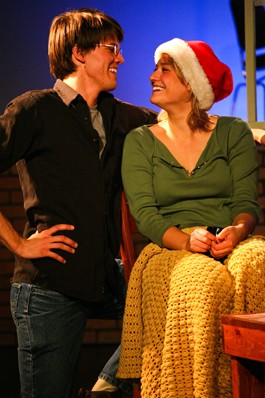
It contains just two actors (two-person musicals have since become all the rage) and is staged forward and backward at the same time, with a young gentile actress named Cathie lamenting the end of her marriage and then moving back in time toward the first date, as her Jewish writer husband, Jamie, begins at the first date and then sings his way through to the last goodbye. What a great idea! I eventually picked up a copy of the soundtrack, and have been waiting ever since for the opportunity to see the show performed live onstage. Finally, last weekend, at Santa Rosa’s Sixth Street Playhouse, I saw The Last Five Years, directed by the great Ken Sonkin.

Boy, am I disappointed.

For one thing, the microphones used by the actors produced a mushy, unclear sound that made it hard to hear the lyrics, especially during the more up-tempo pieces like Jamie’s opening song, “Shiksa Goddess,” or the pivotal Christmas-time romp “The Schmuel Song.” Lyrics this good deserve to be heard without so much effort on the part of the audience. While Jason Robert Brown’s music—a lyrically dense blend of rock, pop, jazz and Broadway—is not easy to sing, it’s not exactly Wagner, or even Stephen Sondheim.

At the performance I saw, Robert K. Dornaus III as Jamie was off-key at least a quarter of the time, and Alice Grindling, as Cathie, had some noticeable pitch issues that one assumes would have been worked out long ago. This is especially surprising given that the show, with the same cast and director, ran for several weeks last spring at the Sonoma County Repertory Theater. If this were the opening weekend of the show, a bit of musical unsteadiness could be forgiven, but after six weeks at the Rep (even factoring in a five-month hiatus), this stuff should be nailed down.

Those few pitch problems aside, Grindling is quite good, convincingly aching, hoping and falling in love with Jamie (in that order), as he becomes too famous for his insecure, less successful actress wife. For this material to work, for the marriage and its disintegration to be believable, both actors must convey equal portions of blame and complicity in the couple’s relationship problems. The actors playing Jamie and Cathie must be well-balanced, which they are not in this production. If only Dornaus were as strong an actor as Grindling, the dramatic tension might be better balanced between the two characters.

As it stands, Grinding, a more experienced performer, seriously outmatches Dornaus, turning Cathie into a charismatic powerhouse who deserves much better than the flaky, lightweight creep who can’t keep his dick in his pants that Dornaus portrays Jamie to be. To be fair, when Dornaus is on—as in his spot-on pantomime of a thrilled first-time writer signing books at a bookstore—he is quite entertaining.

Hardly a flop, the show, directed by the always masterful Ken Sonkin, is meticulously thought-out and beautifully staged, with a five-piece string and piano quintet under the capable direction of Lucas Sherman, gorgeously half-silhouetted at the rear of a set made of a few pieces of furniture and two windows, as simple and delicate as a haiku. If the show had sounded as good as it looked, I’d be recommending it more highly; as it stands, theater fans eager to see a valiant attempt at something different will appreciate what is being attempted. For everyone else, well, the original cast album is on sale everywhere.

‘The Last Five Years’ runs Friday&–Sunday through Dec. 1. Friday&–Saturday at 8pm; Sunday at 2pm. Also, Nov. 15 and 29 at 8pm. Sixth Street Playhouse, 52 W. Sixth St., Santa Rosa. $14&–$30. 707.523.4185..


Museums and gallery notes.

Reviews of new book releases.

Reviews and previews of new plays, operas and symphony performances.

Reviews and previews of new dance performances and events.

Sink Works

0

11.14.07

You don’t realize how indispensable a kitchen sink is until it stops working. Our faucet was running fine, but some mysterious, vile obstruction lodged itself deeply in the drain. After an enthusiastic plunging failed to stir its bowels, a pool of water remained in the sink, gurgling lazily but defiantly.

The timing was not good. I was in the middle of testing angel food cake recipes for an article with a pressing deadline, and setting the task aside for another more free-flowing day was not possible.

Angel food cake, even when baked by an impeccable neatnik, is a dish-intensive preparation, one that leaves precariously stacked towers of sugar-sticky stainless steel utensils—bowls, sifters, whisks, measuring cups—in its wake. These I washed with incredible ineffectiveness in our backyard, using a garden hose.

Thankfully, our trusty electric stand mixer functioned just fine, beating several batches of egg whites to soft peaks with ease. Angel food cake did not appear on the horizon of American baking until the latter half of the 19th century, around the same time the first patents for rotary eggbeaters were granted. Anyone who has ever whipped a dozen egg whites by hand understands that this is no coincidence. One of the sources I ran across during my angel food research suggested that, in those dark days before eggbeaters, the task of whipping the whites was assigned to slaves. Before wire whisks were commonplace, they attacked the egg whites with primitive bundles of sticks or brushes for an hour or so.

While our nation can’t manage the time to cook from scratch now at home, the irony is that a few centuries ago, homemakers had time for nothing but. If a fair chunk of your life was not devoted to the laborious raising, gathering, processing and preparation of food, you didn’t eat, or you ate very crudely. New technologies have both brought us closer to, and distanced us further from, the food we cook.

Hosing down dirty dishes in the backyard, I felt more like a buffoon than a 21st-century Laura Ingalls Wilder. But there was comfort in sensing the temporary nature of the setback, and in knowing that with the turn of a knob our oven would be 350 degrees Fahrenheit, and that in our refrigerator there was romaine lettuce imported from Mexico and leftover pizza and several different types of gourmet mustard for us to eat at our leisure, and that if worse came to worse, we could always use the carton of lowfat milk and make a box of off-brand macaroni and cheese with minimal effort.

Ah, the refrigerator. Messily tiled with novelty magnets and notes to family members and clipped coupons, it is as much a fixture of display as it is a major appliance, and its indispensable role in our day-to-day eating habits is a thing to which we give nary a second thought, until the power goes out and the Fudgesicles liquefy.

“To many people, electric refrigeration is still such a novelty that they scarcely realize the range of its possibilities,” assures Electric Refrigerator Recipes and Menus, a cookbook published by General Electric in 1927, the same year the company released the million-selling Monitor Top fridge; the book is dedicated to “the modern American Homemaker.”

That anyone would need assistance using a refrigerator is preposterous to us now—you, like, put stuff in it and it, like, keeps that stuff cold—but to a cook who depended on huge blocks of ice slowly melting in sawdust to keep her food from spoiling, the concept of refrigeration at a stable temperature was a revelation in itself. Half of the dishes in Electric Refrigerator Recipes and Menus are chilled aspics and frozen desserts, reminding those lucky refrigerator owners that cold gelatin and frosty ice cream were no longer inconvenient luxuries.

For every new kitchen technology, there is a cookbook. Musician Fred Waring brought the Waring Blendor (spelled thus perhaps to evoke “splendor”) to the masses in 1938, and though he knew it would make great milkshakes and daiquiris, he wanted to expand its potential. He hired home-economics consultant Mabel Stegner, who with her staff developed 1952’s Electric Blender Recipes, which offers “519 ways to make your electric blender the most versatile piece of equipment in your kitchen.” Of those 519, only five are for smoothies (or, as Electric Blender Recipes terms them, “smoothees”). However, if you choose to make scrapple, tongue mousse, Swedish meat ring or “convalescent’s main courses,” the cookbook will serve you well.

It is highly doubtful that the common household electric blender—Waring’s is still an icon—plays anything more than a rare cameo role in savory main-dish preparation. Yes, it can make pesto, hollandaise or hummus, but most of us usually only trot our blenders out for smoothies and margaritas.

The shelves of used bookstores groan under the weight of microwave cookbooks, such as The Microwave Guide & Cookbook (once again, a General Electric publication, with its first edition appearing in 1977). There is something both quaint and naïve in its late 1970s food styling and its optimistically broad range of recipes, such as ambitious preparations for ripe olive risotto or pecan sponge roll. Back then, microwaves were full of timesaving potential, but we have since wised up; probably the most intensive cooking we do in microwaves now, outside of popping popcorn and thawing frozen dinners, is melting butter. The Microwave Guide & Cookbook, for all its valiant effort, ultimately did not convince us that microwaves are anything more than big boxes for reheating leftovers.

When I’m not washing dishes in the backyard, I work at an upscale cookware store. We sell our share of Le Creuset enameled cast-iron coquottes and clad stainless steel sauté pans, whose features change subtly but whose concept and practicality are fairly timeless.

But we also sell electronics such as rice cookers, crêpe griddles, chocolate fountains and bread machines. You can make rice, crêpes, melted chocolate and bread without the aid of specialty electronic devices, but we still live in an age where the imagined ease of automatic preparation will convert our dreary nights of Netflix-watching into a wonderland of fluffy pilafs and butter-kissed crêpes Suzette. And while some bread machine owners may love waking up to the aroma of freshly baked loaves wafting through their hallways, this sort of flaccid, trend-driven technology tends to lose its sheen after a few years, achieving little in the long run except cluttering our cupboards and populating our future garage sales.

I have a Cuisinart food processor, which makes quick work of slicing vegetables or grating cheese. It’s also a pain to clean, with its dangerously sharp and menacingly shaped blade, and its five-too-many plastic attachments. When all’s said and done, I can use my knife just as quickly to slice the potatoes for mygratin—unless, of course, I use my stainless steel mandoline, which is stored inaccessibly behind a pile of cake pans in the most infuriating cupboard in our house. Though I enjoy owning them, neither the presence of the Cuisinart nor the mandoline has revitalized my own home culinary scene.

I wonder if such skepticism greeted the first refrigerators early in the last century, if cynics clung to their unwieldy blocks of sawdust ice, griping dismissively, until the ice man threw in his tongs, driven out of business by GE’s chilly army of Monitor Tops. Such a scenario is, to me, unimaginable, as is the inevitable advent of the next kitchen technology to come along, promising to change our lives forever. Perhaps it will be energy-driven, the downsizing of boxy refrigerators and inefficient conventional ovens to conserve our ill-gained, shrinking reserves of coal and oil. Doubtlessly, a cookbook will come in tow. George Forman grills, induction cooktops, Margaritaville blenders, Sub-Zero freezers—ultimately they’re all versions of the same thing: fire and ice. Make food hot, then keep it cool.

The plumber eventually came and unclogged our kitchen drain. By then, the angel food cakes were baked and half-eaten, the golden crumb of their exteriors growing gummy under their Saran Wrap tents, just the way I like them. I took a frosty bottle of beer from the refrigerator, dipped a corn chip into a plastic tub of salsa and contemplated the mountain-fresh idyll of hauling our water in wooden buckets from a burbling brook, as clear and cool as glass.

I washed some dishes in the sink, then emptied out the strainer, wishing all the while that we had a garbage disposal.


Quick dining snapshots by Bohemian staffers.

Winery news and reviews.

Food-related comings and goings, openings and closings, and other essays for those who love the kitchen and what it produces.

Recipes for food that you can actually make.

Captured Chaos

0

11.14.07

One night in 1993, I ran into Tim Armstrong walking down an alley in downtown Petaluma, pasting up stickers for his new band, Rancid, who were playing one of their first shows that night at the Phoenix Theater. We walked together down to the Petaluma River, sat on the docks and talked for a while. He was excited about Rancid, but our conversation kept turning back to his old band, Operation Ivy, and I discerned a glow as he discussed what he called “the two best years of my life.”

For a band that broke up right when their only full-length album, Energy, was released, Operation Ivy occupy a special place in the hearts of the 1 million people who have since bought, obsessed over and internalized the East Bay band’s music. Part of it is the band’s unique sound—a raw, bristling progenitor to hundreds of overcommercialized ska-punk bands—but half of the attraction undoubtedly lies in their dense lyrics, spat out in rapid-fire syncopation by machine-gun vocalist Jesse Michaels. Energy practically demands to be memorized; to this day, I can still sing along to its approximately 2,524 words.

While there’s probably an illicit source for Michaels’ prolific verbiage (one of my long-lost possessions is a sheet of paper with his handwritten suggestions for band names, all of them references to methamphetamine), it’s impossible to deny his jagged attack and poetic optimism. Channeled into songs about the perils of mass consumption, personal desensitization, media distraction, sexual braggadocio and urban distrust, Michaels gives voice to the entire experience of youth in 19 different chapters: the album could very well be called This Fucked Up World and How to Survive It.

Kevin Army, Operation Ivy’s engineer and producer, recalls a great ease in Energy’s recording sessions, especially since the band had essentially rehearsed for a year by trying to record the album live at the famed Gilman Street Project, the band’s home venue. On the first day in the studio, the band banged out basic tracks—bass, drums and guitar—for all 19 songs, live, in the same room, with no headphones, an approach relatively unheard of these days. “I really thought they were the greatest thing ever,” Army says now, 20 years later. “Chaotic, but I mean, if you just capture that chaos appropriately, that’s what it’s all about for a record like that.”

With a paltry recording budget of just $1,200, Army had to work quickly, “just blasting through the tracks like they would do live,” keeping the energy up and the band focused. “I remember the biggest run-in,” Army laughs, “was they wanted to have those shouting gang ‘Oi!’ vocals on every song. I told them they sounded like they were trying to be the Village People, in order to humiliate them into not doing that on every song.”

It apparently worked, as there’s an unparalleled in-the-moment urgency throughout what would be the band’s self-written epitaph. Sometimes this urgency overtook the band, resulting in unhinged live performances further loosened by the presence of audience members onstage. Most of the time, it boiled just beneath the surface, propelling song after song.

Another believer was Larry Livermore, who saw one of Operation Ivy’s earliest shows and immediately approached them to make a record. His record label, Lookout Records, wasn’t even off the ground yet, but the impact the band had was undeniable. “The only explanation I can give for sort of ‘knowing’ they were destined for greatness,” he says now, “was the impact of that first live show I saw at Gilman, the way the crowd just went crazy and took over the stage to sing along with everything—and this was when the band was barely three months old.”

Just a few months later, Livermore was at Lookout’s distribution warehouse restocking copies of Operation Ivy’s EP, Hectic, when he mentioned to a worker there that the band was “going to be one of those bands like the Dead Kennedys or the Ramones or Minor Threat, who just keep on getting bigger years and years after the fact.” This was a bold claim at the time for a tiny East Bay punk band, and as Livermore tells it, the worker not only “howled with laughter,” but took it upon himself to tell everyone else in the warehouse of Livermore’s ridiculous boast.

“I said the same thing to the band members themselves,” says Livermore, adding that years later, the band members told him, “We thought you were crazy. But you were right.”

Operation Ivy only existed from 1987 to 1989, but logged nearly 200 shows. In an inspired moment of resourcefulness, a nationwide tour was completed by packing five people, plus equipment, into and onto a ’69 Chrysler Newport sedan. The band also routinely played the North Bay: the Healdsburg Boys & Girls Club, the Cotati Cabaret, a tiny building at Ninth and Wilson streets in Santa Rosa and at Guerneville’s River Theater (legend tells of a last-minute billing change when Psychefunkapus, now a forgotten embarrassment, refused to open for a “fucking punk band”). For a while, it was almost impossible not to see Operation Ivy.

And still, I will never forget the one-two punch of buying Energy and immediately discovering that Operation Ivy had broken up, playing a final show at Gilman to an overcrowded throng twice the venue’s legal capacity. I was barely 13, too young to go to shows, and it made me hate being young approximately 70 percent more than I already hated it—which is to say, quite a lot. Fittingly, listening to Energy over and over helped me eventually savor the venom of being young more than I ever could have imagined.

Energy went on to become a flagship album, just as Livermore and Army predicted. And though a young opening band at Operation Ivy’s last show called Green Day would go on to become the face of the East Bay punk rock scene for the rest of the world, Operation Ivy would forever remain its soul.

After a yearlong hibernation, Energy is back in print this week on Armstrong’s own Hellcat Records. There’re no bonus tracks, no remastering or special features—in fact, the booklet is plainly scanned and reprinted from the previous edition. None of this really matters, because Energy can stand on its own without any extemporaneous propping up, and it will be no surprise when this reissue gets discovered by another million kids.


First Bite

11.14.07Editor's note: First Bite is a new concept in restaurant writing. This is not a go-three-times, try-everything-on-the-menu report; rather, this is a quick snapshot of a single experience. We invite you to come along with our writers as they&–informed, intelligent eaters like yourselves&–have a simple meal at an area restaurant, just like you do.The legendary John McReynolds no longer...

Sagebrush Logic

11.14.07I would have thought that seven years of Texas metaphysics were enough for any country, whether it was filled with old men or not. But the new Joel and Ethan Coen film is already being heralded as a masterpiece and one of the best movies of the year. It certainly has punch, and if punch alone is what draws...

Forest for the Trees

11.14.07 I don't spend too many of my waking hours thinking about flooring, though I do ponder the linoleum in my bathroom upon occasion. I have begun to wonder, for example, if perhaps the dark stains spreading from the vicinity of the bathtub could be due to moisture seeping underneath the floorboards. This is one of the perks of being...

Sister Act

11.14.07Christmas was the starting point for the Roches. "We traditionally did Christmas shows in New York for years. That's how we started singing as a trio, on the streets at Christmas," Suzzy Roche recounts cheerfully by phone from her Manhattan home. "That was when you used to be able to hear things on the street in New York," she...

News Brief

11.14.07 Spilling it ForwardOil-soaked birds being carefully cleaned by human volunteers are just the beginning. The 58,000 gallons of bunker oil dumped into the waters of San Francisco Bay on Nov. 7 when the container ship the Cosco Busan smashed into the Bay Bridge is more than a one-time spill; it's a long-term traumatic jolt to an already environmentally stressed...

Zep Now!

11.14.07Once the greatest, always the greatest? I felt this about the Ramones when I saw them on their 1996 Adios Amigos Tour, and again about the Rolling Stones when I caught their 1997 Bridges to Babylon tour. Now, it's Led Zeppelin, but not due to any single kick-ass show. It's the sheer snowballing weight of current Zeppelin quasi-events that...

Lost and Found

11.14.07Jason Robert Brown's The Last Five Years first appeared off Broadway in 2002 and immediately catapulted into the musical consciousness of the theater world, becoming one of the most beloved new musicals around. That it has done so with very few people actually seeing it is truly amazing, its rise to the top fueled almost entirely by the bestselling...

Sink Works

11.14.07You don't realize how indispensable a kitchen sink is until it stops working. Our faucet was running fine, but some mysterious, vile obstruction lodged itself deeply in the drain. After an enthusiastic plunging failed to stir its bowels, a pool of water remained in the sink, gurgling lazily but defiantly.The timing was not good. I was in the middle...

Captured Chaos

11.14.07One night in 1993, I ran into Tim Armstrong walking down an alley in downtown Petaluma, pasting up stickers for his new band, Rancid, who were playing one of their first shows that night at the Phoenix Theater. We walked together down to the Petaluma River, sat on the docks and talked for a while. He was excited about...
11,084FansLike
4,446FollowersFollow
6,928FollowersFollow