The World Is a Ghetto

0

02.25.09

K‘naan is a humble, gifted 21-year-old artist who grew up in war-torn Somalia and learned English by listening to American hip-hop CDs. His family eventually raised enough money to move to the United States, and shortly after his arrival, armed with an innate knack for poetry and a Third World backstory, K’naan released his hip-hop autobiography, The Dusty Foot Philosopher, an album as expansive and astonishing as it is smart and honest. He attracted the attention of Mos Def and Damian Marley and the adulation of a handful of critics, but due to small distribution, it sadly eluded the public at large.

Troubadour, K’naan’s major-label follow-up released this week, is challenged from the outset with needing to achieve two goals: one, to keep up the intellect and honesty of Dusty Foot, and two, to appeal to the masses. Though it contains a few transparently contrived attempts at sales appeal (a track featuring Adam Levine from Maroon 5 should be deleted immediately from iTunes playlists), Troubadour succeeds largely because of K’naan’s talent, which isn’t made the lesser for overproduction.

M.I.A.’s surprise hit “Paper Planes” might have stolen international music from the baby boomers, but K’naan all but locks it up for the young generation. Album opener “T.I.A.” rattles with the same vigor and triplets of Kala with the crusade of taking groupie-laden rappers on a field trip through true African ghettos; “Dreamer” interpolates quotes from A Tribe Called Quest, N.W.A. and the Pharcyde while fantasizing of leaving “the only place worse than Kandahar.” A Hustle and Flow&–quoting Mos Def and Chali 2na both show up on “America,” the best verses of which belong to K’naan rapping in Somali, and closer “People Like Me” soberly links Iraq to the guns and grenades of K’naan’s youth spent in the Somali civil war.

All told, the album makes one of the most convincing cases for a new globalized music. There’s a wide variety of styles on Troubadour—from chopped funk breaks to dancehall blasts, from goombay choruses to “My Boyfriend’s Back” melodies and Procol Harum chord progressions—and on top of it all, pushing the album into greatness, is K’naan’s heart. “Is it true when they say all you need is just love?” he asks on the empathetic “Fatima.” “What about those who have loved, only to find that it’s taken away? And why do they say that the children have rights to be free?”


Evil Clown of Power

0

02.25.09

When the French satirist Alfred Jarry first presented Ubu Roi (“King Ubu”) in 1896, the play was reviled by critics, who called it vulgar, perverse, disgusting, subversive, scatological, sexual and disrespectful to royalty and the church. It was a hit among the masses, who appreciated Jarry’s low-comedy send-up of power and privilege. The offended bourgeoisie, however, demanded to know why such a play had ever been written. That “Why?” has followed Ubu for over a hundred years, and we have now posed it again to Brent Lindsay and Amy Pinto of Santa Rosa’s Imaginists Theater Collective, which this weekend opens its own new version of the play, here called Ubu Rex, in a multimedia extravaganza involving live animation, puppetry and the gratuitous use of bicycles.

“Why?” Lindsay laughs. “A really good question, one we keep asking ourselves. The answer shifts daily. Today, the answer is that by performing Ubu we’re exposing the evil power-hungry clown that is in all of us. The other reason is that it’s really, really funny.”

“We aren’t going to hide the scatology in the play,” Pinto adds. “The scatology is so in the spirit of the show! This production embraces the disgusting, funny figure of King Ubu and all the symbols of power and greed that he represents, and that live inside all of us.”

“Unchecked power can be found anywhere,” Lindsay says. “It can be found in the White House, in the offices of a newspaper or within an innovative little theater company working inside a tiny performance space in Santa Rosa. If you look for it, you’ll find the evil clown of power hiding everywhere. The more layers you pull back, the more exposed your own evil clown becomes.”

“By the way,” Pinto adds, “Alfred Jarry was really into bicycles, which he called ‘That which rolls.’ So everyone who rides their bike to our show will receive a free plaque for their bike with those same words. But back to the earlier point, our real answer to the ‘why’ question, though, is that Ubu, even after all these years, is a work of genius. In this play, Jarry created a jumping-off point that influenced generations of political theater troupes.”

Lindsay concludes, “We like to think theater can change people, change the world, that audiences will leave a little different when they walk or ride back to their lives. Anything can and should take place between these walls—and in this show, I think it probably will!”

Ubu Rex runs Friday&–Sunday Feb. 28 through March 14. Friday&–Saturday at 8pm; Sunday at 2pm. A Space, 461 Sebastopol Ave., Santa Rosa. $7&–$10. www.brownpapertickets.com or purchase at the door.


Museums and gallery notes.

Reviews of new book releases.

Reviews and previews of new plays, operas and symphony performances.

Reviews and previews of new dance performances and events.

Live Review: Philip Glass at the Napa Valley Opera House

0

I said everything I needed to say regarding the experience of seeing Philip Glass play live in this concert review from the Herbst Theatre in San Francisco, in 2007. That said, seeing Philip Glass play the piano is not an opportunity to be missed, because his music is more about how one reacts to it than what it sounds like, which is, pointedly: the same as it always does.
Philip Glass had performed his 3 1/2-hour opus Music In Twelve Parts at Davies Symphony Hall a few nights earlier, so playing a solo piano show for 90 minutes in Napa might not have seemed like a big deal to him. It was a huge deal, however, to the full house on Thursday night, who in the wonderfully intimate theater were treated to Mad Rush, Metamorphoses No. 4, 3 and 2, some Etudes for Piano (even Glass humorously forgot which ones), and Closing, from his Columbia album Glassworks. Some people leaned forward, enraptured. Others either sat politely, or swayed back and forth to the repetitive patterns, or fell asleep. I closed my eyes and got lost in it all, thinking about love, family, and the future.
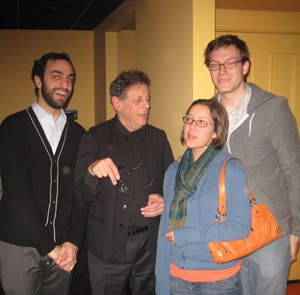
Margrit Mondavi, whom the Napa Valley Opera House theater is named for, was sitting way up in the balcony, and afterwards, when Glass came out to the lobby to meet his fans, she presented him with a few bottles of wine. Watching Mondavi, who has done so much in support of the arts, share a warm conversation with Glass, who essentially personifies “the arts,” was pretty intense. Glass then took a good half-hour or so to sign autographs, answer questions, and take photos with his fans. Again, this mightn’t have been a big deal to Glass, but everyone was happily surprised that he’d be so accommodating, and it transformed a great concert into a special night.

New Signs Around Downtown Santa Rosa

0

The short-lived ice cream shop at the old Madigan’s building is empty again:

Pete Moganam at the Fourth Street Market didn’t raise his prices too much:

The oldest business in Santa Rosa drops Drexel Heritage and goes back to simply being Pedersen’s Furniture:

Don’t even get me started:

How long does it take the city to figure out a simple dumpster problem? Way too long:

 New and exciting things in the old Wherehouse building:

Sonoma Coffee Company becomes:

Long-overdue on the streets of downtown:

The old billiards place, getting people on bikes and looking sharp:

Mazatlan gets a makeover:

And one that didn’t last too long, thanks to certain puritans and hypocrites both at neighboring businesses and on city council:

The Screeching Weasel Personality Test

8

Dear Jay Pullman,
You’re a neat guy and all, which is why I’m completely confused by your pick of Wiggle as your Screeching Weasel album of choice. You say, and I agree, that “You can tell a lot about a person by their favorite Screeching Weasel album.” Here’s how I might break it down:


The person who picks BoogadaBoogadaBoogada is most likely someone who still embraces their juvenile side and makes a lot of fart jokes. May have trouble in relationships, may also have trouble in any academic pursuits. However, it must be noted that this person is insanely fun to be around.


The person who picks My Brain Hurts is a no-nonsense pragmatist who occasionally dabbles in pseudo-intellectualism—while admitting to the “pseudo” part. Could possibly describe themselves as a “serial monogamist” since they’re too romantic to notice that love dies. Is balanced, but incidentally loves to drive fast.


The person who picks Wiggle is confused and misguided, who pushes on doors clearly marked “pull” and returns time and again to a restaurant that gives them food poisoning. Stuck between making clever threats about the real world and snide pop-culture jokes. An utter bore.


The person who picks Anthem for a New Tomorrow is idealistic, and is as interesting as one can be who follows the pack. May wear nice shoes and have an education, with luck in love and with snappy repartee. Does not care what others think, but most certainly conforms to a set of internal rules.


The person who picks anything after Anthem for a New Tomorrow or who picks the obscure self-titled debut is either completely retarded or is lying.
So: You picked Wiggle. However, I have hung out with you, and you do not seem confused, nor misguided, nor a bore. Is it a Chicago thing? I can’t tell you how excited I was when Wiggle finally came out, and how completely shattered me and my girl were when we brought it home from the record store. It’s such a lazy record, musically and thematically. I got rid of it a few years ago, and immediately felt much better.
Please explain. (And by the way, I’d pick My Brain Hurts.)
Love,
Gabe

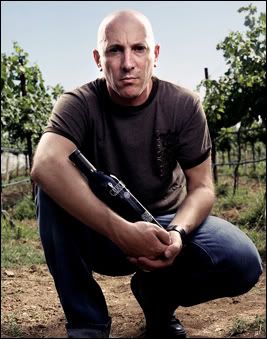
Interview: Maynard James Keenan from Tool

Are you just as surprised as most people that you turned out to be a winemaker?
It doesn’t surprise me too much, ‘cause anything can happen. I went from being a cross-country runner, to being recruited to West Point, and then all of a sudden being in art school, and all of a sudden being in an international touring rock band, and then a second one, and now a third one. I tend to just kind of latch onto something and go for it.
Tool came along and really revolutionized popular rock music in a lot of ways. In what ways, if any, do you hope to revolutionize winemaking?
Ooh, gee. I don’t know about ‘revolutionizing.’ I think if I can apply what I’ve applied to everything else I’ve dove into, I think it’d be more about being true and honest with my perceptions and what I’m experiencing. Much the same way a good grape-grower or winemaker pays attention to the terroir, rather than trying to make wines that are for mass consumption. Kind of what we did with the music, where we remained true to what was happening in the room when we write. There’s only two things that myself and a musician, and my partners, there’s only two things we really have to do. All we have to do is remain true to what’s happening in that room between the four people. How we record it, what format it comes out on, what we wear, who sells it—that has no bearing as long as we remain true in that room, and focus on what’s happening in that space. And the second thing we have to do is make sure that when we go to present it live, it’s the same thing. I think with winemaking it’s a similar approach. We have to remain true to what’s happening in the vineyard, and what’s happening in the winery once we start to process those grapes. If I can have a hand in helping someone else come along with 20 times the talent that I’ll ever have in winemaking, if something that I did inspired somebody to pay attention, great. I’d love to have a hand in that.
Recording music these days can be very malleable – you have a chance to manipulate the finished product afterwards through digital software. With wine, you get what goes in the bottle, and you can’t tinker with it when it’s done. Do you appreciate that immediate, must-get-it-right-the-first-time process with wine?
Yeah, absolutely. For sure. But I also appreciate the getting it wrong the first, the second and third time. You learn along the way. But I definitely do like that, that you have to get it right.
How’s your learning curve been in Arizona? What’s your major obstacle to vineyards in Arizona?
Cold weather. We’re up in the high desert, so we planted on a lot of developed, agriculturally-zoned areas that we thought would be okay, thinking that we would have more problem with heat than cold. As it turns out, we’re a similar terrain and climate as Paso Robles, but cooler. So we had a lot of winter kills. We pretty much learned the hard way the first few years, not even realizing that we had winter kills the first year. It was like, why aren’t these things budding?
Is there a water usage issue in Arizona?
Absolutely, you have to have land that has prior ditch rights, and grandfathered-in irrigation, or a well that predates any of the salt river project claims, or any of that stuff. It really is a mess, like anywhere else. The good news is that the more the United States develops its understanding of vineyards and winemaking, I think the more they’re going to come around to encouraging people to put in vineyards rather than tract homes.
Tell me a little about Eric Glomski, and the yin he brings to your yang.
He has a memory. I’m pretty bad when it comes to hearing something and having it stay with me—my short term memory’s not so good. He’s that guy who can hear something once and remember it, so he’s able to really build upon his experiences over the years making wine. He’s a great chemist, he understands geography, geology, and his senses are all firing at the same time. His perception of what’s happening in the moment is accurate. And he can remember those exact experiences, or altered experiences over the years. He’s great in that way; he’s definitely a great guide. What I bring to him is that shotgun, bull-in-a-china-shop approach, that he wouldn’t have normally tried. I come up with crazy combinations and silly ideas that actually tend to work, because I don’t know the rules.
What are some of those crazy ideas? Obviously you’re limited by your musical projects, but how involved are you in the actual growing-to-picking-to-fermentation-to-bottling process?
Pretty involved; I spend most of my time out there. I try to work touring schedules around getting home at the end of August, so I can be there for crush. We have a little bit of downtime when it comes to late December, January, February, everything’s kind of put to bed and we’re starting to prune at that point. So I can sneak off and do musical stuff, or we can do promotions, or I can run around like I’ve been doing with these Whole Foods events. I’m pretty involved. I have a wine under my Caduceus label called Premier Paso, which is predominantly Shiraz, but it has 6 or 7 percent Malvasia in it, somewhat like a Côte-Rôtie. Eric probably wouldn’t have tried that. I was the one going, ‘Hey! I wonder what this would taste like in here!’ He was like, ‘You can’t. . . well, fuck it, let’s try it.’ And it’s great! It’s fantastic! It definitely has that Côte-Rôtie style, but I think it has more floral character on the bouquet, so it draws you in. That wine was my idea to get some of the non-wine drinkers, the more music fans, to get them in the door, because it’s such an enticing smell coming out of the glass. It’s not intimidating, and they can have it with almost anything.
When one thinks of rock ‘n’ roll guys making wine, one thinks more of the baby-boomer generation—guys from the Doobie Brothers or Journey that are starting to make wine. Do you think it’s important for more daring, risk-taking bands to start making wine?
Just in general, I think it’s a shame, our whole marketing concept of a band. There’s this artist that’s expressed themselves in some way, and because it’s so much easier for magazines, and press, and record companies and PR firms, for them to present this artist—this is what his head looks like, this is how he walks, here’s what he wears, and he only sings these songs in this way. It’s undermined the ability to move around. Peter Gabriel and David Bowie have somehow been able to say, ‘Nah, nah, I’m gonna be a painter now. I’m gonna do some acting.’ You would think that as an artist, and as a person who understands how to express, and understands their role in their environment, you’d think people would want to see them express themselves more in those areas. It’s not necessarily that musicians can’t go off into vines, or become painters. I think it’s that they don’t know they’re allowed to.
Do you appreciate the anonymity you have when talking with other winemakers, people from the wine world who may not know who you are?
It’s perfect, it’s great. I’m just some snot-nosed kid, asking questions.
What’s your reaction to wine snobs who may look down on Arizona as an inferior winemaking region?
I mean, that’s a natural reaction. If you don’t understand the area, of course you’re going to say that. The first thing people think of is cactuses and scorpions. So of course they’re going to pooh-pooh it, but they haven’t been presented with the correct information. Can’t really fault ‘em.
Is there an extra challenge with being organic and environmentally-friendly in Arizona?
No, not necessarily. We get to go ahead and break new ground where there hasn’t been stuff, and we get to start from scratch. Our southern Arizona vineyard has been farmed chemically from day one, back in the early ’80s, so it’s going to be a chore for us to slowly wean that off the chemicals and into a more organic approach. But it’s possible. I don’t think there’s anybody looking at it to trip us up on technicalities or anything. We’re doing it the best way we can.
At these Whole Foods appearances you’ve been doing, you must understand that a lot of people are there because of your musical projects. But are Tool fans receptive to wine at these things?
There’s a couple places we’ve gone back to a second time, and it’s actually been pretty encouraging. The first time around, of course, the kid with the star tattoo on his neck is freaking out a little bit, and trying the wine. But then the next time around, people actually have tried it, and they actually have genuine questions about pairings; they’re curious about how long they should lay this one or that one down. So they’ve actually come back, and you can tell when they’re speaking that they have in fact tried the wine, and they have in fact had an experience. So that’s good, We’ve basically just cultivated a whole ‘nother set of wine drinkers. We’re just expanding their perceptions of the world in general.
You’re a big wine collector. Is there a particular bottle that you’re most proud of in your cellar?
I have a 1934 Romaneé-Conti from the Doris Duke collection. That’s the only thing I have that’s of any note, other than I collect all the Grange through the years.
And since you’ve been making wine, has your collecting mentality fallen off at all?
Yeah, actually. I haven’t been first in line going to get some of the first growths pre-ordered. I haven’t done any of that. I’ve been spending so much time making my own wine. It’s put a skip in my step for collecting. It’s so expensive to get this industry off the ground in an uncharted area. You don’t have the barrel shop down the street, or the guy who understands how to fix a German grape press in the area. It really is expensive, and you have to have guys around who know what they’re doing. Everything you do ends up coming n a truck from another state. I kind of stopped collecting, focusing all my energy into making sure the nuts and bolts are in place.
I’m here in Santa Rosa, California, where there’s sort of a friendly debate between Sonoma County and Napa County over who makes better wine. Do you care to weigh in on it?
I honestly couldn’t tell you. I like a lot of stuff coming out of all over California. If you’re looking for a consistency and something that’s the same every time you drink it, there’s a bunch of wineries that do that. I prefer wines that reflect whatever year that was, and that specific region. So in that, I think there’s great wines that come from both of those places. As long as the winemaker and the farmer express that region naturally, then I can’t really separate them.
Okay, a couple non-wine questions. Being a big wine collector, you must understand the mentality of the record collector as well, and all my friends down at the local record store want to know: Will we ever see the day that Ænima is repressed on vinyl?
Yeah, I don’t know. That’s one of those who-knows stories.
The record company probably owns the rights to it. . .

What record company? It’s the Titanic going down heavy. They pretty much blew it. That’s what I’m trying to do with Puscifer, is trying to figure out what the next step is, where’s the outlet, where’s the audience, where are people looking, and of course just having fun making music without somebody breathing down your neck wondering about the numbers.
Do you ever wish that people didn’t have to pay $250 for your records on eBay?
Well, they don’t really have to pay for them. That’s a shame, but yeah, it’s just a matter of repressing them, I guess, and we haven’t gotten around to it.
One last question, since it’s just days before the inauguration. What are your feelings here on the cusp of Barack Obama being put in the White House?
I think things are a mess. I think that he’s got a lot on his plate, and you can see it in his eyes. He knows that there’s so much to do. I don’t envy his position. He’s definitely got a big problem on his hands, and everyone who would not want him in that office is going to milk every, every, every, every drop of juice out of any shortcomings that he has. And of course, he’s gonna have ‘em, because there’s no way in four years that he can fix this. We just have to set aside whatever we want out of it and hope that somehow he can put out the fires.

Live Review: James Hunter at the Russian River Brewing Company

The recipe for a fantastic lunchtime concert is pretty basic. When it comes down to it, all you need is a Fender twin reverb, a vintage Gibson, a Gretsch drum kit, a standup bass and some damn fine songs. That’s all James Hunter brought to the Russian River Brewing Company today, and it was enough to bring the house down.
Parked behind the place on Fifth Street was Hunter’s large tour bus, which leads me to believe he’s normally got a pretty impressive stage production, horns and all. Today, however, on the tiny stage in the corner, Hunter pared down to a three-piece and worked overtime on the guitar to fill in the missing sound. It wasn’t what he was used to, but man, it was great.
In blue jeans, a black t-shirt and a denim jacket, Hunter announced songs in his thick British accent and then sang them like Sam Cooke or Otis Redding; just pure, beautiful soul. Near the end, he even unpacked “The Very Thought of You,” and, instructing his band in an aside to take it at “the usual stupid speed,” a ripping three-piece version of “Talkin’ Bout My Love.”
Filling in extra chords and licks on his guitar, Hunter took a crazed, half-picking half-fretboard-tapping solo with his bare palms. He played a little hand-jive, and then, when the tank-topped hippie dude in beads who’d been dancing the whole time was joined by a long-haired female, Hunter clasped his hands together in thankful prayer toward the sky. “Oh!” he cried. “A girl!”
The crowd went nuts at the end, a testament to Hunter’s engaging charisma and talent. He plowed through the shoulder-to-shoulder house to get to the bathroom, and by the time he finally came out everybody was still clapping and screaming. Hunter played the Fillmore last night, and you gotta think he loves doing these little shows—he certainly seemed like he was having a blast. So it was one more song, and one more great noontime concert by the KRSH. Thanks, guys, for brightening everyone’s Wednesday.

Life’s Long Journey

0

02.18.09


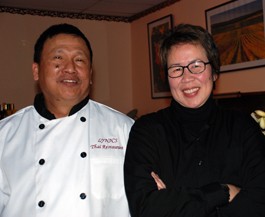
When Lynn Athavimol had lunch three decades ago at a Union City Thai restaurant, she had no idea that a plate of rice noodles was about to change her life. The chef there, a former policeman who exchanged his gun for a set of cooking knives, had made Lynn a plate of pad Thai. At first bite, she thought, “I have to marry this guy.”

About three years later, she wed Pyrote Sawangwan. The couple, who have been at the forefront of the North Bay’s Thai-restaurant scene since the late ’80s, recently opened Lynn’s Thai in Cotati’s Apple Valley Plaza. Pyrote works his magic in the kitchen; Lynn runs the front of the house.

Old friends and new fans of the couple’s restaurants are finding a warm welcome at Lynn’s Thai. Regulars praise the authentic Thai food they came to love when Lynn and Pyrote owned Thai House in Santa Rosa from 1991 until 2004. They keep coming back for Lynn’s convivial company, and newcomers rejoice when they discover Pyrote’s dishes.

“I think we’ve eaten in just about every Thai place in the county, and this is the best,” said Philip Tamarkin, eating for the first time at the restaurant. Tatiana Tamarkin said she appreciated the “beautifully presented dishes” and “lovely” soup. “They got the spices just right,” Tatiana says.

Stopping in for a lunch special recently, I was greeted with a steaming little bowl of tom kha gai, a coconut-milk soup with cilantro, kaffir lime leaf, lemongrass and the pungent gingerlike Thai spice called galanga. The soup was rich but not heavy, satisfying but not too filling, allowing me to enjoy the artfully presented red curry chicken.

The entrée was served on two plates: one had a fresh mixed-green salad topped with a sprig of parsley, a pair of sliced spring rolls with dipping sauce, and a little pyramid of brown rice. Alongside the appetizer plate was a square bowl of red curry with strips of skinless chicken, bamboo shoots, zucchini and other veggies in a savory sauce. Like the kind of real Thai food served in Thailand, it had a hint of sweetness to complement the chili but wasn’t cloying. The lunch combo cost $9.25, an excellent value.

The restaurant’s atmosphere is clean and light, with a few framed prints of the Buddha, Thai scenes and wine country images. Even the kitchen, visible from the dining room, seems serene. “The Buddha is calm,” Lynn says. “We don’t want to bang pots and pans because the Buddha likes a quiet peaceful place.”

Unlike some restaurants that make you feel they’re doing you a favor by letting you eat at their establishments, Lynn’s diners feel they’re part of an extended family. That’s why so many were disappointed when Lynn and Pyrote sold Thai House in 2004. The restaurant had a loyal following, but Lynn and Pyrote had earned some time off.

Coming to the United States as immigrants, they had worked grueling jobs. Lynn toiled for five years as an inspector at Teledyne, checking microwave parts under a microscope for $3.15 an hour and doing piece work in a clothing factory, getting paid 2 cents to sew cuffs, 50 cents for a collar. Pyrote had labored at a friend’s restaurant, first sweeping the parking lot, then washing dishes before working himself up to the cooking line. Owning their own restaurant was a big step that left the couple with little free time.

After working long hours for almost 20 years, Lynn says, “We thought, why not take a vacation? We were working like slaves, we had no kids, so why not travel while we still have energy? If we’d had kids, we probably would not have gone back to Thailand.”

Lynn and Pyrote were the loving parents of a baby who died when just 14 months old. “I got pregnant again but had a miscarriage, and then another miscarriage,” she remembers. “I was 42, and I said that’s it.” At that time, she says, “I felt we’d come to this earth for nothing, but we picked ourselves up.” Alchemically, Lynn seems to have transformed the devastating loss of her child into a greater sense of family she extends to her customers.

After selling Thai House, Lynn and Pyrote shipped some of their worldly goods to Thailand, where they planned to settle, and sold the rest. Then they embarked on a world tour that took them to France, Switzerland, Italy, Israel, Jordan, Australia, China, Cambodia and Vietnam, mostly places they’d never seen.

They rented a car in Europe, leading to typical travel spats. Given the challenges of driving in Europe, “the travel agent said it’s amazing we’re still married—we argued all the time!” Lynn says. The couple landed in Chiang Mai, a much smaller (population 170,000), less polluted and easier to navigate city than Lynn’s native Bangkok (population 10 million).

Embracing their never-ending love affair with food, the couple took cooking classes in Chiang Mai. Friends from the North Bay visited, and Lynn took them on elephant rides and to anaconda shows, as well as to vibrant open-air food markets.

After four years of living the good life in northern Thailand, Lynn and Pyrote, both in their early 50s, decided they were too young to retire. They returned to the North Bay and opened Lynn’s Thai in October. Monday, the only day they close, isn’t quite a day off.

“In Thailand, it’s easy to find ingredients,” Lynn said, “but here we have to go to Asian markets” in Santa Rosa or San Francisco. The couple often spend Mondays on Clement Street in the Richmond, shopping and then eating at friends’ restaurants to compare recipes and cooking styles.


Today, Lynn noted, Thai places are numerous, but Lynn recalls that when she opened her first restaurant most people had no idea what Thai food was all about. “When the first Thai House opened [in 1989 in Rohnert Park], we had one customer,” Lynn says, “and he didn’t come into eat—he was looking for a bus. We gave him a tea. We made 85 cents that first day.”

To bring in customers, Lynn invited people from Thai temples to stage Thai classical dance shows in the restaurant. “We offered $15 for dinner and dance performances; there was a line out into the street,” she says. Today, Lynn doesn’t need to hire dancers to lure customers. It’s Pyrote’s food, and Lynn herself, that keep them coming back.

 Lynn’s Thai Restaurant, Apple Valley Plazaon Highway 116 just west of Highway 101, 8492 Gravenstein Hwy., Ste. M, Cotati. 707.793.9300.

Quick dining snapshots by Bohemian staffers.

Winery news and reviews.

Food-related comings and goings, openings and closings, and other essays for those who love the kitchen and what it produces.

Recipes for food that you can actually make.

Short and Sweet

0

02.18.09

People, our fans, tell us that they love the quickness and the variety of Tapas,” explains actress-director Lois Pearlman of Pegasus Theater Company in Monte Rio. “There’s something so entertaining,” she says, “about seeing a whole bunch of wonderful little plays, all performed bam-bam-bam in a row. It’s just a lot of fun!”

Named for the Spanish appetizers that come in a wide variety of flavors and forms, the cleverly titled Tapas is a showcase of short one-act plays served up every year or so by the hard-working, theater-making people of Pegasus. This year, the tapas experience also includes a playwriting workshop with one of the featured playwrights, Santa Rosa author David Beckman.

According to Pearlman, the little theater by the river has been collecting submissions for almost a year, and the final selection of eight plays features work by playwrights all over the Bay Area, including three from San Francisco. Tapas also gives the various Pegasus’ regular directors an opportunity to experiment with new forms and styles of theater.

“Sometimes, there are some really interesting submissions that don’t speak to any of us as directors, so they don’t get picked,” Pearlman says. “We choose the plays based on which ones are the best, but also the ones we each are dying to direct.”

The two pieces that Pearlman will be directing are Gussie and Sam, by Naomi Newman of the Traveling Jewish Theater, and The Life and Times of Young Jon Sugar, an autobiographical “memory play” by San Francisco&–based performance artist-activist Jon Sugar.

“Gussie and Sam are a Jewish-American man and a woman in a nursing home,” she explains, “and they are pretty much staring in the face of death, but they are each irritated at the paltry, unspectacular circumstances surrounding the end of their lives, which don’t match the grandeur, excitement and adventure of their actual lives. They’ve each had long and interesting lives, and as Sam says, after a life lived with dignity, one should not be forced to call for bedpans that may or may not arrive in time. It’s a funny, charming little play, full of laughs and wonderful moments, and it ends beautifully, and sort of hilariously, with the couple shouting, ‘Bring me the death that belongs to me!’ The play is actually quite upbeat.”

As for The Life and Times of Young Jon Sugar, Pearlman explains, “it’s the author’s autobiography of his early years growing up in Miami as a precocious gay boy with a very weird family. It’s very, very funny and interesting, and sort of unexpected and surprising. It’s been a very challenging play to direct, because it’s basically a one-man show with 12 walk-on parts, but it’s been worth the effort because it’s really incredibly delightful.”

Here’s the scoop on the other Tapas offerings:

Isn’t It Fabulous, written by Beckman and directed by Scott Kersnar, is a whimsy-driven comedy involving a restaurant, starfish soup and a dog that might be a unicorn. Kersnar also directs the one-woman monologue Gypsy by Berkeley writer Lynn Snyder, which involves a mother considering the ethical implications of opening her daughter’s mail.

Crap Shoot, written by longtime Pegasus actress-director Jacqueline Wells, is an intensely personal play about two people whose lives are changed by a long-delayed meeting. Wells will also direct the piece, along with another titled Tightened to a Point, by San Francisco’s Alina Trowbridge, in which a husband and wife have only 10 minutes to pull all of their belongings from their newly impounded car.

In the unsettling No Vacancy, written and directed by Darlene Kersnar, two women on their way to an impeachment rally in Washington have a bizarre and mysterious series of encounters in a small town in Kansas. Finally, the emotional Cleaning Out, written by Evelyn Jean Pine of San Francisco and also directed by Darlene Kersnar, features a cathartic house-cleaning, as two women box up their recently deceased mother’s belongings.

  ‘Tapas’ runs Friday&–Sunday, Feb. 20&–March 15, at Pegasus Theater Company. Friday&–Saturday at 8pm; Sunday at 2pm. $15&–$18; pay what you can on Friday. Pegasus’ traditional opening-weekend Champagne gala, with a buffet of Spanish tapas, happens on Saturday, Feb. 21; $35. Pegasus two-part writing workshop with playwright David Beckman takes place Feb. 28 and March 7; $25, covers both sessions. 20347 Hwy. 116, Monte Rio. 707.522.9043.


Museums and gallery notes.

Reviews of new book releases.

Reviews and previews of new plays, operas and symphony performances.

Reviews and previews of new dance performances and events.

So Rich, So White, So What?

0

02.18.09

QUEUE: A new report suggests that SSU purposefully goes for students whose families earn more than $100k a year and are not of color.

Professor Peter Phillips is not afraid of controversy. Within the first two minutes of a recent interview at his Sonoma State University office, two different women come in to tell him that he has angered a lot of people with a report that he has just made public. Phillips shrugs. He admits that people aren’t happy with his findings. Phillips, a sociology professor and head of Project Censored, oversaw students in compiling a research paper titled “Building a Public Ivy” that chronicled SSU’s transition into what the report terms is the “richest and most likely whitest public institution in the state.” And indeed, the report incites further debate, claiming that SSU’s recruiting and admittance policies have “deliberately tried to increase student wealth and maintain a non-diverse student population.”

When he speaks on the issue, Phillips’ words are harsh and breathy, like verbal karate chops. “We want diversity on campus so that it’s a real-life experience,” he explains. “You come to college to take classes, but you also come to campus to meet people and interchange and learn from others and make friends with people who are diverse, so it gives you a broader, more liberal understanding of the world.” Durkheim and Habermaas books crowd his shelves, posters of Malcolm X and an American flag covered with advertising logos where the 50 stars would be hang above his desk.

“Building a Public Ivy” documents SSU’s admissions over the last 15 years, showing that its recruiters attended college fairs at high schools 75 percent wealthier than others in the area. Some 78 percent of the undergraduate population is white, just 12 percent Latino and almost half of incoming freshman, 48.7 percent, come from families whose income exceeds $100,000 a year. According to the report, staff also spent more time in private high schools than in the entire Los Angeles County school system, a very diverse area.

Sonoma State requires the highest SAT scores and GPAs in the California State University system other than CSU Cal Poly, an engineering school. Phillips says that “SAT-GPA scores are clearly correlated with income levels, and do not correlate to success in college.” All of this research seems to indicate that SSU intentionally recruits and admits wealthy, Caucasian students to campus, and lacks in efforts to search out and maintain students from poorer or more diverse backgrounds.

In the end, the report leaves much of the responsibility on the administration, if not directly on the shoulders of university president Dr. Ruben Armiñana. The report does more than suggest that Armiñana’s interest in creating a “public ivy,” founding of the Green Music Center for the Arts and raising of admissions standards has resulted in the transition of SSU from “being a . . . working-class, local-transfer campus, to being a sophisticated, upper-income, ‘safe’ residential university for students from families with interests in the mystique of wine, theater and intellectual pursuits.”

The issue is a hot-wired bomb. Some faculty refuse to comment about it, and all questions are redirected to SSU’s communications and marketing manager, Susan Kashack. Her response is careful and calculated; nobody wants to be misunderstood. She assures that Dr. Armiñana cares very deeply about diversity, and while the administration does already support local programs designed to bring in students of diverse ethnicity, there is still more to be done.

“On the one hand,” Kashack says, “it’s a good thing that reports such as this come out, because it forces us to look even deeper into what we do and how we do it. On the other hand, reports like this sometimes include selected data, or there’s a perspective in looking at the data that is skewed.” Is she suggesting that the report is biased or inaccurate? Kashack stresses, “It’s a campus effort. It’s not one person trying to create a specific program. It takes all 10,000 of us to help increase diversity here. Students must be encouraged to come to SSU, and once they’re here, they need to feel welcomed.”

Chuck Rhodes is the assistant vice president of student affairs and enrollment at SSU. He says that he still recruits for SSU, but not as much as he used to. His office is located within the SSU Residential Life building. Hanging on the walls of the Res Life office are five or six large posters that read “DIVERSITY,” each depicting different images of what exactly “diversity” looks like. The word itself, in light of this controversy, has somehow lost definition.

Rhodes says that he’s been meaning to write a letter to the university addressing the report, but he just hasn’t found the time. “We have 23 campuses in the CSU,” Rhodes explains. “SSU is one of four or five that gets more entering students from outside the service area than from inside.” The university gets 19 percent of incoming freshman from within its own service area and 81 percent from outside.

Rhodes, who is black, is clearly comfortable with the topic, saying, “We can yak, we can pass resolutions, we can form committees, but the six counties that we serve are very white. So why the people who are yakking and going crazy would choose to come to a white area and then complain about the lack of diversity just befuddles me.” This small, local pool of eligible candidates requires SSU to recruit students from out of the area. “We can talk all this intellectual and philosophical bullshit, but you have to have real people here,” Rhodes says. “We’re not going to fill our 1,600 to 2,000 freshman slots with people from our local service area.”

Rhodes’ impatience with colleagues who choose to gripe rather than make a difference is palpable. “They want to spend most of their time in meetings trying to embarrass the president or tying to embarrass somebody rather than get their ass in gear and do something meaningful.”

For Rhodes, Phillips’ research report is “junk paper” because, he says, “it talks about the past and doesn’t give us any solutions about where to go in the future, and I honestly believe that those solutions have to be made by a personal commitment.”

Phillips does offer solutions, though. He talks about a clear administrative plan of action that can help diversify the university, including lowering SAT-GPA standards; admitting students based on geography, like the much more racially- and financially-mixed University of California campuses do; hiring more faculty of color, although this, he admits, takes time; and reversing the recruiting trends by visiting high schools in less affluent areas, especially in areas around the Bay Area that have higher minority populations. Phillips says that he is shocked, for example, that SSU recruiters failed to show up for the East Bay Consortium this year, a college fair widely known for its ethnic diversity.

Rhodes contends that college fairs themselves don’t do the bulk of the work, saying, “If you go out to schools and college fairs, particularly in new populations, you’re just passing out pieces of paper, you and a hundred other schools. You have to have a personal relationship with those schools.” Rhodes also says that reaching the minority culture is different than reaching the majority culture, and unlike the latter, it cannot simply be done with a brochure.

For Rhodes, the solution to this problem begins with himself. To that end, he makes a point of seeking out and guiding students of color. “As a black, gay man, I am consistently evolving in how I develop my own awareness, my skills and my abilities in working with diversity,” he says. “Most of these people have not done any real work; they just think they’ve got it together because they are nice and liberal and passionate about it. They don’t go to conferences, they don’t go to workshops to develop their skills. They don’t participate in activities with students of color. They don’t mentor students of color or low-income students.”

On the topic of Dr. Armiñana, Phillips is clear that this is not a personal vendetta. “It’s not about Ruben, per se, or anybody else on this campus,” he says. “It’s not about bashing the administration; it’s about showing that, institutionally, decisions have been made that create barriers to the admissions of people of color and low-income people.” Rhodes may feel differently, saying only of Armiñana, “For a man who is ‘not interested’ in diversity, he certainly does show lot of support for it.” But is it the support that Phillips would like to see?

In the end, Phillips is hoping to shake things up while Rhodes is tired of talking about the issue. Although Phillips’ intention was not to solve the problem, it is clear that he is ready to see a change. “We now have a black president,” he emphasizes. “It’s more than the time; it’s always been the time. I’ve been doing this my whole life, which is why I was motivated to do this study.”

Meanwhile, Rhodes is working through solutions of his own. For him, change requires personal involvement. “All these resolutions and reports make us feel like we are doing something really important, but,” he concludes, “they don’t mean shit in my book.”



The World Is a Ghetto

02.25.09K'naan is a humble, gifted 21-year-old artist who grew up in war-torn Somalia and learned English by listening to American hip-hop CDs. His family eventually raised enough money to move to the United States, and shortly after his arrival, armed with an innate knack for poetry and a Third World backstory, K'naan released his hip-hop autobiography, The Dusty Foot...

Evil Clown of Power

02.25.09When the French satirist Alfred Jarry first presented Ubu Roi ("King Ubu") in 1896, the play was reviled by critics, who called it vulgar, perverse, disgusting, subversive, scatological, sexual and disrespectful to royalty and the church. It was a hit among the masses, who appreciated Jarry's low-comedy send-up of power and privilege. The offended bourgeoisie, however, demanded to...

Live Review: Philip Glass at the Napa Valley Opera House

I said everything I needed to say regarding the experience of seeing Philip Glass play live in this concert review from the Herbst Theatre in San Francisco, in 2007. That said, seeing Philip Glass play the piano is not an opportunity to be missed, because his music is more about how one reacts to it than what it sounds...

New Signs Around Downtown Santa Rosa

The short-lived ice cream shop at the old Madigan's building is empty again:Pete Moganam at the Fourth Street Market didn't raise his prices too much:The oldest business in Santa Rosa drops Drexel Heritage and goes back to simply being Pedersen's Furniture:Don't even get me started:How long does it take the city to figure out a simple dumpster problem? Way...

The Screeching Weasel Personality Test

Dear Jay Pullman, You're a neat guy and all, which is why I’m completely confused by your pick of Wiggle as your Screeching Weasel album of choice. You say, and I agree, that “You can tell a lot about a person by their favorite Screeching Weasel album.” Here’s how I might break it down:   The person who picks BoogadaBoogadaBoogada is most...

Interview: Maynard James Keenan from Tool

Are you just as surprised as most people that you turned out to be a winemaker? It doesn’t surprise me too much, ‘cause anything can happen. I went from being a cross-country runner, to being recruited to West Point, and then all of a sudden being in art school, and all of a sudden being in an international touring rock...

Live Review: James Hunter at the Russian River Brewing Company

The recipe for a fantastic lunchtime concert is pretty basic. When it comes down to it, all you need is a Fender twin reverb, a vintage Gibson, a Gretsch drum kit, a standup bass and some damn fine songs. That’s all James Hunter brought to the Russian River Brewing Company today, and it was enough to bring the...

Life’s Long Journey

02.18.09When Lynn Athavimol had lunch three decades ago at a Union City Thai restaurant, she had no idea that a plate of rice noodles was about to change her life. The chef there, a former policeman who exchanged his gun for a set of cooking knives, had made Lynn a plate of pad Thai. At first bite, she thought,...

Short and Sweet

02.18.09People, our fans, tell us that they love the quickness and the variety of Tapas," explains actress-director Lois Pearlman of Pegasus Theater Company in Monte Rio. "There's something so entertaining," she says, "about seeing a whole bunch of wonderful little plays, all performed bam-bam-bam in a row. It's just a lot of fun!"Named for the Spanish appetizers that come...

So Rich, So White, So What?

02.18.09 QUEUE: A new report suggests that SSU purposefully goes for students whose families earn more than $100k a year and are not of color. Professor Peter Phillips is not afraid of controversy. Within the first two minutes of a recent interview at his Sonoma State University office, two different women come in to tell him that he has angered...
11,084FansLike
4,446FollowersFollow
6,928FollowersFollow