Hid Wit

04.29.09

Writers are among the most fragile creatures. A couple of weeks ago, I had lunch with a novelist friend who’s published numerous books. After a wide-ranging conversation, we returned to our favorite topic: our obscurity as writers.

We try to one-up each other with our post-publication misfortunes. That day my buddy thought he had the topper. He fixed his large, sad eyes on me. “My friends,” he said, “don’t even read my books. They may buy ’em, but they don’t read ’em.”

I didn’t blink. “Hey,” I said, with a measure of truth, “my friends don’t even buy my books.”

The poet and critic Randall Jarrell sang a similar song in a famous essay in the early ’50s. “When I was asked to talk about the Obscurity of the Modern Poet I was delighted, for I have suffered from this obscurity all my life,” he wrote. “But then I realized I was being asked to talk about . . . the difficulty, not the neglect, of contemporary poetry.”

It is this sense of neglect that makes the writer’s condition so comic or harrowing, depending on your point of view.

The trouble for me is that I started out as a star. Sort of. I won the San Francisco Public Library’s High School Poetry Award as a senior. It’s all been downhill since.

My early taste of fame came at a price. I woke the morning after the award ceremony to my mother screaming at me. She showed me my photo in the Chronicle with the winners from the other grades. Then she pointed to my poem, italicized in the body of the story.

I had no idea that the Chronicle was going to print a poem, let alone one I’d addressed to my mother.  

Judgment

I don’t mind
that you spend your days
baking bourbon balls,
but when you slam
the refrigerator door,
barely missing the fingers
of my friend Wayne,
who’s thirsty and pours
himself a glass of milk,
you’ve gone too far. 

The other day, I drove into the city to attend the 28th Annual Northern California Book Awards at the main library, a block from the library of my high school glory. I was particularly interested in the ceremony. I’d been a longtime board member of the National Book Critics Circle and regularly participated in their awards ceremony in New York. I’ve also been a finalist for a few regional awards and know the importance of these ceremonies to writers as, in most cases, their books are about to fade away. Unfortunately, it’s easy for nominated writers to delude themselves with the belief that their obscurity’s about to end.

It was great to see a large standing-room crowd, but the ceremony itself was a clunky affair. The nominees were invited, one category at a time, onto the stage while the host, NCBA board member Mark Singer, fumbled with names and publishers and was at a loss to say anything about a few of the nominated books.

His most grievous error was to read long emails, meant to be award acceptance speeches, from nominees who weren’t able to attend. The trouble was that these weren’t the writers who won the awards. It was bizarre when Singer presented Michael Pollan’s five-minute acceptance speech as if it were a literary gem, while the other finalists, and eventual winners, stood awkwardly through Singer’s oration.

It also seemed odd to have the winners read from their work right after their award had been announced, without proper introduction, like runners forced to make flat-footed starts.

I prefer the National Book Critics Circle model. Finalists participate in a reading the night before the ceremony and the winners get a well-crafted introduction from the chair of each committee.

In Minnesota, where I lived for years, finalists give a month of readings preceding the award ceremony at public libraries throughout Minneapolis and St. Paul. That creates a climate of excitement among the literati and the nominated writers get their due.

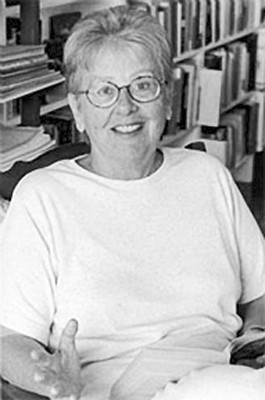
The one shining moment was when novelist and playwright Dorothy Bryant received the Fred Cody Lifetime Achievement Award. After a fine introduction by poet and novelist Mary Mackey, Bryant graciously accepted the award for all writers. She then read a chapter, “Writing the First Draft,” from her much admired method book, Writing the Novel, reminding us that the joy of creation is in these early imaginative markings, before editors and critics and outward concerns invade our psyches and make us confront obscurity.

Novelist Bart Schneider was the founding editor of ‘Hungry Mind Review’ and ‘Speakeasy Magazine.’ His latest novel is ‘The Man in the Blizzard.’ Lit Life is a biweekly feature. You can contact Bart at [ mailto:li*****@******an.com” data-original-string=”V9nuqTsyU6it2wjd5FgYwQ==06aHOKw59tZa4jxi+qY0Pkhs4wjAqkgG/kq4FYbPqIVj6z1wsakv6xtTDvcWSobQeVO” title=”This contact has been encoded by Anti-Spam by CleanTalk. Click to decode. To finish the decoding make sure that JavaScript is enabled in your browser.


Museums and gallery notes.

Reviews of new book releases.

Reviews and previews of new plays, operas and symphony performances.

Reviews and previews of new dance performances and events.

This Boys Life

0

04.29.09

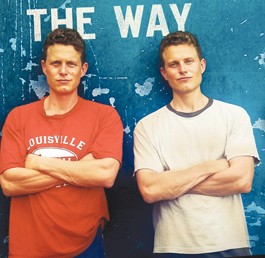
With a tender film and a rollicking memoir under their belts, Logan and Noah Miller are lucky guys. Or are they? “I think luck happens when you work your tail off and you put yourself in a position where, if you see the opportunity, you can jump on it,” Noah declares.

“And you have to be prepared,” adds his softer-spoken twin brother, Logan.

For these bright and charismatic Fairfax natives, who between them seem to carry the force of the sun, success has been especially hard-won—and, yes, has involved plenty of preparation. Let’s just say the odds were against them.

The Miller brothers’ turbulent working-class upbringing, marked by a lovable but alcoholic father, drove them to the sanctity of the baseball field. “We couldn’t have played any more baseball than we did growing up unless God had made more hours in the day,” they recount in their memoir Either You’re In or You’re in the Way: Two Brothers, Twelve Months, and One Filmmaking Hell-Ride to Keep a Promise to Their Father (Harper; $26.99). The discipline of athletic practice, paired with a fierce work ethic, would become the seed of their creative success.

The twins left West Marin to attempt careers in the minor leagues, only to return at the devastating news that their dad had passed away. Local roofer Dan Miller spent the last 15 years of his life homeless, camping out in Samuel P. Taylor Park, and died in the Marin County Jail in 2006.

The average person wouldn’t have responded to such tragedy with a screenplay, much less a beautifully produced film starring the award-winning likes of Ed Harris. But there’s nothing average about the Miller brothers.

By all accounts, their film Touching Home never should have been made. When the Miller brothers set out to make the movie as tribute to their father, they had no money, no industry connections and no experience.

“You probably can’t start any lower in the business than we did, if you just want to put that down on paper,” Noah instructs.

They were not only new to the film biz, but to the practice of writing. Too busy playing catch and laying shingles with their dad to be star students, they’d never bothered learning to type. Even after a reckoning with instructional typing software, Noah remains averse.

“I will not touch a keyboard,” he says defiantly. “That will just ruin it.” Creative flow is apparently a delicate thing, even for a burly baseball player.

“Noah will write freehand and I’ll type, and then we’ll blend what we wrote,” Logan explains.

Such an intimate mind-meld is only to be expected; the twins share almost everything (even their underwear, as they willingly point out).

Their process resulted in the screenplay for the 2008 release of Touching Home, which, after hundreds of rejections, won them the Panavision New Filmmaker Grant. Though prestigious, the grant wouldn’t begin to cover the cost of the film. So the twins began taking out credit cards—17, to be exact. The “hell ride” so well chronicled in Either You’re In had begun.

The soaring triumph echoed throughout the book is that the Millers, in search of the perfect lead actor to play their father, cornered Ed Harris in an alley behind the Castro Theater in San Francisco. After they propped their laptop on a metal Dumpster and showed their two-minute film trailer, Harris agreed by handshake to do the film. The cavalier strategy will likely go down as indie film legend—and was no dumb luck.

 “It’s not like we walked down the street and found a million dollars, ” Logan remarks wryly. “There were so many steps along the way that had to be accomplished before we could get in front of Ed Harris.”

Recalling the attitude that drove them to the Castro Theater and beyond, Noah reflects, “We’ve always kept this hope and optimism that, OK, this is just short-term. But long-term, there‘s where we’re gonna go!”

Indomitable in spirit, the Miller brothers radiate a graciousness and positivity that, for all their hard work, make it clear they feel lucky indeed.

“We appreciate a challenge,” Logan says. “It’s just something that helps kinda give a richness to life.” 

‘Touching Home’ screens on Wednesday, May 6, at the Smith Rafael Film Center. 1118 Fourth St., San Rafael. 7pm. 415.454.1222. The Logans read from and discuss ‘Either You’re In or You’re in the Way’ on Tuesday, May 5, at Book Passage (51 Tamal Vista Blvd., Corte Madera; 7:30pm, free. 415.927.0960 ) and again on Thursday, May 21, at Copperfield’s Books ( 2316 Montgomery Drive, Santa Rosa; 7pm, free. 707.578.8938).


New and upcoming film releases.

Browse all movie reviews.

‘Steel’ Will

0

the arts | stage |

By David Templeton

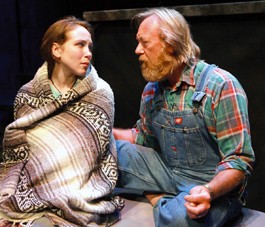
Just over a year ago, actor-director Peter Cooper suffered a severely broken neck in a freak car accident. Today, he’s trying to decide what color a Louisiana beauty parlor should be.

“We’ve painted the set, but I don’t like the colors, so we’re going to repaint it,” he says, taking a short break during a long day at the Raven Performing Arts Center in Healdsburg, where he is directing Robert Harling’s beloved comedy-drama Steel Magnolias. “Unless I change my mind,” he says, with a chuckle, “were going to go with a pale yellow.”

For Cooper, the production (which opens this weekend) marks his return to the stage after a long recovery that has required several surgeries, hours of physical therapy and plenty of time wondering if he’d ever be able to work again.

The last show Cooper directed, Pegasus Theater’s Perfect Ganesh, was last March. That was just before the roadside accident that sent Cooper’s car over an embankment, where he ended up trapped for several hours, his head held still by a passing doctor who was able to climb into the wreckage and stay with Cooper until the rescue crew arrived. Not long before that, he’d appeared at Pegasus in the role of a mentally ill mathematician in the popular drama Proof. While it is unlikely that Cooper will feel up to taking any stage roles for a while, he’s happy that the Raven Players approached him, not long after the accident, to offer him the opportunity to direct Steel Magnolias (“They asked me after I’d broken my neck, when I was vulnerable,” he laughs), if for no reason than that it has given him something else to look forward to during his long recuperation.

“I like the show,” he says. “I directed it once before at Pegasus, and I’ve always hoped to be able to do it again. The fact that five of my six actors have never done this play before gives me a chance to do things a little differently. Of course, the arc of the play is the same, the underlying thread of humor with the occasional touch of tragedy, that’s all the same, and that’s what I love so much about Steel Magnolias.

Set entirely in the hair salon of sympathetic beautician Truvy Jones, the story deals with the close-knit friendship of a small circle of Southern belles, the “steel magnolias” of the title. As they frequently come together at Truvy’s salon to gossip, bicker, compete and conspire, the sextet of friends experience a full menu of life’s joys and tragedies.

“This play is about the ups and downs of life,” says Cooper. “It’s about love. It’s about togetherness. It’s about life. It is about all of our lives. It interests me because these women are all so real. These are six very real women, and I think there is something to identify with in all of them.”

One of the things Cooper says he likes so much about the play is that the characters all display admirable and loathsome qualities.

“I’m very fortunate,” he says, “in that I have actors who are able to display all of that at once. I think these kinds of characters, their complexity and depth, are a lot of fun for actors to play. Especially if your actors are intelligent, and mine are very intelligent. They are up to the challenge and just very interested in these characters, lovely Southern eccentrics that they are.”

Steel Magnolias runs Friday–Saturday, May 1–24, at 8pm; also, May 17 and 24 at 2pm. Raven Performing Arts Center, 115 North St., Healdsburg. $14–$20. 707.433.6335, ext. 11.


View All


Museums and gallery notes.


Reviews of new book releases.


Reviews and previews of new plays, operas and symphony performances.


Reviews and previews of new dance performances and events.

Where Are the Unions?

04.29.09

MAY DAY: As May Day approaches, we assess the role of immigrants in the North Bay, both in this story and the cover feature.

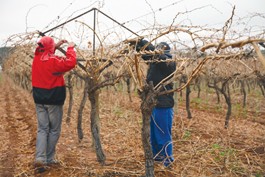
It’s hard to make out faces while passing them on the highway. They may even seem mere dots, spread out against distant rolling expanses of immaculately groomed wine country vineyards. Others mill about in early-morning clusters, on sidewalks and parking lots in places like Boyes Hot Springs, Napa and Graton, hoping day work is offered. Most have traveled north from distant southern climes, providing the skilled workforce that ensures North Bay’s vineyards flourish. They are essential to the continuing production of America’s most prestigious and costly wines. But in these dire financial times, just how are Napa and Sonoma’s vineyard workers weathering the economic storm?

March 2009 figures place Sonoma County joblessness at 9.1 percent, the highest rate of unemployment since 1983. How that rate affects vineyard workers is difficult to gauge. Many are undocumented or travel here each day from surrounding counties to seek work. That now is the toughest job environment in the past 26 years would seem to be bad news, particularly for marginally and underemployed workers.

Yet according to Nick Frey, president of the Sonoma Winegrape Commission, things haven’t changed much for the vineyard worker. “Actually, the workload is pretty much there,” Frey says. He points to other industries, such as construction, which have seen dramatic declines. Frey attributes enhanced numbers seeking vineyard work to job losses in these other sectors.

Last season, North Coast grape yields plummeted for the third straight year, a 21 percent drop in Napa Valley and 15 percent in Sonoma County. North Coast growers, including Lake and Mendocino counties, suffered a $144 million revenue dip in 2008. Frost wrought havoc at bud break in growing regions like the Carneros, and other weather factors severely diminished the crush.

Whether it be an influx of laid-off workers from other industries, cutbacks by vineyard owners and management or American trade policies like NAFTA that are responsible for swelling the available immigrant labor pool, a survey of regional vineyard worker and day-labor organizations suggests growing numbers of people are seeking vineyard work, with fewer and fewer actually finding it.

Just two years ago, the Wine Spectator Magazine published a story asking “Where Have All the Workers Gone?” a question that Peter Martin, professor of agriculture and resource economics at UC Davis, sees as moot. Martin’s research indicates that the much ballyhooed field-labor shortages were and are simply a mirage. In a report published last year, Martin points to wages, which he would expect to see rise dramatically were there a labor shortage. He compares the average farmworker wage of $9.06 an hour with the substantially higher average of $16.76 for non-farm labor, noting that real wages for farmworkers increased only 0.5 percent between 2000 and 2006.

While all farm labor is physically demanding, vineyard labor requires a skill set well beyond what many imagine when conjuring up images of, say, conventional stoop labor. A good vineyard worker not only requires extensive training, but, like other professional fields, there are those who bring talent to the fields and those who do not.

Gregory Billikopf is a labor management farm adviser for UC Davis, and the author of Labor Management in Agriculture: Cultivating Personnel Productivity. Billikopf says, “All my research has demonstrated that out of, say, 15 to 20 employees, the best will perform four to eight times better than the poorest, on the average.” Billikopf, who was raised in a grape-growing family in Chile, is an ardent believer in piecework.

“If your best worker produces four to eight times as much as the poorest, and the poorest worker is making $6, isn’t that $45 fair? I’ve heard story after story of workers being punished for being too productive,” Billikopf says. “Adding tasks, lowering wages—there are 101 ways to punish workers who do well.”

Billikopf notes that the very finest farmworkers are likely to be found in the vineyards since, unlike most other forms of agriculture, vineyards require near year-round attention. But he also emphasizes the high degree of skill vineyard work demands. “With a regular tree, you prune it back so it doesn’t work so hard. In grapevines, it’s an art,” Billikopf says. “It’s such a quality thing, to prune a grapevine. A thinking job. Among the highest skilled jobs in agriculture.”

Which leads to the question: If vineyard work is so demanding and difficult, do vineyard workers actually receive fair recompense for their efforts?

According to the Living Wage Coalition of Sonoma County’s 2008 figures, a single person with a full-time job needed to make $15 an hour, plus benefits, in order to be considered self-sufficient in the county last year. Since vineyard labor requires such a high degree of training, aptitude and concentration, matched with constant physical exertion, is it fair to assume that vineyard workers would be paid somewhat more than simply what’s required to financially squeak by?

Frey says, “Sonoma County has probably some of the highest wages in the ag industry in California because we have premium-quality products and there’s a real move to provide career opportunities for our employees.”

Locally produced wine is certainly premium-quality, and very profitable, too. According to North Bay Biz magazine’s “2009 Top 500 North Bay Companies,” last year’s combined revenues for the three top local wine firms was $1.868 billion, every penny of which was generated from their operations located here. With 500-plus wineries calling Napa and Sonoma counties home, and over 1,800 separate grape growers in Sonoma County alone, it’s no stretch to say that there’s still a lot of money coming in from grapes and wine.

So does the vineyard worker fairly share in these rewards? If a full-time employee need make $15 an hour simply to manage self-sufficiency, then just what do these “high wages” amount to?

“I imagine there are some people paying minimum wage or close to it,” Frey says, “but here our general labor average is $10.13 [per hour] if they’re a farm labor contractor employee. If they’re working for somebody, it’s $9.32. That was the average in Sonoma County.”

Which means that hardworking skilled vineyard professionals are, on average, making approximately two-thirds of what is required simply to squeeze by here in the North Bay—but only if they consistently work a 40-hour week and receive full benefits.

North Bay’s vineyard history has, of course, been a patchwork of difficult ethnic transformations ever since native Miwoks first planted and tended vineyards of mission grapes for Sonoma’s Franciscan padres in the early 1800s. Successive waves of immigrants and migrants, including Chinese, Japanese, Portuguese, Okies, Filipinos and Italians preceded the Mexican worker in vineyards here, and all have encountered deprivations.

The issue of unionization, and the current acrimonious debate in Washington over the Employee Free Choice Act, also resonates here. Asked why, in his opinion, there have been few recent efforts to organize local vineyard workers in unions, Frey says, “I think that the union, just like this organization—we have to provide services to our growers that are valued.”

Frey’s implication seems to be that neither the United Farm Workers (UFW) nor any other unions provide services as valuable to vineyard workers as do associations which represent, lobby for and support the wine grape growers. Frey explains that while other parts of the ag industry pay only minimum wage, the relatively higher pay scale in Sonoma County might tend to neutralize organizing efforts. “I think,” he says, “the opportunity for unions to deliver value to their members probably is a little higher [elsewhere].”

Casimiro Alvarez, North Coast director for the UFW, strongly disagrees. “It’s not true,” says Alvarez. “In some vineyards, people are making minimum wage, $8.50 or $9 [per hour]. Some people make more, but they don’t receive benefits.”

Five North Bay vineyard operations are currently under contract with the UFW, representing about 700 vineyard workers in Napa and Sonoma counties combined, according to Alvarez. That’s a far cry from the UFW’s glory years, but Alvarez attributes it to both grower opposition to labor unionization and to their increasing reliance on outside contractors to hire the vineyard work force. He points out that about 300 of the 700 local UFW members work for contractors, emphasizing how difficult organizing outside contractor-hired labor is.

“The majority of the farm-labor contractors bring the laborers in from the Central Valley,” Alvarez says. “I go to the field and try to explain to workers what rights they have under our union contract, but they are afraid. The problem is these workers are afraid to be fired.”

When Alvarez ranks vineyard worker desires, respect tops the list, followed in order by improved working conditions, better wages, benefits and paid holidays. These, he insists, will only be accomplished through union membership, but, says Alvarez, “The grape-grower associations, they don’t want the union, and the majority of the farmers are intimidating the workers not to have a union. Always they are trying to destroy the union.”

Labor writer, photographer and activist David Bacon concurs with Alvarez, though he has a somewhat different take on the situation. “I think that Sonoma and Napa counties are very good and very fertile grounds for organizing for a lot of reasons,” says Bacon. He cites older workers who were once UFW members and who remember the benefits and positive changes wrought by the union.

“And secondly,” says Bacon, “in some ways it’s easier for workers to organize if there already are somewhat better existing conditions.” He points to the Napa-Sonoma wine grape industry’s enormous wealth and profits, saying, “They have the money to improve conditions. That makes it a better place to organize.”



Back to the Commune

0

04.29.09


Zayd Dohrn knows what it’s like to grow up underground.

A fast-rising NYC playwright, Dohrn is the son of real-life radicals Bill Ayers and Bernadine Dohrn, who were thrust into the spotlight last year in a media scuffle about candidate Obama’s supposed collegial relations with Ayers, a cofounder with Dohrn and others, of the militant Weather Underground organization.

The younger Dohrn lived his early life in hiding with his parents after a notorious 1970 incident in which a bomb blast killed two other WU members in a New York apartment. Dohrn’s parents, now professors at the University of Illinois, assumed false identities for years, eluding the FBI and, for a period of time in the late ’70s, making their home at a sprawling Northern California commune called Magic Forest Farm.

In his newest work for the stage, Dohrn (Sick, Haymarket) has returned to the commune with a play titled, appropriately enough, Magic Forest Farm. The atmospheric drama—an earlier version of which won Marin Theatre Company’s annual Sky Cooper award in 2007—has just opened in its world premier production under the direction of MTC’s producing director Ryan Rilette. Since winning the Sky Cooper, the play has been through extensive revisions and workshops, and on this morning, the day after Magic Forest Farm’s first official preview, the show’s exuberant playwright and director are celebrating the culmination of a yearlong collaboration.

“It’s funny,” Dohrn says, “I was listening to the actors yesterday, when Ryan was giving notes after the preview, and one of them mentioned that, with one particular scene, it had taken her a long time to come around to performing it the way she initially, instinctively had wanted to do it. So everyone started talking about how, in the rehearsal process, you often end up having an idea, then going in another direction, and finally coming back around to what you wanted in the first place. That’s exactly what it’s been like for me in developing this play.”

Not strictly autobiographical, though definitely inspired by Dohrn’s various post-commune musings, the play follows a young San Diego woman named Allegra (Laura Morache, last seen at MTC in My Children! My Africa! ), who begins to suspect that her barely remembered childhood on the Magic Forest Farm commune may have been less idyllic than her parents have led her to believe. In a search for answers, she returns to the commune for the 30-year reunion, and there reconnects with some of the other, now-grown commune kids.

The stellar cast includes Robert Sicular (last seen in The Seafarer), Julia Brothers, Anna Bullard, Avery Monsen and David Cramer, all of whom have been with the show since its staged reading last year as part of MTC’s Nu Werkz series.

“When I first set out to write this play,” Dohrn explains, “it looked a certain way in my mind. But then, through some of the early readings I did, the play gradually got pushed away from what I’d originally wanted it to be and became something else. So a lot of my process with Ryan has been, through work-shopping and many long conversations, to evolve the show back toward the play I’d first wanted it to be, to follow my original instincts. So now I think it’s back, but I realize that it also has so much more richness, too, because of all the other places it’s been on its way back home.”

“There are things in the script that took us both a while to understand,” Rilette adds, “that took a while for us to figure out how to use properly. In particular, in the earlier drafts of the play, there was much more of a sense of possible sexual abuse hanging over everything. The play had become about sexual abuse. There was a point when Zayd and I were in New York, and we were having lunch talking about it, and we realized that the real point of the sexual abuse stuff was really just to get the characters back to the commune. So Zayd went back and rewrote tons of that stuff. Today, it is a very different piece, a much stronger piece, I think.”

“It’s a funny thing about script development, the way these things evolve,” Dohrn muses. “You workshop a play with actors or invite people to readings of a play, and you are encouraged to make daring choices, to make dramatic changes so the actors have juicier things to explore. What happened early on with Magic Forest Farm is that it kept moving more in the direction of that question of whether there’d been sexual abuse in Allegra’s past. That question is certainly still an important aspect of the play, but I’d never really thought that was what the play was about.

“So a lot of what we’ve been doing over the last year is figuring out how to use that question—was there abuse or not?—as a way to make an entry into the play, to use it as a tool to crack open the world of the play and its characters.”

So what is Magic Forest Farm about?

“I always thought it was a play about generations,” Dohrn answers after a pause. “It’s about how kids eventually come to understand their parents, and then understand how their own lives are going to go forward in terms of that legacy. Specifically it’s about the way kids of the ’60s generation have repurposed the legacy of their parents.

“It’s also a piece about the differences between the nostalgia and loss felt by the parents who founded this commune,” Dohrn continues, “and the very different, oddly reversed sense of nostalgia and loss among the kids who grew up there.

“What I’m interested in are the ways that my generation and the kids who grew up on communes, the ways they view that legacy. What kinds of loss do they feel, as opposed to their parents, who really experienced it in the prime of their young adult lives? Each generation has a different way of looking back at that time, and this play explores the differences between those two different vantage points.”

“During rehearsals,” Rilette says, “we did a lot of research together. We watched a documentary called Commune, and we have lots and lots of books our dramaturge, Margot Melcon, had pulled together for us, books on the children of the counterculture, specifically those about growing up on a commune. And we have a great book from the actual Magic Forest Farm commune that has great photos of life on the commune. All of that led to some incredible conversations about the legacies of the 1960s—the good and the bad.”

According to Dohrn, the project has been of great interest to members of the real-life Magic Forest Farm, many of whom attended the stage reading last year. Not too surprisingly, they all had a lot to say.

“A whole lot of them came to the reading,” Dohrn laughs, “and I had many interesting conversations with them afterwards. I think a lot of them are planning to come back for the run of the show, so I’m sure I’ll get even more feedback. I’m looking forward to hearing what they think of what we’ve done with the play. I’m curious to see whether they think we’ve authentically captured life on the commune.”

As for his own memories of his time underground, Dohrn admits that he’s still got plenty to think about on his own journey to understand his past.


“I have a lot of really good memories and a lot of weird memories,” he says. “Some of my friends who spent a lot more time on communes have quite creepy memories. And yet I think everybody feels that there was something there that was worthwhile and special. Part of what the play is about is the question of whether there is something inherently unworkable about the commune system, or is there some way it could have been salvaged if people had made different choices.”

Rilette adds, “Ultimately, the message is that there are some really great things that can be taken from the ’60s, from radicalism, from life on the communes—but for those who’ve grown beyond it, you have to choose what to take away and what to leave back there.”

‘Magic Forest Farm’ runs Tuesday&–Sunday through May 18. Tuesday and Thursday&–Saturday at 8pm; Wednesday at 7:30pm; Sunday at 7pm. Matinees, Thursdays at 1pm; Saturday&–Sunday at 2pm. Marin Theatre Company, 397 Miller Ave., Mill Valley. $20&–$51. 415.388.5208.


Museums and gallery notes.

Reviews of new book releases.

Reviews and previews of new plays, operas and symphony performances.

Reviews and previews of new dance performances and events.

MYC Check

0

04.29.09

Every generation has its own denigrated music, but no genre has been a hated sound for nearly as long as hip-hop. The youth cling to it like a lifeline, while the adults of the past 20 years have treated hip-hop like a cancer, reacting ignorantly to media hype and conservative fear. Only gradually does education reach them—and if that education were to begin with Many Thoughts, One Myc, the maiden release from San Rafael’s youth center the MYC, then we’d all be in pretty good shape.

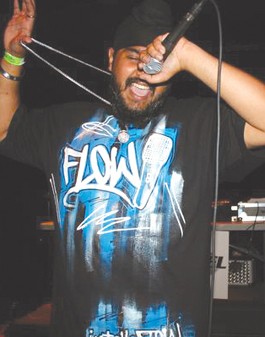
At a MYC open house last month, a group of teenagers from Oakland’s School of the Arts joined members of the MYC for an all-out freestyle of T.I.’s massive hit “Swagga Like Us.” A live band of drums, keys and bass backed up a group of female singers, while MYC events coordinator Torman Jahi got the crowd on its feet and gave the spotlight to a 20-year-old rapper in a knit cap named intellaFLOW.

With the pressures of the freestyle upon him, intellaFLOW rapped the alphabet. Even crazier, he made it sound dope. He got up to “L-M-N-O-P,” broke off into a spiraling verse, passed the mic to the left and threw his hands up. To the casual audience member, it was a sweet moment, but the hurdles intellaFLOW has overcome in his love for hip-hop made it nothing short of a victory.

Growing up in San Mateo, intellaFLOW used to leave the light on in his room, telling his parents he was scared of the dark. In actuality, he’d stay up reading books he’d sneaked into his pillowcase. One day, coming home, he found a CD on the ground in the parking lot of his building, out of its case. It was 2Pac’s 2Pacalypse Now. “I went upstairs in my room and played it,” he says, “and I was like, this is a sick way to express yourself!”

His life changed right then and there. Years later, with his eye on attending an Emeryville recording school to become a hip-hop producer, intellaFLOW found his parents unsupportive. His sister had gone into dentistry, and they wanted him to succeed as well as a doctor or lawyer. But hip-hop had given him everything, and he wasn’t about to abandon it. That’s when he got a speeding ticket.

Unable to pay the fine, he opted for community service and found the DigiQuest Learning Center, which evolved into the MYC. There, at last, were all the resources he was about to pay thousands of dollars to use at a “real” school—and they were free. He’d been making beats since he was 14 and writing rhymes since he was 12, and at the MYC, he was able to master ProTools and record on top-quality gear.

“Hip Hop: The Reprise,” from Many Thoughts, One Myc, is intellaFLOW’s story. “His parents never let him learn to use his power / He tried talking for hours and hours,” he raps, adding that “Hip-hop is my soul and these beats are my body.” The conclusion? He packs up his notebook, pen and mic, and discovers a place that’ll nurture his talents.

As the MYC’s outreach coordinator, intellaFLOW found other kids who could benefit from free access to hip-hop. “Everyone that I see walk out of here, after you come here for a while, you will learn something,” he says. He talks about kids who have gone on to produce for Bay Area hip-hop artists, who have been in and out of juvie and made something of themselves. Some reject the adult-approved atmosphere of the MYC, and go back to the streets. Often, they come back.


IntellaFLOW no longer works officially at the MYC, but that doesn’t stop him from still showing up every day. “Honestly, I don’t stop trying,” he insists. “There’s this one kid, he’s been coming here as long as I have. He’s 16, he’s been kicked out numerous times. He calls me, and he’s like, ‘You’re kinda like the father figure in my life.’ And I’m like, ‘All right, well, then you need to stop being stupid!’ He’s been good about it, he’s been doing well. I’m proud of him.”

These days, the MYC is part of intellaFLOW’s blood, and gave him a push when he needed it most. Based on his experience there, he’s headed to S.F. State with a scholarship in studio engineering, and he aspires one day to open his own recording studio. Here’s hoping his parents will be proud.

The MYC is well-represented at the ‘Unity in our Community’ festival, with performances from Bay S.L.A.M., Torman Jahi, Stay True Crew and a poetry slam by teenagers from the MYC on Saturday, May 2, at Canal Alliance, 91 Larkspur St., San Rafael. 1-7pm. Free. 415.306.0432.


Immigrant Traditions

0

04.29.09

You shall not oppress the stranger. You should understand the heart of the stranger, since you were strangers in the land of Egypt.

—Exodus 23

People often ask why Jews, generally speaking, seem so simpatico to the plight of the Latino community. As a kid growing up in the Boyle Heights section of East Los Angeles, in a predominantly Latino neighborhood, I never thought much about it. Back then, kids didn’t think a lot about race and religion.

About 18 months ago, the Sonoma County Committee for Immigrant Rights contacted the Social Action Committee of Congregation Shomrei Torah, the reform synagogue in Santa Rosa. They asked if we, as part of the faith-based community, would host an education forum to hear some of the stories caused by Immigration and Customs Enforcement (ICE) raids in homes and workplaces threatening the basic rights of many in the Latino community.

More than 125 people turned out to hear some of those stories. And they were truly heartbreaking. Young men stopped for no apparent reason only to be found undocumented and put in jail for weeks or more, and then sent back to Mexico. Doors banged upon in the middle of the night to yank women out of their homes and return them to Mexico, leaving young children behind. These were sons, husbands, daughter, wives, fiancées abruptly pulled apart from their families. The sad beat went on.

Some time after the forum, 35 members of Shomrei Torah walked with the Latino community in the annual May 1 International Workers’ Rights Day march and rally in Santa Rosa. Leading the way under the Shomrei Torah banner was Rabbi George Gittleman, who thought enough of the event and its intent to keep his twin 12-year-old kids, Levi and Sophie, out of school to march.

Why do Jews feel this affinity, this need to support the Latino community?

The common bond is that the Jewish community is heir to and bearer of an immigrant tradition going back almost 2,000 years. The Jewish people migrated from place to place for various reasons. At times, we were economic immigrants escaping poverty. At times, we were political refugees escaping oppression and death. This history lays a claim on us. We know that borders can mean life or death. Our history commands us to recognize the humanity of immigrants and the underlying reasons for their migration.

As we Jews remembered recently again at the celebration of Passover, the Bible is basically the story of migrations. Our national identity is forged from Abraham’s immigration to Canaan to Jacob’s sons’ journey to Egypt to the Exodus and re-immigration to the land of Israel, and the forced emigrations into exile.

Our tradition informs our vision of what constitutes a just and compassionate America, one that reflects the best of what we are and what we can be as a country. As we respond to the challenge of reforming our immigration policies, we must not succumb to the false solutions of nativism and scapegoating, but acknowledge the underlying economic and social causes of the immigration phenomenon and seek a comprehensive, humane solution.

Jews and Latinos can find other common bonds similar to other members of minority groups whether it is religion, racism, gender, etc. It is about being the stranger in a strange land, being “the other,” the different one.


On Friday, the Committee for Immigrant Rights is again sponsoring the annual Sonoma County Annual Workers Day march. Once again, Shomrei Torah will join our friends in the Latino community. We invite all of Sonoma County to join us and the Latino community in the symbolic walk for freedom. This is the 21st century. There can be an end to these painful unwarranted ICE raids. Where is the humanity? Are we not all just the same in “God’s eyes”?

Larry Carlin is the co-chair of the Social Action Committee for the Congregation Shomrei Torah in Santa Rosa. The May 1 march is scheduled to begin at 3pm at 665 Sebastopol Road, near Dutton, in Roseland at the old Albertson’s; it arrives 4:30pm in Santa Rosa’s Courthouse Square.

We welcome your contribution. To have your topical essay of 700 words considered for publication, write [ mailto:op*****@******an.com” data-original-string=”bjSI3z56m3QszmvyWZrn3A==06aC4zXmpO6sCeNVDJWUkcG/XOdBZ76gPRF8hFZCvF+Y7HNEsS7DJR+fadmbao6fba88X7SB//yBlWnG9aqNxKu0K14ZVHMPkWucl3dfSnaoww=” title=”This contact has been encoded by Anti-Spam by CleanTalk. Click to decode. To finish the decoding make sure that JavaScript is enabled in your browser. ]op*****@******an.com.


Electronic Admissions

0

04.29.09

So there I was, going on and on about how everyone should have an open mind about music, and how everyone should approach new artists with no prejudice or bias, and how it takes a disciplined mind to hear music as a clean slate, blah blah blah. The fact of the matter is that two years ago I clicked on Bassnectar’s webpage, saw some tribal-looking bullshit, heard a few bars of crappy neo-rave music and ran screaming.

My prejudice: the name, Bassnectar. What a godawful name, like something unsavory that slides down your leg. My prejudice: the Burning Man hippie electronic underground, which has pumped out warble after woofer warble of repetitive siren noises that sound totally amazing when you’re on E and terrible the morning after. My prejudice: Maybe I was in a bad mood that day.

My transgression: I wrote off Bassnectar for months.

My confession: Lord, I have sinned. Underground Communication, Bassnectar’s debut album, is one of the greatest electronic albums ever recorded on this good earth. It is as cerebral as Fourtet, as layered as Squarepusher, as calming as Kruder & Dorfmeister and as funky and party-rockin’ as Quantic. Because of a closed mind, these simple facts, and the rapturous artistry of Underground Communication, criminally eluded a usually astute musical radar.

My restitution: Penance was paid by missing Bassnectar’s show in Sebastopol, in 2007, and in actually losing sleep over the mistake. In the meantime, Bassnectar headlined the Fillmore, the Greek Theatre and a huge New Year’s Eve party in San Francisco alongside Thievery Corporation. The least I can do is to tell the public to get their asses to Sebastopol and witness a rare small-club appearance when Bassnectar miraculously comes back to town on Monday, May 4, at the Hopmonk Tavern, 230 Petaluma Ave., Sebastopol. 9pm. $25. 707.829.7300.


Growing Awareness

0

04.29.09

I‘ve got most of my garden planted now: three kinds of lettuce, arugula, five kinds of tomatoes, two kinds of cucumbers, a bunch of herbs, broccoli, spinach, carrots, onions, cardoons, artichokes, Brussels sprouts, corn, eggplant and chile peppers. (I was supposed to wait until May 1 to plant the tomatoes, but I’m impatient.)

As I surveyed the sprouts and anticipated my backyard bounty, I came to two realizations. First, 200 square feet isn’t nearly enough space to put a dent in my family’s fresh produce needs. During the hours I spent double-digging my beds, I thought I could go into business as a farmer with the surplus, but given our appetite, we’ll still need to go to the store for more. Even if I dedicated half my beds to onions we would need more.

Next, confining a garden to the backyard is all wrong. If I expanded to the front yard, it would obviously give me more planting space, but I think it could have a more powerful effect. It just might inspire my neighbors to peel up their lawns and plant vegetables gardens of their own and thereby create a kind of decentralized community garden. Let me explain.

In my wildest fresh-produce fantasies, like-minded residents on my street would gaze upon my front yard garden and decide to pick up a hoe themselves. Each one would specialize in a few crops as part of a coordinated effort to raise the food we wanted. And we might even get to know each other a bit better as we met to divvy up vegetables and discuss snail combat techniques and the virtues of worm casings as a fertilizer.

In a small way, I feel like my backyard labors have already sparked an interest in community gardening. A month or so ago, I rented a sod cutter to peel up the ugly mat of tangled weeds and grass where I wanted to plant my garden. If you’ve never seen a sod cutter, it’s an ingenious but loud machine that uses two blades that wiggle parallel to the ground to rip up the turf. After rolling over the grass with the blades going, you simply roll up the grass. It’s like laying down sod in reverse.

Anyway, my neighbor was curious about what I was doing with the contraption and watched it in action. Inspired, he asked if he could borrow it to rip out a section a grass in his front yard that had been overtaken by crab grass. He was planning to reseed it with grass, but interested neighbors kept asking what he was going to do with the bare ground. A garden? A fruit tree? Flowers?

He bowed to the neighborhood’s interest in something other than another lawn and decided to plant a peach tree. He first consulted with neighbors about what kind of fruit trees they grew so he wouldn’t duplicate their efforts. Now our little stretch of the block has apples, peaches, pears, cherries, lemons and oranges. I’ve pledged to share some of my apples in exchange for some of his peaches, and I’m sure other neighbors will join in, too. While my summer garden is set for this year, I’m already planning to expand into the front yard for a winter garden, and I hope to build on the patchwork community garden we’ve started with the fruit trees. Each of us can only grow so much on our own, but if we combine the yield of several gardens it would go a long way toward giving all of us more of the fresh produce we need. How cool would that be?


Quick dining snapshots by Bohemian staffers.

Winery news and reviews.

Food-related comings and goings, openings and closings, and other essays for those who love the kitchen and what it produces.

Recipes for food that you can actually make.

Letters to the Editor

04.29.09

Coin for cons in cans

As a former convict from the ’60s–’70s era, I agree with some of your writer’s complaints about “the system” (“Words Fail,” Open Mic, April 22). On the other hand, the state already spends at least five or six times as much on convicts as they spend on school students, so what exactly should be corrected? Why does it already cost so much more to keep a con in the can than to educate a kid who has yet to become a criminal? Maybe they call the guards “correctional officers” because all they can do is correct the behavior of the cons, most of whom are pretty much lowlife tramps who rob their own families when it is convenient. Aside from petty drug “criminals,” most of my erstwhile colleagues were pretty much worthless to the world. I never met any bankers in jail. There ought to be a lot of them in there.

Dave W.
Fairfax

Nature nurture

The advent of seedless fruit and GM produce is just another manifestation of man’s harmful manipulation of nature to serve its own selfish, lazy and greedy appetites (“A War on Bees?” April 15). We need honeybees to be able to fly freely to complete the natural cycle of pollination. We don’t need seedless fruit, we don’t need genetically modified food. What we need is to respect nature and nature’s processes and let the bees do the work that they were put on this earth to do. Anything that humankind does to hamper that will surely end badly for all of us. 

Stevie Lazo
Santa Rosa

Smack down

In response to Gary Smyth’s Letter to the Editor (“Three in One Blow,” April 15): While I’ll agree that the Bohemian boringly panders to the wino community (note to Gary: winos tend to whine a lot, like you) for obvious financial reasons, you couldn’t be any more full of cheap malt-liquor piss than when you begin to talk smack about Gabe Meline. I’ve known Gabe since I was a little scrap looking for a good record in the Last Record Store 10 years ago. Now, as I’m on my way to a college education and impending yuppie-hood, I can’t help but be so grateful to have had a community leader who always had his ear to the heart and soul of our county. Our cynical and grape-saturated community needs more youthful, albeit sometimes adolescent voices to show the old folks and remind the emerging adults (like me) that the young people still give a damn about living life free of the trite cynicism you so boringly exude. What have you done for the community lately? 

Jeremy Edwards
Santa Rosa

Gambling on it

Addiction is something that grabs you by the balls and never lets go. It’s a personal hell created by the mind and taken over by the body—and gambling is no exception. Casino advertisements are popping up everywhere: a billboard on Highway 101 reads “24 Hour Action—So Close.” At my job, there are brochures for River Rock Casino attempting to entice people with a “Players Club Card,” and in the Bohemian itself there is an ad encouraging play at a casino by reducing the buy-in rate as people rack up the number of hours that they’ve played.

All this advertisement and encouragement for gambling needs to stop! Gambling is so easy to get addicted to, and casino owners know this— that’s why there aren’t any windows or clocks in casinos. Gambling addiction causes people to think illogically about the amount of money that they’re spending and the consequences for spending so much money: the inability to pay rent, take care of their children or pay other bills.

Sonoma County is not Las Vegas. People do not plan a vacation to come to Sonoma County to see the fabulous casinos and shows. So these local casinos are mostly endangering our own residents. In keeping with how dangerous casinos are, why in the hell is the casino out in the Geyserville area allowed to have a liquor license? The roads to get out there are windy and difficult to drive sober as it is! Having a liquor license is just one more trick casino owners use to get players to spend more money. If you’re drunk, you’re not thinking about how much money you’re spending.

Casinos are a very negative attribute to Sonoma County, and I believe that a conscientious paper like the Bohemian should not print casino advertisements.

Christina Orme, age 20
Windsor


Hid Wit

04.29.09Writers are among the most fragile creatures. A couple of weeks ago, I had lunch with a novelist friend who's published numerous books. After a wide-ranging conversation, we returned to our favorite topic: our obscurity as writers. We try to one-up each other with our post-publication misfortunes. That day my buddy thought he had the topper. He fixed his...

This Boys Life

04.29.09 With a tender film and a rollicking memoir under their belts, Logan and Noah Miller are lucky guys. Or are they? "I think luck happens when you work your tail off and you put yourself in a position where, if you see the opportunity, you can jump on it," Noah declares. "And you have to be...

‘Steel’ Will

the arts | stage | By David Templeton ...

Where Are the Unions?

04.29.09 MAY DAY: As May Day approaches, we assess the role of immigrants in the North Bay, both in this story and the cover feature. It's hard to make out faces while passing them on the highway. They may even seem mere dots, spread out against distant rolling expanses of immaculately groomed wine country vineyards. Others mill about in early-morning clusters,...

Back to the Commune

04.29.09Zayd Dohrn knows what it's like to grow up underground. A fast-rising NYC playwright, Dohrn is the son of real-life radicals Bill Ayers and Bernadine Dohrn, who were thrust into the spotlight last year in a media scuffle about candidate Obama's supposed collegial relations with Ayers, a cofounder with Dohrn and others, of the militant Weather Underground organization. The...

MYC Check

04.29.09Every generation has its own denigrated music, but no genre has been a hated sound for nearly as long as hip-hop. The youth cling to it like a lifeline, while the adults of the past 20 years have treated hip-hop like a cancer, reacting ignorantly to media hype and conservative fear. Only gradually does education reach them—and if that...

Immigrant Traditions

04.29.09You shall not oppress the stranger. You should understand the heart of the stranger, since you were strangers in the land of Egypt.—Exodus 23People often ask why Jews, generally speaking, seem so simpatico to the plight of the Latino community. As a kid growing up in the Boyle Heights section of East Los Angeles, in a predominantly Latino neighborhood,...

Electronic Admissions

04.29.09So there I was, going on and on about how everyone should have an open mind about music, and how everyone should approach new artists with no prejudice or bias, and how it takes a disciplined mind to hear music as a clean slate, blah blah blah. The fact of the matter is that two years ago I clicked...

Growing Awareness

04.29.09I've got most of my garden planted now: three kinds of lettuce, arugula, five kinds of tomatoes, two kinds of cucumbers, a bunch of herbs, broccoli, spinach, carrots, onions, cardoons, artichokes, Brussels sprouts, corn, eggplant and chile peppers. (I was supposed to wait until May 1 to plant the tomatoes, but I'm impatient.) As I surveyed the sprouts and...

Letters to the Editor

04.29.09Coin for cons in cans As a former convict from the '60s–'70s era, I agree with some of your writer's complaints about "the system" ("Words Fail," Open Mic, April 22). On the other hand, the state already spends at least five or six times as much on convicts as they spend on school students, so what exactly should be...
11,084FansLike
4,446FollowersFollow
6,928FollowersFollow