June 11: DJ Vadim at the Hopmonk Tavern

0

The music of America and England often exists in entirely separate circles, but concentricity was achieved for a brief time in the late ’90s electronica scene, with labels like Quannum, Asphodel and Mush in the U.S. and Ninja Tune, Warp and MoWax in the UK erasing borders both geographical and musical. No artist personifies this cross-pollination like DJ Vadim, who was born in the former Soviet Union, raised in London and now splits his time between New York and Port-au-Prince. Vadim’s series of USSR albums for Ninja Tune between 1996 and 2002 straddled the head-nod beatmaking of Japan’s DJ Krush and the scattered sounds of D.C.’s DJ Spooky, and placed Vadim squarely at the forefront of an exciting time in music. His more recent albums Sound Catcher and U Can’t Lurn Imaginashun have been noticeably tinged with reggae, R&B, old soul and ’70s jazz, ensuring a lively dance floor when DJ Vadim comes to the Juke Joint on Thursday, June 11, at the Hopmonk Tavern. 230 Petaluma Ave., Sebastopol. 9pm. $10. 707.829.7300.Gabe Meline

June 10: Henry Kaiser at the Sleeping Lady

0

There are guitarists like Angus Young, who play the same recycled riffs over and over with the same guys for the rest of their lives. Then there’s guitarists like Henry Kaiser. Truly a renaissance musician, Kaiser’s played with John Zorn and Derek Bailey, recorded with indigenous Malagasy musicians with David Lindley, collaborated with Richard Thompson, played with the drummer for Journey, gone head-to-head with Wilco sideman Nels Cline and freaked out with free-jazz saxophonist John Tchicai. Kaiser—the grandson of industrialist Henry J. Kaiser—cleverly titled a 1991 album Hope You Like Our New Direction, an in-joke on the constantly-changing scope of his career. Kaiser appears with guitarist and Acoustic Guitar magazine senior editor Teja Gerken and East Bay fret-wrangler Ava Mendoza in a challenging and provocative showcase of edgy guitar artistry on Wednesday, June 10, at the Sleeping Lady. 23 Broadway, Fairfax. 9pm. Free. 415.485.1182.Gabe Meline

Letters to the Editor

0

06.10.09


It takes a village to make a town

I read Gabe Meline’s article on Body or Brain, and the investigation you did into the burgeoning Napa scene really impressed me (“Rock Among the Vineyards,” May 13). It’s great to see the Bohemian paying attention to changes in our community’s culture. You’ve given the bands in Napa a broader voice in the community. I only hope that others in similar situations can learn from their struggle and fruitful persistence. 

That being said, I must emphasize the unfairness of crediting me for organizing the Battle of the Bands. An entire committee of young Napans came together to orchestrate this opportunity— all of them representing a variety of artistic inclinations (theater, film, photography, music, writing and visual design, among others). The idea stemmed from Wandering Rose’s mission to promote Napa’s pop, indie and experimental art scenes, and the actual event happened by pooling the resources of a group.  

We believe that by representing ourselves honestly, showing respect for the community, and taking responsibility for our actions, we can create space for multitudinous arts and cultures within the Napa Valley. Many, even locals, wouldn’t think of Napa as a hub of progressive art, but I think they’d catch their tongue if they came to any of our events to see the diversity of voices and genres. 

There are many great businesses and leaders in the community that have taken us in and shown us their support in this effort. For Wandering Rose, the Napa Valley Battle of the Bands is the first step toward establishing a healthy working relationship between local artists and respected Napa businesses. We owe a deep debt of gratitude to the Napa Valley Opera House, Napa School of Music and daSilva Records for making this first step a big one. In many other ways, businesses and organizations like Arts Council Napa Valley, Oxbow Public Market, Napa Valley Coffee Roasting Company, Rockzilla and Billco’s have also shown their support for the arts culture. We want to pay our respects and continue to work hard to build a self-sustaining arts scene.

That’s a long way of saying thank you. To all you Napans: If you think Napa is like the town in Footloose, take a lesson from Kevin Bacon and do something about it.

Olivia Everett, wandering rose
Napa

Big green butt

Regarding the Cloverdale Seventh Annual Sculpture Exhibit: Most people in the area are enjoying the sculptures in the Plaza. It’s a big thing for the town, and visitors come because the exhibit draws in submissions from good artists, has great judges and is well done.

This year, there’s a tad bit of controversy with a few uptight residents. You see, one of the piece’s plump, chartreuse derriere is hanging out facing the main street. The piece was done by M. C. Carolyn and is titled The Listener.

Hopefully it’ll draw even more people out to see the big green butt, and the rest of the great pieces, of course.

Kat
Cloverdale


Get Behind those chicks!

If out-of-state egg producers don’t want their eggs to rot away in the supermarkets, they should at least give their hens enough space to spread their wings. California voters overwhelmingly supported Proposition 2 because we believe that it’s unethical to cram birds in tiny, filthy cages. For that reason, we should support AB 1437—the bill that will require out-of-state egg companies to comply with our more humane standards. I believe that the best way to help hens is to not buy eggs at all, but if AB 1437 passes, it will help lessen the suffering of countless hens around the country, and that’s something everyone, everywhere, can get behind.

Laura Frisk
Encinitas


Screw the Van

0

06.10.09

The origin of Hymn for Her sounds like something out of a fairy tale. Two musicians travel to an inn by the sea, intent on writing a book. A kindly innkeeper provides free room and board in exchange for songs played to the dinner crowd. And while the magical two weeks doesn’t end in a book, it does produce one baby and an album of sweet folk Americana.

Now, Maggi Jane and Pierce Ternay—once a member of the early ’90s hip-hop group the Goats—spend their days touring and performing tunes from their 2008 release, Year of the Golden Pig, to crowds across the country. It’s a family affair since their two-year old daughter, Diver, and dog, Pokey, are along for the ride. “We call it stompgrass music,” says Jane, on the phone from Los Angeles. “We thought that was so original until we looked it up on the internet and saw that it was a style of music already.”

But rather than being derivative, Hymn for Her might just be at the forefront of a musical movement that’s not content with playing straightforward bluegrass or folk. During live performances, the duo plays in a dynamic fashion, switching between different instruments while sharing one microphone. “We have a bass drum and a hi-hat that we play with lots of different acoustic instruments,” Jane says. Ukulele, banjo and glockenspiel are all featured during a typical set. “Once in a while we’ll pull out this thing called a Lowebow,” she adds. “Our friend John Lowe in Memphis makes them. It’s like a cigar-box guitar. We have to practice a couple songs on it. Maybe we will be using it.”


Not content with the normal drive-play-eat-drive rut of the typical touring band, Jane and Ternay are using breaks in the tour to record their second album. This creative solution is no surprise from a band that once walked an entire 218 miles from Philly to D.C., playing shows along the way. (“Screw the Van,” a 17-minute documentary, documents the band’s Whole Steps Towards Peace tour.) “We’re recording in people’s houses wherever we stay. We have three or four tracks already,” Jane says. And following the tradition of countless American families on the go, Jane says they are searching currently on the hunt for an Airstream trailer—but not solely for comfort and style. “We wanted to record in the Airstream while we travel because they have a good sound inside,” Jane says with a laugh.

Hymn For Her stompgrasses it up on Thursday, June 11, at Ace in the Hole (3100 Gravenstein Highway, Sebastopol. 6pm. Free. 829.1101) and on Friday, June 12, at Aubergine (755 Petaluma Ave., Sebastopol. 5pm. 707.827.3460).


Howlin’

0

06.10.09

Ladies, this shirt is not just for the fellas. Sure, the Three Wolf Moon shirt may make it impossible for us to stay away from an alpha male who has donned this beauty, a wiry mass of irresistibly man-hair peeking out from behind its inky fabric, the three balletically graceful creatures of the night stretched over his strapping beer gut, howling at a bright moon that makes his three-day beard almost invisible. But sisters, this is a woman’s world! Don’t let the dudes hog all the magic that this drool-worthy piece of high fashion brings.

When I saw my snaggle-toothed neighbor Noreen sporting the trio, wooing the mailman in her favorite see-through sweatpants, I almost dropped my Bud Light in amazement. Lighting another Pall Mall, I wondered if they had sizes for those expecting! My unborn fetus kicked in excitement.

I borrowed some money from my new boyfriend and ordered one, rush shipping of course. When it arrived in my PO box a day later (I could barely sleep on my pullout couch that night), I caught the mailman who had been flirting with Noreen trying to steal it. I promptly taught him a thing or two about jackin’ a woman’s Three Wolf Moon shirt. After a swift kick to his manly parts (I could already feel the power of the wolf trio), I immediately stripped off my Daddy’s Little Princess shirt and threw it on. I climbed back into my Pinto and put in my favorite Nickelback CD to celebrate.

I wore this shirt every day of my pregnancy—even in labor!—and my baby was born in 12 minutes. After the delivery, my new baby boy thanked the doc and invited him over for a round of poker. He’s now Mensa’s youngest member ever, and made Steve Jobs cry at the latest Apple conference.

I’m here to testify, this shirt was not just made for a man. The three wolves arching in ecstasy toward the moon are symbols of the sisterhood, are they not? Since that first day I stretched the shirt over my belly, I knew I was destined for big things. I was promoted to head checker at Wal-Mart while still on maternity leave, and have had five shotgun marriages successfully annulled. This shirt will change your life!


Museums and gallery notes.

Reviews of new book releases.

Reviews and previews of new plays, operas and symphony performances.

Reviews and previews of new dance performances and events.

Choosing Choice

0

06.10.09

HANDS ON: EFCA legislation, a top union priority supported by President Obama, would provide legal recognition of a union at a workplace if a majority of workers signed statements of support.

When Congress votes on the Employee Free Choice Act, it will decide not only whether workers will be able to organize unions more easily and whether America will build a stronger economy based on shared prosperity. It will also decide how democratic America will be.

The fate of the proposed legislation hinges on a few senators under intense pressure from corporations. But labor leaders remain optimistic that the legislation will pass—most likely with some tweaks.

 “We’re definitely in a tough fight,” says Stewart Acuff, assistant to AFL-CIO president John Sweeney. “This is the largest grass-roots campaign in labor history. We’re going to play it out as hard and strong as we can.”

The legislation, a top union priority supported by President Obama, would provide legal recognition of a union at a workplace if a majority of workers signed statements of support. Now, even if a huge majority of workers sign union cards, employers can demand that the National Labor Relations Board hold an election, giving the company and anti-union consultants time to bully employees into voting against unionization.

The bill would also stiffen penalties for all-too-common employer violations of labor law—such as firing union supporters—and provide the option of mediation and arbitration of first contracts when employers balk at serious bargaining.

Business groups and their right-wing allies focus on claims that the law would deny workers’ right to a secret ballot, which they portray as the hallmark of democracy. But businesses clearly oppose the bill not for any alleged democratic shortcomings, but because they oppose unions. In doing so, they oppose freedom of association, a bedrock democratic principle.

Minority Rule

Workers can join political or community groups at will, without secret ballots, but can only form unions without a ballot if the boss agrees. Most employers make union elections as much a free and democratic expression of workers’ views as North Korea’s secret ballots.

The congressional process of deciding on the legislation is a little more democratic, but still deeply flawed. A solid majority in the House voted for EFCA in 2007, but while a majority in the Senate would now, supporters need 60 votes for cloture, or ending debate. With the recent defection of Pennsylvania’s Arlen Specter to the Democratic Party (and assuming Al Franken becomes Minnesota’s new senator), Democrats and independent supporters will number 60. That means Dems will, in theory, have the votes needed to end an inevitable EFCA filibuster.

But in March, Specter, who co-sponsored EFCA in 2007, said he would no longer support cloture on the bill, reiterating this point when he announced his party switch in April. And Sen. Blanche Lincoln, D-Ark., from the home state of notoriously anti-union Wal-Mart and Tyson Foods, said she would not support EFCA in its current form because it is too “divisive.”

Both senators face re-election next year. Running on the Democratic ticket, even with Obama’s promised support, Specter could face a significant progressive primary challenge. Specter’s switch is more likely to increase the likelihood of a compromise than win EFCA 60 votes. That could leave labor a tough choice between a stale half loaf today or a possible whole loaf in the next Congress.

Since the 40-plus senators now supporting a filibuster disproportionately come from less populated states, a tiny minority is undemocratically blocking expanded democracy for the majority.

In fact, a clear majority of Americans favor EFCA’s provisions, according to surveys by Hart Research. After pollsters described EFCA reforms, 73 percent of Americans surveyed supported it (including 69 percent in right-to-work states). Even when respondents heard the most potent arguments on both sides, strong—albeit smaller—majorities supported EFCA by margins of about 19 percent.

The U.S. Chamber of Commerce and a shadowy network of front groups have kept most businesses—even those who accepted majority sign-up to recognize a union—toeing a hard line against the bill.

But some small business owners around the country have spoken out for EFCA as good for business and the economy. “We need a strong working middle class, or my business will suffer,” says Darren Horndash, owner of the 33-store Wisconsin Vision optical chain. He says his unionized employees’ loyal performance helps retain customers.

Corporate opponents claim widespread unionizing will shut down businesses and cost jobs, but a new study by the Economic Policy Institute concludes that “the biggest fear voiced by employer groups regarding unionization—that it will inevitably drive them out of business—has no evidentiary basis.”

And a new Center for Economic and Policy Research study, led by MIT professor Thomas Kochan, argues that unions are associated with high-performance workplaces yielding 15 to 30 percent “performance premiums” in efficiency, quality, employee engagement and profitability.

Cracks in the Monolith?

One group of big companies—partly unionized Costco and staunchly anti-union Whole Foods and Starbucks—has broken with the hard-line Chamber of Commerce. The companies have proposed quicker elections, before which unions and businesses would both have access to workers. But it opposes majority sign-up and arbitration, and also proposes a new right of employers to initiate union decertification. While unacceptable to unions, the group’s proposal shows cracks in the corporate monolith.

Unions are keeping up the fight for EFCA as proposed, but they acknowledge changes may be needed to win over 60 senators. If Lincoln and Specter can be persuaded to help end a filibuster, they’re confident all other Democrats will as well. 

“Taking steps to rebalance the playing field was always going to be tough,” says Change to Win executive director Chris Chafe. “But we’re still in a strong position to achieve major labor law reform. It will look a great deal like [EFCA].”

Some changes—such as designing sign-up cards that explicitly give workers the choice of an election or immediate approval of the union or lengthening the time before arbitration can be requested—would not seriously compromise the legislation. But many proposals, including one from Specter that would bar union organizers from visiting workers’ homes without prior consent, would tilt the playing field even more against unions.

Likely proposals to mandate elections within a short time—say, five to 10 days after a union petition—are problematic, even if unions got equal access to workers. “It takes a short time for employers to poison the well,” one organizer explained. Indeed, the fundamental problem is that employer speech in a workplace is inherently coercive, since the boss has power over a worker’s job.

 “We are weighing a bunch of options, but the last thing we want to do is make the mistake of the other side and bully or threaten people,” AFL-CIO’s Acuff says. “It doesn’t work well, but it also points out what we’re trying to stop—the bullying and intimidation every day in the workplace.”

A Tough Fight

Unions have maintained a steady push for EFCA, including more than 400 actions during Congress’ spring break. They’ve mobilized nonunion supporters and given prominent roles to workers with personal stories to tell, like Colorado electrician Dan Luevano.

In 2005 Luevano and most of his fellow workers at Ries Electric near Denver asked their boss to recognize the Electrical Workers as their union to help resolve problems. The boss called everyone in and threatened to fire them if they voted for a union. Luevano said he would any way, and the next workday he was fired. Though the National Labor Relations Board reinstated him, his boss isolated him and cut his hours while continuing to violate labor laws by fighting the union.

Luevano eventually left Ries Electric for a union firm. But he has told his story in community forums and interviews, and in congressional hearings and meetings with Colorado senators. 

“I wouldn’t want anyone to go through what I went through,” he says. “I’m not a professional lobbyist, just a working person, trying to make life better for my co-workers and our families.” By doing so, Luevano says that he is also trying to make America better—and more democratic. It’s a tough fight.


The Ultra-Violence

0

06.10.09

In the late ’80s, when thrash legends Death Angel were still teenagers from Concord, they reminded me to pay attention to heavy metal. Earlier that decade, college courses in jazz and classical music diverted me from the hard rock I loved in the ’70s, and outside class, I was busy following punk and hip-hop, almost missing cool post-classic, pre-thrash bands like Iron Maiden and Motorhead. Death Angel’s 1987 speed-metal debut The Ultra-Violence, along with discs by Metallica and Megadeth, slapped me with a wake-up call to a new wave of metal. “Bay Area thrash,” as the style came to be known, was the apex of metal’s dynamic new sound—hyperspeedy and brittle, manic and pummeling, balancing apocalyptic lyrics with energetic, catchy and complex music.

While on tour supporting their acclaimed third disc Act III in 1990, the band suffered a bus accident that led to an untimely breakup. I never saw Death Angel live, but a few years later I caught the Organization, the first and best of the various band members’ post-DA projects. The Organization (just DA, minus singer Mark Osegueda) packed a sweaty Railroad Square gig at the old Santa Rosa rock club Magnolia’s, blasting the club-goers with a sound mutated from DA’s pure thrash into a charged hybrid of classic and alt-rock.

Like music clubs, the heavy music scene changes. Since the heyday of thrash, metal has passed through grunge, rap-rock and all sorts of avant-rock noise. When Death Angel (who reformed in 2001 for a benefit and have since released two discs) return to Railroad Square this Saturday—their last local gig before a two-month tour of Europe—they’re veterans facing two local acts who reflect both the old and the new. Seeds of Hate maintain the brooding, seething crunch of classic thrash. Cage the Rage cover recent metal acts, bringing funk and abstract guitar sonics from the late ’90s rap-rock era. Death Angel sticks to classic thrash on their latest disc Killing Season. “Sonic Beatdown” and “Carnival Justice” sound as peppy and gruff as when thrash was new, while cuts like “Resurrection Machine” work with trickier hook writing. The scene may have changed in the past two decades, but Death Angel’s rebirth is a reminder that you can still return to what you dig.

Death Angel, Seeds of Hate and Cage the Rage turn it up on Saturday, June 13, at the Last Day Saloon. 120 Fifth St., Santa Rosa. 9pm. $15. 707.545.5876.


Big Band Bard

0

06.10.09


Much Ado About Nothing is not only one of Shakespeare’s funniest, best and most beloved comedies, but, with some of the Bard’s sharpest and wittiest repartee, it is one of Shakespeare’s most accessible plays for modern audiences. So it’s a pleasure to report that the Sixth Street Playhouse’s 1940s version of Much Ado, In the Mood, retains most of the original Elizabethan text.

The original inspiration to marry Much Ado with songs like “In the Mood” and “Apple Blossom Time” belongs to the late Patrick Watkins, who staged a similar version in 1997 at the University of Tennessee in Knoxville. That production, which opened just before Watkins’ death of AIDS, used John Fitzgerald’s adaptation of Shakespeare’s original. Since that first production 12 years ago, Fitzgerald has dreamed of resurrecting Watkins’ USO/Much Ado musical hybrid, and now, under the direction of John Craven, an additionally reworked version has come to Sonoma County.

At a captured Italian villa during WW II, a USO camp has been established by American entertainer Madame Leonora (written as a man in Shakespeare’s original, here played beautifully by Elly Lichenstein), whose daughter, Hero (a delightful Marjorie Rose Taylor), is among the women of the troupe. When a band of soldiers arrive for a few weeks of R&R, a series of romantic entanglements are set in motion. Claudio (Tyler Costin) is the young second-in-command to seasoned soldier Don Pedro (Paul Huberty), whose jealous half-brother Don John (a glowering Anthony Abate) seeks to derail Claudio’s spontaneous betrothal to Hero.

Meanwhile, another solider, the confirmed bachelor Benedick (Tim Kniffin, outstanding and frequently hilarious) engages in spirited battle-of-the-sexes verbal combat with Hero’s cousin Beatrice (Danielle Cain, all ice and fire), who swore off love long ago. Some of the play’s most memorable dialogue comes from the rich put-downs and taunting launched by these two warriors of wit.

Don Pedro’s friendly conspiracy to trick Benedick and Beatrice into falling for each other sets up yet another series of misunderstandings and confusions, all of which are ultimately resolved in Shakespeare’s traditional, last-minute, over-the-top collision of coincidence and forgiveness. A lot of the plotting is outrageous enough when left in Shakespeare’s original setting, but when moved to the 1940s, it takes on an aura of dreamlike surrealism and farce that only emphasizes the fun.

The songs, when they occur, seem less easily integrated than one expects from a musical, but the tunes are well chosen and cleverly presented (there’s no band, only a large vintage phonograph player). The musical highlights are Lichenstein’s early performance of “More Than You Know,” Taylor’s scaldingly sweet “Someone to Watch Over Me” and Kniffin’s show-stopping rendition of “Come Rain or Come Shine.”

The cast is almost uniformly fine, with some excellent work done by the supporting players, notably Jeff Coté as Don John’s ruffian accomplice Borachio and Chris Murphy as the loopy constable Dogberry, who uses words the way chefs make omelettes. Murphy wisely slows down Dogberry’s onslaught of words so we can hear every tortured twist of baffled verbiage.


The production is not without flaws. As often happens when Shakespeare’s settings are altered, the translation to modern times is occasionally jarring; the notion of someone literally dying of heartbreak is a bit much even for the 1940s. There was also a perceptible tentativeness on opening night that most likely will have disappeared by now. Quibbles aside, this is a highly entertaining riff on a literary classic, made fresh and frisky by a first-rate cast whose sense of fun is nothing if not infectious. With Shakespeare’s masterful words blended with tuneful uplift of big band favorites, this is a show that will certainly put audiences in the mood.

‘In the Mood’ runs Thursday&–Sunday through June 28 at the Sixth Street Playhouse. Thursday&–Sunday at 8pm; also Saturday&–Sunday at 2pm. 52 W. Sixth St., Santa Rosa. $14&–$20. 707.523.4185.


Museums and gallery notes.

Reviews of new book releases.

Reviews and previews of new plays, operas and symphony performances.

Reviews and previews of new dance performances and events.

Strawberry Swoon

06.10.09

Small golden seeds nestle themselves into flesh the color of ruby slippers. The seeds are like dimples that cause the skin to mound up around each one. When the fruit is bitten into, its sweet juices pop over the tongue—it tastes distinctly like lazy afternoons. The strawberry, in all its sensuous, summertime, sentimental glory, is given the attention it deserves this June 20 at the Guerneville’s KGGV Strawberry Festival.

The strawberritastic extravaganza will take over the parking lot of the Guerneville Community Church. Barrels of strawberries will fill the space, and Fragaria ananassa&–loving guests will be able to roam with a stick in hand and a plump fruit attached to the end that is just waiting to be poked into the fountain brimming with the strawberry’s most perfect mate: chocolate.

If the sun shines with too much warmth, there will be fresh strawberry water to quench dehydrated guests. Others, more aggressive, will be able to put their hands around wet sponges that can be thrown at the anxious DJs of KGGV-LP, the Lower Russian River’s public radio station. Free strawberry-themed activities will keep the kids busy under the Strawberry Small Top, and the silent auction allows adults to bid on items while keeping their mouths full of strawberry treats.

The festival offers the opportunity for all should-be-recognized-and- shared-with-the-world strawberry dessert recipes to take center stage. Everyone is encouraged to participate in a dessert contest by bringing 20 servings of delectable strawberry delights to the event by 11am. After the judges taste the entries and announce the winners, all the desserts will be up for sale, so all will have the chance to satiate their salivating mouths with strawberry goodness.

If all this is not enough, there will also be royalty present—the Strawberry Queen, who is elected by festival-goers. All the while the summertime air will be filled with the musical notes of Boogie Woogie Queen Wendy Dewitt, the Fargo Brothers, the Passions and others.

The strawberry, with its rough but tempting flesh, invites memories of long summer days and mom’s homemade strawberry jam. Stomachs growl at the thought of ripe sliced strawberries that have been marinated in sugar, piled over warm shortcake and covered with a leaning pile of whipped cream. Indulge, strawberries are waiting.

The Strawberry Festival grows into action on Saturday, June 20, at the Guerneville Community Church. 14520 Armstrong Woods Road, Guerneville. 11am&–5pm. Free. 707.869.2514.

Quick dining snapshots by Bohemian staffers.

Winery news and reviews.

Food-related comings and goings, openings and closings, and other essays for those who love the kitchen and what it produces.

Recipes for food that you can actually make.

Deep Voyage

0

06.10.09

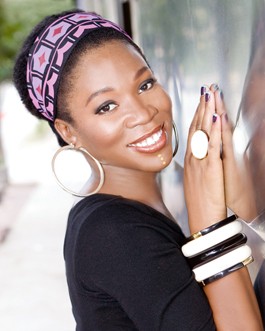
India.Arie’s overriding goal as a music artist hasn’t changed over the decade in which she’s been making music professionally. “I wanted to make music that moved people in a positive way,” says Arie in a recent phone interview. “I wanted to touch people and make people feel good, and think. That was my goal.”

Arie began writing songs while attending college in Savannah, Ga., and got her big break with a song released on a compilation CD in Atlanta, winning her a second stage slot at a pair of Lilith Fair shows. A scout from Motown Records saw Arie, signed her, and in 2001 the label released her debut album. Immediately, Arie made good on her goal of affecting people with her music. Acoustic Soul eventually topped 2 million copies sold and earned Arie seven Grammy Award nominations. She appears June 14 at the Harmony Festival.

Her second album, the 2002 release Voyage to India, did nearly as well, topping 1 million copies sold and winning two Grammys. Four years later, her third album Testimony: Vol. 1, Life & Relationship soared to No. 1 on the Billboard magazine album chart, but by that time, Arie was struggling inside. A turning point came in October 2006, when she realized she had hit a crucial point in her development as a musician and as a person.

“It reached a critical mass after I finished touring with Testimony: Vol. 1,” Arie says. “I had this moment where I just lost it. I just completely blew my top. I knew that day that something had to change, and I cried for a few days after that. And then I was like, ‘How am I going to shape my life?'”

One aspect of Arie’s dilemma was the age-old battle between art and commerce. While Arie had for the most part been true to her art, she realized that she could no longer stand to make concessions to the marketplace as she had done previously. “I knew that my production decisions I made [on Acoustic Soul] had to be more in line with what was on the radio, so I did that,” she admits. “It wasn’t how I viewed those songs. I did that even more so on my second album. I felt I was compromising, and I did compromise. I like that album now, in hindsight. When I listen to it, it’s nice. I stand by the songs, definitely, but the production—uh, sometimes not so much.”

Arie felt she got closer to staying true to her art on Testimony: Vol. 1, but wasn’t able to fully execute some of the musical and emotional ideas that she had for her music. A key change along the way was a move from Motown Records to Universal Republic—ironically owned by the same parent company—after she decided she could no longer compromise her art in an attempt to achieve greater popularity.

Then there’s the biggest lesson of all that Arie has learned. “It’s OK that everybody doesn’t like me. I wanted everybody to like me. Now it’s OK if they don’t, on a personal level and in the musical realm.”

On Testimony: Vol. 2 Love & Politics, Arie says she is more true to herself than ever. She took control of production on the CD, sandwiching the recording of basic tracks with a live band around three months of preproduction and a full year of recording lead vocals, guest musician parts, overdubs and, in the case of a few songs, editing out parts to create more stripped-down final versions of those tunes.


Musically, the CD isn’t a huge departure from her previous three albums. She still bases several songs around her acoustic guitar, but the common description of Arie’s music being “acoustic soul” more than ever feels too narrow. The song “Therapy” leans more toward pop, while “Ghetto” has elements of an African-influenced brand of soul. A handful of others (the sunny “Yellow,” the edgy and funky “Better Way”) find Arie beefing up the instrumentation and further broadening her stylistic reach.

The purity and honesty in her new music is enriching Arie’s musical life on another level—by making her live performances more satisfying than ever. “It’s been really fun because of this album,” Arie says. “I love this album. It’s the first time I really feel that I presented myself the way I see myself. So being able to sing those songs live feels really good.”

India.Arie headlines at 7:30pm during the day’s festivities on Sunday, June 14, at the Harmony Festival, running June 12&–14. Sonoma County Fairgrounds, 1350 Bennett Valley Road, Santa Rosa. Single-day tickets $30&–$40. For info and complete lineup, see www.harmonyfestival.com.


June 11: DJ Vadim at the Hopmonk Tavern

The music of America and England often exists in entirely separate circles, but concentricity was achieved for a brief time in the late ’90s electronica scene, with labels like Quannum, Asphodel and Mush in the U.S. and Ninja Tune, Warp and MoWax in the UK erasing borders both geographical and musical. No artist personifies this cross-pollination like DJ Vadim,...

June 10: Henry Kaiser at the Sleeping Lady

There are guitarists like Angus Young, who play the same recycled riffs over and over with the same guys for the rest of their lives. Then there’s guitarists like Henry Kaiser. Truly a renaissance musician, Kaiser’s played with John Zorn and Derek Bailey, recorded with indigenous Malagasy musicians with David Lindley, collaborated with Richard Thompson, played with the drummer...
Letters to the Editor

06.10.09 It takes a village to make a town I read Gabe Meline's article on Body or Brain, and the investigation you did into the burgeoning Napa scene really impressed me ("Rock Among the Vineyards," May 13). It's great to see the Bohemian paying attention to changes in our community's culture. You've given the bands in Napa a broader voice...

Screw the Van

06.10.09The origin of Hymn for Her sounds like something out of a fairy tale. Two musicians travel to an inn by the sea, intent on writing a book. A kindly innkeeper provides free room and board in exchange for songs played to the dinner crowd. And while the magical two weeks doesn't end in a book, it does produce...

Howlin’

06.10.09Ladies, this shirt is not just for the fellas. Sure, the Three Wolf Moon shirt may make it impossible for us to stay away from an alpha male who has donned this beauty, a wiry mass of irresistibly man-hair peeking out from behind its inky fabric, the three balletically graceful creatures of the night stretched over his strapping beer...

Choosing Choice

06.10.09 HANDS ON: EFCA legislation, a top union priority supported by President Obama, would provide legal recognition of a union at a workplace if a majority of workers signed statements of support. When Congress votes on the Employee Free Choice Act, it will decide not only whether workers will be able to organize unions more easily and whether America will build...

The Ultra-Violence

06.10.09In the late '80s, when thrash legends Death Angel were still teenagers from Concord, they reminded me to pay attention to heavy metal. Earlier that decade, college courses in jazz and classical music diverted me from the hard rock I loved in the '70s, and outside class, I was busy following punk and hip-hop, almost missing cool post-classic, pre-thrash...

Big Band Bard

06.10.09Much Ado About Nothing is not only one of Shakespeare's funniest, best and most beloved comedies, but, with some of the Bard's sharpest and wittiest repartee, it is one of Shakespeare's most accessible plays for modern audiences. So it's a pleasure to report that the Sixth Street Playhouse's 1940s version of Much Ado, In the Mood, retains most of...

Strawberry Swoon

06.10.09Small golden seeds nestle themselves into flesh the color of ruby slippers. The seeds are like dimples that cause the skin to mound up around each one. When the fruit is bitten into, its sweet juices pop over the tongue—it tastes distinctly like lazy afternoons. The strawberry, in all its sensuous, summertime, sentimental glory, is given the attention it...

Deep Voyage

06.10.09India.Arie's overriding goal as a music artist hasn't changed over the decade in which she's been making music professionally. "I wanted to make music that moved people in a positive way," says Arie in a recent phone interview. "I wanted to touch people and make people feel good, and think. That was my goal."Arie began writing songs while attending...
11,084FansLike
4,446FollowersFollow
6,928FollowersFollow