Tit for Tat

0

06.17.09

Like myself, almost everyone with an opinion on the potential Dutra Asphalt plant at Haystack Landing in Petaluma also has personal interest. I was born and raised in Petaluma, and my response to its growth has been both pride and concern. The truth remains that with growth comes such burdens as more traffic congestion, more housing units and a greater need for tolerance.

For the last 10 years, Sonoma and Marin counties have looked to widen the Novato narrows but have lacked the funding. After finally getting the green light from Caltrans last year, they’re hoping to forge ahead and begin working. They will need asphalt. If the plant goes up in the Haystack Landing zone, just off the Petaluma Boulevard South exit on 101 North, the asphalt source would be very close to the work zone. An asphalt plant anywhere else would involve many miles of travel in order to bring the asphalt to the locale. Sonoma County residents voted to have this area of freeway widened—and even agreed to have their sales tax increased to fund it—yet there seems to be little or no willingness to accept responsibility in terms of asphalt production.

Such concerns are valid. The fumes given off as a byproduct of asphalt production are not good for the environment, nor are they harmless, and the sound of grinding asphalt is noisy. Another concern is the plant’s proximity to the Petaluma River, the wildlife preserve at Shollenberger Park, the nearby schools and neighborhoods. The underlying belief seems to be that these areas do not deserve to be exposed to enivronmental nuisance. Petaluma mayor Pam Torliatt said at a board of supervisors meeting in February that an asphalt plant off this particular exit would be “an eyesore to the gateway of Petaluma.”

The June 9 reversal of an earlier straw vote held by the Sonoma County Board of Supervisors has pushed back the final vote until July 21 and is only keeping the larger issue at bay: privilege. When I asked a representative of a special interest group opposed to the plant where she felt a more “appropriate” place would be, she hesitated for a few seconds. Carefully choosing her response, she replied, “Somewhere remote, like out by the landfill on Meecham Road.”

I was raised about two miles from that landfill. Just how remote is remote enough? An out-of-sight, out-of-mind philosophy has run rampant in our society, and not just in Petaluma. If we want that eight-mile stretch of freeway to be widened, the negative effects of an asphalt plant will be felt somewhere, even if it isn’t directly in downtown Petaluma.

Dutra Asphalt Group has hired an environmental specialist who has deemed the project suitable for Petaluma. No surprise. Also unsurprising is that Dutra only answers questions about the project with very carefully coordinated responses. There is a whole philosophy of feigned innocence that I believe feeds the special interest groups who are protesting against the plant.

It is common sense that, just like cars, asphalt plants hurt the environment—but that doesn’t mean that we don’t use them. It also seems to be altogether forgotten that it is precisely Petaluma’s charm and appeal that has increased its population, thus increasing traffic, thus creating a need for widening the freeway into town.

The people of Petaluma actually voted for this change. Widening the Novato narrows would ensure less traffic congestion, and thus a quicker ride to work and probably more leisure time. Yes, we are willing to make a sacrifice for what we want—the financial one. But it’s not enough. If an asphalt plant is needed for this project, and if this project is truly important to Sonoma County, then a compromise must be reached.


The enemy here isn’t Dutra. Dutra is a local company, and we should be happy it has been chosen for a large, state-funded project. We should look to ensure its success and work with the company to help it understand that its work is the same as our work. It is not separate from us. We are all working for the same thing. We all want a better community. We all have children and animals and favorite parks and places that we consider sacred. Our values do not overshadow the values of others, but rather mirror them. The difficulty here is meeting halfway.

I hope that this issue reminds us that with great privilege comes great responsibility. Sometimes when we want things, we must work and pay for them, and not just with money. It involves things more valuable—things like time and energy and helping one another.

Lindsay Pyle is a former Bohemian intern. Open Mic is now a weekly feature in the Bohemian. We welcome your contribution. To have your topical essay of 700 words considered for publication, write [ mailto:op*****@******an.com” data-original-string=”sCrZOphMncT6ffsb1HIkZg==06aRuDihEKCc/u428b/dnapTgP8QwLt9Q//gcbq/8yabNE4/rJSSb1jDPZh6Tdd+h5baVK9hSA9i8Fc2UHXEdQWe7yIERhTs59eJh7gyYhFEQI=” title=”This contact has been encoded by Anti-Spam by CleanTalk. Click to decode. To finish the decoding make sure that JavaScript is enabled in your browser. ]op*****@******an.com.


Cheer Up, It’s Going to Get Worse

0

06.17.09

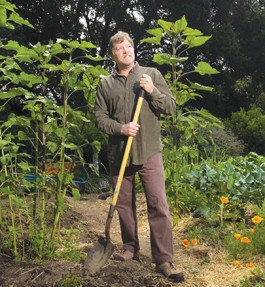
HOW DOES YOUR… Home food production is an ‘entry-level’ survival tactic, says Scott McKeown.

Three years ago, David Fridley purchased two and a half acres of land in rural Sonoma County. He planted drought-resistant blue Zuni corn, fruit trees and basic vegetables while leaving a full acre of extant forest for firewood collection. Today, Fridley and several friends and family subsist almost entirely off this small plot of land, with the surplus going to public charity.

But Fridley is hardly a homegrown hippie who spends his leisure time gardening. He spent 12 years consulting for the oil industry in Asia. He is now a staff scientist at Lawrence Berkeley National Laboratory and a fellow of the Post Carbon Institute in Sebastopol, where members discuss the problems inherent to fossil-fuel dependency.

Fridley has his doubts about renewable energies, and he has grave doubts about the future of crude oil. In fact, he believes to a certainty that society is literally running out of gas and that, perhaps within years, the trucks will stop rolling into Safeway and the only reliable food available will be that grown in our backyards.

Fridley, like a few other thinkers, activists and pessimists, could talk all night about “peak oil.” This catch phrase describes a scenario, perhaps already unfurling, in which the easy days of oil-based society are over, a scenario in which global oil production has peaked and in which every barrel of crude oil drawn from the earth from that point forth is more difficult to extract than the barrel before it. According to peak oil theory, the time is approaching when the effort and cost of extraction will no longer be worth the oil itself, leaving us without the fuel to power our transportation, factories, farms, society and the very essence of our oil-dependent lives. Fridley believes the change will be very unpleasant for many people.

“If you are a typical American and have expectations of increasing income, cheap food, nondiscretionary spending, leisure time and vacations in Hawaii, then the change we expect soon could be what you would consider ‘doom,'” he says soberly, “because your life is going to fall apart.”

The Great Reskilling

But is it the end of the world?

Fridley and other supporters of the Transition movement don’t believe it is. First sparked in 2007 in Totnes, England, Transition was launched when one Rob Hopkins recognized that modern Western society cannot continue at its current pace of life as fast access to oil begins to dwindle. Global warming and economic meltdown are the two other principle drivers of the Transition movement, but in an ideal “Transition Town,” society would be ready for such changes.

With limited gas-powered transport or oil-based products, a Transition community’s citizens would live within cycling distance of one another in a township built upon complete self-sufficiency, with extremely localized infrastructure for agriculture, clothes making, metal working and the other basics of life which the Western world largely abandoned to factories in the late 1800s, when oil power turned life into a relatively leisurely vacation from reality.

Now, Transitionists say, it’s time to get back to work—and quick. Localized efforts have sprouted from the ground up in Santa Cruz, Cotati, Sebastopol, San Francisco and many other towns worldwide, where residents and neighbors are putting their heads together and collaborating on ways to relocalize themselves, bolster self-sufficiency and build the resilience that communities will need to absorb the shock of peak oil.

Scott McKeown is among several initiators of Transition Sebastopol. A 53-year-old event coordinator by vocation, McKeown believes that as early as 2012 the global economy could founder. “That’s when it’s really going to hit the fan,” he says. “We’re not there yet, but we will be very soon.”

McKeown founded Peak Oil Sebastopol in late 2007 as a public discussion forum for what was then becoming a popular topic of relevance among social reformers. Yet Peak Oil Sebastopol eventually proved a bit too heavy on the talking for McKeown.

“I wanted to shift from a discussion group to an action-based effort,” he explains. “Transition attracted me as a way in which we could actually begin doing something.”

Transition Sebastopol was born in 2008 as the ninth Transition Town in the United States. Boulder was the first; Sandpoint, Idaho, the second. Today, 27 Transition Towns, also called Initiatives, have assumed life across the nation, and what began as an idea has become a concrete reality in which people are taking action. In particular, McKeown has seen tremendous community interest in the growing of food. Currently, the average parcel of food comes from untold distances away. The common estimate is 1,500 miles, though some experts assure that most food travels much farther.

Such external dependence will no longer be feasible after peak oil, and communities must be capable of producing all their own goods in fields, orchards and gardens within miles. In and around Totnes, for example, community nut trees have been planted as a sure source of protein and calories in an uncertain future.

In outlying regions of the Bay Area, backyard food production is already an after-work hobby for thousands, and interest in edible gardens appears to be growing fast. At Harmony Farm Supply in Sebastopol, demand for edible plant seeds, starters and saplings has never been greater, according to nursery manager Kirsten Tripplett. She estimates that sales of lettuce, kale and tomato seedlings has jumped by 25 percent this year, with a particularly large portion of sales going to customers who have never before gardened. Fruit and nut saplings, too, sold out weeks ahead of schedule this winter.

“My reading is that this is the silver lining to the economy going south,” she says. 

McKeown, though, calls food production “the entry-level thing to do” among Transitionists; other essential actions must be taken for a Transition Town to cushion itself against the drastic changes predicted in post-oil society. A viable Transition Town must be capable of producing its own materials, tools and other products that society now imports from half the globe away. With machines and factories no longer readily available, almost every citizen would need to participate at some level in production of food, energy and goods.

To address this, Transition founder Hopkins details a 12-part process in The Transition Handbook, which has sold more than 10,000 copies nationwide. In its pages he describes, among other essentials, “the Great Reskilling,” an effort in which communities must retrain men and women in such trades and artistries as seed-saving and food-growing, pickling vegetables, building simple structures, installing rain catchment systems, building composting toilets, and many other fundamental life skills which most of us simply know nothing about.

Crude Scenario

Yet it was only a little over a century ago that society first got swept up on the thrilling wave of oil-age progress. In the 1850s, societies functioned largely as local entities, without deep reliance on global economies or crude oil. Many, if not most, Americans lived on or near farms. We knew how to labor with our hands and feed ourselves. In short, people worked—and our elders can just about remember that era. In fact, The Transition Handbook includes a chapter titled “Honoring the Elders,” urging Transitionists to dredge from old-timers information and anecdotes from the days before cheap oil. McKeown is currently at work on such a project for Transition Sebastopol, seeking out locals in their 80s and 90s who were young adults during or before the Great Depression.

“It would do us good to talk with these people who remember what it was like to live in a pre-hyperconsumption era,” he says.

Michael Levy, a private music teacher who helped found Transition Santa Cruz last summer, agrees that scaling back on individual consumption is among the most fundamental of actions in the Transition movement.

“Most of us don’t know how to grow food or preserve food so that we can have things in the winter that grow in the summer. We also don’t know how to make basic things, like structures and buildings. Even simple tasks like repairing clothes, we just don’t even bother anymore. We’ve become a throwaway society.”

With peak oil and economic ruin looming over us like teetering skyscrapers, Transitionists argue that we can no longer afford such wastefulness. For a while, perhaps even a few more years, this matter may remain one of individual choice and lifestyle, but eventually prices will rise, imported products will begin dwindling from shelves, and we will have no choice but to move into a new era. Fridley says too many Americans believe in solutions to all problems, but peak oil is a terrible anomaly among crises, he explains, because there is no solution. Fridley doesn’t even see any hope in solar, wind, water and other renewable energy sources. Even nuclear power creates only electricity, while crude oil is the basis for thousands of synthetic products.

“There is nothing that can replace oil and allow us to maintain life at the pace we’ve been living,” he says. “Crude oil is hundreds of millions of years of stored sunlight, and we’re using it all up in a few generations. It’s like living off of a savings account, whereas solar energy is like working and living off your daily wages.”

The sheer cost-efficiency of oil eclipses all supposed alternatives. Removed from the ground and burned, oil makes things move almost miraculously. A tank of gasoline in a sedan holds enough energy to equal approximately five years of one person’s rigorous manual labor.

Historically, too, oil has been very easy to get since the world’s first well was drilled in Pennsylvania in 1859; for each barrel’s worth of energy invested in the process of accessing crude oil, 30 barrels are produced, says Fridley. By contrast, ethanol is a paltry substitute; each barrel’s worth of ethanol invested in ethanol production produces a mere 1.2 barrels of raw product. Other renewables offer similarly poor returns. “The thermodynamics just don’t add up,” Fridley says.

Put another way, societies of the pre–oil age worked their butts off. They had to. Roughly 90 percent of the population toiled in jobs that produced our energy, food and water, while just 10 percent reaped the rewards, holding soft-palmed positions in politics, the arts, begging and prostitution, to name several fields. Today, by contrast, merely 5 percent of Americans work jobs that relate to producing food and energy, while 95 percent reap the rewards, many working at abstract tasks in offices. In a world suddenly without machine labor, this top-heavy imbalance is poised to capsize.

Post-Peak Pleasures

Asher Miller, executive director of the Post Carbon Institute, has been trying to convey the urgency of peak oil to the North Bay community for several years. Miller, a full supporter of the Transition movement, believes global peak oil occurred last summer. From here on out, we will see severe price instability of many foods and products as change comes unfurling. The age of cheap, easy energy is over. Miller likens the last 150 years to a feeding frenzy.

“This kind of thing happens to any species that suddenly finds an abundant food source. Its population explodes and things go way out of balance. Oil was our food source, and we went crazy for a while.”

The theory of abiotic oil counters that of peak oil. The theory holds that forces within the mantle of the earth create crude oil just as fast as we burn it up. Proponents of the notion believe, then, that oil is a renewable resource and that peak oil cannot happen. Some of these same theorists have called peak oil a lie promoted by greater powers as a means of artificially hiking prices. Little to no evidence, however, supports the existence of abiotic oil.

Even the peak oil theory does not claim that oil will ever run out entirely; it will only become increasingly scarce and expensive. Miller believes the things we have today may still be available in the simpler times ahead; there will just be fewer of them and they’ll be more expensive.

“I’m sure you’ll always be able to get something if you pay for it,” he says. “It just might cost you $10,000 to buy a computer.”

Fridley does not see peak oil as doomsday, though he predicts that there might be “die-off,” just as marine algae bloom and crash periodically. In fact, Fridley views Transition as a process of world improvement. The environment around us has been falling apart for decades due to our excessive lifestyles, he notes. In our oceans and wildlands, doomsday has already arrived with deforestation, water pollution, fisheries collapse, extinction and other plagues. Peak oil presents an urgent cause to rethink and reshape our lives and the world for the better, he says.

Jennifer Gray, who founded Transition United States in Sebastopol two years ago, also believes peak oil could open doors to happiness that most Americans never knew were there. A native of the United Kingdom, Gray moved to Mill Valley in 2007 after helping to get Transition rolling in Totnes. She believes that redefinition of wealth is one of the essentials to the Transition movement.

“We need to make that paradigm shift that having less may actually mean that you have much more, and in this country it’s hard to convince people of that.”

Shit Has Hit

But the worst-case predictions of post-oil society come from Santa Rosa attorney Matt Savinar, a controversial figure in peak oil premonitions. His website, Peak Oil: Life After the Oil Crash (www.lifeaftertheoilcrash.net), offers an informational survivor’s guide for what he is certain is an impending disaster. While other peak oil thinkers frequently talk about “when” the shit hits the fan, Savinar says it already has.

“The shit is hitting the fan now,” he says unequivocally. “It’s just happening in slow motion, and it’s not hitting equally in all places.”

Asked what individuals can do to ease their way into life after the oil crash, the 30-year-old advises people to “learn basic camping skills.” Wilderness survival tactics will also be handy in the world that’s dawning. He urges Americans to relocate geographically to within miles of their families, as social support networks will be crucial in the coming age. For himself, Savinar hopes to marry into a large family.

While Transitionists see the coming change as one of potential enrichment—community gardens, cycling, skilled artisans at every corner—Savinar’s outlook is a bleak and shadowy contrast. He warns that in the foreseeable future the world will experience “staggering horror.” While life in remembered times has been about “the pursuit of victory and money,” life in the near future, he predicts, “will be about tragedy. We’ve been able to externalize this reality to the future and to other places only because we had access to this incredibly dense source of energy,” he says.

No longer. Savinar can’t say when, but he believes that a time will come well within just one generation when even supermarkets must close their doors. Then, unless the goal of Transition—to build resilience into communities—takes effect soon, chaos could only ensue in a culture so spoiled by excess and mass consumption as ours. In the North Bay, says the Post Carbon Institute’s Miller, residents have the open space, the soil, the sun, the water and the resources to hit the ground running when peak oil arrives. What the community doesn’t have, he says, is a full collective understanding of how much people need to cut back on individual consumption and how quickly they need to do it.

Savinar says too many people’s happiness depends dearly on external items and flimsy concepts of wealth. These people must reprioritize their value systems now and quit “waddling through Wal-Mart.” They must wean themselves from the comforts of supermarkets, leisure time and television. They—we—must forfeit luxuries; instead of feasting on steak, one may have to give thanks to a plate of beans and rice. Instead of vacations to Europe, we might have to settle for camping weekends at Salt Point State Park.

Because, if the predictions are true, we will not always have Paris.

Forever Growth?

Fridley has seen peak oil coming for years. From his small Sonoma farm, he may be prepared to feed himself, but our world’s dependence on oil goes far beyond food production. Even electric machines need crude oil byproduct.

“Every single machine in the nation runs on lubrication,” Fridley says. “If that lube isn’t there, then what?”

In theory, the world freezes up. A person may first digest this concept as an abstract, distant nebula, like climate change, extinctions, water pollution and other newspaper headlines. However, when the reality of peak oil hits—when it hits a person so that his or her personal life is deeply affected—it hits hard.

“It’s hard to internalize,” says Miller, who has seen many people react in many ways to being told that the world in which they have grown so comfortable is about to end. “One tendency is for people to believe that there is a solution, that technology will fix it or that the powers that be will fix it.”

But technology and the powers that be run on oil. Santa Rosa author Richard Heinberg, a senior fellow with the Post Carbon Institute, described peak oil in his much lauded 2003 book aptly titled The Party’s Over: Oil, War and the Fate of Industrial Societies, and indeed, most experts on the matter now agree that the party is over. Transitionists are readying for the new era with open arms while struggling to convince others of the severity of the matter.

In Santa Cruz, several city figures, including councilman Don Lane and the city’s climate action coordinator Ross Clark, have stepped up and proven themselves allies of the Transition movement, attending multiple community meetings. San Francisco, too, has acknowledged peak oil, and a city-appointed task force recently submitted to the supervisors a 120-page report detailing the city’s vulnerabilities to the crisis.

Savinar has been trying for years to invite government participation in peak oil preparation. In 2005, he sent a letter of warning to each member of the Santa Rosa City Council, advising that they begin aggressively readying the community for peak oil and its aftermath. The letter was articulate and “lawyerly,” he says, and included a copy of Heinberg’s Party’s Over in each package, yet not one councilperson responded.

“And I guarantee that if I was a car manufacturer and I scribbled out a letter with crayons, they would have answered me,” he says with a short laugh.

Fridley also believes assistance will not come from the world’s leaders. Transition can only be a grass-roots revolution. He points out that Secretary of Energy Steven Chu was previously the director of Lawrence Berkeley National Laboratory, where Fridley has done much of his thinking about peak oil and Transition.

“[Chu] was my boss,” Fridley says. “He knows all about peak oil, but he can’t talk about it. If the government announced that peak oil was threatening our economy, Wall Street would crash. He just can’t say anything about it.”

Thus, world leaders would like to have the populace believe that this oil-age feeding frenzy will continue forever, that the economy will continue to expand and grow. At the 2008 G-8 Summit on the Japanese island of Hokkaido, for example, our leaders declared a resolution to resume economic growth. Fridley says such a goal is impossible, yet no one wants to face the fact.


“Ask scientists if something can grow forever exponentially, and they’ll say, ‘No.’ Then ask how our economy can keep on growing, and they’ll say, ‘Well, it has to.'”

Elsewhere, many politicians and leaders have been reluctant to address peak oil, and full governmental leadership may never arrive. Levy believes that politicians locally and nationally will be even more reluctant to discuss peak oil than they’ve been to address climate change.

“Transition is probably going to grow from the ground up before the government comes onboard,” he predicts.


Copain Wine Cellars

0

 According to my French-English translation widget, “copain” means “buddy.” Sample sentence: “Hey, buddy, what’s ‘sous bois’ mean?” True, Copain’s tasting notes are liberally peppered with choice Gallic gems like “pain epice” and “sous bois” when “forest floor” would illustrate the thought with a nod to provincialists—not that the makers of these French varietal grapes aren’t following precedent. The French may not have invented wine, but they did give it élevage. Hey, what are widgets for?

Wells Guthrie earned his bona fides laboring two years in the employ of M. Chapoutier, a major producer in the northern Rhône River Valley. He returned to Sonoma County with a passion for Syrah in particular, and low-alcohol, food-friendly continental style wines in general, and cofounded Copain (pronounced “co-pawn”) Wine Cellars and custom crush in a Santa Rosa warehouse. Favorable reception of Copain’s product has led to the establishment of a new facility on Eastside Road. Hidden from the road, up a gravel drive, the California barn-style winery features a cool, dark and spacious tasting room styled rustically with recycled barnwood paneling and concrete floor. The bar fronts double doors looking into the tank room, while windows provide a panoramic view of the Russian River Valley.

With faint wisps of toast and brown spice, the 2007 Tous Ensemble Anderson Valley Pinot Noir ($30) seemed typical of Copain wine’s gentle oak treatment. The appealing red licorice and cherry-raspberry aromas lurk in a sultry zone a full level below jammy. Black cherry and dark plum flavors bide their time in Grenache-Syrah-Mourvedre blend 2005 Les Copains Paso Robles ($40), under layers of iron and shale with obvious potential rewards after decanting or cellaring. The opaque 2006 Tous Ensemble Mendocino County Syrah ($20) had the grapey, purple marker hallmarks of a young, intense Syrah needing time, while warm ginger cake flavors provide more immediate gratification. The 2006 Les Voisin McDowell Valley Syrah ($35), with roasted nuts and cherry-berry notes, was made more approachable with the addition of 25 percent Grenache.

The 2007 Hacienda Secoya Anderson Valley Pinot Noir ($47)—hey, hold on a minute, buddy. Where’s the Sonoma County wine? Turns out, Copain sources exclusively from select Central Coast and Mendocino County vineyards. The Pinot Noir that is planted around the new winery? Sold to Kosta Browne.

I can imagine it now: the arch-vigneron retreats to his hidden lair with the treasure of faraway appellations. Cut to a mob of angry villagers, storming the chateau, brandishing pitchforks, demanding to know why.

According to my host, Guthrie is a total terroir geek and would be only too happy to explain. Anyway, after arriving at the end of the menu, the subtle charms of these wines had a mellowing effect—enough to cause this surly provincial to put down the pitchfork.

Copain Wine Cellars, 7800 Eastside Road, Healdsburg. Open Thursday–Sunday 11am–5pm, Tuesday–Wednesday by appointment. 707.836.8822.


View All

Seeking America

0

[Note: I am currently on a NEA fellowship with the Visual Arts Journalism Institute, which brings 12 U.S. and 12 international journalists together for a two-week intensive at American University in D.C. This is the first assignment.]Seeking AmericaCan you define a country through its capital’s art?

By Gretchen Giles“Are these all monuments to war?” the Colombian journalist shouts up from the back of the bus. As seen from a hired coach lurching along in June’s humid heat, Washington, D.C. resolves as a kinetic collage of green vegetation, burdened tourists and white structures honoring dead men who fought old wars. Not all, the tour guide reminds, remembering to point out the small marble bandstand commemorating the District of Columbia itself, the few nods to such virtues as valor, the Washington, Jefferson and Lincoln memorials and a newly constructed monument to Franklin Delano Roosevelt, the four-time president who didn’t actually ever serve in the armed forces. Otherwise? Well, yes.

Washington, a grand city built with the specific intention of being the nation’s capital, relentlessly celebrates its wars and its war dead. A country so young is a country that still bristles with the don’t-tread-on-me creed of a challenged adolescent. Born of war, the fight and its human loss are celebrated in Washington. But is this really how America wants to be seen?

Indeed, America seen and America defined are central tenets to the art collections a rushed visitor flits past in many of the capital’s galleries and public spaces.The country’s largest war memorial, Arlington National Cemetery—virtually a city, peopled as it is with thousands of school groups, weary parents and foreign visitors—has a surprisingly refrained manner of honoring its dead. The white marble headstones of those who have served are placed exactly 22 inches above ground and 22 inches below ground, their markings noting the rank and home state of the soldier who lies beneath. Others are simply carved with a woman’s name, her dates of birth and death, and the left-handed phrase “His Wife.” (Who “he” is remains a mystery to those unschooled in military etiquette or the cemetery itself.) On a hill overlooking the city, John F. Kennedy’s grave is guarded by an endless flame, his widow and their dead children placed close beside him. Lying adjacent to a silent infinity pool, Robert Kennedy merely has a single exquisite cross marking his spot.
In contrast, designer Lawrence Halprin’s 1997 monument to FDR wanders on for some seven acres, features five noisy water areas, three statues of the president and one of First Lady Eleanor Roosevelt, three bronze scenes of the Great Depression, several bas relief installations intended for only the tallest blind people and even a large friendly depiction of the White House dog. Set along the sweet-smelling Potomac, the rushing waters of the monument and its many seating areas provide the visitor relief but its flabby narrative ramble finally exhausts any captivation. How about just a single exquisite cross?

Naturally, the era defines the style. The Kennedy brothers were honored with the grief-stricken minimalism of the 1960s; FDR, with the money-drenched over-blow of the 1990s. The newly completed WWII memorial is as commodious as a Costco, but inviting to heat-flushed families, the children splashing through the generous fountain, the adults glad for a seat. Maya Lin’s 1982 tribute to the dark failures of the Vietnam War is a burial slash in a hill that visitors file past, some making rubbings of the names carved there, some leaving flowers, some crying; everyone can see themselves reflected in the polished granite face. Death, death and more death mark the traffic circles and lush parks of the city that defines America.

Outside of the marbles of the nation’s capital, America has easily defined itself as a nation through the skill of ad men and art directors, who readily show us who we are by what they want us to buy.

Less than an hour south of D.C., a private cache of art so uniquely American that none other than Americans crave it is thoughtfully displayed at the Kelly Collection of American Illustration. Situated in the private home of Richard and Mary Kelly, this is art that wasn’t intended to be such. Rather, these work-for-hire pieces—painted by such masters as N. C. Wyeth, Howard Pyle and Charles Dana Christie—illustrate the heroic tales found in young boys’ books, the chaste romance of women’s serials and the many allures of pianos, matches and new-fangled socks. Primarily crafted during a swift 50-year period after printing got cheap and before photography became king, these works richly accompanied the texts of the day, moved magazines and fueled purchases. More importantly from the Kelly’s point of view, they regularly brought art into American homes, making art accessible and populist. Representational, dramatic and fully activated, the work collected here is surprisingly rendered, the artists doing full-fledged easel paintings, earnest completions, that may give as much pleasure from the wall as they did within the covers of a swashbuckler.

While some Saturday Evening Post and Life Magazine covers are displayed among a delightfully quaint handful of advertising fancies, the majority of the work at the Kelly was commissioned to accompany fiction and, almost without exception, depict the moment just before or just after the story’s denouement. The actual events tend to occur, just as Americans like them to, exactly offstage. We don’t really wanna know.

Thrilling children with full-color imaginings of tidy pirates and depicting the rosy warmth of the perfect white Christmas not only sold books and gloves but showed a nation just out of infancy a new ideal, forming an outline of who a prosperous American, relentlessly fair-skinned and trim, should be.

Some of the artists made noncommercial efforts, most notably Harvey Dunn, one of eight illustrators commissioned by the U.S. government to document WWI on paper. The Kelly Collection has a handful of the gritty canvases that were prompted by Dunn’s experience of that horror. The U.S. government has perhaps none. The work that the eight artists brought home, drawn directly from battleground experience and relentless in their depiction of war’s truth, were deemed by the government to be too unsettling to exhibit.

Surely it would have been better if Dunn had only shown heroes amid triumph and, of course—made them from marble.

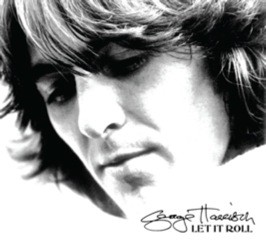
New Release: George Harrison – Let It Roll: Songs of George Harrison

0

You know, it really is a shame that the Beatles in power – namely the Lennon/McCartney juggernaut – never let the late George Harrison put more than a couple songs on each album. One listen to Revolver or Abbey Road, and it’s clear that the “quiet one” could compete. But his prolific solitude and pent-up material are what made his solo career such a triumph, as evinced by the new career-spanning collection Let it Roll: Songs By George Harrison.

Right off the bat with the landmark triple album All Things Must Pass, Harrison boasted solid, developed output with a maturity to counter Lennon’s and McCartney’s uneven 70s solo work. “All Things Must Pass”, “My Sweet Lord” and “What Is Life” still hold up as thinking man’s pop classics, all especially crisp with the new remaster treatment. But each tune has an underlying joyousness, even 1981 Lennon tribute “All Those Years Ago“.

Tellingly, the Beatles references are plentiful, from the live renditions of Beatles tunes (the best being a spot-on acoustic “Here Comes the Sun”) to fond reminiscences (the still-charming “When We Were Fab”). Harrison was so content that he actually did NOT run from his storied past. A latter-day highlight is the ethereal instrumental “Marwa Blues” from the posthumous Brainwashed album, which, along with the optimistic “Any Road“, suggests a serenity in his twilight years. But while this is a solo showcase, Harrison’s Traveling Wilburys hit “Handle With Care” would’ve been welcome, especially with its recent “modern classic” status.Let It Roll’s most important revelation is Harrison’s distinctive, conservative guitar playing. Always under-appreciated – much like his deceptively rich voice – his fretwork shines throughout, especially in lesser-known tracks like 1989 slide-guitar workout “Cheer Down”. Highly recommended.–David Sason

Live Review: Bat For Lashes / Hecuba at Great American Music Hall – June 13, 2009

0

Buckets of glitter, antlers, feathers, headbands, horses, capes and wizards are just some of the guesses my companion and I came up with as we waited in line next to the Bat for Lashes tour bus. We’d gotten to the long-anticipated show at the Great American Music Hall a few minutes early in order to secure one of the highly coveted upstairs balcony seats. That gave us just enough time to play one quick round of “What’s in the Van?” as the grumpy doorpeople checked the tickets and purses of the fans ahead of us. Our guesses were driven by the dramatic, elfin persona cultivated by Natasha Khan (the woman behind Bat for Lashes) and her lyrics about emerald cities, singing moons and siren-like women.

Hecuba, a theatrical duo from Los Angeles, opened the show. Isabelle Albuquerque entered the stage wearing a tight grey catsuit and no shoes. Her hair was cut something like a cross between a mullet and a bowl cut. The stage set up was simple. Two microphones, a couple of keyboards, a computer and a seat for the other half of the band, Jon Beasley. From the start, they seemed like two kids in their bedroom, jmping up and down, banging on pots and cutting things with knives. Spazzy and brilliant, they bought a playful madness to the stage. Discordant and poppy, the songs crossed a gospel-style revivalism with sickly-sweet pop melodies straight out of the eighties. At points, the two performers brought things to a fever-pitch with their dedication to the purity of raw performance.

After Hecuba exited the stage, the crowd was warmed up for the entrance of Bat for Lashes. Natasha Khan has an adoring fan base, and the screams started as soon as she got on stage and proceeded throughout the entire performance. Khan plays with a full-band live, including drums, keyboards and auto-harp. Wearing a checkered jumpsuit straight out of a fifth grade yearbook, Khan took a while to warm up into the performance. After Hecuba’s searing confidence, Khan appeared almost shy and reticent. She seemed to be trying out different, slightly awkward dance moves to see which ones worked and which ones didn’t. Live, her voice sounded as soaring and glass-clear as it does on the album, especially on the more ballad-oriented songs, during which she switched to sitting at an electric piano to one side of the stage. The set was a mix of songs from her two albums. She opened with Glass, and did a gorgeous auto-harp solo version of Priscilla from her first album. One of the strangest moments in the set was a strangely seasick version of the plaintive dream-like long song, Good Love. The keyboard went out of tune on that song, or something. The stage decorations: twin lighted angels, star garlands, virgin mary statues, lamps and a wool blanket with a large wolves head and full moon, added a child-like drama to the event, like being in the playroom of the cool girl with the slightly awkward haircut.

With an album as epic as “Two Suns,” it can be hard to recapture the energy live, but Khan did her best. In the eyes of her rabid fans, she could do no wrong. She does seem to be still in the beginning stage of developing her live show and it will be exciting to see how she bridges the dramatic persona of her albums with the Khan that appears on the live stage. The night ended with an soaring version of one of the album’s best songs “Daniel,” a tribute to Ralph Macchio during the Karate Kid years, ending the show with a feeling of wild accomplishment. Like anything could happen and all was good in the world.Leilani Clark

Weekend Photos

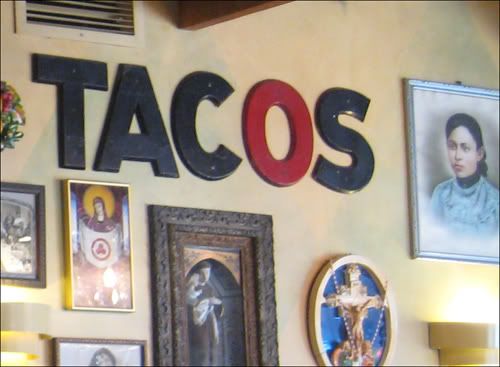
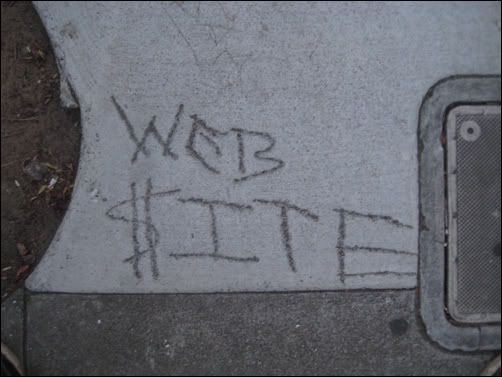
Joe’s Taco Lounge, Mill Valley.


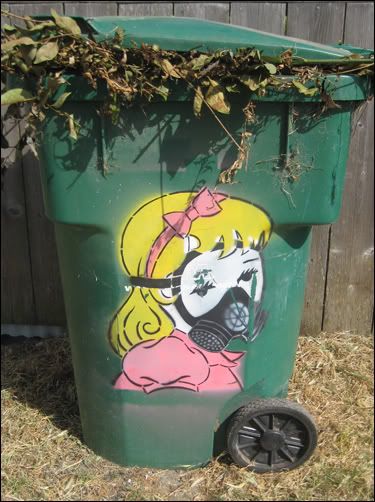
Trash, Pt. Reyes Station.


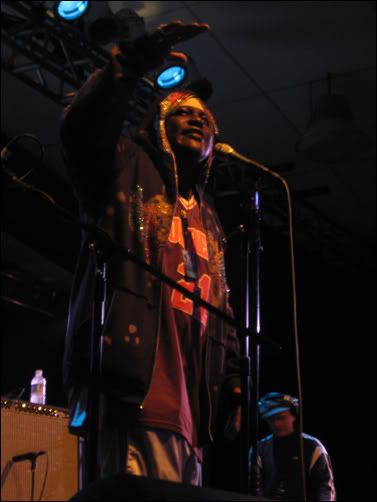
K’naan, Harmony Festival.


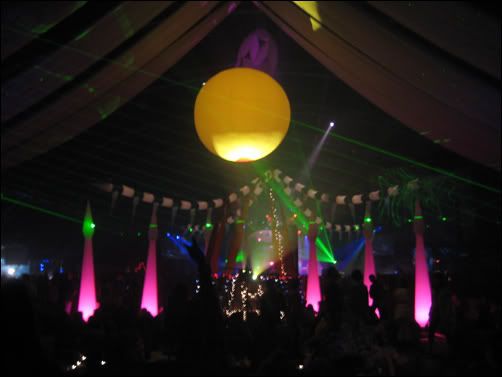
Techno-Tribal, Grace Pavilion.


Vivona, on his shit.


Killah Priest, an unexpected highlight.


Eddy & Fillmore, San Francisco.


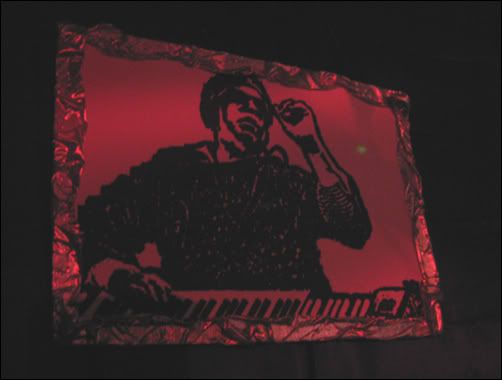
Sun Ra, the Magic City.


V.C. Johnson, no one like him.

K’naan Re-Records “Wavin’ Flag” for Coca-Cola

1

When K’naan comes to the Harmony Festival for two nights in Santa Rosa, tonight and tomorrow, he’ll be fresh from re-recording his song “Wavin’ Flag” for . . . Coke?!

Um, really?
Forget for a while about Coca-Cola’s storied history with Somalia, or the fact that Somalian English teachers say they want to destroy the Coca-Cola plant in Mogadishu for “generating hard currency for our worst enemy.”
See, for me, one of the production letdowns of Troubadour was K’naan’s recording of “Wavin’ Flag,” complete with a melodramatic string arrangement. Listen to what it sounded like last year, live at the Outside Lands Festival in San Francsico:
[display_podcast]
Pretty basic, stripped-down hip hop. Unlike the syrupy album version, it doesn’t sound like the soundtrack for an uplifting Bette Midler film. It also doesn’t sound like “A Whiter Shade of Pale,” nor does it bear likeness to a certain Beatles song:

Admittedly, all things considered, this is a pretty minor concern. At least K’naan hasn’t completely lost his mind. I’ll see you there this weekend.

June 13 and 27: West Coast Live at Silo’s

0

The microphones are placed in clubs, on trains, on theater stages, on boats—wherever seems most interesting. The remote broadcasting equipment is plugged into the nearest power outlet. The guests include authors, magicians, museum directors, artists, actors, chefs, acrobats, directors, and almost always, the piano stylings of Mike Greensill. Hence, Sedge Thomson’s fantastic long-running radio series West Coast Live settles in for three weeks of broadcasts from Silo’s Jazz Club in downtown Napa—Greensill’s current stomping ground. Those who’ve never seen a live radio broadcast shouldn’t miss the exciting pacing and suspense, but it’s Thomson himself who probes interviewees with interesting, human questions and steers the conversation away from canned answers and press-release style interviews. Guests include blues artist John Nemeth, vegetarian author Deborah Madison, novelist Shawna Yang Ryan, author Annie Barrows, locals the Juliane Band, singer Kellie Fuller and folk act the Rhythm Angels plus many more on Saturday, June 13 and 27, at Silo’s. 530 Main St., Napa. 10am. $15-$18. 707.251.5833.Gabe Meline

June 13: Bike Swap at the Veterans’ Memorial Building

0

It’s bike season again, thank heavens—the time of year when everyone pulls out their road, mountain, fixed gear and tandem bikes and realizes one of two things: that there’s parts and gear that they need, or that there’s parts and gear that they don’t need. The Sonoma County Bicycle Coalition Bike Swap brings these two together for a big day of cranks, brakes, tires, clothes and even some bike-related arts and crafts. Need a 10mm cotter pin for a 1973 Motobecane? A Huret derailer for a mixte-frame Peugeot? A replacement fork for a 21-speed Trek? The Swap’s the place. With vendors and tables and a kid’s bicycle safety skills rodeo, it’s the best way to get your bike and riding skills in tip-top shape. If you’ve got an extra bike to sell, bring it along and put it up for sale for just $5. Stop on by and find some treasures on Saturday, June 13, at the Veterans’ Memorial Building. 1351 Maple Ave., Santa Rosa. 9am to 2pm. Free. 707.545.0153.Gabe Meline

Tit for Tat

06.17.09Like myself, almost everyone with an opinion on the potential Dutra Asphalt plant at Haystack Landing in Petaluma also has personal interest. I was born and raised in Petaluma, and my response to its growth has been both pride and concern. The truth remains that with growth comes such burdens as more traffic congestion, more housing units and a...

Cheer Up, It’s Going to Get Worse

06.17.09HOW DOES YOUR… Home food production is an 'entry-level' survival tactic, says Scott McKeown. Three years ago, David Fridley purchased two and a half acres of land in rural Sonoma County. He planted drought-resistant blue Zuni corn, fruit trees and basic vegetables while leaving a full acre of extant forest for firewood collection. Today, Fridley and several friends and family...

Seeking America

Seeking AmericaCan you define a country through its capital’s art?By Gretchen Giles“Are these all monuments to war?” the Colombian journalist shouts up from the back of the bus. As seen from a hired coach lurching along in June’s humid heat, Washington, D.C. resolves as a kinetic collage of green vegetation, burdened tourists and white structures honoring dead men who...

New Release: George Harrison – Let It Roll: Songs of George Harrison

You know, it really is a shame that the Beatles in power – namely the Lennon/McCartney juggernaut – never let the late George Harrison put more than a couple songs on each album. One listen to Revolver or Abbey Road, and it’s clear that the “quiet one” could compete. But his prolific solitude and pent-up material are what made...

Live Review: Bat For Lashes / Hecuba at Great American Music Hall – June 13, 2009

Buckets of glitter, antlers, feathers, headbands, horses, capes and wizards are just some of the guesses my companion and I came up with as we waited in line next to the Bat for Lashes tour bus. We’d gotten to the long-anticipated show at the Great American Music Hall a few minutes early in order to secure one of the...

Weekend Photos

Joe's Taco Lounge, Mill Valley.   Trash, Pt. Reyes Station.   K'naan, Harmony Festival.   Techno-Tribal, Grace Pavilion.   Vivona, on his shit.   Killah Priest, an unexpected highlight.   Eddy & Fillmore, San Francisco.   Sun Ra, the Magic City.   V.C. Johnson, no one like him.

K’naan Re-Records “Wavin’ Flag” for Coca-Cola

When K'naan comes to the Harmony Festival for two nights in Santa Rosa, tonight and tomorrow, he'll be fresh from re-recording his song "Wavin' Flag" for . . . Coke?! Um, really? Forget for a while about Coca-Cola's storied history with Somalia, or the fact that Somalian English teachers say they want to destroy the Coca-Cola plant in Mogadishu for "generating...

June 13 and 27: West Coast Live at Silo’s

The microphones are placed in clubs, on trains, on theater stages, on boats—wherever seems most interesting. The remote broadcasting equipment is plugged into the nearest power outlet. The guests include authors, magicians, museum directors, artists, actors, chefs, acrobats, directors, and almost always, the piano stylings of Mike Greensill. Hence, Sedge Thomson’s fantastic long-running radio series West Coast Live settles...

June 13: Bike Swap at the Veterans’ Memorial Building

It’s bike season again, thank heavens—the time of year when everyone pulls out their road, mountain, fixed gear and tandem bikes and realizes one of two things: that there’s parts and gear that they need, or that there’s parts and gear that they don’t need. The Sonoma County Bicycle Coalition Bike Swap brings these two together for a big...

11,084FansLike
4,446FollowersFollow
6,928FollowersFollow