June 27: Highway Poets at the Phoenix Theater

0

poets.jpg

Sebastian Nau of the Highway Poets was surprised the other day to hear that his own band had broken up. Perhaps the rest of his band mates secretly ousted him from the group? No! Sebastian remembered the band had a gig this week—so they couldn’t possibly be broken up. It was all just a rumor, right? Right?? Yes, of course. This week, the Highway Poets bring their A-game for a “benefit for music” concert. The great Petaluma band, along with the psychedelic rock-bluegrass band the Jugtown Pirates and the cross-genre group the Jaunting Martyrs play center stage on Thursday, June 27, at the Phoenix Theater. 201 Washington St., Petaluma. $8—$10. 8-11pm. 707.762.3565.

June 27: Blues Harmonica Blowout at Napa Valley Opera House

0

th.jpg

When you start hearing names like Norton Buffalo, Charlie Musselwhite, Watermelon Slim, Fingers Taylor, Lazy Lester and, yes, a man named Magic Dick, it can mean only one thing: the Blues Harmonica Blowout is back! Since 1991, founder Mark Hummel has been producing and performing at this oftentimes sold-out show. Joining Hummel onstage this year and paying tribute to the late, great Little Walter are Corky Siegel, James Harman and Little Charlie along with the Blues Survivors. Surround yourself with the bluesy sounds of the mouth harp on Thursday, June 27, at the Napa Valley Opera House. 1030 Main St., Napa. $27—$30. 8pm. 707.226.7372.

A Step Up for Business Journal Associate Publisher Brad Bollinger

0

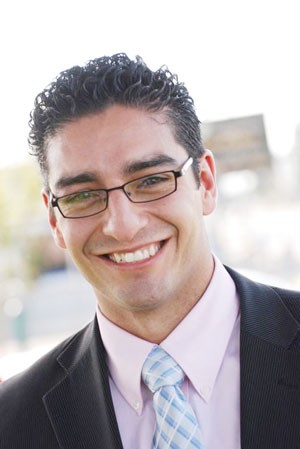
North Bay Business Journal Editor-in-Chief and Associate Publisher Brad Bollinger has been named publisher of the business-to-business paper, which covers Sonoma, Napa, Marin, Solano, Mendocino and Lake counties, according to sources close to the paper. Bollinger has been the editor and associate publisher since 2005, after the New York Times Co., then owner of the Press Democrat, bought the paper from Ken Clark and Randy Sloan, founders of the publication.

Prior to joining the Business Journal Bollinger was the business editor and columnist at the Press Democrat, joining that paper in 1990.

According to his bio on the Business Journal site:

During his time as business editor the Press Democrat won several “Best in Business” awards from the Society of American Business Editors and Writers and a Polk Award for the 2005 series on globalization, “Global Shift.” Bollinger has a journalism degree from San Jose State University and master’s in communication from CSU, Chico. His 1983 master’s thesis on newspaper ombudsmen was the subject of articles in Columbia Journalism Review and Editor & Publisher. In 1990, he was among the attendees at the inaugural Summer Institute for Economics for Journalists created by the Foundation for American Communications.

The North Bay Business Journal is now owned by the local investment firm Sonoma Media Industries along with the Press Democrat, the Petaluma Argus and numerous associated publications and websites.

SHED Fermentation Bar

0

What was it that food scribe Michael Pollan told us we should be doing in his most recent dietary dictum? “Drink weird stuff, mostly fermented, not too much”? Here’s the place to get started on that.

It doesn’t seem so long ago that the very notion of a “fermentation bar” would have sounded lavishly precious, possibly poisonous. In Portland, Ore., in the 1990s, my latter-day hippie neighbor showed off the exotic, glistening bacterial monster he kept in a jar in his kitchen. He said it was a “mother,” and that it would divide and multiply, like a hairless tribble. Was it . . . moving? It seemed vaguely risky to drink the brew in which it stewed. Yet today, kombucha is so mainstream that Healdsburg tourists drift off the street and order it up on tap ($4)—made by Windsor’s Revive—with nonchalance.

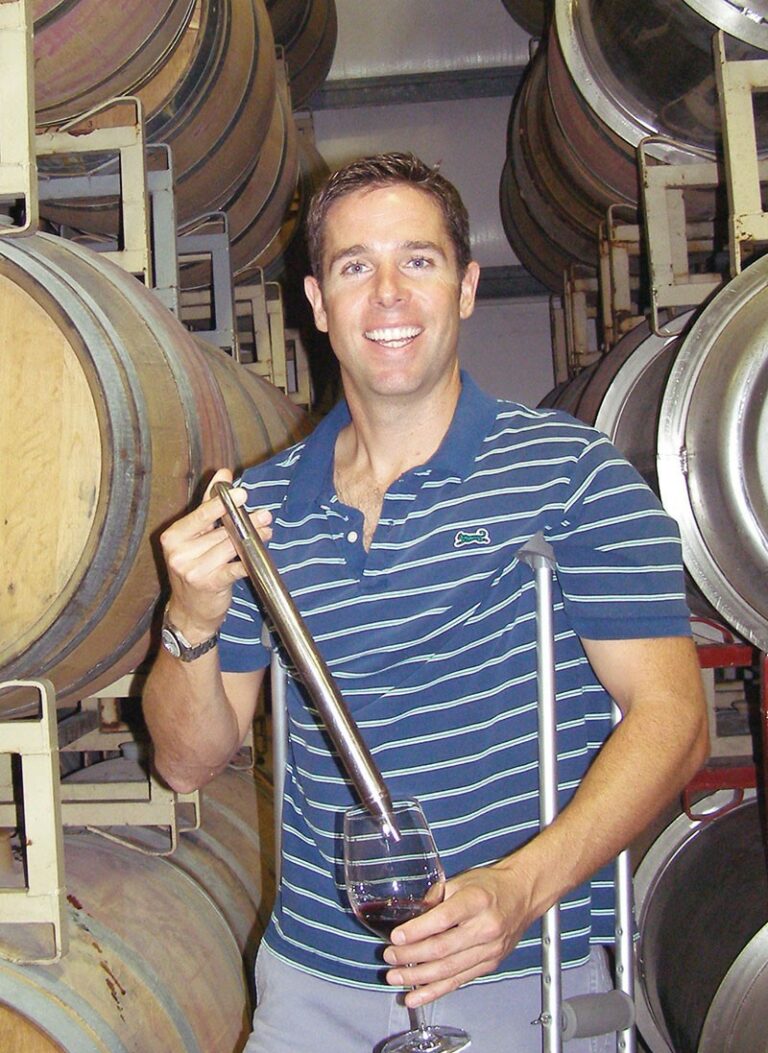
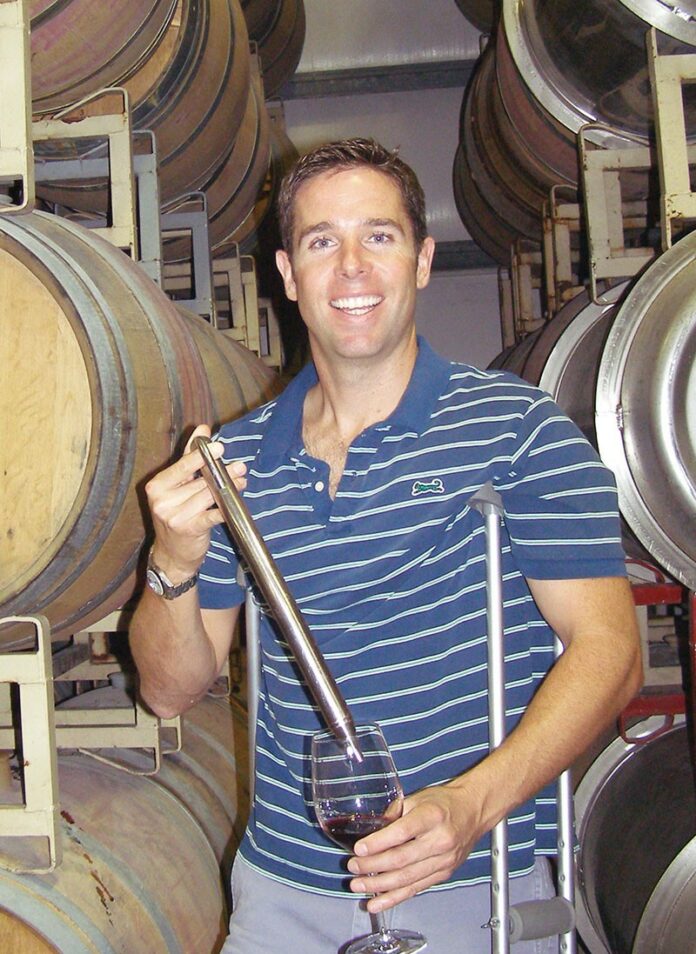
If anyone has questions, bar manager Jordan Lancer (pictured) is there to answer them. Good thing, too, since the gleaming taps behind him are not topped with readable logos, instead being minimalistically labeled with stamped-tin dog tags. Lancer, an avid fermenter, has his own crock of kombucha secreted away on the modular shelves that line the walls.

At SHED, which is billed as a “modern grange,” the dream of the 1890s is alive, too. One may stock up on provisions at the “larder,” shop for a hand-tooled spade and catch up with neighbors over a refreshing beverage whose popularity only lately reversed a century-long waning, all in a light-filled space that feels as if you’ve stepped into a Sunset magazine spread. A new awning makes the small deck overlooking Foss Creek the spot to be.

SHED Shrubs ($4) are sweetened vinegars—haymaker’s punch—like lemon rice wine and purple sage champagne vinegars, topped with soda water. Popular with workers “coming off the fields” over the centuries, they’re nonalcoholic, as is creamy, nondairy kefir from Sebastopol’s Kefiry ($4). Think of dry hard cider ($5) from Murray’s Cyder of Petaluma as a European-style “sidra,” and you may enjoy its funky phenols all the more. Available by the bottle, Heidrun Meadery’s Sage Blossom mead ($25) is a noseful of decayed summertime, with a cidery, clean finish.

Happy hour bites like deviled eggs, cheese platters and pizzas are available; beyond the taps, there are beekeeping kits, pith helmets and the swaying branches of an old walnut tree to stare at while socking away a big 20-ounce pour of Calicraft Buzzerkeley ($7)—no game screen here. Just drink local brews, not too much, and keep away from the sharp harvesting implements.

SHED, 25 North St., Healdsburg. Open daily, 7am–7pm. 707.431.7433.

That’s Crafty

0

According to a study released last month by the Sonoma County Economic Development Board, craft brewing now accounts for $123 million in annual economic impact. The study shows a 15 percent increase in craft beer sales nationwide last year versus a 41 percent increase in Sonoma County. The top dog is Lagunitas, which employs 52 percent of the county’s craft-beer industry and produces 73 percent of its beer. The Russian River Brewing Company’s release of Pliny the Younger, which drew 12,500 attendees in 2013, brought an economic impact of $2.3 million.—Nicolas Grizzle

SHELF SPACE

Who says bookstores are dying? Certainly not Paul Jaffe, co-owner of Copperfield’s Books, who plans to expand into downtown San Rafael this November. In the Fourth Street building that was slated to house the ill-fated Marin Rocks museum, the first-ever Copperfield’s store in Marin will also include a Taylor Maid Coffee cafe along with occasional author events and a large children’s section. “I’ve been looking around for a location in San Rafael ever since Borders closed,” Jaffe says, “and it’s a beautiful old building with a huge high ceiling.”

So how does an independent bookstore expand in a world of e-readers? Jaffe says the American Booksellers Association has in fact reported a rise in membership, and mentions that the company hasn’t downsized, but “right-sized”—making certain stores more lean to create room for expansion elsewhere. “San Rafael is the biggest city in Marin County, and it has no general-use bookstore,” Jaffe notes. “With all the changes in the industry in the last 10 years, I didn’t know if there was another bookstore that was going to move in there.”—Gabe Meline

Synesthesia

0

The lawn at Rodney Strong Vineyards is not a somber place, and yet it’s the annual site of the end of the Healdsburg Jazz Festival, when the two weeks of world-class jazz comes to an end.

Except it doesn’t really end. Throughout the calendar year, the indefatigable organization presents one-off shows of worthy jazz—and one of the best, to my mind, was Oliver Lake’s Trio 3 raising a holy sound inside the intimate confines of Flying Goat Coffee in 2009.

Lake returns to Healdsburg this week in a unique solo show: he’ll be playing saxophone and flute as well as reciting poetry while surrounded by an art exhibit of his own paintings at the Healdsburg Center for the Arts. Just how much can a guy do with one saxophone? If you’ve heard Lake’s recordings with the World Saxophone Quartet, you know that the answer is a hell of a lot.

Complementing Lake’s own artwork are pieces by other artists, inspired by the music and life of jazz. Catch the man in action in two shows on Sunday, June 29, at the Healdsburg Center for the Arts. 130 Plaza St., Healdsburg. 7pm and 9pm. $20. 707.433.4633.

Letters to the Editor: June 25, 2013

Water, Water Everywhere

A big thank you to Rachel Dovey (“Wrung Dry,” May 29). I lived in Guerneville for 25 years, moving to Lucerne in March of ’02. In a burst of insanity, I sold my house in Guerneville and bought this one.

At the time of my move, I was paying $1.17 per Ccf with a continual billing of $41.27 every two months. I now pay $7.79 per Ccf.

I began both Lucerne Community Water Organization and FLOW. I found FLOW out of Monterey. They had just taken over their private water company.

I remember back in the early ’80s and Sweetwater Springs in Guerneville. Armstrong Woods Road was a holdout, and now, sitting across from the Coffee Bazaar, is Cal Water! Additionally, there’s Freezeout Road by the Duncan Mills Bridge. The infrastructure between that site and Casini Ranch is typical of Cal Water. You should see our roads after they actually do any work! I guess Caltrans just repairs it!

Anyway, thanks for the article.

Lucerne

I was traveling through Sonoma County a few weeks ago and read this article in the paper. Very well written, on an important issue.

Why don’t the residents being ripped off refuse to pay their water bill, send it to an escrow account managed by an impartial attorney or agency, and do so until these crooks change their billing practices? That would be a lot of power, and I doubt the company would cut off each and everyone’s water. Where are all the county supervisors here?

Just some thoughts rambling up the coast.

Timberlake, N.C.

My name is Bob Daddi, I am a director of Ojai FLOW. We are in the process of removing our for-profit water company. They have sued to stop an election for a bond that will allow to us purchase and remove them. Please go to the ojaiflow.com and contact us if we can give you any help. The only answer is to have elected CPUC members, not appointed. Call your senator and assemblyperson and ask for support. They should have a vested interest.

Ojai

Better Beavers

Beaver value to streams and habitat is becoming better understood (“Beaver Fever,” June 19). Their impact on coho and bird life is just the beginning. Folks interested in learning more about their effect and managing their many challenges should come to Martinez for the sixth annual beaver festival in August.

Martinez

As progressive as California appears, its wildlife policies are antiquated and unfortunate. Glad to see some coverage. Looking forward to more great stories like this.

Via online

Library Hours

Great article on library closures (“Long Overdue,” June 19). Thanks for digging deep into what has now become a perennial problem. And who winds up bearing the brunt of the “supes” inaction? We do.

It’s not fair. And their favorite perennial byline, “We have no money,” no longer holds water, since they certainly don’t mind spending money conducting study after study to explore adding fluoride to our Sonoma County water supply—money which would be much better spent on something that so many Sonoma County residents could find truly beneficial: reopening our libraries to their full operating schedules.

Again, much thanks.

Sebastopol

Thank you for providing some insight on why our libraries aren’t open as much as they used to be. It reminded me of the front-page article in the Press Democrat about the homeless population using the library, and the problems that some of them cause. Their article seemed to demonize the libraries by association, at a time when libraries need advocates.

I know that many staff feel under pressure to not criticize library management or funding for fear of being next in line for cutbacks. Thank you for being their voice.

Via online

Write to us at le*****@******an.com.

Dodging the Grid

0

‘Does the [National Security Agency] collect any type of data at all on millions or hundreds of millions of Americans?” Sen. Ron Wyden, D-Ore., asked James Clapper, the director of national intelligence, during a Senate Intelligence Committee hearing in March. Clapper replied, “No sir . . . not wittingly.”

We now know that was a bald-faced lie. Or as Clapper nicely parsed it later, it was the “least untruthful” statement. The NSA has been collecting telephone and telecommunications data from tens of millions of Americans for years now.

The NSA claims this storehouse of data is never reviewed unless additional information prompts the department to winnow it—for instance, a letter from Russia warning about a couple of Chechens living in Boston. But it hasn’t worked out that way. Christopher Soghoian, a policy analyst at the American Civil Liberties Union, likens the situation to having someone tell you that he wants to put a video camera in your bedroom but will not actually look at the stored footage unless something bad happens later.

The NSA is able to obtain information because the dominant internet business model is set up to exchange free services for personal information, which enables targeted advertising. When I interviewed Soghoian, he suggested that the free market has delivered us into a world that is insecure by default; he also added that the telephone industry has been practicing surveillance for a hundred years already.

Seeking technical steps that citizens might take to shield themselves from electronic snooping by the government, I talked with Mark Wuergler, a senior security researcher at the cybersecurity firm Immunity Inc. “I have bad news for the average citizen,” Wuergler tells me.

In order to avoid monitoring by the government, citizens need to have control over their own hardware, networks and servers, and use encryption ubiquitously. Currently available methods for trying to maintain data privacy and security are so clunky and complicated, he says, that most Americans will simply not bother. “It boils down to less convenient, more secure; more convenient, less secure,” Wuergler says. “You just need to assume that your data is being watched.”

Wuergler would know; he devised a program, Stalker, that can siphon off nearly all of your digital information to put together an amazingly complete portrait of your life and find out where you are at all times.

So how can you hide this information?

First, don’t put so much stuff out there in the first place. Use Facebook if you must, but realize you’re making it easy for the government to track and find you when it chooses to.

A second step toward increased privacy is to use a browser search engine like DuckDuckGo, which doesn’t collect the sort of information—your IP address, for one—that can identify you with internet searches. If the government bangs on their doors to find out what you’ve been up to, DuckDuckGo has nothing to hand over.

Third, a Tor relay, used by dissidents and journalists around the world, can shield your location from prying eyes. Tor operates by bouncing your emails and files around the internet through encrypted relays. Anyone intercepting your message once it exits a Tor relay won’t be able to trace it back to your computer and your physical location.

Fourth, there is encryption. An intriguing one-stop encryption solution is Silent Circle. Developed by Phil Zimmerman, the inventor of the Pretty Good Privacy encryption system, Silent Circle enables users to encrypt text messages, video, phone calls and emails. Zimmerman and his colleagues claim neither they, nor anyone else, can decrypt messages across their network. This security doesn’t come free; Silent Circle charges $10 per month.

One might also consider encrypting data using free encryption software offered by TrueCrypt. If you keep data in the cloud, you might use SpiderOak, which bills itself as a “zero-knowledge” company, which means it has no way to decrypt the data you store with it. However, SpiderOak will provide personally identifiable information about users to law enforcement if required to do so by law. The company offers two gigabytes of free storage for beginners.

Now for some bad news: telephone metadata of the sort the NSA acquired from Verizon is impossible to hide. As the ACLU’s Soghoian notes, you can’t violate the laws of physics, and in order to connect your mobile phone, the phone company needs to know where you are located.

For more information on evading government monitoring agencies, check out the Electronic Frontier Foundation’s guide to Surveillance Self-Defense at www.eff.org.

This article originally appeared on Reason.com.

Midnight in Samarkand

0

Recently, while waiting between flights at the San Francisco Airport, I found myself sitting at the airport bar, as I normally do, imbibing a Harvey Wallbanger—as I normally do—watching the action on the tarmac, as well as admiring the general strangeness of the surrounding venue. In many ways, this place is a present-day Silk Road outpost, a crossroads and exchange of foreign ideas and peoples. One of the redeeming qualities of waiting in the airport has always been the opportunity to meet different people and have random conversations that go on about random things, in the process gaining a perspective on life I never otherwise probably would get.

How often in your everyday existence, for example, have you encountered some dirt farmer named Joe from Lusk who struck it rich because of the vast petroleum deposits on his land, or a girl named Anemone from the Netherlands who was out of the Old World for the first time, let alone have an actual conversation with them? Some of the strangest conversations I have ever had occurred at airports, yet this veritable mosaic of multicolored views seems to be slowly but surely going the way of the buffalo.

Looking around, I noticed virtually everyone was stoned on some sort of digital opiate—everyday people reduced to the stupor of Haight Street junkies, strung out on the marvels of modern communication devices, chasing dragons on their iPods.

People live for the junk. People constantly have to update where they are, who they are with and what they are doing on the 36 different social media platforms they use, all for approval of their digital minions. People seem more excited about what someone else will say about what happened to them, rather than enjoying the raw insanity of what might actually happen.

After a couple drinks, my flight was called, and I sifted my way through the sea of digital dope fiends, the absence of a stale-piss aroma the only thing assuring me I wasn’t in the Civic Center MUNI station at midnight.

Mike Harkins is a guru of Nuristani shamanic rituals and a leading authority on small hand tools. He currently resides in a fortified compound near Santa Rosa.

Open Mic is a weekly op/ed feature in the Bohemian. We welcome your contribution. To have your topical essay of 350 words considered for publication, write op*****@******an.com.

Lost & Found

0

The National Gallery of Iceland sits at the eastern shore of Tjörnin lake in Reykjavík’s city center, overlooking both a modern city hall and the centuries-old Hólavallagardur cemetery. In late June, bright sunlight reflects off the surface of Tjörnin for 21 full hours every day, from 3am to midnight.

But in 2008, a young Icelandic artist named Elín Hansdóttir built a labyrinth inside of the National Gallery, almost completely dark within. Path, made up of a series of panels set in a zigzag pattern, offered one person at a time the immersive challenge of finding his or her way back to the beginning. Sometimes, guides would have to go into the darkness and rescue visitors who had lost their bearings.

It was an exhibit that San Francisco writer Rebecca Solnit returned to again and again during her months as an international resident at the Library of Water, 70 miles from Iceland’s capital, Reykjavík.

Solnit looked to the labyrinth as a narrative toolbox for her latest book, The Faraway Nearby, she says over coffee and bread at a cafe on the downtown Sausalito waterfront. “A lot of books have these linear routes, like highways, let’s get from here to there,” she says. “I wasn’t in a rush to get from here to there.” Solnit appears June 30 at the New School and Commonweal in Bolinas and July 2 at Copperfield’s Books in Petaluma.

A lover of works like Tristram Shandy, the 18th-century novel where the narrator announces he’s going to tell his life story and then digresses to such an extent that he’s not born until halfway through the book, Solnit set out to create a work of “circuitous routes and byways” in The Faraway Nearby. In one respect, the book tells the story of her mother’s descent into Alzheimer’s that ended with her death in June 2012, and what Solnit calls her “medical adventure” after pre-cancerous cells were discovered during a routine mammogram. But these are but two threads on a journey that includes Che Guevara, the Snow Queen, Frankenstein’s monster, Mary Shelley, cannibalistic polar bears, cannibalistic mothers, Icelandic fjords, mountains of apricots, arctic explorers, Baby Jessica, Charlie Musselwhite, invasive surgery, 2.2-pound babies, leper colonies, Burmese monks and boys named after wolves.

“If this was a straight route,” Solnit says, “it would be a really boring memoir of about 10,000 words, about: ‘My mom was really tricky, I got kind of sick but then I went to Iceland, The End,’—which is not that interesting to me, and I don’t think it would be that interesting to other people.”

In fact, the British edition of The Faraway Nearby has been given a hyphenated genre: “memoir/anti-memoir.” It’s a proposal that came directly from Solnit as part of her desire to articulate a “different sense of self.”

“The version of self we’ve been given, in some ways, by psychology and therapy—that sort of post-40 thing—it feels really reduced to me,” Solnit explains. “The relationship to the earth itself gives you this depth and breadth and height and range. It gives you a kind of vastness; and then personal is right in the middle of it, and I absolutely value it and it absolutely matters, but to me, it’s like home. You come back to it. You’re not an agoraphobic who never leaves it.”

[page]

We’ve met on Sunday morning near the rowing club where Solnit takes to the bay on a sleek, white scull three times a week. Today, she’s decided against going out, on account of the strong, cold wind blowing across the water, and it’s appropriate that the strange June weather has created a steel-colored sky, similar to what Solnit might have seen during her stay in Iceland—one of those symmetries that’s present in so much her work.

Wearing a gray, fitted blouse over a black skirt, Solnit’s appearance mirrors the dependable elegance of her sentences, whether she’s writing about Google buses driving through San Francisco—with their darkened windows and screen-immersed tech workers—or migratory birds flying to the Arctic from all over the world. She talks of exhaustion after this particular book tour, where she’s answered too many questions about a conflicted relationship with her mother, but it doesn’t show on her face, which glows with health underneath her long, blonde-gray hair.

Throughout her career, Solnit has turned out more than 13 books and an impressive list of essays, including “Men Explain Things to Me,” wherein she coined the term “mansplaining.” In February of this year, Solnit contributed a piece to the London Review of Books taking on Google’s private buses and the erasure of the working class and creative communities in San Francisco as the city becomes a bedroom community for Silicon Valley’s tech elite. Solnit’s love of the city intertwines with a fascination with maps in 2010’s ambitious Infinite City: A San Francisco Atlas; in one example, a map of San Francisco interposes murder sites with locations of Cypress trees. (A New Orleans sequel to Infinite City, titled Unfathomable City: A New Orleans Atlas, comes out this fall.)

Now in her early 50s, and a graduate of UC Berkeley’s journalism school, Solnit has written about visual arts, politics and the West Coast since 1988; she shares space with other California writers like Mike Davis and Joan Didion, those willing to take on the Golden State as a complex and serious topic of inquiry rather than a place of kooky mysticism, Hollywood superficialities and gridlock. River of Shadows, an examination of photographer Eadweard Muybridge and his groundbreaking experiments with stop-motion photography, earned her a Guggenheim Fellowship, a Lannan Literary Award and the National Books Critics Circle Award in criticism.

Solnit approaches the interaction between humans and the natural world—its puzzles, connections and symmetries—with a blend of precision and childlike wonder. That might stem from her early years as a child growing up in a northernmost subdivision of Novato.

“It was not a particularly encouraging suburb, but there were wonderful things,” says Solnit. “A lot of kids on the block never left the asphalt, but my brothers and I were really fascinated by the natural world in different ways, and spent time there. I had fantasies about living like Native Americans, off the land and the plants. The landscape was my one good friend in elementary school.”

Connection forms the literal core of The Faraway Nearby. As Solnit’s close friend, the artist Ann Chamberlain, was dying of breast cancer, she constructed a plaster wall map of topographical reliefs of islands connected by strands of fine red thread, “like flight routes for planes or birds or neural pathways or blood vessels,” writes Solnit. And it’s a young Icelandic man with leukemia, who dies before Solnit has a chance to meet him, who forges the connections leading to her residency.

[page]

“That piece [by Ann Chamberlain] is essentially at the exact center of the book,” Solnit says. “The whole book could be conceived of as these islands of stories connected by threads.” This is the world Solnit reminds us we all live in, the world of “waves and not particles.”

“Maybe that’s my form of mysticism, trying to see these complex patterns of influence, presence and possibility that we’re embedded in—you know, this kind of nonseparation, even when we’re supposed to be alone,” she adds.

Though some have focused on the dysfunctional aspects of Solnit’s relationship with her mother, as documented in the book, she’d rather not dwell in that space for long. Like the piles and pounds of apricots, picked from a tree after her mother’s house is sold and then deposited in Solnit’s living room, their relationship was one of decay and preservation.

“One of the things that’s been really difficult is that I went through this really beautiful seven-year journey with my mother that ended with her death,” Solnit says. “She was many people along the way, to whom I related in various ways, and everything that was difficult about the past was essentially shed in that process.”

Just a couple of weeks ago, on her way home from speaking engagements in Europe, Solnit stopped in Reykjavík to visit her friend Frida and found herself repeating the phrase “difficult but not bad.” “Easy” and “comfortable,” she says, are things that Americans have grown not only to desire but to expect. But, as Solnit touches on throughout The Faraway Nearby, death, pain, illness, aging and suffering are not exceptions in life; they are the rule—for everyone, not just the unlucky. And they just might lead a person to her ultimate destiny. But it takes a healthy dose of empathy, acceptance and interconnectedness to weather and survive these unskirtable conditions—if we survive them—with grace and dignity.

“I’m not saying ‘Go have a completely uncomfortable and hideous life,'” Solnit explains, “but sometimes you have to go through these things that aren’t so encouraging or aren’t so easy. Sometimes you have to climb the mountains, and not just walk in the flat places, because that’s taking you to the view you need to see to know where you’re going.”

June 27: Highway Poets at the Phoenix Theater

Sebastian Nau of the Highway Poets was surprised the other day to hear that his own band had broken up. Perhaps the rest of his band mates secretly ousted him from the group? No! Sebastian remembered the band had a gig this week—so they couldn’t possibly be broken up. It was all just a rumor, right? Right?? Yes, of...

June 27: Blues Harmonica Blowout at Napa Valley Opera House

When you start hearing names like Norton Buffalo, Charlie Musselwhite, Watermelon Slim, Fingers Taylor, Lazy Lester and, yes, a man named Magic Dick, it can mean only one thing: the Blues Harmonica Blowout is back! Since 1991, founder Mark Hummel has been producing and performing at this oftentimes sold-out show. Joining Hummel onstage this year and paying tribute to...

A Step Up for Business Journal Associate Publisher Brad Bollinger

Long time business editor becomes publisher of the North Bay Business Journal

SHED Fermentation Bar

What was it that food scribe Michael Pollan told us we should be doing in his most recent dietary dictum? "Drink weird stuff, mostly fermented, not too much"? Here's the place to get started on that. It doesn't seem so long ago that the very notion of a "fermentation bar" would have sounded lavishly precious, possibly poisonous. In Portland, Ore.,...

That’s Crafty

According to a study released last month by the Sonoma County Economic Development Board, craft brewing now accounts for $123 million in annual economic impact. The study shows a 15 percent increase in craft beer sales nationwide last year versus a 41 percent increase in Sonoma County. The top dog is Lagunitas, which employs 52 percent of the county's...

Synesthesia

The lawn at Rodney Strong Vineyards is not a somber place, and yet it's the annual site of the end of the Healdsburg Jazz Festival, when the two weeks of world-class jazz comes to an end. Except it doesn't really end. Throughout the calendar year, the indefatigable organization presents one-off shows of worthy jazz—and one of the best, to my...

Letters to the Editor: June 25, 2013

Water, Water Everywhere A big thank you to Rachel Dovey ("Wrung Dry," May 29). I lived in Guerneville for 25 years, moving to Lucerne in March of '02. In a burst of insanity, I sold my house in Guerneville and bought this one. At the time of my move, I was paying $1.17 per Ccf with a continual billing of $41.27...

Dodging the Grid

'Does the collect any type of data at all on millions or hundreds of millions of Americans?" Sen. Ron Wyden, D-Ore., asked James Clapper, the director of national intelligence, during a Senate Intelligence Committee hearing in March. Clapper replied, "No sir . . . not wittingly." We now know that was a bald-faced lie. Or as Clapper nicely parsed...

Midnight in Samarkand

Recently, while waiting between flights at the San Francisco Airport, I found myself sitting at the airport bar, as I normally do, imbibing a Harvey Wallbanger—as I normally do—watching the action on the tarmac, as well as admiring the general strangeness of the surrounding venue. In many ways, this place is a present-day Silk Road outpost, a crossroads and...

Lost & Found

The National Gallery of Iceland sits at the eastern shore of Tjörnin lake in Reykjavík's city center, overlooking both a modern city hall and the centuries-old Hólavallagardur cemetery. In late June, bright sunlight reflects off the surface of Tjörnin for 21 full hours every day, from 3am to midnight. But in 2008, a young Icelandic artist named Elín Hansdóttir built...
11,084FansLike
4,446FollowersFollow
6,928FollowersFollow