Lox and Stocks

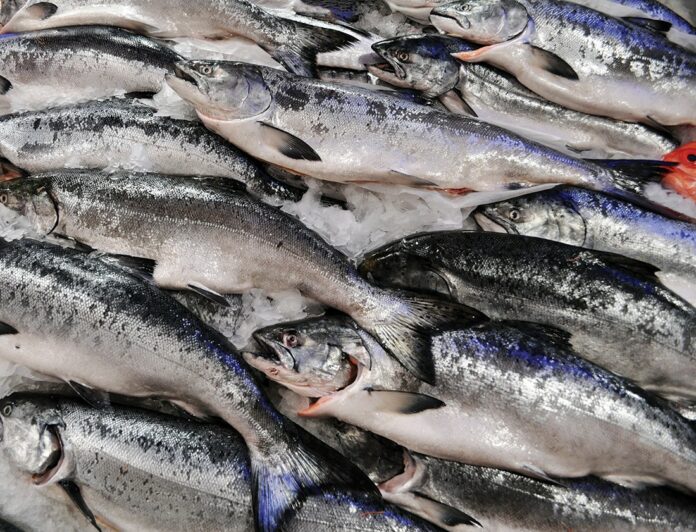
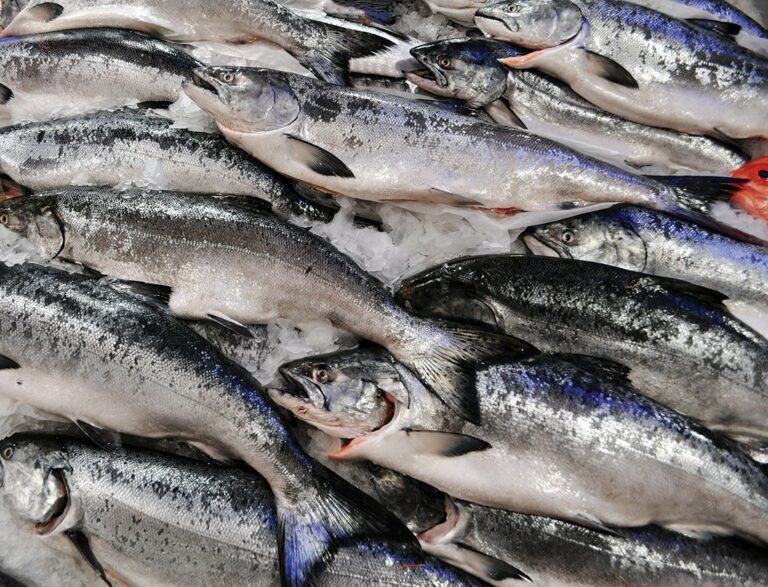
The California salmon fishing season that ended last week was OK this year, says John McManus, executive director of the Golden Gate Salmon Association, “but not as good as last year.”

In February, the National Marine Fisheries Service said an estimated 650,000 Chinook salmon would leave the Sacramento River for the Pacific Ocean this season—an estimate offered as a portent of good things to come, despite the drought.

But salmon fishing in California, McManus fears, is going to get worse before it gets better—and that’s if it ever does improve. This year, he says, salmon anglers working the colder waters to the north tended to fare better. “Southern Oregon was quite good,” he says, “the Eureka area, the sport fishery was quite good. Sonoma was OK.”

The Marin County coast, he says, “got OK in late September and remained surprisingly strong in October.”

The problem for the salmon, however, is the ceaseless drought with its various fallouts. Looking ahead, says McManus, the prospects for a healthy and sustainable salmon fishery are decidedly grim.

McManus describes a “desperate situation for spawning fall run king salmon in the Sacramento Valley this year,” because of high water temperature in the Sacramento River and surrounding tributaries.

A successful salmon spawn requires water temperatures to be at 56 degrees. Water temperatures that crank northward as high as 62 degrees mean certain death to an entire generation of fish.

“The adults are up there spawning,” says McManus, “but the spawn is all likely to die this year because the rivers are too hot. Come next year, I wouldn’t be surprised if there are very few fish coming out of the gravel.”

The Golden Gate Salmon Association (GGSA) has pushed the state and federal government on two fronts this year in an attempt to save the California salmon fishery from drought and global warming impacts. But so far neither has taken up the call.

To deal with high water temperatures, McManus called for the state to launch a program that he says has been met with success in Oregon and Alaska.

There, fisheries biologists removed eggs and milt from wild salmon and stored them in a controlled environment until water temperatures returned to an optimal level. Then the eggs were manually inserted into gravel beds—and little fish fry popped out in the spring, just like that.

“I’m quite worried about the next few years ahead,” McManus says. “And, yeah, there were and there are interventions that the GGSA has proposed that would make a difference, that would help and assure that we’d have better and more abundant stocks.”

California’s Department of Fish and Wildlife hasn’t explored the intensive egg vesting gambit, but McManus says he’s “hopeful that the state might do an experimental study, which is not likely to give us more fish in the ocean in 2017, but could satisfy the state’s need to see if this is worth doing at all during drought seasons.”

Alaska and Oregon demonstrated the utility of this approach, says McManus, and his organization even sponsored a presentation for state and federal officials on how it would work.

The other plan being promoted by GGSA involves increasing the output at the Coleman National Fish Hatchery in Redding, Calif.

The fish hatchery was built by the federal government to mitigate damage to the state’s salmon fishery created by the development and operation of the Shasta Dam.

The hatchery is managed by Fish & Wildlife, says McManus, and has capacity to ramp up its output. “We’ve asked that they consider doing so to compensate for what we expect to be a total or near total loss of the king salmon run this fall.”

Eric Larson, fisheries program manager at Fish & Wildlife, says state efforts on behalf of the salmon have rendered those plans unnecessary. Almost all the salmon caught in California ocean waters, he says, come from hatcheries in and around the Sacramento River system—not so in Oregon. And, because of the drought, this year the agency trucked smolts down to net-pen holding facilities in San Fransisco Bay, and released them into the ocean from there, which “negates the interstitial-placement-of-eggs argument,” says Larson.

The smolt operation “was a huge project for us,” Larson says, adding that “we have a hatchery system here because we don’t have a large number of natural fish. We think we got a lot of fish in the ocean this year, and we won’t see this decline in hatchery fish in the ocean come two or three years down the road.”

Furthermore, he says, the state, is already handcuffed by a lack of available habitat space for inland or returning salmon: “We don’t increase production because we are at capacity,” Larson says. “We don’t have the habitat or the hatchery space for more returns than what we are already doing.”

Larson and McManus agree the fishing this year was pretty good. It was a far cry better than the early 2000s, when the state’s salmon fishery was shut down cold.

Grand New

0

Looking back, it all started with a YouTube video. What was meant to be a spur-of-the-moment performance became an internet sensation that turned Hawaiian-born musician Jake Shimabukuro into a beloved, internationally known talent.

For the last three years, Shimabukuro has received acclaim from critics and fellow artists, and has performed for everyone from the queen of England on down. And he’s done it all with an unmatched approach to the ukulele, a seemingly simple instrument.

Shimabukuro has completely flipped the script on the ukulele, playing a blend of classic rock, folk and bluegrass that also travels into the funky realms of jazz and soul. His latest album, Grand Ukulele, is his most dazzling work yet.

The new record is produced and engineered by the legendary Alan Parsons. Parsons reportedly got in touch with Shimabukuro after seeing him play some shows, and offered to capture the essence of Shimabukuro’s magical live performances with a big band sound incorporating up to 29-piece orchestrations. This fall, Shimabukuro is heading out on a massive U.S. solo tour; he plays Friday, Oct. 24, at the Marin Center Veterans Memorial Auditorium, 10 Avenue of the Flags, San Rafael. 8pm. $30–$75. 415.473.6800.

Fungi Finally Fruiting

0

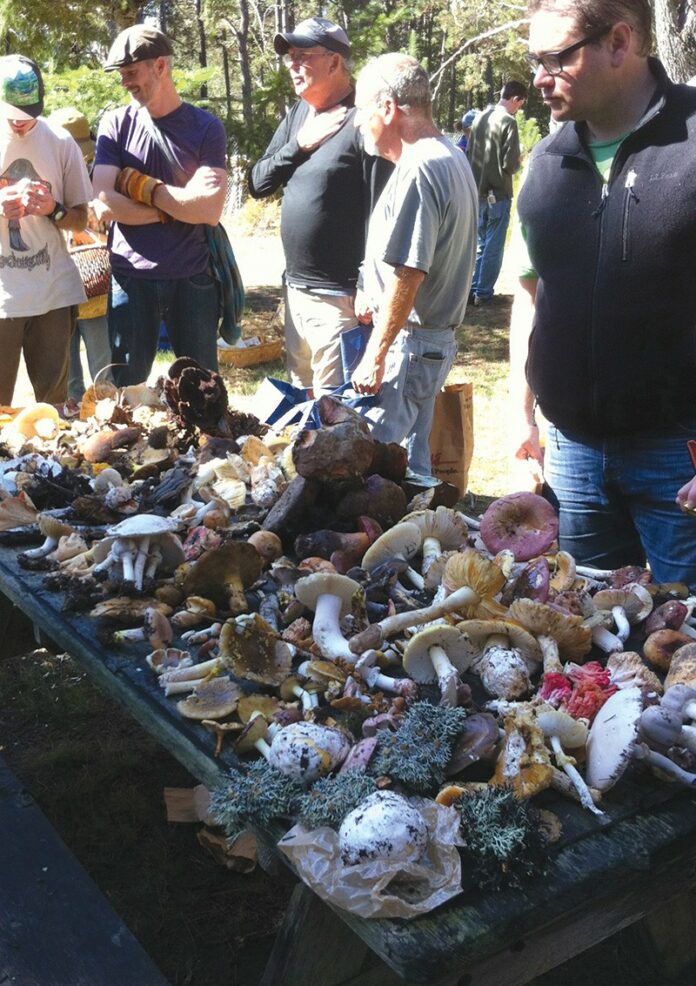
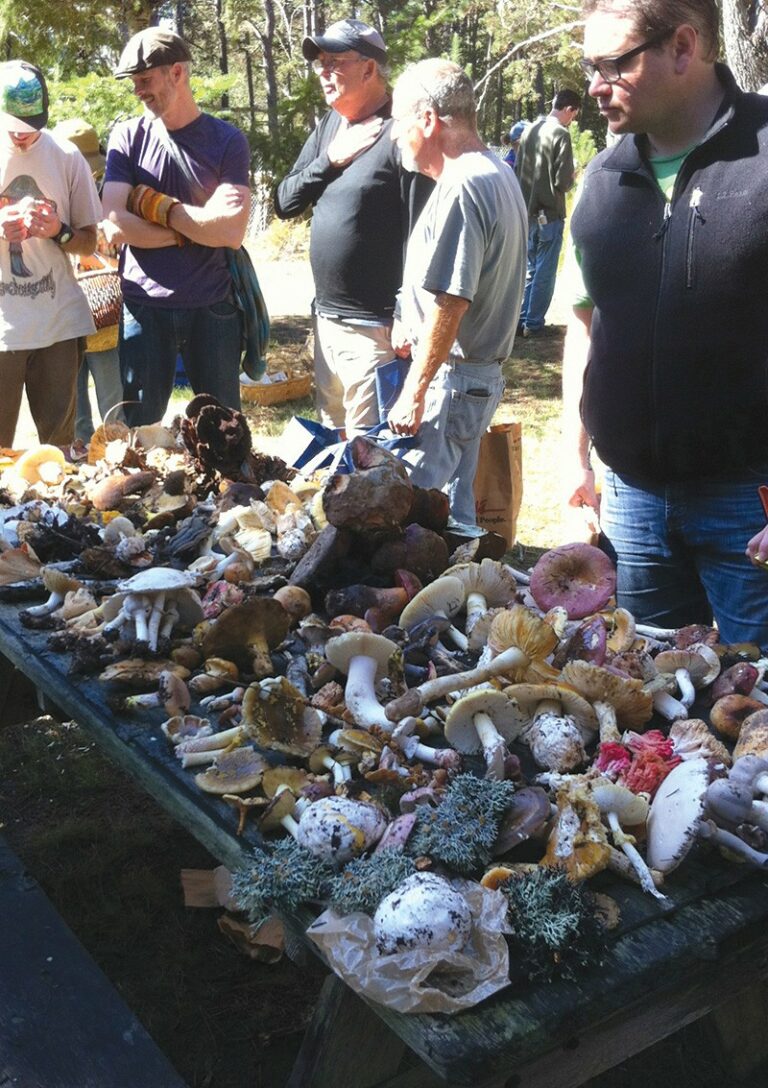
After two dismal years of wild mushroom foraging, things are looking up. Patrick Hamilton, foray coordinator for the Sonoma County Mycological Association (SOMA), says rain from the thunderstorm late last month produced the first flush of mushrooms.

“People found quite a few,” he says, including golden chanterelles, porcini, black trumpets and even coveted matsutakes.

More mushrooms have been found this year than at the same time last year, he says The mushrooms were found at Salt Point State Park and into Mendocino County.

“After the next rain, there should be another flush,” Hamilton says.

But he adds that because of the drought, “all the old rules are out the window.”

Hamilton says his advice used to be wait 10 days after first half inch of rain to find mushrooms. But because the forest floor is so dry, the first rains pass right through the pine and leaf duff into the sandy loam. Mushrooms generally need long-term dampness to promote proper fruiting. The next rain should help move things along, he says.

“I think it’s going to be better than the last two years,” he adds, admitting that it’s been so bad that may not be saying much.

If you want to make the most of this year’s mushroom season, check out SOMA’s Wild Mushroom Camp Jan. 17–19 in Occidental where you can learn everything you always wanted to about the fungi kingdom. Go to www.somamushrooms.org for more information.

Permanent Poverty

0

A little over a year ago, my book The American Way of Poverty came out. In it, I explored both America’s stunningly high levels of inequality and also the life stories of those mired in modern-day poverty. I also suggested a number of economic and policy changes that would have a large impact on poverty.

Since then, some things have changed significantly: America’s unemployment rate has fallen back down to levels not seen since before the financial collapse of 2008; housing markets in states such as California have largely bounced back; the construction industry is alive and kicking again; and state and federal budget deficits continue to shrink.

Yet scratch below the surface and much of the good news evaporates. Yes, unemployment is down, and that is partly because jobs are finally being created, but it’s also because so many people have gotten so discouraged that they have dropped out of the labor force. A far smaller percentage of working age adults are employed, or looking for work, today than seven years ago.

And, related to this, poverty rates remain stubbornly high; roughly 14.5 percent of Americans live in poverty, as do upwards of one in four children in the country. Approximately one out of every six Americans is what the government terms “food insecure”—they’re anxious about how they will feed themselves and their families, they rely on food stamps, food pantries and other charities.

This poverty is engrained in 2014 America. It is not an incidental part of how the economy functions, but rather a central part. It has to do with the prevalence of low wages and non-benefited work at the bottom of the economy, and also with the growing concentration of wealth and influence at the top of the economy. And until we put serious efforts into laying the foundations of a new economy, it will continue to fester.

Sasha Abramsky is a widely published freelance. He is a senior fellow at the Demos think tank, and teaches writing part-time at UC Davis. He is speaking on his book ‘The American Way of Poverty’ on Oct. 2 at the Food Pantry Dinner held at the Dance Palace in Point Reyes.

Open Mic is a weekly feature in the ‘Bohemian.’ We welcome your contribution. To have your topical essay of 350 words considered for publication, write [email protected].

In Praise of Dark Beer

0

When evenings dim and the weather takes an autumnal turn, thoughts turn to darker, heartier beers.

But a recent shopping trip for local stouts turned into a bit of a treasure hunt. I found just three amid one of the largest selections of 22-ounce bottles in North Bay beer country, while a supermarket oriented toward locally made products turned up one more. But where’s Stonefly? Going to the source, I learn that Third Street Aleworks has discontinued bottling its award-winning stout. Stout’s suffering, I’m told, because beer drinkers just want “hops, hops, hops.” Fortunately, the four stout ales I did find exemplify the variety and quality of this plucky category.

Dempsey’s Ugly Dog Stout This should appeal to fans of Guinness, the stout recognized around the world. Dempsey’s calls it a “foreign style” stout—but we know what they mean, even if it doesn’t sport quite the same compact, creamy head. It’s medium-bodied, with aromas of dark, roasted grain, a creamy, substantial mouthfeel and a firm, appropriately bitter finish tinged with iron. A solid, pub session stout with a moderate 6.7 percent alcohol by volume.

Bear Republic Big Bear Black Stout An American-style stout, this is hoppier and maltier, with big, beer milkshake flavors of bitter chocolate and sweet malt. Robust and packed with flavor. You may want this with a coffee crusted flank steak. 8.1 percent abv.

Lagunitas Imperial Stout Potent imperial stout, inspired by 18th-century English exports to Russia, is one style that seems to be on the rise nationwide. This, the brewery’s only stout, besides the almost equally strong, winter-release Cappuccino Stout, reminds me a little of roasted twig tea and has burnt grain and barley wine highlights. With flavors of espresso, soy sauce, dark malt syrup and barley wine, this calls for some strong cheese, like aged gouda, to snack on. 9.9 percent abv.

Anderson Valley Bourbon Barrel Stout Good thing the brewery has an exclusive arrangement with the makers of Wild Turkey for a ready supply of quality barrels, because competition is tight; bourbon makers can only use the barrels once, after which they are often sold for reuse in the red-hot Scotch whisky market. This may sound like a bruiser, but it’s just Anderson Valley’s old standby, Barney Flats Oatmeal Stout, with the booze barrel aging imparting a perfume of maple syrup aromatics. Like the Ugly Dog, it’s medium-bodied and smooth on the palate, with a modicum of roasted grain, bittering hop character and fruity and nutty highlights. The bourbon flavor is just a warm, sweet crest topping a wave of mellow stout to the finish. 6.9 percent abv.

Better Burgers

0

The couple sidles up to the counter at Marin Joe’s
and plops themselves down. We’re elbow to elbow, and the man won’t stop casting sideways glances my way—those neighborly glances that
aim to engage.

I’m sitting at a stool straight across from Marin Joe’s famous open-flame grill. It’s the hot seat, and the grill’s loaded down with grilling chops and fish steaks and searing hamburgers.

A mess of chefs work open-air stations at this Corte Madera spaghetti chop-shop, which today experiences the thrum of Sunday late-afternoon business. The place opens at 4pm on Sundays, and by 4:30, it’s practically a full house.

If the cool signage didn’t already give notice, Marin Joe’s is an institution, been around since forever and remains popular with the Marin locals—it’s a classic “joint” of the “old school,” where they prep your caesar salad tableside, like that.

You already know these people, this couple, and you know that they need to be someone’s guide to Marin Joe’s. They absolutely must talk to someone, because they sure aren’t talking much to each other (although that could be my own “couples envy” expressed as embittered observation, true).

The couple’s gotten the attention of a Marin Joe’s patron seated on the other side of them—he’s getting the earful about the brochettes. Yet everyone within earshot knows they’ve been coming here for years, 38 of them.

They’ve had everything on the menu—tonight it’s spaghetti and pork for him, and a dinner salad for her—and I dope out a familiar, quaintly familial patter between the couple and the waiter, who played his role with aplomb: crusty and attentive with the kind and haunted eyes of a poet.

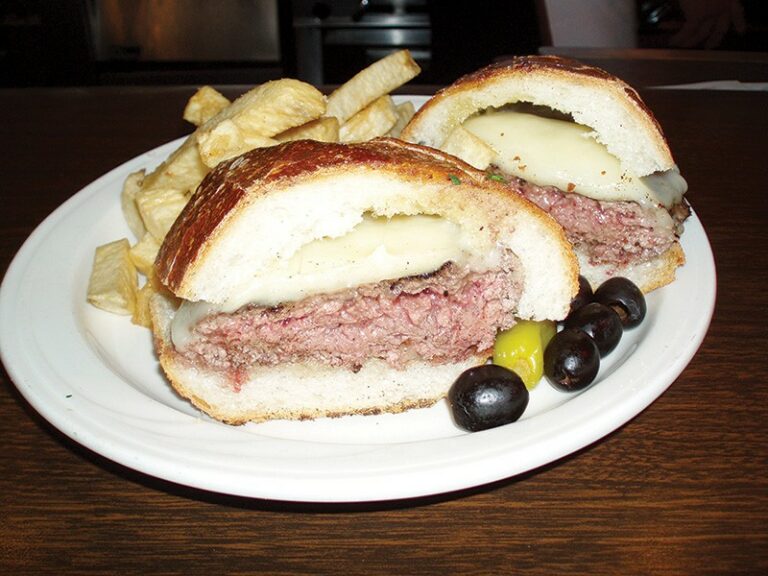
I stare into the flame and feel the heat on my face. I’m here for the burger, nothing else.

I watch it cook. Medium-well for me, please, and would you just look at those thick slices of mild cheddar the grillmeister is dropping on the burger as it flames-up. Wow.

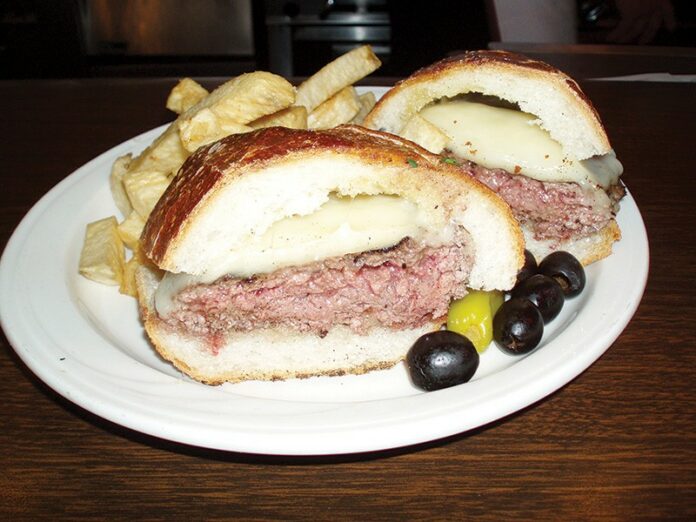
Grillmeister plates the burger with an insouciant flip of the wrist. He’s already jacked the plate with accompaniments: a couple pepperoncini, a bunch of pitted black olives, strictly from the can. Nice.

There’s a handful of decently de riguer fries, and the burger is planted between chewy triangles of sourdough. A pile of sautéed onions gets dumped on the plate, and a lonely leaf of lettuce wilts under the weight of it all.

Whoosh, the waiter drops the plate in front of me. “Mustard?” he asks. Oui.

The Grey Poupon arrives, is slathered on the moist, dense burger—and suddenly I’m lost in an anti-reverie from early in the Obama presidency, when Sean Hannity declared Obama unfit for office because he, too, put mustard on his burger—the soft socialism of the Euro condiment Commie-fag, whatever.

In burgers as in politics, the extremes will either kill you or they will irritate you. That’s why we need places like Marin Joe’s and its hoary under-$15 burger. It’s the reasonable middle ground, and it’s needed now more than ever.

Consider the Glamburger, available at a London restaurant with American-diner pretensions.

Pretension being the operative word. That’s a $1,770 hamburger. It features Kobe Wagyu beef, New Zealand venison, caviar, black truffle brie, lobster poached in Iranian saffron, a hickory smoked duck egg, Himalayan salt, etc. There’s grated white truffle, and bacon. And the burger is covered in gold leaf, well-matched to the silver spoon you’ll be needing to afford this mutha.

Me, I’ll go to Phyllis’ Giant Burgers instead. I was there just the other day, in fact, and ordered the junior cheeseburger with bacon. I was at first taken aback by the burger’s diminutive size, until I remembered that I’d ordered the junior.

Phyllis’ offers a well-turned exercise in balance: spot-on char-broiling, crispy shredded lettuce and unlimited pickle spears at the condiment station. If you want pretense, go talk to the woman at the table next to me about why she’s reading Joyce Carol Oates.

If you want high-concept pretense, look no further than a recent Wall Street Journal report that interviewed professor Patrick Brown from Stanford University. Brown had mastered the art of bioengineered fake cow blood—for use on the quintessential ersatz burger his company has conjured from plant matter.

Brown is taking soylent-food dorkery to previously unexplored depths of veg-obsession at his Redwood City laboratory, where extremist vegans in white lab coats scurry about, faking everything.

Here’s my take: You want a burger, go eat one. You want a vegetarian burger, get yourself a Sunshine Burger. You can’t fake the basic purity of a sunflower-seed patty, so forget the fake bacon, the fake blood and the fake cheese, and load it up with tahini, avocado and tomato slices—trimmings appropriate to the encounter. When you order the real deal, get it with trimmings appropriate to the unwholesome encounter: Of course I’ll have that with bacon.

Marin Joe’s, 1585 Casa Buena Drive, Corte Madera, 415.924.2081. Phyllis’ Giant Burger, various locations, including 4910 Sonoma Hwy., Santa Rosa, 707.538.4004.

Oct. 16: Preston Reed in Mill Valley

0

No one plays the guitar like Preston Reed. A self-taught musician, Reed’s approach to the acoustic instrument uses a one-of-a-kind, two-handed finger-plucking technique that’s as spellbinding as it is melodic. Reed’s technique often includes both of his hands on the neck of the guitar, each tapping away in an overhand style that adds an intense percussive element, especially when Reed taps on the guitar body as well as the strings. Reed incorporates blues, funk and world music genres. This week, Reed comes to the North Bay, performing compositions from his four-decade career on Thursday, Oct. 16, at 142 Throckmorton Theatre, 142 Throckmorton Ave., Mill Valley. 8pm. $20-$25. 415.383.9600.

Oct. 18: Petaluma Whiskerino at the Phoenix Theater

0

In the pantheon of the manliest men in history, one common thread ties many of them together: facial hair. From the distinguished mustache of Theodore Roosevelt to the full beard of Davy Crockett, there’s no shortage in ways to wear the hair. This week the Petaluma Brothers of the Brush present the North Bay’s premier beard competition at the 56th annual Petaluma Whiskerino. Men, and women, from around the Bay come to show off their chops—whether it’s perfectly peached fuzz or business beards, classic goatees or freestyle sideburns. The fam-friendly event this year also boasts live music before the judging. The Whiskerino takes place on Saturday, Oct. 18, at the Phoenix Theater, 201 Washington St., Petaluma. 2pm. $10 to register. Free to watch. 707.762.3565.

Oct. 19: Two Man Gentleman Band, Bergamot Alley, Healdsburg

0

After a two-year recording and touring hiatus, the Los Angeles acoustic folk duo the Two Man Gentlemen Band is back with a new full-length album, Enthusiastic Attempts at Hot Swing & String Band Favorites, picking right up where the band left off. Fourteen swing and string band tunes, recorded live to tape with just one microphone, are captured with the group’s signature flair and passionate exuberance. Andy Bean’s banjo and Fuller Condon’s string bass sound like they’ve been transported straight from the 1930s, and the pair’s vocals are sharply harmonious and witty. The Two Man Gentlemen Band is currently on a coast-to-coast tour of the states, and performs on Sunday, Oct. 19, at Bergamot Alley, 328-A Healdsburg Ave., Healdsburg. 7pm. Free. 707.433.8720

Oct. 22: Dana Cowin at Bottega Restaurant

0

For Years, Dana Cowin kept a big secret. The editor-in-chief of the prestigious Food & Wine magazine could barely cook. With the help of friends who also happened to be all-star chefs, Cowin mastered her meals and she recently shared her kitchen mishaps and how she overcame them in her book, Mastering My Mistakes in the Kitchen: Learning to Cook with 65 Great Chefs and Over 100 Delicious Recipes. Cowin appears at the popular Bottega Restaurant in Napa Valley, presented by Book Passage, for a revealing dinner and reading event. Head chef and television personality Michael Chiarello welcomes the author, as Cowin shares some sure-fire recipes and joins patrons for a sumptuous dinner on Wednesday, Oct. 22, at Bottega Restaurant, 6525 Washington St., Yountville. 6:30pm. $140. 415.927.0960. 

Lox and Stocks

The California salmon fishing season that ended last week was OK this year, says John McManus, executive director of the Golden Gate Salmon Association, "but not as good as last year." In February, the National Marine Fisheries Service said an estimated 650,000 Chinook salmon would leave the Sacramento River for the Pacific Ocean this season—an estimate offered as a portent...

Grand New

Looking back, it all started with a YouTube video. What was meant to be a spur-of-the-moment performance became an internet sensation that turned Hawaiian-born musician Jake Shimabukuro into a beloved, internationally known talent. For the last three years, Shimabukuro has received acclaim from critics and fellow artists, and has performed for everyone from the queen of England on down. And...

Fungi Finally Fruiting

After two dismal years of wild mushroom foraging, things are looking up. Patrick Hamilton, foray coordinator for the Sonoma County Mycological Association (SOMA), says rain from the thunderstorm late last month produced the first flush of mushrooms. "People found quite a few," he says, including golden chanterelles, porcini, black trumpets and even coveted matsutakes. More mushrooms have been found this year...

Permanent Poverty

A little over a year ago, my book The American Way of Poverty came out. In it, I explored both America's stunningly high levels of inequality and also the life stories of those mired in modern-day poverty. I also suggested a number of economic and policy changes that would have a large impact on poverty. Since then, some things have...

In Praise of Dark Beer

When evenings dim and the weather takes an autumnal turn, thoughts turn to darker, heartier beers. But a recent shopping trip for local stouts turned into a bit of a treasure hunt. I found just three amid one of the largest selections of 22-ounce bottles in North Bay beer country, while a supermarket oriented toward locally made products turned...

Better Burgers

The couple sidles up to the counter at Marin Joe's and plops themselves down. We're elbow to elbow, and the man won't stop casting sideways glances my way—those neighborly glances that aim to engage. I'm sitting at a stool straight across from Marin Joe's famous open-flame grill. It's the hot seat, and the grill's loaded down with grilling chops and...

Oct. 16: Preston Reed in Mill Valley

No one plays the guitar like Preston Reed. A self-taught musician, Reed's approach to the acoustic instrument uses a one-of-a-kind, two-handed finger-plucking technique that's as spellbinding as it is melodic. Reed's technique often includes both of his hands on the neck of the guitar, each tapping away in an overhand style that adds an intense percussive element, especially when...

Oct. 18: Petaluma Whiskerino at the Phoenix Theater

In the pantheon of the manliest men in history, one common thread ties many of them together: facial hair. From the distinguished mustache of Theodore Roosevelt to the full beard of Davy Crockett, there's no shortage in ways to wear the hair. This week the Petaluma Brothers of the Brush present the North Bay's premier beard competition at the...

Oct. 19: Two Man Gentleman Band, Bergamot Alley, Healdsburg

After a two-year recording and touring hiatus, the Los Angeles acoustic folk duo the Two Man Gentlemen Band is back with a new full-length album, Enthusiastic Attempts at Hot Swing & String Band Favorites, picking right up where the band left off. Fourteen swing and string band tunes, recorded live to tape with just one microphone, are captured with...

Oct. 22: Dana Cowin at Bottega Restaurant

For Years, Dana Cowin kept a big secret. The editor-in-chief of the prestigious Food & Wine magazine could barely cook. With the help of friends who also happened to be all-star chefs, Cowin mastered her meals and she recently shared her kitchen mishaps and how she overcame them in her book, Mastering My Mistakes in the Kitchen: Learning to...
11,084FansLike
4,606FollowersFollow
6,928FollowersFollow