Berried Treasure

0

The embedded blackberry thorns are pulled fairly easily from the flesh of my thighs, but are far more difficult to remove from the denim of my jeans.

The pants were a fashion choice I mistakenly thought would be fitting for an activity like picking blackberries in Sebastopol’s Ives Park, but only resulted in agitation from overheating, frustration from picking tiny throwing stars from my legs and blood stains on the inside of my clothes. Plants, it seemed, had gotten the best of me this day.

But wait—this is the land of Luther Burbank, the man who coerced nature to bow to his vision of the perfect plant. He invented the Russet potato, the spineless cactus and, yes, several varieties of thornless blackberry. As I soothed my wounded pride with the sweet taste of fresh berries, my burning legs prompted a good question: Where are those thornless blackberry bushes now?

To begin, it must be understood that the blackberry most of us know in the North Bay is not a native species. The invasive Himalayan blackberry was brought here from Eastern Europe by none other than Mr. Burbank himself, who praised its structural heartiness and plump fruit. It was picked up by farmers and used as natural cattle fencing. But the plant was just too aggressive, and soon escaped into the wild where it had no natural forces to keep its thick, spiny stems in check. Now it can be found from Southern California all the way up to Alaska.

Oregon’s Willamette Valley, however, hosts a variety of heirloom blackberries. Perhaps most well-known is the marionberry, which is a cross between Chehalem, a descendent of the Himalayan blackberry and the Olallie, itself a cross between the loganberry and youngberry. It was first introduced in 1956 by the USDA Agricultural Research Service at Oregon State University, and is now old enough to be called an heirloom variety, says Paul Wallace of the Petaluma Seed Bank. “When [a hybrid] is stabilized, after about eight or 10 years, it could be termed an heirloom,” he says.

When berries are out of season, fruit lovers head to the grocery store, where familiar plastic clamshells bearing bland, tough, enormous black orbs lie in wait with their $6 price tag. These are Tupi blackberries, a commercial variety grown mostly in Mexico.

But what about that thornless blackberry developed by Burbank? It seems like such a wonderful idea, why didn’t it take off?

Well, Burbank wasn’t doing his work just for the betterment of mankind. He was an inventor who sold his ideas; that’s how he made money. He invented 16 blackberry and 13 raspberry varieties, but not all were commercially successful. The plants are available to home gardeners, but apparently don’t make financial sense for farmers to grow.

At Luther Burbank’s home and gardens in Santa Rosa, many of the varieties are on display now, with berry season nearing. It is truly amazing to grasp the stalk of a seemingly ordinary blackberry plant and not recoil in pain. But as the sweet reward of my excruciating berry picking conquest trickles down my throat, I can’t help but wonder if the berries would taste as good if they hadn’t required a little blood as tribute.

Hydrodynamic

0

Surfing in Sonoma and Marin counties is dodgy in the best of times, but spring is downright dismal. Northwest winds scour the coast, rendering any waves that straggle ashore into ragged, unsurfable junk. The constant onshore blow dredges up deep, cold water to give surfers brain-
freezing headaches as they duck under waves.

But there are not many waves worth surfing this time of year anyway. Spring is a season of transition, and northwest swells from the Gulf of Alaska have all but dried up, and Southern Hemisphere swells have yet to make their way to our shores.

Still, Jamie Murray manages to stay connected to the ocean during the windy season inside his 108-square-foot shop tucked behind his home in Santa Rosa’s west end. Murray, 40, is a surfboard shaper, one of just a few in Sonoma County. If he can’t ride a surfboard, he can make one. He doesn’t advertise or sell his boards in surf shops, but the word has spread about his handiwork through the North Coast surf underground.

“He’s talented,” says Jay deLong, 42, a veteran North Coast surfer who has ordered several boards from Murray. “He’s really a craftsman. He’s got curiosity, and he’s not afraid to fail. He’s that classic person who is enjoying the ride.”

As an in-demand shaper, Murray spends a lot more time in his shop than he does in the water. Once he closes the shop door, he disappears for hours in a private world of tools, foam dust and hydrodynamics.

“My wife and kids have to get me,” he says. “There’s no possible way I can keep track of my own time.”

CONNECTICUT TO CALIFORNIA

Murray is an unlikely shaper and surfer. With his short-cropped hair, glasses and wry smile, he doesn’t fit the surfer stereotype. He looks more like
an English teacher. Which he is. He was a founding faculty member at Sonoma Academy.
His writing skills and sense of humor come across on his blog at www.headhighglassy.blogspot.com:

SHAPING IN SPRING

The deeper into spring, the weirder the boards: long, wide, fat boards that will catch everything. Short, wide, fat boards that catch almost everything. Medium, wide, fat boards that fit perfectly between short-period windswell troughs. Many ways to skin the grumpy, uncooperative, foggy cat of spring. Take that, spring!

PARENTING IN SPRING

My kids now think I’m effing with them at bedtime. “How could it be?” They plead, pointing out the window. “It’s still light outside!” And they’re correct, but it’s also 8pm and daddy needs a Manhattan, so off they go. Take that, spring!

Murray grew up in Connecticut, a state with a nearly nonexistent surf scene. Because there were no local surf shops, he and his friends surfed scavenged old boards.

“We were 10 to 20 years behind,” he says. “We were always surfing stuff that was out of date.” He learned to surf on a 1970s-era 5-foot, 11-inch twin fin.

“It was pretty retro before retro was cool,” he says.

Murray got used to those outdated designs, and when he moved to California in the 1990s after college in Colorado, he wanted to rekindle his love of surfing. By then the surf industry was focused on short and thin boards patterned after the high-performance, competition-style boards surfed by the pros. For someone used to riding boards with more foam and width, they were no fun. Murray asked a Santa Cruz shaper to make him one more suited to his liking. He got turned down. So Murray decided to make his own.

[page]

THE ART OF SHAPING

For all their graceful lines and high-gloss finishes, surfboards begin life as an unremarkable plank of polyurethane foam called a blank. It’s a shaper’s job to artfully saw, plane and sand away the blank to reveal a surfboard shape within. Once the blank is shaped to the shaper or client’s specifications, colors, decals and fin boxes are added, then it’s layered with resin and sheets of fiberglass. Before it’s ready to be surfed, it gets sanded and polished.

There are mass-produced, computer-cut surfboards, but since surfing’s rise in popularity in the 1950s, there has always been demand for handmade surfboards. Other than custom bicycles, there are few sports where you can work with a designer and craftsman to create a piece of equipment built to your specs.

Back home in Connecticut, Murray’s dad, like many Yankee dads, had a basement workshop that kept him busy through the long winters. As a kid, Murray made his own skateboards because his father wouldn’t buy something he could make himself.

“If you wanted it, you were going to have to make it,” Murray says. “That was his philosophy.”

And it became his philosophy, too. So Murray got a blank and set to work making his first board.

“It was totally shitty and came out terrible,” he remembers.

But he learned from his mistakes, and the next one was better. So was the next. These were the early days of the internet, and there wasn’t much information available on surfboard shaping. To expand his knowledge, he spent time observing a few master shapers and asking questions. After making 30 or so boards, he started to get the hang of it.

By this time, Murray had moved to Santa Rosa and taken a job at Sonoma Academy. During the day he taught literature and writing, and at night and on weekends he continued to make boards and surf them in the heavy waters of the Sonoma and Marin coasts. Eventually, someone saw one of his boards and asked if he’d make one for him.

“I was loath to take orders,” he remembers. “I really didn’t know what I was doing.”

But his boards got better, and soon he had a growing list of customers. Paddle out at Salmon Creek or Dillon Beach, and chances are you’ll see a board with a dragonfly decal, Murray’s logo.

It turns out his fondness for the retro boards of his youth—wide, thick ones designed for easy paddling and their wave-catching ability rather than aerial maneuvers and competition—fit right in with the North Coast’s surfing demographic. Murray sums up the area’s surfers with one word: “Old.”

Most surfers here have been around for a while. The area is challenging and doesn’t offer many beginner-friendly spots, so there aren’t many first-timers or young kids in the water. Old guys—and girls—rule.

Whether it’s nostalgia for old designs or simply the desire for a board that will help surfers paddle through the North Coast’s notoriously heavy currents and surf, Murray’s designs are tailor-made for the region.

“It’s a big playing field out there,” says Sebastopol surfer Neil Ramussen, 62.

He ought to know. He’s been surfing the North Coast since 1966. “You want something to get you around. Bigger boards are better.”

[page]

Several of Murray’s shapes were created with local surf breaks in mind. Winemakers talk about terroir and how their wines reflect the local soil and climate. Murray’s boards reflect the power and mercurial nature of our stretch of coast. While springtime is rough, the North Coast can get good waves. Sometimes really good. And when it’s on, you want the right board for the job.

Murray’s “Pit Boss” was created to surf a powerful, barreling wave near Dillon Beach that requires a long paddle over notoriously sharky waters. His “Clover” design is suited to Salmon Creek when a winter groundswell is pulsing and the waves get steep and hollow. He also makes “Broadswords,” longboards suited to both smaller, mushier summertime waves and big winter surf .

There is demand for high-performance surfboards, but Murray usually steers those customers to Ed Barbera, a master shaper who makes boards behind Bodega’s Northern Light Surf Shop.

“He does such a killer job with them,” Murray says.

HEAVY WATER

Though people have been surfing in Southern California and Santa Cruz since the early 1900s, surfing is relatively new to Sonoma and Marin counties—mainly because it’s so damn hard to surf here and there is more consistent surf just about everywhere else in the state.

“Twenty years ago, the Sonoma Coast was the frontier,” says veteran surfer deLong.

DeLong counts himself as the first wave of young surfers in Sonoma County. There were a few older surfers like Rasmussen who surfed back then, but they were few in number and some scampered farther north when their solitude was disturbed by newcomers paddling out.

“Back then, there was hardly anyone in the water,” he says. “You’d be happy if there was someone else out there with you.”

Murray says most surfers he meets simply want to get into the ocean and enjoy the area’s natural beauty and bag a few waves along the way. He includes himself in this group.

“As older, experienced surfers, we’re looking for a wilderness experience. It’s not about wave count or blasting big airs.”

He says he enjoys working with surfers, half of whom are women, to bring their ideas to life. What do customers want from a board?

“Everything,” Murray jokes.

“It’s got to handle everything from ankle high to double overhead. Our conditions are wild and unpredictable. [Shaping for those conditions] is a fool’s errand, but that’s part of the challenge.”

He much prefers custom shaping to sticking a board in a shop for someone he’ll never meet.

“I like shaping for people I know. It’s more fun to imagine who I’m making it for.”

Murray isn’t planning to quit his day job. He figures he makes enough from each board he shapes to buy a good sandwich. Every dozen boards or so he’ll have enough money to make a board for himself. Which he apparently does a lot. There are boards stacked in and around his house like cordwood.

What is it that compels him to shape in his tiny shop and lay awake at night thinking about foils, rockers and hulls?

“My wife asks me that all the time,” he says, smiling. “It’s my quiet time, and it’s nice to do something physical after teaching all day. If I put in four hours in the shop there’s a [finished] product. It’s what I want to be doing.”

Back to the Future

0

When you’ve spent the last 23 years inventing and perfecting a subgenre all your own, in this case California soul, there is invariably a lot of material that gets left on the cutting-room floor.

Take the Mother Hips, for example. Even with their periods of hiatus, the band has steadily been building an ever-changing catalogue of cool grooves and hot rock. This year, the San Francisco jam masters re-entered the editing room to collect those clippings and have assembled a new record of never-released rarities and demos, Chronicle Man, set for release July 14.

Showcasing the Mother Hips’ earliest efforts, the album is primarily made up of the band’s grungier, fuzzed-out sound. This collection came to life reportedly after these demos were found on their original 2-inch analog tapes in an L.A. basement in 2009. The band pored over the material with their official archivist (which brings up the question of how many unofficial archivists may still be out there), and selected their favorites.

The Chronicle Man tracks get a live airing when Mother Hips appear Thursday–Friday, June 19–20, at Terrapin Crossroads. 100 Yacht Club Drive, San Rafael. 8pm. $20. 415.524.2773.

Honky Tonkers Come to Napa’s Uptown

0

After nearly 30 years in the business, country-roots singer-songwriter Dwight Yoakam has done it all. Platinum-selling albums only hint at the prolific work of the honky-tonk man, born in Kentucky and bred in Nashville’s music scene.

Though he struggled to break through early in the ’80s, Yoakam soon hit it big. The man who brought traditional country back to the mainstream now has more than 20 albums to his name and recently released his most acclaimed record yet, 3 Pears. The album was hailed as a return to Yoakam’s form of “hillbilly music” that incorporated his wide array of influences into a cohesive Americana sound.

This fall, Yoakam, known for his rousing live shows, heads out on a national tour with BottleRock headliner Eric Church. But first he makes his Uptown Theatre debut this month when he visits the historic Napa venue on June 27. His appearance marks the beginning of an exciting lineup for the Uptown, which looks forward to hosting an impressive collection of country, blues and rock and roll artists all summer.

July gets into full swing when the voice of Foreigner, Lou Gramm, performs on July 11. Two days later, Grammy-winning country singer Wynonna Judd makes her Uptown debut. Judd, who has recently taken new directions authoring a book and dancing on reality television, is still recording new material and will perform with her new band, the Big Noise.

Rich Robinson, formerly of the Black Crowes, appears on July 19 with songs from his brand-new album, The Ceaseless Sight. The next day, the Uptown heads into the “danger zone” with Kenny Loggins, playing with his recently formed country rock trio, Blue Sky Riders. On July 26, another famous Kenny appears at Uptown when Kenny Wayne Shepard carries on the blues-rock tradition he learned from legends like Stevie Ray Vaughn.

August continues the trend when crooner Chris Isaak plays on Aug. 8. Isaak recently moved into new rockabilly territory infused with his signature wistful and passionate style. It’s a move the songwriter has wanted to make for decades, and his latest release has been his most acclaimed. Aug. 15 sees the wild card in this season’s lineup when Idaho indie rock icons Built to Spill play. Sure to be the loudest show of the season, Built to Spill cap off a hot summer of shows at the Uptown Theatre.

Dwight Yoakam performs on Friday, June 27, at the Uptown Theatre,
1350 Third St., Napa. 8pm. $65–$105. www.uptowntheatrenapa.com. 707.259.0123.

Forget About It

“It’s a children’s book for adults, about what you knew as a kid, why it was important to forget and how great it is to remember,” writes 64-year-old San Rafael photographer Jerry Downs about Why You Were Born ($29.95) on his Kickstarter page. The165-page book successfully raised $20,000 in October and will be delivered to his home this week.

“What I care about is what art and photography are about,” Downs says by phone from his San Rafael home. “And they’re about life.” Though the book is worth it for the artwork alone, the text is what makes Why You Were Born a must-have for deep thinkers, people-ologists and curious life-explorers.

Why You Were Born is at times insightful, touching, philosophical, sappy and hilarious, but its most endearing quality is its honesty. With each new reading, it reveals something as yet unseen—just like life.

Jerry Downs will be reading from Why We Were Born Saturday, June 21 at Book Passage. 51 Tamal Vista Blvd., Corte Madera. 1pm. Free. 415.927.0960. The book’s official kickoff party is Saturday, June 28, at the Fort Mason Firehouse. 2 Marina Blvd., San Francisco. 6–11pm. Free. 415.345.7500.

Lobsterpalooza!

0

Among myriad solstice events in Napa County on June 21, paella parties, reggae jams, various roasts and good-time rumpuses, we’re digging the idea that there are competing sunset lobster feeds going down at two renowned vineyards as a high-toned way to celebrate the onset of summer.

So slap on a bib in anticipation, and decide on the crustacean destination du jour: Will it be Black Stallion Winery or Schweiger Vineyards for you?

Black Stallion, built on the grounds of an old equestrian facility in 2007, will boil the sea-bugs after a separate day-long barbecue event tails off at the well-appointed Napa establishment. The lobsterpalooza busts loose from 6pm to 9pm. Le price: $100 for wine club members; $135 for the general public. (Black Stallion Winery, 4089 Silverado Trail, Napa; 707.227.3250.)

Meanwhile, Schweiger Vineyards is putting on a traditional lobster feed on its sun-dappled terrace the same eve. The sun shall set, you shall enjoy the splendidly sublime view and the bib shall be splattered with melted butter.

The Schweiger shindig will set you back $150 if you’re a non-member, and runs 6-9:30pm. Members will drop $125. (Schweiger Vineyards, 4015 Spring Mountain Road, St. Helena; 707.963.4882.)

Of course both events will be pairing wines with their boiled offerings. Did you really need to ask? And both establishments please ask that you reserve a spot before you claw your way on over.

Ghost Lake

0

The Napa Valley brings to mind images of mud baths, pricey brunches and lots of wine.

Head northeast to Lake Berryessa, however, and you cross from wine country into beer country, where the recreation is less fanciful—fishing, boating, camping. But middle-class recreation has been undermined here since 2006, when more than 1,000 mobile vacation homes were evicted.

Now, U.S. Rep. Mike Thompson, a Democrat who represents Napa Valley and the Berryessa area, has a bill that would shift management of the lake from the Bureau of Reclamation to the Bureau of Land Management.

“The congressman feels that the BLM is the best agency to manage recreational activities at the lake,” says spokesman Austin Vevurka.

Thompson has also reintroduced a bill that would encompass the lake in a National Conservation Area (NCA) extending northward to the Berryessa Snow Mountain region. The move would end a multi-jurisdictional jumble and create a single overseer for the region, which would extend from the lake to the southern end of Mendocino National Forest.

Thompson’s office has also signaled a willingness to consider national monument status for the roughly 400,000-acre proposed reserve if his NCA bill fails again.

“I don’t know if this would happen or not,” says Vevurka, “but there is an executive path—there’s a way for the [Obama] administration to declare it a national monument.”

That designation would provide the same protections as the NCA designation—mining would be banned, for example—without a congressional vote. President Barack Obama used powers under the Antiquities Act earlier this year to create the Point Arena-Stornetta National Monument in coastal Mendocino.

The Napa Valley tourist economy sings a song of viticultural bliss, thanks in part to Thompson. According to the Center for Public Integrity, he is the House’s second largest recipient of funds from the beer and wine lobby.

Thompson took $83,462 in 2013–14 from the lobby, and is sandwiched between House Speaker John Boehner in the top spot and outgoing Majority Leader Eric Cantor in the three-hole.

Thompson, a fiscal conservative Blue Dog, has negotiated pro-business tourism and anti-development environmental concerns as he’s massaged his bills to win over the locals.

He’s been good to the wine people over the years, but the Berryessa constituency is leery.

In 2006, residents watched as the feds shattered the backbone of the area’s economic driver here when it removed about 1,300 mobile vacation homes from around the lake.

“It’s a ghost lake,” says Peter Kilkus via email.

Kilkus is a resident who advocates for the lake’s potential and wants to restore it to its former glory, he says. He opposes the NCA move, saying it’s “unnecessary.”

Tuleyome, a regional conservation group, has been pushing to create the Berryessa NCA.

Senior policy director Bob Schneider says NCA designation is a win-win for the environment and tourists, noting that a NCA designation for the Rio Grande del Norte in New Mexico saw a big spike in tourism.

But Schneider acknowledges that enhanced tourism under a BLM-managed conservation area may come with a “potential threat”: more tourists, more environmental stress.

Still, he notes that tourism at the lake wouldn’t return to its previous scale. The mobile homes aren’t coming back.

Schneider says BLM is best suited to manage the “impacts of new tourism opportunities” and says new campgrounds would provide four-season activities in an area that he says is primarily a summer boating-season retreat.

Thompson, he says, assured locals that motorboats could remain on the lake, and private-property owners would be outside the NCA boundaries. “This proposal also provides economic opportunities for towns in and around the lake,” says Schneider.

Thompson’s office stresses that the congressman isn’t going to ban motorboats. “Neither one of the bills would have an impact on that whatsoever,” says Vevurka.

Yet Kilkus remains skeptical of consolidating the Berryessa region under a BLM umbrella.

His concerns are echoed by fisherman Mark Lassagne, who blogged on the Bass Angler website that new federal oversight could “eliminate launch ramps, marinas and much motorized recreation and other recreational uses of the lake.”

Kilkus says the NCA bill is likely to fail unless Democrats win back the House and keep the Senate in Democratic hands.

Hence the national monument option. “If Congress doesn’t act, then the president should,” says Schneider.

Lexicographer

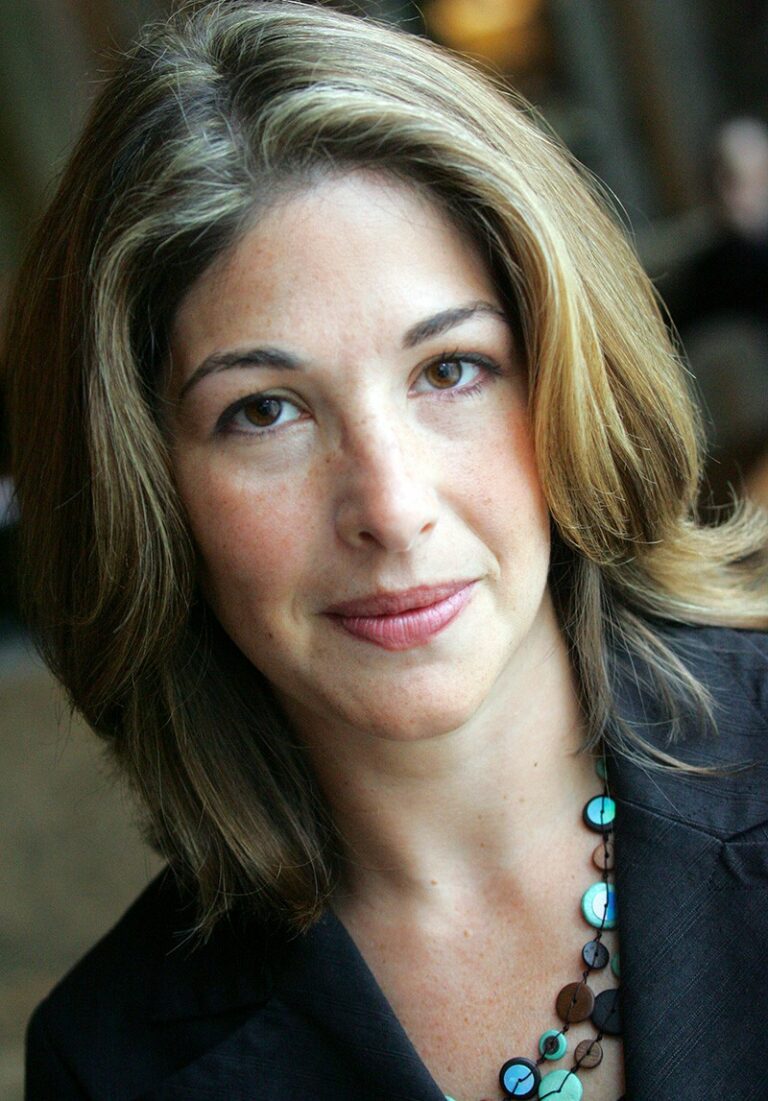
The most insightful part of Douglas Gayeton’s new book, Local: The New Face of Food and Farming in America (Harper; $34.95), might be the afterword, where he discusses the unfortunate fate of the term “climate change”: “What we can’t comprehend, we avoid. We tune out. Call it climate fatigue.”

That sort of fatigue encompasses many hot-button issues, including our food supply, the production of which is inextricably linked with climate change. It takes time, energy and discipline to stay on top of this stuff, especially when the rhetoric is all about fear.

And I’m tired of people telling me to be afraid of food. Even when fear is grounded, there’s only so much we can get out of it. It inflames our passions quickly, but exhausts them just as fast. Enter Local, part of a multi-platform project called the Lexicon of Sustainability.

The project is about hope, locality, and ordinary people taking action on large and small scales. The idea is that words come before actions. As Gayeton writes, “words illuminate.” Creating a shared language of terms—”a real food dictionary”—educates consumers so they know what they’re eating and who ultimately benefits from the money they spend.

Gayeton, a Petaluma resident and multimedia artist, cofounded the Lexicon with his wife, Laura-Howard Gayeton (North Bay residents may have some familiarity with Laloo’s, her goat’s milk ice cream company). He traveled across America, interviewing and photographing farmers, scientists and entrepreneurs in both urban and rural environments to learn more about how they generate abundance using sustainability. The result, documented in Local, is a growing bank of over 200 terms, each illustrated with a colorful photo collage overlaid with Gayeton’s folksy handwriting.

These “information artworks” are dense with color and words, as saturated as a modern-day Book of Kells, but the general idea comes across pretty quickly. For instance, “cage-free” only means the poultry was not raised in a cage; it says nothing about how it was raised (most likely crowded and indoors, as it turns out).

You can also see the information artwork on the Lexicon of Sustainability website, and watch the series of short “Know Your Food” videos. The book is advantageous because it’s a bit stickier; you can read it in bed, peruse over it at breakfast and leave it out for friends to flip through. It’s interesting to see how different bits and pieces shine in each medium, even though they essentially use the same content.

The Lexicon collects the terminology of both boutique food producers (“heritage breed”) and social justice (“food security”), allowing them to coexist on the pages of Local without the antagonistic attitudes that flourish around the difference between the haves and have-nots.

This is something I struggle with, especially with the food-rescue nonprofit I work with in my own community. Is it better to focus the organization’s resources on delivering our clients the finite fresh produce grown in our community gardens, or recovering massive amounts of sugary day-old pastries? The pastries feed more people, but the homegrown tomatoes and sweet corn generate more positive comments than anything else we deliver. There’s value in both actions.

This kind of small-scale, daily activism isn’t for a cultural elite. It’s not just for people who have time to garden or know the difference between a turnip and a daikon. And it’s not just for rich, middle-aged white people. (It’s nice to see different shades of brown skin, as well as teenagers and seniors, in the book.)

Gayeton’s emphasis isn’t on what we’re against, but what we’re all for. Pleasure, not guilt, is the point. There are no ominous synthesizer chords scowling in the background of the “Know Your Food” films. In Local, Gayeton playfully refers to what I assume is Monsanto and their agribusiness cohort as “the companies that must not be named.” It’s not only OK to receive pleasure from cultivating food on small urban plots or spending what may seem to be an unreasonable amount on sustainably caught wild fish, it’s essential. As the saying goes, you attract more bees with honey than you do with vinegar—even if it’s unfiltered vinegar made from the cider of pesticide-free Gravenstein apples. If you’ve been paying attention to the news, you know we all need more bees.

We can end with the beginning of Local: “After reading this book, please give it away. You’ll know who it’s for,” writes Gayeton in the introduction. I want to give it to my crunchy hippy friends, and my arty design friends. But also my friends who sneer at the farmers market but are happy to spend $12 on breakfast at Denny’s. Or people just like me, who buy those damnable pizzas at Trader Joe’s even though they come in frozen all the way from Italy. As it turns out, we can all use illumination. Even people who are already enlightened.

Live Review: Huichica Music Festival (with Photos)

Kelley Stoltz at Huichica 2014

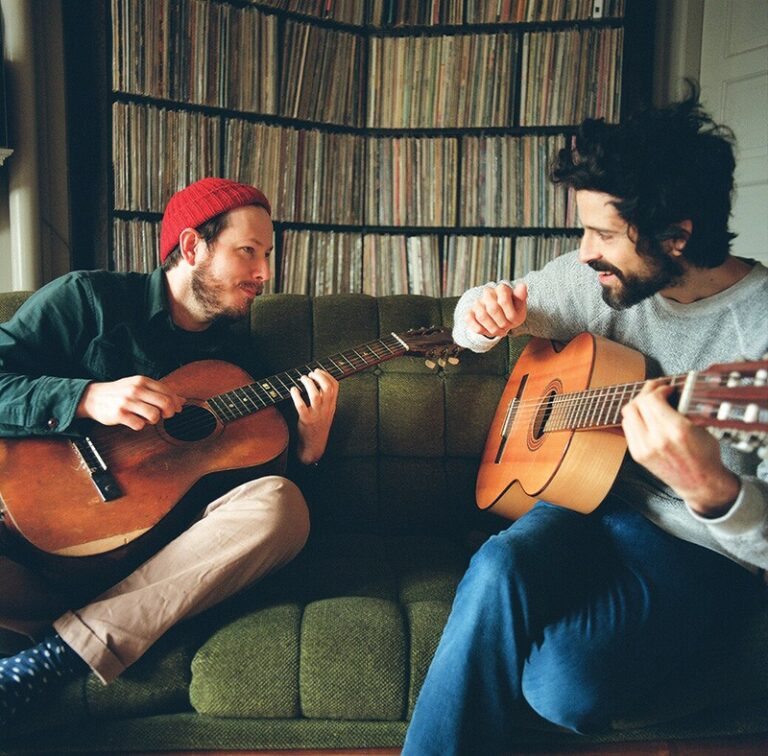
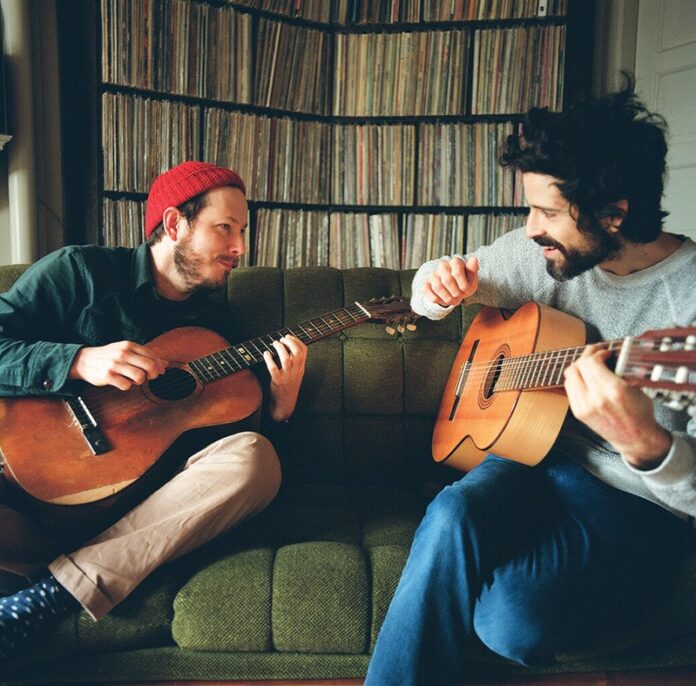
Nestled in the Sonoma Valley’s beautiful Gundlach Bundschu Winery, the 2014 Huichica Music Festival was highlighted by fine wine, warm weather and excellent music. Friday nights kick-off was a nice concert headlined by Vetiver, though Saturday was the real spectacle, with two stages hosting a dozen artists from the Bay Area and beyond. There were young up-and-comers, established favorites and even a few veteran folk artists for good measure. Click to read on and check out the photos below:

June 13: Greg King presents ‘The Ghost Forest’ at Jenner Community Center

0

redwoods.jpg

Writer and photographer Greg King first came to the old-growth redwood forests of Humboldt County in 1987, and soon after took up the fight against the clear-cutting that was quickly destroying the ancient trees. King’s family once owned the King-Starrett Mill in Monte Rio, one of the largest redwood mills in Sonoma County. He was instrumental in founding and preserving the Headwaters Forest, just south of Eureka, Calif., and has dedicated himself to protecting the redwoods and promoting their preservation. This week, King presents “The Ghost Forest,” a lecture on his life’s work and the issue of timber industry practices, on Friday, June 13, at the Jenner Community Center, 10398 Hwy. 1, Jenner. 7pm. $5. 707.865.2771.

Berried Treasure

The embedded blackberry thorns are pulled fairly easily from the flesh of my thighs, but are far more difficult to remove from the denim of my jeans. The pants were a fashion choice I mistakenly thought would be fitting for an activity like picking blackberries in Sebastopol's Ives Park, but only resulted in agitation from overheating, frustration from picking tiny...

Hydrodynamic

Surfing in Sonoma and Marin counties is dodgy in the best of times, but spring is downright dismal. Northwest winds scour the coast, rendering any waves that straggle ashore into ragged, unsurfable junk. The constant onshore blow dredges up deep, cold water to give surfers brain- freezing headaches as they duck under waves. But there are not many waves worth surfing...

Back to the Future

When you've spent the last 23 years inventing and perfecting a subgenre all your own, in this case California soul, there is invariably a lot of material that gets left on the cutting-room floor. Take the Mother Hips, for example. Even with their periods of hiatus, the band has steadily been building an ever-changing catalogue of cool grooves and hot...

Honky Tonkers Come to Napa’s Uptown

After nearly 30 years in the business, country-roots singer-songwriter Dwight Yoakam has done it all. Platinum-selling albums only hint at the prolific work of the honky-tonk man, born in Kentucky and bred in Nashville's music scene. Though he struggled to break through early in the '80s, Yoakam soon hit it big. The man who brought traditional country back to the...

Forget About It

"It's a children's book for adults, about what you knew as a kid, why it was important to forget and how great it is to remember," writes 64-year-old San Rafael photographer Jerry Downs about Why You Were Born ($29.95) on his Kickstarter page. The165-page book successfully raised $20,000 in October and will be delivered to his home this week. "What...

Lobsterpalooza!

Among myriad solstice events in Napa County on June 21, paella parties, reggae jams, various roasts and good-time rumpuses, we're digging the idea that there are competing sunset lobster feeds going down at two renowned vineyards as a high-toned way to celebrate the onset of summer. So slap on a bib in anticipation, and decide on the crustacean destination du...

Ghost Lake

The Napa Valley brings to mind images of mud baths, pricey brunches and lots of wine. Head northeast to Lake Berryessa, however, and you cross from wine country into beer country, where the recreation is less fanciful—fishing, boating, camping. But middle-class recreation has been undermined here since 2006, when more than 1,000 mobile vacation homes were evicted. Now, U.S. Rep. Mike...

Lexicographer

The most insightful part of Douglas Gayeton's new book, Local: The New Face of Food and Farming in America (Harper; $34.95), might be the afterword, where he discusses the unfortunate fate of the term "climate change": "What we can't comprehend, we avoid. We tune out. Call it climate fatigue." That sort of fatigue encompasses many hot-button issues, including our food...

Live Review: Huichica Music Festival (with Photos)

Nestled in the Sonoma Valley's beautiful Gundlach Bundschu Winery, the 2014 Huichica Music Festival was highlighted by fine wine, warm weather and excellent music. Friday nights kick-off was a nice concert headlined by Vetiver, though Saturday was the real spectacle, with two stages hosting a dozen artists from the Bay Area and beyond. There were young up-and-comers, established favorites...

June 13: Greg King presents ‘The Ghost Forest’ at Jenner Community Center

Writer and photographer Greg King first came to the old-growth redwood forests of Humboldt County in 1987, and soon after took up the fight against the clear-cutting that was quickly destroying the ancient trees. King’s family once owned the King-Starrett Mill in Monte Rio, one of the largest redwood mills in Sonoma County. He was instrumental in founding and...
11,084FansLike
4,446FollowersFollow
6,928FollowersFollow