Creature Comforts

0

Driving down Old River Road south of Ukiah one day, I swerved around a lump on the road that looked like a cat. I pulled over to remove the animal and look for a tag, because it’s sad enough to lose one’s pet; I hate to think of someone finding theirs after traffic ran over it for the remainder of the day. Then, in the rearview mirror, I saw one leg stab pitifully at the air. It was still alive.

This must be one expensive cat, I thought as I approached it, because of its wild-looking spots and handsome coat. Instead, it was a wild bobcat. I put the bloodied, listless thing in my hatchback and brought it to the bemused officers at the local animal shelter. But they contacted a Mendocino County wildlife rescue group, who took the cat to several state-of-the-art Bay Area facilities.

Veterinary surgeons fixed her broken jaw and leg, and specialists in Morgan Hill rehabilitated her in an environment created to minimize human contact—hiding their scent and wearing leaves when feeding.

Months later, I was called in to help release the cat near where she was found. The young bobcat in the transport cage had grown up: snarling, wild and very much alive. And an expensive cat,
after all.

You can help to fund efforts to save injured or displaced wildlife just by having a beer. Tuesday, Nov. 11, Lagunitas Brewing Company hosts “Pints for Paws,” a fundraiser for Sonoma County Wildlife Rescue (SCWR). A cover charge and all beer sales will be donated to the organization, with the Pulsators and Dylan Chambers and the Midnight Transit providing the tunes. While the lively scene would be too stressful for SCWR’s educational animals, animal-shaped touch and feel boards—with real skunk fur, for instance—will be on display.

The Petaluma-based organization rescued three baby bobcats this season, according to executive director Doris Duncan. Wildlife Rescue also partners with wineries to place and maintain barn owl boxes in vineyards. Nest activity is monitored and GPS coordinates help to re-home orphaned owlets—and the owls pitch in by adopting them.

“Pints for Paws” at Lagunitas Brewing Company, happens Nov. 11, from 5:30pm to 8pm. 1280 N. McDowell Blvd. $10 cover. 707.992.0274. www.scwildliferescue.org.

In April, 2015, the Wildlife Rescue Center of Napa County invites supporters to have “A Wild Night at the Castle” at Castello di Amorosa. 707.224.4295. www.napawildliferescue.org.

Marin County’s Wildcare Bay Area invites the public to meet animals during daily feedings and “turkey vulture enrichment” sessions. 76 Albert Park Lane, San Rafael. 415.456.7283. Donations accepted at www.wildcarebayarea.org.

Behind the Wine

0

There are more than a hundred wineries in Sonoma Valley, with 13,00 acres of grapes spanning 17 miles, and several generations worth of experience crafting diverse, delicious wine.

It can be almost too much to keep track of. This weekend, our region’s winegrowers offer an array of excursions that take you behind the scenes of many of these celebrated wineries during the Reserve Sonoma Valley event.

Set for Nov. 1, Reserve Sonoma Valley is an eclectic day of memorable wine country experiences. There are eight different excursions to choose from, each visiting four acclaimed wineries and each with a special focus and story to tell. “Harvest in Sonoma Valley” shows off the lively harvest atmosphere and tells the story of the journey from vine to bottle. “Generations of Sonoma Valley” travels to some of the oldest wineries, highlighting the traditions behind these family wines. The “Sommelier Tour” is a full day of professional perspectives on the best wines of the valley.

There are also several “Discover” tours tracking various micro-regions within the valley, from the highland views of the Moon Mountain District to the coastal climate of Carneros. Each excursion includes chauffeured transportation and lunch, making for a worry free day.

Reserve Sonoma Valley takes place on Saturday, Nov. 1, departing from 2000 Broadway, Sonoma. 9:30am. $110. www.sonomavalleywine.com.

Letters to the Editor: October 29, 2014

Beefs with ‘Beef’

“If I ever desire to eat meat, I will do so because there is no reason not to do so,” said Nicolette Hahn Niman in last week’s story about her book Defending Beef (“Eat More Beef,” Oct. 22). And yet there remains an undeniable reason not to eat meat, and that is the colossal cruelty inherent in the meat industry. I would have hoped this longtime vegetarian would not sell short her “affinity for animals” because, outside of some of our precious Sonoma and Marin ranches, and maybe a few others scattered here and there, every single one of the animals raised for food suffers a life of misery and brutality. That is reason enough to eschew eating meat.

Petaluma

Although methane emissions are indeed lower than CO2, the EPA graphs only measure quantities of emissions. The Bohemian article didn’t mention anything about rather recent IPCC studies on how methane’s chemistry may have a greater impact on radiative forcing. Maybe Hahn Niman’s book does. But methane may have potential to “have 34 times the effect on temperature of a carbon dioxide emission of the same mass over the following 100 years.” I must add I sincerely appreciate the efforts of grass-fed free-range beef operations as a step in a noble direction.

Healdsburg

Editor’s note: ‘Defending Beef’ does discuss the impact methane emissions. Space didn’t allow inclusion of this issue into the article.

Sad, sensationalist piece that panders to the meat-loving crowd. What exactly qualifies this lady to call out a mass of scientifically published journals/reports as “flimsy science”? If this is the route the Bohemian is going to take with such an impending issue, please cite sources. Even the text used at the [SRJC’s] introductory class for environmental science states that the best way to lessen your carbon footprint is to adopt a plant-based diet.

Via online

This makes no sense, her reasons . . . It is absurd and she is harming living beings that feel pain for her own desires and then justifying it. She should watch the documentary Cowspiracy.

Via online

Nothing sensational at all—the author cites scientific reports to debunk all the myths that are being passed off as “science.” maybe you should read the books as well their footnotes before making such ill-informed comments. Besides, any introductory environmental course that doesn’t understand the carbon cycle, ecosystems and soil health really isn’t a very good one. Diets that require a lot of transportation for out-of-season produce don’t have small carbon footprints.

Via online

Go Meatless

U.S., state and municipal health authorities are working overtime and spending millions of dollars to stem the spread of ebola, which has killed just one person here.

Where is the comparable effort to stem the spread of heart disease, stroke, cancer, diabetes and other chronic diseases that kill 1.4 million Americans annually and are linked conclusively to excessive consumption of animal products? According to the U.S. Centers for Disease Control, that’s 23 times the number killed by all infectious diseases combined, including AIDS, hepatitis, blood poisoning and intestinal infections!

Yet each of us can take personal responsibility for our own health by reducing then dropping animal products from our menu.

Santa Rosa

Sinister Snobbery

I know and work with Rami Batarseh and Vicky Kumpfer. From the beginning, they have worked creatively with the long-term local art community. I am very concerned with the negativity of this article (“Making a Scene,” Oct. 8). I am in dialogue with Rami about this.

Flora Tsapovsky has misrepresented what Batarseh and Kumpfer said and meant. She presents the Fulton Crossing gallery’s attitude as outrageously disdainful and disrespecting of “typical local artists.” Her intent seems to be build a controversy at the expense of the gallery’s reputation. Sabotage!

What can the Bohemian do to repair the damage done by Tsapovsky to Fulton Crossing’s reputation? What was intended as positive publicity for Batarseh and Kumpfer’s efforts at building an artistic asset within our community has instead been written as an exposé of sinister snobbery toward local older artists.

I appreciate your attention to this and to finding a way to promote good will.

Sebastopol

Flora Tsapovsky responds: I sat down with Fulton Crossing’s team to talk about Sonoma County art and its prospects. The result was a critical discussion that put the local art community in a larger context .The local art community deserves an honest, in-depth evaluation, which, in my opinion, is the very opposite of disrespect.

Write to us at le*****@******an.com.

Yes on Measure H

Santa Rosa Junior College is a vital community resource and must stay current. Half of our local high school graduates rely on SRJC for affordable higher education right here in Sonoma County. Measure H will upgrade the college, address overcrowding and prepare students to attend four-year universities and to succeed in 21st-century careers.

As the cost of attending a university in California has skyrocketed, more students are relying on community colleges for some or all of their education. Measure H will help provide local high school graduates access to high-quality, affordable college options.

Students who want to take courses toward a four-year college degree need a modern, local resource. Stronger collaboration with California State University, University of California and other colleges will allow students to take university courses at SRJC. By making upgrades to classrooms, labs and campus facilities for 21st-century instruction Measure H will reinforce these partnerships.

Today, as our beloved and well-used institution nears 100 years old, our reputation as a top community college remains, but classrooms and laboratories are overcrowded and out of date. Measure H will make critical upgrades to outdated classrooms, laboratories and school facilities that need important health and safety updates, like science and math buildings constructed in 1955. Without Measure H, these problems will only get worse and more expensive to fix.

Measure H will also expand SRJC’s ability to offer more courses at all campus locations, from Santa Rosa to Petaluma, North County to West County. Measure H will support training in public safety, nursing and healthcare, manufacturing and engineering, science, information and communication, technology agriculture, automotive and diesel mechanics, and many other fields.

Measure H has tough accountability requirements to protect taxpayers. All of the funds from Measure H will be spent to improve SRJC—not one penny can be taken by the state. Annual financial audit and independent citizen oversight will ensure funds are used as promised. Visit friendsofsrjc.org for more information.

Dr. Frank Chong is superintendent and president of Santa Rosa Junior College.

Open Mic is a weekly feature in the ‘Bohemian.’ We welcome your contribution. To have your topical essay of 350 words considered for publication, write op*****@******an.com.

Fresh Starts

0

There are places in San Rafael and Marin County where you can go for high-minded ethnic cuisine, but the Jackson Café is not one of them. You’re here for lunch, and lunch is a square deal, available five affordable days a week.

The cafe is located within the Whistlestop nonprofit service center in San Rafael, a sprawling building across from the bustling San Rafael transit center. The Whistlestop is run by the Marin Senior Coordinating Council, a nonprofit that assists the elderly and disabled of Marin County. There’s a library and other services in half of the building, which has been helping folks out for 60 years.

The Jackson Café is operated in a partnership with the nonprofit Homeward Bound of Marin and its Fresh Starts Culinary Academy, in Novato. The program offers job training and a safe-kitchen certification for students who were once homeless and perhaps wandering around the San Rafael transit center looking to catch a break, if not the bus.

This is truly the wandering-eyeball part of town, where on any given morning you’ll see a variety of folks waiting and wheezing in the bustle of exhaust fumes, doing variations on the pathos hustle. They’re waiting for the bus or are otherwise caught in the transient thrum of adjacent Highway 101, with its road stank and all the down-and-out fixings: overstuffed backpacks and smelly shoes, cigarette ends plucked from the trash, you got a quarter?

“The Jackson Café is oftentimes their first work experience,” says Amanda Denny, marketing and communications specialist at Whistlestop. “This really offers that bridge from being homeless, from being unemployed—to being educated and having some work experience that you can demonstrate on a résumé.”

The Jackson Café is where you go to rest them weary dogs, to unload yourself of a mere $7 (for nonmembers) and have a solid lunch before getting on with the business of the day. The ceiling is kind of low and you feel like you’re maybe in a Sarajevo Holiday Inn conference room, circa 1992. But the vibe is one of rampant humility and human concern. And at any moment you expect someone to jump up and shout “Bingo!”

The Friday special was poached salmon with garden beurre blanc, but let the Catholics have that. I went for the baked chicken—a seasoned thigh and a drumstick baked skin-crisp and topped with lime-macerated red onion slices, served with a dollop of rice and a thick slurry of black beans, with a few fried shekels of plantain thrown in. Bingo! That’s a $6.95 special—and it comes with a cuppa joe or some ruggedly unsweetened iced tea. A scant side salad is less an afterthought than a welcome, if fleeting gesture at these prices

A typical week at the Jackson Café might find Moroccon chicken on Monday; some spinach ravioli on Tuesday, a plank of whitefish on Wednesday. This month there was an Oktoberfest bratwurst one Thursday and a poached salmon for the Friday crowd. Regular menu items include grilled ham-and-cheese sammiches, burgers, $5 soup-sandwich combos and a $2 fruit cup.

Jackson Cafe, 930 Tamalpais Ave., San Rafael. 415.454.0964.

Healing Music

0

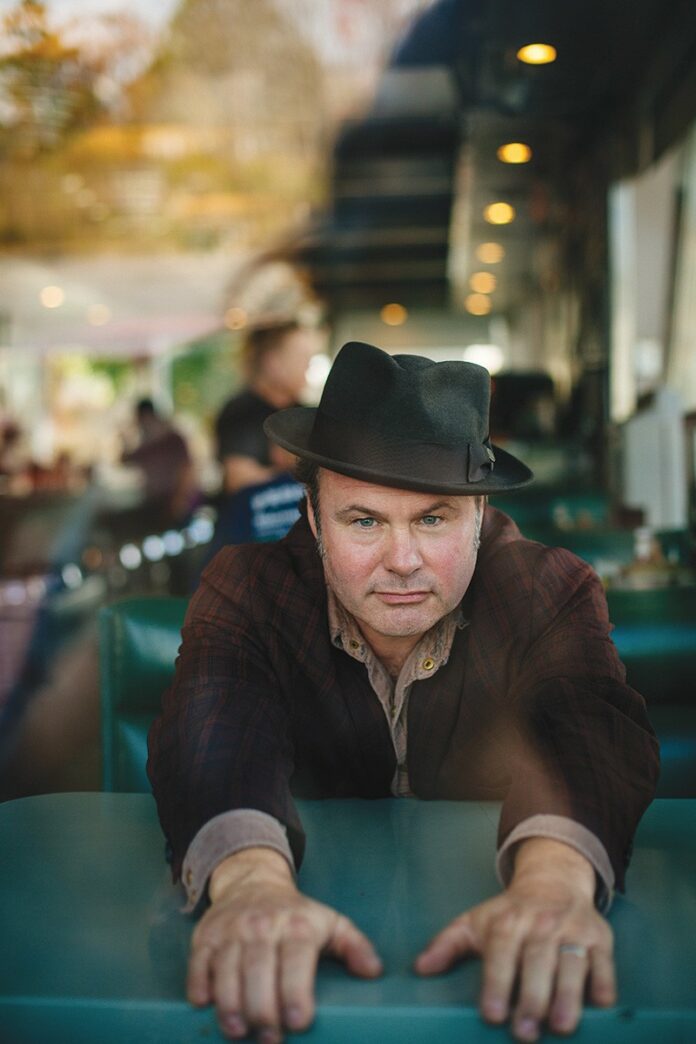
For fans around the globe, San Francisco–based songwriter Michael Franti is beloved for his generous spirit and great music. The frontman of Spearhead for 20 years, Franti effortlessly moves musically between hip-hop, funk and soul, and his live shows are moving communal experiences.

The last year has also shown the philanthropic side of Franti, who co-founded the Do It for the Love Foundation, a wish-granting nonprofit organization that brings people with life-threatening illnesses, wounded veterans and children with severe challenges to see live concerts with the artists of their choice.

Franti and his partner, ER nurse and relief worker Sara Agah, were inspired to start the foundation after meeting Steve and Hope Dezember in April 2013. Steve was living with the advanced stages of Lou Gehrig’s disease and it was his wish to see Franti in concert. Franti invited the couple to a show and brought them onstage, where Hope lifted Steve out of his wheelchair and held him as they danced together in front of thousands of fans.

Franti was so moved by the couple and the experience of the concert that he and Agah decided to give that opportunity to as many people as they could. They started Do It for the Love in August 2013, and to date it has fulfilled more than 200 wishes, nearly all of which have included artist meet-and-greet experiences and VIP access.

In times of crisis for families, these experiences offer a chance to connect and bond while making some truly positive lifelong memories and reveling in the healing power of music, which Franti feels is a real phenomenon. Apparently, he’s not alone on that theory, and participating artists like Jay-Z and Beyoncé, Bruno Mars, Tom Petty, Paul McCartney and others have donated their time, inspired by Franti’s efforts.

The nonprofit’s name is based on a song from Franti’s 2013 album, All People. His eighth album with Spearhead, Franti’s latest is a slick pop record with equal parts jam band melodies and hip hop beats, with elements of techno and reggae thrown in to an album that saw Franti opening up his songwriting with a more collaborative approach.

Franti is currently working on a new album, and this fall he is taking to the stage in a special acoustic solo tour. He has already sold-out two North Bay shows at the Mystic Theatre in Petaluma. If you know someone who could benefit from Do It for the Love, you can nominate them on the foundation’s website, www.doitforthelove.org.

Shock and Roll

0

This year, with Halloween falling on a Friday, there’s no scarcity of lively shows going on around the North Bay. Our clubs and venues listing is packed with fun holiday offerings, but here’s a few that caught our eye and screamed good times.

In Marin County, most every venue is throwing down with music and costumed fun, and two in particular feature popular S.F. bands. In Mill Valley, the Mother Hips play Sweetwater Music Hall, with openers Lazyman. Out in Bolinas, S.F. jam band New Monsoon play an eclectic world-music show with High Tide Collective at the Bolinas Community Center.

In Napa County, the monsters will party at Copia when the Monsters Ball goes down. Sci-fi punk rockers the Phenomenauts (shown) and the Pulsators perform, with DJs, burlesque and plenty of wine. For a truly trippy Halloween, it’s got to be the House of Floyd Halloween show at Silo’s in Napa, an immersive tribute show that explores the adventurous live experience of the band’s namesake.

In Sonoma County, there’s a plethora of bashes to choose from. For folk fans, All Hallow’s Eve at the Arlene Francis Center in Santa Rosa boasts a hootenanny of music from the Crux, live theater by the Imaginists and more. Out in Guerneville, the River Theater hosts its Halloween Ball with Melvin Seals & JGB and live painting by Stanley Mouse and others.

Check Calendar for a full list of Halloween events and details.

Ladies Who Launch

0

According to the National Center for Charitable Statistics, there are more than 1.5 million nonprofit and charitable organizations registered in the United States. Though these numbers reflect that we are not an ideal society, they also indicate that we are trying. Because of growing income disparity and social needs in this country, nonprofits are essential.

“The problems are simply too big and getting bigger every minute,” says Neil Edgington, president of Social Velocity, a management consulting firm specializing in nonprofit organizations. “Government resources are shrinking, so the greater burden for solutions is increasingly placed on the shoulders of the nonprofit sector. As problems get worse and money gets tighter, the social change sector will take center stage.”

Yet as the need for nonprofits grows, the private donations on which those organizations depend have not kept pace. In spite of an improving economy, funding for charities is stagnant.

But don’t tell that to Impact100 Sonoma. Each year, the group pools donations of $1,000 from 100 women and donates grants up to $100,000 to competing local nonprofits after a group vote.

“Our motto is $1,000, one woman, one vote,” says Celia Canfield, co-president of Impact100 Sonoma.

Since 2009, Impact100 Sonoma has awarded $929,000 to nonprofits serving Sonoma County, including the Boys & Girls Clubs of Sonoma Valley, La Luz Center, Sonoma Valley Teen Services, Sonoma Valley Education Foundation and the Redwood Empire Food Bank and the Sonoma Land Trust.

“It’s a labor of love for each of us, and we make commitments of three-plus years to serving the community through this organization,” says Canfield. “It’s the bigger picture of serving the community that drives us.”

Impact100 Sonoma is one of several Impact100 chapters around the country. The group originated in the Cincinnati/northern Kentucky area in 2001 with the purpose of promoting philanthropy among women. Impact100 Sonoma is the only group of its kind in California, but there are now 18 Impact100s in the United States and three in Australia.

“We have heard from other communities in California about how we organized, and we expect that there will probably be a sister group in Northern California joining us at some point in the future,” says Canfield.

[page]

The group serves a smaller community than most of the other U.S. groups. As such, nonprofit organizations may apply for either the $100,000 grant or smaller community grants of $2,500 to $15,000.

“All of the $1,000 commitments that we collect from membership are aggregated to form the pool for the various grants,” says Canfield. “By aggregating funds, we are able to make a greater impact on an organization than doling out smaller amounts through fundraisers and silent auctions, which can be labor-intensive and ultimately aren’t able to raise [a large] amount of money in a small community like ours.”

Some members contribute more to help with overhead costs, and local sponsoring organizations such as Union Bank and Rabobank assist with contributions as well.

A $100,000 grant can elicit an onslaught of applications which are processed through a rigorous system.

“It begins with a proposal that must include a detailed budget and milestones for what you hope to achieve,” explains Canfield. “We have a series of committees made up of members of Impact100, and they vet the proposals over a period of several months. The vetting also includes a site visit so that members of the Impact100 committee can meet the administrators of the nonprofit and understand their processes and intentions for the grant that they’ve submitted. Finally, there is a vote among the entire membership from the finalists that the committees put forward.”

All applicants must make a pitch to the group for the award. The recipient for the 2014 $100,000 award, the Redwood Empire Food Bank, moved many board members to tears.

“In this case, we listened to what was described by the presenter as ‘voices of hunger,'” says Impact100 communications director Judy Scotchmoor. “The voices were of ordinary people having a tough time for a variety of reasons. They live here. They are part of us. They need our help. And in many cases, we did not know that they were there.” Scotchmoor goes on to say that “those tears are those of joy in knowing that we can help make a difference.”

The value of Impact100 is its ripple effect in the community. Although there are several charity and nonprofit watchdog groups and document-disclosure requirements, donations are made in faith. But the local, grass-roots approach to charity taken by Impact100 directly affects the community in which it serves. The Boys & Girls Clubs of Sonoma Valley was the first nonprofit to receive the award, in 2010.

“The affect is still being felt today,” says Boys & Girls Club committee member Rachel Cusick. “Since the 2009 launch of the case-management teen program, College Bound, the club has seen 110 kids graduate from Sonoma Valley High School with a solid post-secondary education plan. Ninety percent of these students who participated in the College Bound program are still on a path to success in their post-secondary education goals.

[page]

“Another astonishing outcome of the program is the success rate of students who chose the community college path. Thirty-three of the 110 graduates chose to attend a community college, and 73 percent of these either graduated with a degree or are on track to complete their studies.”

Compare this with the statewide community college dropout rate of 70 percent, she says, and you begin to see the impact that solid planning for a post-high school education can have on Sonoma Valley teens.

Cusick attributes the success of the College Bound Program to Impact100 Sonoma and the support the group provides with its positive stories about the Boys & Girls Club in the community.

Juan Hernandez, executive director of La Luz Center, a nonprofit that assists those in need with medical costs, food and housing, says their Impact100 grant laid the foundation for a new building and support for mental-health programs.

“Impact100 has given us the stepping stones to take the leap to where we are today,” he says.

Cristin Lawrence, executive director for Sonoma Valley Teen Services, tells a similar story.

“The impact that Impact100 has had on Sonoma Valley Teen Services goes well beyond the grant funds,” she says. The grant increased exposure and “added legitimacy” to the organization and encourages future investors to be confident in any donation given, she says.

“They provide us occasions to showcase our programs and offer us ongoing networking and educational opportunities,” says Lawrence. “We are fortunate to have this organization in our community.”

The Impact100 model of philanthropy is similar to crowdfunding, in which a project is funded by raising many small contributions from a large number of people, usually via online platforms like Kickstarter. But Scotchmoor refers to the Impact100 model as a “giving circle.”

“Giving circles, as they currently manifest themselves, are a relatively new trend, but they are built on old traditions dating back hundreds of years to mutual-aid societies and other forms of giving for the community,” she says.

Giving circles were initially composed of women, but they are now more diverse in gender, as well as race and age, although women continue to make up the majority of members.

“The trend that I see is that we have found an amazingly effective and simple way to be impactful,” Scotchmoor says. “With all the bad news that we are inundated with on a daily basis, it feels pretty darn good to know that together we are making such a positive difference in our community. The diversity of projects we have supported shows that we are increasingly more aware of unmet needs and we are able to do something about that.”

Hey Whitey

It’s a very good thing Dear White People was made—it gets in there where the dirt is.

At the lily-white Whitman College, Samantha White’s show on the college radio station is chafing a lot of nerves. In the proud tradition of fraternity-row movies, the administration is up in arms about her broadcasts. The worried dean of students is played by Dennis Haysbert, who gets to give full weight as an actor when telling off his legacy-student son Troy (Brandon P. Bell.)

The talented cast includes Tyler James Williams as Lionel, a wary underdog with a sky-high afro who’s seduced to the Light Side by the college newspaper, seeking an exposé of racism on campus. Samantha’s opposite, Coco (Teyonah Parris), is a vlogger (neologism shudder) who seeks popularity at all costs even if it means acting girly, self-deprecating and YouTube-friendly.

You can be in favor of Dear White People and still notice that it’s a Harvard movie about Harvard problems. Because of the tight budget, Whitman is shot to look like an Everycollege. The Twitterish notes in Samantha’s broadcasts sometimes offer little distinction between serious racism and etiquette breaches. Simien’s characters are all flawed, troubled and almost all duplicitous—the Latin motto of Whitman is “Know Thyself,” but nobody does here. That’s a sign of mature filmmaking. Yet Samantha’s pronouncement “Dear white people: don’t dance” is, ultimately, supposed to be funny. It exemplifies this film’s tendency to double-dip: decrying prejudice while celebrating exceptionalism.

Dear White People wisely ridicules the assertion that America is post-racial after Obama’s twin victories. The film’s bravery and open ending is credible, despite the dead spots, and that woeful self-seriousness that poxes student wit. You can hit the nail on the head a hundred times and still have a rickety structure.

‘Dear White People’ is playing at the Century Regency, 280 Smith Road,
San Rafael. 415.479.6496.

Opening Doors

0

I remember when chef Charlie Phan opened the Slanted Door on San Francisco’s Valencia Street back in 1995. The elegant restaurant with its big front window and white tablecloths made a big splash amid the Mission district bars and taquerias. The Slanted Door was not only a sign of the neighborhood’s growing gentrification, but the beginning of Phan’s rocket-ride of a career.

Phan later moved the restaurant to Ferry Plaza, cementing his place in Asian fine dining and earning himself a “Best Chef” award from the James Beard Foundation in 2004. Through it all he has remained a humble, accessible chef who is still in love with the food of his native Vietnam, a country he fled when he was 13.

Phan will make the drive up 101 Nov. 1 for a special dinner and interview with food writer Lora Zarubin about his new cookbook The Slanted Door: Modern Vietnamese Food. The event includes cocktails, a food and wine pairing, and dessert bar.

The menu includes bahn lot loc (steamed shrimp and pork tapioca dumplings wrapped in banana leaves), live scallops with lime-cilantro sauce, Vietnamese fisherman stew, steamed spare ribs and black cod with celery cucumber salad.

During the meal, Phan will be interviewed by Zarubin, who will discuss his life in Vietnam, influences in and out of the kitchen and the inspiration behind the cookbook.

This event is expected to sell out, so make a move if you want to go. Tickets are $175, including drinks, tax and tip. Go to healdsburgshed.com for tickets or call 707.431.7433.

Creature Comforts

Driving down Old River Road south of Ukiah one day, I swerved around a lump on the road that looked like a cat. I pulled over to remove the animal and look for a tag, because it's sad enough to lose one's pet; I hate to think of someone finding theirs after traffic ran over it for the remainder...

Behind the Wine

There are more than a hundred wineries in Sonoma Valley, with 13,00 acres of grapes spanning 17 miles, and several generations worth of experience crafting diverse, delicious wine. It can be almost too much to keep track of. This weekend, our region's winegrowers offer an array of excursions that take you behind the scenes of many of these celebrated wineries...

Letters to the Editor: October 29, 2014

Beefs with 'Beef' "If I ever desire to eat meat, I will do so because there is no reason not to do so," said Nicolette Hahn Niman in last week's story about her book Defending Beef ("Eat More Beef," Oct. 22). And yet there remains an undeniable reason not to eat meat, and that is the colossal cruelty inherent in...

Yes on Measure H

Santa Rosa Junior College is a vital community resource and must stay current. Half of our local high school graduates rely on SRJC for affordable higher education right here in Sonoma County. Measure H will upgrade the college, address overcrowding and prepare students to attend four-year universities and to succeed in 21st-century careers. As the cost of attending a university...

Fresh Starts

There are places in San Rafael and Marin County where you can go for high-minded ethnic cuisine, but the Jackson Café is not one of them. You're here for lunch, and lunch is a square deal, available five affordable days a week. The cafe is located within the Whistlestop nonprofit service center in San Rafael, a sprawling building across from...

Healing Music

For fans around the globe, San Francisco–based songwriter Michael Franti is beloved for his generous spirit and great music. The frontman of Spearhead for 20 years, Franti effortlessly moves musically between hip-hop, funk and soul, and his live shows are moving communal experiences. The last year has also shown the philanthropic side of Franti, who co-founded the Do It for...

Shock and Roll

This year, with Halloween falling on a Friday, there's no scarcity of lively shows going on around the North Bay. Our clubs and venues listing is packed with fun holiday offerings, but here's a few that caught our eye and screamed good times. In Marin County, most every venue is throwing down with music and costumed fun, and two in...

Ladies Who Launch

According to the National Center for Charitable Statistics, there are more than 1.5 million nonprofit and charitable organizations registered in the United States. Though these numbers reflect that we are not an ideal society, they also indicate that we are trying. Because of growing income disparity and social needs in this country, nonprofits are essential. "The problems are simply too...

Hey Whitey

It's a very good thing Dear White People was made—it gets in there where the dirt is. At the lily-white Whitman College, Samantha White's show on the college radio station is chafing a lot of nerves. In the proud tradition of fraternity-row movies, the administration is up in arms about her broadcasts. The worried dean of students is played by...

Opening Doors

I remember when chef Charlie Phan opened the Slanted Door on San Francisco's Valencia Street back in 1995. The elegant restaurant with its big front window and white tablecloths made a big splash amid the Mission district bars and taquerias. The Slanted Door was not only a sign of the neighborhood's growing gentrification, but the beginning of Phan's rocket-ride...
11,084FansLike
4,606FollowersFollow
6,928FollowersFollow