Let’s Go to Papas

0

I‘m hungry. The kids need to eat. The fridge is empty. It’s too hot. I’m tired. I don’t feel like cooking and I need a beer. And I want to watch the Giants game.

When I utter any of these phrases of privation, my family and I typically head over to Sebastopol’s Papas and Pollo. But lethargy and hunger aren’t the only reasons I go. The “Sebastopol-style Mexican food” is good and the prices are great. Their new, open-air patio—complete with lounge chairs set between raised vegetable beds, a walk-up beer and food window, and grilled oysters on the barbecue—is all the more reason to head over for some cool vibes and tasty grub.

The restaurant’s red-tiled roof, archways, Mexican-style floral tablecloths and spiny foliage makes it look like a beachside restaurant you’d find somewhere in Baja. And that’s the look Papas is going for. Surfboards hang from the ceiling. Old copies of the Surfer’s Journal lay scattered about. And Steel Pulse plays in heavy rotation from the speakers. The food is locally sourced, organic and GMO-free when possible. It’s pretty much the Sebastopol-iest place you’ll find.

Papas has been around for 25 years, and changed ownership four years ago. The first time I tried it must have been during the transition. It wasn’t great. But the friendly new owners have got it down now. What’s Sebastopol-style Mexican food? How about the Funky Chicken, a mesquite-grilled, Lagunitas-marinated chicken and artichoke-heart burrito ($9.75).

For me, the best things on the menu are the tacos (yes, I like tacos; see page 14). Most taco plates go for $10. It’s a full meal with a side of black beans, rice, a salad and two loaded tacos. I like the chunky, smoked pork and grilled chicken best. This being Sebastopol, there are tofu options: one is encrusted with brewer’s yeast to give it a satisfying, crusty texture and yeasty tang; the other is a spicy tofu verde, as in chile verde—chile peppers, tomatillos, onions and cilantro. The shrimp and fish tacos are $12, and they’re great too, especially the shrimp.

The namesake papas take the form of stuffed sweet potatoes or yams ($7.25–$11.95) and come loaded with black beans, cheese, pico de gallo and various forms of animal and vegetable protein.

I haven’t tried it, but the restaurant recently added a breakfast menu that features Nicaragua’s national dish, gallo pinto ($8.95): rice and beans scrambled up with onions and spices, and served with a side of eggs.

Thursday nights Papas features an all–North Bay burger ($13): Victorian Farmstead grassfed beef and Petaluma Creamery cheddar cheese on a Village Bakery bun.

The beers include a good sampling of Lagunitas drafts, Pacifico and usually a few guest brews ($5). Naturally, there’s also Revive kombucha on tap ($5).

When it’s late in the season for the Giants or Warriors, it’s fun to see all the people who also don’t own TVs turn out to watch the game. It’s Sebastopol’s version of a sports bar.

Add it all up and you’ve got a restaurant that checks just about every box. Now, if they’d only switch up the Steel Pulse now and then, it would be perfect.

Papas and Pollo, 915 Gravenstein Hwy. S., Sebastopol. 707.829.9037.

Iconic Fruit

0

Sebastopol’s Gravenstein Apple Fair turns 42 this year, rolling into Ragle Ranch Park Aug. 8–9 to celebrate all things apple, with entertainment, education and lots to eat and drink.

“This is truly an agricultural fair,” says Carmen Snyder, Sonoma County Farm Trails executive director. “There’s a focus on the farmers, on keeping ag alive and keeping farms forever in Sonoma County.”

The fair is Farm Trails’ annual fundraising event, and it helps instill an appreciation of local farms as a vital part of the community. Sebastopol used to be the apple capital of California. The area’s morning fog and afternoon sun create the perfect environment to grow the Gravenstein. Orchards of the apple used to dominate the view from Gravenstein Highway before winegrapes swept through.

Lately, the Gravenstein apple has made a comeback, by being put to the same use that’s made the grape so profitable: booze. Snyder remembers that the fair had only one craft cider producer in 2012; this year, the fair is hosting eight local producers.

“Hard cider is having a tremendous revival,” Snyder says, “and with that, there are more plantings of apple trees [in Sonoma County], which is exciting to us.” (See cover story, page 17.)

Snyder also attributes the Gravenstein’s recent success to Slow Food USA’s “Ark of Taste” catalogue of endangered foods, which added the “Sebastopol Gravenstein apple” to its list in 2005. The campaign brings national awareness to heritage foods that are distinct to their region, and helps preserve their production.

“It’s an icon of our area,” says Snyder. “It’s a really versatile and wonderful apple, but the drawback is it has a short season and it doesn’t ship well.”

The rub for the Gravenstein is its quick harvest, and even quicker ripening, meaning it’s going to remain very particular to here and now. It’s no coincidence that the Apple Fair is the place to get the freshest apples and apple treats, like pies.

The weekend-long celebration includes great live music alternating between two stages on both days, with headliners Poor Man’s Whiskey and the Easy Leaves, along with Onye & the Messengers and the BluesBox Bayou Band.

Debuting last year and refined this year, the fair also has an artisan cheese lounge that offers curated pairings of local cheese and apples, with a chance to meet the makers, for an additional fee.

Also on hand is the “do-it-yourself arena,” where crafts experts share skills and guide participants through homesteading activities. Harmony Farm Supply will be there too, with tips for harvesting and gardening in a drought.

Also look for talks with farmers and chefs, baking and eating contests, and plenty to keep the kids busy, making the fair ideal for the whole family.

Out West

0

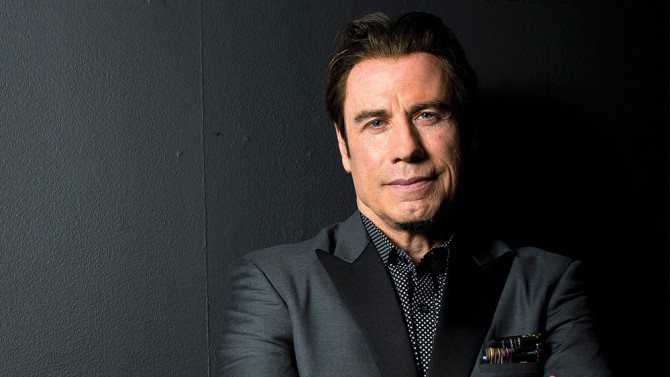
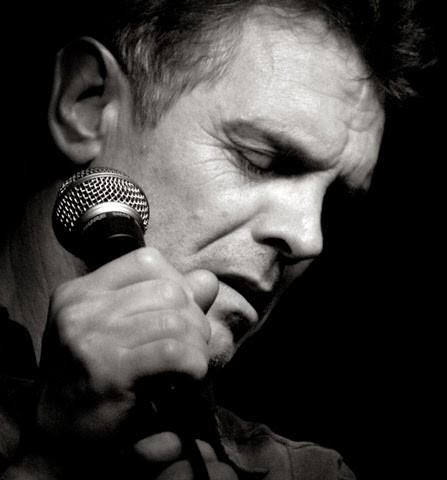
He’s played Wyatt Earp, danced with wolves and lived out on the open range. Now Academy Award–winning director and actor Kevin Costner is taking a different route in telling stories of the Wild West, fronting a straight-shooting country rock band, Kevin Costner & Modern West. They perform in Yountville on Sunday, Aug. 9.

“I tried to play a little under the radar,” Costner says in an interview. Aware of what he calls the “baggage” of an actor being in a band, Costner was encouraged by his wife to call up old friends, like guitarist and songwriter John Coinman, and return to music.

In fact, Costner has been playing guitar and piano longer than he’s acted, having grown up in a musical family, and with a Baptist upbringing. He formed his first band, Roving Boy, with Coinman and bassist Blair Forward over 30 years ago, just as his career in Hollywood was taking off.

Though music went on the back burner, Costner kept Coinman close, involving him as a music supervisor on Dances with Wolves; Coinman helped Costner arrange the Native American music heard throughout.

“I’ve always tried to stay with my friends,” says Costner. “When I formed [Modern West], I started off with three other guys, and it just didn’t feel right. So, typical me, I just went back to my beginnings.”

Along with Coinman and Forward, Modern West is made up of guitarist Teddy Morgan, drummer Larry Cobb and guitarist Park Chisolm.

“Everybody in the band writes, that’s what I like about us,” says Costner. Over the course of the last decade, Modern West have recorded five albums of original country-rock tunes.

And, Costner stresses, there’s no ego when deciding whose songs to play. “For me, it’s always been easy to let the cream rise to the top,” he says.

Lately, Costner has been in full renaissance-man mode, balancing a career of acting and producing. He wants to make another epic Western some time in the future, and he’s also working with another writer and an illustrator on an upcoming novel, The Explorer’s Guild.

This spring, he found time to get the band back in the studio to record Modern West’s forthcoming Where the Music Takes You. Costner is looking forward to sharing these new songs with a Napa County audience.

“We know it’s not serious, but we take it seriously,” he laughs. “There’s an exchange that takes place [at live shows], and you hope that people feel different when they walk out to their cars.”

Where Eagles Dare

0

The morning fog was receding on Tomales Bay as a Debriefer correspondent and companions put-in with their kayaks and headed for a remote camping spot.

Spotted within a half-mile of the journey: silvery flashes at the waterline, as a school of small fish leapt out of the water. Attentive seagulls swooped in. Another mile into the paddle: an osprey flew by near the western shore of Tomales Bay. It hovered about 20 feet above the water, pulled in its wings and dove in. It emerged with a nice-sized fish in its talons. But the osprey didn’t hold it for very long. Enter the bald eagle, a rare sight indeed in these parts—though that is becoming increasingly less so.

The enormous bird swooped in from behind and overtook the osprey, which dropped the fish amid much squawking and flapping of wings. The eagle caught the fish in midair, just before it hit the water, and gained altitude as it turned sharply toward shore.

Ospreys are very good fishermen, which helps explain their ubiquity; they’re found in temperate and tropical regions on all continents except Antarctica. The bald eagle, on the other hand, is unique to North America.

Both birds experienced endangering population decreases from the 1950s through the ’70s as a result of the pesticide DDT, which was used on crops. The resultant runoff, as described by Rachel Carson in Silent Spring, went to streams, creeks and rivers, where it was absorbed by the fish that osprey and eagles ate. The poison interfered with calcium metabolism in the birds, and resulted in thin-shelled eggs that broke easily. The birds’ populations plummeted.

According to the Center for Biological Diversity, in 1963 fewer than 500 mating pairs of bald eagles existed in the lower 48. When the eagle was adopted as the national bird in 1782, there were between 12,000 and 32,000 pairs, as estimated by the Smithsonian’s National Zoological Park.

In 1972, DDT was banned; the federal Endangered Species Act was enacted the following year, and the bald eagle has rebounded as a result. The Center for Biological Diversity estimates that there were more than 11,000 mating pairs of bald eagles in the lower 48 as of 2007.

There’s at least one eagle flying around Tomales Bay, and efforts to restore eagle-friendly habitats in the region have meant an uptick in sightings in recent years.

The 2009 completion of the Giacomini Wetlands Restoration Project at the southern end of Tomales Bay, resulted in a potential increase in habitat for bald eagles. “We’ve had a significant increase in bald eagle sightings here over the last five years,” says John Dell’Osso, chief of interpretation and resource education at Point Reyes National Seashore. Dell’Osso says he often sees a bald eagle at the Nicasio Reservoir on his commute to work.

Want to see one? Try the mouth of the Russian River near Penny Island, and Lake Sonoma, Laguna de Santa Rosa, Estero Americana and, of course, Tomales Bay.

The Fight for $15

0

Token. The Sonoma County Board of Supervisors want to pass a token living wage law, so they’ll be able to say to their constituents, “We support a living wage too!” Then they’ll move on.

The supervisors say they are for a living wage when it’s politically convenient, but the moment someone actually proposes a law to enact a living wage, they say things to the effect of “I do support a living wage but not this one” or “It would be too costly” or, our favorite, “Stop calling us about this!”

Well, sorry, we won’t stop calling. The issue is too important. We’ll keep pushing for $15 an hour for the more than 5,500 low-wage workers who have economic ties to county government. And we’re not alone, as the supervisors’ June 9 meeting showed. That day, almost 200 living wage supporters, who represented more than two dozen local organizations, packed the supervisors’ chamber, spoke in favor of our proposed living wage ordinance, held signs, cheered and helped us deliver signatures of more than 2,200 county residents—and counting!—who also stand with us.

In the end, the supervisors endorsed an ordinance that would ignore most of the workers ours seeks to uplift. Theirs would exclude more than 4,000 home-care workers, who just happen to be the largest group covered by our proposal. These in-home care workers were out in force at the supervisors’ July 21 meeting, and they’ll be back this month.

How will the supervisors respond at their Aug. 11 meeting, when they take up the living wage ordinance yet again?

One thing’s for sure: Our North Bay coalition will be there in full force, bright and early (the rally is at 8:15am, public comment commences at 9am at 575 Administration Drive, Santa Rosa) to support a living wage ordinance that doesn’t excise most workers from its scope.

And, no, we won’t stop calling.

Luis Santoyo-Mejía is lead organizer for North Bay Jobs with Justice, a local coalition of labor, faith, environmental and community organizations.

Open Mic is a weekly feature in the ‘Bohemian.’ We welcome your contribution. To have your topical essay of 350 words considered for publication, write op*****@******an.com.
The Birds Cafe

0

The beach shack is a special kind of eatery. The smell of harbor funk and salt water hangs in the air. The décor is humble. Maybe fat boat lines, nets or oars hang on the wall. Service is casual and quick. Seafood is on the menu, of course, and it’s usually fried along with the fries. Clam chowder, New England and Manhattan, are menu staples. You know the kind of place.

Bodega Bay has several of these fish joints, but the Birds Cafe is a standout. The restaurant occupies what was a garage, the owners of which live next door and were extras in The Birds, hence the name. Located right off Highway 1 on a hill overlooking Bodega Harbor, the two-year-old restaurant has an appealing outdoor patio up the steps. Grab a seat, and wait for them to call your name.

The menu is beach-front classic: fish and chips, clam chowder and shrimp Louie. What makes the cafe special are its tacos—fish, shrimp and artichoke.

Fish tacos are simple enough—fried fish, cabbage and white sauce in a corn tortilla—but hard to get right. The Birds Cafe gets them right. Alaskan cod is lightly fried in a tempura-like batter and mounded into soft tortillas with shredded Napa cabbage, pico de gallo and a creamy lime-cilantro dressing. Delicious. At $9.95 for two they aren’t cheap, but the higher quality ingredients and ample portions make them worth it. So are the plump shrimp tacos (two for $12.95).

Artichoke tacos are a new one for me. While I like fish tacos better, the lightly battered bits of fried artichoke hearts are great mixed in with the cabbage, salsa and cilantro-lime sauce. Pair with a draft beer
($5 and up) and a harbor view, and you’ve
got a great beach-shack dining experience. 1407 Hwy. 1, Bodega Bay. 707.875.2900.

Crafty Cider

0

You don’t need to throw cold water on the booming big-brand ciders to enjoy craft cider—although I’m told that’s exactly what some of the bigger brands do: add water to apple concentrate, plus sugar, malic acid and flavorings.

And you don’t need to call it “cidre,” or “sidra,” and worry whether it’s Normandy- or Basque-style. Johnny Appleseed’s got a long CV in the former colonies, so we can reclaim farmhouse-style cider as our own.

2014 Devoto Orchards Cider Cidre Noir ($13) There’s a big difference between this dry cider and Devoto’s Save the Gravenstein bottling: the Gravs were picked in mid-August, while this blend of mostly Arkansas black, Black Twig and Black Jonathan was picked in early October. Similar to winegrapes, the Devotos say, apples hanging on the tree that much longer develop intense flavors. Like Devoto’s Save the Gravenstein cider, this one is actually the lightest and the brightest of the lineup. The aroma is fresh-cut apple, distinctive but not overripe. My tongue preps for sweet, recalling the effervescent but alcohol-free Martinelli’s sparkling cider, but finds it dry and tangy. Would be good with brunch instead of sparkling wine, or step up to this if you like Ace’s Joker dry cider. (6.9 percent alcohol by volume)

2014 Tilted Shed’s January Barbecue Smoked Cider ($15) You won’t find the vintage date on the front of the bottle. Because of funky beverage laws, cider cannot be vintage dated if it’s over 7 percent abv. Look for the batch number on the side of the bottle. Made with a portion of apples smoked over oak, pear and applewood, this bottling is less evocatively smoky than the previous release, but it still reminds me of the smell of a wool sweater after a campfire on the beach. It’s rich, a little tannic and lightly effervescent, with flavors of fresh apple and apricot. It’s got less of that good craft-cider funk than Tilted Shed’s flagship Graviva! bottling, but I like it. (8 percent abv)

2013 Tilted Shed’s Barred Rock Bourbon Barrel-Aged Cider ($18) This is a little sweetly smoky too, from spending three months in charred oak barrels that were used to age bourbon. Showing Champagne-level bubbles when poured, it’s an appealing amber-gold color, shows characteristic notes of SweeTart and Frangelico, and the pleasant aroma of fallen apples fermenting on the ground in autumn. And bourbon, natch. Nutty, vanilla flavors and plush effervescence contrast with a finish that goes from dry to pretty solidly tannic. Stock up on this for Thanksgiving and related autumnal food pairings. (9 percent abv)

Open Season

0

By now we’ve all heard the story: Trophy-hunting dentist from Minneapolis shoots beloved lion in Zimbabwe, becomes most hated man in America overnight. He takes to the internet to say he’s sorry, sort of, but it was all legal—or so he thought.

As the Cecil the Lion story has unfolded, it turns out Dr. Walter Palmer illegally shot a black bear in Wisconsin in 2006, and almost went to prison for it. According to the New York Times, he recently paid California for the privilege of killing a tule elk. Ted Nugent came to his defense, as Palmer, facing extradition, went into hiding.

The Cecil controversy has highlighted the ethics of killing big-game animals strictly for the trophy value.

“There is trophy hunting [in California],” says Tracy Coppola, Washington, D.C.–based director of the Humane Society of the United States’ wildlife abuse campaign. She notes that trophy hunters don’t generally hunt bears that have a history of close contact with humans (such as the ones you see around garbage cans).

“California is a leader in ‘fair chase’ hunting,” she says, and that has led to a reduction in the number of bears killed annually in recent years.

California Department of Fish and Wildlife spokesman Clark Blanchard says the Cecil outrage hasn’t made its way to his agency. “The CDFW communications office has not received any calls from the public regarding this issue,” he says.

The black-bear hunting season starts Aug. 15 in California and runs through the end of the year, or until 1,700 bears are killed.

Blanchard pushed back against the notion that California bear hunters are in it mostly for the trophy.

“There is no data or other evidence to support the claim that ‘most bear hunters in California are shooting purely for the trophy,'” writes Blanchard in response to questions sent to him last week.

Blanchard noted that California’s bear-hunting laws limit the season and methods of killing bear, and prohibit hunting with bait. To coax Cecil from his sanctuary, his killer strapped a dead animal to a jeep and lured him to his eventual death.

Additionally, the state prohibits “wasting the carcass of any game bird or mammal,” Blanchard says. And the sale or purchase of dead bears taken for recreational purposes is also off limits.

The state also issues “depredation permits” that allow people to kill bears where they have become a so-called nuisance.

Coppola says California should be celebrated for banning practices like hounding, trapping and baiting bears. The state has also banned bear hunting in the spring, when the animals are both particularly vulnerable (they’re hungry and food is in short supply) and desirable (their meat is reportedly at its sweetest).

State law banned the practice of using hounds to hunt bears in 2012. Some dogs were equipped with GPS collars to make for easier tracking. But the law was quickly subjected to repeal by Tea Party favorite and former state Assemblyman Tim Donnelly, who ran for governor last year. Donnelly’s overturn push was supported by the organization California Houndsman for Conservation, which continues to oppose the law. Lori Jacobs, president of CHC, says that she’d just as soon not shoot a bear that’s been hounded up a tree. Like the Motörhead song of the same title, sometimes the chase is better than the catch.

“I am not a trophy hunter,” says Jacobs, “and I never have been a trophy hunter. The animals my family takes are for meat. That’s why we hunt.”

Hunter groups like the CHC expressed concern that the hound-hunting ban would lead to grisly human-bear interactions of the Werner Herzog variety. That has not materialized; the only reported incident in California in the past few years occurred last October, when a Humboldt County man, who had a heart attack, died and then got eaten by a black bear. But Jacobs says there’s been an “increase in the number of bear sightings and bear problems” since the bill passed. And she notes that the practice of hound hunting gives discretion to the hunter. “You don’t have to kill the animal. You can leave the animal.”

According to Coppola, 1,768 black bears were shot in California in 2002. In 2013, the number dropped to 1,002.

“It’s pretty significant,” she says, “and has a lot to do with getting rid of these egregious practices.”

Would-be trophy hunters are also stymied by the fact that if you kill a black bear in California, you’re not going to mount the head above the fireplace. The agency requires that the heads be sent to them for analysis.

Blanchard says “the vast majority of hunters in California [hunt] to provide themselves and their families with a lean, organic, hormone-free food source.”

Believe it or not, he adds, “bear meat can make excellent table fare.” He even provided a link for some recipes.

The black bear population, he says, is on the rise, and the beasts are being seen in places “where they were not seen 50 years ago,” including Sonoma County. Blanchard says there are between 25,000 and 30,000 black bears in the state across about 52,000 square miles.

Much of the outrage over Cecil’s death is emotional and driven by a sickening spectacle: lure a majestic beast from its sanctuary, wound it with an arrow, chase it for 40 hours, shoot it, and then chop off its head to cover up the dirty deed. The lion had a tracking device strapped to its neck.

Zimbabwe is not, however, California, and Gov. Jerry Brown doesn’t eat trophy meat, as far as we know, unlike the lion-eating president of that African nation.

Jacobs is withholding judgment. “As far as the Cecil thing goes, not enough has been uncovered yet for me to take a side.”

Jacob’s organization generally supports state conservation efforts. The group’s website says “the authority to establish regulations necessary to conserve our state’s wildlife should remain with those schooled and trained to use sound logic, scientific reasoning and proven wildlife management principles; not emotion, ignorance or personal agendas.”

Yet California’s state flag features a bear, a grizzly, that’s extinct in the state because of overhunting. Blanchard, however, says that “regulated sport hunting has never caused any wildlife species to become endangered or extinct. In fact, legal hunting plays a very important role in wildlife management and habitat conservation.”

Hunters pay taxes and other fees for the privilege of shooting bear. Blanchard says that the state Wildlife Restoration Fund collects the taxes and fees, “and apportions them to state natural resource agencies for conservation and education, which includes habitat restoration, wildlife research and more. Together, hunters and anglers may very well be the most important source of conservation funding in the United States.

“The real question is, where would California’s bear population be without conservation efforts made possible by the contributions of legal hunters?”

Double Vision

0

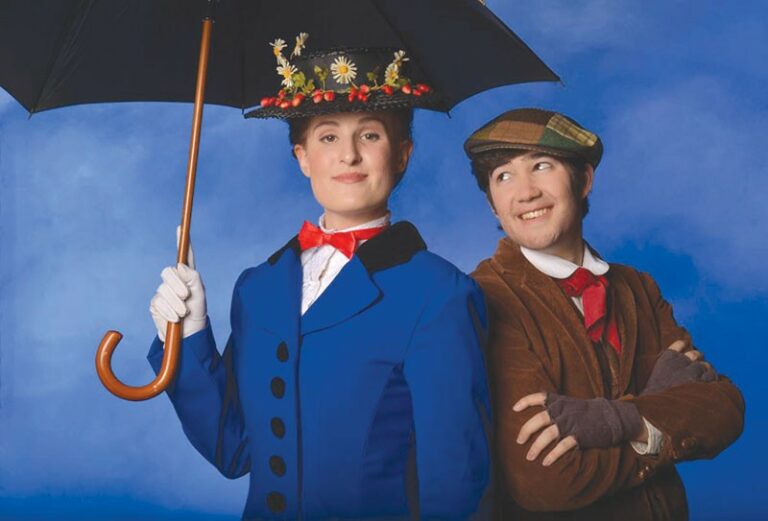
A n eldery woman and her free-spirited grandson; a heartbroken actress and her wandering husband; a delusional master and his faithful servant. These six characters do the heavy lifting in three shows opening over the next few weeks. Two of them, to the point, feature only two actors.

In Amy Herzog’s 4000 Miles, opening next month at Main Stage West, 91-year-old Vera is visited at 3am by her grandson, stopping by her East Village apartment after a disaster curtails his cross-country bicycle trip. Though initially antagonizing each other, the two eventually peel back layers of understanding and acceptance in this small play about the enormity of family.

The two-person play gets an upgrade to musical status in Jason Robert Brown’s ingenious Last Five Years, presented by the Raven Theater as a special three-day-only fundraiser. The gorgeously scored show tells the story of Jaime and Cathy, whose five-year relationship and marriage ends with a song. That’s where the show begins, at the end, with Cathy (Nicole Thordsen) tracing the relationship from end to beginning, as Jamie (Zack Howard) tells the same story from beginning to end, with the pair meeting in the middle for one duet, at their wedding.

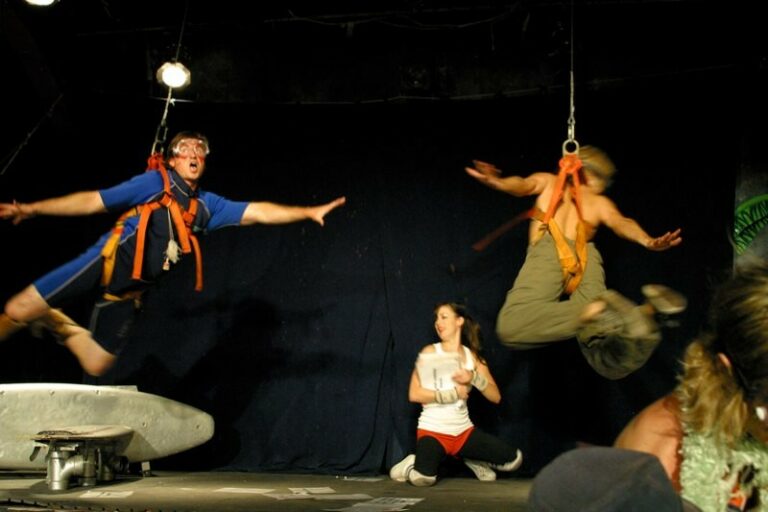
Cervantes’ epic comedy-adventure Don Quixote, though peopled with a massive cast, gets an excitingly intimate treatment when it opens this weekend at Marin Shakespeare Company’s Forest Meadows Amphitheatre. In a bold adaptation by Peter Anderson and Colin Heath, the focus is on the eccentric Spanish nobleman Quixano (Ron Campbell), whose books of chivalry have convinced him he is the noble knight Quixote, and his devoted servant, Sancho Panza (John R. Lewis).

Using a variety of masks and puppets, a supporting ensemble of five actors become the various antagonists and damsels in distress whom Quixote and Panza meet along the way, but the bond that holds the story together is the relationship between these two very different but inseparably devoted friends.

All three shows prove that good theater is about the relationships between characters, whether a cast of dozens or just two interesting people.

Going Rogue

Tom Cruise’s Ethan Hunt is described by his boss Alec Baldwin as “the living manifestation of destiny” in Mission: Impossible—Rogue Nation. Cruise seems like an unusually lightweight agent of destiny. But he and director Christopher McQuarrie respect the principle that an action-movie hero should never falter in revealing character through action.

With disavowal on one side and betrayal on the other, Hunt and what’s left of the Impossible Mission Force seek a highly untrustworthy secret agent, Ilsa Faust, whom Hunt first encounters while being trussed up like St. Sebastian. (As played by the Swedish actress Rebecca Ferguson, Faust almost deserves a series of her own.)

Hunt gets help from his steady friend Benji (Simon Pegg), computer expert and comedy relief. (Benji grouses: “Join the IMF and see the world. Through a monitor. In a closet.”) The IMF’s ultimate target, which is not a rogue nation, is a SPECTRE-like criminal organization run by a frowning intelligencer named Lane (Sean Harris). Harris hasn’t been this frightening since he was the head thug in the Michael Caine movie Harry Brown.

The action never stops in this pinnacle of the series. Especially exciting is a motorcycle race of supreme wickedness, which has Hunt leaning so far into his ride that his knees are almost ground by the asphalt. Even in the film’s moments of rest and exposition, a strong tempo can be felt, though we do get a satisfying use of space alternating with the action, such as the first closeup of Ferguson’s Faust, seen through the hole in a Chinese wooden screen.

Hunt is called “an arsonist playing fireman,” which isn’t an unfair description of the spying community. Lane’s own underestimation of Hunt: our hero is “a gambler”—an excellent metaphor for this hazardous game.

‘Mission: Impossible—Rogue Nation’ is playing in wide release.

Let’s Go to Papas

I'm hungry. The kids need to eat. The fridge is empty. It's too hot. I'm tired. I don't feel like cooking and I need a beer. And I want to watch the Giants game. When I utter any of these phrases of privation, my family and I typically head over to Sebastopol's Papas and Pollo. But lethargy and hunger aren't...

Iconic Fruit

Sebastopol's Gravenstein Apple Fair turns 42 this year, rolling into Ragle Ranch Park Aug. 8–9 to celebrate all things apple, with entertainment, education and lots to eat and drink. "This is truly an agricultural fair," says Carmen Snyder, Sonoma County Farm Trails executive director. "There's a focus on the farmers, on keeping ag alive and keeping farms forever in Sonoma...

Out West

He's played Wyatt Earp, danced with wolves and lived out on the open range. Now Academy Award–winning director and actor Kevin Costner is taking a different route in telling stories of the Wild West, fronting a straight-shooting country rock band, Kevin Costner & Modern West. They perform in Yountville on Sunday, Aug. 9. "I tried to play a little under...

Where Eagles Dare

The morning fog was receding on Tomales Bay as a Debriefer correspondent and companions put-in with their kayaks and headed for a remote camping spot. Spotted within a half-mile of the journey: silvery flashes at the waterline, as a school of small fish leapt out of the water. Attentive seagulls swooped in. Another mile into the paddle: an osprey flew...

The Fight for $15

Token. The Sonoma County Board of Supervisors want to pass a token living wage law, so they'll be able to say to their constituents, "We support a living wage too!" Then they'll move on. The supervisors say they are for a living wage when it's politically convenient, but the moment someone actually proposes a law to enact a living wage,...

The Birds Cafe

The beach shack is a special kind of eatery. The smell of harbor funk and salt water hangs in the air. The décor is humble. Maybe fat boat lines, nets or oars hang on the wall. Service is casual and quick. Seafood is on the menu, of course, and it's usually fried along with the fries. Clam chowder, New...

Crafty Cider

You don't need to throw cold water on the booming big-brand ciders to enjoy craft cider—although I'm told that's exactly what some of the bigger brands do: add water to apple concentrate, plus sugar, malic acid and flavorings. And you don't need to call it "cidre," or "sidra," and worry whether it's Normandy- or Basque-style. Johnny Appleseed's got a long...

Open Season

By now we've all heard the story: Trophy-hunting dentist from Minneapolis shoots beloved lion in Zimbabwe, becomes most hated man in America overnight. He takes to the internet to say he's sorry, sort of, but it was all legal—or so he thought. As the Cecil the Lion story has unfolded, it turns out Dr. Walter Palmer illegally shot a black...

Double Vision

A n eldery woman and her free-spirited grandson; a heartbroken actress and her wandering husband; a delusional master and his faithful servant. These six characters do the heavy lifting in three shows opening over the next few weeks. Two of them, to the point, feature only two actors. In Amy Herzog's 4000 Miles, opening next month at Main Stage West,...

Going Rogue

Tom Cruise's Ethan Hunt is described by his boss Alec Baldwin as "the living manifestation of destiny" in Mission: Impossible—Rogue Nation. Cruise seems like an unusually lightweight agent of destiny. But he and director Christopher McQuarrie respect the principle that an action-movie hero should never falter in revealing character through action. With disavowal on one side and betrayal on the...
11,084FansLike
4,606FollowersFollow
6,928FollowersFollow