Your Letters, March 25

May the Forest Be With You 

The U.S. just lived through its warmest winter on record, a stark reminder that the climate catastrophe is accelerating. International Day of Forests was March 21, and a good reminder that forests are one of our strongest natural defenses—and that we have the power to protect them.

Deforestation plays a major role in the warming climate. When forests are destroyed, the carbon stored in trees is released into the atmosphere, worsening global heating. Yet forests continue to be cleared at alarming rates, largely to make room for animal agriculture, including grazing land and crops grown to feed animals raised for food.

This land use is wildly inefficient. Vast areas of forest are sacrificed even though raising animals for food provides only a fraction of the calories people need. Choosing vegan foods would allow us to feed more humans while using far less land—and give forests the chance to recover.

Forests are also home to animals—birds who nest in canopies, mammals who rely on forest corridors and insects who pollinate the plants that sustain entire ecosystems. When forests fall, these animals lose their homes, families and lives. And, of course, vegan foods also spare animals from being raised and killed for food.

Protecting forests means protecting animals, the climate and ourselves. Let’s recognize that the power to help has been with us all along—and choose vegan living.

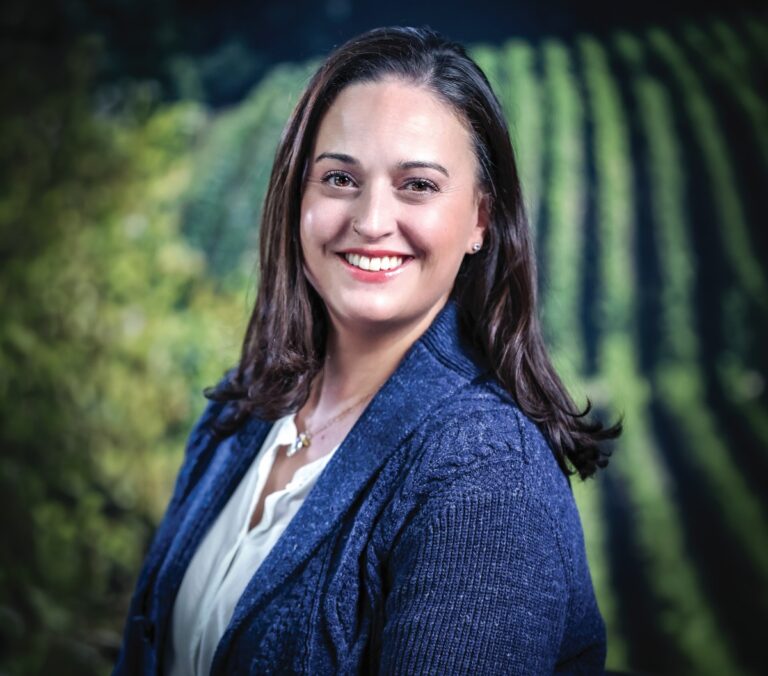
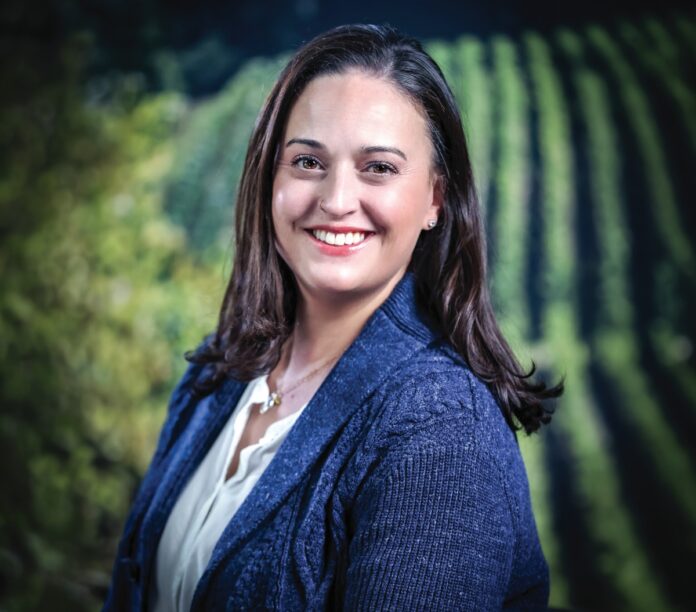
Rebecca Libauskas
The PETA Foundation

Dodging Bullets

In order to avoid consequences of his relationships with Jeffrey Epstein and his network of associates, the president is producing a new reality show, War of the Week. Stay tuned.

Craig J. Corsini
San Rafael

Tourist Town: What We Lose When They Find Us

At a certain point, a town stops being a place and becomes a recommendation of some algorithm or other.

One can feel the shift before you can prove it. The coffee shop that once tolerated your loitering now has a line out the door populated by people who describe your hometown as “quaint,” which is rarely meant as a compliment so much as a prelude to conquest. The local dive bar becomes, gulp, a “destination.”

Tourism, to be fair, is not a villain per se. But it is a patron. In Sonoma County, more than 10.3 million visitors arrived in 2024, generating roughly $2.4 billion in spending and more than $218 million in tax revenue, according to Sonoma County Tourism. That money funds parks, roads, arts programs—the civic niceties we prefer to think of as natural rather than subsidized.

Marin, for its part, plays a quieter game. Tourism ticks upward—hotel demand rose about 7% in 2025, according to the ominously titled “Marin Convention And Visitors Bureau Visitor ROI And Metrics To Track,” courtesy of Economic Forensics and Analytics Inc.

I suppose this is the exchange: Tourists get the experience; we get the infrastructure. Kind of.

But what slips away is harder to quantify. A town begins to perform itself. Even the hardware store becomes “charming.” Places that once existed without explanation now come with a backstory, a brand narrative, a suggested hashtag.

Meanwhile, the housing tightens. Prices lift with the morning fog. Service jobs proliferate, but the people who work them increasingly live elsewhere, commuting into a version of another town, thus messing with its economy.

Sure, tourism doesn’t erase a place, but it puts everyone on “good behavior”—boooring. We don’t need to be Instagram-ready—we need to be friends, neighbors and local merchants reminding each other that we are what makes our community what it is, not AI-written marketing copy and the money that apparently follows with a parade of looky-loos. 

Because we love where we live. We’re just bad with boundaries.

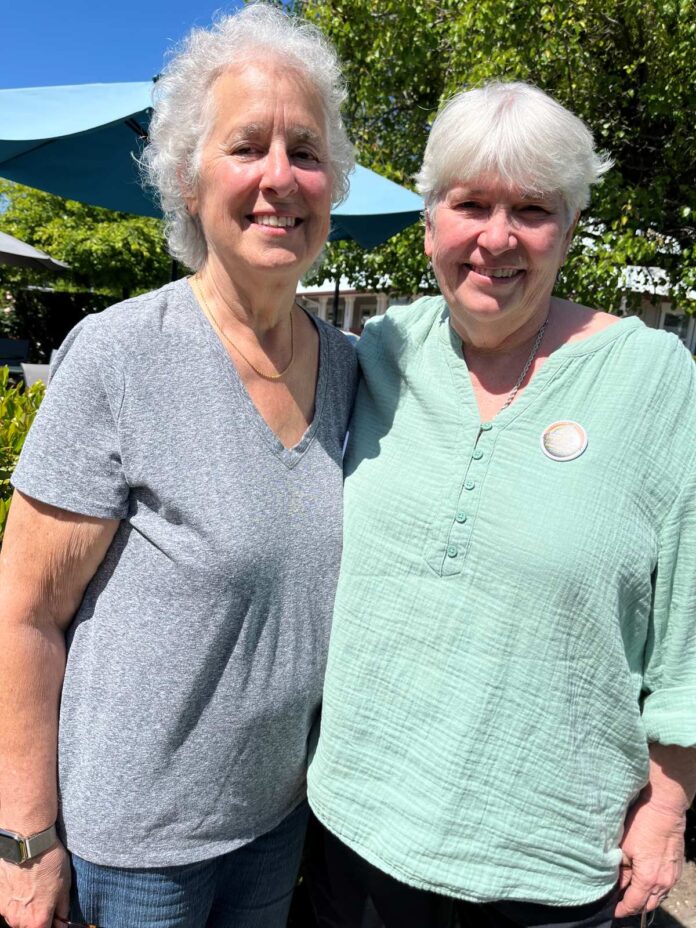
Cassady Caution lives and opines in the SonoMarin city of Petaluma.

Apples to Wine: Pete Soergel Finds His Way

Raised on a 400-acre farm, Pete Soergel grew up immersed in agriculture alongside his father and grandfather, learning that farming demands equal parts intuition, hard work and humility. 

He went on to get a degree in horticulture at Virginia Tech before heading west. “I found wine by finding myself,” he says—a philosophy that continues to shape his work today.

Soergel launched his career at Landmark Vineyards, then joined Kosta Browne, rising from intern to cellarmaster under founders Michael Browne and winemaker Shane Finley. He later returned to Landmark before Finley invited him to Lynmar Estate in 2012. Promoted steadily to winemaker in 2017 and ultimately general manager, he now oversees all aspects of the estate in close partnership with proprietors Lynn and Anisya Fritz.

At the heart of his work are Lynmar’s four estate vineyards, where he and his team conduct up to 90 small-lot fermentations per vintage. “Lynmar is the model of a true estate, which is rare,” Soergel reflects. “We grow the grapes, make the wines, and we pair them with seasonal foods we grow in our own gardens. Everything is connected by the same visions and values … the sum is even greater than the individual parts.”

Amber Turpin: How did you get into this work?

Pete Soergel: I grew up in Pittsburgh, Pennsylvania, on an apple farm, so agriculture was always part of my life. After graduating from college, I wanted to head west to California to explore grape growing and viticulture. That interest led me to an internship in winemaking, and more than 20 years later I’m still happily making wine and doing what I love.

Did you ever have an ‘aha’ moment with a certain beverage? If so, tell us about it.

My ‘aha’ moment came during my first trip to California wine country in 2005, when I was 23. I was visiting the area with my aunt, and we opened a 2001 St. Francis Pagani Ranch Zinfandel. I remember being blown away by the wine, the power, finesse and vibrant fruit flavors all working together. It was the first time I truly understood how expressive and complex wine could be, and from that moment on I knew I wanted wine to be part of my life.

What is your favorite thing to drink at home?

I tend to gravitate toward white wines at home. That said, sometimes there’s nothing better than a simple glass of whole milk.

Where do you like to go out for a drink?

Underwood and Russian River Brewing

If you were stuck on a desert island, what would you want to be drinking (besides fresh water)?

Good wine.

Lynmar Estate Winery, 3909 Frei Rd., Sebastopol, 707.829.3374, lynmarestate.com.

Free Will Astrology, March 25-31

0

ARIES (March 21-April 19): Aries poet Maya Angelou proclaimed, “There is no greater agony than bearing an untold story inside you.” In that spirit, Aries, I urge you to tell everyone everything—all your secret thoughts, hidden feelings and private opinions. Post your diary online. Confess your fantasies to strangers. Share your unfiltered inner monologue with authority figures. APRIL FOOL. I lied. Angelou urged us to bravely communicate our authentic truths, but not to overshare or be careless about observing good boundaries. Here’s the deep wisdom: Express thoughts and feelings that make you feel real and whole, but be discerning about when, where and to whom. 

TAURUS (April 20-May 20): Taurus writer Charlotte Brontë said, “I would always rather be happy than dignified.” Given your current astrological potentials, I think you should tattoo her motto across your forehead so everyone knows you’re committed to pleasure over propriety. Burn your dressy clothes. Quit doing boring duties. Dance naked in the woods. APRIL FOOL. I don’t really think you should tattoo your forehead or dance naked in public. But Brontë’s sentiment is sound: In the coming weeks, if forced to choose between joy and respectability, pick joy every time. Just do it with a modicum of common sense.

GEMINI (May 21-June 20): Gemini actress Marilyn Monroe said, “A wise girl knows her limits. A smart girl knows that she has none.” I propose we expand that counsel to include all genders. And I especially recommend this approach to you right now. It’s time to shed, ignore and surpass ALL your so-called limits. Be as wild and free and uninhibited as you dare. APRIL FOOL. I worry that it’s irresponsible to give you such utter carte blanche. Would you consider honoring one or two limits that prevent you from indulging in crazy and extreme behavior? Otherwise, be wild and free and uninhibited.

CANCER (June 21-July 22): Psychologist Carl Jung wrote extensively about the importance of embracing our shadows: the dark, problematic aspects of ourselves we would rather not acknowledge. In the coming weeks, I recommend that you stop hiding that weird stuff. Throw a coming-out-of-the-closet party for all the questionable parts of you. Let your inner monsters run wild. APRIL FOOL. Please don’t do that. What Jung actually advocated was recognizing and integrating your shadow, not being ruled by it. So yes, explore your moody, unruly impulses, but with consciousness, kindness and containment, not reckless expression.

LEO (July 23-Aug. 22): Leo author James Baldwin observed, “Not everything that is faced can be changed, but nothing can be changed until it is faced.” With that in mind, I advise you to spend the next two weeks obsessively staring at every dilemma in your life. Don’t look away. Don’t take breaks. Just face every dilemma constantly until you’re overwhelmed. APRIL FOOL. Baldwin’s insight is brilliant, but it doesn’t require masochistic endurance. Here’s the truth: Yes, you should courageously acknowledge what needs attention, but do so with care and discernment. And then actually work on changing it. Awareness is the beginning, not the entire process.

VIRGO (Aug. 23-Sept. 22): Virgo author Agatha Christie wrote 66 detective novels in which she meticulously planned every plot twist. I think you should apply her approach to your daily life: Script every conversation. Anticipate every contingency. Control every variable. Leave nothing to chance. APRIL FOOL. Christie’s obsessive planning worked for fiction, but life requires improvisation. For you, the coming weeks favor spontaneity and flexibility. So make rough plans, sure, but stay loose enough to experiment with whatever emerges. Over-control would diminish the magic.

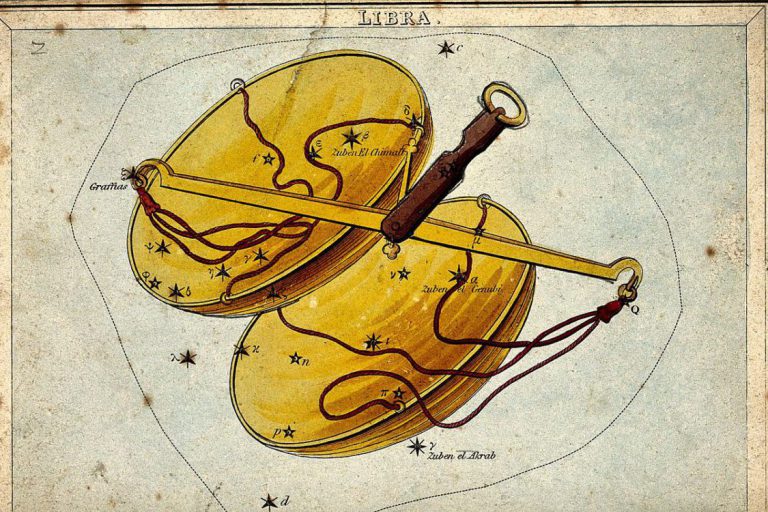
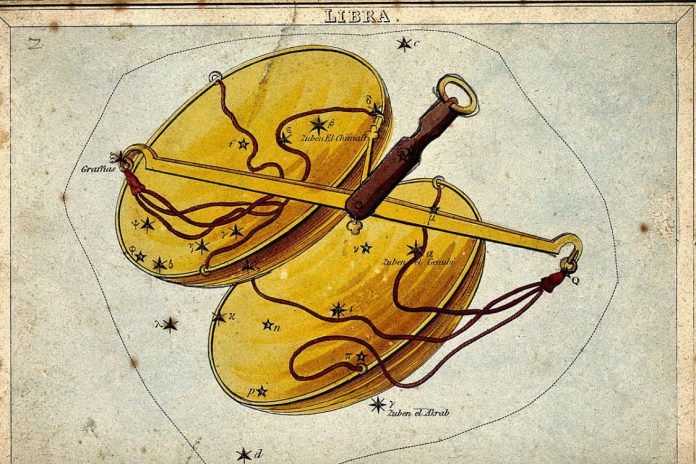
LIBRA (Sept. 23-Oct. 22): My favorite Libran writer didn’t capitalize her name: bell hooks. I recommend you stage a similar rebellion against all rules and structures. Ignore social conventions. Flout traffic laws. Pay your taxes with paintings and poems you’ve created. APRIL FOOL. I was exaggerating. I do love hooks’ charming revolt, but it would be counterproductive for you to randomly break all the rules of daily life. Instead, be judicious and selective as you question conventions thoughtfully and only violate those that genuinely deserve to be spurned. Be a strategic rebel, not a chaotic one.

SCORPIO (Oct. 23-Nov. 21): Scorpio poet Sylvia Plath wrote this passage in her journal: “I desire the things which will destroy me in the end.” I think you should consider embracing her approach—for the sheer, exotic thrill of it. Pursue interesting chaos. If it might unravel you, welcome it passionately. The more unruly, the better. APRIL FOOL. I lied. Plath was describing her struggle with depression, not offering us advice. Here’s what I think you should actually do: Examine which of your yearnings serve your evolution and which ones undermine it. Fully embrace the fact that intensity is one of your greatest gifts, but channel that intensity into experiences that build you up, not tear you down. Choose ardent aliveness over fervent destruction.

SAGITTARIUS (Nov. 22-Dec. 21): Sagittarian philosopher Baruch Spinoza spent years alone in his room developing his radical ideas about God and nature. I recommend total isolation for you, too. In accordance with astrological omens, avoid human contact. Put your relationships on hold while you contemplate the infinite. APRIL FOOL. I totally lied. Spinoza’s solitude served his unique genius, but a similar approach won’t work for you—especially now. Here’s what I really think you require in the coming weeks: periods of meditative alone time balanced by intervals of rich connection with interesting humans. You need to commune with both your deep inner sources and nurturing alliances.

CAPRICORN (Dec. 22-Jan. 19): Capricorn astrologer Linda Goodman wrote that your sign’s “ambition is boundless” and that most Capricorns dream of ruling the world. In accordance with astrological omens, I urge you to indulge this attribute. Launch a campaign for global domination. Start with your neighborhood and work your way up to more and more conquests. APRIL FOOL. The truth is, world domination is exhausting and impractical. What Goodman was referring to is your gift for structure and leadership. Use your organizational genius to improve your corner of the world, not tyrannize it. Think stewardship, not empire.

AQUARIUS (Jan. 20-Feb. 18): Aquarian inventor Thomas Edison said, “I have not failed. I’ve just found 10,000 ways that won’t work.” In the spirit, I recommend that you falter spectacularly in the coming weeks. The more blunders and bungles, the better. Engage in a holy quest to seek as many fizzles and misfires as possible. Make Edison look like an amateur. APRIL FOOL. I lied. Edison wasn’t deliberately courting snafus, of course. His approach was similar to that of many creative artists: driven by exploratory persistence that capitalizes on mistakes and hassles. Here’s your real guidance, Aquarius: Experiment boldly, yes, and don’t fear stumbles and bumbles. But learn from each one and adjust your approach. The goal is eventual success that’s informed by humility and resiliency.

PISCES (Feb. 19-March 20): Piscean physicist Albert Einstein said, “Logic will get you from A to B. Imagination will take you everywhere.” In the spirit of his genius, I recommend that you abandon logic completely. Never think rationally again. Make all decisions based on fantasy and feelings. APRIL FOOL. Einstein was advocating for the creative power of imagination, not the abandonment of reason. What you truly need is a marriage of visionary thinking and practical logic. Ask your imagination to show you possibilities, then call on lucid logic to help you manifest them.

Homework: What’s a good prank you could play on yourself to be liberated from a stale fear? Newsletter.FreeWillAstrology.com

Irish Music, Ceramics & Light and Cedars’ Neighborly Art Show

0

Sebastopol

Sebtown Goes Irish 

Irish traditional music gets a high-octane revival when Lúnasa lands at the Sebastopol Community Cultural Center. Formed in 1997 from members of some of Ireland’s most influential groups, the band has spent decades pushing the boundaries of trad with intricate arrangements, global touring and a sound that feels both rooted and restlessly alive. The group has played more than 2,000 performances across 36 countries and collaborations, spanning Natalie Merchant to Bruce Springsteen. Touring behind their latest release, Live in Kyoto—a live album composed entirely of new material—the current lineup brings virtuosity and momentum in equal measure, from driving pipes and fiddle to fluid guitar and flute, marking Lúnasa as a defining force in contemporary Irish music. 7:30pm, Friday, March 27, Sebastopol Community Cultural Center, 390 Morris St.

Santa Rosa

Smart Arts

Sonoma County’s arts education community gathers to honor Tobias Sparks, founder of Play Marimba!, as the 2026 arts educator of the year. Recognized by the Luther Burbank Center for the Arts and Creative Sonoma, Sparks has built a program that goes beyond music, creating hands-on, technology-free experiences where students are meant to gain confidence, community and a sense of rhythm that extends well past the classroom. A master percussionist and educator, Sparks has spent decades studying and performing globally, bringing those influences back to Sonoma County through Play Marimba!, where he builds instruments, trains teachers and leads youth ensembles. The award ceremony takes place during the Arts Education Alliance Mix-and-Mingle, a casual gathering celebrating the educators shaping the region’s creative future. 4:30–6:30pm, Thursday, March 26, Mitote Food Park, Santa Rosa.

San Rafael 

Way of Clay

Clay catches the light—and lets it go—at Illuminations: How the Light Gets In, a ceramic-focused exhibition at Falkirk Cultural Center. The show explores light not just as illumination, but as a presence that moves through form, surface and space. Artists lean into cracks, voids and translucencies, treating them not as imperfections but as portals—places where something deeper can pass through. Working in three dimensions, each piece becomes a quiet study in contrast: interior and exterior, shadow and glow, structure and release. Some works approach light as memory or emotion, others as balance or transformation, but together they form a contemplative, tactile meditation on how we hold and reflect what comes in. Juried by John Toki. Exhibit runs now through April 25, Falkirk Cultural Center, 1408 Mission Ave., San Rafael. Hours 1–4:30pm Tuesday–Friday, 10am–2pm Saturday.

Point Reyes Station

Neighborly Art

Cedars—one of California’s original programs supporting people with developmental disabilities—asks its artists to turn their gaze close to home in You’re My Neighbor, a warm, community-minded exhibition at Toby’s Feed Barn. From grazing cows and coastal birds to the familiar faces just down the road, the show captures the textures of everyday life in West Marin—those small, shared moments that quietly define a place. The exhibition reflects a deeply rooted creative community where art and lived experience meet. Through colorful, imaginative works, You’re My Neighbor celebrates the beauty of proximity: living alongside one another, alongside nature and within the rhythms of a working landscape. Exhibit runs now through April 12, Toby’s Feed Barn, 11250 Hwy. 1, Point Reyes Station. Hours vary; free.

Discover your next favorite micro-production wine at The Garagiste Wine Festival

Published in cooperation between The Garagiste Festival and the Bohemian

The Garagiste Festival: Northern Exposure is an annual wine celebration that returns to downtown Sonoma every Spring—this year on May 2nd—to give wine lovers rare access to the region’s best small, hard-to-find winemakers.

Why spend your hard-earned dollars on mass-produced labels when you can unearth the true essence of winemaking at Garagiste? Here, every bottle tells a story of passion, not profit. You’re not buying wine; you’re investing in a moment, a story, a piece of art that was crafted in tiny batches, by the hands of the winemakers who will be pouring them for you.

garagiste festival, participating wineries
More than 90 percent of participating wineries do not hold regular tasting hours.

At this exclusive event, you will discover and taste amazing, cutting edge wines from more than 35 high-quality, micro-production, commercial wineries from Napa, Sonoma, Mendocino, Sierra Foothills, Livermore and more—all of whom produce less than 1,500 cases a year!

More than 90 percent of the Garagiste wineries participating in this event do not have regular tasting hours, so this is truly a singular chance to discover and meet the next great winemakers and get the opportunity to taste their amazing micro-production wines.

You’ll encounter varieties and blends you’ve never heard of, made in ways that defy the conventional. Every visit to Garagiste is like opening a treasure chest. With each sip, you’re not just tasting wine; you’re uncovering the soul of the winemaker, the terroir, the innovation. This isn’t about finding the best wine; it’s about discovering what speaks to you—your personal map of flavors, stories, and characters.

You won’t be able to duplicate this tasting experience at any other wine event.

Meet the winemakers, taste their passion!

garagiste festival

Sonoma Veterans Memorial Hall, 126 1st St. West, Sonoma, California.

Strings Attached, Foreigner Collabs with Orchestra in Napa

0

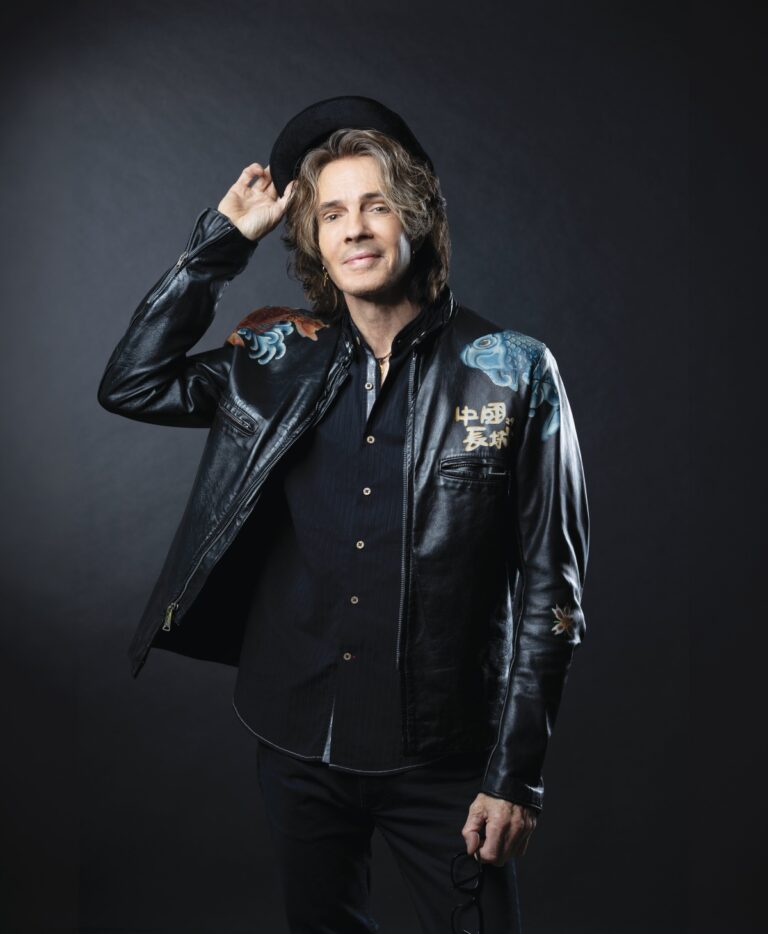
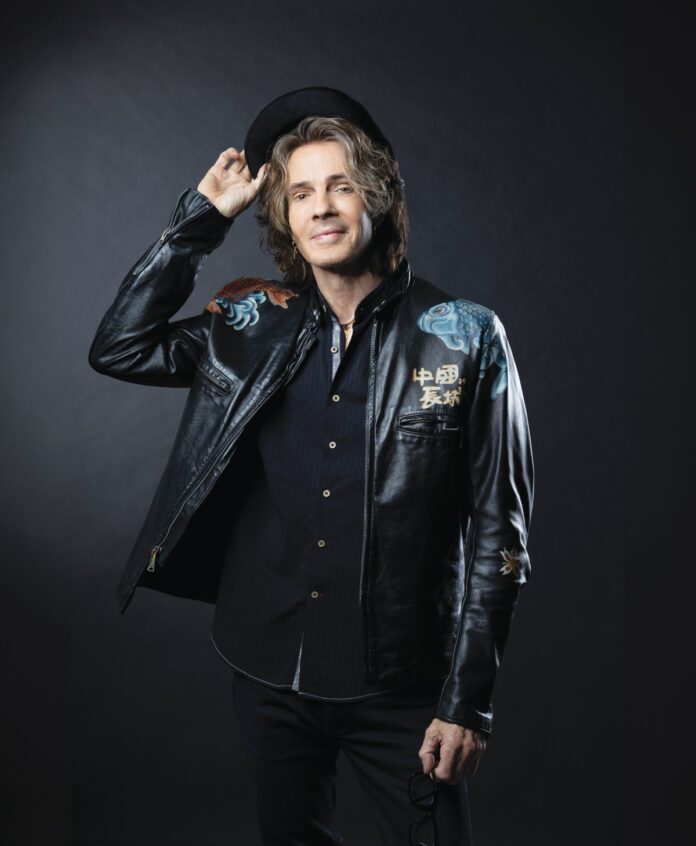
Rock and roll never dies, and Foreigner is living proof. Fifty years into their career, the classic rock titans have turned around and said a fond farewell to what they’d billed as their “Farewell Tour,” once they realized the band had too much vitality to call it quits. 

Now the multi-platinum hitmakers who gave us enduring anthems like “Cold as Ice,” “Juke Box Hero” and “Urgent” have risen from near-death to carry on the Foreigner legacy, with a new singer from within their own ranks and a 2026 calendar packed with everything from intimate unplugged sets to an upcoming symphonic collaboration with a live, classical orchestra at Napa’s Uptown Theatre this Saturday, March 21.

The Bohemian caught up with Foreigner bassist and musical director Jeff Pilson to discuss the band’s sonic evolution, his deep history with Mick Jones and the time he rented his own gear to the band decades before joining.

Foreigner famously announced a ‘Farewell Tour’ recently, but that seems to have evolved. Beyond just the practicalities, what were the specific factors that convinced you to keep the machine running?

Jeff Pilson: The main factor was that once we realized that Luis [Maldonado] was going to be able to carry us forward, nobody else wanted to stop. Originally, Kelly [Hansen] came to us and said, ‘Look guys, I don’t want to tour anymore.’ But once we realized we have a future with Luis as singer, the rest of us all wanted to continue. It felt like we were reinvigorated and inspired to carry on.

When Kelly passed the torch to Luis, how did that internal transition play out?

It’s an interesting dynamic. It’s not like we went out and hired some new singer. We got somebody from within the band, which is actually really great because you already have a bond and a rapport. And the fact that he was in the band with Kelly… The whole thing felt like divine intervention, almost, the way everything worked out so smoothly.

What new possibilities opened up when Luis stepped up to the mic?

Well, Luis speaks Spanish, so it really was a no-brainer that we do Spanish versions of the songs. They’re coming out amazing. We recorded ‘I Want to Know What Love Is’ as a duet with Joy Huerta from Jesse & Joy, which is a huge band in Mexico.

You’ve also done some reunion shows with original vocalist Lou Gramm. What were those like?

We’re actually doing another run of shows with Lou for ‘Four and More,’ where we do Foreigner 4 in its entirety. It’s kind of the most iconic Foreigner album, and we love playing those deep tracks that don’t always make the standard setlist. 

But the record itself was only 42 minutes of music, and we have other hits that you just kind of got to play to give the fans a full two-hour experience. You can’t walk off stage without doing ‘I Want to Know What Love Is’ or ‘Hot Blooded,’ so we use the album as the core and then build the ‘More’ part around the absolute essentials.

When you approach the orchestral shows, what do real strings offer that keyboards or guitars can’t?

An orchestra can be heavy in a way, just like a rock band. It can be just as heavy. I think cellos are a really great instrument to translate heaviness into a rock format. I think it’s just as effective as distorted guitars when done right. I still always prefer the sound of real strings just because there’s a human element to it that machines don’t quite have yet.

Some songs, like ‘I Want to Know What Love Is,’ lend themselves naturally to an orchestral arrangement. But how do you handle a straight-ahead rocker like ‘Hot Blooded’ in a live setting without losing its grit?

For the live arrangement, we really want to feature the guitar players on that song. It’s a great guitar song. We let both John [Sexton], our new guitarist, and Bruce [Watson] just shine away. It really lifts the song into a new area.

Working so closely with founder Mick Jones, you must have collected some incredible stories about his history in the classic rock pantheon. Does any specific anecdote stand out that captures his legacy?

Here’s a Mick Jones story for you. Do you know how he learned to play the intro of ‘Hey Joe’ by Jimi Hendrix? In a tour bus. Because he was touring and Jimi was on the bus, and Jimi himself showed it to him.

Did he have any other ‘only in the ’60s’ encounters before Foreigner really took off?

Absolutely. In early 1964, Mick was playing with a French artist while The Beatles were doing a residency at the Olympia Theatre in Paris. As the curtain closed, it knocked Mick’s amp over. He went, ‘Oh, fuck,’ in English. And all of a sudden he hears somebody go, ‘Oh man, you’re a Brit; gotta come up and join us.’ It was (John) Lennon.

Every day after the shows, he would go up to the Beatles’ suite and party with them. He was in the suite when they received the telegram from Brian Epstein saying that ‘I Want to Hold Your Hand’ had gone number one in the States. He was in the room with them, partying with them, when they heard about that.

I know you’re a massive fan of the Mellotron [electro-mechanical keyboard]. Is it true you actually have a personal history with Foreigner’s gear dating back to the late ’70s, long before you joined the band?

I do. In 1978, I was living in Seattle. We were hell-bent on buying a Mellotron. I get a call one day. The guy says, ‘Foreigner is coming through town, and their Mellotron broke. The only one we have is yours. Would you rent it to Foreigner?’ So Foreigner rented my Mellotron. As I’m walking into the Veterans Stadium in Seattle, I’m listening to ‘Cold as Ice’ with the Mellotron part flooding the stadium. And I’m like, ‘Wow, that’s my Mellotron.’

Do you remember the first time you actually heard Foreigner? I suspect your entry point might have been a bit different given your prog-rock background.

I was drawn to Foreigner because of Ian McDonald. I heard he was in a new band after King Crimson. And then when I heard ‘Feels Like the First Time,’ I was just knocked out. I thought it was the best rock song I’d heard in a long time. Great chorus, great guitar riff, amazing singing. It really floored me.

With such a packed schedule in 2026, do you have any room left for side projects, or is it all Foreigner all the time?

I have a Black Swan record [Paralyzed] coming out in February, but I know I’m not going to have any time to record anything during 2026. No side projects this coming year; it’s all Foreigner for me. But that’s great because we’re busy, and that’s the way I like it.

Looking back at your younger self starting out in bands, did you ever imagine your career would end up here—carrying on the legacy of one of the biggest bands in the world?

My goal was always to be in a big rock band. I wanted to play concerts; I wanted to do records; and I’ve done all that. It came out not exactly the way I would have envisioned it, but I’ve achieved what I set out to do.

Foreigner performs at 8pm, March 21, at the Uptown Theatre, 1350 Third St., Napa. Tickets and more info at uptowntheatrenapa.com.

Hemingway Blues: Choose Role Models Carefully

Humorist Will Rogers once said, “I never met a man I didn’t like.” What’s noticeably absent from that sentiment is how he felt about them 30 seconds later. In my business, you learn to like everyone—at first.

I initially thought this man was the guest of a man I knew. They came in together, they found two seats together, and they sat down together. They even ordered together. Two martinis, if memory serves. And the irony is of all the things I remember from nights that I work, a person’s drink order is probably the thing I remember best. It’s certainly the most important thing to me because that’s how I make my living.

The fact that the order diverged almost immediately should have been my first clue. The man I knew ordered his usual, a chilled vodka martini with a twist. The man I didn’t know ordered a chilled gin with a lime squeeze.

They say that birds of a feather flock together. And while that most likely is true, in the bar business, friends order together and good friends often order the exact same thing. Maybe that’s the basis of their friendship, and maybe it isn’t. But it’s certainly something I have noticed over the years.

The two men were in their mid-50s or mid-60s, which is often hard to tell. In a job where judging age is of paramount importance, you start to realize that people ages 25 to 35 often appear the same. It’s the same with people ages 35 to 45 or 55 to 65. Man or woman, it doesn’t seem to matter.

The man I didn’t know was barrel-chested and bearded. Put him in a woolly turtleneck, and he might even have been a late-model Ernest Hemingway. And I don’t think that was accidental.

Hemingway, of course, is still a giant in the bar business. People order like him, people drink like him, and people quote him all the time. What no one has been able to do is write like him.

My erstwhile Hemingway seemed earnest at first. It was his first story that raised an eyebrow. And that first story started unsurprisingly with his second drink order.

“I’ll have a Commodore Nelson,” he said, loud enough for everyone to hear.

“I don’t know what that is,” I had to say.

He paused for dramatic effect, only made certain by the fact that he looked around to see if anyone was listening. No one was, so the unfortunate job of the audience fell exclusively onto me.

“It’s one of these,” he said, pointing at his chilled gin. “Only a double on the rocks in a tall glass with soda.”

There’s a great scene in the 1988 movie Cocktail starring Tom Cruise—based on the 1984 book by Heywood Gould—where the cocktail waitress stumps Cruise’s character by ordering a Cuba Libre—a scene that clearly evokes Hemingway (Cuba and Libre) as well as bars and bartenders. The point of the scene is that a Cuba Libre is actually just a rum and coke with lime—an easy drink made difficult by adding an obscure name. Maybe not so Hemingway-ish after all.

“So, a double gin and soda?” I replied, perhaps more snarkily than I intended. But I quickly added a “sure,” hoping that would be the end of the story. It wasn’t.

“It’s named after the commodore of the yacht club I used to go to,” said the man with the beard. “He used to drink them all the time.”

“Great,” I think I said.

Good stories know when to end, and bad stories do not. And this was more of the latter than the former.

I set the simple drink with the ridiculous name down in front of him and turned to walk away. But his story wasn’t over.

“At least until they cut him off and threw him out of the yacht club,” replied my erstwhile Hemingway.

“Let me get this straight,” I said. “Your go-to opening story is ordering a drink named after a yacht club commodore who got thrown out of his own yacht club for being a drunk?”

“Yeah, I guess it is,” he replied.

I looked at the man I knew and realized that he didn’t actually know this guy. Coincidence can be so coincidental. And things didn’t really get better from there. After one more “Commodore Nelson,” there was a dispute over the bill, followed by a dispute with me, followed by a dispute with the manager, all followed by a dispute with the arresting officer.

Leaving me with these thoughts:

• Beer brand Dos Equis has released a new series of “the most interesting man in the world” commercials. Clearly these commercials are based on an idealized Hemingway.

• The Cuba Libre was named during the brief Spanish-American War (1898) by American soldiers fighting in the Caribbean. A Cuban product mixed with an American product symbolizing Cuban liberation. Drink names are sometimes ironic. And sometimes they are extremely prescient.

• Kurt Vonnegut once said, “We are what we pretend to be, so we must be careful what we pretend to be.”

• Hemingway often drank double drinks. And he once said, “I drink to make other people more interesting.” There doesn’t seem to be a record of what those other people thought about Hemingway, especially not, it would seem, the bartenders.

More Jeff Burkhart at jeffburkhart.net.

Lessons: Book of Matthew Musical in Napa

These days, it has become common to throw Bible verses at each other like poisoned javelins. 

That is not necessarily a new phenomenon. Throughout history, the Bible has more often been used as a political weapon than as a teaching tool or true guide. That’s a big part of what keeps a show like Godspell relevant.

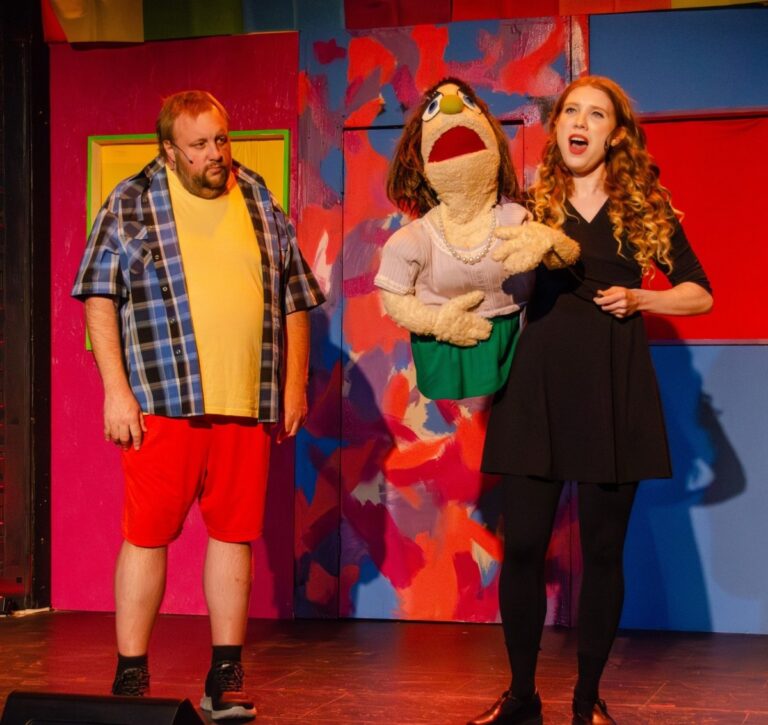
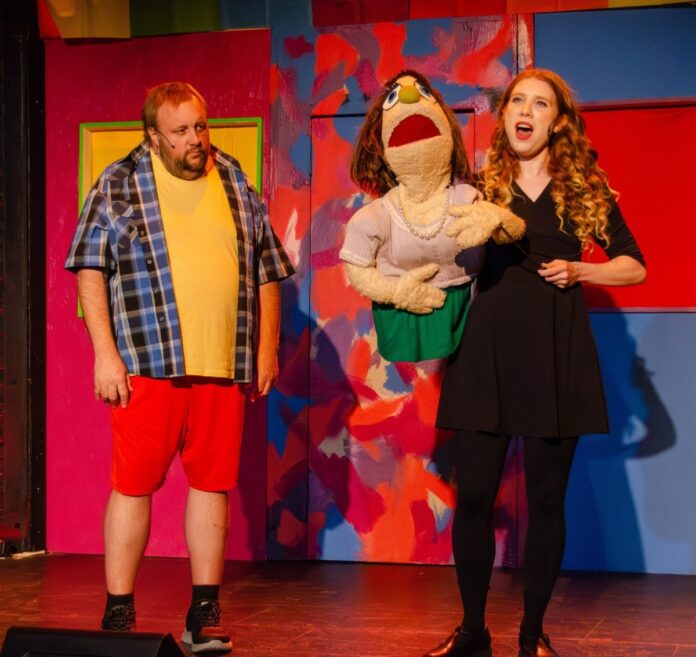
Lucky Penny has opened an all-female version of the 1971 musical adaptation of the Book of Matthew. Yes, there have been some updates to the time and place, but overall, the script’s main message of being good to others and leading with love is firmly intact. Directed by Barry Martin, it runs in Napa through March 22.

The original Godspell was conceived as a student production at Carnegie Mellon University. It has been remounted multiple times, and there are various versions, but the core is the same. Jesus (Sarah Lundstrom) and his disciples (Hannah Brudney, Andrea Davis, Arri Toshiko Glenn, Marjory Harper, Cait Pederson, Erin Smith, Emma Sutherland) take turns teaching parables while Judas (Daniela Innocenti Beem) waits for the right moment to strike. 

This is an extremely talented and fearless cast. Even amongst the high level of talent, special note should be given to Erin Smith’s heartfelt rendition of “By My Side and Hannah Brudney’s impressive (and energetic) dancing. 

Lundstrom is a very gentle Jesus, which works well most of the time, but robs the power of songs like “Alas for You, where the outrage necessary for the piece is missing. Similarly, due to Beem’s gravitas and stage presence, she is a magnificent Judas and a good John. But between those two roles, there is a lot of light-hearted whimsy in which she feels out of place. A lot of that out-of-place feeling comes from her costuming.

Godspell costumes have caused confusion and controversy from the very first production, where the concept of “Christ as Clown” from Harvey Cox’s Feast of Fools was taken literally. While the depth of this concept is quite interesting from an academic standpoint, it’s not easy to pull off in practice without everyone looking more foolish than rebellious.

Sadly, Taylor Bartolucci’s costumes for this production missed the mark, looking more incohesive than purposefully clownlike. Most importantly, choosing not to costume Jesus and John/Judas as clowns meant that the disciples’ costumes were actively working against the story of the disciples becoming Christ-like. 

Despite these issues, this production gets the message right and, as storytellers, that’s what really matters.

‘Godspell’ runs through March 22 at the Lucky Penny Community Arts Center, 1758 Industrial Way, Napa. Thurs–Sat, 7:30pm; Sun, 2pm. $25–$47. 707.266.6305. luckypennynapa.com.

Living History, Larry Carrillo of ‘Save the Carrillo Adobe’

The rain was hard. The mud was thick and glutinous. It was adobe. Notwithstanding the stout rain shelter built over the ruin by Larry Carrillo and “The Friends of the Carrillo Adobe,” the house of Maria Carrillo was little by little washing away. 

That main house is the last house standing of what was once the Carrillo Rancho, granted by Gen. Vallejo, military governor of Mexican California in 1837. Mark that year. Count forward to 1849 (The Gold Rush) and 1850 (statehood). Mexican California had another 13 years left in its existence. 

Maria Carrillo was Gen. Vallejo’s mother-in-law. History was intimate then. The names that became our place names (like Carrillo and Vallejo, Finch and Dutton) knew each other well, and their relationships and their mistakes largely determined our present. For Larry Carrillo, this history is family history.

The Maria Carrillo Rancho once covered most of Santa Rosa as one vast property. Its ranch buildings once covered most of the 14 acre property now fenced off at 2323 Montgomery Dr. Their stone foundations extend far out into the planned high density housing development proposed by Swenson Builders (of San Jose). 

That housing development would also cover the ruins of a Southern Pomo settlement (that of course predates the Mexican rancho). The site is thought to have been a seasonal settlement used by the Indigenous in part to mine obsidian for cutting tools in the Santa Rosa creek—not a hundred yards from the future adobe.

There may be Southern Pomo graves there. It’s uncertain. The preliminary archeological survey of the development site is incomplete. In another complicated intersection of local Indigenous and Mexican history, the adobe is not half a mile from the creek site where an Indigenous woman was baptized Rosa after Catholic Saint Rosa de Lima—giving name to her, the creek and the town of which the ranch was just the beginning.

Thus, the fenced and neglected property, consisting of ruined adobe, flattened Pomo village and messy Catholic orchard, is where Santa Rosa had its messy genesis. Surely then, it will be preserved as a hallowed place?

In a right world, yes. While the main house and about 20 feet surrounding it is a registered historic landmark, it sits on private land. That property was sold away by the Catholic Diocese of Santa Rosa to Swenson Builders around 2000 to pay diocese debts and settle early claims of child sexual abuse. 

Swenson originally proposed a 265-unit apartment in 2004. This plan was scuttled, presumably by the housing/banking crash of 2008. A new proposal, submitted late last year, now proposes 162 units, which surround the ruined adobe on three sides (one may review the plans and process at srcity.org/4279/Creekside-Village-Townhomes). 

A neighborhood meeting, organized by The City, was held Dec. 15. The venue had to be changed to accommodate all the angry comment by neighbors, historians, Pomos and latter-day Carrillos. As a strict vote, this project would not go forward. But it is private land, and The City is under great pressure to meet a state-mandated housing quota. 

This is all a strange echo of the past. Indigenous California trampled and Mexican California pushed to the ruined margins in a sudden rush of new settlers. Have we learned from the past? Will history repeat itself? And will Santa Rosa, a large town with little pride, take itself seriously enough to preserve its birthplace?

Learn more: This is history in progress. Larry Carrillo of ‘Save the Carrillo Adobe’ can be reached at lj********@*sn.com. Project updates can be received from the city website.

Your Letters, March 25

Click to read
May the Forest Be With You  The U.S. just lived through its warmest winter on record, a stark reminder that the climate catastrophe is accelerating. International Day of Forests was March 21, and a good reminder that forests are one of our strongest natural defenses—and that we have the power to protect them. Deforestation plays a major role in the warming...

Tourist Town: What We Lose When They Find Us

At a certain point, a town stops being a place and becomes a recommendation of some algorithm or other.
At a certain point, a town stops being a place and becomes a recommendation of some algorithm or other. One can feel the shift before you can prove it. The coffee shop that once tolerated your loitering now has a line out the door populated by people who describe your hometown as “quaint,” which is rarely meant as a compliment...

Apples to Wine: Pete Soergel Finds His Way

Promoted to Lynmar Estate's winemaker in 2017 and ultimately general manager, Pete Soergel now oversees all aspects of the winery.
Raised on a 400-acre farm, Pete Soergel grew up immersed in agriculture alongside his father and grandfather, learning that farming demands equal parts intuition, hard work and humility.  He went on to get a degree in horticulture at Virginia Tech before heading west. “I found wine by finding myself,” he says—a philosophy that continues to shape his work today. Soergel launched...

Free Will Astrology, March 25-31

Free Will Astrology
ARIES (March 21-April 19): Aries poet Maya Angelou proclaimed, “There is no greater agony than bearing an untold story inside you.” In that spirit, Aries, I urge you to tell everyone everything—all your secret thoughts, hidden feelings and private opinions. Post your diary online. Confess your fantasies to strangers. Share your unfiltered inner monologue with authority figures. APRIL FOOL....

Irish Music, Ceramics & Light and Cedars’ Neighborly Art Show

Lúnasa's current material brings virtuosity and momentum in equal measure, from driving pipes and fiddle to fluid guitar and flute.
Sebastopol Sebtown Goes Irish  Irish traditional music gets a high-octane revival when Lúnasa lands at the Sebastopol Community Cultural Center. Formed in 1997 from members of some of Ireland’s most influential groups, the band has spent decades pushing the boundaries of trad with intricate arrangements, global touring and a sound that feels both rooted and restlessly alive. The group has played...

Discover your next favorite micro-production wine at The Garagiste Wine Festival

garagiste festival, artisan winemakers
Published in cooperation between The Garagiste Festival and the Bohemian The Garagiste Festival: Northern Exposure is an annual wine celebration that returns to downtown Sonoma every Spring—this year on May 2nd—to give wine lovers rare access to the region’s best small, hard-to-find winemakers. Why spend your hard-earned dollars on mass-produced labels when you can unearth the true essence of winemaking at...

Strings Attached, Foreigner Collabs with Orchestra in Napa

Foreigner, the multi-platinum hitmakers who gave us enduring anthems like “Cold as Ice,” “Juke Box Hero” and “Urgent,” has risen from near-death to carry on their legacy.
Rock and roll never dies, and Foreigner is living proof. Fifty years into their career, the classic rock titans have turned around and said a fond farewell to what they’d billed as their “Farewell Tour,” once they realized the band had too much vitality to call it quits.  Now the multi-platinum hitmakers who gave us enduring anthems like “Cold as...

Hemingway Blues: Choose Role Models Carefully

They say that birds of a feather flock together. And while that most likely is true, in the bar business, friends order together and good friends often order the exact same thing.
Humorist Will Rogers once said, “I never met a man I didn’t like.” What’s noticeably absent from that sentiment is how he felt about them 30 seconds later. In my business, you learn to like everyone—at first. I initially thought this man was the guest of a man I knew. They came in together, they found two seats together, and...

Lessons: Book of Matthew Musical in Napa

Lucky Penny has opened an all-female version of 'Godspell,' the 1971 musical adaptation of the Book of Matthew.
These days, it has become common to throw Bible verses at each other like poisoned javelins.  That is not necessarily a new phenomenon. Throughout history, the Bible has more often been used as a political weapon than as a teaching tool or true guide. That’s a big part of what keeps a show like Godspell relevant. Lucky Penny has opened an...

Living History, Larry Carrillo of ‘Save the Carrillo Adobe’

The Maria Carrillo Rancho once covered most of Santa Rosa as one vast property.
The rain was hard. The mud was thick and glutinous. It was adobe. Notwithstanding the stout rain shelter built over the ruin by Larry Carrillo and “The Friends of the Carrillo Adobe,” the house of Maria Carrillo was little by little washing away.  That main house is the last house standing of what was once the Carrillo Rancho, granted by...
11,084FansLike
4,606FollowersFollow
6,928FollowersFollow