Rep. Mike Thompson Fights Fire With Fire, Defends Prop. 50

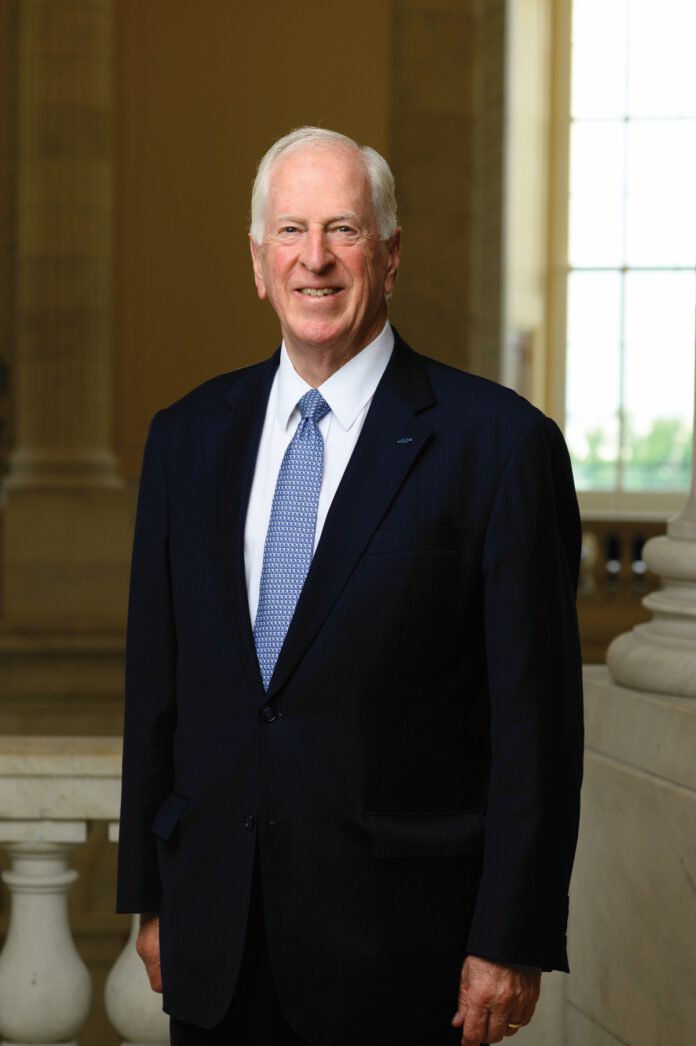
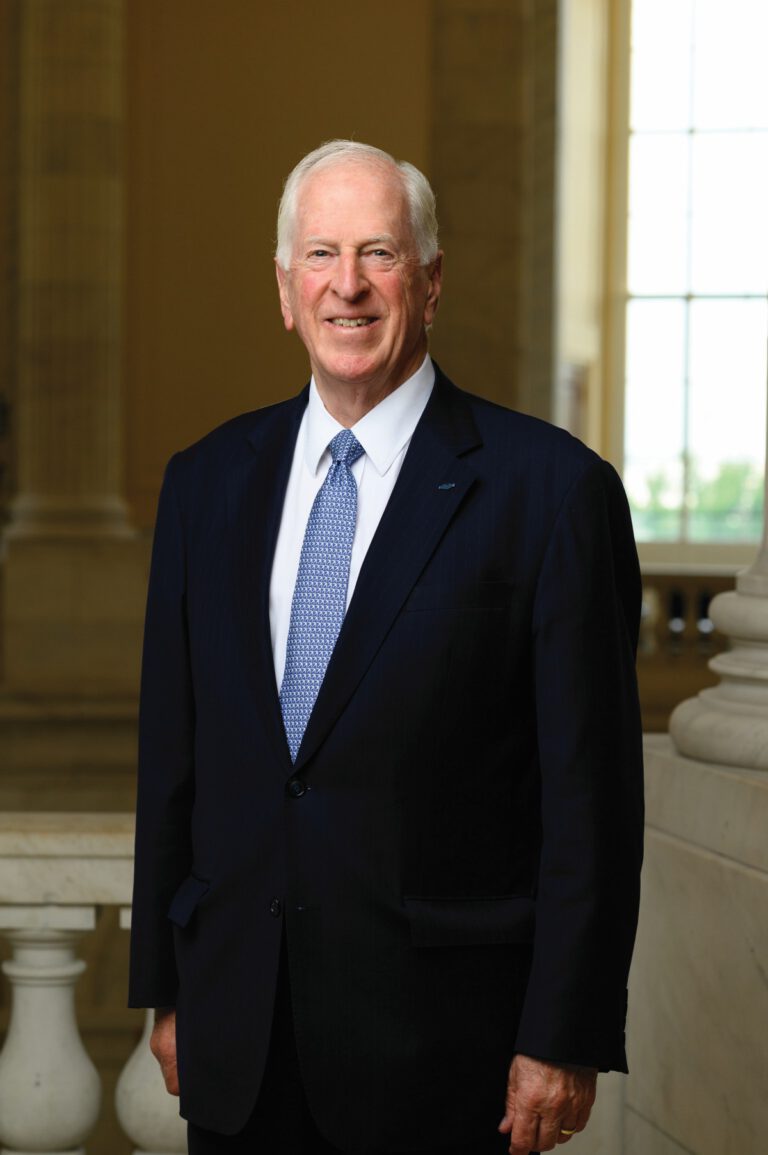
After nearly three decades in Congress, Rep. Mike Thompson is campaigning for a 15th term—and, thanks to California’s latest round of redistricting, he is doing so in a substantially altered district.

The St. Helena Democrat represents California’s 4th Congressional District, which encompasses all or parts of Lake, Napa, Solano, Sonoma and Yolo counties. He serves on the House Committee on Ways and Means, where he is the ranking member of the Subcommittee on Tax and a senior member of the Health Subcommittee.

Thompson faces fellow Democrat Eric Jones in the Nov. 3 general election. When he appeared with me recently on “Civics 101” on The Drive 95.5 FM, our conversation followed four questions relevant to that race: Was California right to fight Republican redistricting with a partisan map of its own? Should federal programs have expiration dates? What could Congress realistically do about affordability? And what happens when wildfire survivors are taxed on settlements intended to help them rebuild?

Approved by 63.8% of California voters in 2025, Proposition 50 temporarily replaced the congressional map drawn by the state’s independent redistricting commission with a legislatively drawn map intended to help Democrats gain as many as five House seats. The new map applies to elections through 2030. It was California’s response to a Republican redistricting effort in Texas—an openly partisan maneuver intended to neutralize another openly partisan maneuver.

Against that backdrop, I asked Thompson whether Prop. 50 was a necessary but openly political response to Texas. He showed little ambivalence.

“Prop. 50 was in response to the state of Texas, behind closed doors in the proverbial back room, drawing up a map and then passing it without any public hearings, without voter approval, to, in the words of the president, steal five congressional seats,” he said.

California’s process, Thompson argued, was conspicuously public. The Legislature held hearings and debate, the governor signed the measure and voters rendered the final verdict.

“I supported Prop. 50, and truth be known, my district changed the most as a result of that,” he said. “I felt that it was important to beat back that stealing of the five seats in Texas, and I know that I’ll be able to represent this new district well.”

Then came the campaign-ready dagger: “I supported it. I don’t flip-flop.”

I characterized Prop. 50 as a fight-fire-with-fire moment. The tactic was transparent, and the objective was never disguised. Thompson said the process was conducted in “full sight,” pointing to televised hearings and debate before voters made the final decision.

The next question concerned proposals to require federal agencies and programs to periodically prove their effectiveness or face expiration. On paper, “sunsetting” can sound like sensible accountability. In Washington’s present climate, however, allowing programs to expire before Congress acts could place essential services in recurring political jeopardy.

“There are provisions that currently exist to review programs, [to] make sure they’re working appropriately, [to] make changes where needed,” Thompson said. “But sunsetting is just a ridiculous idea.”

The congressperson’s foremost concern is that such a requirement could endanger Social Security and Medicare. Thompson also cited veterans’ benefits, crop insurance and agricultural disaster relief—all particularly consequential in a district of veterans, farmers and communities repeatedly scorched by wildfire.

“Veterans can’t watch their programs sunset every year or every two years and hope they come back,” he said.

Likewise, if crop insurance or disaster programs expired when an agricultural calamity struck, he said, farmers would be “out of luck, and that would be just devastating to our region.”

Of course, none of the above is an argument against scrutiny. Thompson called for restoring inspectors general dismissed by the current administration and conducting continual oversight of federal programs.

“We should constantly be doing oversight and review of every program,” he said, “but not something this extreme.”

When something sunsets in Washington, I suggested, the sun has an unfortunate tendency not to rise again.

From there, we moved to the cost of living.

“People are paying too much for everything,” Thompson said. “That’s the one constant I hear no matter where I am in my district, is how expensive things are.”

Thompson introduced the American Affordability Act, a broad tax-policy package aimed at reducing the cost of housing, transportation, energy, childcare, education and healthcare. The bill applies the tax-code approach used in earlier renewable-energy legislation to household expenses that voters encounter every month.

“Dignity shouldn’t be a luxury,” Thompson said. “People should be able to work and buy the things they need. You need a roof over your head, food on the table. You need to be able to turn the lights off and on. You need healthcare, and you need childcare.”

Thompson added: “How many times do we see people who put on the uniform and fought for our country, and then they have to come home and fight for healthcare and fight for a roof over their head? That’s just not right.”

He said he expects Democrats to make the affordability proposal a priority if they retake the House. It was an optimistic forecast, but he pointed to his work on renewable-energy tax policy as evidence that ambitious legislation can become law.

The most tangible evidence of Thompson’s legislative method, however, may be his work for wildfire survivors.

Settlement payments can still leave survivors far short of the cost of replacing a home. Taxing those payments compounds the injury. Thompson worked with the late Republican Rep. Doug LaMalfa and Florida Republican Rep. Greg Steube to force disaster-tax legislation onto the House floor through a discharge petition after House leadership declined to schedule a vote.

The petition gathered the required 218 signatures. The bill subsequently passed the House and Senate and became law, removing federal tax liability from qualifying wildfire settlements. Thompson said the change produced approximately $500 million in tax savings for victims in his district.

He added that Congress has since extended that protection through 2027.

“These fire victims had to sue, so they got a settlement,” Thompson said. “It wasn’t enough to replace their house, but it was something. And then to turn around and have to pay taxes on top of that—it just wasn’t right.”

Getting the original measure signed into law, he said, was “one of the proudest moments of my time in Congress.”

The four subjects reveal Thompson’s larger campaign argument. He portrays himself as a legislator willing to defend partisan action when he considers it necessary, protect longstanding programs from political brinkmanship, use tax policy to lower costs and cross party lines when a practical result is within reach.

Whether voters in a newly configured district accept that argument will be determined Nov. 3. Thompson, unsurprisingly, sounded certain.

“I will win my reelection,” he said, “and I will represent this new district as well as I have represented my current and my past districts.”
Film Fests in Healdsburg and Cotati Play Long Game with Shorts

Maybe the future of Sonoma County cinema is short.

Over one late-September weekend, two local festivals will put short-form filmmaking on the big screen.

One is an established international event in Healdsburg, the other a newcomer in Cotati, and taken together, they suggest that the county’s film culture may be expanding beyond the occasional feature shoot and into something more grassroots: a place where emerging filmmakers can test their voices and audiences can discover them before the algorithms do.

The fifth annual Healdsburg International Short Film Festival runs Friday through Sunday, Sept. 25–27, at the Raven Performing Arts Theater. From 398 submissions, organizers selected 57 films representing 17 countries for eight screening blocks, with filmmakers, jurors, Q&As, parties and a closing-night awards ceremony folded into the weekend.

This year also brings the debut of Cine Latine, a program of work by Latine filmmakers including some Spanish-language films (presented with subtitles), and Words First, a short-script competition. Other programs focus on documentaries, students and perspectives of women behind the camera.

“For us, it’s all about connection, filmmakers at every stage sharing their work with our community, all packed into one unforgettable weekend,” festival co-founder Pamela Demorest said. “It’s why our celebrity judges keep coming back.”

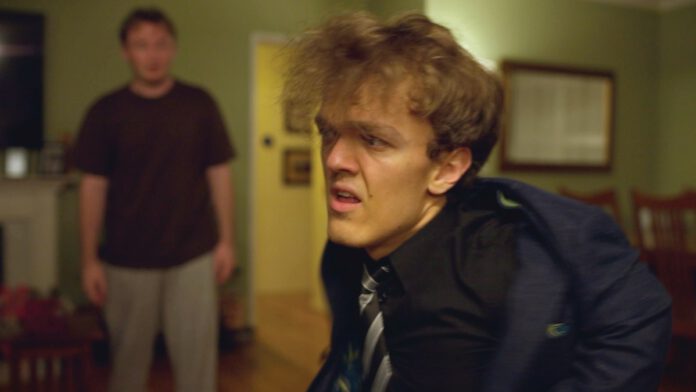
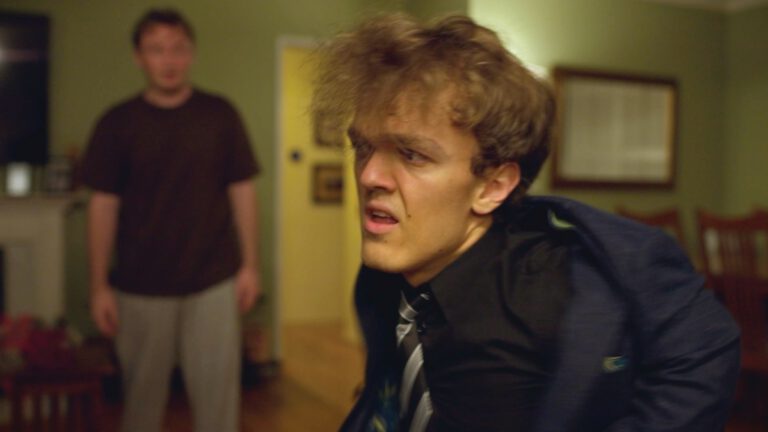
The lineup reaches from Ireland and Iran to Petaluma. Bay Area filmmaker Sean Restivo’s documentary, Owl Hill, explores barn owls and the preservationists who protect them. Be Right Out marks the return of festival alumnus and Santa Rosa Junior College film-school graduate Colin Miller, whose comedy follows a nervous young man’s first date as it swerves into chaos.

This festival also hosts Oscar-nominated screenwriter and returning juror Billy Ray at 11am, Saturday, Sept. 26, for a signing of his young-adult novel, Burn the Water, presented with Copperfield’s Books. Ray’s credits include Captain Phillips, The Comey Rule and The Hunger Games.

Meanwhile, on the middle day of Healdsburg’s run, the inaugural Cotati Shorts Film Festival bows at 1pm, Saturday, Sept. 26. Produced by On Axis Productions, the program begins with indoor screenings in the Cotati Room at City Hall and concludes with a free outdoor showcase at 8pm on a 25-foot screen at the Cotati Hub.

The fest’s slate spans documentary, narrative, animation and horror/suspense, mixing films from around the world with work written and produced in Sonoma County. It also marks a homecoming for Tom and Maura Kearney, who have returned to their Sonoma County roots after 23 years in Hollywood. A Petaluma High School graduate, Tom Kearney worked as an actor, writer, director and producer and later founded the Hermosa Beach Film Festival. His latest film, Brothers Inc., earned Best Comedy honors in Toronto and Santa Monica.

“These films come from a different place; there are no studios telling these people what to do,” Maura Kearney said. “These films are made with the blood, sweat and yes credit cards of some of the most creative people on the planet.”

That line gets at the format’s appeal. Short films are not merely abbreviated features. They are cinema’s laboratories—places to experiment, fail beautifully and occasionally discover a filmmaker just as a private obsession becomes a public language.

Two festivals do not yet make Sonoma County the Sundance West, but for one weekend, audiences can look past Hollywood’s endless sequels and see what might come next.

American Idolatry: Musical Satire of Elvis Hysteria at Cinnabar

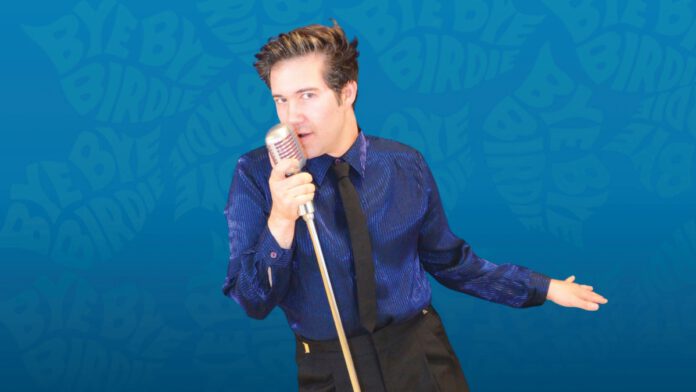
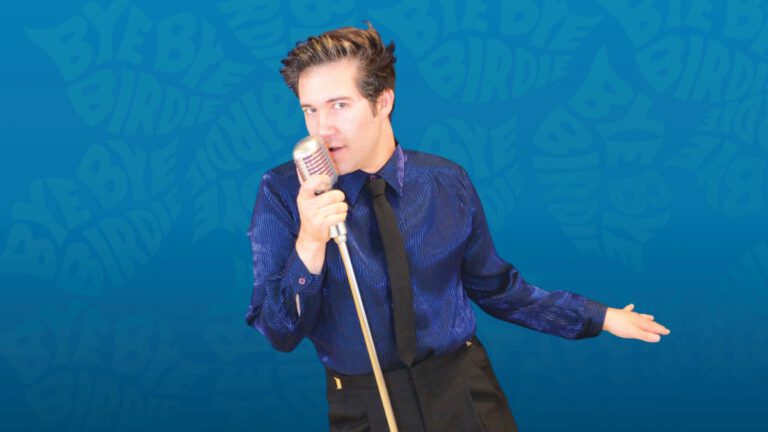
Cinnabar Theater opens their 54th season with the nostalgic 1950s musical romp, Bye Bye Birdie. It’s a production that benefits from its wonderful ensemble and the charisma of several outstanding character actors. Directed by Zachary Hasbany with musical direction by Brett Strader, Birdie runs in the Warren Auditorium at Sonoma State University in Rohnert Park through Oct. 4.

The heart of the story belongs to the intelligent, neglected Rosie, played by lovely Laura Odette Sandoval. Rosie has long languished in her relationship with her mama’s-boy boss, Albert, played with all the energy by Noah Evans, and the audience feels that. I was actually rooting for Rosie to run off on her own, because Albert’s antics are insufferable. 

Similarly, I was hoping that titular Conrad Birdie would find an outlet to ease his world-weary, slightly burnt-out mind. With as much subtlety as someone playing a caricature of Elvis can muster, Noah Vondralee Sternhill leans into the masculine while revealing that Birdie is a star without much agency. It is a crime that we could barely hear Vondralee Sternhill’s excellent voice on opening night because his songs are a lot of fun (“Honestly Sincere,” in particular), and I wanted more of his sly comedic stylings.

About that ensemble: It’s a well cast group that never once seemed out of sync. Major kudos to Hasbany for pairing the superb David L. Yen (as mild-mannered Harry MacAfee) with the equally adept Molly Larsen-Shine (as Doris MacAfee), a performer who has charm and skill to burn. They’re instantly watchable, hilarious and full of the seasoned groundedness into which one can buy regardless of the material.

Jill Wagoner also stands out as Albert’s hilariously dramatic but flippantly racist mother, Mae. It’s a role Wagoner could do in her sleep. 

The entire young adult portion of the ensemble, playing hormonal teeny boppers, are excellent and kept up their manic energy when others lagged. Olivia Manz, as wildly crazed Ursula, creates some of the funniest bits. Mia Katherine Wade, as Kim, is solid with a gorgeous voice. 

While Bye Bye Birdie’s story of fanatical teens and their Elvis-inspired idol is dated and thin on characterization, audiences may still find diversion in its revelry thanks to some delightful performances.

Cinnabar Theater presents ‘Bye Bye Birdie’ through Oct. 4 at Warren Auditorium in Ives Hall at Sonoma State University, 1801 E. Cotati Ave., Rohnert Park. Fri–Sat, 7:30pm; Sun, 2pm. $23–$77 inclusive of parking. 707.763.8920. cinnabartheater.org.

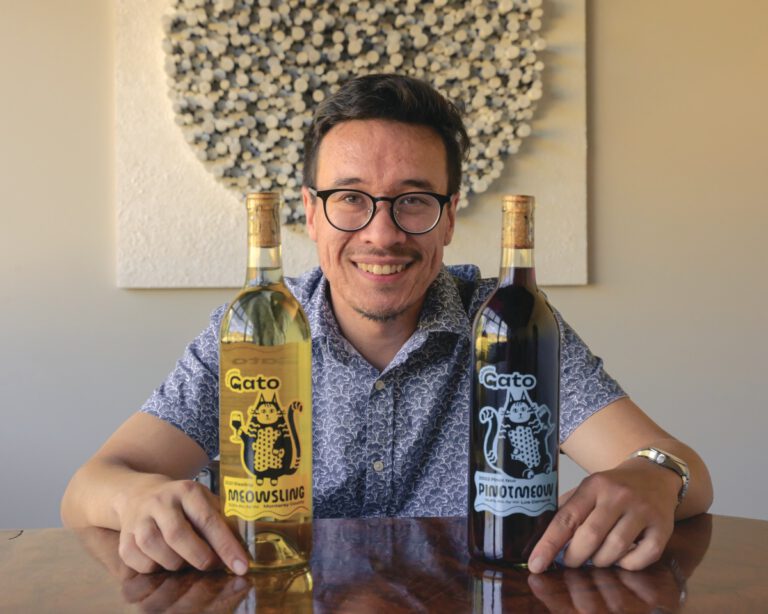
Drink Wine, Save Cats: Chateau Gato Combines Causes in a Single Sip

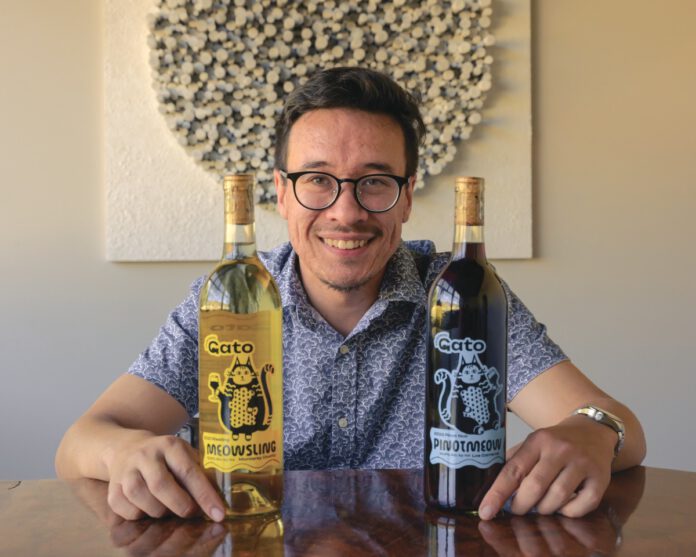
For Eric Wright, it all started with a black cat named April. She had been living at We Care Animal Rescue in St. Helena when Wright met her. 

Black cats often spend the longest time in shelters before adoption, a phenomenon known as “Black Cat Syndrome,” either due to lasting cultural superstitions or the fact that it is more difficult to photograph them. It was an instant love connection that led to adoption. Wright brought April home, and they have been thick as thieves ever since. 

“Every day, I go to work and get my butt kicked,” says Wright. “Then I come home, and my cat is there.”

Wright is a third generation citizen of the Napa Valley, with a long line of immediate and extended family working in the wine industry. For him, working in wine felt like a foregone conclusion. “I knew I was destined to make booze,” he proclaims. “I’m pretty sure one of my first words was ‘riesling.’”

Wright has spent the past 12 years in the industry, learning everything he can about the science and business of wine. He has helped to produce wine locally, as well as in regions such as Oregon and New Zealand. A previous team he worked with had the distinctive honor of creating 30 different 100-point wines, which is an industry term for a wine that has attained a perfect score among critics. When he talks about wine, he does so with the fervor of a man possessed. “All I want is to make the best I possibly can,” he says.

As anyone in the area, provided they haven’t been in some sort of coma for the past years, already knows, the wine industry is experiencing a good deal of tumult. Sales are down, younger generations aren’t as interested in drinking, and the wine industry at large is having a sort of identity crisis regarding where and how it fits in a changing zeitgeist. It would seem a strange time to start a wine business, but Wright claims he found opportunity in the shuffle.

“A winemaker will make a wine, and then it takes like three years for it to go to market,” he explains, “and during that time, the market can totally shift. Making it so that wine is no longer a viable product.” With his curiosity sparked, Wright started exploring sales registers for bulk wine lots. Bulk wine, to put it simply, is leftover wine that has not been bottled or distributed. 

Oftentimes, these excess lots are sold to food production behemoths, who blend it and stock it on the shelves of retail giants like Costco. Within this market, however, are smaller lots of premium-made wine that, for one reason or another, are not going to be bottled. Wright started reaching out to these wineries to inquire about the smaller lots. According to him, he tasted more than 25 different wines as he investigated, until he landed on two, a riesling from Monterey and a pinot noir from Los Carneros, that stood out to him as exceptional. 

“I had the idea to rescue these wines that were just sitting in tanks with no plans to move,” Wright notes. He reached out to a friend and entrepreneur, Wyatt Johnson, and pitched him the idea of a wine brand that rescued small lots of premium wines and sold them in limited-release batches. With the wine industry experiencing record levels of surplus, there would be little difficulty in sourcing quality lots, and buying from bulk markets would help to keep the overhead low. The idea felt viable, and the two decided to cofound a wine brand.

While Wright was workshopping what the identity of this brand would be, he thought back to April, the black cat. Here was a wonderful creature, a member of his family unit, that spent years in a shelter being overlooked. Something in that moment clicked for him; wasn’t he doing something similar with these wine lots? It felt like there was an opportunity to combine two things he loved and make a difference in the process. Thus, Chateau Gato was born.

“Drink wine, save cats,” says Wright. “That is Chateau Gato’s motto.” 

Aside from the cat-related branding, with their first two releases being dubbed a meowsling and a pinot meow, Chateau is also dedicated to supporting animal rescues. As Wright was working on getting the brand off the ground, he reached out to We Care Animal Rescue, the place where he adopted April three years prior, and asked if they would be interested in a partnership. “We [Johnson and Wright] decided that there needed to be some level of financial support,” he says. “It was really important that there was a charitable component.”

“Eric [Wright] walked right through our door, said, ‘You guys are the inspiration for this,’ and pitched his idea,” recalls Molly Abers, volunteer and community engagement manager for We Care. “We were immediately excited,” she continues. “It felt like such a good way to bridge these two worlds of animal rescues and the wine industry.”

Chateau Gato held its release party in partnership with We Care in August. There was music, food, wine and onsite adoptions. Abers reports there was one adoption at the event and three more in the week that followed. “Our goal was to give the first $10,000 we made directly to We Care,” says Wright. “We exceeded that before the party was over and were able to hand them a check before we even paid off our credit card bills.”

The financial goal was hit so quickly that Wright and Johnson were caught a bit off guard. They are now working on a model for ongoing contributions to the shelter through a percentage of every bottle sale. Wright is also hoping to expand this framework for partnership and is currently talking with three other local rescues.

Currently, Wright and Johnson aren’t trying to compete with more established wineries for shelf space in the area. “Every shelf and tasting room in the valley is competition,” he explains. Instead, bottles and cases of the limited-run lots, or “rescues,” as Chateau Gato has dubbed them, can be bought through their website or in person at partnered events with animal rescues. Once they sell out, the rescues are gone forever.

Perhaps this is, in a small part, an answer to the larger shifts in the wine industry. It’s no longer enough for a wine to have a story; it should have a message as well. It should collaborate and participate in the betterment of its community. It should have a picture of a cat holding a wine glass on its label. As a young brand, only time will tell how viable Chateau is for the long haul, but with a tagline like “Drink wine, save cats,” how could anyone not root for them?

More at chateaugatowines.com.

Free Will Astrology, Sept. 23-29

0

ARIES (March 21-April 19): In the practice of niwaki, Japanese gardeners shape trees so they look both natural and artfully composed. They prune and style the branches to dramatize the tree’s inherent character. Their goal is to collaborate. I recommend you experiment with a similar approach in the coming weeks, Aries. Try partnering with the living processes in your sphere rather than simply imposing your will on them. Ask yourself: What is trying to flourish here? Can I coax out some useful beauty? How can I coordinate my own intelligence with nature’s intelligence? –

TAURUS (April 20-May 20): Your spirit creatures for the coming weeks are the slow-moving giant tortoises of the Galápagos Islands. They can live for more than a century. They conserve energy, move deliberately and carry their protection with them. I believe you will benefit from embracing their ways in the coming weeks, Taurus. Refuse to be rushed or pressured, either by others or yourself. Proceed at the precise rate you need to. Your natural strength will thrive through your incremental steadiness. P.S.: Consider giving yourself a tortoise nickname.

GEMINI (May 21-June 20): A master perfumer composes a fragrance in three layers. The top notes are what you smell first. They’re vivid and volatile. The next layer blooms gradually, unfurling the heart notes of the fragrance. Underneath everything are the deep, resinous base notes, which don’t fully reveal themselves for hours and cling longest to the skin. Let this be a metaphor to guide your joys and pleasures in the coming weeks, Gemini. Relish the bright top notes that flare and vanish, but persist long enough for the heart to open, and longer still for the deep base notes to emerge. Gather all the rich delights, not just some.

CANCER (June 21-July 22): It’s hard, scary work for a crab to molt its shell and grow a bigger one. As it waits for its new protection to grow, its soft, tender body is exposed and vulnerable. That’s why it often hides in rock crevices, neither moving nor eating until its armor returns. Your situation, dear Cancerian, isn’t nearly as dire as the poor, defenseless crab’s. But as you power through your own personal molting season, I urge you to enhance your psychic protection. You need to feel extra safe and secure.

LEO (July 23-Aug. 22): Bats navigate by echolocation. They send out sounds and interpret the echoes. But when competing for food, they may also jam each other’s sonar, generating acoustic interference that makes navigation harder for rivals. A similar phenomenon occurs in human populations. Some of the noisy talk we hear is other people’s jamming signals. Consciously or unconsciously, they’re creating interference that may make it harder for us to navigate. Now is a good time for you to learn better how to distinguish between real information and meaningless hubbub. Refine your filters.

VIRGO (Aug. 23-Sept. 22): Jan Tschichold (1902-1974) was a brilliant typographer who revolutionized graphic design. He left his mark on millions of books. But later in life, he rejected some of his own rules, returning to classical typography and critiquing his earlier work as too rigid. In this spirit, dear Virgo, I will ask you if some of your long-standing rules no longer serve you. Is it possible that some of your own “best practices” may have calcified into unexamined dogma? The coming months will invite productive heresy against your past selves. You’re allowed to contradict your earlier convictions. Hint: Your vigorous evolution requires it.

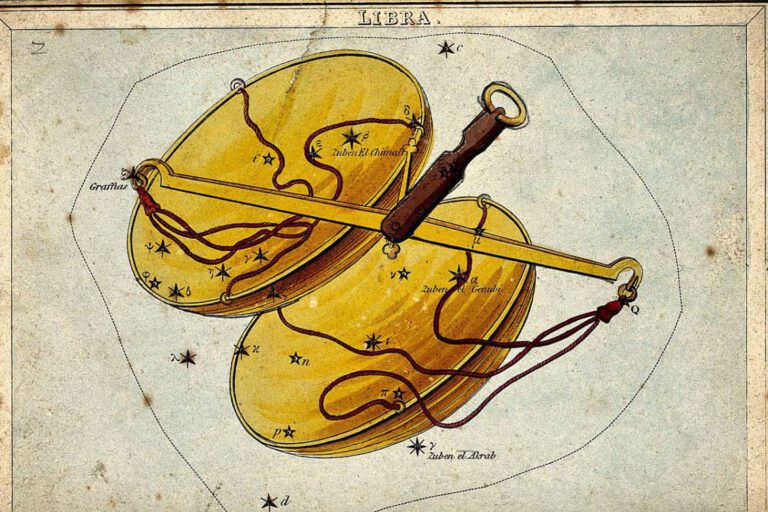
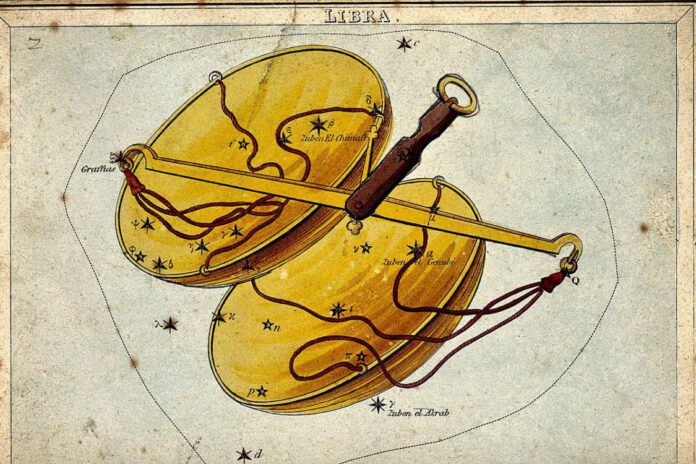
LIBRA (Sept. 23-Oct. 22): In the 18th century, Libran philosopher Denis Diderot was instrumental in creating the Encyclopédie. It wasn’t the first compendium of the world’s knowledge, but it was the most ambitious and comprehensive. In 28 volumes, it assembled contributions from a large number of writers, including leading figures of the French Enlightenment. Robust collaboration was key to its enduring influence. In the coming weeks, Libra, I’m hoping that you, like Diderot, will be an initiator and facilitator of rich cooperation. Conversations, partnerships and shared projects could generate insights that none of the participants would have discovered alone. By inviting multiple perspectives into the discussion, you will help cultivate a fertile weave of ideas.

SCORPIO (Oct. 23-Nov. 21): In the volcanic seas around Iceland, underwater eruptions sometimes build entirely new islands that rise from the waves as bare, black rock. During the ensuing years, wind and waves and seabirds seed them with life. Mosses, lichens, hardy plants and nesting birds slowly transform the raw lava into a living shore. I’m rooting for you to instigate a similar process, Scorpio. My prediction: A development that initially seems stark or unfinished could become fertile ground for growth. Your perceptive instincts will recognize possibilities before they are obvious to others. Be patient with beginnings that look raw.

SAGITTARIUS (Nov. 22-Dec. 21): I invite you to achieve minor miracles that will enable you to brag at parties about how you created something out of nothing. Not in a loud, egotistical way, but with a sly glimmer in your eye, as if you’re sharing secrets about how reality can be coaxed into generosity if you approach it with imagination and chutzpah. Yes, dear Sagittarius, I’m ecstatic to inform you that now is a favorable moment to turn scraps into usefulness, boredom into invention and vague hunches into tangible results. Be alert. Be on the lookout. Scout around for raw materials that have been overlooked or dismissed. Half-abandoned projects? Mercurial inclinations? Fugitive fantasies? Seemingly idle conversations that reveal marvelous glints and gleams? These are examples of the “nothings” you can turn into treasures.

CAPRICORN (Dec. 22-Jan. 19): I’ve got a rough, tough assignment for you: Dare yourself to be startled by your own exquisite beauty. Be bold and even brazen in appreciating what a marvelous creature you are. Can you summon the necessary audacity? I think you can. Please notice the ways you have underestimated your gifts, minimized your impact or edited out your brilliance to make others comfortable. Allow yourself to feel the tender shock of recognizing that you’re more interesting and mysteriously compelling than you’ve been trained to believe. P.S.: This will help you call on even deeper inner resources in the coming weeks.

AQUARIUS (Jan. 20-Feb. 18): Aquarian writer Virginia Woolf was a fount of interesting ideas. Sometimes she pushed her active mind to track them down and capture them, but on other occasions, she enjoyed gathering gems that arrived as her imagination wandered and drifted. These “moments of being” provided her with small treasures while she was walking in nature, taking a bath or doing nothing in particular. I believe that you are now primed to experience many such pleasurable eruptions of insight. In the coming weeks, pauses and lulls and intermissions will open unexpected portals. 

PISCES (Feb. 19-March 20): For the low price of $199, I could expertly dispel that annoying curse you’ve been lugging around. But I would feel sleazy taking your cash when you are fully capable of zapping the curse yourself. So instead I will recommend that you perform the banishing ritual, then write yourself a check for $199. Here’s how. Step 1: Visualize an object that represents the curse. Imagine hurling it into a beach bonfire and watching it burn. Step 2: Bring to mind a person you believe contributes to the curse. Envision a rope that ties the two of you together, waist to waist. Then imagine yourself revving up a chainsaw, slicing through the binding and declaring, “You have no power over me.” Step 3: Roll on the floor as you laugh and cry tears of giddy release.

Homework: Find out about my new book, Enlightenment for Rebels: https://tinyurl.com/s7s7s7s

Tunes & Tracks: Railroad Square Music Fest Rocks for Free

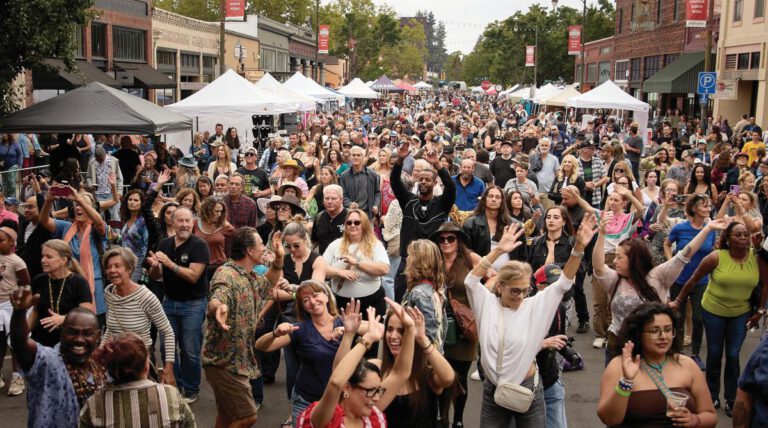
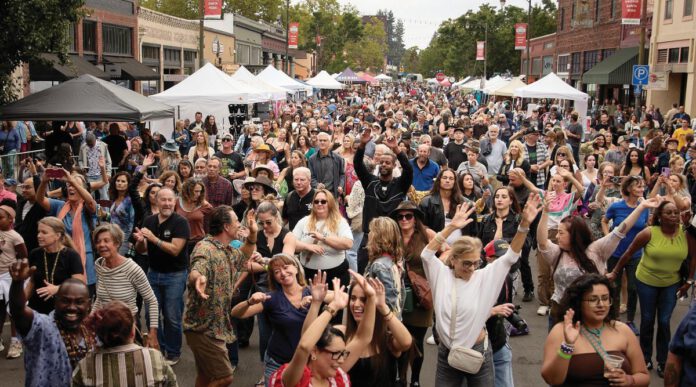
After a summer deluge of pricey music fests in both the Bay Area and beyond, the ever amazing Railroad Square Music Festival returns to Santa Rosa from 12 pm to 7:30pm, Sunday, Sept. 20—and, as always, it’s free to attend and open to all ages. 

As the festival date marches ever closer to showtime, festival director Josh Windmiller, who co-founded the festival in 2015 with Susy Dugan, is excited to get year 10 up and running. This is not only cause for celebration, it’s also solidified the festival as the unofficial end-of-summer party for Sonoma County. 

To this, Windmiller says, “RSMF isn’t a flash-in-the-pan party; it is the strongest representation of the North Bay’s rising status as a hub for arts and culture.”

This year’s lineup shows once again that RSMF is doing an incredible job highlighting local artists, bringing in new ones and also embracing collaboration which leads to community. The lineup features 35 artists across every genre, including headliner The Sam Chase & The Untraditional as well as performances from Toast Machine, Kalei Yamanoha, Nick Otis Orchestra, sicksentz, Pazifico, xo_chips_co, Kemist, ulyssescfm, and The Pulse & The Poet.

Windmiller is also excited about many new things for this year’s fest. He notes, “Some new elements include Second Hand Funk’s big North Bay Get Down jam, Grapevine Dance’s line dancing lessons, Dark Matter Lives! and their hip-hop hour featuring established MCs and improvisation, three rounds of songwriter sessions courtesy of Secret Song Club and the return of The Sam Chase & The Untraditional, who played the inaugural festival in 2015.” 

He continues, “I’m also excited to be working with the Prince Memorial Greenway to encourage people to walk to the festival from City Hall and for our new ‘North by North Bay’ initiative, where we promote a full week of music in the area before the festival.”

Highlights also include Dark Matter Lives! with a showcase of original songs and freestyles, while Second Hand Funk leads a high-energy showcase of funk musicians, vocalists and MCs. Grapevine Dance gets the crowd moving with line dancing lessons, and The Princess Boutique Fashion Show makes its return, featuring a dazzling display of quinceañera dresses paired with live music.

The festival also presents three songwriter-in-the-round showcases, hosted by Secret Song Club, with performances from Azere Wilson, TeYo, Addie Finch, Brie Paige, Ismay, BrightDarkDawn, Diana Dreams, 90/93 featuring Derek Phelps and Faux Co.

Closing out the night will be “Electric Railroad Station,” hosted by DJ Tecni.

Taking a moment from his busy schedule as both event chief, working musician and development director at the newly reborn Santa Rosa music venue The Lost Church, Windmiller says, “Ten years of events is huge, especially when you consider how this is a free festival that only happens through grassroots community support.” He adds, “For a decade, local businesses, the City of Santa Rosa and the general public have made this thing possible by showing up, raising funds and spreading the word.” 

Longtime Sonoma County music fans likely had their ears perk up when they saw storied duo Toast Machine on the bill. From 1998 to around 2010, the band, which included Gio Benedetti on bass and Paige Warner on drums, was one of the most well respected and popular bands in the area before calling it quits. Bassist Benedetti says they merely took an extended break.

Notes Benedetti, “I was hoping to tour and play more, and Paige was busy being a super star in her dream field of special effects over at Industrial Light & Magic. She has since won a Scientific and Technical Oscar in 2017 for her ingenuity and badassery in her field. We stopped; I started up other bands, joined Brothers Comatose, and then that band got real real busy.” 

While Benedetti got his wish to play and tour more with Brothers Comatose, that ultimately became less important as he started a family as well as started more actively drawing, cartooning and teaching art classes. 

He also gave the Bohemian a bit of a scoop, noting, “We’ve popped back into existence a few times to play the Phoenix Theatre birthday party shows. We did that two years ago, and once I’m playing, I start writing. I don’t ever want things to be old and stale. So with the new material from that show, we went into the studio. We made a record. We actually have a new record coming out this year. I haven’t told anyone yet. Twenty years apart, and here we are with a new record.”

The aforementioned local highlight Dark Matter Lives! is the name of a project featuring local hip-hop artists King Lung and Crystal Mathmatics (Mathmatics is spelled that way intentionally, by the way). When speaking to Lung and Mathmatics, it had to be noted that the project title Dark Matter Lives! is pretty great. Mathmatics says it “was literally the first and only thing I said to Lung about a band name. He said, ‘perfect.’ It’s like a declaration. That’s why we use the exclamation point. Like when Dr. Frankenstein screams, ‘It’s alive!’”

Lung notes, “For RSMF, we’re bringing in Kayatta, LaiddBackZach and Erica Ambrin as featured collaborators. We’ve worked with all three of them before, and they were also recently part of our freestyle game show, ‘Whose Rhyme?’ They’re all incredible artists, and we’ve developed a really natural chemistry with them.”

Speaking of onstage collabs, Second Hand Funk and Friends is put together by Ethan Schiff, who runs the monthly North Bay Get Down funk jam night in Petaluma. He says the group “is a collective of top funk musicians from around the Bay Area, and for our shows people can expect a giant, inclusive, community dance party and authentic, greasy, ’70s funk music.” The lineup for the fest includes LaiddBackZach, King Lung and the Black Sheep Brass Band horns, with other guests to be announced.

While Windmiller is often the public face of RSMF, he has a solid team around him, including Bryce Dow Williamson, who helps with booking the acts while also serving as director of the Railroad Square Historic Association. When asked about selecting acts, Williamson says, “We try to make our booking decisions based on representing the sides of the Sonoma County music and Bay Area scene that often do not have other opportunities at local festivals.”

Windmiller and his collaborators aim to represent a broad range of ages, genres and styles at the festival by prioritizing artists who are active throughout the county and create opportunities for others.

“This helps with our mission to show the world that the North Bay is a vibrant arts hub,” he observes.

Come show day, parking at Railroad Square may be challenging, but the SMART Train Depot is a short walk from the event. Also, there’s a nearby bus stop and ample space for bikes. 

There will be myriad food and drink vendors serving both beer, wine and NA selections as well as local vendors pedaling their wares. The event is primarily run by volunteers, and, as always, they can use some more. 

For more information, including volunteer opportunities, visit railroadsquaremusicfestival.com.

Still Here, Sondheim’s ‘Follies’ in Sonoma 

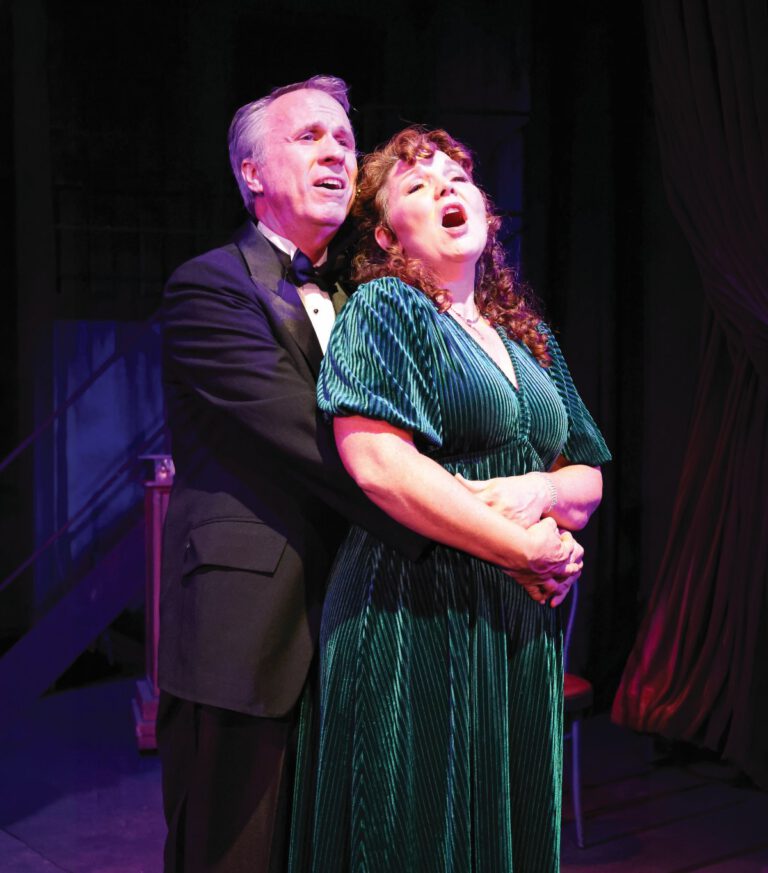
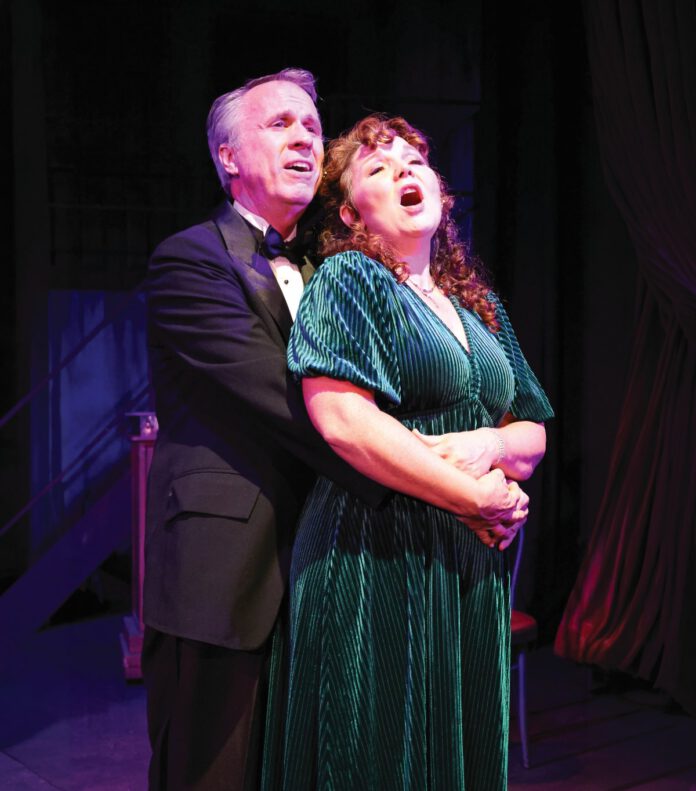
Sonoma Arts Live opens its 2026/27 season with Stephen Sondheim’s Follies, an odd musical that lives somewhere between a traditional Broadway musical and a cult classic. The Patrick Nims-directed production runs on the Rotary Stage at the Sonoma Community Center through Sept. 27. 

In a condemned, haunted theater, a reunion of the “Weismann Girls” (think Ziegfeld Follies) is taking place. Sally (Brandy Noveh) is there, hoping to run into her old flame, Ben (Sean O’Brien), who married her old roommate, Phyllis (Beth Ellen Ethridge). Sally’s husband and Ben’s ex-best friend, Buddy (Tim Setzer), is there, trying to keep Sally by his side. All the while, the ghosts of their younger selves dance across the stage until the past and present collide.

Noveh’s Sally is heartbreaking and exasperating, and she handles the difficult Sondheim songs with powerful sincerity. It is a masterful performance. It’s refreshing to see Setzer in a serious role that really highlights his range. O’Brien’s Ben is sympathetic despite being so deeply flawed. Ethridge’s Phyllis can come off as cold, but that is how the character is written. It’s a remarkable piece of acting from Etheridge to make Phyllis a likable character for whom we can root. 

Their younger selves were no slouches either, especially Alexis Bueno’s endearing young Sally.

This show was written to display talent in a way that few others are. As such, there were many opportunities for artists known in the community for their powerful voices and stage presence to display those talents. Of special note is Alexis Lane Jensen’s Carlotta and her rendition of the classically defiant “I’m Still Here.” Also, if one wants to see some top-tier tap dancing, this show hits that spot. 

The biggest issue with this production was a technical one. On opening night, a snafu meant most of the song “LoveLand” was performed without its accompanying projections. Once the projections did switch on, it became clear that the performance was better without the blurry and distracting visuals. Perhaps the blurriness was intentional, but it looked from the audience’s perspective that they were just not sized correctly for the stage. 

And the fact that this was the only real flaw in a show of this complexity is actually a tribute to the talent and care given this production.

One should take a trip out to Sonoma to see this strangely beautiful show. 

Missing it would be a huge folly.

Sonoma Arts Live presents ‘Follies’ through Sept. 27 on the Rotary Stage at Andrews Hall in the Sonoma Community Center, 276 E. Napa St., Sonoma. Thurs–Sat, 7:30pm; Sun, 2pm. $27–$44. 707.484.4874. sonomaartslive.org.

Your Letters, Sept. 16

Moneybags Express

Around the time 50 years ago when the old Michigan Wolverine offensive lineman, Gerald Ford, signed an unprecedented federal government loan guarantee to bail out troubled Chrysler Corporation, a private enterprise, singer Tom Paxton came out with a song, “I Am Changing My Name to Chrysler,” that ended with “and when they hand a million grand out, I’ll be standing with my hand out, brother; I’ll get mine.”

I’m sure many of us are fixing to change our registrations, vote Republican and get the five grand promised by our benefactor president, Dr. Donnie Moneybags, and those of us who routinely vote a bunch of times under assumed names due to our corrupt election system will really cash in.

Just when you thought the Stupid Train had gone off the rails for good, in Venezuela, in Iran, in Canada, in Cuba, in Greenland, at NATO, and in our nation’s capital, Moscow, this one rides into the station for all of us to board. 

I’m going to use my stipend to change my name to Robert Vesco and move to Costa Rica. Look me up when you’re in town. Adios, amigos.

Craig J. Corsini
San Rafael

No Free Parking

Parking meters are really just advertising in reverse: Instead of paying to occupy space in someone’s attention, you pay to occupy space on the street. Either way, you’re renting a little territory for a limited time and hoping nobody tows you.

With the coming onslaught of political campaign ads, candidates might save a quarter or two by curbing their enthusiasm. Pull up, park, feed the meter and leave the promises in the trunk. When the time expires, the city can ticket the campaign for overstaying its welcome—which, come to think of it, might be the most democratic process we have left.

Cassady Caution
Petaluma

Consider the Gourd, Symbol of Harvest

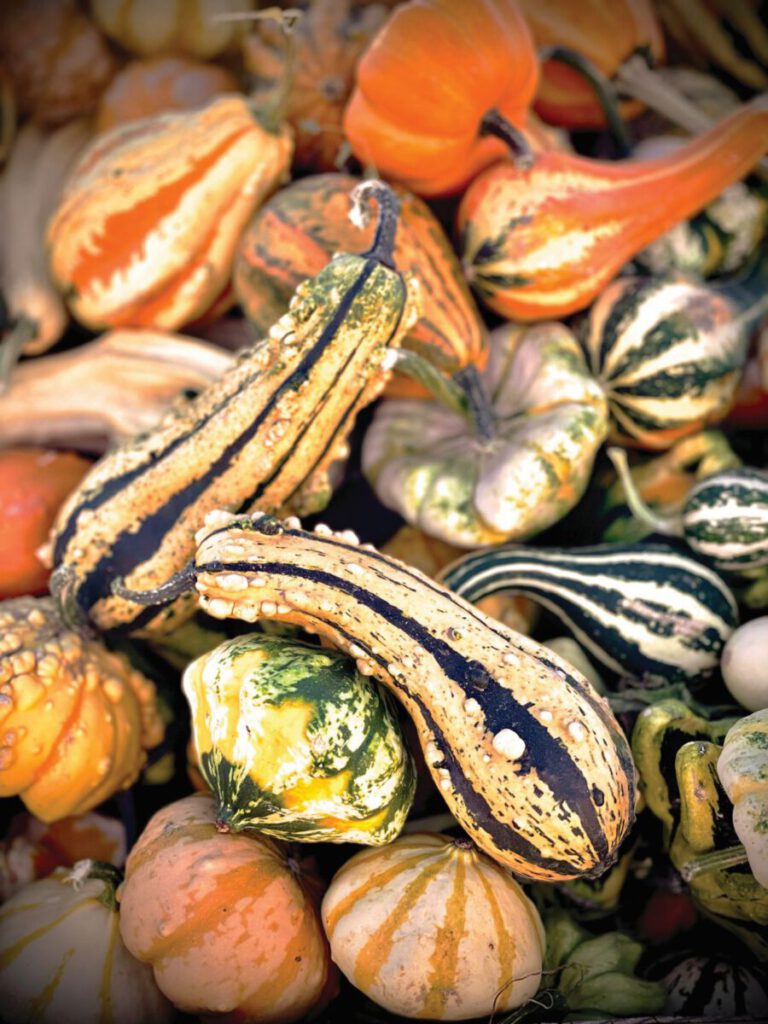
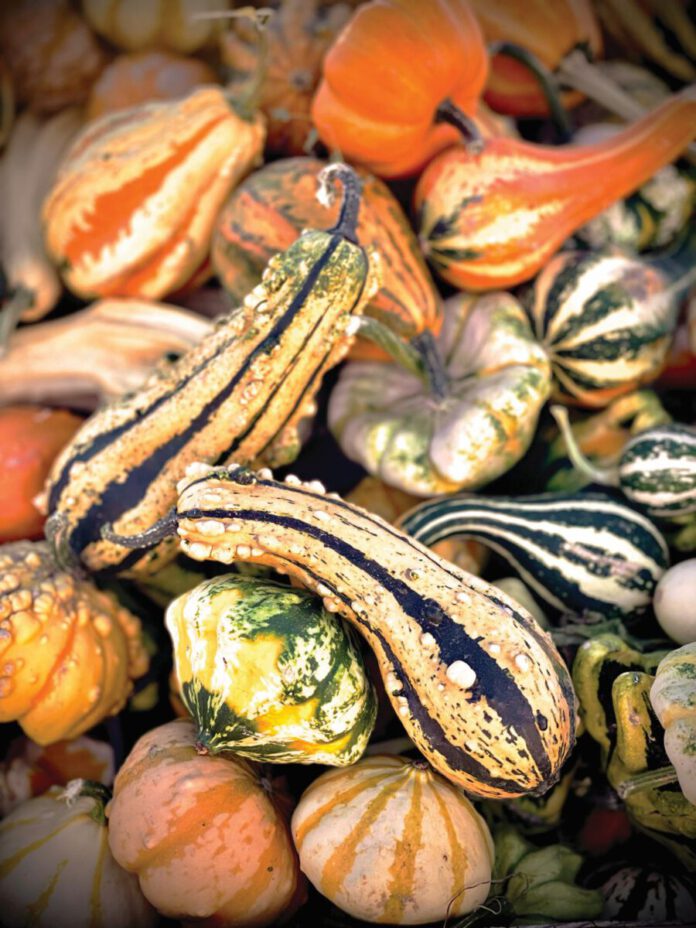
Ornamental gourds are like the semicolons of autumn. No one knows what to do with them, but when one sees them they kind of make sense.

This is the gourd’s contemporary office: sitting in a tasteful heap on a farmhouse table, looking seasonal. It may be striped, speckled, warted or shaped like a swan with scoliosis. It is rarely eaten. It has no obvious function. Yet remove one from an autumnal tableau and the whole arrangement loses its, ahem, gourd.

For much of human history, gourds were indispensable objects. The bottle gourd, Lagenaria siceraria, was among the earliest domesticated plants, cultivated in Asia at least 8,000 years ago and present in the Americas during pre-Columbian times. Harvested young, it could be eaten; left to mature, its hard shell could be dried and fashioned into bottles, bowls, ladles, floats, pipes, birdhouses and musical instruments.

Across West Africa, calabashes became water vessels and resonators for instruments including the kora and balafon. In China, the bottle-shaped hulu came to symbolize health and longevity, partly because physicians once carried medicine in gourds. Indigenous peoples throughout the Americas cultivated members of the genus Cucurbita thousands of years before European contact, eating their flesh and seeds while turning the dried shells into cups, storage vessels and ceremonial rattles.

The family name, Cucurbitaceae, encompasses an unruly Thanksgiving dinner of cucumbers, melons, pumpkins, squash and gourds. “Gourd” itself is more household term than precise botanical rank. Many of the small ornamental varieties belong to Cucurbita pepo, the same astonishingly elastic species that gives us zucchini, acorn squash and jack-o’-lantern pumpkins.

Whether one should eat one is another matter. Some decorative gourds contain high concentrations of bitter compounds called cucurbitacins, which can cause serious gastrointestinal distress. If a squash or gourd tastes unnaturally bitter, one should consider that a botanical cease-and-desist letter and stop eating it.

Our habit of treating gourds strictly as décor is comparatively recent, although decorating with the harvest is ancient. Abundance has always had allure as interior decor. European harvest festivals featured produce, grain and greenery; in North America, pumpkins and squash accumulated associations with Indigenous agriculture, Thanksgiving and Halloween. Irish and British immigrants brought traditions of carving lanterns from turnips and other roots; in the United States, the larger, more obliging pumpkin eventually took over the role. The term “jack-o’-lantern” was being applied to carved pumpkins by the 19th century.

Here in the North Bay, we remain blessedly close to local sources. In Sonoma County, the Petaluma Pumpkin Patch sells pumpkins and other gourds at 450 Stony Point Rd., while Pronzini Farms presents gourds amid its elaborate autumn vignettes at 3795 Adobe Rd. Muelrath Ranches near Santa Rosa grows pumpkins, winter squash and gourds without synthetic pesticides.

In Marin, Nicasio Valley Pumpkin Patch offers a 12-acre field and a persuasive reminder that agricultural shopping should occasionally involve hay. In Napa, the venerable Stanly Lane Pumpkin Patch, at 3100 Golden Gate Dr., has traditionally assembled thousands of pumpkins, gourds, cornstalks and other autumnal necessities. Because seasonal inventories and operating days vary, one should check with each farm before setting forth.

Gourds are best chosen by instinct. In fact, some say that a gourd chooses its person. Whether one’s gourd has knobs, stripes or necks that twist on themselves like a Klein bottle, they should treat it like an heirloom and place it somewhere prominent to signal their affinity with the season. 

After several millennia spent carrying our water, medicine, soup and music, the gourd has earned the right to just sit around looking as cool as an autumnal breeze. 

Defining Terms: ‘Patriotism’ and Other Problems

0

A few months ago, essayist and screenwriter Arthur Krystal wrote a piece in The New Yorker titled, “How Problematic Is Patriotism?”

Regardless of one’s opinion about the magazine, the piece is thoughtful, well written and provocative. So much so that in reading beyond the article to some of the responses to it by various readers, one learns that not only is the topic problematic, but any discussion about it brings out pretty extreme opinions and accusations about its author, the magazine and the opinions of the very people who commented.

Opinions have become cottage industries with lives of their own. In Buddhism, one learns about duality, that there is the event or occurrence, and then there is the reaction to it, with the hope being that if the event is tragic, the response to it will be either neutral or conciliatory.

That ship has sailed. In our country, opinions fly like bullets and bombs. Whether this has to do with social media, which gets blamed for a lot of problems, or a perceived lack of civility among our citizens, or some other cause, there is a heck of a lot of anger about almost everything that happens these days.

Wokeness, a concept I am still trying to understand, is a big hot button. Opinions about our president are everywhere, too, because he has dominated the news on a daily basis for more than 10 years, and despite the fact that we hear people are “tiring” of him, he goes on and on.

What is a conservative and what is a liberal are also hard topics to get clear about. They have become so overused that I don’t know what they mean anymore, if I ever did. I thought I did once, when I was about 19 years old, and the fact that I have not evolved much emotionally, intellectually or socially since 1970 doesn’t have much to do with it.

Ideas such as patriotism, nationalism, loyalty, treason, integrity and honesty have become more fluid since I was a much younger man. Although I am very comfortable with everything being relative in the world, I would like to be able to agree that some things are what they are, or were, or might be. 

Now, if we can just agree on that, we have a chance to agree on other things or at least to disagree agreeably. That would be progress. Except what do we mean by progress?

Craig Corsini is a writer and grandfather in Marin.

Rep. Mike Thompson Fights Fire With Fire, Defends Prop. 50

Rep. Mike Thompson stands smiling in a dark suit, white shirt and blue tie inside a government building.
After nearly three decades in Congress, Rep. Mike Thompson is campaigning for a 15th term—and, thanks to California’s latest round of redistricting, he is doing so in a substantially altered district. The St. Helena Democrat represents California’s 4th Congressional District, which encompasses all or parts of Lake, Napa, Solano, Sonoma and Yolo counties. He serves on the House Committee on...

Film Fests in Healdsburg and Cotati Play Long Game with Shorts

A young man in a blue jacket and tie looks uncomfortable, with another man in a brown shirt standing behind him in a living room.
Maybe the future of Sonoma County cinema is short. Over one late-September weekend, two local festivals will put short-form filmmaking on the big screen. One is an established international event in Healdsburg, the other a newcomer in Cotati, and taken together, they suggest that the county’s film culture may be expanding beyond the occasional feature shoot and into something more grassroots:...

American Idolatry: Musical Satire of Elvis Hysteria at Cinnabar

A man in a shiny blue shirt and black tie sings into a vintage microphone against a blue background with "Bye Bye Birdie" written on it many times.
Cinnabar Theater opens their 54th season with the nostalgic 1950s musical romp, Bye Bye Birdie. It’s a production that benefits from its wonderful ensemble and the charisma of several outstanding character actors. Directed by Zachary Hasbany with musical direction by Brett Strader, Birdie runs in the Warren Auditorium at Sonoma State University in Rohnert Park through Oct. 4. The heart...

Drink Wine, Save Cats: Chateau Gato Combines Causes in a Single Sip

A smiling man in glasses holds two wine bottles labeled "Meowsling" and "Pinotmeow," each featuring a cartoon cat.
For Eric Wright, it all started with a black cat named April. She had been living at We Care Animal Rescue in St. Helena when Wright met her.  Black cats often spend the longest time in shelters before adoption, a phenomenon known as “Black Cat Syndrome,” either due to lasting cultural superstitions or the fact that it is more difficult...

Free Will Astrology, Sept. 23-29

Antique illustration of the Libra constellation showing golden scales and labeled stars.
ARIES (March 21-April 19): In the practice of niwaki, Japanese gardeners shape trees so they look both natural and artfully composed. They prune and style the branches to dramatize the tree’s inherent character. Their goal is to collaborate. I recommend you experiment with a similar approach in the coming weeks, Aries. Try partnering with the living processes in your...

Tunes & Tracks: Railroad Square Music Fest Rocks for Free

A crowd of people with arms raised dance at an outdoor festival with vendor tents in the background.
After a summer deluge of pricey music fests in both the Bay Area and beyond, the ever amazing Railroad Square Music Festival returns to Santa Rosa from 12 pm to 7:30pm, Sunday, Sept. 20—and, as always, it’s free to attend and open to all ages.  As the festival date marches ever closer to showtime, festival director Josh Windmiller, who co-founded...

Still Here, Sondheim’s ‘Follies’ in Sonoma 

A man in a tuxedo stands behind a woman in a green dress, wrapping his arms around her waist as they both sing.
Sonoma Arts Live opens its 2026/27 season with Stephen Sondheim’s Follies, an odd musical that lives somewhere between a traditional Broadway musical and a cult classic. The Patrick Nims-directed production runs on the Rotary Stage at the Sonoma Community Center through Sept. 27.  In a condemned, haunted theater, a reunion of the “Weismann Girls” (think Ziegfeld Follies) is taking place....

Your Letters, Sept. 16

Moneybags Express Around the time 50 years ago when the old Michigan Wolverine offensive lineman, Gerald Ford, signed an unprecedented federal government loan guarantee to bail out troubled Chrysler Corporation, a private enterprise, singer Tom Paxton came out with a song, “I Am Changing My Name to Chrysler,” that ended with “and when they hand a million grand out, I’ll...

Consider the Gourd, Symbol of Harvest

A group of ornamental gourds in various shapes, colors and textures.
Ornamental gourds are like the semicolons of autumn. No one knows what to do with them, but when one sees them they kind of make sense. This is the gourd’s contemporary office: sitting in a tasteful heap on a farmhouse table, looking seasonal. It may be striped, speckled, warted or shaped like a swan with scoliosis. It is rarely eaten....

Defining Terms: ‘Patriotism’ and Other Problems

A microphone on a small stand.
A few months ago, essayist and screenwriter Arthur Krystal wrote a piece in The New Yorker titled, “How Problematic Is Patriotism?” Regardless of one’s opinion about the magazine, the piece is thoughtful, well written and provocative. So much so that in reading beyond the article to some of the responses to it by various readers, one learns that not only...
12,121FansLike
4,980FollowersFollow
6,928FollowersFollow