Just Say Slow

0

The architects and defenders of Proposition 64, the upcoming statewide referendum that would legalize adult cannabis use in California, say that they’ve gone to great lengths to address concerns expressed by the medical-cannabis community, which is split on the question of adult legalization.

“We are neutral with concerns, and leaning toward ‘oppose,'” says Hezekiah Allen, chair and executive director of the California Growers Association. Allen heads up the state’s leading cannabis trade-advocacy group, which sees the legalization initiative as a threat to the small-time growers who have dominated the state’s cannabis economy for generations. But why? (Read Allen’s Open Mic, p7.)

Defenders of the Adult Use of Marijuana Act (AUMA) say the referendum takes into account the Emerald Growers’ push to make sure that California remains a small-farm-focused marketplace that’s not overrun by big corporate players in the so-called Green Rush already underway.

Jason Kinney is the Sacramento-based spokesperson for the AUMA and says the language of the referendum sets out numerous protections designed to protect small-scale growers from overly aggressive acts of capitalism. He notes, via email, that the AUMA protects farmers by delaying the issuance of large cultivation permits for the first five years after Proposition 64 is enacted, “allowing small growers to establish themselves in the market.”

Any large-scale grows that emerge, says Kinney, “will be subject to similar restrictions on vertical integration as contained in the medical marijuana legislation, meaning large-scale cultivators cannot also be distributors of marijuana.”

The AUMA also gives state cannabis regulators the power to deny licenses or license renewals if those efforts lead to the “creation or maintenance of unlawful monopoly power,” Kinney notes, and the referendum also bans any cannabis producer from undercutting the competition by offering product at below-market costs—while also giving licensing priority to existing medical-marijuana businesses.

And it aims to protect small-time growers’ particular brands by requiring the new cannabis bureaucracy to “establish appellations of origin for marijuana grown or cultivated in a particular California county.”

But even as the AUMA offers assurances to the existing marijuana industry in California—and requires that California universities study whether further protections are needed to prevent monopolies or anti-competitive behavior—Allen emphasizes that it doesn’t address a key concern.

“Anti-competitive practices are not the same as consolidation,” Allen says, adding that the authors of the AUMA “skirted around the issue of consolidation” and only inserted the five-year-rule after lobbying from California growers who were firmly in the “no” camp before that fix. What’s the point of anti-competitive language in the AUMA if there’s nothing to stop entrepreneurs from buying out small farms—especially if the price of cannabis drops once pot is legal?

It was a big enough fight, Allen says, to get the architects of the AUMA to go along with the five-year roadblock to large operators encroaching on small-time farmers’ land and product. Before the timeline was added, it created an “immediate strong-oppose position” when the AUMA was being hashed out.

Small-operators’ concerns are addressed in 2015’s Medical Marijuana Regulation and Safety Act, which Allen describes as a groundbreaking medical-cannabis effort that was the first in the nation “to disrupt vertical integration” and limit the size of commercial grows. Contrary to other states that have dabbled with medical-cannabis laws, “California went in a very populist direction,” he says. “This is the most small-business-friendly cannabis-regulatory framework in the nation, and we’d like to see this regulatory model reverberate nationally.”

Other states that have taken steps to legalize or decriminalize medical cannabis, says Allen, have gone in the opposite direction as California and “encouraged verticalization and consolidation.”

Allen says California needs to remain the bulwark against rampaging corporate interests as other states consider medical or adult-use initiatives of their own.

There are already efforts at consolidation “in every segment of the marketplace,” Allen says. Just last week Scotts Miracle-Gro announced a $500 million investment in the cannabis industry in order to kick-start that company’s flat profits.

Other states don’t provide much in the way of a useful comparison for California, with its large and diverse population—and as a historical exporter of much of the nation’s weed. The Green Rush has arrived in Colorado with numerous large-scale grows, but Allen says a comparative analysis between California’s AUMA and Colorado’s experiment with adult legalization is beside the point, and not just because of population and demographic differences. Before legalization, Allen notes, Colorado got 70 percent of its cannabis from California.

“There is a huge pre-existing business in California,” says Allen. “They didn’t have a market to consolidate in Colorado; they just had consumers.”

As the AUMA moves toward a vote in November, California stakeholders are arguing over what comprises a small farm, in order to protect them. “We like an acre or less,” Allen says. “But what exactly is a small farm is a very bitter divide.”

Allen says it’s tough for him to see how his membership could come to support the AUMA. “To get them in the support column would require a heavy lift from the industry that has not been forthcoming. There would have to be a firm commitment within the industry that there’s no place in California” for large-scale grows.

“The closer to November we get, the more open this fight will be. Folks who support the AUMA have to own up that they are supporting consolidation,” Allen says.

Tawnie Logan is executive director of the Sonoma County Growers’ Alliance and a contributor to the Bohemian‘s weekly pot column, the Nugget. Logan’s organization is neutral on the AUMA as she highlights the “too soon” aspect of adult legalization, which has emerged just as cannabis growers and others in the industry are getting up to speed about new regulations under the Medical Marijuana Regulation and Safety Act, “and most local governments around the state barely understand it, let alone the operators who have to learn a complex set of rules—that’s a very big, daunting task, to say the least. And when you add adult use that has add-ons and some lack of clarity on how it impacts local economies and local efforts, it just complicates the matter.”

Logan says her group might look more favorably on the AUMA if it were more tuned into the specifics of how adult legalization would play out at the hyperlocal level, where raids are still common and the gray-area legality of cannabis remains in flux because of the long-standing federal scheduling of it as a dangerous drug with no medical value.

“What would benefit and be encouraging for myself and many members is if the proponents of AUMA looked at the impacts at the local level and see how this works in local government, how does it work for local operators.”

Logan says that part of the problem with the AUMA is that adult legalization wasn’t taken on as a legislative agenda-item in Sacramento. “Because it’s a proposed initiative from businessmen, it really hasn’t taken into account how this would benefit the existing economy in California, with the exception of saying ‘We’ll give you tax income,'” Logan says.

She adds that she’s been hearing concerns about the AUMA and what it might mean if California voters reject it, in light of broader efforts to get the American government to entirely deschedule cannabis from its current Schedule I status (no medical value whatsoever)—
and avoid a Schedule II reclassification that could lead to a Big Pharma takeover of cannabis medicine. In that context, the proposed AUMA might have had a stronger national influence on pot policy if it had emerged from a public-policy debate and vote.

“If California didn’t vote for it because of public safety, or environmental, economic [concerns], I believe that the Democratic community that supports legalization in California—it would be introduced as a bill in the Legislature and it would be done right,” Logan says. “It would go through the committee process and would lead to strong legislation.”

And an adult-use bill written in Sacramento would have gone a long way toward limiting disparities and confusion where cannabis law intersects with, for example, state law around water use, she says. If voters do indeed usher in adult legalization—and about two-thirds of Californians say they support it—”I guarantee that there will be ‘clean-up’ legislation,” says Allen, as he cites “a tremendous amount of inconsistencies” between existing state law and the AUMA.

Donkeys for Dope

Meeting in Orlando on Saturday, ahead of the Democratic National Convention later this month, the party’s platform-drafting committee dropped a moderate marijuana plank it had adopted only days earlier and replaced it with language calling for rescheduling pot and creating “a reasoned pathway to future legalization.”

Bernie Sanders supporters had pushed earlier for firm legalization language, but had been turned back last week and didn’t have any new language going into this weekend’s platform committee meeting. But on Saturday afternoon, the committee addressed an amendment that would have removed marijuana from the Controlled Substances Act, as Sanders supporters had earlier sought in vain, with Tennessee Sanders delegate David King arguing that pot was put in the same schedule as heroin during a political “craze” to go after “hippies and blacks.”

That amendment was on the verge of being defeated, with some committee members worrying that it went “too far” and that it would somehow undermine state-level legalization efforts, but the committee proposed merely rescheduling—not descheduling—marijuana and added the undefined “pathway” language.

The amendment was then adopted in an 81–80 vote, leading to a period of contention and confusion as former Atlanta mayor Shirley Franklin, the committee co-chair, entered a complaint that at least one member may not have been able to vote. That led to arguments between committee members and between members and non-voting observers, most of whom were Sanders supporters. The Washington Post reported that one Clinton delegate complained loudly that Sanders delegates “wanted 100 percent of everything.”

But the new language prevailed when former U.S. senator from Arkansas Mark Pryor, a Clinton delegate, announced that while opponents of the language were unhappy that the earlier compromise language had been replaced, they weren’t going to fight it.

“We withdraw the objection,” Pryor said.

Sanders supporters didn’t get the descheduling language they wanted, but they did get a commitment to rescheduling and they got the word “legalization”
in there, even if the phrase
“a reasoned pathway for future legalization” is a bit mealy-mouthed.

And the Democratic Party now has marijuana legalization as part of its platform.

Phillip Smith is editor of the AlterNet Drug Reporter and author of the ‘Drug War Chronicle.’

Power of Poetry

0

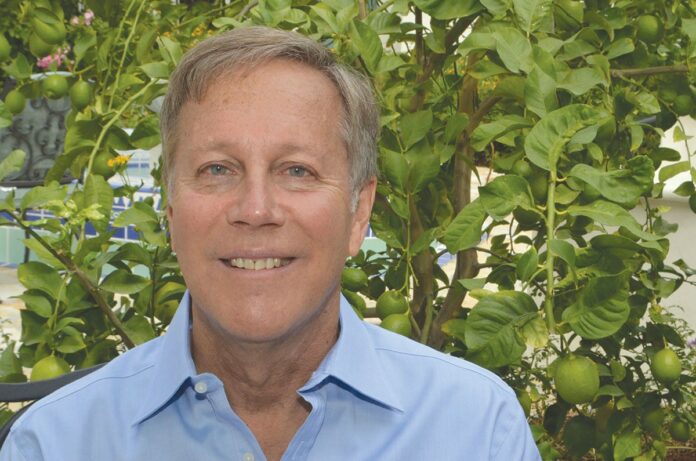
‘To call oneself a poet is a slightly pretentious thing,” says Dana Gioia, celebrated critic, poet, past chairman of the National Endowment for the Arts (NEA) and current poet laureate of California.

“I usually just call myself a writer, and then, when someone asks ‘What do you write?’ I have to say, ‘Well, I write mostly poems and essays about poetry.'”

“That,” Gioia adds with a laugh, “tends to be a conversation killer.”

The longtime Santa Rosa resident is the author of several books of poetry, including the recently published 99 Poems: New & Collected (Graywolf Press; $24). He’s also written the libretti for three operas, Nosferatu (2004), Tony Caruso’s Final Broadcast (2008) and The Three Feathers (2014).

As poet laureate, Gioia is staging poetry and music events all over California. On July 16, he hosts a multi-artist performance titled Poetry Matters at the Sonoma Valley Woman’s Club in the town of Sonoma, featuring some of his own poetry, as well as performances by local poets, musicians and actors.

The purpose, he says, is to spread the news that beautiful words, whether recited or sung, should be a part of everyone’s life, one way or another.

“There are an enormous number of ways in which a poet can create a life for themselves,” Gioia says. “In our society, usually, it now involves some
kind of activism, which is to
say ‘active involvement’ in their own communities.”

One thing a life devoted to poetry should not have to be, Gioia insists, is lonely.

“I don’t believe that most poetry is an affair of infinite solitude and isolation,” he says. “Some poets work that way. But for myself, I write poems, I write words for composers—in classical, jazz and pop genres—I teach, I talk about poetry in the media, and I give public appearances. And I would not enjoy a life in which I had to lose any of those things.”

He repeats the old joke that the only problem with being a poet is deciding what to do with the other 23 hours of your day.

“Most poets find other things to do aside from just writing poetry, some of them cultural, some of them civic,” he says.

He fills his non-writing time reminding people that the unique power of a good poem, well recited, is a thing worth praising and promoting.

“I’ve spoken to a thousand audiences, without exaggeration,” he says. “When I was chairman of the [NEA], I would give a talk two or three times a day, and I would almost always include a poem. The audiences loved it.”

The amazing thing, he says, isn’t that audiences appreciated hearing a good poem recited by one of poetry’s most significant cheerleaders.

“What amazed me,” he says, “is how often they’d tell me it was the first time they’d ever heard someone recite a poem out loud. That’s something that we’re eager to change.”

Sailing the Seas with Chamomile

0

As fans of Primus know, frontman Les Claypool has a thing for fishing (see: “John the Fisherman,” “Fish On,” et al.). Back in 2013 he even co-created a reality show about fishing. But as any ocean-going angler can attest, fishing is not always smooth sailing. Seasickness can rear its nauseating head, and ever since Claypool ruptured his inner ear while scuba diving years ago, he’s been susceptible to mal de mer and motion sickness in general.

Because he says he doesn’t like seasickness drugs, the musician took matters into his own hands and came up with a remedy: SeaPop. The soda is made with ingredients like ginger, chamomile and other stomach-calming herbs. Claypool calls it the world’s first soothing soda. It’s got a hint of vanilla and cane sugar, so it goes down easily. It’s sweet, but finishes with a pleasing, slightly bitter quality that I attribute to the herbs. I like it.

SeaPop isn’t cheap; a single bottle goes for $2.89. But if it helps ease a churning stomach on land or sea, it’s money well spent. Get it at Andy’s Market in Sebastopol, Petaluma Market, Bohemian Market in Occidental and Sunshine Coffee Roasters in San Rafael, and go to seapop.com for more info.

(Pro tip: For an extra calming effect, try pouring it over ice with some rum or vodka.)

Botanical Buzz

0

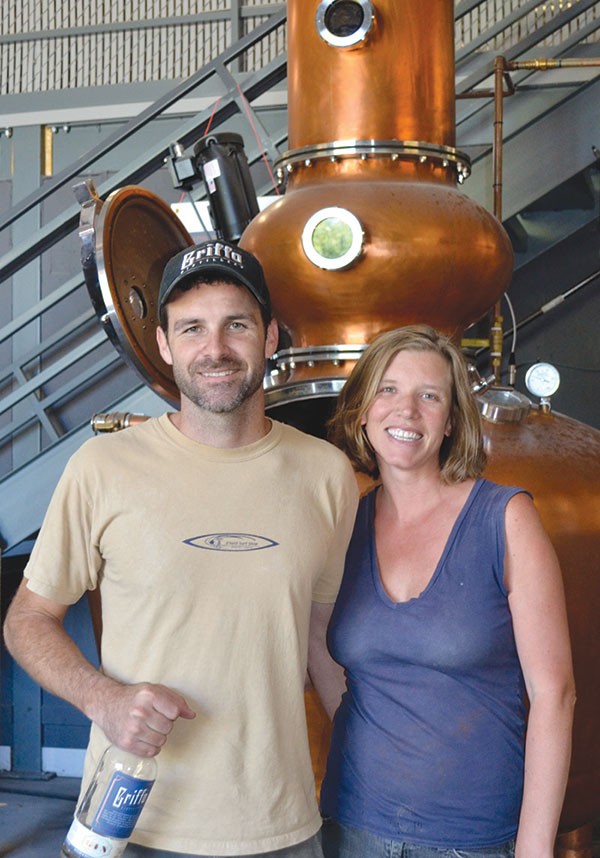
Among the buzzwords in craft spirits, a very buzzy category of late, is “London-style” craft gin. It’s more than just a marketing tag, according to Griffo Distillery’s Michael Griffo.

“It’s harder to do London-style,” Griffo says above the roar of the grain mill in the Petaluma distillery that he opened in 2015 with his wife, Jennifer, who is standing on a ladder, banging away on a hopper so that the milled rye doesn’t stick in the chute. The Griffos don’t seem to mind doing things the hard way.

To make London-style, Griffo explains, herbs and citrus are infused during the distillation process, instead of being added later and separately. During a three-year period of recipe experimentation, they tried it the other way but found that the aromas and flavors remained distinct, and the gin was not as complex as they wanted.

They also had to decide which method of infusion they preferred: the botanicals may be dangled in the path of the alcohol vapors, steeped like tea inside a bag, or left to swirl randomly in the copper still. Choosing the latter, Griffo says, gives each aroma and flavor “equal opportunity” for extraction.

Griffo’s Scott Street gin ($35), named for the industrial stretch of road they share with several craft breweries, is made with organic, non-GMO corn, which they feel makes a softer, sweeter spirit than other grains. Opting for organic ingredients wasn’t necessarily a philosophical move, says Griffo. “The organic stuff tasted far better.”

They can’t call the gin organic because two of the 10 botanicals are wild-harvested, like the Meyer lemons rounded up from friends’ backyard trees when they do a gin run. Juniper berries from the local landscaping, however, didn’t compare to the Croatian version. To hit just the right notes for their heady, juniper-forward gin, which was recently awarded a gold at the 2016 San Francisco World Spirits Competition, they tried dozens of sources. Even the qualities of coriander seed vary, Jennifer Griffo explains after milling the rye, so they settled on a coriander that’s 10 times more expensive than what you get in the store.

Standing in an empty side room that will be their tasting room in a month or two, Griffo says that such obsessive attention to their process, as well as the transparency of their operation, is essential to the business. “I think it’s an extension of the farm-to-table movement,” Jennifer Griffo says of craft spirits. “People care about what they are consuming.”

Griffo Distillery, 1320 Scott St., Petaluma. Tasting room slated to open in late summer. 707.879.8755.

Celebrate Halloween in July with Isaac Rother & the Phantoms

10999728_858139314279057_6073908078531655990_o
Can’t wait until October to have a Halloween party? Neither can Los Angeles garage rockers Isaac Rother & The Phantoms, who roll into Santa Rosa on Wednesday, July 13, for a spooktacular show that kicks off their ‘Haunting the West Coast’ summer tour. Specializing in a throwback ’60s sound akin to Bo Diddley and Screaming Jay Hawkins, Rother’s larger-than-life onstage personality perfectly matches the group’s off-the-wall punk rock aesthetics.
Joining the Phantoms on July 13 are Oakland-based indie rock innovators O.C.D and Santa Rosa’s gleefully experimental Secret Cat. Boys and Ghouls of all ages are invited to dress up and enjoy Halloween in July on Wednesday, July 13, at Atlas Coffee Company, 300 South A St, Suite 4, Santa Rosa. 7pm. $5. Get a preview of Isaac Rother & the Phantoms’ unspeakable horror below.

2016 NorBays Music Awards Voting Is Open

0

bohemiannorbayfinaltwolayercopy
Each year since 2005, the NorBays have recognized the best bands of the North Bay, with voting open to the public and gold-record awards presented to winners. We’re back this year, with a free outdoor awards ceremony planned and a new category. Voting is now open for the 2016 NorBays.
Before you join us for the awards show live in Juilliard Park in Santa Rosa on Sunday, Aug. 14, vote on categories including Blues/R&B, Country/Americana, DJ, Folk/Acoustic, Hip-Hop/Electronic, Indie/Punk, Jazz, Rock, and Reggae. This year we also added a best Promoter category.
With this write-in ballot, you will help choose the winner. Enter your favorite local band from Sonoma, Napa or Marin Counties in each category. Winners will be announced in the Aug.10 issue.
Voting ends Monday, Aug.8. at 12pm.

Watch the Music Video for Emily Jane White’s “Pallid Eyes”

0

[youtube]https://www.youtube.com/watch?v=jj97A4WeSvU[/youtube]
Fort Bragg native Emily Jane White’s long awaited album, They Moved in Shadow All Together, is finally getting an official release this Friday, July 8. We’ve already previewed the album’s first single, “Frozen Garden,” and now White unveils the music video for the album’s second single, “Pallid Eyes.”
Featuring a hypnotic acoustic riff and White’s ethereal voice, the song builds on “Frozen Garden” with a mysterious narrative and haunting melodies. And the video, shot in washed-out greys by director and editor Dan Jenkins, moodily captures the song’s message of longing and languishing.
White is currently on tour supporting the forthcoming album, click here for updates on her upcoming shows.

July 8: ‘Dream’ Comes True in Santa Rosa

0

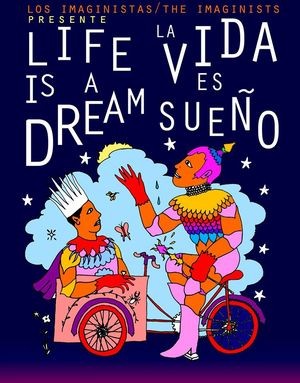
A summer tradition that’s eight years strong, local theater company the Imaginists take to their bicycles and pedal to several Santa Rosa parks to present free, bilingual performances in the annual Art Is Medicine tour. This year, the group is presenting a modern and daring take on Pedro Calderón de la Barca’s classic play La vida Es Sueño (“Life Is a Dream”). Kicking off the tour this weekend, the Imaginists invite the public to a fundraiser event on Friday, July 8, before they perform at Juilliard Park on
July 9 and Howarth Park on July 10, and other dates this summer. The fundraiser happens at 461 Sebastopol Ave., Santa Rosa. 7pm. $5–$25. 707.528.7554.

July 9: Trad Jazz in Sonoma

0

When Dixieland and ragtime jazz fans talk about their preferred genre, they call it “trad jazz,” short for traditional. If you’re a trad fan, then this weekend’s Wine & Dixieland Jazz Festival is your ticket to old-time fun in a laidback setting. Hit the lawns around Cline Cellars to hear Bay Area bands like Beyond Salvation, Devil Mountain Jazz Band, Jambalaya Big Swing Band and the Royal Society Jazz Orchestra among others. There’s food, wine and beer on hand, though you can bring your own picnic as well. Spend the afternoon getting jazzy on Saturday, July 9, at Cline Cellars, 24737 Arnold Drive, Sonoma. 11am to 6pm. $40–$45. 707.940.4025.

Just Say Slow

The architects and defenders of Proposition 64, the upcoming statewide referendum that would legalize adult cannabis use in California, say that they've gone to great lengths to address concerns expressed by the medical-cannabis community, which is split on the question of adult legalization. "We are neutral with concerns, and leaning toward 'oppose,'" says Hezekiah Allen, chair and executive director of...

Donkeys for Dope

Meeting in Orlando on Saturday, ahead of the Democratic National Convention later this month, the party's platform-drafting committee dropped a moderate marijuana plank it had adopted only days earlier and replaced it with language calling for rescheduling pot and creating "a reasoned pathway to future legalization." Bernie Sanders supporters had pushed earlier for firm legalization language, but had been turned...

Power of Poetry

'To call oneself a poet is a slightly pretentious thing," says Dana Gioia, celebrated critic, poet, past chairman of the National Endowment for the Arts (NEA) and current poet laureate of California. "I usually just call myself a writer, and then, when someone asks 'What do you write?' I have to say, 'Well, I write mostly poems and essays about...

Sailing the Seas with Chamomile

As fans of Primus know, frontman Les Claypool has a thing for fishing (see: "John the Fisherman," "Fish On," et al.). Back in 2013 he even co-created a reality show about fishing. But as any ocean-going angler can attest, fishing is not always smooth sailing. Seasickness can rear its nauseating head, and ever since Claypool ruptured his inner ear...

Botanical Buzz

Among the buzzwords in craft spirits, a very buzzy category of late, is "London-style" craft gin. It's more than just a marketing tag, according to Griffo Distillery's Michael Griffo. "It's harder to do London-style," Griffo says above the roar of the grain mill in the Petaluma distillery that he opened in 2015 with his wife, Jennifer, who is standing on...

Celebrate Halloween in July with Isaac Rother & the Phantoms

Can't wait until October to have a Halloween party? Neither can Los Angeles garage rockers Isaac Rother & The Phantoms, who roll into Santa Rosa on Wednesday, July 13, for a spooktacular show that kicks off their 'Haunting the West Coast' summer tour. Specializing in a throwback '60s sound akin to Bo Diddley and Screaming Jay Hawkins, Rother's larger-than-life onstage personality perfectly...

2016 NorBays Music Awards Voting Is Open

Each year since 2005, the NorBays have recognized the best bands of the North Bay, with voting open to the public and gold-record awards presented to winners. We're back this year, with a free outdoor awards ceremony planned and a new category. Voting is now open for the 2016 NorBays. Before you join us for the awards show live in Juilliard...

Watch the Music Video for Emily Jane White’s “Pallid Eyes”

https://www.youtube.com/watch?v=jj97A4WeSvU Fort Bragg native Emily Jane White's long awaited album, They Moved in Shadow All Together, is finally getting an official release this Friday, July 8. We've already previewed the album's first single, "Frozen Garden," and now White unveils the music video for the album's second single, "Pallid Eyes." Featuring a hypnotic acoustic riff and White's ethereal voice, the song builds on...

July 8: ‘Dream’ Comes True in Santa Rosa

A summer tradition that’s eight years strong, local theater company the Imaginists take to their bicycles and pedal to several Santa Rosa parks to present free, bilingual performances in the annual Art Is Medicine tour. This year, the group is presenting a modern and daring take on Pedro Calderón de la Barca’s classic play La vida Es Sueño (“Life...

July 9: Trad Jazz in Sonoma

When Dixieland and ragtime jazz fans talk about their preferred genre, they call it “trad jazz,” short for traditional. If you’re a trad fan, then this weekend’s Wine & Dixieland Jazz Festival is your ticket to old-time fun in a laidback setting. Hit the lawns around Cline Cellars to hear Bay Area bands like Beyond Salvation, Devil Mountain Jazz...
11,084FansLike
4,606FollowersFollow
6,928FollowersFollow