July 9: Stories That Pop in Napa

0

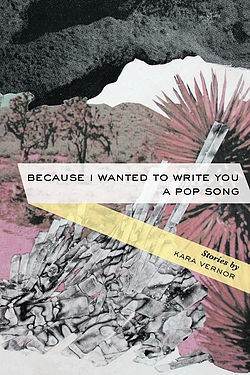
Known in the North Bay as a co-host of Petaluma’s monthly Get Lit reading and open mic events, Napa-based writer Kara Vernor’s fiction and nonfiction works have been published in literary reviews and collections from Los Angeles to Stockholm, and she is renowned for her incisive prose and intriguing characters. Last month, Split Lip Press published Vernor’s new chapbook of 21 stories, Because I Wanted to Write You a Pop Song, and she reads from the book on Saturday, July 9, at Napa Bookmine, 964 Pearl St., Napa. 6pm. 707.733.3199.

July 10: Hand Crafted in Petaluma

0

With an emphasis on local and artisanal, the Petaluma Art & Garden Festival turns 15 years old this summer with a street party that brings in over 140 vendors offering their art, handmade crafts, garden decorations and more. Aside from the unique wares, live music keeps the crowds moving with performances by local favorites the Soul Section, Foxes in the Henhouse and Hot Grubb. For the kids, games and activities are on hand, and for the adults, tasting packages are available for anyone who wants to indulge in local brews and wine, while the area’s best restaurants serve up eclectic culinary options. The art and garden goods go on display Sunday, July 10, on Kentucky and Fourth streets in downtown Petaluma. 11am to 5pm. Free admission. 707.762.9348.

Barlow for Sale

0

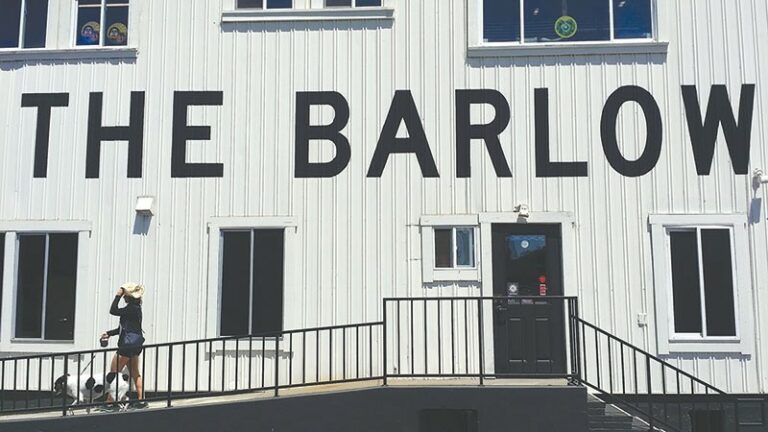
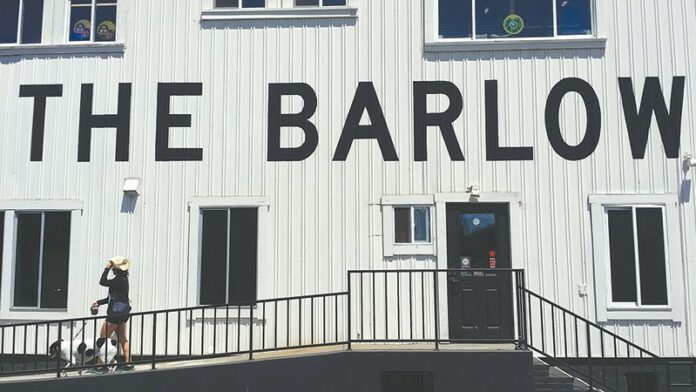
Zapolski Real Estate is in contract to purchase Sebastopol’s Barlow center for an undisclosed sum.

Zapolski is the developer behind several downtown Napa projects, including the First Street Napa outdoor retail development. The company also has several projects in North Carolina.
Zapolski spokesman Andrew Mazotti says that, while the company doesn’t have a “hard deposit” on the Barlow deal, he sees great potential to take the retail space “to the next level.” He says Zapolski does not want to recreate Napa in Sebastopol, but hopes instead to build on the community of local retailers and makers and keep the Barlow a “unique destination.”

The company had been in contract to buy the property this past fall but dropped out.

He adds that he’d like to expand marketing activities and increase the length of visitors’ stay with more public spaces, art and high-energy events. He noted that Wolfard Glassblowing has opted not to renew its lease on a 6,000-square-foot building, and that space might open possibilities for a new attraction. It is now vacant.

Mazotti was neutral on the construction of a hotel on the site. Barlow developer Barney Aldridge had entitlements to build a hotel, but the project never materialized. Mazotti hasn’t ruled out bringing in national retailers, but says any new businesses would have to comply with the city’s restrictions on so-called formula stores.

The Barlow opened in 2013 and attracted high-profile tenants like Taylor Maid Farms coffee, Zazu Kitchen and Farm, and Kosta Browne Winery with an idea of showcasing the best food, drink and artisans of the West County.

Mazotti will not say when escrow closes, but says that it’s “soon.”

“We’re optimistic about it,” he adds.

Aldridge did not want to discuss the deal until it was formally in escrow.

Meanwhile, Barlow tenants unhappy with fees they’ve been charged continue to negotiate with Aldridge. Emma Mann, owner of the Soap Cauldron, heads a nonprofit group of tenants who have organized to remedy what they see as excessive common area and management fees that don’t meet industry standards. The group commissioned an audit of the fees for the years 2013–15, which, Mann says, reveals that they were overcharged. “We feel like we’ve made every effort to amicably solve this,” she says.

Bill Carle, a Santa Rosa attorney representing the group of 22 tenants, says he is hopeful that a negotiated settlement with management will be reached in the next few weeks. He would not discuss the specifics of the tenants’ grievances.

Carle does not know how the sale would impact the tenants’ claims until he sees a new lease, but Mann believes the tenants could insert a claim into escrow in an effort to recoup what she says the tenants were overcharged. She would not say what that number is.

According to Mazotti, the tenants’ grievances do not affect Zapolski Real Estate’s decision to purchase the property. “It has nothing to do with us,” he says

If the sale goes through, Mazotti says he’s looking to “start on the right foot” with tenants.

Bitter Is Better

0

At an airport salad bar in Rome recently, I filled a plate with leaves.

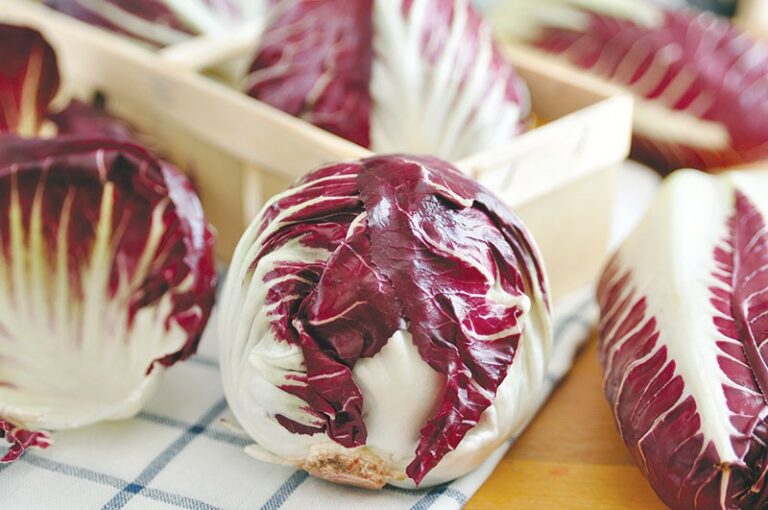
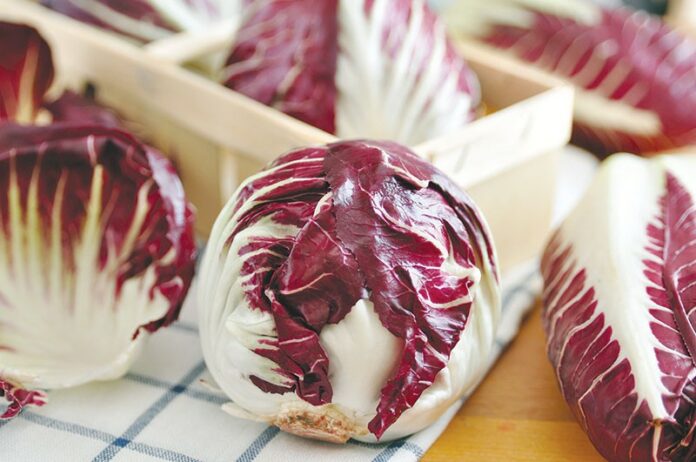
It was a basic cafeteria salad bar, one that, in the States, would probably be dominated by a large bin of iceberg lettuce laced with carrot shavings. But instead of lettuce, the leaves were chopped escarole and radicchio. Dressed with oil and vinegar, they were crisp and watery. And they were bitter, a taste I have been coming to appreciate.

The Italians are ahead of the curve when it comes to eating chicory, the family of bitter-leafed plants that also includes endive and dandelion. At various stores and markets on my trip, I picked up several seed packets of different chicories, like the stately, thick-stemmed Catalogna that looks like a dandelion on steroids, or the Rossa di Treviso, a leafy radicchio shaped more like romaine than the typical tight radicchio head. These and several other equally interesting varieties would become the basis, when I returned home, of the chicory project.

The chicory project, which also includes Italian chicories ordered from GourmetSeed.com, is now fully underway at an area farm. We are investigating which varieties do well in our climate, while playing with different ways of serving it that might appeal to the locals.

This last part is kind of a tall order, as we are programmed to reject bitterness from an early age. Newborns will scowl at the taste, and for good reason: most toxic substances are bitter. Our default status is to avoid bitter flavors until we learn otherwise. Like, say, when we learn about beer, or mixed drinks that contain bitters. Or coffee. Or chocolate. Or something charred on the grill.

The American palate is catching on to the dark flavor of bitter. Dark chocolate is increasingly popular. Dark-roasted coffee is all the rage. But how dark is too dark? We all have our own comfort zone. I personally think dark-roasted coffee tastes burnt, and so I always order the lightest roast. Similarly, I don’t like my food blackened on the grill.

Many bitter flavors from plants come from the presence of glucosinolates, and other plant defense compounds, that are toxic to insects and worms and other hungry critters. But at the levels we humans consume, these molecules are not dangerous, and are showing promise in actually preventing a variety of diseases. The bitter leaves tend to be stacked with other nutrients as well, like folate, and various antioxidants, along with readily accessible forms of minerals.

The best way to deal with these and other bitter foods is to embrace them, head on, and celebrate them for what they are. There are all kinds of interesting recipes out there for braised radicchio, wilted escarole, endive torte and others varieties. Enthusiasts of cooked chicory praise how it mellows the flavor and how it adds to sauces.

But after adapting my palate to the crisp texture of the raw stuff, I have no interest in soggy chicory. And I don’t want to mellow the flavor anyway, because I’m into bitter. I’ve acquired the taste, and I can go there by myself without training wheels. I’m a chicory grownup.

Edgy

0

Prince Hamlet is a moody death-metal addict. The jealous monarch from The Winter’s Tale is a too-passionate ruler in imperial China. And the ’70s musical The Wiz is, well, The Wiz.

In what turns out to be Oregon Shakespeare Festival’s most daring and inventive summer season in years, the outdoor Allen Elizabethan Theatre has now opened with two supremely bold, thoroughly satisfying takes on William Shakespeare—and a perfectly pleasant production of The Wiz which, in any other year, might have actually felt like the risky choice.

Helmed by director Robert O’Hara, the revolutionary 1975 adaptation of the Wizard of Oz has been given a respectful, often ingenious staging, not with elaborate sets and special effects, but with brilliant costumes and oversized performances. As Dorothy, Ashley Kelley is all kinds of adorable, and she leads an impressive cast of singers and actors, fully capturing the up-from-the-streets inspiration sewn into every beat of the groundbreakingly upbeat show.

Rating (out of 5): ★★★★

In comparison, Lisa Peterson’s freaky, art-house horror show of a Hamlet is like setting fire to an elementary school. Which is to say it’s brilliant. Danforth Comins’ angsty and angry prince, haunted by his dead father, often carries an electric guitar, “shadowed” by the ever-watching form of Scott Kelly, the guitarist from metal band Neurosis. The introduction of metal music is nothing short of ingenious, and the cast’s commitment to the creepy beats results in a Hamlet that is alternately thrilling, disturbing and heartbreaking.

★★★★★

Standing somewhere in between these two shows is Desdemona Chiang’s surprisingly effective staging of Shakespeare’s Winter’s Tale. Almost postmodern in its structure, the story has been transported to China, where the jealous king Leontes (Eric Steinberg, wonderful), becomes convinced that his wife, the devoted queen Hermione (Amy Kim Waschke, fierce and warm), has been unfaithful. The resulting series of misfortunes move the tale to Bohemia, here imagined as a kind of steampunk version of the Old West.

As Leontes’ abandoned daughter Perdita (Cindy Im, breathtakingly good) comes to adulthood in a foreign country, the forces of fate and soft-heartedness conspire to bring two broken families back together again. Rarely has The Winter’s Tale made so much emotional sense, or been so devastatingly, lovingly and magically transformed into what we imagine Shakespeare, late in his life, intended: a thing of sweet, life-affirming beauty.

★★★★½

For information on all currently running shows visit osfashland.org.

Letters to the Editor: July 6, 2016

Counting Votes

Regarding Kirk Weir’s letter (June 29) that says “every Democrat” voted against the two bills: Please note that not every Democratic senator voted against the two weak Republican bills offered in the Senate. Joe Manchin and Joe Donnelly, both Democrats, backed John Cornyn’s proposal that would still allow a terrorist to buy a gun after a scant 72-hour waiting period. Three Republicans voted against the bill. Not a clever or craven response on my part, just a true one. Also, and more to the point, their votes did count, so they are important. Finally, I can only assume the writer is focused on the two Republican bills concerning gun legislation, as it is not mentioned in the letter. I’ll patiently and politely wait for a fact-based response.

San Rafael

Bernie for Hillary

If Bernie Sanders says he’s voting for Clinton, I would think that it would be an acceptable—and recommended—path for his followers.

Via Bohemian.com

It Ain’t Over

How can you publish Casey Dobbert’s story (“Feminist Fatale,” June 29) stating that the presidential race is down to Trump and Shillary? Sonoma County only started counting mail-in and provisional ballots June 30. California’s primary will not be certified until July 8, and even then there may be election fraud left to discover and resolve. Please be different from mainstream media and give Bernie a chance.

Via Bohemian.com

Equally Unfit

Hillary is certainly the equal of many men that have been president—such as Tricky Dick Nixon. Hillary’s lack of fitness for the presidency comes from the fact that she is not the equal of any of the good women who would have well served in the highest office in the land or any other position of trust and responsibility. And let us be fair-minded in recognizing that Hillary is as equally unfit as men all too often have been in any position.

Via Bohemian.com

Dept. of Corrections

In “Bench Mark” (June 29), we got County Bench Kitchen and Bar chef Bruce Frieseke’s name wrong. He is also the pastry chef. We regret the error.

Write to us at le*****@******an.com.

Storied Man

0

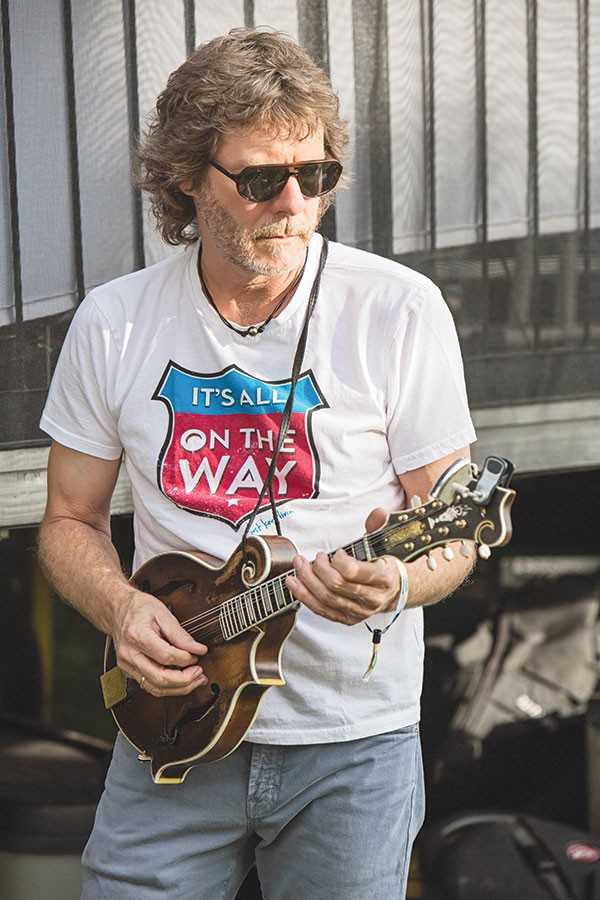
In 2010, the Kentucky Legislature unanimously passed legislation that named native son and bluegrass mandolin player Sam Bush the “Father of Newgrass.”

A spinoff of traditional bluegrass, newgrass is highlighted by a progressive sound that mixes in jazz and rock jams. Bush is considered a pioneer of the genre, an accomplished instrumentalist and vocalist with a 45-year career. This year, for the first time, he’s sharing a more personal side on his new solo album,

Storyman.

Bush and his band join the David Grisman Bluegrass Experience and the Jeff Austin Band, collectively called the Mando Kings on July 10 for the Green Music Center Bluegrass Festival in Rohnert Park.

“It was time to say something,” Bush says of his new record. “And for me it was important that these songs all seemed to go together.”

Almost all the songs on Storyman were co-written with musical compatriots like Emmylou Harris and Guy Clark, though the lyrics came from an idea of Bush’s or a story from his life. “Being known as an instrumentalist who also sings, I finally had stories to tell,” Bush says.

Perfect examples are songs like “Transcendental Meditation Blues,” which is about how Bush used to ride the Greyhound bus to see his now-wife Lynn, or “Bowling Green,” named after Bush’s hometown and inspired by his family.

Bush also welcomes guest performers on the album, including Harris, who sings on the honky-tonk ditty “Handmics Killed Country Music.” Alison Krauss also shows up, singing on “Lefty’s Song,” which was originally written in a series of letters between Bush and songwriter Steven Brines in the 1970s.

Bush is thrilled to share the upcoming GMC bluegrass festival with Grisman, known to his friends and fans as Dawg, and Jeff Austin, best known for his work in Yonder Mountain String Band.

In fact, Bush and Grisman have been friends since meeting at the 1965 Roanoke Bluegrass Festival in Virginia. Bush was 13 years old. “I got in a jam session, and all of a sudden somebody held out a beautiful Gibson F5 mandolin, and this voice said, ‘Hey, man, play a good one,’ and it was Grisman. We’ve just grown closer over the years.”

The two made a record together in 2003, Hold On, We’re Strummin, which includes an acoustic cover of “Hold On, I’m Comin’,” by soul duo Sam & Dave.

“Nobody knows bluegrass mandolin better than David,” says Bush. “When David and I get together, there’s going to be some pickin’.”

Pot’s Shot

A broadly backed initiative to legalize marijuana in the country’s most populous state will be on the ballot in November. The California secretary of state’s office made it official last week, certifying that a random sample of more than 600,000 signatures turned in showed there were enough valid signatures to qualify the measure.

“Today marks a fresh start for California, as we prepare to replace the costly, harmful and ineffective system of prohibition with a safe, legal and responsible adult-use marijuana system that gets it right and completely pays for itself,” says Jason Kinney, spokesperson for the Adult Use of Marijuana Act (AUMA).

California joins Maine and Nevada among states that have qualified marijuana-legalization initiatives for the fall ballot. In two more states—Arizona and Massachusetts—legalization campaigns are overcoming final hurdles and are almost certain to join them, but a valiant effort in Michigan faces an uphill battle, forced to rely on the courts to overturn a new state law and unfavorable election board rulings.

Pot is already legal in four states, voted in by residents in Colorado and Washington in 2012, and Alaska and Oregon in 2014. Washington, D.C., approved possession and cultivation, but not a legal marijuana market, that same year.

Seeing more states go green in 2016 is one thing, but California is the Big Enchilada. With a population of 38 million, its market is more than twice the size of all the legal pot states combined, and it represents more than 10 percent of the entire country. What is currently a legal pot industry generating hundreds of millions of dollars in sales will easily tick over into multibillion dollar territory once California joins in.

And it looks like that’s likely to happen. A Probolsky Research poll in February had support for legalization at 59.6 percent. A Public Policy Institute of California poll in May had support at 55 percent, but at 60 percent among likely voters.

Poll numbers like these are encouraging for proponents, but skeptics can point to the failed Proposition 19 effort in 2010, which came up short with
47 percent of the vote after polling above 50 percent for months that year.

Since Proposition 19 failed, marijuana legalization has now won in every state where it’s been on the ballot, and the whole national atmosphere around the issue seems to have relaxed. And unlike 2010, this is a presidential election year, with higher turnout, especially among young voters, than is seen in off-year elections. The omens are good.

Phillip Smith is editor of the AlterNet Drug Reporter and author of the Drug War Chronicle.

Lemon Bomb

0

Before we get to the wine of the week, let’s talk about the word of the week. Often cheerfully misused to describe a welcome abundance of wonderful things, “plethora” is better used to mean a not necessarily useful overabundance. Let’s use “plethora” in a sentence: “In wine aisles today, shoppers are faced with a plethora of choices in Chardonnay, much of it pretty bland stuff.”

But bland may be best for summer Chardonnay—it’s going to be served too cold anyway, straight from the ice tub it shares with the beer, right? In spite of it all, I found one wine in this week’s Chardonnay lineup that got my attention. I’ll call it wine of the week: Jordan 2014 Russian River Valley Chardonnay ($32).

Previously in “Swirl,” I’ve found Jordan Chardonnay to be frankly smoky, oaky, but sizzling with lemon-like acidity—and a pretty good pairing with meatless Thanksgiving fare and other food. The 2014 does not lack for lumber or lemon, and just hints at grilled bread, butter and flaky pastry under only slightly toasty, woody notes. But the lemon here is Meyer, not Eureka, a small distinction that grows larger on the long, tangy and rich finish.

Many a Chardonnay that’s only seen 30 percent malolactic fermentation—the bacterial process that creates rich, buttery flavor in Chardonnay—retains a fresh, apple juice flavor. Appealing as that may sound, it’s often flat and uninspiring to my tastes. Not so with this edition of Jordan Chardonnay. The bit of baked apple flavor it does have is awash in bright Meyer lemon all the way down the long but palate-awakening finish.

The Jordan style is no accident, of course, as I learned in a conversation last year with winemaker Rob Davis. Fresh out of winemaking school at UC Davis when he was hired by the Jordans in 1976, Davis was taken under wing by legendary wine consultant André Tchelistcheff. Traveling through France every year with Tchelistcheff, or carrying what he calls the “André card” of introduction, Davis met with winemakers and developed a palate for European wines.

When he tasted his first white Burgundy (which is almost always made from 100 percent Chardonnay), Davis said to himself, “Holy smokes, where’s the acid coming from in this?” While California Chardonnay had attracted attention by the late 1970s, the style was fat and oaky, not lean and acidic. “And the question was,” says Davis, “which one did I like better? As successful as the Chardonnays were—and they were doing very well—my palate was more in Burgundy.”

Surf Roots

0

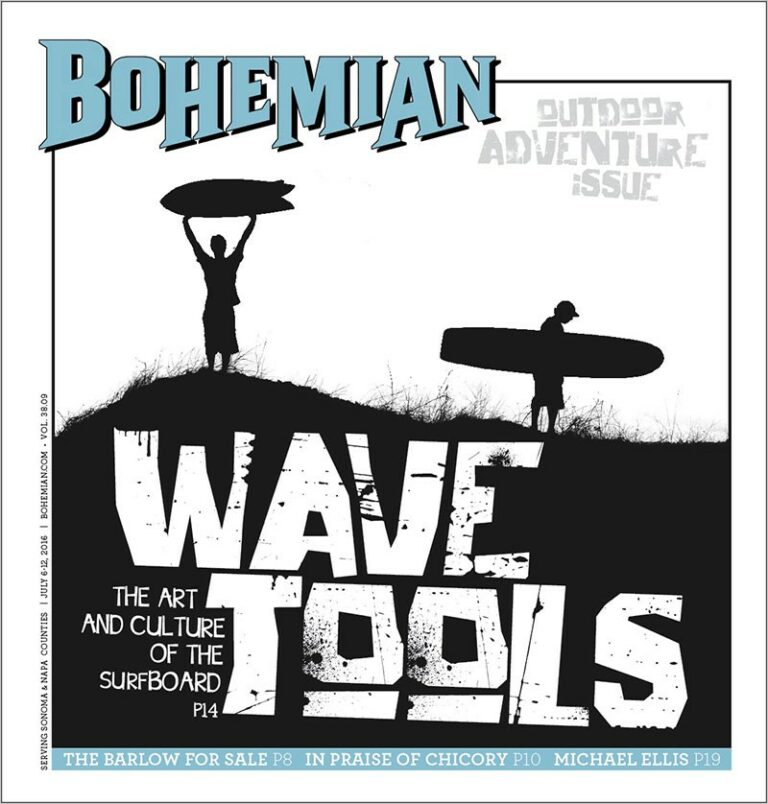
To most eyes, the surfboard is an unremarkable inanimate object, a buoyant plank used for sliding down the face of a wave. But that simple, minimalist design contains worlds of complexity and stories if you care to look. Richard Kenvin cares to look.

Kenvin is a lifelong surfer from San Diego with a deep passion for surfboard design and history. His show

Surf Craft: The Art and Design of Board Riding just opened at the Sonoma Valley Museum of Art. The show, which features a world-class collection of surfboards and wave-riding devices that span the 1940s to 1970s, reveals the hidden genealogy of modern surfboard design. For surfers, it’s the equivalent of a history buff being able to see and touch a Wright brothers’ plane or a baseball fan getting to hold a bat Ty Cobb used. It’s like opening a vault to the past, but with signposts that point to the future.

The exhibit also features a great lineup of speakers and workshops on board design and surfing from some of the sports superstars. And while the show is a feast for surfers with an interest in the roots of their sport, the appeal is much broader. The boards that hang on the wall are crafted for the function of surfing, but the forms are elegant and simple, with flowing lines and carefully turned edges and rails.

“People don’t think of surfboards as art, but some of them are positively beautiful,” says museum executive director Linda Cano. “The appeal for me is that surfboards are so accessible, and part of our goal [at the museum] is to broaden our demographic.”

With a film, hands-on demonstrations, lectures and the boards themselves, the show defies notions of what makes for a museum exhibit, Cano says.

That mix of form, function and beauty lies at the heart of Kenvin’s exploration of the surfboard’s DNA. He has merged his study of surfboard pioneer Bob Simmons with a fascination for a Japanese philosophy called mingei, which translates as “art of the people.”

The first Surf Craft exhibit was at the Mingei International Museum
in San Diego in 2012. It was
through that show, and the book
The Unknown Craftsman by Soetsu Yanagi which he picked up in the museum gift shop, that Kenvin discovered that the seemingly simple but complex surfboard designs of Simmons married well with the aesthetic vision of mingei and Yanagi.

Surfboards of the pre-commercial 1940s to 1970s era are utilitarian works of beauty and what Kenvin calls “complex minimalism” embodied in mingei. In his book Surf Craft, written to accompany the exhibit, Kenvin explains Yanagi’s design standard: “Handcrafts are revered as a sacred facet of human life, but they also serve as the starting point for good design, the best defense against the potentially dehumanizing effects of mass production.”

As Kenvin, a soft-spoken man with thick glasses and a surfer drawl, went deeper down the rabbit hole of surfboard history, he discovered ancient Polynesian surfboard designs, the genesis of all modern surfboards, could also be seen through the mingei lens.

“All significant board designs of the modern era bear an ancestral link to one or more of these traditional boards,” he writes in Surf Craft. “In many cases, the historic boards contain design secrets that modern surfboard designers are only now beginning to understand.”

Simmons may or may not have been aware of Polynesian board design, but his boards have proved to be a revelation for modern surfboard shapers and surfers like Kenvin. The progression that grew from Simmons has echoes of other utilitarian works of beauty like the flowing lines of furniture designer (and Simmons contemporary) Charles Eames.

“To me it has universal appeal,” Kenvin says as he walks around the museum barefoot, working to ready the space for the July 2 opening. “I hope people get a different perspective on surfboards and surfboard design.”

Simmons is credited with pioneering modern surfboard design through his blunt-tailed “planning hulls.” He died in a surfing accident in San Diego in 1954 at age 35, but left a legacy of innovation that drew on a careful study of mathematics, hydrodynamics and aeronautics.

“There was no precedent for what he was doing,” Kenvin says.

[page]

Simmons’ designs lay dormant after his death, but were rediscovered in the last 15 years by surfers like Kenvin. Kenvin’s second life as museum curator grew out of a documentary film project about Simmons that he’s been laboring on called Hydrodynamica.

As more of the surfing world discovers Simmons and Polynesian surfboard design it marks a return to the forms and simple beauty of the surfboard. It’s become an engrossing life’s work for Kenvin. The only downside is he doesn’t surf as much anymore.

“The more I work with surfboards, the less I surf,” he says grimly as he notes the run of south swell he’s missing at home in San Diego.

Talk about history coming full circle—the original Bolinas Surf Shop, which opened in 1963, is now hosting an exhibit devoted to the history of surfing in Bolinas. That history is largely shot through with the efforts and presence of Eric “Buzz” Besozzi who made North Bay history when he opened the shop; it was the first of its kind north of the Golden Gate Bridge. Buzz now runs a screen-printing clothing shop just a few doors down from the museum on Wharf Road, not far from the town’s iconic beach, where you can still make out a “Naked Surfing Area” street sign and where rare is the day that someone’s not out there in the surf.

Spread between two Bolinas Museum buildings, the show features numerous boards and silk-screens, lots of stickers and historical photos and a cool period film that shows surfers riding the waves in the tiny coastal Marin town in the 1960s.

The show—SeaPeople:
The Bolinas Surf Shop, Est 1963
—provides a great sense of the cottage industry that Buzz created and the spectrum of cultural offerings that sprang from the surf. T-shirt prints and skateboard decks line the walls, and there’s an acoustic guitar whose back is screen-printed with a wave.

As the story goes, Buzz started his board-making business in San Anselmo before moving to Bolinas to shape boards and glass them. The museum has gone to lengths to recreate the feel of the original surf shop, which is depicted via a large photo on the wall of the Coastal Marin Artists Gallery—the selfsame building that was once the Bolinas Surf Shop. There’s a braided sea-grass floor and longboards with “Boards by Buzz” identification, along with SeaPeople surfboards and Seaflex skateboards from the 1960s, ’70s and ’80s. They also made kayaks here and did the glassing in another nearby building that’s now the Bolinas Laundromat. Fritz the Cat pops up all over the exhibit, carrying a round, black bomb with a fizzling fuse.

Besides surf culture’s obvious impact on the emergence of skateboarding, the board-making enterprise spawned another of Buzz’s outlets for expression with the creation of so-called crinkle plaques, which use resin from the board-making process to create what look like oversized Shrinky Dinks that depict everyone from Chairman Mao to Jerry Garcia—and Jack O’Neill, inventor of the modern wetsuit. There’s even Buzz’s membership card with the United States Surfing Association, and all kinds of Buzz-provided bric-a-brac he’s collected over the years in Bolinas, cool old glass bottles and such.

The show is intertwined not just with the history of surfing in Bolinas, but the history of the town itself, which has, for example, fielded its own Bolinas Border Patrol in hopes of keeping the tourists, developers and curious journalists at bay. To that end, there are cool screen-prints of that “agency” on the wall, along with numerous others recognizable to locals, such as the Bo-Gas emblem.

But the overarching theme here is, of course, surfing, and one of the more hilarious boards on display is one called the Flying Feces. That board was shaped around the same time Bolinas was developing its sewer ponds up on the Big Mesa in an effort—successful—to keep the crap out of Bolinas Bay and the lagoon. If nothing else, the show demonstrates that despite what recent arrivistes might want to tell themselves, Bolinas hasn’t become a surf town—it’s always been a surf town.

July 9: Stories That Pop in Napa

Known in the North Bay as a co-host of Petaluma’s monthly Get Lit reading and open mic events, Napa-based writer Kara Vernor’s fiction and nonfiction works have been published in literary reviews and collections from Los Angeles to Stockholm, and she is renowned for her incisive prose and intriguing characters. Last month, Split Lip Press published Vernor’s new chapbook...

July 10: Hand Crafted in Petaluma

With an emphasis on local and artisanal, the Petaluma Art & Garden Festival turns 15 years old this summer with a street party that brings in over 140 vendors offering their art, handmade crafts, garden decorations and more. Aside from the unique wares, live music keeps the crowds moving with performances by local favorites the Soul Section, Foxes in...

Barlow for Sale

Zapolski Real Estate is in contract to purchase Sebastopol's Barlow center for an undisclosed sum. Zapolski is the developer behind several downtown Napa projects, including the First Street Napa outdoor retail development. The company also has several projects in North Carolina. Zapolski spokesman Andrew Mazotti says that, while the company doesn't have a "hard deposit" on the Barlow deal, he...

Bitter Is Better

At an airport salad bar in Rome recently, I filled a plate with leaves. It was a basic cafeteria salad bar, one that, in the States, would probably be dominated by a large bin of iceberg lettuce laced with carrot shavings. But instead of lettuce, the leaves were chopped escarole and radicchio. Dressed with oil and vinegar, they were crisp...

Edgy

Prince Hamlet is a moody death-metal addict. The jealous monarch from The Winter's Tale is a too-passionate ruler in imperial China. And the '70s musical The Wiz is, well, The Wiz. In what turns out to be Oregon Shakespeare Festival's most daring and inventive summer season in years, the outdoor Allen Elizabethan Theatre has now opened with two supremely bold,...

Letters to the Editor: July 6, 2016

Counting Votes Regarding Kirk Weir's letter (June 29) that says "every Democrat" voted against the two bills: Please note that not every Democratic senator voted against the two weak Republican bills offered in the Senate. Joe Manchin and Joe Donnelly, both Democrats, backed John Cornyn's proposal that would still allow a terrorist to buy a gun after a scant 72-hour...

Storied Man

In 2010, the Kentucky Legislature unanimously passed legislation that named native son and bluegrass mandolin player Sam Bush the "Father of Newgrass." A spinoff of traditional bluegrass, newgrass is highlighted by a progressive sound that mixes in jazz and rock jams. Bush is considered a pioneer of the genre, an accomplished instrumentalist and vocalist with a 45-year career. This year,...

Pot’s Shot

A broadly backed initiative to legalize marijuana in the country's most populous state will be on the ballot in November. The California secretary of state's office made it official last week, certifying that a random sample of more than 600,000 signatures turned in showed there were enough valid signatures to qualify the measure. "Today marks a fresh start for California,...

Lemon Bomb

Before we get to the wine of the week, let's talk about the word of the week. Often cheerfully misused to describe a welcome abundance of wonderful things, "plethora" is better used to mean a not necessarily useful overabundance. Let's use "plethora" in a sentence: "In wine aisles today, shoppers are faced with a plethora of choices in Chardonnay,...

Surf Roots

To most eyes, the surfboard is an unremarkable inanimate object, a buoyant plank used for sliding down the face of a wave. But that simple, minimalist design contains worlds of complexity and stories if you care to look. Richard Kenvin cares to look. Kenvin is a lifelong surfer from San Diego with a deep passion for surfboard design and history....
11,084FansLike
4,606FollowersFollow
6,928FollowersFollow