Of Rice and Mein

0

In spite of the culinary riches around Healdsburg’s town square, Asian cuisine is not well represented. Four-month-old old Persimmon on the Square helps fill that gap, albeit with mixed results.

The menu draws on several cuisines—Chinese, Korean, Vietnamese and Thai. There’s even a quasi-Hawaiian dish. Therein lies the problem. It’s difficult enough to master one cuisine. Adding others in the spirit of comprehensiveness usually results in mediocrity.

Starters are excellent. The shrimp and pork dumplings ($9), served with slices of watermelon radish in a shallow pool of spicy soy sauce, are plump, juicy and delicious. The bulging spring rolls ($10), loaded with rice noodles, julienned carrots and avocado, are good. I loved the poke salad ($16), fresh greens and sliced English cucumbers tossed with avocado and ahi in a yuzu-soy sauce vinaigrette. A sprinkling of caviar gives each bite a satisfying, briny pop.

Chef Danny Mai emigrated from Vietnam, and he remembers the flavors of his homeland well. The pho ($16) is a classic version of the noodle soup and served with a flourish: the aromatic, star-anise-spiked broth is poured from a silver pitcher over the noodles and thinly sliced brisket, cooking the raw beef in the process. Some of the beef remains on the chewy side, but the wonderful meatballs that also populate the bowl make up for that.

My favorite dish is the banh mi ($14), another Vietnamese standard. The contents of the lunch-only sandwich change daily, and on my visit it was grilled pork. The juicy, expertly charred pork is a great counterpoint to the tangy, crunchy pickled carrots and daikon radish.

Those are the highlights. Here’s the blooper reel. The Chinese chicken salad ($18) is more American than Chinese, but it’s got no identity here. Wanly dressed greens are paired with a few ragged hunks of sauteed chicken, as if they were tossed on as an afterthought.

The mapo tofu ($16) is a bigger disappointment. The dish is a classic of Sichuan cooking that’s known for the pleasing (to me) numbing heat of the peppercorns and the fiery chile sauce that lacquers the vegetables and tofu. Persimmon’s version has no detectable heat or Sichuan peppercorns. It’s bland, wok-fried vegetables and tofu. What it lacks in spiciness it makes up for with copious amounts of oil.

Service is well-meaning but amateur. Servers don’t remember who ordered what (“Who gets the chicken salad?”), and long waits ensue when the place is busy. When I complained about my insipid mapo tofu, my server said she’d pass my sentiments to the kitchen and then came back 10 minutes later to ask if I wanted the kitchen to redo it. Too late.

The restaurant is a good-looker. Asian art blends with modern lighting and fixtures to create a comfortable, urbane dining room. The small, open kitchen adds to the restaurant’s visual appeal. There are also a few small tables out front on the sidewalk.

There’s a well-chosen wine list. The sparkling wine and Riesling on the menu are ideal matches for Mai’s menu. Pick the right items, and you’ll enjoy this little pan-Asian outpost in an area crowded with pizza, Mexican food and Mediterranean cuisine.

Real Money

0

What is Votesane and why did the Virginia-based political action committee recenty contribute $35,500 to conservative Napa Democrat Mike Thompson’s 10th congressional race?

Thompson has described himself as a proud Blue Dog who does not toe the Democratic party line. That posture appears to line up with Votesane’s public mandate of sensible nonpartisanship. So maybe the $35,500 was a reward for Thompson’s recent and headline-grabbing bipartisan gun-control efforts? That’s surely an issue that could stand for some congressional sanity. Or maybe it was another “pop-up PAC” related to defeating Donald Trump. Who wouldn’t want to “vote sane” this year?

But a closer look at who actually contributes to the organization reveals that Votesane is fronting for real estate interests, which overwhelming dominate contributions sent to the PAC since 2011.

Votesane was founded in 2010 and offered itself to voters as a “non-partisan, one-stop portal to help you stay informed and get involved,” according to its website. Its founder, Rob Zimmer, is a former lobbyist for Freddie Mac, the private, but government-sponsored, housing lender. The site claims to offer a unique platform that “enables you to donate directly to the candidates and issues you care about” by forwarding donations directly to candidates. Zimmer told Reuters in 2010 that he created the site because “citizens are tired of one-sided stories. Votesane opens the doors to all sides and levels the playing field.”

That sounds pretty cool—so why do Federal Election Commission (FEC) reports clearly show a one-sided donor base? Donors from the real estate industry are the only apparent contributors to Votesane between 2011 and 2015.

Upon its founding in 2010, Politico and USA Today each offered profiles of the PAC that essentially parroted a Votesane press release and highlighted the user-friendly ease by which contributions could be directed at candidates or issues dear to individual voters. This was “political giving made easy,” reported a breathless Politico. USA Today decreed it a “non-partisan site that aims to streamline political giving.”

A review of the first set of contribution reports filed with the FEC filed in October 2010 bears out the Votesane claim: Francis Furrow, an Alaska retiree, sent 15 bucks that September; a Virginia homemaker sent $500, and individuals from various fields also sent in so-called conduit contributions as Votesane got off the ground.

But a review of FEC reports that detail contributions made to the organization after 2010—the organization has been a conduit for some $6.8 million, according to the Votesane online money ticker—is an eye-opening encounter with opaque money in politics. A review of hundreds of pages of donation receipts in the FEC reports from 2011 through 2015 reveal that all of the donations came from the real estate industry.

The sub rosa real estate contributions that flowed into the organization’s coffers in 2011 didn’t stop the Washington Post from declaring, in April 2012, that the Votesane website “isn’t necessarily aimed at those who are already heavily involved in the process. Instead, it hopes to attract both moderates and political newcomers.”

Bob Woodward must have been on vacation that week, because an analysis of year-end FEC filings from 2011 would have driven home the fact that Votesane was attracting real estate industry money, above all else.

As recently as 2014, Thompson had commercial real-estate interests in his district. According to financial-disclosure reports from that year, where he is listed as a “general partner” and former owner of a 20 percent interest in a commercial real estate partnership called Travis Webb General Partnership. According to the reports, Thompson earned between $100,001 and $250,000 that year through his partnership with the commercial realtor.

Thompson ceased to be a partner in Travis Webb in 2014, according to information contained in the financial disclosure reports available at OpenSecrets, a project of the Center for Responsive Politics. Unclear in the reports is whether Thompson earned that money through a particular sale, or if he sold his 20 percent share back to Travis Webb for that amount. Asked to clarify the source of upwards of a quarter-million dollars, his spokesperson would only confirm what was already indicated on the disclosure reports: “The congressman is no longer a partner in Travis Webb,” says Megan Rabbitt via email.

The $35,500 Votesane contribution to his 2016 campaign is a first for Thompson, who joined California Republicans Gary Miller and Kevin McCarthy on Votesane’s donor roll (Miller retired from Congress in 2015). According to OpenSecrets, those Republicans were the top two recipients of Votesane’s largesse, racking up $101,000 and $91,000, respectively, in their congressional runs. The group has also sent campaign funds to other California Democrats, including Maxine Waters and Xavier Becerra. The $35,500 directed to Thompson’s reelection effort represents the single largest campaign contribution he has accepted in his nearly two decades in Congress.

Votesane appears to have gone to some effort to keep its emphasis on real estate contributions from the public eye. The name itself is reminiscent of Vote Smart, a nonprofit founded in 1992 that “provides free, unbiased information” about candidates, issues and elected officials, according to its website.

The organizations may sound alike, but appear to share little in common. Votesane offers a public interface through its website that comes with all sorts of interactivity, red-white-and-blue visuals and a big checkmark that denotes citizen participation in the electoral process. Spend a few moments tooling around on the website, with its thumbnail candidate sketches and politically engaged Twitter feed, and you’ll be practically singing along to the old strains of “I’m Just a Bill” at the good-governance surface hustle. Dig a little deeper, and you’ll be singing “Little Boxes” for hours.

Open-government advocates at the Washington, D.C.–based Sunlight Foundation say Votesane should come clean about its donor base.

“The group appears to be a conduit organization that allows donors to direct their contributions to any candidate they choose,” says Sunlight spokeswoman Jenn Topper, “but according to its FEC filings, the donors come almost exclusively from the real estate industry.”

She adds that “realtors traditionally spend heavily on both sides of the aisle, and with the ongoing deadlock in Congress, it’s no surprise that the industry might take this approach to encourage more bipartisanship. What is surprising is that this organization is a conduit for a particular set of interests, but doesn’t disclose that anywhere on its website or in its public communication. A group whose contributors have such a clear agenda should be more forthcoming about where its interests truly lie.”

Votesane did not respond to three emailed requests for comment. Thompson was asked whether he knew about the organization’s real estate emphasis; whether he would consider sending back the contribution, given the lack of transparency in Votesane’s public posturing; and for a more general explanation about the contribution and its timing, in light of the congressmen’s real estate interests in the home district. After all, as Votesane’s own website observes, “an informed, educated electorate that donates and votes is very powerful.”

Thompson’s office didn’t directly address any of those questions. “He works closely with realtors on issues of importance to our district and is proud to have their support,” Rabbitt says via email.

Letters to the Editor: April 27, 2016

Just the Facts

In reference to Alice Chan’s opinion piece (Open Mic, April 20), here are the facts. Hillary Clinton is, and will be, ahead in pledged delegates, by hundreds. She has garnered more than 2.7 million more votes “by the people.”

She has overwhelmingly more endorsements and newspaper support. All but one senator support Hillary, and here in Sonoma there has not been one poll, except in fundraising, that shows Bernie ahead. Hillary has a growing group of staff and volunteers locally that have spoken to many, many pro-Hillary voters who will help her win the California primary.

Superdelegates have always been guided by the will of the voter. Hillary’s superdelegates switched to Obama in 2008, when it was clear he was ahead. Losing is not fun, but it’s not true that it’s a rigged system, no matter how much you whine and complain about it.

Sebastopol

Whither the People?

Voter suppression and disenfranchisement are alive and well and doing exactly what they are supposed to be doing: keeping voters away from the polls. The Republicans have been using a variety of techniques for decades and have been quite successful, even if they used somewhat outdated strategies.

The Democrats, not to be undone by their comrades across the isle, have been using some tricks of their own. For example, the Wyoming caucus voted pretty convincingly for Bernie, 56 percent to Clinton’s 44 percent. He beat Hillary by 12 points. Here’s the kicker, the delegate count was Clinton, 11; Sanders, 7. Now how does that happen? What a monumental waste of time for those who voted for Bernie. What a rigged system it is, leaning heavily on the side of the Democratic establishment!

Example number two: Bernie Sanders crushed Clinton in the Vermont primary, getting 86.1 percent of the vote, receiving all 16 pledged delegates and winning every single town in Vermont. And yet regardless of this overwhelming mandate of Vermont voters, U.S. Sen. Patrick Leahy, Gov. Peter Shumlin, former governor and former DNC chair Howard Dean and Democratic National Committeewoman Billi Gosh, continue to pledge their support and their superdelegate status to Hillary Clinton.

Am I mistaken in my limited political understanding that all politicians are voted into office by their constituents, to serve the needs and will of said constituents? Sanders’ victory was nothing less then a clear and powerful message from the citizens of Vermont, that Sanders was their choice for president of the United States. To be a “government of the people, by the people, for the people,” our political leaders and elected officials must uphold the will of the people, especially when it is expressed so decisively through the ballot box.

What happened to the “Will of the People”? Do American voters have such an insignificant impact on the whole system of government that their votes mean nothing?

Windsor

Write to us at le*****@******an.com.

Tell All

0

Amanda Janik was first mortified in 2011. That’s when she started performing on stages in San Francisco and Oakland, reading from her teenage diaries and reciting angst-ridden poetry as part of the international storytelling event Mortified.

Now Janik, a social media manager and event producer living in Santa Rosa, is bringing Mortified to Sonoma County for an evening of funny and poignant stories and songs on April 30 at Annie O’s Music Hall in downtown Santa Rosa.

For the uninitiated, Mortified is a long-running show that hits stages in major cities around the world, including New York, Paris, Austin and Los Angeles. The acclaimed event showcases regular folks reading from their actual teenage writings—hyperbolic drama, intimate secrets and all. A regular segment on This American Life, and now a weekly podcast, Mortified is beloved for offering entertainment that everyone can cringe along with.

Janik describes the experience of sharing her personal past with a roomful of strangers as cathartic and liberating. She knew right away that she wanted to stage the show in Sonoma County.

“In this area, there’s a lot of art happening, music, performances,” she says. “But I think people really want more, and they don’t have anything like Mortified up here.”

Though it took time for the head organizers to agree to bring the event to Sonoma County, Mortified made a pilot-program appearance at Christy’s on the Square in Santa Rosa early last year. The event sold out quickly. “The audience just loved it, and we got a lot of great feedback,” Janik says.

With that success, Janik got the green light to begin working on organizing an official Sonoma County chapter of Mortified from the event’s top producers, based in Los Angeles. This weekend, Janik unveils the first official show of the new Sonoma County incarnation, and she looks forward to watching it grow locally.

“I’m a very enthusiastic lover of Mortified,” she says. “It’s nice to look back at that older version of yourself. Like they say, it’s part therapy. I think it’s true.”

While it can be initially embarrassing to revisit teenage angst, Janik explains that once the performers get past that nerve-wracking vulnerability, and once they hear the audience laughing (and commiserating) along with them, there’s an element of self-forgiveness that comes with sharing the stories.

For the audience, the experience can be similarly cleansing. “When I started going and stood in the audience, I would hear things that I could completely identify with,” Janik says. “Hearing these things sort of validated me, knowing I wasn’t the only one who felt or acted or dressed this way, whatever the case may be.”

Even when Janik couldn’t directly relate to the performers, she always admired the courage it took to share a part of themselves. “I think, as an audience member, it’s really rewarding to share in that embarrassment and also support the person up onstage,” she says. “You feel gratitude for them, but you also feel protective. You want them to win.”

Gun Bun Summer

0

Set in the hills of Sonoma, Gundlach Bundschu Winery has established itself as a refreshingly intimate gathering space for an eclectic array of veteran and up-and-coming indie bands and performers from the Bay Area and beyond. This summer, Gun Bun has several concerts worth checking out.

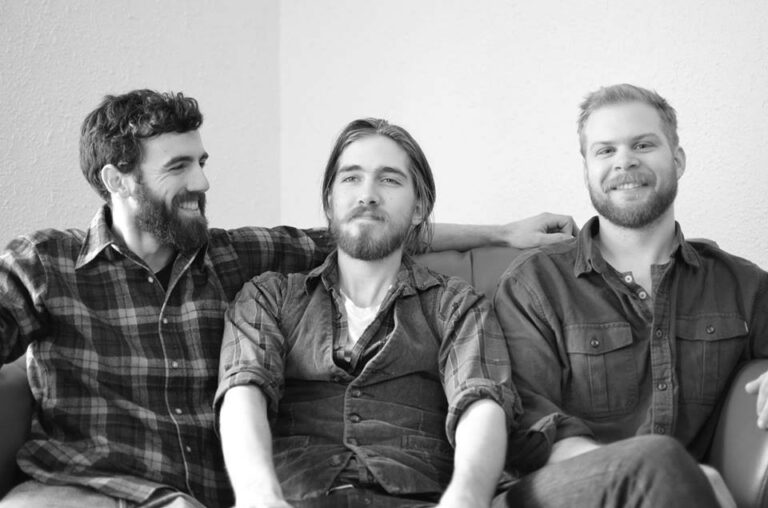
This weekend, Chicago instrumental rock band Tortoise (pictured) make their way to the winery’s redwood barn for a show in support of their seventh album (and first in seven years), The Catastrophist, released in January. The band surprised fans by adding lyrics, sung by guest vocalists, to their instrumental compositions.

Gun Bun hosts its annual Huichica Music Festival featuring two days of music, food trucks, beer and wine on June 10–11. Headlining the festival are Los Angeles psychedelic rockers Mystic Braves and popular party troupe Dengue Fever.

Other Huichica acts include co-organizer Eric D Johnson’s newly reformed rock band Fruit Bats, San Francisco favorites like Kelley Stoltz and Vetiver, and old-school outfits like Arizona roots-rock band Giant Sand and New York electronica act Silver Apples.

Later this summer, Gun Bun will bring back East Coast dream-pop ensemble Real Estate and welcomes resonant Los Angeles songwriter Julia Holter.

Tortoise perform on Saturday,
April 30, at Gundlach Bundschu Winery,
2000 Denmark St., Sonoma. 8pm. $35–$40. gunbun.ticketfly.com.

Growing Growers

In this era of drought and increasing environmental awareness, it’s easy to point the finger for the problems our state faces, and there is plenty of finger-pointing at the cannabis industry. After more than 40 years of prohibition, there has been a severe lack of regulations to guide this industry in best practices, and so it has become a scapegoat for California’s water woes.

As in all industries, there are bad actors looking out more for their bottom line than in being a good neighbor. The temptation for lax and exploitative practices and a quick buck can be hard to resist. Even our North Bay’s beloved wine industry continues to discharge fertilizers and pesticides into the groundwater and pull water directly from our creeks.

But just as there are conscientious winegrowers, there are cannabis farmers who are concerned about the impacts of artificial fertilizers, water usage, soil biology, recycling and composting of waste products. These folks show us that it is possible to cultivate sustainably and responsibly.

Education is the first step in remedying unhealthy practices, but that’s only the beginning. We must create support systems to encourage this shift to support an industry-wide transition to best practices.

Sonoma County is home to a plethora of ancillary products—from liquid fertilizers and soil amendments to compost tea brewers and microbiology labs—that aid in sustainable farming. Local mentoring programs are available to help green your grow through biodynamic farming techniques. Yet every hydroponic store has shelves packed with synthetic, salt-heavy liquid fertilizers, pesticides and herbicides. Without any incentive or requirement to operate within standards, many cultivators opt for the cheaper and easier systems.

Through its lack of oversight, the cannabis industry has created a system in which it is possible for back actors to thrive, and prohibition has prevented many master growers from fully sharing their experiences and years of honed techniques. Still, sustainability is already in practice on many farms. A larger move toward regenerative farming techniques should be a conversation across the agricultural industry as a whole, not one forced solely on the cannabis industry as it emerges from behind the green curtain.

Tawnie Logan is the executive director of the Sonoma County Growers Alliance, and has been active in the cannabis industry for over 15 years. Go to scgalliance.com for more info. Send comments to co******@*********ce.com.

Touch of Redemption

Joe McGrath and Sam Rucker, the crime-fighting, prejudice-battling duo from Alabama, are back in Waights Taylor Jr.’s Touch of Redemption. It’s an entertaining detective novel set in the Jim Crow south of the 1940s written in the deadpan style of James M. Cain.

Taylor was born and raised in Birmingham, Ala., but now lives and writes in Santa Rosa. Before becoming a writer, he worked for 24 years in the aviation industry and then 22 more years as a management consultant.

His first book, Alfons Mucha’s Slav Epic: An Artist’s History of the Slavic People, was published in 2008. His award-winning book, Our Southern Home: Scottsboro to Montgomery to Birmingham—The Transformation of the South in the Twentieth Century, was published in October 2011. Next came more awards with his novel Kiss of Salvation: A Joe McGrath and Sam Rucker Detective Novel, published in 2014.

Enjoy this excerpt from Touch of Redemption.
—Stett Holbrook

‘SAM MEETS MONTEVALLO’
Tuesday—February 17, 1948

Joe drove from Adam’s building back to his mother’s. He wanted to see if he could get in touch with Archie Hamilton. He looked through the local phone directory and found his number.

“Shoal Creek Farms and Stables. Archie Hamilton speakin’.”

“Mr. Hamilton, this is Joe McGrath. I’m the son—”

“Well, I’ll be goddamned. I knows who you are, Joe. Elizabeth and Peter’s son, right?”

“Yes, sir, that’s right.”

“Whatcha doin’ in Montevallo? No more sirs. Call me Archie.”

“I live in Birmingham, Archie, where I worked for years as a homicide detective with the police department. I recently left the department and opened a private detective agency.”

“Good plan. You don’t gotta work for that dimwit Big Bob Watson. What an asshole. You down this way workin’ on a case?”

I’m liking this guy already, Joe thought. “Yeah, and visiting my mother as well,” he said. “I’m trying to learn more about my dad’s murder years ago.”

Archie said nothing. Joe could hear him breathing.

Archie finally said, “Very interesting. Peter was one of my best friends. I was distraught over his death. Anything I can do to help you?”

Joe heard a distinct change in Archie’s speech. He no longer spoke with a pronounced Southern drawl, and his grammar was perfect.

“If you have time today, I’d like to meet and talk,” Joe said.

“After I finish the morning chores, I have to come into town on business. Do you know Julie’s Café on Main Street?”

“I’ve seen it.”

“How about eleven?” Archie asked.

“I’ll be there. Thanks.”

Joe got to Julie’s Café just before eleven. A few patrons gave him a hard look, as they did most strangers. No one seemed interested in talking to him.

He ordered a cup of coffee and was sipping it when a man you couldn’t ignore walked into the cafe. Probably in his fifties. But it was his height, about six-foot-four, which first caught Joe’s eye. Solid as a rock, he reminded Joe of Sam. He wore clean but well-used blue coveralls over a collarless cotton workman’s shirt, and a pair of scruffy boots. His gray hair fell loose from a sweat-stained straw hat around a sun-creased face, not handsome but pleasing, except for the obvious chaw of tobacco in his jaw.

“Archie Hamilton?” Joe asked.

“Hiya, Joe. Figured that was you. Look like your dad.” He grabbed a chair at the table and swung his leg over the top as if mounting a horse. “Say, do you know Stanford Ramsey? Bigwig in Birmingham. He’s bought several horses from me. Haven’t seen him in a few years. Does he still run the city?”

“Pretty much, and he’s the city’s biggest wig. Yeah, I know him. He doesn’t realize it, but he helped me solve a murder case recently.”

“I reckon Stanford can’t help you down here. So you’ve come to town to nose around concernin’ Peter’s murder? Long time ago.”

“Yep, most folks won’t talk or have little to say.”

Archie turned his head to the left and leaned over a spittoon, and let loose with some tobacco juice. “Not surprised. Probably more skeletons in the closet than we can imagine.”

“What do you remember about it?”

“Mostly how much I miss your father. Like I told you, he was a good friend. Honest and trustworthy to a fault. But he didn’t realize the hatred that swirled around him.”

“Did you attend any of his last days in court?”

“Yes, a few.”

“Dad tried to call a hostile witness his last day in court. Were you there?”

“Yes.”

“Do you know who the hostile witness was?”

“No. But mighta been Karl Merkel or Wilson Riley. Both are dead. Karl was the Piggly Wiggly store manager. Maybe Klan. Wilson, a service station owner, had a racist chip on his shoulder as big as an oak tree.”

Joe couldn’t help laughing. “Nice metaphor.” His gut told him that Archie was holding back, just throwing him crumbs. He decided it best not to press him. Maybe later. Continuing to make light of the situation, Joe smiled and added, “So the identity of the hostile witness is a big mystery?”

Archie smiled back. “Yep. I guess you got a mystery to solve, private detective,” he said, emphasizing the word private. “Excuse me, I gotta go to my next appointment.”

[page]

Archie stood, took a few steps toward the door, and looked back. “Call me if you wanna talk some more.”

Joe sipped his coffee. Hmmm, is that an invitation to talk in private? Maybe too many ears in here.

After lunch in a colored cafe, Sam and Hank walked along Main Street in Montevallo’s six-block white business district. Earlier in the day, they had toured the colored district. As they approached the only movie theater in town, they could read the marquee, The Treasure of the Sierra Madre.

“I want to see that film. I like Humphrey Bogart. Tough guy,” Hank said.

Sam paused, looked at the two-story theater, and said, “I like Bogart too. Colored people sit upstairs, I suppose?”

“That’s the way it is,” Hank said, as a white man walked up to them.

Sam looked him over: forties, unshaven, long unkempt hair, and a vivid red scar two-inches long just below his right eye. He wore filthy blue jeans covered with patches.

“Who da big darkie with you, Hank? I bet ya boys up to no good,” the white man said.

“This is my friend, Sam, Mr. Dwayne. He’s from Birmingham.”

“I don’t give a shit whar he’s from. Y’all get outta here, now,” Dwayne said as he stepped toward Hank and gestured with his fist.

Sam moved between Hank and Dwayne, who jumped back in fright. Sam glared at Dwayne, when he saw a tall, older white man approaching. He wore coveralls and a soiled, straw farmer’s hat. Sam thought, Goddamn, here comes another redneck.

“Hey, Hank. Everythin’ all right?” the white man asked.

“Mr. Dwayne just stopped to have a little conversation with us, Mr. Archie,” Hank said.

“Looks like more’n that to me. Whatcha doin’ over here, Dwayne? Can’t find enough coloreds to harass over in Columbiana?”

“I be over here on bidness, and it ain’t none of your bidness,” Dwayne said.

“It’s my business what goes on in my town. You over here workin’ a new still in west county?”

“Ain’t got no new stills, Mr. Hamilton. I jus’ wants these colored boys to get off this here white sidewalk. They knows bettah than to walk along here.”

“Well, how the hell they s’posed to get to the theater or the stores?”

“They oughtta use the alleyway and side entrances what’s for coloreds.”

Archie stared hard at Dwayne and spit a load of tobacco juice near his feet. “Dwayne, take your sorry ass back to Columbiana where you belong. We’ll take care of Montevallo.”

Sam thought there was going to be more trouble when Dwayne glared at the three men as if he was going to say something. Instead he stomped away.

“Good riddance,” Archie mumbled. He turned to Sam and looked him in the eyes, something few men could do. “Don’t believe I’ve seen you in town before. I’m Archie Hamilton,” he said, offering his hand.

Sam shook his hand. “Sam Rucker, Mr. Hamilton. Thanks for the help.”

“You from around here, Sam?”

“No, sir. I live in Birmingham. Down for a few days to see Hank and some friends.”

“Welcome to Montevallo, Sam.”

[page]

‘WHO’S DWAYNE?’
Tuesday—February 17, 1948

Just before six o’clock, Joe parked in front of Hank’s home, a two-story Craftsman-style house in a well-kept colored residential neighborhood in Montevallo. Hank and Sam were sitting in a swing on the porch.

As they walked toward his car, Joe asked, “Did Sam behave himself, Hank?”

“He did just fine, ’til we had a run-in with a white moonshine operator and redneck,” Hank said. “He tried to chase us off a downtown sidewalk. He’s a real asshole. He and his brother operate stills and sell white lightning all over the county. They can’t hold down a regular job, but I’m told their hooch is pretty good stuff. Some of their best customers are colored. So they take our money with one hand, then punch us in the face with the other.”

“What was the guy’s name?” Joe asked.

“Dwayne Pidd,” Hank said.

Joe couldn’t believe it. “How old was he?”

“Not sure. Maybe fifty, sixty,” Hank said.

“He’s probably not that old,” Sam said. “A lot of racist rednecks look like hell but aren’t as old as they appear.”

“Is his brother named Dwight?” Joe asked.

“Yep, cracker number two, his twin brother,” Hank said.

“Goddamn, my dad’s colored client in 1923 was accused of killing Darryl. He was Dwayne and Dwight’s older brother. The colored guy testified he saw Dwayne shoot his brother. Christ, if any more ‘D’ names were involved in this, who the shit would know what was going on? So what happened today?” Joe asked.

Hank laughed. “You tell him, Sam.”

“Not much.” Sam grinned. “Just when it looked like it might get nasty, an older white man walked up. Nice guy named Archie Hamilton. He told—”

“You’re kidding? I just talked to him this morning,” Joe said.

“Well, about one o’clock, he told Dwayne to get his ass back to Columbiana,” Sam said.

“Did you talk to Archie?”

“He introduced himself. Asked where I was from. Told him Birmingham.”

“Is that all?” Joe asked.

“Christ, Joe, this sounds like an interrogation. What gives?”

“Sorry. Trying to figure out if he’s put us together.”

“Doubt it. But it’ll happen soon enough in this small town, especially if we’re seen driving around together.”

“You’re right. But let’s go now. It’s almost dark. Hank, I won’t keep him out late. Us youngsters gotta get our sleep.”

It was less than a mile from Hank’s house to Elizabeth’s, but as in all Southern towns, it was a short leap from one world to another. Joe drove at a modest speed in hopes of avoiding attention. For several blocks, his was the only car on the road until he noticed another car pull out behind them from an intersection and continue to follow them at a discreet distance.

“A car’s been following us for several blocks,” Joe said. “Help me keep an eye on it.”

Sam looked back. “Yeah, I got it. Only one headlight working.”

They were two blocks from Elizabeth’s house when the car turned.

“Car turned right,” Sam said. “Black Ford sedan. Looks like shit. Couldn’t read the license plate. Probably two white guys.”

“Okay. Mom’s house is on the next block.”

Head Games

0

The Bible, as anyone knows who’s ever opened it, is fairly bursting with sex. From Old Testament stories of kings and concubines, to New Testament tales of reformed prostitutes and virgin mothers, sex is pretty much everywhere. But who knew how big a role sex played in the creation of the longest lasting and best-loved English translation of the Bible to ever be published?

Anne Boleyn knew, evidently.

Little is known about the infamously short-lived second wife of King Henry VIII, largely because her husband all but erased her name and memory—after first removing her head, or course. In Howard Brenton’s perceptive and audacious comedy-drama Anne Boleyn, running through May 7 at Marin Theatre Company, the author indulges his own meticulously researched suspicions about the collision of sex, politics and religion.

Directed with astonishing confidence and creativity by Jasson Minadakis, Brenton’s play fills in the missing history with gutsy glee, as Anne Boleyn returns from the dead, bloody but unbowed, to tell her side of the story. Bouncing between the 16th-century court of King Henry VIII (a brilliant Craig Marker) and that of the 17th-century King James I (also Marker), Brenton suggests that the world might not have the King James Bible had not a deeply religious Boleyn (Liz Sklar, magnificent) employed her sexual charms to force a break between her king and the pope.

Thus did one of history’s most notorious home-wreckers purposefully pave the way for the Protestant reformation—of which she was a kind of freelance secret agent—to gain a foothold in a staunchly Catholic England. Years later, having discovered Boleyn’s forbidden Protestant Bible, the recently crowned King James hits on a way to unify his fractured kingdom—by commissioning a new translation of the word of God, a Bible that will ultimately bear his name.

Aided by a jaw-dropping set by Nina Ball and era-blurring fashions from Ashley Holvick, the energetic cast swap costumes and characters almost as frequently as Henry swapped wives.

Anne Boleyn, while overlong and crammed with arcane historical detail, is often great fun, starting with the opening scene, in which Boleyn appears, clutching a bloody bag, teasing the audience with the cheeky question, “You want to see it?” What happens next is a bit of a surprise, the first of many in Brenton’s clever, intelligent tale of blood, sex and faith.

Rating (out of 5): ★★★★

Return to Sender

0

Rep. Mike Thompson is dominating the money race in his 10th run for Congress this year and does not need, nor should he accept, the $35,500 he has recently received from Votesane, an organization that is obviously—yet opaquely—fronting for real estate interests.

There’s a story in the news section this week (p8) that gets into the details behind Votesane’s bait-and-switch hustle on behalf of real estate organizations. Here’s the gist: Votesane is a political action committee that presents itself as a champion of nonpartisan political activism on its website, a place to go if you have a candidate or issue that you’d like to support. Votesane provides a portal for what are known as “conduit contributions,” but nearly every dollar that has come through the PAC since 2011 has come from the real estate industry. You’d never know that from the website but from reports filed with the Federal Election Commission.

For all intents and purposes, Thompson is running unopposed in the race for the 5th Congressional District this year. The Congressman is sitting on about $1.5 million in his campaign war chest, according to campaign records at OpenSecrets. And while there are two nominal opponents to Thompson this year, they don’t have a chance against the powerful and popular incumbent.

Nils Palsson is a young Democrat who is seeking to dethrone Thompson, and Republican businessman Carlos Santamaria is also in the race. Between them, the candidates have secured less than $3,000 in contributions to their races, according to their most recent filings. Thompson will likely win another term in Congress, but he is going to do it with the assistance of $35,500 that he doesn’t need, and which arrived like a thief in the night.

I recently reported on Thompson’s vote on a bill that sought to nullify the Consumer Financial Protection Bureau’s guidance on auto-loan discrimination. His office said that in voting to nullify the rule, Thompson only sought more openness and transparency in the way the bureau conducts its business.

In that spirit, Thompson should return the ill-begotten $35,500 from Votesane—the largest single contribution he’s ever received—or tell his constituents why he accepted money from a PAC that is clearly not as interested in transparency and openness as Thompson himself claims to be.

Tom Gogola is the news editor of the ‘Bohemian.’

Open Mic is a weekly feature in the ‘Bohemian.’ We welcome your contribution. To have your topical essay of 350 words considered for publication, write op*****@******an.com.

Check Out Petaluma Music Festival’s 2016 Lineup

0

PMF
Returning to the Sonoma-Marin Fairgrounds on Saturday, August 6, the Petaluma Music Festival once again brings an enormous array of talent to three stages for a fun-filled day of music that benefits music programs in Petaluma’s public elementary and secondary schools. This year’s festival boasts its biggest lineup to date with an incredible roster of local and regional musicians.
Headlining the festival is prominent California songwriter Jackie Greene, best known as a former member of the Black Crowes, as one half of the Skinny Singers duo and for his own prolific solo output. Greene is a North Bay favorite, often selling out weeklong residencies at venues like Sweetwater Music Hall in Mill Valley and playing alongside legends like Phil Lesh at Terrapin Crossroads in San Rafael.
Speaking of North Bay favorites, masterful guitarist and songwriter Steve Kimock will also play the Petaluma Music Festival, and he’s bringing friends. Best known for founding ’80s jazz rock fusion band Zero and now living in Sebastopol, Kimock this year unveiled his latest solo album, Last Danger of Frost, an experimental blend of Eastern and Western melodies. He’s also recently debuted his latest collaboration, KIMOCK, a duo with his son John.
Also on the bill for the Petaluma Music Festival are Bay Area veterans the Mother Hips, David Nelson Band, Moonalice and Mark Karan. The festival fills out the rest of its lineup with Northern California musicians David Luning, Kingsborough, Highway Poets, the Sam Chase, Joy & Madness, Saffell, MoeTar, the Melt and the Grain.
Tickets for the festival are on sale now, for more information click here.
 

Of Rice and Mein

In spite of the culinary riches around Healdsburg's town square, Asian cuisine is not well represented. Four-month-old old Persimmon on the Square helps fill that gap, albeit with mixed results. The menu draws on several cuisines—Chinese, Korean, Vietnamese and Thai. There's even a quasi-Hawaiian dish. Therein lies the problem. It's difficult enough to master one cuisine. Adding others in the...

Real Money

What is Votesane and why did the Virginia-based political action committee recenty contribute $35,500 to conservative Napa Democrat Mike Thompson's 10th congressional race? Thompson has described himself as a proud Blue Dog who does not toe the Democratic party line. That posture appears to line up with Votesane's public mandate of sensible nonpartisanship. So maybe the $35,500 was a reward...

Letters to the Editor: April 27, 2016

Just the Facts In reference to Alice Chan's opinion piece (Open Mic, April 20), here are the facts. Hillary Clinton is, and will be, ahead in pledged delegates, by hundreds. She has garnered more than 2.7 million more votes "by the people." She has overwhelmingly more endorsements and newspaper support. All but one senator support Hillary, and here in Sonoma there...

Tell All

Amanda Janik was first mortified in 2011. That's when she started performing on stages in San Francisco and Oakland, reading from her teenage diaries and reciting angst-ridden poetry as part of the international storytelling event Mortified. Now Janik, a social media manager and event producer living in Santa Rosa, is bringing Mortified to Sonoma County for an evening of funny...

Gun Bun Summer

Set in the hills of Sonoma, Gundlach Bundschu Winery has established itself as a refreshingly intimate gathering space for an eclectic array of veteran and up-and-coming indie bands and performers from the Bay Area and beyond. This summer, Gun Bun has several concerts worth checking out. This weekend, Chicago instrumental rock band Tortoise (pictured) make their way to the winery's...

Growing Growers

In this era of drought and increasing environmental awareness, it's easy to point the finger for the problems our state faces, and there is plenty of finger-pointing at the cannabis industry. After more than 40 years of prohibition, there has been a severe lack of regulations to guide this industry in best practices, and so it has become a...

Touch of Redemption

Joe McGrath and Sam Rucker, the crime-fighting, prejudice-battling duo from Alabama, are back in Waights Taylor Jr.'s Touch of Redemption. It's an entertaining detective novel set in the Jim Crow south of the 1940s written in the deadpan style of James M. Cain. Taylor was born and raised in Birmingham, Ala., but now lives and writes in Santa Rosa. Before...

Head Games

The Bible, as anyone knows who's ever opened it, is fairly bursting with sex. From Old Testament stories of kings and concubines, to New Testament tales of reformed prostitutes and virgin mothers, sex is pretty much everywhere. But who knew how big a role sex played in the creation of the longest lasting and best-loved English translation of the...

Return to Sender

Rep. Mike Thompson is dominating the money race in his 10th run for Congress this year and does not need, nor should he accept, the $35,500 he has recently received from Votesane, an organization that is obviously—yet opaquely—fronting for real estate interests. There's a story in the news section this week (p8) that gets into the details behind Votesane's bait-and-switch...

Check Out Petaluma Music Festival’s 2016 Lineup

Returning to the Sonoma-Marin Fairgrounds on Saturday, August 6, the Petaluma Music Festival once again brings an enormous array of talent to three stages for a fun-filled day of music that benefits music programs in Petaluma’s public elementary and secondary schools. This year's festival boasts its biggest lineup to date with an incredible roster of local and regional musicians. Headlining the...
11,084FansLike
4,446FollowersFollow
6,928FollowersFollow