Use Your Noggin

0

Like ugly sweaters and fruitcake, the lurid yellow, seasonal dairy product eggnog is kitschy holiday fun, ha ha—but isn’t it a mucilaginous mix of artificial colorings and flavors of which a self-respecting palate can’t bear a second sip? Not necessarily.

Clover Sonoma sticks to a traditional formula—by which I mean the supermarket tradition of added thickeners and colorants—for its organic eggnog, albeit all those additives are organic, including “organic eggnog flavor extract” (who knew?), which must account for the distinctive, eggnoggy aroma and slightly boozy taste, even before the stuff is spiked. This omelette-hued drink satisfies a nostalgic hankering for such eggnog of post-war yore, with the added reassurance for both teetotalers and imbibers of organic certification and no icky artificial colors. Try serving it cool, as with the heated version one risks swearing off the stuff forever. This was priced at $4.99 per quart.

Straus Family Creamery goes further with its organic eggnog, which was introduced back in
2004, eschewing emulsifiers and relying only on the quality of five ingredients—milk, cream, cane sugar, egg yolks and nutmeg—to deliver the gloppy cheer the category demands. Like a Bond martini, eggnog is best shaken, not stirred—especially so with Straus’ eggnog, whose nutmeg wants a little help getting off the bottom of the jar and into the action. Then it’s like a nutmeg milkshake: not too thin, not gloppy, and the cream is as fresh-scented as the morning dew rising above a green, West Marin pasture.

However, this one benefits from a little booze—a little more than my first trial, in fact, as it tends to bury the more subtle notes of the bottle of Korbel VSOP brandy that I only chose because the regular brandy, $5 cheaper, had been plucked entirely from the shelf space next to it. Try a 2–1 or even 1–1 mix with a quality brandy. Not a milk glass full, folks, a four-ounce drink. This was priced at $6.39 per quart, plus a refundable $2 bottle deposit.

But what could be more wholesome than homemade nog? My final experiment should not, the food-safety types recommend, be repeated at home without first pasteurizing the egg yolk. Anyway, I took a shortcut: one egg yolk, three ounces of half-and-half and a generous shot of brandy plus nutmeg and cinnamon, shaken with ice, produced a reasonable facsimile of the Straus style, until a second sip fell cold and hard on the palate, reminding me of the cruel winter chill in the air and revealing this recipe’s omission: don’t forget the sugar, and use whole cream.

Lucky for the palate and winter cheer, that Korbel VSOP brandy, by the way, is fine sipping all on its own. Rustically wood-spiced (reminiscent of some farmhouse Armagnacs I’ve sampled) but smooth-sipping, with notes of cinnamon and something like burnt Chardonnay, this is the deal of the season at $15.

Bird Bites

0

When you walk into Petaluma’s new Chicken Pharm, the first thing that strikes you is its size: the place is vast, with a big dining room, a patio and an additional seating area consisting of cozy sofas and low tables.

Next to the city’s other recently opened restaurants like the Drawing Board and the Shuckery, Chicken Pharm feels like a food court. Ordering at the counter contributes to this atmosphere, as well as the abundance of communal seating. Its name, borrowed from Petaluma’s poultry-producing past and the history of the building the restaurant occupies (it used to be the Tuttle Drug store).

The chef, however, is local. Adam Mali, a longtime Petaluma resident, is the previous executive chef at Nick’s Cove. His menu is food-court-meets-gourmet, the key ingredient being fried chicken in all its varieties. While the fried chicken sandwich is a trend that has stood the test of time, Chicken Pharm is riffing on it while being careful not to overdo it.

Elaborate sandwiches appear side by side with more straightforward options, and the sides and salads are creative but not farfetched. The tiny, crispy popcorn chicken bits ($10) were a good example of a classic made right. The little nuggets, made from Rocky’s chicken, were pleasantly salty and had the perfect balance of buttermilk batter and meat. The dipping sauces, honey Sriracha and Point Reyes blue cheese, were delicious.

The kale salad ($10), shredded lacinato kale, shaved carrots, hazelnuts, Bellwether Farm’s Carmody cheese and turmeric vinaigrette, was satisfying but not outstanding. Chicken Pharm’s attempt to make kale more interesting didn’t amount to much, but the golden turmeric vinaigrette was a refreshing addition.

From the sandwich department, the hot chicken ($13) brought together spicy buttermilk fried chicken, jalapeno sauce, chili slaw and charred shishito peppers in a sweet brioche bun. Mali’s decision to go with a brioche for most of the sandwiches is a good one. Fried chicken offers plenty of breading, and you want the sandwich vehicle to be as light and airy as possible. The bun did a great job of containing the components—juicy, crispy chicken thigh; moist, crunchy slaw; and the charred peppers. The peppers added a satisfyingly slippery texture to the dish. But given its name, the sandwich should be spicier.

Curious to try Mali’s take on non-chicken items, we ordered the most expensive sandwich on the menu, the grilled albacore tuna burger ($15), which turned out to be a hit. The thick, generous chunk of tuna was packed onto brioche as well, with caramelized onions, pickles and tomato jam. Unlike the slaw, the bright and acidic jam offered plenty of heat and complemented the tuna.

Green Future

According to lore, beings of higher intelligence from an unknown region of the cosmos paid visit to a few would-be horticulturalists residing in the woods of Northern Mendocino many years ago, bestowing upon the small group their favorite chemovar (aka, strain) with simple instructions: revere this plant and share her gifts to heal the world.

Thus a small transmission upon the frequencies of radio Area 101 broadcast the trance-like mantra: ganja ma, we cultivate your finest kind in Northern California.

The message was received, expanded in size and dimension, reaching so many as we amassed by the tens of thousands this past weekend to catalyze the 17th Emerald Cup. It was abundantly clear that this festival is not only the finest but also the only of its kind in the annals of human history.

The Cup this year was grounded by a noticeable increase in production value, enhancing the overall experience for attendees and participants alike. It could be said that it left many of us floored, literally, as the dank fairground soil was covered by flooring in the vendor areas for the first time, warming both temperature and moods alike.

This was the springboard for the dualistic nature of the circus that is the Cup: world-renowned experts giving PhD-level panel discourses abutting Team California’s dab Olympic trials. There were hour-long lines for both seed preservationists and those wishing to purchase limited-edition flowers to smoke immediately and altars to Kali and Mary Magdalene among a traditionally male-dominated culture. Cannabis was celebrated as both medicine and a psychoactive inebriant.

Underlying the palpable enthusiasm for the coming era of legalization was a current of apprehension, uncertainty and dread. New Year’s Eve rings in a change for cannabis culture. The confluence of regulation, taxation and transparency is already proving to be daunting for many, as the regulatory system attempts to assimilate the crazy wisdom of the cannabis community.

Alas, this wisdom is what brought the cannabis communty together at the Emerald Cup. We are well-versed in adapting to catastrophe, as evidenced by the supportive response to this year’s wildfires. We declared organic and restorative cultivation practices as our norm. We reminded ourselves that there are nearly 8 billion human endocannabinoid systems on this planet that could benefit from the healing properties of cannabis.

We are a collective of tribes, and when we rally up, we party and dance. And one more thing: We are taking this show on the road.

Patrick Anderson is a lead educator at Project CBD and patient consultant at Emerald Pharms.

Letters to the Editor: December 13, 2017

What’s the Plan?

Thank you so much for your recent “Natural Remedy” (Nov. 29) article ostensibly about the opportunity for fire-damage bioremediation. I was reminded in the first paragraph of the devastating fire’s “ticking bomb” effect on us all. And then you buoyantly relate the public-private partnership, teams of volunteers, landowners, public agencies and environmental groups that have quickly grown and focused, like mycelium, on specific actions and solutions. Very inspiring, but tell us what is the plan for citizen participation in the future?

I said “ostensibly” because as I read I couldn’t help substitute the failed condition of American democracy also as a “tragic opportunity.” In the last years, the “ticking bomb” has become more apparent. Could we swiftly come together with the same focus among citizens, knowledgeable people and groups? May your article’s last words “hope to gain rich data about best practices that could be duplicated” be so, at least. But maybe hope is a mistake. Without a plan, hope will drive us all insane.

Sonoma

Fire and Rain

So the Sonoma County Board of Supervisors has allocated $400,000 for the Sonoma County Water Agency to find some consultant to install 11 stream monitors and 11 rain gauges (“By a Landslide,” Dec. 6)? Why not hire 11 people at $12,121 per rainy season for three years (11 x $12,121 x 3 = $400,000) to install a rain gauge, report on the amounts collected and observe the stream flow in person during the periods that matter? Really! Fear seems to be dictating the response. And plenty of folks are eager to make money out of the disaster. I’ve received numerous letters from lawyers hoping to help me sue PG&E or take on my insurance company. Various “environmental” experts are soliciting for tree removal and landscape restoration. I guess some are going for bigger fish in angling for county payouts. Please, supervisors, take a breath and don’t panic.

Kenwood

Checks
and Balances

Good to know the politicians are working on behalf of the environment and looking ahead to other potential water-quality and erosion disasters. Let’s hope they engage qualified experts and have some form of checks and balances on efficacy.

Via Bohemian.com

Special Delivery

Dear Santa,

Please deliver an indictment to
1600 Pennsylvania Ave., Washington, D.C.

Thank you.

Sebastopol

Write to us at le*****@******an.com.

Taking a Stand

0

On Dec. 4, the Sebastopol Union School District passed a climate change resolution. The district recognized climate change as a children’s issue and suggested that “all institutions and elected leaders” need to show leadership in addressing it. It also created a committee to recommend ways the district can take further action on climate change. This is possibly the strongest and clearest statement about climate justice and climate action by any K-12 public school board in the nation.

As a parent and longtime educator, I am so grateful that the Sebastopol Union School District (SUSD) took this bold and compassionate stand in order to protect current and future students. This resolution strengthens the coherence and moral authority of the district, because silence about climate justice would undermine its mission and core values to educate our youth.

School board members are the only elected officials with a singular focus on young people. This makes their voice especially important in the effort to preserve a healthy climate. There are about 10,000 school districts in the nation. If just 10 percent of them followed the SUSD’s lead, it would generate significant public will for science-based climate policies at a national level.

Let’s all empower other local school board members to build on the SUSD’s lead. Learn more about the SUSD school board resolution or how you can help empower other school boards to speak up for climate justice by visiting schoolsforclimateaction.weebly.com.

To paraphrase the SUSD school board, climate change is neither a partisan nor political issue, but it is a children’s issue. As caring adults, we can all speak up for climate action. An easy step would be to contact your local school board and ask it to pass a climate change resolution similar to the SUSD’s.

Park Guthrie is a teacher who lives in Sebastopol.

Open Mic is a weekly feature in the ‘Bohemian.’ We welcome your contribution. To have your topical essay of 350 words considered for publication, write op*****@******an.com.

Resilient City

0

Santa Rosa is a resilient city. It’s also a Resilient City.

In the aftermath of October’s devastating fires, the city adopted an ordinance on Oct. 24 aimed at speeding reconstruction in areas impacted by the disaster. The ordinance created a “Resilient City Combining District” that loops Coffey Park, Fountaingrove, Oakmont, Montecito Heights and the Round Barn/Highway 101 corridor into a special building zone with a streamlined permitting process and various “resiliency initiatives.”

“We are dedicating additional resources to those residents who are trying to rebuild homes lost in the fire,” says Santa Rosa Mayor Chris Coursey. “At its core, our effort is to help the city bounce back from what is an obviously serious blow.”

Toward that end, the city has created a Resilient City Department to oversee building permits, inspections and other functions for those affected by the fires. The city’s Planning Department will handle non–fire related business.

The resilient city ordinance waives many fees associated with building permits and inspections and exempts projects from state environmental review, which can add time and money to projects. The ordinance “exercises the land-use powers of the city to protect the health, safety and welfare of the public which would be put at risk if fire-damaged neighborhoods were not quickly repaired and repopulated.”

The ordinance further declares the legislation won’t be detrimental to the public interest because it “will provide a means by which to restore portions of the city damaged by the fires to their previous land uses and intensities, with modifications for compliance with current code and added resiliency.”

There’s that word again.

“Resiliency” is having a moment in urban-planning circles much like “sustainability,” another buzzword of late. Google searches for “resilient” have never been higher.

The term “resilience” appears to have moved from the fringe to the mainstream. Resiliency, however it is defined, is part of growing range of social movements and nonprofit organizations but Santa Rosa’s efforts are not aligned with any one group or organization.

“It’s not connected to any particular movement or agenda,” Coursey says. “It’s an aspirational term.”

The Rockefeller Foundation launched its 100 Resilient Cities campaign in 2013 to support cities around the world to become more resilient to physical, social and economic risks and challenges.

The Transition movement that began in the English town of Totnes in 2006 has become an international network of “transition towns” that aim to become self-sufficient in the face of perceived threats of peak oil, climate change and economic instability. The guiding principle of the movement is building “resilient communities.”

“No one was using the term transition or resilience 10 years ago,” says Carolyne Stayton director of Transition US, which is based in Sebastopol. “Over time, a term does get watered down. It’s just the life cycle. That what happens when something gets more mainstream.”

But she’s happy to see the term spread.

“It’s great to see it used more in the mainstream. I think it’s a good thing overall.”

The organization held a forum on Dec. 12 at the Sebastopol Grange called “Celebrating Resilience” that featured Sebastopol Mayor Una Glass, Post-Carbon Institute fellow Richard Heinberg, and Bob Stilger, author of AfterNow, a book about recovering from the Fukushima disaster. While the event was designed as a festive fundraiser, October’s fires served as a backdrop.

“Resilience as a planning and managing priority for cities is on a meteoric rise, with NGOs, governments, planners, managers, architects, designers, social scientists, ecologists and engineers taking up the resilient agenda,” wrote New School urban ecology professor Timon McPhearson on the Nature of Cities blog in 2014. He cautioned against supplanting the term for sustainability, lest it lock cities into “undesirable trajectories, away from sustainability.”

He cites discussion after Superstorm Sandy hit New York and New Jersey to build massive sea gates to protect the region against future storm surges, a huge technical fix with serious ecological side effects.

“Resilience needs to be linked to sustainability so that the resilience we are trying to plan and design for actually helps us more toward desired future sustainable systems,” McPhearson wrote.

In addition to “bouncing back,” the definition of resilience refers to the ability of a material (or presumably a city) to resume its original shape or position after being bent or stretched. Santa Rosa’s resilient city ordinance calls for rebuilding to “previous land uses and intensities,” albeit up to new city and state codes.

Given that climate scientists predict more wildfires of greater ferocity, should the city resume its original shape? Would that make the city more resilient to future calamities like fires, floods and earthquakes?

Coursey says the city is discussing additional measures beyond the ordinance to become more resilient, such as how to exceed building code requirements to meet the state’s 2020 “zero net energy” mandates for new home construction without passing financial burdens to residents.

“If we can find funding, we’d like people to build to that code,” he says.

David Guhin, Santa Rosa’s director of planning and economic development, says resilience informed the city’s priorities before the fires. He approaches the term on a systemic, citywide basis.

“We approach most things with that term in mind,” he says.

While the city’s resilient city ordinance is focused on helping residents rebuild, is rebuilding in fire-vulnerable areas like Fountaingrove or Montecito Heights an example of resilience or folly?

The new housing and fire codes enacted after homes in those areas were constructed will better prepare newly constructed homes from future calamities, Guhin says.

“Codes makes building in those areas more resilient,” he says. “We have to continually look at how we build a sustainable community that understands those potential risks and mitigates them to the best of our ability.”

Haz Matters

0

Local physicians and labor organizers charge that workers cleaning toxic debris sites from the North Bay fires may be—and may have been—inadequately equipped for the task at hand.

Invoking the catastrophic 2001 terror attacks in New York City, Dr. Panna Lossy, a family-medicine resident at Sutter Santa Rosa, submitted a letter to the Sonoma County Board of Supervisors this week which noted that long-term exposure to toxic materials “can compromise lung function irreversibly and may lead to an increased risk of prostate and thyroid cancer as well as multiple myeloma.”

Lossy expressed concern over recent reports about the ash-removal cleanup now underway, where “workers who are cleaning up the toxic debris left by the devastating wildfires may not be provided with adequate protective gear . . . It is important to protect the hardworking crews from long-term consequences they many not be aware of.” A fire-related fact sheet from FEMA stresses that “crews are specifically certified to handle household hazardous waste.”

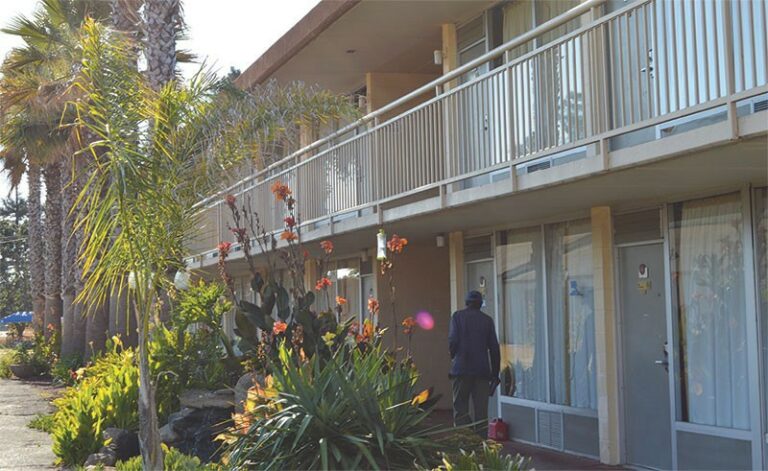
The worker-safety issue was highlighted after KPIX reported Dec. 4 on numerous environmental and safety issues disclosed to the Army Corps of Engineers during the first phase of cleanup. That report focused on work being done by Ashbritt, a Florida-based company, and featured a comment from Santa Rosa Vice Mayor Jack Tibbetts (pictured), who attested that he had observed contracted cleanup workers not wearing the proper safety gear.

California’s Division of Occupational Safety and
Health (Cal-OSHA) was looking into the charges, reported KPIX.

Glory Days

It’s like WWII, only fun! In Star Wars: The Last Jedi, the alt-right First Order has the rebels bottled up—”the RESISTANCE,” the title crawl says in capital letters, a stealth-howdy to anti-Trumpers. On the throne is Supreme Leader Snoke, a granddaddy version of Baby Eraserhead played by Andy Serkis. This moldy dictator faces the same problems Lord Vader had back in the day: sass from a supercilious general (Domhnall Gleeson) and disappointing results from a prize pupil, Kylo Ren (Adam Driver), who returned empty-handed from his mission to find Luke Skywalker.

In writer-director Rian Johnson’s entry in this series—maybe the strongest and sharpest in the 40-year-long epic—fractiousness abounds. Skywalker (Mark Hamill) sulks in his island monastery, overrun with cute space-puffins called porgs (the birdies turn the Millennium Falcon into their rookery). The noble finale of the last episode had Daisy Ridley’s Rey passing the lightsaber to the bearded hermit Luke. It’s picked up right where we left off: Luke tosses the unwanted weapon over his shoulder and vows that he will no longer teach the Jedi arts.

Eventually, of course, he changes his mind. Here, the Force is a spiritual discipline anyone awake can feel their way into. This is opposed to what could be called George Lucas’ single worst idea: making the Force into an inherited quality, found in aristocrats with midi-chlorians in their blood.

The rebels are a matriarchy now. When General Leia (Carrie Fisher, doing a lot of postmortem acting) is incapacitated by an attack, a new admiral takes over, Amilyn Holdo (Laura Dern), whose idea of an insurgent’s uniform is a lavender evening gown with ruffles. Dern carries herself like a goddess, but she has some strife with one of her rebellious pilots “a hot-shot flyboy”—Poe Dameron (Oscar Isaac).

The 1990s Star Wars entries had big-name actors, but they stood around like chess pieces. Watch Last Jedi and think, “My God, it’s full of stars.” Isaac has never looked better than he does here in the cockpit, stripping the cannons off the dreadnaught with his missiles, and later asking for more: “Permission to jump into an X-wing and blow something up.”

Rich with minutiae is a new wretched hive of scum and villainy, a casino planet. Johnson speeds the camera through like a drone so we can admire the fauna at this chimera-Vegas. One is a drunk little punter in evening clothes who mistakes the beachball-shaped android BB8 for a slot machine. Finn (John Boyega) and his new comrade, Rose (the show-stealing Kelly Marie Tran), who are there looking for help and end up arrested for a parking violation. In the lockup, they meet a scurvy yet adept thief (Benicio del Toro)—a jailbird who’s been inside enough times that he knows to sleep with his boots around his neck, so that they don’t get stolen.

Kylo Ren’s walking-wounded emoism looks even more handsomely thwarted than it did last time; to paraphrase Hunter Thompson, Driver has the embarrassing sensuality of a 13-year-old girl’s drawing of a horse. “You’re just a child in a mask,” jeers Snoke. As if stagecraft hadn’t impressed Snoke, too.

In a movie in which most of the interiors are cluttered with steaming, smoking aircraft, and gridded in with catwalks, Snoke’s throne room is an empty Cinemascopic hangar in glowing vermillion, with a few shiny flunkies in eyeless suits of crimson armor on guard. And there is a rumble to come on this dance floor, illuminated with light sabers.

As always in these spectacles, stuff is scribbled in the margins that makes it dense, such as a sea monster breaching and diving, unnoticed in the sea behind the cliffs Luke paces over. The movie recalls echoes of the first film: just as we first saw Luke on a planet of two moons, a double-sunset illuminates our last sight of the old knight. The movie’s richness invites more than one viewing. Johnson’s mature and questioning attitude illuminates this stirring movie about rebellion—reveling in the panache of suicide warriors as well as feeling for the choices of traitors and cowards.

‘Star Wars: The Last Jedi’ is playing in wide release.

Best for Last

0

Some plays, not surprisingly, get a little old after a decade of repetition. Others, miraculously, get better.

The key, as evidenced by David Yen’s 10th annual performance of David Sedaris’ Santaland Diaries, at Left Edge Theater, is changing things up from time to time. Adding a fully stocked bar to the set one year, and using it. Adding a playful elfin striptease. Giving the audience silly and inappropriate elf names (Funky Little-Skank, at your service). Encouraging people to stand up, shout out loud and dance in the aisles, all while keeping things mischievously acerbic and politically incorrect.

A certified North Bay Christmas tradition, The Santaland Diaries—adapted by Joe Mantello from Sedaris’ hilarious radio essay—has certainly evolved over the years, even as it’s traveled through seven different venues. Under the playful direction of Argo Thompson, Yen first performed the solo show in 2008, as a pop-up production in a Santa Rosa art gallery. Since then, Yen and Thompson have carried their audience with them, with productions all over the North Bay. And now, for one final run, the show comes to Left Edge Theater, at the Luther Burbank Center for the Arts.

Yes, the final run. After 10 consecutive years of playing a disgruntled, unemployed actor forced to entertain unpleasant children as a holiday elf at NYC’s Macy’s Department Store, Yen has announced he will be hanging up his trademark striped tights and jingle-bell hat once and for all, but not before a last, profanity-laced, alcohol-fueled appearance as the world’s least enthusiastic denizen of the North Pole.

I have, to date, seen Yen in
five separate productions of
The Santaland Diaries. This
one, easily, is the best.

The script itself still carries a number of notable flaws, including some basic plotlessness, distractingly dated details and a tendency toward mean-spirited, sick-and-twisted humor when sick-and-twisted alone would suffice. Amazingly though, Yen and Thompson have gradually improved the joyously crass script, packing it with additional gags, infusing a surprising amount of depth and even a touch of genuine sweetness.

The best part, of course, is just watching Yen at work mixing drinks, dropping F-bombs and wry observations, lip-synching in German and having a blast.

Makes sense, right? After a decade, this is a role Yen wears as comfortably and colorfully as those crazy, trademark tights.

Rating (out of 5): ★★★★

Miming for Cheer

0

It’s been a beloved Christmastime affair in its native England since the Middle Ages, but the art of panto, influenced by the ancient traditions of pantomime, is not well-known in the States.

Featuring staged musical comedy productions full of ribald humor as well as family-friendly sentiment, one of America’s best panto groups resides in San Francisco and annually presents glamorous shows based on classic tales like “Cinderella” each holiday season.

Now in its fourth year, Panto SF is debuting a colorful and outrageous adaptation of “Sleeping Beauty” this Christmas, starring drag legend Peggy L’Eggs as the evil queen Maleficent and featuring silly songs inspired by Bay Area history and iconic periods like the Summer of Love.

Before Panto SF runs its production at San Francisco’s Custom Made Theatre near Union Square, the cast comes to the North Bay for a special free preview performance aimed at bringing holiday cheer to families in the community who are healing and rebuilding from the fires.

Enjoy the magic of Panto SF on Saturday, Dec. 16, at the Arlene Francis Center,
99 Sixth St., Santa Rosa. 1pm. Free admission. pantosf.com.

Use Your Noggin

Like ugly sweaters and fruitcake, the lurid yellow, seasonal dairy product eggnog is kitschy holiday fun, ha ha—but isn't it a mucilaginous mix of artificial colorings and flavors of which a self-respecting palate can't bear a second sip? Not necessarily. Clover Sonoma sticks to a traditional formula—by which I mean the supermarket tradition of added thickeners and colorants—for its organic...

Bird Bites

When you walk into Petaluma's new Chicken Pharm, the first thing that strikes you is its size: the place is vast, with a big dining room, a patio and an additional seating area consisting of cozy sofas and low tables. Next to the city's other recently opened restaurants like the Drawing Board and the Shuckery, Chicken Pharm feels like a...

Green Future

According to lore, beings of higher intelligence from an unknown region of the cosmos paid visit to a few would-be horticulturalists residing in the woods of Northern Mendocino many years ago, bestowing upon the small group their favorite chemovar (aka, strain) with simple instructions: revere this plant and share her gifts to heal the world. Thus a small transmission upon...

Letters to the Editor: December 13, 2017

What's the Plan? Thank you so much for your recent "Natural Remedy" (Nov. 29) article ostensibly about the opportunity for fire-damage bioremediation. I was reminded in the first paragraph of the devastating fire's "ticking bomb" effect on us all. And then you buoyantly relate the public-private partnership, teams of volunteers, landowners, public agencies and environmental groups that have quickly grown...

Taking a Stand

On Dec. 4, the Sebastopol Union School District passed a climate change resolution. The district recognized climate change as a children's issue and suggested that "all institutions and elected leaders" need to show leadership in addressing it. It also created a committee to recommend ways the district can take further action on climate change. This is possibly the strongest...

Resilient City

Santa Rosa is a resilient city. It's also a Resilient City. In the aftermath of October's devastating fires, the city adopted an ordinance on Oct. 24 aimed at speeding reconstruction in areas impacted by the disaster. The ordinance created a "Resilient City Combining District" that loops Coffey Park, Fountaingrove, Oakmont, Montecito Heights and the Round Barn/Highway 101 corridor into a...

Haz Matters

Local physicians and labor organizers charge that workers cleaning toxic debris sites from the North Bay fires may be—and may have been—inadequately equipped for the task at hand. Invoking the catastrophic 2001 terror attacks in New York City, Dr. Panna Lossy, a family-medicine resident at Sutter Santa Rosa, submitted a letter to the Sonoma County Board of Supervisors this week...

Glory Days

It's like WWII, only fun! In Star Wars: The Last Jedi, the alt-right First Order has the rebels bottled up—"the RESISTANCE," the title crawl says in capital letters, a stealth-howdy to anti-Trumpers. On the throne is Supreme Leader Snoke, a granddaddy version of Baby Eraserhead played by Andy Serkis. This moldy dictator faces the same problems Lord Vader had...

Best for Last

Some plays, not surprisingly, get a little old after a decade of repetition. Others, miraculously, get better. The key, as evidenced by David Yen's 10th annual performance of David Sedaris' Santaland Diaries, at Left Edge Theater, is changing things up from time to time. Adding a fully stocked bar to the set one year, and using it. Adding a playful...

Miming for Cheer

It's been a beloved Christmastime affair in its native England since the Middle Ages, but the art of panto, influenced by the ancient traditions of pantomime, is not well-known in the States. Featuring staged musical comedy productions full of ribald humor as well as family-friendly sentiment, one of America's best panto groups resides in San Francisco and annually presents glamorous...
11,084FansLike
4,446FollowersFollow
6,928FollowersFollow