Lost & Found

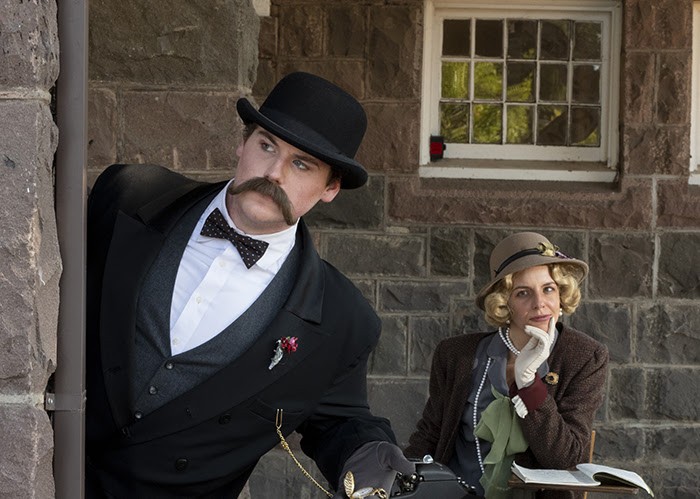
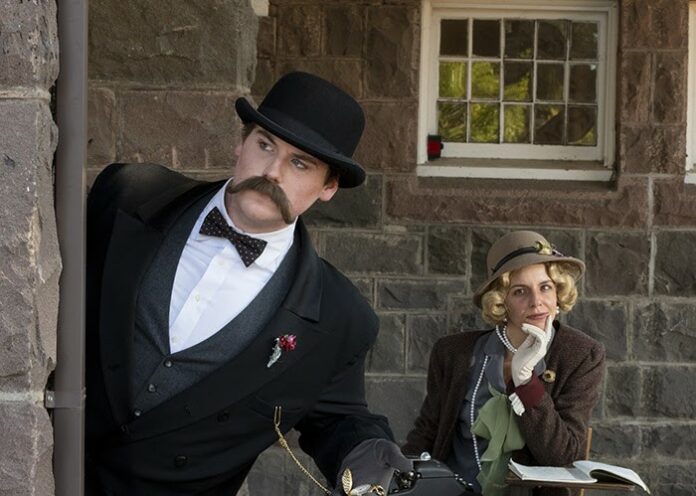
Under normal circumstances, Angie Powers would screen her first feature film, Lost in the Middle, on April 23 at Rialto Cinemas in Sebastopol, in an Occidental Arts & Ecology Center benefit event.

Obviously, things are far from normal, and the fundraising night-at-the-movies event has been postponed due to the shelter-in-place orders in effect in the North Bay.

Local audiences will have to wait to see Powers’ film, though the wait will be worth it, as Lost in the Middle—about a group of friends in their 40s—features a blend of outrageous humor and heartfelt drama.

A Sonoma County–native, Powers taught herself to tell stories while growing up on her family’s apple orchard.

“There was always stuff to do that was wildly boring,” Powers says. “So I just started telling myself stories.”

That internal storytelling transformed into story writing, and Powers earned an MFA in English and creative writing at Mills College in Oakland, studied screenwriting and now works as a corporate and creative filmmaker.

The kernel of Lost in the Middle comes from Powers’ own group of high-school friends. She describes the group as a rowdy bunch; and she says she realized the deeper importance these friendships held after a friend’s wedding several years ago.

“I started thinking about my friends, the things we know about each other, the things we hide from each other,” Powers says. “The story is about what it means to be friends, and that honesty is intimacy.”

Lost in the Middle follows a similarly rowdy group of longtime friends dealing with a very different life moment—spreading the ashes of a recently deceased group member. Tonally, the film is reminiscent of The Big Chill, only more diverse, more queer and more audacious in its comedy.

Actor and writer Guinevere Turner, best known for co-writing and co-starring in American Psycho, heads up the cast of friends. Powers shot the film in Sonoma County with a local crew back in 2017.

“It was phenomenal,” Powers says of the filming experience. “We had 300 people volunteer to be part of this, and we ended up with a core group of locals who committed essentially two full weeks of their time to help bring this together.”

Powers also notes that while the budget was miniscule, the outpouring of support from local restaurants and businesses added untold value to the production.

“It was amazing how much people were willing to give,” she says.

The film screened at select festivals last year, winning Best Feature Award at the Broad Humor Film Festival in Los Angeles. Powers is disappointed the film could not be screened this week at Rialto Cinemas, mostly because the event would benefit the OAEC, where parts of the film were shot.

“I love this county, and I know that sounds cheesy,” she says. “This is a place where people produce things, so I am confident that our county will come back, especially the artists, and I’m hoping they can lead the way in what might be a new way of doing the things we do well.”

Angie Powers also runs Bookwritingworld.com with her producing partner Elizabeth Stark.

Rolling the Bard

0

April 23 or so marks William Shakespeare’s 456th bday. For the sake of this chat, however, let’s just say it’s his 4-20th birthday. Because the question of the day is “Did Shakespeare smoke weed?”

Doobie, or not doobie? That is the question—the one that circulated the Internet a few years ago when anthropologist Francis Thackeray suggested that William Shakespeare might have sought creative inspiration by smoking pot.

Thackeray is the director of the Institute for Human Evolution at the University of Witwatersrand in Johannesburg, and in 2001 he conducted a study that found marijuana residue in pipe fragments unearthed in Shakespeare’s garden.

Though cannabis was cultivated in England during Shakespeare’s day for rope-making and other textiles, it’s unclear if it was used recreationally. “Some Shakespearean allusions, including a mention of a ‘noted weed’ in Sonnet 76, spurred Thackeray’s inquiry into whether Shakespeare may have used the mind-altering drug for inspiration,” wrote Life Science journal-contributor Stephanie Pappas.

About five years ago, Thackeray contemplated petitioning the Church of England to open the Bard’s grave and undertake a chemical analysis of his hair and nails in search of marijuana traces. There has been little mention of the project since. Because—I surmise—Thackeray is no longer high. Given some lines in Sonnet 76, I could see how, in certain states of mind, a phrase like “compounds strange” could be a pot allusion, next to the aforecited “noted weed.” Especially after a bong hit.

Two questions come to mind, however: Why are some always eager to pin the inspirations of creative types on dope? And secondly, who cares? W. H. Auden took Benzedrine in the morning and Seconal at night, but few mention it in the same breath as his poetry. And strung out as he was, even Auden addressed hazards of reading between the lines of Shakespeare’s poetry. This is from an introduction he once wrote to the Bard’s works:

“Probably, more nonsense has been talked and written, more intellectual and emotional energy expended in vain, on the sonnets of Shakespeare than on any other literary work in the world.”

But did Shakespeare smoke pot? Does it matter? Meh. Sure, my own writing is better when I’m high, but I only think that when I’m high. For the record, I wasn’t high when I wrote this … though maybe I should’ve been. Anyway, Happy Birthday, Shakespeare. Get it? Shake…speare. Okay, I’ll stop.

Open Mic: Create Calm

0

We live in uncertain times, especially during the past few months, which have brought us historic climate changes, adversity in our elections and COVID-19—a new global health concern that is making everyone uneasy.

There are an abundance of “stay-safe” coronavirus guidelines being offered by every news network and the CDC, all of them containing vital information to stay healthy.

Medical professionals report that keeping a healthy immune system adds another level of defense against the virus. They advise us to get plenty of sleep and to avoid stress. Yet, stress is the very thing that keeps us from a sound night’s sleep.

In my mind, sleep and stress go hand in hand. Lower your stress and you’ll get better sleep. Easy to say, yet difficult to achieve. That is until now.

Here are seven anti-anxiety strategies in times of stress:

1. Meditation: Boost your immune system with a double dose of deep meditation every day. Your calm will carry on throughout the day.

2. Self-awareness: Pay close attention to how your body is feeling. Relax your shoulders, soften your jaw and release any tension from your hands.

3. Breathe: The simple act of “deep breathing” can stimulate the parasympathetic nervous system, offering instant relief from stress. Breathe in and count to four, then out to a count of six.

4. Eliminate ANTs (automatic negative thoughts): When negative thoughts arise, bring your attention to the present moment. In this moment, practice gratitude. When you feel negative or stressed, think of five things you are grateful for.

5. Create a Calming Affirmation: Take a moment for silence. Then create your unique three-part affirmation. Begin with “I am …” Say the affirmation calmly, slowly and silently.

6. Avoid Unnecessary Obligations: Allow time for self-care and the care of loved ones.

7. Take a Walk: In the ’80s, Japanese scientists found that spending just two hours in a forest offers measurable health benefits. “Forest bathing” has become a cornerstone of Japanese medicine.

Until next time, be well.

Lorraine Alexander is the executive director of DASA Meditation

Battle over Point Reyes continues

0

The latest chapter in the decades-long debate over the ideal use of the Point Reyes National Seashore may come to a close in the coming months as the National Park Service prepares to release an updated usage plan for the park.

The document will determine how the park lands will be split between wildlife preservation and cattle ranching interests in the coming decades. To put it too simply, it’s a battle between cows and elk.

Tule elk were once common throughout California. By the late 1800s, however, over-hunting had severely depleted their population.

Due to a little luck—in 1874, a rancher in the Central Valley spared a few elk sheltering on his property—the elk were saved from extinction. In 1962, the National Park Service established the Point Reyes National Seashore and, in 1978, the Park Service relocated 10 elk from the Central Valley to Tomales Point, a 2,600 acre fenced-in section of the park designated for use by the elk.

The elk began to recover and soon spread out of their designated area onto nearby Park Service lands where ranching is allowed. This resulted in a conflict that has existed ever since: What is the primary purpose of National Parks land, and how should the elk and cows on it be managed?

During the drought years between 2012 and 2014, 250 elk on Tomales Point died, according to a 2015 KTVU report.

“It’s very likely that all of those elk died of thirst during the drought because there are no natural water sources where they’re penned in,” Jeff Miller, an advocate with the Center for Biological Diversity, told the news station.

In 2016, the Resource Renewal Institute, a Marin County environmental think tank, sued the Parks Service over its failure to update its general management plan with a new environmental-impact study. The group also accused the Parks Service of “mismanagement” of the Point Reyes National Seashore.

In 2018, as a result of the lawsuit, the Park Service began crafting a new plan to regulate the future uses of the Point Reyes National Seashore lands currently leased to ranchers. In addition to creating the new plan, the Park Service is also required to study the possible environmental impacts of the new plan.

The Park Service’s preferred plan, Alternative B, would, among other things, extend ranching leases for 20 years—current leases are five years long—and require the Park Service to limit the population of adult elk on Drakes Beach to 120 by culling any excess animals.

The agency is expected to release a final version of the new plan in Spring 2020. Once the document is released, members of the public will have 30 days to comment before it is sent to the Park Service’s regional director for final approval.

If you’d like to learn more about the proposed plans, tune into the event below or visit www.nps.gov/pore.

A group of conservationists, biologists, film-makers and local leaders will host a panel discussion at 6pm on April 29. Find more information and RSVP at www.pointreyesrewild.org/events.

Human-Made Music

0

Lungs and Limbs did not plan on releasing an album in the middle of a global crisis, but it’s difficult to think of a better soundtrack to self-isolate to than the alt-pop quartet’s recently released full-length record, Great Goodbye.

The record follows the group’s 2016 EP, Big Bang. In that time, the quartet—made up of Karina Rousseau (vocals, guitar), Nick Tudor (guitar, vocals, synth), Kristen Power (synth, vocals) and Matt Power (drums)—have matured, faced personal and professional changes and are now channeling those emotions into Great Goodbye.

“I don’t want to say it’s a negative album, but it’s definitely a reflection of feeling worn out by the reality of human society,” Rousseau says. “The timing of having the album come out and having all this happen with the pandemic felt apropos.”

“I think the world is at a point where we have to say, one way or the other, goodbye to the way everything has been,” Tudor says. “I don’t know what that looks like on the other side, but I don’t think it’s possible for the world to continue plodding along and for us to expect things to work out.”

“It’s an acknowledgment, too, of appreciating what we do have while we have it, not knowing what the future looks like,” Rousseau says.

Lungs and Limbs’ signature electro-pop sound has also matured, with layered synths and electric guitar riffs interweaving themselves into melodic backdrops for Rousseau’s ethereal vocals.

“We start with a simple idea, or beat, or guitar part; and Karina writes lyrics post writing the melodies, so there’s a lot of weird sounds during the demo process until we get a theme,” Tudor—who also engineered the record—says.

Kristen Power also reveals that the demos always have a cheese-related element in the title to help the band remember which demo is which.

Despite all the electronic elements in the music, the band stresses the human element, noting that the tracks are played live and 80 percent of the synthesizers on the record are made by instruments, not the computer.

Now that the album is out and everyone is stuck at home, Lungs and Limbs are doing what most bands are doing; trying to figure out how to move forward.

“I make all sorts of crazy ideas for the future in my head,” Tudor says. “I’ve run every simulation, from good to bad, and so many seem equally likely.”

‘Great Goodbye’ is available online now. Lungsandlimbs.com.

Letters: Step Off the War Path

Anyone who now denies we are one interdependent human species across borders on Mother Earth is not alive to the moment we share today.

It’s time to mean it when we speak of the sanctity of life. When people across the globe are working to save lives, we must end this country’s habitual practice of endangering and killing people who are “not like us.”

President Trump declared a “war footing” to combat the “foreign enemy” coronavirus. It might be said that all that unites the U.S. is military spending, our culture wallowing in violence and nationalist fear mongering.

A culture that bankrupted itself on foreign wars while enriching the global One Percent is not a sane or healthy society. The Abrahamic religions teach that ethical behavior and money making don’t go together. We’ve lost this distinction. Let’s demand a global cessation of hostilities. Let’s foster sustainable communities and give space for the world to heal.

United Nations Secretary-General António Guterres has called for an immediate global ceasefire saying, “End the sickness of war and fight the disease that is ravaging our world. … That is what our human family needs… .” Let’s make this more than a pause and rethink the ways in which we interact as people and as nations.

Let us reevaluate our unsustainable way of life. The rule of the One Percent has confronted us with the destruction of our planet. Our prejudice toward war is being revealed. Political-theorist Hannah Arendt wrote, “In every historical crisis, it is the prejudices that begin to crumble first and can no longer be relied upon.”

It should not take a pandemic to awaken us to our interdependence, but now that we are here, let’s make the most of this opportunity.

Jack Wikse

Faculty Coordinator, SSU Extended & International Education

Susan Lamont

Former Board Member and Coordinator, Peace & Justice Center of Sonoma County

Bubbly Planet

0

When raising a glass to toast Earth Day reaching its half-century mark, wouldn’t it seem apropos to fill one’s glass with a thematically on-point wine? Something green, maybe? Is there such a wine? Reds, whites and occasional orange wines, we’ve heard of, yes—but green? Do they exist and who would drink such a wine besides a Dr. Seuss character?

It turns out green wines are everywhere—that’s, of course, “green” in the eco-friendly sense of the word. Some are even sparkling. In fact, the éminence grise of sparkling wine, Champagne (that’s with a capital C, mind you), the eponymous sparkling-winemaking region in France, is at the forefront of the movement to take an environmentally-responsible approach to their craft.

They had to—the changing climate directly impacts the Champagne region. Harvest seasons now regularly arrive early and winemakers have adapted accordingly. To wit, nearly 20 years ago, Champagne was the first wine-growing region in the world to implement a plan to address the changing climate.

“Climate change is a reality that Champagne growers and houses increasingly must take into account,” says Jennifer Hall, director of the Champagne Bureau, USA.

Located in Washington, D.C., the Champagne Bureau is the U.S. representative of the Comité Champagne, France’s trade association representing the region’s grape growers and houses.

“As such, the region is committed to sustainable development and seeks to do its part to reduce its environmental impact and protect the unique terroir of Champagne,” Hall says.

Champagne’s milestone achievements are worthy of popping a few corks themselves. Since conducting a carbon-footprint assessment in 2003, Champagne’s sustainability efforts have resulted in a 20-percent regional carbon-emissions reduction. The hope is that, by 2050, carbon emissions will be reduced to 75 percent of the 2003 benchmark. Presently, 20 percent of the region’s vineyards hold an environmental certification, a number they hope to raise to 100 percent by decade’s end.

Interestingly, a change that resulted in an emissions reduction of 8,000 tons of carbon dioxide (or the equivalent output of a fleet of 4,000 automotive vehicles) wasn’t achieved through mitigating some aspect of the winemaking process, but rather by subtly changing the bottle that contains the finished product.

In 2010, after five years of experimentation, the Champagne region lightened the weight of each bottle to limit the impact of packaging and transport-related CO2 emissions. Working with glassblowers, they shaved 65 grams off the weight of the formerly 900-gram bottle, which is basically imperceptible to everyone—except maybe the earth.

Home Baked

Poet George Sterling called San Francisco “the cool, grey city of love.” Journalist Gary Kamiya borrowed Sterling’s phrase for his book about San Francisco titled Cool Gray City of Love, which offers 49 views of what must be one of the most beloved peninsulas on the face of the earth.


In Alia Volz’s new book, Home Baked, San Francisco boasts all the colors of the rainbow. It’s also a city of love between brothers and sisters, brothers and brothers, and sisters and sisters. San Franciscans can’t seem to read too much about their hometown, though it has been written about lovingly for more than 100 years. Volz’s mom baked and sold 10,000 marijuana-laced brownies a month to citizens of the City. Her enterprise was called “Sticky Fingers.”

Volz’s mom—“the Brownie Lady”— is not to be confused, the author explains, with “Brownie Mary,” a San Francisco legend who gave away brownies laced with marijuana, most notably during the AIDS/HIV pandemic and was arrested trying to do good. Probably only in San Francisco could there be two non-competitive women engaged in the same enterprise.

Volz takes readers through a familiar landscape with familiar figures including Dennis Peron, Harvey Milk, Dan White and Cleve Jones. But by telling her story through the eyes of a child and a young woman she makes the familiar new and adds a vital historical perspective. Home Baked is an unabashed paean to pot. It’s also an indictment of state and federal governments, and national and local law enforcement agents who made raids, cuffed and arrested millions of Americans for possession of small amounts of weed.

For a time, Volz and her parents lived in and around Willits, where they did not fit in. That’s strange given the fact that Willits was, from the early 1980s to the late 1990s, at the center of the cannabis growing industry. Apparently, rural cannabis has its own culture. Home Baked is mostly urban with descriptions of landmark San Francisco locales such as the Castro District, North Beach, the Condor strip club with Carol Doda’s “neon nipples,” and the Mabuhay Gardens, which appears in these pages as the “heart of an intense demimonde.”

The author has written a book for people who were there and who did all or most of the things that could be done. At the same time, Home Baked is for those who weren’t on the scene. Volz’s hot-blooded memoir honors hippies and hippie culture and reminds readers that for decades Northern California refused to adhere to the All-American paradigm and kept alive the best non-conformist American values and customs.

‘Home Baked’ by Alia Volz; published by Houghton Mifflin Harcourt; 432 pages; April 20, 2020; $27. Available at CopperfieldsBooks.com.

The Art of the Algorithm: Artist Jeffrey Ventrella Celebrates Earth Day

0

Every year, Petaluma artist Jeffrey Ventrella composes an algorithmic animation for Earth Day. With the 50th anniversary of Earth Day upon us today, Ventrella offers this vibrant creation featuring music by Robby Elfman:

[embed-1]

“I think a lot about ecosystems, big and small,” says Ventrella. “I remember realizing that all ecosystems are deeply connected and that the largest ecosystem of all wraps around an entire sphere—it’s called Earth.”

Couple Ventrella’s eco meditations with his fascination with spherical geometry as well as some inspiration from the work of systems theorist and futurist Buckminster Fuller, and it’s (almost) easy to see how Ventrella arrived at his unique aesthetic.

“My only goal is to out-do myself each year — artistically and mathematically,” says Ventrella, who first began writing algorithms to animate geometry over a sphere in honor of Earth Day around the turn of the millennia. “I have found this to be a good way to balance my left and right brains, and to express my reverence for the planet.

Ventrella’s past Earth Day animations can be seen here http://www.ventrella.com/EarthDay

Environmentalism Goes Livestream

0


In February, before the economic house of cards began to tumble down amid the coronavirus pandemic, a few dozen young people gathered in Santa Rosa to plan a 20,000-member march on April 22.


Members of the Sunrise Movement’s Sonoma County hub, one of dozens of local Sunrise groups spread around the country, helped to organize several marches in the past year, including one event which drew about 2,000 people to downtown Santa Rosa. But, Sunrise members indicated the next event would be different.

Not only would the march take place on Earth Day’s 50th anniversary—April 22, 2020—the environmental movement needed to be reinvigorated.

Throughout 2019, 16-year-old Swedish activist Greta Thunberg toured the world, attempting to shame policymakers into taking action on climate change. Some elected officials in the United States even signaled support for a Green New Deal, a policy proposal intended to combat economic and environmental issues at the same time. But, by April 2020, the hope for immediate action through the electoral system seemed to be dashed.

On April 8, Bernie Sanders, a Democratic presidential candidate endorsed by the national Sunrise Movement, suspended his campaign. He soon endorsed Joe Biden.

In recent weeks, while cities and states across the country ordered residents to stay home due to the coronavirus, Sunrise worked to take its plans for a mass mobilization online.

Instead of organizing a traditional march, the group has now collaborated with other groups to organize a series of online events scheduled between Wednesday, April 22, and Friday, April 24. Other organizations are also hosting online events around the Bay Area throughout the week.

But, despite having livestream capability, no one in the Sunrise Sonoma group seems to expect 20,000 people to show up to their online events this week.

That’s unfortunate for Sunrise and its sympathizers, but fitting for an activist movement competing for attention in a world plagued by a pandemic and related economic fallout.

Fifty Years Ago

On April 22, 1970, the first Earth Day, an estimated 20 million people—about 10 percent of the United States’ population—participated in events across the country.

Following that event, President Richard Nixon created the Environmental Protection Agency (EPA) and signed additional environmental protections, including the Clean Water Act and the Endangered Species Act.

While never perfect, the EPA and the new regulations provided environmentalists and marginalized communities tools to push back against corporate negligence and repeat polluters.

But ever since, environmentalists have fought to protect the regulatory agencies they won in the 1970s, as organizations that oppose those regulations gain strength and public support of the environmental movement wanes.

In an interview with the Earth Day Network, a group organizing online Earth Day events, Denis Hayes, who organized the original Earth Day as a 25-year-old graduate student, commented on what seems to be a pendulum-like swing in the American environmental movement.

“The 1970s was a very pro-environment decade, when we were almost unstoppable for 10 years,” Hayes said. “That led into the 1980s and people whose names are synonymous with anti-environmental zealotry.”

While Hayes hastened to add that the pendulum swing in favor of the environmental movement is not inevitable, the renewed conversation around the urgency of climate change over the past year may give environmentalists hope that another shift in public sentiment is underway.

Meanwhile, despite an increase in media coverage of the unfolding dangers of global warming, President Donald Trump’s administration continues to gut regulatory agencies, including the EPA. In late March, the administration announced further roll backs of EPA regulations as the coronavirus pandemic spread.

Even if they do elect an environmentally-friendly president, the modern environmental movement faces fierce odds. Because of the global nature of climate change, any solutions will need to be implemented on a global scale, Hayes notes.

That’s something even the first Earth Day didn’t accomplish.

“If there is a lesson, it’s this: That first Earth Day was a very big tent with a broad set of values that underpinned it,” Hayes says. “The tent has become narrower in ensuing decades, and while remaining firm in our values and goals and objectives, we need to be more welcoming.”

Members of the Sonoma County Sunrise group seem to agree with that assessment. Five members of the group interviewed this week mentioned that part of the appeal of the group is its support of proposals that aim to tackle economic, social and environmental problems at the same time.

Ema Govea, a 16-year-old Sunrise member, says she became interested in social justice issues when she was 10. When she began researching climate change she was struck by how it intersects with so many other worldwide issues.

“The climate crisis affects every single one of these struggles and it makes every single problem worse,” Govea says.

To Paulina Lopez, a 25-year-old Sunrise member who hopes to involve more Latino people in climate change activism in Sonoma County, climate justice includes immigration rights and housing rights, not just advocating for lower emissions.

“Some of the immigrants (coming to this country) are trying to escape the climate crisis,” Lopez says.

Intersectionality

The intuition that many problems in our globalized world are connected seems to be borne out in the mind-numbing number of apocalyptic headlines emerging from the coronavirus pandemic. In short, the pandemic has highlighted and worsened pre-existing problems.

As of April 11, 20 million American workers had lost their jobs, and weekly unemployment claims had overtaken any rates seen in the first 50 weeks of the 2008-2009 recession, according to the Tax Policy Center. On April 9, the National Multifamily Housing Council reported that only 69 percent of renters had paid rent by April 5. In the period in April 2019, 82 percent of tenants had paid their rent.

Many of these problems may be worsened by other trends. For instance, labor analysts at the Brookings Institution, a Washington think tank, predict that labor automation will increase at a faster pace during the coming economic depression as employers seek to lower labor costs.

It’s too soon to tell if the federal economic stimulus efforts will be enough to save workers, small businesses and the overall economy. But, so far, things don’t look good.

Crystal Ball

So, how does all of this poll?

According to a February report by Pew Research, 85 percent of Democrats and 39 percent of Republicans said that “protecting the environment” should be a priority for the president and Congress.

In 2008, only 65 percent of Democrats and 38 percent of Republicans gave a similar answer.

That said, views on the issue could be shifting along age lines. A separate Pew poll found an increasing difference in opinion on climate change between Republicans based on age. About half of millennial Republicans, those born between 1980 and 1994, said the government is doing too little to reduce the effects of climate change, compared to only 31 percent of Republicans born before 1964.

It is likely that only a relatively small percentage of the overall population will ever be passionately involved in any given issue. Indeed, a Gallup poll conducted in February found that only 18 percent of respondents had attended a meeting concerning the environment in the past year. In 2000, 20 percent of respondents answered the same way.

In January 2019, Varshini Prakash, Sunrise’s executive director, told Vox, an online news site, that the group aims to mobilize a relatively small group of people—about 3.5 percent of the total population—to demand immediate change.

If Sunrise and its environmental allies are able to mobilize the same number of people who participated in the original Earth Day, that amount of turnout might be possible—though probably not this Earth Day.

For Govea, the 16-year-old Sunrise member, the hectic early days of the coronavirus pandemic highlight a stark choice: Either we move forward and create a new world, or we go back to the way things were and continue to pollute the environment.

“What is expected to happen is that we will just keep drilling to get the economy back on its feet,” Govea says. “We’re just going to drill more and extract more fossil fuels and go right back up to normal. But we also have the opportunity to really think about what it is about ‘normal’ that we want to keep, and what it is that we don’t want to keep.”

“What about normal do we want?” Govea asks. “Because this could be a great opportunity for change.”


Lost & Found

Under normal circumstances, Angie Powers would screen her first feature film, Lost in the Middle, on April 23 at Rialto Cinemas in Sebastopol, in an Occidental Arts & Ecology Center benefit event. Obviously, things are far from normal, and the fundraising night-at-the-movies event has been postponed due to the shelter-in-place orders in effect in the North Bay. Local audiences will have...

Rolling the Bard

April 23 or so marks William Shakespeare’s 456th bday. For the sake of this chat, however, let’s just say it’s his 4-20th birthday. Because the question of the day is “Did Shakespeare smoke weed?” Doobie, or not doobie? That is the question—the one that circulated the Internet a few years ago when anthropologist Francis Thackeray suggested...

Open Mic: Create Calm

We live in uncertain times, especially during the past few months, which have brought us historic climate changes, adversity in our elections and COVID-19—a new global health concern that is making everyone uneasy. There are an abundance of “stay-safe” coronavirus guidelines being offered by every news network and the CDC,...

Battle over Point Reyes continues

The latest chapter in the decades-long debate over the ideal use of the Point Reyes National Seashore may come to a close in the coming months as the National Park Service prepares to release an updated usage plan for the park. The document will determine how the park lands...

Human-Made Music

Lungs and Limbs did not plan on releasing an album in the middle of a global crisis, but it’s difficult to think of a better soundtrack to self-isolate to than the alt-pop quartet’s recently released full-length record, Great Goodbye. The record follows the group’s 2016 EP, Big Bang. In that time, the quartet—made up of Karina Rousseau (vocals, guitar),...

Letters: Step Off the War Path

Anyone who now denies we are one interdependent human species across borders on Mother Earth is not alive to the moment we share today. It’s time to mean it when we speak of the sanctity of life. When people across the globe are working to save lives, we must end...

Bubbly Planet

When raising a glass to toast Earth Day reaching its half-century mark, wouldn’t it seem apropos to fill one’s glass with a thematically on-point wine? Something green, maybe? Is there such a wine? Reds, whites and occasional orange wines, we’ve heard of, yes—but green? Do they exist and who would drink such a wine besides a Dr. Seuss...

Home Baked

Poet George Sterling called San Francisco “the cool, grey city of love.” Journalist Gary Kamiya borrowed Sterling’s phrase for his book about San Francisco titled Cool Gray City of Love, which offers 49 views of what must be one of the most beloved peninsulas on the face of the earth. In Alia Volz’s new...

The Art of the Algorithm: Artist Jeffrey Ventrella Celebrates Earth Day

Every year, Petaluma artist Jeffrey Ventrella composes an algorithmic animation for Earth Day. With the 50th anniversary of Earth Day upon us today, Ventrella offers this vibrant creation featuring music by Robby Elfman: "I think a lot about ecosystems, big and small," says Ventrella. "I remember realizing that all ecosystems are deeply connected and that the largest ecosystem of all...

Environmentalism Goes Livestream

In February, before the economic house of cards began to tumble down amid the coronavirus pandemic, a few dozen young people gathered in Santa Rosa to plan a 20,000-member march on April 22. ...
11,084FansLike
4,446FollowersFollow
6,928FollowersFollow