Batcave to the Rescue

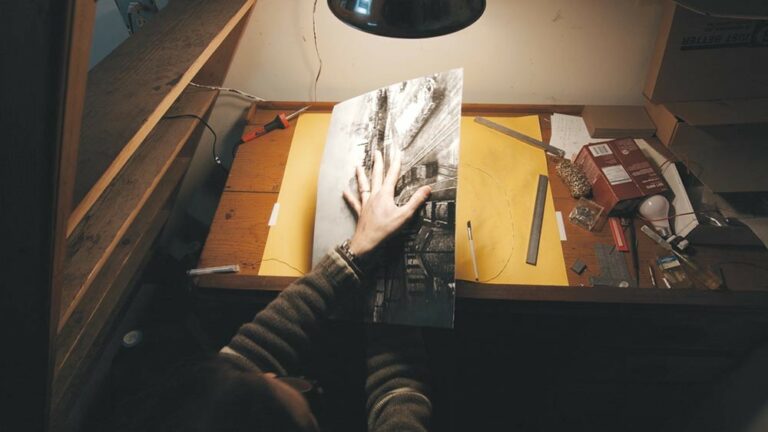
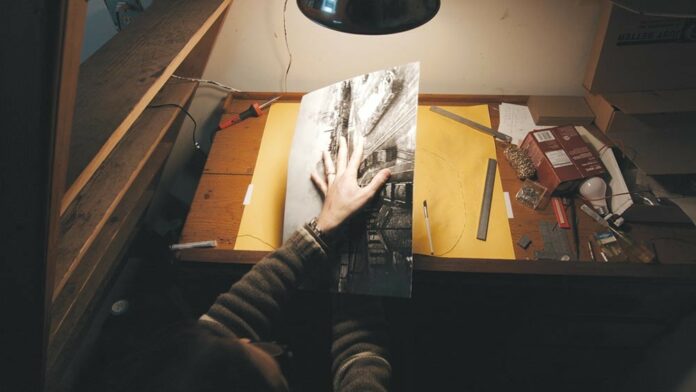
Located in the basement of 100 Fourth St. in downtown Santa Rosa’s Railroad Square, the Batcave Comics & Toys shop is a haven for comic book and toy collectors and for nostalgic fans of vintage entertainment.

Currently brimming with retro comic-book issues, the shop is doing what it can for the community with a pledge to give 10,000 free comics to Santa Rosa and Sonoma County organizations serving children who are in need of activities during the shelter-in-place order.

The Batcave encourages any charity, hospital, school, group home, foster home or special-needs program or facility to contact them on Facebook or Instagram to arrange curbside pickup or contactless delivery.

Furthermore, the Batcave encourages anyone with an old stash of comics who wants to help the cause—or anyone who wants to donate to the effort in any way—to also get in touch. Read the shop’s full statement on their Facebook page.

Green Rush or Bust?

0

Everyone wants to wear face masks this season. Toilet paper (even single ply!) has vanished from shelves across the nation. And the legend of the once-scoffed-at hand sanitizer grows daily. Is cannabis next?

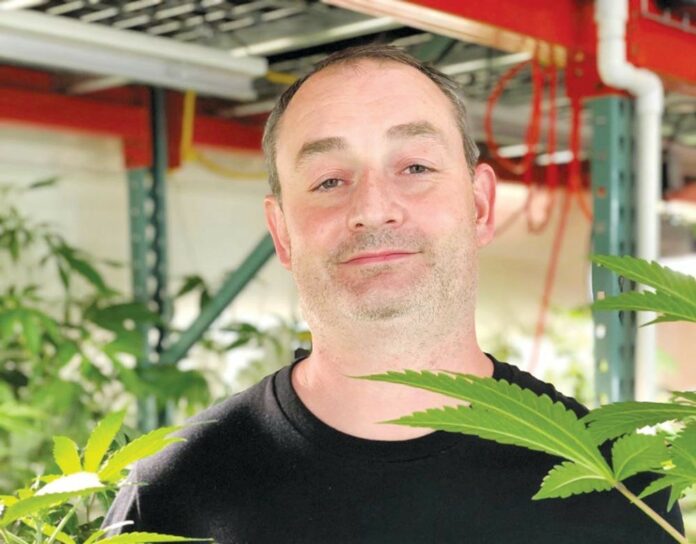
“We saw sharp daily increases in sales, number of transactions and ‘average’ transaction amounts for the five days prior to Gov. Newsom’s statewide shelter-in-place (SIP),” says Eli Melrod, CEO of Solful, a Sebastopol-based dispensary. “During that time there were many municipal and county-issued indicators that an overarching SIP order might be coming. We were not sure how to interpret the increased demand but, in retrospect, we attribute it to folks stocking up because they were not sure if they would have a dependable supply under a broader SIP mandate.”

It’s been a little over two years since weed became legal across the state of California. To date, commercial cannabis sales have raised more than $1 billion in taxes. The recreational cannabis market—one that was launched to much fanfare and with sky-high expectations—became big quickly, but never quite reached the level many predicted. Brutal competition between the legal cannabis industry and the thriving black market continues to contribute to semi-sluggish recent growth and the oversaturation of some key markets.

Now, thanks to the coronavirus, the Golden State is experiencing a cannabis resurgence. Many California dispensaries have reported record growth in recent weeks—in some cases, numbers not unlike the first day of recreational sales. But this spike might just be a COVID-19-inspired blip.

“There’s a weird mass hysteria going on now,” says Cole Hembree, owner of Curbstone Exchange, a Felton-based dispensary. “In the wake of the shelter-in-place order, we literally doubled our numbers. People are freaking out about COVID-19 and ordering more—in a stockpile-type scenario. We’re doubling our orders from all of our vendors just to keep up with demand.”

Curbstone, known affectionately as “The Curb” by the cannabis dispensary’s regulars living in and around Felton, has experienced record-breaking business this month.

“People are getting freaking nuts,” Hembree says. “We’re seeing everyone stocking up. Even the people who’ve been with us for a long time. They are buying more than usual. People are buying the same things they usually do, just way more of them.”

Bruce Valentine, a budtender at the Santa Cruz Veterans Alliance, also noticed a distinct change in purchasing habits in March.

“People who are coming into the shop are definitely stocking up,” Valentine says. “Just like with water and soap. There definitely has been consistent traffic throughout the day. Roughly the same amount of customers, just buying way more. Some people come in with gloves and masks on. It’s a huge change.”

The Centers for Disease Control and Prevention may have inadvertently encouraged this rise by strongly recommending the general public have at least a month’s supply of their medication. And then the shelter-in-place order came.

“Following the statewide SIP mandate, sales dropped to well below pre-crisis numbers,” says Solful’s Melrod. “Over the past seven days activity seems to be gradually trending up but is still below pre-COVID-19 levels.”

This is the first real crisis and economic downturn the United States has experienced in the age of legalized cannabis. Even in the face of widespread unrest and uncertainty, many involved in the local and California cannabis space are sanguine about the future. Marijuana is widely believed to be “recession proof,” and like other “vice industries” (including alcohol and tobacco), should be equipped to weather difficult times of crisis and economic uncertainty quite well.

Everything Has Changed

On Thursday, March 19, Gov. Gavin Newsom issued a sweeping COVID-19 shelter-in-place order for California’s residents. To mitigate exposure to the coronavirus, and to curb the spread of the pandemic, only vital and “essential” businesses (or service providers)—like grocery stores, gas stations, banks, pharmacies and media—were allowed to continue daily operations. It wasn’t immediately clear how the shelter-in-place order would affect cannabis dispensaries, or the cannabis industry as a whole. As officials rushed to interpret what really constitutes an “essential” business in counties across the Bay Area, dispensaries found themselves in a tense state of limbo. Because dispensaries serve both medical and recreational clients, there was ample room for interpretation.

“The City of San Francisco’s initial designation of essential businesses did not include cannabis dispensaries, which caused immediate concern and confusion for the industry,” Melrod says, adding that San Francisco was leading the thinking around responses and other Bay Area counties were generally following its lead.

Indeed, on March 16, San Franciscans woke up to the news that the Department of Health had declared: “Cannabis dispensaries and cannabis delivery services are not essential businesses.”

The announcement concerning the imminent closure, starting March 17, of all San Francisco dispensaries caused widespread public backlash, minor panic, mob-like hoarding of cannabis and block-long lines.

“Many San Francisco cannabis-dispensary owners and industry representatives contacted the city to voice their objections and, within hours, dispensaries were added to the official list of essential businesses,” Melrod says.

Mayor London Breed quickly caved to immense public pressure and deemed medical cannabis essential. Today, San Francisco cannabis shops are busy and San Francisco-based delivery service Eaze had its number of first-time deliveries and website sign-ups double almost overnight.

Another Option

Since the shelter-in-place order went into effect, delivery and curbside pickup has also blossomed locally. Mill Valley’s Nice Guys Delivery is a licensed California delivery service, ditto Marin Gardens. Likewise, Cotati-based dispensary Mercy Wellness delivers throughout most of Sonoma County. Likewise, Solful now delivers in Sebastopol.

With curbside ordering, customers place their orders online or over the phone, and a dispensary employee meets them outside the shop to hand them their cannabis and take their payment. No browsing, perusing, smelling, handling or in-depth consulting is involved.

“Solful patrons can order ahead using our website menu at home or place it when they arrive in our parking area,” Melrod says. “Additionally, they can call us to order by phone or make a consultation appointment with one of our Health and Happiness Consultants via our website, where we offer a customer-driven appointment calendar. This ‘Solful By Appointment’ service also allows our patrons to ask questions and receive guidance from our highly trained and knowledgeable team, as if they were in the physical store.”

Overall the new programs have been a success for Solful, though Melrod is quick to acknowledge that his company is among the more fortunate ones during the COVID-19 lockdown.

As Mercy Wellness’s CEO Brandon Levine told the local daily newspaper, those companies that didn’t already have an established customer base will likely struggle due to the pandemic lockdown, “and some of them won’t make it out of this”—a sentiment Melrod echoes.

“Others have been slow to respond and may be suffering financially,” Melrod says. “Some local dispensaries have adapted quickly and well to the new—hopefully temporary—normal.”

Additional reporting by Daedalus Howell.

Letters

Thanks for the Lit

Extra appreciation for your recent issue (“Spring Lit,” April 1), given the sad state of journalism/newspapers in general, but especially during a global crisis affecting everyone, everywhere.

Such a joy to discover new author Edward Campagnola, whose book I just ordered thanks to your giving equal space to writers, sheltered or not. And, to add a new-to-me poet, Ulalume González de León, to my reading list, courtesy of the three hardworking local writers and translators who diligently collaborated on the new translation of her work.

Irene Barnard
Santa Rosa

PETA Says

Californian public health officials are speaking with urgency: “If you have enough supplies in your home, this would be the week to skip shopping altogether.”

This is not an invitation to take one last trip to the store. Rather, it is an opportunity to look into the back of the larder and cook nutritious meals out of the foods you had been saving for a rainy day: shelf staples. This sort of cooking—predominantly consisting of dried or canned beans, grains, nuts, seeds and canned vegetables—is delicious, healthy and simple.

If baking cakes helps ease stress, bind them with ground seeds, mashed banana or applesauce, instead of cholesterol-heavy eggs.

Jessica Bellamy
The PETA Foundation

Department of Corrections

The print and initial web version of the cover story in last week’s paper (“Brighter Futures,” April 8) failed to disclose that the story’s subject, Kary Hess, is in a relationship with Daedalus Howell, the editor of the Bohemian and Pacific Sun. It is the policy of these publications for editorial personnel to recuse themselves from stories in which they have a material conflict of interest, which was not done in this case. We apologize for the error.

Open Mic: Let’s Shake on It

0

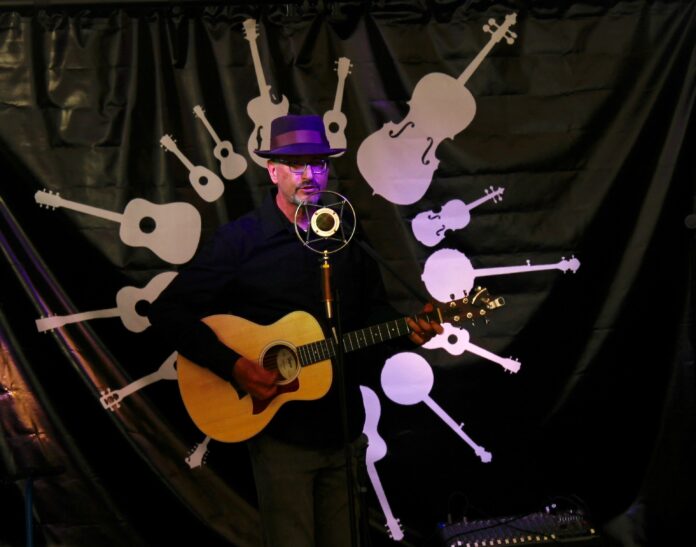
By Bruce Stengl

We must, we must, we must

We must flatten the curve.

It’ll be better, better, better

So much better if we don’t swerve—

Into the Apocalypso faster,

That would be a global disaster.

There, can you see it, feel it?

There, on the ocean breeze?

Catch it, hold it, embrace it.

It’s a brand new disease!

Borne in open markets,

Exotic animals stacked in cages,

Freshly cut meats arrayed on tables.

Feces, urine—all the rages!

“Social distance,”

Watchwords of the day.

Six feet it is—

To avoid the spray.

So slow down, slow down, slow down

Don’t be a global disgrace.

Wash your hands—

And don’t touch your face!

And hoarding TP?

How completely un-PC.

So, while you’re wiping the crap from your ass?

You forgot the shit-eating grin on your face.

Gun sales have spiked,

Ammo’s disappearing,

The populace is psyched,

End Times are nearing.

Don’t rush, don’t push, don’t crush

Everyone form a line.

The President has promised a test.

“So beautiful, it’s sublime.”

So really, truly, stay at home,

Don’t go out, do not roam,

Do not run, don’t be so quick!

Please, don’t be an Apocal-dick.

Bruce Stengl lives in Sonoma County.

Lungs and Limbs Return to Say ‘Goodbye’

0

Photo by Jenna Marek

Lungs and Limbs did not plan on releasing an album in the middle of a global crisis, but it’s hard to think of a better soundtrack to self-isolate to than the alt-pop quartet’s recently released full-length record, Great Goodbye.
The record follows the group’s 2016 EP, Big Bang. In that time, the quartet—made up of Karina Rousseau (vocals, guitar), Nick Tudor (guitar, vocals, synth), Kristen Power (synth, vocals) and Matt Power (drums)—have matured, faced personal and professional changes and are now channeling those emotions into Great Goodbye.
“I don’t want to say it’s a negative album, but it’s definitely a reflection of feeling worn out by the reality of human society,” Rousseau says. “The timing of having the album come out and having all this happen with the pandemic felt apropos.”
“I think the world is at a point where we have to say, one way or the other, goodbye to the way everything has been,” Tudor says. “I don’t know what that looks like on the other side, but I don’t think it’s possible for the world to continue plodding along and for us to expect things to work out.”
“It’s an acknowledgment, too, of appreciating what we do have while we have it, not knowing what the future looks like,” Rousseau says.
Lungs and Limbs’ signature electro-pop sound has also matured, with layered synths and electric guitar riffs interweaving themselves into melodic backdrops for Rousseau’s ethereal vocals.
“We start with a simple idea, or beat, or guitar part; and Karina writes lyrics post writing the melodies, so there’s a lot of weird sounds during the demo process until we get a theme,” Tudor—who also engineered the record—says.
Kristen Power also reveals that the demos always have a cheese-related element in the title to help the band remember which demo is which.
Despite all the electronic elements in the music, the band stresses the human element, noting that the tracks are played live and 80 percent of the synthesizers on the record are made by instruments, not the computer.
Now that the album is out and everyone is stuck at home, Lungs and Limbs are doing what most bands are doing; trying to figure out how to move forward.
“I make all sorts of crazy ideas for the future in my head,” Tudor says. “I’ve run every simulation, from good to bad, and so many seem equally likely.”
Great Goodbye is available online now at lungsandlimbs.com.

Verdant Veritas

0

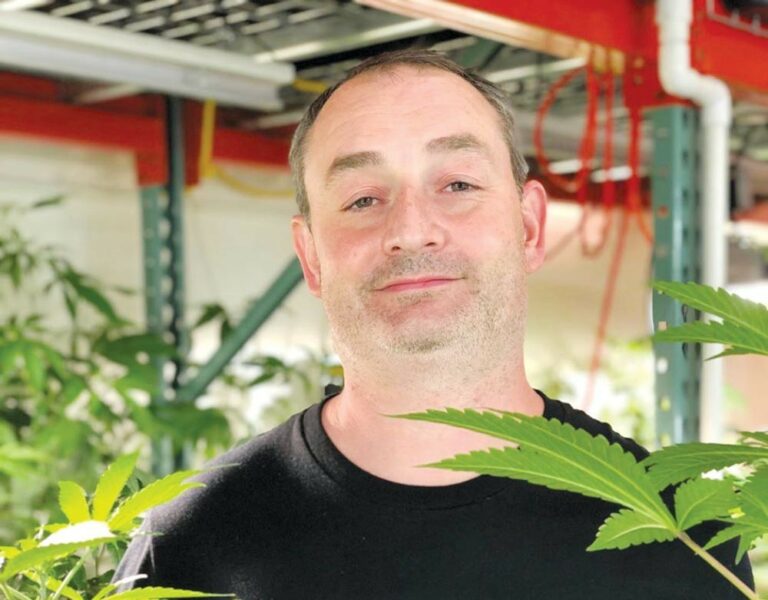
For some, the story of cannabis in California begins with the passage of Proposition 64 in 2016. For author Frances Rivetti, however, the narrative goes well “beyond the Redwood Curtain” and into a “shrouded underbelly” larded with criminality.

Big Green Country is Rivetti’s “journalistic reconstruction into fiction of what’s really going on in this part of the world, today.” A British expat-turned-local-journalist and now-novelist, Rivetti’s first two books are the nonfiction Fog Valley Crush and Fog Valley Winter, which record the region’s farm-to-table movement and immigrant agricultural history. Though Big Green Country is a marked departure for Rivetti, at least in genre, her creative process mirrors that of her journalistic work.

“I spent the first year researching, talking to many people on both sides of the fence, growers and folks who’d grown up in Mendocino and Humboldt as well as young people, especially women who had experiences as trimmers,” Rivetti says. “I read crime reports and government reports and firsthand accounts of women who have been sex trafficked.”

Initially, she thought this process would yield a local version of A Year in Provence. Instead, she uncovered a culture of lawlessness, rural poverty, addiction and alternative medicine, a broken health care system—and the stark reality of human trafficking, all within the region known as the Emerald Triangle.

By using a reality-based backdrop, Rivetti hoped to shine a spotlight on aspects of our region that have often gone unseen.

“Every time I’ve read to a group, one or two people in attendance confessed that they had absolutely no idea any of this was happening in our region,” says Rivetti, whose characters and their experiences are fictional departures from real people and events.

In the meantime, Rivetti is considering the options for promoting Big Green Country during the shelter-in-place mandate. She was fortunate to speak to local book groups prior to the quarantine but is now considering virtual book events via apps like Zoom.

“It’s not easy to get the word out as an indie author and I believe that now is the time for us to look at the books being written by those in our communities,” Rivetti says. “I actually think this is a revolutionary time to write and publish and I am glad that I am able to utilize my reporting skills to share important stories, via nonfiction and fiction.”

‘Big Green Country’, Fog Valley Press, 358 pages. Available locally from CopperfieldsBooks.com as well as Amazon.com. More info at FrancesRivetti.com.

Pot Pilgrimage

On a wild and crazy three-month sabbatical in Israel—before the coronavirus put a dent in international travel—Dr. Jeffrey Hergenrather, who calls himself “a cannabis-friendly physician,” kept his eyes peeled and ears open and learned Biblical-sized mountains about Israelis and weed.

Yes, the good doctor got stoned in “the Holy Land,” and yes, he caught the unmistakable whiff of weed in nifty neighborhoods. Still, he concluded there’s nothing like homegrown.

“Cannabis in California is the best in the world,” he tells me.

Once upon a time, Hergenrather’s medical colleagues thought he’d fallen off the marijuana map and down a rabbit hole. Now, most of them regard him as a medical-pot pioneer and world-renowned expert.

In 2008, when I first met him in his Sebastopol office, I’d been smoking joints and getting stoned for a couple of decades, but I had no idea how cannabis actually worked in my mind and body. Hergenrather persuaded me, beyond a shadow of a doubt, that human beings and the cannabis plant co-evolved over thousands of years and are now, chemically and biologically speaking, made for one another.

In Israel, in the laboratory of his colleague, Dedi Meiri—a world-renowned pot researcher—Hergenrather learned that some strains of cannabis kill some cancer cells, while other strains of cannabis don’t kill the same cancer cells. It’s complicated.

“I discovered that every cannabis strain is different from the next one,” Hergenrather says. “Even with identical clones, the terpenes are not identical.”

Put that in your pipe and smoke it.

For years, Israelis bought cannabis directly from farmers. Now, increasingly, Hergenrather says, they buy it at pharmacies, though like California, a black market exists.

“The government is screwing up a good thing because they see big money,” Hergenrather says. “In Israel, flower is hard to find, poor quality and overpriced at $70 a gram. Nearly everyone smokes cannabis mixed with tobacco. There are no edibles and no topicals.”

What surprised Hergenrather about Israel most of all was not the legendary cannabis research, but the country’s curious politics.

“Overall, the society seems to be working,” he says. “There’s no homelessness, no beggars and public transportation is inexpensive, but there’s something of a caste system for non-Jews.”

Did he miss Sebastopol? Yeah, but he also enjoyed the beautiful beach at Bat Galim, a community on the Mediterranean that reminded him of home. No wonder he says that, once life returns to normal, “I’d go back.”

I’ll tag along.

Jonah Raskin is the author of “Dark Day, Dark Night: A Marijuana Murder Mystery.”

Human-Made Music

0

Lungs and Limbs did not plan on releasing an album in the middle of a global crisis, but it’s hard to think of a better soundtrack to self-isolate to than the alt-pop quartet’s recently released full-length record, Great Goodbye.

The record follows the group’s 2016 EP, Big Bang. In that time, the quartet—made up of Karina Rousseau (vocals, guitar), Nick Tudor (guitar, vocals, synth), Kristen Power (synth, vocals) and Matt Power (drums)—have matured, faced personal and professional changes and are now channeling those emotions into Great Goodbye.

“I don’t want to say it’s a negative album, but it’s definitely a reflection of feeling worn out by the reality of human society,” Rousseau says. “The timing of having the album come out and having all this happen with the pandemic felt apropos.”

“I think the world is at a point where we have to say, one way or the other, goodbye to the way everything has been,” Tudor says. “I don’t know what that looks like on the other side, but I don’t think it’s possible for the world to continue plodding along and for us to expect things to work out.”

“It’s an acknowledgment, too, of appreciating what we do have while we have it, not knowing what the future looks like,” Rousseau says.

Lungs and Limbs’ signature electro-pop sound has also matured, with layered synths and electric guitar riffs interweaving themselves into melodic backdrops for Rousseau’s ethereal vocals.

“We start with a simple idea, or beat, or guitar part; and Karina writes lyrics post writing the melodies, so there’s a lot of weird sounds during the demo process until we get a theme,” Tudor—who also engineered the record—says.

Kristen Power also reveals that the demos always have a cheese-related element in the title to help the band remember which demo is which.

Despite all the electronic elements in the music, the band stresses the human element, noting that the tracks are played live and 80 percent of the synthesizers on the record are made by instruments, not the computer.

Now that the album is out and everyone is stuck at home, Lungs and Limbs are doing what most bands are doing; trying to figure out how to move forward.

“I make all sorts of crazy ideas for the future in my head,” Tudor says. “I’ve run every simulation, from good to bad, and so many seem equally likely.”

Great Goodbye is available online now at lungsandlimbs.com.

Disconnect: Sheriff’s Media Management of Dog Bite Sparks Controversy

0

On Saturday, April 4, a Forestville man called 911 to report that 35-year-old Graton resident Jason Anglero-Wyrick had threatened him and his family members with a gun in multiple incidents throughout the day.

Approximately 20 minutes later, around 5pm, Sonoma County Sheriff’s deputies arrived at Anglero-Wyrick’s home, according to a Monday, April 6 Sheriff’s Office press release.

The deputies were told that Anglero-Wyrick is on parole for assault with a deadly weapon, the release said.

Relatives told officers that Anglero-Wyrick was sleeping inside the house. Eventually, Anglero-Wyrick and Naustachia Green, a 35-year-old woman, walked out of the house and approached the officers. Green, with her arms outstretched, stood between Anglero-Wyrick and the deputies, who had their guns drawn and repeatedly ordered Anglero-Wyrick, an African-American man, to crawl towards them.

What happened next has become the subject of disagreement online. The account included in the Sheriff’s press release differs drastically in tone and chronology from an 18-minute video filmed by Anglero-Wyrick’s 15-year-old relative.

The differences have led many online commenters to openly criticize the Sheriff’s account.

“Lies. The video says different,” one man wrote below the Sheriff’s online press release days after it was released.

Crisis Management

In the years since smartphone videos of officer-involved shootings sparked a nationwide civil-rights conversation about policing in the 2010s, law-enforcement agencies have sought to counter bystanders’ videos with their own digital-communication efforts.

In the case of the Sonoma County Sheriff’s Office and other California law-enforcement agencies, reputation-management efforts involve hiring outside consultants to advise agencies on their Facebook and crisis-communications strategies.

Sheriff’s Office spokesperson Misti Wood confirmed that Vacaville-based Cole Pro Media and Critical Incident Videos, LLC, a company which produces videos for law enforcement agencies, both worked on the agency’s response to the April 4 incident.

Laura Cole, a former television journalist who founded both companies hired by the Sheriff’s Office, explained the need for her services in an August 2016 blog post.

“Once the media puts its spin on a story, it can be hard to break the cycle and get the facts out to the public,” Cole wrote in part.

But the opposite is also true. Once a video which contradicts law enforcement’s account emerges, the genie is difficult to put back in the bottle. In the case of the April 4 incident, two distinctive storylines have emerged.

The Sheriff’s story is laid out in an April 6 press release titled “Two people arrested in Graton with help from K9 Vader.”

Another story is shown in an April 6 YouTube video titled “Explicit Police Brutality: Police Dog Attack.”

Timeline

On Monday, April 6, the same day the Sheriff’s Office released its press release, an 18-minute cell-phone video shot by Anglero-Wyrick’s 15-year-old relative was published on YouTube. The video quickly went viral.

Shaun King, a journalist and civil-rights activist with a large national following, shared a portion of the video on Facebook with the caption “Jim Crow never ended. It hardly even changed. This is illegal.”

King’s Facebook video had 2.8 million views by Wednesday, April 15. The original 18-minute video had approximately 30,000 views on Youtube on the same day. A video released by the Sheriff’s Office on Tuesday, April 7 had 43,000 views by Wednesday, April 15.

Had the 18-minute video not existed, the press release might have ended all public questions about the case. Patch.com, Sonoma West Time and News and CBS Local all published lightly-edited versions of the Sheriff’s account, which states near the top that Anglero-Wyrick “has a history of violent felonies … and is on parole for assault with a deadly weapon.”

But, the family member’s video does not match the string of events described in the press release, many online commenters say.

The bystander’s video shows the deputies firing a Taser and releasing a dog on Anglero-Wyrick at the same moment. Another deputy runs forward and pulls Green, who was standing in front of Anglero-Wyrick, to the ground.

Vader, a jet-black K9 dog, latches onto Anglero-Wyrick’s right calf for more than a minute while a deputy appears to struggle to remove the dog from Anglero-Wyrick’s leg. Meanwhile, another deputy secures handcuffs on Anglero-Wyrick, who is lying face down on the ground. The deputy then stands and points his Taser at a small crowd of people watching the scene unfold.

But, after the camera shut off, the deputies’ original reason for arresting Anglero-Wyrick fell apart, at least according to details found within the Sheriff’s April 6 press release.

The deputies did not find a gun and “the [complainants] became uncooperative,” the release states. “[The] deputies did not include charges for the threats or gun brandishing.”

Instead, they arrested Anglero-Wyrick for violation of parole and felony resisting arrest. After being hospitalized for his wound, he posted $5,000 bail, according to the release.

Green was arrested for “misdemeanor battery on a peace officer and misdemeanor resisting arrest” but was immediately released with a citation and an order to appear in court.

Facebook Feedback

At 10:30pm on Tuesday, April 7, hours after the Press Democrat reported on online comments noting the differences between the 18-minute video clip and the Sheriff’s press release, the Sheriff’s Office released its own video.

The Sheriff’s eight-minute video begins with text, an audio recording of the 911 call which ultimately led officers to confront Anglero-Wyrick, a clip from a Sheriff Deputy’s chest-mounted camera and a section of the family member’s video showing Vader biting Anglero-Wyrick.

In a stream of comments about the Sheriff’s video, a divisive discussion unfolded. Some residents praised the deputies and Vader’s behavior. Others criticized the deputies’ decision making and their seeming lack of control over the dog.

Throughout the discussion, the agency’s official Facebook account jumped into the conversation, often thanking residents who praised the deputies’ conduct.

In one since-removed comment, the Sheriff’s account wrote “Vader did a great job[.] time for a treat” in response to a woman who commented “Good dog, Vader!”

Other comments by the Sheriff’s office appear to assume Anglero-Wyrick was guilty of the original allegations—though deputies never found a gun and did not arrest him on gun-related charges.

“No gun was even found when the search was finished,” a woman commented on the Sheriff’s Facebook video.

“We did not find a gun but they had time to dispose of it,” the Sheriff’s Office responded.

The Facebook posts sparked outrage among some county residents. Indivisible Petaluma urged members to contact the Sheriff’s Office. Many of the Sheriff’s offending posts have since been removed or edited.

In response to questions about the Sheriff’s social media policies, Wood said that “Law enforcement social media programs are still new and we’re on the leading edge. Like all new programs, there’s opportunity to adjust and improve as we go.”

“We will make some adjustments moving forward,” Wood added.

Wood did not directly respond to a question about whether the agency has rules about commenting on on-going investigations and presumptions of guilt in social media posts.

Will Carruthers is a news reporter for the Pacific Sun and North Bay Bohemian. Email tips to wc*********@*****ys.com. Follow him on Twitter at @Carruthers_W.

Cycling Is the Latest Activity to Go Virtual


Sonoma County Bicycle Coalition
has canceled classes, rides and other events through April due to the coronavirus outbreak, but the group and others like it continue to inspire and engage cyclists online.

First, the coalition is holding a new weekly online Bike Chat get-together via Zoom, Wednesdays at noon. The series covers new topics of conversation each week, with a talk about “Cycling During the Pandemic” on April 15, a discussion of “Women & Cycling” on April 22 and a conversation on “Electric Bikes” scheduled for April 29.

Families can also participate in Sonoma County Bicycle Coalition’s month-long Green Sneaker Challenge, incorporating a variety of activities you can do at home, with prizes and more at bikesonoma.org.

Marin County Bicycle Coalition is kicking off its own series of virtual roundtable discussions, letting the public connect to fellow cycling enthusiasts to talk about making bicycling safer in the North Bay.

The roundtable series begins on Thursday, April 16, at 4pm via Zoom. The first virtual event will cover bicycling projects and advocacy campaigns in San Rafael, with following weeks covering topics pertaining to Southern Marin, Novato, Corte Madera and Larkspur, and Fairfax and San Anselmo. Register for the roundtable events at marinbike.org.

Napa County Bicycle Coalition is also going online, and encouraging cycling fans to participate in their #BikeNapa Photo Contest. Entries should show how cycling can be safe in the shelter-in-place situation, demonstrating social distancing on the Vine trail or elsewhere in Napa Valley. Enter the contest at napabike.org.

Batcave to the Rescue

Santa Rosa store pledges 10,000 comic books to local kids

Green Rush or Bust?

Everyone wants to wear face masks this season. Toilet paper (even single ply!) has vanished from shelves across the nation. And the legend of the once-scoffed-at hand sanitizer grows daily. Is cannabis next? “We saw sharp daily increases in sales, number of transactions and ‘average’ transaction amounts for the five days prior to...

Letters

Thanks for the Lit Extra appreciation for your recent issue (“Spring Lit,” April 1), given the sad state of journalism/newspapers in general, but especially during a global crisis affecting everyone, everywhere. Such a joy...

Open Mic: Let’s Shake on It

By Bruce Stengl We must, we must, we...

Lungs and Limbs Return to Say ‘Goodbye’

Lungs and Limbs did not plan on releasing an album in the middle of a global crisis, but it’s hard to think of a better soundtrack to self-isolate to than the alt-pop quartet’s recently released full-length record, Great Goodbye. The record follows the group’s 2016 EP, Big Bang. In that time, the quartet—made up of Karina Rousseau (vocals, guitar), Nick Tudor (guitar,...

Verdant Veritas

Frances Rivetti’s ‘Big Green Country’

Pot Pilgrimage

Dr. Hergenrather Goes to Israel

Human-Made Music

Lungs and Limbs did not plan on releasing an album in the middle of a global crisis, but it’s hard to think of a better soundtrack to self-isolate to than the alt-pop quartet’s recently released full-length record, Great Goodbye. The record follows the group’s 2016 EP, Big Bang. In that time, the quartet—made up of Karina Rousseau (vocals, guitar), Nick...

Disconnect: Sheriff’s Media Management of Dog Bite Sparks Controversy

On Saturday, April 4, a Forestville man called 911 to report that 35-year-old Graton resident Jason Anglero-Wyrick had threatened him and his family members with a gun in multiple incidents throughout the day. Approximately 20 minutes later, around 5pm, Sonoma County Sheriff’s deputies arrived at Anglero-Wyrick’s home, according to a Monday, April 6 Sheriff’s Office press release. The deputies...

Cycling Is the Latest Activity to Go Virtual

Online events take place of group rides and other outdoor action.
11,084FansLike
4,446FollowersFollow
6,928FollowersFollow