Sewing a Face Mask for COVID-19? Help This Napa Valley Face Mask Drive

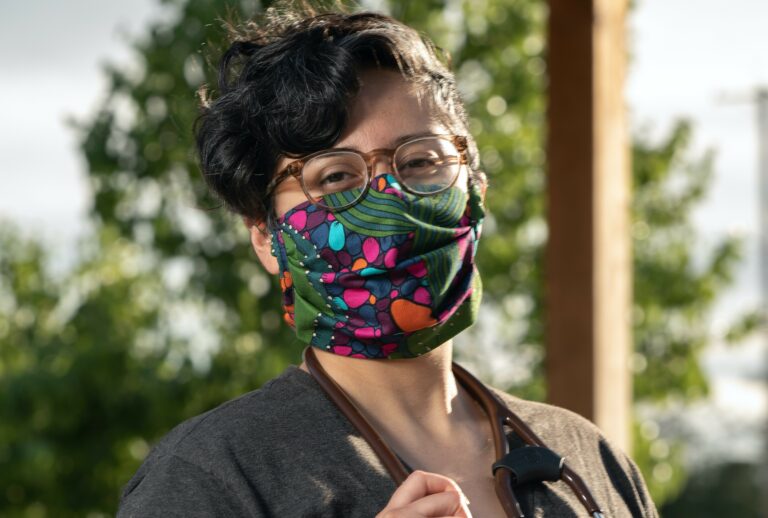
Napa-based organization Operation: With Love From Home usually sends care packages to U.S. soldiers serving overseas. In the last month, they’ve transitioned to local care for those most vulnerable to Covid-19 in Napa County.

First, the group helmed a Personal Protective Equipment (PPE) drive for healthcare workers. Now, they host a Face Mask Sewing Drive, collecting home-sewn masks and distributing them to residents who need them most with the help of Napa Valley CanDo and Napa Valley Community Organizations Active in Disaster (COAD).

The plan is to collect 25,000 face covers in the next eight weeks on Saturdays. The goal is to keep anyone who is asymptomatic but may have the virus from unknowingly spreading it to others. This will also help reserve crucial N95 masks, surgical masks and ear loop masks for professional healthcare providers.

While face covers do not replace state and local public orders to shelter-at-home, keep social distancing and regularly wash your hands. Yet, they are another option for protection when anyone needs to leave their home for an essential purpose.

Napa Valley CanDo volunteers will be picking up home sewn face covers all over Napa, on the next eight Saturdays from 9am to noon. Napa sewers can also opt to drop off face masks to volunteers stationed at Storage Pro, at 626 California Blvd in Napa.

From there, the masks will be counted, sorted and delivered to where the needs are the greatest in Napa Valley, including skilled nursing, assisted living, and board and care facilities, and those working in essential services that have high contact with the public.

For instructions in how to make masks and recommended materials, go to Operation: With Love from Home’s website.

Local photographer captures the moment

What began as a way to document this unique historical moment for her own family turned into a community-driven mission for San Rafael mom-and-photographer Cristen Wright.

With her trusty Canon camera in hand, Wright has now set about capturing images of area families sheltering at home—not just for posterity but for the sense of community it engenders. Local media—including producers for local television station KGO, which recently profiled Wright—has noticed. Below is our Q&A with the lauded photographer.

Bohemian: From what I understand, this project began as a way to document your own family’s experience through this historic time. What inspired you to venture out to capture images of other families?

Cristen Wright: Yes, I am always taking photos of my family and when the shelter-in-place started and remote learning for school began I wanted to make sure to document this time for our family. For the first time ever, our calendars have been cleared and we have been given this time to be with our family. I wanted to photograph our journey as a family. A good family friend and neighbor told me about a photographer in his hometown offering “porch sessions”—photographing families on their front porches during the COVID pandemic. I thought it was a great idea and a great way for me to give back to the neighborhood and community I love so much. So many families are at home together, right? I wanted to document that.

B: How does a “no contact” photoshoot work? What’s your creative process?

CW: Friends and neighbors reach out to me via text and sometimes email. I set up a time to come by their home to do a quick photoshoot of their family from the sidewalk in front of their home and then I am on my way. I send them a text to let them know I am out front and we start when they come out. It only takes a few minutes, all done from a safe distance (I use my telephoto lens), and then … I move on to the next house. All of the families I have photographed are friends or friends-of-friends in our neighborhood.

B: In the KGO profile (congrats!) it says you captured images of 13 families in a single Saturday—on a bike! How do you find the drive to achieve so much, given what’s happening in the world?

CW: My husband is a physician and we have numerous friends and family who are physicians around the state and country. I hear what is going on and what our healthcare professionals are facing. I really wanted to give back to our community in some way and to bring some light and joy during a time that for all of us is challenging. Photography is something that I love so I wanted to share it with our neighbors.

B: How have the families you photograph responded to the process and the resultant images?

CW: Families have been so appreciative! I have had so many families share with me the joy that this has brought them. I will share some of the feedback I have gotten from families …

“Cristen, Thank you for doing what you are doing. I know for a fact it is a light during these times for everyone you photograph.”–Sandee

“Sitting here crying. These are so special. You have no idea how amazing you are. Love you so much.”

“You are the MVP of SIP. Thank you for sharing your amazing talent and joy!!!”

B: I know you’re not charging for these photos (so cool!). Is this work rewarding and is it therapeutic for you as an artist?

CW: Correct, no charge! It is incredibly rewarding to do something for others! I really love capturing the connection between families through photos. It has been really neat to photograph families in front of their homes. Every home is different and each home so special.

Open Mic: Our Better Nature

0

The other day I awoke with a brilliant idea. I would arrive at Trader Joe’s when it opened and find newly stocked cans of fish protein on the shelves that were bare the afternoon before. Maybe there’d even be hand sanitizer that had come in during the night. I’m pretty sure had it been there, my first thought wouldn’t have been to share. Thank God I could laugh at myself when I got to the parking lot and it was busier than the day before Thanksgiving. Who was I to think I had an idea that hadn’t occurred to anyone else?

Waiting in the serpentine ‘quick’ check-out line, I struck up a conversation with the man in back of me. We agreed that personal connection is what’s helping us in present times—more of a boost to our immune systems than all the flu remedies long gone from the shelves. A friend put it more succinctly: the crazy I get if I isolate is more deadly than any flu. I remembered to thank the checker for coming in to work and got a surprised-but-pleased smile back.

Nineteen years ago on 9/11 I lay in bed terrified, sure that the planes I thought I heard in the dark were attacking us. Several times over subsequent years, I’ve startled awake to rumbling from deep in the earth and a shaking bed. Each time I’ve convinced myself the next morning that things are back to normal because everything around me looked the same.

Not this time. This time shelves are empty, schools are closed, we’ve become a community of people peering at one another from 6 feet away over thick, white masks. This time it affects all of us. We have to cooperate if we’re to survive. We’ve known for a long time that viral outbreaks will become more frequent and widespread. If a flu doesn’t get us, climate change will. This time we are being forced to confront not only our own vulnerability, but that of the whole planet. At least I am. When I heard that 15 percent of people over 65 are likely to die from the virus, I felt relieved! My mind had been focused on how to get hand sanitizer, what herbs would boost my immunity and would I be the first in line at Trader Joe’s. But if I’m going to die—and at 73 that’s coming sooner rather than later—the more important question is: How do I want my living to be?

I don’t want to go back to sleep this time. I want to practice the values of kindness and connection, especially when those qualities seem puny in relation to the scale of the threat confronting us. I know what makes living not only bearable but worthwhile, and it is my choice moment to moment whether I act accordingly.

Laura Bachman lives in San Anselmo and is a retired body worker and Sandplay therapist.

Fire victims question PG&E proposal

0

A deal intended to allow PG&E to exit bankruptcy protection later this year may have begun to crumble.

Since declaring bankruptcy in January 2019 to shield itself from an estimated $30 billion in liabilities tied to recent wildfires, PG&E has reached agreements with various parties, including insurance companies, stockholders and bondholders.

In March, the utility proposed an updated deal with fire victims. At first, the proposal appeared to be gaining momentum. Gov. Gavin Newsom endorsed the idea and some attorneys representing fire victims began to push their clients to vote in favor of it.

But, in recent weeks, opposition to the deal among fire victims has grown. In the past two weeks, three of eleven members of the Tort Claimants Committee (TCC), a group of 11 fire victims who represents 70 percent of fire victims in bankruptcy court, have resigned in order to publicly criticize PG&E’s latest proposal.

There are many criticisms of the deal, however, the main point of contention around is whether or not the proposed settlement will actually be worth $13.5 billion by the time victims get their share. There are even concerns about when victims will receive payment if they do approve the deal.

PG&E has promised to pay other groups, including insurance companies, in cash. However, the largest chunk of the victim’s part of the proposed $13.5 billion proposed payout is $6.75 billion in stock options which will be slowly distributed through a trust.

Now, with a worldwide financial crisis unfolding due to the coronavirus pandemic, those stock options could be far less valuable than victims were once led to believe.

In a legal filing on Monday, Eric Lowrey, a Certified Restructuring and Insolvency Advisor (CIRA) hired by a separate group of wildfire victims, testified that the victims’ stocks may only be worth $4.85 billion, not $6.75 billion, by the time fire victims gain access to them.

In a document filed Monday, attorneys representing the TCC asked U.S. Bankruptcy Court Judge Dennis Montali for permission to send a letter to all fire victims informing them of their concerns about the proposed deal. They also requested that victims delay their vote until they have more information about PG&E’s proposal.

“The TCC is requesting the victims to delay voting on the plan, yes or no, until the May 2-15 time period, so the victims can learn whether or not PG&E has fixed these problems before voting,” Michael Carlson of Caymus Vineyards, a TCC member, said in a statement released to the press on Monday, April 6.

Montali had not announced a decision on the request as of press time on Tuesday, April 7.

[UPDATE: In a ruling released late Tuesday afternoon, Montali did not endorse the TCC’s request to send a letter to fire victims. The TCC may still send a letter to its members on its own.]

During a bankruptcy court proceeding Tuesday morning, Stephen Karotkin, a lawyer representing PG&E dismissed the TCC’s claims as “a blatant attempt to renegotiate the deal that they signed” and added that PG&E had never guaranteed the price of the stock, a reporter for Utility Dive, an online industry publication, wrote on Twitter.

Kirk Trostle, a Camp Fire victim who was one of three people to recently resign from the TCC, says he will vote against PG&E’s current proposal and encourages other fire victims to do the same.

“Unless there are significant changes and PG&E guarantees and 100 percent protects $13.5 billion in a fire victims trust fund, I will be opposing the plan,” Trostle told the Bohemian on Tuesday, April 7.

But Trostle doesn’t want other fire victims to take his word about the deal. He is urging other fire victims to read court documents before voting.

“Educate yourself before you vote,” Trostle said. “There’s a lot of misinformation out there.”

Victims have until May 15 to vote. The plan requires two-thirds support to be approved.

Elevated With Legacy

Soon after California’s Department of Public Health lodged cannabis-industry laborers on the state’s “essential workforce,” and therefore not required to stay at home, David Drips, 39, and his business partner, Zac Hansen, 28, began performing essential tasks on a windswept, 300-acre farm in West Sonoma County.

The fierce wind, along with county regulations and regulators, seems to have given Drips and Hansen more trouble than the coronavirus, at least so far. Neither of them has been physically ill.

At 410 feet above sea level, I had a spectacular view of Sonoma Mountain, Taylor Mountain and the Cotati Grade on Highway 101.

Drips sat down, rolled a fatty, fired it up and inhaled. If he was stoned, I couldn’t tell. I didn’t need his joint, and wouldn’t have taken it even if he had offered.

In a text that morning, my friends at the National Organization for the Reform of Marijuana Laws (NORML) urged me and all cannabis consumers not to share pipes, joints and bongs, and, if-and-when possible, to turn to tinctures and edibles since they don’t stress lungs. Those NORML friends also urged the use of 90-percent-plus Isopropyl Alcohol to rid germs and pathogens from delivery systems.

Before I met with Drips and Hansen, I bought gummies at my local dispensary, and after consuming just one I was high. Tens, if not hundreds of thousands, of other Californians were also high. In the wake of the virus, cannabis sales have boomed, according to one source, by more than 200 percent. Last year legal cannabis sales in California topped $3 billion, while the illicit market came in at just under $9 billion.

Drips and Hansen, both in T-shirts and jeans, started their business on Petaluma Hill Road. Hence the name of their company, “Petaluma Hill Farms,” which they’ve retained, though they were forced to move to Two Rock Road where there are more rocks and cattle than human beings.

“We were fucked by the Sonoma County Planning Department,” Drips says. “We understand the need for some rules, but the county has used too big an axe, so a lot of my friends have been cut out of the industry. The only option for Zac and me has been to adapt. We moved from a parcel zoned RR, or “Rural Residential,” to LEA, or “Land Extensive Agriculture District.”

The 300-acre-parcel is well suited for cannabis. There are no schools or school kids nearby, and no next-door neighbors who might go to court to stop them. The cannabis garden itself is set back 900 feet from the road. There are no creeks to protect and no trees that might need to be chopped down to provide more sunlight.

“We have all the sun we need,” Drips says. “Plus good soil and lots of clean water. That equals good marijuana.”

Drips isn’t your ordinary California pot farmer, though few—if any—pot farmers are “ordinary.” Over the past 40 years, I have met scores of them: the law abiding and the outlaws, the environmentally conscious, the greedy and the compassionate. Drips keeps on keeping on and abides by best industry practices. Hundreds, if not thousands, of growers—some of them his friends—once cultivated modest commercial gardens in and around Sebastopol and were pushed out by legalization, taxation and regulation.

“I have faith in what we do at our farm,” Drips says. “I believe in marijuana sociologically, economically, medically, spiritually and more. I can’t see doing any other job, though I have worked in construction.”

Hansen adds, “I love this work.”

A graduate of Rancho Cotate High School, where he played lacrosse, Hansen has grown cannabis ever since he turned 16. His 8-year-old daughter attends school in Rohnert Park, his hometown.

Like Hansen, Drips knows and loves Sonoma County, though he was born in Stockton, has traveled widely and has lived in Louisiana, Florida and Virginia.

“America is a beautiful place,” he says. “Though there’s no place more beautiful than here.”

What makes Drips stand out more than anyone else in the field of marijuana cultivation is that he served for five years in the U.S. Navy, and was deployed in Kosovo, Iraq and Afghanistan.

“The military helped me to grow as a person,” he says. “I visited 23 different countries and acquired a foundation of knowledge.”

Sonoma County officials may not know his military background and training. He doesn’t brag about it, though he’s not hiding it either. Assertive without being aggressive, he’s ready to fight the good fight.

“The county is waging a war of attrition against marijuana growers,” Drips explains. “They want us to fail. They hope that we’ll pack up, clear out and not come back.”

Drips says he has no beef with most of the county supervisors, including Linda Hopkins, Shirlee Zane and Susan Gorin. He’s attended enough meetings to know them and he’s spoken out so often that he’s made a name for himself as an advocate for the cannabis industry. But let’s be absolutely clear: He doesn’t appreciate the folks at Code Enforcement who have hammered away at him and at other growers sometimes, it seems, just to be ornery.

Drips has had a series of verbal skirmishes with officials who want him to jump through one hoop after another: build a fence, plant trees to hide the fence, pave a road in case of fire and more.

Drips hasn’t minded spending money on essentials at Friedman’s Home Improvement and Harmony Farm Supply & Nursery, and paying Weeks Drilling and Pump for a well. In fact, he points out that he and his fellow marijuana farmers have helped to keep local businesses afloat through drought and fire.

“I have not taken any corporate investment,” Drips says. “It’s all personal savings, though a friend gave me a $30,000 personal loan.”

He’s received counsel from a half-dozen lawyers, including Joe Rogoway, Omar Figueroa and Lauren Mendelsohn. Drips and the growers who have his back, as he has theirs, recently revived the dormant Hessel Grange, which now, for the first time, has an emphasis on cannabis farmers and farming.

“Some of us feel like we’ve been denied our basic rights,” Drips says, “But we still believe in the American Dream.”

His son Donough attends elementary school and his stepson Joshua goes to high school. Drips would like them to inherit the business and become farmers.

No Relief

Today (March 29) is the third day since Congress passed a Covid-19 relief bill that is supposed to actually help everyday people. The first two relief bills demonstrated that people like you and me are not Congress’ No. 1 priority. A huge corporate bailout and a one-time payment of $1200—not enough to pay the rent for most people—shows how out-of-touch Congress is.

The rent is due in two days, and I have yet to hear any elected official tell America just when we’ll see this stimulus money. And while evictions and foreclosures have been frozen, rent and mortgage payments have not.

So where is the outrage from our federal officials? Who is speaking up for YOU? Who is demanding to know when their constituents will see a check or standing up and saying “This just isn’t enough”? Why do we keep electing the same hacks? Where is our representation? America can do better than it is doing and Americans can do better than 99 percent of our current elected officials.

Jason Kishineff

American Canyon

Other Options

Amazon’s top legal executive suggested the company’s senior leaders fend of workplace safety criticism by turning the focus onto an activist warehouse worker it had fired just days earlier, according to leaked notes from a meeting with top executives.

Amazon General Counsel David Zapolsky proposed a strategy with CEO Jeff Bezos in attendance, and Amazon Senior Vice President of Operations Dave Clark and Senior Vice President of Global Corporate Affairs Jay Carney executed it.

Bezos won’t quit, but he has the authority and obligation to FIRE Clark, Carney and Zapolsky.

There are other options for Amazon; they just require a few more clicks of the mouse.

Gary Sciford

Santa Rosa

When it roars it purrs

0

Like the rest of the nation, I’ve been sheltering in place trying to avoid the most virulent contagion in recent memory—Tiger King. In my limited space here, I won’t bother explaining what this Netflix phenom is all about except to say it’s a streaming docu-series about an eccentric private zoo-owner, whose story is aptly summed in the show’s subtitle “Murder, Mayhem and Madness.” ’Nuff said—if you need more, read Sarah Summers’ exclusive “Before You Watch ‘Tiger King’ Tonight, Read This” at Bohemian.com.

Being the editorial professional that I am, I thought I should at least know what Summers’ excellent article was about before running it so, yes, I risked my wellbeing in the interest of journalistic integrity and cued up Tiger King. But before doing so, I also thought it prudent to inoculate myself with some wine. Ergo, I opened a bottle of my regular Wednesday night go-to—the Eric Kent 2018 Appellation Series, Sonoma Coast, pinot noir.

I usually sip this fine, complex red while ensconced on a couch at La Dolce Vita Wine Lounge but alas, sheltering in place precludes me from doing so. Fortunately, the proprietor makes her stock available for no-contact pick-up outside the Petaluma wine lounge at a discounted retail price (about $25). Brilliant. So here we are and this is where the eerie synchronicity begins: On the back of the wine’s tastefully appointed label is an image, one that draws its inspiration from Dada, Surrealism and Pop Art (my holy trifecta), and one that also suddenly took on added resonance—yep, it’s a tiger.

Now, I’m not one to get woo-woo about a picture of a cat on a wine bottle just because there’s one on TV, but my Jungian hackles do get up when, within minutes, I receive a random email with William Blake’s The Tyger copypasta’d in it.

Tyger Tyger,
burning bright,
In the forests of the night;
What immortal hand or eye,
Could frame thy fearful symmetry?

Neither my hand nor eye was immortal enough to frame such fearful symmetry, and suffering a childlike propensity for being Jung and easily Freudened, I stood a chance of having a full-blown panic attack had the remedy not been readily at hand—the lush red and black fruit, hints of Asian spice, a whisper of French oak and 14.2 percent alcohol already in my glass.

“This inaugural bottling is already very pleasing and we’re certain it will reward some near to mid-term cellaring (if you can keep your hands off it),” reads the wine’s romance copy. “Sonoma Coast Pinot lovers will not want to miss this delicious gem.” Here, here. Pair with Joe Exotic, Blake and perhaps Jacques Tourneur’s 1942 film Cat People.

LBC begins online programming

0

Since 1981, the Luther Burbank Center for the Arts has hosted national touring artists in its 1,600-seat theater and been the home for locals Left Edge Theatre and Roustabout Theater. Now, the doors to the Santa Rosa art center are shut for the foreseeable future due to the coronavirus outbreak.

Yet, the LBC is more than a building, and the nonprofit organization’s staff now works to continue their various community engagement and education initiatives, shifting to an online format with three free, digital, social-media programs—Let’s Be Creative, Drop the Mic and Luther Locals.

“We knew that we wanted to produce something for the families and students at home, to keep them connected to the arts and arts education,” says Ashleigh Worley, director of education and community engagement. “The other demographic that is important to us is teachers, and what can we offer for schools and teachers that would be helpful.”

Let’s Be Creative is the LBC’s answer to the first part of that equation. The daily video series features interactive lessons in dance, musical instrument care, visual arts and more for kids of all ages. For teachers, the LBC is launching a weekly email list of local resources for teaching classes at home.

The LBC’s other digital programs hope to keep the general public connected to arts as well.

Drop the Mic is a curated content list of online clips, shows and other projects, with weekly topics centered around streaming concerts, comedy culinary arts and more. Luther Locals features a weekly remote performance from a local musician.

“Luther Locals is an idea of how we can engage more with our local artists, because there are so many talented people here,” says Anita Wiglesworth, director of programs and patron services. “The current situation had us shift focus to not only support our local artists, but provide entertainment for our community.”

Luther Locals debuted last week with a video by Sonoma County pianist and singer-songwriter (and former LBC box-office employee) Joni Davis, who performed a darkly melodic original song, “Lyell Canyon,” from her living room.

“I wrote that song a couple years ago,” Davis says. “It came out of a hard time, when I took a minute out of my life to sit and think. When Anita approached me for this idea, I thought of it, because I feel like I’m in that same reflective space with everything that’s going on.”

Luther Burbank Center for the Arts’ digital programs are on
facebook.com/lutherburbankcenter.

How Tarot Helped This Writer-Artist Find a Brighter Future

0
Petaluma-native Kary Hess’ new endeavor, the SparkTarot deck, could not have come at a better time. As the world seemingly unwinds minute by the minute and navigating the phantasmagoria of coronavirus, climate change and social unrest becomes ever more chaotic amidst the town criers and unhinged madmen, our days are harrowing at best.

“Some have asked me if the tarot can predict the outcome of the current pandemic,” says Hess, a regular Bohemian contributor known for her community and social-issue-themed features, who is also the life partner of its editor Daedalus Howell. “Tarot can show you how you can approach the situation, creating an outcome for you. And as I always say, it’s not set in stone—if you don’t see a desirable outcome, you can always consider what you can do differently now to evoke a different outcome later.”
Hess’ new deck just might help with navigating the path in the days that lie ahead. Included in the box set she created are a deck of 78 luminous, hand-painted cards and a 178-page guidebook, which she wrote to help people interpret the cards on their own. Tarot cards are designed to help focus the seeker’s intentions; to provide a little cosmic perspective about what is and what may be; and to help meaning reveal itself through seemingly random assemblages of figures, objects and animals.

Often dismissed as New Age or occult, the tarot is not as old as one might think. Tarot first appeared as a deck of playing cards in 15th-century Europe, becoming trendier in later centuries when used for divination. The suits associated with contemporary playing cards—spades, clubs, hearts and diamonds—varied significantly by region. The modern tarot includes five suits: triumphs, cups, wands, swords and pentacles. The SparkTarot replaces swords with serpents, and pentacles with stones.

Hess’ figures are mostly female, and intentionally represent racial diversity, making the deck not only more inclusive but opening up new possibilities for interpretations.

“Traditional tarot decks are pretty medieval; white and male oriented,” Hess says. “I wanted this deck to be diverse and feminine, so most of the cards are women, even those that are traditionally male. That said, there are a couple of potentially male characters in the deck.”

Hess has a degree in fine arts and has worked as a website and graphic designer as well as a journalist. She first became interested in creating cards as a child.

“I’ve always loved card decks,” she says. “When I was a kid, I made a deck of playing cards with different art than the usual plain hearts, diamonds, clubs and spades. I remember thinking that the simple imagery on the playing card deck was a missed opportunity for art.”

Over the years she began creating several tarot decks but never painted more than a few cards each time.

“With this one I accidentally tricked myself into creating it,” Hess says. “My partner and I had just made a feature-length art film and one night we were watching an Agnès Varda movie, Cléo from 5 to 7, to get inspiration for the next film. The opening sequence was a tarot reading. I said, ‘We need a tarot scene in the next film.’”

As the film’s production designer, she very practically decided she only needed to make nine cards for the shot.

“After creating the nine cards, I was on a roll,” she says. “After seven months, I’d painted the entire tarot deck, posted the cards on Instagram as I went, wrote a corresponding guidebook and started a business around it.”

Hence, the “Spark.”

Her art supplies all fit into a portable bag, so she was able to paint most of the cards at cafés around the Bay Area.

“I painted each card very deliberately and with absolute focus on the meaning behind it,” Hess says. “I considered older decks, looked at the imagery, decided what the core experience needed to be and began sketching. After one to three sketches, I’d have my image. Then I drew it into a watercolor sketchbook and painted it. I’d listen to inspiring music or podcasts while painting.”

In the conception phase of SparkTarot, Hess sought to create a deck that leaned towards life’s potential and away from ominous foreboding.

“The imagery on the SparkTarot deck isn’t created to be scary, so it doesn’t cause troubling readings visually, which some decks can do,” Hess says, addressing doubters and those afraid of what a reading will reveal. “As far as the readings themselves, when I read tarot I help guide people to see how they can approach an issue based on their current situation, so they are always in control of how they choose to react.”

Hess’ cards connect phantom threads that stitch together imagery, intention and the latest theories in physics.

“The Tarot has long been considered ‘woo-woo’ or ‘magic,’ but it might also be a perfect example of the quantum concept of collapse,” she writes in her blog. “Wave function collapse—known as the ‘Copenhagen interpretation’—was discovered by Niels Bohr and Werner Heisenberg, and is the proposal that all outcomes of a situation exist simultaneously—also called ‘superposition’—until an observer takes action by observing, which then collapses the possibilities into one state or another.”

Hess, who radiates a youthful glow in her late 40s, believes learning how to take spiritual guidance into one’s own hands is needed now more than ever.

“It has been so fulfilling to use my skills of painting, writing and graphic design with a spiritual project that is also really helpful to people looking for their next steps in life,” she says.

Hess believes tarot can both deepen and heal one’s broken connections to others and the natural world by simply helping them tune into their own process, using imagery with the universe as a guide.

“What is great about tarot is that it is a simple, personal way to see your next step,” Hess says. “Sometimes life can be overwhelming or confusing, and it’s great to have the path illuminated, even just a little bit.”

Hess explains how when one reads tarot, intentions infuse the cards, which informs how their imagery is interpreted. Because the cards represent aspects of life, it’s as if the universe participates in making sense of them—and by extension, one’s own life.

“Maybe someday science will really explain what seems like magic to us now,” Hess says. “Malleable time, possibilities manifested with intention. But for now, we have tarot.”

And what better way to re-enchant the psychic forest in these trying times, than with a little magic?

To learn more, visit SparkTarot.com. [DEPARTMENT OF CORRECTIONS: The print and initial web version of this story failed to disclose that the story’s subject is in a relationship with the editor. It is this publication’s policy for editorial personnel to recuse themselves from stories in which they have a material conflict of interest, which was not done in this case. The Bohemian apologizes for this error.]

Logan On Hold

As the timetable for the coronavirus outbreak and the subsequent stay-at-home response continue to lengthen into May and beyond, more and more events and planned creative projects are being shelved for a later date or being canceled outright.

The recently crowdfunded documentary Your Friend Logan: The 4-Track Mind of Logan Whitehurst, about late North Bay–musician Logan Whitehurst, is the latest endeavor to suffer from the sheltering orders. Director Conner Nyberg announced today on the project’s Kickstarter site that the production, planned to begin this summer, has been delayed at least a year due to the current pandemic.

As reported in the Bohemian in February, the documentary, helmed by the South Carolina–based Nyberg and North Bay–producer-and-performer Matlock Zumsteg, will include interviews with dozens of people who knew Whitehurst best and incorporate Whitehurst’s original animations and rare archive material to create an intimate and celebratory film.

Nyberg’s statement on the delay notes that several of the interviewees are high-risk for coronavirus and the disease COVID-19, and that one interviewee was recently quarantined. The 20-year-old Nyberg also begins film school fall semester, meaning the earliest he and Zumsteg now predict that filming can begin is summer of 2021.

That said, the production crew remains hard at work prepping the film’s production, including combing through archival footage from Whitehurst’s life in music and art.

Read the full statement from Nyberg below.

Hi everyone. Some bad news today.

When the fundraiser ended, COVID-19 just began to spread in the States. At the time, Matlock (our producer) and I were cautiously optimistic, believing that once the initial panic had worn off, things would be able to carry on as usual.

Needless to say, that hasn’t been the case, and it appears that things still have ways to go before it starts to get better again. Several of our interviewees are high-risk (one interviewee was recently quarantined), and if projections are true, we’ll be expecting a second wind from this virus when school starts back up in the fall.

So we’ve decided to indefinitely postpone production.

Like everyone else, we’re taking this all day by day, but if we had to give an ETA for when we’ll be able to start back up production, our best estimate would be Summer 2021. This is keeping in mind that this virus probably will not totally blow over until the end of the year, and that I’ll be starting my first year of university this fall.

That being said, work on the documentary is not over. Far from it – we’re taking advantage of this situation to get even more done. This has given us even more preparation time, a chance to collect more resources, and more time to focus on getting rewards out to all of you.

Speaking of which, there are only a handful of people who haven’t yet completed their reward surveys! Please fill those out as soon as you can, so that we can try and get the batch of Needlejuice rewards out at one time.

We apologize for such a large delay. This is as unusual of a situation as it gets, and we hope you understand. We also hope that all of you are safe and that you’ll stay safe.

Thank you for all of your support so far, and we will continue to keep you guys updated on this awesome project.

Your friend,

Conner

Sewing a Face Mask for COVID-19? Help This Napa Valley Face Mask Drive

Plan to collect 25,000 face covers begins Saturday, April 11.

Local photographer captures the moment

What began as a way to document this unique historical moment for her own family turned into a community-driven mission for San Rafael mom-and-photographer Cristen Wright. With her trusty Canon camera in hand, Wright has now set about capturing images of area families sheltering at home—not just for posterity but for the sense of community it...

Open Mic: Our Better Nature

The other day I awoke with a brilliant idea. I would arrive at Trader Joe’s when it opened and find newly stocked cans of fish protein on the shelves that were bare the afternoon before. Maybe there’d even be hand sanitizer that had come in during the night. I’m pretty sure had it been there, my first thought wouldn’t...

Fire victims question PG&E proposal

A deal intended to allow PG&E to exit bankruptcy protection later this year may have begun to crumble. Since declaring bankruptcy in January 2019 to shield itself from an estimated $30 billion in liabilities tied to recent wildfires, PG&E has reached agreements with various parties, including insurance companies, stockholders and bondholders. In...

Elevated With Legacy

Soon after California’s Department of Public Health lodged cannabis-industry laborers on the state’s “essential workforce,” and therefore not required to stay at home, David Drips, 39, and his business partner, Zac Hansen, 28, began performing essential tasks on a windswept, 300-acre farm in West Sonoma County. The fierce wind, along with county regulations and regulators, seems to have given...

No Relief

Today (March 29) is the third day since Congress passed a Covid-19 relief bill that is supposed to actually help everyday people. The first two relief bills demonstrated that people like you and me are not Congress’ No. 1 priority. A huge corporate bailout and a one-time payment of $1200—not enough to pay the rent for most people—shows how...

When it roars it purrs

Like the rest of the nation, I’ve been sheltering in place trying to avoid the most virulent contagion in recent memory—Tiger King. In my limited space here, I won’t bother explaining what this Netflix phenom is all about except to say it’s a streaming docu-series about an eccentric private zoo-owner, whose story is aptly summed in the show’s...

LBC begins online programming

Since 1981, the Luther Burbank Center for the Arts has hosted national touring artists in its 1,600-seat theater and been the home for locals Left Edge Theatre and Roustabout Theater. Now, the doors to the Santa Rosa art center are shut for the foreseeable future due to the coronavirus outbreak. Yet, the LBC is more than a building, and the...

How Tarot Helped This Writer-Artist Find a Brighter Future

Petaluma-native Kary Hess’ new endeavor, the SparkTarot deck, could not have come at a better time.

Logan On Hold

Film celebrating late North Bay musician suffers stay-at-home setback
11,084FansLike
4,446FollowersFollow
6,928FollowersFollow