The Brothers Comatose Lead Fans in Quarantine Jam

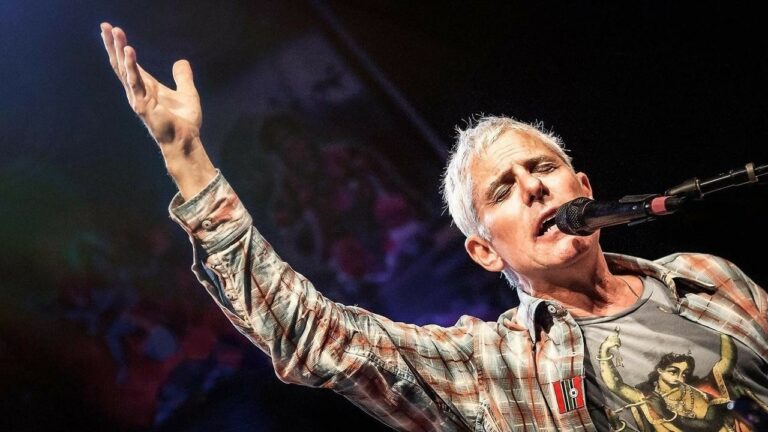
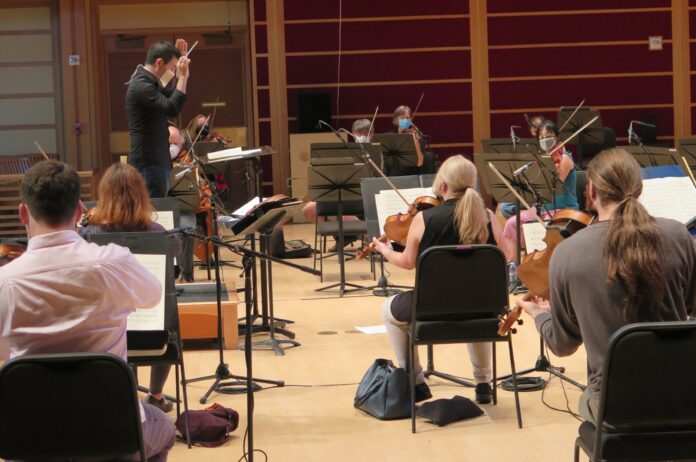
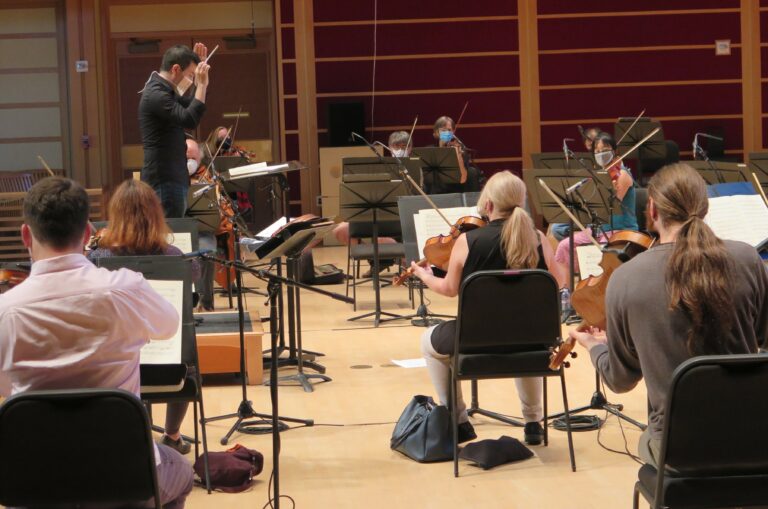
Like everyone else, Bay Area string band the Brothers Comatose are stuck inside and isolated from each other and their fans while the shelter-in-place order continues into May.

Yet, that won’t stop the group from playing music, and recently the band asked fans to join them in their endeavor by sending in videos of their stay-at-home activities to create a music video for the band’s cover of the Kinks’ “Strangers.”

The song was recorded by Jay Pellici at New, Improved Recording in Oakland and the video was edited together by Francesco Echo.  Watch the video, here.

[embed-1]

Groups push for housing solutions

0

As the second month of coronavirus shelter-in-place orders come to an end and calls for a May 1 rent strike continue to circulate, the number of renters struggling to make ends meet is becoming clear. If no action is taken, millions of missed rental payments could trigger a series of devastating economic impacts.

As many as 2.3 million renter households in California may have at least one member of their household lose income due to the coronavirus, according to an analysis released by the UC Berkeley Terner Center on April 24.Those millions of potentially impacted households—approximately 40 percent of the state’s total 5.8 million renter households—pay nearly $4 billion in rent each month.

In Santa Rosa and Petaluma alone, 24,300 renter households—roughly 34 percent of the total 71,900 renter households in the two cities—may lose one household income each to the coronavirus. The total rent of those impacted households could be as much as $42 million per month, according to the survey. In Napa County, roughly 44 percent of the 17,000 renting households will likely be rejected, according to the same data set.

That equates to approximately $12 million of potentially-missed payments each month.

The Terner Center data set does not offer similar data for any Marin County cities.

Prior to the crisis, 1.1 million Californians were already considered “rent burdened,” meaning they spent more than one third of their income on rent each month. The Terner Center study predicts an additional 1.1 million households could become rent burdened due to the coronavirus pandemic.“

The current crisis only exacerbates the vulnerability these cost-burdened households were already facing, putting them at greater risk of housing instability,” the Terner Center study states.

Although the federal government has increased Unemployment Insurance (UI) benby $600 per week, much of that money may end up going to rent. Due to the high cost of housing in California, renters will still pay a ant portion of their bento their landlord, even if they do qualify for the highest level of UI benaccording to the UC Berkeley analysis.

With rent averaging $1,580 per month, a family quafor the lowest amount of benwill spend 65 percent of their monthly check on rent. If they qualify for the highest level of benthey will spend 38 percent of the check on rent, an expense level which will still leave them rent-burdened.

There are also those who do not qualify for any unemployment benOn April 15, Gov. Gavin Newsom announced the state will distribute a one-time payment of between $500 and $1,000 for undocumented Californians who do not qualify for unemployment benefit. That money will go quickly.

Patchwork

In March, local, state and federal lawmakers and agencies created a patchwork of partial protections for renters and landlords but, weeks later, the holes in that system are becoming apparent.

Marin, Napa and Sonoma counties each have different ordinances, but the strongest protection in California came in the form of an April 6 order from the State Judicial Council, the board that governs the state’s courts system. That order bars all courts from processing eviction and foreclosure cases until 90 days after the crisis.

Still, there are many unanswered questions, says Ronit Rubin, the executive director of Legal Aid of Sonoma County.

One of Rubin’s primary concerns is that, under the current orders, tenants will still be required to make up all of their missed rent payments after the orders are lifted. If tenants are unable to pay the back-rent after the Judicial Council’s order is lifted 90 days after the crisis, landlords could begin pushing ahead with eviction proceedings based on the tenant’s inability to pay back rent. That could lead to a wave of evictions across the state, likely hampering the economic recovery by worsening workers’ ability to return to work after the crisis.

“If we open businesses back up but half of their prior are now gone or destabilized because they don’t have a place to live, how does that affect the businesses’ ability to gear back up and have again?” Rubinsays. “I don’t think that makes reopening particularly easy.”

Landlord groups in turn argue that, if tenants miss their payments en masse, landlords will miss their mortgage payments.

The looming question is: What will happen if hundreds of thousands of tenants are unable to make up their missed rent payments due to long-term unemployment? In recent weeks, both landlords and tenants have turned to lawmakers for a solution.

Proposals

So far, local governments have largely stayed away from offering direct assistance to renters. Due to the mounting costs of missed rent payments and local governments’ own economic struggles, it seems unlikely that local governments will be able match millions of dollars in missed rent payments each month, even if they want to. A few possible solutions are being shopped at the state and federal levels.

According to an April 17 California Apartment Association (CAA) press release, State Senator Lena Gonzalez plans to amend Senate Bill 1410, a preexisting housing bill, to create a temporary state program to pay landlords for some missed rental payments. Similar to current, local North Bay protections, the temporary COVID-19 Emergency Rental Assistance Program would require renters to demonstrate “an inability to pay rent due to COVID-19 or a government response to the COVID-19 pandemic” in order to qualify for the program, according to the CAA release. Details of the proposal have not yet been released.

At the federal level, Minnesota congresswoman Ilhan Omar introduced legislation to cancel rent and mortgage payments—including missed payments in April—for millions of people across the country.

Omar’s legislation, the Rent and Mortgage Cancellation Act, would establish a fund for landlords and mortgage holders to cover losses from the cancelled payments and set aside funds for local governments and nonprofits to purchase private rental properties.

“We must take major action to protect the health and economic security of the most vulnerable, including the millions of Americans currently at risk of housing instability and homelessness,” Rep. Omar said in a press release.

Galleries grapple with stay-at-home reality

0

If a painting hangs on a gallery wall, but no one is around to see it, is it still art?

As the North Bay shelter-in-place passes the 40-day mark, many galleries and organizations that depend on social gatherings to share and sell art struggle to answer the question of how to keep the art alive when they are forced to keep the doors shut.

“It’s different for every gallery I’m sure, but most galleries are in the same boat in terms that they’ve lost almost all opportunity to sell art,” says Paul Mahder, founder and director of the Paul Mahder Gallery in Healdsburg.

In the last month, many in-person businesses have had to turn to an online-only mode, and art galleries are no exception. Mahder says he is fortunate in that he was already in the process of creating an online gallery for the thousands of pieces of original work he sells for more than 40 artists.

The entire gallery is now available online at paulmahdergallery.com, and Mahder notes there’s been some action on the site, in part because he is doing something else that he never thought he would do; offering a sale.

“This is a particularly unusual moment,” he says.

As the North Bay enters its high season of tourism-related business, Mahder believes the pandemic means it will be a while before people feel comfortable gathering in public.

“Even when things do turn around, how long is it going to be for people to actually start coming back?” Mahder asks. “It’s not a matter of relaxing the restrictions, but when people can feel that they can get back in the marketplace—that could be a year or more.”

For Mahder and other art curators and gallery owners, the fluidity of the pandemic’s timeline is the most stressful aspect of the ordeal, especially for galleries that often arrange exhibits up to a year or more in advance.

“The feeling of uncertainty that’s hanging over everyone’s heads, that’s hard,” says Shelley Rugg, coordinator of Gallery Route One in Point Reyes Station. “Not knowing when this is going to end, we don’t really have any way to schedule an exhibition, because we don’t know when people are going to be able to enter our space again.”

Gallery Route One was about to open its annual “Artist Members Show” when Marin County’s stay-at-home orders went into effect. Instead, it put the art online at galleryrouteone.org, where the “Spring 2020” exhibit now shows work by 18 artists.

The GRO website also features an online shop where art from the “Spring 2020” exhibit and other works can be purchased. And the nonprofit organization put its Artists in Schools program online, as well as an Art Projects at Home page, where the public can download instructions on how to make various art works and enjoy a Point Reyes Coloring Book and other activities.

The gallery is now looking ahead to its annual “Box Show,” its most popular fundraising event each year, currently scheduled to open with a reception on August 1. The exhibit features boxes transformed into art by local artists, and the show includes a silent auction in which, Rugg says, hordes of attendees usually use pen-and-paper to bid on work throughout the show’s run.

“It’s likely none of that can happen,” Rugg says. “We have to think about how to transform what we are used to doing—what we know how to do—into a whole new form. It’s very challenging.”

In Novato, the Marin Museum of Contemporary Art is also busy rescheduling and adapting to the internet in order to share art in the form of virtual art tours and videos, and the museum is taking the time to team up with Marin-based nonprofit ExtraFood for the #Mask­er_piece Challenge.

“We’re trying to do our part to not be so concerned with our own finances, but to look to people who are really hurting,” says MarinMOCA executive director Nancy Rehkopf. “We know that due to unemployment and isolation, there are a lot of people out there who need meal support who didn’t use to.”

To that end, MarinMOCA’s member artists are creating artful face coverings, using well-known art works for inspiration. For every #Mask_erpiece posted on social media and marinmoca.org, a group of MarinMOCA’s donors contributes $5, for a total of $5,000 planned to go to ExtraFood’s efforts to keep Marin fed during the pandemic. The masks will also be available to sell to those who want to help with donations.

“It lets everybody do what they are best at,” Rehkopf says. “Our artists can continue to create and people with empathy can donate and it all goes to ExtraFood.”

The challenge MarinMOCA’s member-artists face is where to create, as more than 60 artists with working studios in four buildings on MarinMOCA’s campus have not been able to use their studios.

“They are coming up with creative ways to work from home, but it’s definitely affecting their livelihood and their ability to enter shows and get their artwork out there, so it’s a tough time,” Rehkopf says.

MarinMOCA has updated its Facebook and other social-media pages with member artist profiles and art to help keep them visible to the public. Rehkopf adds that MarinMOCA’s educational programs are also transitioning to an online format.

Other art events in the North Bay moving to an online format include the Virtual Marin Open Studios (marinopenstudios.org) replacing the self-guided studio tours in May; the Town of Fairfax Online Art Show (fairfaxartwalk.com) replacing the Fairfax Art Walk and the Sebastopol Center for the Arts Virtual Open Studios (sonomacountyarttrails.org) replacing Art at the Source and the Sonoma County Art Trails in September.

In Napa County, the planned Arts in April month of events hosted by the county’s official arts agency, Arts Council Napa Valley, is also moving online with events like the Yountville Art, Sip & Stroll going digital (see “Culture Crush,” pg 12).

“We’re seeing many of our arts organizations trying to pivot,” says Arts Council Napa Valley CEO Chris DeNatale.

While some groups, such as St. Helena–based Nimbus Arts, create online classes, art challenges and even art kits to go, others in Napa County face a more serious situation.

The Napa Valley Museum closed during a popular art exhibit by actress and activist Lucy Liu. In response to the COVID-19 pandemic, the di Rosa Center for Contemporary Arts has also decided to close the campus for the remainder of 2020.

To help these struggling arts organizations, Arts Council Napa Valley is opening a disaster relief fund to provide grants to artists and organizations. Applications to the fund will be accepted starting May 4, with a total of $40,000 planned for distribution to individuals, arts nonprofits and Napa County schools and educators that have experienced economic loss due to cancellation of performances, shows or fundraisers.

“It’s been so hard to access the CARES Act [the federal coronavirus economic relief plan] at this point for smaller organizations,” DeNatale says. “So we are trying to find ways to put money in our organizations’ pocket without having to be so tedious.”

Arts Council Napa Valley will also participate in Giving Tuesday, a May 5 statewide call to action to support nonprofit organizations, in which every dollar raised will be added to the relief fund, and the council has also assembled a Covid-19 resource center at artscouncilnapavalley.org with a list of state, county and community services to support artists dealing with economic loss.

In addition to exhibitors and organizations, individual artists are also taking the stay-at-home matter into their own hands with online shows and specials. Two of the first to do so in the North Bay were artist friends Bill Shelley and Chris Beards, who resurrected their former Blasted Art Gallery in Santa Rosa as an online exhibit space.

“Bill and I are both working artists; we had reached our objective with the brick-and-mortar Blasted Art Gallery [in 2019] and wanted to get back to our work,” Beards says. “We kept our presence on Facebook (facebook.com/blastedartgallery) and then this coronavirus came and we came up with the idea of restarting the gallery online to bring people together and create community, which is isolated at the moment.”

“We wanted to give artists who work regularly and who were no longer able to show anywhere a virtual place,” Shelley says. “And to also reach out to people who don’t show on a regular basis and give them an incentive to do something special for the exhibit.”

Blasted Art Gallery’s online show, “Sonoma County: Flattening the Curve” includes nearly 90 pieces of work from over 40 artists, in all manner of styles and mediums. Hundreds of online participants attended the exhibit’s online opening on April 17, filling up the message boards and posting on the page.

“I have a friend who commented to me that she doesn’t go to galleries, but she did attend the opening on Facebook,” Beards says. “She said she felt included, and that felt like a real win. It felt like a community at the opening.”

“We are all experimenting with how you show art online,” Beards says. “I don’t know that a virtual show is a substitute for seeing the art in person. So, I’m hoping that our galleries and museums remain vibrant, and yet we can have this additional online format that will allow more people to see more work.”

A Star is Bored

0

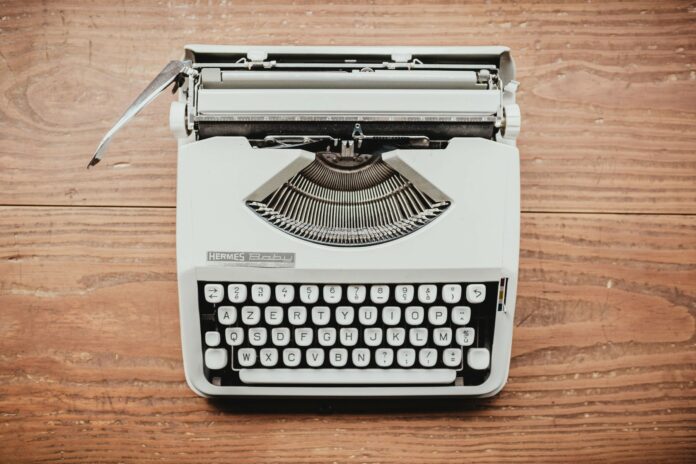
Why wait for the inevitable deluge of COVID-19-themed horror films when you can script your own? Every filmaker worth a roll of gaffer’s tape is plotting their pandemic feature right now—don’t be left out like you were during the Great Burning Man Documentary Deluge of the early aughts.

Stay home, lock the doors and start your screenplay with our free Instant Pandemic Plot Thickener system.How does it work? Like this: If your house was haunted, wouldn’t you just leave? Normally, yes, but the pandemic plugs this age-old plot hole by promising a slow, painful death if you go outside.

Boom—you’re trapped! And … the wifi is down! If that’s not frightening enough, use the following screenwriting prompt to add more chills: In the dead of night, your partner whispers in your ear “I think there’s someone in the house …”Remember, this is a movie, not reality. In reality, everyone is so utterly bored with each others’ company that you’d welcome the intruder with open arms and a bottle of wine. But in the horror-show version of your quarantined life, the moment has to be bone-chilling. Choose one of the following:

1. Someone is surreptitiously living in your attic, a crawlspace, or the secret room that is discovered when the blueprints are examined in a dramatic second-act revelation.

2. YOU are surreptitiously living in the attic to avoid your family.Now add one of the following tried-and-true tropes:

1. A malevolent spirit inhabits one of your child’s toys, preferably a doll, especially the kind with eyes that suddenly open for no reason.

2. Your kid has an “imaginary friend”—with an Edwardian-era name like Gwilym—that they “talk to” through the closet.Pick one, then get jealous that the kid has someone to talk to who isn’t related to them. Start talking to Gwilym yourself.

Write down what you say. Presto—your screenplay is practically writing itself!At some point in your script, write a character who works in a spiritual capacity (a priest, exorcist, bartender, etc.) and have them attempt to purge the evil spirit through a Zoom call.

At a crucial moment, have your screen freeze and then run to every room in the house with your laptop trying to get a better connection. When you finally find a signal and resume your video call in the darkened bathroom, have the kid wander in and turn on the light … revealing—Ahhh!—you’re just talking to yourself in the mirror!

Letters: New Normal

During a recent Zoom gathering, my granddaughter Katie suddenly said, “I wish things would return to normal.” After the meeting I reflected on what was normal before the pandemic. $730 billion dollars allocated to defense, a big portion going to upgrading our nuclear arsenal. If anyone knows of a bomb that can be dropped to stop the virus, I don’t.

We have a program that has been drastically cut and Trump budget chief holds firm on the Centers for Disease Control and Prevention (CDC) cuts amid the coronavirus outbreak.

To me it’s obvious. Because of the cuts we were not prepared and as a result, we do not have enough ventilators, masks or protective gear for our nurses and doctors who have to use garbage bags for protection. What would our world be like if they all got the virus?

We fear words like social democracy, which supports the idea of “We the People” being the highest priority. Many believe, “We are the greatest country in the world, we are number one.” We are number one; we have the highest amount of new cases and new deaths. Our priorities need to be reevaluated NOW.

Elaine B. Holtz

Santa Rosa

Earth Day

Hey Will (Carruthers), nice job on the Earth Day story (“Environmentalism Goes Livestream,” April 22)! Exciting to see SunRise moving into leadership on climate action! We need you to push forward here in Sonoma County, the Bay Area and the world. Right there with you!

Teri Shore, Greenbelt Alliance

Via bohemian.com

Small World

Hi there, I really enjoy reading This Modern World every week (above), but not when it’s been shrunk! It deserves to get back to its regular size. Thanks and keep up the great work!

Alexis Fajardo

Santa Rosa

The Double Whammy On My Soul

This is a cautionary, and true, tale. Life is an experiment, and sometimes we learn something from the results. Case in point: the 2016 elections.

I, in my idealistic wisdom, assumed Hillary would win the vote. Because, well, God. And, the Universe. And so, because my vote for her wasn’t necessary, I decided to throw it toward a third party in order to boost the whole third-party thing. Because I believe that we—Americans—well and truly need many strong political parties to choose from, not just the two default parties handed to us by our uptight, antique forebears.

We know what happened. My pro-Hillary vote would have tipped the election in her favor. But my third-party vote actually ensured Trump’s triumph. And I live with that hard fact each and every day that I accidentally get a visual of the orange buffoon face that frequently graces the news media and the interwebs while even more frequently contributing to the ever-increasing deterioration of this cycle of time.

The other thing that happened during the last election was, I was visiting my beloved, sweet sister in Seattle and had the brilliant idea to turn her and her husband on to my favorite movie in the world, Mad Max: Fury Road. On election night.

Seeing as my darling sister and her gentle husband had never experienced the Mad Max phenomenon, this was set to be a groundbreaking evening for them, because we were going to a very rare big-screen showing of the “Black and Chrome Edition,” which was sure to intensify the post-apocalyptic carnage well beyond the color version.

As we walked into the theater while votes were still being counted, my sister’s election fears were palpable. Then we sat down and watched that wonderful, wonderful movie. Lord, was it good! The nuances brought out by the black and the chrome! The subtle complexities of faces and vehicles and explosions and flamethrower-puffs and shadow and light brought into such sharp focus by that lack of color!

And—surprise!—my sister and her husband were completely traumatized by the experience. The 80-odd vehicle-destruction sequences and 140-odd, high-speed death scenes within the span of two-odd hours scared them, rather than galvanized them into an unswerving, holy adoration of all things post-apocalyptic.

I should have known. But, I’m a guy. And I’m a big brother.

And then we walked out of the theater and my sister checked her phone, became very pale, and said quietly, “Trump won the election.” And burst into tears of genuine fright, right there in the lobby. Knowing, of course, that I, her favorite brother, and possibly her favorite person in the entire world, had not voted for Hillary, and had thus single handedly swung the vote in Trump’s favor because … I already told you why.

And I stood there for 20 minutes trying to ease her fears by explaining that I had just purchased 6 acres on a remote island and if the world collapsed she and her husband could surely come live with me and we could survive by homesteading and hunting the local overpopulated, wild pygmy deer.

Which—surprise!—brought her no relief whatsoever. In fact, the very next day she began to speak about moving to an idyllic, faraway country to which she possesses dual citizenship. (Which is also a bucolic, agrarian island populated by many huntable wild animals, I might add. But that’s beside the point.)

The years go by and I live with this dual stain on my soul. Because my sister is my favorite person in the world. And I did these things to her. They far exceed any run-of-the-mill, big-brother, chasing-her-around-the-house-with-pinky-outstretched-under-the-assumed- persona-of-Mister-Nose-Picker antics I ever pulled in all the prior years, and I didn’t even do them for kicks.

Chew on that while you decide what to do with the next election.

Seeking words of wit and wisdom? Write the Advice Viking at mf********@*******ws.com.

Open Mic: The Animal Within

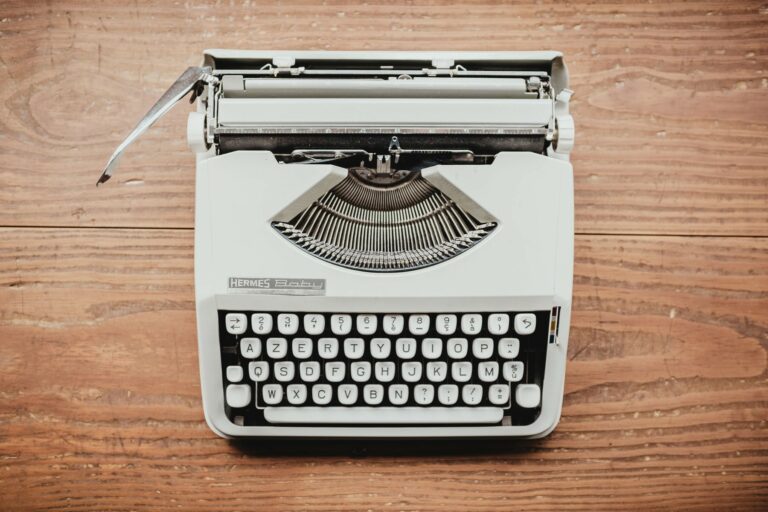
0

I finally get “Baby on Board” stickers. Twice per month, I bring my infant to grandma-care via 101 South. After a few slogs through Santa Rosa, I discovered that children count for HOV purposes—wonderful!

Autumn brought darker mornings and, ignorant of my baby in the backseat, other drivers reacted strongly to my HOV lane usage. A woman overtook me down the on-ramp, swerving and shouting. A man brake-checked and flipped me off at the HOV 2+ sign. Animals! No really, animals. Like most mammals, humans evolved in hierarchical packs where status matters. If Thag takes your fishing spot and you do nothing, others will tomorrow and you starve. We descend from people that did something, and to those (ignorant) drivers, I took their place in traffic.

Modern humans have walked Earth for 200,000 years. Ten thousand generations passed us their knowledge about tools, building, navigation and wildlife. We also inherited their tendencies to judge strangers, imagine motives and assume the worst—all in a split second.

For most of human history, any day might mean fending off death. Then civilizations happened 300 generations ago, the Industrial Revolution 10 generations ago, and within our lifetimes, Internet and mobile connectivity. Surviving predators and finding food was largely replaced by rush-hour commutes and navigating supermarkets.

Life still presents fight-or-flight moments, but for most people those are few. And yet, our brains are constantly primed for threats. Those enraged drivers saw something (incomplete), drew (false) conclusions and reacted aggressively with primal instincts that we all possess.

Problematically, those same instincts are hijacked by threats online. News and viral posts grab our attention and trigger judgments, sometimes solely on headline and photo. We are creatures of habit with our information sources and get similar perspectives on repeat; without us intentionally seeking conflicting views or evidence, those half-baked, instinctive judgments settle as true.

Then a pandemic hit. Self-isolation exiled us online, where chronic fear shades everything we see. I hope for better, but despite our suffering together, the country remains divided—with anger and blame rampant. All these things are related. You animal.

Iain Burnett lives in Forestville.

F*@%! Corona

Biodynamic farmer Mike Benziger and medical doctor Thomas Cowan combine forces to boost human health. With COVID-19 lurking everywhere, they’re on high alert.

Dr. Cowan’s office has been closed since mid-March, so for the past five weeks his appointments have been only by phone. Benzinger has had an intense spring, planting and harvesting. At his farm on Sonoma Mountain, he cultivates summer savory, ashitaba and eastern dandelions. After they’re dried, he sells them to Dr. Cowan’s Garden (drcowansgarden.com), a Bay Area company that sells powders made from vegetables.

If it were up to Benziger and Cowan, Americans would eat their way to wellness with nutrient-rich plants.

“People who have optimal health—no cancers, no diabetes and no heart disease—typically eat 100 to 120 different vegetables a year,” Cowan says. “Most Americans only eat 10 vegetables a year and count ketchup as one of them.”

His company sells 30 different kinds of vegetable powders, though he makes no big claims for their medical benefits.

“If we did we’d be sued,” he says.

But his patients are true believers. During the current plague, demand has increased. Benziger can’t grow enough summer savory, ashitaba and dandelions to keep Cowan happy.

“Benziger is one of the best growers around,” Cowan says. “He has optimal conditions to cultivate ashitaba.”

Native to Japan, ashitaba is recommended for high blood pressure, gout, constipation and hay fever. A 40-gram jar costs $55. Cowan sells powders made from parsnips, Swiss chard, carrots, turmeric, burdock roots, leeks and horseradish.

In the thick of the current crisis, Cowan suggests six basic things to boost immune systems: soak up the sun, drink pure water, avoid processed foods, exercise, take vitamin C and eat medicinal mushrooms.

Benziger has battled health problems for years, and, while he has turned to Western medicine, he also believes in the healing powers of mushrooms and marijuana, too, which he also cultivates.

“I will personally drive anyone skeptical about weed to a dispensary, introduce him to a knowledgeable person and ask for a recommendation for joint pain, anxiety and sleep,” he says.

Years ago, Benziger left New York, arrived in Sonoma, grew grapes biodynamically and made premiere pinot noir. Recently, he turned to the cultivation of lettuce and all kinds of greens which he sells to restaurants including Glen Ellen Star (glenellenstar.com), where Ari Weiswasser, his son-in-law, is the chef. His daughter, Erinn, juggles nearly everything else. These days, the Star offers curbside pickup for lunch and dinner, Wednesday to Sunday.

Jonah Raskin is the author of “Dark Day, Dark Night: A Marijuana Murder Mystery”

Sonoma County Fair Cancelled Due to Covid-19

0

The Sonoma County Fair will not be held this summer due to Covid-19 concerns, members of the Fair’s Board of Directors announced at a meeting on Tuesday.

“We are deeply saddened about the need to cancel the 2020 Sonoma County Fair, however the health and safety of our community takes precedence during this unprecedented time of crisis,” Becky Bartling, CEO of the Sonoma County Event Center at the Fairgrounds, said in a press release explaining the decision.

“The Sonoma County Fair is a beloved family tradition for our community, as well as a source of livelihood for many individuals and businesses. Our hearts go out to all our partners in the Fair, the exhibitors and especially the youth that will miss the Fair experience this year,” Bartling continued.

Organizers currently plan on hosting the fair in 2021, according to the press release.

The Sonoma County Event Center at the Fairgrounds has cancelled or postponed all events until May 31 in accordance with the county’s health orders related to Covid-19, according to a statement on the organization’s website. Further cancellations are possible.

More information on event cancellations is available here.

Sonoma County Health Officer Updates Parks Closure Order

0

Sundari Mase, Sonoma County’s public health officer, updated rules restricting public park usage Tuesday.

The amended rules go into effect on Wednesday, April 29. The new rules replace Mase’s original March 23 park closure order, which was issued after people flocked to local parks and beaches in the early days of the local shelter-in-place order.

The new rules are “intended to allow residents to access Parks near where they live, without resulting in the crowding and virus transmission risks that led to the previous Parks closure.”

For instance, walking, jogging, hiking or bicycling in parks and on trails will now be permitted, if the users are healthy, obey social distancing guidelines and do not drive to the park.

The full text of the Amended Parks Closure Order along with answers to Frequently Asked Questions, are available here.

The Brothers Comatose Lead Fans in Quarantine Jam

Like everyone else, Bay Area string band the Brothers Comatose are stuck inside and isolated from each other and their fans while the shelter-in-place order continues into May. Yet, that won't stop the group from playing music, and recently the band asked fans to join them in their endeavor by sending in videos of their stay-at-home activities to create...

Groups push for housing solutions

As the second month of coronavirus shelter-in-place orders come to an end and calls for a May 1 rent strike continue to circulate, the number of renters struggling to make ends meet is becoming clear. If no action is taken, millions of missed rental payments could trigger a series of devastating economic impacts. ...

Galleries grapple with stay-at-home reality

If a painting hangs on a gallery wall, but no one is around to see it, is it still art? As the North Bay shelter-in-place passes the 40-day mark, many galleries and organizations that depend on social gatherings to share and sell art struggle to answer the question of...

A Star is Bored

Why wait for the inevitable deluge of COVID-19-themed horror films when you can script your own? Every filmaker worth a roll of gaffer’s tape is plotting their pandemic feature right now—don’t be left out like you were during the Great Burning Man Documentary Deluge of the early aughts. Stay home, lock the doors and...

Letters: New Normal

During a recent Zoom gathering, my granddaughter Katie suddenly said, “I wish things would return to normal.” After the meeting I reflected on what was normal before the pandemic. $730 billion dollars allocated to defense, a big portion going to upgrading our nuclear arsenal. If anyone knows of a bomb that can be dropped to stop the virus, I...

The Double Whammy On My Soul

This is a cautionary, and true, tale. Life is an experiment, and sometimes we learn something from the results. Case in point: the 2016 elections. I, in my idealistic wisdom, assumed Hillary would win the vote. Because, well, God. And, the Universe. And so, because my vote for her wasn’t necessary, I decided to throw it toward a third party...

Open Mic: The Animal Within

I finally get “Baby on Board” stickers. Twice per month, I bring my infant to grandma-care via 101 South. After a few slogs through Santa Rosa, I discovered that children count for HOV purposes—wonderful! Autumn brought darker mornings and, ignorant of my baby in the backseat, other drivers reacted strongly to my HOV lane usage. A woman...

F*@%! Corona

Biodynamic farmer Mike Benziger and medical doctor Thomas Cowan combine forces to boost human health. With COVID-19 lurking everywhere, they’re on high alert. Dr. Cowan’s office has been closed since mid-March, so for the past five weeks his appointments have been only by phone. Benzinger has had an intense spring, planting and harvesting. At his farm on Sonoma Mountain,...

Sonoma County Fair Cancelled Due to Covid-19

The Sonoma County Fair will not be held this summer due to Covid-19 concerns, members of the Fair’s Board of Directors announced at a meeting on Tuesday. ...

Sonoma County Health Officer Updates Parks Closure Order

Sundari Mase, Sonoma County's public health officer, updated rules restricting public park usage Tuesday. ...
11,084FansLike
4,446FollowersFollow
6,928FollowersFollow