Petaluma Student Hatchery Faces Unprecedented School Year

0

No students are to be seen in the on-campus hatchery at Casa Grande High School in Petaluma.

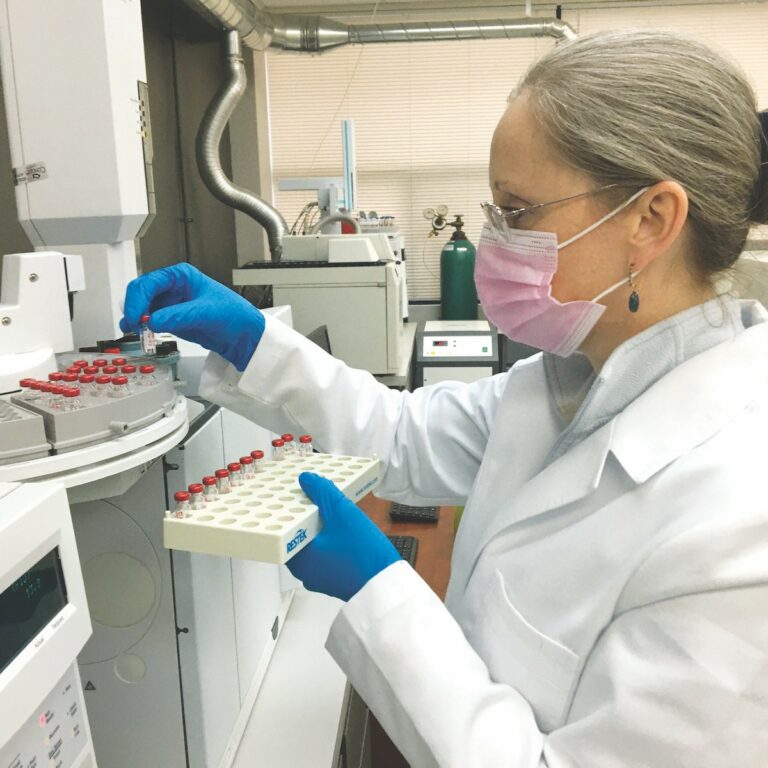
There, United Anglers Program Director Dan Hubacker lectures about the Petaluma watershed and native species of trout and salmon to two 55-inch television screens, which display the face of his students via Zoom.

Though past classes have seen pushback from admin, devastating droughts and year after year of wildfires in the North Bay, none of these are perhaps as comparable—or impactful—as the coronavirus pandemic, which saw its first U.S. cases in January and has forced campus shutdowns of K-12 and colleges nationwide.

United Anglers got its start in the early ’80s, when teacher Tom Furrer and a group of Casa students spearheaded a massive clean-up of Adobe Creek. They removed over 30 truckloads of trash, including large kitchen appliances, car parts and several tires. During the Tubbs fire in October 2017, the on-campus hatchery was designated as an emergency facility for the Warm Springs Fish Hatchery in Geyserville.

Students enrolled in the class learn about the history of United Anglers, the Petaluma watershed, native strains of trout and salmon, and general wildlife. Those who pass the Tech II Exam, which requires a perfect score, are allowed to work with the hatchery’s equipment and are responsible for raising Steelhead trout later in the school year.

In 1993, students managed to raise over $510,000 to build the on-campus hatchery. Since then, the program has hosted an annual fundraiser at the Lucchesi Community Center, as Casa Grande High School offers United Anglers no funding for hatchery maintenance or class materials, which include nets and creek waders.

This year, with large gatherings banned, the plan for the November fundraiser is uncertain. Program director Dan Hubacker is hesitant to make any major decisions at this point, but he says that the program will still need support and funding, regardless of whether a fundraiser is held. Even if in-person classes are permitted in spring, massive modifications will have to be made to the building so that students can be allowed inside.

“We can either sit back and wait for in-person to occur, and then go, we don’t have any funding to cover that, or we can prepare … and we’re ready as soon as we get the go-ahead,” Hubacker says. “Right, wrong or indifferent, we can only go back if these changes are made. We have to keep our distance, we have to wear a mask, those are the things that are expected of us, so how do we get to that?”

In mid-March, amid talk of remote learning and campus shutdowns, Hubacker and his students began strategizing their next steps.

“The way I prepared the students was the idea that one way or another, we’re either coming back to class and running things status quo or, as we gain more information, we’ll make the call as we go,” Hubacker said in an interview.

Initial campus closures extended through the end of April, with an anticipated reopening date of May 1. However, in April, Petaluma City Schools announced that all classes would be conducted online for the remainder of the school year. For Hubacker, this forced the question of how to deal with the existing steelhead trout in the building.

“I didn’t want to cut the fish loose and find out a week later, hey, we’re coming back for in-person teaching and have everybody wonder, why did [you] cut the fish loose? There was that pull from both sides, so I held on to the fish through the end of the [school] year,” Hubacker said.

Hubacker recruited the help of the Department of Fish and Wildlife and UA’s Board of Directors. At the end of the year, the group successfully transported the trout to Warm Springs.

Hubacker says that the switch to remote instruction brought with it more than a few limitations. Holding class via Zoom means students aren’t able to get hands-on instruction, a hallmark of the UA program, and this presents challenges with distributing exams.

“We’re still, as educators, trying to wrap our head around how to assess students in a formalized setting,” Hubacker says. “With an exam, how do you do it? How do you not have a student sitting there with their notes open, a cell phone accessible, the internet accessible? Don’t even get me started with the idea of, how do you meet the accommodations of a student that has additional needs that need to be met? It’s not an equitable model.”

Remote instruction is new territory for Hubacker, who says that “all [the] field components have become part of our Zoom time.”

With the fate of in-person classes in spring semester left hanging in the balance, Hubacker says he will continue to modify the program’s schedule as more information is released.

“In the grand scheme of things, I’ve reached a point where—excuse my language—I’ve been pissed off,” he says. “I’ve vented to the point where it’s like, it’s not changing it. How much can I really complain if I can’t turn around and go, this is what I can do? Right now, this is what we have, what am I gonna do about it? How am I going to make this work to the best of my ability?”

Program alumna Izzy Fabbro, who graduated in 2018, says that the program provided her with a pathway to working with endangered species.

“I think the hatchery is important for showing students how important the environment is even at the local scale,” Fabbro says. “It allows us to get involved in improving our community. It also allows us an opportunity to get to do hands-on work that isn’t always available to everyone.”

The sentiment is echoed by Hubacker, who says that the cultural component of the class may not be able to return for the foreseeable future.

“The norms that you have, the chemistry, stressing, working together—I know it sounds small, but such a big part of this group is a handshake,” Hubacker says. “We spend an entire class period practicing handshakes. What’s going to happen with that? I don’t know.”

Still, even amid all the uncertainty, Hubacker feels confident in the abilities of his students. For now, the organization’s goal is moving forward—regardless of what will come in the next few months.

“I haven’t seen a group so fired up to prove a point than the group we have right now, because they know what they’re up against,” Hubacker says. “They know how easy it is to roll over and accept this, but as I keep telling them, this is stuff that is going to be written in the history books. We’re in times right now where it’s like, if you can get through this, you can get through just about everything.”

For more information or to donate to United Anglers, visit uacg.org.

Green Music Center Moves to Online Format for Fall Season

The Green Music Center–Sonoma State University’s world-class live music venue and educational centerpiece made up of the acoustically-pristine Weill Hall, the intimate Schroeder Hall and more¬–is accustomed to packing the halls with concerts and various live events featuring culturally significant musicians and other top-tier performers.

This year has been a quiet one at the Green Music Center, as the Covid-19 pandemic closed the halls and classrooms in March. After missing the summer season due to the extended social-distancing orders, the center in Rohnert Park is transforming their planned fall season into an online experience.

Dubbed ‘The Green Room,’ this new virtual program of events is inspired by the center’s green rooms, where performers hang out backstage, and ‘The Green Room’ events will feature conversations with artists as well as performances streaming online, beginning September 17 and running through December.

In addition to presenting online concerts featuring popular acts, The Green Room’s online fall programming reflects the Green Music Center’s commitment to student engagement with four artists-in-residence from a variety of backgrounds and disciplines who will also lead students in online discussions and workshops along with their scheduled shows.

The artists-in-residence performances begin with musician, performing artist and cultural Babalawo (spiritual guide) Michael Mwenso, who presents a ‘Black Music Series of talks and showcases starting September 17. The series opens with “A Form of Protest,” in which Mwenso examines music as a form of activism, and highlights the role it has played in pushing the boundaries on civil rights, human rights, class inequality and more through a discussion, historical recordings and performance.

Other artist-in-residence performers include Green Music Center favorites Las Cafeteras (pictured), who share their infectious genre-bending and lyrically-rich music and storytelling on October 15; visionary choreographer Liz Lerman, who returns to continue her new site-specific work “Wicked Bodies (Sonoma),” exploring the depictions of women’s bodies across multiple historic periods on November 5; and multicultural musical group and Navajo cultural music ambassadors DDAT, which performs on December 3.

‘The Green Room’ will also present three free online performances by the Chamber Music Society of Lincoln Center, and concerts by multi-cultural artists like acoustic and electric guitarist JIJI, instrumental band Invoke and the Juilliard String Quartet.

Aside from ‘The Green Room’ online season, The Green Music Center will still be the performing location for its resident orchestra, The Santa Rosa Symphony; which will perform, record and stream its redesigned Fall 2020 concerts from the Green Music Center’s Weill Hall stage.

The “SRS @ Home Virtual Fall Concert Series” will be streamed live on YouTube on October 11, November 15 and December 13 at 3pm, and each concert will feature a socially-distanced subset of the orchestra and Music Director Francesco Lecce-Chong.

“In the face of the difficulties behind us and the struggles ahead, the Symphony will share uplifting musical experiences, as it has during past crises,” Lecce-Chong says. “This is truly a historic moment in our Symphony’s long history, and we are so excited to present our first concerts, specifically programmed, directed and filmed for you to enjoy in your homes. We may not be in the Green Music Center in person, but imagine that across our community, we will all be gathered for a performance.”

Get tickets and the full details on ‘The Green Room’ online season at gmc.sonoma.edu.

Find more information on the Santa Rosa Symphony’s upcoming virtual season at srsymphony.org.

David Templeton Takes On ‘The Piper at the Gates of Dawn’

Local writer, actor (and former Bohemian contributor) David Templeton found himself with plenty of free time during the North Bay’s ongoing shelter-in-place response to the Covid-19 pandemic these past six months.

In the time, he’s been flexing his memory muscle by memorizing all 3800 words of “The Piper at the Gates of Dawn,” the beloved seventh chapter from Kenneth Grahame’s seminal literary work, Wind in the Willows.

This Saturday, September 12, Templeton will share the exciting and mysterious tale in coordination with the Friends of the Petaluma River in a live, word-for-word performance of ‘The Piper at the Gates of Dawn’ that can be seen on Facebook, YouTube or the Friends’ website for free at 5:30pm.

Written over one hundred years ago, Wind in the Willows is one of the most beloved children’s novels on the last century, and it’s anthropomorphic animal characters like Mr. Toad have endured in Disney adaptations and other films and animated fare.

Yet, many children who grew up reading Wind in the Willows may be unaware of “The Piper at the Gates of Dawn,” which is often edited out of many modern adaptations.

The chapter features a story that seems unrelated to the rest of the novel’s plot. Otter has lost his son and Rat and Mole get in their boat and row through the night to look for him. Just before the dawn they hear incredible music and come face to face with a deity who is clearly (though never named) the Great God Pan, with the lost otter boy sleeping at his feet. Rat and Mole load the boy into the boat and take him back to his family recognizing that they have had an unusual experience.

While this chapter is less well known than the rest of the story, it is arguably the most celebrated, studied and beautiful chapter of the book, and critics and fans alike regularly point to “The Piper at the Gates of Dawn” as Grahame’s best writing.

“‘The Piper at the Gates of Dawn’, filled with references to sleeping and dreaming and waking and drowsing, is, I think, all about awakening to beauty,” Templeton writes in a statement. “It’s about those transcendent moments when something jars us out of our habits and comforts and we suddenly see the world in a striking new way, then struggle to hold onto that vision as we return to our previous habits and comforts.”

For Templeton, memorizing “The Piper at the Gates of Dawn” was a personal project during the early days of quarantine that he describes as, “A true joy and pleasure at a time when joy and pleasure sometimes seem in short supply.”

Following his performance on Sept. 12, Templeton will engage in a discussion of the work with writer, filmmaker (and current Bohemian editor) Daedalus Howell and Friends of the Petaluma River Executive Director Stephanie Bastianon to further revel in the story’s themes and reveal it’s significance.

The performance benefits Friends of the Petaluma River, which has celebrated and helped conserve the Petaluma River and it’s watershed through education and stewardship since 2005. The event is free to watch, and donations are welcome and donors will have the opportunity to win a Wind in the Willows-themed gift basket. For information on how to watch the performance, visit FriendsofthePetalumaRiver.org.

Upcoming Exhibition Examines Marin’s Rock Legacy

From the lawns of Rancho Olompali near Novato to the Cushing Memorial Amphitheatre situated among the peaks of Mount Tamalpais, Marin County has seen it all when it comes to rock & roll.

For more than 50 years, Marin has been the home of iconic rock artists and bands, as well as the scene of legendary concerts. Now, locals can revisit those moments as MarinMOCA opens a new exhibit, “Marin’s Rock Art Scene,” on Saturday, Sept. 12.

“One of our board members had a memory of Olompali; how important it was to the start of the whole rock culture in the Bay Area and how early it was, in 1966 before the Summer of Love in San Francisco,” says MarinMOCA Executive Director Nancy Rehkopf.

Starting there in 1966, “Marin’s Rock Art Scene” looks back on several musical figures who made Marin famous, and features photography of the Grateful Dead, Carlos Santana and others, taken by prolific rock photographers including Herb Greene and Jay Blakesberg; both of whom worked with MarinMOCA on this exhibit.

“We curated the show primarily through word of mouth,” Rehkopf says. “We learned that rock culture is still very much alive in Marin and the Bay Area.”

Along with photographers, MarinMOCA worked with musicians, producers and even collectors of memorabilia for the exhibit, which also includes vintage posters for fondly-remembered concerts such as Marin’s 1966 outdoor rock concert at Mt. Tam and the infamous “Skeleton and Rose” poster for Grateful Dead’s 1966 show at Avalon Ballroom drawn by beloved artists Stanley Mouse and Alton Kelly.

Musicians also get into the act for this exhibit, and “Marin’s Rock Art Scene” displays original artwork by artists like Dave Getz of Big Brother & the Holding Company and Joan Baez, whose oil paintings included in the exhibit include a portrait of her younger sister, Mimi Fariña.

Fariña was best known for founding and running nonprofit organization Bread & Roses, which offers free live music to isolated residents of homeless shelters, correction facilities, health care centers and convalescent homes in the Bay Area and beyond. For this exhibit, 20 percent of all art sales will be donated to Bread & Roses.

Alongside the art and images, MarinMOCA will also show the documentary, Olompali: A Hippie Odyssey, as part of the exhibit. Narrated by Peter Coyote, it tells the story of the Marin estate that became a commune and kicked off the rock scene by attracting figures like Joplin and the Grateful Dead in the ’60s.

The exhibit also follows the local scene’s trajectory beyond the ’60s and ’70s with photos and album art representing heavy-metal superstars Metallica, Platinum-selling punk band Green Day, and even ’90s hip-hop icon Tupac Shakur—who attended Tamalpais High School.

Shakur is honored in Ashleigh Sumner’s 2018 mixed media painting, “I See No Change.” The piece features the rapper posed among stenciled red roses, layers of newsprint and images of cloaked Ku Klux Klan members and uniformed police officers. The words “No one taking the Blame” repeats across the canvas, resonating with the ongoing movements against police brutality and racial inequality.

“Marin’s Rock Art Scene” will be open to view in-person at MarinMOCA by appointment beginning Sept. 12. While a slideshow of the art will be available online soon, Rehkopf invites art lovers and patrons to make appointments to safely view the work in the museum.

“It’s a very comfortable experience here at the museum,” Rehkopf says. “You will be in the gallery with a maximum of 10 people, all of our doors and windows are open, everybody’s wearing masks, people are very respectful of social distancing. I’d like to encourage people to go.”

‘Marin’s Rock Art Scene’ runs Saturday, Sept. 12, to Sunday, Nov. 8. MarinMOCA is located at 500 Palm Dr., Novato. Open by appointment only. 415.506.0137; marinmoca.org.

Calistoga Gallery Reopens with Hopeful Exhibit

Located in the heart of Calistoga, Sofie Contemporary Arts is one of Napa Valley’s premier purveyor of inventive modern art that is diverse in media, styles and approaches.

The gallery is run by director Jan Sofie and manager Scott Sofie. Since opening the gallery in 2017, the couple have endured fires, mass evacuations, and more recently a Covid-19 pandemic that closed their space for the past six months.

Still, Jan and Scott Sofie remain hopeful, and they share that feeling with the community as Sofie Contemporary Arts reopens this month with a new exhibit entitled “Hope Is the Thing…” The show is running now and remains on display through October.

The invitational group show’s theme is inspired by Emily Dickinson’s 1862 poem, “Hope Is The Thing With Feathers,” in which Dickinson describes the capacity for hope in metaphor as a bird that “perches in the soul.”

That hopeful feeling is illustrated in the exhibit’s diverse art from more than 20 accomplished Bay Area artists, including many North Bay favorites.

“While talking with many artists over the past difficult months, it became obvious that we were all trying to keep focused on what we really cared about, what really mattered,” Jan Sofie says in a statement.

For this exhibit, many of the participating artists are displaying works that focus on what is personally relevant for them, and selections in the show hit on topics of the pandemic and social distancing as well as economic turmoil and environmental concerns.

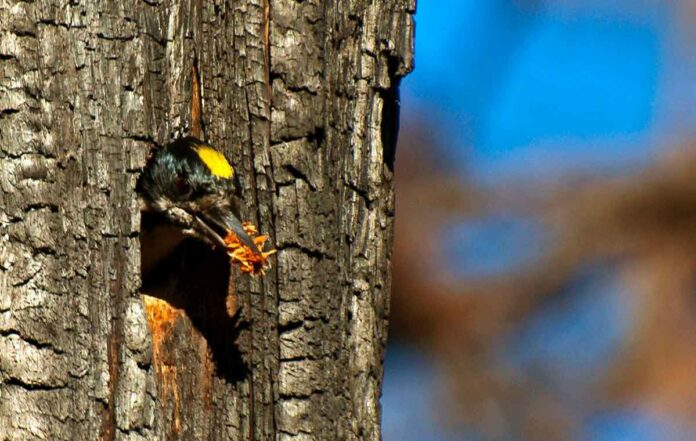
Participating artist Sylvia Gonzalez creates natural scenes such as her piece “Goldfinches” (pictured) from pencil and pastel drawn over monotype backgrounds. Working from her studio in Petaluma, Gonzalez focuses her layered art not only on birds, but on foxes, coyotes and other wildlife that can be found in the North Bay.

San Rafael artist Bill Russell also uses birds as an artistic metaphor in his contribution to the exhibit. His acrylic piece, “Little Birdies,” features several feathered figures in a colorful collage of movement.

Napa Valley artist Anne Pentland’s piece in the show is also a nature scene, though Pentland finds hope among ashes in her oil painting, “Aftermath Australia.” The art finds several kangaroos in a burned landscape being helped by a woman in yellow. The piece is from Pentland’s ongoing ‘Madonna’ Series, which employs the religious symbol of protection to represent Pentland’s passion for nature and her concern over climate change and its effects on wildlife.

In addition to works that feature animals, plants and other natural wonders that act as essential sources of solace, the exhibit includes works that evoke notable historical and culturally significant figures and references that aim to bolster resolve as well as hope.

“Without hope, I don’t think we can muster the courage or grit to change or go forward with what we need to do,” Sofie says. “There is always intelligence and light even in the most discouraging moments but it takes critical awareness and discipline to manifest it; I think you will see this in the exhibition.”

Sofie Contemporary Arts is located at 1407 Lincoln Ave., Calistoga. Open Wednesday through Sunday, Noon to 6pm or by arrangement. 707.942.4231.

Go West: Goat Rock Artist Draws Home

0

There’s West Sonoma County, and then there’s “West West” Sonoma County. That’s where artist and musician Christopher Lods lives, out on the coast at Goat Rock; and it’s what inspires his illustrations and hand-done art that adorns the signs and the walls of businesses throughout the region.

Now, Lods is using West Sonoma County as the backdrop for his new comic strip, “West West County,” featuring a locally-inspired cast of characters engaging in fantastic adventures that touch upon several local references.

“West West County is a special place to me,” Lods says. “This is where I live and this is where I love, and people are a little bit different here. There’s a lot of good vibes going on.”

Originally from Indiana, Lods first moved to California in 1986, living in Lodi before relocating to Sonoma County 25 years ago. It was in Lodi where Lods learned the art of sign-painting from old-time artists.

“Back in those days, everything was done by hand, even making patterns and drawing letters,” Lods says. “I learned all those old-school techniques and I still use them today.”

Bringing that skill to the North Bay, Lods’ work can be seen all over HopMonk Tavern in Sebastopol, Howard Station Cafe in Occidental and numerous other local spots.

In addition to learning old-school signage art, Lods studied under some infamous figures. For several years, Lods apprenticed under iconic illustrator Stanley Mouse, best known for his culturally significant psychedelic rock concert posters.

Lods currently apprentices under cartoonist Thomas Yeates and works alongside Yeates on the present run of the long-running comic strip “Prince Valiant,” regarded as one of the most impressive visual comics ever syndicated. With Yeates’ tutelage, Lods is learning to master skills like using quills and working with India ink, and Lods is also helping color the comic strip.

“In the comic-book industry, there’s a writer, a penciler, an inker—that’s like Thomas—and there’s a colorist and a letterer,” Lods says. “Those people work together to create the comic, and it’s still done that way. It’s been an amazing thing, and I’m really having fun doing it. That’s where ‘West West County’ comes from, learning how to do all that.”

The characters and content of Lods’ “West West County” comic came to him in a dream back in July.

“I woke up in the middle of the night, and it was kind of all there,” he says. “I got up and laid out the first one, finally got to bed, woke up in the morning and inked it, scanned it and colored it.”

Centered around a coffee shop, the Deepwater Cafe, Lods’ comic is packed with animalistic characters with names like Surf Skunk, Smoking Sam and Fly Guy; all of whom engage in activities ranging from cycling up Joy Road to drinking astral-projected coffee to being abducted by giant Space Abalones.

“My characters are a little bit crazy, and exciting and strange things happen,” Lods says. “I don’t know where the ideas come from, it’s like an unexpected gift. It’s innocent and it’s fun, and maybe there’s a little politics in there, maybe not. You’ll have to decide for yourself on that one.”

See more of ‘West West County’ below. Visit christopherlods.viewbook.com to see more of Lods’ art.

West Marin Museum Goes Online

0

Founded in 1983, the Bolinas Museum hosts Marin County’s premier collection of the art and history of coastal Marin, presenting exhibits and hosting events that express the rich, diverse array of local artists and crafters.

Free to the visitors who come from near and far to enjoy the small West Marin charm of Bolinas, the museum features five galleries and a courtyard that display both classic and contemporary works of fine art, photography, sculpture and more. To provide this free experience, the museum hosts special fundraising events throughout the year, most notably the annual Benefit Art Auction and Party each September, which provides nearly half of the museum’s annual operating costs.

This year, like everything else in Marin, the Bolinas Museum’s party plans were canceled in the wake of Covid-19. Instead, the museum’s 28th annual auction and party are moving online for a virtual fundraiser that includes online bidding as well as several other offerings that culminate in a virtual live auction on Saturday, Sept. 12.

The benefit auction is currently online, and visitors to the Bolinas Museum’s website can register to bid now as part of that auction and purchase virtual tickets to the upcoming live-auction night. Registration also enters visitors into the museum’s first-ever “Week of Giving,” featuring daily prize drawings taking place Sept. 6–12.

The “Week of Giving” is the museum’s way of thanking the public for their continued support, and daily prize giveaways will include a limited-edition framed print of Gertrude Southworth’s 1901 Bolinas Beach photograph (pictured), a handmade sail bag from local designer Susan Hoff, organic products from Bolinas’ own Amanda Ross Skin Care, a $250 gift certificate to Bolinas Hardware and more. Everyone who registers to bid, purchases a ticket to the virtual live auction or donates to the online auction is entered into the drawings.

The Bolinas Museum is also raising funds to secure a rare and extraordinary photograph, “Earthrise Seen for the First Time By Human Eyes,” photographed by astronaut William Anders during the Apollo 8 mission on Dec. 24, 1968. Renowned photographer and Bolinas resident Michael Light worked with NASA archives to create the large, dramatic black-and-white image of the Earth rising over the Moon as part of his first book and exhibition project, “Full Moon,” in 1999. This photograph was one of many recently featured in the Bolinas Museum’s 2018 exhibition “Cosmic Wonders,” and Light has offered to donate the historic photograph to the museum’s collection if the museum can raise at least $10,000 before Sept. 15.

Every dollar counts, and the museum is asking generous patrons to digitally raise those virtual auction paddles as part of the online fundraising efforts that will allow the museum to continue presenting cultural events and exhibits, as well as maintain its collection of over 3,000 historical photographs, archival materials and items of historical significance from the times of the coast Miwok to present day, and over 250 artworks by coastal Marin artists from the late 1800s onward.

Bolinas Museum’s Benefit Art Auction runs now through Sept. 15, with a virtual live auction on Sept. 12 at 6:30pm. Register and bid online now at Bolinasmuseum.org.

Letters to the Editor: Nothing New

Don Landis’ letter about feeling under attack is high consciousness (Letters, Aug. 19). This is not a new phenomenon. U.S. president John Quincy Adams was more of a British agent than an American president as evidenced by his attempts to undo virtually everything Alexander Hamilton had done for the country under George Washington. 

It is under glass in Washington, D.C.—written communication between Thomas Jefferson and Alexander Hamilton where Jefferson chided Hamilton for not using taxpayer money to make his own life better. He said Hamilton was making the other politicians look bad. Hamilton wrote back that he could never use taxpayer money for his personal needs.

Politics is the most venal profession on Earth. Venal means, “open to collusion and bribery.”

Doctor Joel Taylor D.C.

Via PacificSun.com

Crunching Numbers

Some people say our economic system is not so unequal. They think the people at the top got what they have from hard work and ingenuity. Let’s take a look.

$40,000 per year is an above-average salary in the U.S. At $40,000/yr it will take 25 years to earn $1 million. Minus $1,300/month (average U.S. rent), minus the average healthcare cost of about $9,000, minus the average cost of owning a sedan $6,354 for 25 years, without figuring in children, pets, electricity, clothing, home repairs, cable or coffee that leaves you with $308,752.

Mark Zuckerberg makes $1 million in about 4 hours. That’s $180 million/month or more than $2 billion per year. At $40,000 per month, it would take 50,000 years to earn $2 billion. Do you believe that Mark Zuckerberg works 50,000 times harder than the average worker? That seems unequal to me!

Jason Kishineff

American Canyon

Mendelsohn Raises the Bar

Lauren Mendelsohn, 29, grew up back East. She graduated from the UC Irvine School of Law in 2016, the year California voters approved Prop 64, ushering in a new era for cannabis law. These days, cultivation is largely a civil matter. Code-enforcement inspections are the norm, as are fines. Cops don’t raid unless there’s evidence that a grow is part of a criminal enterprise. Fish and Wildlife comes down hard on those who damage the environment.

Named a 2020 Northern California “Rising Star” by Super Lawyers, a rating service for the legal profession, Mendelsohn is the senior associate at Omar Figueroa’s Sebastopol law firm. During the pandemic, she has worked steadily from home, providing legal services to individuals and businesses in the cannabis industry. Locally, she’s involved with the Sonoma County Growers Alliance. She also serves on the Board of the International Cannabis Bar Association.

Mendelsohn drafts contracts, protects trademarks and helps clients obtain licenses to operate cannabis businesses. She pays special attention to detail and she’s good at client “hand-holding,” as well as public speaking, which helps when representing clients before planning commissions and county supervisors.

“In Sonoma County,” she tells me, “cannabis cultivation permits are either ‘ministerial’ or ‘discretionary.’ Discretionary permits typically involve a public hearing; ministerial permits don’t. They’re relatively quick and inexpensive.”

Sometimes even if requirements are met the county won’t issue a permit. That’s frustrating for growers. Lawyers can help.

Mendelsohn reminds me, “Cannabis is not 100 percent legal the way a tomato is. You can’t sell it without a license and you can only be authorized for commercial cultivation on certain types of properties and in accord with state and local regulations. To grow for personal use, you have to be at least 21 and not have more than six plants at your residence. Medical patients are allowed 100 square feet.” 

In her view, the county’s cannabis program “has stalled. Tax revenue is unfortunately not what many thought it would be.” She adds, “A lot of the same issues come up repeatedly and it often feels like we’re going in circles.”

But Mendelsohn also points to new developments which might bring penalties for marijuana growers in alignment with existing penalties for others who violate codes.

One wonders if exorbitant fines are meant to stymie the cannabis industry.

“If we get new people in local government, big changes can take place,” Mendelsohn says. She hasn’t ruled out a campaign for public office. Anyone care to volunteer?

Jonah Raskin is the author of “Dark Past, Dark Future: A Tioga Vignetta Murder Mystery.”

Open Mic: I Love the USPS

0

I recently returned to California from Costa Rica. There are many wonderful aspects of Costa Rica; the people, the wildlife and the food, to name a few. One of the worst is the postal service. There is no handy mailbox in which to put your letters for delivery. You must either use a post office box or use an outside service. When using a post office box, delivery time is dicey. Letters sent to the United States can take up to two months for delivery, sometimes more.

I moved to Santa Rosa three months ago. The USPS turned out to be the most reliable method of delivery. I could set my watch on my mailman. Then, last month, I noticed a change. The mail was coming in a little late. I also noticed a change in the behavior of some of the carriers. The stress was palpable. I realized that there was a very human toll being taken by the Trump administration’s attack on the USPS.

This week, I decided to do something. I made a poster that said “I love USPS.” I went to the post office on Lombardi Court. I waited in line with my poster. When the customer in front of me turned to leave, he saw my poster and gave me a big grin. I walked up to the post office worker, and asked if I could put my poster up. He was delighted. He put the poster in the front of his window.

I encourage anyone who feels sympathetic to the USPS to express your support in whatever way you are comfortable. Next time you see a postal worker, wave at him or her or give them a thumbs up. Send a letter or call your local, state or federal representative letting them know how you feel. Go to your local post office and let them know how they are doing. Or, if you are so inclined, put up a poster expressing your feelings.

Oh, and be sure to vote against Trump and all of his cohorts in November.

Sara Madison lives in Santa Rosa.

Petaluma Student Hatchery Faces Unprecedented School Year

No students are to be seen in the on-campus hatchery at Casa Grande High School in Petaluma. There, United Anglers Program Director Dan Hubacker lectures about the Petaluma watershed and native species...

Green Music Center Moves to Online Format for Fall Season

'The Green Room' will feature live streamed concerts and more.

David Templeton Takes On ‘The Piper at the Gates of Dawn’

Live performance of the chapter from "Wind in the Willows" benefits Friends of the Petaluma River

Upcoming Exhibition Examines Marin’s Rock Legacy

From the lawns of Rancho Olompali near Novato to the Cushing Memorial Amphitheatre situated among the peaks of Mount Tamalpais, Marin County has seen it all when it comes to rock & roll. For more than 50 years, Marin has been the home of iconic rock artists and bands, as well as the scene of...

Calistoga Gallery Reopens with Hopeful Exhibit

Located in the heart of Calistoga, Sofie Contemporary Arts is one of Napa Valley's premier purveyor of inventive modern art that is diverse in media, styles and approaches. The gallery is run by director Jan Sofie and manager Scott Sofie. Since opening the gallery in 2017, the couple have endured fires, mass evacuations, and more recently a Covid-19 pandemic...

Go West: Goat Rock Artist Draws Home

There’s West Sonoma County, and then there’s “West West” Sonoma County. That’s where artist and musician Christopher Lods lives, out on the coast at Goat Rock; and it’s what inspires his illustrations and hand-done art that adorns the signs and the walls of businesses throughout the region. Now, Lods is using West Sonoma County as the backdrop for his new...

West Marin Museum Goes Online

Founded in 1983, the Bolinas Museum hosts Marin County’s premier collection of the art and history of coastal Marin, presenting exhibits and hosting events that express the rich, diverse array of local artists and crafters. Free to the visitors who come from near and far to enjoy the small West Marin charm of Bolinas, the museum features five galleries and...

Letters to the Editor: Nothing New

Don Landis’ letter about feeling under attack is high consciousness (Letters, Aug. 19). This is not a new phenomenon. U.S. president John Quincy Adams was more of a British agent than an American president as evidenced by his attempts to undo virtually everything Alexander Hamilton had done for the country under George Washington.  ...

Mendelsohn Raises the Bar

Lauren Mendelsohn, 29, grew up back East. She graduated from the UC Irvine School of Law in 2016, the year California voters approved Prop 64, ushering in a new era for cannabis law. These days, cultivation is largely a civil matter. Code-enforcement inspections are the norm, as are fines. Cops don’t raid unless there’s evidence that a grow is...

Open Mic: I Love the USPS

I recently returned to California from Costa Rica. There are many wonderful aspects of Costa Rica; the people, the wildlife and the food, to name a few. One of the worst is the postal service. There is no handy mailbox in which to put your letters for delivery. You must either use a post office box...
11,084FansLike
4,606FollowersFollow
6,928FollowersFollow