Peppermint Moon Goes Solo on New EP

0

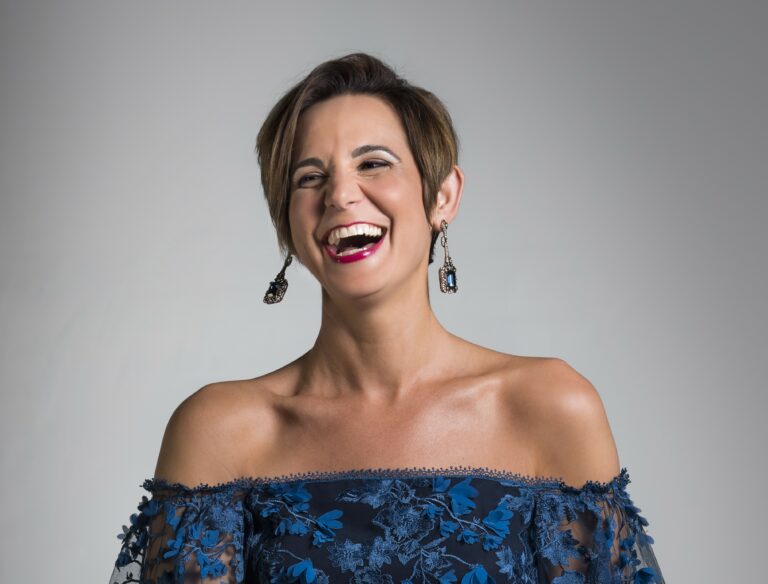
Photo By Tamarind Free Jones

Like many people in Marin County, teacher and musician Colin Schlitt has been stuck at home for more than two months.
The longtime Point Reyes Station resident is best known musically in Marin as the bassist and occasional vocalist for eclectic alternative-pop ensemble El Radio Fantastique. Now, Schlitt turns up the reverb with his solo project Peppermint Moon, which released a digital EP, A Million Suns, in late April.
The new EP follows Peppermint Moon’s 2019 debut album, Symphony of Sympathy, and the five tracks on A Million Suns find Schlitt crafting psychedelic dream pop that walks the line between the Beatles and early Radiohead, with forlorn vocals akin to Wilco’s Jeff Tweedy and melodic hooks that would make Beck jealous.
Schlitt grew up in Point Reyes Station after his family moved there from New York. His musical education began early.
“I’ve always been interested in music,” Schlitt says. “I started tinkling on the piano as soon as I was tall enough to reach the keys.”
He also discovered his parents’ record collection at a young age, playing their copy of the Beatles’ Revolver until he wore out the vinyl.
“I was so fascinated with those sounds,” he says. “That is one of my earliest memories.”
After reluctantly taking piano lessons and learning guitar, Schlitt found his instrument of choice in the electric bass when he was 16 years old.
“I feel like the bass is the essence of every song, like every song can get boiled down to the bass musically,” Schlitt says.
Schlitt’s bass influences include Paul McCartney, John Entwistle of The Who, Motown-legend James Jamerson and Bruce Thomas, who is best known as the bass player with Elvis Costello & the Attractions.
After high school, Schlitt moved to Los Angeles to play music, though he moved back to Point Reyes Station more than a decade ago to raise his daughter with his partner.
Once back in Marin, Schlitt hooked up with songwriter and bandleader Giovanni Di Morente and joined Di Morente’s bombastic El Radio Fantastique.
“When I joined the band, (Di Morente) asked me if I had any songs, and I played some songs for him,” Schlitt says. “He was so encouraging that I started to develop that more. This side project Peppermint Moon would not exist without his encouragement.”
Schlitt’s songwriting process employs a lyrical trick that he learned from Di Morente.
“You come up with a melody first, and instead of coming up with lyrics, you sing gibberish with a lot of vowels,” Schlitt says. “As you do that over and over, subconsciously you start to fill in words here and there, and it’s amazing how the meaning of the songs develop themselves in this subconscious way.”
For this project, Schlitt played every instrument himself, including drum tracks performed on a synthesizer, and he assembled up to 24 individual musical tracks for each song. The entire record was recorded in Schlitt’s Point Reyes house, where he turned his bedroom into a makeshift studio.
“I love being in the band and I love collaborating with people, but it’s also really satisfying doing it myself in its own way,” he says.
At first, A Million Suns was simply going to be a single, but the shelter-in-place orders gave Schlitt plenty of time to write more songs, and he turned the single into an EP.
“This project has made a big difference keeping me sane and busy,” Schlitt says.
In addition to this solo EP, Schlitt can be heard on El Radio Fantastique’s new tracks that will be released digitally over the summer. The first released single, “London’s Fatal,” is up now on El Radio Fantastique’s Bandcamp page.
“We had these songs we were just finishing up mixing when the pandemic hit,” Schlitt says. “As a band, El Radio Fantastique is waiting for this to play out. Thankfully, we had this stuff recorded and ready to go.”
Peppermint Moon’s ‘A Million Suns’ EP is available online now at peppermintmoon.bandcamp.com.

Why Review Theatre Now?

0

What is the point of reviewing theatre?

If you had asked me that question 90 days ago, my answer would be to provide potential audience members some information with which they could make informed decisions on which of the numerous North Bay productions they might choose to spend their discretionary income.

If you had asked me that question 60 days ago, it would be to let potential audience members know about how local theatre companies and artists were trying to stay connected with their patrons via new technology and how that technology worked in comparison to live, in-person performances.

But now?

It’s a question I’ve been wrestling with after “attending” the latest live streaming productions of two companies with North Bay connections – the Zoom Theatre production of Anna Ziegler’s Actually and the Left Edge Theatre production of Small Mouth Sounds.

The events of the past few weeks have weighed as heavily on me as anyone, and the questions being raised nationally about the safety and disenfranchisement of people of color, equal opportunity and fairness are being echoed in the local artistic community, as they should in every micro-community.

Artists of color, sick of seeing the platitudes of inclusiveness being regurgitated once again, are rightfully demanding change after too many years of hearing “your idea is great, but it’s just not right for our audience.”

With that dialogue on-going, do I really want my contribution to it be a discussion of the quality of acting and costuming in a particular production? The difficulties of doing a two-person scene with actors 1,000 miles apart? Bandwidth, screen size and buffering?

Not really.

I believe in the art of theatre. I believe in its power to inform, educate, and entertain. I believe that the North Bay deserves a vibrant theatre community and while I support all theatres’ efforts to stay afloat, the question must now be asked “to what purpose?” It’s a question that companies must now answer with actions, not words.

But words are a start, as long as they are the right words – words of understanding, words of recognition, words of inclusiveness – words that are followed by concrete actions. As much as I’d like to think I have addressed the issues of diversity in casting and material through my reviews, I will put more thought into what my contribution to the discussion can and should be now.

So I’m going to step back from critiquing for a time as theatres do what they must to survive and chart a course of action. I will continue to report on local theatre and through that reporting support and promote those companies that truly embrace inclusiveness (and yes, I recognize there are some that already do) and challenge those that don’t.

I will also challenge the audience to support those companies that are truly welcoming of their presence beyond the price of their admission and for artists to work with companies that value their perspective and acknowledge their artists’ vital role in the commerce of theatre. I will encourage companies to do serious outreach to underserved communities (and, yes, I recognize there are some who do that already, too) and to help facilitate that relationship in any way that I can.

Laurence Olivier once said that he believed “that in a great city, or even in a small city or a village, a great theatre is the outward and visible sign of an inward and probable culture.”

With what we are going through as a society right now, what will North Bay theatre ultimately project?

Sonoma Sheriff Bans Controversial Neck Hold Amid Countrywide Protests

0

The Sonoma County Sheriff’s Office will no longer allow officers to use carotid holds, according to a statement released on the agency’s Facebook page on Friday.

The statement, signed by Sonoma County Sheriff Mark Essick, comes after the agency received a “flurry of emails” about the Sonoma Sheriff’s grade on 8cantwait.org, a newly-formed website that reports whether or not an agency has enacted any of eight recommended safety policies.

“There are several significant errors in their reporting,” Essick wrote of the 8cantwait’s report, pushing back on five points.

First, Essick singled out whether or not the Sheriff’s Office has a ban on chokeholds and strangleholds.

“These holds are not allowed,” Essick wrote on Friday, June 5.

Indeed, a note on the Sheriff’s Policies and Training web page states that “Effective June 5, 2020 the carotid hold is no longer authorized. Policies and training are being updated accordingly and will be posted as soon as they are available.”

That may be true now. But, in the case of the carotid hold, it’s a very recent development and a reversal of Essick’s previous decision.

In implementing the carotid hold properly, an officer places the subject’s neck in the crook of their elbow, applying pressure on the subject’s carotid arteries which run parallel to the windpipe. Because the technique restricts blood flow to the head – the carotid arteries supply between 70-80 percent of blood flow to the brain, according to a California law enforcement training manual – the subject falls unconscious quickly.


But the 2005 training manual also states that “The carotid restraint control hold should not be confused with the bar-arm choke hold or any other form of choke hold where pressure is applied to restrict the flow of air into the body by compression of the airway at the front of the throat.”


Because of the risk of death or serious injury associated with improper use of the carotid hold have led to discussion about its use should still be allowed.

Last December, Essick turned down a long list of Use Of Force policy recommendations prepared by the Independent Office of Law Enforcement Review and Outreach (IOLERO) Community Advisory Committee, a group of volunteers who spend their evenings studying law enforcement policies and interfacing with the community.

(The recommendations are no longer available on IOLERO’s website but the Bohemian has uploaded them here. The Sheriff’s Response to the recommendations is available here.)

[LINK:

IOLERO_Sherriff_Use_Force_Policy_Recommedations_November-15-2019.pdf

Sheriff_s-Response-to-CAC-Recommendations.pdf

]

Among 20 Guiding Principles recommended by the CAC was this: “Carotid restraints and other dangerous chokeholds and maximum restraints are banned.”

In its response, the Sheriff’s Office stated that “In order to truly consider this recommendation, we would need to see data that supports the assumption the carotid restraint and maximum restraint are unreasonably dangerous when applied appropriately.”

“We would also need to have a list of alternatives to these options to deal with combative individuals. Without them the deputies will be restricted to the use of other, potentially more dangerous, uses of force,” the Sheriff’s response continued.

Although the CAC had been working on the recommendations for well over a year, the carotid hold had sparked renewed outrage at the Sheriff’s Office just a week before the CAC formally issued their recommendations to the Sheriff.

On the morning of Wednesday, November 27, officers from the Sheriff’s Office and Sebastopol Police Department stopped a car which had been reported stolen near Sebastopol.

David Ward, the driver and owner of the car, had led officers on a car chase. But, body camera video of the incident shows, that officers did not de-escalate the situation.

Instead, after Ward did not exit his car, Sheriff’s deputy Charles Blount slammed Ward’s head into the car doorframe, Tasered Ward, attempted a carotid hold from an awkward angle and later tried to pull Ward through the car window.

While they were still on the scene, the officers discovered that the man in the car was in fact Ward, not a car thief.

“Oh well,” Blount can be heard saying when he learns who the man lying on the ground is, according to a body camera video of the incident. [TK – CHECK TAPE.]

On Dec. 5, KQED reported that Blount had a history of using the carotid hold—and then lying about it in court.

In May, the Marin County coroner declared Ward’s death a homicide, the result of “Cardiorespiratory Collapse, Blunt Impact Injuries, Neck Restraint and Application of Conducted Energy Device.”

According to data released by the Sheriff’s Office in response to California Public Records Act request, the Sheriff’s Office used two carotid restraints per year between 2015 and 2018, for a total of eight.

Of course, considering that Blount lied about using a carotid restraint in court, it’s not clear whether the data released is entirely accurate.

[LINK: Response_Letter_7-1-19.PDF

Over One Hundred Held Overnight In Unsafe Conditions

0

On the night of June 2, more than 111 people were arrested for curfew violations following a march against police brutality, according to the Sonoma County Sheriff’s Office.

Earlier that Tuesday evening, approximately 700 people gathered in Roseland to remember Andy Lopez, who was shot and killed by a Sonoma County Sheriff’s deputy in 2013 when he was 13-years-old. The June 2 vigil, honoring what would have been Lopez’s 20th birthday, came amidst daily nationwide protests against police brutality and systemic racism.

Those arrested and held overnight at the Sonoma County Main Detention Facility included protesters, volunteer medics and bystanders, including people driving home and people watching from the sidewalk in front of their homes. Video revealed that many arresting officers were unmasked, violating the Santa Rosa Police Department’s Covid-19 protocols and the County’s Health Orders. Once transported from the scene of the arrest, adult arrestees were held for eight to 12 hours in conditions they describe as unsafe, unsanitary and inhumane.

Though the Sheriff’s Office said in a statement to the public that they have “robust hygiene protocols in place to protect everyone from the spread of Covid-19 as much as possible,” those arrested largely dispute that the protocols were followed. The volunteer groups H-PEACE (Health Professionals for Equality and Community Empowerment) and Mask Sonoma say that holding conditions, which included overcrowding in cells and lack of basic sanitation and hygiene, pose significant health risks to arrested individuals and the public in our current pandemic conditions which call for mask-wearing, physical distancing, and hand-hygiene to stem the spread of Covid-19.

On June 1, the City of Santa Rosa declared a local state of emergency and implemented a curfew June 1 through June 4 from 8pm to 5am, citing incidents of violence, looting and vandalism in the previous days. In a June 1 announcement, Santa Rosa City Manager Sean McGlynn said the curfew was meant to protect the community from those who meant to do harm. Santa Rosa Mayor Tom Schwedhelm called the curfew “a tool to facilitate peaceful protests without the disruption of violent and destructive criminal behavior.” All four arrestees who spoke to the Bohemian said that the June 2 protest remained non-violent.

Around this time, curfews were briefly implemented in cities and counties all over the US, though many were canceled after civil-rights advocates said they violated protesters’ rights to assemble and exercise free speech. The City of Santa Rosa did not lift its curfew early, but did allow it to expire on June 4.

Members of H-PEACE and Mask Sonoma were arrested. These groups followed the march to provide medical assistance and masks to protesters. Two H-PEACE doctors, who wished to use the pseudonyms Michelle and Rachel, were arrested around 9:40pm.

Michelle said, “About four male officers took the two of us down a darker street and did not have their body cameras on. I had to ask multiple times for them to turn their body cameras on and even then, some switched them off a few minutes later.” She said that the cameras have a red blinking light when they are recording.

Santa Rosa Police Lieutenant Jeneane Kucker said, “We are not aware of anyone asking officers to turn cameras on.”

Michelle said the situation scared her.

Kate is a licensed social worker who was also arrested while volunteering with H-PEACE. She said, “I was searched by a male officer. He put his hand in my front pants pocket to check it—the same pocket five times. It felt really invasive.”

Most arrestees were booked into the detention facility after Michelle and Rachel arrived. Michelle and Rachel said that most women arrested appeared to be in their teens and 20s and most were people of color—Latina and black.

Tess Wilson, 22, was driving with a friend near the protests when she realized that they were walled-in by riot police. Police placed them under arrest. Wilson said her wrists were zip-tied behind her back for at least three hours.

“They redid my zip-ties a few times,” she said. “I had to beg because my circulation was getting cut off. My hands were hurting a lot.”

Two days later, Wilson still felt numbness in both hands.

Kate said she looked at the wrists of at least 20 women at the jail.

“They had red marks, bruises, cuts from how tight the zip ties were,” she said. “Their hands were still swollen hours later.”

At the detention facility, about 46 women were held, with most kept shoulder-to-shoulder in one holding cell. Ten women were held between two cells on the second floor. Arrestees report that hand sanitizer was not made available to them, which contradicts a protocol described by the Sheriff’s Office. The Sheriff’s Office did not respond to a request for comment.

In the main holding area, there were two bathrooms that had two bars of hand soap. Multiple people reported that someone vomited in one bathroom and it was not cleaned for more than five hours.

Rachel said, “There was no trash can, so we had to throw sanitary products on the floor.”

Michelle added, “Every hour, staff would sign a sheet saying they’d serviced the bathroom, but no effort was actually made.” 

Kate said, “I asked an officer for a Clorox wipe. I said ‘I would like to wipe down the areas people are touching.’ The officer told me, ‘Those are not for you.’”

Men arrested reported that they were kept in a cell without running water. After asking repeatedly, they were moved to a different cell that had running water, but was so cold that everyone was shivering.

Kate—whose partner was also arrested—said, “There was a man begging for sweatpants. He asked six officers over three hours for sweatpants before he was given them.”

Michelle said, “I asked an officer to get sweatpants for a woman who was shivering. She is anemic. I was telling the officers, ‘I am a physician, this woman can’t regulate her body temperature’…. An officer told me she was too busy.”

When Michelle kept pleading, she said the officer told her, “That’s enough,” then took her to a smaller cell with four other women for the next five-and-a-half hours.

Those arrested reported that most women were not allowed their one phone call until hours after arriving at the detention facility and most men were never allowed a phone call.

Wilson said that, when she was first detained in a parking lot of the junior college, arresting officers were from several police departments—Santa Rosa, Rohnert Park, Petaluma and Cloverdale—and seemed unorganized. “I heard some of them talking about how confused they were and asking each other what to do.”

Michelle said, “Whoever was in charge of managing the jail had no idea who was where. When I was upstairs, three different officers came in three different times, saying, ‘Who’s up here again?’”

Miles Sarvis-Wilburn, of Mask Sonoma, said unmasked police officers interfacing with the public has been an ongoing concern in Santa Rosa throughout the Covid-19 epidemic.

As of June 7, there have been 642 positive Covid-19 cases in Sonoma County, which is approximately 0.12 percent of the population. As of May 25—the last time a public update was provided—there have been nine confirmed Covid-19 cases among employees of the Santa Rosa Police Department—8.1 percent of their staff.

“Covid-19 caseload among SRPD is drastically higher than the general population,” Sarvis-Wilburn said.

In a statement sent to the Bohemian regarding mask use, Santa Rosa Police Chief Ray Navarro said, “During the night, it came to my attention that some of our SRPD officers were failing to wear their department-issued face coverings … as is required Department protocol and aligns with Sonoma County’s Public Health Order to help stem the spread of COVID-19. As the Chief, I take full responsibility for this lapse in procedure. I have taken immediate action to rectify this.”

Fourteen juveniles were among those arrested.

Chief Probation Officer David Koch said, “About eight youth were brought to Juvenile Hall on curfew violations. Six of these youth were released that morning or during the day…”

The Bohemian has not spoken to juveniles arrested about their experience at Juvenile Hall.

In a press release, H-PEACE and Mask Sonoma call on law enforcement to, “initiate outreach for COVID-19 testing, contact tracing, and assessment for isolation and quarantine in individuals who have been exposed to unsafe law enforcement practices, including follow up mental health support.” They also call on an investigation into the detention practices that preceded the events of June 2.

The release also calls on law enforcement and public officials, “to institutionalize anti-racist practices … . The public needs to know how law enforcement is protecting them in both the overlapping public health crises of the current COVID-19 pandemic and the long-standing epidemic of institutionalized violence against black and brown people.”

How to Find & Support Local Black-Owned Restaurants and Businesses

For two weeks, Sonoma County and the Bay Area have joined a national chorus protesting police brutality and renewing the “Black Lives Matter” movement in the wake of the death of George Floyd and other black Americans at the hands of police forces.

Now, a Santa Rosa teacher is at the head of a new endeavor to highlight North Bay businesses and restaurants owned and operated by people of color, giving residents a guide to where they can support Black lives in the community.

Kelly Cramer, who works as a teacher at Roseland University Prep in Santa Rosa, made the ever-expanding online spreadsheet of Black, Immigrant and People of Color Owned Restaurants and Businesses in Sonoma County after looking for one like it on internet search engines.

“Nothing came up specifically for Sonoma County,” she says. “I just thought that it deserved to exist.”

The online list began to take shape a week ago when Cramer started asking friends on Instagram to share information on black-owned businesses in Sonoma County.

“After much thought, I decided to also include all people of color and immigrant-run businesses because, although black-businesses need to be amplified now and always, I simply just wanted to keep this resource all in one place so people can continue to utilize it for the future, long after it’s trendy,” Cramer says.

Soon after beginning to assemble the spreadsheet, Cramer connected with Elizabeth Campos through Facebook who helped organize and research. Sarah Dal Porto Designs donated her work for the graphic design, and Cramer adds that four former students of hers–Jennifer Plancarte, Joseline Moreno, Giselle Gonzalez, and Luis Angel Moya–are helping her call businesses and translate when necessary. Cramer notes she gets every business’ permission to add them to the list, which is nearing 200 entries and growing every day.

Black-owned North Bay restaurants on the list include Buster’s Original Southern BBQ in Calistoga, Bodkin Wines in Healdsburg, Big River Coffee Company in Santa Rosa, Pack Jack’s BBQ in Sebastopol and Corner 103 in Sonoma.

Other Black-owned businesses on the list include Lotus Beauty Bar in Santa Rosa, Creative Chick Consulting in Windsor, ARS Roofing Company and Epoch Education, which specializes in diversity, equity and inclusion training for corporate and nonprofit companies throughout the state.

The online list also highlights indigenous, immigrant and people of color-owned businesses such as Anchor Rose Tattoo and Avenue Tattoo in Santa Rosa, Bellacana Vineyards in Windsor, Ordaz Family Wines in Kenwood, Radical Family Farms in Sebastopol, Robledo Family Winery in Sonoma and Joe Matos Cheese Company in Santa Rosa.

People of color and immigrant-owned restaurants on the list includes more than 100 locations throughout Sonoma County, many of which are currently open during the pandemic for takeout, delivery, outdoor dining and an increasing amount of indoor dining as the North Bay attempts to return to normalcy since largely shuttering small businesses in March due to the spread of Covid-19.

“A disproportionate percentage of Black and POC-owned businesses have closed during the Covid-19 pandemic,” Cramer says. “There’s even the term algorithmic bias, which draws attention to the fact that even social media leaves these businesses out. Fueling these businesses creates a cycle of growth that feeds back into the community. Supporting these places is just ultimately good for everyone in Sonoma County. Plus, so much good food and wine is on this list! A ton of places I can’t wait to try.”

Find the full list at bit.ly/SOCOPOC.

Pass Paid Sick Leave for All

Santa Rosa and the County of Sonoma are now considering mandating 10 working days emergency paid sick leave for any worker, employed at least two hours a week inside city limits or in the unincorporated areas of the county, who is affected by Covid-19.

The purpose of the legislation proposed by labor and community organizations is to close the loophole in the federal “Family First Coronavirus Response Act” that provides 10 days of paid sick leave but exempts firms with more than 500 employees. Employers receive a payroll tax credit to offset the cost of paid sick leave.

Only one in four workers employed by some of the nation’s largest employers such as Holiday Inn, Pizza Hut, Wendy’s, Burger King, Old Navy, Appleby’s and Family Dollar receive paid sick leave, according to a study by the UC Berkeley Shift Project.

Emergency paid sick leave is necessary for the public health strategy to successfully curb the coronavirus. All California workers are entitled to at least three days accrued paid sick leave annually. However, according to the Pew Charitable Trust, 90 percent of the highest-paid private-sector workers (earning above $32 an hour) have access to employer-provided paid sick leave beyond the state minimum, but only 30 percent of the lowest-paid workers (earning less than $12 an hour) receive any paid sick leave at all from their employer.

Most low-wage workers cannot work from home, and most cannot afford to forego a day’s pay by staying home when ill. If an employee of a company providing essential services (such as grocery, pharmacy, food delivery, retail, home care, child care and health care) reports to work while sick, they may infect customers, patients, clients or their fellow workers. A Center for Disease Control and Prevention survey found that 60 percent of restaurant and foodservice workers reported working when sick, and half claimed they did so because they lacked paid sick leave.

The cities of Los Angeles, San Francisco, Oakland, San Jose and the County of Los Angeles have all approved 10 days paid emergency sick leave. Santa Rosa and the County should, too.

No worker should have to choose between working when sick or taking unpaid sick days!

Please sign the change.org petition: “Sonoma County 14 days Emergency Paid Sick Leave.”

Martin J. Bennett is Instructor Emeritus of History at Santa Rosa Junior College and a member of North Bay Jobs With Justice.

Candlelight Vigil Opens Second Week of Sonoma County Protests

0

Fourteen days ago, Monday, May 25, will go down as one of the major tipping points in American history. That is the day that George Floyd died after a Minneapolis police officer knelt on Floyd’s neck for nearly nine minutes. The event was captured on video and shared around the world, and since then, communities in Minneapolis and across the entire country have come out to denounce police brutality and to call for major reforms.

Santa Rosa, the North Bay’s epicenter of protests, saw an estimated 2,000 participants gather on the lawn at the Santa Rosa Junior College this past Saturday, June 6. Petaluma, Sonoma and Healdsburg have also each seen marches and protest events, each drawing hundreds of people with signs and slogans supporting the national movement.

After more than a week, the protests are still going strong. This second week of demonstrations includes several more peaceful protests scheduled from June 8–13 to honor the lives lost to police violence and to demand police accountability.

Today, June 8, kicks off the week of demonstrations with a youth-led protest in Santa Rosa’s Old Courthouse Square at 4:30pm. The event—to be held in memory of George Floyd and others who’ve lost their lives to the police—will transition into a candlelight vigil at 7:30pm. Visit grassroots group Love & Light 707 on Facebook for more details.

The vigil will include an 8-minute and 46-second moment of silence, the same amount of time that Minneapolis police officer Derek Chauvin kept his knee on George Floyd’s neck.

Several downtown Santa Rosa shops and businesses remain boarded up after isolated outbursts of vandalism during the first days of protests that led Santa Rosa police to enact a citywide curfew from Monday, June 1, to Thursday, June 4, nightly from 8pm to 5am. During that curfew, more than 100 people were arrested over three nights in protest-related incidents. Since the curfew was lifted, the events have stayed largely peaceful, and tonight’s youth-led protest and candlelight vigil is expected to be the same.

On Tuesday and Wednesday, June 9 and 10, Petaluma’s protests will take place in Walnut Park at Petaluma Blvd. South and D Street. These protests start at noon on both days, and the events will specifically address the Petaluma Police Department’s recent request to purchase more than 50 new semi-automatic rifles, a request that the Petaluma City Council voted 5–2 to approve in early May. Petaluma Police Chief Ken Savano has said the nearly $800,000 purchase of 54 Sig Sauer M400s—which are similar to the AR-15 in style—is needed to replace the department’s current 16 patrol rifles.

On Thursday, June 11, a march is scheduled to take place in Sebastopol at 1pm, beginning at the Town Square at McKinley Street and Petaluma Avenue, and marching through downtown Sebastopol. That same day, a gathering in Healdsburg Plaza at Healdsburg Avenue and Plaza Street starts at 6pm.

On Saturday, June 13, the Rohnert Park Peaceful March for Justice will begin at the Community Center at 5401 Snyder Lane at 10am and proceed through town to the Rohnert Park Police Department at 500 City Center Drive. The family-friendly, peaceful march encourages participants to bring signs or decorate their cars to walk or roll the one-and-a-half-mile route.

Also on Saturday, June 13, a protest once again takes place on the Santa Rosa Junior College’s lawn on Mendocino Avenue at Elliott Avenue. The afternoon event, starting at 1pm and billed as “The Silent March,” will honor the Silent Parade held in 1917, in which 10,000 African Americans silently walked along New York City’s Fifth Avenue to protest racist violence.

Local grassroots group Racial Justice Allies of Sonoma County is also hosting a weeklong phone campaign to “Demand Justice And Accountability Against SRPD” that encourages the public to call the Sonoma County District Attorney and the elected officials of Santa Rosa and demand they address the recent violence done by Santa Rosa police against protesters this last week, including the incident in which an unknown law-enforcement officer shot a plastic grenade at a protester less than 15 feet away, severely injuring the man. People are invited to call these elected officials to demand they speak out against the violence and investigate the incidents.

All these events ask that protesters wear face coverings and practice social distancing due to the ongoing Covid-19 pandemic. Be sure to visit these events’ Facebook pages or websites for updates throughout the week.

Join the Conversation With These Timely Online Discussions

It seems that everywhere one looks in America today, there is unrest.

Police brutality has been on full display for over a week, with videos, photos and reports of peaceful protesters being met with batons and tear gas from police forces across the country. Those reports include Santa Rosa—where an unknown law-enforcement officer reportedly shot a plastic grenade at a protester less than 15 feet away on Sunday, May 31, fracturing the protester’s jaw, splitting his lip and knocking out four teeth—as well as a young man who was shot and killed by Vallejo police early on Tuesday, June 2.

Covid-19 had already created a tense situation before this week’s nationwide protests against police, having kept people isolated since March and causing massive spikes in unemployment as businesses across the Bay Area closed their doors due to the pandemic.

Add all of that to a country that has already endured three years of unprecedented presidential lying and social division from a former reality-TV star, and it’s a no-brainer that Americans’ mental stresses are at never-before-seen levels.

This week, several organizations are taking to the web to help those dealing with mental, social and health problems through online lectures, conversations and discussions that are sure to go a long way in opening up meaningful dialogue and affecting social change that benefits us all.

Today, Friday June 5, the Mental Health Association of San Francisco hosts a virtual event, “Real Talk: A Discussion About Police Brutality and Racism,” at 5pm via Zoom.

MHASF originally planned to facilitate a discussion with mental-health activist and writer Leah Harris on Friday, but due to current circumstances, they are instead facilitating this new discussion with the hosts of its ongoing “People of Color Support Group,” Dewonna Howard and CW Johnson. The support group regularly meets to discuss issues, coping strategies and resources relevant to people of color in the local community.

“This will be a safe space for anyone and everyone—especially our Black community members—to speak up, vent and talk through their feelings, thoughts and emotions surrounding the suffering and destruction taking place in our country,” wrote MHASF in an email sent out June 4.

Also today, June 5, the Bay Area Book Festival is rearranging its schedule of online events to present a timely discussion, “The Beautiful Witness We Bear,” at 7pm as part of the festival’s #UNBOUND virtual program.

The thought-provoking conversation will feature two acclaimed poets, Pulitzer Prize–winner Jericho Brown (The Tradition) and National Book Award–winner Nikky Finney (Love Child’s Hotbed of Occasional Poetry). Twenty years ago, Brown was Finney’s student, and while much has changed since those days, their mutual dedication to bearing witness to hard truths through art remains ever-present.

In this conversation, the poets will share their own responses to the murders of George Floyd and other Black Americans, and they will discuss the protests against police brutality and the power of poetry to capture these human experiences. The conversation will be moderated by Ismail Muhammad, reviews editor for The Believer, board member at the National Book Critics Circle and Program Committee member at the Bay Area Book Festival.

Tomorrow, June 6, Book Passage hosts an enlightening conversation on women and politics with New York Times reporter and author Jennifer Steinhauer and New York Times Pentagon correspondent Helene Cooper, presented online at 4pm.

Steinhauer’s latest work, The Firsts, begins at the November 2018 midterms, in which the greatest number of women in history was elected to Congress. The book then chronicles the first-year experiences of those women, detailing their transitions from running campaigns to their daily work of governance.

Looking ahead, Point Reyes nonprofit group Black Mountain Circle hosts a Zoom Virtual event on mental health and well-being featuring Florence Williams, journalist and the author of The Nature Fix. The event, happening on Thursday, June 11 at noon, will make the connection between spending time in nature and our health, especially in the wake of a two-month stay-at-home order that’s kept many people in isolation. Now that some parks and beaches are reopening, Williams will discuss the role nature plays in making us happier, healthier and more creative.

Anna O’Malley and Donna Faure will join Williams on June 11 for this virtual discussion. O’Malley is executive director of Natura Institute for Ecology and Medicine in West Marin, and Faure is the executive director of Point Reyes National Seashore Association. The event is co-presented by Point Reyes National Seashore Association, Mesa Refuge, Natura Institute for Ecology and Medicine, and Point Reyes Books.

More North Bay Summer Camps Are Going Online

Summer has started for thousands of students in the North Bay, but many families are struggling to figure out how to spend the season, as the usual array of kids’ camps and outings is largely canceled due to the ongoing Covid-19 pandemic.

Last month, several Sonoma County arts and education organizations such as the Alexander Valley Film Society, Luther Burbank Center for the Arts and Transcendence Theatre Company announced their plans for offering virtual summer arts camps in lieu of in-person programs.

Now, many other North Bay groups are jumping in the digital pool to provide their own virtual art experiences for kids in Sonoma, Marin and Napa County.

Healdsburg Center for the Arts is one of many nonprofit arts hubs that are temporarily shut during the stay-at-home orders related to the Covid-19 pandemic. The Center also cancelled many fundraising events in the wake of the pandemic, including the beloved Healdsburg Earth Festival, the Healdsburg Art Festival and a number of popular art classes for adults and children.

“The past ten weeks have given us an opportunity to reflect on the benefits a community art center provides and we’ve had the opportunity to re-think about the future of the organization”, said Diana Jameson, Healdsburg Center for the Arts Board Member, in a statement. “We have discovered there is great interest and enthusiasm in the community for Healdsburg Center for the Arts to continue its creative endeavors, even during this public health crisis.”

To that end, the center is now offering online Bookmaking Summer Camps through a partnership with Book Arts Roadshow, co-founded by award-winning artist and former HCA board member C.K. Itamura. The camps are run over Zoom and offer the opportunity to explore the art and craft of making books while at home. The online sessions run select dates, June 27 to July 26, with sessions for ages 5–7, 8–12, 13–18, and even adults.

Bookmaking materials for the online sessions are provided by a grant from the Bill Graham Foundation. Packages of bookmaking materials will be mailed to registered participants ahead of the workshops.

“An online Bookmaking Summer Camp series for adults is included,” Itamura said in a statement. “Because bookmaking can be stress-free and fun and we’re pretty certain most adults can use a dose of that right about now.”

In addition to the Bookmaking Camp, local artist Jean Warren reformatted her popular Watercolor & Journaling workshop to make use of Zoom. Warren will guide students through watercolor painting lessons via video and email at a to-be-determined date. Register for camps and get more information at Healdsburgcenterforthearts.org.

When most people think “summer camp,” they think of the great outdoors, and usually the North Bay is a haven for kids to backpack, hike and explore in natural sites like the Laguna de Santa Rosa.

This summer, the Laguna de Santa Rosa Foundation knows that gathering, even in nature, is problematic in the face of a pandemic, so the group is inviting kids to join the Laguna Explorers @ Home program to explore the wonder of nature in their own backyards.

Aimed at kids ages 6–11, Laguna Explorers @ Home includes at-home activities that engage the senses, ignite curiosity and increase environmental literacy. The activities are designed for children to do on their own without much need for parent’s interference. The program also incorporates online meetings and circle time for discussion, play, and sharing with other children and Laguna camp staff.

Environmental explorations will run July 6–10 and July 13–17. Each Monday, explorers will pick up a pack at the Laguna Environmental Center, the pack comes with the materials needed for the week, including custom field journals, nature craft supplies, activity instructions, naturalist tools, game cards and more.

A Parent Pack will also be provided with instructions, website links and supplementary materials including “rewards” for participation that parents can give their child each day. Get more details and register for Laguna Explorers @ Home at Lagunafoundation.org.

Now in its 15th year of operation, the Napa School of Music has provided thousands of lessons to families in Napa, Solano and Sonoma Counties, with approximately 400 students taking lessons every week from 16 top-notch teachers. In addition to private and group lessons, the school engages budding musicians in Music Camps, which are going virtual this year.

Beginning June 8–12, and running several subsequent weeks through August, the Napa School of Music’s camp schedule is packed with small-group sessions in guitar, ukulele, music recording and other classes that are designed for all ages and all skill levels, with instrument rentals available.

Beginner guitar, bass guitar and ukulele virtual camps will start aspiring musicians on the right foot with instructions in fundamentals and exposure to a repertoire of songs they can play with minimal skill.

Advanced virtual camps, designed for older tweens and teens, take the basic concepts of guitar, bass and ukulele to another level with new strumming concepts, advanced arrangements of popular melodies to learn and more. Other virtual camps include Musical Theater Camp and Songwriting Camp. Get details and sign up at Napaschoolofmusic.com.

In Mill Valley, the Marin Theatre Company is renowned not only for their stage productions, but for their commitment to community engagement. That includes the company’s Drama Conservatory, which provides classes, camps, workshops and performance opportunities for Bay Area children and teens. Approximately 8,5000 students participate in the company’s programs each year, and while the MTC’s doors closed in March due to Covid-19, they continued to engage with young actors and playwrights remotely in online classes through the Spring.

Now, MTC is introducing a new concept, Summer Camp in a Box, which was created as a way to bring summer camp activities directly to younger students so they can participate from the safety of home. The format is literally a box of theatrical supplies that can be picked up or dropped off. Boxes range from $50-$75, and scholarships are available.

Each box is themed and targeted at Kindergarteners-through fifth graders, and each box includes instructions and materials needed to complete drama activities, arts and crafts, games, recipes and more.

Themes range from “Living Literature,” which lets young ones act out classic kids books like The Magic School Bus, The Very Hungry Caterpillar or Dr. Seuss stories, to boxes based on Disney movies like The Secret Life of Pets and Frozen that let kids run wild with their imagination.

In addition to the Summer Camps in a Box for the young ones, theater kids in middle and high school can sign up for summer camps conducted virtually through Zoom, with an emphasis on acting and improvisation. All virtual camps for tween and teens are $100 and, again, scholarships are available. Register for MTC’s summer camps and boxes at Marintheatre.org.

Man’s Jaw Fractured, Teeth Knocked Out By Law Enforcement During Protest

0

At a protest on Sunday night an unknown law enforcement officer shot a plastic grenade at a protester less than 15-feet away, severely injuring the man, according to a press release sent to local media outlets yesterday.

The crowd-control weapon used is known as a sting-ball grenade, a black ball somewhat larger than a tennis ball. When it detonates, it disperses dozens of smaller rubber balls at high velocity.

On Sunday night, the projectile hit Marqus “Red Bear” Martinez, a Santa Rosa native and father of five, in the face, fracturing his jaw, splitting his lip, and knocking out four front teeth, according to a press release distributed by his supporters on Wednesday.

Photographs of Martinez’s injuries, Martinez during the protest, and the sting-ball grenade are included with the press release.

“It seems to me like I was singled out, they saw me with my phone recording and then they shot directly at my face with a plastic type of grenade,” Martinez is quoted in the release. “After that I ran, I didn’t understand why they were meeting us with such force, we were only trying to talk with the police, we were being peaceful.”

In a phone interview, Izaak Schwaiger, a Sonoma County attorney who has filed multiple civil rights lawsuits against local law enforcement agencies, said that it remains unclear whether or not the Santa Rosa Police Department was the only law enforcement agency at the scene on Sunday. Schwaiger said this is the first time, to his knowledge, that the Santa Rosa Police Department has used a sting-ball grenade.

It is possible that multiple law enforcement agencies may have collaborated to shut down protesters in Santa Rosa on Sunday, as they have done in other cities around the country, Schwaiger said.

The Santa Rosa Police Chief Ray Navarro did not return a request for comment on Thursday afternoon.

After the injury, Martinez was transported to Stanford Hospital in Palo Alto for reconstructive surgery. Supporters have organized a fundraiser to cover Martinez’s medical costs. The GoFundMe campaign has raised over $18,000 in the past day.

“The Santa Rosa Police Department did not give aid after shooting directly at Martinez,” the press release states.

In their release, Martinez’s supporters demand an investigation into the officer who shot the sting-ball grenade and that the department stop using tear gas, pepper spray and sting-ball grenades during protests.

“We demand extensive training and de escalation tactics within peaceful protests, we demand the rights of protestors be respected, we demand the demilitarization of police and investment in black and People of Color communities. We demand an end to the war against black, indigenous and all people of color,” the press release states in part. ”These demands are in alignment with the Black Lives Matter movement.”


Peppermint Moon Goes Solo on New EP

Like many people in Marin County, teacher and musician Colin Schlitt has been stuck at home for more than two months. The longtime Point Reyes Station resident is best known musically in Marin as the bassist and occasional vocalist for eclectic alternative-pop ensemble El Radio Fantastique. Now, Schlitt turns up the reverb with his solo project Peppermint Moon, which released...

Why Review Theatre Now?

What is the point of reviewing theatre? If you had asked me that question 90 days ago, my answer would be to provide potential audience members some information with which they could make informed decisions on which of the numerous North Bay productions they might choose to spend their discretionary income. If you had asked me that question 60 days ago,...

Sonoma Sheriff Bans Controversial Neck Hold Amid Countrywide Protests

The Sonoma County Sheriff's Office will no longer allow officers to use carotid holds, according to a statement released on the agency's Facebook page on Friday. The statement, signed by Sonoma County Sheriff Mark Essick, comes after the agency received a "flurry of emails" about the Sonoma Sheriff's grade on 8cantwait.org, a newly-formed website that reports whether...

Over One Hundred Held Overnight In Unsafe Conditions

On the night of June 2, more than 111 people were arrested for curfew violations following a march against police brutality, according to the Sonoma County Sheriff’s Office. Earlier that Tuesday evening, approximately 700 people gathered in Roseland to remember Andy Lopez, who was shot and killed by a Sonoma County Sheriff’s deputy in 2013 when he was 13-years-old. The...

How to Find & Support Local Black-Owned Restaurants and Businesses

Online grassroots resource primarily covers Sonoma County, includes Marin and Napa County

Pass Paid Sick Leave for All

Santa Rosa and the County of Sonoma are now considering mandating 10 working days emergency paid sick leave for any worker, employed at least two hours a week inside city limits or in the unincorporated areas of the county, who is affected by...

Candlelight Vigil Opens Second Week of Sonoma County Protests

Events scheduled in Sebastopol, Petaluma and Santa Rosa

Join the Conversation With These Timely Online Discussions

Talks on mental health, racial justice and more come to your computer.

More North Bay Summer Camps Are Going Online

Kids can explore nature and art from home with these virtual offerings.

Man’s Jaw Fractured, Teeth Knocked Out By Law Enforcement During Protest

At a protest on Sunday night an unknown law enforcement officer shot a plastic grenade at a protester less than 15-feet away, severely injuring the man, according to a press release sent to local media outlets yesterday. ...
11,084FansLike
4,446FollowersFollow
6,928FollowersFollow