
Sonoma Mountain Brewing Co.

0

Hip Hops


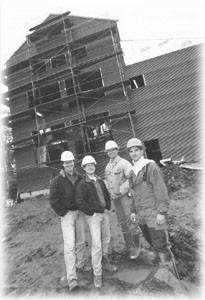
From the Ground Up: Sonoma Mountain Brewing Co. hopes to hit paydirt. From left stand CEO Tim Wallace, brewmaster Chris Atkinson, construction foreman Barry Shone, and co-owner Jerry Benziger.

Photo by Janet Orsi


Hops make a return to their
Sonoma County roots

By Steve Bjerklie

BENEATH A PATCH of dark soil near Glen Ellen, history sleeps. But when creeping underground rhizomes awaken under the soil sometime in May, they will grow faster than debt, faster than desire: they will grow up to 18 feet, in fact, in three months.

When the plants bud and are picked in September, their resin will sharpen the air with the plant’s distinctive greeny-sweet smell of resins, pineapples, and apricots. And when the essence is mulled, the flavor of Sonoma County hops will smack elegantly of the old air of Sonoma County, air that once hung heavy with hop resins and crackled with the calls and music of immigrant laborers, the taste pungent with the pine-pitch sting of hops.

For beer-making hops, part of Sonoma County’s oldest traditions–one that has been gone from the ground for 30 years after enduring for more than a century–have returned.

The return is nothing if not humble: a mere two-acre plot. Owned by the Sonoma Mountain Brewing Co., an ambitious beer-making concern established by the Benziger wine family, these two acres are so far the extent of the resurgence of Sonoma County’s once huge hop economy. And according to Tim Wallace, president and CEO of the beer company (and husband of Patsy Benziger), hop plantings in the county will probably never again attain the land use devoted to the crop in the years immediately following Prohibition, when thousands of acres were planted. “We intend to plant up to six acres,” says Wallace, “but probably no more than that. This is strictly for use at our own brewery.”

Still, the Benzigers’ commitment is more than a mere diversion: They ripped out their best merlot vineyard to plant hops because the slope, soil, and exposure were right. Commanding $1,500-$2,000 a ton, with yield featuring as much as three tons per acre, these six acres of sacrificed merlot vineyard might have contributed as much as $10,000 to $15,000 to the Benzigers’ coffers. Mike Benziger, patriarch of the family, has been quoted as calling the decision to pull the merlot in favor of hops “painful.” Elsewhere, the Healdsburg Brewing Co. has put a few experimental hop rhizomes into the ground, but nothing commercial outside of Sonoma Mountain Brewing’s plot has so far been established.

But even a new micro hop yard resurrects forgotten county history. Hops–the critical spice in beer making, giving brews the distinctive pitchy, wheaty flavor–once flourished along the Russian River. They had been grown in the county nearly as long as wine grapes, since 1858 in fact, when Amasa Bushnell and Otis Allen first harvested a crop of hop buds near Sebastopol. Sonoma County’s dense soil, mild and moist climate, and the rolling hillscapes that protect the county’s valleys from the rigors of harsh weather make an ideal hop-growing region–one of the few in the world, as it happens.

“Santa Rosa” hops, as the local type were called, were thick with flavor, perfect for dark caramel brews such as the Anchor Steam brand made in San Francisco. But a combination of factors–destructive downy mildew (which can now be controlled with modern farming), irregular bust-and-boom cycles, and a national preference after World War II for lighter lagers of the kind made by Budweiser and Miller–squeezed local hop growers until they all but gave up. The last commercial hop field in Sonoma County, on the Woolsey Road ranch owned by the Bussman family, was last harvested in the mid-1960s. Today nearly all the commercial hops used in the American beer industry are grown in Washington state.

Until Sonoma Mountain Brewing’s hops were planted last spring, all that remained of Sonoma County’s once-thriving hop agronomy were a few lonely kilns, dark and stoic as ravens against a milky sky. The remaining hop-drying kilns are almost all surrounded now by wine grapes, which turned out indeed to be the crop of the future.

TIM WALLACE is well aware of the county’s hop history. Indeed, his new brewing company sought out old-timers to find out if any members of old Sonoma County hop-picking families still lived in the area. The time of the pick, usually occurring during two hot September weeks in a rush to get the buds kiln-toasted before the plant resins dried, was unique for families and communities.

The county filled with immigrant Mexican, Italian, Japanese, and Romany families, as well as pickers from the local tribe of Pomos. Longshoreman from the docks of San Francisco came up to make the good wages paid by growers. Temporary camps for the pickers were built, streams were dammed to create swimming holes, and dances were held. Always during the harvest, the air of the entire county grew as thick and pungent as vapors from a new-baked pie with the crisp, resinous aroma of hop buds.

It was that unforgettable smell that brought both laughter and tears to the faces of stalwart members of the Dauenhauer, Imwalle, Rochioli, Ballard, and other old-time hop-picking families that Wallace and the Benzigers had invited to Glen Ellen last fall for Sonoma Mountain Brewing’s first harvest.

“We had grandparents showing their grandchildren how they picked hops,” remembers Wallace with a smile, “and here they were, doing it again for real. That’s probably a unique experience in America, the return to living people of a lost industry.”

He adds, “Hop-picking in the old days was hard work, a hard time. Hops are nettlesome plants, and a sticky substance called lupulin lies in the bottom of the hop cones. Pickers have to wear full monkey suits, with long sleeves and buttoned-up collars, which back then were made of wool. But as hard as they worked, they played hard, too. The stories we heard at our harvest were something, I tell you.”

FLORENE Dauenhauer Heck, who helped the Benzigers with that first hop harvest party, remembers that the “full monkey suits” were worn only by people who were susceptible to “hop poisoning,” a rashy skin condition not unlike the result of rubbing poison oak, “and could make picking a miserable experience.”

But not too miserable. The Sonoma Mountain Brewing hop-picking party was a cornucopia of memories. “It was just as if your first high school reunion was your 50th,” recalls Heck. “There were people who hadn’t seen each other in 50 years. The day brought back our youth, when Sonoma County was a simpler place, when everyone knew each other, when you could stand up and be counted.”

Most hop-pickers in the old days were teenagers, and half a century later those teenage memories and longings came alive again. “A friend of mine, and I’m not going to tell you her name because she’s the wife of someone prominent, asked me after she got the invitation to the Benzigers’, ‘Are they going to have any of those cute little Mexican boys there?'” chuckles Heck. “Those boys were all about 16 years old, you see, and they were like cowboys who drove hop trucks. They became all sorts of heroes that we made up in our minds.”

The teenage pickers were paid well, about $300 for a two-week or a monthlong hop season–a lot of money in the late 1940s, Heck says. “We could buy our own clothes. Why, it was enough to buy your own car!” During the short season, a typical hop farm might have as many as 60 pickers working, a critical mass of teenage excitement and innocence.

At last fall’s hop-picking party, the Benzigers provided two shuttle buses to ferry about 50 old-timers from the winery out to the hop yard. “They did a beautiful job,” comments Heck. “They had cool drinks, chairs, and they had plowed the earth. But the really amazing thing is, later I realized all of us old folks got through that whole day without any johns! That tells you how much fun we were having.”

Florene’s father, Florian Dauenhauer, is the man who single-handedly changed the hops industry with the invention of the automatic hop-picker, which he initially built and patented in 1941. His first unit was 100 feet long and two stories high, and it was to hops what the cotton gin was to cotton.

“The idea wasn’t to eliminate jobs but to pick hops faster and cleaner,” says Heck, who, with her brother now owns the Dauenhauer family company, a business that continues to manufacture automatic hop-pickers. “If you had more than 2 percent leaves and stems, the buyers wouldn’t buy your hops. The machine got it down to one to 1 1/2 percent, and our machines now are at about zero percent.”

But the automatic pickers, which were expensive, also changed the economics of hop-growing. Today, a modern hop farm with an automatic picker and its own kiln (another expensive asset) has about $2 million invested in harvesting equipment alone. Smaller farmers couldn’t afford the investment and were gradually swallowed up by larger farms. Some of the Washington state farms grow hops on thousands of acres.

The Benzigers, with so few acres devoted to hops, were not about to invest $2 million in harvest technology. Florene happened to know a hop farmer in England who had developed a portable kiln, and he passed on the plans for his invention to Sonoma Mountain Brewing.

FROM A BUSINESS perspective, there’s no great story or romance as to why a successful wine-making family suddenly became enamored of beer. The boom in microbrewing got the Benzigers and Wallace interested in hops, not history or its preservation. In fact, while attending Harvard Business School in 1987, Wallace was commissioned by the Benzigers to study the microbrew market with an eye toward making an investment.

“What the study showed was a very attractive, very small-niche beer business,” he says. “The business had a lot of dynamics similar to what was going on in the wine business. The distributors and retailers were all the same. And the microbrews were being purchased by discriminating buyers, the same kind of people who like to buy fine wine.”

At the time, the U.S. microbrew industry comprised 21 breweries, including such historic outfits as Anchor Steam. Today there are more than 300 small, niche-type beer-making enterprises, nine of which operate in Sonoma County. And now 10 years after he wrote it, Wallace is putting his business study into action.

Sonoma Mountain Brewing Co., still under construction, will feature an extensive taproom, with at least four brews on tap at all times, although only two–a golden pilsener and an amber lager–will be distributed by the company for retail sale. Wallace says he hopes to have the taproom open in late spring, possibly by Memorial Day. The company’s brewery is also under construction. Not content to copy the big American makers of pale, tasteless beer, Sonoma Mountain Brewing bought an entire brewery in Germany–“because the best beer comes from Germany,” says Wallace–and had it shipped, piece by copper piece, to its Glen Ellen site, along with a German engineer to translate the blueprints and oversee installation of the complicated equipment.

To date, the Benzigers have invested $3 million in the venture. Total production at Sonoma Mountain Brewing will top out at 100,000 cases annually.

“We’re America’s first estate microbrewery,” Wallace boasts, not without good reason. “We’re growing our own hops, the water for our brews is from our own well, and we’re propagating our own yeast. We buy only barley from the outside.” He is in fact trademarking the term “estate” for use on a beer label–the first time in America the word has been used to describe a facility for brewing beer. But Wallace is quick to point out that the Benziger beer enterprise, unlike the wine business the family sold a few years ago for $80 million to the spirits multinational Heublein Inc., will remain small.

“We want to be Sonoma County’s local brewery,” he states. Stressing the point, Wallace says Sonoma Mountain brews initially will not be distributed for sale outside of a 50-mile radius from Glen Ellen, and will be available throughout California perhaps only by the end of the decade. Do not expect to see Sonoma Mountain Brewing ads on television during a Super Bowl or World Series. Indeed, Wallace says the only ballgames where you’ll be able even to buy the beer are at the Crushers’ games in Rohnert Park.

“We want to do it right. We want to take the time and the care to make a truly great beer. We’re experimenting right now with nine different hop varieties, which all gave us uniform growth the first year. We want to find the right two or three to blend for the formula that will work best for us,” says Wallace. Formulas are the secret of great beer-brewing, and Sonoma Mountain wants to get its formula right from the ground up. Wallace approaches his job with the practical unfussiness of, well, a graduate of Harvard Business School–albeit one with soul.

After word about the success of the first harvest got around the county, history had a little surprise in store for Tim Wallace, the man who found Sonoma County’s old hop families and invited them back into their own past. “I began to get calls from grape growers. They all wanted to know: How do you grow hops? How much land do I need?’

“Sonoma County had 3,000 acres of hop yards all the way up into the ’50s,” he says, shaking his head. “Maybe some of those acres will come back again. I sure hope so. If they did, that’d be something. That’d really be something.”

From the January 30-February 5, 1997 issue of the Sonoma County Independent

This page was designed and created by the Boulevards team.
© 1997 Metrosa, Inc.
Winter Recipes

0

Winter Revels


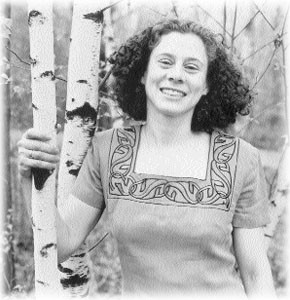
Some Like It Hot: Chef Darra Goldstein loves the cold season.

Photo by Kevin Bubriski


Legumes let you let go of the blahs

By Gretchen Giles

SEASONS, flood lines, and lovers may come and go, but dinner is a constant. Days that reluctantly end at 5:30 p.m. cause children who couldn’t be bothered to eat more than a dirty carrot before 9 p.m. in the summer to begin tragically clutching their stomachs if something isn’t steaming away in the kitchen before the 6 o’clock news. Short days and long nights require that something hot, filling, and nutritious must somehow be concocted, cooked, cleared, stored, and possibly re-heated again.

I, for one, am thoroughly sick of it.

But this need not be the winter of our discontent, at least not at the table–providing the table is weighted down to prevent it from floating away. From chili and stew to winter vegetable soup to chicken noodle soup to everything-in-the-fridge Monday night soup, we’ve had a few good months to hone our culinary cold-season skills. Just long enough, in fact, to long for the delicacies of spring and summer.

But desiring skinny grilled foods and garden-stolen salads and plates of sun-hot strawberries doesn’t do much to buck one up when one is standing swaddled like a walking newborn before a larder holding nothing but root vegetables, legumes, and meat bones. Discovering new uses for old, cold-time staples does, and lentils are an especially toothsome (and inexpensive) winter offering.

Chef Richard Allen of Guerneville’s Willowside Cafe scoffs at the suggestion that cooking through the rigors of winter is difficult. And tough it’s not, at least not in the mouth.

Asked to propose a dish both unusual and nourishing for the doldrums of February, Allen is prompt. “I’ll tell you what I’m doing,” he says from the din of his kitchen. “Quail on lentils.” Assuring that quail can be ordered fresh from any reputable local butcher (ask for it to be boned) or can be purchased frozen–bones and all–at most Asian markets, Allen stuffs his little birds with a distinctive sauté of pancetta, onions, and sage. He then browns the quail on all sides and bakes them in a hot oven for no more than 10 minutes.

French lentils are prepared over a quick sauté of carrots and onions, with plain water added to keep the legumes loose as they cook. When the lentils are tender, Allen adds a soupçon of white truffle oil (found at most specialty food stores and to be guarded with your financial life) and a small garnish of red mustard leaves. If he weren’t using the pricey oil, Allen would simmer the lentils in a rich dark stock, but withholds it here to prevent the two flavors from duking it out on the plate.

The quail are rendered tenderly atop a serving of the lentils and garnish, causing the mustard leaves to wilt slightly, and a fried quail egg is placed delicately to the side. “It’s wintry and not too heavy,” Allen declares with satisfaction, noting that his restaurant serves the dish with a salad composed of blood oranges, fennel shavings, and thinly sliced red onion. The dressing is based on a squeeze of the oranges’ juice, a teaspoon of Dijon mustard, and a dose of balsamic vinegar. Whisking in a drizzling of best-quality olive oil binds the combination until it is silky.

Russian scholar and cookbook writer Darra Goldstein offers some simple recipes for the indoor months, authoring The Vegetarian Hearth: Recipes and Reflections for the Cold Season (HarperCollins, 1996), a compendium of tales, traditions, and meatless ways to endure the darkest days of the year.

Goldstein offers another legume legacy, suggesting a pot of her Turkish Lentil Soup, given to her by Turkish scholar Nevin Halici (and we thought academics spent more time in the library than the kitchen!).


Turkish Lentil Soup

1/4 cup dried chick peas (soaked to soften overnight)
1/3 cup bulgur
1/2 heaping cup green lentils
6 cups water
1 medium onion, peeled and thinly sliced
1 1/2 tsp. cayenne
1 tsp. salt
1 tbsp. ground coriander seed
1 tbsp. butter, melted
1/2 tsp. dried mint

Drain the softened chickpeas and place in a stockpot with the bulgur, lentils, and water. Bring to a boil, then simmer the soup, partially covered, for 45 minutes.

Stir in the onion, 1 tsp. of the cayenne, and the salt. Cook for 15 minutes. Add coriander and simmer for an additional 5 minutes.

To the melted butter, add the remaining 1/2 tsp. cayenne and the dried mint. Transfer the soup to a tureen and top with the butter mixture. Serve immediately to 4 hungry people.

From the January 30-February 5, 1997 issue of the Sonoma County Independent

This page was designed and created by the Boulevards team.
© 1997 Metrosa, Inc.
The Mermen

0

Fish Tales


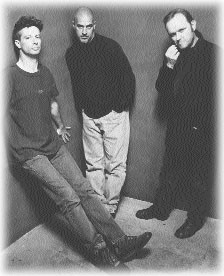
Wet Dreams: Allen Whitman, Jim Thomas, and Martyn Jones surf it.

Photo by Nathaniel Welch


The Mermen harness a
current of rock influences

By Greg Cahill

I DON’T REALLY understand what I’m doing, so the credit goes to somebody else, somewhere beyond me,” says Jim Thomas–hailed in the press as “the reluctant guitar hero”–of the sonic tsunami that drives the exuberant songs of the Mermen, the San Francisco­based neo-surf power trio. “I try to compare it to surfing, not on a small day but on a big day when you aren’t really in control.”

In a flourishing subcult that includes such innovative acts as the flamenco-flavored Aqua Velvets and the edgy Finnish neo-surf band Laika and the Cosmonauts, the Mermen actually appear to be on course, reeling in fans that reportedly include Morphine, Les Claypool of Primus, and everybody’s favorite Talking Head, David Byrne.

Named for the classic 1968 Jimi Hendrix track “1983 . . . A Merman I Will Be,” from the Electric Ladyland album, the band mines the same rich musical terrain tapped by such adventurous instrumental indie-rockers as Pell Mell and Shadowy Men from a Shadowy Planet. Fortunately, the Mermen didn’t take to heart Hendrix’s incantation that “We’ll never hear surf music again,” from “Third Stone from the Sun.” Instead they chose to plunder the rock treasure chest to blend Hendrix’s searing psychedelia with a hefty dose of ’70s punk angst, ’80s hardcore emotionalism, ’90s grunge, and, yes, even a few sanctified ’60s surf licks.

In the process, the Mermen have sculpted a vicious, visceral hybrid that rides the edge of the alternative rock movement.

Just think of Dick Dale meets Sonic Youth, though their approach is wholly original.

“Not only do they set themselves apart by attacking the style with an almost academic will and precision,” noted CMJ critic Cheryl Botchick in a review of 1996’s Songs of the Cows (Mesa/Bluemoon), “they raise it to new, previously unseen places.”

The Mermen started out seven years ago as a garage band, playing their own versions of little-known songs previously recorded by obscure surf bands. “Eventually we just outgrew that retro sound in a substantial way and moved ahead to something we could put our own initials on,” explains Thomas, the band’s principal composer and the owner of hundreds of surf records.

The result was Food for Other Fish, a 1994 self-produced marvel that pushed the envelope of instrumental guitar-driven rock and helped define the then-fledgling neo-surf subgenre. Recorded live to a two-track DAT machine, it quickly rose to the top of the airplay chart at KUSF and garnered a local cult following. Thrasher magazine named the Mermen one of its “Top Discoveries” for that year, and the band became a top draw at the Fillmore Auditorium in San Francisco, where it played to sell-out New Year’s Eve crowds in 1995 and 1996. In the past couple of years, the Mermen have shared the stage with a dizzying list of performers, ranging from the Cramps and Midnight Oil to Chris Isaak and Rancid.

But it was last year’s A Glorious Lethal Euphoria (Mesa/Bluemoon)–awash with trebly turbulence and rumbling drumbeats–that brought the Mermen national attention. Guitar World hailed the album as “a thinking man’s shred album.” And Rolling Stone ranked it among the best of 1995.

As for Thomas, he’s still trying to figure out how the band handles the sheer force of its own sonic fury. “You have to develop certain skills to deal with it,” he muses, “but all you can do is kind of influence what happens.”

The Mermen perform Thursday, Feb. 6, at 9 p.m. at the Mystic Theater and Music Hall, 21 Petaluma Blvd. N, Petaluma. Tickets are $3. Call 765-6665 for information.

From the January 30-February 5, 1997 issue of the Sonoma County Independent

This page was designed and created by the Boulevards team.
© 1997 Metrosa, Inc.
Girls Speak Out

0

Girl Power


Janet Orsi

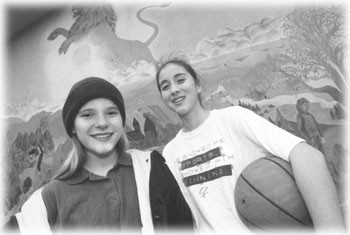
Team Building: El Molino High School students Liz Foster-Shaner, 14, and Christina Dry, 15, participated last month in a UNICEF conference that explored a variety of issues facing girls.

Local author helps girls
gain self-confidence

By Paula Harris

SELF-ESTEEM is a big problem,” muses 15-year-old El Molino High School student Christina Dry, adding that her sentiments typify those of millions of girls who feel “undervalued” by society–“not knowing how good you are and not having confidence in yourself.”

“The lack of encouragement is everywhere,” she continues. “The biggest problem is being told you can’t do things. It’s not said straight out, but the message is underneath everything.”

The stories and experiences of young girls nationwide are chronicled in Girls Speak Out: Finding Your True Self, a new book by educator and women’s activist Andrea Johnston, with an introduction written by feminist leader Gloria Steinem.

Johnston, a former El Molino High School teacher and ex-Independent arts critic who met Steinem in 1994 while on an assignment, is co-founder with Steinem of the Girls Speak Out conscious-raising program and convenor of the National Girls Coalition.

The book is based on Johnston’s and Steinem’s talks with diverse groups of girls, ages 9 to 15, in various cities across the country over the past two years.

Dry, one of two local girls who participated last month at a U.N. conference addressing the topic at UNICEF House in New York City, says she has gained leadership skills and confidence through the Girls Speak Out program. She was part of the steering committee for the first National Girls Conference, which was co-sponsored by the United States Committee for UNICEF. The two-day conference attracted about a 125 girls, who examined the influence of the media on a girl’s self-image; unwanted and violent harmful behavior; and human rights.

“A lot of girls have new ideas and want change, but they don’t have anyone in the community to talk to,” says Dry. “I realized that no matter where you’re from, what kind of background, it doesn’t matter–I just want to talk and hear from other people like me. We need to hear that other girls believe the same things.”

Elizabeth Foster-Shaner, 14, of Jenner, also a member of the steering committee, says she was surprised to find out how many other girls shared the same opinions. “It’s all about how society affects girls,” she says. “The problems about stereotypes, about not being taken seriously, and about mental and physical abuse.

“I’d like women and girls to be taken seriously in politics and the media. I’d like people to accept who we are, and I’d like girls to accept who they are so we can be more self-confident and change things.”

“It’s sad that magazines typically use anorexic-looking white models for us to look up to,” agrees Dry. “The media should be more realistic and send the message that it’s all right to be who you are.”

Both local girls have their writings featured in Girls Speak Out, which also uses poetry, songs, and illustrations of female artifacts from “pre-history” to make its case for Girl Power.

“Pre-history was the time before patriarchy,” explains author Johnston. “We need to show girls that things weren’t always the same with the idea that one sex was superior to the other. We each have to reclaim what’s been taken from us–it’s really about history and realizing that what we do each day is also our history.”

JOHNSTON SAYS the book is a way to find out who you are from the inside out. “There is information about sexism, racism, patriarchy, and sexual abuse introduced through noted writers and girls’ stories,” she explains. “The idea is that once girls have this information and know how to organize groups, they can work for change.”

She points out that girls who participated in the national conference are working to come up with recommendations for policymakers.
“Research shows that girls aged 9 to 15 give up on the idea of who they are and give in to outside pressure and become what I call ‘female impersonators,'” she says.

“Girls need to be aware that it’s not them at fault, it’s the system,” Johnston adds. “If they can realize at a young age that it’s not them, they won’t internalize some of the problems.”

Johnston and Steinem began fundraising two years ago for the project and now work with girls of different ages, races, and income brackets. “There are also,” says Johnston, “girls of different sexual orientations and survivors of sexual abuse–girls who may not ordinarily have met each other.”

Although men and boys aren’t (as yet) invited to participate in the Girls Speak Out sessions, Johnston insists the forums are not an excuse to trash males.

“We never had a male-bashing agenda,” she says. “It’s a positive focus on who girls are and what they can do.

“To be a feminist,” she adds, “is to be someone who believes everybody matters.”

Johnston and Steinem will kick off the Girls Speak Out book tour at 3:15 p.m., Tuesday, Feb. 4, when they appear at Copperfield’s Books, 140 Kentucky St., Petaluma. Admission is free. For more information, call 823-0677.

From the January 30-February 5, 1997 issue of the Sonoma County Independent

This page was designed and created by the Boulevards team.
© 1997 Metrosa, Inc.

Selling Art

0

Art & Soul


doesn’t mean
selling out,
say local artists

By David Templeton


Illustration by Bruce Stengl


Like many artists, Paul Boudreaux lives close to his work. In fact, it shares his bedroom. A prolific painter and creator of numerous “street-style” comic books, the intense, 27-year-old artist lives in a tiny backyard cottage in Penngrove, with little space and no room for a dedicated studio in which to allow the creative fluids to flow.

This explains the pair of large drawing boards that are crammed in across from his bed, effectively dominating the area while providing a pregnant metaphor for the passions that dominate Boudreaux’s life. His one spare room would make an adequate studio were it not already packed to the plaster roof with other people’s art, evidence of Boudreaux’s standing as a kind of underground artist’s P. T. Barnum, fervently hawking their wares.

Many of the larger works quartered here are slated for upcoming coffeehouse exhibitions, while the stacks of edgy sketches and “comix” will end up in next month’s issue of Crust, a quarterly street-art magazine that he’s been mothering along for the last few years.

“Unfortunately,” Boudreaux amiably shrugs, “I make no money from any of this, so I have to work a full-time job. The bills must be paid.”

He waves at a towering stack of T-shirts, proof of his day job designing whimsical images for LifeForms International in Rohnert Park, the company famous for unleashing the shirts depicting sunglass-adorned frogs. Last week, he took time off from drawing frogs to attend an independent publishers’ convention in San Jose, where he spent a few days promoting Crust while talking shop with other artists.

“It’s important to get together with other people who are out there creating and publishing stuff on their own, basically just for the love of it, just to get our ideas across. We’re not looking for any kind of commercial success,” he says.

Asked to rethink that last remark, Boudreaux laughs. “Maybe we just don’t expect commercial success, though I personally would have no problem with it. In fact, it’s what I dream about.”

Boudreaux has just touched on one of the most basic and daunting questions of living the life of an artist: how to maintain a working balance between pure artistic craft and survival-level commerce. In other words, how can artists devote themselves soul and shoelaces to their creative impulses, yet still expect to eat dinner now and then? Curious and curiouser, The Independent decided to survey some of the county’s most talented underground artists to get their views on this perspective.


Erica Montgomery

The art world–above and below ground–is full of talk that illustrates this financial multiple-personality syndrome of the serious artist. Many artists say you’ve sold out if ever you accept cash for your work, while others insist you have not become a real artist until you’ve sold your work. One local painter welcomed a broken leg so he could stay home from work and devote himself to his artwork. A Petaluma bookseller, who paints in his spare time, reportedly turned down an offer of $200 for a painting, opting instead to sell it for $25 to someone who, he felt, truly understood it. Though a few local artists have found ways to make a living from their art, many of them never sell a single thing.

Though Boudreaux has sold a number of pieces, he expresses a loud discomfort with having taken cold cash for something he created without cash in mind.

“If you paint something, it’s a holy thing,” he says. “So when you sell it, you go, ‘My God! What have I done? I prefer to give my stuff away.”

There’s no shame in using your art to make money,” insists Diana Kelly over the phone. A painter and sculptor who recently earned an arts degree from Sonoma State University, she has been known to take on the occasional freelance art job while juggling a new baby and her own loftier artistic endeavors. “I don’t think commercialism is necessarily the Work of the Devil.

“Look at history,” she remarks. “The pre-Raphaelites all designed wallpaper so they could afford to do what they wanted to do. Even the Sistine Chapel was a commissioned work. That wasn’t Michelangelo’s idea, but no one’s going to say it isn’t art. My passion may not lie in doing commercial work, but my husband and I would like to own our own home someday. You gotta do what you gotta do.”

Kelly’s husband, Richard, also an artist, agrees. To save up for that house, he works with Boudreaux at LifeForms, and has learned to stave off the niggling fear that he is somehow selling out his artistic skills.

“The notion we all once had as aspiring 18-year-old artists–that we would spend our time creating nothing but gigantic masterpieces–that ideal does get tempered by a dose of reality.” Even so, he confesses that his most satisfying artistic experience was creating a plaque as a gift for some friends. He’s also proud of having created an illustration that is worn on the peg leg of a man in the Midwest. “It’s kind of a thrill to know that my art is a part of somebody like that.”

“I will only do the work I’m comfortable doing,” states Santa Rosan Bruce Stengl, leading the way into his own bedroom/studio bedecked with high-energy, comic book­style illustrations (and a tiny framed Rembrandt print, smack in the middle of the cartoons).


Andy Cook

Though recently employed as a label designer, Stengl is trying to find work that is more satisfying, hoping for a job that allows him enough time to illustrate his offbeat, ongoing mini-comic series, Rabbit Boy. Though fiercely anticipated by a core cluster of fans, the comix are hardly a moneymaker; Stengl spends months designing each issue, which he prints up at Kinko’s in small batches of 35 at a time, only to sell them for a scant dollar apiece. Often, if an appreciative fan has no money, he’ll give the book away.

“I don’t have a problem making a living off my art, if I can,” he says “though I suspect I’ll end up finding the balance somewhere. The formula I’m seeking is to have half of my income come from my art. Then I could probably stand to have another 9-to-5 job. I just don’t want to sell out my art.”

“In the art world, people do tend to resent those who seem especially fixed on selling their work,” offers Gaye Shelton. As both a painter and the director of the California Museum of Art, Shelton understands the treacherous duality of making a living from art. “If you are good at promoting yourself, and you are eager to close a sale, you can be seen as an artist who’s sold out. On the other hand, it’s a very luxurious point of view to think you can focus only on the work–and never on how to sell it.”

On the edge of Santa Rosa stands an old World War II­era building that now houses an ever-shifting number of artists, each residing in small studios where they work and live for relatively little expense. With one or two exceptions, all these artists hold day jobs, while spending their evenings pursuing their craft. The classic of the struggling artist, this loose-knit community known simply as The Studio reflects the same disparity of viewpoint as has been reflected by all the above artists. While planning for a recent open-studio event, there was–according to resident Glennith Lambert–an intense debate over whether proceeds from any sales might be donated to charity. Those opposed felt that selling work is so rare an occurrence that it would be wrong not to benefit personally from the cash. In the end, the charity idea was dropped.

“It’s a never-ending struggle,” sighs Lambert, who works as a substitute teacher, and whose living quarters are packed with intriguing sculptures that blend ethnocentric claywork with computer art. “A lot of artists actually quit doing art altogether, because they can’t afford to go on,” he says. “I certainly don’t think of this as a source of income. I’d just like to sell enough to maintain my art habit.”

Across the hall lives sculptor Miguel Maceira. His viewpoint is decidedly resigned.

“We’re fortunate to be able to do art at all,” he says, smiling widely. “Most people don’t even have that. No one’s forcing me to do this. I do odd jobs to pay the rent, and I do my art for myself. Sometimes I get paid for my work, sometimes not. I never feel like I’m selling out. I know how lucky I am.”

“You do your work, that’s all there is to it,” comments William DeRaymond, a painter of vibrant canvases who resides on the second floor of the building and drives a bus for the county. “You may never see the rewards of the marketplace. That doesn’t matter. You have to remain true to your vision.

“Aside from that, taking money does not constitute selling out, no matter what some people say. We live in a culture where we are rewarded for producing something that people like by being paid for it. That’s the way it works.” He pauses before offering his final thought, a remark that serves as an apt summation of the entire subject.

“As long as you are working to please yourself, and not some potential buyer, then you are a true artist,” says DeRaymond, nodding. “Beyond that–let the financial gain come. I personally am all ready for it.”

From the January 23-19, 1997 issue of the Sonoma County Independent

This page was designed and created by the Boulevards team.
© 1997 Metrosa, Inc.
Hard Cider

0

Serious Cider

By Bruce Robinson

OF ALL THE OBSTACLES that Jeffrey House has confronted in establishing his young business, the most elusive has been linguistic. “That word cider is the problem,” the founder and president of the California Cider Co. acknowledges cheerfully.

“That word normally means fermented, in most European cultures. In America, the word got changed to be a softer cousin, just like apple juice really, around the 1930s. That’s part of our problem: to try and convince people that ours are fermented.”

House’s Graton-based company now produces three Ace brand ciders–apple, pear, and honey–whose smooth carbonation and strong fruitiness belie their 5 to 6 percent alcohol content. But those same characteristics are a big part of cider’s appeal.

“It’s fresh, it’s natural, it’s half the alcohol of wine,” House elaborates. “Ladies can drink it instead of beer. It’s low in calories, it mixes with things. It’s got a lot of positives.”

Apples combine readily with most other fruits, opening myriad possibilities for punches and spritzes, but cider has long been blended with beers, too. “You can take an average lager, like a Miller or a Coors, and you can make a better-tasting drink by adding cider to it,” House explains.

Snakebite–a 50/50 mix of cider and lager–is a standard quaff in British pubs, while a combination with a dark stout, such as Guinness, is commonly known as Black Velvet or Black Satin.

One unusual benefit the cidery provides is a new market for Sebastopol-area apples, fruit that historically has been primarily pressed into juice use. “We use Gravenstein and about five other apples, all of them grown locally,” says Dave Cordtz, the Ace brewmaster. Apple juice is the main ingredient in all Ace flavors. For Ace Pear, “We remove the aroma from the apple juice so that when we add the pear juice back to it, it takes on the whole characteristic of pear,” Cordtz explains.

Ace Honey, which has been available for only a few months, is the driest of the three, and appeals to more experienced palates, says House. It collected the gold medal for cider at last fall’s Sonoma County Harvest Fair.

CIDER’S HISTORY in America extends back 1629, in the earliest years of the Massachusetts Bay Colony, House says, but after Prohibition its popularity waned, owing to the erratic quality (and potency) that consumers associated more with moonshine than with predictable brews such as beer.

Across the Atlantic, however, cider has endured as a popular alcoholic libation, served alongside a range of beers at pubs throughout Great Britain, where it accounts for about 8 percent of the beer market.

“In the UK now, it’s over a $1.5 billion business,” says House, a British native, who got his start in the trade by importing cider to the States. “The three top cider makers are producing over 100 million gallons a year of cider.”

He is hoping cider will attain comparable popularity here, and the trends appear to be heading in that direction. Industry figures cite sales of 115,000 cases in 1990 jumping to a whopping 606,000 cases in 1994. Total sales last year reached 2 million gallons nationwide; that is projected by some analysts to jump to 15 million gallons by the turn of the century.

So who is drinking all that cider? “I think Generation X has always liked hard cider and has taken it as their own,” House replies. “The obvious consumption is going to be with the 21- to 28-year-olds. We’re the alternative to a wine or beer.”

Ace Ciders produced 56,000 cases in 1996, the company’s second year, and has been hard-pressed to keep up with the demand for its products. House expects sales to triple or more in 1997, and plans to add an as-yet unnamed fourth flavor before summer.

Along with that growth, House has already prepared plans to build a micro-cidery, complete with tasting room, tours, and historical displays, to be located on Highway 116 at Graton Road. He hopes to begin construction later this year.

A big part of their business is kegs, which are rapidly gaining favor in youth-oriented bars. “If you look at all the taps that are going into all the bars across America, one or two of them should be a cider tap,” House says. By aggressively courting that market, he hopes to see Ace Ciders grow to a business doing “somewhere between $15 million to $20 million” annually in another five or six years, which, he jokes, “means that we might put Graton a little more on the map.”

From the January 23-19, 1997 issue of the Sonoma County Independent

This page was designed and created by the Boulevards team.
© 1997 Metrosa, Inc.
Preserving Biodiversity

0

Last Days of the Ark


Janet Orsi

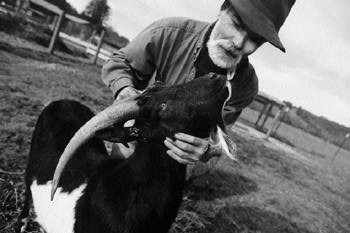
One World, One Beast: Ranch manager Serge Etienne tends to a rare goat at C. S. Fund’s farm facility in Freestone.

Common livestock breeds are vanishing at a rapid rate. The few strains the world depends upon for food and clothing belong to a few corporations.

By Kelly Luker

There is a battle being fought. Although it rarely, if ever, has made the evening news, it is a war that all but a very few are guaranteed to lose. The battlefield? Look no further than your morning breakfast of scrambled eggs, toast, and glass of milk. The conflict rages around the newest eco-buzzword–biodiversity–and who owns God’s handiwork. If biotechnical companies continue undeterred, our food sources will be neither God’s nor nature’s, but the property of Ciba-Geigy, Royal Dutch/Shell, Sandoz, or one of the other half-dozen multinational chemical corporations.

Welcome to the real One World Order.

NESTLED IN THE ROLLING HILLS a few miles from the Sonoma County coast, the little town of Freestone could be a postcard for rural living. About five miles west of Sebastopol, the handful of homes, volunteer fire department, and country store that compose this village hinges on a two-lane road, generously named “highway,” that snakes through the pastures and farms of Sonoma County. The silence is deafening, sometimes punctuated only by the scraws of turkey vultures that glide effortlessly above.

Although Freestone’s population hovers around 60, it is still quintessentially Californian, claiming an espresso stand that opens at 6 a.m. and a quaint bed and breakfast. It is also home to the C.S. Fund and its executive director, Martin Teitel. Both are dedicated to prodding an already disaster-numbed world to recognize this latest crisis that threatens our future food supply.

Teitel looks like a man who would be comfortable on a farm, which is a good thing, since that’s one of the Fund’s many objectives. First, however, explains Teitel as he relaxes in the den of this nondescript building, the Fund is a philanthropic organization of the heirs of C. S. Mott, one of the founders of General Motors. The heirs distribute about $1 million annually to carefully selected organizations dedicated to preserving two ideals held dear by Americans–the environment and the right to dissent. But we are here today to talk about the former cause and what may be Teitel’s driving passion–preserving biodiversity.

To that end, his workplace is more than the Fund’s office. It is also home to “walking gene banks,” as Teitel calls them, livestock that are on the verge of extinction. For Teitel, a philosophy major who has been with the C.S. Fund since 1981, this is much more than a job: it is a calling.

He lives with his family next door–“a short commute,” he laughs–and spends much of his time writing and publicizing his research and concerns about biodiversity. What makes these vanishing breeds on his farm so fascinating is their very ordinariness. As the world focuses on the disappearance of such exotics as the ocelot, elephant, and meercat, it is the many breeds of domestic livestock–like pigs, cows, and sheep–that are rapidly approaching extinction, creating a economic and social disaster in the making.

Teitel will be the first to tell you that people would eventually survive without the meat and dairy products these animals provide. But the critically endangered breeds of goats, sheep, and chickens that live here mirror the story that is unfolding with grains like barley, wheat, and rice–three crops that provide 75 percent of the world’s food. Explains Teitel, “For the past 150 years or so, we’ve applied the industrial mode to agriculture.”

Enthusiastic scientists have worked to develop a steady supply of uniform, high-quality goods–large white eggs, lean pork meat, lots of beef on the hoof. One by one, livestock breeds shrink or disappear, no longer needed by a population that they are dependent upon to survive. But Teitel’s concerns aren’t just nostalgic. The cost of these lost and threatened breeds promises to be devastating.

We wander out to the back pasture, where a San Clemente Island goat named Uno frolics with his friend, a more common Alpine breed named Dos. A couple of freckle-faced Navajo-Churros wander up to sniff inquisitively at Teitel’s clothes. Bending to scratch the ram between its curling horns, Teitel explains that breeding these creatures is a double-edged sword. Any farmer will tell you that production traits (rapid growth, milk production, and meat conformation) respond quickly to selection pressure, while adaptability traits (reproductive fitness, climate tolerance, and parasite resistance) take a fair while longer. On the road to creating a “super producer,” the qualities that makes the animal hardy are bred out, compensated by massive amounts of antibiotics and chemically enhanced feeds to counterbalance its frail constitution.

Now the problem is twofold: not only are animals more susceptible to illness, but there are fewer breeds to rely on if disease wipes out a particular strain.

As an example, Professor Bill Heffernan of the University of Missouri’s Department of Rural Sociology, points to the domestic turkey that appears on dinner tables each Thanksgiving. “We found that in 90 to 95 percent of turkeys produced worldwide, the genetic stock comes from one of three breeding stocks,” he says. These birds have been genetically altered to create breasts so large (for the favored white meat) that they are unable to breed naturally and must be artificially inseminated. “It’s only a matter of time before we end up with some disease that, with this narrow genetic base, we have no resistance to,” Heffernan says.

This situation is, of course, not limited to turkeys. Virtually all–95 percent–cows’ milk comes from one breed, the Holstein-Friesian. About 60 percent of those dairy cows can be traced to only four breeding lines. And, those morning eggs and sausage? Nine out of 10 eggs come from the White Leghorn, while 25 to 30 percent of the hogs that provide the “country links” come from only six breeding lines.

IF THE LACK of diversity in gene pools is disturbing, to get very nervous one need only look at how just a few corporations own our food supply from pasture to table. Heffernan is especially interested in the growing concentration and control of the food supplies by a few large transnational organizations. He cites disturbing figures: “Three firms mill 80 percent of the flour in North America. Three firms handle the distribution of three-quarters of the grain moved globally. Three firms slaughter about 82 percent of the beef cattle in North America.”

Companies achieve dominance by mastering the art of “vertical integration,” the attempt to control every aspect of their product, from genesis to distribution. Like the neighborhood drug pusher, these companies develop frail, chemically dependent livestock and crops, and then supply the needed fertilizers and antibiotics to sustain them.

Heffernan points to one of the three major companies that slaughter 80 percent of the cattle in Australia. “Conagra is the world’s largest chemical distributor and fertilizers producer,” he explains in a soft Midwest twang. “Conagra owns 12,100 barges; 2,000 railroad cars; and 100 grain elevators. They are the fourth largest [poultry] broiler producer.” Heffernan sums up: “They control everything . . . all the way from seed to shelf.”

It becomes obvious what is most priceless in the quest to rule the world’s food supply, say advocates of biodiversity. As science and technology move ever faster than the guidelines that may harness them, the race is on to patent the very stuff of creation itself, germ plasms of the grains and plants and livestock embryos.

“Plant life arose in about 12 centers around the planet,” explains Teitel. “All 12 of those are in the Third World.”

While we have all of the money, he adds, the Third World has the germ plasm. This has led to an intense struggle for control of that basis for life, he says, with mostly corporations fighting to patent germ plasm from these countries. “They caught on 20 years ago–whoever controls the food supply controls everything,” observes Teitel drily.

His fears are echoed by Jeremy Rifkin, author and biotechnology watchdog, who notes in Teitel’s book Rain Forest in Your Kitchen (Island Press, 1992), “With the big chemical companies moving in to collect seeds and patent animal embryos, they potentially will have power over many of the living things [and] of the future of this planet.”

The solution for the survival of both flora and fauna–and, ultimately, those that depend on them–is diversity, both of the gene pools and of those that try to claim ownership of them.

Teitel’s remote demonstration farm is only one example of what are known as preservation breeders, a network of hobbyists and small farmers throughout the world in organizations such as the American Livestock Breeds Conservancy and Rare Breeds Survival Trust, dedicated to keeping breeds of domestic livestock from disappearing. Besides the Navajo-Churro sheep (fewer than 5,000 left in the world) and San Clemente goats (fewer than 2,000 remaining), Teitel also raises Delaware chickens and Ossabaw Island pigs, both on the American Livestock Breeds Conservancy’s list of critically endangered species.

Like Teitel’s organization, the farm at the Institute for Agricultural Biodiversity, an adjunct of Iowa’s Luther College, attempts to both preserve breeds and educate the public about biodiversity. Its director, Peter Jorgenson, calls the institute, housed in a 19th-century barn outside of Decorah, “the first museum/zoo to entirely focus on interpreting the genetic revolution.”

The solution to the shrinking diversity in our crops and livestock–and those that attempt to control them, believes Jorgensen–will be found when we start confronting and challenging some of our basic concepts about food, farming, and the economy. “In my view,” states Jorgensen, “I don’t call what we have in this country a farm policy or agricultural policy–we have a ‘cheap food’ policy.”

He continues, “It doesn’t factor in the social or environmental costs. It only looks at how to keep cheap food in the supermarket.”

Some nations, however, are finally rebelling against this Wal-Mart approach to keeping our freezers and cupboards full, and which in the process is driving family-owned farms into extinction. Heffernan points to Sweden, which took steps to ban giant livestock containment facilities, such as one in Oklahoma that houses 1 million hogs.

“The [Swedish] government has helped the farmers during the transition,” Heffernan notes. “[Now] farmers are making good money off their hogs. [They] produce some of the best pork in Europe, and family farms are being preserved.”

Teitel hopes that shoppers begin to question just what their mass-produced, buck-a-quart milk or 59-cent-a-pound broiler is actually costing them–or the next generation. They can vote for change with that most democratic of ballots, he says, the almighty buck. “Shopping is where we can have a direct impact by making choices,” Teitel observes. Vote for organic greens, he suggests, or brown eggs instead of white, or meat and produce from family-owned farms.

With what we buy and from whom we buy, believes Teitel, “we can make a direct choice on our future and our children’s future.”

From the January 23-19, 1997 issue of the Sonoma County Independent

This page was designed and created by the Boulevards team.
© 1997 Metrosa, Inc.

Talking Pictures

0

Love Songs


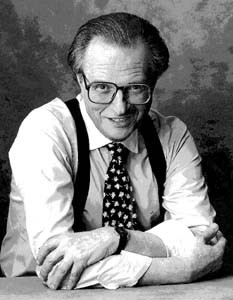
Mugging: Talk host Larry King sings praises to Woody Allen’s newest.

Photo by Andrew Eccles/Online


Larry King says I love you

Writer David Templeton takes interesting people to interesting movies in his ongoing quest for the ultimate post-film conversation. This time out, he fields a phone call from radio-TV interviewer Larry King, discussing their synchronized bicoastal viewings of Woody Allen’s new film, Everyone Says I Love You.

YOU SAW THE MOVIE, right?” rumbles the distinctive voice of Larry King, beginning our little chat the same way he begins his nightly CNN television show: with a nice, simple question, direct and to the point. Yes, I reply, I saw Woody Allen’s Everyone Says I Love You last night at a press screening in San Francisco, knowing that he saw it last night, too, at its world premiere in New York City.

Throughout our 25-minute long-distance rendezvous, King asks many questions, shifting easily from the role of interviewer to interviewee. Asking questions, he has said in the past, is his lifelong hobby. Others have added that he also displays a marked enthusiasm for the dropping of names.

Both skills are in evidence today. “I had a great talk with Woody last night,” he offers, after describing the premiere. “We talked about Brooklyn. We went to competing high schools, you know. He played baseball for Midwood and I was at Lafayette. I graduated in ’51. He graduated in ’53. He was a pretty good ball player. He even thought he might have been a pro player.”

As for the movie itself, King–no stranger to love’s inequities–is unsparing in his praise. “It’s a lovely, funny, beautifully done movie,” he says. “I can’t think of anything I didn’t like about it. Last night was my second time seeing it; I saw it a month ago when it was released for a one-week run to qualify it for the Oscars. And now I could see it a third time.” He pauses. “Couldn’t you?”

Easily. As its title suggests, Everyone Says I Love You is about the universality of Love with a capital “L.” It is an unapologetically giddy homage to the fine art of going gaga, a very charming comedy in which all the characters frequently burst into song, singing and dancing to classics such as “Making Whoopie” and the standard “I’m Thru with Love,” all to illustrate the potent notion that people in love do inexplicable things, like singing, in spite of the fact that the people involved (Goldie Hawn, Drew Barrymore, Alan Alda, Edward Norton, Tim Roth, Julia Roberts, and Allen himself) are not exactly trained singers. The result is as endearingly goofy as it is dazzling.

“I’ve been singing ‘I’m Thru with Love’ for a month now,” the oft-married King laughs. “I sing it at odd hours. I sang it as a duet last night with Drew Barrymore.” I ask if he can really sing, to which he replies, “Sure, I can keep a tune. In my heart I’ve always wanted to be Vic Damone.

“This movie is a spoof of movie musicals, but it’s a tribute to them at the same time,” he continues. “It is about the craziness of love. In love. Out of love. Manic in love. Julia Roberts is nuts in love. There’s the young daughter who falls in love with everyone she meets, Goldie Hawn who loved Woody but now she loves Alan Alda but still sort of loves Woody. The young man who loves the girl who falls in love with the criminal, with the criminal kind of liking her but then using her, so she goes back to the first guy. Woody Allen knows human nature.”

I pose a theory that without the crazier aspects of being in love, love itself would be less enjoyable.

“How old are you?” he asks, suddenly curious. “How many times have you been in love?” Um. I’m 36 and I’ve been in love at least half a dozen times, I reply.

“Well, I’m 63,” he reports, “and I can say that, as I define ‘in love,’ I’ve been ‘in love’ three times. This is with women who, by a whim, could drive me nuts. The slightest change in expressions on their faces could make me depressed. These are women who, when they say they’ll call you at 4–if it’s 4:15, you panic.

“Love can make you do crazy things,” he goes on. Alluding to Allen’s musical, King says, “I’ve danced on the street for women I’ve loved. I’ve sung love songs. I’ve whistled. I’ve skipped. I’ve gotten angry and thrown suitcases across the room. I’ve done everything like that. I’ve had furs delivered. I got a car once for a woman with a ribbon wrapped around it.

“I’m a romantic guy! I like flowers. I like surprises. I like the chase. And I like being in love. But I don’t like the pain of it. With love comes pain.” This, King insists, is why he’s currently not in love, and why he’s happy to remain so.

“I am ‘in like’ with someone, though,” he adds playfully. “I gotta tell you, I have a better life when I’m just ‘in like.’ Sure, I’m never as, you know, ‘off-the-roof’ as I am when I’m head over heels in love.

“Then again,” he adds, laughing happily at the thought, “I’m never as depressed, either.”

From the January 23-19, 1997 issue of the Sonoma County Independent

This page was designed and created by the Boulevards team.
© 1997 Metrosa, Inc.

Exercise

0

Tight Fit


Vim and Vigor: Joan Price’s exercises can be done in shortbursts.

Photo by Janet Orsi


Joan Price counsels 10-minute
workouts for the exercise averse

By Bruce Robinson

PEOPLE WHO SAY they don’t have time to exercise are too busy not to,”declares Joan Price, neatly nipping my best excuse in the proverbial bud.”Exercise does not take time from your day,” she continues. “It gives it backto you in increased productivity, increased energy, and needing less sleep.”

To be sure, all that sounds good to a graying, roundish writer who has, overthe years, become much too short for his weight. But, but, but …

Price has heard it all before. A Sebastopol-based fitness writer, instructor,and adviser, she is the author of the immodestly titled Joan Price Says,Yes, You CAN Get in Shape (Pacifica Press; 1996), and claims herspecialty is helping non-exercisers start and stick to an exercise program.

“So, are you a non-exerciser or a lapsed exerciser?” she demands, locking adeterminedly healthy gaze on my sedentary self, as I attempt to take notes asaerobically as possible.

I can claim fair-weather status as a weekend warrior on the tennis courts,but beyond that my greatest regular exertion is dragging the trash out to thestreet every week.

“I would like to see you have a more rounded program,” Price clucksdisapprovingly. “Let’s see if you can work in some other fitness activitiesduring the week.”

These come in three types, she elaborates: conditioning, strengthening, andflexibility. The first is most easily accomplished simply by going for awalk. “Go out the door, walk for 10 minutes, and come back. You don’t needanything special,” she suggests. Just keep the pace up enough to make yourheart pump a little harder, a rate at which “you can talk, but not sing.”

Strength and fitness exercises can also be done in short bursts between otheractivities, again without requiring a change of clothes or elaboratemachinery. One easy substitute is “Dyna-Bands, latex strips that you push orpull and that give you resistance.”

And there are lots of exercises that allow you to use your own body weight asa foil for your muscles, push-ups being a basic example.

Price explains that even 10-minute workouts of particular muscle groups,scattered throughout the day and the week, can add up to a passable regimen.”If you do it correctly, each muscle group only has to do a minute or two. Soyou can work in a couple of muscle groups when you have a spare threeminutes.

“If you keep accumulating spare three minutes of strength-training over thecourse of a week, you could have 20-30 minutes twice a week, enough tostrengthen your major muscle groups,” she smiles. Then she reminds, “We’retalking about a health program, not the body builders.

What’s most important for health benefits is the exercise you getcumulatively, not all in one session,” she expounds.

But no matter how intense the tennis may get on a given Sunday morning, it’snot enough to carry me all week, she says, much less through the rainyseason.

“You can’t store fitness,” Price says flatly. “You store fat.”

Short sessions also help counter another major impediment to exerciseroutines–boredom. Swimming laps, running around a track, or extendedsessions on an exercycle, Stairmaster, or rowing machine quickly get tediousand tiresome, a drawback that Price readily acknowledges.

“But it is really good for some people,” she emphasizes, “especially thosewho have to relate intensively to others during the day,” as it allows themquiet, introspective time to “meditate, plan their day, or solve problems.”

To keep the mind active while the body is busy, Price suggests reading,listening to music, or even watching TV. “If you’ve got someone you’ve beenmeaning to write to and never get around to it, you can tape [record] aletter while you’re on the exercise machine,” she offers brightly.

“Then you get to do something productive.”

Another option is to alter the program to something that is notbrain-numbingly repetitive in the first place. “If you don’t like riding thestationary bicycle, maybe riding a real bicycle would do it for you,” shesuggests, contrasting the inspiring Sonoma County countryside with theconfines of a well-equipped health club.

Working out with a friend or partner, Price adds, is another way to enliventhe proceedings, regardless of the regimen. As for the preferred optimalexercise activity, Price says that walking, running, swimming, free weights,and even cross-country skiing all offer myriad benefits.

“But I always say,” she smiles, “that the best exercise is the one you’llactually do.”

From the January 16-22, 1997 issue of the Sonoma County Independent

Thispage was designed and created by the Boulevards team.
© 1997 Metrosa, Inc.

Lotus Thai

0

Thai Sticks

By Steve Bjerklie

RESTAURANTS featuring a particular cuisine fight a constant battle ofcompromise. Authentic flavors, textures, and presentation struggle againstthe need to offer food that local patrons will like and buy. This is not muchof a factor anymore for Italian, Mexican, and French restaurants, whoseculinary traditions have been nationalized by Americans, but for newertraditions such as Indian, Moroccan, and Thai the battle of compromise stillrages. Should a chef spice dishes with strict adherence to tradition or holdthe hot stuff to accommodate moderate American palates? Should fat, sodium,and MSG be cut back to respect America’s diet obsessions? What about foodsthat are traditional in other parts of the world–monkey, for example–butthat Americans wouldn’t lift a fork for?

In the case of Lotus Thai, a cozy 36-seat storefont on the square inHealdsburg, chef Vilaiwan Bentall (she goes by “Jackie”) strikes anear-perfect balance between offering authentic dishes of her native Thailandand acknowledging the tastes and desires of Californians: she serves nomonkey. She does serve the best peanut sauce in the county, andarguably the most succulent chicken satay. Some of Lotus Thai’s dishes may bea tad mild for devotees of traditional Thai fireworks-in-your-mouth foods,but I found them immensely flavorful and delicious. They accompany the Singhabrand of Thai beer that Lotus Thai serves with grace and aplomb.

And they gave me something new in life to appreciate: the wonders of coconutmilk.

This elixir is to Thai food what cream is to French. It smooths and blendsmotifs and textures as precisely and elegantly as an orchestra stringsection. Bental’s Masaman Curry, with slices of beef accented by slivers oforange, swims in the delicate milk. (Indeed, Thai curry, unlike Indian curry,cannot be made authentically without coconut milk). The Beef Pumpkin Curryentrée amazingly creates harmony from a triad of disparate elements.And for the straight stuff, try what Lotus Thai’s menu describes as a”refreshing young coconut drink”: sweet, milky, and yes–exquisitelyrefreshing.

But coconut milk is not anyone’s idea of health food, so order at Lotus Thaiin variety (Bentall points out that this is the way Thais eat anyway). GingerPork presents tender sautéed meat on a bed of organic vegetables. Thenight I enjoyed this dish the pork was a hair dry, left in the pan forperhaps 30 seconds too long, but this is a minor quibble. A bowl of Pad Thai,the noodly signature food of Thailand, was considered just a bit mild andmushy by dining companions who have eaten the stuff in Bangkok, but I thoughtLotus Thai’s version as good as any I’ve eaten stateside. All agreed that theSatay Chicken is nothing short of magnificent–the chicken butter-soft, thepeanut sauce perfection incarnate. High marks also for the Mee Krob appetizer(fried angel-hair rice noodles with egg, green onions, and cilantro).

For dessert, try the crispy and sweet fried banana. Also available to end themeal are tapioca pudding and orange sherbet.

Dinner for three, including appetizers, three entrées, two desserts,and a few Thai beers, cost less than $90 with tip, a definite worth-the-tripvalue.

Jackie Bentall opened Lotus Thai with her husband, Gerald, last Februaryafter running the kitchen at California Thai in Santa Rosa for a year. Shecomes by her talent honestly: several members of her family are in therestaurant business in Thailand. Indeed, this couple met in Bangkok severalyears ago, when Gerald, who now helps out his wife in several capacities(including waiting tables occasionally) was there on assignment for theRockefeller Foundation.

“I like to cook,” says Jackie, who glows with smiles beneath a black clocheof short-cropped hair. “In Thailand, everything revolves around food. Allmeetings, all gatherings–food is at the center. It means hospitality andwelcome.” Exactly what the food means at Lotus Thai, too.

Lotus Thai

109 A Plaza St., Healdsburg; 433-5282
Hours: Lunch from 11:30 a.m.; dinner from 5 p.m.; closed Monday
Food: Bangkok meets Healdsburg
Service: Unobtrusive and adequate
Ambience: Neat, clean, well-lit storefront
Price: Relatively inexpensive.
Wine list: California wines; also domestic and imported beers

From the January 16-22, 1997 issue of the Sonoma County Independent

Thispage was designed and created by the Boulevards team.
© 1997 Metrosa, Inc.

Sonoma Mountain Brewing Co.

Hip HopsFrom the Ground Up: Sonoma Mountain Brewing Co. hopes to hit paydirt. From left stand CEO Tim Wallace, brewmaster Chris Atkinson, construction foreman Barry Shone, and co-owner Jerry Benziger.Photo by Janet OrsiHops make a return to theirSonoma County rootsBy Steve BjerklieBENEATH A PATCH of dark soil near Glen Ellen, history sleeps. But when creeping underground rhizomes awaken...

Winter Recipes

Winter RevelsSome Like It Hot: Chef Darra Goldstein loves the cold season.Photo by Kevin BubriskiLegumes let you let go of the blahsBy Gretchen GilesSEASONS, flood lines, and lovers may come and go, but dinner is a constant. Days that reluctantly end at 5:30 p.m. cause children who couldn't be bothered to eat more than a dirty carrot before...

The Mermen

Fish Tales Wet Dreams: Allen Whitman, Jim Thomas, and Martyn Jones surf it.Photo by Nathaniel WelchThe Mermen harness acurrent of rock influencesBy Greg CahillI DON'T REALLY understand what I'm doing, so the credit goes to somebody else, somewhere beyond me," says Jim Thomas--hailed in the press as "the reluctant guitar hero"--of the sonic tsunami that drives the exuberant...

Girls Speak Out

Girl PowerJanet OrsiTeam Building: El Molino High School students Liz Foster-Shaner, 14, and Christina Dry, 15, participated last month in a UNICEF conference that explored a variety of issues facing girls.Local author helps girlsgain self-confidenceBy Paula HarrisSELF-ESTEEM is a big problem," muses 15-year-old El Molino High School student Christina Dry, adding that her sentiments typify those of millions...

Selling Art

Art & Souldoesn't meanselling out,say local artistsBy David TempletonIllustration by Bruce StenglLike many artists, Paul Boudreaux lives close to his work. In fact, it shares his bedroom. A prolific painter and creator of numerous "street-style" comic books, the intense, 27-year-old artist lives in a tiny backyard cottage in Penngrove, with little space and no room for a dedicated studio...

Hard Cider

Serious Cider By Bruce RobinsonOF ALL THE OBSTACLES that Jeffrey House has confronted in establishing his young business, the most elusive has been linguistic. "That word cider is the problem," the founder and president of the California Cider Co. acknowledges cheerfully. "That word normally means fermented, in most European cultures. In America, the word got changed to be a...

Preserving Biodiversity

Last Days of the ArkJanet OrsiOne World, One Beast: Ranch manager Serge Etienne tends to a rare goat at C. S. Fund's farm facility in Freestone.Common livestock breeds are vanishing at a rapid rate. The few strains the world depends upon for food and clothing belong to a few corporations.By Kelly Luker There is a battle being fought....

Talking Pictures

Love Songs Mugging: Talk host Larry King sings praises to Woody Allen's newest.Photo by Andrew Eccles/OnlineLarry King says I love youWriter David Templeton takes interesting people to interesting movies in his ongoing quest for the ultimate post-film conversation. This time out, he fields a phone call from radio-TV interviewer Larry King, discussing their synchronized bicoastal viewings of Woody...

Exercise

Tight FitVim and Vigor: Joan Price's exercises can be done in shortbursts.Photo by Janet OrsiJoan Price counsels 10-minuteworkouts for the exercise averse By Bruce RobinsonPEOPLE WHO SAY they don't have time to exercise are too busy not to,"declares Joan Price, neatly nipping my best excuse in the proverbial bud."Exercise does not take time from your day," she continues....

Lotus Thai

Thai SticksBy Steve BjerklieRESTAURANTS featuring a particular cuisine fight a constant battle ofcompromise. Authentic flavors, textures, and presentation struggle againstthe need to offer food that local patrons will like and buy. This is not muchof a factor anymore for Italian, Mexican, and French restaurants, whoseculinary traditions have been nationalized by Americans, but for newertraditions such as Indian, Moroccan, and...
11,084FansLike
4,606FollowersFollow
6,928FollowersFollow