
Talking Pictures

0

Booby Prize


K.C. Bailey

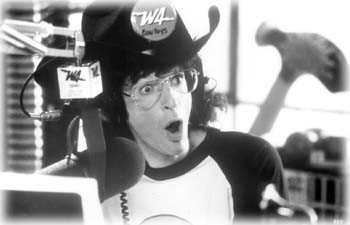
Howard’s End: Schlock shock-jock Howard Stern surprises even himself.

Author Marilyn Yalom is exposed to Howard Stern’s ‘Private Parts’

By David Templeton

Writer David Templeton takes interesting people to interesting movies. This week, he takes noted historian Marilyn Yalom, author of A History of the Breast, to see Howard Stern’s Private Parts.

MARILYN YALOM, before I invited her to see the autobiographical comedy Private Parts, had never heard of the film’s subject and star: radio shock-jock Howard Stern. Many would say Yalom is a very lucky woman.

After all, Stern’s gleefully puerile on-air antics–for which he has paid over $1 million in fines to the FCC–have won him at least twice as many enemies as dedicated, worshipful fans. His consistent remarks on lesbianism and on the size of his own penis, and his unrelenting obsession with well-endowed centerfold models have earned him the labels of “sexist pig,” “immoral pervert,” and even “the anti-Christ.”

“My son couldn’t believe I was coming to see this,” Yalom confides, as we take our seats at a Private Parts pre-screening. “He’s certain that I will despise Howard Stern.”

Yalom is a renowned feminist author and lecturer, currently a senior scholar at the Institute for Women and Gender at Stanford University. She is the author of numerous scholarly works, including her exhaustively researched new book, A History of the Breast (Knopf, 1997). Beginning with the question “Who owns the breast?,” Yalom’s History explores 2,500 years of art, literature, and public policy, proposing that the meaning and image of women’s breasts were long ago appropriated for the religious, political, and commercial uses of men. Which leads us to Howard Stern.

“I thought there was one funny moment, at the beginning, when he sees this woman at the airport and undresses her in his mind,” Yalom recalls, sipping tea after the film. “Suddenly we see her breasts begin to grow in his presence. That said it all! They didn’t really have to have all these other women coming in later with their overly large breasts, as if that were the only kind of breasts there are.

“We don’t see the range of bodies here, we don’t see the range of breasts. Now, can I ask that of Howard Stern, and from this kind of movie?” Yalom pauses a moment, thinking it through. “Probably not,” she shrugs.

One scene in the film shows Stern performing a censor-bashing game during his radio show in which characters are asked to supply words that might fill the blanks in the phrases “blank willow” and “blank a-doodle-doo.”

“That was rather amusing,” laughs Yalom. “He was playing with our fear of words, and those words do make people uncomfortable. I think words can have enormous power. They can hobble us. I can remember, certainly, as a child, seeing words that someone had inscribed on the cement. It was as if they could jump off the cement and strike me, or kill me, if I was to pronounce them.”

Yalom proposes, however, that Stern’s desire to be outrageous flounders in his non-creative use of big-bosomed nudity.

“The film showed women totally stripped, but you didn’t see any men,” she says. “You certainly didn’t see him totally stripped. He talks about his own penis a lot, but he never shows it.” Ah, but there was the notorious Fartman sequence in which Stern dresses as a superhero with a derrière-exposing outfit.

“So you got little bits of his buttocks,” she counters, waving the thought away. “If he wanted to show his ass he should have done so.

“There are three women who have been appearing at my bookstore readings,” she goes on. “They show up and they take off their shirts, and sit in a row during the reading. And there they are, with breasts of various sizes. They are, of course, making a statement by uncovering their chests, and frankly, I think that is a little more interesting than seeing only the standardized, male-fantasy boobs in this film.

“But how do we get our ideas about the ideal body in the first place?” she asks. “We get them by seeing only one kind of form.

“If we lived in the Middle Ages, the ideal body would have small breasts. You see that in the painting and the poetry of the time. There was a very different ideal of the perfect body. Then we got the ideal of the hourglass figure around the year 1900, and then a boyish body in the 1920s.

“The kind of body Howard Stern obsesses over–which came to be the ideal in the 1950s–is an impossible body for most women. It’s thin thighs, thin hips, a thin waist, and these enormous boobs. It shouldn’t surprise us that liposuction and breast enlargements are among the most common cosmetic surgeries performed in this country.”

In spite of this movie’s depiction of Stern’s radio program as a kind of adolescent freak show, Yalom admits that it did make him appear–occasionally–somewhat endearing. Almost.

“To tell you the truth,” she smiles, “he really wasn’t as much of a freak as I thought he was going to be.”

From the March 13-19, 1997 issue of the Sonoma County Independent

This page was designed and created by the Boulevards team.
© 1997 Metrosa, Inc.
Wild Thyme

0

Spring Fling


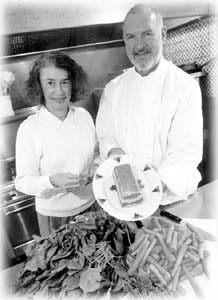
To Every Season: Joanne and Keith Filipello display a savory terrine just right for the warmer months.

Photo by Janet Orsi


Wild Thyme caterers have change of season

By Gretchen Giles

THIS IS WHAT the good life looks like at 10 a.m. on a drizzly February morning: Three quietly occupied workers peel carrots, sauté leeks, and unpack produce in the kitchen of a renovated adobe building near Sonoma. A cheery oilcloth settles upon a small round table flanked by unmatched chairs in a long-windowed main room. A bright playpen nestles into the corner of an office, waiting for the day’s arrival of a secretary’s 4-month-old baby. Adjacent to the office, a cookbook library awaits final shelving, an electric-blue drum kit sits unused in the corner, and a burned-out baking sheet–savagely scratched at–is affixed within a funky frame hanging on the wall.

The good life doesn’t require much: It smells like leeks and butter and sage cooking before noon; it sounds like the Cuban dance, gospel, and bluegrass music that bounces from the kitchen’s CD player; it looks like a half-dozen well-dripped candles arranged carelessly on an old wooden table. And it is lived by Keith and Joanne Filipello, chefs and proprietors of the 8-year-old Wild Thyme catering company housed in their Sazón de El Verano complex of tasting, dining, and working rooms.

The Filipellos, who owned the Capri and Eastside Grill restaurants on Sonoma Plaza before unhappy legal times with their former partners lost them the grill and sent them expatriating themselves to Europe for a few rejuvenating years, have stood the heat of the kitchen for some time.

Keith cooked at San Francisco’s venerable Ernie’s restaurant before working under chef Masa at Napa Valley’s esteemed Auberge du Soleil and becoming the banquet chef for the Sonoma Mission Inn. Joanne created the gourmet deli for the Sonoma Market after acting for some years as head chef at Sonoma’s fashionable Westerbeke Ranch complex.

One can safely assume that between the two of them, they can operate a Cuisinart.

What they also want to operate is a Website offering the professional profiles of some 60 servers available for extra wait-work, classes on food and wine service and on food and wine period, kitchen ESL for both sides of the language barrier, and a lending library of cookbooks that far exceeds what the public library offers, including reference books written and signed by the late M.F.K. Fisher, a great friend of the Filipellos.

All this change at Wild Thyme begins with the changing of the seasons.

Although the unhappy damp of the morning lies wetly puddled on Sazón’s patio, there are plum trees pinkly lining the streets and hay-fever sufferers are already acutely aware that the acacia are in bloom. Spring, in fact, is on its blustery way. And with the coming of lighter days, cooks (and that means anyone who can open a can) get anxious to clear the cupboards and bring the season to the table. The Filipellos assert that, Kermit notwithstanding, it is easy being green.

“Certainly the color green comes to mind in the spring,” says Joanne, a soft-spoken woman who seats herself at the oilcloth-covered table. “All the wonderful greens that are fresh and local, aside from some root vegetables–carrots and things like that. But I really like to play up the spring green idea, including baby bok choy, even field mustards,” she adds, asserting that ingenious cooks can simply wade into the mustard fields yellowing most county hillsides and return to the car with an armful of dinner. Or, at least, an armful of dinner additions. “You can put the flowers in salads, you can mix the greens with other greens,” Filipello says. “The leaves are kind of hot, but that adds a note of spice.”

Filipello also recommends a Spring Green Lasagne full of sautéed leafy vegetables. Filled with ricotta or fresh local soft Jack cheese, as well as aged Jack, this lasagne is melded with a béchamel sauce and layered between spinach pasta for the final color note.

“What else?” she muses. “Hmmm, well, fresh pea soup works really well. A lot of people like that with a touch of fresh mint, which is just starting to come in.” Prepare the soup with a good vegetable or chicken stock blended into an olive oil­based sauté of onions and well-chopped leeks, add about a pound of shelled fresh peas, and cook until tender. Purée the mixture and add enough cream to lighten. Serve with fresh chopped mint.

Keith Filipello returns from a last-minute produce run in preparation for the night’s catering job. His hands enlarged from work like a farmer’s, Filipello dislikes shopping for fresh produce anywhere other than straight from the fields. “We rely a lot on the farmers’ market here in town,” he says, “because that really gives you a pulse of what’s growing here in the county.”

“Did you go this week?” his wife asks, having been away for the weekend. He affirms. “Did you get beets?” she inquires. A smile spreads across Filipello’s face.

“Yes. Sweet, sweet Target beets, wonderful Target beets,” he reminisces. “There’s always borscht,” he chuckles, “but my preference is to have them lightly steamed and then sliced with just a bit of balsamic vinegar and some extra-virgin olive oil on top, and some chopped chives. The flavor just leaps out at you, it becomes almost a sweet/sour thing because of the sweetness of the beets.”

Greens, peas, beets, playpens, gospel music, cookbooks, fresh coffee warming a cup at 10 a.m. on a drizzly February morning. The good life.

Daylong spring-menu classes are held on consecutive Tuesdays in March beginning March 11, with an emphasis on Sonoma County products. 19030 Railroad Ave., El Verano. For information, call 996-9453.

From the March 6-12, 1997 issue of the Sonoma County Independent

This page was designed and created by the Boulevards team.
© 1997 Metrosa, Inc.
Sound/Image/Object

0

Media Savvy


Janet Orsi

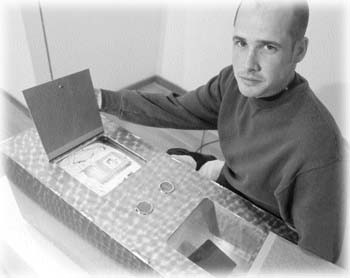
Illuminated Manuscript: Artist Colin Stinson crouches beside his testament to the end of the written word.

Emerging artists take up technology

By Gretchen Giles

AS THE WHITE-NOISE background of high-level technology infiltrates all our lives–the constant demanding buzz of the television, the insistent beep of the fax, the telephone bossily taking its own messages, the sexy intonations of the computerized female who informs us via the Internet, “You’ve got mail”–most have us have done exactly what those humans who wish to survive have always done: we’ve adapted.

Artists have adapted, too, taking the barrage of new technology and smoothing it into a pastiche of work that embraces the new media. From the explorations of Nam June Paik–the “George Washington of video art”–to the performance mania of Laurie Anderson, to Bill Viola’s life-sized screen installations (now showing at New York’s Guggenheim Museum), technologically driven art is as here to stay as marble and acrylics ever were.

In the new exhibit “Sound/Image/Object,” Sonoma State University Art Gallery director Michael Schwager wades into this territory, hosting the work of five emerging technology artists. “For me, this is something really important to explore,” Schwager says, standing in the empty white gallery as artist Colin Stinson installs his works behind him.

One of Stinson’s pieces is a steel-entombed eulogy to the printed word encased in a bird’s-eye metal. Titled “Illuminated Manuscript,” the piece is built along the lines of a coffin, housing in one side a glass-cast little red book–half Mao, half Bible–and on the other a television screen flickering blindly under a glass-screened reproduction of an old RCA ad.

“There are so many people nowadays who are using media–not just video, but all sorts of media–in their work that I thought that it was time to take a look at it,” Schwager continues.

“For us,” he says, referring to his gallery, “this kind of stuff hasn’t come up on the radar screen–probably because we have mostly traditional media here. People aren’t thinking about it; students aren’t demanding it. But whether or not we get to teach it, this kind of art will definitely be part of our program.”

Discussing the Guggenheim’s show of life-sized videos depicting Viola both being tremendously wetted and enduring fire, Schwager–who has just returned from Manhattan–excitedly says, “It’s totally primal. I first thought of him, but then I decided that I wanted to see who would be the next Bill Viola; who is coming out and starting their career.

“I also wanted everything to have the object-oriented aspect,” he says. “I didn’t want to see a bunch of computers on a table or the old-fashioned TV on a pedestal with a video monitor below, just watching tapes. That’s the older version of media art, and I think that nowadays, people are making objects and making sculptural things that have this media side to it.”

Rebeca Bollinger, Stephen Galloway, Maizie Gilbert, the members of the Chicano group Los Tricksters, Stinson, and Mary Tsiongas are the artists represented, their work ranging from Gilbert’s photo-and-sound collage to Bollinger’s riff on keywords from the Compuserve online service. In Bollinger’s piece, “Alphabetically Sorted,” a sexy, female cybervoice reads scrolling words until the whole effect is both a hallucinogenic giggle and an eerie challenge.

For Stinson, a 28-year-old professional whose studies in photography and sculpture have meshed in an open marriage with the new technology, the trend toward embracing techno-savvy just makes sense. “Technological issues in art are by no means new,” he says of the trend that’s at least as old as he is. “In that way, they will persist. And I think that this media category is a new extension of that.”

What excites Schwager about the movement is the settling that it’s experiencing, as new artists embrace more static media within the spacious confines of technological explorations. For Stinson, the traditional issues remain fascinating. “I’ve been trying to break the rectangle down,” he says simply. “I’m searching for balance between rectangles and circles, and that’s a real old issue, too. I think that sometimes my work is missing the spiritual power of natural shapes.”

“Sound/Image/Object” shows through March 30. SSU Art Gallery, 1801 E. Cotati Ave., Rohnert Park. Hours are Tuesday-Friday, 11 a.m. to 4 p.m.; Saturday-Sunday, noon to 4 p.m. Admission is free. 664-2295.

From the March 6-12, 1997 issue of the Sonoma County Independent

This page was designed and created by the Boulevards team.
© 1997 Metrosa, Inc.
Judi Bari

0

An Activist’s Obituary

Friends this week remembered enviromentalist Judi Bari, who died on Sunday of cancer at age 47 in her Willits home, as “a tireless force” in campaign to preserve North Coast redwood forests. She was 47. The Earth First! activist died at 6:45 Sunday morning after suffering from breast cancer, which later spread to her liver. A celebration of the Humboldt County activist’s life will be held this weekend in Willits.

Judi Bari Online:

An interview with Bari in December 1996 from the San Francisco Examiner.

Information about the Bari bombing case from the Albion Monitor.

The story of the car bombing, as written by Bari in the Earth First! Journal.

HighTimes magazine on Judi Bari’s lawsuit against the FBI.Earth First!‘s home page supporting the Headwaters Forest direct action campaign.

Bari’s death follows a hearing last week in a lawsuit she and her colleague Darryl Cherney filed against the FBI and Oakland police in connection with a 1990 car bombing that seriously injured Bari. They were arrested for possession and transportation of an explosive device, but were never charged. Bari and Cherney say the authorities failed to investigate their allegation that the bomb was planted by timber industry officials, with possible assistance of the FBI. They are suing the FBI and Oakland police for false arrest, illegal search and seizure, and denial of equal protection of the law. The case is still bogged down in pretrial maneuvering and isn’t expected to go to trial for months. At last Friday’s hearing, Cherney said, “We won’t close this case in [Bari’s] lifetime, but she can pass on peacefully now.”

Last week, attorneys for the two activists had asked for the appointment of a special prosecutor to investigate alleged wrongdoing by the FBI. Following a pretrial hearing in U.S. District Court in Oakland on Friday, attorney William Simpich said, “We’re asking for a special prosecutor because we’ve just scratched the surface of misdeeds” by law enforcement officials.

Bari and Cherney, key figures in protests against the timber industry in Northern California, were injured on May 24, 1990, when a bomb exploded in a car they were driving on Park Boulevard. At a brief hearing, U.S. District Court Judge Claudia Wilken said she probably will reject defense motions to dismiss the case against the 10 FBI officers and five Oakland police officers named in the lawsuit.

Bari’s death will be marked by a potluck party, sponsored by the Mendocino Environmental Information Center, on Sunday, March 9, from 1 to 9:30 p.m., at the Willits Grange, 291 School St. (one block west of Main Street) in Willits.

From the March 6-12, 1997 issue of the Sonoma County Independent

This page was designed and created by the Boulevards team.
© 1997 Metrosa, Inc.
Anson Funderburgh

0

Luck of the Draw

By Greg Cahill

“I’ve always considered blues music to be dance music–and that’s OK with me,” says guitarist Anson Funderburgh with a slow Southern drawl. “I mean, with some folks, I guess they like to just lay back and listen to it.

“But if people are up and dancing then I know I’m doing something right.”

Since 1978, this guitar totin’ Texan and his high-octane Rockets have been laying down an explosive barrage of jump blues and hard-drivin’ R&B that’s earned them a place as one of the country’s premiere blues bands.

In the process, they’ve crafted an infectious sound that Downbeat magazine called “a joyful blend of Delta grit and Texas exuberance” and stepped into the vanguard of the new generation of blues musicians who are redefining the genre.

A good deal of that success, including five national W.C. Handy Awards, is due to the pairing of Funderburgh’s rapier-like guitar licks with the resonant, full-throated vocals and Windy City-style, hurricane harp of seasoned veteran Sam Myers, who played drums and harmonica for the legendary Elmore James and Robert Junior Lockwood. Myers’ earliest harp work can be heard on “Look on Yonder Wall,” the only harmonica track he ever recorded with James.

“I remember we were in New Orleans at Cosimo Studio doing the session,” recalled Myers in the liner notes to 1992’s Elmore James: King of the Slide Guitar (Capricorn) box set. “Someone else was on drums, and Elmore said to me, ‘Hey, man, you’re not going to sit around and do nothing! I want you to play [on this track].’

“I said to him, ‘Well, what am I supposed to be doing? Maybe a different type of drums?’

“Elmore said, ‘Hell, no, you’re going to be blowing harmonica on this one.’

“And I said, ‘What?’ And that’s how I happened to start blowing the harmonica on it.”

“I have an unbelievable amount of respect for Sammy,” says Funderburgh, 42, during a phone interview from his Dallas home. “He’s got a million stories. He knows a million songs. He’s just a walking book of Mississippi blues–and a real character.”

His roots also are steeped in those traditions. Funderburgh grew up near the birthplace of electric blues guitar pioneer T-Bone Walker. While other kids were out playing sandlot football, Funderburgh was honing his skills on a used guitar his bought him and acquainting himself with the scratchy blues and R&B singles that the guitar’s previous owner had tossed in with the bargain.

“I just really loved it,” he recalls. “When I first heard Freddie King’s ‘Hideaway,’ I thought it was the coolest thing in the world.

“After that, it all just kind of happened for me. You know, I never sat down and thought I’d like to be a blues player. I just always did what I happened to like–and that happened to be the blues.”

At 15, Funderburgh started playing local push clubs–social organizations (“kind of like the Lion’s Club,” he explains) that sprang up around northern Texas. They were centered around a regional dance craze called the push that reportedly originated at North Texas University.

As fate would have it, most of the hottest push tunes could be found in that stack of dusty 45s Funderburgh had cut his teeth on five years earlier, including King’s “Hideaway,” Bill Dogget’s “Honky Tonk” and Ray Sharpe’s “Linda Lou.”

“To get work, you had to play that kind of music,” Funderburgh says. “I always loved it anyway, so that was just fine with me.”

he soon became a fixture on the local blues scene–which also include Jimmie and Stevie Ray Vaughan–and later contributed a track to the Fabulous Thunderbirds’ Butt Rockin’ (Chrysalis) album.

In 1981, he launched his solo recording career with the critically acclaimed Talk to You by Hand (Black Top) and started a grueling touring schedule that keeps the band on the road 300 days a year. That club experience has begun to pay off; Funderburgh and his Rockets were tapped a couple of years ago to play the hard-working bar band in the film China Doll, a Kevin Costner production that starred Ed Harris and Madeleine Stowe.

While the film appearance didn’t exactly make him a household name, Funderburgh obviously enjoyed the chance to play on the big screen for an increasingly blues-hungry crowd.

“Well, the blues has certainly turned around a lot of people’s heads lately with the success of Bonnie Raitt, Eric Clapton, and Robert Cray–those acts have really brought it into the public’s eye,” he says. “And I’ve been lucky enough to earn a pretty decent living. Before the resurgence, it seemed to be much more of a struggle.

“So, I feel very fortunate. Maybe some of it is being in the right place at the right time,” he muses. “Or just plain ‘ol luck, I guess.”

Anson Funderburgh and the Rockets co-headline the San Francisco Blues Festival’s Battle of the Blues Harmonics on Friday, March 7 at 8 p.m. at the Palace of Fine Arts Theater in San Francisco. Little Charlie and the Nightcats, and Rod Piazza and the Mighty Flyers also perform. Tickets are $20. For details, call (415) 979-5588.

From the March 6-12, 1997 issue of the Sonoma County Independent

This page was designed and created by the Boulevards team.
© 1997 Metrosa, Inc.
Bernice Johnson Reagon

0

Say Amen!


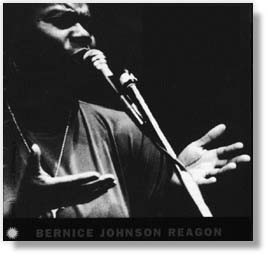
Songs of Freedom: Bernice Johnson Reagon gets spiritual with new Folkways CDs.

Bernice Johnson Reagon shines

By Greg Cahill

ENJOINED BY THE GIFTS of breath . . . we plow the path forward with sound,” Sweet Honey in the Rock founder Bernice Johnson Reagon wrote in the liner notes of that group’s 1993 release Still on the Journey: The 20th Anniversary Album (Earthbeat!). “And it is a path we travel, lit by the chatter of the ancestors.”

The following year, Reagon–one of the most powerful voices in African-American traditional music–chose to leave that Grammy-winning a cappella women’s ensemble. These days, she rarely performs on stage, but is nonetheless paying heed to the “chatter of the ancestors.” And Reagon–a recipient of a 1989 MacArthur Foundation “genius grant”–continues to nurture the rich cultural legacy she first encountered 55 years ago as the Georgia-born daughter of a Baptist preacher, weaned on songs of political struggle closely tied to the lives of Southern blacks during the turbulent ’60s.

As curator emeritus of the Smithsonian Institution’s National Museum of American History, Reagon has supervised the release of three important new Smithsonian/Folkways recordings that showcase that connection.

The most ambitious is Wade in the Water: African American Sacred Music Traditions, a four-CD boxed set released in conjunction with the new Smithsonian Institution traveling exhibition by the same title and curated by Reagon. The 67 tracks–arranged in four volumes devoted to choral spirituals, gospel composers, congregational singers, and community gospel choirs–were culled from Reagon’s 1994 Peabody Award­winning NPR series, for which she served as conceptual producer and host. Reagon also researched, wrote, and edited the extensive historic liner notes for the box set, along with scholar Lisa Brevard.

These soul-stirring selections tell the compelling story of African Americans moving out of slavery and into freedom. Those often highly personal tales, as Reagon describes in the liner notes, are punctuated by the cries, moans, shouts, and hallelujahs “of a people rising and falling as we moved beyond our shackles.”

Quite simply, the collection is one of the finest expressions of American music ever compiled. It traces the evolution of black music from the post­Civil War Reconstruction period–when the Fisk Jubilee Singers began touring to raise money for their landmark black college and became the first internationally renown African-American vocal artists–to the rollicking sacred music of the Bible Way Temple Radio Choir and other community gospel groups.

It is a spirited baptism for aficionados and the uninitiated alike.

The first volume, African American Spirituals: The Concert Traditions–with haunting European-style harmonies and arrangements that serve as a soothing balm to such classic songs as “Wade in the Water,” “Sometimes I Feel Like a Motherless Child,” and “Swing Lo’ Sweet Chariot”–alone is worth the price of admission.

For Sweet Honey in the Rock fans, Give Your Hands to Struggle provides a glimpse into the genesis of that much-heralded group. Originally released in 1975 on Paredon Records, this stunning solo album features Reagon riffing on her own powerful vocals through multitracked harmonies prescient of the arrangements she would soon employ with her vocal ensemble. The songs (including one previously unreleased track) were written at a time when many in the civil rights and anti-war movements had grown disillusioned. They reveal a committed artist fully embracing the marriage of political action and music–and stubbornly refusing to succumb to the apathy that had sprung up around her.

Voices of the Civil Rights Movement: Black American Freedom Songs, 1960-1966 is a two-CD collection showcasing the role African-American musical culture played in shaping the course of the civil rights movement. Reagon, then an activist songleader and a member of the SNCC Freedom Singers, succinctly describes these works as “new music for a changed time.”

Like summer lightning on a humid Georgia night, these highly charged recordings–some made in the field and reflecting the new words and phrases coined in the midst of the volatile Selma marches and other confrontations–literally crackle with fiery passion.

From the March 6-12, 1997 issue of the Sonoma County Independent

This page was designed and created by the Boulevards team.
© 1997 Metrosa, Inc.

Youth in Helen Putnam Plaza

0

Tell No Lies


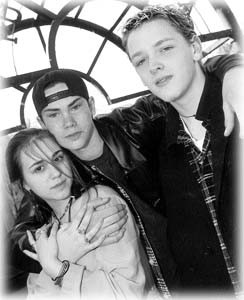
Hanging Out: Petaluma teens Alison Anderson, 16, Adam Lovato, 15, and Fred Gray, 15.

Photo by Janet Orsi


Has the press misled the public about Petaluma youth invading Helen Putnam Plaza?

By Paula Harris

A MINIATURE PARK in downtown Petaluma–set with cozy benches, grassy plots, a small fountain, and designed for the enjoyment of everyone–is making no one happy these days. A recent flurry of articles in local newspapers has depicted Helen Putnam Plaza on Petaluma Boulevard North as a combat zone, where merchants and a horde of supposedly arrogant youths are duking it out amid petty crime and proposals to install video surveillance cameras and blaring classical music as deterrents.

But now, some factions involved in the fracas are downplaying the reported conflicts, saying the mainstream press has both overblown and inflamed the situation.

“I thought World War III was going on here, but that’s not the case,” says Jim Matto-Shepherd, a local psychologist brought in by the Petaluma Downtown Association last week to mediate the various factions. “I guess the press focuses on what sounds more dramatic.”

Merchants, police, and city officials, according to published reports, were bent on using “Orwellian” electronic monitoring of activities and tracking of individuals to quell crimes by youths congregating in the park.

Youth crimes cited in the reports range from such petty offenses as swearing, spitting, panhandling, playing bongo drums, skateboarding, and blocking doorways to vandalism and drug abuse.

Jill Scatchard, owner of the Boosha gift shop on the plaza, says the reports are “inaccurate” and that the press is “overplaying” the circumstances. “They’re trying to create a negative ‘us and them’ feel to it,” she says. “The merchants in the plaza know the majority of people by name. There’s a wide variety agewise, but the majority are perfectly well-behaved.”

In addition, Linda Buffo, executive director of the 175-member Petaluma Downtown Association, claims articles in the Petaluma Argus Courier misstated that she labeled youths in the park “social deviates.”

“This was inaccurate and only incensed the situation,” she maintains. “We intend to seek a retraction.”

However, even without assigning individuals that specific label, Buffo states that the conduct of some of the youths in the downtown park is not socially acceptable. “We’re addressing behaviors,” she observes. “These aren’t just policing issues. We’re putting together a collective of people that want to change behaviors. We need to go back to being respectful of others, understand about old-fashioned respect for each other.”

A Feb. 27 merchants’ forum sought to outline solutions and organize a general meeting with community members, including the youths who congregate in the park. “We’re searching for a way to have a dialogue and we’re seeking advice from Petaluma People Services Center, Parks and Recreation, the City Council, the school district, the chamber of commerce, and other agencies to help put together a dialogue,” explains Buffo. “We don’t want confrontation and negative energy–we want only positive energy.”

She says a steering committee is being formed and there are plans to redesign areas of the park, which merchants say impede customers from walking into businesses. Buffo says changes–some suggested by Petaluma High School drafting class students–will be in keeping with the general scheme of the park. “There will be no gates, no thorny bushes. We’ll still have grassy areas and a new stagelike area for performances and presenting awards during parades,” she says.

MEANWHILE, youths who have gathered in the centrally located park–which was dedicated in 1987 by the city of Petaluma and its citizens in memory of former mayor and county supervisor Helen Putnam, long before recent merchants, including Starbucks, moved in–are dismayed the turn of events.

It’s unfortunate people frown on us because we have a place to hang out,” says Petaluma High School student Alison Anderson, 16, gesturing towards the green lawn with an arm jangling with thin silver bangles. “As for putting in music, that’s very amusing–we love classical,” she adds. “If they were playing Beethoven, I’d think it was cool. They think culture is going to push us away.”

She ways that Buffo’s goal to change behavior patterns won’t work. “You can’t change individuals unless you know them personally,” she observes. “Granted, some of the actions of some of the people can be quite disrespectful, but anywhere in life, some of the people are going to break the rules.

“It’s too bad these few are giving us a collective bad name.”

The teens say they congregate in Putnam Plaza because it’s in a central part of town (many live just blocks away); because it’s close to the Phoenix Theatre, where there’s a well-defined counterculture social scene; and because in Petaluma “there’s not much to do that doesn’t take a lot of money.”

“My parents like me to hang out here–it’s central and if there’s an emergency and my mom needs to find me, she knows I’m within a three-block radius,” says Valley Oaks student Adam Lovato, 15. “But the cops want us out of here.”

Fred Gray, a 15-year-old Petaluma High School student with spiked, dyed blond hair agrees. “If we needed a baby sitter, our parents would have got one for us,” he comments. “This is a social hangout–a public place to hang out after school with friends.”

Petaluma Police Capt. Pat Parks says the corridor between Putnam Plaza and the Keller Street parking garage has the “greatest concentration of [police] calls” in the downtown area. His says recent crimes have varied from drug and alcohol violations and auto burglary to unruly behavior and acts of vandalism. “The activity there does have an impact on the businesses. There have been complaints from merchants and patrons; the element of fear certainly is accurate,” says Parks, adding that police will continue to patrol the park “pretty vigorously.”

Last Friday, Parks says he sat in the plaza in plain clothes for one and a half hours and monitored activities there. “There was some intimidating behavior, but a lot of the individuals used it in the manner intended–they chatted and did the kinds of things we’d expect,” he reports.

However, he says, plans are in the works for broadcasting amplified classical music, a tactic that has had little success in deterring youth from congregating in Santa Rosa’s Courthouse Square and elsewhere in the Bay Area. “Speakers have been purchased and the city has issued a permit,” Parks says.

The question of installing video cameras outside the public rest rooms adjacent to the plaza, which merchants say have sustained some $3,000 damage in recent months, remains undecided. Pam Allen, manager of the Starbucks building, where the rest rooms are located, says owners have “no plans for putting in cameras.”

But merchants say they will continue to clamp down on crime in the plaza. “We’re calling for a line that nobody crosses,” says Buffo. “We’ll never have a Disneyland, but our goal is to have as little illegal activity as possible.”

From the March 6-12, 1997 issue of the Sonoma County Independent

This page was designed and created by the Boulevards team.
© 1997 Metrosa, Inc.

The Scoop

Think Twice

By Bob Harris

SCIENTISTS announced last week that they’ve cloned the first adult mammal. Human cloning will surely follow. We’re facing some big new questions. Since cloning will be expensive at first, won’t only rich people be cloned? Will Donald Trump breed in the wombs of 289 Puertoriqueñas from Bayonne who need the money? Is it possible that 100 years from now entire cities will be named Perot and Forbes?

If not, won’t clones still be considered status symbols, displayed at cocktail parties and on the cover of InStyle magazine? Or will the replication of the rich simply dilute their wealth? Will a black market arise, where the poor can get a back-alley clone?

Will actually being a clone therefore carry a certain élan? Or will it be more déclassé, like owning a print of an oil painting instead of the original?

Once cloning can begin in utero, how will we tell clones from originals? Dental records? Tattoos? Certificates of authenticity we carry with our driver’s licenses?

Will clones be subconsciously considered disposable? Will killing a clone carry less of a stigma than murdering the original?

How long until some rich guy creates lobotomized “spares” to replace his own aging human body parts? Will wealthy parents hire surrogates and have their children in batches of four and five, so there are extras if one gets hit by a car?

What Social Security numbers would clones get? Will we just add a letter to the donor’s number, starting with A for the first clone, B for the second, and so on?

Since most replicants will be born into wealth, will we see outbreaks of envious blue-collar clone-bashing? Will clones, like other oppressed groups, develop a system of non-verbal behaviors–e.g., wearing lapel pins shaped like rubber stamps–to signify their status? Will clones start a support group (ACNE: Adult Children of Nobody, Exactly) and a distinct vernacular (“eclonics”)?

In school, why shouldn’t clones be allowed to copy on exams?

Since only a small percentage of clone-fertilized eggs survive the process, how long until pro-lifers begin bombing chemistry labs?

Since DNA can be furtively collected from things like used Kleenex, how long until someone is cloned against their will? Will it be a crime? With what punishment? Who will get custody of the clone?

Will professional sports have strict anti-cloning rules? If not, how much will Michael Jordan’s toenail clippings be worth?

Will cloning a second set of kids become a custody option in divorce proceedings? If someone who has been cloned dies without a will, who gets the stuff? The family or the clone? If a clone has déjà vu, how can he tell?

If one accepts the Catholic notion of new-soul-at-conception, when exactly does a clone’s soul form? If without conception there’s no new soul, does the clone timeshare with the original? What happens if the donor is saved and the replicant isn’t? If clones have no soul, can they sing gospel music convincingly? Since DNA can be recovered from the dead, what’s the status of the clone’s soul then?

Since clones can be born to a virgin mother, will they therefore be holy?

How long before someone attempts to validate the Shroud of Turin by scraping off some DNA, raising the kid, and seeing if he can transform water into wine? If a Jesus clone goes to church, will he sit in the audience or onstage? When he starts advocating humility, pacifism, and aid to the needy, how long before he gets crucified? Since DNA evidence will become all but meaningless, what will Barry Scheck do for a living?

If a woman has a ménage à trois with her husband and his clone, has she violated her wedding vows? Is a child sired by the clone illegitimate?

Masturbation isn’t generally considered a crime. How about touching your clone in a sexually arousing way?

And how long until cloning is outlawed by male-dominated legislatures–just as soon as they realize that women no longer need them?

From the March 6-12, 1997 issue of the Sonoma County Independent

This page was designed and created by the Boulevards team.
© 1997 Metrosa, Inc.

Talking Pictures

0

Mob Instinct


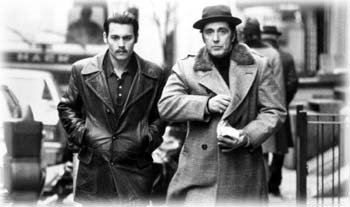
Good Fellas: Johnny Depp and Al Pacino swear by the Mob.

Reinhold Aman on the slang-filled gangster flick ‘Donnie Brasco’

By David Templeton

Writer David Templeton takes interesting people to interesting movies in his ongoing quest for the ultimate post-film conversation. This time out, he takes Dr. Reinhold Aman, notorious linguist and publisher (Maledicta), to see Donnie Brasco.

I DON’T GO to the movies often,” admits Dr. Reinhold Aman, Ph.D., just moments after seeing Donnie Brasco, a fascinating new gangster epic set in the Italian neighborhoods of New York. We’ve invaded a nearby restaurant to discuss the film, but first my guest wants me to know the monumental nature of this occasion.

“Do you know when I was last in a movie theater?” he asks. “Do you know how long it’s been?” He let’s the question dangle there, until he finally names the date.

It was 1987. The movie was Stanley Kubrick’s Full Metal Jacket.

He’s right: I’m shocked.

Then again, my guest has been pretty busy. Not only does the Bavarian-born professor operate a thriving, 20-year-old, one-man publishing empire, but there is also that notorious, semi-annual act of intellectual anarchy known as Maledicta: The International Journal of Verbal Aggression, a scholarly collection of dirty insults and curses.

There was also that federal prison stint a few years back, after Aman was convicted for distributing insulting pamphlets about a divorce judge in Wisconsin (yes, it’s a crime). And then there is his recent book, Hillary Clinton’s Pen Pal: A Guide to Life and Lingo in Federal Prison (Maledicta, 1996), which he has been busily promoting.

I suppose, on reflection, that all of that could keep anyone out of a theater.

“The truth is, I don’t like most movies,” Aman confesses. The only reason he went to see that particular film 10 years ago was that Kubrick–a longtime admirer of Aman’s work–peppered his script with juicy lines borrowed from the pages of a Maledicta.

An example: In one memorable scene of that Vietnam-based film, a man tries to sell his prostitute sister to a group of GIs, promising, “She’s so good she could suck the chrome off a trailer hitch.”

“That was one of mine,” Aman shrugs, smiling. “When I heard that up on the screen, I thought I’d died and gone to heaven. Unfortunately, the movie was virtually blackballed in this country. Its vulgarity was too honest and realistic.”

And speaking of realistic vulgarity, Donnie Brasco is a veritable primer of raw, underworld slang; its ’70s-era gangsters all spout a testosterone-fueled stream of obscenities, street talk, and Mafia lingo that come off like a secret code made up by young bullies. Based on a true story, Donnie is about an FBI Agent (Johnny Depp) who infiltrates the New York Mafia by befriending a used-up hit man named Lefty (the brilliant Al Pacino). A gripping and intelligent exploration of an unlikely alliance between two men, Brasco is set in a world where words can be as deadly as weapons.

“There is a glossary of Mob Speak on the Maledicta Web page,” Aman says of his well-maintained site.

“In Donnie Brasco,” he continues, “the use of vulgarity was pretty good. They said ‘fuck’ just enough to be realistic without going overboard. But I think that they, being Italian, growing up in Italian-speaking families, would have used a lot more blasphemy. They would say, ‘Hostia Madonna,’ or they’d use the name of Christ or Mary. And they would use more authentic Italian obscenities, like ‘Tu cazzo!’ That means, ‘You prick!’ It’s very common.”

“I like the word whacking,” he muses. “You and me, we’d say ‘kill’ or ‘wipe out,’ but ‘whacking’! Whacking is when you slap somebody. So they really intensify the meaning of their actions by using a relatively harmless word to describe it.”

Going on to describe a number of his “acquaintances” from the federal penitentiary, Aman continues. “One was a typical Brooklyn Mafioso. He just said ‘fuck’ a lot. Fuckin’ this and fuckin’ that. Cursing everyone, cursing his fate! He was always a decent guy to me. He always saved his crossword puzzle for me.

“There was another guy who hated me, but he gave me one of the best quotes in my book. It was my first or second night in prison. I said something insignificant, I forget what. This guy next to me was a 75-year-old lifetime Mafioso, and he thought I was talking about him.

“So he screamed at me, ‘I’m gonna fuck a hole in your head!’ And I was too sassy. I didn’t know yet how dangerous prison is. So I said, ‘Oh yeah? You? With your shriveled-up little dick?’

“He was stunned for a moment by this incredible sassiness from a young punk. Then he said, ‘Well then, I’m gonna have somebody else fuck a hole in your head!'” Aman chuckles at the thought. ” I could have been killed. I should never have done that.”

Perhaps not. But it is a great quote.

From the March 6-12, 1997 issue of the Sonoma County Independent

This page was designed and created by the Boulevards team.
© 1997 Metrosa, Inc.

Garden on a Budget

0

Dirt Cheap

By David Templeton

I’VE NEVER BELIEVED in spending lots of money on my garden,” insists Margaret Parkerson, glancing out over her own front yard. “I’m a child of the Depression. Not spending money is very appealing to me.”

Not to say that Parkerson does not believe in the cultivation of gardens. In fact, her small, westside Petaluma home is snugly cradled by ferns, flowers, and grasses–everything lush, eye-catching, and lovingly tended–the result of the retired librarian’s own green-thumbed devotion to making things grow.

It’s just that she believes in doing things thriftily.

She is not alone. While small, high-priced, mall-based, gardening boutiques and catalog companies seem to be springing up like weeds and landscaping supply companies continue to peddle glamorously pricey bits and pieces to free-spending homeowners, there are a small number of horticultural hobbyists who stand apart from the trends and traps of the marketplace–at least as far as their gardens are concerned.

“If you can do it another way, why spend money?” Parkerson laughs. Her own methods have included scrounging at the dump, picking through demolition sites, and the occasional dumpster-diving expedition. Coupled with a lifetime’s worth of gardening know-how, such penny-pinching derring-do is enough to grow an Eden on almost any old plot of ground.

To a novice gardener faced with a desolate front yard and little or no money to spend, Parkerson has a number of suggestions.

“First thing I’d do,” she says, “is to plant some wonderful, tall native grasses. You can buy them in gallon pots for very little money and divide them up into two or three clumps. Plant a few different kinds of grasses along the borders.”

Such grasses can often be found growing wild, she points out, and grow in almost any kind of soil. Gardeners lucky enough to know someone who lives in the country might want to visit them with pails and shovels. Should they crave a less adventuresome method, Parkerson recommends Muchas Grasses in Santa Rosa.

Though mainly a wholesale native-grass supplier, the 5-year-old business is open to retail buyers on an appointment-only basis (573-GRAS) and sells decorative species for around $5 a gallon can.

“Where you really save money with grasses is in overall maintenance,” says Bob Hornback, co-owner with Jeff Allen of Muchas Grasses. Among others, he suggests Muhlenbergia rigens, nicknamed California deer grass for its ability to hide deer (though they won’t eat it). Especially beautiful, it is long and slender, grows 3 feet high, with 5- to 6-foot-long flowered spikes that bloom in what Hornback describes as “a botanical fireworks display.”

Other kinds of greenery and plants can be obtained cheaply as well. Though legally tricky (ask permission first), the dumpsters behind major nursery retailers often contain shrubs and flowers that require some nurturing, but are salvageable. Parkerson suggests joining at least one gardening club, such as her own DIGS (Digging in Gardens in Sonoma), where meetings frequently involve the division of plants among the members. “You can get a big clump of something wonderful for as little as a quarter,” Parkerson beams.

So much for the part that grows. What about the other things that make up a garden, such as pathways and planters? This is a good question for the scavengers. Though Parkerson’s paths are made up of everything from chunks of cement begged from constructions sites to large field and river stones, and even a number of historic old street pavers that she and her husband carried away from a San Francisco construction site (yes, they asked first), her choices are tame compared to some: one woman in Berkeley uses salvaged grave markers as steppingstones.

“I know someone who paved their walk with old PG&E water-box covers,” laughs Judy Smith, site manager of Recycletown, the recycling center at the Sonoma County Landfill, a must-visit spot among cost-conscious gardeners. In an effort to keep usable items out of the landfill, Smith and fellow reuse specialist Joel Fox make such booty available to the public for next to nothing.

“People have taken old bed frames to use as flower beds,” Smith adds. “They take old sinks, bury them, and make a water garden.” Fox recently sold three old hot tubs for 20 bucks apiece, destined to become backyard koi ponds.

“It doesn’t cost much to create an interesting yard,” Fox says. “You just need a good imagination and a bit of tenacity.”

A final pragmatic tip comes from Hornback, who says, “The best thing you can do is befriend as many established gardeners as you can. We tend to be a fairly generous lot. We love to give stuff away.”

From the February 27-March 5, 1997 issue of the Sonoma County Independent

This page was designed and created by the Boulevards team.
© 1997 Metrosa, Inc.

Talking Pictures

Booby Prize K.C. BaileyHoward's End: Schlock shock-jock Howard Stern surprises even himself.Author Marilyn Yalom is exposed to Howard Stern's 'Private Parts'By David TempletonWriter David Templeton takes interesting people to interesting movies. This week, he takes noted historian Marilyn Yalom, author of A History of the Breast, to see Howard Stern's Private Parts.MARILYN YALOM, before I invited her to...

Wild Thyme

Spring FlingTo Every Season: Joanne and Keith Filipello display a savory terrine just right for the warmer months.Photo by Janet OrsiWild Thyme caterers have change of season By Gretchen GilesTHIS IS WHAT the good life looks like at 10 a.m. on a drizzly February morning: Three quietly occupied workers peel carrots, sauté leeks, and unpack produce in...

Sound/Image/Object

Media SavvyJanet OrsiIlluminated Manuscript: Artist Colin Stinson crouches beside his testament to the end of the written word.Emerging artists take up technology By Gretchen GilesAS THE WHITE-NOISE background of high-level technology infiltrates all our lives--the constant demanding buzz of the television, the insistent beep of the fax, the telephone bossily taking its own messages, the sexy intonations...

Judi Bari

An Activist's Obituary Friends this week remembered enviromentalist Judi Bari, who died on Sunday of cancer at age 47 in her Willits home, as "a tireless force" in campaign to preserve North Coast redwood forests. She was 47. The Earth First! activist died at 6:45 Sunday morning after suffering from breast cancer, which later spread to her liver....

Anson Funderburgh

Luck of the DrawBy Greg Cahill"I've always considered blues music to be dance music--and that's OK with me," says guitarist Anson Funderburgh with a slow Southern drawl. "I mean, with some folks, I guess they like to just lay back and listen to it."But if people are up and dancing then I know I'm doing something right."Since 1978, this...

Bernice Johnson Reagon

Say Amen!Songs of Freedom: Bernice Johnson Reagon gets spiritual with new Folkways CDs.Bernice Johnson Reagon shinesBy Greg CahillENJOINED BY THE GIFTS of breath . . . we plow the path forward with sound," Sweet Honey in the Rock founder Bernice Johnson Reagon wrote in the liner notes of that group's 1993 release Still on the Journey: The 20th...

Youth in Helen Putnam Plaza

Tell No LiesHanging Out: Petaluma teens Alison Anderson, 16, Adam Lovato, 15, and Fred Gray, 15.Photo by Janet OrsiHas the press misled the public about Petaluma youth invading Helen Putnam Plaza? By Paula HarrisA MINIATURE PARK in downtown Petaluma--set with cozy benches, grassy plots, a small fountain, and designed for the enjoyment of everyone--is making no one...

The Scoop

Think Twice By Bob HarrisSCIENTISTS announced last week that they've cloned the first adult mammal. Human cloning will surely follow. We're facing some big new questions. Since cloning will be expensive at first, won't only rich people be cloned? Will Donald Trump breed in the wombs of 289 Puertoriqueñas from Bayonne who need the money? Is it possible that...

Talking Pictures

Mob InstinctGood Fellas: Johnny Depp and Al Pacino swear by the Mob.Reinhold Aman on the slang-filled gangster flick 'Donnie Brasco'By David TempletonWriter David Templeton takes interesting people to interesting movies in his ongoing quest for the ultimate post-film conversation. This time out, he takes Dr. Reinhold Aman, notorious linguist and publisher (Maledicta), to see Donnie Brasco.I DON'T GO...

Garden on a Budget

Dirt CheapBy David TempletonI'VE NEVER BELIEVED in spending lots of money on my garden," insists Margaret Parkerson, glancing out over her own front yard. "I'm a child of the Depression. Not spending money is very appealing to me."Not to say that Parkerson does not believe in the cultivation of gardens. In fact, her small, westside Petaluma home is snugly...
11,084FansLike
4,606FollowersFollow
6,928FollowersFollow