Tantric Non-Sex

Pleasure Rut


Just Say No: Mystical sexologixt Meredyth Yates deflates the big O.

Photo by Janet Orsi


Tantra, love, and the big death

By Gretchen Giles

MEREDYTH YATES was doing what every other liberated, exuberant, and attractive young woman in Boston was doing in 1966. She was making love. Astride her partner, she enthusiastically pursued their congress, conscious of how she looked while she made love with him, conscious of her appeal, focused on the expectations of pleasure.

Finally her partner spoke.

“Would you please relax,” he asked, wearily.

“I lay down, and I was quite embarrassed, because I thought I was being so sexy,” Yates recalls, seated in her Santa Rosa home. “And I think that it was this embarrassment that diminished my ego.”

Supine next to her partner, too shamed to speak, Yates began simply to breathe. Gradually, the rhythm of her breath joined the rhythm of his, and the two entered a state of suspended consciousness in a renewed lovemaking that Yates can only describe as being mystical. In fact, she passed out.

“I was very naive,” Yates recounts, “and the next morning I asked him if he had experienced anything unusual the night before. He said, ‘Do you think that you could do something like that by yourself? It’s called tantra.'”

Yates hied herself right off to the library to study tantra. She found one book. But she knew that she was on to something. “It was certainly better than any ‘Big O’ I’d ever had in my life,” she smiles.

“I started to have [this experience] on more than one occasion, and I started paying attention to the circumstances. I started developing what I found to be the magic ingredients,” says Yates, a specialist in the Chinese feng shui method of home harmony who lectures on sexuality. “I call them the secret keys to the mystical, sexual experience.”

The biggest secret of all is that Yates advocates intense lovemaking in which devoted partners mesh in a spiritually and physically intimate manner and no one ever has an orgasm unless they’re purposefully making babies. Think that sounds like some kind of adolescent’s nightmare cooked up by priests and mothers? Think again.

“One of my keys is to see the divine in your partner,” Yates says. “Your partner is the beloved. There is intercourse, but no thrusting, no effort at creating genital fire. What people notice is that when they stop focusing on their genitals, their whole bodies start to get involved, and people are connecting in ways that are absolutely divine. It gets so that, through a glance, you can have this orgasmic multicellular experience.

“It’s my conviction that it’s our birthright,” she continues firmly. “I think we all deserve to be connected to the ineffable.”

Culled from ideas of egolessness and heightened awareness found in the Hindu, Taoist, and Buddhist traditions, Yates’ form of tantra relies as well on a Victorian notion known as Karezza, the Italian word for embrace.

Espoused by one Dr. Alice B. Stoockham in her Ethics of Marriage manual, published in 1896, Karezza advocates that partners take vows of essential celibacy within marriage, ejaculating only for procreative purposes, and harnessing their energies away from their genitals, allowing the power of desire to flood their entire bodies. Reports are that when those couples who practiced Karezza came together in a darkened room, electrical sparks could be seen literally flying from their bodies.

“The real secret is the dissolution of the ego,” Yates says, “because the ego wants fulfillment. Orgasms are fine, I’m not against orgasms–but the body is demanding. It wants another one, because it isn’t the ultimate fulfillment. We think that if we have a bigger orgasm, we’ll get closer. I don’t think that’s the way.

“Spend some serious time together without getting involved in that sexual fire, but rather getting involved in intimate sharing,” says Yates, who advises that couples spend at least three days cut off from their ordinary world together. Three glorious days in bed, doing nothing but offering massages, looking into each other’s eyes, bathing each other, breathing in rhythm, and feeding each other from food kept near the bed. Make love as it moves you, but, um, don’t move too much.

“The orgasm is sometimes called the ‘little death,'” Yates smiles. “This is the big death. The little death is over in a second. When you lose your ego, and really dissolve so that your mind is not here, when you merge into your partner and then into something that isn’t even your partner, you don’t know if you’re coming back. It’s like the ultimate drug experience.

“If you can have three days of really focusing on each other and maintain these spaces for each other, you’ve learned to surf, and then you can surf for life.”

But you have to be willing to die big rather than little.

“In my opinion, that’s a prerequisite,” Yates affirms. “And not just for three days. If you’re not willing to give up your orgasm, you’re not going to be willing to give up your ego. It’s that simple. You’re not going to be willing to die. And you have to be willing to surrender so that at some level you do die: all the ideas of what you thought you wanted, or what you thought [sex] was, have died.”

From the February 6-12, 1997 issue of the Sonoma County Independent

This page was designed and created by the Boulevards team.
© 1997 Metrosa, Inc.

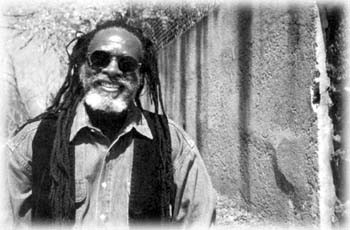
Mose Allison

0

Sly Sage


Allison Wonderland: Mose Allison, the unflappable King of Cool.

Photo by Carol Friedman


Mose Allison slips into the Mystic

By Greg Cahill

YOU KNOW I used to joke in interviews, whenever a reporter would ask me how long I’m going to keep playing music, that I’m going to get myself a Gray Panthers punk-rock band and retire in Arizona. So I wrote that into a song lyric once,” says 69-year-old jazz great Mose Allison, in a rich Southern drawl, during a phone call from his Long Island home. “Then I found out that there already is a Gray Panthers punk-rock band in Arizona. It’s called One Foot in the Grave.

“That’s the trouble when you write songs and hold them–the weird stuff comes true.”

And “the weird stuff” has come steadily over the years. Allison, an unflappable Mississippi native, is known for a laconic wit that some critics confuse with cynicism. “It’s erroneous,” he says of that perception. “They don’t get it. My songs usually have a joke in them. To me, it’s a form of humor. A lot of them are ironic–the ironic couplet, that’s my staple weapon.

“But cynical is the last thing that I am.”

You need only listen to his critically acclaimed 1994 album The Earth Wants You (Blue Note), his latest–featuring some of the hottest Young Turks on the jazz scene, including guitarist John Scofield and sax player Joe Lovano–to grasp his point. For example, “Who’s In” is a sly poke in the eye at enquiring minds, trash TV, and tabloids. “Let’s get excited about the party to which we’re uninvited,” Mose invokes.

That kind of lyrical twist has earned Allison a loyal cadre of fans, including some of the music industry’s biggest names. In 1970, the Who included his anthemic “Young Boy Blues” on their classic Live at Leeds (MCA)–one of just a few cover tunes the iconoclastic British rockers ever recorded. Indeed, the list of those who have tapped the Mose Allison songbook is impressive: Bonnie Raitt (“Everybody’s Cryin’ Mercy”); John Mayall (“Parchman Farm”); Van Morrison (“If You Only Knew”); the Clash (“Look Here”); and the Yardbirds (“I’m Not Talking”), among others. In 1994, a pair of retrospectives hit the racks: Allison Wonderland–The Mose Allison Anthology (Rhino) and High Jinks! The Mose Allison Trilogy (Columbia).

More recently, Tell Me Something: The Songs of Mose Allison (Verve)–a 1996 tribute album featuring Mose acolytes Van Morrison, Georgie Fame, and Ben Sidran–took a scintillating romp through the master’s bluesy jazz catalog.

“My songwriting just sort of develops little by little,” Allison muses when asked about his gift. “I might write a song when I can’t sleep one night. Or I might finish another. It’s just a matter of accumulation and pulling them together.”

AS THE SON of a stride jazz pianist, Allison took up piano lessons at age 6. In the backwater town of Tippo, Miss., he was immersed in jazz and country blues. While he’s lived on Long Island for nearly 40 years, he has retained a Southern state of mind–a condition that is evident in his breezy musical style.

“Oh, some of the things that come with [being raised in the South] are the ironic comment, the exaggeration, the understatement,” he says. “That’s just part of the way people think and speak down there, particularly in the rural areas.

“So I catch myself thinking in the idiom of my ancestors.”

In 1956, he moved to New York City and began playing piano with some of the “cool” jazzmen, including sax players Al Cohn, Zoot Sims, Stan Getz, and Gerry Mulligan. “We used to call them ‘Lesterians,’ ” he says of those reedmen. “That was the swing thing and that was my primary motivation. I never wanted to know if a guy was a good technician or could play a lot of notes–I wanted to know if he could swing.”

The following year, Allison began singing and started his own combo. He quickly became known for his understated, laconic style that remains his signature.

He has done it in a manner that has earned him the title King of Cool. “I tell everybody that if I was in this for the money, I’d be in trouble,” says Allison, who still tours extensively and remains a legend in jazz circles. “I still get gratification out of a good performance. That’s one of my rules: a good performance is its own reward.”

The Mose Allison Trio performs Saturday, Feb. 15, at the Mystic Theater and Dance Hall, 21 Petaluma Blvd. N., Petaluma. Tickets are $12. For details, call 765-6665.

From the February 6-12, 1997 issue of the Sonoma County Independent

This page was designed and created by the Boulevards team.
© 1997 Metrosa, Inc.

Talking Pictures

0

Mother Load


Shakespeare’s Sister (and Nephew): Albert Brooks and Debbie Reynolds.

Photo by Elliot Marks


Author Molly Giles sees the write stuff in new Albert Brooks film

Writer David Templeton takes interesting people to interesting movies in his ongoing quest for the ultimate post-film conversation. This time out, he views the brilliant new comedy Mother, in the company of award-winning author-teacher-mom Molly Giles.

THERE IS A PIVOTAL and much-discussed scene in Albert Brooks’ new psycho-comedic satire Mother, in which a grievously blocked writer (Brooks) discovers that his sharp-witted mom (Debbie Reynolds)–whose chilly disapproval he’s been blaming for all of his problems–was once a promising writer herself.

“Now I know why you hate me,” Brooks crows merrily on screen. “You hate me because you had to give up writing to raise me!” As Reynolds begins her reply (“Well, I wouldn’t have put it that way, but on the whole I’d say yes, that’s true”), I glance over at my guest, writer Molly Giles.

With a deep and audible gasp my companion suddenly stops breathing. She then holds her breath, eyes locked on the screen, as Brooks answers, “From now on I won’t see you as my mother. From now on I’ll see you as what you are–a failure!” Still not breathing, Giles waits as Reynolds reaches up, touches her son’s face, and says, “If that will make you happy, dear.”

Only now does Giles allow herself to breathe again, jubilantly exhaling in a quiet little rush of satisfied approval.

“There is an awful definition of childhood,” Giles tells me a few moments later, taking a seat at a nearby coffeehouse. “Childhood is being locked in a room for years with a woman who hates you.” Noting my mirthful response, she leans closer and whispers, “Not everyone laughs at that, David.”

Giles, an associate professor at San Francisco State University (and, it so happens, the mother of my friend and colleague, Independent associate editor Gretchen Giles), is an acclaimed author and teacher of writers whose luminous first book, Rough Translations (University of Georgia Press, 1984), received much praise and numerous awards, including a nomination for the Pulitzer Prize. Her new collection, Creek Walk and Other Stories (Papier-Mache, 1996), seems destined to a similar fate; written beautifully, with an abundance of irony and a keenness of insight, these 14 stories tell of women in tough situations, zeroing in on the tiny, defining moments that determine their futures. Like Giles’ response to our movie today, I found myself holding my breath as each story came to a close.

“I think that was a very motherly thing to do,” Giles says of Reynolds’ retort to being labeled a failure. “She gives her son back his own sense of autonomy, and he’s able to go out into the world–as big a fool as he ever was. In the end though, this film is far more about two writers than it is about a mother and son.” She rises to get a spoon for her decaf mocha. On returning, she is ready to speak of her own mother.

“My mother was exactly like the Debbie Reynolds character,” Giles says. “She was a writer, and–like the Debbie Reynolds character–the responsibility for women of that generation was to be mothers, and she also hated it.

“She had one book published when she was 30–and she didn’t publish any more. It was titled Cold Heaven, and was a story of a woman who finds her real self while her husband is a way fighting during World War II, and who is expected to be a wife and mother again when he comes back. It was quite an ambitious novel for its time. It had some really interesting questions, questions that later overwhelmed my mother, because she wasn’t able to write and raise a family.

“But she really did want to write,” Giles goes on. “One year she sat down and she wrote 12 short stories, one a month. She’d given herself that assignment, and she would lock us out of the house with sandwiches while she worked. All 12 stories came back rejected on the same day. I remember coming home from school one day, and she was sitting in our driveway with these manila envelopes scattered all around her.”

I ask Giles if she and her mother had ever experienced any of the writer-to-writer jealousy so deftly enacted in Brooks’ film?

“I think my mother was proud of me, as I am of my children,” she shrugs, noting that her own first book was released just a few days before her mother died. “The first story I ever had published had my mother in it,” she smiles. “It ran in Playgirl. My story was sandwiched in between ads for stay-hard cream, so I had to cut it out column by column. Then I held my breath after showing it to my mother–because I’d killed her off in it. She never recognized herself, though.”

As we finish our coffee, Giles suddenly laughs and says, “I know that my daughter is going to write a killer novel about me someday. I only hope it’s after I’m gone.

“But,” she smiles, “I do hope to come back and haunt her.”

Molly Giles will read from and sign Creek Walk on Tuesday, Feb. 11, at 7 p.m. at Copperfield’s Books in Montgomery Village. 2316 Montgomery Drive, Santa Rosa. Admission is free. 578-8938.

From the February 6-12, 1997 issue of the Sonoma County Independent

This page was designed and created by the Boulevards team.
© 1997 Metrosa, Inc.

Foreplay

0

Foreplay

Who says vaudeville is dead? You don’t have to be Demi Moore–and you certainly don’t need a pair of $12 million bosoms–to appreciate the sense of playfulness elicited by that age-old pastime, stripping. Rhino Records, the music industry’s leading pop culture archivist, has plumbed the vaults to compile the 22-track CD Take It Off! Striptease Classics (due in stores April 1). The lively selections span the ’50s and ’60s–and every baby boomer who ever sneaked a listen to his or her parents’ risqué Rusty Warren comedy records knows just how bawdy the supposedly sanitized Eisenhower era could be. The disc itself is cloaked in a flashy lenticular cover (reminiscent of ’50s artwork) that depicts a fully clothed busty babe alternating into a suggestive state of undress, depending on which way the light hits. It opens with David Rose’s bump ‘n’ grind classic “The Stripper” and moves swiftly through such exotica-style sounds as “Shivas Regal (Theme for Gypsy),” “Perfume and Pink Chiffon,” and “Swingin’ Shepherd Blues,” to name a few. Perfect fare for that Cocktail Nation rendezvous.

Come Together

Let San Francisco have its Good Vibrations, now the North Bay has its own clean, well-lighted place for sex toys, sex talk, and the sweet pleasures of fingering silk. Called Rejuvenessence Sensuality Shop, this Sebastopol store serves up a host of erotic treats (who needs nipple coverings in bras, anyway?), as well as an intriguing slate of upcoming events. Each month features a Sex Salon facilitated by registered nurse Oona Mourier in an open-forum discussion of the mysteries of our most primal desires, while upcoming months focus on the joys of autoeroticism, the feng shui way, how to articulate desire (other than just grunting “You. Me. Now”), just exactly what it is that men and women want from each other in the bedroom, and finally–tantra, tantra, and more tantra. 2489-A Gravenstein Hwy. S., Sebastopol. 829-3999.

From the February 6-12, 1997 issue of the Sonoma County Independent

This page was designed and created by the Boulevards team.
© 1997 Metrosa, Inc.

Foie Gras

0

Liver Let Die


Janet Orsi

Duck Duck Goose: Samantha Williams, server at Babette’s Restaurant, pronounces foie gras “orgasmic.”

Foie gras enthusiasts say paté takes the cake

By David Templeton

GUILLERMO GONZALES first tasted foie gras at the start of a yearlong stay in France. Full of entrepreneurial notions of starting his own foie gras farm in America, Gonzales–a native of in El Salvador–had gone to France to study, working side by side with the duck farmers who produce the rare centuries-old European delicacy–a dish that gourmet chefs routinely call “The Food of the Gods.” Gonzales’ first taste, he is amused to report, was far from heavenly.

“I didn’t like it,” he confesses with a laugh. “You have to develop your palate. Like learning to appreciate a fine wine or any other delicacy, foie gras is an acquired taste.”

Fortunately for Gonzales, it is a taste he soon acquired, and in 1986 he and his wife relocated to Northern California, purchasing a small ranch outside the town of Sonoma, where they promptly founded Sonoma Foie Gras.

The Gonzales’ company is the one and only American competitor to the larger Hudson Valley Foie Gras company in upstate New York. In over a decade of playing David to Hudson Valley’s Goliath, Gonzales has watched demand for his product increase slowly but steadily. Once only a seasonal Christmas and New Year kind of dish, foie gras is now being offered year-round by a legion of fine local restaurants, eagerly devoured by gourmands who have definitely acquired their own tastes.

Affirming that most of his requests come during the holidays, Oliver’s Market meat manager Daren Huddlestun has watched demand for the grand comestible grow at his Cotati store, resulting in a year-round availability of foie gras paté in the deli and his current stock of fresh foie gras at the meat counter.

Pronounced fwah grah, and literally meaning “fat liver,” foie gras is the oversized liver of a duck; goose was the traditional foie gras bird, but since demand for duck meat is higher than for that of goose, duck is now commonly used. Expensive, running from $38 to $50 per pound, foie gras is the primary ingredient in pricey patés and some terrine dishes, and can also be sautéed, roasted, steamed, salt-cured, or grilled.

Usually eaten spread upon toast sweetened with unsalted butter in paté form, foie gras is extremely high in fat. In fact, foie gras is almost nothing but fat, inspiring some of its fans to maintain strict diets for weeks in advance of a special dinner. The average duck liver weighs about a pound and a half, is a pale luminescent color, and has a slightly sweet, peculiarly intense flavor that is difficult to characterize. Most foie gras fans find it easier to describe it in terms of its mouth-feel than its taste.

“Texture is a very important component of foie gras,” agrees Daniel Patterson, head chef at Babette’s Restaurant & Wine Bar in downtown Sonoma, as he displays an elegant platter of foie gras paté. “The flavor is really wrapped up in the texture. It’s got a tough cellular structure, so it’s very creamy.” Babette’s uses only Gonzales’ locally raised foie gras, also serving dishes using the magret (breast meat) of the Sonoma ducks, which are a pure Muscovy variety.

“The Sonoma County livers tend to be very custardy,” Patterson continues, and when pressed to name another food to compare to the flavor of foie gras, he is at a loss. “What do oysters taste like?” he shrugs. “Foie gras tastes like foie gras.”

ON THE OTHER SIDE of the spectrum from those debating how to describe the flavor of foie gras are those who see the whole industry as being in bad taste, period.

In recent months, the ethics of duck liver production have been challenged by various animal rights groups, who specifically cite gavage, the force-feeding process of the birds by which the livers gain their distinctive size. Seeking a ban on American-raised foie gras, People for the Ethical Treatment of Animals have staged a number of public protests against the industry, though they admit that consumption of any meat is anathema to them. A spate of online Web sites, such as one by the U.K.-based FarmWatch, use garish, appetite-deadening illustrations in their campaign against the foodstuff.

Gonzales is aware of the protests, and speaks carefully of the ethical issues in his profession. “It is a commercial farming operation,” he says, “and there is a possibility that an untrained person may do harm to a duck during feeding. But that would go against my best interests.

“This is a noble species, and the bounty they produce gives us much pleasure. It is in everyone’s interests to treat them well. Not only is it the proper way to treat this noble animal, it is the only way to produce a superior product.”

In addition to the numerous West Coast restaurants that Gonzales provides with livers and duck breast–the livers make up 60 percent of his business, with the rest derived from duck meat–he has also built up a thriving mail-order business selling smoked magret and fresh foie gras around the country, and has developed a recipe booklet to start beginners off on the right track (call 800/427-4559 for a catalog).

“The demand is building, yes,” Gonzales says, “but it is slow. Many of my customers are those who have traveled to Europe and were first introduced to foie gras there. They defeated the fear of having something so exotic.

“Like me,” he adds, “they have come to love it.”

From the February 6-12, 1997 issue of the Sonoma County Independent

This page was designed and created by the Boulevards team.
© 1997 Metrosa, Inc.

Winter Recipes

0

Winter Revels


Some Like It Hot: Chef Darra Goldstein loves the cold season.

Photo by Kevin Bubriski


Legumes let you let go of the blahs

By Gretchen Giles

SEASONS, flood lines, and lovers may come and go, but dinner is a constant. Days that reluctantly end at 5:30 p.m. cause children who couldn’t be bothered to eat more than a dirty carrot before 9 p.m. in the summer to begin tragically clutching their stomachs if something isn’t steaming away in the kitchen before the 6 o’clock news. Short days and long nights require that something hot, filling, and nutritious must somehow be concocted, cooked, cleared, stored, and possibly re-heated again.

I, for one, am thoroughly sick of it.

But this need not be the winter of our discontent, at least not at the table–providing the table is weighted down to prevent it from floating away. From chili and stew to winter vegetable soup to chicken noodle soup to everything-in-the-fridge Monday night soup, we’ve had a few good months to hone our culinary cold-season skills. Just long enough, in fact, to long for the delicacies of spring and summer.

But desiring skinny grilled foods and garden-stolen salads and plates of sun-hot strawberries doesn’t do much to buck one up when one is standing swaddled like a walking newborn before a larder holding nothing but root vegetables, legumes, and meat bones. Discovering new uses for old, cold-time staples does, and lentils are an especially toothsome (and inexpensive) winter offering.

Chef Richard Allen of Guerneville’s Willowside Cafe scoffs at the suggestion that cooking through the rigors of winter is difficult. And tough it’s not, at least not in the mouth.

Asked to propose a dish both unusual and nourishing for the doldrums of February, Allen is prompt. “I’ll tell you what I’m doing,” he says from the din of his kitchen. “Quail on lentils.” Assuring that quail can be ordered fresh from any reputable local butcher (ask for it to be boned) or can be purchased frozen–bones and all–at most Asian markets, Allen stuffs his little birds with a distinctive sauté of pancetta, onions, and sage. He then browns the quail on all sides and bakes them in a hot oven for no more than 10 minutes.

French lentils are prepared over a quick sauté of carrots and onions, with plain water added to keep the legumes loose as they cook. When the lentils are tender, Allen adds a soupçon of white truffle oil (found at most specialty food stores and to be guarded with your financial life) and a small garnish of red mustard leaves. If he weren’t using the pricey oil, Allen would simmer the lentils in a rich dark stock, but withholds it here to prevent the two flavors from duking it out on the plate.

The quail are rendered tenderly atop a serving of the lentils and garnish, causing the mustard leaves to wilt slightly, and a fried quail egg is placed delicately to the side. “It’s wintry and not too heavy,” Allen declares with satisfaction, noting that his restaurant serves the dish with a salad composed of blood oranges, fennel shavings, and thinly sliced red onion. The dressing is based on a squeeze of the oranges’ juice, a teaspoon of Dijon mustard, and a dose of balsamic vinegar. Whisking in a drizzling of best-quality olive oil binds the combination until it is silky.

Russian scholar and cookbook writer Darra Goldstein offers some simple recipes for the indoor months, authoring The Vegetarian Hearth: Recipes and Reflections for the Cold Season (HarperCollins, 1996), a compendium of tales, traditions, and meatless ways to endure the darkest days of the year.

Goldstein offers another legume legacy, suggesting a pot of her Turkish Lentil Soup, given to her by Turkish scholar Nevin Halici (and we thought academics spent more time in the library than the kitchen!).


Turkish Lentil Soup

1/4 cup dried chick peas (soaked to soften overnight)
1/3 cup bulgur
1/2 heaping cup green lentils
6 cups water
1 medium onion, peeled and thinly sliced
1 1/2 tsp. cayenne
1 tsp. salt
1 tbsp. ground coriander seed
1 tbsp. butter, melted
1/2 tsp. dried mint

Drain the softened chickpeas and place in a stockpot with the bulgur, lentils, and water. Bring to a boil, then simmer the soup, partially covered, for 45 minutes.

Stir in the onion, 1 tsp. of the cayenne, and the salt. Cook for 15 minutes. Add coriander and simmer for an additional 5 minutes.

To the melted butter, add the remaining 1/2 tsp. cayenne and the dried mint. Transfer the soup to a tureen and top with the butter mixture. Serve immediately to 4 hungry people.

From the January 30-February 5, 1997 issue of the Sonoma County Independent

This page was designed and created by the Boulevards team.
© 1997 Metrosa, Inc.

Sonoma Mountain Brewing Co.

0

Hip Hops


From the Ground Up: Sonoma Mountain Brewing Co. hopes to hit paydirt. From left stand CEO Tim Wallace, brewmaster Chris Atkinson, construction foreman Barry Shone, and co-owner Jerry Benziger.

Photo by Janet Orsi


Hops make a return to their
Sonoma County roots

By Steve Bjerklie

BENEATH A PATCH of dark soil near Glen Ellen, history sleeps. But when creeping underground rhizomes awaken under the soil sometime in May, they will grow faster than debt, faster than desire: they will grow up to 18 feet, in fact, in three months.

When the plants bud and are picked in September, their resin will sharpen the air with the plant’s distinctive greeny-sweet smell of resins, pineapples, and apricots. And when the essence is mulled, the flavor of Sonoma County hops will smack elegantly of the old air of Sonoma County, air that once hung heavy with hop resins and crackled with the calls and music of immigrant laborers, the taste pungent with the pine-pitch sting of hops.

For beer-making hops, part of Sonoma County’s oldest traditions–one that has been gone from the ground for 30 years after enduring for more than a century–have returned.

The return is nothing if not humble: a mere two-acre plot. Owned by the Sonoma Mountain Brewing Co., an ambitious beer-making concern established by the Benziger wine family, these two acres are so far the extent of the resurgence of Sonoma County’s once huge hop economy. And according to Tim Wallace, president and CEO of the beer company (and husband of Patsy Benziger), hop plantings in the county will probably never again attain the land use devoted to the crop in the years immediately following Prohibition, when thousands of acres were planted. “We intend to plant up to six acres,” says Wallace, “but probably no more than that. This is strictly for use at our own brewery.”

Still, the Benzigers’ commitment is more than a mere diversion: They ripped out their best merlot vineyard to plant hops because the slope, soil, and exposure were right. Commanding $1,500-$2,000 a ton, with yield featuring as much as three tons per acre, these six acres of sacrificed merlot vineyard might have contributed as much as $10,000 to $15,000 to the Benzigers’ coffers. Mike Benziger, patriarch of the family, has been quoted as calling the decision to pull the merlot in favor of hops “painful.” Elsewhere, the Healdsburg Brewing Co. has put a few experimental hop rhizomes into the ground, but nothing commercial outside of Sonoma Mountain Brewing’s plot has so far been established.

But even a new micro hop yard resurrects forgotten county history. Hops–the critical spice in beer making, giving brews the distinctive pitchy, wheaty flavor–once flourished along the Russian River. They had been grown in the county nearly as long as wine grapes, since 1858 in fact, when Amasa Bushnell and Otis Allen first harvested a crop of hop buds near Sebastopol. Sonoma County’s dense soil, mild and moist climate, and the rolling hillscapes that protect the county’s valleys from the rigors of harsh weather make an ideal hop-growing region–one of the few in the world, as it happens.

“Santa Rosa” hops, as the local type were called, were thick with flavor, perfect for dark caramel brews such as the Anchor Steam brand made in San Francisco. But a combination of factors–destructive downy mildew (which can now be controlled with modern farming), irregular bust-and-boom cycles, and a national preference after World War II for lighter lagers of the kind made by Budweiser and Miller–squeezed local hop growers until they all but gave up. The last commercial hop field in Sonoma County, on the Woolsey Road ranch owned by the Bussman family, was last harvested in the mid-1960s. Today nearly all the commercial hops used in the American beer industry are grown in Washington state.

Until Sonoma Mountain Brewing’s hops were planted last spring, all that remained of Sonoma County’s once-thriving hop agronomy were a few lonely kilns, dark and stoic as ravens against a milky sky. The remaining hop-drying kilns are almost all surrounded now by wine grapes, which turned out indeed to be the crop of the future.

TIM WALLACE is well aware of the county’s hop history. Indeed, his new brewing company sought out old-timers to find out if any members of old Sonoma County hop-picking families still lived in the area. The time of the pick, usually occurring during two hot September weeks in a rush to get the buds kiln-toasted before the plant resins dried, was unique for families and communities.

The county filled with immigrant Mexican, Italian, Japanese, and Romany families, as well as pickers from the local tribe of Pomos. Longshoreman from the docks of San Francisco came up to make the good wages paid by growers. Temporary camps for the pickers were built, streams were dammed to create swimming holes, and dances were held. Always during the harvest, the air of the entire county grew as thick and pungent as vapors from a new-baked pie with the crisp, resinous aroma of hop buds.

It was that unforgettable smell that brought both laughter and tears to the faces of stalwart members of the Dauenhauer, Imwalle, Rochioli, Ballard, and other old-time hop-picking families that Wallace and the Benzigers had invited to Glen Ellen last fall for Sonoma Mountain Brewing’s first harvest.

“We had grandparents showing their grandchildren how they picked hops,” remembers Wallace with a smile, “and here they were, doing it again for real. That’s probably a unique experience in America, the return to living people of a lost industry.”

He adds, “Hop-picking in the old days was hard work, a hard time. Hops are nettlesome plants, and a sticky substance called lupulin lies in the bottom of the hop cones. Pickers have to wear full monkey suits, with long sleeves and buttoned-up collars, which back then were made of wool. But as hard as they worked, they played hard, too. The stories we heard at our harvest were something, I tell you.”

FLORENE Dauenhauer Heck, who helped the Benzigers with that first hop harvest party, remembers that the “full monkey suits” were worn only by people who were susceptible to “hop poisoning,” a rashy skin condition not unlike the result of rubbing poison oak, “and could make picking a miserable experience.”

But not too miserable. The Sonoma Mountain Brewing hop-picking party was a cornucopia of memories. “It was just as if your first high school reunion was your 50th,” recalls Heck. “There were people who hadn’t seen each other in 50 years. The day brought back our youth, when Sonoma County was a simpler place, when everyone knew each other, when you could stand up and be counted.”

Most hop-pickers in the old days were teenagers, and half a century later those teenage memories and longings came alive again. “A friend of mine, and I’m not going to tell you her name because she’s the wife of someone prominent, asked me after she got the invitation to the Benzigers’, ‘Are they going to have any of those cute little Mexican boys there?'” chuckles Heck. “Those boys were all about 16 years old, you see, and they were like cowboys who drove hop trucks. They became all sorts of heroes that we made up in our minds.”

The teenage pickers were paid well, about $300 for a two-week or a monthlong hop season–a lot of money in the late 1940s, Heck says. “We could buy our own clothes. Why, it was enough to buy your own car!” During the short season, a typical hop farm might have as many as 60 pickers working, a critical mass of teenage excitement and innocence.

At last fall’s hop-picking party, the Benzigers provided two shuttle buses to ferry about 50 old-timers from the winery out to the hop yard. “They did a beautiful job,” comments Heck. “They had cool drinks, chairs, and they had plowed the earth. But the really amazing thing is, later I realized all of us old folks got through that whole day without any johns! That tells you how much fun we were having.”

Florene’s father, Florian Dauenhauer, is the man who single-handedly changed the hops industry with the invention of the automatic hop-picker, which he initially built and patented in 1941. His first unit was 100 feet long and two stories high, and it was to hops what the cotton gin was to cotton.

“The idea wasn’t to eliminate jobs but to pick hops faster and cleaner,” says Heck, who, with her brother now owns the Dauenhauer family company, a business that continues to manufacture automatic hop-pickers. “If you had more than 2 percent leaves and stems, the buyers wouldn’t buy your hops. The machine got it down to one to 1 1/2 percent, and our machines now are at about zero percent.”

But the automatic pickers, which were expensive, also changed the economics of hop-growing. Today, a modern hop farm with an automatic picker and its own kiln (another expensive asset) has about $2 million invested in harvesting equipment alone. Smaller farmers couldn’t afford the investment and were gradually swallowed up by larger farms. Some of the Washington state farms grow hops on thousands of acres.

The Benzigers, with so few acres devoted to hops, were not about to invest $2 million in harvest technology. Florene happened to know a hop farmer in England who had developed a portable kiln, and he passed on the plans for his invention to Sonoma Mountain Brewing.

FROM A BUSINESS perspective, there’s no great story or romance as to why a successful wine-making family suddenly became enamored of beer. The boom in microbrewing got the Benzigers and Wallace interested in hops, not history or its preservation. In fact, while attending Harvard Business School in 1987, Wallace was commissioned by the Benzigers to study the microbrew market with an eye toward making an investment.

“What the study showed was a very attractive, very small-niche beer business,” he says. “The business had a lot of dynamics similar to what was going on in the wine business. The distributors and retailers were all the same. And the microbrews were being purchased by discriminating buyers, the same kind of people who like to buy fine wine.”

At the time, the U.S. microbrew industry comprised 21 breweries, including such historic outfits as Anchor Steam. Today there are more than 300 small, niche-type beer-making enterprises, nine of which operate in Sonoma County. And now 10 years after he wrote it, Wallace is putting his business study into action.

Sonoma Mountain Brewing Co., still under construction, will feature an extensive taproom, with at least four brews on tap at all times, although only two–a golden pilsener and an amber lager–will be distributed by the company for retail sale. Wallace says he hopes to have the taproom open in late spring, possibly by Memorial Day. The company’s brewery is also under construction. Not content to copy the big American makers of pale, tasteless beer, Sonoma Mountain Brewing bought an entire brewery in Germany–“because the best beer comes from Germany,” says Wallace–and had it shipped, piece by copper piece, to its Glen Ellen site, along with a German engineer to translate the blueprints and oversee installation of the complicated equipment.

To date, the Benzigers have invested $3 million in the venture. Total production at Sonoma Mountain Brewing will top out at 100,000 cases annually.

“We’re America’s first estate microbrewery,” Wallace boasts, not without good reason. “We’re growing our own hops, the water for our brews is from our own well, and we’re propagating our own yeast. We buy only barley from the outside.” He is in fact trademarking the term “estate” for use on a beer label–the first time in America the word has been used to describe a facility for brewing beer. But Wallace is quick to point out that the Benziger beer enterprise, unlike the wine business the family sold a few years ago for $80 million to the spirits multinational Heublein Inc., will remain small.

“We want to be Sonoma County’s local brewery,” he states. Stressing the point, Wallace says Sonoma Mountain brews initially will not be distributed for sale outside of a 50-mile radius from Glen Ellen, and will be available throughout California perhaps only by the end of the decade. Do not expect to see Sonoma Mountain Brewing ads on television during a Super Bowl or World Series. Indeed, Wallace says the only ballgames where you’ll be able even to buy the beer are at the Crushers’ games in Rohnert Park.

“We want to do it right. We want to take the time and the care to make a truly great beer. We’re experimenting right now with nine different hop varieties, which all gave us uniform growth the first year. We want to find the right two or three to blend for the formula that will work best for us,” says Wallace. Formulas are the secret of great beer-brewing, and Sonoma Mountain wants to get its formula right from the ground up. Wallace approaches his job with the practical unfussiness of, well, a graduate of Harvard Business School–albeit one with soul.

After word about the success of the first harvest got around the county, history had a little surprise in store for Tim Wallace, the man who found Sonoma County’s old hop families and invited them back into their own past. “I began to get calls from grape growers. They all wanted to know: How do you grow hops? How much land do I need?’

“Sonoma County had 3,000 acres of hop yards all the way up into the ’50s,” he says, shaking his head. “Maybe some of those acres will come back again. I sure hope so. If they did, that’d be something. That’d really be something.”

From the January 30-February 5, 1997 issue of the Sonoma County Independent

This page was designed and created by the Boulevards team.
© 1997 Metrosa, Inc.

The Mermen

0

Fish Tales


Wet Dreams: Allen Whitman, Jim Thomas, and Martyn Jones surf it.

Photo by Nathaniel Welch


The Mermen harness a
current of rock influences

By Greg Cahill

I DON’T REALLY understand what I’m doing, so the credit goes to somebody else, somewhere beyond me,” says Jim Thomas–hailed in the press as “the reluctant guitar hero”–of the sonic tsunami that drives the exuberant songs of the Mermen, the San Francisco­based neo-surf power trio. “I try to compare it to surfing, not on a small day but on a big day when you aren’t really in control.”

In a flourishing subcult that includes such innovative acts as the flamenco-flavored Aqua Velvets and the edgy Finnish neo-surf band Laika and the Cosmonauts, the Mermen actually appear to be on course, reeling in fans that reportedly include Morphine, Les Claypool of Primus, and everybody’s favorite Talking Head, David Byrne.

Named for the classic 1968 Jimi Hendrix track “1983 . . . A Merman I Will Be,” from the Electric Ladyland album, the band mines the same rich musical terrain tapped by such adventurous instrumental indie-rockers as Pell Mell and Shadowy Men from a Shadowy Planet. Fortunately, the Mermen didn’t take to heart Hendrix’s incantation that “We’ll never hear surf music again,” from “Third Stone from the Sun.” Instead they chose to plunder the rock treasure chest to blend Hendrix’s searing psychedelia with a hefty dose of ’70s punk angst, ’80s hardcore emotionalism, ’90s grunge, and, yes, even a few sanctified ’60s surf licks.

In the process, the Mermen have sculpted a vicious, visceral hybrid that rides the edge of the alternative rock movement.

Just think of Dick Dale meets Sonic Youth, though their approach is wholly original.

“Not only do they set themselves apart by attacking the style with an almost academic will and precision,” noted CMJ critic Cheryl Botchick in a review of 1996’s Songs of the Cows (Mesa/Bluemoon), “they raise it to new, previously unseen places.”

The Mermen started out seven years ago as a garage band, playing their own versions of little-known songs previously recorded by obscure surf bands. “Eventually we just outgrew that retro sound in a substantial way and moved ahead to something we could put our own initials on,” explains Thomas, the band’s principal composer and the owner of hundreds of surf records.

The result was Food for Other Fish, a 1994 self-produced marvel that pushed the envelope of instrumental guitar-driven rock and helped define the then-fledgling neo-surf subgenre. Recorded live to a two-track DAT machine, it quickly rose to the top of the airplay chart at KUSF and garnered a local cult following. Thrasher magazine named the Mermen one of its “Top Discoveries” for that year, and the band became a top draw at the Fillmore Auditorium in San Francisco, where it played to sell-out New Year’s Eve crowds in 1995 and 1996. In the past couple of years, the Mermen have shared the stage with a dizzying list of performers, ranging from the Cramps and Midnight Oil to Chris Isaak and Rancid.

But it was last year’s A Glorious Lethal Euphoria (Mesa/Bluemoon)–awash with trebly turbulence and rumbling drumbeats–that brought the Mermen national attention. Guitar World hailed the album as “a thinking man’s shred album.” And Rolling Stone ranked it among the best of 1995.

As for Thomas, he’s still trying to figure out how the band handles the sheer force of its own sonic fury. “You have to develop certain skills to deal with it,” he muses, “but all you can do is kind of influence what happens.”

The Mermen perform Thursday, Feb. 6, at 9 p.m. at the Mystic Theater and Music Hall, 21 Petaluma Blvd. N, Petaluma. Tickets are $3. Call 765-6665 for information.

From the January 30-February 5, 1997 issue of the Sonoma County Independent

This page was designed and created by the Boulevards team.
© 1997 Metrosa, Inc.

Girls Speak Out

0

Girl Power


Janet Orsi

Team Building: El Molino High School students Liz Foster-Shaner, 14, and Christina Dry, 15, participated last month in a UNICEF conference that explored a variety of issues facing girls.

Local author helps girls
gain self-confidence

By Paula Harris

SELF-ESTEEM is a big problem,” muses 15-year-old El Molino High School student Christina Dry, adding that her sentiments typify those of millions of girls who feel “undervalued” by society–“not knowing how good you are and not having confidence in yourself.”

“The lack of encouragement is everywhere,” she continues. “The biggest problem is being told you can’t do things. It’s not said straight out, but the message is underneath everything.”

The stories and experiences of young girls nationwide are chronicled in Girls Speak Out: Finding Your True Self, a new book by educator and women’s activist Andrea Johnston, with an introduction written by feminist leader Gloria Steinem.

Johnston, a former El Molino High School teacher and ex-Independent arts critic who met Steinem in 1994 while on an assignment, is co-founder with Steinem of the Girls Speak Out conscious-raising program and convenor of the National Girls Coalition.

The book is based on Johnston’s and Steinem’s talks with diverse groups of girls, ages 9 to 15, in various cities across the country over the past two years.

Dry, one of two local girls who participated last month at a U.N. conference addressing the topic at UNICEF House in New York City, says she has gained leadership skills and confidence through the Girls Speak Out program. She was part of the steering committee for the first National Girls Conference, which was co-sponsored by the United States Committee for UNICEF. The two-day conference attracted about a 125 girls, who examined the influence of the media on a girl’s self-image; unwanted and violent harmful behavior; and human rights.

“A lot of girls have new ideas and want change, but they don’t have anyone in the community to talk to,” says Dry. “I realized that no matter where you’re from, what kind of background, it doesn’t matter–I just want to talk and hear from other people like me. We need to hear that other girls believe the same things.”

Elizabeth Foster-Shaner, 14, of Jenner, also a member of the steering committee, says she was surprised to find out how many other girls shared the same opinions. “It’s all about how society affects girls,” she says. “The problems about stereotypes, about not being taken seriously, and about mental and physical abuse.

“I’d like women and girls to be taken seriously in politics and the media. I’d like people to accept who we are, and I’d like girls to accept who they are so we can be more self-confident and change things.”

“It’s sad that magazines typically use anorexic-looking white models for us to look up to,” agrees Dry. “The media should be more realistic and send the message that it’s all right to be who you are.”

Both local girls have their writings featured in Girls Speak Out, which also uses poetry, songs, and illustrations of female artifacts from “pre-history” to make its case for Girl Power.

“Pre-history was the time before patriarchy,” explains author Johnston. “We need to show girls that things weren’t always the same with the idea that one sex was superior to the other. We each have to reclaim what’s been taken from us–it’s really about history and realizing that what we do each day is also our history.”

JOHNSTON SAYS the book is a way to find out who you are from the inside out. “There is information about sexism, racism, patriarchy, and sexual abuse introduced through noted writers and girls’ stories,” she explains. “The idea is that once girls have this information and know how to organize groups, they can work for change.”

She points out that girls who participated in the national conference are working to come up with recommendations for policymakers.
“Research shows that girls aged 9 to 15 give up on the idea of who they are and give in to outside pressure and become what I call ‘female impersonators,'” she says.

“Girls need to be aware that it’s not them at fault, it’s the system,” Johnston adds. “If they can realize at a young age that it’s not them, they won’t internalize some of the problems.”

Johnston and Steinem began fundraising two years ago for the project and now work with girls of different ages, races, and income brackets. “There are also,” says Johnston, “girls of different sexual orientations and survivors of sexual abuse–girls who may not ordinarily have met each other.”

Although men and boys aren’t (as yet) invited to participate in the Girls Speak Out sessions, Johnston insists the forums are not an excuse to trash males.

“We never had a male-bashing agenda,” she says. “It’s a positive focus on who girls are and what they can do.

“To be a feminist,” she adds, “is to be someone who believes everybody matters.”

Johnston and Steinem will kick off the Girls Speak Out book tour at 3:15 p.m., Tuesday, Feb. 4, when they appear at Copperfield’s Books, 140 Kentucky St., Petaluma. Admission is free. For more information, call 823-0677.

From the January 30-February 5, 1997 issue of the Sonoma County Independent

This page was designed and created by the Boulevards team.
© 1997 Metrosa, Inc.

Talking Pictures

0

Love Songs


Mugging: Talk host Larry King sings praises to Woody Allen’s newest.

Photo by Andrew Eccles/Online


Larry King says I love you

Writer David Templeton takes interesting people to interesting movies in his ongoing quest for the ultimate post-film conversation. This time out, he fields a phone call from radio-TV interviewer Larry King, discussing their synchronized bicoastal viewings of Woody Allen’s new film, Everyone Says I Love You.

YOU SAW THE MOVIE, right?” rumbles the distinctive voice of Larry King, beginning our little chat the same way he begins his nightly CNN television show: with a nice, simple question, direct and to the point. Yes, I reply, I saw Woody Allen’s Everyone Says I Love You last night at a press screening in San Francisco, knowing that he saw it last night, too, at its world premiere in New York City.

Throughout our 25-minute long-distance rendezvous, King asks many questions, shifting easily from the role of interviewer to interviewee. Asking questions, he has said in the past, is his lifelong hobby. Others have added that he also displays a marked enthusiasm for the dropping of names.

Both skills are in evidence today. “I had a great talk with Woody last night,” he offers, after describing the premiere. “We talked about Brooklyn. We went to competing high schools, you know. He played baseball for Midwood and I was at Lafayette. I graduated in ’51. He graduated in ’53. He was a pretty good ball player. He even thought he might have been a pro player.”

As for the movie itself, King–no stranger to love’s inequities–is unsparing in his praise. “It’s a lovely, funny, beautifully done movie,” he says. “I can’t think of anything I didn’t like about it. Last night was my second time seeing it; I saw it a month ago when it was released for a one-week run to qualify it for the Oscars. And now I could see it a third time.” He pauses. “Couldn’t you?”

Easily. As its title suggests, Everyone Says I Love You is about the universality of Love with a capital “L.” It is an unapologetically giddy homage to the fine art of going gaga, a very charming comedy in which all the characters frequently burst into song, singing and dancing to classics such as “Making Whoopie” and the standard “I’m Thru with Love,” all to illustrate the potent notion that people in love do inexplicable things, like singing, in spite of the fact that the people involved (Goldie Hawn, Drew Barrymore, Alan Alda, Edward Norton, Tim Roth, Julia Roberts, and Allen himself) are not exactly trained singers. The result is as endearingly goofy as it is dazzling.

“I’ve been singing ‘I’m Thru with Love’ for a month now,” the oft-married King laughs. “I sing it at odd hours. I sang it as a duet last night with Drew Barrymore.” I ask if he can really sing, to which he replies, “Sure, I can keep a tune. In my heart I’ve always wanted to be Vic Damone.

“This movie is a spoof of movie musicals, but it’s a tribute to them at the same time,” he continues. “It is about the craziness of love. In love. Out of love. Manic in love. Julia Roberts is nuts in love. There’s the young daughter who falls in love with everyone she meets, Goldie Hawn who loved Woody but now she loves Alan Alda but still sort of loves Woody. The young man who loves the girl who falls in love with the criminal, with the criminal kind of liking her but then using her, so she goes back to the first guy. Woody Allen knows human nature.”

I pose a theory that without the crazier aspects of being in love, love itself would be less enjoyable.

“How old are you?” he asks, suddenly curious. “How many times have you been in love?” Um. I’m 36 and I’ve been in love at least half a dozen times, I reply.

“Well, I’m 63,” he reports, “and I can say that, as I define ‘in love,’ I’ve been ‘in love’ three times. This is with women who, by a whim, could drive me nuts. The slightest change in expressions on their faces could make me depressed. These are women who, when they say they’ll call you at 4–if it’s 4:15, you panic.

“Love can make you do crazy things,” he goes on. Alluding to Allen’s musical, King says, “I’ve danced on the street for women I’ve loved. I’ve sung love songs. I’ve whistled. I’ve skipped. I’ve gotten angry and thrown suitcases across the room. I’ve done everything like that. I’ve had furs delivered. I got a car once for a woman with a ribbon wrapped around it.

“I’m a romantic guy! I like flowers. I like surprises. I like the chase. And I like being in love. But I don’t like the pain of it. With love comes pain.” This, King insists, is why he’s currently not in love, and why he’s happy to remain so.

“I am ‘in like’ with someone, though,” he adds playfully. “I gotta tell you, I have a better life when I’m just ‘in like.’ Sure, I’m never as, you know, ‘off-the-roof’ as I am when I’m head over heels in love.

“Then again,” he adds, laughing happily at the thought, “I’m never as depressed, either.”

From the January 23-19, 1997 issue of the Sonoma County Independent

This page was designed and created by the Boulevards team.
© 1997 Metrosa, Inc.

Tantric Non-Sex

Pleasure Rut Just Say No: Mystical sexologixt Meredyth Yates deflates the big O. Photo by Janet Orsi Tantra, love, and the big death By Gretchen Giles MEREDYTH YATES was doing what every other liberated, exuberant, and attractive young woman in Boston was doing in 1966....

Mose Allison

Sly SageAllison Wonderland: Mose Allison, the unflappable King of Cool.Photo by Carol FriedmanMose Allison slips into the MysticBy Greg CahillYOU KNOW I used to joke in interviews, whenever a reporter would ask me how long I'm going to keep playing music, that I'm going to get myself a Gray Panthers punk-rock band and retire in Arizona. So I...

Talking Pictures

Mother Load Shakespeare's Sister (and Nephew): Albert Brooks and Debbie Reynolds. Photo by Elliot Marks Author Molly Giles sees the write stuff in new Albert Brooks film Writer David Templeton takes interesting people to interesting movies in his ongoing quest for the ultimate post-film conversation. This time out, he...

Foreplay

ForeplayWho says vaudeville is dead? You don't have to be Demi Moore--and you certainly don't need a pair of $12 million bosoms--to appreciate the sense of playfulness elicited by that age-old pastime, stripping. Rhino Records, the music industry's leading pop culture archivist, has plumbed the vaults to compile the 22-track CD Take It Off! Striptease Classics (due in stores...

Foie Gras

Liver Let Die Janet OrsiDuck Duck Goose: Samantha Williams, server at Babette's Restaurant, pronounces foie gras "orgasmic."Foie gras enthusiasts say paté takes the cakeBy David TempletonGUILLERMO GONZALES first tasted foie gras at the start of a yearlong stay in France. Full of entrepreneurial notions of starting his own foie gras farm in America, Gonzales--a native of in El...

Winter Recipes

Winter RevelsSome Like It Hot: Chef Darra Goldstein loves the cold season.Photo by Kevin BubriskiLegumes let you let go of the blahsBy Gretchen GilesSEASONS, flood lines, and lovers may come and go, but dinner is a constant. Days that reluctantly end at 5:30 p.m. cause children who couldn't be bothered to eat more than a dirty carrot before...

Sonoma Mountain Brewing Co.

Hip HopsFrom the Ground Up: Sonoma Mountain Brewing Co. hopes to hit paydirt. From left stand CEO Tim Wallace, brewmaster Chris Atkinson, construction foreman Barry Shone, and co-owner Jerry Benziger.Photo by Janet OrsiHops make a return to theirSonoma County rootsBy Steve BjerklieBENEATH A PATCH of dark soil near Glen Ellen, history sleeps. But when creeping underground rhizomes awaken...

The Mermen

Fish Tales Wet Dreams: Allen Whitman, Jim Thomas, and Martyn Jones surf it.Photo by Nathaniel WelchThe Mermen harness acurrent of rock influencesBy Greg CahillI DON'T REALLY understand what I'm doing, so the credit goes to somebody else, somewhere beyond me," says Jim Thomas--hailed in the press as "the reluctant guitar hero"--of the sonic tsunami that drives the exuberant...

Girls Speak Out

Girl PowerJanet OrsiTeam Building: El Molino High School students Liz Foster-Shaner, 14, and Christina Dry, 15, participated last month in a UNICEF conference that explored a variety of issues facing girls.Local author helps girlsgain self-confidenceBy Paula HarrisSELF-ESTEEM is a big problem," muses 15-year-old El Molino High School student Christina Dry, adding that her sentiments typify those of millions...

Talking Pictures

Love Songs Mugging: Talk host Larry King sings praises to Woody Allen's newest.Photo by Andrew Eccles/OnlineLarry King says I love youWriter David Templeton takes interesting people to interesting movies in his ongoing quest for the ultimate post-film conversation. This time out, he fields a phone call from radio-TV interviewer Larry King, discussing their synchronized bicoastal viewings of Woody...
11,084FansLike
4,606FollowersFollow
6,928FollowersFollow