Teen Mediation Program

0

Meeting Halfway


Michael Amsler

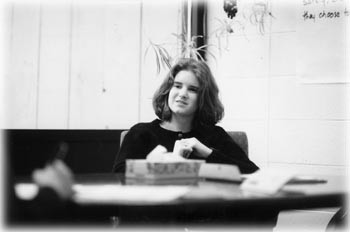
Peacemaker: Volunteer mediator Heidi Peyser, 17, helps teens resolve conflicts outside of the courtroom.

New program gives teen offenders a second chance

By Paula Harris

SITTING at the conference table in a small, no-frills Santa Rosa office, Heidi Peyser, 17, peels long flakes off a croissant and nimbly guides them to her mouth. “I forgot to eat,” she apologizes with a slight shrug and a smile. The school day is over for the Montgomery High School senior, but her second shift is just beginning–as a teen mediator, Peyser helps resolve conflicts between juvenile offenders and their victims.

Peyser is one of eight teenage mediators who volunteer in a Redwood Empire Conflict Resolution Services diversion program that brings youthful offenders and their victims face to face to try and resolve conflicts outside of the juvenile-criminal courts and in a non-adversarial way.

“We’ve found that younger people can really facilitate the process because of their age, openness, and creativity,” says Richard Merriss, the newly hired coordinator for the program and a former volunteer.

In addition to the offender-victim program, RECOURSE will offer in mid-November a parent-teen reconciliation mediation training session for volunteers, both adults and teens. The weekend course will foster communication and listening skills for mediation between youth offenders and their parents. After completing the training, volunteers may work on cases referred by Juvenile Hall to reunite parents and teens with a basis for improved communication.

“This is a pioneer program to have mediators available at the time a youth is taken into Juvenile Hall,” Merris says. “It’s to help a young person who shouldn’t be spending a night at Juvenile Hall just because of strained conditions between the young person and his or her parents.”

Darryl Datwyler, director of Juvenile Hall, welcomes that program, not because of limited space at juvee hall, but because the program helps achieve understanding between youths and their parents. “There’s rarely a day goes by when we don’t get a child that we have to detain, not because of delinquent conduct or because they pose a serious security risk, but where there are family issues,” he explains. “Frequently parents are reluctant to accept a child back because they’re concerned about continuing problems.

“We’d prefer to resolve issues within the family rather than hold children here and then just have them return to deal with the same issues.”

While the ongoing focus is the resolution of problems and disputes, volunteers say their mediation work gives them a better appreciation for life overall. Originally drawn to the reconciliation program because she intends to work within the criminal-justice system, Peyser says, several months as a teen mediator have had a profound effect on her.

“I’m finding that I’m learning about others, but I’m learning as much about me–how I react to things and how I can and cannot help people,” she muses. “I used to be really tense and nervous going into arranged situations like this, but now I’ve learned that I’m capable of helping people and being a positive presence.”

Currently, Peyser is mediating two cases: a petty theft and a grand theft. Her job is to listen and use questions to help guide the parties involved toward some kind of mutually agreed-upon resolution. “I don’t make suggestions. I’m trying to help them open a window,” she explains. “I can see possibilities, but they’re going to have to resolve things. I’m very curious how it’s going to work out.

“There’s no stereotype to help you understand anyone. Everyone communicates differently–it’s the utmost in diversity,” she adds.

Merriss agrees. “Even within our white, middle-class culture, there are many subcultures or mindsets,” he says.

In some instances, Merriss selects the cases to be handled by the reconciliation program, but most are referred by the Sonoma County Juvenile Probation Department. “We’re averaging 12 or 13 cases a month and looking to increase that to 20,” says Merriss.

Crimes that become candidates for mediation–mostly misdemeanors, but also some felonies–run the gamut from violent assault and battery cases to vandalism and petty theft. The youngest offender to go through the program was 8 years old, the oldest 17.

Merriss assigns two mediators who meet with the offender and his or her parents at their home to hear their story and to explain the process. Then the mediators meet with the victim to hear his or her side and to get affirmation that the victim agrees to participate in the mediation.

The mediation takes place in a neutral location, such as the RECOURSE office, a bank community room, or at the county courthouse. The victim and the offender work together to arrive at some kind of agreement, which could take the form of restitution, community service, or simply an apology.

“We’ll do a written agreement and they’ll sign it,” explains Merriss. “If there’s restitution, we’ll do it there. If it’s a larger amount, we’ll do a payment schedule. If it’s community service, it can be of the victim’s or offender’s own design. Sometimes the offender will do work at the victim’s property.”

Merriss says youthful offenders can, in talking with their victims and hearing their reaction, often realize the real harm caused. “In the ordinary juvenile-justice system, they might not make that connection,” he observes.

The program is not without flaws. In a case completed last year, involving a 17-year-old Petaluma boy who shot out the window of a parked vehicle with a BB gun, both the offender’s family and the victim say they’re pleased with the mediation process, but each has gripes about the outcome.

After going through mediation, the juvenile offender agreed to pay about $200 to repair the car damage, and complete 20 hours of community service. His mother says the punishment was extreme.

“I think the [mediation] program is good, but the downside is when a person realizes the alternative is someone going to court and spending money on attorney’s fees–and they think they can take advantage of it and make them pay more than they should,” she explains. “I thought it was a bit much–it was the money he was setting aside for driving school.”

The 49-year-old victim, who calls the offense “no laughing matter,” says she’s now frustrated because the teen didn’t complete the 20 hours of service stipulated by the agreement. “My recommendation to improve the [mediation] program would be to follow up to see the agreement has been fulfilled, because if you let down on that end, it’s been a waste,” she says.

Merriss agrees there have been problems in the past because there were no resources for tracking offenders and no means to follow up on the referrals. The state Office of Criminal Justice Planning recently awarded the offender-victim reconciliation program an Alternatives to Incarceration Challenge grant of $102,380. Sonoma County was one of only three counties in the state selected to receive these grants, and Merriss is hoping the funds will provide increased follow-up of individual cases.

The Parent-Teen Reconciliation Training will take place Friday through Sunday, Nov. 14-16, at the Santa Rosa Training Facility at Los Guilicos on Pythian Road in Santa Rosa. For more information, call 579-7928.

From the Oct. 30-Nov. 5, 1997 issue of the Sonoma County Independent.

© Metro Publishing Inc.

HIV Conference

0

Local HIV Conference Set

The conference–the first in the North Bay following the flurry of optimistic headlines reporting the supposedly miraculous results attained by some protease inhibitor users–will focus on new federal drug guidelines, procedures for treatment of multidiagnosed patients, the psychological and emotional impact of HIV treatments, and protocols for assisting patients to adhere to the complex treatments.

Dr. Paul Volberding, director of the AIDS Program at San Francisco General Hospital, will address the conference on new antiretroviral therapies. Dr. Neva Chauppette, a psychiatrist, will discuss the interaction among substance abuse, HIV, and mental illness.

The conference, to be held at the Luther Burbank Center for the Performing Arts, is being coordinated by the Sonoma County Academic Foundation for Excellence in Medicine. It is presented by Sutter Medical Center of Santa Rosa.

Registration is $80/general; $50/students (a limited number of scholarships are available).

For more information, call 527-6223.

From the Oct. 30-Nov. 5, 1997 issue of the Sonoma County Independent.

© Metro Publishing Inc.

Beekeeper Jonathan Taylor

0

To Bee

By David Templeton

FROM ACROSS this west Petaluma field, I can see the hives, sticking up from the ground like weird, squat totem poles: short, white, bare, and square–almost glowing in the bright morning sun. We are still too far away to see any of the bees, but I can hear them, buzzing mellifluently as the day grows steadily warmer.

“You ready?” grins Jonathan Taylor, master beekeeper, tucking an odd-shaped bundle–containing coveralls, gloves, and a veiled hat–under one T-shirted arm. Tossing me another bundle, he picks up a pale gray smoke can and strides away toward the hives. “Time to get up-close and personal!” he shouts as I tag tentatively along.

Now I can see them. Like wisps of cloud puffing up from the base of each of the five hives, hundreds of bees sail out and up from narrow spaces at the bottom of the columns, as others, returning from nectar-gathering at the tall eucalyptus trees across the lane, wing past them on their way back to the colony. The effervescent hum of the honey-making critters is louder now, though not nearly the volume it will rise to when Taylor peels the lid from the top of the hive–and I push my face forward to peer inside.

Known as “Bee Man” to a wide number of Sonoma County farmers, businesspeople, and schoolkids–he’s even got the nickname inscribed on the back of his coveralls–Taylor became involved with bees eight years ago when he was hired to help dislodge an enormous colony that had taken residence in the wall of a just-restored old building. After removing the bees to a new home, Taylor realized he was hooked. Or bitten. Or stung.

At any rate, he was ready for more. Now Taylor operates a year-round, full-service bee, wasp, and yellowjacket service, performing 30 to 50 hive removals a year. He’s established and tended numerous beehives of his own across Sonoma County and sells honey to various commercial enterprises.

Ever see those multiflavored honey sticks? Taylor supplies the honey and consults with hobbyists and farmers who are attempting to establish their own beekeeping expertise. In the off-seasons of fall and winter, he takes to the stage, sort of: Within a safety-netted, tentlike cage, the ruggedly handsome, pony-tailed Bee Man performs his educational, bee-taming act at area schools and fairs.

Working with a swirling hive of bees, Taylor demonstrates the workings of a colony, dispensing facts–“One third of all the food we eat had the involvement of bees; it only takes five pounds of beeswax to hold a hundred pounds of honey; drone bees have penises disproportionately large when compared to those of any other creature”–while wowing spectators by having the bees land on his arms and face. As a grand finale, he takes a live drone in his mouth and spits it into the air.

“OK. Let’s suit up,” he now directs, as we come to a stop directly behind the first of the stacks. Owned by two-year beekeeper Dan Tennyson of Petaluma, these particular hives have given him some concern of late, appearing underpopulated and quiet, even for the typically cool fall season; he’s asked Taylor to come out and have a look. “Bees are usually in a foul mood this time of year,” Taylor grins. “Be prepared for a face full of bees.”

With our coveralls on, our gloves and masks in place, and duct tape sealing up all potential entry points, we step up to the hive, consisting of stacked wooden boxes known as “supers.” He lifts off the lid, exposing a series of vertically lined-up racks.

After sifting a thin layer of acrid smoke from his can across the open box–this disorients the bees and interrupts their ability to communicate or to jointly identify us as the enemy–he pulls one up and hands it to me. It is intricately webbed with waxy yellow combwork, packed with sweet-smelling honey, and covered in bees.

Dozens of them fly up as if to stare in through the veil. Some cling to the netting. Several land on my arms, shoulders, neck. After an initial burst of adrenaline, it becomes rather pleasant having so many of these fragile aviators use me as a landing pad.

“Wow, look at all that honey!” Taylor exclaims. “These bees are making honey in October! That’s pretty unusual. This time of year the bees are usually prepared to shut down for the winter. I’d say this a real healthy hive. Let’s check another!”

THOUGH NOVICE beekeepers often start out with visions of a honey-selling retail empire buzzing in their heads, Taylor–and the majority of his fellow apiarists–will readily admit that it’s difficult to make a living by raising bees. The large commercial honey producers use mainly product from overseas, leaving the smaller producers to squabble over the relatively limited market for high-grade, “boutique” honey products.

“I can count on one hand the number of beekeepers in this county who make a living exclusively from bees,” insists Taylor, who admits to doing carpentry and woodcarving to make ends meet. “If you aren’t thinking of this as a hobby, you’re going to be disappointed. It’s too much work to do if you’re in it for the cash.”

For the serious hobbyist, though, there is plenty more to beekeeping than honey. Farmers need bees to pollinate their crops, and energetic hive owners can be kept busy transporting bees from one field to another, assisting the nectar-loving insects in that odd pastoral sex act. Certain industrious types are willing to do the excruciating work of collecting the hives’ bee pollen, a popular additive to smoothies and other health-food store concoctions, believed to give a special boost of energy to those who consume it.

Whether for income or for pleasure, though, it seems that good old-fashioned hard work is an integral part of the game.

Taylor doesn’t disagree.

Pointing out that “all beekeepers have bad backs,” Taylor hoists one of the supers and sets it down beside the rest of the hive. When I attempt to lift it myself, I see what he means. “That one probably weighs 70 pounds,” he smiles. “In the spring, in a good location, during a good honey flow, a strong hive can fill up one of those boxes a day. If it fills up and you don’t extract, the bees will run out of room and they’ll swarm. Then you could lose them. You can’t be a procrastinator if you have bees. The bees will get ahead of you.”

After Taylor has ascertained that Tennyson’s bees are thriving–he locates the queen in one of the hives; she’s fat and fine–we put the columns back together. As I walk away from the hives, those few bees still clinging to us lift off and return home.

As the buzz fades, I ask Taylor if he ever notices, after so many years among the bees, how gorgeous they can be.

“Oh yeah,” he nods. “I’m still blown away sometimes when I open up a colony and look inside. Sometimes I’ll stand there and say out loud, ‘That’s just amazing!’ I’m not a religious person, but I’ve heard everyone extol the beauty of God’s invention and all that. Fine. That’s one way of putting it. It’s just another way of saying, ‘That’s so amazing.'”

From the Oct. 30-Nov. 5, 1997 issue of the Sonoma County Independent.

© Metro Publishing Inc.

Talking Pictures

0

Moral Dilemma


Poster Boy: Undie king Mark Wahlberg stars as a porno star in ‘Boogie Nights.’

Photo by Phoebe Sudrow


Crime novelist Richard Rayner does the hustle with ‘Boogie Nights’

By David Templeton

Writer David Templeton takes interesting people to interesting movies in his ongoing quest for the ultimate post-film conversation. This time out, he meets philosophical thief-turned-crime novelist Richard Rayner to compare notes on the porno-noir epic Boogie Nights.

OUTSIDE THE LOBBY window of this downtown San Francisco hotel, an elderly woman, entirely toothless, is grinning widely at passersby, displaying a tattered slice of cardboard with the words “Singing Lessons $10 hour.” She sits on the step of a church, 20 feet from a notice board claiming “All Are Welcome,” and another sign–on the church door–reading “No Trespassing.”

As I stand observing this striking tableau, with its odd juxtaposition of themes, I notice a tall, thin, jacketed fellow sprinting down the sidewalk in my direction. I glance down at the novel in my hand, Murder Book (Houghton Mifflin, $25), by Richard Rayner. I open to the back flap displaying the author’s photograph, then glance back to the sprinter, now almost at the door of the hotel. It’s him.

“So sorry I’m late,” he gasps amiably, his English accent making itself known between gulps of air. A few moments later, we are seated in a nearby coffee shop, discussing the surprisingly popular new film Boogie Nights (starring Mark Wahlberg, Julianne Moore, and Burt Reynolds), a fascinating look at the underground world of pornographic filmmaking in Los Angeles in the ’70s and ’80s. Rayner loves the film, calling it “a great big epic played out in a world of sleaze.”

A one-time Cambridge philosophy major who minored in theft before turning to a life of crime fiction, he is the author of the darkly funny Los Angeles Without a Map (soon to be a major motion picture) and The Blue Suit, a graceful, clear-sighted memoir of his criminal past.

Murder Book, which he is in San Francisco promoting, is an example of the best of the neo-noir genre, a fiercely funny tale of a homicide cop, Billy McGrath, attempting to kill two birds with one stone–framing a confessed murderer for a second crime he did not commit in order to collect a bounty hunter’s fee from the victim’s son–a stone that quickly grows so heavy that McGrath is nearly crushed by its weight.

Of particular interest to Rayner is Boogie Nights‘ setting–Los Angeles, the city in which he now resides–and the film’s gleefully noirish structure. He has long held that film noir is a genre specific to L.A.

“Absolutely. It’s this thing about Los Angeles being the city-as-labyrinth,” he explains. “The surface of the city looks all the same, and then as you weave your way through the cracks you find these fascinating subcultural worlds. It’s a maze that you journey through looking for yourself. That’s what the noir story is. Noir isn’t suits and guns and falling rain; it’s people striving to understand something they’re not going to be able to understand. The classic noir hero is someone who’s good, but not good enough.

“In Murder Book, Billy is a good man who for complicated reasons is doing a bad thing, and he knows it, and then has to accept the consequences of the way that plays out. It’s a moral predicament. I think that the way Boogie Nights struck a nerve for me was that it turned out to be a highly moral film about an immoral world.”

I ask Rayner if he thinks that such stories, with their charismatic heroes finding elaborate ways to justify their ambiguous moral choices, are contributing to our culture’s gradual moral erosion, as some have claimed.

“Oh shit, I hope not,” he says seriously. “That is a crucial question about all fiction, though, isn’t it?

“I was reading at a bookstore the other night,” he relates. “There was a mother who’d brought her little girl, and I was reading this bit with Billy telling the story of the worst crime he’d ever seen–which is a true story, incidentally, told to me by one of the investigators at the L.A. coroner’s office–and I was reading this thing, thinking, ‘Oh, Jesus! What on earth made me write this story so unbelievably dark? And what is that mother thinking? What’s the child thinking?’

“On the subject of artistic responsibility,” he says, lowering his voice for the first time, “I was very taken, when I was a kid, when I read this novel by an English writer named Piers Paul Read, called The Upstart. It was about a guy who had a background similar to my own–slightly disenfranchised, middle-class, weird family history, went to public school where he felt an outsider, went to Cambridge–and he became a criminal, which is exactly what I then did while at university.

“That book influenced my choices. In some odd way I had taken completely the wrong thing from The Upstart. But I must say I think these things can only influence us if they are layered on top of some sort of potential that is already there inside us.” He pauses.

“That’s the dangerous thing about stories,” he muses. “To go back to the labyrinth thing, they take you into a maze, and in the end, there is only one way out. You have to make these choices the whole time. And any fiction, within the choices it makes, might speak to someone in the wrong way. Is Boogie Nights going to speak to certain people in the wrong way? Certainly. Is it therefore an immoral film? Absolutely not.

“Quite a dilemma for a moral person,” he shrugs. “Isn’t it?”

From the Oct. 30-Nov. 5, 1997 issue of the Sonoma County Independent.

© Metro Publishing Inc.

The Dog Pound

0

Give Me More

By Maddog

One of the things we were always encouraged to do while growing up–besides eat our vegetables, keep quiet, and not stuff out sister down the garbage disposal–was to collect things. What you collected wasn’t important. Stamps were good. Coins were good. And sports trading cards were even better because they ended up increasing in value faster than the Dallas Cowboys can be arrested, if you can imagine such a thing.

The point was, and is, that you decide on something to collect and horde it.

The reason behind being pushed to collect things may be tradition. Your parents were taught to do it, so you were taught to do it, so you inflict it on your kids because, well, revenge is a strong motivation. More likely though, it was a way for your parents to try to get you to sit in your room quietly while they reminisced about how nice life was before having children.

It’s also possible that collecting is a genetic disposition handed down to us by our cave dwelling forefathers who spent their leisure hours carving stone shelves on which to keep their collection of Cave Barbies, which included Hair Dragging Barbie, Gatherer Barbie, and in the later, more enlightened years, Hunter Barbie. After all, reruns of The Dick Van Dyke Show hadn’t been invented yet. But I suspect the true reason parents get kids to methodically collect, catalog, and search out things is that it’s supposed to teach them something. Like being an anal retentive obsessive-compulsive has no redeeming social value.

People collect the strangest things. Just go to any antique show or flea market and you’ll see people who collect salt and pepper shakers, thimbles, spoons with enamel images of the Corn Palace on the handle, Zippo lighters, and strange looks from those of us who don’t even have silverware that matches. On a recent weekend there were ads in the newspaper for the Rubber Stamp Festival (“I’ll trade you a 1932 Paid in Full for that 1917 Past Due and the 1940 Par Avion”), the Pen Fair (“How much do you want for that first edition BIC with the teeth marks on the top?”), and the Music Collector’s Expo (“Anybody seen the guy with the ABBA 8-tracks?”). My dryer lint collection is starting to feel downright normal.

Animals are a popular collecting motif. How many times have you walked into someone’s house and seen hundred of frogs everywhere–candy dishes, lamps, throw pillows, slippers, drink stirrers, and assorted knickknacks, which is an interior decorator’s term for things that sit on shelves cluttering up your house while serving no useful purpose other than to collect dust so it all doesn’t settle on the three microwave fondue pots you got for your wedding.

Unicorns, pigs, and mushrooms are common. Cows are big right now, probably because people think having cheap plaster bookends that look like Black Angus cows doing a Nixon imitation will give them an alibi when the Got Milk police break down their door looking for people with dark colored moustaches.

For a while I collected pink flamingos. Actually, collected is the wrong word. Amassed by proxy would be more like it. It started when some friends put two plastic flamingos in front of my house as a birthday gag. Before I knew it, everyone was giving me flamingo junk. Towels, ashtrays, pens, pins, mirrors–you name it, I got it for my birthday or Christmas. Did I tell them I loved to have my house and office look like someone poured a bottle of Pepto Bismol all over them? No. Did I ever once go out and buy something with a flamingo on it for myself? No. This makes me wonder if other people collect things because they like them or end up with them because other people think they like them.

There are exceptions to this rule. Some people obviously collect things because they crave them. Michael Jackson collects exotic animals. Rupert Murdoch collects newspapers, but not for recycling. Bill Gates collects money but, unlike most collectors, he has no desire to trade with his friends. And Bill Clinton is one of the biggest collectors around, amassing lawsuits, Senate hearings, and Big Mac wrappers, though I have to wonder whether he collects frequent flier miles for all those trips on Air Force One.

So far I’ve gone through life without any big passion for collecting, which is good. I have enough to do without searching through piles of used stamps, cataloging first edition comic books, or figuring out how to mount my collection of potato chips that look like world leaders. Besides, I’d hate to think all my work could go down the drain one day just because I needed to send a postcard to my aunt, ran out of newspapers to start a fire, or got a case of the munchies.

But there is one thing I look forward to collecting eventually–social security. Finally I’ll have a hobby I really enjoy.

Web exclusive to the Oct. 30-Nov. 5, 1997 issue of the Sonoma County Independent.

© Metro Publishing Inc. Maintained by Boulevards New Media.

Playwright Migdalia Cruz

0

Play Right

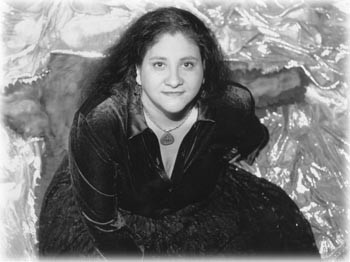
Angel of the House: With 27 produced plays to her credit, things continue to look up for Migdalia Cruz.

Playwright Migdalia Cruz opens doors at SSU in ‘Another Part of the House’

By Daedalus Howell

THE DRAMATIST’S Sourcebook, a veritable bible for playwrights, is an extensive list of theaters, companies, and their play-submission protocols. For playwrights it brims with possibilities. That’s especially the case for Bronx-bred dramatist Migdalia Cruz. Thumbing through its pages is nothing less than a life-affirming experience for her.

Vital and hardly jaded, the two-time NEA Playwriting Fellow would be hard-pressed to find a page listing a theater at which one of her 27 works has not been produced. On Nov. 14, Cruz will be at Sonoma State University’s Evert B. Person Theatre for the Bay Area opening of her Another Part of the House, a new work inspired by Federico García Lorca’s classic La Casa de Bernarda Alba.

“I like collaborative art, I like the idea of people working all in one room to re-create life,” says Cruz of her craft, during a telephone interview from her Chicago home where she is presently (and feverishly) completing the second act of Che, Che, Che, a Latin fugue in 5/8 time about Cuban revolutionary Che Guevera, due to premiere Nov. 1 at the Latino Chicago Theatre.

Cruz’s trajectory as a dramatist has gone generally unfettered since she was a child and her father constructed her a puppet-theater for which she prodigiously produced plays.

“This was during the civil-rights movement of the ’60s, so I would write all these puppet shows about civil rights,” Cruz, 38, laughs. The human concern prevalent in these embryonic sketches has persisted in the examinations of such themes as oppression and Latin American issues (Cruz is of Puerto Rican descent) that constitute much of her work.

“When I was 8, my best friend was raped and murdered and thrown off the roof of our building. That’s when my serious writing began–when writing became an outlet for me to express my feelings and emotions,” she explains. “That is when I began to understand the power of writing. Other kids played stickball; I’d write weird journal entries.”

An erudite student, Cruz graduated early from high school at age 16, routinely ditching class to scribe “bizarre musicals” with her best friend. She attended nearby City College in Queens at the behest of her parents, despite her desire to “get the hell out of the Bronx.”

Inexplicably, Cruz entered higher education as a math major. Studying drama or writing simply had not occurred to her as a viable option.

Says Cruz, “It hadn’t dawned on me that [playwriting] was a career or calling–a necessity for me.” And then she found the work of Samuel Beckett.

“It really was so clear–that you could use language to express human emotion,” Cruz recalls. “It just seemed like the greatest possible gift. It was like, ‘That’s what I want to do, but how do I tell my parents?'”

Cruz eventually earned her master of fine arts degree in playwriting from Columbia University and later gained her bearings as a dramatist at Maria Irene Fornes’ Playwright’s Laboratory, a professional workshop in New York specifically for Latino writers.

Though she maintains the trappings of much of her training, her creative process is often mitigated by the conditions of the work itself. Che, Che, Che, for example, required copious research that she says was intentionally “forgotten” and then “reconfigured.”

“For Another Part of the House, I was looking at the play of a great poet and saying, ‘Hmm, is there anything I could do here to say something else?'” Cruz avers. “What I wanted to do was write all the unspoken stuff that he didn’t write–what I thought was underneath the play. I felt that I wrote around the subtext and its viscera as opposed to its outside world form.”

She pauses. “I felt like I had to light candles to him every day and keep asking him to forgive me.”

That theater productions are necessarily wedded to the ephemeral appeals to Cruz. For her, theater is not about building monuments so much as memorable sandcastles.

“It makes it very intense and very passionate to be involved with something so temporary–it’s like falling in love. It only happens for a couple weeks, then you just have love,” she says wryly. “That ‘in love’ thing is very exciting, and I feel that playwriting is kind of like that.”

Though she maintains a love affair with her original genre, Cruz considers and has on occasion accepted other writing projects. She is currently working on a film rewrite and ponders the possibilities of writing for television.

“I think the audience I’d like to reach is increasingly an audience that stays home–a poor audience, a Latino audience, people of color, or people who feel disenfranchised. They’re not going out and they don’t feel entitled to theater. Theater is becoming more and more elitist because we just do it for each other. It seems that there are more theater people at the theater than regular people, and that’s not good.”

Cruz is not reticent, however, about the success theater has afforded her.

“I feel very lucky and blessed, but also I feel like it’s all so temporary. I feel you have to sort of appreciate it when it comes and not take it for granted,” says Cruz.

“I never know where I am in my career–I always think that if I live to be 112 like my great-grandfather, well, then I’ve just started.”

She chuckles. “I’m just a baby.”

Migdalia Cruz appears at SSU’s Person Theatre to speak on and read from her work on Friday, Nov. 7, at 7:30 p.m. $5. Another Part of the House plays Nov. 14-16 and 20-23; Friday-Saturday at 8 p.m.; Sunday at 2 p.m. $8-$16; free to students with ID. 664-2353.

From the Oct. 30-Nov. 5, 1997 issue of the Sonoma County Independent.

© Metro Publishing Inc.

Nanci Griffith

0

Storyteller


Se&ntildeor McGuire

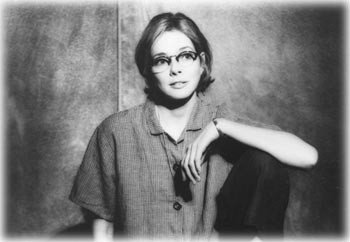
Lucky Stars: Nanci Griffith loves it when a “real singer” performs her songs.

Folkabilly icon returns to LBC

By Mike Joyce

TOWNES VAN ZANDT, Guy Clark, Robert Earl Keen, Joe Ely–why has Texas produced so many great songwriters/storytellers? Nanci Griffith, who has earned a place near the top of the list, has her suspicions. “There’s nothing to look at, so you learn to use your imagination very early in life,” says Griffith, who brings her celebrated Blue Moon Orchestra to LBC on Nov. 9.

Imagination has fueled Griffith’s life for as long as she can remember. Born 42 years ago in Seguin, Texas, she became a voracious reader as a child and later devoured the Southern prose of Eudora Welty and Carson McCullers. So it was only natural, she says on the phone from Nashville, that the creation of character-driven songs would appeal to her. As it turned out, she had a gift for it, too.

By the mid-’70s, her literate songcraft was attracting attention around the country, winning her a prize at the 1976 Kerrville Folk Festival in Texas and allowing her to venture beyond the Texas honky-tonks she played as a budding performer and tunesmith. She still marvels at how silent audiences were when she began playing coffeehouses in New England. “I thought everybody was supposed to have a beer in their hand,” she says. “The quiet was a little disconcerting. At first I thought people didn’t like what they were hearing. I had no idea that people actually paid to hear you sing.”

Instead of trying to land a record deal in Nashville, Griffith toured the country extensively in the ’70s and early ’80s, playing her “folkabilly” at any place that would have her. “I started driving myself around America,” she recalls in a faint, girlish voice. “I just went out and worked wherever I could. I also made four albums for four different labels, and it was hard to do that then. But it was a great time in my life, and I wouldn’t trade it for anything.”

Griffith has been writing, touring, and recording ever since. Along the way, she’s developed a fervent international following and won several Grammies, including one for the 1993 album An Irish Evening with Roger Daltry and Nanci Griffith. She’s also had her songs recorded by numerous artists, such as Willie Nelson (“Gulf Coast Highway”), Suzy Boguss (“Outbound Plane”), and Kathy Mattea (“Love at the Five and Dime”). Whenever she hears someone singing one of her songs on the radio, Griffith says, “I just count my lucky stars.”

After all, she adds, “I do this so that a real singer will come along and sing these songs.”

Even so, in some circles Griffith is best known for her wistful voice and affecting interpretations. Her version of the Julie Gold song “From a Distance” topped the Irish charts several years before Bette Milder recorded it. Now Griffith regards Ireland as her second home.

These days, she touring to support Blue Roses from the Moons (Elektra), which features guest appearances by Buddy Holly’s legendary band the Crickets (who will join Griffith at LBC) and Hootie and the Blowfish frontman Darius Rucker

But her most personal and revealing album was 1994’s Flyer. Writing the songs for the album, she explains, was akin to “an exorcism–very much like that. Instead of writing about characters like I usually do, I became the character. It was very painful to put out an album that made you feel naked, but at the same time it was a great experience working with all of the musicians.”

Big-name collaborators on Flyer included REM’s Peter Buck, Mark Knopfler, Larry Mullen and Adam Clayton of U2, the Indigo Girls, Adam Gurvitz of Counting Crows, and her “hero,” Sonny Curtis of the Crickets. “I don’t know how it happened, but this block of songs just came flooding out of me–and they were all autobiographical.”

Griffith is quick to point out that her cycle of soul-baring songs has ended–at least for the time being. Her new album commemorates the 10th anniversary of her band, the Blue Moon Orchestra, and though it features a couple of guest cameos, she describes it as a small-scale, festive affair.

Meanwhile, upbeat, descriptive, or confessional, much of Griffith’s music has been disregarded by commercial country radio over the years, but she isn’t frustrated by a lack of exposure. From the beginning of her career, she notes, college radio has been her mainstay. “That’s always been the alternative, and I guess I just kind of fall into the alternative thing,” she explains.

Nanci Griffith and her Blue Moon Orchestra, featuring the Crickets, perform Sunday, Nov. 9, at 7:30 p.m. at the Luther Burbank Center, 50 Mark West Springs Road, Santa Rosa. Tickets are $22.50. For details, call 546-3600.

From the Oct. 30-Nov. 5, 1997 issue of the Sonoma County Independent.

© Metro Publishing Inc.

The Odd Couple

0

Bosom Buddies


John Casado

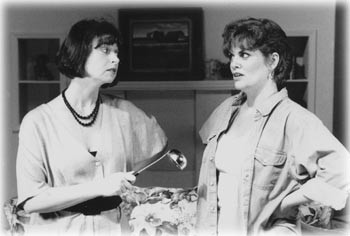
Roomies: Erin Cooney and Rebecka Pinkham star in ‘The Odd Couple.’

Transgendered ‘Odd Couple’ works

By Daedalus Howell

IN 1952, AMERICAN George Jorgensen underwent the world’s first gender-reassignment operation in Denmark, and returned home as Christine Jorgensen. In 1986, with only some minor cuts and reconstruction, playwright Neil Simon successfully reassigned the genders in his famed cohabitation comedy The Odd Couple.

Lead characters Oscar Madison and Felix Unger have become Olive and Florence and–in the hands of the Santa Rosa Players–it works.

Under the able direction of Gene Abravaya, the Players embark full steam with the retread Freudian case study (nowhere else in dramatic literature have the anal-retentive and -expulsive traits been so illustratively presented) and arrive with a perceptive production about two women who need to be needed.

Like the original Odd Couple, two pals decide to share the shingles after both their spousal ventures have disintegrated. For Florence (Rebecka Pinkham), divorce precipitates homelessness. Post-marriage Olive (Erin Cooney) feels landlocked in lonesomeness and invites Florence to live with her. The two ink a contract of comic codependence and deceive themselves that theirs is a symbiotic relationship: Olive makes messes and Florence cleans them up–they have a purpose. Sure.

Director Abravaya has assembled an excitable, punchy cast that meets Simon’s pithy, though partially antiquated, script (“Fresca, anyone?”) with levity, ease, and limited schmaltz (Simon’s sweet tooth nips most aspects of his oeuvre, but Abravaya smartly underplays the sentimentalism).

Erin Cooney’s Olive is a rumpled, dowdy television news producer, more bawdy than butch, with much of her male predecessor’s braggadocio intact. Olive guffaws, curses, rolls up her shirt sleeves, and litters the apartment like a pug dog clawing newspaper.

Likewise, willowy Pinkham draws Florence as a comic miasma of housewifery and neuroses (Martha Stewart on the dark side of the Force) while admirably sustaining the character arc of the show. Pinkham renders her character’s revelations with an air of credulity despite the work’s unabashedly giddy nature.

On hand for succor and support are the duo’s crew of loyal chums, including policewoman Mickey (wryly performed by Naomi Sample, who makes an art of emotional exasperation) and daffy, well-meaning Vera (a scene-stealing Jennifer Hedgepeth). Jodie Linn and Margaret Lash also turn in fine performances as women-on-the-verge.

Manolo and Jesus Costazuela (respectively Matthew Greene and Joshua Reed) are swaggering, sweet-natured Barcelonan brothers, tossed into the comic fold when the roommates arrange a neighborly dinner party. Greene and Reed are astute comedians (borrowing a little from Dan Aykroyd and Steve Martin’s “wild and crazy guy” routine)and score easy laughs whilst scaling the language barrier and executing physical schtick.

Scenic artist Shawn Lux has superbly designed Olive’s apartment, replete with an actual toilet peeking from behind a bathroom door. An expressionistic projection of a metropolitan skyline above the stage counterpoints an otherwise realistic apartment set strewn with the detritus of slovenly living.

The realism persists in designer Teri Abravaya’s succinct and effective costume selections (Olive in spandex shorts and sports jersey, Florence in dainty day-wear, sharp double-breasted suits on the men), as well as in Jeremiah Grim’s plausible light design.

The Santa Rosa Players’ production of The Odd Couple is more than “ladies’ night” at the theater–it is real entertainment.

The Odd Couple plays Oct. 30-Nov. 2. Friday-Saturday at 8 p.m.; Sunday at 2 p.m. Santa Rosa Players, Lincoln Arts Center, 709 Davis St. Tickets are $10-$12. 544-STAR.

From the Oct. 30-Nov. 5, 1997 issue of the Sonoma County Independent.

© Metro Publishing Inc.

The Scoop

Taxing Thoughts

By Bob Harris

REPUBLICAN Congressman Bill Archer has a bold plan to make it harder for the IRS to barge into your house, take your stuff, and ruin your life. Sounds good. So far. Archer says–and most folks agree–that in disputed cases the burden of proof should lie with the IRS, instead of the taxpayer.

Damn straight. So far.

As things stand, if some IRS data hack blows a decimal point and his ancient Apple IIe decides you owe enough cash to upgrade his whole division to the almost-as-ancient Macintosh Plus, you’re the one who has to prove him wrong. Meanwhile, you’re running up penalties and interest; fight long enough, and you’ll face seizure and worse. That’s just plain wrong.

So far, so good.

Naturally, Archer’s idea is gaining popularity. Just as naturally, Bill Clinton initially sided with the IRS, changing his mind only after a long night of soul-searching and incoming focus-group data. (Clinton’s opinion-mongering is now so reflexive he’d probably support his own defenestration if it meant a boost in the polls: “I promised to provide our nation with responsive leadership. The people have spoken. The people want to hurl me through this window. And so, tonight, I say to all Americans: EEYAAHHhhhhhthunk!”)

There’s just one problem: When, exactly, did Bill Archer and the GOP suddenly start caring about the Bill of Rights? These are, after all, the same folks who would happily eliminate, among other things, the First Amendment in online communications, the Fourth and Fifth amendments in alleged drug and terrorist cases, and the Sixth through Eighth in immigration and capital crime cases.

And now, suddenly, they care about the Constitution?

Sure, the Archer plan might keep the IRS from knocking down your door–but what are you supposed to do about a surprise visit from the DEA, the INS, the BATF, the FBI, or the producers of Cops? Tough luck, Orange Jumpsuit Boy.

Don’t get me wrong: shifting the burden of proof from citizens onto the IRS is long overdue. I’ve been audited myself. Yowch. I’ll never forget the first time I got an official letter gently ordering me to present myself downtown and hand over the paper trail of my entire life. I bloody near fainted. (When a hungry animal has you in its jaws, it’s only natural to play dead.) So I feel your pain.

But remember how our political system works: Follow the money. Bill Archer is the congressman from Houston, which means he inevitably represents the interests of a bunch of oil and aerospace firms who (a) like paying taxes even less than you do, and (b) have lawyers who can string together enough loopholes to weave a Persian rug. Is it possible that’s who this new proposal is really for? You betcha.

Bill Archer’s the same guy who pushed to abolish the Alternative Minimum Tax. Remember hearing about Fortune 500 companies who avoided paying even a dime to Uncle Sam? The AMT was created in 1986 to force the big boys to pay their fair share.

Jump-cut to two years ago: while Newt was styling his Contract around like Albert Belle in spring training, it was Archer leading the backroom effort to arbitrarily expand Newt’s alleged mandate and sneak a repeal of the AMT into law–thereby moving almost $10 billion a year out of the U.S. Treasury and into the Forbes 400. So much for balanced budgets. . . .

By the way, 10 gig is roughly the same budget chunk the government couldn’t afford for the now-defunct Aid to Families with Dependent Children. Evidently, giving money to the rich is good; giving money to the poor is bad. So listen closely. Archer’s current fanfare for the common man is really just the same corporate brass line given a catchy pop motif. Sure, you and I might indeed retain relative handfuls of cash and privacy–while the biggest tax deadbeats in America make off with entire bankloads.

Predictably, the major dailies are hailing Archer without mentioning his well-documented long-term agenda. Apparently nobody in the mainstream media has a memory extending back to 1995. Even so, can we still tame the IRS while making the bullies play fair?

Yup. Easy.

You won’t find the word corporation anywhere in the Bill of Rights. Look it up. America’s founders never even considered extending anything resembling the rights of full citizenship to such fictitious corporate entities as Lockheed or Archer Daniels Midland. So let’s try this: Reform the IRS–but for individuals only. And then let’s see if Bill Archer and his flag-waving friends are still so enthusiastic about defending our personal freedom.

Bob Harris will appear as a contestant on the syndicated TV game show Jeopardy! on Halloween, Friday, Oct. 31 (and possibly, shall we say, thereafter).

From the Oct. 30-Nov. 5, 1997 issue of the Sonoma County Independent.

© Metro Publishing Inc.

Aids Protease Inhibitors

0

Bitter Pill

By Justin Hayford

I’LL TELL YOU WHY I’m not taking my medicines today,” says Sonja, lighting up a Marlboro and settling into one of the few pieces of furniture she owns, a fuzzy green sofa she bought last week at a hotel liquidation sale. “I’m not taking them because a couple of days ago I woke up and saw spiders all over the walls of my apartment. I had to close my eyes and wait for them to disappear.”

Sonja has AIDS. Among the half dozen drugs she’s decided not to take today is ritonavir, a powerful new protease inhibitor. Pills just like the ones Sonja tosses into my lap in disgust appeared on the cover of Newsweek last fall, dramatically lit underneath a bold teaser: “The End of AIDS?”

And according to an article in Time, “Everywhere they turn these days, doctors and patients are hearing good news about AIDS.” The magazine even named Dr. David Ho, one of the leaders in protease inhibitor research, as its man of the year. Ever since July’s International AIDS Conference in Vancouver, when the results of many small-scale protease inhibitor studies were announced, it’s been difficult to avoid stories in the press of people putting on weight, checking out of hospices, returning to work, or going back to bodybuilding, thanks to these drugs.

The AIDS crisis, so the story goes, is just about over.

But people like Sonja are conspicuously absent from that story. For her, and thousands like her, protease inhibitors bring their own sets of crises. Since starting on the drugs six weeks ago–a regimen consisting of about 20 pills a day with an annual price tag of around $15,000–her life has become much worse. And seeing spiders isn’t the half of it. “When I first took the drugs, I thought I was going to die,” she says. “Really. I spent the first two days in the bathroom. I had to buy an extra phone cord so it could reach.”

Within an hour of taking her dose–six oversized white capsules of ritonavir twice a day, along with two other antiviral medications, a prophylaxis against pneumonia, an antidepressant, and an occasional Tylenol 3–she’s hit with severe nausea, diarrhea, and fatigue. When she ventures out of her apartment, she’s out of breath after walking two or three blocks. “Sometimes I can’t even leave the house,” she says. “It’s too embarrassing to have to go throw up or have diarrhea.

“It’s always one end or the other.”

Sonja isn’t surprised that the drugs make her sick. For one thing, her doctor warned her about such symptoms. “I’ve heard a lot of horror stories from people whose doctors didn’t tell them what to expect when they started the drugs,” she says. “At least my doctor got me ready for it so I could cancel my plans.”

Since being diagnosed as HIV positive a little more than a year ago, Sonja has had a hard time tolerating whatever drugs her doctors have prescribed. She says she’s just about ready to give up. She learned she was infected in January 1996 while in jail, where she was serving six months for drug possession. The doctor immediately put her on a combination therapy of two antiviral medications, a regimen that was switched three times before her sentence ended, either because the drugs weren’t working or because Sonja developed such severe migraines and fatigue that she couldn’t stand to be on them any longer.

Since then, she says, her medications have been switched five times. One of her kitchen cupboards is stuffed with pills she has stopped taking.

“I’m taking all this shit that makes me feel like crap,” she says with a laugh. “And I’m supposed to take my ritonavir with food, even though it makes me throw up, so how much sense does that make?” She takes a long drag from her cigarette as though drawing sustenance from the smoke. “I didn’t go through anything this bad even when I was doing heroin. And the thing is, ever since I started on these drugs, I’ve had a lot more thoughts about relapse. I know I can go out and get a bag that will make me feel good. I mean, I know what that will lead to, and I don’t want that. But it’s even in my dreams.”

Sonja understands that by skipping her dose today–not the first time she has done so–she runs the risk of developing resistance, making the drugs ineffective against the HIV in her system. She also knows that the symptoms she’s experienced for the past six weeks are likely to diminish as her body learns to tolerate the daily, massive infusion of toxic drugs. She already feels better than she did two weeks ago. But like so many people with HIV, Sonja has been worn down by a life of recurrent chaos and crisis: raised in foster homes, hooked on cocaine by 16, hooked on heroin shortly thereafter.

Two of her children were taken from her by authorities, and she voluntarily surrendered the third for adoption. She ended up in prison, then spent nine months in a shelter concurrent with nine months in a drug-rehab program and seven months battling Social Security to get her disability benefits. Now, finally, she has a bit of stability in her own clean, quiet apartment. She finds herself living a life she never thought possible, and these days are so precious to her that she wants to enjoy them without the fear of throwing up on a street corner every time she leaves the house, even if that means surrendering 10 years of her life.

“You’ve got to think about quality as opposed to quantity of life. You know what I mean? I don’t take drugs, I feel great. So right now I’m wondering if they’re worth it.”

THE SUCCESS of protease inhibitor therapy is the subject of intense debate among AIDS service workers. “I have some patients who do well [with protease inhibitors],” says Judy Dunn, the nursing-care coordinator at Face to Face: Sonoma County AIDS Support Network, “and I have others who have failed and who are on all different kinds of other things to stay healthy until something else comes along.

“In some instance, folks have quit because of the quality-of-life issues, though two of them have decided to start again because it’s even scarier to die.”

Certainly, protease inhibitors–which will be the subject of a day-long AIDS conference in Santa Rosa on Nov. 3–have produced dramatic benefits for some. “We all have our miracle patients,” says Dr. Richard Novak, a virologist with the University of Illinois at Chicago’s HIV clinic. One of his miracle patients once suffered from multiple infections and severe weight loss, his T cells bottoming out at 16 (an AIDS diagnosis comes when T cells fall below 200; an intact immune system typically has 1,000 or more). Triple-drug therapy including a protease inhibitor brought his T-cell count up to over 350, and all his symptoms disappeared. He now has a new lease on life.

Information on the upcoming HIV conference.

As John Weekly, who runs a support group for gay men with HIV, points out, “I read there are about 100,000 people on protease inhibitors right now. But look at the total number of people with HIV or AIDS in the nation [estimated near a million]. We’re talking about a small percentage who are on the drugs. And how many of the people on the drugs are developing resistance or can’t tolerate them?”

In most of the protease inhibitor studies around the country, resistance develops in 10 to 15 percent of research subjects. Dr. Philip Loy, a biophysicist with American Viatical Services in Atlanta, has completed medical reviews of some 4,000 people on the drugs. He estimates that 30 percent of these patients become intolerant to one or more medications, while another 15 to 25 percent fail to adhere to the drug regimen.

If his sample is representative of the larger population of people on protease inhibitors–and his sample is three times larger than the largest clinical study designed to test the drugs’ effectiveness–then these drugs may fail in half of the people who take them.

If you want to see Weekly bristle, suggest to him that protease inhibitors will make AIDS as manageable for the men in his group as diabetes or hypertension, comparisons used repeatedly in the media. “How many people are fired from their jobs, or kicked out of their apartments, or abandoned by their families because they’re diabetic?” he responds immediately. “How many people are told that diabetes is their own fault? How many people have had their lovers break up with them because they’re hypertensive? Are protease inhibitors going to solve all these problems, too?”

In Weekly’s view, the recoveries he sees in his group can be credited to class and culture as well as the pills. “The guys are all white, they all have primary physicians who are HIV specialists, they’re all hooked up to support systems, and they’re all self-motivated people, the kind who see an ad in the paper and call right away. They’re not representative of a lot of people with HIV.

“I feel like they are the exceptions.”

Jeff, then, is an exception to an exception. Like the men in Weekly’s group, Jeff is white, gay, self-motivated, and well connected. His primary physician is one of the most highly respected AIDS specialists in town. Though Jeff is on disability leave from work, his employer has agreed to keep him on the company’s group insurance plan “in perpetuity,” a highly unusual arrangement that pays for all of Jeff’s drugs. He lives in a comfortable high-rise condominium light years from Sonja’s low-income unit.

Protease inhibitors have worked for Jeff–sort of. Ritonavir, in combination with the older antiretrovirals d4T and 3TC, has brought his viral load down from 460,000 to 8,000. And there it stays. His T-cell count has risen from a dangerously low 65 to a slightly less dangerous 200. And there it stays.

“For me, the drugs represent a freezing of the situation, rather than being the cure or the answer,” he says. “I am not improving as much as other people are improving. And at any time the infection could break through and the bottom could drop out.”

He started his triple-drug therapy in November 1995. When I met him the following summer, he was pale, thin, barely spoke above a whisper, and had the first telltale signs of the AIDS face rarely described in the press these days–his skull slowly rising to the surface. Now, nine months later, Jeff seems a different person–sturdier, more animated, filled out. With the dramatic reduction in the amount of HIV in his system, he says, much of his former energy has returned. He’s even able to work out and swim, activities he thought he’d given up for good a few years ago.

But Jeff can’t entertain thoughts of returning to his former life as a graphic artist and art director, in part because, like Sonja, the drugs’ side effects hit him hard. “The first time I took it, it was like my body screamed,” he recalls. “I felt this weird chemical rush, and within an hour I was running to the bathroom with diarrhea. It’s a stomach killer, the drug is. What we ended up doing–my doctor and I, because I got so sick on it –was cutting back to one twice a day, then two twice a day, and gradually building up to the six.

“But still I don’t have a normal GI system. I constantly have acid indigestion. It’s really worth it, for what the drug has done for me. I know I wouldn’t be alive today without it. But you always know that the drug is in your system. I have diarrhea. I chew Tums constantly.”

Moreover, Jeff can no longer take medication for depression, something he has battled off and on since long before he was diagnosed as HIV positive. His antidepressants are strongly contraindicated with ritonavir. For now he’s coping well. But he’s worried. “I’m really not a very stable guy,” he says with a disarming laugh.

Jeff was one of the first people to get on protease inhibitors after they were approved by the FDA. “My health was pretty stable with d4T and 3TC the year before. But my doctor was anxious. That whole year, he knew the protease inhibitors were coming. He said, ‘They’re coming out soon enough so we can hold on. But as soon as it comes, we’re going to do it.'”

It turns out that such fast action may have left Jeff at a disadvantage. “We now know that it’s best to start with two new drugs,” he explains. “In other words, I was on d4T and 3TC, and my doctor added ritonavir. It would have been smarter to change the d4T to another drug like ddC or ddI and add the ritonavir. But no one knew this back then, and in the rush to get people on the drugs, they just did it. Looking back, a lot of people have similar regrets to mine.”

Failing to change two drugs in his cocktail may account for its diminished success, a reality that hit home in January when he was flipping through the New York Times. Graphs accompanying a front-page article titled “With AIDS Advance, More Disappointment”–one of the only stories to profile people for whom the drugs don’t work–charted three case studies of people on protease inhibitors. The cases were labeled When Therapy Works Well, When It Works Somewhat, and When It Fails.

Jeff saw himself reflected almost perfectly in the second case, right down to a nearly identical T-cell count and viral load. “It was the first time I saw on paper that things aren’t as good as they could be,” he explains. “And then the doctor starts talking about if the viral load starts going up, what do we do? Which sounds to me like any day it can break through. So I’m just sitting on pins and needles about that, and feeling like I’ve got a little more time, how much I don’t know, maybe two years.”

With so much uncertainty, one of Jeff’s biggest problems is sticking to his drug regimen. Like Sonja, he takes six huge pills twice a day–pills that smell and taste terrible–always with food, along with two smaller pills.

“It’s not just the AZT popped in the mouth like it used to be,” he says. “Now it’s a major event.”

THE EXPERIENCE OF TAKING so many pills with such irritating side effects every day has begun to overwhelm everything else in his life, as he articulated in a recent painting. Spread across the canvas is his dosage blown up to monstrous size, and behind the pills lurk tiny emblems of his former life. Books lie half visible behind a huge capsule. A male dancer in the middle of a joyful leap is almost completely obscured.

In the center of the painting the Dalai Lama sits in a lotus position, his head blotted out by a gargantuan ritonavir. “That’s what it’s like for me. It pervades everything.”

It’s a sentiment Sonja knows well. As she wrote in a diary recently, “Every time I take my medication it’s a constant reminder of my limitations. Days like today I just lie around and dream I have a normal life. I’m sick of taking medicine. Great life–I have no life!”

Even without troubling side effects or an uninspiring prognosis, compliance with such a demanding regimen can be difficult. Just ask John. He’s perhaps the ideal candidate for protease inhibitors. Not only is he an organized, self-motivated person with a solid career, good insurance, and a stable home life, he started on the new drug cocktail almost immediately after becoming infected. If the ultimate goal of protease inhibitor therapy is to eradicate the virus from the body, John is in the perfect position for success, since HIV had almost no time to replicate before being suppressed by the drugs. Currently his viral load is undetectable.

John takes a protease inhibitor called indinavir, along with 3TC and AZT. He tolerates the drugs well, though he started protease inhibitor therapy last July on a different drug that crippled him with diarrhea, vomiting, and extreme anxiety for seven and a half weeks. “I got to a point where I thought, ‘I don’t care if this is going to save my life. I don’t want to live like this,'” he says.

After skipping two doses–just looking at the pills turned his stomach–he asked his doctor to change his prescription.

Now, instead of eight pills twice a day, John takes four pills every eight hours. But even without side effects, holding to the regimen is trying. “The papers all say that the regimen is difficult,” he says, “but people have no idea. First of all, I have to take the drugs at 8 a.m. 4 p.m., and midnight, every day, without fail, for the foreseeable future. And I have to take them two hours after eating, when my stomach is empty, and I can’t eat for another hour after I take them. So that means I have two three-hour periods every day when I can’t eat. I can have maybe a piece of toast or a cracker; that cuts the absorption rate to about 98 percent. If I take them on a full stomach, the absorption rate is only 23 percent. So what happens?

“It’s three in the afternoon, I’m at work, it’s somebody’s birthday, and there’s a cake. That’s too much fat, so I have to say no thank you. It’s a little thing, but little things like that add up, they intrude into your life all the time. Your life is not your own.

“My job has very regular hours. But what do you do if you’re a flight attendant, or a construction worker, or in a business where your schedule isn’t set? I know a doctor who told me he won’t prescribe protease inhibitors to one of his patients who is an attorney, because the patient’s schedule is so hectic. What if you’re homeless? Where do you refrigerate your drugs?

“And here’s the thing. I have supportive friends, a supportive lover, a supportive work environment. In my office, I can pop pills or run to the bathroom whenever I need to. I’m a very organized person with a very scheduled life. And I’m sitting here with 1,477 T cells. If it should be easy for anyone, it should be easy for me.”

But John admits that the temptation to skip dosages is real. “Some days I just don’t want to put up with it. I don’t want to be reminded that I’ve got HIV.”

THE BETTER PROTEASE inhibitors work, the more likely people are to skip doses. “The problem is, people who are asymptomatic don’t reliably take medicine,” says Dr. William Paul, a virologist specializing in the treatment of AIDS. “From poor, homeless people to doctors and nurses. Research shows that it’s quite common to have up to 40 percent of individuals miss their prescribed medicines.”

And skipping even a few doses of protease inhibitors can allow HIV to mutate into a strain resistant to those drugs.

Non-compliance with protease inhibitors’ demanding regimen stands to create an even more menacing health problem, if history is any indication. Thirty years ago Americans were led to believe that the TB crisis was over, thanks to multidrug therapy. That regimen is not nearly so difficult–and not a 10th as expensive–as the new AIDS cocktail. According to Paul, the standard course of treatment for an uncomplicated case of TB is four different antibiotics taken for two months, then two antibiotics for the final four months. These drugs typically do not produce any serious side effects.

Yet owing in part to people’s inability to adhere to this regimen, the tuberculosis bacillus was able to mutate into strains resistant to these drugs, leading in the 1980s to the appearance of multidrug-resistant TB–a killer that we are nearly powerless to cure. A 1992 survey in New York City, one of the U.S. cities hardest hit by TB, showed that more than a third of the strains tested were resistant to at least one TB drug, and nearly a fifth were resistant to the two most powerful TB drugs, rifampicin and isoniazid. According to the World Health Organization, cases of TB in New York City have increased by 150 percent since 1980. With protease inhibitors the problem stretches beyond non-compliance. Some people develop resistance to the drugs even while complying perfectly.

If resistance to one protease inhibitor develops, people can sometimes switch to another (four are FDA-approved). But those who develop a resistance to one protease inhibitor may have developed a resistance to all of them. A recent European study suggests that taking the antiviral 3TC may promote the development of HIV strains resistant to protease inhibitors. One activist who recently started on the cocktail confides, “Someday we’ll figure out that we’re all just growing mutant HIV in our blood.”

And resistant strains of HIV, which are already developing, will most certainly spread. Currently about 10 percent of new HIV infections are from AZT-resistant strains of the virus, suggesting that some people on AZT are still engaging in unsafe sex.

And given the reports of protease inhibitors’ success in all but eliminating HIV from the body, there is every reason to believe that condom use will fall along with viral loads.

Many HIV workers agree that some men are using the news about protease inhibitors as justification for reducing condom use. One says he has encountered men whose concern about becoming infected has decreased because they believe that in a few years taking protease inhibitors will be as easy as chewing gum.

As the stories of people with HIV springing back to life spread, AIDS may begin to recede from our collective consciousness, just as TB did three decades ago. Perhaps this has already started. Mary Lake, a client services representative from Howard Brown, says, “I can’t tell you how many people have said to me, ‘Isn’t AIDS over? I heard there was a cure.'”

It’s hard to find anyone working in the AIDS service world who doesn’t have a similar story to report. Recently Deborah Steinkopf, executive director of the Chicago-based Better Existence with HIV, met with funders who have given her agency several thousand dollars each year. This time they said they weren’t sure they wanted to give any money. “They said they had read all this stuff in the papers about these drugs,” Steinkopf recalls, “and they asked, ‘Are you going to be around in a couple of years?’ They were operating under the assumption that the kinds of services we provide–prevention education, counseling, case management–wouldn’t be needed soon. Or at least wouldn’t be funded.”

“From a public health standpoint,” Paul concludes, “the biggest problem may be declining interest.”

It’s nearly impossible to find anyone working in the AIDS service world–whether in social services, health care, or policy analysis–who believes that the AIDS crisis is anywhere near over. “Sure, there is good news out there, but the downsides are being hidden,” says Steinkopf, echoing sentiments often expressed by her colleagues. “The focus in the press is always on people who are getting better. They are the only ones who are real.”

And the only real problems, it seems, are those that medical science can address. For people on the front lines of the fight against AIDS, the epidemic is not only about T-cell counts and viral loads but also about fear, ignorance, and intolerance. HIV has created enormous rifts within American society and exacerbated others that already existed–rifts that no number of pills will heal.

Editor Greg Cahill contributed to this article.

From the Oct. 30-Nov. 5, 1997 issue of the Sonoma County Independent.

© Metro Publishing Inc.

Teen Mediation Program

Meeting HalfwayMichael AmslerPeacemaker: Volunteer mediator Heidi Peyser, 17, helps teens resolve conflicts outside of the courtroom.New program gives teen offenders a second chanceBy Paula HarrisSITTING at the conference table in a small, no-frills Santa Rosa office, Heidi Peyser, 17, peels long flakes off a croissant and nimbly guides them to her mouth. "I forgot to eat," she apologizes with...

HIV Conference

Local HIV Conference SetThe conference--the first in the North Bay following the flurry of optimistic headlines reporting the supposedly miraculous results attained by some protease inhibitor users--will focus on new federal drug guidelines, procedures for treatment of multidiagnosed patients, the psychological and emotional impact of HIV treatments, and protocols for assisting patients to adhere to the complex treatments.Dr. Paul...

Beekeeper Jonathan Taylor

To BeeBy David TempletonFROM ACROSS this west Petaluma field, I can see the hives, sticking up from the ground like weird, squat totem poles: short, white, bare, and square--almost glowing in the bright morning sun. We are still too far away to see any of the bees, but I can hear them, buzzing mellifluently as the day grows steadily...

Talking Pictures

Moral DilemmaPoster Boy: Undie king Mark Wahlberg stars as a porno star in 'Boogie Nights.'Photo by Phoebe SudrowCrime novelist Richard Rayner does the hustle with 'Boogie Nights'By David TempletonWriter David Templeton takes interesting people to interesting movies in his ongoing quest for the ultimate post-film conversation. This time out, he meets philosophical thief-turned-crime novelist Richard Rayner to compare notes...

The Dog Pound

Give Me MoreBy MaddogOne of the things we were always encouraged to do while growing up--besides eat our vegetables, keep quiet, and not stuff out sister down the garbage disposal--was to collect things. What you collected wasn't important. Stamps were good. Coins were good. And sports trading cards were even better because they ended up increasing in value faster...

Playwright Migdalia Cruz

Play RightAngel of the House: With 27 produced plays to her credit, things continue to look up for Migdalia Cruz.Playwright Migdalia Cruz opens doors at SSU in 'Another Part of the House'By Daedalus HowellTHE DRAMATIST'S Sourcebook, a veritable bible for playwrights, is an extensive list of theaters, companies, and their play-submission protocols. For playwrights it brims with possibilities....

Nanci Griffith

StorytellerSe&ntildeor McGuireLucky Stars: Nanci Griffith loves it when a "real singer" performs her songs. Folkabilly icon returns to LBCBy Mike JoyceTOWNES VAN ZANDT, Guy Clark, Robert Earl Keen, Joe Ely--why has Texas produced so many great songwriters/storytellers? Nanci Griffith, who has earned a place near the top of the list, has her suspicions. "There's nothing to look at, so...

The Odd Couple

Bosom BuddiesJohn CasadoRoomies: Erin Cooney and Rebecka Pinkham star in 'The Odd Couple.'Transgendered 'Odd Couple' worksBy Daedalus HowellIN 1952, AMERICAN George Jorgensen underwent the world's first gender-reassignment operation in Denmark, and returned home as Christine Jorgensen. In 1986, with only some minor cuts and reconstruction, playwright Neil Simon successfully reassigned the genders in his famed cohabitation comedy The Odd...

The Scoop

Taxing ThoughtsBy Bob HarrisREPUBLICAN Congressman Bill Archer has a bold plan to make it harder for the IRS to barge into your house, take your stuff, and ruin your life. Sounds good. So far. Archer says--and most folks agree--that in disputed cases the burden of proof should lie with the IRS, instead of the taxpayer. Damn straight. So...

Aids Protease Inhibitors

Bitter PillBy Justin HayfordI'LL TELL YOU WHY I'm not taking my medicines today," says Sonja, lighting up a Marlboro and settling into one of the few pieces of furniture she owns, a fuzzy green sofa she bought last week at a hotel liquidation sale. "I'm not taking them because a couple of days ago I woke up and saw...
11,084FansLike
4,606FollowersFollow
6,928FollowersFollow