Sierra Club

0

Fresh Prince


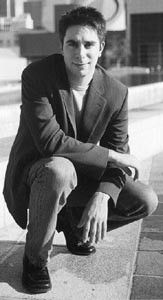
No Apologies: Since taking the helm of the nation’s largest environmental group last year, 24-year-old Adam Werbach has helped recruit a younger legion of activists.

Photo by Michael Amsler


The Sierra Club’s young president Adam Werbach heralds a new charge for environmentalists

By Kelle Walsh

“I wish I could mint time,” Adam Werbach mumbles as we nearly trot from the Sierra Club national offices in downtown San Francisco to Yerba Buena Gardens. It’s a phrase he will utter again before I leave him, and one gets the feeling it is something he tells himself often.

As the president of the nation’s oldest environmental organization, Werbach has his hands full.

His election last year at age 23 sent shock waves through the club’s 600,000-member guard, many of whom came on board before Werbach was even a thought. Perhaps more challenging than overcoming the stigma of his age, however, is his charge of turning this old barge into a battleship ready to take on the environmental threats of a new millennium.

As the president of the nation’s oldest environmental organization, Werbach has his hands full. His election last year at age 23 sent shock waves through the club’s 600,000-member guard, many of whom came on board before Werbach was even a thought. Perhaps more challenging than overcoming the stigma of his age, however, is his charge of turning this old barge into a battleship ready to take on the environmental threats of a new millennium.

I’m just trying to keep up with him. Like most 24-year-olds, Werbach has tons of energy. Bounding down Mission Street in jeans and a well-fitted herringbone jacket thrown over a cotton tee, he could be any young career climber making a run to the espresso cart. And from casual conversation, one would never guess that this soft-spoken, almost shy, gentleman could be at any moment fielding calls from Egypt or the White House to discuss environmental policies that influence the entire planet.

Needless to say, for Werbach, there’s little slowing down. Early last week, he had worked 13 days straight, and was scheduled to leave for Asheville, N.C., the next morning. To his credit, despite a frenetic schedule, Werbach made himself available to this reporter as he has often done for both the media and the public.

Indeed, one of many legacies Werbach will surely leave behind is his accessibility. Since taking office in April 1996, he has visited almost every local chapter of the Sierra Club, veering back and forth across the nation like a mascot migratory bird.

Werbach’s new book, Act Now, Apologize Later–a 300-page treatise filled with recollections, fairy tales, and some rather scathing reviews of environmental and social faux pas–is rife with stories of grassroots efforts and the characters who make up the ranks of local Sierra Club chapters. “From rural priests to animal trackers, from a 12-year-old girl in California to three elderly women in Georgia, from senators to surfers and from Woody Harrelson to llama riders, an incredible array of people give us a thousand reasons to be hopeful,” he writes.

Werbach himself will certainly go down in history as one of those memorable characters. He started the now 30,000-member Sierra Student Coalition as a precocious high schooler, and watched it grow into a powerful activist force during his years at Brown University. He has held audiences with both President Clinton and Vice President Gore, and was hand-picked by David Brower, probably the most influential environmentalist of our time, to head the Sierra Club.

“One of the biggest problems we face right now is not that people don’t understand the issues; it’s that [they don’t believe] they can actually do something themselves,” he says, sitting forward excitedly. “And the strongest message of this book, hopefully, is that real people can do it, even this lanky, 24-year-old kid.”

WERBACH’S ascension to the Sierra Club throne last year heralded a new era for an organization often associated with aging upper-middle-class white folks with lots of time on their hands and a bankroll to support their causes. His mission was to reinvigorate the organization, make it more attractive to young people, and gear up for a new millennium very different than when John Muir started the Sierra Club more than 100 years ago.

According to Werbach, it’s working. Since assuming the presidency, the organization has seen its average member age drop from 42.7 to 37.2–a change Werbach says “is huge to me.” Additionally, now more than half of the Sierra Club’s national board members are under the age of 40. The organization has also become more visible on college campuses than ever before; it deftly utilizes the World Wide Web and media-savvy projects with high-profile support from the music and film industry elite. The Sierra Club is even releasing a benefit CD, and next year will hold Sierra Training Academies at a record 16 sites to train top youth leaders of environmental causes.

But what Werbach has brought to the Sierra Club is not all about youth–something that is easily forgotten in the hype surrounding his age. The Sierra Club has in the past year lobbied hard for the passage of two clean-air standards; ushered through Congress a restoration bill for Yosemite National Park in the wake of last winter’s devastating floods; and formed unheard-of alliances among hunters, fishermen, ranchers, and religious groups with whom Werbach says the club shares many of the same concerns.

And keenly aware of the eyes upon him, Werbach notes that many of the Sierra Club’s actions this year haven’t been only important environmental successes, but evidence of a changing direction for the organization. “Our major campaign over the summer was clean air, and that’s including all of our resources in the Sierra Club to protecting clean air,” he says. “People may say, what do you mean [making this] our No. 1 priority? The Sierra Club cares about mountains and trees and birds. Well, we care about people, and we care about people first.”

The protection of the 30,000-acre Sterling Forest on the border of New York and New Jersey bears witness to the Sierra Club’s position on more people-friendly projects, Werbach says. “It helped us redefine a position that we are heading in because what we argued was not that it was an important wilderness project, but that it protected the watershed for 2 million New Jersey residents and is also a great recreation area for people from New York City to let off steam.”

But other recent Sierra Club actions seemingly indicate a dichotomy at work far from the “Sterling Forest path” of which Werbach boasts. Arguments made in the club’s name on immigration and high-profile restoration projects, for example, have drawn heaps of criticism as being particularly unyielding to human interests.

The club’s upcoming vote on whether to take a position on national immigration policy has generated charges of racism and classism from both within and outside the organization. Werbach is sensitive to such criticism, shaking his head angrily when asked why the Sierra Club would take any position on immigration. “We shouldn’t be,” he says. “It has to do with population control, birth control … but I’m more concerned about the refrigerator every family has contributing to global warming!”

The club’s current policy states that it will take no position on immigration levels or national immigration policy. In just the past month, 1,600 members signed a petition for a ballot initiative to change that position–a move that would require approval of the entire membership. It’s a topic that obviously makes Werbach uncomfortable. Genuinely enthusiastic about his job, he appears a little shaken by a gnarly controversy over which he has little control and one that directly challenges the “happy environmentalist” image he promotes.

Administratively, Werbach has attempted to tackle one of the oldest criticisms lobbed against the club: that it appeals to primarily white, educated people of means while ignoring the real-life problems of urban and rural minorities. He disagrees with the recruiting methods proposed by the Diversity Project the club initiated in 1990 to attract members of color. Instead of just getting people to meetings, Werbach says, “you need to change your agenda and make it reflective of people’s needs.”

More urban outings, and an organizing effort in the rural South to help residents fight environmental challenges, will make the Sierra Club useful to a greater diversity of people, he says.

Perhaps more controversial to some environmentalists and recreationalists who more often than not lean “green” is the club’s controversial position advocating the draining of Lake Powell in Page, Ariz., to restore the submerged canyon to its natural state. The 186-mile lake created in 1957 with the building of the Glen Canyon Dam has since become the nation’s second most popular camping destination, pumping an estimated $500 million into the economy of the town of 8,200 residents. In addition to supporting a diverse ecosystem, the lake also serves as a water bank for flood control and supplies hydroelectric power and water for Phoenix, Las Vegas, and Los Angeles. It also provides jobs for some 1,200 Navajos who work at the Navajo Generating Station, which could fold if the lake were drained. The Navajo Nation has joined an army of opposition to the Sierra Club’s position.

Other opponents contend the young Werbach, who defends the position adamantly, is being used as a puppet by his mentor, former Sierra Club Executive Director David Brower. Brower, who was at the helm when the dam was built, has since said that not fighting the dam, and the subsequent development of Lake Powell, is a lasting regret he wants to see righted. At 84, there is a sense of urgency to Brower’s mission.

Werbach grins and looks down at his hands when asked about Brower’s influence in his decision to bring the issue to the board of directors’ attention. “That’s cute,” he says quietly. He pauses. “But in the end, does it really matter what my motives are for it if it is the right thing to do? And that’s where I come down. I mean, I can tell you, the first time I heard about it was not through David Brower, but through [author and environmentalist] Edward Abbey. And I don’t care what they say.

“It’s the difference between strategy and goals,” he adds. “On goals, there’s no way to compromise or minimize them or to change them in any way. Your strategy can be incremental, your strategy can be peacemaking and building, but it can’t affect your goals. Draining Lake Powell is the right thing to do, so it’s the right thing to do. I’m sick of people saying it’s too hard, why don’t we ask for something half-way down. No. No.

“You ask for what you want,” he adds, “and then you get people to get there.”

WHILE SOME LONGTIME members of the organization might shudder with the increasingly social and political stance the club is taking, Werbach is unapologetic. “John Muir said, ‘When you pick up anything by itself you find it hitched to almost everything else in the universe.’ There is no way we can ignore social issues,” Werbach says.

“We’re not a junior politicians’ league. It’s not our job to be liked by everyone,” he adds. “It’s our job to be clear that we’re justified in what we’re doing. But sometimes we’re going to make someone angry.”

He openly laughs at what he calls the “green-washing” efforts of companies like Ben & Jerry’s that make 1-percent donations of proceeds to environmental causes, and consumer-friendly guides like 50 Ways to Save the Earth. When asked about the Clinton administration’s environmental record, he spits, “It’s like putting out a house fire with a squirt gun.

“When I took this job, the past president, David Cox, took me aside and said, ‘Don’t get frustrated during your years; just remember that when you’re trying to do something right, it’s easier to ask for forgiveness than permission,'” Werbach tells me. It was good advice, he says. Coming as a cub into an organization with more than its share of growling old cats, he had to learn quickly that it was sometimes better to act, then listen. Hence the title of his book, Act Now, Apologize Later.

“I’ve spent every waking hour as an environmentalist fighting fires,” he says. “[Glen Canyon] is a step forward. This is how I’m going to say to my kids that during my lifetime I made things better than they were before.”

From the Dec. 11-17, 1997 issue of the Sonoma County Independent.

© Metro Publishing Inc.

The Scoop

Shady Deals

By Bob Harris

THIS SPACE predicted over six months ago that Elizabeth Dole would run for president in 2000. Why? Because Bob Dole has never made a habit of giving a political favor without collecting something in return. And in accepting $300,000 from tobacco lobbying firm Verner, Liipfert and forwarding it to Gingrich only six days later, Dole took a tremendous (and so far successful) risk that both his and the GOP’s mythical high ground on shady campaign fundraising might be lost for good.

What might Dole want from Gingrich in return for saving Newt’s career? Bob Dole’s own political career is over. The only imaginable incentive is Gingrich’s support in rallying the conservative wing of the GOP to Liddy’s cause.

Wild speculation? Nope. Check out Liddy’s personal staff: a bunch of Bob’s campaign organizers are now working for the Mrs. over at the Red Cross. There are exactly two possible reasons for this: either (a) there’s a sudden need for Republican fundraisers in Third World war zones, or (b) Liddy’s doing groundwork for her own run at the White House.

Early money is key in national campaigns, because election-year contributors rarely fork over for a candidate who’s already behind. That’s why Dan Quayle began his campaign for 2000 before ’96 had even ended. That’s why Bob Kasich, Lamar Alexander, Steve Forbes, and the rest of the white shirts are already visiting Iowa and New Hampshire.

And that’s why, three years before the 2000 elections, Bob Dole has already begun stumping for Liddy.

Just as Meet the Press received major media attention for its 50th anniversary, Bob Dole went on the show and pointedly stated that the Republican Party should consider putting a woman on the ticket in 2000. Why? Dole gave two reasons: (a) to reduce the “gender gap,” wherein women vote by large margins for Democratic candidates, and (b) because “I’ve still got one chance to get there–if Elizabeth runs.”

Dole also added, unsurprisingly, “I think she is certainly qualified.”

Oh, really?

Elizabeth Dole was secretary of labor for a while, secretary of transportation another time, and currently runs the American Red Cross. She also did a nice impression of Oprah at the convention in San Diego.

Swell.

Now remember that Liddy has never stood as a candidate for public office, much less actually raised campaign funds or won an election. Never mind the guys; Elizabeth Dole isn’t even the GOP’s best-qualified woman. Off the top of my head, New Jersey Gov. Christine Todd Whitman has been a prominent and consistent electoral winner, as have Maine Sens. Susan Collins and Olympia Snowe. There’s also Sen. Kay Bailey Hutchison, R-Texas; former labor secretary and congresswoman Lynne Cheney, R-lll.; and pothead-turned-anti-drug-congresswoman- turned-CBS-talking-head Susan Molinari, R-N.Y.

Aw heck, even Rep. Helen Chenoweth, Lunatic-Idaho, who spouts militia-inspired nonsense about black helicopters, U.N. internment camps, and the environmental movement as a plot to enslave Americans, has won more actual elections than Elizabeth Dole.

Obviously, if Liddy wasn’t married to Bob, there’s not much chance she’d be in the race. Which means Liddy is an intelligent, articulate, telegenic woman whose main qualification for the White House is that she occasionally sleeps with a famous politician.

If that’s political progress for women, Bob Dole and the GOP still have a lot to learn.

This column also predicted in May that Newt would support Liddy’s campaign sometime after the 1998 midterm elections, when the memory of the tobacco payoff will presumably have faded.

That’s still a year away. Let’s keep an eye on Newt and enjoy the show.

From the Dec. 11-17, 1997 issue of the Sonoma County Independent.

© Metro Publishing Inc.

Wine Gifts

0

Runneth Over


Jug of Wine & Thou: Sometimes that ain’t enough–but a $9.4 million ranch will do.

Photo by Michael Amsler


Gifts for sippers, swillers, swirlers, and other imbibers

By Bob Johnson

HAVE YOU EVER noticed how certain colognes smell wonderful on some people, but ghastly on others? The same is true of wine. And while we’re not suggesting you pour wine all over your significant other and start sniffing (although you certainly wouldn’t be the first to do so), we’re talking about the taste of wine. A glass of fine Sonoma County cabernet sauvignon may taste fruity and vivacious to one imbiber, but sour and harsh to another.

Who’s right? Both are. Like scent, wine is a very personal thing, which makes buying a bottle of wine for a business associate, friend, or even family member a real conundrum. Complicating the situation is today’s wine marketplace, in which price doesn’t always equate with quality. There are some absolutely dreadful bottles of wine–especially of the imported variety–that cost more than $30, and some surprisingly delightful bottlings that can be had for less than $10.

So what’s a holiday shopper to do if there is a wine lover on his or her list? We wouldn’t go so far as to suggest not purchasing wine, but if buying a bottle is your route of choice, negotiate it with care: Find out exactly what kind of wine the person enjoys–winery, varietal, and vintage–and buy that specific bottle.

If you’d prefer that your choice of a gift be a surprise, a number of other wine-related options are available. The shopping list below includes ideas both for people on a tight budget and for those for whom money is no object.

Cook ’em, Dano: The Robert Mondavi Winery has published a compact booklet containing appetizer recipes for antipasto prawns with button mushrooms and red onions, scallops wrapped in pancetta, and other delectable appetizers. Each recipe is accompanied by an appropriate wine recommendation–featuring the Mondavi line, of course–and each booklet has a string tie, making it ideal for placing around the top of a wine bottle or attaching to another gift. The winery is offering up to three booklets per person, free of charge, while supplies last.
Robert Mondavi Winery, P.O. Box 106, Oakville, CA 94562.

Screen Dreams: Sutter Home Winery has created four humorous wine-themed computer-screen savers and is offering them free to anyone with a machine capable of downloading them. Three are animated. The one that isn’t shows two men wearing antlers, about to square off over a glass of red wine. The caption reads: “Under two bucks, a glass.”
For downloading information, check out the Sutter Home website. Windows NT, ’95, or 3.11 operating software is required.

Save (Part of) a Tree: If you’ve ever accidentally pushed a cork down into the wine when trying to open a bottle, you know how frustrating it can be to retrieve. The solution: a unique pronged tool called the Cork Retriever ($9.99), which enables the user to snatch the cork before it harms the flavor of the wine.
If your favorite wine shop doesn’t carry it, call 417/883-4066 to order.

Days of Our Lives: Fetzer Vineyards in Hopland offers a full-color 1998 calendar featuring a dozen gorgeous vineyard and winery scenes.
$9.95, plus $2 postage. Ordering info: 800/846-8637.

Dum, Dum, Dum: Red Wine for Dummies ($12.99) is another in the series of business and general reference books from Dummies Press, the people who brought you DOS for Dummies. Each entry in the book, written by Ed McCarthy and Mary Ewing-Mulligan, contains just enough information about the topic to inform without boring wine novices.

Collectibles: If you’ve been a fan of Lytton Springs wines over the years, please note that the 1994 Sonoma County Zinfandel ($16) will be the final bottling bearing the Lytton Springs name and label. The winery was purchased by Ridge Vineyards a few years ago, and the Lytton Springs brand is being phased out. Buy it at the Healdsburg winery, where you also can purchase older Lytton Springs vintages. One of my all-time favorite wines, the 1985 Lytton Springs Reserve Zinfandel, is still holding up well and selling at the winery for $35. And Healdsburg’s Dry Creek Vineyard has released its 25th Anniversary Cabernet Sauvignon, a special limited-edition bottling from the 1994 vintage, featuring a classy silk-screened label.
Ridge-Lytton Springs Winery, 650 Lytton Springs Road (433-7721); Dry Creek Vineyard, 3770 Lambert Bridge Road (433-1000).

Wall to Wall: Dozens of Sonoma County wineries offer posters that depict either the wineries themselves, their vineyards, or both. Gundlach-Bundschu Winery in Sonoma carries a line of humorous posters created for the Sonoma Valley Harvest Wine Auction; some of them are also available as postcards. Armida Winery in Healdsburg has just released its first winery poster and also sells a number of vineyard scene posters. Prices vary.
Gundlach-Bundschu, 3775 Thornsberry Road (938-5277); Armida Winery, 2201 Westside Road (433-2222).

Land Ho!: Actor James Garner has put his 400-acre Southern California ranch, which includes 22 acres of chardonnay vines, on the market. The property–located in the bucolic Santa Ynez Valley north of Santa Barbara–also features a six-bedroom, 8,000-square-foot house, with a temperature-controlled wine cellar; a three-bedroom manager’s house; a four-stall barn; a croquet court; koi ponds; and a reservoir. All for only a cool $9.4 million.
For information on this monstrous holiday gift, call T. Hayer & Associates in Solvang (805/688-9300).

From the Dec. 11-17, 1997 issue of the Sonoma County Independent.

© Metro Publishing Inc.

Talking Pictures

0

Record Breaker


Peter C. Cook

Goo goo gaga: Robin Williams absents his mind from ‘Flubber.’

Just how many fart jokes does it take to make ‘Flubber’ a winner?

By David Templeton

David Templeton takes interesting people to interesting movies in his ongoing quest for the ultimate post-film conversation. This time around, he phones up Mark Young–editor of The Guinness Book of World Records–for a bouncy discussion of the slapstick comedy Flubber.

MARK YOUNG has a cold, which leads him to mention that the world record for consecutive sneezes is held by Donna Griffiths of Pershore, England, near the place where the British-born Young grew up.

He explains this almost immediately after answering the phone at the Connecticut offices of the Guinness Book of World Records, of which he is publisher, editor, and CEO. “She sneezed for well over two years,” he informs me. “Something like that. Quite a long time.”

Nine hundred and seventy-eight days, to be exact. That’s according to the gleaming new 1998 edition of Guinness’ fanciful record-breaking tome (Guinness Publishing; $24.95), in which the exhausted Griffiths is said to have logged more than a million sneezes in the first year of her epic nasal snit-fit–establishing a record that has been unbeaten for 15 years.

And 15 years is about how long it felt to sit through a recent screening of Flubber, Disney’s dreadful, mean-spirited remake of The Absentminded Professor. The new film stars Robin Williams as the brilliant but forgetful inventor of flubber, a weird, bouncy glob of gunk that is possessed with unstoppable energy; the eponymous substance causes cars to fly and allows basketball players to leap from one end of the court to other.

Flubber can even be ingested and expelled, flatulently, as is demonstrated by a snarly bad guy in what is surely the most outrageous fart joke in the history of cinema.

The goo is violent, too. Applied to a bowling ball, the go-getting glob bounces thousands of feet in the air, never losing momentum even after crashing (repeatedly) onto the skulls of weapon-wielding thugs.

Thump!

“I sat there thinking, ‘You gotta be kidding me,'” says Young (who might qualify for his own book as the “only living Englishman who has never seen either the TV series or the movie of Bean,” a similarly low-brow brand of slapstickish mayhem). “I mean, I like slapstick,” he insists. “It’s a very English kind of thing. But a guy being hit with a bowling ball from 20,000 feet … The first time I suppose you could say it was cute, but five times?”

“What is the record for most times being hit by a bowling ball?” I wonder.

“If it exists,” Young shoots back amiably, “I don’t want to know about it.”

Now that we’re on the subject, the movie Flubber–were it a documentary of a serious scientific discovery–could be seen as a veritable parade of world records being broken one after another: the bowling ball, certainly; the first flying car; the longest jump through a basketball hoop.

And the flimsiest excuse for missing your own wedding.

“Right,” Young laughs. “What did WIlliams say? ‘I’m only absent-minded because I love you so much.’ That’s why he missed his wedding three times. Tell you what, I’m gonna try that one on my wife, you try it on yours, and let’s see what happens. That’s when the bowling ball will come into play for us, no doubt,” he adds.

“Flubber itself, the invention, would qualify for Guinness, wouldn’t it?” I ask.

“Oh yeah,” he affirms. “We certainly have lots of entries for science; the lowest coefficient of friction, the smelliest substance, and all this kind of business. That is an area where we find more and more interesting things. In fact, somebody–we just found out recently–has made the world’s smallest guitar out of subatomic particles. It’s a nanometer long or something.

“Wait a minute,” he interrupts himself. “I want to go get a copy of the book. I gave mine to Kenny G this morning.” The famous soft jazz saxophonist had met with Young and other Guinness officials to establish the world record for the longest sustained note on a musical instrument. His record: over 45 minutes.

“Here it is,” Young says on returning. “Page 181. ‘Harold Craighead and Dustin Carr of Cornell University sculpted the “nanoguitar” out of a single crystal of silicon. The guitar measures 10 micrometers long, about the size of a human blood cell.’ These guys must have had nothing to do that day.”

“Back to the bowling ball,” I say, “is there anything about ‘most bounces by a 10-pound ball’ or anything?”

“There are plenty of pogo-stick records, that’s for sure,” he replies. “We used to have the largest rubber-band ball, but I don’t think we have that anymore.” He admits that a flubberized bowling ball would easily rate a mention in the book.

“Though I’m not sure I’d put it in,” he sighs. “I just personally disliked that whole scene so much that maybe I would just use my line-item veto and just say no.

“I don’t know how principled a character I am,” he continues, “but that scene did bug me. Today, we’re bombarded with so much violence that we’re not quite sure what the line is anymore. God, I’m sounding so preachy here, but in Flubber there was a real crudity to all the head whacking. There was no style to it.”

“Oh, come on,” I insist. “There was style to that flubberized fart scene.”

“We’ve never seen anything like that before, have we?” he chuckles. “You’re right about that.”

“Does that mean it qualifies for the book?” I wonder.

“Hmmm,” Young ponders. “I suppose we’ll just use the line-item veto on that one as well, don’t you think?”

From the Dec. 11-17, 1997 issue of the Sonoma County Independent.

© Metro Publishing Inc.

Spins

0

Latin Beat


Cuba is Smokin’: All roads lead to the Caribbean hot spot.

Hot sounds from Havana

Buena Vista Social Club
(World Circuit/Nonesuch)

Papi Oviedo
Encuentro entre Soneros
(Candela/Tinder)

THOSE LUSH LATIN SOUNDS continue to inform pop music–witness the south-of-the-border charm of Paul Simon’s new Songs from the Capeman (Warner Bros.), the score to Simon’s acclaimed Broadway musical and the folk-rocker’s first new release in seven years. But don’t miss the opportunity to go directly to the source, especially since Latin music has never been more accessible.

Case in point: Ry Cooder’s stunning Buena Vista Social Club, one of a marvelous series of recent Cuban music discs from the folks at World Circuit/Nonesuch. While most recordings of Cuban musicians have filtered through Mexico in recent years, the U.S. economic sanctions against that Communist Caribbean country actually do not cover musical recordings. And the increasing stateside interest in musicians from the isolated island nation has led the Castro government to invest in a state-of-the-art studio, making it easier to produce high-quality recordings on-site. Guitarist Ry Cooder has taken full advantage of that situation, rounding up many of the country’s finest players, including 77-year-old pianist Ruben Gonzalez, one of Cuba’s national treasures. The result is refreshing and sensuous. “In Cuba, the music flows a river,” Cooder comments in the liner notes. “It takes care of you and rebuilds you from the inside out.” He has created a remarkably warm ensemble that evokes the simple pleasures of hot summer nights whiled away with friends at, well, a social club. Think slow ballads laced with plaintive guitars, trilling trumpets, and lilting rhythms.

On the local front, Rohnert Park-based Tinder Records has launched its Latin Candela subsidiary with a series of some sizzling salsa and an absolute gem from Papi Oviedo y sus Soneros. It features the renowned Cuban musician Papi Oviedo on tres guitar, a contagious acoustic Latin instrument that employs three pairs of specially tuned strings plucked with a plectrum of tortoise shell. Combining traditional Cuban songs with a bluesy sensibility and gyspy guitar riffs, Oviedo’s music is charged with energy and brimming with vitality.
GREG CAHILL

The Aquamen
Do Thee Alkeehol! [and Other Hits]
(Aquatone)

NOT THE AQUA VELVETS, not the Aquabats, it’s the Aquamen. The San Francisco band fell off the wagon of traditional surf music long ago, staggering around the stage in suits, striking metal poses, yowling in staccato outbursts. The band’s unique blend of spastic surf “intoxica” channels the spirits of the Jon Spencer Blues Explosion, Man (or Astroman)?, and Dean Martin in a boozy séance. Main topics of choice: sucking ’em up (“Gin and Tonic,” “Jose Cuervo,” “Wild Turkey”), dancing up a storm (the explosive “Do Thee Alkeehol”), and some non-alcoholic selections (“Cuz Yo a Woman,” “Beans and Rice,” “Panty Raid”). The fellas claim to have tossed back more than a few while they recorded the album, and the result can be heard in a smattering of overeager timing mistakes. But so what? The Aquamen bring out the “happy drunk” in all of us.
TODD S. INOUE

Rop Style
You’re Gonna Dig This
(Self-released)

THE LATEST TAPE of turntable trickery from Pee Chees/Lefties bassist Rop Vasquez is a distinctly lo-fi affair. Rop cuts up a menagerie of samples on a shorted-out tape deck that allows him to flip left and right channels with a flick of a switch. Rop’s basement tapes are flavorful and DIY. Even better, he has an upcoming tape devoted to scratching indie-rock .
T.S.I.

Sherri Jackson
Sherri Jackson
(Hybrid)

SINGER AND STRING instrumentalist Sherri Jackson is like Alanis Morissette injected with melanin–well, not exactly, but on Sherri Jackson, the neo-folkie’s breathy vocals do recall the Canadian’s throaty style. Jackson’s lyrics, however, are a little more literate. “Ain’t That Good” reads like a finely wrought novel, evoking post-Irangate paranoia. Indeed, Jackson’s debut defies hoary stereotypes. Like soulmates Joan Armatrading and Tracy Chapman, she sounds more like a sister raised in Bel Air than in the Bronx–good diction, as Malcolm X would put it.
NICKY BAXTER

From the Dec. 11-17, 1997 issue of the Sonoma County Independent.

© Metro Publishing Inc.

Medical Marijuana

Medical Marijuana

By Greg Cahill

WITH LITTLE FANFARE, the Marin County Board of Supervisors last week approved a plan to issue certificates to help patients verify that they are authorized to cultivate, possess, and use medical marijuana.

Starting next month, Marin’s Department of Health and Human Services will provide a Certificate of Independent Verification for $25 to any county resident who brings a note from an approved physician confirming that marijuana has been prescribed for use under the State Health Code.

The innovative program, which will be administered by Marin County Health Director Thomas Peters, is designed to protect the medical records of patients and prevent legitimate medical marijuana users from being forced into the criminal-justice system as they are under the newly adopted Sonoma County guidelines. It is modeled after a certificate program first developed in Arcata in Humboldt County. A similar program is set to go into effect next month in Santa Clara County.

“Officers will still have to use their best judgement in some cases,” Mike Gridley, Marin’s chief assistant district attorney, told the Marin Independent Journal, adding that the program should provide a quick and easy way for law enforcement officers to determine if a person legally possesses pot. “I would suspect that if a person is growing 500 plants, a certificate is not going to convince the police that the marijuana is for that person’s use.”

The certificate program has the blessing of state Attorney General Dan Lungren, a staunch opponent of Prop. 215, since the program doesn’t sanction a Cannibas Buyers’ Club. Lungren still objects to the legal distribution of the weed through private clubs.

From the Dec. 11-17, 1997 issue of the Sonoma County Independent.

© Metro Publishing Inc.

Rage Against the Machine

0

Smells Like Gun Grease


Rage On: You don’t have to agree with their radical politics to appreciate the raw power of Rage Against the Machine.

Rage Against the Machine keeps ’em honest

By Sal Hepatica

DROP DA BOMB! It’s only fitting that the year started with a big musical bomb–U2’s disappointing and much overhyped POP! album–and ended with the explosive eponymous video release by Rage Against the Machine, the L.A.-based metal band that not only has inherited U2’s vaunted crown as rock’s reigning political force, but also upstaged their Irish counterparts as an opening band at this year’s otherwise disastrous POPMart tour.

Fueled by dreadlocked singer Zack de la Rocha’s angry lyrics–including such screeching, expletive-driven tirades against the ills of American society as “Killing in the Name” (with its anthemic refrain “Fuck you, I won’t do what you tell me”) and “Bullet in the Head”–and Tom Morello’s buzz-saw guitar, the Grammy-winning RATM is an alternative media forum bristling with rebellious political polemic and supported by CD sales, concerts, and its own Propaganda Network web site.

These aren’t angst-ridden, suburban youths whining that they’re misunderstood. These are fiercely angry young men who align themselves with the Zapatista rebels in rural Mexico and demand the release of jailed American Indian Movement leader Leonard Peltier and death-row inmate Mumia Abu Jamal.

And they have credentials. During the ’50s, Morello’s father fought British colonialism in the bloody Mau Mau uprising in Kenya, his uncle Jomo Kenyatta was the first elected president in that East African nation, and his mother was a driving force behind Parents for Rock and Rap, an organization that has fought censorship in the music business.

At a time when music biz execs are crying in their expense account receipts about sagging record sales–as if anyone with half a brain is perplexed that the cookie-cutter alt-rock flooding the stores fails to excite–RATM has shown that the major labels can stand by their guns and sign bands with the power of their convictions.

RATM has that in spades. Sure, there are those detractors, and the Web is filthy with their chat, who find contradictory that a metal band–capable of crossing over to both white rock and black rap audiences, and signed to a corporate label–can rail against the machine, what the band itself defines as “the overall corporate capitalist bureaucracy that we are trained to obey from birth.”

RATM admits that some alliance with the corporate world is necessary to connect with the widest possible audience. Still, the band has not diluted its message. That’s good news for those who complain that modern rock is more often defined by style and fashion–from the flannel-clad grunge of Pearl Jam to the spiky-haired retro posturing of Green Day–than the aggressive assault on the status quo that has marked the best rock, from Chuck Berry to the Sex Pistols.

RATM–the band–has distilled anarchic defiance into a potent brew that shakes comfortable conventions and rattles nerves. Rage Against the Machine–the newly released 70-minute video from Epic Music Video–captures the band in all its ragged glory. RATM grinds its way through 15 segments that feature mostly live concert footage shot over the past four years, including the 1994 Pink Pop Festival in which a silver-haired grandmother introduces RATM as “the best band in the fucking universe!” The video comes with a CD single of the band covering “The Ghost of Tom Joad,” Bruce Springsteen’s post-folkie tribute to John Steinbeck’s Depression-era homage The Grapes of Wrath.

A half dozen “uncensored” video clips–liberally sprinkled with the F-word–juxtapose studio shots, subliminal messages, and staged scenes depicting the Mexican revolution and the 1973 FBI firefight at Pine Ridge that led to Peltier’s arrest.

All this rage has made RATM a target of the establishment the band fights in song. In September, a local sheriff in Washington state went to court in an attempt to block the band from performing at an amphitheater in George, Wash. In his complaint, the sheriff called the group “militant, radical, and anti-establishment” and alleged that RATM’s songs sport “violent and anti-law enforcement” themes. The show went on anyway, with a beefed-up security force busting 90 fans for a variety of minor drug- and alcohol-related charges.

In the end, despite the attempt at censorship, de la Rocha got the last word. He kicked off the show with a blistering rendition of NWA’s incendiary “Fuck Tha Police.” Citing civil-rights groups that estimate 80,000 cases of police brutality each year, de la Rocha later charged: “There ain’t nothing more frightening than [a cop] with political aspirations. We take it as an insult that he calls us violent, because everybody knows the police are out of control.”

From the Dec. 11-17, 1997 issue of the Sonoma County Independent.

© Metro Publishing Inc.

Spins

0

Two to Tango

New CDs celebrate mystery of the tango

By Greg Cahill

Yo Yo Ma
Soul of the Tango: The Music of Astor Piazzolla
Sony Classical

Various Artists
The Tango Lesson
Sony Classical

IT’S MILONGA TIME. From the bars of Buenos Aires to the concert halls of America, audiences throughout this century have embraced the tango. Actually, the roots of the tango–burning with Latin passion and driven by swirling, erotic rhythms–reach back to the music of African slaves and black Cubans who brought their indigenous sound to Buenos Aires, where it mixed with the European polka and the mazurka to form the basis for this romantic dance music.

In the 1920s, the late Argentinean bandoneon master Astor Piazzolla transformed the tango, blending jazz and symphonic influences to create complex instrumentals pulsating with danger and raw intensity. For his trouble, he was exiled from his native land–the Argentineans frown upon those who dare mess with this national institution, though the tango later got more than its share of rockification in the ’60s and ’70s.

America’s love affair with the tango in recent years has coincided with Argentina’s own search for the true tango sound.

On Soul of the Tango, classical cellist Yo Yo Ma pays tribute to Piazzolla and turns the tables, so to speak, by fleshing out the classical elements while focusing on the more lyrical, serene side of his brilliant songs. While Ma’s inspired covers lack the dramatic and often dissonant throb that characterized Piazzolla’s most ambitious works (including several that drew their inspiration from the steely stiletto bravura of the mean streets of Buenos Aires), he lovingly caresses Piazzolla’s beautiful melodies and retains the sense of adventure that permeated so many of the late master’s compositions.

Ma also contributes an energized rendering of Piazzolla’s classic “Libertango” to the soundtrack of The Tango Lesson, the latest film from director Sally Potter (Orlando). The movie tells the story of an ambitious female filmmaker who places herself under the tutelage of an Argentinean tango dancer. Potter calls it “a distillation of my own experiences … perilously on the knife edge between reality and fiction.”

The 20 tracks–interspersed by haunting instrumental interludes composed by Potter–are mostly original recordings selected by some of the masters of tango composition and arrangement, and played by some of Argentina’s greatest musicians and bandleaders. The collection is a richly rewarding overview of the best that tango has to offer. Highly recommended.

Joe Henderson
Porgy & Bess
Verve

IN SEARCH OF another tribute to match his acclaimed homages to Miles Davis and Antonio Carlos Jobim, jazz tenor great Joe Henderson perused the George Gershwin songbook and set his sights on the classic Broadway hit Porgy & Bess, which gets a big post-bop blast from the sax legend. The result is pure joy, though I have to wonder about the decision to include Sting’s tepid vocal on “It Ain’t Necessarily So” (Chaka Khan’s sultry reading of “Summertime,” on the other hand, is a pleasant surprise). Sterling solos and able accompaniment by guitarist John Scofield, trombonist Conrad Herwig, pianist Tommy Flanagan, and vibist Stefon Harris, make this a sure bet for jazz fans looking for stocking stuffers.

Old & in the Way
Breakdown: Original Live Recordings, 1973, Vol. II
Acoustic Disc

EVERYONE WHO ever fell under the spell of Panama Red knows that it just doesn’t get any better than Old & in the Way–the short-lived but legendary bluegrass gathering of Jerry Garcia, David Grisman, Peter Rowan, Vassar Clements, and John Kahn. This is the second volume of outtakes released by Grisman’s San Rafael-based label from the 1973 Boarding House in San Francisco sessions that spawned that one-off album. As the title suggests, it’s a chance to hear these talented players stretch out on their instruments while basking in the glow of their high and lonesome vocals. Kick back on the back porch of your mind with this treasure–an absolute must for lovers of American music.

From the Dec. 4-10, 1997 issue of the Sonoma County Independent.

© Metro Publishing Inc.

Godspell

God Fearin’


Day by Day: Lois Pearlman and Ross Foti appear in River Rep’s ‘Godspell.’

River Rep’s ‘Godspell’ is gawdawful

By Daedalus Howell

IN AN EFFORT to remind practitioners of Christmas that the holiday wasn’t invented by Hallmark, River Repertory Theater (under the direction of Lee Meryl Senior) has dusted off Godspell–rock-‘n’-roll evangelists’ John-Michael Tebelak and Stephen Schwartz’s flower-child, musical riff on the Gospel According to St. Matthew.

Unlike its predecessor, Jesus Christ Superstar (the gospel according to Andrew Lloyd Webber), Godspell recontextualizes the story of Christ into 1960s counterculture. Director Senior, however, takes it further by presenting Tebelak and Schwartz’s merry pranksters as a seriocomic pack of homeless persons kvetching and revering their God’s word in the present.

Though devised as an ensemble piece, Godspell‘s story is predicated largely upon the relationship realized between Christ and that ne’er-do-well disciple Judas (Ross Foti and Morgan Spector, respectively). Other apostles embark on various roles–generally dramatizing parables narrated by Foti or executing musical numbers with varying degrees of ability.

Saviors as a rule are commonly depicted as demure, well-mannered, and pedantic–and Foti minds these rules. He gushes didactic, patronizing rhetoric with the pantywaist, goody-two-shoes fervor of a Girl Scout hocking cookies for a good cause. Surely, playing Jesus is a perilous endeavor, and one is moved to absolve Foti’s performance on this score–10 Hail Marys after each show should do it.

Likewise, Spector’s Judas is an indigent milksop so addled by his guilt for betraying this Girl Scout that his character’s motivation is lost in a ruthless deployment of adulatory expressions and gnashing grimaces.

Not all is lost, however, as Foti and Spector are superb in the comic soft-shoe duet “All for the Best,” a feast of stagey one-up-manship deftly choreographed by Cabernet Lazarus. The scene is magical despite Spector’s tenor often being smothered by Foti’s baritone.

The Godspell cast meet the challenge of the tunes and concede defeat without a hint of acrimony. Notes go flat–but zealously. Harmonies diverge toward dissonance–but with real spirit.

Senior and Andrea Van Dyke’s costumes defy the director’s vision of a homeless cast. The players’ motley apparel, culled from the recesses of west county closets, are bright, convivial, and utilitarian (kneepads?). Spector’s sleeveless, tailed tuxedo jacket, muscle shirt, and fingerless gloves are more evocative of an early ’80s break-dancer than a chap down on his luck. Foti may as well be Supermime, in his white-face, suspenders, and a black shirt emblazoned with the Man of Steel’s iconic logo.

Suffice it to say, the players do not look homeless–they look clueless: the stage teems with leg warmers.

Senior’s set offers a sparse impression of urban degradation replete with cyclone fence skirting the upstage and sawhorses and planks that can be arranged into benches, altars, and slides. With the addition of a couple of painted wooden cubes and glistening new garbage cans, the set is more reminiscent of a dispossessed school playground than a homeless encampment.

River Rep’s Godspell deserves merit if only for its earnestness, sincerity, and heartfelt ardor, but the show, alas, is severely flawed. It’s a God-eat-God world.

Godspell plays Dec. 5-7 and 11-13. Jenner Playhouse, 10432 Hwy. 1, Jenner. Friday-Saturday at 8 p.m.; Sunday at 2 p.m. Tickets are $8-$10. 865-1858.

From the Dec. 4-10, 1997 issue of the Sonoma County Independent.

© Metro Publishing Inc.

Sonoma County Gifts

0

Made in Sonoma


Michael Amsler

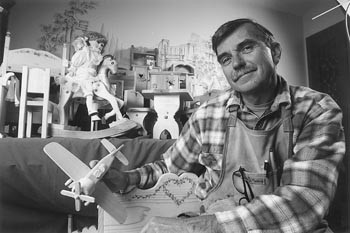
Santa’s Helper: Petaluma toymaker Gerry Kyne works wonders with wood.

Our annual guide to thinking globally and shopping locally

Edited by Gretchen Giles

THERE’S MALL-TROLLING, catalog-shopping, flea-marketing, garage-saling, and outlet-hopping. There are the 50 wooden pallets laden down behind the megastore with 500 cases of exactly the same zap gun/video game/sweater dress/hostess tray/golf-lover’s-gift-for-dad. There are lines of impatient people digging the hard ends of credit cards into one another’s shoulders at the checkout, and, finally, by month’s end–there is that unwrapped heap of goods that bears a sharp resemblance to every other unwrapped heap of goods in America.

But there is a way to stop the merchandise madness. Think globally, and shop locally: Purchase original objects of gorgeousness, extravagance, thoughtfulness, utility, and one-of-a-kind-ness made by craftspeople and artisans who are based right here in Sonoma County.

With that local angle honing our seasonal search, we offer below our slice-of guide to some of the possibilities of purchasing items made in Sonoma (County); it would be impossible to catalog them all. Shopping scribes contributing to this article are Dylan Bennett, Gretchen Giles, Paula Harris, Daedalus Howell, Bruce Robinson, David Templeton, and Marina Wolf.

Sound Check

An innovator of musical instruments, Darryl DeVore offers a bevy of alternative melodic devices handcrafted in his rural Petaluma workshop-studio. (Experimental music enthusiasts remember his inclusion in Bart Hopkins’ book and CD homage Gravikords, Whirlies and Pyrophones.)

“I bring these musical instruments to life, so each one is engendered with an individual voice that speaks,” explains DeVore. “There is no mass production, each one is a one-of-a-kind and made on the premises.”

Wind Wands, DeVore’s invention, produce the buzzy bass of a light saber when sliced through the air or twirled. Constructed of sturdy wooden dowels, hand-carved adjustable bamboo bridge, and thick rubber-bands, Wind Wands can be had for $10 each.

Capture the holiday spirit with DeVore’s Spirit Catchers, an advanced form of Wind Wand swirled from a string, with pitch variance achieved through speed, creating a drone like a didgeridoo but without the player’s need to master circular breathing. Produced in a limited edition, Spirit Catchers can be caught for $15 apiece.

For the neo-primitive flautist, DeVore offers handmade reed-cane flutes for a song ($5), as well as “in-blown” and transverse bamboo flutes from $10 to $50.

Bootoos are tunable bamboo stamping tubes (hifalutin, musicologists identify them as “percussion aerophones”) fashioned from finger-holed bamboo and waxed nylon-thread bands with “rasping strips” scored on their sides. They produce an affably colored pop when stuck on dense surfaces such as concrete, trees, or knees. Sold in pairs, they range from $10 to $20 depending on size.

DeVore also produces wooden-bowl hand-drums in a variety of sizes. Drums are made of goatskin heads encircled by vividly gradated woven Guatemalan bands, and range from $15 to $75 each.

“These materials speak to me,” he says. “I have a dialogue with the future voice of the instrument.”–D.H.
Sing along. Contact Darryl DeVore at 778-0729.


Michael Amsler

Rabbit Droppings: Trust a bunny to have come up with an aphrodisiac.

Bunny Love

Why, it’s almost a fact: Fourteen out of every 10 people love chocolate. It’s the ultimate anti-depressant, a guaranteed aphrodisiac, a dark addiction, an earthly ambrosia.

“On a dark and rainy night, chocolate makes you feel really good,” rhapsodizes Mark Lardner, the perky manager of Peter Rabbit’s Chocolate Factory (who sounds as if he’s been on a rampant quality-assurance binge at the assembly line). “Just yourself and a truffle is an evening for two! It’s part of the holiday feeling of indulgence,” he chortles.

Family-owned and locally operated for over a decade in Sonoma County, Peter Rabbit specializes in handmade chocolates, crafted the old-fashioned way with no preservatives, just local products like Clover-Stornetta butter and Lake County walnuts. This year’s most popular gifts include truffles in mouthwatering flavors like raspberry, Irish cream, and double dark amaretto; and gingerbread-house kits featuring gingerbread from Santa Rosa’s Lotus Bakery. These baked homes are ready to assemble and then to decorate with bags of Peter Rabbit candies, bien sûr.

Gift prices vary. An elaborate wicker-sleigh gift basket crammed with goodies costs $300, while a piece of licorice for a stocking stuffer will set you back a nickel.
–P.H.
Peter Rabbit’s Chocolate Factory, 2489 Guerneville Road, Santa Rosa. 575-7110. Peter’s goodies are also available in Blue Abbey Antiques and Ace Hardware in Santa Rosa, Kozlowski Farms in Forestville, Green Valley Farm in Sebastopol, and even at the UPS station at Santa Rosa Packaging!

Wood He Could

There’s no way around it: Plastic toys–even really cool plastic toys–just don’t clank and clunk together with the same satisfying musicality as toys made of wood. Give me the clickety-clack of a little wooden train over the zings, zaps, and computer-chipped wisecracks of a Buzz Lightyear any day. Gerry Kyne, a retired Petaluma auto mechanic, understands. Over the last few years, he’s transformed his garage into a veritable Santa’s workshop of delightfully old-fashioned, handcrafted, thoroughly wooden playthings: trains, planes, swords and shields, doll beds, doll chairs, doll tables, and doll-everything-else.

Reasonably priced–from small doll furniture pieces for $4, to $11 swords and $20 trains, up to hand-decorated doll wardrobes at $100–the toys are all made of bright, clear-coated pine wood and are deliberately intended to become family heirlooms.

“Someday,” Kyne says, “the kids who get these toys will be handing them down to their own kids. That’s the idea, anyway.”–D.T.
Call 763-8893 for an appointment to view Kyne’s Woodcrafts.

I Kiss Ibis

If Batman’s Bat Cave had a section for mountain bikes, it would resemble the workshop at Ibis Cycles in Sebastopol. Six-ton machine tools rest on a hard gray floor; psychedelic rows of freshly painted bike frames hang from the rafters; and a platoon of skilled, youthful, cycling fanatics never stops moving. At Ibis they call it the “megafactory,” because it’s so small, a place where a few dozen employees manufacture a few thousand bicycles each year.

Ibis bikes are not cheap, but they’re known as some of the very best machines you can ride. OK, so not everybody needs a $6,000 titanium Bow-Ti, an alpine two-wheeler so high-tech and sexy it got written up in GQ and International Design magazines. Ibis has orders for this radical ride simply to adorn the window displays of fashion boutiques in Milan, Italy.

“It’s a ride like no other,” asserts company founder Scot Nicol. “Full suspension, completely cutting edge, and lightweight at 23 pounds.” Nicol credits his “big-brain” bike designer John Castellano, a former Hughes Aircraft engineer, as the intellectual father of the Bow-Ti.

Nicol says customers for the 100 Bow-Ti bicycles built last year range from obsessed working-class riders to wealthy professionals and even movies stars like Robin Williams.

Nonetheless, a more realistic choice for the mountain bike fans is the Ibis Mojo ($1,850), “the Stradivarius of mountain bikes,” in the words of Healdsburg dentist and mountain-bike racer Roger Bartels.–D.B.
Ibis Cycles bikes are available at Dave’s Bike Sport and at the Bike Peddler in Santa Rosa, and at Gianni Cyclery in Occidental.

A Life Less Ordinary

The Random Order store and workspace housed in Santa Rosa’s Juilliard Park area provides the perfect pick-them-up for the discriminating gift givee. Featuring arty items, many of them made by artists whose studios ring the back of this former transmission shop, Random Order has everything from thickly painted whimsical furniture to T-shirts printed on-site by Steve Milton and Valerie Randall, to earrings, papier-mâché bowls, South African artifacts, small clay salt-and-pepper dishes with preciously small serving spoons, Pisces-shaped napkin rings, and circular paper ornaments adorned with faces bearing rhinestone-studded foreheads.

These off-the-beaten-path items, including journals blanked with handmade paper and a grinning metal crocodile whose ribs house CDs, are priced within the ordinary means of ordinary people but offer gift options that are decidedly out of the ordinary.–G.G.
Random Order, 312 South A St. 575-4135.

Oh, Nuts!

The open fire and the Mel Tormé music are up to you, but Green Valley Chestnut Farm can help get things roasting in the proper seasonal spirit. Their organically grown Colossal variety chestnuts are available by mail order anywhere in the country for just $3.95 per pound.

“It’s interesting how many people want them, but can’t find them,” observes Karen Dabel, whose husband, Greg, is the chestnut nut.

The Dabels’ unusual crop was suggested as an agricultural experiment by the county farm adviser, and after planting multiple varieties, they have settled on the ones that grow best amidst their even more numerous types of apple trees. The chestnut, by the way, is not really a nut, but an odd sort of overgrown grain. The natural sweetness chestnuts attain when cooked results from the conversion of starches to sugars. They’re best while still hot, which only enhances their appeal after Jack Frost has been nipping at your nose. Now where’s that turkey and some mistletoe …? –B.R.
Green Valley Chestnut Ranch, 1150 Green Valley Road, Sebastopol. 800/214-2005.


Rich and Mellow: Healdsburg luthier Tom Ribbecke uses rare and ancient woods.

Photo by Janet Orsi


Guitars Made to Order

Jim Surles’ red-brown eyes sparkle behind his thick red beard when he talks about why he makes custom guitars. “The biggest joy I have is not just building a guitar, but more in working with a musician to create a guitar with an amazing voice, and sharing in that. Ultimately, you can play one note and kill everybody if that note has a certain quality.”

At his unmarked shop next to Zone Music in Cotati, Surles makes a couple dozen solid-body electric guitars each year in a few rooms that qualify as a tinker’s fantasy: screwdrivers, clamps, drill bits, templates, precision power tools, and scraps of luscious woods like Brazilian rosewood, Honduran mahogany, and local walnut. He crafts guitars for regular folks and for professional musicians like Terry Haggerty of the Sons of Champlain, Garth Webber of Miles Davis fame, bassist Tony Saunders, and Steve Kimock of Zero.

As a luthier in Sonoma County, Surles is in good company. The area is rich in custom-guitar builders for simple reasons like the predictably low humidity and the presence of Luthier’s Mercantile in Healdsburg. Todd Taggart, president of the guitar building supplies company, estimates 100 guitar makers and repair people work in here.

Surles’ guitars run from $1,200 to $3,000, and while you can also buy a great guitar from a mass manufacturer for that price, the difference, Surles says, is the custom fit. “It’s all to your liking, a certain neck shape, thickness, fret size, color. You pick it up and you’re home.”

The difference is the “intuitive attention to every detail,” in the words of Sebastopol guitar maker Peter Dragge, who calls his craft “a luxury and a crusade.”

Some of Sonoma County’s luthiers, like Steve Klein, whom Dragge describes as the “archetypal innovative luthier of the century,” clearly are not an obvious phone call for an inspired amateur guitar player with an unfulfilled dream. Klein makes about 14 guitars a year, costing $10,000 each, for stars like Joni Mitchell and Steve Miller. Many guitar makers, however, are much more affordable. So when it’s time to treat yourself to the ultimate six-stringer, check out a custom job by your local luthier.–D.B.
A highly arbitrary list of Sonoma County guitar makers includes Peter Dragge of Sebastopol, acoustic guitars for studio guitarists (823-5370); Steve Klein of Sonoma, acoustic guitars (938-4639); John Knutson of Forestville, portable upright electric basses (887-2709); Richard Prenkart of Sebastopol, classic nylon-string guitars and flamenco guitars (829-6719); Tom Ribbecke of Healdsburg, acoustic guitars and electric arch-top jazz guitars (433-3778); and Jim Surles of Cotati, electric guitars and basses (664-8177).

Get Amped

Tall, lanky, and definitely heavy-metal, guitarist John Marshall has the most rocking day job in Sonoma County. The seemingly mellow guitar picker gets to play on an endless line of brand-new amplifiers as a quality-control dude for Mesa Engineering in Petaluma, home of the fat ‘n’ full sound of Mesa/Boogie vacuum-tube guitar amplifiers.

“It’s not the best practice,” concedes Marshall, “but it keeps your fingers loose.” Secluded in a soundproofed room, this former equipment technician for the band Metallica riffs continuously on some of the world’s finest amplifiers in what has to be one of the world’s more unique assembly-line jobs.

Mesa/Boogie’s niche is vacuum-tube amps. The company never wavered from this fundamental technology as solid-state electronics became standard in the amplifier industry. Why? Simple: the character of the sound, that warm sonic texture only a tube can deliver. “Tube amps give a fatter spectrum of sound,” explains a local road-tested musician. “The highs are crisp without the cutting edginess of solid state. The lows have a much broader dynamic range and a better response to the variation of attacks on the strings.”

Entry-level amplifiers from Mesa/Boogie start at $400, and full-on, blasting, professional-level amplifiers at $1,600.

“Our stuff is really loud and really powerful,” says Mesa/Boogie vice president Jim Ashow. Ashow firmly declines to recite the roster of rock stars playing his gear, choosing not to differentiate between big stars and lesser-known working musicians who rely equally on Mesa/Boogie products and service.

But the story tells itself. Framed photos celebrating a 25-year retrospective-edition amplifier feature the young Keith Richards, Peter Townshend, and Carlos Santana. Such a heady following is no accident. A complete quality-control tag requires 12 separate signatures. Testing includes “burning in” each set by leaving it on for few days. Then each tube gets a whack from a hammer handle to ensure its integrity. “We don’t kid-glove it out the door,” says Ashow. “On the road with a rock band it has to work every day.”–D.B.
Mesa/Boogie amplifiers are available at Zone Music in Cotati. Mesa Engineering is located at 1317 Ross St., Petaluma. 778-6565.

Dried Good

You could call some disinterested 800-operator in a distant time zone to get a wreath of Sonoma County dried flowers, or you could make a local call directly to the source. That would be Bennett Valley Farms, which, despite the name, is located in a rustic valley just west of Forestville.

On five fertile acres along Green Valley Creek, Alan Siegle and Barbara Friedman grow garlic, larkspur, statice, yarrow, lavender, sage, and numerous other herbs and flowers, many of which are dried and incorporated into elegant wreaths and centerpieces. Friedman, who designs most of their creations, and Siegle began farming together as a hobby two decades ago while they were SSU students, and have been pleasantly surprised to see their business grow into what they proudly proclaim to be “the biggest UPS shipper in Forestville.”

Their products are featured in such nationally distributed catalogs as L.L. Bean, Real Goods, White Flower Farm, and Calyx Carolla, but when the orders come in, they are drop-shipped directly from the farm. The goods are also sold through local gift shops and craft shows, and Friedman frequently teaches wreath-making workshops at the farm and other venues around the county. Bay leaf wreaths are a popular variation on her circular theme this time of year. On-site sales are not a big part of their business, Siegle says, but visitors are welcome all the same.–B.R.
Bennett Valley Farms, 6797 Giovanetti Road, Forestville, CA 95436. 887-9557.

Punx Not Dead at Mom’s Head

Vivien Hillgrove originally described her herb farm, Mom’s Head Gardens (named after the deceased Mom-the-cat), as “experimental punk farming,” a remarkably apt phrase for this half-acre garden in rural southwest Santa Rosa that gets flooded every winter and is fertilized solely through the anarchistic efforts of free-range ducks, chickens, and a stunningly unkempt rabbit.

From spring until late fall, plants spring up happily wherever wind or water send their seeds, and paths weave through blowsy beds of herbs in all states of growth and decay, so that you can see exactly what you’re getting from the small but comprehensively stocked nursery.

This year the nursery is closed for the winter more firmly than usual while Hillgrove fights some zoning ordinances that might prohibit tours of the garden. But the annual herbal craft sale, scheduled for Saturday-Sunday, Dec. 13-14, will go on as planned, and you don’t want to miss the uniquely accessible spirit of Mom’s Head at what Hillgrove is calling a “herbal rave,” with locally made herbal crafts and products, along with perennials and seeds from the garden.

P.S.: Mom’s Head urgently needs a holiday gift of its own, with leads to a retail space in Sonoma County and letters of community support.–M.W.
Mom’s Head Gardens, 4153 Langner Ave., Santa Rosa. Call for sale location, since “we won’t know where it will be ’til the last minute,” says Hillgrove. 585-8575.


Michael Amsler

Feat of Clay: Ceramicists Leslie Gattman and Gene Frank specialize in Judaica.

Little Tops That Spin

Collectible dreidels? You bet. In the four years that Gene Frank and Leslie Gattman have been making the specialized Hanukkah four-sided tops, the dreidels have become one of the hottest items in the 20-year history of their Ceramic Judaica business.

But the husband-and-wife team also produces a full line of traditional and ceremonial items, including Seder plates and Kiddush cups, as well as goblets, candleholders, and spice boxes. Most of their custom designs are hand-painted, and some are also hand-carved with delicate relief figures. Unique creations include the “Endangered Species Charity Box” and the kid-friendly Noah’s ark menorah. “We try to include some content, so there’s something more than just a nice design,” Frank says. They ship the lion’s share of the production from their home-based business to gift shops and loyal customers on the East Coast, but they do maintain a modest gallery area for on-site sales by appointment.–B.R.
Ceramic Judaica 7410 Poplar Ave., Forestville, CA 95436. 887-2833.


Michael Amsler

Twisted Mister: Bonsai expert Keith Pratt grows vineyards in the miniature.

Bonsai!

Face it: You’re not likely to ever own a vineyard, let alone give one to someone. But now it’s possible to get a little piece of wine country for less than the price of a case of good wine. And you won’t have to clear away anything to make room for it, except the corner of your desk.

Keith W. Pratt at Petite Vines in Healdsburg has been quietly training bonsai grape varietals for three years now; the fruits of his labor fit compactly into two medium-sized greenhouses at the unassuming complex just west of Healdsburg. But these gnarly little vines, which actually do produce a small amount of fruit, are hitting it big through catalog sales with the likes of Gump’s, Smith and Hawken, and International Wine Accessories.

You can avoid the middleman and order direct, starting at a mere $60 for a standard bonsai, plus shipping and handling. Young bonsai might look a little stumpy to the unimaginative, but remember that these vines should last for generations, gaining in character as they age. Some of the pricier specimens, in fact, have so much character that they look ready to creak out of the pot and start singing, à la Little Shop of Horrors.

Some people seem to experience irrational anxiety when faced with the prospect of caring for a bonsai. Fear not, Pratt says, it’s easy, especially since grapevines are accustomed to droughty conditions from time to time. And directions are included.–M.W.
Petite Vines, 766 Westside Road, Healdsburg. 433-6255.

Aloha, Sonoma County

Need a break from all that elegant wine country cuisine? How about something Hawaiian? Just pull out your copy of Mama Annie’s Magic Maui Cookbook (Cleall Publishing, 1996) and turn to a favorite recipe–“No Ka Oi Pork Salad” or “Turkey Cutlets with Lychee Nuts” maybe, or perhaps “Makawao Meatballs.”

The instructions are straightforward and easy to follow, and the ingredients are locally obtainable. “There are a few Asian types of things,” acknowledges the author, a new arrival to Sonoma County who is better known as Andrea Cleall, “but there’s nothing you can’t get.”

The author of three successful children’s books before she set her word processor up next to the food processor, Cleall takes full credit for all the recipes, having developed them over 40 years of cooking for six kids. “I took a lot of the ones that I had liked enough to write down over the years,” she says, “and just gave them an island twist, a kind of tropical feel.” Cleall is also a quick study in the kitchen. Soon after unpacking in her new home near Sebastopol, she put together an apple pie that captured second prize at this year’s Gravenstein Apple Fair.–B.R.
Magic Maui Cookbook is available at Copperfield’s Books or directly from Cleall Publishing, 612 Petaluma Ave., Sebastopol, CA 95472. 824-9976.

Dressed Up

“This is our dream,” says Annie Reis, co-owner of Dressmaker, a Bodega clothing shop that specializes in custom sizing and tailoring, as she gestures around her boutique. Housed in a old butcher shop, Dressmaker still has the original door to the walk-in freezer.

Dressmaker is also a dream for hard-to-fit women who have a tough time finding wearable, off-the-rack clothing.

Owners Reis and Yeunny Mears (who previously designed for the Pastorale clothing store in Freestone and Santa Rosa) provide one-on-one customer attention in their 6-month-old store. Their workshop-boutique is easy to spot with its two sewing machines in the front window and colorful fabric displays inside.

Mears designs all the clothing and creates her own patterns. Using high-quality natural fibers like silks, organic cotton, and 100 percent censel (a washable new fiber made from wood pulp and having the drape and texture of fine suede), Mears will custom-make garments within two weeks–and she won’t charge extra for custom sizing.

Customers can call and order fabric swatches, and Mears will keep measurements on file for future reference. Prices range from $35 for a vest to $200 for a full outfit. In addition, Reis makes a line of custom jewelry using semiprecious stones, handmade glass, crystal, and sterling silver. Gift certificates are available.–P.H.
Dressmaker, 17175 Bodega Hwy., Bodega. Open seven days a week. 876-9877.

Oil Good Things

There are lotsa good olive oils out there now, but there’s only one at the Santa Rosa Farmers’ Market, which is where I got my first taste of V.G. Buck’s oil and olive-based tapenades. It was a strange thing to be tasting at 9 a.m., but I gamely dipped a piece of bread in the green-gold liquid and popped it in my mouth.

Mmm-mm, good! After tasting the wonderful tapenades–more forceful, but equally delicious–I was hooked.

So are a lot of other people, according to Deborah Rogers, co-owner of the Kenwood-based company. “We get calls every day from people who tasted one of our products somewhere and want to know where to get more,” she says.

Locals are in luck, as the award-winning oil and spreads (two golds and a silver medal at the 1997 Harvest Fair for the tapenades, and a silver medal for the oil) are available in many stores, as are the delicious balsamic vinegars, with prices ranging from $4.50 for delicate 5-oz. bottles to $19 for more substantial containers. Items can also be ordered directly (checks only at this point).

The Olive Press in Glen Ellen offers V.G. Buck tapenades in some of its gift boxes, but you can create the same effect for less by purchasing the bottles individually and wrapping them up yourself.–M.W.
V.G. Buck, P.O. Box 1037, Kenwood, CA 95452. 833-6548.

Shadows and Light

When Dave Locatell Jr., a popular bass player with numerous Sonoma County bands, was felled by a heart attack last summer while waiting to take the stage at Konocti Harbor, he left his 5-year-old son fatherless–but far from friendless.

An immediate outpouring of concern and support from other musicians led to a widely publicized benefit concert and memorabilia auction Nov. 2, and the creation of a special tribute tape, both of which are endowing a trust fund for the family.

Shadows on the Wall (Sounds Too Good to Be True Records) features six heartfelt original songs by Locatell’s friends and musical colleagues, tracks that honor the man and his memory while expressing the artists’ sense of loss.

Far from depressing, this outpouring of affection is sincere and uplifting, and leavened considerably by Buzzy Martin’s scorching “Monday to Monday,” a hard-rocking tribute expressed in terms that might have been used by Locatell’s favorite little old band from Texas, ZZ Top.–B.R.
Shadows on the Wall is available for $10 at all Long’s Drugs in Sonoma County and Novato through the end of the year.

Hidden Jewels

Even four guesses may not be enough for you to identify the location of the county’s largest concentration of budget jewelry outlets. Of course, it’s tiny Graton, the west county hamlet that has been enjoying a modest renaissance in recent years. Within just a few blocks of one another, three independent shopkeepers offer a variety of imported and handmade jewelry on the premises.

Richard Wolf’s Far Fetched Jewelry (3140 N. Edison; 829-1867) specializes in original designs, most of which are then manufactured in Mexico. At the Jewelry Factory Outlet (3137 Mueller Road; 823-7372), owner Larry Capelis says, “We sell jewelry hand-made here in Graton and around the Pacific Rim.” And at the low-profile Two Gals with the Gift (3195 Gravenstein Hwy. N., at 2 Guys with a Big Truck; 824-9778), Chris Ricke has a wide selection of jewelry pieces, so customers can choose their own combinations on the spot.

All three shops sell their wares to major department stores–Nordstrom, Saks, Macy’s, etc.–so you could easily pay much more for the same goods; maybe you’ve already done that. Conversely, you can save your pennies and make the scenic drive out to Graton to check out the options at the source. One guess should do it this time.–B.R

From the Dec. 4-10, 1997 issue of the Sonoma County Independent.

© Metro Publishing Inc.

Sierra Club

Fresh PrinceNo Apologies: Since taking the helm of the nation's largest environmental group last year, 24-year-old Adam Werbach has helped recruit a younger legion of activists.Photo by Michael AmslerThe Sierra Club's young president Adam Werbach heralds a new charge for environmentalistsBy Kelle Walsh"I wish I could mint time," Adam Werbach mumbles as we nearly trot from the Sierra Club...

The Scoop

Shady DealsBy Bob HarrisTHIS SPACE predicted over six months ago that Elizabeth Dole would run for president in 2000. Why? Because Bob Dole has never made a habit of giving a political favor without collecting something in return. And in accepting $300,000 from tobacco lobbying firm Verner, Liipfert and forwarding it to Gingrich only six days later, Dole took...

Wine Gifts

Runneth OverJug of Wine & Thou: Sometimes that ain't enough--but a $9.4 million ranch will do. Photo by Michael AmslerGifts for sippers, swillers, swirlers, and other imbibersBy Bob JohnsonHAVE YOU EVER noticed how certain colognes smell wonderful on some people, but ghastly on others? The same is true of wine. And while we're not suggesting you pour wine...

Talking Pictures

Record BreakerPeter C. CookGoo goo gaga: Robin Williams absents his mind from 'Flubber.'Just how many fart jokes does it take to make 'Flubber' a winner?By David TempletonDavid Templeton takes interesting people to interesting movies in his ongoing quest for the ultimate post-film conversation. This time around, he phones up Mark Young--editor of The Guinness Book of World Records--for a...

Spins

Latin BeatCuba is Smokin': All roads lead to the Caribbean hot spot.Hot sounds from HavanaBuena Vista Social Club Buena Vista Social Club(World Circuit/Nonesuch)Papi OviedoEncuentro entre Soneros(Candela/Tinder)THOSE LUSH LATIN SOUNDS continue to inform pop music--witness the south-of-the-border charm of Paul Simon's new Songs from the Capeman (Warner Bros.), the score to Simon's acclaimed Broadway musical and the folk-rocker's first new...

Medical Marijuana

Medical MarijuanaBy Greg CahillWITH LITTLE FANFARE, the Marin County Board of Supervisors last week approved a plan to issue certificates to help patients verify that they are authorized to cultivate, possess, and use medical marijuana. Starting next month, Marin's Department of Health and Human Services will provide a Certificate of Independent Verification for $25 to any county resident who...

Rage Against the Machine

Smells Like Gun GreaseRage On: You don't have to agree with their radical politics to appreciate the raw power of Rage Against the Machine.Rage Against the Machine keeps 'em honestBy Sal HepaticaDROP DA BOMB! It's only fitting that the year started with a big musical bomb--U2's disappointing and much overhyped POP! album--and ended with the explosive eponymous video release...

Spins

Two to TangoNew CDs celebrate mystery of the tangoBy Greg CahillYo Yo MaSoul of the Tango: The Music of Astor PiazzollaSony ClassicalVarious ArtistsThe Tango LessonSony ClassicalIT'S MILONGA TIME. From the bars of Buenos Aires to the concert halls of America, audiences throughout this century have embraced the tango. Actually, the roots of the tango--burning with Latin passion and driven...

Godspell

God Fearin'Day by Day: Lois Pearlman and Ross Foti appear in River Rep's 'Godspell.'River Rep's 'Godspell' is gawdawfulBy Daedalus HowellIN AN EFFORT to remind practitioners of Christmas that the holiday wasn't invented by Hallmark, River Repertory Theater (under the direction of Lee Meryl Senior) has dusted off Godspell--rock-'n'-roll evangelists' John-Michael Tebelak and Stephen Schwartz's flower-child, musical riff on the...

Sonoma County Gifts

Made in SonomaMichael AmslerSanta's Helper: Petaluma toymaker Gerry Kyne works wonders with wood.Our annual guide to thinking globally and shopping locallyEdited by Gretchen GilesTHERE'S MALL-TROLLING, catalog-shopping, flea-marketing, garage-saling, and outlet-hopping. There are the 50 wooden pallets laden down behind the megastore with 500 cases of exactly the same zap gun/video game/sweater dress/hostess tray/golf-lover's-gift-for-dad. There are lines of impatient people...
11,084FansLike
4,606FollowersFollow
6,928FollowersFollow