
Dessert Chefs’ Cravings

0

Taste Buds


Janet Orsi

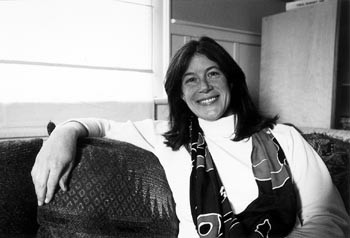
Mouth Watering?: If it’s chocolate and you’re a dessert chef, wouldn’t you really prefer a nice salty or fatty treat?

Local dessert chefs get salty over sweets

By

Talking Pictures

0

Kickin’ Butt

By David Templeton

Writer David Templeton takes interesting people to interesting movies in his ongoing quest for the ultimate post-film conversation. This time out, he goes out in search of a guest with whom to see the butt-kickin’ environmentalism movie Fire Down Below.

“You’ve reached the Press Office of the Environmental Protection Agency, Washington, D.C.,” explains the slightly garbled voice-mail recording I’ve just been connected to. “Please leave a short but detailed message explaining your request, and we’ll get back in contact with you as soon as possible.” Beep.

In my experience, “brief message,” is routinely a secret code meaning, “Speak fast because you’ll be disconnected in 20 seconds whether you’re finished or not.” What I have to say is not easily confined to such a limit.

“Hi, David Templeton, Talking Pictures,” I say in what I hope will be an understood verbal shorthand. “Fire Down Below. Steven Seagal movie. Pretty sure you’re aware of it in Washington. Seagal plays a self-described “butt-kickin’ EPA agent” who goes undercover as a church-sponsored carpenter to investigate the illegal dumping of toxic wastes in the Appalachian mountains. Kentucky. I’m looking for EPA agents who would identify themselves as belong to the butt-kickin’ variety–I assume someone in the agency would answer to that description–to see the movie in question and chat with me about the environmental and social issues that underlie the film’s…”

Beep.

I hang up, crossing my fingers that a butt-kickin’ agent of the government will be getting back to me soon. I lean back, and pick up a review of the film, in which the phrase “butt-kickin’ EPA agent” is followed by a parenthetical question mark–roughly the same reaction I’ve gotten with every contact attempt I’ve made so far. And if not that confused, question-mark response, then it’s been outright laughter. Laughter, apparently, at the very notion of a butt-kickin’ EPA agent. On the other hand, perhaps they’re only laughing that someone is trying to take a Steven Seagal movie seriously.

But why not? Its star might not be able to act, the plot is outrageously cartoonish, and the dialogue is some of the worst in recent display, but the film, allegedly, is based on fact. (?) The screenwriter, Jeb Stuart, spent his college summers rebuilding porches in Appalachia during a highly publicized EPA investigation of companies that paid impoverished farmers to allow toxic chemicals to be dumped on their land. Stuart attempted for years to work those experiences into a film and finally locked into the idea of a ferocious, martial arts-trained EPA enforcer doing battle with the poison-pushing bad guys.

“We do have enforcement officers,” affirms a certifiably feisty hazardous-materials specialist who prefers to remain anonymous, when I call the State Department of Health Services, an agency that works in concert with the EPA on occasion. “We have peace officers who wear sidearms, who do undercover work, who have to undergo rifle range training. But they are the nerdiest people. They’re nerdier than our engineers are. It’s weird. They do go in the field, but mainly, I think, they just try to get disgruntled employees to snitch on their bosses.”

Hmmmm. Well, might some of the “nerds” qualify as butt-kickin’ nerds?

“We had one fellow visiting our Sacramento office last week,” Anonymous replies. “I overheard him on the phone, yelling, ‘Are they dumping right now? I’ll be right there!’ Then he slammed down the phone and ran out of the office. Another guy is pretty much the typical cop type. To him, all the violators are either ‘scum bags’ or ‘Adam Henrys.'”

Adam Henrys (?)

“Assholes,” I am informed. “A.H.! Adam Henry.”

I see. Well, the surliness of the name-calling is certainly appealing, and I’m sure Steven Seagal might add a certain feral malevolence to the phone-slamming. Unfortunately, these guys don’t sound quite what I’m looking for.

The EPA still hasn’t returned my calls, and my subsequent attempts with various state branches of the organization have similarly failed to incite a response. I seem to be striking out here.

I e-mail Ross West, a science writer at the University of Oregon in Eugene who just happens to be a film reviewer as well. I’m crossing my fingers that, living in a certified hotspot of the war between the environment and industry, he knows of someone I can talk to.

“Don’t know any butt-kickin’ EPA agents,” West replies. “How about an enviro-activist or vigilante? Good luck.”

Enviro-activist? Well … what the hell. If the EPA can’t offer me a butt-kickin’ agent, I’ll call one of the world’s most prominent butt-kickin’ environmentalists.

“I don’t go to movies,” admits David Brower, past president of the Sierra Club, founder of Earth Island Institute, and central figure in John McPhee’s groundbreaking book Encounters with the Archdruid. “As for the EPA, I’ve only really talked to them twice, once in Washington and once here in California. Both times I suggested that–since they needed better quarters–they should just move into the Pentagon and let the armed forces find some other place to shack up.

“In the environmental movement, our job has been to sue the EPA to get them to do what they’re supposed to do. That was a few years back, though. They’re working pretty hard now. By and large, I’m very happy that we have an EPA.”

And how about the aforementioned tendency of people to scoff or laugh at the mention of an EPA agent who cites the Adam Henrys of the world, then kicks the crap out of them. On what does Brower base this trend?

“I don’t understand that, I really don’t.” he chuckles, then adds, “People usually laugh at the environmentalists.”

I’ve just about given up on talking to an actual representative of the EPA when the phone rings. David Schmidt, of the EPA’s San Francisco office, has decided to respond, mostly out of curiosity.

“I’m looking for butt-kickin’ EPA agents,” I wearily explain once more. “Someone like the guy in Fire Down Below. Know anyone like that?”

A long pause, followed by “Without having seen the film in question, it would be difficult to reply. However, it seems safe to say that the movie sounds … greatly unrealistic.” Another pause, then, “Wait a minute.” Schmidt returns 30 seconds later.

“Let me read you this,” he says, and proceeds to read an EPA press release from July. In the driest possible language, the report describes an investigation–which began with a routine fire department inspection–that resulted in the conviction of two warehouse operators who were found to be illegally storing toxic waste, along with three tons of explosives, a mountain of artillery shells, and over 100 rocket motors and warheads. It took three years to gain a conviction.

“That,” Schmidt concludes, “is the most sensational case I’ve ever come across in my years at the EPA.” Not exactly a butt-kickin’ scenario, though, is it? “Maybe not,” he replies, “but it’s about as exciting as it gets around here.”

Web exclusive to the Sept. 17-24, 1997 issue of the Sonoma County Independent.

© Metro Publishing Inc.

Spins

0

Star Time

The music of Kurt Weill revisited; T.S. Monk carries the family torch

By Greg Cahill

Various Artists
September Songs: The Music of Kurt Weill
Sony Classical

IN 1985, producer Hal Willner–then the musical director of Saturday Night Live–launched the tribute album craze with Lost in the Stars (A&M), an obscure compilation that featured an all-star lineup of mostly rockers covering the works of Kurt Weill, the German-born composer of light operas and Broadway musicals.

A couple of years ago, Hallner declared that the whole trend had become so insipid he was sure he’d never produce another tribute compilation.

Well, then again. . . .

Willner has returned to the tried-and-true tribute formula he helped create, and, sure enough, the subject is the haunting work of Kurt Weill. Actually, this time out Willner’s compilation is a soundtrack to a new film on the composer by director Larry Weinstein, but with the likes of gothic rockers Nick Cave and PJ Harvey, respectively, crooning their ghostly way through “Mack the Knife” and “Ballad of the Soldier’s Wife,” who would know that this isn’t just a thinly veiled excuse to rework Lost in the Stars (covered here by Elvis Costello, by the way)?

Once again the idea of placing big-name pop stars among the murky street urchins, hustlers, and hookers who populate the smoky cabaret settings of Weill’s and collaborator Bertolt Brecht’s best songs sounds better on paper than in real life. That’s not to say that there aren’t some gems: the gospel-oriented Persuasions deliver the goods on “O Heavenly Salvation,” and opera diva Teresa Stratas–not exactly a household name in pop music circles–steals the show with an gut-wrenching rendition of “Youkali Tango.”

But you know that Lou Reed, who gives a very dark reading of the title track, could have stayed home and caught up on his beauty rest when the two scratchy archival recordings of Lotta Lenya–Weill’s wife and longtime stage star–sends you scrambling for more to that old Lotta Lenya Album (CBS) greatest-hits compilation.

Now that’s the music of Kurt Weill!

T.S. Monk
Monk on Monk
N2K

AS THE SON of jazz piano bebop legend Thelonious Sphere Monk, drummer, arranger, and bandleader T.S. Monk walks in a mighty long shadow. This dazzling new CD is a remarkably strong statement of purpose that finds the younger Monk paying homage to his father and standing tall.

The disc, executive produced by pop music heavyweight Phil Ramone, comprises swinging versions of nine of the elder Monk’s best-known compositions–“Little Rootie Tootie,” “Dear Ruby,” et al. It also features some of the hottest soloists on the jazz scene, including pianist Herbie Hancock, trumpeters Clark Terry and Roy Hargrove, saxophonists Wayne Shorter and Grover Washington Jr., vocalists Nnenna Freelon and Dianne Reeves, and bassists Ron Carter and Christian McBride. Impressive company. In arrangement after arrangement, Monk shows that he is up for the challenge.

Indeed, while Monk has been less than shy about blowing his own horn to the press as a world-class arranger–and he does show great promise–his real forte is bringing together these seasoned veterans and young lions and checking his ego long enough to allow the improvizational wizardry of his guests to come to the fore.

And the rewards are many, from the soaring scat singing of Freelon and Reeves on “Suddenly (in Walked Bud)” to the rousing interchanges between tenor saxophonist Jimmy Heath and trumpeter Arturo Sandoval on “Bright Mississippi.”

This is a real step forward for Monk, who started out playing the guitar and later learned drums after receiving a pair of sticks from Max Roach and full drum set from Art Blakey–quite an auspicious beginning. Monk started his career as an R&B-oriented recording artist. In 1992, he released his first straight jazz album as a leader, Take One (Blue Note), and followed up with 1993’s Changing of the Guard (Blue Note). He won considerable critical acclaim for 1995’s The Charm (Blue Note).

Monk on Monk raises the stakes and heightens the anticipation for the next move by an artist who is establishing himself as a real force in his own right.

From the Sept. 18-24, 1997 issue of the Sonoma County Independent.

© Metro Publishing Inc.
The Scoop

Rest in Pieces

By Bob Harris

THIS WEEK MARKS the 50th birthday of the Central Intelligence Agency. And they’re having one heck of a party. But don’t ask for directions. These are the same guys who couldn’t figure out that Vietnam isn’t Chinese, China isn’t Russian, and Russians aren’t superhuman. And don’t ask when the party’s over. They couldn’t foresee the fall of the shah or the end of the Cold War.

They’re probably not gonna know.

Keep an eye on the parking valets–Contras, Mujaheddin, and Hmong from Laos–or you’ll never know what a police dog might sniff out in the back of your car. And don’t talk to the bouncers. They’re SAVAK, DINA, Guatemalan G-2, and a dozen other “internal security” organizations. Just keep your eyes down on the way in, OK?

Once you’re in the door, stay away from the girls. Hookers are a great way to get blackmail on people. And don’t even think about the punch bowl. Two sips and you might wake up strapped to a gurney with a field telephone clamped to your tongue, a tape loop of dogs barking in your ears, and one of the MK/ULTRA guys chanting the word kill in your face.

If the host says hello, stick to the small talk. Remember, they helped imprison Mandela, knocked off Allende, and targeted De Gaulle and Nehru. These folks don’t exactly do political debate. However, if you’re feeling jaunty and just can’t help yourself, ask politely what the whole shindig is for. Truth is, they don’t know anymore. The last three directors were asked that very question during confirmation hearings, and not one had a coherent response.

But still, the guest list is impressive–world leaders like Noriega, Suharto, and Mobutu; bankers from the Bahamas, the Cayman Islands, and even BCCI. And in the VIP section, see the old guys in the German uniforms? They’re the real big shots, here from the start–fought the Russkies so hard during World War II that the CIA smuggled ’em right in, got ’em good jobs, and even now almost nobody knows about it 50 years later.

Ooops, there, I’ve said too much. Look, enjoy the party. After all, you’re paying for it.

HEY! JUST WHAT EXACTLY are we gonna do about America’s No. 1 problem? It’s a crisis so severe that some people think we should even give up some of our constitutional rights to combat it.

You know what I’m referring to, right? No? Not drugs or crime or the decline of education. I’m talking about our long national nightmare, the one that touches the lives of everyone from Seattle to Maine. Not hunger or poverty or unemployment. Geez, come on–the problem . . .

I’m referring, of course, to . . . paparazzi. Oh. That long national nightmare. Excuse me, but paparazzi are only a problem for people who’ve devoted their whole lives to becoming famous enough to merit paparazzi. They knew the deal going in, and if they don’t like it, they can get a job like the rest of us tomorrow and they’ll be out of the papers in a week.

Yeah, what happened to Princess Di in France was a tragedy. But then, last I checked, France is not part of the United States, and as the French have discovered, making it illegal didn’t stop it anyway. You want laws? We already have laws against trespass and harassment. What else do you need?

Oh, sure, some big thinkers like Sonny Bono say that we can chip off a chunk of the First Amendment just this once, and the rest of it will stay up just fine. But do you really want to potentially give up a newspaper’s right to report on stuff like the Gary Hart/Donna Rice thing or which politician is meeting with which lobbyist, just so George Clooney can feel OK about going to Spago with his shirt untucked?

There’s a better answer. Boycott the sleazebag press–including the major papers and TV networks when they act that way–and give your money and time only to responsible reporting. You’ll put the bad guys out of business and still have a free country.

Gee, a free-market solution. That’s allegedly what small-government types like Sonny Bono are supposed to believe in. Assuming they believe in anything.

I GREW UP WATCHING the Cleveland Browns play football in old Municipal Stadium. You couldn’t have asked for a lamer name for a ballpark. You might as well have called it Ordinary Field or Generic Arena. But so what? We were there to watch a ballgame. Municipal was just fine.

Well, old Municipal Stadium is gone, and so is any chance we’ll ever see a name like that again. The Oakland Raiders’ place is now called the UMAX Coliseum. Riverfront is now Cinergi Field. Candlestick? 3COM Park.

I can’t be the only one who’s getting fed up with having every square inch of American life sold for ad space. We lose something when we surrender Joe Louis for Alltel. I’ll take RFK over RCA, TWA, or ARCO any day.

OK, I know, it’s a free country. If you can, you’re perfectly free to persuade the San Diego Padres into paying you to wear a tonsure and hairshirt. Maybe you can even sweet-talk some Internet start-up into tattooing its website address on your forehead.

And there’s always money to be made by auctioning off the naming rights to our children. “This one, the teenager, is Commodore– he’s our oldest–and these are the twins, Yahoo and Java.”

Now that I mention it, how long do you think it’ll be until somebody actually does that?

From the Sept. 17-24, 1997 issue of the Sonoma County Independent.

© Metro Publishing Inc.

San Francisco Comedy Competition

0

On the Edge


Like a Steele trap: Comic Johnny Steele emcees the San Francisco international Stand-Up Comedy Competition at LBC.

SF Comedy Competition reinvents itself–again

By

Brutality Cases

0


The U.S. Commission on Civil Rights is investigating the following eight cases:

Rohnert Park Police Officer Jack Shields shot and killed Kuan Chung Kao, 33, outside Kao’s home April 29.

A multi-agency SWAT team threw tear gas into a Rohnert Park apartment, which burst into flames and killed Corey Glenn Goodwin, 36, on Feb. 23. Police say Goodwin had barricaded himself in his apartment and was shooting randomly into the street.

Santa Rosa Police Officer Eric Goldschlag fired three shots and killed Salomón Arambula Hernandez, 28, on Feb. 15 at the Coddingtown Exxon gas station. Hernandez had reportedly forgotten to pay and had returned. The clerk called the police, who say Hernandez attacked the officer with a screwdriver.

On Jan. 2, Sonoma County Sheriff’s Deputy Michael Raasch, after chasing Isan Richard Frost, 33, for failing to make a traffic stop in a Sonoma neighborhood, hit him in the chest with a flashlight, fearing that he was reaching for a weapon. Frost fell into a creek and drowned. He was found the next day.

Sonoma County sheriff’s deputies struggled Sept. 6, 1996, with Dustin Harley Clark, 23, who was under the influence of LSD and meth. Sheriff’s Deputy Joe Quinn squirted pepper spray in Clark’s face. Deputies also struck Clark, set the police dog on him, and hog-tied him. Clark went into a coma and died several hours later. His family claims Clark’s death was a result of too much pepper spray.

Santa Rosa Police Officer Jesse Rangle shot and killed Kevin Saunders, 37, in Santa Rosa on Aug. 29, 1996. Police had responded to a call that Saunders had assaulted his wife and was going to kill himself. Police believed Saunders was reaching for a gun. He was unarmed.

Santa Rosa Police Sgt. James Carlson fired three shots and killed Dale Robbins, 40, inside the lobby of the police station on Jan. 29, 1996. Police say Robbins was wielding a steel bar. A grand jury probe later criticized the internal investigation of the incident.

Santa Rosa Police Officer Norman Stevens killed James Jay Hopper, 37, on April 1, 1995, in Santa Rosa after responding to a call of a fight. Police say Hopper had knocked the officer to the ground and had come at him with a length of pipe.

From the Sept. 17-24, 1997 issue of the Sonoma County Independent.

© Metro Publishing Inc.
Police Brutality

0

Deadly Force


Family Tragedy: The police shooting of Kuan Kao, top, has sparked charges of racial discrimination and attracted several major civil-rights investigations.


Outcry over police brutality

By Paula Harris

THE FATAL APRIL 15 shooting of Kuan Chung Kao, 33, by Rohnert Park Police Officer Jack Shields and the seven other police-involved deaths in Sonoma County over the past two years are gaining fervent attention nationwide, including a glimmer of interest from one long-silent local human-rights group.

In new developments disclosed this week, the Independent has learned that the Rev. Jesse Jackson will visit Sonoma County to meet Kao’s widow, Ayling Wu, at an as-yet-undetermined date; state Attorney General Dan Lungren announced during a visit to Santa Rosa this week that his office has opened an investigation into the Kao shooting; Sen. Barbara Boxer, D-Calif., will meet with Wu on Oct. 3; and a second meeting between local law-enforcement chiefs, Bay Area civil-rights groups, and officials from the U.S. Justice Department is set for Oct. 1 to discuss ways to increase racial and ethnic sensitivity among local police.

Kao, drunk and swinging a wooden pole, was shot at point-blank range on his front lawn by an officer who later said he felt threatened by Kao’s “martial arts-style” moves. Critics point out that Kao had no martial arts training and contend that the shooting was racially motivated.

The FBI, the U.S. Justice Department, and, last week, the U.S. Commission on Civil Rights have all stepped in to probe a possible pattern of police brutality alleged in eight separate cases. Yet critics say the response from our own backyard–specifically from the Sonoma County Human Rights Commission–has been strangely absent. “I’m pretty disappointed,” says Nancy Wang, president of the Redwood Empire Chinese Association. “The commission has put this under the table–despite all the action right now, the Human Rights Commission is doing nothing.”

Under investigation by the U.S. Commission on Civil Rights.

Wang–who along with 25 other local civil-rights advocates addressed the Human Rights Commission during its monthly meeting on Monday–believes the commission should help the community organize police review boards.

“The FBI is still doing an investigation, and when that’s completed we can become more involved,” responds the commission’s chair, Phyllis Rosenfield, who denies that the group is skirting the issue. The commission has written to local police officers’ associations for information about training procedures regarding ethnic issues, she says, adding that there has been no reply.

As a result of this week’s meeting, Rosenfield says the commission will hold a public forum next month to address the issue of alleged police brutality. Review boards could have the authority to evaluate allegations of police misconduct and could recommend disciplinary action. But the commission will stop short of making any recommendations to the county Board of Supervisors. “We’re not necessarily advocating one way or another,” explains Rosenfield. “We act as a forum to hear from all sides, including the police.”

Oakland attorney John Burris, who specializes in police misconduct cases and is representing the Kao family, says it’s important for federal officials to evaluate local law-enforcement training and policies “to develop police procedures more consistent with contemporary law-enforcement techniques.”

Sonoma County District Attorney Mike Mullins has said he has never encountered so many deaths involving confrontations with law-enforcement officers in such a short time, but does not see a pattern. However, some observers have pointed out that the string of cases under investigation by the U.S. Commission on Civil Rights began just days after the March 29, 1995, execution-style shotgun slaying of popular Sonoma County Sheriff’s Deputy Frank Trejo, 58, by state parolee Robert Scully. Trejo was the first police officer killed in the line of duty in the county in 20 years. Some wonder if his death didn’t trigger an urge to pay back local criminals.

Mullins says any correlation between the events is pure speculation. “I wouldn’t ascribe anything to that,” he adds. But, attorney Burris says that when an officer is injured or killed, it psychologically affects all officers. “It heightens their sense of insecurity and causes them to overreact to events,” he claims. “I’ve seen times when police officers are injured and other officers retaliate against citizens.”

Police psychologist Wayne Light, who has worked as a consultant for many Sonoma County law-enforcement agencies, says that although an incident such as the Trejo killing makes officers “more conscious of how vulnerable we are,” the eight cases under investigation are merely symptoms of population growth. “We’re no longer a small wine community,” he says. “We’ve hit a population base of over 100,000 and we’re growing very fast,” he says. “While Sonoma County is bursting with new people, the number of felons and disturbed, problematic, and violent people is also going up at a higher percentage.

“It may be a sign of our society.”

From the Sept. 17-24, 1997 issue of the Sonoma County Independent.

© Metro Publishing Inc.

Sexual Harassment

0

Taking a Stand


Michael Amsler

Sign of the times: Oona Risling-Sholl, 16, filed a civil-rights complaint that could have nationwide implications.

Local sex-harassment case breaks new ground

By Paula Harris

I NEVER CONSIDERED myself courageous,” muses Oona Risling-Sholl, 16, running a slender hand through her long, reddish hair. “This has been really hard. I’m lucky enough to have parents who listened, but a lot of my friends have been too scared to say anything.”

Her classmates may have stayed mum, but Oona–a contemplative, artistic girl with delicate features and slight frame–spoke out. As a result, her allegations of sexual harassment at a Santa Rosa school and subsequent lawsuit have packed a punch for school district employees that is being felt throughout the nation.

This groundbreaking case, the first of its kind in the United States, will test whether school officials can be held personally liable for failing to take reasonable steps to stop either teacher-to-student or peer-to-peer sexual harassment. Past cases have held that the school districts, but not the individual teachers and administrators, are legally liable.

Oona claims she suffered both types of harassment five years ago as a sixth grader at Santa Rosa’s J.C. Fremont Elementary School during the 1992-93 school year. She and her parents want to sue the individuals she claims were accountable.

The teenager says she was sexually harassed by a student teacher and by boys in her class. Her civil-action suit alleges that the student teacher fondled her, that male students called her slang terms for “whore” and referred to her body parts as “melons” and “beaver,” and that one boy struck her across the face and told her to “get used to it.”

“[The defendants] had individually failed to protect Oona’s civil rights under Title IX. It was clear they had certain duties that they failed in doing, and also intentionally chose not to respond,” says Oona’s attorney, Desiree Cox. “They never identified the complaints as sexual harassment, which would have triggered their policy.”

Eventually, Oona’s parents sent an official complaint to the Office of Civil Rights in San Francisco. The OCR found severe procedural problems and a hostile environment at the school, says Cox, adding that she hopes the suit will raise awareness. “Hopefully, this will help teachers take their responsibility more seriously, identify sexual harassment, and take steps to stop it.”

Michael Senneff, attorney for the defendants (including sixth-grade teacher and current principal Patricia McCaffrey, former principal Gerald Hill, ex-student teacher Drew Ibach, and director of elementary education Ronald Lundy), did not return a call for comment. However, Bob Henry, legal counsel for Sonoma County Schools and Colleges, says the situation is complex because there are several gradations of liability in federal Title IX provisions. “So it’s a difficult proposition to predict where the law will land,” he explains.

LAST MONTH, a three-judge panel of the U.S. 9th Circuit Court of Appeals in San Francisco unanimously ruled that the Fremont School officials are not entitled to qualify for immunity from the suit, because it was clearly established they had a “duty . . . to prevent sexual harassment of students.” But, a week later, the 11th Circuit Court of Appeals handed down a contradictory decision.

“We’re still studying whether to take an appeal to the U.S. Supreme Court,” says Henry, adding that lawyers, the school district, and the insurance company will decide within the month whether to proceed with an appeal.

A similar case, involving a Petaluma school counselor 18 months earlier, established that the counselor was not personally responsible for failing to prevent alleged sexual harassment. Title IX advocates say that ruling was a warning, and that in the intervening time, the law has become clear enough to implicate individual school officials in current cases.

Oona’s mother, Kate Sholl, claims that after the alleged incidents her daughter became increasingly withdrawn, abandoned her art hobbies, complained of stomachaches, and didn’t want to go to school. When she heard Oona’s claims of repeated sexual harassment and retaliation, Sholl sent several letters complaining about the problem to school officials. She claims that officials told her they would be “on their guard” but didn’t conduct an investigation or write a report. Sholl says that, like most parents, she didn’t how to file a complaint. “I didn’t know there was an official sexual harassment policy and a seven-page form [to complete],” she says.

Linda Purrington of the Petaluma-based Title IX Advocates says one of the main problems is that schools have been suppressing sexual harassment reports. “There are often situations where the school administration does not actually set down complaints on paper, but then everything comes out afterward as more victims come forward,” she explains. “All schools have a sexual harassment policy in place, but there is a tendency to treat sexual harassment as trivial.”

Purrington says it’s important that parents also make a report, documenting the incident, the time, and the date. “The element of documentation is absolutely crucial. In school systems they often know who the problem kids are, but they decide, ‘Let’s not muck up this kid’s record,'” she says. “Sometimes it’s just onerous paperwork. Who wants to be officious and pushy? But it’s crucial, and a dated set of reports becomes a legal document, and a diary is a presentable form of evidence in court.”

Attorney Bob Henry admits there have been problems with schools dragging out complaints and not adhering to procedures. “If they build documentation into the process and build it quickly, they can have a better record to look back on,” he says.

He adds that several school district workshops have advised school officials to act quickly, disciplining or even removing a student, if they become aware of harassment. “I believe the schools in the North Coast have turned an important corner,” he says. “At one time–a year or two ago–there were sexual harassment complaints [within the Sonoma County School District] almost every week. Now, I’m seeing a decline, and administrators are doing a better job of dealing with it quickly.”

Purrington is happy things appear to be changing on the legal front. “We now have tight surveillance in day-care and health-care systems, but schools have escaped the scrutiny. Now the standard of responsibility is getting raised and it’s a good thing,” she observes.

Oona’s father, Ken Risling, agrees: “Children should be given a direct message that there is such a thing as sexual harassment and it will be taken seriously.” If the case goes before the U.S. Supreme Court but is sent back to the Northern District Court, Cox says, it can then be scheduled for trial. She adds that the school district has refused to discuss a settlement.

Meanwhile, Oona has abandoned the public school system and is being home-schooled. She has taken up the cello, regained her interest in art–she’s been invited to design the official logo for the Sebastopol skate park–and is one of the editors of Windchime, a student-produced literary magazine. She says the continuing legal wranglings have been worth it.

“My personal goal was to get the word out that it’s OK to speak your mind,” she says. “It’s scary, but definitely worth it to tell people they’re wrong.”

From the Sept. 11-17, 1997 issue of the Sonoma County Independent.

© Metro Publishing Inc.
Book Reviews

Book Leaves


Eye see: This unidentified Crow woman’s dress is adorned with eyeteeth of elk.

Photo by Richard Throssel


This is the autumn of our content

WITH THOSE CRAZY, hazy, lazy days of you-know-what now waning, curling up with a good book that doesn’t shake sand out of its spine when you pick it up is becoming more appealing. In keeping with the Independent‘s tradition of sharing the creative bounty of the county, we offer below short synopses of books either written or illustrated by our Sonoma County friends and neighbors. The shorts are written by Gretchen Giles and Marina Wolf.

Peggy Albright
Crow Indian Photographer:
The Work of Richard Throssel

University of New Mexico Press; $37.95 paper
OLD PHOTOGRAPHS of North American Indians have been reduced to stock shots, interchangeable in the eyes of the public. Ah, we might say, A Noble War Chief, Wise Elders, Sullen Schoolchildren. But Peggy Albright sidesteps that whole dynamic in an exploration of the work of one of the most prolific photographers of early 20th-century Native Americans. With careful, articulate essays on Throssel’s life and work, accompanied by some 75 photos from his expansive portfolio, this Sonoma County scholar and journalist draws our attention instead to the underlying truths of the individual and the culture during a time of inexorable change and transition for the Crows, truths that Throssel both captured and, as an unaffiliated “mixed-race” Cree adopted by the Crows, was captured by. Present-day tribal members participate in this work to great effect, providing rare commentary on the photographer’s subjects. This serious, yet engaging book offers room for rumination on the anthropological currents that seethe and swirl just under the glass-plate surface.–M.W.

Richard Anstruther, editor
Everyday Favorites of Sonoma County
High Gain Press; $14.95
OK. SO I’M A PIMP and a panderer, but at least I’m not a liar. I did contribute some sparkling copy to Everyday Favorites, but we won’t dwell on that. Let’s dwell instead on the fact that I’m not making a dime on royalties, so can truthfully say that this handy guide, set for November publication and shaped to stay in the glove compartment of the car, offers well-researched tips and tops from gardening to shopping to dining to playing in each section of the county. Designed for the newcomer with needs ranging from the services of a plumber to a pint of fresh crème fraîche to the happy glories of a well-spent Sunday outside, Everyday Favorites is thoughtfully cross-referenced with an emphasis on kid-friendly spots, and gives a quick overview of county favorites. Everyday.–G.G.

Frances Ann Day
Latina and Latino Voices in
Literature for Children and Teenagers

Heinemann; $28
SO YOU’RE a culturally sensitive parent or teacher, and your kids are getting tired of Dr. Seuss and his Loraxes? Rev up your well-rounded library with this excellent, easy-to-use paperback, researched and written by retired Sebastopol educator Frances Ann Day. There’s an amazing amount of information here: biographies, book lists, and reviews, all fully annotated with related works and summaries of themes and genres. Also included are activity, holiday, and resource appendixes, and even a thought-provoking guide to assessing a book for bias. Intelligently written and thoroughly indexed, this is an essential reference work for the caregivers of future generations. Open and inclusive literary choices should be offered to our youth, and Day’s book is a great leap in that direction. –M.W.

Lynn Freed
The Mirror
Crown Publications; $21
USING SOME 20 black-and-white photos to add a truer sense of place, local author Lynn Freed’s latest (Home Ground and The Bungalow are her two previous works) has been described simply by the Kirkus Review as “a pleasure.” The Mirror chronicles the life and passions of one Agnes La Grange, a woman of beauty and some resource who immigrates from England to South Africa to make her way. Gaining employment as a maid in a home where the wife is dying, Agnes makes love to and falls in love with the man of the house, an elderly gentleman who sets her up with her own hotel after she gives birth to his daughter. As her daughter, Leah, grows, Agnes marries several times more, and their lives intertwine and release in the way that mothers and daughters, women and their lovers, do.–G.G.

Anodea Judith
Eastern Body, Western Mind: Psychology and the Chakra System as a Path to the Self
Celestial Arts Publishing; $18.95
THE ENTIRE SPECTRUM of whole-self health receives a thoughtfully blended treatment in this new book by Anodea Judith, a Sonoma County therapist. As schematically sound as a really good car manual, this book aligns Western understandings of individual development against the rich vibrancy of the ancient Chakra system. The charts and diagrams are sensible and comprehensive, appropriate for both quick, standing-in-the-bookstore-aisle scanning or deep reading and meditation. Eclectic and warm without feeling fake, this book is accessible to almost everybody: self-help fans, Chakra-ists of all stripes, and therapists and counselors, who might find it particularly enlightening in its integration of movement, meditation, and other personal-growth approaches with traditional individuation processes.–M.W.

Sam Keen
To Love and Be Loved
Bantam Books; $21.95
LOVE SONGS, love poems, love stories, lovelovelove–the elusive oneness that everyone searches for, the birthright of each human to give to and receive from each other. And yet we First Worlders appear to be absolutely woeful at giving and receiving love. Or so believes local author Sam Keen (Fire in the Belly), stating a persuasive case for the practice of loving oneself and those around us in a manner that is deep, true, and satisfying. Using personal narrative and stories told to him by students and friends, Keen maps out scenarios and solutions, writing in a quietly elegant voice that calmly reminds us of that which we were born knowing: that we were born to love.–G.G.

Rebecca Lawton, Diana Lawton,
and Susan Panttaja

Discover Nature in the Rocks
Stackpole Books; $14.95
IMAGINE, suggest these local authors, living in a place and never knowing a single thing about it. Where’s the market, the school, the best picnic spot, the name of that rock over there? Ah, there’s the rub. Because, gentle reader, most of us do live in a place without knowing a single thing about it. And that “it” is geology, the study of the earth and its history as written in stone. Penned for the curious older student, ranging in age from sixth grade to 106th grade, Discover Nature offers fun ideas for collecting and creating your own rock-hound specialties (as in teaching the idea of conglomerate formations using the Rice Krispy Treats recipe), as well as easy-to-understand explanations of basic formations and phenomena from here to the moon.–G.G.

Jonathan London
Little Red Monkey
Illustrated by Frank Remkiewicz
Dutton Children’s Books; $15.99
THOSE OF US who have long longed to set poor Curious George free from the clutches of the Man in the Yellow Hat now have something to rejoice over, as the funky antics of London’s Little Red Monkey dance him into and then out of captivity. Illustrated with the chunky, colorful work of Frank Remkiewicz–the artist behind Graton-based London’s successful series of Froggy books–this tale of a monkey who likes to dance in his underpants is a sweet read-aloud book for the very young.


Brooke Scudder

Equus: Plucking mangoes in the jungle is a dream come true in ‘If I Had a Horse.’

Jonathan London
If I Had a Horse
Illustrated by Brooke Scudder
Chronicle Books; $13.95
Elegantly illustrated by Brooke Scudder (Francis the Earthquake Dog), If I Had a Horse finds London in poetic form, creating rhythmic sentences following a predictable three-paragraph pattern that changes just enough to delight young children with a surprise as a little girl visits many places in her dreams. Satisfying to read aloud, If I Had a Horse pulsates linguistically in lovely counterpoint to Scudder’s bright illustrations.–G.G.

Chance Massaro and
Katheryn Allen-Katz

Three Pillars of Effectiveness
Power Communication; $25
THREE IS A POWERFUL number: the Trinity, the Greek Fates, the legs on a good kitchen stool. It’s a fortuitous number on which to base an effectiveness manual, lending a sense of stability to what can otherwise be a baffling process of getting your life and your work straightened out. Chance Massaro’s Sebastopol-based company has the subtitle “Exploring the Power of Love in Organizations,” but most of the material in her self-published book could also be applied to personal goals. Frankly, this book is exercise-heavy, which leads to some disjointedness in maintaining focus on those Three Pillars, but it is potentially handy for that same reason: photocopy the forms, pass ’em around the staff room, and get your whole work group in on it.–M.W.

Robert R. Schutz
The $30,000 Solution: A Guaranteed Annual Income for Every American
Fithian Press; $12.95
SANTA ROSAN Robert Schutz, Ph.D., has no problem with earned income. Go ahead and get that raise, work overtime, and rise through the ranks with a commensurate salary. That’s just fine with Schutz. It’s your stocks, bonds, inheritances, rent, and other income that’s earned–but not earned through sweat and skill–that he believes should be redistributed so that everyone has enough. A co-founder and former public affairs director of radio station KPFA 94.1 FM and with a deep background in economics, Schutz argues that beyond each person’s salary, his redistribution plan would provide every citizen with an extra $30 grand upon which to eke out an existence. Do we see Ross Perot jumping up and down with joy over this plan? No? We like it even more.–G.G.


Christine Walker

Still life: “Take time to remain still,” reminds Christine Walker.

Christine Walker
A Painter’s Garden: Cultivating the Creative Life
Warner Books; $18.95
NEW LIFE EMERGING before anyone sees, disappointments that never make it to the public eye . . . Sebastopol artist Christine Walker harvests these and other commonalities of painting and gardening into a joyfully organic and relaxed journal of her creative life. Overflowing with primary colors from her own paintings, Walker’s book has the same sensual pull as a plot full of zinnias. And then, when you get in close and read the prose–intimate musings on digging, puttering, harvesting, and gopher parties–you can almost run your fingers through the richness of experience, insight, and caring that makes art and beauty possible. –M.W.

From the Sept. 11-17, 1997 issue of the Sonoma County Independent.

© Metro Publishing Inc.

Joe Louis Walker

0

Blues Survivor

By Greg Cahill

Ask Joe Louis Walker about the pressure he feels as one of the top new blues artists in the music industry and the usually shy guitarist will give you an earful. “Every night you’ve got to be good–people don’t understand anything else, especially the critics,” he says. “For younger guys, like myself, we have a lot more to compete with, including reissues of classic blues sides and reissues of those reissues. You have to compete with each other and all the rock guys who want to be blues guys.

“For us to be successful nowadays, it’s not easy because there is so much competition. You’re lucky if you even get heard. It’s feast or famine.”

These days, it’s a feast for Walker. The handsome 46-year-old Novato resident placed second last year in the prestigious 61st annual Downbeat Readers Poll, carried by the force of his powerful Blues of the Month Club (Verve). A few months earlier, he and his Bosstalkers–who deftly walk a fine between traditional blues and modern funk and delivered blistering performances at this year’s San Francisco Blues Festival and the Monterey Jazz Festival–were hailed as the Blues Band of the Year. His songwriting skills have earned a host of accolades, including a nod for his contribution to B. B. King’s 1993 Grammy-winning album, Blues Summit (MCA).

And this year has been even bigger. His latest album, Great Guitars (Verve), features an impressive lineup of top blues and soul guitarists, including Bonnie Raitt, R&B pioneer Ike Turner, former Elvis sideman Scotty Moore, Little Charlie Baty, Stax Records legend Steve Cropper, Buddy Guy, Clarence “Gatemouth” Brown, Otis Rush, Matt Guitar Murphy, Taj Mahal, and Robert Lockwood Junior. The Tower of Power Horns and members of the Johnny Nocturne Band also appear.

The star caliber of the album is quite a tribute to Walker’s status as an up-and-coming blues powerhouse. “It’s great company and I was real pleased that they could take the time out to contribute,” he says modestly, adding that, “I like it already.”

But it’s been a long, hard trek for this blues survivor. Enjoying a rare day of relaxation at his Novato home, this San Francisco native reflects on his days scuffling around Haight-Ashbury in the ’60s while the city was in the throes of a blues revival. For a spell, he shared a Mill Valley home with the late Mike Bloomfield, the then-influential guitarist with the Paul Butterfield Blues Band.

“He opened my eyes to a lot of stuff, a lot of guitar styles,” Walker says of Bloomfield. “He allowed me to see how he dealt with the music business, which he was hard on him. He never did reconcile with it, ever. It just didn’t work. He couldn’t tour. He didn’t like the business side because he felt like he was getting screwed, which he was, along with everybody else. He was such an intelligent person that it ran against his grain. But he was a great musician and real musicologist–you name it, he could do it.”

Walker later jammed with the Grateful Dead and Steve Miller, before launching a 10-year stint with the Spiritual Corinthians. In 1985, he rejoined the blues fold, recording five critically acclaimed albums for the Hightone label that spawned bluesman Robert Cray. Some saw Walker as the next Cray, but Walker’s visceral style is far grittier than the sweet soul of his former labelmate.

But it’s the incessant touring that has brought Walker to the attention of world audiences. That growing fame has not come without a cost. “It’s like dog years, figuring all those days spent on the road,” says a road-weary Walker, who celebrates his 47th birthday on Christmas Day, “because it doesn’t always take into account that you have to get up at four in the morning to get from here to there, and after a while, it can wear you out. But I ain’t complaining–I’m happy with what I’m doing.”

Joe Louis Walker and Great Guitars–featuring Steve Cropper, Ike Turner, Matt “Guitar” Murphy, and Otis Grand–headline the 25th annual San Francisco Blues Festival on Sat., Sept. 20 at the Great Meadow, Fort Mason, San Francisco. Other Saturday acts include harmonica master Charlie Musselwhite; guitarist Rory Block; Syl Johnson Band; Jumpin’ the Blues with Mith Woods, Buddy Lowe, Brenda Boykin, and Johnny Firmin with the Johnny Nocturne Horns; Sista Monica; John “Broadway” Tucker; and Kenny “Blue” Ray. Sunday, Sept. 21 performers are Bobby Blue Bland; Ruth Brown; Roomful of Blues; Coco Montoya; Legends of Chicago Blues with Hubert Sumlin, John Brim, Bonnie Lee, and Francis Clay; Lavay Smith & Her Red Hot Skillet Lickers; the Sharp Harps with Gary Smith, Andy Santana, Eric Smith, and Rusty Zinn; the Blues Fuse; and the Mighty Prince Singers. Showtimes are 10:30 a.m. to 5 p.m. each day. Tickets are $20-$35. For details, call (415) 979-5588.

Web exclusive to the Sept. 11-17, 1997 issue of the Sonoma County Independent.

© Metro Publishing Inc.

Dessert Chefs’ Cravings

Taste BudsJanet OrsiMouth Watering?: If it's chocolate and you're a dessert chef, wouldn't you really prefer a nice salty or fatty treat?Local dessert chefs get salty over sweetsBy David TempletonIMAGINE SOMETHING sweet: the richest, most decadent dessert ever built, baked, or injected with tasty filling. Now imagine another, and yet another. Pretend you are surrounded by desserts, not just...

Talking Pictures

Kickin' ButtBy David TempletonWriter David Templeton takes interesting people to interesting movies in his ongoing quest for the ultimate post-film conversation. This time out, he goes out in search of a guest with whom to see the butt-kickin' environmentalism movie Fire Down Below."You've reached the Press Office of the Environmental Protection Agency, Washington, D.C.," explains the slightly garbled voice-mail...

Spins

Star TimeThe music of Kurt Weill revisited; T.S. Monk carries the family torchBy Greg CahillVarious ArtistsSeptember Songs: The Music of Kurt Weill Sony ClassicalIN 1985, producer Hal Willner--then the musical director of Saturday Night Live--launched the tribute album craze with Lost in the Stars (A&M), an obscure compilation that featured an all-star lineup of mostly rockers covering the...

The Scoop

Rest in PiecesBy Bob HarrisTHIS WEEK MARKS the 50th birthday of the Central Intelligence Agency. And they're having one heck of a party. But don't ask for directions. These are the same guys who couldn't figure out that Vietnam isn't Chinese, China isn't Russian, and Russians aren't superhuman. And don't ask when the party's over. They couldn't foresee the...

San Francisco Comedy Competition

On the EdgeLike a Steele trap: Comic Johnny Steele emcees the San Francisco international Stand-Up Comedy Competition at LBC. SF Comedy Competition reinvents itself--againBy Greg CahillASK PROMOTER JON FOX what he thinks about the decline in the once burgeoning stand-up comedy club scene and he evokes fierce optimism. "I always think of comedy as the world's second oldest profession,"...

Brutality Cases

The U.S. Commission on Civil Rights is investigating the following eight cases: Rohnert Park Police Officer Jack Shields shot and killed Kuan Chung Kao, 33, outside Kao's home April 29. A multi-agency SWAT team threw tear gas into a Rohnert Park apartment, which burst into flames and killed Corey Glenn Goodwin, 36, on Feb. 23. Police say Goodwin...

Police Brutality

Deadly ForceFamily Tragedy: The police shooting of Kuan Kao, top, has sparked charges of racial discrimination and attracted several major civil-rights investigations.Outcry over police brutalityBy Paula HarrisTHE FATAL APRIL 15 shooting of Kuan Chung Kao, 33, by Rohnert Park Police Officer Jack Shields and the seven other police-involved deaths in Sonoma County over the past two years are gaining...

Sexual Harassment

Taking a StandMichael AmslerSign of the times: Oona Risling-Sholl, 16, filed a civil-rights complaint that could have nationwide implications.Local sex-harassment case breaks new groundBy Paula HarrisI NEVER CONSIDERED myself courageous," muses Oona Risling-Sholl, 16, running a slender hand through her long, reddish hair. "This has been really hard. I'm lucky enough to have parents who listened, but a lot...

Book Reviews

Book LeavesEye see: This unidentified Crow woman's dress is adorned with eyeteeth of elk. Photo by Richard ThrosselThis is the autumn of our contentWITH THOSE CRAZY, hazy, lazy days of you-know-what now waning, curling up with a good book that doesn't shake sand out of its spine when you pick it up is becoming more appealing. In keeping with...

Joe Louis Walker

Blues SurvivorBy Greg CahillAsk Joe Louis Walker about the pressure he feels as one of the top new blues artists in the music industry and the usually shy guitarist will give you an earful. "Every night you've got to be good--people don't understand anything else, especially the critics," he says. "For younger guys, like myself, we have a lot...
11,084FansLike
4,606FollowersFollow
6,928FollowersFollow


