
Recreation Fees

Pay for Play


Michael Amsler

Pay per view: “Benefits that are widely enjoyed by large numbers of the public,” says Sierra Club chairman Mike McCloskey, “and that are not essentially commercial in nature, should be supported from general taxes.”

Are new recreational user fees a last-gasp solution to budget cuts or a Trojan horse for corporate interests?

By Christopher Weir

WITH THE RECREATION season unfolding across California and beyond, outdoor enthusiasts should brace themselves for broadening surcharges affixed to Mother Nature. Such is the new reality forged by the Recreation Fee Demonstration Program, a mandate through which federal land-management agencies are collecting “user” fees for recreation experiences.

And while this program is being packaged as a last-gasp solution to budget cuts and maintenance backlogs, critics suggest that it is instead a Trojan horse through which the privately funded American Recreation Coalition and other commercial interests will colonize public lands.

“Access to public lands is being manipulated for the benefit of sports equipment manufacturers, campground associations, and motorized user groups,” says Scott Silver, executive director of Wild Wilderness, an Oregon-based environmental group. “The fee demonstration program is ARC’s latest step toward taking control of America’s recreational policies.

“And this is the summer when, if the public accepts pay-for-play, it will become the law of the land.”

Retorts ARC President Derrick Crandall, “I would question the motives of people who would criticize something as aboveboard and simple as trying to protect the existence of such things as adequate trail maintenance programs, interpretive programs, and trash cleanup at public beaches and campgrounds.”

Authorized by Congress in 1996 and now entering its second year of implementation, the Recreation Fee Demonstration Program is jointly administered by the U.S. Forest Service, U.S. Fish and Wildlife Service, Bureau of Land Management, and National Park Service. The four-year program is seen as a potential model or touchstone for more permanent fee legislation. In addition to supporting resource conservation, interpretive efforts, and general maintenance, the fee program also aspires to “enhance” visitor facilities, a goal that some suggest is doublespeak for heightened development of public lands.

According to the U.S. Forest Service, the agency’s participation in the fee program “is occurring through a Challenge Cost Share partnership with the American Recreation Coalition.”

The ARC represents a broad membership, including the American Bus Association, American Forests, Walt Disney Co., American Horse Association, Coleman Co., Motorcycle Industry Council, National Ski Areas Association, and Yamaha Motor Corp. Associate members include Exxon Co. USA and the American Petroleum Institute.

Both ARC and the Forest Service emphasize that the coalition’s role in the program is not operational, but rather limited to communications materials, media interface, technical assistance, and public surveys. Crandall adds that ARC’s official partnership role will end at the close of the fiscal year.

Crandall says that ARC’s advocacy of recreation fees is simply one of many tools that the coalition is employing to preserve recreational opportunities amid the harsh realities of faltering federal land-management budgets and decreasing timber revenues.

“I see the fee program as the only way to keep a viable federal back-country program alive and well,” he says, noting that Forest Service recreation budgets at the ranger district level have been shrinking steadily over the past 10 years. “Unless there’s money to support the hiring of people to do everything from maintaining trails to monitoring environmental impacts to ensuring safety,” he says, “I’m not sure how one would expect backcountry–as well as front-country–recreation to continue.”

Counters Silver, “The amount of money that’s required to keep these programs functional is something that Congress has always felt was appropriate to allocate from existing taxes. But more recently, ‘wise use’ legislators [pro-business interests operating under the guise of environmentalists] have defunded these programs and created a deliberate maintenance crisis on federally managed recreation lands and facilities.”

THE INTENDED outcome of that crisis, Silver says, is “the rescue of a decaying public system by private investors and corporate sponsors.” He says that new revenues generated by user fees will be increasingly manipulated by commercial interests through the public-private partnership process, ultimately intensifying developmental demands on public lands and paving the way for “industrial-strength” recreation.

To demonstrate his concerns, Silver cites a Forest Service “desk guide” on public-private ventures that states, among other things, “Traditional views of what types of facilities are appropriate on National Forests . . . may need to be reevaluated. For instance, to provide a viable business opportunity it may be necessary to consider amenities such as showers and telephones, or additional sources of revenue such as laundries, electrical hookups, or camp stores, that are not traditionally associated with Forest Service campgrounds.”

Says Silver, “The real importance of user fees at this point is as a referendum. Will we be able to treat public lands as a commodity? Is it OK to take raw nature and turn it into something we can now market and sell to you as products?”

But Greg Super, a Forest Service recreation staff economist, suggests that such premonitions are misguided. “Are we going to shift everything to the highly developed side?” he says. “The answer is no. Maintaining and preserving the integrity of the backcountry is a real strength of the Forest Service.”

The most tangible threats to wilderness integrity today are population growth and heightened backcountry recreation, Super adds. The National Forest System saw 800 million visits last year. In 40 years, that figure is expected to reach 1.2 billion.

“Just because you have a backcountry location doesn’t mean there aren’t costs involved in managing it,” Super says. “What we’re saying is we need to generate additional fees–especially if they stay locally–to provide services for folks who value these areas pretty highly.”

Unlike previous fee systems, in which revenues were largely hijacked by the Treasury, 80 percent of the fees accrued by a forest or park unit participating in the demonstration program will be applied directly to that unit. The remaining 20 percent will be distributed to other units in the region.

Sierra Club chairman Mike McCloskey agrees that user fees can be appropriate on public lands, but only under specialized circumstances. “In general, the more a use has adverse impacts on the environment–off-road vehicle use, for example–the more it ought to be regulated and limited and taxed in some way to pay for the costs of that control and rehabilitation,” he says.

“But benefits that are widely enjoyed by large numbers of the public, and that are not essentially commercial in nature, should be supported from general taxes, as they have been traditionally.”

Ultimately, the scorched-earth political climate may leave embattled Forest Service officials little choice but to increasingly develop recreation as a major source of budgetary revenues. In a recent letter to U.S. Forest Service chief Michael Dombeck, for example, Frank Murkowski and Don Young–chairmen, respectively, of the Senate Committee on Energy and Natural Resources and the House Committee on Resources–accused Dombeck of being “bent on producing fewer and fewer results from the National Forests at rapidly increasing costs.”

The letter also leveled thinly veiled threats to gut the agency and reduce its role to “custodial management” of national forests.

According to Silver, such threats represent a legislative malevolence toward public lands that, in tandem with commercial lobbying and partnerships, may usher in a new era of corporate ecology.

“It used to be that nature on public lands could be left undeveloped so that people could enjoy and explore it without having to consume products,” he says. “But as soon as people are used to the idea that you don’t go out to simply enjoy nature anymore, but rather to pay for some sort of experience, then you can bet that there will be lots of things for which we’ll be paying.”

From the May 21-27, 1998 issue of the Sonoma County Independent.

© Metro Publishing Inc.
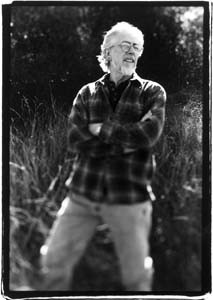
John Mayall

0

True Blues

Matthew Welch


After three decades John Mayall is still happy to be singing the blues

By David Templeton

SO THERE IT WAS. Smack dab in the middle of Rolling Stone magazine’s recent 30th anniversary issue: a slick 20-page pull-out section devoted to the mighty musical institution known as the blues.

Perhaps you saw it.

Titled “The Blues Today,” the surprisingly slender insert showcases old-timers Buddy Guy, John Lee Hooker, Koko Taylor, Bobby “Blue” Bland, and B.B. King; relative newcomers Robert Cray, Jon Spencer, and 10-year-old phenom Jonny Lang, and a pair of wild cards in Keith Richards and Bonnie Raitt. There is even a brisk compendium of 25 classic blues albums, an “essential blues library.”

Now, to those with only a beginner’s knowledge of the blues, this Cliff’s Notes treatment is a reasonably acceptable first taste. But to any true blues aficionado, the glaring omissions and glib summations of giant careers are enough to give them … the blues.

Case in point: John Mayall–the revered blues innovator and legendary progenitor of the white-boy British blues–whose band, the Bluesbreakers, has at one time or another contained such names as Mick Fleetwood, Mick Taylor, Peter Green, John McVie, Coco Montoya, and Eric Clapton. The sole Mayall reference in the Stone piece is the inclusion of the classic 1966 record Bluesbreakers–John Mayall with Eric Clapton, the album that launched Clapton’s career yet was great mainly because of Mayall’s magnificently soulful feel for the medium and his sly, non- conformist style of blues songwriting.

The Stone‘s teensy blurb barely even mentions Mayall at all.

“That’s the Rolling Stone for you,” reacts Mayall casually, his lilting Cheshire accent melting into an unconcerned and slightly raspy laugh. “They have typically ignored me my entire career. It pisses me off a little, really; I don’t understand it at all. I have recorded 40 albums. My life and career doesn’t just hang on one certain something I did 25 years ago with Eric Clapton.”

Mayall’s life and career have inspired countless musicians, and not only blues bands: the members of Green Day have repeatedly stated that their earliest inspiration was Mayall and the Bluesbreakers.

“Maybe in another 20 years,” Mayal says, with another cheerful chuckle, “when I’m the oldest living white practitioner of the blues. What I know is that I’ve kept the highest standard I can possibly come up with, in the way of originality and good musicianship and all those things that make for a lasting piece of music.

“I’m just very happy to have been allowed to do that, and of course it’s good to have a legion of worldwide fans who’ve made it possible for me to make a good enough living. I’ve gotten wonderful support on the road all these years, so Rolling Stone or no, I’m really not complaining.”

JOHN MAYALL was born in 1933, in the small town of Macclesfield, England, and grew up amid the turmoil of World War II. As a teenager, an avid student of the piano, he first encountered the blues. In the complete absence of blues players in England at that time, Mayall taught himself to play boogie-woogie, emulating the sounds he picked up from his growing collection of albums from the States.

In college, where he studied graphic arts, Mayall formed his first blues band, playing mainly during lunch breaks for whatever amazed collection of students showed up to listen. After graduation, he found a job as a graphic designer and played music at night. By 1963, at the age of 30, Mayall was no longer able to resist a life devoted to the music that first inspired him; he moved to London, cut his first solo album, and shortly thereafter started a new band: the Bluesbreakers.

By 1968, when he relocated once again–this time to Los Angeles, where he’s lived ever since–Mayall had established himself as the foremost British practitioner of the blues. His innovative arrangements, iconoclastic songwriting, and high, expressive tenor voice all seemed, with each new album, to push the boundaries of the medium, while never straying too far from the identifiable blues sound. His latest album, the strikingly personal Blues for the Lost Days (Silvertone Records), is quite possibly the best of his career. Mayall’s still- surprising songwriting sensibility–his choice of subject matter is unlikely to be found in the songs of many other blues singers–is at work in every single cut, from his grateful celebration of his mother’s love (“One in a Million”) to the autobiographical “All Those Heroes” (a musical list of all the great bluesmen who’ve inspired him) and a pleasantly unexpected historical musing on the terrors of trench warfare during World War I (“The Trenches”).

THE OBJECT of blues music is to be saying something original,” Mayall offers, explaining his tendency to come up with such unexpected themes in his work. “I’m not here to be treading old ground, or to be doing secondhand versions of songs the masters have done before, and can’t be copied anyway.”

Some fear that the pure, original blues sound created by Buddy Guy and the like will soon be lost forever.

Mayall isn’t worried.

“Styles change over time, they’re bound to,” he says, reassuringly. “The blues of the ’20s doesn’t sound much like the electrified blues that came along in the postwar years. The sound shifted with the times. The main thing,” he continues, “is that there’s a continuing line that runs through all the blues, whatever the particular style may be. Sure, we’ll never get another Johnny Lee Hooker, because people of that age and generation are unique. But at the same time there are new artists, great blues players, that are going to be recognized as unique because they don’t sound like anyone else.”

With one last chuckle, John Mayall adds, “And I count myself as one of those.”

John Mayall and the Bluesbreakers will be playing at the Russian River Blues Festival on Saturday, June 6, at Johnson’s Beach in Guerneville. Tickets are available from BASS or by calling 869-4100.

From the May 21-27, 1998 issue of the Sonoma County Independent.

© Metro Publishing Inc.

Usual Suspects

0

Cyber Campaigns

Political candidates now tout themselves on their own websites

Edited by Greg Cahill

POLITICAL brochures and billboards are all well and good, but as more registered voters are beginning to migrate online, local election hopefuls are experimenting with a new campaign tool. The latest premise is: If you wanna get ahead in the polls, you better get a website, and fast.

But hold on! A list of dry declarations on the key issues and a formulaic biography won’t quite cut it. Candidates are finding they need something jazzier with full-scale color photos scanned to perfection– the bigger the better. (Don’t forget some shots of family members and pets.) Oh, and throw in some animated graphics and a virtual collection box for campaign contributions. Now we’re talking.

A quick perusal of Petalumanet’s Web guide to the upcoming elections reveals some interesting, and a couple of fairly wacky, Web pages.

Several candidates in the packed race for 2nd District supervisor have jostled their way online with a vengeance. In an electronic attempt to attract voters, Petaluma Councilwomen and Nancy Read; Petaluma Police Sgt. Mike Kerns; and Petaluma Attorney Dave King have all installed their own election sites.

page is actually a virtual version of her printed brochure, including background information on the councilwoman and a list of her endorsers. There’s a cute black-and-white photo of a smiling Hamilton gazing skywards (a bit like Mary Tyler Moore but without the airborne hat) and plenty of other photos, too. The website is organized, informative, and easy to navigate with plenty of links.

Nancy Read‘s website is a one-page affair with no links except e-mail. It features one black-and-white head shot, Read’s résumé, and a list of her priority issues. “We need her diverse experience on the Board of Supervisors,” notes a quote in boldface–but the statement is not attributed to anyone. Technologically, this is not a very exciting site.

Dave King‘s page is a well-organized package. His site has areas where you can “find out more about Dave and his family,” read his speeches and press releases, and check up on where he’s going to be speaking. The site also boasts good icons, photos, and useful links to the Petaluma Electronic Network and Project Vote Smart.

It is Mike Kerns, though, who has gone all-out with his Web page. (Extra kudos for the animated flag, sergeant.) In addition to all the regular voter information, Kerns has included several special sections. Click onto “Kids for Kerns” and you’ll find a club for young Kerns fans, plus messages from Kerns’ children urging voters to pick papa. “I really want my dad to win this election,” writes his high school freshman daughter. “My dad cares about people, especially kids. I hope you’ll tell your parents to vote for him,” loyally adds his 9-year-old son.

Click on a section called “Kwik Kerns,” and under “Interests and Activities” you’ll learn that Kerns sings with the Pigtones–a police department singing group–and that in 1967 he was the “Golden Cloves” boxing champion–which makes this the spiciest site by far. Under the section called “Mike’s Favorite Links,” you’ll find links to several other websites, including Drug Abuse Resistance Education and the Elks Lodge.

One address–http://petalumanet.com/links/–gains access to all these websites.

At press time, there was not a cyber peep from remaining 2nd District candidates Rohnert Park Mayor Linda Spiro, certified public accountant Kathleen Doyle, and state investigator Gary Johnson. Over in the 4th District, incumbent Paul Kelley and challengers community activist Bill Patterson and attorney Bill Smith also appear to be out of the Internet loop.

Only candidate Gregory Wonderwheel, a deputy public conservator, has his own web page. This comprehensive site, which he calls “Campaign Central on the Web,” includes Wonderwheel’s statements and policies, information on the candidates’ debates, and lots of curious links (from the Sierra Club and the Sonoma County ACLU to the Ally McBeal Archives and The X-Files). Our favorite Wonderwheel Web quote: “I’m not just running against Paul Kelley, I stand for something.”

Now, if we all log on and get campaign surfin’, can all you candidates just promise us we won’t end up being spammed with political junk mail?

From the May 21-27, 1998 issue of the Sonoma County Independent.

© Metro Publishing Inc.
Talking Pictures

0

Big Bang


Ellen Dahl

Ever lovin’: Linda Jaivin finds most things, including asteroids, sexy.


Aussie eroticist aroused by ‘Deep Impact’

By David Templeton

In his ongoing quest for the ultimate post-film conversation, David Templeton discusses interesting movies with interesting people. This time out, he gets eroticist Linda Jaivin’s loving reaction to the comet flick Deep Impact.

ASIDE FROM the occasional overworked geologist, there are probably few people on Earth who’d claim that a rock–even a huge flaming one hurtling through space–could be accurately described as “sexy.” Sure, poets and songwriters have always found the natural world to be full of erotic imagery: ripe, phallic fruit; vulvalike flowers; dark, overpowering waters; lush, steaming jungles. In fact, to a practiced eroticist, there’s probably very little in the universe that isn’t sexy.

Even so, the very notion of an asteroid as a symbol of sexual energy and blind, unrestrained desire seems a bit of a stretch. But not to Linda Jaivin.

“Asteroids are very sexy!” insists the Australian- based author, stepping from a darkened San Francisco theater where we’ve just seen the film Deep Impact (a neat new thriller about a killer comet aimed at Earth, the astronauts who hope to blow it up, and the last-minute actions of various humans attempting to prepare for extinction). “Asteroids and comets are all force and energy and heat and motion!” Jaivin exclaims. “It’s not difficult to see the sexiness there at all!”

Jaivin, who enjoyed the film–“I swear I never breathed once during that whole impact-tidal wave scene,” she merrily recalls, “though I’m disappointed no one tried to surf the tidal wave”–is the author who created an international publishing sensation with last year’s riotous, comic-erotic Eat Me, which the ever-upright New York Times refused to review because of its scandalous title. Now, having made fruit-fetishism the topic of worldwide conversation, Jaivin is back with Rock ‘n’ Roll Babes from Outer Space. An outlandishly delightful, X-rated science- fiction fantasy, the new book–in which three sexually adventurous aliens become Earth’s greatest rock band–reads like the insatiable literary love child of Douglas Addams, Kurt Vonnegut, and Susie Bright.

It is no surprise that asteroids figure prominently in the book as well.

“Eros!” Jaivin laughs, naming the wildly lustful asteroid who follows the babes through space, with fantasies of someday colliding into Earth. “Eros is big! He’s hormonal. He’s young, and he’s only experienced one good party his whole life–and that was the planetary explosion that gave birth to him in the first place. Since then he’s been consigned to orbit Mars, which is dusty and boring, with no chance of getting any sex at all.”

“Asteroidal sex,” I point out, “is not a concept most people are familiar with.”

“Not only can people not believe I’ve anthropomorphized an asteroid,” Jaivin laughs, taking a seat (we’ve arrived, appropriately enough, at the Hard Rock Cafe), “they can’t believe I’ve given him a sex life.

“Asteroid sex, of course, is when they collide with one another,” she explains. “In the asteroid belt there are constant collisions. This is what keeps them going. They love it. “

“A punk rock thing,” I observe.

“A punk thing, exactly,” she laughs. “The asteroid belt is a bit of a mosh in space. And Eros–no other asteroids will collide with him! So he gets no action whatsoever. He’s very, very frustrated.

“And then he starts imagining colliding into Earth– the ultimate asteroidal orgasm, to, you know, plunge into Earth’s soft surface, to penetrate to her core. To make a deep, deep impact.

“I’ll say something else about Eros,” she adds. “He’s an actual asteroid. Eros 433 is an actual asteroid. I discovered it while I was doing research for the book, in June of 1996. This asteroid, scientists have discovered, is likely to break out of its orbit somewhere between 150,000 and 1.5 million years from now–and will probably come crashing into Earth. And it will have a much bigger impact than the one in the movie certainly, and probably bigger than the one that killed the dinosaurs.”

“So the world may eventually end in one immense asteroidal orgasm,” I marvel.

“Oh, absolutely!” Jaivin giggles. “And isn’t it just wonderful?”

Our lunch arrives, and Jaivin pushes Altoid, her green teddy-bear purse, out of the way to make room for her hamburger.

“I was thinking,” she says, reaching for the ketchup, “about all those space movies full of aliens that flourished in the 1950s, during the Cold War. We all know that they were really about our anxiety regarding communism–with the aliens standing in as communists, waiting to take over and eat our brains.

“But now it’s a different kind of fear we’re experiencing,” she continues, whacking the ketchup bottle on its rear. “It’s a millennial nervousness we’ve got now. It’s a fear of global warming, the melting of the icecaps, too many CFCs released into the air, and all that.

“It’s a feeling that nature is waiting to get us, because we’ve gotten nature. This film today reflected that kind of anxiety, don’t you think? The natural forces of the universe have suddenly become a malicious, life-destroying force. If the aliens were a stand-in for Russians, the meteor is a stand-in for nature.”

She stares at the unyielding bottle.

“I’m not making much of an impact here, am I?” she murmurs. “Perhaps I should stick something up it?” She picks up her knife and probes the neck of the bottle with it. “As an erotic novelist, you’d think I’d know things like this,” she laughs, as the ketchup finally gushes forth.

We launch into a discussion of the lottery shown in the film, determining which Americans will be allowed to survive the comet’s “extinction level” collision by living for two years in deep limestone caves. As the buses leave for the caves, people agonizingly wrestle with giving up their seat for others. There are many tearful goodbyes.

“And did you notice,” Jaivin mentions, “that no one said, ‘Hey! I’ll never see you again, the comet is almost here, so let’s just fuck one last time?’

“I mean really!” she laughs. “If I were about to die in a massive tidal wave, I’d want to go out with a smile on my face, know what I mean?”

From the May 21-27, 1998 issue of the Sonoma County Independent.

© Metro Publishing Inc.
The Scoop

Illusion of Beauty

The dangers of faking it

By Bob Harris

BEAUTY MAY ONLY BE in the eye of the beholder, but that doesn’t mean people won’t just about kill themselves trying to catch that eye in the first place.

I live in West Hollywood, where some folks have had so many face-lifts they share the same general expression as a largemouth bass. The Diet Foods section at the corner grocery always has one or two of these unblinking lizard-women noses that appear to have come from an entirely different edition than the rest of their head. It’s like Microsoft just released its copy of Face 2.0 and didn’t get all of the update disks.

We guys have it pretty easy when it comes to appearances. All we have to be is anatomically correct, willing to listen, and not insane, and most women are willing to talk to us. Appearance counts, but basically, if you’re free of parasites and not naked, you’ve got a shot at it. Women, on the other hand, face ludicrous standards of beauty. It’s not enough for Playboy and Penthouse to spend gazillions scouring the planet for genetic mutations they can repackage in spandex; then they gotta retouch the pictures, transforming the unlikely into the completely impossible.

As a performer, I’ve met a few of these girls over the years, and while they’re lovely and all, they’re usually not nearly as comfortable with themselves in 3D. With good reason. They’re no big deal. Frankly, the lady who delivers my mail is a lot more attractive, although her wardrobe seems pretty limited.

Centerfolds in men’s magazines ought to come with warnings, like cigarette packages: The Surgeon General Has Determined That These Women Do Not Exist.

But never mind. We still strive. There’s underwear to make small parts look bigger and big parts look smaller. There are implants and nose jobs and even rib-removal surgery.

Trouble is, you can really hurt yourself looking good. Excessive exercise often causes severe injury. Surgeries go wrong. Fen-Phen can kill.

And now we discover that high-heeled shoes can ruin your knees. According to research out of Harvard Medical School, even 2.5-inch pumps, worn regularly, apparently double the risk of arthritis of the knee.

I know a girl who says she always wears spike heels because a tottering, mincing walk brings out a guy’s protective instincts. But think how vulnerable she’ll look in 20 years when she can’t even walk down the street.

Maybe she can find a pair of black stiletto crutches. Gee, I feel protective already.

Or maybe, when we evaluate beauty, we can all try to honor the same oath that a lot of L.A. plastic surgeons seem to have long forgotten:

First, do no harm.

FOR ONCE, some good news about sports arenas: It looks as though people around the country are finally starting to figure out that you can’t really rebuild a faltering economy, sustain a growing middle class, attract long-term investment, and improve a city’s schools by … building a baseball stadium.

If you read the sports pages, you know that franchises in every major sport have recently become less an end in themselves than bargaining chips in a bigger game: stadium swindling on a megabasis. Owners hold their own teams as hostages, demanding a ransom of hundreds of millions of dollars in public money–which in turn is spent on new ballparks equipped with state-of-the-art skyboxes, scoreboards that can show TV commercials, high-tech signage, etc., all of which improves an owner’s income far more than a community’s.

Field of Schemes (Common Courage Press), a new book by Joanna Cagan and Neil deMause, chronicles a lot of the real horror stories: backroom deals, handouts to billionaires as public schools collapse, historic stadiums torn down thanks to faked engineering reports, and worse. It turns out that a lot of sports owners might talk a good game about the free market, but without massive public subsidies, they’d have trouble making a dollar.

But, finally, there’s good news: voters are finally figuring out the scam. In recent months, the good folks of Pittsburgh have said no to a tax increase for a new ballpark. And in Minnesota, where the Twins are threatening a move to Charlotte, voters and fans have refused to fork over. In response, the Twins ownership escalated their threats. Until last week, anyway, when the fans down in Charlotte gave the Twins a kiss-off as well. So the Twins are staying put.

Teamwork: It’s the only way fans are ever going to win the big game.

From the May 21-27, 1998 issue of the Sonoma County Independent.

© Metro Publishing Inc.
God’s Country

0

‘The Order’

God’s Country.

Charlie Dotti


SCRT arrestingly depicts hate crimes in docudrama ‘God’s Country’

By Daedalus Howell

WHENEVER I HEAR the word culture, I reach for my revolver,” Hermann Göring, Hitler’s despotic second- in-command, reportedly once remarked. The arch-Nazi had every reason to disdain culture since it is, in large part, the product of intellectual and artistic activity–elements notorious for revealing the vacancy of racists’ brainpans.

Local like-minded dogmaticists, the Ku Klux Klan (recall the sheet-freaks’ recent pilfering and insertion of hate propaganda into Santa Rosa’s Classified Gazette), are certainly due for some culture. Sonoma County Repertory Theatre’s absorbing production of God’s Country, Steven Dietz’s condemning docudrama of a neo-Nazi crime wave, would more than suffice.

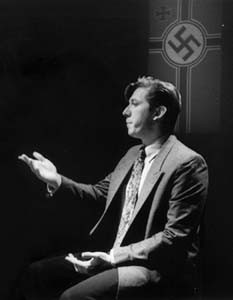
Constructed from actual court records, news archives, and witness interviews, God’s Country (expertly directed by Jim dePriest) chronicles the felonious deeds of an ill-fated cadre of white supremacists ominously dubbed “The Order.”

In the early ’80s, “The Order” assassinated public figures thought detrimental to their atrocious cause, among them the loquacious, Denver-based talk-show host Alan Berg (memorably portrayed on SCRT’s stage by Eric Thompson).

Operating as an ad hoc crime syndicate in order to fund their hate activities, the group also committed innumerable acts of larceny, pirating $3 million alone from a Brink’s truck in Ukiah.

A farrago of docudrama and news commentary, Dietz’s play interestingly sidesteps traditional narrative structure for a pastiche of impartially delivered reports interspersed with dramatic examinations of real incidents. The theatrical effect is tremendous, though the play’s dense verbiage often errs on the side of didacticism (a phenomenon de Priest’s bright players do attempt to mitigate, however).

SCRT’s 11-player ensemble brims with talent and does well with what are surely emotionally tasking roles; by turns, nearly all the actors portray some order of white supremacists–composing a veritable chorus of gross hubris and insidious hatred.

Rendering his monologue with an arresting poignancy, Tim Hayes offers an especially moving and indicting performance as a rueful father witnessing the cumulative effects that casual household racism have had on his adult son.

Likewise, Sandra Ish consummately deploys a nightmarish monologue that imperceptibly evolves from a parody of a ne’er-do-well to a ghoulish account of a child being sealed in a time capsule. Here and elsewhere, Ish convincingly makes the subtle turn from black comedy to heart-stabbing horror, nimbly setting the traps of Dietz’s emotional minefield among the way.

Eric Thompson’s Alan Berg provides the few (and necessary) comic respites during the often oppressing drama. Thompson’s chain-smoking, manic-mouthed rendition of the talk-radio personality is deftly underscored with a palpable warmth, a distinct humanity that persists even as he brays irascibly into his microphone. It is apparent in Thompson’s performance that he respects the fact that the victimized Berg was a real person, a man rather than merely a character. The products benefits greatly from this choice.

Kudos are also in order for set designer Michael Mingoia. The floor is decorated with a large-scale reproduction of the Constitution’s calligraphic script–an apt symbol for the degradation the document endures under the hooves of those who use it as a red carpet from which to propagate hatred.

God’s Country closes with a recitation of W. B. Yeats’ poem “The Second Coming,” but to heighten the poem’s relevance to his work, Dietz abbreviates the verse to a tell-all passage: “The blood-dimmed tide is loosed, and everywhere/ The ceremony of innocence is drowned;/ The best lack all conviction, while the worst/ Are full of passionate intensity.”

SCRT’s estimable production of God’s Country, however, has both conviction and passionate intensity.

God’s Country plays May 21-23 and 28-30 at 8 p.m., and May 24 and 31 at 7, at the Sonoma County Repertory Theatre, 415 Humboldt St., Santa Rosa. Tickets are $12; senior, student, and group discounts available. 544-7278.

From the May 21-27, 1998 issue of the Sonoma County Independent.

© Metro Publishing Inc.
Steve Tyler

On the Grill

Michael Amsler


BBQ chef Steve Tyler aids backyard bunglers

By Christopher Pomeroy

THE TASTE OF summertime is soft and sticky baby-back ribs slathered in honey-sweet sauce, hickory-smoked chicken breasts, and grilled hamburgers. For carnivores, these flavors go with sunshine the way white wine goes with baked salmon.

That is, if you know what you’re doing.

I don’t.

Seems that every time I get near a grill something goes terribly wrong. I cause an explosion by lighting the charcoal with gasoline. I hyper-cook the hamburgers, so that they’re blackly burnt on the outside, cold and raw on the inside. Or I ladle so much ill-conceived homemade sauce on the dinner that everything tastes like a coffeehouse full of patchouli-wearing nouveau hippies (and gasoline, of course).

It simply doesn’t seem right that a young American male–one from the South, I might add–can’t whip up a decent feast in his own backyard. Barbecue, grilling, backyard cookin’, whatever you want to call it, is as American as baseball or McDonald’s hamburgers, or even sex scandals. It is the last surviving outpost of ’50s machismo. In all other aspects of modern life, men are expected to be thoughtful and sensitive, but not on the grill. There man becomes an anachronism, dating farther back even than the days of Leave It to Beaver, a prehistoric hunter searing his meat for the betterment of his tribe, braving the fierce fires to provide sustenance for his family.

Sure, the hunt has been replaced by a quick jaunt to the meat section at the local grocery store, but on a subconscious level (psychologist Carl Jung would babble about archetypes, I suppose), it’s as manly as modern life gets.

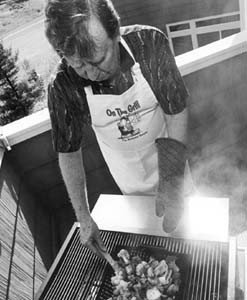
In desperation, I turned to Sonoma County barbecue guru Steve Tyler for some tips. Tyler, who has written a cookbook on the subject (On the Grill: The Backyard Bungler’s Barbecue Cookbook), as well as a bimonthly column for On the Grill magazine) agreed to have me over for an afternoon of instruction and great grilled food.

When I arrive at his home, Tyler, a kind man with ruddy cheeks and a ready smile, shakes my hand. “I didn’t graduate from a culinary academy,” he says, soothing my worry. “Most people on the grill are bunglers, not gourmets.”

Bunglers? I can relate.

However, though fun is the goal, outdoor cooking is serious stuff to Tyler. In addition to writing about the subject, he owns Grill and Gourmet, an all-purpose Santa Rosa store for outdoor-cooking enthusiasts. There you can purchase everything from high-quality gas grills to those inexpensive doodads you stick into the sides of hot, buttery corncobs.

Tyler says most people have misconceptions about his favorite subject. For instance, the terms “barbecue” and “grilling” really aren’t interchangeable. “Most people in Califor-nia don’t barbecue,” he explains. “People in California grill. Barbecue is a long-term process over low heat.”

It also always involves beef, pork, chicken or lamb. Grilling, on the other hand, is done over high heat for a short time and includes fish and vegetables.

Bent over his grill, Tyler expertly prepares our feast: blackened catfish and stir-fry madness, recipes from his book. As he constantly adjusts the levels of the coals beneath the food, he describes the differences in regional cooking styles. For instance, in South Carolina, the meat of choice is almost always pork flavored by a vinegary barbecue sauce, while in Texas it’s beef briskets in a sweet tomato- and molasses- based sauce, which during big barbecues is lathered on with kitchen mops.

“They’re clean,” he says of the mops. Pauses. “I think.”

The thrust of Tyler’s cooking philosophy is served up in an acronym he likes to throw around: KISAKE–keep it simple and keep experimenting. He avoids complex culinary trickery and spices. “I hate it when a recipe calls for an ingredient that costs $18 for a small bottle, and which you only use once,” he says. Instead, he relies on basic recipes and household herbs.

However, Tyler warns, “It is still pretty easy to screw it up.”

The main problem novices encounter is cooking food too long over too high a heat (i.e., burning it). Tyler demonstrates a sure-fire method for determining the heat of your grill. Holding his hand about an inch above the coals, he explains, “If you can only keep this up one to two seconds, that’s high heat.”

Four to five is medium; six or more is low.

TOOL PURCHASES are another way novice barbecuers/grillers often go wrong. For one thing, the utensils you have in your kitchen are virtually useless, unless you like your forearms scalded. Long-handled, heat-resistant tongs, spatulas, forks, and brushes are a necessity, Tyler insists. Also important, naturally, is grill selection. If you only plan to cook the occasional hamburger or hot dog, a simple kettle-style charcoal grill will do. But if you plan to do serious grilling, it is best to buy a high- quality wagon grill. Expect to pay between $500 and $3,000 for one of these.

Also, to assure that your food has the characteristic smoky flavor of grilling, Tyler suggests charcoal over gas grills.

Later, as we sit and savor the wonderful catfish dinner, enjoying the sharp, clear sunlight, Tyler points out that the reason people grill isn’t merely because of the taste. It isn’t even about being macho (though he’s the first to make jokes about that himself). “Cooking outside is enticing,” he says simply. “In the kitchen you are restricted. Outside you are in beautiful surroundings; you have the flavor of the fire.

“It’s an experience you cannot match inside.”

Dorado-Baja

The dry rub on this fine Mexican game fish is tangy to the tongue.

6 Dorado (mahi-mahi) fillets, about 10 oz. each
2 tbsp. olive oil
1 tbsp. dried cilantro
1 tsp. garlic powder
1/2 tsp. cayenne pepper
1/2 tsp. ground black pepper
1 tsp. dried leaf thyme

Wash fillets, brush evenly with olive oil, and set aside. In a food processor or blender, combine dry ingredients. Rub mixture over both sides of fillets. Grill over medium-hot fire for 8 to 10 minutes, turning once or twice. Remove from grill and serve at once. Serves 6.

Tyler’s book can be purchased at his store, Grill and Gourmet, in the Larksfield Center, 4754 Old Redwood Hwy., Santa Rosa; 528-4702.

From the May 21-27, 1998 issue of the Sonoma County Independent.

© Metro Publishing Inc.
Ray Davies

0

Kinda Kinks

Michael Amsler


Ray Davies’ one-man show rolls into LBC

By Greg Cahill

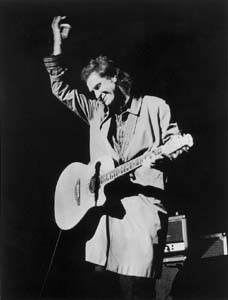
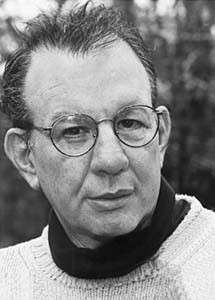
RAY DAVIES sounds shagged. He’s midway through a hectic U.S. tour to perform The Storyteller at a series of one-night stands and to promote the just-released CD version of the acclaimed performing arts piece–a sometimes touching, often humorous one-man show in which the frontman for the Kinks tells of his early rock career while accompanying himself on solo acoustic guitar–and all the press attention clearly is taking its toll.

For this 54-year-old singer and songwriter, it’s almost like living the frenzied rock ‘n’ roll life.

“Actually, rock ‘n’ roll was easier going than this,” says a weary Davies from an Arizona hotel room, his sense of humor holding up after four phone interviews in two hours. “As I remember it, you’d just get out of your brain during the day and pull it together at night for the show.

“This thing I’m doing now, I have to be on at seven in the morning.”

Now on his third tour of the states with The Storyteller, Davies has racked up rave reviews. New York Times critic Neil Strauss has lauded the piece as “surprisingly intimate, honest, and well staged,” and marveled that Davies’ voice is still “capable of hitting the sweet high notes that can turn detailed observation into perfect pop.”

Like his contemporaries Paul McCartney of the Beatles and Pete Townshend of the Who, Davies–one of the most accomplished songwriters to emerge from the 1960s British rock invasion–has stretched out artistically in recent years. He has worked as a filmmaker, an actor, a theatrical writer and producer, a composer for musical theater, and an author.

The idea for the one-man show came while Davies was writing his autobiography, X-Ray (Overlook Press, 1994). “The book made me realize the links between my life as a musician–and even my life before I became a musician–and the subtext of what I’d been writing about all those years as a songwriter,” he says. “The lyrics uncannily paralleled things that were going on in my life, much more so when I was newer at it, because I was only writing about those things I knew about from direct experience. There was a sort of innocence and naiveté, but somehow it was very truthful to me.

“So it was logical that the story of the band and growing up in North London worked with some of the old songs.”

While many rockers express bitterness about their upbringings–complaining that their dysfunctional families fueled their angst-driven music–Davies’ recollections possess a sweet charm, a nostalgic look at a post-World War II society.

Nowhere does that sentimentality for the past–which permeates such classic Kinks social satires as The Village Green Preservation Society, and reflects the wistfulness of a declining empire– become more obvious than in Davies’ tales about the Front Room, the family parlor that provided shelter from the storm of societal changes sweeping across England in the early to mid-’60s.

“Once upon a time there was a room in our house called the Front Room,” he recounts in his autobiography. “It was so named because it was the front of the house, by the street. It was reserved for special occasions: Christmas parties, wedding receptions, birthdays, christenings, and funerals all took place in the Front Room. Important visitors were always shown into it… . People laughed, cried there. My sisters courted their boyfriends in there. Every special time and occasion was celebrated in the Front Room. The first time that I, Raymond Douglas, saw David Russell, my baby brother, was in the Front Room just after he had been born.”

THE REST, as they say, is musical history. Ray and Davey went on to form the nucleus of the Kinks. In the Front Room, Ray Davies first hammered out on the family piano the opening chords of the band’s first pop hit, “You Really Got Me,” and brother Davey set up his distortion-heavy guitar amp dubbed the Green Monster.

Within months, Ray Davies, then 19, and his bandmates were thrust into the international spotlight. Yet, Davies had no idea that he had crafted a sound that would reverberate for three decades. Now he’s regarded as the Godfather of Power Pop and a hero to a whole new generation of British and American rock bands influenced by the Kinks’ punkish garage rock. “I’m sure they all have their own varying heroes,” he laughs. “But it does seem that a lot of folks do like the Kinks and the songs I wrote for them.

“It’s interesting to look back at what very modest ambitions I had. At the time we recorded those songs, really, we just wanted to do well with them. But what an impact they had.”

Today, Ray Davies has little time to dwell on past glories, despite his retrospective show. “There are a few things on the boil,” he quips. “For the past two years, we’ve been working on a musical version of [the Kinks’ hit homage to 1950s dance palaces] ‘Come Dancing’–we’ve done the script, we’ve completed the first act with music, and we’re very pleased with that. So that could see the light of day next year,” he says. “I’m supposed to be writing a small orchestral piece for an arts festival in England in the fall.

“And I’m getting ready to go in to record my first solo studio album, which I’m really excited about.

Will he retire The Storyteller, now that it’s been recorded for posterity? “Well, it’s something of a work in progress,” he concludes. “It really only tells my life up until the recording of ‘You Really Got Me,’ so that’s less than half my career.

“There are always more stories to tell.”

Ray Davies performs The Storyteller on Friday, May 22, at 8 p.m. Luther Burbank Center for the Arts, 50 Mark West Springs Road, Santa Rosa. Tickets are $21.50. 546-3600.

From the May 14-20, 1998 issue of the Sonoma County Independent.

© Metro Publishing Inc.

The Orchard Inn

0

Ripe Pickins


Michael Amsler

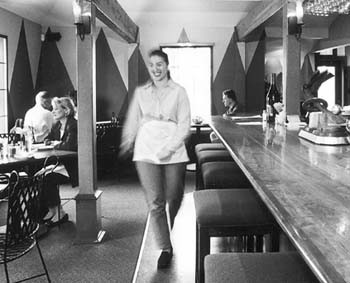
Post-modern bistro: The Orchard Inn in Santa Rosa boasts a stylish decor, Middle Eastern music, a cozy dining area, and intriguing German and French culinary influences.

Family business bears sweet fruit

By Paula Harris

THE FIRST TIME we dined at the Orchard Inn a few months ago there was, for whatever reason, a severe shortage of servers. The wait was so long that one impatient couple gave up and left just moments before the lone waiter finally emerged from the kitchen proudly holding their steaming plates aloft, only to be greeted by the sight of two crumpled napkins tossed onto the empty table.

Happily, that’s all changed.

Our latest visit to this small Santa Rosa bistro (a former bar tucked away off Old Redwood Highway near Cardinal Newman and Ursuline high schools) was a very enjoyable experience. The family-run eatery, which opened in November, is a partnership between Julya and David Franco (who are new to the restaurant biz, but owned five bierkellers in Berlin during the 1960s), and daughter Adelle (who masterminded the distinctive interior design and landscaping). French-trained chef Chris Pusich, who logged seven years at Equus Restaurant, runs the kitchen.

On this night the friendly staff, now well versed in the needs of hordes of customers rushing to dine before curtain call at nearby Luther Burbank Center, greeted us warmly and immediately showed us to our seats.

We were fortunate enough to nab one of the four tables in a cozy, cocoon-like dining area that has a low copper-tiled ceiling, warm ambient lighting, and a large ornate wall mirror. Harlequinesque elongated diamonds painted in soft greens and deep roses decorate the walls. Wooden tables hold golden-beaded tea lights and arrangements of fresh calla lilies. The seating includes wrought-iron chairs that are pretty, but need cushions.

A central bar with hanging glasses, several beers on tap, and wooden beams on the ceiling enhances the comfortable atmosphere. Sophisticated jazz tapes alternating with soft Middle Eastern music play gently in the background.

We kicked off our meal with eggplant bruschetta ($3.75), which featured crisp toasted rustic bread piled generously with a savory relish of grilled eggplant, capers, roasted red bell peppers, garlic, and parsley. The ingredients were good and fresh and it was all very flavorful, but the relish had a strange, almost off-putting, tanginess that felt almost effervescent on the tongue.

The hummus appetizer ($3.25) came with fluffy triangles of thick pita (the bread would have been even better heated) that surrounded a ramekin of hummus accompanied by tomato slices, black olives, and a scattering of parsley. It made a colorful presentation on the white plate, but the chickpea purée desperately needed more seasoning and a heavy-handed spritz of lemon juice. Alas, there was no lemon slice on that plate, and it would have made all the difference.

Things got back on track with the citrus spinach salad ($6.75), which was a delight. A bed of immensely fresh baby spinach leaves in a mild citrus dressing, topped with crunchy sweet pecan halves, crumbles of creamy sharp Gorgonzola cheese, and juicy sweet tangerine segments made an exciting combo. These crisp greens with a side dish of the Orchard Inn’s au gratin potatoes (see below), some crusty bread, and a glass of beer or wine would make a great light meal.

Another success was the barbecued ribs ($9.50), which boasted tender morsels of pork falling off the bone, enveloped in a clingy bourbon-honey sauce. The ribs were served with firm matchsticks of carrots cooked in beer, butter, and dill. But the real star was the second side dish– an expert potatoes au gratin– meltingly hot and creamy scalloped potato slices enhanced by melted cheese and fresh herbs. Yum.

GRANDMOTHER’S chicken ($8.75) was indeed just like grandma used to make–if she lived in Lyons or Lille. A small but richly flavored portion of chicken was cooked in white wine sauce and topped with tarragon, thyme, mushrooms, tiny pearl onions, and bacon, which infused the flavor, making it taste as opulent as Christmas dinner. The chicken was also served with the carrots and more of those praiseworthy potatoes.

The disappointment in the entrée lineup was the daily special: a lackluster vegetarian lasagna ($10.50) featuring an unimaginative spinach filling smothered with an abundance of cheese, pasta, and tomato sauce.

The restaurant has a fair-sized wine list covering most local varietals. The 1995 Clos du Bois merlot ($26) recommended by our helpful server was mellow but strong enough to stand up to the zesty sauce in that lasagna, and also made a pleasing accompaniment to the ribs.

Desserts feature a rotating selection of sorbets, gelatos, and fresh-baked daily specials. The house-made chocolate caramel walnut torte ($4.25) was a dense concoction with hard gobs of caramel hiding within that could lead to some serious dental work. Far better was the house-made almond cheesecake ($4.25), which surprised us with an initial huge hit of intense almond flavor that mellowed in the mouth and subsided into a silky smoothness.

If you’re looking for a casual but chic restaurant serving moderately priced, bistro-style comfort food, this is the place. The owners plan to open an outdoor patio dining area this summer, and hope to expand the kitchen to serve breakfast by fall.

Orchard Inn
4404 Old Redwood Hwy., Santa Rosa; 526-3096
Hours: Open Mondays-Saturdays 11:30 a.m. to 9:30 p.m.; Sundays 4 p.m. to 9:30 p.m.
Food: Bistro-style with German and French influences
Service: Friendly, hospitable
Ambiance: Stylish but casual
Price: Low to moderate
Wine list: Inexpensive selection of wines; several beers and ciders
Overall: ***(out of four stars)

From the May 14-20, 1998 issue of the Sonoma County Independent.

© Metro Publishing Inc.

Homegrown

0

Cash Crop

Homegrown is in local theaters.

Janet Orsi


Jonah Raskin’s pot flick finally hits the big screen

By David Templeton

AS OLD BOB DYLAN once observed, “The times, they are a-changin’.” Consider the case of Sonoma State University communications professor Jonah Raskin and the new film Homegrown. When the former minister of education for the radical ’60s Yippies first visited Hollywood in 1980, he was seen, perhaps understandably so, as a gifted but misguided radical, moviewise. His undeniably intriguing pitch–to do a comedic remake of Treasure of the Sierra Madre, significantly retooled by Raskin to now take place inside the vast and secretive marijuana fields of Northern California–was met with a mixed reaction.

No one denied the intrinsic whimsy of the idea itself. Raskin’s tale of hapless pot cultivators fighting the elements, the feds–and each other–while attempting to bring the greens in on time, was a darn good read and would probably make a good film. But to put that up there on the screen for impressionable youths to see? The studios just had to say no.

“‘There will be protests!’ they warned me,” recalls Raskin, with an ever-so-slight smile appearing across his face. “‘There will be angry parents. It’s too much trouble.’ So everyone was nervous about it to begin with.” It was not the drug aspects of the story that scared the suits so much as Raskin’s morally ambiguous viewpoint–and the film’s audacious, everybody-must-get-stoned conclusion.

“The growers don’t get punished,” Raskin reveals. “That was a problem. But then, they don’t profit, either.”

Despite these initial hesitations, the story did eventually sell. A modestly budgeted independent production–around $3 million–commenced last year in Santa Cruz, with a remarkable big-name cast that features Billy Bob Thornton, Hank Azaria, Kelly Lynch, John Lithgow, Jamie Lee Curtis, and Ted Danson. Now, after successful screenings in Washington and Oregon, the film’s distributor is preparing Homegrown–as it came to be called–for national release.

“What’s so funny about it,” observes Raskin, “is that the movie is being directly marketed, at least somewhat, to 16- to 23-year-old pot smokers. Demographically, that’s a pretty huge market.” Indeed. The movie’s advertising displays Zig Zag-like art, with the slogan “Millionaires today. Fugitives tomorrow. Buds forever” and the kicky tagline “Homegrown: the comedy that goes to your head.”

“I suppose,” Raskin ponders, “that with the medical marijuana issue being in the mainstream now, with [similar] initiatives on the ballot in several states, and with cannabis buyers’ clubs sprouting up all over, they felt there was no reason to soft-peddle the fact that this is a movie about pot.

“It’s interesting to see the shift in attitude,” he adds.

Raskin has observed many shifts in attitude since the roiling broiling days of the ’60s, when he and fellow radical/social critic Abbie Hoffman engineered countless political “publicity” stunts, all intended to hurry along the hoped-for revolution against archaic moral oppression and governmental injustice. Hoffman recognized that the media–television, radio, books, records, and even movies–were a powerful tool that had been used by the powers-that-be to boost militarism and consumer greed, and could be used by the political left to poke holes in the posturing of the right. Though some will glibly insist that the revolution never came, it can be argued that it is still under way, making slow methodical progress step by step, book by book–and film by film.

Raskin has examined this shift in national consciousness in his autobiography, Out of the Whale (Links, 1974)–itself to become a film soon–and the recent, well-received biography For The Hell of It: The Life and Times of Abbie Hoffman (University of California Press, 1997). His popular college classes include an examination of film noir and an in-depth exploration of groundbreaking films from the ’60s and ’70s.

When it comes to Homegrown, Raskin’s enthusiasm seems personal rather than political. If there is any subversive social agenda at work here, it is buried beneath an unabashed artistic pride–and a palpable sense of relief–that he displays when questioned about the film.

“I feel a lot of excitement,” he acknowledges. “It’s hard to believe it. There were times in the last–how many years has it been? 20 years?–that I didn’t believe this would ever really happen. I also feel some trepidation.

“I haven’t even seen the finished product yet,” he confesses with a nervous grin. “I’ll be seeing it with some friends on opening night. It will be hard to just sit back and watch it, since I know the story so well. I know what I’ve hoped it would be.”

Thus the trepidation.

RASKIN DID SERVE as script consultant on Homegrown during the long rainy days that filming took place last year. “Sometimes they listened, sometimes they didn’t,” he laughs. “Sometimes they did the exact opposite of what I suggested.

“I call it my movie,” he ponders, “because the idea started with me. But I know that it’s really not mine anymore. It was my story, but other people wrote the script, the director [Steve Gyllenhaal] contributed his own ideas, the actors brought their own things to it. It was a very collaborative process, so there are a lot of other voices in the story now.”

But Raskin isn’t complaining. “It was great!” he continues. “Collaboration is fantastic! I loved it. Billy Bob Thornton sat down with me when I got there and told me all about the background of Jack, his character in the movie. I’d never thought much about where Jack’s roots were, and here was Billy Bob, saying, ‘He comes from a poor family in Arkansas, and his family never finished anything. They started building a house, but they never finished it. Nothing they started ever panned out. So his whole motivation is to bring this crop in. To finish something for the first time in his life.'”

Similar backstories were developed by other actors, including a long-faded love affair between Thornton and Jamie Lee Curtis, who plays the spiritual leader of the tiny rural community to which the pot growers belong.

“It was a good experience,” Raskin summarizes. “I was treated with respect by the actors. They appreciated working on a story that was different.”

With a reluctant shrug, Raskin admits that there was some attention given to his radical past, to the very personal story that has taken him up to this curiously uncertain moment in history.

“I think I may have told a few Abbie Hoffman stories,” he grins.

Homegrown is now playing at Pacific’s Northgate Cinemas in San Rafael (7000 Northgate Mall; 415/491-0608).

From the May 14-20, 1998 issue of the Sonoma County Independent.

© Metro Publishing Inc.

Recreation Fees

Pay for PlayMichael AmslerPay per view: "Benefits that are widely enjoyed by large numbers of the public," says Sierra Club chairman Mike McCloskey, "and that are not essentially commercial in nature, should be supported from general taxes."Are new recreational user fees a last-gasp solution to budget cuts or a Trojan horse for corporate interests?By Christopher WeirWITH THE RECREATION...

John Mayall

True BluesMatthew WelchAfter three decades John Mayall is still happy to be singing the blues By David TempletonSO THERE IT WAS. Smack dab in the middle of Rolling Stone magazine's recent 30th anniversary issue: a slick 20-page pull-out section devoted to the mighty musical institution known as the blues. Perhaps you saw it. Titled "The Blues Today," the surprisingly...

Usual Suspects

Cyber Campaigns Political candidates now tout themselves on their own websites Edited by Greg Cahill POLITICAL brochures and billboards are all well and good, but as more registered voters are beginning to migrate online, local election hopefuls are experimenting with a new campaign tool. The latest premise is: If you wanna get ahead in the polls,...

Talking Pictures

Big BangEllen DahlEver lovin': Linda Jaivin finds most things, including asteroids, sexy.Aussie eroticist aroused by 'Deep Impact'By David TempletonIn his ongoing quest for the ultimate post-film conversation, David Templeton discusses interesting movies with interesting people. This time out, he gets eroticist Linda Jaivin's loving reaction to the comet flick Deep Impact.ASIDE FROM the occasional overworked geologist, there are probably...

The Scoop

Illusion of BeautyThe dangers of faking itBy Bob Harris BEAUTY MAY ONLY BE in the eye of the beholder, but that doesn't mean people won't just about kill themselves trying to catch that eye in the first place.I live in West Hollywood, where some folks have had so many face-lifts they...

God’s Country

'The Order'God's Country.Charlie DottiSCRT arrestingly depicts hate crimes in docudrama 'God's Country'By Daedalus HowellWHENEVER I HEAR the word culture, I reach for my revolver," Hermann Göring, Hitler's despotic second- in-command, reportedly once remarked. The arch-Nazi had every reason to disdain culture since it is, in large part, the product of intellectual and artistic activity--elements notorious for revealing the vacancy...

Steve Tyler

On the GrillMichael AmslerBBQ chef Steve Tyler aids backyard bunglersBy Christopher PomeroyTHE TASTE OF summertime is soft and sticky baby-back ribs slathered in honey-sweet sauce, hickory-smoked chicken breasts, and grilled hamburgers. For carnivores, these flavors go with sunshine the way white wine goes with baked salmon. That is, if you know what you're doing. I don't. Seems...

Ray Davies

Kinda KinksMichael AmslerRay Davies' one-man show rolls into LBCBy Greg CahillRAY DAVIES sounds shagged. He's midway through a hectic U.S. tour to perform The Storyteller at a series of one-night stands and to promote the just-released CD version of the acclaimed performing arts piece--a sometimes touching, often humorous one-man show in which the frontman for the Kinks tells of...

The Orchard Inn

Ripe PickinsMichael AmslerPost-modern bistro: The Orchard Inn in Santa Rosa boasts a stylish decor, Middle Eastern music, a cozy dining area, and intriguing German and French culinary influences. Family business bears sweet fruitBy Paula HarrisTHE FIRST TIME we dined at the Orchard Inn a few months ago there was, for whatever reason, a severe shortage of servers. The wait...

Homegrown

Cash CropHomegrown is in local theaters.Janet OrsiJonah Raskin's pot flick finally hits the big screenBy David TempletonAS OLD BOB DYLAN once observed, "The times, they are a-changin'." Consider the case of Sonoma State University communications professor Jonah Raskin and the new film Homegrown. When the former minister of education for the radical '60s Yippies first visited Hollywood in 1980,...
11,084FansLike
4,606FollowersFollow
6,928FollowersFollow