
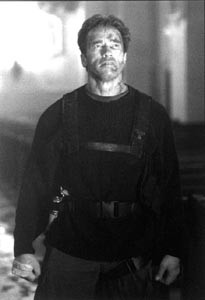
Charter Schools

0

On Course

MICHAEL AMSLER

Sonoma County charter schools are a bold experiment in education

By David Templeton

WHEN THE UNASSUMING double doors of Sonoma Charter School first swung open, back in the fall of 1993, the event was viewed by local bureaucrats and education watchdogs as the start of a worthy, if controversial, experiment. As one of California’s first charter schools–created as an alternative to a public school system that, according to charter-school advocates, has become inefficient, outdated, and unbending–everyone involved knew that this ambitious K-8 school out on Sonoma Highway would be the focus of much public scrutiny.

To an extremely focused and determined core of parents and educators, however–most of whose students would be attending the brand-new school–that first day of classes was more than just Day One of some educational “experiment.”

To them, it was nothing short of a dream come true.

“I’m constantly blown away by the things these parents have accomplished,” enthuses Roger Frost, principal of Sonoma Charter School, now officially the oldest operating charter school in the county. Aside from all the pre-legislation letter-writing and petition signing, Frost mentions fundraising efforts, school-wide painting parties, rotating volunteers for lawn-cutting and landscaping, and daily food service.

Parents even sit in when new teachers are being interviewed.

Though it may have been the passage of the 1992 California Charter Schools Act that made charter schools legally possible, it is the parents and teachers that made it happen to begin with. And it’s those same parents and teachers that continue to make things happen, as California’s charter-school program enters its sixth year. “The big majority of charter schools are founded by families that are seriously seeking a different educational option,” Frost says, “a program they can have some control over. Charter-school parents tend to be very involved.”

Indeed. Seven years after the charter-school bill passed, with nearly 200 such schools now up-and-running in the state (including 10 in Sonoma County alone, with two new ones opening doors this fall), it is clear that a high level of parent-teacher involvement is pretty much typical of the ever-growing charter-school movement.

Not that there is any such thing as a “typical charter school.”

“The whole theory behind charter schools is to generate new and innovative techniques and models of learning,” explains Colin Miller of the California Department of Education. As examples, he cites “back-to-basics” charter schools, arts-based schools that combine academic studies with emphasis on performance and fine art, and bilingual immersion schools. There are charter schools that include religious teachings, schools that take place outdoors or in museums, schools that combine classroom learning with large amounts of homeschooling, and schools that aim to help at-risk children or those with various learning blocks or substance-abuse issues (Marin County’s Sobriety High School, for instance, offers a curriculum involving 12-step meetings and routine urine tests).

“To try and lump all these schools together,” says Miller, “and to say that they are all similar, or that they are all intended to accomplish the same thing, is just impossible.”

AT A CROWDED luncheon in June, Ray Carlson–head of the board of directors for the award-winning, non-profit Kid Street Theater, in Santa Rosa–stood up before a packed room of supporters to announce that the innovative arts-therapy program had won approval for charter-school status. After several years of operating as an after-school and summertime program for at-risk children, the highly successful program has become Sonoma County’s newest charter school.

According to Carlson, it’s not a moment too soon.

“So far, most charter schools have served an upper-middle-class segment of the population,” explains Rose Haynes, Kid Street’s charter-school administrator, pointing out that the new school, which officially opens Aug. 30, will serve a distinctly less advantaged group of children: homeless kids, those in shelters, children who’ve seen severe abuse. “Most of the kids who will be coming to us literally don’t know how to learn,” she says. “The circumstances of their lives have been focused purely on survival, not learning. Our goal at Kid Street Charter School is to create a loving and caring environment so that our students can become learners.”

On the other hand, a charter school can help save existing school programs threatened by changing social and political tides. Ginger Dale is the principal of Cali Calmecac, an award-winning bilingual immersion school, grades K-8, that was a Windsor district public school until last year, when it transformed into a charter school to avoid being shut down by the anti-bilingual Unz initiative. Now that Cali Calmecac has been chartered, Dale has seen a dramatic increase in interest from parents outside the Windsor school district.

“A lot of parents evidently want their kids to be bilingual,” she says. The change, she says, has been a positive one. “Now that we’re a charter school, there’s a sense among the parents and teachers that everyone has more say in school matters–and everyone’s excited by that. We haven’t made any big changes yet, but there’s a sense of great potential, as everyone is looking at what we want from our school in the future.”

But the future of the charter system is uncertain. While parents rave about this newfound sense of participation in their children’s education, politicians concerned with such issues know that there’s more to an effective education than having happy parents. At some point, academic standards have to come into play.

“Charter schools still need to prove themselves as an effective alternative to public schools,” insists Assemblywoman Virginia Strom-Martin, D-Duncans Mills, a former elementary school teacher. “For now, the jury is still out.”

She admits that charter schools are certainly popular–to accommodate this popularity, the state Assembly has just passed legislation that will allow up to 100 new charter schools per year. But she is far from convinced that they are any better, academically, than public schools.

A recent state report, while inconclusive, found no evidence that the charter schools are academically superior to their traditional counterparts. “I basically think charter schools are fine,” continues Strom-Martin. “But I’m concerned that charter schools might be seen as some magical educational panacea. People see charters as the only alternative to problems within the public school system, but we can still do a lot of creative things within the existing structure. Teachers in public schools are not as ‘hamstrung’ as charter-school advocates believe.”

UNFORTUNATELY, the very diversity and academic range of charter schools that make them so appealing also make them difficult to evaluate, and make their performance nearly impossible to compare to that of public schools. Academically, it’s an apples-and-oranges situation. As Miller points out, “Not all charter schools are going for academic excellence. If a school is designed to serve low-performing students, then their tests will show that they are performing below standard–but does that mean the school is unsuccessful? The students might, in fact, be improving. Those types of things are hard to gauge by test results.”

Assemblywoman Kerry Mazzoni, D-Novato, agrees that some would prefer the charter-school experiment to fail. “I think some charter schools are doing a good job, and some aren’t living up to the expectations their local communities had for them,” she says. “There are people who feel that charters are threatening the existence of public schools. But I’m not one of them. And the majority of the Legislature believes that charter schools are here to stay. What we want to have happen now is for those schools to work.”

Most charter-school fans, however, believe they already are working, and that what they need is to be left alone. The last thing they want is any well-meaning legislative tinkering. “After all,” says Roger Frost, “one small step can ruin something beautiful.”

From the August 12-18, 1999 issue of the Sonoma County Independent.

© Metro Publishing Inc.
Movie Memorabilia

Prop Culture

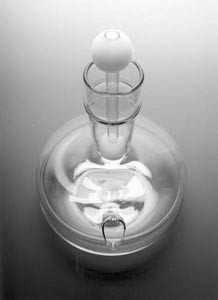
Cosmic collection: From Titantic driftwood to Star Wars props, movie memorabilia and related historical artifacts are the private passion and public spectacle of Tony Probst, owner of Sonoma Sound Masters in Santa Rosa.

Tony Probst fills his retail shop full of movie memorabilia–and you can see them for free

By Christian M. Chensvold

HOLDING A PIECE OF wreckage from the Titanic is a rare and indescribable thrill. Your imagination is stoked to a feverish pitch by this solemn connection to one of modern history’s greatest tragedies.

But finding out that the busted chair leg is worth a couple million dollars–now that’s really exciting.

When Tony Probst tells me that some guy bought a piece of Titanic wood about the size of a wallet and began selling splinters of it, along with a photo of the ship and an authentication certificate, for $400 each–and made a fortune doing it–I quickly start calculating. There’s gotta be a couple of million dollars worth of Titanic splinters in my hands right now.

But Probst, 40, who is owner of the Santa Rosa high-end electronics store Sonoma Sound Masters, has no intention of butchering his rare artifact for financial gain. Instead, it rests comfortably beside loads of other movie memorabilia and historical artifacts in his retail store-cum-museum, where any browser can take a free tour through 20th-century American pop culture.

Probst discovered how much memorabilia can enhance a business establishment while supping at San Francisco’s Hard Rock Cafe–a rather mediocre dining experience, he notes, were it not for the entertaining items on the wall. Since he had provided electronics equipment to several movie types, including the folks at George Lucas’ Marin outpost, he put the word out through his contacts that he was looking for movie stuff. Any stuff. That was three years ago, and in this short amount of time, this shopkeeper with the right connections has been able to amass a formidable collection.

So what’s he got? How about a piece of the Death Star from Return of the Jedi? How about film cells from classic Disney films such as Dumbo? Then there’s the pistol Harrison Ford used in Blade Runner, drawings penned by Walt Disney himself, and the bench in the film Titanic that DiCaprio and Winslet sit on after he’s persuaded her not to jump (Probst has been offered $28,000 for this one).

Plus there’s the Holy Grail from Indiana Jones and the Last Crusade, and from the same film, Dr. Henry Jones’ (Sean Connery) grail diary. It’s one of those magical tomes bibliophiles dream of discovering, consecrated with the dual powers of religion and cinema, humankind’s two most seductive inventions.

Probst has put very little cash into his collection. His connections find pieces for him cheap and sometimes even free. He was offered (and recently bought) Han Solo frozen in carbonite, a gigantic prop from The Empire Strikes Back, for only $1,500. From the recently released film The Mummy, Probst can get the charred map the treasure hunters used (too expensive at $3,000, he says). Then there’s Shirley Temple’s first contract, signed when she was 5 years old (wonder if she read the fine print). In fact, some of Probst’s sources are so deep inside that his pieces are the memorabilia equivalent of contraband.

“If Lucasfilm knew I had this,” he says, pointing to one prized piece, “the person I got it from would definitely not have a job anymore.”

Proof of authenticity is of immense importance in these matters, and Probst has papers on about 80 percent of the items in his collection. The other 20 percent he takes on faith from his trusted sources. When it comes to putting items up for auction, documentation is everything. Take the million-dollar Titanic driftwood: If you stole it, could you prove it was more than mere flotsam?

Of course, since the shop used to be a bank, the security system is strong enough for Probst to sleep soundly at night, and his collection is also insured.

PROBST, who has sold very few items despite offers at a 10-fold profit margin, displays his collection in his shop for the simple pleasure of sharing it with the public. He gets a great deal of satisfaction from the wide-eyed stares his collection provokes among his customers. He even allows girls to be photographed in the blue Coeur-de-Mer necklace from Titanic.

“It is very stupid to collect something and just hold it for your own gratification,” he says. “I get more enjoyment out of other people looking at it.”

Among the most valuable items in this collection is the original script and storyboards for the 1946 Disney film Song of the South (remember Tar-Baby, Brer Rabbit, and “Zippa-dee-do-da”?). According to Probst, this could go at auction for as much as $100,000. Even pricier still is a color test signed by Carl Barks–the animator who invented such characters as Tweety and Donald Duck–which might fetch $400,000.

As a sailor, Probst is particularly interested in the Titanic story. He has made friends with the operator of the Titanic Museum in Canada, who has brought him several additions to his collection, including such curiosities as overstock fabric and tiles from the White Star Lines company that never made it onto the ship, and one of the only two remaining copies of the last photograph ever taken of the ship, direct from the original negative.

“Looking at that photograph, which was one of the first items I got, you just felt some sort of vibes coming off of it,” Probst says, his eyes widening. “It’s a dark, ominous picture, and just about everybody you look at on the deck you know is going to be dead in three days.”

That connection to history provides Probst with the biggest thrill he gets from collecting. It’s as if the barriers of space and time that separate him from remote events and people have broken down.

Of course, he also has more tangible motives. Memorabilia are a very prudent investment: barring any major economic depression, the stuff will only go up in value.

Still, despite the presence of many props from such recent mega-movies as The Sphere and The Mummy, Probst’s movie collection offers more than just high-priced trinkets from Hollywood. There are many items–such as Billy Mummy’s laser gun from Lost in Space, a photo of Cassius Clay (later Mohammed Ali) with the Beatles, and John Lennon’s tour jacket from the year he was assassinated–that have more to offer than their surface significance.

Together, they form a chronicle of 20th-century Americana, a part of who we are–it’s as if Probst had the pillow that Washington died on. A stroll through his collection is a stroll down memory lane of Main Street America, complete with dollar values.

So it seems strangely ironic when Probst says that the one piece he most covets is the title prop used in the 1960 film The Time Machine.

Some might think he already has one.

From the August 12-18, 1999 issue of the Sonoma County Independent.

© Metro Publishing Inc.
‘Gatemouth’ Brown

0

Texas Original

‘Gatemouth’ Brown has plenty of bite

By Greg Cahill

HE’S ONE OF A KIND–a pipe-smoking Texas musician with roots in the Louisiana swamplands, a savvy swing king equally at home with guitar, fiddle, or harmonica, a musical innovator who deftly blends blues, western swing, country, jazz, and Cajun sounds.

Guitarist and singer Clarence “Gatemouth” Brown, 75, hasn’t had a hit in 50 years, but he’s more popular than ever. He is a seven-time Grammy nominee, a multiple winner of the prestigious W.C. Handy Blues Award, and a recipient of the R&B Foundation’s highest honor, the Pioneer Award.

Three years ago, Eric Clapton, Ry Cooder, Sonny Landreth, Leon Russell, and Maria Muldaur paid tribute to Brown on Long Way Home (Verve/Gitanes). Brown followed that with 1997’s Grammy-winning Gate Swings (Verve), a big-band recording that harkened back to Brown’s Texas roots.

His most recent album, the just released American Music, Texas Style (Verve), follows hot on the heels of the recently reissued 1977 nugget Blackjack (Sugar Hill), his first domestically released album.

But Brown isn’t jumping on the swing bandwagon–he damned near invented it.

It was the large-ensemble format that launched Brown’s recording career in 1947, and earned him such hits as “Okie Dokie Stomp,” which showcased his stinging, syncopated guitar lines with suave big-band accompaniment. If you detect a degree of showmanship in Brown’s act, it’s no accident. His first gig was with such swing/vaudeville outfits as W. M. Bimbo and his Brownskin Models and Howard Spencer and the Gay Swingsters.

Born in 1924 in Vinton, La., and raised on a ranch in nearby Orange, Texas, Brown shaped his musical approach in the setting of his rural surroundings and under the keen tutelage of his father, who played guitar, fiddle, and piano. “But my dad did not play the blues,” Brown says. “I grew up on Cajun music, country, and bluegrass. I didn’t know anything about blues until I was a teenager. Even today, some people make the mistake of categorizing me as a blues musician. I do play the blues, but in a positive way, and as just one of my many styles.”

His first big break came in 1947 when a then-young Brown sat in at a Houston nightclub for an ailing T-Bone Walker. “I bulldozed my way onto the bandstand, picked up a guitar, and made my debut right there.”

A management contract with nightclub owner Don Robey and a Peacock Records contract followed. But the road to fame hasn’t been easy. Brown had to struggle for years to free himself from Robey, who took songwriter’s credit for many of Brown’s songs.

These days, Brown tours seldom. “I’m backin’ down a bit, man, it got to me,” he recently told Billboard magazine. Meanwhile, the show is a chance for a new generation of swing fans to catch a Texas original. “Hopefully, we’ll have a chance to make sure that some younger people get to hear this,” Verve executive David Neidhart says.

“I think the guitar playing will blow people away–how interesting and unconventional a lot of what he does is.”

Clarence “Gatemouth” Brown performs Friday, Aug. 13, at 9 p.m. at the Phoenix Theatre, 201 Washington St., Petaluma. Tickets are $15.

From the August 12-18, 1999 issue of the Sonoma County Independent.

© Metro Publishing Inc.
Runaway Bride

0

Wed Menace

not romantic.

By David Templeton

Writer David Templeton takes interesting people to interesting movies in his ongoing quest for the ultimate post-film conversation. This column is not a movie review; rather, it’s a free-wheeling, tangential discussion of life, alternative ideas, and popular culture.

Suzanne Finnamore holds up three fingers–one for each year of her still newlywed-ish marriage. As she does so, her multi-diamond wedding ring sparkles in the moody light of this people-packed San Francisco pub, Liverpool Lil’s.

Strangers from other tables turn their heads to look at the ring.

“Technically,” Finnamore shouts, folding her fingers away and straining to be heard above the post-Happy Hour tumult all around us, “we won’t be married three years until September 21–but I tend to round up.”

She takes a sip of white wine.

“It’s weird. As the product of a broken home, I always feel the specter of divorce hanging over my head,” she says, managing to sound confessional and intimate while still making herself heard. “But I read somewhere that the divorce rate goes down dramatically after the first 40 years. Isn’t that helpful? Hardly anyone gets divorced after being married for 40 years.

“So the way I look at it, I’ve got three years down and only 37 more to go–then I’m safe.”

“Are you checking the years off on the wall somewhere?” I suggest.

“Oh, sure,” she laughs. “Like a prisoner in a cell.”

My guest is the author of Otherwise Engaged (Knopf; $22.00), a sharp-witted, very funny novel about marriage that plays like a series of clever one-liners disguised as an epic emotional journey. In the book, Eve–Finnamore’s hyper-determined heroine–walks an emotionally rocky road from the moment of her engagement to the day of her wedding.

“Michael leaves his socks on the floor when he takes off his shoes,” she writes. “This used to be fine. But now a sock on the floor isn’t just a sock on the floor. It’s a sock on the floor for the rest of my life.”

Picked from the slush pile at Knopf–Finnamore closed the deal on the day she gave birth to her son, Pablo–the novel has hit the literary funny bone of men as well as women, and seems poised to become a runaway hit.

And speaking of runaways.

We’ve just divorced ourselves from a screening of Runaway Bride, the remarkably un-cynical–dare I say “sweet?”–comedy starring Richard Gere and Julia Roberts. In the film, she’s a commitment-phobic charmer with a history of leaving men at the altar (literally; she’s done it three times), and he’s the newspaper columnist who’s career depends on her doing it a fourth time.

Finnamore liked it.

“Though Richard Gere was playing a straight man who owned a cat,” she says. “A straight man? With a cat? I’m sorry.

“Some things really did ring true, though,” she allows. “Remember when Richard Gere is watching those videos of Julia Roberts’ three ‘almost-marriages?’ You could see–especially in the second one–that she was visibly hyperventilating as she was walking down the aisle.

“That’s exactly how I felt when I got married. I was a wreck. I didn’t expect to be, but I was. The intensity of the moment overwhelmed me.”

“Hmmmmm. Aren’t weddings supposed to be romantic moments?” I ask. “Isn’t romance kind of integral to the “perfect wedding” that you read about in Modern Bride Magazine?” Or see in Julia Roberts movies.

“Oh no! No!” Finnamore shouts “There’s nothing romantic or intimate about a wedding. Once you have more than five or six people, it becomes a group event and you lose all hope of intimacy. To me a ‘romantic moment’ with my husband is just the two of us.

“It doesn’t include a whole lot of other people. It doesn’t include legally binding contracts, or caterers, or people in tight dresses and funny hats.”

“I said something to my husband, just the other day,” Finnamore relates, “and it really was, I felt, a landmark moment. Our son is now almost a year old, and we’d been having what we call ‘an interesting week,’ where everything that could go wrong did go wrong.

“So I said to my husband, at the end of this long, tumultuous day, just before we went to bed, ‘Well, I guess we’re really married now.'”

A temporary decrease in the bar’s volume allows Finnamore to lower her voice.

“It’s weird. Three years of marriage,” she murmurs, “and it wasn’t until that moment, that very moment, that I finally felt like we were actually married.”

“Is this ‘married’ in a good way?” I ask, carefully.

“Oh yeah, married in a good way,” she nods, solidly. “But also married in a real way.”

“I don’t think you really get married on the day of the wedding,” she expounds. “You have an opportunity to start working toward a marriage at that point, but I don’t think the marriage actually occurs until later.”

“In my opinion, weddings are one of the few public rituals that we have left in our society. I mean, what else have we got? There are no more public hangings. Weddings are about it, right?”

“Funerals,” I mention.

“Okay. Weddings and funerals,” Finnamore says. “But people mostly just get cremated now–then there’s a little wine and cheese thing afterwards, so even funerals are going the way of the dodo. Pretty soon, weddings will be all we have left.

“Well, weddings and divorces,” she says sitting up straight. “Divorces are now more common than funerals, aren’t they? What we need is some really fun ritual to accompany our divorces. There’s no divorce cake. There’s no divorce shower. There’s no divorce rehearsal or rehearsal dinner. It’s really a shame.”

“What about a public sock-burning,” I suggest.

“That could work,” she laughs. “God knows we need something, cause as long as people keep getting engaged, people will keep on getting divorced.”

From the date-date, 1999 issue of the Sonoma County Independent.

© Metro Publishing Inc.
Spins

0

Two to Tango

By Greg Cahill

Yo Yo Ma Soul of the Tango: The Music of Astor Piazzolla Sony Classical

Various Artists The Tango Lesson Sony Classical

IT’S MILONGA TIME. From the bars of Buenos Aires to the concert halls of America, audiences throughout this century have embraced the tango. Actually, the roots of the tango–burning with Latin passion and driven by swirling, erotic rhythms–reach back to the music of African slaves and black Cubans who brought their indigenous sound to Buenos Aires, where it mixed with the European polka and the mazurka to form the basis for this romantic dance music.

In the 1920s, the late Argentinean bandoneon master Astor Piazzolla transformed the tango, blending jazz and symphonic influences to create complex instrumentals pulsating with danger and raw intensity. For his trouble, he was exiled from his native land–the Argentineans frown upon those who dare mess with this national institution, though the tango later got more than its share of rockification in the ’60s and ’70s.

America’s love affair with the tango in recent years has coincided with Argentina’s own search for the true tango sound.

On Soul of the Tango, classical cellist Yo Yo Ma pays tribute to Piazzolla and turns the tables, so to speak, by fleshing out the classical elements while focusing on the more lyrical, serene side of his brilliant songs. While Ma’s inspired covers lack the dramatic and often dissonant throb that characterized Piazzolla’s most ambitious works (including several that drew their inspiration from the steely stiletto bravura of the mean streets of Buenos Aires), he lovingly caresses Piazzolla’s beautiful melodies and retains the sense of adventure that permeated so many of the late master’s compositions.

Ma also contributes an energized rendering of Piazzolla’s classic “Libertango” to the soundtrack of The Tango Lesson, the latest film from director Sally Potter (Orlando). The movie tells the story of an ambitious female filmmaker who places herself under the tutelage of an Argentinean tango dancer. Potter calls it “a distillation of my own experiences . . . perilously on the knife edge between reality and fiction.”

The 20 tracks–interspersed by haunting instrumental interludes composed by Potter–are mostly original recordings selected by some of the masters of tango composition and arrangement, and played by some of Argentina’s greatest musicians and bandleaders. The collection is a richly rewarding overview of the best that tango has to offer. Highly recommended.

Joe Henderson Porgy & Bess Verve

IN SEARCH OF another tribute to match his acclaimed homages to Miles Davis and Antonio Carlos Jobim, jazz tenor great Joe Henderson perused the George Gershwin songbook and set his sights on the classic Broadway hit Porgy & Bess, which gets a big post-bop blast from the sax legend. The result is pure joy, though I have to wonder about the decision to include Sting’s tepid vocal on “It Ain’t Necessarily So” (Chaka Khan’s sultry reading of “Summertime,” on the other hand, is a pleasant surprise). Sterling solos and able accompaniment by guitarist John Scofield, trombonist Conrad Herwig, pianist Tommy Flanagan, and vibist Stefon Harris, make this a sure bet for jazz fans looking for stocking stuffers.

Old & in the Way Breakdown: Original Live Recordings, 1973, Vol. II Acoustic Disc

EVERYONE WHO ever fell under the spell of Panama Red knows that it just doesn’t get any better than Old & in the Way–the short-lived but legendary bluegrass gathering of Jerry Garcia, David Grisman, Peter Rowan, Vassar Clements, and John Kahn. This is the second volume of outtakes released by Grisman’s San Rafael-based label from the 1973 Boarding House in San Francisco sessions that spawned that one-off album. As the title suggests, it’s a chance to hear these talented players stretch out on their instruments while basking in the glow of their high and lonesome vocals. Kick back on the back porch of your mind with this treasure–an absolute must for lovers of American music.

From the August 12-18, 1999 issue of the Sonoma County Independent.

© Metro Publishing Inc.
Work Hours

Work Daze

Cave dwellers worked a third as much as modern man. And we call this progress?

By Jane Louise Boursaw

AREN’T YOU JUST SICK of working all the time? You put in your 40, 50, 60, or more hours a week at your job, then spend all weekend cleaning the house, mowing the lawn, and doing laundry! Or maybe you’re self-employed, work out of your home, and end up working at your job all the time, day and night.

The average American now spends 47.1 hours per week at a full-time job. That’s up from 43.6 hours per week in 1977, so notes a 1997 nationwide survey of some 3,000 employees by the Families and Work Institute, a New York-based non-profit that addresses work and family issues. Over the course of a year, that’s about four extra weeks spent working.

Do you ever wonder if there is some way to pull our lives back from the work abyss? This era of techno-gadgets–e-mail, cell phones, pagers, faxes, and voice mail–isn’t helping. These things should be making our lives more efficient, freeing up more time for important things like lying on the beach and spending time with our family. Instead, they only make us even more connected to our jobs.

The line between work life and private life is getting fuzzier all the time. For example, the next time a cell phone rings in a restaurant or movie theater, notice how many people automatically reach for theirs “just in case” it might be a business call. In the ’60s and ’70s, stress experts called this kind of thing “multiphasic behavior,” otherwise known as “doing several things at once.”

These days, they call it efficiency.

As a result, we can’t get away from our jobs and are totally stressed out. Our marriages are in trouble, we have no time for our children, and we’re physical and emotional wrecks.

But some companies are trying to help their employees buck the odds by offering stress-relievers, notes an article in the June 7 issue of Newsweek. Companies like AT&T, GTE, and Sprint are letting employees set their own schedules, offering wellness programs like on-site gyms and massages, and providing “get-a-life” coaches– psychologists, gurus, even yoga instructors–to help draw the line between work and personal time. Their job is to help overworked employees maintain some semblance of a personal life in an era where meals are quite often eaten at work and e-mail is returned after the kids are tucked into bed.

Drop-in centers–mini-offices for suburban employees–are another growing trend. Instead of battling traffic through the Bay Area, employees of Sun Microsystems can drive to one of four small branch offices at any hour to plug into the company network. “Sun gets more work out of us, and we get some of our life back,” notes project manager Brent Daniel in the Newsweek article. Daniel gets to skip his hour-long highway commute when he works from the drop-in center near his home.

Then there’s the matter of how much work we should be doing. As human beings, we all must do “some” work for basic survival, but is there a “minimum daily requirement” of work? A number of diverse sources, ranging from primitive culture to modern history, place this figure at about three hours a day.

Marshall Sahlins, author of Stone Age Economics, discovered that prehistoric men hunted from two to two and a half days a week, with an average work week of 15 hours. Women gathered for about the same amount of time each week. In fact, one day’s work supplied a woman’s family with vegetables for the next three days. Throughout the year, both men and women worked for a couple of days, then took a couple off to rest, play games, gossip, plan rituals, and visit.

In From Joblessness to Liberation, Dr. Frithjof Bergmann writes, “For most of human history, people only worked for two or three hours per day. As we moved from agriculture to industrialization, work hours increased, creating standards that labeled a person lazy if he or she didn’t work a 40-hour week. The very notion that everyone should have a job only began [150 years ago] with the Industrial Revolution.”

DURING THE DEPRESSION, free time was equated with unemployment. The New Deal established the 40-hour week, and workers were taught to consider employment, not free time, as their right as citizens.

When it comes to erasing the line between work and private life, baby boomers are partly to blame. They turned their homes into workplaces and started thinking of work in terms of self-fulfillment, contrary to their parents, who were taught by the Depression that any job that pays a good wage was worth keeping. Now our careers begin earlier and end later, reversing a trend that reached its peak after World War II, when child labor virtually disappeared and retirement was a birthright.

According to the Department of Labor, the number of people 55 and older who are still in the labor force has increased by 6 million since 1950. Most of them are women. That number is projected to increase by another 6 million by the year 2006.

A generation ago, economists believed that America was on its way to being an affluent society. More efficient technology was supposed to produce an abundance of wealth that we could enjoy with less and less labor. Things didn’t quite turn out that way, for a variety of reasons, including the Vietnam War and the oil boom of the ’70s, which led to double-digit inflation that sapped the value of wages. A string of recessions, mergers, and downsizing served to crash the economy during the ’80s.

But baby boomers still want to maintain the lifestyle of their parents, which means going deeply into debt. According to an article in the May/June issue of Modern Maturity, about one fourth of the average family’s income now goes to various creditors, more than in any previous generation. These days, in nearly four out of five couples, both partners work outside the home. In 1950, it was one out of five.

Still, the “simple living” trend has been developing steadily over the past decade or so. Some people are just fed up with working all the time and are unwilling to continue sacrificing their family and leisure time for the almighty dollar and expensive toys their neighbors can covet. Many have figured out how to “take back their lives”–like earning less money, buying fewer things, and understanding that “money equals life energy,” a concept embraced in the book Your Money or Your Life by Joe Dominguez and Vicki Robin.

Dominguez and Robin claim that we can take control of our lives and even achieve financial independence by changing the way we think about money. Translated, that means: Is that new pair of $60 shoes really worth six hours of your $10-an-hour job? Wouldn’t you rather spend the six hours playing with your 4-year-old son?

There is, after all, more to life than work.

From the August 12-18, 1999 issue of the Sonoma County Independent.

© Metro Publishing Inc.
Food Tourism

0

Foodie Fantasy

MICHAEL AMSLER

Food tourism is fueling an economic boom in Sonoma County. The pot is boiling

By Marina Wolf

Typically for Sonoma County, working pickups will park next to luxury sedans, dusty cowboy boots will stroll alongside Italian loafers, faded denims will brush up against imported silks, and the locally grown will share opinions with the nationally known. All these things will happen casually and comfortably because the participants share a common passion . . . fine wine, fine food, good company, and an appreciation of the people who make them happen.

–from the Sonoma County Wine and Food Showcase program

WELCOME TO Disneyland–Sonoma style. The aforementioned program notes are beautiful, even laudable, sentiments, but a look around the prestigious showcase event on opening night revealed a serious gap between fantasy and fact. Namely, there weren’t many jeans among the several hundred ticket holders, some of whom had paid $650 per person for a five-day events package. And by far the “working”est-looking car in the lot was a little dented Honda Civic hatchback belonging to yours truly.

It’s a peculiar paradox of marketing Sonoma County’s food scene to outsiders: the dirt (the dusty boots, if you will) is needed to keep our claim to country legitimate, but high-end events and packages are needed to bring in the dough. Bridging the gap will take more than a poetic passage in a program.

Of course, when the bottom line is looking good and getting better, who wants to mess with it? “Eating and drinking” accounts for 16 percent of the almost $650 million that visitors to the county spent in 1995, the most recent year for which there are figures. What with recent write-ups in such prestigious publications as Fine Cooking, Food and Wine, and the New York Times, Sonoma County’s food and wine industry is attracting an increasingly higher class of tourists and spawning pricey package tours. Take the one that HMS Travel has arranged this October for the editors and 120 readers of Fine Cooking magazine. Billed as a California Experience, the three-day tour sold out in 42 days, at a per-person cost of $1,100 to $1,300, not including airfare.

“A room at the Hilton sells for $100 a night–we’re selling that [space] for almost $420 a night, because we wrap it around culinary education opportunities and affiliate it with Fine Cooking,” says HMS owner Larry Martin, whose company has specialized in nationwide food and wine group tourism since 1981.

These visitors probably spend more than the average visitor’s daily expenditure of $135; they’re coming out here expressly to experience a heightened awareness of food and wine, so they’ll be buying lots to take back home. And they’re here longer, so they’ll spend more overall. Finally, they’re adding to the take of the all-important transit occupancy tax, the tax on overnight stays that are collected and parceled out to city and county tourism boards for marketing and support services, plus arts and community events that benefit local residents. In 1998, the T.O.T. collected countywide totaled over $9 million.

Tours such as the Fine Cooking trip fall into the category that the travel industry calls “enrichment travel,” and baby boomers are leading the charge, says Martin. “We’ve already done the beach trip. We’ve sat on our butts. We’re bored. Now we want to go on an archeological dig in Africa or help people build houses in Appalachia.”

Throw in the national trend toward heightened culinary awareness, and you get field trips to organic farms and an evening of wine with Robert Mondavi.

EVEN THE MOST luxurious overnight trip to Sonoma County is predicated on a decidedly low-budget industry: farming and small-scale food production. It’s always been a staple of the county’s economy, and the image of the farmer in the dell remains a draw for the county’s 4.5 million visitors each year, especially daytrippers from the greater Bay Area.

Farm Trails is largely responsible for cultivating this reputation. It pioneered farm networking in 1973, and has grown to include more than 87 full members. While the basic idea hasn’t changed much over the years, both the visitors and the farmers have, says Jayne Burns, Farm Trails’ administrative assistant. “People want to be supportive of farms, and at the same time they have a really fast lifestyle,” she observes. “Everything we do has to be a little more action-packed–you know, packaged for people.”

There are those farmers who resist the packaging, such as Shepherd Bliss of Kokopelli Farm. Bliss, a well-known organic berry farmer, has no e-mail or website, but boasts 400 customers on a mailing list, and receives visits from others who see his handmade signs along the roads in Sebastopol. His semi-Amish farming techniques and free-range chickens create a certain rough pastoral look that people are drawn to. “A lot of farms aren’t like that anymore,” Bliss says. “They’re not pretty. They’re overspecialized, they’re overgrazed, and they don’t appeal to people to visit.”

Feeling the need to accentuate Mother Nature’s natural charm, many Farm Trails farmers have added such attractions as hayrides, petting zoos, or lunch counters. Where once people used to pick up the fruit and can it themselves, most fruit farms now have some kind of storefront where they can sell canned food items and a few token pounds of fresh fruit. Bruce Campbell, who runs a farm and herb nursery near Forestville, recalls how people used to come to his U-pick apple orchard and buy 150 to 200 pounds. Nowadays, they pick three pounds in the same time, interspersed with picnicking and lots of photos. “If we had a concession on film, we would make money,” jokes Campbell.

MICHAEL AMSLER

IS IT POSSIBLE to blend farm charm and money-making venture with more than just a photo op? Supporters of the recently enacted state Agriculture Homestay Bill think so. It allows farmers to feed and house overnight guests at their working farms, thereby combining the comfort of a bed and breakfast with the back-to-the-land nostalgia that many visitors to the North Bay are after. “It’s important to stress that these homestays will be happening on working farms, not some Disneyland version,” says Assemblywoman Virginia Strom-Martin, D-Duncans Mills, who authored the legislation. “One of the aspects of agricultural homestays that most excites me is that they will allow urban and suburban Californians to gain a better understanding of agriculture, which I believe is misunderstood all too often.

“People who’ve shared meals with the farmers who grow their food will be more likely to care about the continued health of our farms and rural communities.”

No Sonoma County farmers are immediately taking up the option as outlined in the bill, but Michael Dimock of Sunflower Strategies, an Sonoma County-based agricultural marketing firm, says it’s only a matter of time. “Tremendous opportunities remain to be fully developed in this area,” says Dimock. “Everyone’s just starting out.”

The concept was borrowed from the strong farmstay tradition in Europe and New Zealand, where government has subsidized agriculture and agritourism for years in the belief that small farmholders maintain the look–and the tourist value–of the countryside. Ellie Rilla, director of the UC Cooperative Extension office in Novato, visited England and New England a couple of years ago to examine their farmstay models, and believes that they could be implemented here in the North Bay quite successfully. “My dream would be that people could come here, they could get on the Internet, just as I did when I went to England, and figure out their whole stay,” says Rilla. “They could contact farms and farmers through one organization . . . .

“They could do their L.A. thing, and they could see Yosemite, but they could also see farms.”

A farmstay experience would be accessible to many more people than the standard wine-country B&B, say supporters. “The places could be upscale or they could be dormitories in a converted barn,” says Dimock. Such places will necessarily be more affordable: “If they’re a working farm, they’re not going to be able to afford to cater as much to their visitors.”

ONE ESTABLISHMENT that does cater to its visitors’ whims, but still manages to keep some of its activities accessible, is the Ramekins Sonoma Valley Culinary School. The cooking school is only a year old, but with a full catalog of 62 instructors offering over a hundred classes in a four-month period, the school is clearly doing well.

The key to its success seems to be its range of guests and diversified services. Some students fly up from Southern California for a weekend at the school, with classes and overnight stays in the school’s own B&B lodgings, starting at $150 a night. This fall the catalog will add customizable private tours, with visits to Sonoma County wineries, small farms, and artisan food producers.

But most of the visitors don’t want anything too fancy. They’re locals, or they drive over from Napa Valley, Marin County, or San Francisco for hands-on food experiences. And with course fees starting at $35, these three-hour classes with star chefs from the county and around the country are considered a bargain. The school also offers an assistantship program that lets would-be students attend classes for up to 80 percent off the class fee in exchange for assisting the visiting chefs.

Ramekins encourages its chef-instructors to use local products whenever possible, a move that more and more local restaurants, of all levels, are making, says Lyndi Brown, a consultant to Select Sonoma County and a longtime promoter of Sonoma County agriculture. “It’s worth promoting to tourists that they’re going to experience really fabulous food here at any point along the spectrum, whether they stop for a sandwich or they go after the big splurge. . . . To me that’s really exciting, because then [the food] is there for everyone.”

From the August 12-18, 1999 issue of the Sonoma County Independent.

© Metro Publishing Inc.
‘The Haunting’

0

Truly Frightening

By David Templeton

Writer David Templeton takes interesting people to interesting movies in his ongoing quest for the ultimate post-film conversation. This column is not a review; rather, it’s a freewheeling, tangential discussion of life, alternative ideas, and popular culture.

True. Psychological. Terror.

It is a phrase–spoken just like that, three distinct words: true; psychological; terror–that is used often by writers Douglas Preston and Lincoln Child.

As the authors of the best-selling books The Relic, Riptide, and the brand-new, very scary Thunderhead–all prime examples of modern edge-of-your-seat Scare-Lit–Lincoln and Child have always held true psychological terror in the highest regard. It’s given them a nice legitimate profession. True psychological terror is the gift that these long-collaborating gentlemen so gleefully bestow upon a legion of white-knuckled fans. Not surprisingly, they now expect nothing less than true psychological terror from the movies and books they turn to for diversion and entertainment.

Which is why Douglas Preston and Lincoln Child were so damn disappointed by The Haunting.

Based on Shirley Jackson’s 1959 novel The Haunting of Hill House–filmed once already in 1963–this new version, directed by Jan De Bont (Speed, Twister), is jam-packed full of eerie noises and leaping skeletons and weird, floating ghosties, and yet, to quote Mr. Preston, “it’s just not that scary.”

Not. That. Scary.

The Haunting is the story of a scientist (Liam Neeson) and three jumpy insomniacs (Lili Taylor, Catherine Zeta-Jones, and Owen Wilson) trapped in a big old house that was, as the advertisements say, “born evil.” The 1963 version had audiences leaving their night-lights on for weeks. The script was tight and subtle. There were no special effects to speak of.

“Hollywood special effects,” says Preston, “are ruining scary movies, because special effects are incompatible with true psychological terror. The more you show us–with state-of-the-art computer graphics and animatronics–the less frightening it is.

“For true psychological terror,” he explains, “you need to see less rather than more.”

“Absolutely,” Child agrees. “Maybe it’s just endemic of modern moviemaking, but it seems, in The Haunting, that the filmmakers tried to solve all their plot problems by throwing on the FX. If you’re trying to elicit true psychological terror from your audience, that just doesn’t work. You’re showing too much.”

For an example of this “less is more frightening” approach, check out Thunderhead (Warner Books; $25.95), a supernatural adventure about a team of archaeologists who uncover the lost Anasazi city of Quivira, a place of ancient evil (of course) that is guarded by, well–something you don’t get a good glimpse at for a long, long time.

“What you don’t see can definitely hurt you,” says Preston, laughing. For further examples, the author tosses out a few of his favorite movies: Psycho. The Conversation. And especially, The Exorcist. “I was a basket case for six months after that one,” he admits.

As for Child, the scariest movie he’s seen is 1967’s Wait until Dark.

“I was young when I went to see it,” he tells. “I was with my mother. Near the end, there’s this scene where the blind woman (Audrey Hepburn) is trying to get to the refrigerator, to turn it off so the light won’t betray her presence to the killer–and suddenly this shadow comes leaping out nowhere with a knife. The whole audience screamed. And my mother suddenly thrusts me down to the floor of the theater and practically sits on me. I could hear Hepburn screaming and I could hear the music and the reactions of the audience–and I gotta tell you, from the floor it was a whole lot scarier.”

Talk about true psychological terror.

Maybe The Haunting would have been better had somebody’s mother come in and thrown us all to the floor once or twice. Now that would be scary.

“The movie wasn’t all bad,” Child interjects. “The house was great.”

Yes it was. Inside and out, it looked evil. Which brings us to that notion of a house being “born bad.”

“Is there any truth to the idea of evil geography? Can a piece of real estate really be intrinsically bad?” I ask.

“Well, for us, that idea–that geography can be evil–is a literary necessity,” answers Child. “If the city of Quivira wasn’t evil, it wouldn’t be a Preston-Child story. But I do believe that certain places on the planet, places that have seen a lot of evil, can become imbued with a sense of that evil.”

“I agree,” says Preston. “I remember, last year, visiting the city of Chichen Itza, down in the Yucatan, and climbing the Pyramid of the Sun. The stairs of those Mayan temples are very steep, and the reason they’re so steep is so that, after the priests have cut the limbs off their victims, they wanted the pieces to tumble all the way to the ground. So, I climbed up to the top of this temple, the place where all the human sacrifices were performed, and I have to say, it’s a place where you can still feel the evil that went on there, you can sense the horror of what took place.”

“I got the same feeling when I visited Dachau,” says Child. “There’s hardly anything left of it. Most of the buildings are gone. But the very sparseness of the spot, and the knowledge of what went on there, made that feeling of horror, that feeling of evil, very vivid.

“I didn’t sleep well for a week,” he adds.

“In Thunderhead,” elaborates Preston, “a lot of the witchcraft describes is based on Navaho beliefs. The Navahos believe that the place where a person dies–if that person did not die gently as a respected, old person; if they suffered from an illness and died early, or died a violent death–then the ‘Chindi’ of the person, the evil essence of that person, remains in that spot. All the goodness of the person goes off to a better world, but the evil remains behind.

“That’s why, when a person dies badly in a Navaho hogan, the family abandons the house. Sometimes, they even burn it to the ground.”

“Evil, then, to speak the obvious, is a bad thing,” I say. “We are upset and disturbed by the feelings of true terror that you described sensing in those real-life places. So why do we turn to scary books and movies for entertainment?”

No one answers for a moment.

“I think the theory is,” says Child, “that if you can handle being frightened by some movie or book, then maybe you can handle being frightened by that lump under your skin or that mortgage bill at the end of the month.”

“It’s true. Book and movies allow us to practice being scared,” Preston concludes, “so we’re better equipped for the true psychological terrors of everyday life.”

Web extra to the August 5-11, 1999 issue of the Sonoma County Independent.

© Metro Publishing Inc.

Y2K Wine Shortage

0

On Ice

On ice: Suppliers say there’s plenty of local bubbly to go around for Y2K.

Sparkling shortage short sighted

By Bob Johnson

THE TIME HAS COME to pull the plug on the Y2K myth. The IRS is not going to lose your overdue tax bill, there will be no decline in the amount of SPAM finding its way into your online mail box, and there will be no shortage of sparkling wine with which to toast the new millennium (even if the toast, technically speaking, is a year early).

Hey, one out of three ain’t bad.

Of the 248 (or so) wine columns that devoted space last December and January to predictions for the wine world in 1999, only this one took a pass on the “sparkling shortage” theme.

Why did we refuse to fall for the millennium marketing trick when other vino journalists dived right in? Probably because in a past life, your reporter once wrote press releases for a living, and the press release isn’t always the be-all and end-all of fact distribution. Kudos to Joy Sterling of Sebastopol’s Iron Horse Vineyards for at least acknowledging there are two points of view when it comes to sparkling-wine supplies. She predicted an international shortage of “prestige sparklings and champagnes” come December, but then noted: “Not everyone agrees.”

Sterling may be right about the “prestige” labels. Distributors report earlier-than-normal runs on high-end bottlings by Dom Perignon, Veuve Clicquot, and Bollinger. “There is a finite quantity of this caliber of sparkling,” Sterling adds.

Our attitude: Don’t sweat it. While the wine snobs are spending hundreds per bottle in order to drink “prestige,” we’ll stick with homegrown sparklers that satisfy just as much, yet cost a fraction of their French counterparts.

A GOOD PLACE to start a local shopping expedition is Iron Horse, located on the site of what once was a railroad stop. The train whistles were long ago silenced, but the bells and whistles employed in the vineyard–including a highly engineered frost protection system–help produce high-quality grapes and wines. In addition to its regular roster of fine sparklers, Iron Horse is offering its top-of-the-line 1990 Blanc de Blancs LD (late-disgorged) in etched and individually numbered jeroboams (which hold the equivalent of four regular-sized bottles). The special millennium bottling will sell for $650 . . . or if big bottles aren’t your bag, purchase four regular-sized bottles for around $180. Retail price is $45 per.

Elsewhere around the county:

* Robert Hunter Winery in Sonoma has released only its second sparkler of the last dozen years, and it’s stunning. The 1993 Brut du Noir is a blend of 60 percent pinot noir and 40 percent chardonnay that was aged on the yeast for more than four years. Ex-banker Bob Hunter crafted this wine from vineyard to bottling, and only 1,000 cases were produced, so shop early. Price: $27.50.

* Korbel Champagne Cellars in Guerneville will release its Millennium Commemorative Cuvée in September. The bottle will feature a silk-screened label, and inside will be a blend of 70 percent chardonnay and 30 percent pinot noir. Price: $17.99. Locals also may want to check out Korbel’s Rouge, an unusual blend of pinot noir and cabernet sauvignon grapes, available only at the winery for $12.99.

* Geyser Peak Winery in Geyserville also produces a rare–at least in California–all-red blend. The 1994 Winemaker’s Selection Sparkling Shiraz/Cabernet was made from all “reserve quality lots” of grapes, and the resulting wine is spritzy, juicy, and spicy. It’s a sparkler for the adventurous, not the traditionalist. Price: $25.

* J Wine Company in Healdsburg will release a millennium sparkler once its winery opens to the public in late September or early October. Judy Jordan is keeping mum (that’s mum with two M’s, not three) about this bottling, except to say that it is a late-disgorged wine from the 1987 vintage. Because of its limited supply, only visitors to the winery will be able to procure it. Price: not yet determined.

* Windsor Vineyards’ 1996 Brut Champagne ($20), made entirely from Sonoma County fruit, is available now, and its 1996 Blanc de Noir ($22) will be released in September. These bottlings feature limited-edition millennium labels, and visitors to the winery’s tasting room in Healdsburg can have these labels personalized.

Other local wineries also will be releasing commemorative and regular bottlings of sparkling wine. Opt for exquisite Sonoman over expensive French, and lay those fears of a sparkling shortage to rest.

From the August 5-11, 1999 issue of the Sonoma County Independent.

© Metro Publishing Inc.

Raw Food

0

In the Raw

Living nutrition: Raw foodists argue that uncooked foods are better for healthy bodies because nutrients are not destroyed in the cooking process.

A quick taste of the uncooked and living-food movement

By Marina Wolf

THERE IT IS on my plate, a piece of pizza unlike any I’ve ever seen. The crust is buckwheat groats, soaked for days, then mashed and laid out to dry in the sun. The sauce is guacamole, pungent with raw garlic and raw chile peppers. On top are sprinkled sun-dried tomatoes, chewy bits of mushroom, bitter leafy greens, and . . . could that be mint and borage flowers?

I’m not here to review the restaurant, Organica. I just want to taste the food and see what goes into preparing raw-gourmet cuisine.

For starters, I can see that most American diners would not recognize this heap of salad bits as even a loose analog of their beloved pepperoni and cheese pie. But this is what they call pizza at Organica, a San Francisco restaurant that’s on the cutting edge of the raw and living-foods movement.

Literally cutting edge.

The only tools in Organica’s kitchen involve blades–knives, scissors, food processors, blenders, juicers, slicers. There is no oven or stovetop–principles of raw food prohibit heating food over about 112 degrees, lest the enzymes in the menu item die and become “toxic”–so the kitchen is curiously spacious and airy. Even the door is left open to the cool San Francisco breeze, as if to minimize the vegetable’s shock in the move from refrigerator to plate.

The ingredients are easy, but the labor isn’t, not for the high-concept creations that chef Juliano turns out and teaches through classes and his recent book Raw: The Uncooked Book (HarperCollins; $32). Those may just be cabbage leaves in his Thai “pasta,” but somebody had to shred them. Three chefs work at the back at Organica on a Sunday afternoon, and the food still takes 30 minutes to arrive.

Of course, most raw foodists don’t eat like this every day. David Klein, a raw-food trainer in Sebastopol, shares an outline of the food in a typical raw-food day: a few oranges and grapefruit juice for breakfast, a bunch of bananas and a cluster of cukes through late morning and lunchtime, a whole honeydew melon in the afternoon, more bananas and cucumbers and a head of lettuce for dinner.

Not surprisingly, Klein finds most restaurant productions of raw food to be over the top. “It’s interesting, it’s a great way to get people into it, but we’re supposed to be getting back to nature here,” he says. “Our physiology just doesn’t call for all kinds of complex fancy prepared foods.”

However you slice the raw-food way, it’s far more than the five servings of fruits and vegetables recommended by the USDA food pyramid, which the raw foodists have stood on its head and flattened. Some eat mostly fruits (fruitarians), or mostly juice (juicearians), or mostly sprouts (sproutarians). Raw foodists believe that their diets provide ample nutrition and calories for life, and inasmuch as some members of this tiny subculture (about 1,000 people subscribe to Klein’s Living Nutrition magazine) have been eating raw for decades, nutritional adequacy doesn’t seem to be a problem.

Those who turn to raw food generally do it for their health; the online and print raw-food forums are awash in dramatic stories of recovery–from cancer, ulcers, heart disease.

I DON’T KNOW about the specifics of these claims–it wouldn’t be the first time that conventional dietary recommendations have been proven wrong. And I’m intrigued by the sweeping philosophy expressed in the final paragraph of a recent cover article of Living Nutrition: “The all-raw and living path, as it sweeps away the cobwebs of the past, facilitates our journey of discovery, of living in the immeasurable, dynamic, unknowable Life energy that is our true and blissful Be-ing.”

Hey, no problem. I can dig the buzz from a really ripe peach or an exceptionally snappy snow pea. But I’m having a hard time finding the immeasurable, dynamic Life energy in the ersatz pizza sitting in front of me. Its crust is earthy and plain and the guacamole burns my mouth, while the tomatoes and mushrooms have been soaking too long in the seaweed water, so all I get is salt. I don’t want to hurt the feelings of the earnestly enthusiastic waitstaff, so I ask for a carton to go.

Then I toss it out on my way to a Russian deli across town, where creamy napoleon pastries and a well-cured kol’basa await.

Toxic ‘n’ tasty–oh, yeah!

From the August 5-11, 1999 issue of the Sonoma County Independent.

© Metro Publishing Inc.

Charter Schools

On Course MICHAEL AMSLER Sonoma County charter schools are a bold experiment in education By David Templeton WHEN THE UNASSUMING double doors of Sonoma Charter School first swung open, back in the fall of 1993, the event was viewed by local bureaucrats and education watchdogs as the start of...

Movie Memorabilia

Prop Culture Cosmic collection: From Titantic driftwood to Star Wars props, movie memorabilia and related historical artifacts are the private passion and public spectacle of Tony Probst, owner of Sonoma Sound Masters in Santa Rosa. Tony Probst fills his retail shop full of movie memorabilia--and you can see them for free...

‘Gatemouth’ Brown

Texas Original 'Gatemouth' Brown has plenty of bite By Greg Cahill HE'S ONE OF A KIND--a pipe-smoking Texas musician with roots in the Louisiana swamplands, a savvy swing king equally at home with guitar, fiddle, or harmonica, a musical innovator who deftly blends blues, western swing, country, jazz, and Cajun sounds. ...

Runaway Bride

Wed Menace not romantic. By David Templeton Writer David Templeton takes interesting people to interesting movies in his ongoing quest for the ultimate post-film conversation. This column is not a movie review; rather, it's a free-wheeling, tangential discussion of life, alternative ideas, and popular culture. Suzanne Finnamore holds up three...

Spins

Two to Tango By Greg Cahill Yo Yo Ma Soul of the Tango: The Music of Astor Piazzolla Sony Classical Various Artists The Tango Lesson Sony Classical IT'S MILONGA TIME. From the bars of Buenos Aires to the concert halls of America, audiences throughout this century have embraced the...

Work Hours

Work Daze Cave dwellers worked a third as much as modern man. And we call this progress? By Jane Louise Boursaw AREN'T YOU JUST SICK of working all the time? You put in your 40, 50, 60, or more hours a week at your job, then spend all weekend cleaning the...

Food Tourism

Foodie Fantasy MICHAEL AMSLER Food tourism is fueling an economic boom in Sonoma County. The pot is boiling By Marina Wolf Typically for Sonoma County, working pickups will park next to luxury sedans, dusty cowboy boots will stroll alongside Italian loafers, faded denims will brush up against imported...

‘The Haunting’

Truly Frightening By David Templeton Writer David Templeton takes interesting people to interesting movies in his ongoing quest for the ultimate post-film conversation. This column is not a review; rather, it's a freewheeling, tangential discussion of life, alternative ideas, and popular culture. True. Psychological. Terror. It is a...

Y2K Wine Shortage

On Ice On ice: Suppliers say there's plenty of local bubbly to go around for Y2K. Sparkling shortage short sighted By Bob Johnson THE TIME HAS COME to pull the plug on the Y2K myth. The IRS is not going to lose your overdue tax bill, there will be...

Raw Food

In the Raw Living nutrition: Raw foodists argue that uncooked foods are better for healthy bodies because nutrients are not destroyed in the cooking process. A quick taste of the uncooked and living-food movement By Marina Wolf THERE IT IS on my plate, a piece of pizza unlike any...
11,084FansLike
4,606FollowersFollow
6,928FollowersFollow