‘Hudson/Shaw/Wiley: Collaborations’

0

Three of a kind: Robert Hudson creates sculpture, painting, and prints in his Cotati studio. Both his solo work and prints created in collaboration with Richard Shaw and William T. Wiley can be seen at a new exhibit at the University Art Gallery.

Artful Alliance

A trio of veteran North Bay artists has turned collaboration into an art form

By Paula Harris

IT’S NO MERE CHANCE that three of Northern California’s best-known contemporary artists are once again sharing the spotlight. Robert Hudson, Richard Shaw, and William T. Wiley are longtime buddies (we’re talking decades here) and creative cohorts. Now an upcoming exhibition at the University Art Gallery at Sonoma State University–“Hudson/Shaw/Wiley: Collaborations”–will feature a series of prints created by the trio, as well as individual pieces by each artist.

“It’s a unique opportunity to see these artists collaborating together and to see some newer pieces by each one individually mixed in,” promises art gallery director Michael Schwager. “It should be a really exciting show, [with] lots of things to look at. It won’t be spare or minimal by any means–this will be an explosion of color and imagery!”

These richly layered prints, dense with textured patterns, surreal images, and passages of text, were dreamed up collaboratively in what the artists have described as a creative “free-for-all” at Magnolia Editions, an Oakland-based print publisher, during a six-month period in 1997.

The prints are primarily collagraphs–a technique that allows artists to make unique and complex print images from a wide range of objects adhered to blocks on an etching press–with various other media, such as graphite and collaged elements.

The trio’s history runs deep–all the way back to childhood in the case of Wiley and Hudson, who grew up in Washington State together.

“I’ve known Wiley since the fourth grade in 1948 or so,” says Hudson, 62, who lives in Cotati. “We went all through high school together and attended the San Francisco Art Institute together in the 1960s. That’s where we met Richard Shaw.”

Their bond has been strong throughout the years. Shaw and Hudson recently collaborated on a series of porcelain sculptured vessels, shown at San Francisco’s Yerba Buena Center, that was made during a residency at the Addison Gallery of American Art at Phillips Academy outside Boston.

Shaw and Hudson also recently participated in the media-attention-grabbing exhibit at the Oakland Museum, presented by Wiley and fellow artist Mary Hull Webster and provocatively titled “What Is Art For?,” which bluntly questioned the roles and relationships of museums, artists, and museum-goers.

According to Schwager, the three artists have in the past been loosely connected to the spontaneous, surrealist Bay Area Funk movement. “Although all of them bristle when you bring up whatever ‘ism’ they’re part of,” he observes with a laugh.

Ask Hudson to comment and there is a shade of resentment in his voice. “We’ve been kind of pigeonholed into [the Funk movement],” he says, eager to dismiss the subject. “It’s been hard to deal with.”

Vet.

Essentially, says Schwager, what all three have in common is a sense of irony and satire in their work. They use puns in their titles and inject some humor into their collaborated pieces, but individually their work is distinct.

Versatile and prominent artist Wiley possesses a Zen-like philosophy (which some have dubbed “dude ranch Dada”) and uses an extensive set of symbols and motifs that has both universal and personal meanings in his work. His art often responds to real-life tragedies and disasters, but he also tends to use puns in his titles. Indeed, Wiley is given to word games and frequently includes texts and stories he’s written within his artwork.

Often, too, Hudson’s creations make references to nature and to Native Americans: “[Hudson] was very inspired by Native American symbols and colors when he grew up,” says Schwager. “But it’s really kind of a hodgepodge of all sorts of things, including sculpture and painting and ceramics–always very colorful.”

Shaw has been identified as a leading ceramic artist. He is a master of trompe-l’oeil illusionism. For example, one of his works features a series of 4-foot-tall walking-stick figures that appear to be entirely fashioned from twigs, sticks, and playing cards–but on closer inspection are actually assembled from clay.

“The three artists have different techniques, but they all share a similar sensibility,” says Schwager. “The collaboration which forms the bulk of the exhibition is a joining of all these different sensibilities, the idea of putting together all sorts of images. What’s interesting is some pieces in the collaboration look truly like a little bit of each of them is in there in equal parts–yet in others one artist’s image dominates, and you can really recognize that maybe one idea started with Richard or Wiley and the other two kind of joined in.”

Hudson, who instigated the SSU exhibit, calls the collaboration a real learning experience. “There are some similarities in our work but also plenty of differences–that’s what made it nice working together because one thing would lead to another thing and then someone would get an idea and we’d just have an open run at the drawings,” he recalls. “We usually had about four or five of them going at the same time.”

The result is a very complex dense overlay of different representations. For example, an intricate piece entitled Diecon, features a skeleton from an anatomy book, various textures and patterns, and hand drawings, amid spatters of color.

Another print features a central image of a Heineken beer coaster, photographs of unidentified folk circa 1935, a collage, a painter’s palette, and a snow scene from Japan that may have come from a postcard.

“These mixtures of images are drawn from various places and put together,” says Schwager. “The different elements don’t have an obvious association–but by the time Hudson, Shaw, and Wiley have finished with them, the pieces end up being quite magical.”

“Hudson/Shaw/Wiley: Collaborations” opens with a reception for the artists on Thursday, Nov. 4, from 4 to 6 p.m., and runs through Sunday, Dec. 12, at the University Art Gallery, SSU, 1801 E. Cotati Ave. Rohnert Park. The gallery is open Tuesdays through Fridays, 11 a.m. to 4 p.m.; and Saturdays and Sundays, noon to 4 p.m. Admission is free. For details, call 664-2295.

From the November 4-10, 1999 issue of the Sonoma County Independent.

© Metro Publishing Inc.

Holiday Wines

0

Talkin’ Turkey

Select the ‘perfect’ wine this Thanksgiving

By Bob Johnson

‘TIS THE SEASON. No, not that season. Not quite yet, anyway. ‘Tis Thanksgiving season. So let’s talk turkey. And stuffing. Not to mention mashed potatoes, giblet gravy, cranberry sauce, candied yams, and corn bread. Selecting a wine for the Turkey Day dinner table is akin to selecting a wine in a smorgasbord. In a word, it’s impossible. Take away all the side dishes and you still have a challenging decision to make. A roast turkey with corn-bread stuffing and a cream gravy calls for a chardonnay or sauvignon blanc. But that same formerly feathered friend with a sausage stuffing and pan gravy would be better complemented by a red wine such as syrah or zinfandel.

Toss in the flavors and spices and textures of the aforementioned sides, and you have a sensory explosion that no single wine could possibly stand up to. As this realization has solidified in my brain over years of fruitless searching for that “perfect” Thanksgiving wine, I’ve learned to think plural, as in multiple bottles of vino.

And since Thanksgiving is about family and hearth (not to mention girth), I also like to open homegrown wines on this special day.

See if this strategy would work for you . . .

Start with one bottle of white wine and one bottle of red. I recommend chardonnay and pinot noir because most people like these varietals, and some outstanding examples are crafted in Sonoma County.

Among chards, you can’t go wrong with (in order of ascending price) Belvedere (Sonoma County), Geyser Peak (Russian River Valley), Sapphire Hill, Armida Reserve, Sonoma-Cutrer (Les Pierres Vineyard), or Kistler (Sonoma Coast).

For a pleasing pinot, look for Mark West, Alderbrook, Davis Bynum Limited Edition, Stonestreet, or Williams-Selyem.

Since the Thanksgiving meal is protracted, to say the least, figure on one bottle of wine for each two diners. If two bottles won’t suffice, add two more, a sauvignon blanc and a zinfandel.

Superb sauvignon blancs are made by Taft Street, Quivira (the Reserve rendition is striking), Dry Creek, and Hanna.

Zesty zins from Sonoma County are too numerous to mention. A short list would include Seghesio, Rabbit Ridge, Murphy-Goode, Fritz, Nalle, and Deerfield Ranch. (Tip: If it says Dry Creek Valley on the label, chances are there’s tasty juice inside the bottle.)

Wine Time: A can’t-miss holiday four-pack.

IF YOU DREW the short straw and also are hosting the in-laws, you’ll need still more wine. The next types to add would be a gewürztraminer and a syrah (a.k.a. shiraz).

The best gewürz in the county is made by Alderbrook, a contention supported by the sweepstakes award bestowed upon the ’98 vintage at the recent Harvest Fair competition. Need more incentive to try it? You can buy it for less than nine bucks.

Syrah/shiraz shoppers should seek out releases by Cline (a Harvest Fair gold medal winner), Geyser Peak (always dependable), or Clos du Bois (which just released a Reserve Shiraz that is wonderful).

What about merlot? you ask.

What about it? I retort.

Yes, merlot is extremely popular right now. Yes, some people drink it daily. And, yes, local vintners (Mietz, Pezzi King, Lambert Bridge, St. Francis, and Matanzas Creek, among many others) do an excellent job with it.

But because it has become ubiquitous, it has lost some of its specialness. And the Thanksgiving table deserves to be populated by special wines for the special people who will be consuming them.

Need yet another red? Try a petite sirah, a grenache, or a mourvedre.

Still lacking a sufficient supply of white wines? Add a viognier, a chenin blanc, or a Riesling. With a little shopping, you can find local renditions of all three varietals, not to mention some enticing blends.

So when you set the Thanksgiving table, put two or three wine glasses at each place setting, uncork all the bottles you’ve selected, and let your diners have at it. Take the pressure off yourself, and let them make the food-and-wine pairing decisions.

And if you get any complaints, you’ll know who not to invite next year.

From the November 4-10, 1999 issue of the Sonoma County Independent.

© Metro Publishing Inc.
‘West Beirut’

0

West Beirut.

Troubled Youth

Coming of age in war-torn ‘West Beirut’

By Nicole McEwan

IT IS POSSIBLE to be nostalgic for life during wartime–if you’re lucky enough to have survived it, suggests former Tarantino cameraman Ziad Doueiri. West Beirut, his first feature, ranks as one of the most assured directorial bows in recent years. Set in Beirut circa 1975, the emotionally authentic coming-of-age tale follows two teens, Tarek (Doueiri’s brother Rami) and Omar (Mohamad Chamas) as they navigate their newly divided birthplace. The frequently farcical, often tragic results offer a 3-D primer on the absurdities of war.

Doueiri’s clear-eyed tone is established in the film’s opening scene, in which Tarek creates chaos at the tony French school he attends. As his priggish teacher leads the students in singing the French national anthem, Tarek grabs a bullhorn, climbs the stairs to the roof, and begins singing a patriotic Lebanese song.

On the way to the principal’s office the young rebel watches as a busload of civilians are massacred by terrorists. It is April 13, 1975, and Tarek’s childhood, like the lives of the innocents within his gaze, has just come to an end.

A lesser filmmaker might have had overplayed the boy’s reaction. Doueiri cannily recognizes Tarek’s sheer inability to process what he has just seen. At 14, he is naturally out of touch with the idea of mortality. Instead of panicking, he is coolly nonchalant–it’s almost as though he watched the slaughter on TV. Moreover, war means no school. And to a restless teenager that can only be a good thing.

Freed from his studies, the alternately shy and bombastic Tarek spends his days cavorting with Omar, whose slight stature, incessant smoking, and paranoid nature remind one of a diminutive Ratso Rizzo. The friends engage in universal teenage activities. They listen to records, ride bikes, fall in love with a girl (Rola Al Amin), and ogle beautiful women, particularly Omar’s aunt, an especially lustful specimen. When the pair take covert home movies of her most alluring features, the quest to get the film developed puts them in some dangerous situations.

These include a trip to Zeytuni, the bombed-out nowhere land between the Christian-controlled east and the Muslim-controlled west. Among the rubble is a brothel, and the utter irrationality of war is highlighted by the fact that the house of ill repute operates as a peace zone where johns check their machine guns at the door.

Like many directorial debuts, West Beirut was made on the cheap, a limitation that probably inspired the film’s casual, neo-documentary assembly and contributed to its ragamuffin charm.

It is not a perfect film, however. The ending in particular lacks power and closure. Still, the film’s charismatic performers (many of them non-actors), naturalistic cinematography, and the director’s own admission that the story is “90 percent” autobiographical leave a lasting impression.

Thematically, West Beirut bears a notable resemblance to classics like Truffaut’s The 400 Blows in its portrayal of the spiritual resourcefulness of children trapped by tragic circumstance. This resonance is heightened by Chama’s real-life identity: offscreen, he’s a homeless war orphan.

West Beirut screens on Friday, Nov. 5, at 6:40 and 9 p.m.; on Saturday and Sunday, Nov. 6-7, at 2, 4:20, 6:40, and 9 p.m.; and Nov. 8-10 at 6:40 and 9 p.m. at the Rafael Film Center, 1118 Fourth St., San Rafael. 415/454-1222.

From the November 4-10, 1999 issue of the Sonoma County Independent.

© Metro Publishing Inc.
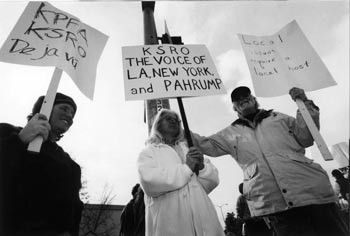
Hate on the Internet

0

Web of Hate

Local forum reveals how the Internet helps spread racism

By Yosha Bourgea

FINDING RACISM on the Internet is easier than you might think. On a recent visit to yahoo.com, one of the most widely used search engines, all it took was inputting the word white, which when entered immediately brought up an extensive list of white-supremacist websites. At the top of the list was the site for the American Nazi Party, an organization based in Eastpointe, Mich., and that caters to angry Caucasians.

“Bold action is the only way to shock White people awake,” according to the website’s manifesto–that and apparently the caps-lock button. “Too many others would rather try to TALK the problem away,” the ANP homepage reads, “while we realize that the time has come to FIGHT!”

From the ANP site, interested parties can access a list of literally hundreds of white-supremacist websites, from Stormfront (which provides German and Spanish translations of its propaganda, and claims to have accumulated more than 2 million “hits” since 1995) to various distributors of Nazi art and swastika jewelry, and from “pro-White country music” to the Aryan Dating Page, where lovelorn racists can place personal ads without fear of accidental miscegenation.

One website consists solely of a photograph of Adolf Hitler, with the caption: “This time, no more Mr. Nice Guy.”

The increasing presence of such material on the Internet, as well as its easy accessibility–significantly easier, for example, than finding pictures of naked women–has not gone unnoticed by more inclusive citizens’ groups, who worry about its impact on impressionable children and teenagers. Is there a difference between hate speech and free speech? How, if at all, should racist rhetoric on the Net be controlled?

Those questions and others will be addressed Nov. 5 at “Hate on the Internet,” a forum sponsored by the Hate-Crime Prevention Network of the Sonoma County Commission on Human Rights. The seminar–featuring speakers from such watchdog groups as the Anti-Defamation League as well as the FBI and the Department of Justice–will touch on how the Internet is being used by extremist groups to disseminate information and widen their support base.

“We know the Internet is one area where there is a rapid increase in information that is preaching hate,” says Lorene Irizary, director of the county Commission on Human Rights. “We need to be aware of what’s being said and suggested.”

THE FIRST RACIST website went up in 1995. Four years later, Jonathan Bernstein of the Anti-Defamation League estimates there are close to 400 full-time sites–including websites targeting preteens–although the actual number is probably higher. From traditional groups to newer organizations, the racist right has quickly discovered the power of the Internet.

“What is happening is that parents are extremely naive about what their kids can find on the computer,” says Bernstein, one of the speakers at the seminar. “It makes TV look innocent.”

Taking a cue from crusaders against Internet pornography, the ADL has developed a “hate filter” program that parents can use to block sites with key words or images of hate.

Bernstein, a regional director of the ADL, knows how serious the threat of racism can be. A man whose job regularly takes him close to hatred, Bernstein once found himself between the crosshairs when the leader of an Oklahoma militia group targeted him for issuing a report about the group’s threats against the federal government. The leader was arrested with bomb-making equipment and videotapes of Bernstein, whom he had been planning to kill the next day.

“The FBI was on top of things, but I got a better appreciation of what it means to be a hate-crime victim,” Bernstein says.

The essential message of racism, which begins by establishing the notion that there are different races of Homo sapiens in the first place, doesn’t change. But the way it’s packaged does. “The Klansman who once had trouble reaching a hundred people with a poorly printed pamphlet can now do it much easier,” says Mark Potoc, director of publications and Information for the Southern Poverty Law Center.

Potoc, who edits Intelligence Report, an investigative news magazine that covers the radical right, also will speak at the seminar. “These formerly isolated supremacists turn on the computer in the morning and now feel that they are part of a ‘happening’ movement,” he adds.

The tactics that online bigots use to appeal to kids include racist crossword puzzles, coloring pages, and even video games. For more literate users, there are sites that offer “evidence” that the Holocaust never happened, presented in dispassionate language and bolstered by sources and statistics that look impressive at first glance. Rebellious teenagers, says Potoc, are attracted to the idea that these official-looking websites have information that more conventional society ignores.

“This is a group–college-bound youth–that [until now] hadn’t been reached by the racists,” Potoc says. “White-supremacist groups are looking to develop their leadership cadre for tomorrow, and they have more interest in reaching the brighter kids.”

While Potoc has nothing against the ADL’s hate filter, he argues that it is a weak preventative measure and no substitute for parental involvement. Kids, he says, will find the information whether it’s forbidden or not–just as they do with pornography.

“Are you gonna spend your years as a parent searching your kid’s room for Playboy in the closet, or are you going to sit down and talk to your kid about respect for women?” Potoc asks rhetorically.

“The only inoculation [against hate] is parents talking to their kids.”

The “Hate on the Internet” seminar will be held on Friday, Nov. 5, from 8 a.m. to 5 p.m., at the Courtyard by Marriott in Railroad Square, Santa Rosa. To register, contact the Sonoma County Commission on Human Rights at 565-2693. The registration fee is $25 and includes lunch and materials

From the November 4-10, 1999 issue of the Sonoma County Independent.

© Metro Publishing Inc.
Chinese Embassy Bombing

0

Deliberate? Possibly. A news blackout? Definitely.

By Bob Harris

ON MAY 7, NATO bombed the Chinese embassy in Belgrade, killing three and injuring 20. The bombing caused widespread anger at the United States and Britain, whose own embassies in Beijing became the scene for days of protest. Relations between China and NATO were gravely affected. Since embassies are considered national territory, the bombing of the Chinese embassy, if intentional, would be an unambiguous act of war.

NATO claims that the bombing was the result of human error. Three cruise missiles, we are told, slammed into the embassy simply because NATO was using an outdated map. China’s leadership–along with much of the world–still doesn’t buy it. But that’s NATO’s story, and it’s sticking to it.

Is it likely, though, that NATO intelligence didn’t know where the Chinese embassy was?

No. As a matter of standard operating procedure, NSA, CIA, MI6, and possibly the blues band NRBQ would have been monitoring communications from the Chinese embassy since it was first placed at the site in 1996.

Is there a more plausible explanation?

Yes. The Observer, London’s liberal newsweekly, reported last week that NATO’s bombing of the Chinese embassy was entirely deliberate. The Observer quoted three widely separated sources within NATO as stating that the Chinese embassy was bombed because it was transmitting Yugoslav military communications.

Why would the Chinese assist Milosevic? The Observer suggests that they might have wanted access to information on stealth technology that Belgrade had gleaned from the downing of an F-117 bomber at the outset of the war.

Moreover, the story also notes that the Chinese military attaché openly stated shortly before the attack that the embassy was monitoring incoming NATO cruise missiles in order to develop countermeasures. The attack on the Chinese embassy would therefore have had a clear military purpose.

Of course, since the NATO sources are as yet unnamed, the Observer story should be approached with caution.

But so should NATO’s denials.

Remember, NATO spokesfolks committed numerous deceptions and distortions regarding the Kosovo war, regarding items as fundamental as the success of the bombing strategy, the necessity, number, and causes of civilian casualties, and even the terms of prewar negotiation and the final peace agreement.

And if the bombing of the Chinese embassy was indeed intentional, NATO has tremendous incentive to continue its truth modification program. So does China.

If the Observer story is true, then both China and NATO engaged in direct violations of international law amounting to acts of war. Moreover, the story came out precisely as Jiang Zemin began a two-week tour of Western capitals to discuss both NATO’s military posture toward Beijing and China’s bid to enter the World Trade Organization.


AN INDEPENDENT press, however, supposedly serves the interests of the public over the state, pursuing truth over expedient nonsense. We might hope for at least some serious attempts to follow up on the Observer‘s report.

However, according to their online archives, here’s what America’s leading dailies have had to say about the news that NATO sources now state that the bombing of the Chinese embassy was intentional, for reasons that China’s military attaché has already partially confirmed:

The New York Times? Nothing.

The Los Angeles Times? Nothing.

The Chicago Tribune? Nothing.

The Washington Post carried exactly 93 words on page A14–headlined “NATO Denies Story on Embassy Bombing,” thereby providing no hint of what the story actually was–buried beneath news of an execution in Yemen and projected election returns in Botswana.

So did NATO bomb the Chinese embassy intentionally? We still don’t know for sure.

And if we are to depend on America’s commercial news media to find out for us, there’s a good chance we never will.

From the October 28-November 3, 1999 issue of the Sonoma County Independent.

© Metro Publishing Inc.
Fantasy Books for Kids

By Patrick Sullivan

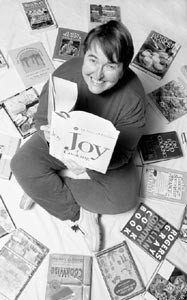
YOUR DEEPLY ENCHANTED child (or you yourself–it’s OK; we won’t tell) has burned through all three Harry Potter books with the speed of a Quidditch player on a runaway broomstick. The last page is turned, the last book is shut, and now the question is simple: What next? Fear not: the possibilities are nearly endless. There’s no need to take the long step down into the mass-produced mediocrity of the Animorphs or Goosebumps. Rich realms of children’s fantasy lie as close as the nearest library or bookstore. Of course, nearly everybody knows about J. R. R. Tolkien’s Lord of the Rings books (which may be too heavy-duty for some young people) or the Narnia Chronicles by C. S. Lewis. But here are a few your eager reader may not have yet discovered.

The Chronicles of Prydian Set in the mythical land of Prydian, which bears a strong resemblance to Wales, this five-book series tells the story of an assistant pig-keeper named Taran who longs for adventure and finds it in the shape of a heroic struggle to defeat the evil Arawn Death Lord. The series, which begins with The Book of Three, is distinguished by all kinds of good qualities: The books offer sophisticated writing and skillful use of humor, marvelously rich characters, including a strong and witty heroine named Eilonway, and an intriguing magical world based on author Lloyd Alexander’s deep knowledge of Welsh mythology.

The Dark Is Rising Susan Cooper’s classic series mixes Celtic mythology with deeply human characters any teenager can empathize with. When dark forces threaten the earth, Will Stanton and the other young heroes and heroines of these books must discover the magic power to stem the tide.

Earthsea A reckless young boy grows up to become the most powerful wizard in Earthsea in Ursula K. Le Guin’s four-book series. Magic in these stories is a subtle, modest matter that revolves around the power of language and naming. The primacy of words is only to be expected in a book by Le Guin, one of the 20th century’s most gifted writers of fantasy.

The Wind Series This award-winning quartet by Madeleine L’Engle begins with A Wrinkle in Time. On a stormy night, an unearthly visitor arrives to send awkward teenager Meg Murry and her younger brother Charles Wallace on a quest across space to find their missing father and battle a cosmic evil.

From the October 28-November 3, 1999 issue of the Sonoma County Independent.

© Metro Publishing Inc.
‘Live Love Acts’

0

Live Love Acts.

X-Rated Excellence

‘Live Love Acts’ a hilarious tale

By Daedalus Howell

“FUCK ME silly, you bad, bad performance artist!” From any writer-performer other than Fred Curchack, the line would be tantamount to yelling “Fire!” in a crowded theater–a good way of emptying the house. But in Curchack’s brilliant one-man extravaganza Live Love Acts (now playing at Petaluma’s Cinnabar Theater), minutes pass following the line’s delivery as the audience slowly recovers from convulsive laughter.

Inspired by the mythic escapades of libertine lady-lover Don Juan (the legendary swain has been grist for such works as Mozart’s Don Giovanni and Johnny Depp’s Don Juan DeMarco), Curchack’s piece also finds the randy dandy swapping a life in the arts for a wanton tour of womankind before an act of hubris and his naturally unrepentant nature land him in Hell.

In Curchack’s deft retelling of the story, however, Don Juan (referred to throughout as simply “D.J.”) is a solo theater performer who regularly recounts and updates his exploits in a long-running off-off-off Broadway theater piece (he also touts the benefit of “injaculation,” a method of internalizing his orgasms, thereby bolstering his stamina in the sack).

One night, D.J. stumbles into a subterranean strip joint just before the millennial eve and participates in a Grand Guignol-style sex act that leaves a stripper accidentally knifed in the belly. D.J. goes on the lam only to fall deeper into the abyss when circumstances find him bludgeoning a Germanic puppeteer to death with a marionette crafted to look like Scheherazade of Arabian Nights fame.

Eventually, D.J. finds himself involved in a trial in which every woman he has ever slept with accuses him of committing crimes against humanity. The sequence is a wry nod to filmmaker Federico Fellini’s persecution fantasia City of Women and is comically capped by the fact that D.J.’s mother presides as judge.

The circuitous plot has more twists than a French braid, but Curchack conveys the work to the audience with panache and zeal, all the while seated in a minimalist set appointed with only a stand from which he gleans the production’s text. This is no mere recitation, mind you–Curchack is a consummate storyteller and invests the show with every ounce of his considerable talent and acumen as a performer.

Curchack’s delivery often recalls the bombastic zeniths reached by word-slinger Lord Buckley, and many of his gags rely on Monty Python-style hilarious hyperbole as he rages through innumerable sexually explicit vignettes. The rhetorical acrobatics are a phenomenon in and of themselves–Curchack’s fustian slang (a sort of locker-room banter for the Lit Studies set) has little in the way of antecedents apart from perhaps comic George Carlin’s famed faculty for sexual euphemism.

On a tamer note, Curchack describes “love” as a “vampirish mutual admiration society.” He also retreads worn clichés with ribald finesse â la “there was not a dry seat in the house.”

Clearly, Live Love Acts is intended only for mature and, for that matter, open-minded audiences. Kudos are due to the Cinnabar Theater for taking a chance on such bawdy but clever material that ultimately makes a poignant statement about the nature of love.

Live Love Acts plays on Friday and Saturday, Oct. 29 and 30, at 8 p.m. at the Cinnabar Theater, 3333 Petaluma Blvd. N., Petaluma. Tickets are $10-$12. For details, call 763-8920.

From the October 28-November 3, 1999 issue of the Sonoma County Independent.

© Metro Publishing Inc.

Vineyard Expansion

0

Sign of the times: During a recent Town Hall Coalition meeting, 5th District Supervisor Mike Reilly listens intently as west county residents decry the onslaught of new vineyards in the region.

The Wrath of Grapes

West county residents are seeing red over rampant vineyard expansion

By Sara Peyton

DON’T BE FOOLED by the relative calm of downtown Occidental, a row of family-style Italian restaurants, gift shops, and hideaway inns: this is ground zero in what is shaping up to become one of the biggest political battles in Sonoma County history. Through the glass window of hair stylist Debra Anderson’s Lookinglass Salon you can see downtown Occidental’s new environmental center, at the heart of an escalating uproar over the sprawl of new grapevines snaking along the dry flaxen hillsides of west county.

The newly staked vines are a new gold rush that’s changing the face of the region’s historic ranching communities. Seeing vintage oaks cut and removed as land with heritage views is graded and planted in grapes–with little discussion about the county’s future–has folks demanding to know the environmental consequences of turning water into wine.

Anderson and political activist Lynn Hamilton are at the core of a growing organization, the newly formed Town Hall Coalition, which is working to protect watersheds forests and natural habitats. The local grassroots group supports sustainable agriculture and a mix of crops.

From behind the desk at her shop, Anderson says, “I do a significant amount of the hair around here and I hear what’s getting said.”

Last summer, while Anderson trimmed and styled, clients mostly complained about vineyard development near their homes. Some told her about wells drying up and about bulldozers nudging piles of dirt near environmentally fragile streams.

“There were strings of these occurrences. I knew we had to do something,” she says. In her mid-’40s, president of Occidental’s Chamber of Commerce, and the mother of four, Anderson joined about a dozen west county residents who organized the recent series of packed Occidental town meetings to voice concerns about the vineyard conversions.

Anderson wasn’t surprised when some 450 to 500 folks–including nurses, biologists, writers, musicians, in surance representatives, artists, plumbers, developers, consultants, contractors, environmentalists, organic farmers, real estate agents, and grape growers–crammed the tiny town’s Community Center in early September. “I have a good grasp about what goes on here and how to motivate the town,” Anderson says.

“This isn’t about ‘us against the grape growers,’ ” she adds, waving a manicured hand at the environmental center at the entrance to her shop. “It’s about learning how to be a good neighbors.”

Lifeblood? Sonoma County has established itself in the lucrative premium-grape niche

ON THIS WARM and sunny October afternoon, Lynn Hamilton and her husband, Don Frank, are busy setting up the new environmental center, now freshly equipped with a phone and fax machine. Hamilton, a former mayor of Sebastopol, settled in Occidental last year and became a driving force behind the movement to stop the vineyard conversions. Before that, she spent several years in South America working for Ashoka, the Washington, D.C.-based non-profit that promotes social change by funding creative people who have come up with new ways to help the poor and improve social systems in their countries.

‘Working for Ashoka and meeting social entrepreneurs from around the world has helped me be more effective,” says Hamilton, 51. “The purpose of the Town Hall Coalition is to effect social change. We’re giving people information so they can come up with new proposals, write a letter, testify at a hearing, or reach out to a neighbor. This is not a protest movement–it’s a social change movement.

“One reason why I left South America was that the deforestation and erosion there were escalating and I couldn’t see a way it could be stopped. I wanted to come home and prevent the conversion of forests to agricultural land here,” she says

Seeing the Napa-based Phelps Vinyard preparing a golden Freestone hillside for grapes and hearing about widespread forest conversions–including a plan to clear-cut 4,000 acres of coastal land for the largest vineyard conversion of all–got Hamilton thinking. In late August, she and her husband celebrated their recent marriage with a party at their home. In lieu of gifts, they asked for donations to start a fund to protect watersheds and forests in Sonoma County. The money raised (about $1,500) helped underwrite the cost of the first town hall meeting.

Still, the sizable turnout was a surprise. “I had no idea what was going to happen,” she says. “After the meeting, we were overwhelmed by phone calls and e-mails. We’ve had calls from Sonoma, Healdsburg, Napa, San Francisco, Santa Barbara, and across the country.

“We knew then that we were on to something and that there’s a lot of support to protect the environment from slash-and-burn agriculture,” says Hamilton. Indeed, environmental groups in vineyard-laden Healdsburg and Sonoma have invited the Town Hall Coalition to hold town meetings in their communities, and plans are under way to hit the road early next year.

“At our meetings, we have an opportunity to build informal relationships and to network,” says Hamilton. “It’s exciting to hook up with people throughout the county and reach out to a neighbor.”

Meeting of the minds: Lynn Hamilton, right, confers with fellow coalition members. ONE GRAPE grower who is listening is Mel Sanchietti. On the day following my visit to the environmental center, he’s on the doorstep of my Occidental home for some straight talk about vineyards. It’s harvest time and Sanchietti is busy, but he’s also anxious to talk about what farming life is really like.

“I was pleasantly surprised that Lynn Hamilton and I think alike about a lot of things. We share a love of the county and we both want to preserve our community,” says Sanchietti, vice president in charge of vineyards for Korbel Champagne Cellars in Guerneville. He owns a newly planted 65-acre vineyard surrounding his home. He attended both recent Town Hall Coalition meetings, talked about his work at the second forum, and plans to participate in future Town Hall meetings.

A third-generation farmer, Sanchietti played football for Sebastopol’s Analy High School. His family has farmed in the county since 1919. Today, Sanchietti, his wife, and 15-year-old son live in his grandparents’ old homestead. “We’ve farmed everything from prunes to apples to grapes,” he tells me as we walk around my yard. “That’s sustainable agriculture.

“I do wonder how non-professionals putting in these small vineyards are going to take care of their crop legally and make a profit,” he muses, naming some agricultural regulations, including a requirement that growers keep detailed records of pesticide usage, legal labor hired, and grading permits obtained.

Not too many years ago, Sanchietti disliked discussing farming with people whose views about agriculture and farming practices differed from his own. But now that he’s 50 and a grandfather, he finds he’s more willing to listen to others even if he doesn’t agree with them. Since the town hall meetings, Sanchietti is spending more time talking to the neighbors. And he’s pondering new ways to reach out to those who live near his vineyard and Korbel’s winery. He’s thinking about distributing a calendar detailing those dates when spraying and other work occur at the vineyards. “I was afraid of doing something like this before,” he says.

Sanchietti says he supports the new county hillside vineyard ordinance, describing it as a “good beginning.” The first-of-its-kind ordinance, which takes effect Dec. 2, was crafted amid a storm of controversy after negotiations between environmentalists and growers. Designed to reduce the environmental degradation of streams, the ordinance bars new vineyards on hillsides steeper than 50 percent, and requires growers to pay fees, submit erosion control plans for plantings on allowable slopes, and have 50-foot setbacks from streams and other riparian areas.

Sanchietti thinks an additional groundwater ordinance–an idea promoted by the Town Hall Coalition and now being researched on the county level at the urging of 5th District Supervisor Mike Reilly–may be a good idea.

And Sanchietti doesn’t approve of logging redwoods to plant grapes. He says Korbel owns about 1,500 acres in Sonoma County, with hundreds of forested acres it could develop for vineyards but won’t. “We keep our redwoods,” he says.

He notes that the famous champagne makers also own a large organic vineyard in Kenwood and use environmentally friendly integrated-pest management techniques.

Sanchietti wants to coexist amicably with the neighbors of his family vineyard and the vineyards he manages for Korbel. But he hopes longtime farmers will get credit from environmentalists and open-space advocates for preserving agricultural lands and preventing housing development.

“Most of us work hard at being real farmers,” he concludes.

LATER THAT EVENING, the historic Union Hotel in downtown Occidental is jammed with Town Hall Coalition members, community folks, and environmentalists of all stripes, including some decked out in their rainbow-colored best. It’s the annual dinner and fundraiser for the Western Sonoma County Rural Alliance.

There’s a lot of talk and wine sipping.

There’s little evidence of the recent sniping among some who fear more regulations of county agriculture will open the door to housing development and those who say that without additional regulations corporate vineyards will blanket the landscape with industrial grapes.

Jumping up on a chair to speak to the crowd is Dave Hensen, the director of the Occidental Arts and Ecology Center and a Town Hall Coalition organizer. “This is the moment of ripeness,” he says, calling for enhancements of the wildlife habitat and the elimination of pesticides. “There’s an agrarian revolt happening around the planet. We need more town hall meetings, and we need to take them on the road. What we organize here can be a model for the planet.”

Hansen later tells me, “It’s my intention to talk to as many farmers as possible. We’re not anti-farm. We’re trying to help the family farm prosper. I’ve seen how macro-economics can make and break whole communities. Where I think we can find common ground is with the people who love this community and love these hills even if we don’t always agree on farming practices.”

Among those at the dinner is county Supervisor Mike Reilly. “I haven’t seen this many people involved in an issue since the issues around the Santa Rosa sewage spill into the Russian River in the ’80s,” Reilly says. All the new people involved with the Town Hall Coalition that are showing up at supervisors’ meetings and writing letters are having an effect on county decisions, he adds.

“The coalition came together quickly, but once someone called a meeting on the issue it struck a chord with a great many. People are seeing the character of their land around them change, and they’re upset about it for a variety of reasons,” says Reilly about the increase of highly visible new vineyards sprouting in the west county.

But, he warns, “there are a lot of different issues and there’s a tendency to roll them up into a ball and deal with them all at once. When you’re talking about issues like groundwater depletion in water-scarce areas, the whole pesticide issue, cutting redwood trees down to plant vineyards–each one of these issues has its own levels of jurisdiction within the government, and they’re probably going to have be dealt with each in its own right over time.

“The question is whether the Town Hall Coalition will have the energy to sustain that kind of an effort.”

Noting that developing and enacting new county ordinances and regulations takes months and sometimes years, Reilly hopes that “vineyard folks and Town Hall folks find a way to engage in a dialogue on some of these issues so we can get a better sense of what solutions are possible.”

Reilly is firmly against clearing redwoods to plant grapes. He points to a recent study by the University of California identifying some 150,000 acres locally suitable to conversion to grapes, nearly triple the acreage dedicated to grapes today. “The key to the study was to identify redwood and timber woodland areas that are at risk of being converted to vineyards and also to identify to the Open Space District the areas that are most threat-ened,” says Reilly.

An evening public workshop about the report will be held Nov. 2 at the county Board of Supervisors chambers.

FOR NOW, Town Hall Coalition organizers are optimistic that they can prevent Sonoma County from becoming a banana republic to the grape industry–or a “grape republic,” as some quip. On their agenda is the development of “Fight-Back” community organizing kits to help property owners deal with timber-conversion plans and new vineyards. They’re looking to strengthen the new hillside ordinance, researching groundwater regulations and buffer zones in other areas, learning about the impact of pesticide use and fencing on wildlife habitat; and they have plans to interview political candidates throughout the county about these issues. They’re also creating lists of wineries and vineyards that rely on organic and biodynamic methods and are recommending such environmentally friendly grape growers to their friends, co-workers, and alumnae associations.

Working on all of these projects are some 200 people assigned to various citizen-action committees–forestry, labor, law, media, outreach, politics, toxics, air quality, water, and winery safety.

Those involved include people like local resident Jim Hendrikson–who joined the water committee–who say they’re in for the long haul. You might say Hendrikson knows a lot about huge undertaking–she was the music editor for the blockbuster movie Titanic. “I was surprised by the first town hall meeting,” he says. “I had expected chest thumping, angry venting, and a lot of bemoaning. But there was a lot less of that than I expected.

“I was gratified that we hit the ground running, got organized, and started addressing our concerns at supervisors’ meetings.”

Hendrikson’s immediate concerns are over a small six- to seven-acre vineyard about to be planted across the street from his home. “I’m getting my well tested tomorrow to have a point of demarcation before the vineyard goes in. We’re also going to put some plantings on our side of the road to shield us from spraying, noise, and dust,” says Hendrikson, who moved to Occidental in 1995.

“I’m surprised by how much has changed in four years,” he says about the new rows of vines in his ridgetop neighborhood. But we need to work with the local growers, understand their problems, and work toward responsible methods of farming. We don’t want to alienate the people who have spent a lifetime here. Fighting the big corporations is job enough,” says Hendrikson.

“There’s probably an end to this somewhere. There’s only so much wine you can drink.”

The Sonoma County Board of Supervisors will hold a policy workshop on Tuesday, Nov. 2, at 6:30 p.m., to hear the presentation of a new study by the University of California on the implications for public policy and environmental impact of continued vineyard expansion. The next Town Hall Coalition meeting is scheduled for Dec. 7, at 7:30 p.m., at the Occidental Community Center, corner of Bohemian Highway and Graton Road. Call 874-9110 for details.

From the October 28-November 3, 1999 issue of the Sonoma County Independent.

© Metro Publishing Inc.
Story of Us

0

Renegade write Daniel Evan Weiss on self pleasuring, cinematic morality, and the Michelle Pfeiffer’s face

Writer David Templeton takes interesting people to interesting movies in his ongoing quest for the ultimate post-film conversation. This column is not a movie review; rather, it’s a freewheeling, tangential discussion of life, alternative ideas, and popular culture.

We will eventually talk about masturbation.

But first we have to escape the theater.

“I gotta tell you,” says Daniel Evan Weiss, rushing for the door, “Michelle Pfeiffer has one of the most beautiful faces I’ve ever seen in my life. She’s the modern equivalent of Helen of Troy. ‘The face that launched a thousand ships.’ She’s that beautiful.”

He turns left at the corridor, and makes a bee-line for the exit sign.

“And when Michelle Pfeiffer gives the camera that ‘love look,'” he goes on, “it’s just absolutely staggering.”

We’ve made it. We’re outside. Gulping great lungs-full of psychic fresh air, we stand in the sunshine as Weiss finished his point. “But in this movie,” he says, referring to the Story of Us , starring Pfeiffer and Bruce Willis, “instead of ‘Helen of Troy,’ she’s ‘Helen-going-for-double-coupons.’ She’s Helen of Oh-So-Ordinary, the queen of domestic schlock! What an astonishing waste of that face.”

Daniel Evan Weiss sounds a bit worked up, but be assured–he’s not.

This, according to numerous reports, is Weiss’s normal state of being: a kind of ongoing, electrified, conversational outspokenness, with a tendency toward offbeat, stream-of-consciousness observations mingled with wildly confessional outbursts.

He’s also one of the best kept secrets in American literature.

A certified cultural phenomenon in France, where his books are routinely bestsellers, the New York author is virtually unknown in his own country, where his books don’t fit neatly onto the neatly-categorized shelves of your standard bookstore.

Now in the midst of a self-financed reading tour–promoting his newest work, the mind-boggling Honk if You Love Aphrodite (Serpent’s Tail; 1999). An audaciously crafted epic poem, of sorts, it’s about the love, passion, and the son of Aphrodite.

To a core group of cult-like devotees, Daniel Evan Weiss is a literary savior, the creator of outrageously one-of-a-kind novels that used to be called Literary Fiction and are now referred to as . . . well, that’s the problem. His books defy categorization. Newsday, in reviewing The Swine’s Wedding, dubbed Weiss, “the Evel Knievel of novelists.” The Observer tends to call him Madman Weiss, and the German magazine Diesel proclaimed that, in The Roaches Have No King ( a tale narrated by an army of cockroaches), he’d created “the single most ingenious murder in the history of literature.”

It was Weiss who chose The Story of Us for our afternoon at the movies. The reason is now obvious.

“I’d see Michelle Pfeiffer in anything,” he says without blushing.

Unfortunately, the movie–the tale of a modern marriage coming unglued–is burdened with a script in which all the principals are shallow and annoying, speaking dialogue that sounds like fortune cookie pronouncements written by Borscht-belt comedians.

“What was the problem between them anyway?” Weiss asks, over lunch. “What was the source of these people’s marital difficulty? That he ‘painted outside the line,’ and she ‘painted in it?’ This is grounds for divorce? Jesus, their differences were so trivial you just wanted to take them out and smack them.”

On the other hand, suggests Weiss, “We never saw any evidence that they really needed each other, either, that there was some unifying element in their marriage, something they both craved from one another in their lives. It never appeared.”

We now discuss the scene in which Willis, supposedly yearning for a reconciliation, somehow finds himself being haltingly seduced by Pfeiffer. So what does he do? Instead of kissing her so ignite some passion, he flings himself on the bed and says something stupid about bicycle riding.

Sex, needless to say, does not occur.

“This was a P.C. movie,” Weiss explains, “so he couldn’t strike pussy until he had seen himself through her eyes. It wouldn’t have been right. Only after having an emotional epiphany can he earn the right to return to the honey pot.

“Also, she was not morally allowed to offer him the pot until she had acquired a moral clarity as to what her marriage was supposed to be. She had to eat her own words in the final act, just as he had to eat his.”

I see. Another standout moment in the film was the lunch-time conversation–between Willis and his pals Rob Reiner (the director) and Paul Reiser–on the subject of masturbation. (See, I promised we’d get to masturbation).

“I’ve been part of many profound masturbation conversations in my life,” Weiss says. “And it never sounded anything like the stuff in this movie.”

I ask him to elaborate.

“I can’t remember my own masturbation talks clearly enough to elaborate,” he replies. “What about you?”

“Well, I was part of a masturbation summit once,” I confess.

“A what?”

“A masturbation summit,” I repeat. “A long time ago. A group of youth Bible study leaders met with the leaders of our church to try to get a final scripture-based decision on whether or not masturbation was a sin.”

“What did you come up with?”

“All the unmarried, teenage guys decided that there was no proof that masturbation was a sin, but the married guys, the ones in charge, decided that the sin was only in the sexual fantasizing that usually takes place during masturbation.”

“So if you could masturbate without thinking of sex . . .”

“Then it wasn’t a sin. Right.”

Weiss just stares for several seconds, pondering this information.

“You know, one of the things I’ve always admired about Judaism,” he finally says, “is that there’s sexual awareness built right into the religion. From the Ten Commandments on, they knew what people were really like, they were building prescriptions for life that were based on actual human behavior.

“The biggest difference between Judaism and Christianity,” he observes, “is that in Judaism, God punishes you for what you do, but in Christianity God also nails you for what you think.”

Somehow, our thoughts return to The Story of Us, in which the unhappy couple each experience a well-timed emotional breakthrough–changes of mind that may even lead to actual marital unity.

“It was ridiculously symetrical, wasn’t it?” Weiss says. “They each had a little matching epiphany. Like bookends. Every fits together in the end.”

“What, life isn’t like that?” I say.

“Well,” Weiss shrugs, “maybe my life has been particularly bad.”

From the October 28-November 3, 1999 issue of the Sonoma County Independent.

© Metro Publishing Inc.

J. K. Rowling

0


Potter Training

A whimsical fantasy turns kids into something shocking–eager readers

TO DOMINIC, an energetic eighth-grader at Anderson Valley Junior High School, playing sports has always been his first priority: soccer, basketball, you name it. It’s understandable, then, with his after-school hours so jam-packed with athletic activities, that there’s never been much time left over for other, less physical pursuits. Reading books, for example.

“I never used to read,” says Dominic. “There was just no time.”

Then along came Harry Potter, wizard in training.

With a mighty wave of his magic wand, the fictional hero of J .K. Rowling’s best-selling book series cast a kind of spell over Dominic–and an entire generation of kids–a spell that’s turned scores of former non-readers into dedicated book-sponges.

“Now I make sure I have time to read at night,” says Dominic, who is halfway through Harry Potter and the Prisoner of Azkaban, the third book in the series that began with Harry Potter and the Sorcerer’s Stone. “They are by far the best books I’ve ever read,” he says. “For the first time, my parents have to tell me stop reading because it’s too late.”

Hallelujah.

Young Harry Potter, that resourceful orphan boy with the noticeable lightning-shaped scar on his forehead and a knack for making “unexpected things” happen, has evolved from being a word-of-mouth favorite into a certified international phenomenon. His creator, Edinburgh-based Rowling (who makes a sold-out appearance in Santa Rosa on Oct. 29), wrote the first book while she was a single mom struggling to make ends meet.

When the third book was released last month, bookstores around the country reported first-day lines of Potter-philes that wrapped around the block. Many of those eager young readers finished the book by lights-out that very same day.

Here’s the remarkable thing: many of these kids admit that, normally, they pretty much avoid reading. Yet there they were, hiding beneath their covers until they’d absorbed the last exciting word on the very last page. Time magazine, which ran a cover story on the books that week, canonized Harry Potter as the biggest thing to hit reluctant readers since teachers stopped using corporal punishment.

“”I cannot say I’ve ever seen anything like it,” exclaims Linda Chemos, children’s library assistant in Petaluma, where the latest Harry Potter has a waiting list of over 50 names. “Children are wild about this book.”

It seems everyone’s wild about Harry–and his biggest fans are the librarians and booksellers whose workplaces have been turned upside down by all the extra foot traffic.

Other Realms: More fantasy books for kids.

But are the Harry Potter books really turning non-readers into book-lovers–or are they merely turning all these kids into readers of Harry Potter books?

“It’s a very good question, and I think it’s one that needs to be answered by each individual child,” says Patty Lewis, children’s library coordinator of Sonoma County. That said, she insists that the Harry Potter phenomenon has begun to expand beyond those specific books, much the way a blockbuster movie like Titanic or The Phantom Menace often creates an appetite for other films at the same time.

“We’re seeing many children, kids who’ve never been big readers,” says Lewis, “who are coming into the libraries and the bookstores and saying, ‘I’ve just finished all the Harry Potter books. What else have you got that’s like that?’ It’s true. It’s amazing!”

“I’ve definitely seen proof of that,” says Emma McMacken, a bookseller at Readers’ Books in Sonoma. “Parents will bring their kids into the store looking for guidance now that their kids have suddenly developed an actual interest in reading.” She is pleased to tell them that there are plenty of good books where Harry Potter came from.

“Harry Potter’s been a very good thing,” she says.

Indeed. So the next question is, How can we capitalize on the mania, ensuring that these fresh converts don’t experience any cooling of their newly kindled literary fires? To that end, some bookstores and libraries have set up displays featuring other fantasy-themed books, with signs proclaiming, “If you liked Harry, you’ll love these!” Librarians are passing out lists of books that Potter fans might enjoy while waiting for Rowling to finish the fourth book. Teachers are pressing The Lord of the Rings and the Narnia Chronicles into the same hands that just recently held Harry Potter books. (For a few other ideas, see the sidebar on this page.)

It seems to be working.

Elizabeth Overmyer, the children’s librarian at Berkeley City Library, says, “Four weeks ago we put together a list called ‘Waiting for Harry Potter,’ along with a big display with stacks of suggested books, mostly from other fantasy series.”

It was an instant success.

“Now we’re having a hard time keeping books in the display,” she sighs, happily. “The books are all being checked out. It’s marvelous. The Potter books have given the whole culture permission to enjoy this cracking good yarn,” says Overmyer, “and whether you’re in the third grade or the eighth grade, you can tell a librarian that you like Harry Potter–and you don’t have to whisper it. You can acknowledge it in front of your peers.”

Not that every kid will be lured into reading by Harry’s magic wand and derring-do.

“I don’t like fairy tales and magic books,’ says Brittany, of Anderson Valley Junior High. “But we gave the books to my little cousin, who always hated reading. Now she won’t stop. She reads all the time.”

“There’s an old saying that librarians have,” Lewis says. “‘The right book for the right child at the right time.’ If you put those three elements together, you just might click on that reading light, and hopefully it will stay lit for a lifetime.”

From the October 28-November 3, 1999 issue of the Sonoma County Independent.

© Metro Publishing Inc.

‘Hudson/Shaw/Wiley: Collaborations’

Three of a kind: Robert Hudson creates sculpture, painting, and prints in his Cotati studio. Both his solo work and prints created in collaboration with Richard Shaw and William T. Wiley can be seen at a new exhibit at the University Art Gallery. Artful Alliance A trio of veteran North Bay artists...

Holiday Wines

Talkin' Turkey Select the 'perfect' wine this Thanksgiving By Bob Johnson 'TIS THE SEASON. No, not that season. Not quite yet, anyway. 'Tis Thanksgiving season. So let's talk turkey. And stuffing. Not to mention mashed potatoes, giblet gravy, cranberry sauce, candied yams, and corn bread. Selecting a wine for the Turkey...

‘West Beirut’

West Beirut. Troubled Youth Coming of age in war-torn 'West Beirut' By Nicole McEwan IT IS POSSIBLE to be nostalgic for life during wartime--if you're lucky enough to have survived it, suggests former Tarantino cameraman Ziad Doueiri. West Beirut, his first feature, ranks as one of the most assured...

Hate on the Internet

Web of Hate Local forum reveals how the Internet helps spread racism By Yosha Bourgea FINDING RACISM on the Internet is easier than you might think. On a recent visit to yahoo.com, one of the most widely used search engines, all it took was inputting the word white, which when entered...

Chinese Embassy Bombing

Deliberate? Possibly. A news blackout? Definitely. By Bob Harris ON MAY 7, NATO bombed the Chinese embassy in Belgrade, killing three and injuring 20. The bombing caused widespread anger at the United States and Britain, whose own embassies in Beijing became the scene for days of protest. Relations between China and NATO were...

Fantasy Books for Kids

By Patrick Sullivan YOUR DEEPLY ENCHANTED child (or you yourself--it's OK; we won't tell) has burned through all three Harry Potter books with the speed of a Quidditch player on a runaway broomstick. The last page is turned, the last book is shut, and now the question is simple: What next? Fear not: the possibilities are nearly...

‘Live Love Acts’

Live Love Acts. X-Rated Excellence 'Live Love Acts' a hilarious tale By Daedalus Howell "FUCK ME silly, you bad, bad performance artist!" From any writer-performer other than Fred Curchack, the line would be tantamount to yelling "Fire!" in a crowded theater--a good way of emptying the house. But in Curchack's...

Vineyard Expansion

Sign of the times: During a recent Town Hall Coalition meeting, 5th District Supervisor Mike Reilly listens intently as west county residents decry the onslaught of new vineyards in the region. The Wrath of Grapes West county residents are seeing red over rampant vineyard expansion By Sara Peyton...

Story of Us

Renegade write Daniel Evan Weiss on self pleasuring, cinematic morality, and the Michelle Pfeiffer's face Writer David Templeton takes interesting people to interesting movies in his ongoing quest for the ultimate post-film conversation. This column is not a movie review; rather, it's a freewheeling, tangential discussion of life, alternative ideas, and popular culture....

J. K. Rowling

Potter Training A whimsical fantasy turns kids into something shocking--eager readers TO DOMINIC, an energetic eighth-grader at Anderson Valley Junior High School, playing sports has always been his first priority: soccer, basketball, you name it. It's understandable, then, with his after-school hours so jam-packed with athletic activities, that there's never...
11,084FansLike
4,606FollowersFollow
6,928FollowersFollow
