
Abusive Priests

0

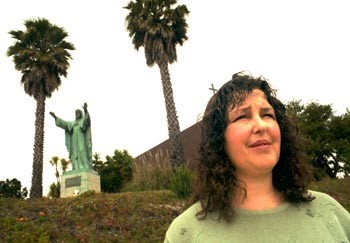
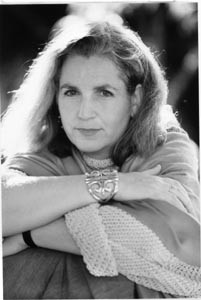
Abuse Accuser: Terrie Light, who was raped by a priest at age 7, has formed the statewide Survivors Network of Those Abused by Priests. Despite recent apologies, like the one delivered last week by newly installed Diocese of Santa Rosa Bishop Daniel Walsh, Light and other victims say the church has a long way to go to make amends.

Prey Tell

Bay Area dioceses are ready to talk about priests, power, and pedophilia. Survivors just hope they are ready to listen, too.

By Mary Spicuzza

FOR MOST ROMAN Catholics the period of Lent is a time of healing. Each spring the 40-day period from Ash Wednesday to Easter emphasizes penitence, encouraging the faithful to face their sins and be accountable for past wrongs. It is part of the festival of Easter, meant to celebrate rebirth and the resurrection of Jesus Christ.

But Terrie Light usually just gets ticked off. “I got to be so pissed off every Lent,” says Light, a licensed therapist and West Coast director of Survivors Network of Those Abused by Priests. “The church talks about turning away from sin, but it hasn’t been doing that itself. As an institution, it has been abusing people who go to the church to get healed.”

Light was 7 years old when she was raped by her Hayward Roman Catholic congregation’s priest. She didn’t talk to anyone about it for years, until she was in therapy in her 30s and finally found the courage to report the rape to the Roman Catholic Diocese of Oakland. Rather than receiving spiritual healing, Light found herself feeling as if she’d been violated again because the priest taking the report didn’t seem to believe her.

Light was correct in her observation. The priest who took her report told her as much and apologized for his insensitive behavior when they met again last month at a unique reconciliation between victims of clergy abuse and the Diocese of Oakland. During the service, survivors spoke of their experiences and feelings of betrayal, and church leaders apologized for a history of denial in dealing with sexual abuse.

The priest who had taken her report “came up to me after the ceremony and said, ‘I didn’t believe you. I couldn’t believe someone could do that to a child. But I believe you now.’ ” Light relates. Her normally therapist-calm voice cracks as she swallows back tears.

“That’s the change I’m working for in the church. People with good hearts getting out of that denial.”

Sins of the Fathers

HOW CAN YOU say to your brother, ‘Let me take the speck out of your eye’ when there is a log in your own eye? You hypocrite, first take the log out of your own eye, and then you will see clearly to take the speck out of your brother’s eye” (Matthew 7:4-5, Ignatius Catholic Edition).

Jesus’ words, spoken to his apostles during one of his earliest sermons, have long been considered gospel by the Catholic Church. But Sister Barbara Flannery, chancellor of the Diocese of Oakland, says that the church, while trying to help people in need, has for too long ignored those hurt by its own. Flannery began working with survivors of clergy abuse five years ago, so when Pope John Paul II encouraged dioceses to celebrate Jubilee 2000 by apologizing for past faults, the diocese decided to focus on clergy sexual abuse. She and Light gathered a group of survivors of sexual abuse to plan the reconciliation with Father Dan Danielson and spent eight months creating a dialogue of healing.

“We had not a clue of the media frenzy to follow,” Flannery says. “We just sort of thought that everybody was having their own apology services.”

Instead, newspapers around the country ran stories about the event, and dioceses from Florida to Oregon are seeking advice to set up similar events. Perhaps that’s because until now the church has been so hesitant to talk about priests and sexual abuse, despite ongoing reports of high-profile problems.

According to the Boston Globe, 1,000 priests in the United States have been identified as pedophiles over the past 20 years. The church has paid more than $1 billion to settle cases with victims of sexual abuse. Tom Economus, executive director of the Linkup, a national organization for victims of clergy sexual abuse, estimates that the number of pedophile priests is closer to 3,000, and that’s not even counting Protestant pastors.

“The Christian clergy ends up being a safe dating service for pedophiles,” Economus writes.

Light, Economus, and others say that the problems have endured because, in the past, pedophile priests have simply been quietly reassigned to different dioceses. For example, the Rev. Brendan O’Donoghue, a Massachusetts priest accused of multiple cases of child molestation during the mid-’90s, was reassigned 12 times during his first 15 years in the priesthood. During that time his superiors sent him to a secluded abbey to pray and make a confession, as well as checking him into the House of Affirmation, a treatment facility for priests. The center, which was run by the Rev. Thomas Kane, closed down in 1989 amid allegations of mismanagement. Kane was later sued by a man alleging that he had molested him as a child.

In Northern California, the Diocese of Santa Rosa has suffered a 10-year string of sex scandals involving five different priests, with complaints including child molestation, sexual harassment, and financial mismanagement. During that time the 14,000-member diocese paid out $6 million in claims and counseling, bringing the diocese on the brink of bankruptcy and last year toppling Bishop Patrick Ziemann after he admitted to an affair with a Ukiah priest.

Last week, the newly installed Bishop Daniel F. Walsh apologized for the “deep and painful” wound caused by the sexual misconduct. “I acknowledge the hurt, pain, and anger of many and apologize to all victims who suffered because of these failings,” he said. “I assure you that together we will strive to see that such cannot and will not happen again.”

Forgive Me, Father

THOMAS PLANTE, a professor of psychiatry at Stanford University School of Medicine, has worked with 40 to 50 priests facing problems with pedophilia and sexual abuse. Plante, who edited the 1999 book Bless Me Father for I Have Sinned: Perspectives on Sexual Abuse Committed by Roman Catholic Priests, says that despite the high degree of publicity, Catholic priests are no more guilty of sex crimes statistically than clergy in other faiths, including Jewish rabbis and Protestant pastors.

“There are 60,000 Catholic priests in the United States. Anytime you get that kind of group, there’s going to be trouble. But the Catholic clergy is a juicy target because the celibacy and hierarchy are weird to people outside of the faith.”

During his 12 years working with men of the cloth, he has treated priests suspected of being pedophiles, alcoholics, and drug addicts. He also works with depressed clergy and does routine psychological evaluations for different dioceses.

Plante says that 90 percent of the sexual abuse occurring within the church involves adolescent boys. Sometimes he treats the priests alone, and other times they are sent to inpatient services at St. Luke’s Hospital in Maryland. He believes the popular press fixates on the sex crimes of priests, but admits that the church has had a troubled past plagued by secrecy and denial.

He stresses the need for good screening, good training, and addressing troubles as soon as they emerge.

“Some people have risk factors. They were abused themselves, have poor boundaries or a history of inappropriate behavior,” Plante says. “These are risk factors.

“Historically, there was a lot of denial and repression in the Catholic Church,” he adds. “But I think that’s changing a lot. If somebody is accused, they immediately go into treatment these days–although it’s an individual thing and varies from diocese to diocese.”

The Diocese of San Jose has developed what it calls a “sensitive incidents team” to take reports and investigate complaints. According to Father Francis Cilia, the vicar for clergy, the team reviews the report to determine if it is grounded. If it is and involves a child, the case is turned over to police. If it involves an adult, the case is treated as an ethical breach and is usually handled internally.

“I’ve only been through that once, thanks be to God. Not for me, but for another priest,” Cilia says. “Our lawyer is part of that, because we don’t just talk in terms of church law. We have a very definite policy. Both clergy and volunteers have to sign it, go through orientations. We are supposed to be friends of those who are hurting, not victimize them further.”

Rituals of Passage

TERRIE LIGHT says that getting her long-awaited apology during Lent fulfilled a dream for her. But she and Sister Flannery agree that it’s only the beginning of a dialogue that is long overdue. They hope that the national frenzy over Oakland’s reconciliation service leads to more services, but ones that don’t lose the focus on mutual healing.

“What is most important is the dialogue that goes on,” Flannery says. “We need to listen to survivors, because we don’t have a clue about how destructive this experience can be.”

Survivors like Light repeatedly talk about the violation not only in physical, emotional, and sexual terms, but in spiritual terms as well.

“It deeply affected my relationship with God. I had no hope,” says Rita, another survivor, who was abused by her Protestant pastor. Rita received $8,500 for counseling in an out-of-court settlement with the pastor.

Light says that other services have failed to take the needs of survivors into account. For example, the Archdiocese of San Francisco hosted its service to apologize for general abuse at what is the scene of the crime for many: a church.

“Some survivors get horrible post-traumatic stress syndrome when they are surrounded by crucifixes, stained glass, Roman collars,” Light says. “It signals danger.”

Light applauds the diocese for taking a more direct stance, establishing clear rules and sending priests into therapy. But she also wants to bring the issue out of quiet talk among “sensitive incidents teams” and into the public eye. She says that she would like to see the names of problem priests published on the Web, a kind of Megan’s Law for clergy.

She says that while the Pope has recently apologized to those the church failed to help, she’s still waiting for him to apologize for the sins of the fathers.

“I cannot tell you how many survivors have written to the Pope–not only survivors, but mothers whose children have committed suicide after being molested,” Light says. “And I don’t know of anyone who’s gotten a reply.”

From the June 1-7, 2000 issue of the Sonoma County Independent.

© Metro Publishing Inc.

Emile’s Creekside Bistro/Hank’s Creekside Cafe

0

Nighttime is the right time: Chef Emile Waldteufel holds court.

Night & Day

Creekside serves all-American breakfasts and French bistro suppers

By Paula Harris

DRIVING PAST the unassuming little Santa Rosa eatery sandwiched between a couple of stores on Highway 12 across from the Flamingo Hotel, you’d be forgiven for being a tad confused. Competing signs on the front (one printed on the awning, one glowing in the window) announce “Hank’s Creekside” and “Emile’s Creekside.”

Now, even non-Francophiles can work out that “Hank” is not the Gallic translation of “Emile.” So what gives?

This is actually a schizophrenic restaurant with an unlikely double life. By day, the sunny place awakens as the wildly popular all-American Hank’s Creekside Cafe, where they flip a short stack of fresh blueberry pancakes and dish out sizzlin’ Cajun sausages and warm homemade biscuits, with lashings of strong, hot coffee to wash it all down. Hank’s also does lunch.

But at night, they bring out the long-stemmed wine glasses and the floral plates, and the place morphs into its second incarnation as Emile’s–a charming little country French bistro, bien sûr, where coq au vin, candles, and crême brûlée rule the night as the moon rises lethargically outside the window.

Over the past three years, restaurateurs Hank Vance and Emile Waldteufel have hit on a novel way to bring in clientele: share the space and operate two distinct eateries in one locale. The concept has caught on, and diners frequent both completely different Creeksides.

We begin our Creekside experiences at Emile’s on a Friday night. It’s about 8:30 p.m., so many customers have left. Still, the host/server is charming, and he insists that we not feel rushed. The place is fairly rustic, with plain wooden tables, chairs, and benches. Candlelight and fresh miniature carnations spruce up the intimate dining room. The walls are dappled ochre with stenciled ivy details, and there’s recorded blues music on the sound system.

The smoked salmon with baby spinach and asparagus with caper vinaigrette ($7.50) is a pretty presentation, with four slices of salmon rolled up into rosettes, a pile of spinach in a creamy dressing, and a fan of chilled asparagus. Our gripe, though, is the heavy-handed creamy dressing, which seems at odds with the tart oiliness of the salmon. The cloying quality leaves us longing for a hit of citrus.

In addition, the house caesar salad ($6), although it has an excellent fresh crunchy texture, is once again let down by the dressing, which this time is rather vinegary.

Things get back on track with the soup of the day (included with the entrées). This night we are served an unusual warm cantaloupe soup. The melon is combined with potato, butter, and lemon zest and puréed into a smooth, deep-gold cream. It tastes good, but not at all fruity, more like a hybrid of cream of tomato and butternut squash.

The chalk boards act as menus, and the dishes rotate. Emile’s traditional bistro entrées include confit of duck with baby spinach salad ($14.94), filet mignon with red wine sauce and gorgonzola ($18.50), tenderloin of pork with cognac demi-glaze and gratin potatoes ($13.95), and classic coq au vin ($13.95).

Hard to decide. However, when the server assures us the beef bourguignon ($14.50) “flies out of here as fast as Hank’s pancakes,” we have to try it. Chef Waldteufel, who previously operated Remillard’s in Larkspur, does a fine job with this dish. The beef is fork-tender in a substantial red wine sauce and is accompanied by mushrooms, roasted red potatoes, and sugar snap peas.

It is dark, lush comfort food.

Desserts continue the bistro theme. Chocolate mousse cake ($6.50) is dense and sweet and served with fresh strawberry slices. But we prefer the crême brûlée ($6.50). What makes it so good is the generous addition of lime zest, which imparts a wonderful refreshing flavor. A thin layer of caramelized sugar and the good-sized portion are other pluses.

Emile’s is a comfortable, casual romantic retreat–like a little French bistro hidden away in the Rhône countryside.

Comforts of home: Chef/owner Hank Vance (right) keeps the grill hot and ready.

RETURN to Creekside in the morning and you’re back in the bustling USA. All that seems constant is the lazy creek out back. Hank’s has the feel of a B&B dining room full of folks kick-starting their day with a power breakfast or kicking back to linger over the morning newspaper. The buzz of conversation correlates with the buzz from the java. It’s a real neighborhood place–casual, homey, cheerful–with great gardenlike views of leafy greenery and the creek from the picture windows.

Traditional breakfast is topnotch here. Take your pick of sausages: chicken apple, chicken turkey with artichoke, chicken turkey with sun-dried tomatoes, Cajun, or British banger. All $6.95 with a choice of eggs, hash browns or cottage fries, and toast, English muffin, or biscuits. The extra-plump succulent banger is terrific, with a sneaky spicy after-bite. I order it served with a perfect poached egg, lightly crisped cottage fries incorporating sliced fried onion, and warm homemade biscuits.

Don’t miss the biscuits.

There are lots of pancake choices, or fancier fare like crab-cake benedict ($8.95). If you’re short on cash, the hearty half bowl of oatmeal ($1.95) with a choice of fixin’s–raisins, cinnamon, or walnuts–is a good nourishing bet. Another winner is the veggie omelet crammed with chunky avocado, zucchini, mushrooms, onion, and tomato ($6.95).

For purists: plain puffy French toast ($3.95), dusted with powdered sugar and made with Texas toast–thick spongy slices of white bread perfect for sopping up the egg batter. Add pure maple syrup for 50 cents more. A very efficient young woman keeps the fresh coffee coming and thoughtfully covers your plates to keep the food warm.

For lunch there’s a selection of sandwiches, burgers, homemade chili, and salads. The service is great.

Even devout nonbreakfasters would be tempted.

Emile’s Creekside Bistro 2800 Fourth St., Santa Rosa; 575-8839 Hours: Dinner, Wednesday- Sunday, 5:30 a.m. to 9 p.m. Food: French Service: Very attentive Ambiance: Intimate bistro Price: Moderate Wine list: Midsize selection, including by the glass Overall: 2 1/2 stars (out of 4)

Hank’s Creekside Cafe 2800 Fourth St., Santa Rosa; 575-8839 Hours: Breakfast and lunch, Sunday-Friday, 6 a.m. to 2 p.m.; Saturday, 6 a.m. to 1 p.m. Food: American Service: Cheerful and professional Ambiance: Casual and homey Price: Inexpensive Overall: 3 1/2 stars (out of 4 )

From the June 1-7, 2000 issue of the Sonoma County Independent.
© Metro Publishing Inc.

‘Croupier’

Croupier.

House of Games

Gambling is metaphor in ‘Croupier’

Richard von Busack

By

JACK (CLIVE OWEN), the hero of the British film Croupier, is an unsuccessful novelist who is urged by his moneyed thug of an editor (Nick Reding) to come up with an underworld novel. Circumstances force Jack into a job as a card dealer and croupier at a London casino. It’s a life Jack knows well from his youth; his father was a dodgy professional gambler at the South African resort Sun City.

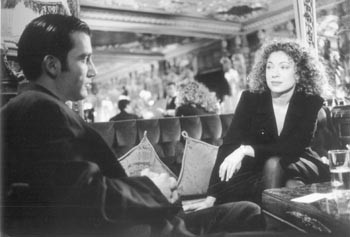
As Jack settles into the croupier’s routine, he begins to drift out of his dispassionate relationship with his live-in girlfriend, Marion (Gina McKee), a former cop. While Jack tends the roulette wheel, he begins to imagine himself as “Jake,” the emotionless croupier who is the hero of his unwritten novel. Jack dyes his hair black and sweeps it back in a James Bond cut and starts wearing the old-time tuxedo and bow ties Sean Connery’s Bond used to wear. Soon, Jack is approached by a sharp-featured, hard-luck girl who also works at the casino (Kate Hardie). Later, Jani (Alex Kingston), a customer with a gambling problem, corners Jack after work with a proposition. She asks the croupier if he’d like to be involved in a robbery.

Croupier offers what is supposed to be an insider’s look at gaming, as in the warning Jack gets against stealing from the till: “It’s easier to take one million pounds from a bank than to take a penny from us.” But Croupier has the same problem as every too heavily narrated film–you’re being told as you’re being shown, and there’s no room to form your own opinion on how much Jack is fictionalizing his experiences.

About 30 years ago, Croupier‘s director, Mike Hodges, stropped the young Michael Caine to a razor’s edge in the film Get Carter. (The film is currently being renovated for a Sylvester Stallone remake.) Hodges followed up with Pulp, starring Caine in an equally memorable satire of the genre and a junk writer’s life.

After the way Pulp laughed at the pretensions of pulp fiction, it’s strange to see the same kind of quick-read philosophizing being treated as if it were profound. The theme of gambling as a metaphor for life has been worked over thoroughly; it’s an idea that’s a mile wide and an inch deep.

Still, Croupier works well as B material. Hodges and his screenwriter, Paul Mayersberg (who co-wrote The Man Who Fell to Earth), have made the film fast and sleek. It’s an engrossing story, and Owen may well underact his way into stardom. Vocally, he is a ringer for Sean Connery. At first passing glances, he looks like the real thing, a budding great star.

It’s on closer examination that you can see there’s little behind the self-confidence and self-possession; Owen doesn’t have that flicker of bemusement hiding under the superficial cold bastardry of Connery. When Jack tells Marion, “I’m not an enigma, I’m just a contradiction,” he’s exaggerating. Neither Owen the star nor Croupier the film has enough complexity to make room for a contradiction.

Croupier opens Friday, June 2, at UA Movies 5, 547 Mendocino Ave., Santa Rosa. For details, see Movie Times, page 36, or call 528-7200.

From the June 1-7, 2000 issue of the Sonoma County Independent.

© Metro Publishing Inc.

Kate Clinton

0

A date with Kate: Comedian Kate Clinton delivers faux innocence and big laughs in her stand-up performances.

Out and About

Comedian Kate Clinton heads up LBC’s gay comedy night

By Paula Harris

“I COULD NEVER really look like a big, hearty lesbian,” remarks gay stand-up comic Kate Clinton in her slightly amused, soft-spoken voice, talking about her onstage persona by phone from her New York City apartment.

“I’ve always looked like some babe from the suburbs, and no matter what I’ve tried to do, I’ve always looked very wholesome,” she continues. “I always look like the Campbell’s soup kid.”

It’s hard to argue with her there. Clinton, who will headline the upcoming Gay and Lesbian Comedy Night at the Luther Burbank Center, possesses a fresh-faced, spiky-haired, Peter Pan-like quality that’s reflective rather than raucous.

Yet she’s never been shy about being a lesbian, a “recovering Catholic,” a former high school English teacher, and the sister of several siblings, two of whom are named (strange, but true) Bill and Monica.

The former instructor learned how to “work a room” during her eight years teaching English to 11th- and 12th-graders in upstate New York. “But they were a tough audience because they came back every day,” she quips.

Still, it wasn’t always so amusing at the time. During her final year as a teacher, Clinton began to come to terms with her own sexuality. She had to grapple with the scary dilemma of exiting the closet while working for a school district.

“This was 20 years ago,” she says. “I have every ounce of admiration for educators who come out [today], but it’s definitely easier now than it was then.”

Clinton, now known as the Unimpeachable Madame President of Queer Comedy, first entered the comedy circuit on a lark. Unbeknown to her, a friend booked her to perform a stand-up routine in a local club. “She said, ‘You’re on in a month’–and that’s how it started,” Clinton explains.

But tickling the funny bone was a knack Clinton had already mastered. At a very young age, she learned all about the sweetly persuasive power of comedy.

“I have three brothers, and I felt if I could make them laugh I could kind of disarm them and we wouldn’t have these terrible towel-snapping fights after dinner,” she says with a chuckle. “So I learned early that making people laugh was a good thing.”

At the beginning of her career as a humorist, Clinton’s material was completely gay-inspired.

“I was fascinated by the gay and lesbian movement,” she remembers. “It was a lesbian separatist movement that I came out into, and there I was this high school English teacher. A lot of people thought I was a spy. I suppose ignorance is bliss. I talked about what I was going through coming out. And no one ever stole my lines!”

Still, her career did hit some major bumps along the way. Operators of the Comedy Store club in Los Angeles routinely told Clinton she couldn’t say certain things or prohibited her from telling gay jokes. It’s ironic, she says, because these days people are disappointed if she doesn’t do gay material.

Back then, she also billed herself as a feminist humorist, but she says some critics balked at the idea that those two things could go together.

“I guess it was really a great gimmick, because I got a lot of radio interviews,” she says. “It was generally guys who wanted to see this little gal who claimed to be a feminist and a humorist.

“One of the largest insults you can level against someone is to say that they have no sense of humor,” she continues. “You do that if you’re really trying to keep somebody in their place and keep them down. But I think we women have been laughing our heads off for a very long time.”

But condescension was far from the only danger back then. More blatant hostility often reared its ugly head.

“It was 1981, before Ellen [DeGeneres] and all that. I had police escorts at some small colleges, and there were bomb threats in the beginning,” she recalls, “although the bomb threats always built a great sense of solidarity and community. People were like, ‘Goddammit, now I’m going to come see this!’ ”

Over the years, though, Clinton says, the mainstream has overflowed its banks, and the gay and lesbian world has been swept right into the flow.

“It’s clear in my act that I’m a lesbian and I talk about that, but really I think the world has opened up, and I talk about the economy, race issues, sports–from a gay perspective, certainly, but I don’t always talk about things gay,” she explains. “I think we’ve become quite blended. Now I’m sort of like the daily paper. You get the opinion, you get the sports news.”

SHE GETS much of her inspiration from current events and from listening to conversations. “I’m the person at dinner who, if anyone says anything funny, immediately asks, ‘Can I have that?’ ” she says. “And I’m always taking notes on things, certainly in the political arena, and some things write themselves. And I think that from my years in teaching I always have kind of a lesson plan for a show.”

Clinton’s tough observations and skewering comments, usually delivered in deadpan faux innocence, often get the biggest laughs. “Is Janet Reno a lesbian?” Clinton is often asked. Her reply? “I don’t know, but her hair is.”

Last year, Clinton completed a successful off-Broadway one-woman show titled Correct Me If I’m Right. In addition, Clinton writes humorous pieces for publications such as the New York Times and The Progressive, where she takes on topics like Viagra and Alan Greenspan worship.

She already has one book under her belt–Don’t Get Me Started, which was published in 1998. She’s currently working on more book proposals and a screenplay, as well as a new CD–which she hopes to record at the end of this summer. Her newest show, titled Y2K8 (pronounced “Y2 Kate”), tours this year.

Clinton is also working on material about families and aging boomers.

“It’s very interesting. I’ve been working on fighting homophobia for so long I kind of forgot about ageism,” she says. “And if you thought talking about being gay was a no-no, whoa–talking about being older is really taboo.”

Indeed, for the record, Clinton staunchly declines to reveal her real age. “I’m 84 and I’m doing well,” she replies impishly when asked. “Which is surprising, considering how much I’ve flown.”

Kate Clinton performs with Scott Silverman at the sixth annual Lesbian and Gay Comedy Night on Saturday, June 3, at the Luther Burbank Center, 50 Mark West Springs Road, Santa Rosa. The event partially benefits the Sonoma County Pride Committee. Tickets are $15-$18. 546-3600.

From the June 1-7, 2000 issue of the Sonoma County Independent.
© Metro Publishing Inc.

Spike and Mike’s Classic Festival of Animation

Not kids’ stuff: Adults will appreciate the new Spike and Mike’s compilation.

Animal Cels

Tragic ‘Panther’ highlights animated shorts in ‘Spike and Mike’ festival

By

THE LATEST edition of Spike and Mike’s Classic Festival of Animation is their best to date. The biggest laugh you can get these days seems to come from mistreating an animal, as seen in some of the really low-humored points of the Twisted Animation Festivals over the years.

What’s surprising in this year’s fest, then, is not just the usual hilarity but also the surprising compassion for animals manifested in this selection of a dozen and a half cartoons.

Sounds drippy, I know, but there’s nothing cheaply sentimental about the best cartoon in the festival, “Panther,” by Vuk Jevremovic. It is a thoroughly serious, painstakingly animated, and bottomlessly tragic view of a large cat in a small cage.

Jevremovic scores the work with angry funk and acid-rock guitar music, implying not just the panther’s suffering but also his rage. The images are thinly painted and repainted on canvas: a black panther alive and staring. Sometimes he’s full-faced and flat-eyed as he looks at the pale distorted heads that peer at him through the bars. Sometimes he fades in a scribble of paint into the skinned carrion he will be one day, propped up for autopsy. Always there is the endless pacing. In his mind’s eye, he sees images of a tree in an African plain.

Then there’s the fantastic “When the Day Breaks.” Not since Robert Crumb have animals been used so piercingly to act out a story of urban angst. The tale of a brush with death is told without dialogue. In a gray, gray city, a middle-aged chicken is hit by a car as it crosses the road. Mrs. Pig, seeing the tragedy, goes home to her apartment to fix herself a consoling bowl of potato peels and milk.

Also noteworthy is “One Day a Man Bought a House,” which is a lovely absurdist piece of Norwegian claymation that progresses from slapstick cat-and-rat story to tender love story.

As yet more solace to hearts broken by “Panther” are two cartoons based on the Fleischer Brothers’ style of horror and jazzy comedy: the Muppetian “Graveyard Jamboree with Mysterious Moze,” from a novelty tune once recorded by the Cheap Suit Serenaders; and “The Ghost of Stephen Foster” made as a music video for the Squirrel Nut Zippers.

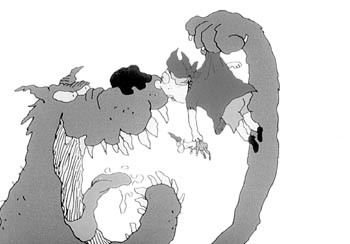
As the after-dinner mint, the festival serves up a reprise of last year’s “Billy’s Balloon,” a vicious comic short that depends on the sort of violent humor you dread to analyze. I think this primitive cartoon is an answer to “Panther”: the question “What kind of bastards would lock up a magnificent panther in a disgusting cage?” is rejoined by “What can you expect in a world in which even inanimate objects are scheming their revenge?”

In this case, a nice red balloon unexpectedly turns on its young master, an ugly wall-eyed toddler. The evil balloon even pauses for a moment to look innocent while a few adults walk by to smile at the kid and his plaything.

Spike and Mike’s Classic Festival of Animation screens at Rialto Cinemas Lakeside, 551 Summerfield Road, Santa Rosa. For details call 525-4840.

From the June 1-7, 2000 issue of the Sonoma County Independent.
© Metro Publishing Inc.

Mistral

0

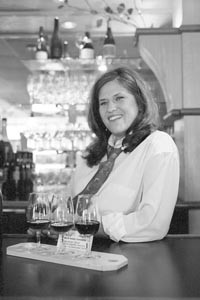
In-flight attendent: Mistral bartender Kelly Brown is part of a staff that guides wine lovers through themed by-the-glass “flights.”

A Flight of Fancy

Mistral serves up a wine lover’s dream

By Bob Johnson

WINE ENJOYMENT certainly is subjective, and the degree to which we love or loathe a particular bottling often has as much to do with the surroundings as the juice. We’re reminded of this truism virtually every time a friend returns from a trip to France or Italy and waxes poetic about an $8 bottle of vino consumed at a rural cafe or a hole-in-the-wall wine bar.

That same bottle, served back home in Sonoma or Sebastopol with dinner, would never stand up to the imbiber’s usual scrutiny. Indeed, we’ve heard sad tales of how wonderfully complex a wine tasted in the “old country,” yet how simple it seemed when uncorked here.

“I guess this is a wine that just doesn’t travel well” is the typical refrain.

Truth be told, those simple country wines of Europe travel perfectly well. What doesn’t is atmosphere. The right setting with the right person at the right time can make a nothing-to-write-home-about wine seem worthy of a hardcover book.

Is it possible to replicate such an experience in Sonoma County, arguably one of the finest wine-grape-growing regions of the world?

Sure . . . if you’re from Europe.

But seriously, a truly memorable wine-drinking outing is available in the cozy confines of Santa Rosa. While the masses jam both the northbound and the southbound lanes of 101 at quitting time, a fortunate in-the-know few head for Mistral and rest their weary bones at the acclaimed restaurant’s eight-seat wine bar.

You won’t find “charming country wines” at Mistral. The mechanization and modernization of the California wine industry has caused the hearty, individualistic wines of pioneering vintners to be largely overrun by sleek, sophisticated, sanitary, and safe bottlings that high-tech vinification renders.

However, what you will find at Mistral’s wine bar is a user-friendly list of wines–both local and global–offered by the bottle, by the glass, or in themed flights.

Any restaurant can assemble a decent bottle list, but it takes time and effort to develop and maintain an interesting by-the-glass or flight program.

Enter Mistral proprietor Michael Hirschberg, a restaurateur with a keen understanding of how wine complements food and vice versa. Just as important, Hirschberg realizes how daunting the wine selection process can be for a diner.

“The idea of our flight program is to introduce people to new wine experiences and to relieve the fear of ordering wine,” Hirschberg confides.

“You can have the greatest wine list in the world, but if it intimidates people, they’re going to order coffee or a Coke.

“Those are both worthy beverages, but they don’t go with food nearly as well as wine does.”

Because supplies dwindle and vintages change, Mistral’s flights are constantly being updated. During our recent visit, the 10 flights were categorized thusly: Apéritifs, Exciting White Wines, Sauvignon Blanc, Chardonnay, California/ Italian, Red Wine Sampler, Zinfandel, Syrah, A Taste of France, and A Taste of Spain.

MOST categories included at least one Sonoma County bottling, complemented by wines from other North Coast appellations, as well as Italy, New Zealand, and the aforementioned France and Italy.

We opted for the Syrah flight, since many industry insiders are touting syrah (a.k.a. shiraz) as “the next merlot.” It consisted of one bottling from Sonoma County (1997 Geyser Peak), one from Mendocino County (1997 McDowell Estate), and one from France (1997 Perrin Crozes-Hermitage), and offered a rare opportunity to compare and contrast wine flavors and winemaking styles.

The McDowell Estate was the most aromatic of the three, with fumes of black cherry and smoke wafting from the glass to the nostrils.

The always dependable Geyser Peak was typically fruit-forward, oozing blackberry and blueberry and finishing with a nice dollop of pepper as it opened up. And the French wine, from the northern Rhône Valley, was more “meaty,” with the flavors of the earth and oak barrels dominating the fruit nuances.

To help customers keep track of the wines–since most people are accustomed to having one glass in front of them, rather than three–Mistral utilizes wooden flight trays with three round indentations to fit the bases of the glasses.

A printed stand-up card attached to the tray identifies the wines by name from left to right.

Visitors still confused by all the choices will find helpful words of advice just an inquiry away.

Kelly Brown was tending bar on the day of our visit, and she deftly guided several customers to flights or glasses she thought they’d enjoy, based on their stated taste preferences.

Surprisingly, Brown was not a wine aficionado when she joined the Mistral staff some four years ago.

“It’s been on-the-job training,” she smiles. “Anytime we open a bottle, we not only smell it, but also taste it to make sure it’s not corked.

“When you have as many flights as we have, you get to taste a lot of wines, and tasting is the best way to learn.”

That goes just as much for casual diners as wine bar attendants.

From the June 1-7, 2000 issue of the Sonoma County Independent.
© Metro Publishing Inc.

‘Committed’

Heather Graham turns into a New Traditionalist for ‘Committed’

By

EARLY IN Committed, Joline (Heather Graham) says that she can tell people who have faith from those who don’t: “It’s like a flashlight shining between their eyes.” Which, given the dim-blonde character Graham plays, is too close to one of the meanest of the blonde jokes: “How do you make a blonde’s eyes sparkle? Shine a flashlight in her ear.”

Committed isn’t Graham’s fault. If, for the first time on screen, she’s charmless and annoying, it’s better to pin the fault on director/writer Lisa Krueger, whose simplistic moralizing keeps Committed a dull, trying experience

Joline is a Manhattan nightclub booker with a commitment to truthfulness; she’s a girl promise-keeper. Her marriage to Carl (Luke Wilson) hasn’t lasted three years when he suddenly vanishes, leaving behind a note that claims that he’s stalemated creatively and wants to leave. This isn’t good enough for Joline, who tracks her straying husband down to El Paso.

Stalking him, Joline encounters Carl’s new girlfriend, Carmen (Patricia Velazquez), a waitress in a fancy Mexican restaurant. Through Carmen, Joline meets a bruja, Carmen’s granddad (Alfonso Arau, the director of Like Water for Chocolate). The sorcerer encourages Joline’s view that her lost husband is spiritually ill and needs Joline more now than ever. So Joline camps outside of her husband’s double-wide trailer. Soon she’s joined at her desert campsite by her brother, Jay (Casey Affleck).

Temptation arises in the form of a suave, foreign-accented sculptor named Neil (Goran Visnjic). In the film’s low point, Neil makes love to an inflatable doll in front of his window. He wants Joline to see what he’d do to the girl, if only she weren’t so firmly committed to her marriage.

The film’s tiresome daffiness is probably not meant to be taken seriously. Like Krueger’s previous film, Manny & Lo, Committed is gooshy and completely ephemeral. If it were any smarter, it might be dangerous. Why go on about it? Simple: some viewers will respond so fervently to the death-before-divorce spirit this film is trying to sell that they may forgive its slackness. Joline even has a tattooed wedding ring, which is as good a premonition of disaster for a marriage as a dead dove hitting the bride.

Committed plugs into that disgruntled spirit of children raised without two parents during the ’60s and ’70s. I recall interviewing Exene Cervenka of the band X about 20 years ago. She broke the news that she had just wedded her partner, John Doe, by saying, “We didn’t want to live in sin like hippies.”

It was inevitable; a few years later they got divorced like yuppies. In one sense, Krueger’s air-headed movie counsels the search for rigor and self-improvement that’s typical of youth, finding moral superiority through New Traditionalism. Nevertheless, Committed indulges in the worst intellectual habit of the ’60s counterculture–it supports putting a principle ahead of common sense.

From the June 1-7, 2000 issue of the Sonoma County Independent.
© Metro Publishing Inc.

Terry Tempest Williams

0

Storm warning: Author Terry Tempest Williams delivered an electrifying reading in Santa Rosa.

Earth Spirit

Warm welcome for nature writer Terry Tempest Williams

By David Templeton

WHEN TERRY Tempest Williams took the stage last week in Santa Rosa, the full audience treated the visiting author and environmentalist to a long, enthusiastic round of applause and cheers and a handful of air-blown kisses. Clearly, they already loved her.

And the feeling was mutual.

“This,” exulted Williams, spreading her arms as if to embrace the entire crowd, “is what is meant by the word sanctuary. Here is the heart of the community, a gathering place where ideas can be discussed, where a fusion of literature and politics is developed, where ideas are given shape and are loved and are turned into actions.”

Williams–author of Refuge, An Unspoken Hunger, and Desert Quartet–was in Sonoma County to speak and to read from her brand-new work, the remarkable Leap (Pantheon; $25). The Thursday night event–sponsored by Copperfield’s Books as a fundraiser for the Western Sonoma County Rural Alliance, which is dedicated to the protection of the local environment–was held at the Unitarian Universalist Fellowship, a popular center of local progressive political action.

Williams, raised as a Mormon, has lived in Utah her entire life. Her staunch environmentalism and anti-nuclear activism–her mother died of cancer, possibly linked to the government’s years of nuclear testing in the nearby desert–have often put her at odds with her religious culture.

In Leap, Williams risks further criticism and perhaps even loss of membership in the Church of Jesus Christ of Latter-day Saints. The book is a retelling of the author’s seven-year obsession with Garden of Earthly Delights, artist Hieronymus Bosch’s 15th-century Flemish masterpiece, a hypnotic triptych showing Paradise, Hell–and the “Garden” that literally falls between.

Leap is a poetic, emotionally daring, stream-of-consciousness adventure, as Williams imagines herself entering Bosch’s surrealist landscapes, challenged to the core by what each new image brings. Ultimately, Leap is an examination of faith and orthodoxy, and the costs and benefits of both to the planet and the human soul.

BEFORE taking her place at the podium, Williams worked the crowd, notebook in hand, eager to hear what environmental concerns were highest in the minds of Sonoma County residents. Most often, she was told of the speedy encroachment of vineyards across the once agriculturally varied terrain.

“I live in the desert,” Williams announced later, standing at the lectern. “And I come from a community that doesn’t drink wine,” she added, with a smile. “So this is all completely new to me. But whether we’re talking about my specific environmental concerns in Utah or yours in Sonoma County, our concerns are the same. This is about encroachment. It’s about lack of respect. It’s about protecting our watersheds. It’s about protecting our resources.

“I admire you,” she said. “I admire how you are demanding to be part of the conversation, for having the integrity to do what you have to do to maintain the environment.”

During the reading itself–an electrifying blend of words and images, recited by Williams in a powerful, hypnotic performance that often resembled chanting–the audience was often literally holding its breath to hear every word.

At the end, when Williams described being asked why she has chosen the obsessions she has, the author laughed.

“Oh,” she said, “I believe our obsessions pick us.”

From the June 1-7, 2000 issue of the Sonoma County Independent.
© Metro Publishing Inc.

‘A Funny Thing Happened on the Way to the Forum’

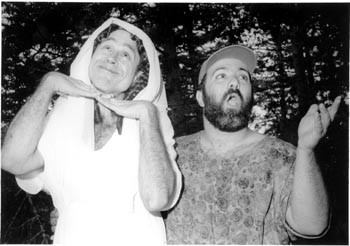
When in Rome: Michael Temlin stars in A Funny Thing Happened on the Way to the Forum.

High Art

Mountain Play stages lively ‘Forum’

By Daedalus Howell

EVER SINCE the coastal Miwok cavorted among its crags and crannies, Mt. Tamalpais has been regarded as a nexus of spiritual power. This is why the mountain is perhaps the largest receptacle of illegally deposited cremated human remains in Northern California. It’s also where Marin County’s Mountain Play Association decided to finally lay that musical dinosaur A Funny Thing Happened on the Way to the Forum to rest. But wait! To quote Dr. Frankenstein, “It’s alive! It’s alive!”

Staged at the amphitheater of the Sidney B. Cushing Memorial Theater atop Mt. Tamalpais, the nearly 40-year-old Stephen Sondheim musical eerily comes to life under the apt stage and musical direction of James Dunn and Paul Smith, respectively.

This is not to say the production is stellar, but it certainly is lively. As the show’s press kit boasts, it has been “tweaked to tickle contemporary sensibilities.” The tweaking works.

Matt Henerson stars as Pseudolus, a slave who can win his freedom by arranging a rendezvous between the coveted virgin Philia (velvet-voiced Susan Zelinsky) and his lovelorn master, Hero (Tyler McKenna). The task would seem easy enough except that Philia has been purchased by muscle-bound gladiator Miles Gloriosus (Matt Kizer). Worse yet, Hero’s randy dad, Senex (Louis Parnell), owing to an ill-fated ruse to disguise the maiden, believes she is the new maidservant and wants desperately to get dirty and put her to task.

Henerson’s eternally wisecracking Pseudolus is simultaneously reminiscent of both Seinfeld’s Jason Alexander and Bugs Bunny (hey, a middlebrow show gets middlebrow accolades). Waggish and conniving, Pseudolus requires boundless energy and precision comic timing–both of which Henerson has to spare. His copious asides do much to update an otherwise corny text. After a cavalcade of courtesans careens across the stage (these women have more curves than the road up Mt. Tam), Pseudolus mutters, “I think she was a dream sequence.”

And dreamy they are. The courtesans add much va-va-voom to the show’s myriad dance numbers while inducing a handful of cheap, but irresistible, T and A-inspired laughs.

Other standout performances include Norman Hall’s garrulous Marcus Lycus, the neighborhood flesh peddler and sleazeball decked out in Elvis’ Vegas-era lambchops. Likewise, Kizer’s entrance as Miles Gloriosus must be a first on North Bay stages–he rumbles to the stage in a fire-engine-red jeep.

Costume designer Pat Polen garbs most of the male cast in what can be construed as the Star Trek version of Greek attire (the wildly printed tunics and robes won’t do for the women, however, whose wardrobe is equal parts belly dancer, dominatrix, and Xena, Warrior Princess). Others, like Ian Swift’s hilarious, wizened, and bearded Erronius, look as if they wafted up the mountain from Stinson Beach, having disappeared into an LSD vortex 30 years ago.

A word to the wise: Arrive early or you’ll be watching the show from behind a grove of oak trees. Unless you’ve sold your soul to Satan, forget about parking anywhere near the amphitheater (shuttle buses from Mill Valley are offered free of charge). Be sure to bring sunscreen, a butt pad, a picnic lunch, and wine. These creature comforts go far to make A Funny Thing Happened on the Way to the Forum more enjoyable, particularly the wine, which when consumed in quantity makes the show funnier.

The Mountain Play Association’s production of A Funny Thing Happened on the Way to the Forum plays June 3-4, 11, and 18 at 1 p.m. $11-$22. Information about shuttle buses and directions to the amphitheater are included with ticket orders. For details, call 510/601-8932.

From the June 1-7, 2000 issue of the Sonoma County Independent.

© Metro Publishing Inc.

Health & Harmony Festival

0

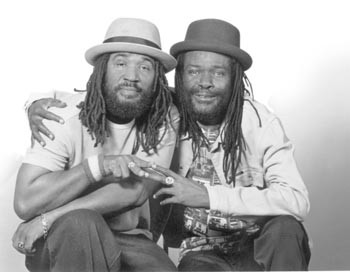
Pure harmony: Wailing Souls perform June 10 at the Health & Harmony Festival.

Fizzling Festival

Health & Harmony founder calls it quits

By Paula Harris

“IT’S MY LAST FESTIVAL, that’s all I can say,” vows Debra Giusti-Rose, founder and executive director of the popular Health & Harmony Music & Arts Festival, the two-day Sonoma County celebration that features multicultural entertainment and exhibits promoting healthy and harmonious lifestyles.

After producing the county’s quintessential alt-living event for 22 years, Giusti-Rose, 45, says she’s had enough. “I need to go on with my life,” she continues with a touch of regret in her voice. “It’s been wonderful, but it’s been all-consuming and not always profitable. There’s so much juggling and risk involved, it’s like a huge complicated puzzle to get all those people [to the venue] and make sure they have a good time.

“When I produce the festival, it’s not really health and harmony for me.”

The festival has always been successful, but not always profitable. With rent, insurance, labor, entertainment, and numerous other costs, it takes $400,000 to produce the event, which is not subsidized by the government or any corporate sponsors, says Giusti-Rose. “Yet people come to Health & Harmony and complain about the $15 or $18 entrance fee–that’s very discouraging to me,” she adds.

Giusti-Rose says she was ready to let go of her creation two years ago, but instead turned it into a nonprofit organization in the hope that a single savior or a leadership team would emerge to take control of the sprawling event. But so far that hasn’t happened.

“There’s no grassroots movement, and leaders are few and far between,” laments Giusti-Rose. “It’s not the 1960s anymore, and people are extremely busy these days. It’s hard to find someone with the resources to make it happen. I’m not sure whether the festival can or will continue after I’ve left.”

Giusti-Rose says health concerns, including a recent bout with breast cancer, have made it impossible for her to continue the demanding schedule and personal financial burden of the event. Looking back, it’s been a quite an odyssey for the festival’s founder.

In 1978, Giusti-Rose, fresh out of college, was inspired by the so-called new consciousness that embraced such alternative concepts as holistic health care, world music, ecology, organic foods, spirituality, and metaphysics. As these ideas settled into Sonoma County’s counterculture like a heady incense, she decided to create a festival that could be a catalyst to bring all the alternate values and lifestyle beliefs together locally.

The event, held each summer at the Sonoma County Fairgrounds, has grown 10-fold since its inception, last year attracting more than 25,000 attendees. It’s the largest of its kind in Northern California. Giusti-Rose says that mainstream culture now accepts the ideas that the festival was originally based on, and that it’s now “hip to eat healthy, recycle, and groove to reggae.”

This year’s event promises to be a big draw, boasting nationally known keynote speakers: Green Party presidential candidate Ralph Nader and celeb tree-sitter Julia “Butterfly” Hill. There will also be music from reggae greats the Wailing Souls, Latin percussionist Pete Escovedo, bluesman Roy Rogers and vocalist Shana Morrison, Jai Uttal and the Pagan Love Orchestra, Motherhips, Joanne Rand, and many others.

And there will be plenty of alternative attractions, from the Goddess Temple, where you can create a little magick, to the Hemp Expo, to the Eco-Village that showcases green living and the Natural Foods Sampling Hall with such delectables as edible flowers, to a Techno-Tribal Trance Dance. In all, the festival will feature more than 500 exhibits, lectures, and demonstrations.

This year, says Giusti-Rose, the community is taking a greater role in organizing the festival. But it still needs more help. To continue into the future, she says, the festival needs producers, business sponsorships, and grants from foundations and agencies.

Since the event originated from the concept of pooled community strength, Giusti-Rose is optimistic that it can be reborn in some form with some focused grassroots help.

“It’s been a spiritual practice,” she says. “I look toward the community for physical and financial support to now make the festival self-sustaining.”

The Health & Harmony Music & Arts Festival takes place Saturday and Sunday, June 10 and 11, from 10 a.m. to 7 p.m. Sonoma County Fairgrounds, 1350 Bennett Valley Road, Santa Rosa. $15 for adults in advance ($8 for seniors and teens 10-16), $18 for adults at the door ($10 for seniors and teens 10-16), and $25 in advance, $30 at the door, for both days. Kids under 10 get in free. 575-9355.

From the June 1-7, 2000 issue of the Sonoma County Independent.

© Metro Publishing Inc.

Abusive Priests

Abuse Accuser: Terrie Light, who was raped by a priest at age 7, has formed the statewide Survivors Network of Those Abused by Priests. Despite recent apologies, like the one delivered last week by newly installed Diocese of Santa Rosa Bishop Daniel Walsh, Light and other victims say the church has a long way to go to make amends....

Emile’s Creekside Bistro/Hank’s Creekside Cafe

Nighttime is the right time: Chef Emile Waldteufel holds court. Night & Day Creekside serves all-American breakfasts and French bistro suppers By Paula Harris DRIVING PAST the unassuming little Santa Rosa eatery sandwiched between a couple of stores on Highway 12 across from the Flamingo Hotel, you'd be...

‘Croupier’

Croupier. House of Games Gambling is metaphor in 'Croupier' Richard von Busack By JACK (CLIVE OWEN), the hero of the British film Croupier, is an unsuccessful novelist who is urged by his moneyed thug of an editor (Nick Reding) to come up with an underworld novel. Circumstances force Jack...

Kate Clinton

A date with Kate: Comedian Kate Clinton delivers faux innocence and big laughs in her stand-up performances. Out and About Comedian Kate Clinton heads up LBC's gay comedy night By Paula Harris "I COULD NEVER really look like a big, hearty lesbian," remarks gay stand-up comic Kate Clinton in her...

Spike and Mike’s Classic Festival of Animation

Not kids' stuff: Adults will appreciate the new Spike and Mike's compilation. Animal Cels Tragic 'Panther' highlights animated shorts in 'Spike and Mike' festival By THE LATEST edition of Spike and Mike's Classic Festival of Animation is their best to date. The biggest laugh you can get these days seems...

Mistral

In-flight attendent: Mistral bartender Kelly Brown is part of a staff that guides wine lovers through themed by-the-glass "flights." A Flight of Fancy Mistral serves up a wine lover's dream By Bob Johnson WINE ENJOYMENT certainly is subjective, and the degree to which we love or loathe...

‘Committed’

Heather Graham turns into a New Traditionalist for 'Committed' By EARLY IN Committed, Joline (Heather Graham) says that she can tell people who have faith from those who don't: "It's like a flashlight shining between their eyes." Which, given the dim-blonde character Graham plays, is too close to one of the meanest of the blonde...

Terry Tempest Williams

Storm warning: Author Terry Tempest Williams delivered an electrifying reading in Santa Rosa. Earth Spirit Warm welcome for nature writer Terry Tempest Williams By David Templeton WHEN TERRY Tempest Williams took the stage last week in Santa Rosa, the full audience treated the visiting author and environmentalist to...

‘A Funny Thing Happened on the Way to the Forum’

When in Rome: Michael Temlin stars in A Funny Thing Happened on the Way to the Forum. High Art Mountain Play stages lively 'Forum' By Daedalus Howell EVER SINCE the coastal Miwok cavorted among its crags and crannies, Mt. Tamalpais has been regarded as a nexus of spiritual...

Health & Harmony Festival

Pure harmony: Wailing Souls perform June 10 at the Health & Harmony Festival. Fizzling Festival Health & Harmony founder calls it quits By Paula Harris "IT'S MY LAST FESTIVAL, that's all I can say," vows Debra Giusti-Rose, founder and executive director of the popular Health & Harmony Music...
11,084FansLike
4,606FollowersFollow
6,928FollowersFollow
