‘Girlfight’

0

A female fighter goes a few rounds with ‘Girlfight’

Writer David Templeton takes interesting people to interesting movies in his ongoing quest for the ultimate post-film conversation.

“The very first time I hit a man,” recalls Kate Sekules, “it wasn’t really very significant. In fact, I can barely remember it. On the other hand, the first time I hit a woman–now that was a big moment for me.”

Sekules, her lilting British accent and soft-spoken demeanor running counter to all this talk about hitting and being hit, is discussing Girlfight, the art-house drama directed by Sundance sensation Karen Kusama. It’s the story of Diana Guzman (played by buffed-up newcomer Michelle Rodriguez), an angry, semi-delinquent teen from the streets of New York whose future seems destined to go bad until she stumbles upon an unexpected talent as an amateur boxer.

Currently the travel editor for Food & Wine Magazine, Sekules has an idea of what Diana Guzman feels the first time she enters the ring with another female fighter. A seasoned boxer herself, Sekules began training in 1992 at New York’s legendary boxing gym Gleason’s, eventually becoming one of the first women in the world to lift gloves in a professional prizefight.

She tells the story in her lyrical new book The Boxer’s Heart: How I Fell in Love with the Ring (Villard; $23.95). Taken alongside Girlfight and the recent documentary Shadowboxer–“A wonderful piece of work that it isn’t getting the attention it deserves,” says Sekules–The Boxer’s Heart completes a kind of female-fighter trilogy.

Speaking of fighters. I wonder if it’s true that Sekules, having engaged in professional pugilism, cannot legally hit another human outside the boxing ring?

“Well, that’s the story,” she says with a laugh. “It might be only hearsay, but I’ve been told that if you’re a professional boxer, your fists are seen as a lethal weapon.”

“So if I asked you to punch me in the head, you couldn’t do it,” I assume.

“Well, of course I could,” Sekules replies. “And if you decided to sue me, you’d have a very good case.”

Uh, right. Anyone whose seen Sekules’ trim, fighter-stance photo on the cover of her book will realize I’m in no hurry for a practical demonstration of her point. As a guy whose been in only one real fight his whole life (Matt McGruyer kicked my ass in seventh grade), I’m reasonably certain that Sekules would kill me.

So could Michelle Rodriguez, for that matter. Or Karen Kusama, each of whom, by the way, has trained at Gleason’s alongside Sekules.

“I remember Michelle Rodriguez, her first day training at the gym,” Sekules says. “It was two or three years ago when it was still unusual to see a girl fighter who was good. I saw Michelle and said, ‘Hey who’s that? She looks good. She looks like she’s been training about four months.’ But no. It was Michelle’s first day training at the gym. She was amazing.”

Thinking back to the moment in the film when Diana’s trainer patiently wraps her fists in those creamy, canvas bandages, preparing her for her first workout, I ask Sekules if becoming a boxer had altered her own relationship with her hands.

“My hands?” she repeats. “What a strange question.”

She pauses, considering it. “At the beginning, my hands kept getting cut and bruised,” she says finally. “Once you scrape all the skin off your knuckles and then hit them again, your hand never heals. It was interesting, because there’s this unspoken requirement that every woman in New York must have an expensive manicure. So here I was with long manicured nails and these greatly scarred knuckles.

“But I was proud of that,” she continues. “Otherwise, the hand is really just the end of the punch. The force comes up from the ground and goes through your whole body. It was my relationship with my body that was completely transformed, gradually and probably for good. And thank God for that, because it just drags you down, that body stuff that women have to cope with.”

“Speaking of what women have to cope with,” I say. “You were saying that the first time you hit a woman, it was a significant moment?”

“Very significant,” Sekules murmurs.

“Did you feel guilty about it?”

“It wasn’t guilt, exactly,” she replies. “But it wasn’t easy. It felt more like having to push through glue to hit her. There was this invisible impediment, almost like someone was holding my elbow. I did hit her, eventually, in that first session. I hit her a lot, but I didn’t really lay into her. I never got in a really good shot.”

Sekules’ female opponent, however, got in a few good shots of her own.

“It’s weird. When I first started boxing and a guy hit me, it outraged me,” Sekules remembers. “It was a very simple reaction. I thought, ‘That’s not right. What are you doing? How dare you?’ But when I was hit by a woman, my reaction was much more complicated. I’d think, ‘What are you doing that for? This is my territory. I’m supposed to do the hitting. Don’t you know I’m better than you?’

“Getting hit by a woman the first time, though, was still much easier for me than was my hitting another woman. I still struggle with it. I have trouble sparring all-out. Of course, the more I spar, the less trouble I have, but I’m still not all that great at just laying into someone, male or female.”

This is quite unlike Diana, who takes her ambitions as far as a “gender-blind” bout with a male boxer she just happens to have fallen in love with.

“In the context of the film it works brilliantly and I loved it–but it’s completely ridiculous,” Sekules says. “There’s no such thing as a ‘gender -blind’ event. It wouldn’t be allowed.

“Besides,” she continues, “I would never get in a ring with my boyfriend.”

“Why not?” I ask.

“Well, he doesn’t box,” Sekules laughs. “So I’m afraid I’d have too great an advantage on him.”

From the October 19-25, 2000 issue of the Northern California Bohemian.

© Metro Publishing Inc.

Ralph Nader

0

Later for Nader

Can America afford a closet right-wing moron?

By Stephen Kessler

RALPH NADER’S presidential campaign this year has been a refreshing blast of reality. Nader’s scathing critique of the corporate corruption of American politics has been a vital contribution to the public discourse, casting a cold light into the darker corners of our democracy. His tendency toward self-righteousness has at least been earned through decades of heroic work for the public good; Nader lays no claim to divine endorsement or religious superiority.

With nothing to lose by speaking frankly, he has raised uncomfortable questions about the Democratic Party’s apparent abandonment of some of its traditional values. Most valuable of all, his activist populism has forced Al Gore, a centrist “New Democrat,” sharply to the left–in rhetoric at least–to take up the cause of “working families” and the middle class against the “powerful forces” (big insurance, big oil, big drugs, HMOs) conspiring to steal their money, foul their habitat, wreck their health, and generally sabotage their lives.

It’s possible that this latest Gore is a fraud, that once elected he would forget what he’s said on the campaign trail since the Democratic National Convention and go back to work for his corporate contributors in a business-as-usual joke on the people who voted for him. But Gore, for all his difficulty telling the whole truth and nothing but, strikes me as more sincere and more pragmatic than that; he has the character of a Boy Scout, square and eager to please in a way that would make it hard for him to bail out on his declared principles.

Having pledged to defend the little guy, he would at least feel morally obligated to make an effort in that direction. His liberal pedigree and policy proposals–his willingness to invest the fruits of a healthy economy in programs that would benefit those parts of the population that need the most help–give him a certain amount of credibility.

Unlike Nader, whose opposition to global capitalism is principled but pointless under present circumstances, Gore accepts existing economic realities and wants to make them work more fairly for everyone.

But like Nader, who is comparably short on charisma, Gore is an imperfect candidate, a creature of a system in need of repair.

It could be argued that, having already embarrassed himself to the edge of indictment through various fundraising scandals, Gore is actually in a stronger position than he might otherwise be to work for campaign finance reform. Having publicly acknowledged his own corruption, he’s motivated to correct it. Nader, having never been more than an “outside agitator,” though a very effective one, is both untainted by the system and unproven as someone who can function effectively within it and thereby change it. But beyond their experiential and ideological differences, the major distinction between Nader and Gore is that Gore has a chance of being elected president. The alternative, for those conscious enough to tell the difference between a Democrat and a Republican, is the disturbingly moronic and deviously sinister George W. Bush.

Nader’s claim that the donkeys and elephants are just two faces of the same corporate beast may be useful as an analytical tool, but anyone who thinks Ted Kennedy, Paul Wellstone, John Lewis, and Maxine Waters are politically equivalent to Jesse Helms, Tom DeLay, Dick Armey, and Trent Lott is dangerously deluded. Those on the left, or off the charts, who believe that by voting for Nader–or not voting–and thereby helping elect Bush they are somehow striking a blow for political integrity and against corporate domination of the world will be rudely awakened when the Bush team takes over and proceeds to bankrupt the federal treasury by giving the richest people in the country a trillion dollars in tax breaks that might have gone toward health care, environmental protection, public education, and other investments in the common good.

A Bush presidency would be a great leap backward–just look who his advisers are: mostly his father’s cohorts, tottering relics of a Republicanism that pretended to be “conservative” but ran up record debt and deficits. And even more alarming, look who his closest supporters are: the NRA, the Christian Coalition, the whole suspiciously silent Republican right.

A Bush administration is a nightmare waiting to happen, and the Naderistas are its enablers.

IT’S NO ACCIDENT that Nader’s support comes almost exclusively from white middle-class lefties who have little to lose by turning the government over to the reactionaries. As Jesse Jackson Jr. has pointed out, minorities and the poor are far more dependent on government programs and therefore cannot afford to throw their votes away on a candidate who not only can’t win but would help defeat the one who would work for them. I’m sure they harbor no illusions about Gore, but his credentials are so far superior to Bush’s (or to Nader’s, for that matter, in terms of ability to work with, rather than against, Congress as it currently exists) that the vice president, for all his faults, is unquestionably the preferable candidate.

Were Gore so far ahead in the polls, as Clinton was of Dole in 1996, that a vote for Nader would be a harmless statement of protest, I might be inclined, as I was then, to go that route. But the gravity of the consequences of a Bush victory, and the closeness of the race in these final days, makes clear what the responsible choice is for anyone with democratic instincts.

Supreme Court and federal regulatory appointments, abortion rights, campaign finance, gun control, workers’ rights, the environment, healthcare, Social Security, taxes and their impact on the government’s ability to serve the public–these are all vital issues on which Bush and Gore have serious disagreements, and to which their respective administrations would respond with seriously different policies. To pretend otherwise is an act of political idiocy.

Thanks to Nader, Gore must now put his money where his mouth is and make good on his promise to fight for ordinary people against the depredations of the big boys. Having made an important contribution to the dynamics of the debate, Nader, if he really cares about this country, should urge his supporters to get behind Gore.

From the October 19-25, 2000 issue of the Northern California Bohemian.

© Metro Publishing Inc.

Newsgrinder

0

Newsgrinder

Important events as reported by daily newspapers and summarized by Daedalus Howell.

Friday 10.06.00

This month’s Petaluma Post features a photograph of local columnist and peopleologist Bill Soberanes with the Beatles in a “World’s Championship Wristwrestling” insert (another photo of the Fab Four sans Bill adorns the Post‘s cover). The relevance of the photograph’s prominent display is clarified by a terse caption suggesting that John Lennon might have queried ye olde newshound about wrist wrestling. The timely and ever-market-savvy Post (the surviving Beatles just released their collective autobiography, to the delight of fans rabid for Beatle-related coverage) has revived the persistent “Bill is dead” rumor that has repeatedly dogged the reporter’s career despite his regular column in the Argus-Courier and reprints in the Petaluma Post. Other Beatle-related hearsay has it that the foursome refers to Soberanes in their song “Lovely Rita,” in which Paul McCartney croons, “Got the Bill and Rita paid it.” Many believe this is a reference to an oft-cited notion that Soberanes penned many of the Beatles’ hits and was paid for his silence. Among Soberanes’ alleged contributions to the Beatles oeuvre are “With a Little Help from My Friends” and “Everybody’s Got Something to Hide Except for Me and My Monkey.”

Monday 10.9.00

The Marin Independent Journal reports that the Marin County Sheriff’s Department purchased 26 guns during Marin City’s first anonymous gun buy-back event. Only six of the guns were from Marin City, However, rifles and handguns from all over the county got swapped for $100–cash. Many of the handguns were illegal junk guns, according to Deputy Sheriff Robert Crowley, who did not indicate how citizens maintained anonymity without wearing, say, ski masks or pantyhose on their heads. “[The event] gives people who want to get rid of guns legitimate ways to get rid of them,” said Sgt. Scott Anderson. It also gives those hawking stolen weapons an easy fence. Authorities were mum about whether a methamphetamine buy-back program is in development.

Tuesday 10.10.00

Speaking of low-grade speed, a federal law enforcement vehicle parked in a tony eastside Petaluma neighborhood was burglarized last week, reports the Argus-Courier. The laundry list of stolen items includes one .223-caliber assault rifle, 100 rounds of .223 ammunition, one ballistic vest, one portable two-way radio, law enforcement clothing, one laptop, several duffel bags chock full of law enforcement equipment (handcuffs and a night stick?), and the self-respect of the agent who left the car in East Petaluma. (As Slim Pickens would say, “A guy could have a pretty good time in Vegas with all this stuff.”) Police officers located some of the loot at a nearby creek. However, the assault rifle, ammunition, ballistic vest, radio, clothing, and computer remain with a nocturnal hoodlum in a neighborhood near you. Police did not indicate why the vehicle was parked where it was, though residents living near the 500 block of Albert Way are advised to flush their stashes.

Sunday 10.15.2000

Santa Rosa bail bondsman Tom Doerpinghaus and a burly bounty hunter apprehended Howard B. Johnson, described as a “career con man” (as opposed to a freelancer), in Sonoma County last summer, reports the local daily. The charismatic Johnson was wanted in a half-dozen California counties, as well as in Missouri on a multitude of fraud charges. After his arrest, Johnson conned Doerpinghaus into putting up the $715,000 bail bond to spring him, whereupon he disappeared. Doerpinghaus says the 10 percent fee he would have made on the bond made him greedy. It also made him a contender for the Bohemian‘s Bungler of the Year Award. “Up and down the state, all these sheriff’s office detectives were saying, ‘We need this guy. Get him off the street,’ ” Doerpinghaus said. “I can’t tell you how upset they were when they found out I bailed him and let him get away.” Johnson was recaptured by authorities and is in the Sonoma County Jail–without bail.

Monday 10.16.00

Neighbors of a Union 76 gas station in the Bon Air Shopping Center in Greenbrae oppose the station’s plan to open a mini-mart selling wine and beer, according to the Marin IJ. The owner of the station, Dennis DeCota of Novato, submitted his plan to the Larkspur Planning Department but did not confirm if the new establishment will be called the “Booze ‘n’ Cruise,” “The Bottle ‘n’ the Throttle,” or “DeCota’s Molotov Cocktail Party.” Diane Dresser, a member of the Greenbrae Homeowners Association said, “It is my belief and the feeling of many concerned citizens of Greenbrae that the sale of alcohol and gasoline is a bad mix.” Indeed, one should never mix liquor and gas, or for that matter any other controlled substance and gasoline for fear of hangover.

Tuesday 10.17.00

Slow News Week: The Napa Valley Register staff must be praying for another temblor. The Oct. 17 edition included a handful of car crash stories and this insightful piece on carrots, allegedly tied to, ahem, “a 24-carrot meal.” The story appears not once but twice on the publication’s website. Here’s what you missed: “Consumed by man and beast for at least 2,000 years, the carrot is a sweet, intensely flavored root vegetable whose origin can be traced to Eurasia. A member of the parsley family, the carrot is kissing cousin to the parsnip and fennel bulb, as well as the herbs angelica, cumin and dill. Although wild carrots have been part of man’s diet since ancient times, it was not until the 18th century that a seed house in France began selection and breeding of carrots for vegetable production, settling on the fleshy orange root we enjoy today.”

Try to contain your excitement.

From the October 19-25, 2000 issue of the Northern California Bohemian.

© Metro Publishing Inc.
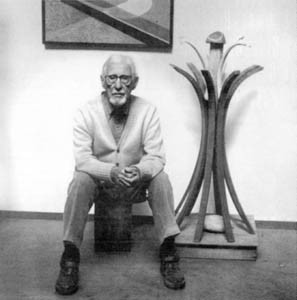
Armistead Maupin

New Tales

Armistead Maupin puts his own life at the center of ‘The Night Listener’

By Gina Arnold

WHEN PEOPLE the world over picture the city of San Francisco, they think of many things: the Golden Gate Bridge, Alcatraz, Victorian houses, earthquakes. Then they people this pretty portrait with a bunch of kooks–drunks, hippies, gays, and liberals. And who can say they’re wrong?

It’s traditional. As far back as 1873, Jules Verne, in a passage in Around the World in Eighty Days, referred to it as “a legendary city of bandits, assassins, and arsonists, who had flocked to the city in search of gold.” Jack London took over duties as chief chronicler of its vices at the turn of the century, while in the ’40s and ’50s, Herb Caen and Jack Kerouac helped turn the place into a hothouse of eccentricity.

Then came the ’70s, and San Francisco’s already wacky reputation turned decidedly pink. It was then that the Castro District’s role as a haven for homosexuals became widely visible–thanks mostly to Armistead Maupin’s Tales of the City, a daily serial that began appearing in the San Francisco Chronicle circa 1976. Any thought city residents might have had of escaping their legacy as a city of fruits and nuts came to an end.

Indeed, it’s hard to exaggerate the effect Maupin’s tales have had on San Francisco’s public relations. His eight books have achieved that rarest of statures–world acclaim–and have remained in print for the past two decades. Three movies have been made of the series, with the result that Maupin’s point of view–witty and trenchant and unabashedly sentimental–has come to color even the city’s perception of itself.

Now Maupin has a new book out, The Night Listener–his first in eight years. The book introduces a new set of characters, but through them it continues to chronicle the City by the Bay as it grapples with new problems.The Night Listener reads like a memoir, and it certainly must be in parts, but it is also–like Tales before it–a real page turner, a perfectly paced mystery of sorts, permeated by Maupin’s patented light touch.

He is, as he himself explains, “kind of like a comedian who can’t use all his best material for fear of losing the audience.” That’s why reading aloud, on his many book tours, is one of his favorite things.

“Bliss,” Maupin calls it, speaking from home just before departing on a book tour of England. (The author makes an appearance in Sebastopol on Saturday, Oct. 21, at an event benefiting Face to Face/Sonoma County AIDS Network.)

The city has undergone some changes in the years since Tales characters had freewheeling sex in gay bars and paid minuscule rents for fabulous apartments in the Marina. But Maupin’s light, dry authorial voice remains the same.

That voice is gentle, courtly, and still touched with the Southern accent. Maupin grew up in Raleigh, N.C,, where his patrician (and very right-wing) father rubbed elbows with the local gentry. After a stint in Vietnam and a job as a TV reporter at a station managed by none other than Jesse Helms, Maupin moved to San Francisco. There he began writing the soon-to-be smash serial that celebrated (among other things) the free and easy gay lifestyle of the Castro District.

Tales chronicled the lives of a group of twenty-something characters on the north side of the city. The protagonist of The Night Listener, however, lives where Maupin does, in a western neighborhood called Woodside that abuts Twin Peaks.

The character, whose name is Gabriel Noone, is a 54-year-old gay man who grew up in the south. He did a stint in Vietnam, worked in TV journalism, and made his name in the ’70s with a serial that celebrated gay life–albeit one that appeared on radio, rather than the newspaper. “I am,” says Noone at the start of the book, ” a fabulist by trade. . . . I’ve spent years looting my life for fiction.”

The sentence inspires one obvious question: Is Gabriel Noone a thinly veiled Armistead Maupin, and if so, how much loot is in here?

“Well, I’m just not going to tell you,” Maupin says. “No, I’m not trying to be coy, but my best material has always arisen from my reactions to actual experiences. On the other hand, I like to manipulate the circumstances and characters to make sense of them: real life is haphazard and tedious and often contradictory. But you step into really uncertain territory when you start trying to unravel the two things. You’ll forgive me if I don’t tell you quite how I do it.

“I’ll say this much,” he adds, referring to several plot points in the book. “I did break up with my partner four years ago, I do have an aristocratic Southern past and an 85-year-old father who still practices law and hobnobs with Jesse Helms.”

So what part of Night Listener is fiction? “I do make some things up out of whole cloth,” he adds. “I just spoke to my sister, who runs a bed and breakfast in New Zealand, and she’d just spent an hour on the phone reassuring my brother that I hadn’t had sex in the cab of a truck in a snowstorm.”

He laughs delightedly. “Of course, in many ways I wish I had!”

Another way he differs from Noone, he adds, is that “I am considerably more confident about my writing abilities than Gabriel is. But confidence isn’t an interesting thing to explore.”

Noone, who suffers from writer’s block in the novel, feels, “as if I’d broken into the Temple of Literature through some unlocked basement window.”

Maupin denies feeling that way–although one can’t help but wonder if he has suffered from the malady in question, since The Night Listener is Maupin’s first book in eight years.

“I’m not a compulsive worker,” he says with an audible shrug. “Also, I like to have a long period of letting my life fill up so I can tap into it for ideas.”

THE NIGHT LISTENER is an updating of the San Francisco zeitgeist–although the two main things that dominate the city’s life right now–i.e., the profusion of dotcom businesses and the soaring price of real estate–are not mentioned herein.

Instead, the novel concerns the effect of AIDS, not just on those who’ve contracted it, but on those who haven’t. Noone’s live-in lover has had AIDS for years, but protease inhibitors have eradicated the virus from his body, a circumstance that alters each man’s attitude toward the other, their relationship, and even toward life itself.

Just before Maupin finished the book, his–‘whatdoyoucall it?” wonders Maupin aloud, “former significant other? business partner? friend? ex-lover?”–Terry Anderson came up with the idea of marketing The Night Listener online, as the first spoken word serial available on the web via streaming audio.

In September, each chapter, read aloud by Maupin, became available for direct downloading on Salon.com. Was the author embarrassed to read the sex scenes aloud? I ask.

Maupin roars with laughter again. “In a single word: YES,” he shouts. “I kept wondering if the engineer could see me blushing behind the panel.”

“But then, I’ve been afflicted by a perennial mild embarrassment my entire life. Sometimes,” he adds, sighing, “I think I’ve deliberately put myself into situations to get past that–because I really believe we should be proud of who we are and what we do. If we aren’t, we shouldn’t be doing them.”

From the October 19-25, 2000 issue of the Northern California Bohemian.

© Metro Publishing Inc.

The Wide-Eyed Gourmet

Old-Fashioned Can-Do

By Marina Wolf

IN ALL THE HOO-HA about finally tasting Kansas City barbecue (see ), I was in danger of forgetting my whole reason for going there in the first place: the World Championship of Canning, sponsored by Grit magazine. I had sent away for a sample issue and received the one in which they were promoting the championship and soliciting essay entries. Three winning essayists would be flown, all expenses paid, for three days in Topeka, where the magazine’s headquarters are located. There the winners would act as the judging panel for the canning contest.

My mind, it makes great leaps sometimes. I saw the word Kansas, flashed onto

Calvin Trillin’s effusions on the subject of Kansas City (Missouri) barbecue, and entered the contest without thinking twice. Three months later I found myself sitting at a table with 57 assorted jars of preserved foods. With me were the other winners, the dignified old man from Texas who had canned food with his late wife; and the girl from Ohio who made her own goat cheese from her herd of goats and was so into historical re-creation that she wore a mobcap and looked as though she shouldn’t have even believed in airplanes, let alone have boarded one.

You know how a spectrum is really a circle, and the further apart you go, the closer you are to meeting on the other side, like feminists and Bible-thumpers on the subject of pornography? So it was with us judges. I admit I confronted some stereotypes during this contest.

I THOUGHT that America’s heartland boiled its food to death, but listening to my esteemed colleagues on the panel debate about green beans for 10 minutes, I soon learned otherwise.

I mean, I was from California Fresh; the other two were all about homegrown ingredients and down-home country cooking. But if you follow our convictions around to their logical extremes, we met at the inevitable conclusion: flavor and texture are all that count.

Together we rivaled any food reviewer in the country for focus, finickiness, and overall attitude. We sucked air and smacked our lips and took vicious pleasure in ripping to shreds the truly horrid entries: the absurd bread-and-butter pickled jalapeños that weren’t even hot (what’s the point?), the fruit cocktail with the twice-cooked peach segments (buy a can and save yourself the trouble), the jellies that quivered in pallid pools of their own perspiration (like ladies, truly refined jellies don’t sweat).

We shared outrage at the entries that included canned items in the recipes–tomato soup in the vegetable soup, cranberry sauce in the black-pepper cranberry salsa.

Oh, we had our differences, but they weren’t the ones I expected. The faux Amish girl had a peculiar taste for items that had been flavored with Cinnamon Red-Hots, which I felt she, if anyone, should recognize as an abomination unto the Lord. The Texas gentleman was taciturn but firm on the subject of the otherwise outstanding blackberry jam whose prominent seeds knocked it out of the running, in his polite opinion.

I fought in vain for recognition of the nuances in the summer pears, a carefully arranged jar of creamy-white pears that had been touched with a whiff of almond extract. They turned out to be way too subtle for my companions–“They’re kind of quirky,” said the girl diplomatically, while the Texan grunted something about them being “too soft.”

Now, I could have taken those comments personally, but in the interest of furthering cross-cultural communications, I subsided and let the Cinnamon Red-Hot pears win in the fruit category. Hey, I’d had my barbecue.

My duty here was done.

From the October 19-25, 2000 issue of the Northern California Bohemian.

© Metro Publishing Inc.
Culinary Institute of America

0

Culinary hitman: Max Duley, kitchen operations director at the CIA, knows his way around a wire whisk.

CIA Coverup

Relax, this is a cooking story about a culinarily challenged food writer in way over her head

By Christina Waters

OBVIOUSLY no notes were taken. My hands were too busy chopping, peeling, charring, slicing, and dicing. But here’s how I remember it. It was one of those great perks of the profession–a chance for an insider glimpse of Greystone, the CIA’s St. Helena campus for culinary higher education. We weren’t just going to visit the West Coast branch of the legendary Culinary Academy of America, we were actually going to make dinner in the great halls of designer-food prep. Alfred Hitchcock would have loved this monstrous estate, the former Christian Brothers winery, with its terraced herb gardens, in-house Wine Spectator restaurant, and up high on the third floor–in a space large enough to host the Olympics–a state-of-the-art kitchen where the great and would-be great chefs of the world come to take refresher courses in trends du jour.

On the day in question I and my 10 media companions (most of whom possessed serious culinary training) had already toured the cooking academy’s organic gardens, lunched too well at Tra Vigne, shopped in the 100-degree heat that coaxes the vineyards toward harvest. And this was before we arrived at 5 p.m. on the dot in the CIA’s 15,000 square feet of European ovens, hearths, and rotisseries, punctuated by granite workstations and enough stainless steel to build a Mercedes for every man, woman, and child in the Bay Area.

Restaurateur John Ash, an avuncular food guru with a mordant wit, met us with encouraging words–“Just ask me if you need anything”–a thick sheaf of recipes, and a wardrobe of regulation whites. We were all required to conform to the kitchen’s dress code. Even though it was still 99 degrees in that cavernous third-floor classroom, we had to wear long pants, long white coats, and those puffy white hats with thick, hot bands tight against our sweaty little foreheads.

It got worse. Wearing all of this gear, and wiped out from the full day of touring and eating (OK, and wine-tasting), we broke into teams and began scavenging ingredients for Ash’s ambitious recipes. We were literally running from station to station, grabbing produce, knives, mixing bowls, pans, and spices, and drinking gallons of spring water the whole time.

Ash may be an all-organic kind of guy (we were all using fabulous fresh produce from the CIA’s garden, as well as tomato products from the organic leader, Muir Glen), but he has the soul of a sadist. The recipe I was responsible for–black bean gazpacho salad–called for no fewer than 20 ingredients to be chopped, roasted, minced, pitted, seeded, drawn, and quartered. When Ash casually added, “Why don’t you double that recipe?” I considered staging a petit mal seizure. As fate would have it, I was assigned to join the only other people in the group who, like me, were culinary idiots. We were three food writers who could barely locate the working end of a toaster.

The next four hours were agony. The pressure grew to science-fiction proportions. We were cooking for trained chefs, using the most expensive equipment on the planet and, ideally, avoiding dismemberment–in the extreme heat–all in a kitchen so well organized that you couldn’t find a damn thing! Since the cooking area is literally the length of a football field, even when we did find the right knife, or more lemons, it took five minutes to get back to our assigned workspaces.

I asked God to send me in-line skates. He refused.

WHY AREN’T there more suicides in the world of chefdom? I pondered this mystery as I began grilling red, yellow, and green jalapeño and serrano peppers over an open fire, while struggling to remove jicama peel, roast four ears of corn, husk a dozen tomatillos–after toasting them–and find something with which to squeeze six stubbornly resistant limes. One by one the peppers hurled themselves off the grill into the extremely expensive gas burners. I retrieved them by means of long, pointed instruments, though my fingers were completely gunked up with sticky, charred pepper skin.

The clock was ticking.

In my delirium of peeling, seeding, and bias-cutting all those muy potente serranos, did I forget the rule about not touching your eyes while handling chile peppers? Duh! Eyes burning, tears streaming down my face, I scraped the blackened skins off 24 peppers and begged for deliverance. It arrived in the confident form of Max Duley, the kitchen’s operations manager and a man who knows his way around a wire whisk. Duley advised me on chopping cilantro in mass quantities while not letting the tomatillos burn–and uttered soothing mantras like “You’re doing fine” and “Only six more cups of cucumbers to mince.”

Was I stressed? Were the finalists on Survivors stressed?

Let’s just say that boot camp would have been a spa compared to this–and yet I could not stop. I couldn’t insist that I’d made a big mistake, put down my knife, and run away very fast from the wayward peppers and half-peeled cukes.

Thank God Ash had simmered the black beans in advance.

Others around me had slipped into that trance zone where only the hands remain functional. But unlike me, they knew what they were doing. They actually appeared to be having fun, as I struggled to keep from cutting off my fingers.

If there was an upside to this fiasco–in addition to some surprisingly edible results–it was getting to play in a kitchen that could have brought Martha Stewart to orgasm. It was beyond well stocked. All those German knives you’ve always coveted but couldn’t afford. They were there. So were Italian serving utensils, an endless supply of mixing bowls, even a pizza oven and tons of clean dish towels. It was total foodie fantasy, but by 9:45 p.m., when we actually finished cooking, we were all too tired to care about anything but the Bonterra organic wine.

Now I know why so few real cooks enjoy eating their own cooking. They’re too wasted. We sat, in stunned silence, like marathon runners whose endorphins have hit overload. I always knew that professional cooks had to have talent. Now I know they also have to be masochists. My night at the CIA was an affair to remember.

But it will not be repeated.

From the October 19-25, 2000 issue of the Northern California Bohemian.

© Metro Publishing Inc.

The North Bay Report

0

Tragedy Averted on Highway 101

PETALUMA A quick-thinking ranch hand became an unlikely hero Sunday when he helped avert tragedy for a family of Wine Country visitors.

San Anselmo resident Lucy Freed was driving her brand new Lincoln Navigator southbound on Highway 101 near the county line after an afternoon of winetasting when she became distracted by activity inside the vehicle. “It seems that her kids, Tiffany and Chad, were fighting about who was going to get the last drink of a wheat-grass smoothie,” California Highway Patrol spokesman Nick Handel reported. “The cup slipped and splattered on the front seat.”

Freed panicked and her vehicle careened into a 1989 Toyota Corolla, forcing the driver–Sandy Bottom, 33, of Graton–into an adjacent pasture. Bottom’s car, leaking gasoline from a ruptured fuel line, came to rest in a steaming mound of manure. Bottom suffered a minor head injury.

Luckily, the alert ranch hand, Simon Licht, saw the accident and rushed to the scene.

“When I got to the vehicle, the air bags had deployed, the children were hysterical, and Mrs. Freed was fit to be tied,” Licht recalled. “I knew just what to do. I went back to my lunch box, grabbed the salt shaker–I always eat a couple of hard-boiled eggs for an afternoon snack–and rubbed it on the upholstery with a damp cloth. That lifts those wheat grass stains in a jiffy.”

CHP Officer Handel praised Licht for his quick action. “Without him,” he said, “the Freed family would be looking at a serious devaluation on the resale of that vehicle.”

Bottom was treated on the scene and released.

“Who the hell’s gonna clean up this mess?” Licht asked. “I’ve got cow shit all over my chrome wheel covers.”

From the October 12-18, 2000 issue of the Northern California Bohemian.

© Metro Publishing Inc.

Yehuda Amichai

Theology for Atheists

Yehuda Amichai’s poetry of paradox

By STEPHEN KESSLER

UNTIL HIS DEATH last month in Jerusalem at the age of 76, Israeli poet Yehuda Amichai was a strong contender for the Nobel Prize in literature. His books were translated into 37 languages beyond the original Hebrew, and Amichai has long been one of the planet’s pre-eminent poets. The evidence in English is abundant, most notably up to now in two substantial volumes: The Selected Poetry of Yehuda Amichai, translated by Chana Bloch and Stephen Mitchell (Harper & Row, 1986; revised and expanded edition, 1996), and Yehuda Amichai: A Life of Poetry, 1948-1994, translated by Benjamin and Barbara Harshav (HarperCollins, 1994). As if that weren’t enough, last spring we were given what the jacket flap touts as his magnum opus, a tightly integrated sequence of poems translated by Bloch and Chana Kronfeld, Open Closed Open (Harcourt; Brace; $25).

Amichai is a connoisseur of the paradoxical. By turns, and often at the same time, erotic and metaphysical, devout and skeptical, earnest and ironic, grief-drenched and dryly witty, his poems investigate contemporary realities from a biblical perspective and rethink biblical stories from a contemporary angle. Jewish down to the bones, his humanity is broadly universal, obsessed as he is with time and death, war and peace, love and memory, joy and suffering. Zionist in his attachment to the rocks and sand of his homeland (Amichai immigrated to Palestine from Germany in 1936 at the age of 12), still he is not a nationalist in the political sense of that word.

Rooted in the geography of the desert landscape, its physical details and sensations, its ancient and modern history, its cosmic mysteries, Amichai is also the most intimate of love poets, as passionately entangled with his woman as with his country. He finds in the lover’s embrace both evidence of the divine and consolation for its absence. The human body–his own, his lover’s–is a garden, a battlefield, a sanctuary, an oasis, a meeting place of the temporal and the eternal.

As a Jewish atheist Taoist existentialist, I am not favorably predisposed toward theological discourse. Religious orthodoxy of any kind, with its authoritarian overtones, tends to provoke my inner anarchist. But Amichai’s poetry, religious as it undeniably is, cultivates such a shrewd irreverence and is so alive with insight, so earthy and individual, that it’s irresistible even to a disbeliever. In a poem called “Gods Change, Prayers Are Here to Stay,” he offers this lesson in comparative religion:

The God of the Christians is a Jew, a bit of a whiner, and the God of the Muslims is an Arab Jew from the desert, a bit hoarse. Only the God of the Jews isn’t Jewish. The way Herod the Edomite was brought in to be king of the Jews, so God was brought back from the infinite future, an abstract God: neither painting nor graven image nor tree nor stone.

Is nothing sacred to this wise guy? Well, yes and no. Perhaps the poet’s imagination is what it takes to revitalize exhausted dogma. A little further along in the same poem Amichai suggests this himself:

We are all children of Abraham but also the grandchildren of Terah, Abraham’s father. And maybe it’s high time the grandchildren did unto the father as he did unto his when he shattered his idols and images, his religion, his faith. That too would be the beginning of a new religion.

This sense of a faith at odds with itself, of a person wrestling with his own belief in search of spiritual truth, gives the religious dimension of Amichai’s poetry far greater weight and resonance than more conventional affirmations of piety.

The political slant of these poems is even more elusive. Fraught with history, violence, and the ongoing geopolitical (and theopolitical) arguments that have wracked his land since long before it was a Jewish state, they almost never address directly the “issues” we see debated in the newspapers. Unlike such leading Palestinian poets as Adonis and Mahmoud Darwish–who, exiled from their home and constantly trying to correct that loss, invoke a collective nostalgia, defiance, and urgent thirst for justice–Amichai seems to see war and peace, terrorism and coexistence, even borders, as difficult realities endemic not only to the region but to the human condition. He reflects on his own combat experience, the fear and courage of soldiers, his son and daughter being drafted and disappearing on buses with their faces “in the corner of the window like a stamp on an envelope,” and “the thud of the censor’s seal like the hammerblow of fate,” but the only explicit protest in his poetry–and even that is muted by a sigh of resignation–is not against the censor or any government or enemy, but against fate itself, or God, or whatever demonic force it is that causes humanity to lust for its own blood.

Like an archeologist, the poet excavates and sifts the subpolitical evidence for clues to the deeper dynamics driving human conduct. “Jerusalem, Jerusalem, Why Jerusalem?” should be read by anyone seeking to understand why it’s so vexing for any government–let alone two or three governments and as many religions–to resolve the question of whom that city belongs to. “I always have to go in the opposite direction to whatever/ is passing and past,” he writes. “That’s how I know I live in Jerusalem.”

Going “against the tide of pilgrims,” swimming upstream against “the joy- parades,” thriving on the principle of opposition, the poet is divided against his own people, who are in turn divided among, and sometimes within, themselves.

How could he or anyone expect whole states to agree on anything?

As usual, it is the lovers who offer a glimpse of relief from such madness, albeit with their own brand of fanaticism:

Two lovers talking to each other in Jerusalem with the excitement of tour guides, pointing, touching, explaining: These are my father’s eyes you see in my face, these are the sleek thighs I inherited from a distant mother in the Middle Ages, this is my voice which traveled all the way here from three thousand years ago, this is the color of my eyes, the mosaic of my spirit, the archeological layers of my soul. We are holy places.

Is Amichai being allegorical? Could these lovers be Jew and Arab? Are the bodies, animated by history and desire, mystically related to a body politic that might transcend hatred and ideology, united by Eros–praise Allah, thank God, “amen and may it come to pass”? Or is it only that he sees in sexual love a kind of redemption, though not without its own struggles for power and sovereignty?

The poignancy of our earthly sojourn, its ephemeral sweetness, the pregnancy of the smallest human gestures, the haunted beauty and richness of the most mundane things and events–none of this is lost on the poet. He dares to tackle cosmic themes in domestic terms, as in “Houses (Plural); Love (Singular)”:

We lived in many houses and left remnants of memory in every one of them: a newspaper, a book face-down, a crumpled map of some faraway land, a forgotten toothbrush standing sentinel in a cup– that too is a memorial candle, an eternal light.

If even a toothbrush, in Amichai’s universe, can be a sacred object, how much more sacred then must be the hand that holds the toothbrush, and the lovers’ hands caressing each other, and the disembodied memories themselves, and the minds remembering. With Amichai, ripples of implication set out from the simplest phrases and spread indefinitely.

His lines are almost prosaic in their conversational quality, and yet they are subtly rhythmic, lyric, layered with associations. I don’t read Hebrew, but in these English versions by Bloch and Kronfeld I feel I am getting the mood, the tone, the pace, the punning wit, the linguistic mischievousness of the original, or as close an approximation as one could hope for. They catch, in colloquial English, the contradictory currents and emotional riptides under the calm surface of Amichai’s measured voice.

“Real meaning, for Amichai,” Bloch and Kronfeld wrote recently in The American Poetry Review, “resides not in language . . . but in the ‘soul-stutterings’ of human emotion.” It must be that subterranean stutter that paradoxically informs these expert translators’ eloquence in representing not just the words but the spirit of this extraordinary poet. *

From the October 12-18, 2000 issue of the Northern California Bohemian.

© Metro Publishing Inc.

The Wide-Eyed Gourmet

KC barbecue: Heart-stopping fare in the heartland

By Marina Wolf

I LOVE HUMORIST Calvin Trillin. He doesn’t give a damn about what people say when he visits small South American countries just to sample the fish. The rest of us have to make excuses for our excesses. For example, I recently spent two days in Kansas shut up in a room with a 75-year-old man from the heart of Texas and a homeschooled young Christian woman from Ohio. We had been flown into Topeka, all expenses paid, to judge a canning competition.

This I undertook for the sake of Kansas City barbecue.

Years ago, I had discovered Trillin’s essays on the best barbecue in the world, which he contended could be found near the corner of 18th and Brooklyn in Kansas City, at Arthur Bryant’s. On the subject of barbecue, Trillin is staunchly partisan, but he had reported his friends’ contrary convictions in enough detail to catch my attention. So when the opportunity arose to get to Trillin’s hometown, I found an alibi and flew out a weekend early.

Trillin always had his wife, Alice, along for such adventures. I have L, who proved her qualifications early in our trip after our first taste of Kansas City barbecue, on the way from the airport to Topeka. The meat was greasy and tough, the beans were runny, and the coleslaw was infested with celery seeds. I was understandably upset. “Oh my God,” I wailed. “What if it’s all crap?”

“Don’t worry,” she said calmly. “We’ll be trying some more tomorrow.”

And so, after a night of indigestion and angst, we went to the Topeka Public Library to fill in the gaps of my barbecue research. It is a sign of L’s devotion that she helped me cross-reference two guidebooks, a map, and a dog-eared copy of Calvin Trillin’s food collection, The Tummy Trilogy. With only two free days in Kansas City, I had to be ruthless and narrowed the field to the two top contenders: Arthur Bryant’s and Snead’s Barbecue. How hard could it be to hit two barbecue joints in two days?

We didn’t figure on the indolence that can descend after a plate of Snead’s ribs. The long, low roadhouse on the southernmost fringes of Kansas City looked innocuous enough. And the waitress smiled as she handed us two towers of toast, fries, and ribs. The coleslaw on the side was superb. But the meat, well, that was really something else.

Here was food that never sees the light of day in California: tender bits around the cartilage, rendered succulent by leaving the fat on, and maybe even adding some in strategic places. And burnt ends, or brownies, as they are sometimes called, the pieces trimmed off the barbecued meats in an effort to even them out–one plate of delicious (carcinogenic, cholesterol-raising, God, I know, enough already!) brownies contained more barbecue flavor than I’d had in my life to date. It was staggering. More accurately, we staggered, back to the motel to recuperate for Arthur Bryant’s.

The next morning, parking our rental car, I couldn’t stop giggling. I felt shaky and weird, on the way to meet a celebrity. After I got it down to a dumb grin, we walked into the 70-year-old storefront. I’ve never eaten in a place so steeped in tradition. And smoke. Here, too, I finally understood some of the issues behind barbecue partisanship. There is so much more to sauce than just coming out of a bottle. Spicy. Sweet. Vinegary. Tomatoey. I was also struck by the untoasted white bread, a stark and exotic contrast to West Coast bread, with its organic flour and wild yeasts and artful wrappings. In Barbecueland, bread is but a vehicle for the sauce, or a pillow for the rest of the food.

Any bread with too much flavor would be a distraction from the real meat of the matter.

From the October 12-18, 2000 issue of the Northern California Bohemian.

© Metro Publishing Inc.

Open Mic

0

Ford Tough

By Bill English

HOW LONG WILL IT BE before one of them goes completely berserk? That haunting thought crossed my mind as a massive black tire rolled up next to me at a stoplight. The wheel was taller than my Toyota and proudly wore the white letters we now associate with a fiery death.

As I sat in the dark shadow of the Explorer, I checked its Firestones for the first hint of shredding.

The people behind the tinted glass stared straight ahead. They knew they were doomed. Ford had screwed them with an SUV that flipped faster than a dollar pancake. On-road, off-road, disaster was all around. Lately you see more and more Explorers by the side of the road with “For Sale” signs plastered all over them. What are these people thinking? I’ll pass the death on to some hapless fool who never picks up a paper or watches the evening news?

Best offer takes calamity?

These vehicles should be removed from the road, and Ford and Firestone should pick up the tab. Instead, each is blaming the other, and you’ve got monthlong waits before you can get replacement tires.

The frustration is building. Any day now it’s bound to happen. Most SUV drivers are good people. Rock-solid Americans. But it won’t be long before a soccer mom loses it. Perhaps she’ll be stuck in bumper-to-bumper traffic out on 101 when it suddenly dawns on her that Detroit is trying to kill her children. She’ll look around her Explorer and see nothing but a hearse. That’s when mom will snap. Just like that.

And, brother, you’d better hope you and your loved ones are nowhere in the vicinity when she goes ballistic. A righteous female rage will fill her heart. Why did her husband insist on this piece of crap? They never went off-road. It was all a scam. Now she was a joke, and everybody was staring at her with disdain.

In a brilliant flash of enlightenment she’ll know exactly what to do. Slamming it into four-wheel drive, she’ll start climbing over the cars in front of her. With the heady glee of the newly insane, she’ll crush and mangle everything in her path.

It will be the O. J. run for freedom revisited. Helicopter shots of the soccer mom climbing over traffic will become part of the American consciousness. Once again America will have driven one of its own insane.

Bill English of Kenwood is the author of two books on baseball.

From the October 12-18, 2000 issue of the Northern California Bohemian.

© Metro Publishing Inc.

‘Girlfight’

A female fighter goes a few rounds with 'Girlfight' Writer David Templeton takes interesting people to interesting movies in his ongoing quest for the ultimate post-film conversation. "The very first time I hit a man," recalls Kate Sekules, "it wasn't really very significant. In fact, I can barely remember it. On...

Ralph Nader

Later for Nader Can America afford a closet right-wing moron? By Stephen Kessler RALPH NADER'S presidential campaign this year has been a refreshing blast of reality. Nader's scathing critique of the corporate corruption of American politics has been a vital contribution to the public discourse, casting a cold light...

Newsgrinder

Newsgrinder Important events as reported by daily newspapers and summarized by Daedalus Howell. Friday 10.06.00 This month's Petaluma Post features a photograph of local columnist and peopleologist Bill Soberanes with the Beatles in a "World's Championship Wristwrestling" insert (another photo of the Fab Four sans Bill adorns the Post's cover)....

Armistead Maupin

New Tales Armistead Maupin puts his own life at the center of 'The Night Listener' By Gina Arnold WHEN PEOPLE the world over picture the city of San Francisco, they think of many things: the Golden Gate Bridge, Alcatraz, Victorian houses, earthquakes. Then they people this pretty portrait with a bunch...

The Wide-Eyed Gourmet

Old-Fashioned Can-Do By Marina Wolf IN ALL THE HOO-HA about finally tasting Kansas City barbecue (see ), I was in danger of forgetting my whole reason for going there in the first place: the World Championship of Canning, sponsored by Grit magazine. I had sent away for a sample issue and received the one in...

Culinary Institute of America

Culinary hitman: Max Duley, kitchen operations director at the CIA, knows his way around a wire whisk. CIA Coverup Relax, this is a cooking story about a culinarily challenged food writer in way over her head By Christina Waters OBVIOUSLY no notes were taken. My hands...

The North Bay Report

Tragedy Averted on Highway 101 PETALUMA A quick-thinking ranch hand became an unlikely hero Sunday when he helped avert tragedy for a family of Wine Country visitors. San Anselmo resident Lucy Freed was driving her brand new Lincoln Navigator southbound on Highway 101 near the county line after an afternoon of winetasting when...

Yehuda Amichai

Theology for Atheists Yehuda Amichai's poetry of paradox By STEPHEN KESSLER UNTIL HIS DEATH last month in Jerusalem at the age of 76, Israeli poet Yehuda Amichai was a strong contender for the Nobel Prize in literature. His books were translated into 37 languages beyond the original Hebrew, and Amichai has...

The Wide-Eyed Gourmet

KC barbecue: Heart-stopping fare in the heartland By Marina Wolf I LOVE HUMORIST Calvin Trillin. He doesn't give a damn about what people say when he visits small South American countries just to sample the fish. The rest of us have to make excuses for our excesses. For example, I recently spent two days in...

Open Mic

Ford Tough By Bill English HOW LONG WILL IT BE before one of them goes completely berserk? That haunting thought crossed my mind as a massive black tire rolled up next to me at a stoplight. The wheel was taller than my Toyota and proudly wore the white letters we now associate with a...
11,084FansLike
4,606FollowersFollow
6,928FollowersFollow
