Military Recruiters

Lesson Plan

Military recruiters go to school

By Tara Treasurefield

“Recruiters are basically bounty hunters,” says Shepherd Bliss, a Vietnam veteran and Sonoma County environmental activist. “They don’t warn young people about two big consequences of going into the military: chemical exposure and post traumatic stress.”

Bliss strongly objects to amendments to the pending federal education bill that will guarantee military recruiters access to all high schools in the nation and to all student directory information.

According to the U.S. Senate, as many as one in four high schools in the country now withhold student information from the military or bar military recruiters from campus. But that won’t be possible when the law changes. Since the education bill has already passed both houses of Congress and is in joint conference committee, the new rules will probably be approved by the end of the year.

“Giving military recruiters such access transforms the schools into breeding places for soldiers, rather than places for education about democracy, which is what they should be,” Bliss says.

But North Bay school administrators generally see military service as a viable career option. Scott Lane, principal of Laguna High in Sebastopol, says Laguna encourages recruiters to talk to interested students during non-class time, but doesn’t allow them to speak to classes, make formal presentations to the full student body, or initiate contact with students. Student information is confidential, unless parents ask the school to release it.

When the law changes, Laguna will release records for all students. “I’m interested in protecting privacy rights,” Lane says. “I hope the addresses are used to send information, and not to solicit or bother.”

Carl Wong is Superintendent of the Petaluma Joint Union High School District, where military recruiters visit campus career centers and participate in Career Day. Like schools in the West County, Petaluma treats student contact information as confidential. When the law changes, Wong says the district will assess its options. “We will refer to our legal counsel to render an advisory, and adopt board policy accordingly,” he explains.

Tamalpais High School District in Marin will also seek counsel. Chris Anderson, Assistant Superintendent of the Tamalpais district, says, “Sometimes these things get passed and there’s a conflict between different laws.”

Sonoma High School already provides military recruiters with a master list of student contact information. “If a parent objects, we remove their child’s name from the list,” says principal Bob Kruljac. Sonoma High will disregard parental objections when the law changes.

With a visitor’s pass at San Marin High, military recruiters can walk around campus and approach students during lunch. But San Marin doesn’t release student contact information, according to Principal Greg Duffy. “The parent community wants their privacy protected,” Duffy says. San Marin policy will change when the law changes.

Is there a place for peace advocates, as well as military recruiters, at the nation’s schools? Absolutely, says Gulf War veteran James Madison, founder of Veterans Teaching Peace in Schools. “For all the trampling of our civil rights that is going on right now, I still have a basic faith in America’s ability to adhere to the Constitution.” Madison says that VTPS presentations are well received by students.

North Bay schools are likely to welcome VTPS and similar groups. Doria Trombetta, co-principal of El Molino High in Forestville, says, “During the Gulf War, we had speakers from all sides at lunch.”

The Tamalpais district also allows campuses to be used as open forums, and teachers in the Tamalpais district and at San Marin High and other schools invite speakers to air controversial issues in class.

Trombetta is particularly sensitive to the value of respecting differing views. Her husband belongs to Veterans for Peace, and her son is at West Point. “I never want to see a generation demonized the way Vietnam veterans were,” Trombetta says. “Nor do I want to feel that there is necessarily one right decision for all students.

“I want students to see a wide range of opinions and come to their own decisions about what’s right and wrong.”

From the December 6-12, 2001 issue of the Northern California Bohemian.

© Metro Publishing Inc.

‘You Can’t Take It With You’

0

Modern Message

‘You Can’t Take It With You’ still offers relevant moral

By Julia Hawkins

You have to like the Pacific Alliance Stage Company’s You Can’t Take It with You for the sweet production the company makes of it. Written by Moss Hart and George S. Kaufman, the play is about a family and its friends who ignore the outside world’s pressures in order to enjoy life as it presents itself. You Can’t Take It with You still works because much of what it says is still true and because Pacific Alliance’s casting and directing are superb.

Today’s audience, baby boomers especially, hardly needs to be told to enjoy the present. But our enjoyment often turns out to be spurious, and this is a reason why the play remains relevant.

In contrast to the Sycamore family, we spend money instead of time and watch others live their lives on television instead of living our own. And though we don’t postpone indulging ourselves and our whims, we still don’t allow ourselves to follow our interests or to step off the track to do so. Perhaps we can no longer afford to do so, of course, and here lies the weakness of the play’s pertinence: The family’s grandfather (played by Robert Parnell) owns rental property and can support everyone modestly.

The family is meant to appear eccentric: They welcome all visitors, treat their black servants kindly, and each family member has a hobby he or she spend the days enjoying. All lack talent, but no one considers that an obstacle to enjoyment.

The conflict arises when one of the daughters, representing the real world (she works in a bank and has no hobby), becomes engaged to the banker’s son whose conventional parents disapprove of her family.

Contemporary audiences may not find the conflict as compelling today as it must have appeared in 1936, when You Can’t Take It with You was written (the play won the Pulitzer the next year) and when those with a job and even a little money stood out in stark contrast to those who had neither.

It was also a time when one’s appearance of respectability helped one find a job and social acceptance. But today, the Sycamore family’s eccentricities are neither shocking nor particularly interesting, although the ballet daughter’s wobbly dancing and the father’s fireworks explosions in the basement finally make us laugh.

And though class division certainly endures today, the division seems to matter less with the rise of the middle class and its compensatory material distractions.

The Pacific Alliance production works because director Michael Grice plays it straight, without sentimentality or flash, and with faith in the material. The cast, especially Parnell, with Meg Mackay as Penny Sycamore, an aspiring playwright, and Will Marchetti as fireworks maker Paul Sycamore, make the family as believable and genuine as the material allows. More importantly, they make the family likable champions of the play’s moral.

This production might be considered low-key, but that has more to do with our own speediness and high shock threshold. You Can’t Take It with You builds its own momentum through its consistency and revelations.

And–surprise, surprise–many of the buttons the play pushes function in us still. Who among us does not enjoy seeing the snooty humbled, having a Russian countess over for dinner, or seeing our daughter marry well?

At the end, the Sycamores all sit down to dinner round the table, that icon of family stability and security, which, when there is love and kindness, is still just about as good as life gets.

‘You Can’t Take It with You’ continues through December 9 at the Spreckels Performing Arts Center, 5409 Snyder Lane, Rohnert Park. For details, call 707/588-3400.

From the December 6-12, 2001 issue of the Northern California Bohemian.

© Metro Publishing Inc.

Locally Handmade Gifts

0

Made in the North Bay

Our annual guide to gifts made close to home

By Paula Harris and David Templeton

Santa’s workshop is a great place, and his elves work harder than a tech employee whose boss just walked by with a folder full of pink slips. But let’s be honest: Does anyone really believe that one small production facility (apparently using fairly old-fashioned techniques) can make all the toys and trinkets needed for Christmas morning in a world of six billion people?

Yes, Virginia, it’s true: We’re telling you that Santa has help. And some of his best auxiliaries are right here in the North Bay. In fact, creative crafts people and clever entrepreneurs offer more locally made holiday gifts than you can shake a reindeer at. And–here’s the best part–none of them require Santa to pilot his sleigh through the mall parking lot.

Robert Janover True Images

For eight years now, local photographer Robert Janover has been putting out vibrant calendars that illustrate the visual beauty of Sonoma County. The 2002 Sonoma County photo and events calendar is graced with 65 color photos and lists more than 300 upcoming local events of interest to tourists, day-trippers, and locals alike. Check out the glossy pages: The county’s redwood trees, apple orchards, vineyards, rivers, coasts, and mountains never looked this good–even in real life! The calendar retails for $12.95. Janover’s popular Sonoma County picture book is also available for $24.95. Buy them at Janover’s studio at 555 Fifth Street, suite 101, Santa Rosa. 707/566-0984. –P. H.

Torch Candles

If you think Twiggy, Chunky, Brickhouse, Mama, and Fat Daddy are (respectively) a washed-up model, a candy bar, a bad disco song, the woman who gave you life, and a gansta rap singer, then you haven’t seen these colorful candles. These fun-shaped (and oddly named) little things are produced at Torch Candles, an innovative Forest Knolls business run by Collen Grimes. Conceived as an all-female endeavor–business cards read, “Torch Candles: Handmade by fiery women”–Grimes’ company has begun crafting a whole line of candles that frequently inspire people to mutter words like “lovely” and “breathtaking.” According to Grimes, she’s the only candle maker in the Bay Area who uses natural herbs and spices–like cayenne pepper and spirulina, which make a “lovely” red and a “breathtaking” green. This ingenious concept is sometimes more difficult to execute than you might think. “It took me a year and a half to find something that makes a natural blue,” Grimes says, describing her ultimate discovery of woad, a European herb of the mustard family. “It’s what Braveheart used to make his face blue,” she adds. Currently sold mainly at crafts fairs and farmers’ markets, Torch candles run from a few dollars up to $36. They make one-of-a-kind gifts that will be as fun to give as they are to name out loud. For locations where you’ll find Torch candles, call 415/488-4797. –D. T.

Judy’s Breadsticks

Listen up, ’cause this is a snackers delight! San Rafael-based Judy’s Breadsticks has recently introduced Twigs, a crunchy new addition to its line of organic goodies. Choose from savory flavors such as sunflower and garlic-fennel (encrusted with fennel seeds) or sweet flavors such as currants and cinnamon (studded with whole, sweet currants), and espresso bean-vanilla, which tastes chocolatey. “They’re sure to lift your spirits during the holiday season,” says Lynda Najarian, who owns this baking biz. Made with organic whole wheat flours and natural vegan ingredients, the texture of these rustic-looking, irregular twigs is dry, satisfyingly crunchy, and crammed with flavor. Indeed, samples brought by the office were so addictive we chomped them down in a jiffy. At around $3 for a pretty seven-ounce bag, these are perfect to pop in a Christmas stocking or gourmet gift basket. They are available at gourmet grocers such as Whole Foods, Fiesta Market, Andy’s Produce, and Petaluma Market. –P. H.

Napa Valley Beverage Company

Sure, you could guzzle sickly sweet, caffeinated, carbonated beverages during the holiday season, but why? Whether you’re a designated driver, a teetotaler, or simply searching for pure refreshment, Napa Valley Beverage Company has a flavorful alternative to alcohol when you have to bring a bottle to the party. The Napa-based company has launched a line of fruit-flavored sparkling beverages that are not only caffeine-free but sweetened with Splenda brand sucralose, a zero calorie sweetener derived from sugar. Choose from sweet strawberry, medium peach, or less sweet black cherry flavored sparkling beverages. The 20-ounce plastic bottles are sold nationwide and retail for 99 cents, as low as 69 cents in some markets. Available at most grocery stores. –P. H.

La Dolce V Fine Chocolates

“These aren’t hulking great truffles that you need a knife and fork to eat but petite, demure European chocolates,” says Veronica Bowers of her exquisite confections. The owner and artisan chocolatier at La Dolce V calls herself “a one-woman show,” and indeed she both creates and markets Harvest Fair double gold-medal winners such as hazelnut pralines and vanilla bean caramels. Bowers uses all natural flavorings and infusions that include many local ingredients. These holiday delights include dreamy dessert sauces and assorted gift boxes wrapped in sage green and gold with ivory ribbons. Prices range from $2.50 for a chocolate bar to $55 for a pound of sweet decadence. Up until now La Dolce V chocolates were available only through mail order, but Bowers has recently opened a chocolate boutique at 2661 Gravenstein Hwy. S. in Sebastopol. 707/829-2178. Or visit the website at www.ladolcev.com. –P. H.

R. S. Basso

We know you yearn to sink into a plumply inviting custom-made chair and forget the stressful holiday shopping, so treat yourself. At R. S. Basso you can order an overstuffed chair or sofa for yourself or a loved one for half of what you’d normally pay elsewhere in the Bay Area. Founded by the husband-and-wife team of Mary Li and Ron Basso, the showcase stores are filled with handsome, finished furniture in all styles. And Basso is packed with a lot more than just couches. They also carry fine art, floor and table lamps, figurines, magnificent mirrors, wrought-iron chandeliers, and framed sketches and photos from eras past. With stores in Sebastopol (186 N. Main St.) and Healdsburg (115 Plaza St.)–along with others in St. Helena, Corte Madera, and Palo Alto–Basso’s has come a long way from its simple beginnings as a reupholstering business. 707/829-1373.–P. H.

Full Circle Farm

To buy a bar of handmade herbal soap from Kathi Karr Province is to engage in an eye-opening experience that is light years beyond the apparently simple act of acquiring a beautiful and practical gift. The soaps made at Sonoma’s Full Circle Farm come with something extra: an informal education in the art of saponification (soap making), a ten-dollar word that Province may just insist you memorize, before or after she tells the story of the Roman washer women who discovered soap. (It was around 1,000 B.C., and the women noticed their clothes got cleaner if they washed them in the sudsy part of the river near the place where animal sacrifices were performed–and aren’t you glad you know that now?) Ranging in form from elegant, palm-sized bricks to wonderfully corpulent Goddess-shaped soaps, Province’s all-natural products are as beautiful to see as her stories are enlightening to hear. The soaps can be found at numerous crafts fairs and farmers’ markets throughout the North Bay. For a schedule or more information, call Full Circle Farm at 707/996-7897. –D. T.

Arrowsmith Farms

“Christmas, though frequently cheerful, can be very, very stressful,” says Shelly Arrowsmith, the earth-motherly proprietress of Arrowsmith Farms. While not an entirely new thought, Arrowsmith’s calm reaffirmation of the season’s mental stresses is made all the more comforting if you are massaging her beeswax-and-olive-oil skin balm into your weary hands as she says it. Made out of beeswax from the 10 thriving hives she manages on her farm in Sonoma, Arrowsmith’s skin balms are gently scented or unscented. At $9.00 a tin, they make excellent stocking stuffers. For that matter, she also makes cow-spotted eye pillows, aromatic dream pillows, and Magic Wishy Beans–what she calls, “My farmer’s version of the Pet Rock”–which are a bag full of glittery beans and an entertaining list of “instructions.” Arrowsmith’s wares can be found at most of the North Bay’s farmers’ markets. For other locations, call 707/935-3420. –D. T.

Valley of the Moon Gift Certificates

Carpool, cell phone, meetings, and junk mail can turn even the most Zen-minded individual into a bumbling, frazzled mess. Sometimes the gift of getting away is the most valued of all. If you’re short of ideas on how to give a loved one some time off, here’s a tip: The Sonoma Valley Visitors Bureau, which promotes the Valley of the Moon region, one of the most popular tourist areas in the county, has gift certificates that can be purchased in increments of $25 or as packages. Certificates are redeemable at a variety of bed and breakfast inns and guest cottages including Gaige House Inn, Bancroft House, and Valley of the Moon Retreat, as well as at several muscle-melting spas like Bella Luna and Day Spa de Sonoma. All gift certificates are delivered by mail within 72 hours of purchase. Sonoma Valley Visitors Bureau, 453 First Street East, Sonoma. 707-996-1090. Or log on to www.sonomavalley.com.–P. H.

Wild Oat

Find a myriad of locally made goodies at Wild Oat Gift Shop within the Sonoma County Museum. Select from such diverse treasures as pretty wooden boxes for $13.95, a collection of locally crafted silver jewelry, porcelain collectibles, and unique decorated eggs incorporating trees or angels from $11.95 to $60. The store also carries Smith and Reilly handmade mustards in curry, garlic, or original flavors. Plus, there’s a collection of books by local authors, such as the Santa Rosa Postcard Book and a book featuring aerial views of Sonoma County, in addition to a selection of regional historical maps. And if you’re really stuck for an original idea, Wild Oat has Clo the Cow dolls dressed up like characters from the famous local dairy billboards for $8. Hey, maybe next year they’ll do the Moodonna and Baby Cheeses. 425 Seventh Street, Santa Rosa. 707/579-1500. –P. H.

From the December 6-12, 2001 issue of the Northern California Bohemian.

© Metro Publishing Inc.

Stone Soup

0

Stone Soup

Fabled recipe gets a culinary correction

By Marina Wolf

I’ve never had stone soup, but I know about it from the story in which three hungry soldiers on their weary way home from the war seek shelter and sustenance in a suspicious village. Denied food by the villagers, who had hidden their own victuals, the travelers went about preparing soup from a stone and water.

As they hinted at how much better the soup would be with this ingredient or that, the villagers were stirred to pull their foodstuffs out of hiding and throw them in the pot–salt and pepper, carrots, cabbage, beef, potatoes–until a full and rich soup was bubbling away, and the residents were setting up tables for a feast in the town square.

Now, the story offers a good idea for a casual dinner party, and the process is emotionally and metaphorically correct. The stone is obviously neither flavoring nor food, but a magnet for bringing humble ingredients together and exciting the villagers’ imaginations.

But as a recipe, “Stone Soup” is procedurally flawed, and I’d like to set the record straight with a culinarily correct retelling of the tale. . . .

The soldiers looked at the gathering of peasants–who had put on their saddest, most hungry faces–and then talked among themselves. Finally, they turned to the townspeople and proclaimed, “If you are hungry too, then we must make what we can from what we have. We’ll make stone soup.”

The villagers’ eyes grew wide at this. Soup from a stone? That would be well worth the cooking lesson, and a good recipe for lean times ahead. They hurried to bring out the largest kettle in the village and built an enormous roaring fire over which to cook. As the kettle heated, the soldiers requested and received three small, round stones, which they then threw into the kettle with three loud clanks.

“These stones should make a pretty good soup,” said one soldier as he stirred the rattling stones. “But it would be even better if the stones could be cooked a little while with some onions in a bit of oil. And garlic–well, that would perhaps be too luxurious. . . .”

The villagers discovered that they might have a drop or two of olive oil and a few onions left in the back of their poor pantries, so they ran off to chop up an apronful of onions and a handful of garlic, and lugged back a liter of oil. The onions hit the hot oil with a hiss and a marvelous savory smell, and the peasants’ mouths began to water.

The soldiers continued to stir the contents of the kettle, making sure the onions didn’t burn. “Of course, this stone soup would be something special if we had a carrot or two to go in it, and perhaps some celery,” said one of the men. “Now would be the time, because those vegetables take a while to cook. But why ask for what you don’t have?” he concluded with a shrug.

“Well, now, I could probably round up some carrots,” said one of the watching women and hurried off. “And I can check my cellar to see if I have any little bunch of celery left,” said her neighbor. The two brought back armfuls of produce, which the soldiers accepted without comment and quickly sliced them into the kettle.

“Any stone soup needs some seasoning,” said the soldiers as they stirred the pot carefully. “Even a sprinkle of thyme, a dash of salt and pepper–” They had not even finished the sentence before a little girl ran off. She returned with the entire contents of her mother’s spice shelf bundled up in her apron.

The soldiers laughed and thanked the girl, and quickly picked through the jars for all the dried green herbs–thyme, marjoram, rosemary. “We add them here because the oils in these herbs come out better cooked in oil than in water,” commented one of the soldiers, throwing in pungent pinches of stuff and topping it off with enough bay leaves to make a wreath.

By now the aroma wafting out of the kettle was quite tantalizing, and even the soldiers admitted that they were almost ready to add the water. “But if we only had a little bit of beef and a few potatoes, this soup would be fit for a rich man’s table.” The villagers looked at each other, scurried off, and within minutes returned, each with a few potatoes or some modest chunk of beef, which they flung, bones and all, into the hissing pot.

By now the soldiers had to take turns stirring. In addition to the stones, there was a considerable amount of food in the pot, and it was important to get everything in contact with the hot kettle. When the beef looked a little brown on the sides, they yelled out to the villagers: “Water! Water! Quickly, now!” And the men formed a bucket brigade from the village well to the kettle, and quickly filled up the kettle with fine, fresh water.

In time the stone soup was bubbling away. Then the soldiers tasted it and added more salt and pepper, and then heaved an enormous lid on top of it. “In stone soup, as in all soup, the flavors need a chance to marry,” said one of the soldiers. “Or at least to get to know each other,” he added with a wink.

Without prompting, the villagers rushed to set up tables in the town square. As the scent of the delicious soup drifted out across the village, they thought: If this is a rich man’s soup, shouldn’t it be served with good bread, and a roast, and some of our good cider?

And so a banquet was laid forth, and the soup, when it was finally ladled out, was the best soup any of them had ever tasted. All from a stone!

From the December 6-12, 2001 issue of the Northern California Bohemian.

© Metro Publishing Inc.

‘Closer’

Secrets & Lies

Deception is the rule as lovers get ‘Closer’ at AT

By Patrick Sullivan

Looking for a holiday heart warmer about life, love, and the tender joys of emotional intimacy? Want something that will inspire you to pull your significant other under the mistletoe for a big, wet kiss?

Closer ain’t it.

“Kind is dull. Kind will kill you,” one character tells another, and then goes on to prove that cruelty can also be pretty lethal.

Now on stage in an Actors Theatre production directed by Argo Thompson, Patrick Marber’s Closer is a play about relationships that could put the most starry-eyed romantic off the sweet stuff for good.

With only four characters–two men, two women–you’d think there would be some limit to the amount of lying, cheating, and general bad behavior that could go on.

You’d be wrong.

And yet, this is not a simple sex comedy or a soap opera. We’re not at Melrose Place or on Temptation Island. In Closer, relationships do matter. They just don’t work. Ever.

“I know what men want,” explains Alice (the charmingly energetic Danielle Levin), a stripper with a big secret who, as another character says, possesses the “moronic beauty of youth.”

Turns out men want an impossible bundle of contradictions, a woman who doesn’t and can’t exist, an ideal–any ideal, almost–rather than quotidian reality. And women aren’t far behind in the delusion department.

The play opens with Alice artfully seducing the older Dan (J. Eric Cook) even as he describes his dead-end job as an obituary writer. Dan’s work consists of whitewashing the lives of his deceased subjects: “He valued his privacy” means the dead man was gay, “He enjoyed his privacy” means he was a flaming queen, and so on.

That theme continues: Gay or straight, deception seems to be an integral, inextricable part of romance and sex. “What’s so great about the truth?” Dan exclaims. “Try lying for a change. It’s the currency of the world.”

Not that any of these characters really need to be urged to deception as they couple, uncouple, and couple again in a new combination. And when honesty does rear its head, it wrecks relationships; as we learn from the play’s other couple.

A working-class bloke turned wealthy dermatologist named Larry (Dodds Delzell) discovers that his wife, an American photographer named Anna (Beverly Bartels), is having an affair. “Thank you for your honesty,” Larry says. “Now fuck off and die, you fucked-up slag.”

If your raunch alarm is going off, then be warned: Closer gets much rougher than that in both word and deed. Indeed, cruel jibes and some (pretty funny) sexual humor are the order of the day (“You’re a man,” Anna says. “You’d come if the tooth fairy winked at you”).

And yet, the audience has to care about these characters for their self-inflicted predicaments–packed with ironies and hypocrisies–to be poignant as well as humorous. It’s fortunate, then, that the excellent cast of this AT production manages to find the heart in Marber’s play.

Beverly Bartels is good at being bad at lying, and J. Eric Cook manages just the right combination of ferocity and plaintiveness as he moves from deceiver to deceived and back again. Dodds Delzell is especially good as the up-and-coming doctor with a taste for strippers and prostitutes. Delzell’s expressive face conveys more with a twitch of the eyebrow than some actors can communicate with their whole bodies.

Closer will appeal to anyone looking for some hard truths about romantic relationships. But leave the mistletoe at home–around this play, it’s a loaded weapon.

‘Closer’ continues through Dec. 22 at Actors Theatre, LBC, 50 Mark West Springs Road, Santa Rosa. For details, call 707/523-4185.

From the December 6-12, 2001 issue of the Northern California Bohemian.

© Metro Publishing Inc.

‘Tape’

Erase This

‘Tape’ is an aggravating farce

By

It used to be said of Truffaut that every other movie by him was worthwhile. In following the magical Waking Life with the deadly Tape, Richard Linklater upholds that tradition.

This shot-on-tape picture is set in a room at the Motor Palace Motel in Lansing, Michigan. Johnny (the ever juvenile Robert Sean Leonard), a third-rate independent filmmaker in town for the Lansing Film Festival, drives by to visit Vince (Ethan Hawke), his friend from high school, who has become a half-wrecked drug dealer.

The two men have a bone to pick: Ten years ago, Johnny injured a woman, Amy (Uma Thurman), they both knew. Amy is about to make a surprise visit to the motel, much to Johnny’s discomfort. She’s now an assistant district attorney, so if she wants legal revenge against Johnny, she’s in the position to get it.

Linklater needed a young John Malkovich, or even a Matt Dillon, to play Vince. He got the aristocratic Hawke, as spuriously working-class as the temporary tattoos on his shoulder blades. Also too well-bred is Thurman, the injured woman.

Ah, but was she injured? Is Johnny exaggerating the night in question? Has the drug-addled Vince dreamed up the tale? I hate truth games. Couldn’t we just play Scrabble?

Thurman’s Amy seems like what she is: a celebrity descending into the world of underground film. Grilled by these two men, she gets a dreamy, half-amused-half-contemptuous look, as if she were on the David Letterman show and Dave had just asked her a rude question. Linklater should have hired someone a little less glamorous. (Thurman is Mrs. Hawke; they were a package deal.)

Wouldn’t a DA–assistant or otherwise–have a professional dislike for the kind of lies flying around this dingy room? Even the most inspirationally challenged film director learns some elementary people manipulation skills. Where are Johnny’s? Also, I think your average drug dealer has enough common sense not to invite an assistant DA into a room full of marijuana smoke, no matter what presumption he might have of friendship from 10 years ago.

Linklater keeps the film from being visually claustrophobic; it’s just the acting and the material that make you yearn for fresh air. The film has a clammy, painful subject, just right for some dangerous drama. Ariel Dorfman’s frightening play Death and the Maiden offers almost identical material, for example.

Tape, however, is stifled by its iron-clad concept. For most of the script (written by Stephen Belber and based on his one-act play), Johnny is a guilty man. He’s certain of what happened that fateful night. Wouldn’t it have made more drama if he’d been too drunk and didn’t know for sure?

Tape is essentially a malformed child of Sam Shepard’s True West: the adventures of two brothers (here, best friends) gnawing at each other about their pasts. Tape may be seriously intentioned work, but it’s essentially frivolous. It’s akin to the breed of aggravating farces wherein 15 seconds of conversation would untangle the mess.

‘Tape’ opens Friday, Dec. 7, at Rialto Cinemas Lakeside, 551 Summerfield Road, Santa Rosa. For details, see or call 707/525-4840.

From the December 6-12, 2001 issue of the Northern California Bohemian.

© Metro Publishing Inc.

SMOVA

0

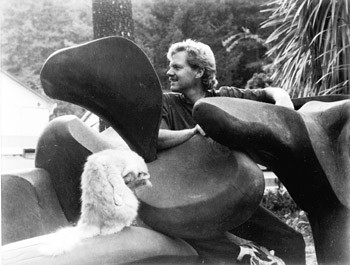
Call me Bruce: Timber Cove sculptor Bruce Johnson is immortalized in a 1995 photo by Genevieve Barnhart.

Creative Confrontation

Artists turn on each other in new SMOVA exhibit

By Paula Harris

Every portrait that is painted with feeling is a portrait of the artist, not of the sitter,” wrote Oscar Wilde in The Picture of Dorian Gray. Assuming Wilde was right, what happens when the sitter also happens to be an artist?

The Sonoma Museum of Visual Art explores this unusual dynamic starting Dec. 12 with “Artists Portraying Artists,” an exhibit of portraits of Sonoma County artists by other Sonoma County artists that highlights the many deep, personal connections in the local art scene.

“The world of art is small in general, and Sonoma County is small in particular,” explains Robert Berg, president of the SMOVA board of directors, who conceived the project and is co-curating the exhibit with SMOVA director Gay Shelton. “The artists showcased don’t all know each other, but there are many associations.”

Many of these relationships were formed in figure drawing classes at the Donkey Barn, which Shelton describes as “a funky old barn in rural Sebastopol.” Other connections were made in the art programs at Santa Rosa Junior College and Santa Rosa High School, or at the Graton Atelier, a former apple processing plant where many artists rent studios.

The 20-piece exhibit showcases ten artists and more than ten subjects. It features a mixture of photographs and paintings, including one print and one watercolor. Wall text describing each artist and subject explains how these friends, peers, mentors, and relatives became inspired by each other.

“When an artist sits for a portrait, they don’t have that vanity thing that you or I may have,” observes Shelton. “It’s not, ‘Am I beautiful?’ or ‘How do others see me?’ They totally get that it’s going to be an expression coming from the other artist.”

Berg notes that there are many different driving forces behind the pieces. “Each work is a sort of collaboration and a confrontation,” he says. “There are interesting dramatic dynamics associated with all of this work.”

Here is a selection of stories behind some of the pieces.

Tuning Up: Painter Claude Smith prepares to make art by playing the stand-up bass in this photo by Maureen Lomasney.

A Saucy Tale

“The feedback from artists is [that] it’s very much like they’re performing,” says photographer Maureen Lomasney describing what it’s like to shoot fellow artists. “The process becomes a performance-art piece.”

Lomasney, 51, a Sebastopol resident who works in the Graton Atelier, an artist studio complex that she calls “an incubator for creativity,” has four pieces in the exhibit.

Rising to Olympus is a portrait of painter Wally Hedrick with his companion Catherine Conlin that Lomasney snapped at the end of a longer shoot and describes as “a God-like loving image.” Portrait of Claude Smith depicts visual artist and musician Smith playing stand-up bass, which he likes to do before painting as part of his artistic process. Lomasney photographed Portrait of Christiane Vincent when artist Vincent needed a standard portrait for one of her shows.

But performance art is most clearly evident in Lomasney’s fourth piece, Chocolate Meg. The work is a collection of photographic images of artist and MeSH gallery owner Meg Hitchcock at work. Lomasney scanned the images and used a desktop publishing program to create simulated film strips bordered with text.

The text tells the story of Lomasney’s experience of going down to Meg’s studio one hot day in 1999 and shooting her. Lomasney recalls it as an almost magical event.

Hitchcock stripped nude, stretched a canvas on the floor, and began to smear and drip Hershey’s chocolate syrup onto both the canvas and her body to create an abstract painting.

“The light was wonderful in the greenhouse that Meg was using as a studio,” recalls Lomasney. “She started the syrup on her face, applying it like suntan lotion.”

Lomasney shot two rolls of film with a hand-held camera in available light using a raid technique she likens to fashion photography.

“I was looking at her–the lines, shadows, the light playing on surfaces and what it does,” continues Lomasney. “The effect was light, active, and delightful. It was a fun shoot and very lively and quick, with two artists moving gracefully through tight quarters.”

However, Lomasney says, when she developed the prints they lost something in the translation. “They weren’t telling the story as I saw it,” she explains. So she printed the story within the piece itself.

This saucy tale has an unexpected end.

“When Meg was hot and sticky and out of syrup, she propped the canvas outside against a car to dry and went in to take a shower,” Lomasney remembers. “I patted Meg’s collie dog Annie on the head and left.”

But Lomasney’s photographs are all that remain from that magical day. After Lomasney left and while Hitchcock was in the shower, Annie licked the canvas clean.

Historic Images

When Sonoma County sculptor and jeweler Genevieve Barnhart goes to visit friends, she has a habit of bringing her camera. Equipped with her 35 mm Pentax or Mamiya 645 and her disarmingly easygoing smile, Barnhart has photographed fellow artists in Sonoma County for some 30 years.

Using an informal technique, Barnhart chats to the artist while clicking away, giving the impression that she is merely taking souvenir pictures. “I don’t try to get creative and artsy,” she says.

Barnhart personally knows or knew many of the most influential artists ever to work and live in the North Bay, having met most of them when she and her late husband, artist Raymond Barnhart, moved to Sonoma County from Kentucky in 1968. Back then, she says, local artists and art teachers were even more close-knit than they are now.

Barnhart’s photography, which captures both the personalities of the artists and the essence of their work, makes her studio a “storehouse of historic importance,” according to SMOVA exhibit organizers.

The exhibit features eight of Barnhart’s photographs, including a 1997 shot of mezzotint engraver and Santa Rosa Junior College instructor Holly Browning, and a shot of sculptor Bruce Johnson taken at Plantation Farms, a Sonoma County children’s camp that is the site of several of Johnson’s large outdoor redwood and copper sculptures.

The active Barnhart, just shy of 79 years old, is still a working sculptor and jeweler, living amid a Sebastopol apple orchard where she has her studio. Earlier this year she took on the demanding role of guest curator for “Passing the Gift,” an exhibition that featured works by nine deceased Sonoma County artists who all served as teachers and mentors.

Barnhart says using fellow artist as subjects is ultimately an easy and enjoyable exercise for her. “Because they’re my friends and I’m around them shooting, they’re relaxed,” she says. “I just try to capture them as I see them.”

A Moment to Feel: Painter Diane Knopf’s work depicts her friend Elfi Chester’s battle with breast cancer.

Art of Survival

Diane Knopf and Elfi Chester became friends in Los Angeles 25 years ago, and both moved with their respective families to Sonoma County in the 1990s.

Knopf, an Occidental artist, used her longtime friend as a subject. However, these are not just straight pictures of an artist posing or being caught at work. Knopf’s work captured her friend in a medical crisis. The two pieces in the SMOVA exhibit, A Moment to Feel and Surrender, depict Chester’s ongoing battle with breast cancer.

A Moment to Feel is a portrait of Chester painted from a photo taken by Robin Johnson after Elfi’s diagnosis of cancer and before her surgery. “Elfi wanted photos taken celebrating who she was before the surgery changed her forever,” explains Knopf.

Knopf interprets this photograph as having captured Chester’s introspection. “The eyes are looking inward rather than looking out. She is taking inventory,” Knopf says.

In Surrender, Knopf interprets that Chester has exhausted herself on a current of emotions. “The moment has come when she learns what children learn when they are playing in the ocean and get tumbled by a wave’” says Knopf. “The idea of ‘Don’t fight it, just ride it through.’ ”

Chester, who also has a portrait featured in the SMOVA exhibit, has had other bouts with the disease and is still fighting it. Speaking for her friend, Knopf says that when Chester is sick, it’s hard for her to look at the portraits, but on better days she feels empowered by them.

Knopf, 50, is grappling with her own health issues. She was born with Crohn’s disease, a digestive tract ailment. Knopf says that all through her life she had dealt with this chronic illness, and in one instant her friend taught her to embrace the lesson rather than fight the disease.

“I found myself much more accepting,” Knopf says. “There was no artist angst in this work, because there was a bigger reason for me doing it.

“There’s a purity in the work, and it has matured me as an artist,” Knopf continues, her voice catching. “Everything I say about Elfi I’m also saying about myself. It’s been a huge lesson for me.”

Father’s Day: Having his son draw his portrait was an eye-opening experience for Sonoma County artist Alan Azhderian.

Father and Son

Imagine yourself as a teenager drawing your own father’s face while he draws yours–and then imagine starkly comparing the results.

In some homes, the fallout from an experiment like that could be positively nuclear.

Not so in the case of Alan and Nathan Azhderian, both artists, who decided to experiment by drawing each other in one sitting.

The exercise happened two years ago when Nathan was 16 and enrolled in the Art Quest program at Santa Rosa High School. His dad, an accomplished artist and an instructor at Santa Rosa Junior College, was 53 at the time.

The two sat on either side of a table and rendered portraits, passing the same set of pastels back and forth. “We were taking turns–40 minutes, 40 minutes, and 10 minutes each to look again,” recalls Alan Azhderian.

“[Nathan] used fewer colors more intensely, and I used more colors, but the overall effect is less intense in terms of expression,” he adds. “Mine was reporting, his was more about expressing a feeling.”

Nathan’s portrait of his father explores extremities and makes use of rough strokes and bold blacks and whites. Alan’s portrait of Nathan concentrates on external features with softer graduations of color and tones.

Being a subject can be quite an eye opener for an artist. “Someone’s perception of who someone is doesn’t always jibe with one’s own perception,” Alan muses, reflecting on his son’s interpretation.

“The piece is pictorially interesting in terms of its color and metaphor, and interesting to see what he did in regard to me,” Alan continues. “I didn’t have any expectation, but I was pleased by the quality. But I don’t know that I necessarily connected it with myself.”

The elder Azhderian says the process was more important than the project: taking the time, sitting down, looking at each other intensely (something that’s normally considered taboo in this culture), and responding.

“The active process is really the important thing,” he says. “It’s a vehicle of communication rather than just a picture.”

He adds that other artists may appreciate different kinds of artistic departure more than a regular sitter would. “It’s like chefs cooking for other chefs,” he says. “The appreciation is about connoisseurship.”

Alan Azhderian and Nathan Azhderian will repeat the exercise when Nathan, who is currently studying art at the Cooper Union School of Art in New York City, comes home for the holidays. The pair will also co-teach a head and portrait demonstration class on Jan. 5 during the SMOVA exhibition.

‘Artists Portraying Artists’ runs from Dec. 12-Jan. 12. A closing reception takes place on Saturday, Jan. 12, from 4-7 p.m. at SMOVA, Luther Burbank Center, 50 Mark West Springs Road, Santa Rosa. For details, call 707/527-0297.

From the December 6-12, 2001 issue of the Northern California Bohemian.

© Metro Publishing Inc.

Brad Carson

0

Chinese Box

SSU protester arrested in Tiananmen Square

By Patrick Sullivan

Brad Carson has the typical problems of an average college student. His car is on the fritz, he’s juggling theater courses and a job in Sebastopol, and he’s got a tired look in his eyes from staying up late to write a paper.

But unlike his classmates at Sonoma State University, Carson also now has an arrest record in China.

The 20-year-old college junior was one of 35 foreigners (including six Americans) arrested on Nov. 20 for staging a human rights demonstration in Beijing’s Tiananmen Square, the infamous site of a pro-democracy rally in 1989 that ended in the violent death of an unknown number of student protesters.

Carson and his companions were protesting the Chinese government’s violent crackdown on Falun Gong, a Buddhist-like spiritual movement. The protesters–all Falun Gong practitioners–posed as tourists for the demonstration, faking out the Chinese cops who always patrol Tiananmen Square by staging a group photo and then suddenly sitting down and unfurling a banner that read “Truthfulness, Compassion, and Tolerance”–the three main principles of Falun Gong.

Carson says he dropped into a double lotus position, but he didn’t have to wait long for police to respond.

“We sat there for a couple of seconds, and then police vans started surrounding us,” he explains. “[The police] started to pull us into the vans, and that’s when they started beating people. . . . Some girls from Australia were holding up a banner, and they kicked one girl to the ground and started dragging her by her hair.”

Carson was not injured.

A nearby cameraman running a live video feed sent footage of the protest to Europe, and the demonstration was soon major news around the world. “Ten minutes after it happened, it was already on television,” Carson says.

China outlawed Falun Gong as an “evil cult” back in 1999. Since then, tens of thousands of adherents have been sent to prisons and mental hospitals. About 300 have died in custody, according to Falun Gong spokespersons.

Carson and his companions fared much better by comparison. Police took their passports and questioned them. The protesters were held in police custody for more than 30 hours, given a warning for disrupting public order, and then deported. “They brought us to the airport and forced us onto a flight to Vancouver,” Carson explains.

Demonstrations by foreigners are rare in China, which has one of the worst human rights reputations in the world. But Carson, who began practicing Falun Gong a year and a half ago, says his faith kept him from feeling too much fear.

“My purpose wasn’t to go there and get beat, to be a martyr,” Carson says. “My purpose was to tell the police what’s going on. Most of these guys don’t know people are being sent to psychiatric hospitals or crazy work camps. . . . They don’t know that 80-year-old women get beaten to death.

“We were aware of the possible danger,” he continues. “But when I see injustice, when I know good people are dying for someone else’s political gain, I feel like I have to do everything I can to try to stop that. And this was one thing I could do.”

Religious Reconciliation

Given the ongoing violence in the Middle East and the climate of fear here in the United States, can Jews and Muslims have a constructive dialogue? We’ll find out on Monday, Dec. 3, when the Jewish Community Agency of Sonoma County holds “Children of Abraham,” a discussion between Rabbi Alan Lew, the spiritual leader of Congregation Beth Shalom in San Francisco, and Iftekhar Hai, director of the United Muslims of America. The event begins at 7:30 p.m. at Sonoma State University’s Cooperage Building, 1801 E. Cotati Ave., Rohnert Park. For details, call 707/526-5538.

From the November 29-December 5, 2001 issue of the Northern California Bohemian.

© Metro Publishing Inc.
‘Shallow Hal’

0

Head Games

Hollywood hypnotist analyzes ‘Shallow Hal’

Writer David Templeton takes interesting people to interesting movies in his ongoing quest for the ultimate post-film conversation.

Controversy buzzes around Shallow Hal, a new movie by the oft-controversial Farrelly Brothers in which a not nice guy (Jack Black) is hypnotized into thinking that a 300-pound social worker looks like Gwyneth Paltrow. When the hypnosis wears off, the chastened fellow is forced to learn a lesson about inner beauty vs. outward appearance.

The movie is a hit, though a divisive one. Across America, people of large size have been strongly objecting to the movie’s sometimes demeaning slapstick humor–as when the fat girl jumps into a pool and displaces all the water, propelling some swim-suited kid into a tree.

But another oft-maligned segment of our society is also having a strong reaction to the film: professional hypnotists.

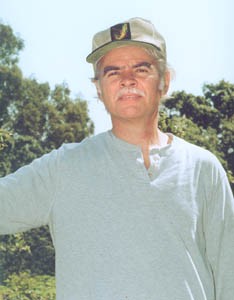
“I’ve been getting a lot of calls,” says hypnotist Kevin Stone. “Just today some guy calls up and says, ‘Yeah, I’m looking for a hypnotist to come to our office party and make all the guys think all the girls are good looking, just like in that movie Shallow Hal.’

“I think hypnosis may be getting a big boost from this movie–which is a plus, because most movies make hypnotists look really bad.”

An affable, somewhat mysterious-looking gentleman, Stone is known far and wide as the Hollywood Hypnotist, a somewhat ironic moniker since it is Hollywood, in part, that has given hypnotists the decidedly malevolent image that Stone is eager to reverse.

One of America’s most successful practitioners of hypnosis, Stone holds down a thriving therapy practice in Hollywood. Something of a historian, Stone has amassed a vast collection of movies dealing with hypnosis and hypnotists, from The Cabinet of Dr. Caligari up to more recent efforts such as Stir of Echoes (Kevin Bacon is hypnotized into seeing ghosts) and The Curse of the Jade Scorpion (David Ogden Stiers turns Woody Allen into a cat burglar). Most of these cast hypnosis in a negative light.

Along comes Shallow Hal, a high profile film that Stone first approached with modest amounts of professional fear and trembling. But he was surprised by what he saw.

“It’s an interesting premise,” Stone says. “And for once–unlike in Curse of the Jade Scorpion–they utilized hypnosis in what I feel is a very positive way.”

So he likes it?

“I liked it, sure,” Stone admits. “It’s ridiculous, but it shows that hypnosis can be used to do more than, you know, make people cluck like chickens and rob banks. Which is how movies usually show hypnosis.

“If you really want to see hypnosis performed in a true, positive way,” he continues, “take a look at K-Pax. They’re doing a regression there that is absolutely accurate.”

In K-Pax, Kevin Spacey, as a mental patient claiming to be from another planet, undergoes a spooky, hypnotic regression performed by his doctor, played by Jeff Bridges. Says Stone, “The way Jeff Bridges does the hypnosis, using his voice, and the verbiage he uses, is right on! I thought it was very clean.”

According to Stone, these recent films point to a slight shift in Hollywood’s representation of hypnosis, which may in turn alter the public’s perception about what hypnosis is really capable of.

“The stuff in Shallow Hal is possible, sure, to a degree,” allows Stone. “The stuff in Jade Scorpion, not possible. K-Pax, definitely. That’s true hypnosis.”

So while Stone can expect more requests to make people think they’re seeing Gwyneth Paltrow–“I’m already getting those kinds of requests, absolutely,” he says–his hope is that fewer people will be nervous that he’ll covertly turn them into a criminal–or worse, a duck.

“Honestly,” Stone laughs, “if I had those kinds of powers, do you think I’d still be working for living?”

From the November 29-December 5, 2001 issue of the Northern California Bohemian.

© Metro Publishing Inc.

Ken Kesey

Farewell to the Chief

Ken Kesey’s wild ride comes to an end

By John Allen Cassady

The long, strange trip came to an end for Ken Elton Kesey at 3:45 a.m., Saturday, Nov. 10, 2001, after 66 years and a few hundred lifetimes on this planet. But the Bay Area continues to mourn his death and celebrate his life (for details on one upcoming tribute, see below).

Kesey (author of One Flew Over the Cuckoo’s Nest and Sometimes a Great Notion) was a great friend to my father, Neal Cassady, and almost a second father to me after Neal died in 1968 when I was 16 years old. Ken was one of the kindest and wisest men I’ve ever known, and he was one of my biggest heroes and mentors starting soon after he met Neal in the early ’60s, a feeling that continues in me to this day.

Neal always wanted to be a provider for his family, and little did he know that much of that provision would be accomplished posthumously through doors that were opened to me because of his famous friends like Kesey and the Grateful Dead. Much to the worry of my mother, Kesey and Neal would come collect my sister and me at Saratoga High School, giving the authorities some song and dance about dentist appointments or whatever, then whisk us away to see the Dead play at a Mountain View high school’s prom dance, just after they changed their name from the Warlocks.

After Neal’s death, Kesey would go out of his way to look us up when he was in the Bay Area. He showed up unannounced at my wedding in November of 1975 on his way back from Egypt, while writing a piece for Rolling Stone. That was one heck of a party. I still have pictures of him holding my then 3-month-old son and beaming like a proud godfather.

Another warm memory occurred backstage at a Dead show in Eugene, Oregon, when Kesey’s fellow prankster Zonker ceremoniously presented me with one of two railroad spikes that the Dead’s roadie Ramrod, while on a sacred pilgrimage, had extracted from the tracks where Neal died in Mexico. And again when Kesey and Ken Babbs bequeathed Neal’s black-and-white striped shirt to me that he had worn on the bus trip in 1964, this time during a show we did at The Fillmore in 1997 before bringing the bus to Cleveland, where it was inducted into the Rock and Roll Hall of Fame.

Ken called and asked if I would drive “Further” into Ohio, “because Neal can’t make it this trip.” Although veteran prankster driver and mechanic George Walker wound up at the wheel, Kesey’s heart was in the right place. That road trip was surpassed only by the four-week tour of the U.K. the next year, sponsored by London’s Channel Four studios.

Traveling with Ken in close quarters for that long really made for a lasting bond between us, and he was at his peak as a performer. I last saw him as we said our goodbyes at SFO after that incredible journey, and I was sad to have not been able to do so again before his death.

Ken Kesey was a great teacher and a beautiful soul. He will be missed by all who were touched by his magic.

Bay Area writers (including Marin’s Gerald Nicosia) host a celebration in memory of Ken Kesey on Wednesday, Dec. 5, from 6-8 p.m. at the San Francisco Public Library’s Koret Auditorium, 100 Larkin St., in downtown San Francisco. Admission is free. 415/557-4277.

From the November 29-December 5, 2001 issue of the Northern California Bohemian.

© Metro Publishing Inc.
Military Recruiters

Lesson Plan Military recruiters go to school By Tara Treasurefield "Recruiters are basically bounty hunters," says Shepherd Bliss, a Vietnam veteran and Sonoma County environmental activist. "They don't warn young people about two big consequences of going into the military: chemical exposure and post traumatic stress." Bliss strongly objects...

‘You Can’t Take It With You’

Modern Message 'You Can't Take It With You' still offers relevant moral By Julia Hawkins You have to like the Pacific Alliance Stage Company's You Can't Take It with You for the sweet production the company makes of it. Written by Moss Hart and George S. Kaufman, the play is about...

Locally Handmade Gifts

Made in the North Bay Our annual guide to gifts made close to home By Paula Harris and David Templeton Santa's workshop is a great place, and his elves work harder than a tech employee whose boss just walked by with a folder full of pink slips. But let's be honest:...

Stone Soup

Stone Soup Fabled recipe gets a culinary correction By Marina Wolf I've never had stone soup, but I know about it from the story in which three hungry soldiers on their weary way home from the war seek shelter and sustenance in a suspicious village. Denied food by the villagers, who had hidden...

‘Closer’

Secrets & Lies Deception is the rule as lovers get 'Closer' at AT By Patrick Sullivan Looking for a holiday heart warmer about life, love, and the tender joys of emotional intimacy? Want something that will inspire you to pull your significant other under the mistletoe for a big, wet kiss?...

‘Tape’

Erase This 'Tape' is an aggravating farce By It used to be said of Truffaut that every other movie by him was worthwhile. In following the magical Waking Life with the deadly Tape, Richard Linklater upholds that tradition. This shot-on-tape picture is set in a room at the...

SMOVA

Call me Bruce: Timber Cove sculptor Bruce Johnson is immortalized in a 1995 photo by Genevieve Barnhart. Creative Confrontation Artists turn on each other in new SMOVA exhibit By Paula Harris Every portrait that is painted with feeling is a portrait of the artist, not of the sitter," wrote...

Brad Carson

Chinese Box SSU protester arrested in Tiananmen Square By Patrick Sullivan Brad Carson has the typical problems of an average college student. His car is on the fritz, he's juggling theater courses and a job in Sebastopol, and he's got a tired look in his eyes from staying up late to...

‘Shallow Hal’

Head Games Hollywood hypnotist analyzes 'Shallow Hal' Writer David Templeton takes interesting people to interesting movies in his ongoing quest for the ultimate post-film conversation. Controversy buzzes around Shallow Hal, a new movie by the oft-controversial Farrelly Brothers in which a not nice guy (Jack Black) is...

Ken Kesey

Farewell to the Chief Ken Kesey's wild ride comes to an end By John Allen Cassady The long, strange trip came to an end for Ken Elton Kesey at 3:45 a.m., Saturday, Nov. 10, 2001, after 66 years and a few hundred lifetimes on this planet. But the Bay Area continues...
11,084FansLike
4,606FollowersFollow
6,928FollowersFollow