‘Bread!’

0

Bread Fever

Renowned bread builder Joe Ortiz bakes up a yeasty musical

By Sara Bir

Bakers know that rye breads are tricky; the doughs are sticky and slow to rise, and the dense, complex, almost sour loaves they produce are not for everyone. The quest for the perfect rye loaf can consume a baker’s mind like ergot, a toxic fungus found as a parasite on grains of rye.

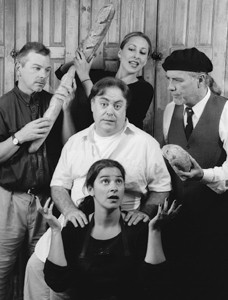
Joe Ortiz understands this. As founder and co-owner of Gayle’s Bakery and Rosticceria in Capitola and renowned author of The Village Baker (nominated for an International Association of Culinary Professionals award) and co-author of The Village Baker’s Wife, Ortiz has spent a year or two–or 20–around bread, living firsthand the obsession that baking can implant in a fermenting mind. If anyone is qualified to write a musical in which a secret loaf of rye bread is a central character, Ortiz is the man. Pooling his experience as a baker, musician, and writer, he wrote Bread!, a musical ode to the staff of life making its North Bay debut Nov. 23 at the American Center for Wine, Food, and the Arts.

From his home in Capitola, Ortiz summarized the whimsical plot, which takes place in present day in a small coastal California town: “It’s about a crazy baker who moves with his wife from France to America to make his fortune. Because he’s sleep-deprived and inattentive to his wife’s needs, his wife is very fed up with him. He’s dumped, has to get his wife back, deal with some nagging issues about his father–who comes to him in dream sequences, trying to give him these clues about this secret loaf of bread, which his father never taught him because he knew that it was dangerous.

“In the end, the baker realizes the errors of his ways, and instead of trying to make this secret loaf of bread, he decides to make a simple loaf to nourish people. His wife comes back . . . and they live happily ever after.”

It’s not all that simple. A vital plot twist to the baker’s preoccupation with creating the perfect loaf of rye bread is that the story takes place in the middle of a rye epidemic that’s causing people to hallucinate and fall into comas.

“I’d say it’s a dramatic comedy, because it has dramatic parts as well,” Ortiz says. “The baker has to do some soul-searching to solve his problems. He’s one of these men who’s obsessed with his work, and he thinks that this perfect loaf of bread that he can discover will make his reputation and give him fame and fortune. There’s some tragedy in that. I think the combination between the two helps to make it so that it’s not just a bit of fluff.”

Despite similarities between the fictional baker and Ortiz the baker, Ortiz says Bread! is only quasi autobiographical. “I have been very obsessed about bread myself. That’s part of the message: People have a tendency to get lost in their work and neglect the everyday beauties of life.

“The other thing that’s oddly autobiographical,” Ortiz continues, “is that my wife [Gayle Ortiz, co-owner of Gayle’s] is now the mayor of Capitola, and there’s a woman mayor in the show. When I did the show a couple years ago, my then director noticed that the cast was five men and two women, and she said, ‘Why don’t we turn the mayor into a woman so that we have another female voice in the chorus?'”

This present production of Bread! began with three dinner-theater performances in Santa Cruz in the beginning of October. “We did dinner theater to get it warmed up, and then we took it to Murphys, Calif., where I have some friends in a theater group called the Murphys Creek Players, and then we performed at the California Performing Arts Festival in Carmel.

Ortiz first struck upon the idea to write a musical about five years ago at the Maui Writers Conference, where he goes every year to teach book-writing seminars. “Being at the conference, I’ve had the chance to go to screenwriting seminars and playwriting seminars, and at one point I decided to write a story with some of the songs I had already written at the time. Then I figured I’d write the story and the extra songs, and turn the story into a musical.

“Some of the songs I wrote back in the 1970s before we opened our bakery. Before that I was a musician and I had written songs, and some of them made it into the show.”

Because of baking’s singular, focused nature, none of the songs that found their way into Bread! came to Ortiz during the actual act of baking. “I think you’ve got to put yourself in a position for songwriting,” he says. “When I was actively baking, I had gone away from music and so I was not in the musical mode. Melodies kind of just inhabit your skull, but I think it usually happens when you’re involved and listen to or play a lot of music.”

Ortiz had been in a Top 40 band and a country band, and then began studying jazz about 15 years ago. “There’s a lot of feeling in the show that’s jazz-based. It’s kind of a jazz musical. And also the idea that it’s drawn from this French couple.” The musical’s current incarnation has three musicians playing accordion, bass, and guitar. “I call it a ‘French bistro’ sound,” Ortiz says.

Fresh-baked songs from Bread! include “The Bread Baker’s Song,” “Toast,” “Please Come Away with Me to Watsonville” (“It gets a lot of laughs–it even plays well up in Murphys, 150 miles up from Santa Cruz”), and the grand finale, “Bread,” a be-bop tune the entire cast sings to convince the baker to come back and bake again. Like all big-time musicals, Bread! will have an original cast album. “We’re working on it right now. We have several tunes that have been recorded, and there are a few others we’re working on,” Ortiz says.

All in all, Bread! is still, er, rising. “It’s not done yet,” Ortiz says with a laugh. “The thing is that every step of the way you learn something new. And the only way you can really get it up and running is to workshop it or put it into production because you learn so much. It’s getting really close now. It’s starting to look and sound like a show and people are really responding to it. I’ve been working on it for about four years and getting closer all of the time.”

Busy enough with his and Gayle’s other endeavors, Ortiz has no plans for future musical productions in mind. “I think if I have the energy, I’d like to just keep working on this one until I get it right. I’ve tried to make it so that it’s a traveling show, more of a cabaret-type thing. There are really simple sets I can throw into the back of a truck and take to different places.”

Ortiz is himself not one of the six cast members of Bread! “No, thank God,” he says. “It’s just enough to try to write it, to write the lyrics, and to produce it. I’ve been setting up all the shows. I hired everybody. When it’s on the road, I feed people, so it’s a traveling minstrel show. It’s pretty tough to keep your wits about you and be in the show.”

Being central to the musical’s theme, it’s only natural that many scenes involve bread or dough. “They’re constantly putting bread in the oven. I think people will really like the idea of a food musical. Everybody has some relationship to food, and especially bread. It’s kind of a universal subject matter. Using it as a symbol of life, passion, the simple life–it’s kind of fun. People are really craving bread because they hear about it, spoken and sung about.”

Joe Ortiz’s ‘Bread!’ will be performed Saturday, Nov. 23, at 8pm. COPIA 500 First St., Napa. $20 (general admission not required). 707.259.1600 or www.copia.org.

From the November 21-27, 2002 issue of the North Bay Bohemian.

© Metro Publishing Inc.

Thanksgiving Turkeys

0

Click here to buy ‘The Complete Vegan Cookbook’ at Amazon.com

Flipping the Bird

Desperately seeking a cruelty-free Thanksgiving

By Tara Treasurefield

Several years ago, Hope Fauna (her name means “hope for the animals”) visited the Farm Sanctuary in Orland, Calif. While there, a refugee from a factory farm befriended her. “I was at the hen house and a tom turkey looked me in the eye and crawled in my lap,” she says. “We sat there for quite a while. It was a great little connection.”

Fauna belongs to Sonoma People for Animal Rights. Between now and Thanksgiving, you’ll find SPAR at Whole Foods markets, distributing brochures that reveal everything you never wanted to know about turkeys. To wit: the vast majority of commercially grown turkeys slaughtered in the United States are crowded by the thousands into filthy factory farms; each bird has less than three feet of space; the turkeys’ beaks are cut off; and disease is rampant.

Not surprisingly, every year millions of Americans become ill, and some die, after eating flesh laced with salmonella, campylobacter, and other bacteria.

Local, free-range turkey farms have managed to install some more humane practices, though there is still truth to the brochures. Beagle Brodsky, manager of Willie Bird Turkeys in Sonoma County, says, “We cut off the top part of the turkeys’ beaks when they’re four weeks old. When you’re in the turkey business for 40 years, you protect your crop. If you don’t trim their beaks, they’ll peck each other to death.”

Brodsky says that Willie Bird turkeys are free-range, and have plenty of room. But facilities are closed to visitors. “There’s too much disease among turkeys,” says Brodsky. “People might track diseases in on their shoes.”

Diestel Turkey Ranch in Sonora County, whose turkeys are carried by Whole Foods Markets, follows some of the same practices. Defending beak trimming, owner Tim Diestel says that the beaks grow back, but without the lethal hook at the end. He also says it doesn’t hurt. Santa Rosa animal rights attorney Larry Weiss disagrees, however, and notes that “the California Penal Code specifically exempts animals killed for food from protection under cruelty laws.”

Dan Neurberg, Whole Foods’ meat coordinator, has visited Diestel Turkey Ranch many times. He says, “Chicks [have] plenty of room to roam around freely and get good ventilation and sunlight. When it’s cold, heaters keep them warm. They have water and feed any time they want. At three weeks old, they’re free to roam outside in fenced acreage. The ranch is very clean and free of any smell at all times.

“If I were a turkey (some think I am), I would love to be there. It is such a great place, and the scenery is outrageous.”

Most studies have shown that turkeys don’t pay too much attention to scenery, but the other factors that Neurberg mentions constitute humane treatment. Wild turkeys live as long as 20 years. Domestic turkeys are bred to grow faster and weigh more than their wild cousins; birds with unnaturally large breasts are particularly appealing to consumers. These and other factors shorten the birds’ lives to a maximum of two years.

Diestel slaughters turkeys at six months, and Neurberg says the process is humane. “The turkeys are all hand-loaded. They are put upside down to help calm them. They are stunned first, and then they are killed by hand to insure they all died before going on.”

Judith Iam, a Sebastopol resident and a conflicted omnivore-vegan, says, “I’m reminded of a Monty Python book with an image of the inside of a fancy box of truffles, each space describing the corresponding confection, with one reading something like, ‘Lightly killed frog, delicately dipped in semisweet chocolate.'”

Chocolates aside, if you have your heart set on a plump, juicy turkey this year–with the certainty that it was humanely treated before it reached your plate–you may be out of luck. Of course, you could go out and shoot a wild turkey. Then again, it’s apt to be skinny and tough.

Hope Fauna has another idea. On behalf of her friend Tom Turkey, she says, “In my ideal world, the centerpiece of Thanksgiving would be a stuffed pumpkin.”

Sonoma People for Animal Rights will hold a candlelight vigil for turkeys on Nov. 23 at 4pm at Courthouse Square in Santa Rosa (near Santa Rosa Avenue and Fourth Street). Polarica (www.polarica.com) supplies free-range and wild turkeys.

From the November 21-27, 2002 issue of the North Bay Bohemian.

© Metro Publishing Inc.

‘Psychopathia Sexualis’

Missing Kinks

No socks equals no sex in ‘Psychopathia Sexualis’

By Patrick Sullivan

It sounds like the title of a textbook about sexual derangement, the sort of lurid tome that would devote whole chapters to Jack the Ripper, the Marquis de Sade, Bill Clinton, etc. But the faint of heart or queasy of stomach have nothing to fear. Psychopathia Sexualis, now onstage at Actors Theatre in a production directed by David Lear, is actually a rather sweet-natured romantic comedy from John Patrick Shanley, the author of Moonstruck.

Not to say there’s no erotic freakiness afoot, though it’s hardly the sort of thing that would raise the pulse of a Jerry Springer producer. The plot of Psychopathia Sexualis turns on the plight of Arthur (played by Mike Reynolds), a hapless painter with an unnatural attachment to his father’s argyle socks. If he can’t bring his special footwear into the bedroom, the artist is about as functional as one of Dali’s limp clocks. “But with them, I’m fine,” he cheerfully explains to a friend. “I have no problem at all.”

Unfortunately, these fetish objects have been seized by Arthur’s frustrated psychiatrist, the formidable Dr. Block (Steve Howes), a strict Freudian who turned to radical action after six years of therapy failed to cure his patient. Block’s timing couldn’t be worse, since Arthur is about to marry Lucille (Mary Gannon), a fire-breathing Texan who sees John Wayne as the ideal male and is unlikely to have much patience for her sweetheart’s very special need.

Desperate to retrieve the socks in time for his wedding night, Arthur turns to his buddy Howard (Bill Waxman), a pompous stockbroker turned navel gazer, and begs him to go in search of his missing kinks. But Howard turns out to have more than a few unresolved issues of his own, and his first confrontation with Dr. Block turns extremely ugly when the good doctor diagnoses him as a “complete power devil” and “a giant bleeding ego” wandering in a void of his own creation.

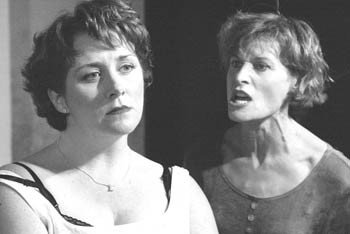
This AT production sports a remarkably strong cast. The towering Howes plays the most intimidating psychiatrist since Hannibal Lecter, Waxman is good as the blowhard who gets his comeuppance, and Reynolds brings good comic timing and a nice pair of puppy-dog eyes to his sock-obsessed character.

But the most obvious highlight is Gannon, who slides seamlessly into the role of her brassy cowgirl (described by another character as “a hillbilly Aztec Evita”). Gannon has her accent down cold, putting the whole Lone Star State into her “thank yews,” and she achieves a compelling mixture of toughness, sensuality, and emotional vulnerability. She’s especially good in her girl-talk scenes with Howard’s wife, Ellie, played by Cynthia Abrams, who deftly maintains an icy socialite’s sophistication in the face of Lucille’s flamethrower roar. As the two friends discuss the inevitable disappointments offered by the opposite sex, they deliver what may be the funniest and most compelling moments in the play.

You could define a crowd pleaser as any show where an actor has to pull up his or her pants for the bow at the curtain call, and indeed, there are large stretches of Psychopathia Sexualis that strongly resemble the screwball comedies of old, albeit with a tad more sexual frankness. But the slapstick, double takes, and broadly drawn characters coexist quite comfortably with a serious exploration of the ambiguous nature of friendship and romantic relationships. The result is a play that’s intellectually and emotionally satisfying, as well as pretty damn funny.

‘Psychopathia Sexualis’ continues through Dec. 14 at Actors Theatre, 50 Mark West Springs Road, Santa Rosa. For details, call 707.523.4185.

From the November 21-27, 2002 issue of the North Bay Bohemian.

© Metro Publishing Inc.

Medical Marijuana Clinics

0

Photograph by Rory McNamara

Weed Killer

Is the end near for Sonoma County’s besieged medical marijuana clinics?

By Patrick Sullivan

“You’re out of MMW?” The gray-haired woman gives a sigh of disappointment. “OK, well, let me smell that Peruvian. Oh, that looks funky! I’ll try it though. I’ll give it a chance. Gotta be fair, right?” She giggles and lays a sheaf of bills down on the counter. The man on the other side checks her ID again, takes her money, and hands her two neatly wrapped plastic baggies full of marijuana.

The woman stuffs the pot down the front of her T-shirt and heads out into the bright sunshine of a beautiful fall day on the Russian River. As she leaves, she walks past a sign on the wall that offers some legal advice: “The magic words: I am going to remain silent. I want to see a lawyer.”

Welcome to Guerneville, the last bastion of Sonoma County’s beleaguered medical marijuana dispensaries. Here is the final town in the county where a patient with a recommendation from her doctor can walk into a clinic, present her bona fides, and walk out with the medicinal marijuana California law says she’s entitled to have.

But for how much longer? These days, the staff and clients at Marvin’s Gardens are looking over their shoulders. They know that federal agents with the Drug Enforcement Administration may come through the door at any minute. If that happens, those prosecuted could face years, even decades, in prison.

Two marijuana dispensaries currently operate in Guerneville–Marvin’s and the Farmacy, both within two miles of downtown. They are the last dominos standing following a series of federal raids over the past two years that have toppled clinics in Sonoma, Petaluma, and Santa Rosa.

By now, most patients and clinic workers know the score. In the bitter struggle between Proposition 215, the Compassionate Use Act that California voters approved in 1996, and the federal Controlled Substances Act of 1970, Proposition 215 wins every time–at least in the court of public opinion, where medical marijuana use consistently scores approval ratings in the 70 percent and 80 percent range.

The recent election saw a victory for San Francisco medicinal marijuana activists when voters passed a measure that allows the city to study the feasibility of growing and distributing its own medicinal marijuana. Studies are all well and good, but implementing any San Francisco home-grown program would likely be immediately shut down by federal officials. This week, the Sebastopol City Council approved a resolution supporting Proposition 215 and encouraging the local police force to not comply with DEA raids. Santa Rosa is working on a similar resolution.

In federal criminal court, state law, local resolutions, and opinion polls carry approximately the legal weight of diddly plus squat. Just ask Brian Epis, arrested for cultivating marijuana for a Chico dispensary and recently sentenced to 10 years in federal prison. Or consider Dan Nelson and Ed Bierling, who face 40- and 60-year sentences respectively after being arrested by the DEA this May for running a dispensary in Santa Rosa.

Spokesman for the DEA Richard Meyer won’t comment on whether the Guerneville dispensaries are under investigation. Meyer also won’t say much about how the DEA decides which pot clubs to target: “We have our priorities and responsibilities, and our manpower is limited,” he says. “That’s really the most critical factor.”

But the director of Marvin’s Garden, a heavyset 51-year-old man named Jerry who, like other dispensary workers, does not want his last name published, believes federal agents have the clinic under surveillance. “Absolutely,” Jerry says. “I’d be a fool not to think that.”

Hide and Seek

“If the Guerneville clinics were closed, I’d have to buy off the street,” explains a 50-year-old Santa Rosa woman as she prepares to exit Marvin’s. She’s just obtained a 3/8-ounce baggie of a variety called Zombie, and when she accidentally drops the pot on the floor, she goes slowly to her knees to pick it up, never bending her back. She says she suffers from sciatica and arthritis. Marijuana, she explains, reduces her pain and helps her move, while prescription medications just make her sick.

But her car troubles and limited income make trips out to the Russian River a serious hardship. She can’t imagine trying to get to dispensaries in Oakland or San Francisco or even down to the clinic in Fairfax in Marin County. She was buying marijuana at the Aiko Compassion Center, a dispensary located in a storefront on Santa Rosa’s Cleveland Avenue. When the DEA shut Aiko down this May, the woman was devastated. “I cried for three days,” she says, “because I knew how far I’d have to come.”

But she’s actually one of the lucky ones, according to Jerry. “We’ve allowed a few people from other clubs that have been shut down to become members,” he explains. “But we can’t provide for everyone who wants to come in.”

That leaves patients unable or unwilling to travel out of the county with few alternatives. None are very palatable.

Patients with green thumbs can try growing themselves. Or they can try to find a caregiver willing to risk arrest by growing for them. Neither course is easy, especially for the sickest patients, according to Santa Rosa resident Rebecca Nikkel, who suffers from multiple sclerosis and has used marijuana grown by a caregiver to wean herself off 12 prescription medications. “Growing is a lot of physical work, and a lot of people can’t do it, especially people with MS or people going through chemo,” Nikkel says.

Patients can also buy from dealers on the street. But that can be dangerous, both for the usual legal reasons and because street-bought pot can be laced with almost anything.

So what happens if the DEA closes the Guerneville clubs? A 37-year-old African-American man who comes to Marvin’s from Santa Rosa considers the question with a pained look on his face. “I don’t know,” he says. “I guess I’d be like the rest of the people here–scrambling for some kind of alternative.”

By the Book

Marvin’s Gardens was founded by a Sonoma County man with AIDS shortly after California voters approved Proposition 215 in 1996. For years, the cooperative dispensary operated out of private residences, including the basement of a member’s house.

But this February, the clinic moved into its present location, a nondescript commercial building with bars on the window, where it offers locally grown marijuana to more than 300 Sonoma County residents suffering under medical conditions ranging from AIDS and cancer to back problems and chronic pain. The move to a more accessible location helps the clinic serve patients. But it also makes it a more likely target for law enforcement action.

To avoid unwelcome attention, the clinic has a long list of rules. There are no state guidelines to adhere to, because Proposition 215 is notoriously vague and the California legislature and Governor Davis can’t come to agreement on clarifying such issues. But there are local procedures to follow.

Patients can join the club and obtain marijuana only if they are county residents who have been through an approval process that requires signing off by the Sonoma County district attorney’s office. A patient obtains a recommendation from a physician, and that recommendation must be approved by the Sonoma County Medical Association. Then, the club issues a photo ID to the patient.

That adherence to procedure has headed off problems with local law enforcement, which learned to leave medical marijuana users alone following a series of failed prosecution attempts. The sheriff’s department did make an inspection visit to Marvin’s soon after the dispensary opened: “They came in, asked a few questions, watched for a while, and scared everybody off,” Jerry says. “Then they left.”

The marijuana attracts another kind of unwelcome attention: a year and a half ago, armed robbers invaded Marvin’s and seized both pot and money. “That’s part of the reason you see iron on the door and the security system,” Jerry says. “But there’s only so much you can do.”

Poor relations with neighbors have also been a problem for some dispensaries, most notably Genesis 1:29 in Petaluma, which was forced to move out of the residential neighborhood where it began due to complaints. Genesis was raided by the DEA in September, and many observers think a contributing factor was public anger about the huge pot farm the club’s founder maintained in suburban Sebastopol, which the DEA also raided.

Marvin’s Gardens has tried to head off such friction with more rules. No kids are allowed in the building, no product info is given over the phone, no one is allowed to wait in vehicles outside or congregate by the door, and no one walks out with pot in their hands.

It seems to have worked. According to Jerry, most Guerneville residents know about Marvin’s, but they’re not complaining. “I think it was a concern at first for some people who live around here,” Jerry says. “I think if there was a loud voice out there complaining, someone would have shut us down. But they’ve realized how much good it does in the community. And I think they see how secure and careful we are.”

Fighting Back

When it comes to public relations, medical marijuana advocates can sometimes be their own worst enemy. For instance, when the DEA shut down the Santa Rosa dispensary, one activist talking to a local newspaper reporter could think of nothing better to call the raid than “bogus,” evoking images of Cheech and Chong.

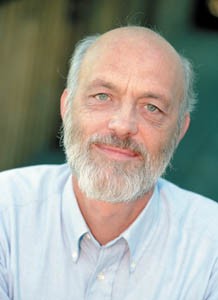
“Bogus” is about the last word you’d expect to hear coming out of the mouth of Doc Knapp, an articulate, keen-eyed Sebastopol resident who may be the most visible spokesperson for the Sonoma Alliance for Medical Marijuana. The activists in SAMM have scored a number of tactical victories, including convincing District Attorney Mike Mullins to make peace with medical marijuana. Now, SAMM is about to open another front in the war.

Rather than simply waiting for the federal axe to fall on Sonoma County dispensaries, SAMM has been quietly laying the groundwork for a political counteroffensive. They have enlisted local governments, including the cities of Santa Rosa and Sebastopol, in the fight to preserve public access to medical marijuana. “We would like to get the city involved in creating an appropriate distribution center for patients, much like Santa Cruz did,” explains Knapp.

Both the Sebastopol and Santa Rosa city councils took up the issue this past Tuesday. Sebastopol passed a resolution on a 3 to 1 vote calling on local police not to cooperate with the DEA. In Santa Rosa, police expressed strong opposition to the noncooperation language, and the council referred the resolution to a committee headed by councilmember Noreen Evans. The full council will vote on a revised version Dec. 3.

“We’re hoping for the best,” says SAMM’s Doc Knapp. “There was enormous sympathy from some council members.”

Among SAMM’s allies in this effort is Santa Rosa mayor Mike Martini, who submitted the proposal. A few weeks before the meeting he said, “I’m going to present pretty much what [SAMM] wants me to present. What the council does with the proposal, of course, is another matter.”

Martini won’t discuss specifics. “We need to look at other communities and see what has worked,” he says. “But medical marijuana’s time has come, and we just have to figure out how to do it right.”

SAMM doesn’t intend to stop there: “We’re going to ultimately go to the board of supervisors with it, unless we get some indication that won’t work,” Knapp says. “We do feel there’s considerable support for medical marijuana on the board, but not 100 percent.”

The Sonoma Alliance for Medical Marijuana isn’t the only organization fighting to keep dispensaries open. Americans for Safe Access, a Berkeley-based group, has been organizing across California and around the country, coordinating demonstrations outside federal buildings after the DEA raids a clinic. Both ASA and SAMM collaborated on a recent protest at the federal building in Santa Rosa that drew 300 people.

“I believe that the DEA is going after dispensary operators who are vocal in their opposition to federal policy,” explains ASA’s Hilary McQuie. “Clearly the federal strategy is to scare people into shutting themselves down.”

But ultimately, McQuie is optimistic about the battle for access. “The DEA has a failing strategy,” she says. “Because everything they do just makes our resistance stronger. In the court of public opinion, we’re winning hugely.”

Moreover, as McQuie points out, although the DEA has closed clinics, others have opened to take their place. “[Statewide,] the total number hasn’t changed,” she says.

Waiting Game

But that may be cold comfort to patients and clinic operators in Sonoma County. Activists are certainly not aware of any plans to open new dispensaries here. “Not in this climate,” says Knapp with a dry laugh.

Jerry, who is described by one of his co-workers as “the guy who will probably take the bullet” in the event of a raid, believes the DEA might be right around the corner.

The director of Marvin’s Gardens thinks the federal government, driven by the need for cheap victories in the war on drugs, is simply picking off medical marijuana clinics at a pace slow enough to avoid exciting too much public outrage. “I think that’s definitely their strategy,” Jerry says. “They’re going after the easy bust. It’s easy to catch sick people buying medical marijuana in a store. It’s not that easy to catch a meth dealer selling to kids.”

And Jerry knows that all the rules and security procedures in the world won’t protect him or the dispensary if the DEA swoops in. So why keep wearing a bull’s-eye on his back?

“One of the clients who comes to Marvin’s Garden is a young glaucoma patient who has lost vision in both eyes,” Jerry says. “She will never see her son grow up. One thing that’s helping her is medical marijuana. That’s why I’m still involved.”

From the November 21-27, 2002 issue of the North Bay Bohemian.

© Metro Publishing Inc.

Chicken Soup

0

Chicken Soup for the Tummy

Making chicken soup is as good for you as eating it

By Sara Bir

Let’s talk about chicken soup seriously, because it is a serious matter. The distance we have put between ourselves and our food (purely circumstantial, of course) has created a kind of chicken-soup identity crisis, with any one of the following three scenarios resulting:

1. Junior: Mummy, where does chicken soup come from?

Mummy: Why, from a can!

2. Junior: Daddy, where does chicken soup come from?

Daddy: Why, canned chicken broth and boneless, skinless chicken breasts, son!

3. Junior: Billy, where does chicken soup come from?

Billy: Well, first you get a chicken . . .

Ah! scenario three–there’s the bottom-line truth, so obvious it seems scandalous. Believing that chicken soup comes from a can is like saying babies come from the stork. But the real-deal chicken soup–that’s like when you say “Mommy and daddy love each other very much, but sometimes they love each other a lot. . . .” In both instances a child is the result, but in the latter, there is both process–a wonderful process!–and result.

So it is with chicken soup. It is a thing of rare satisfaction to put a chicken in a pot with vegetables and water and, four hours later, find yourself with soup. It’s a closed circle with perceptible origins: the miracle of creation! The act of making chicken soup is both wholesome and empowering, and while there is nothing too ethically wrong with preparing chicken soup via can opener, every eater of chicken soup should, at least once, see his or her own chicken soup evolve from chicken to bowl. Which does take time, but it’s not demanding of time; chicken soup more or less makes itself as its chef vacuums the rugs, folds the laundry, and drinks the wine.

First, you get a chicken, a whole chicken: a roaster or broiler or fryer. Usually I get the smallest one I can, about two to three pounds. Bones and skin and fat are the keys to a stock with flavor and body, and all three are handily located on a whole chicken. It’s like nature’s chicken-soup kit! While at the grocery store, get a head of celery, two or three onions, three carrots, and some kosher salt.

To begin, rinse off the chicken. Give it a little chicken shower to wash away any of the mystery-processing-plant evil lurking on its pimpled skin. Next, reach into the chicken and pull out the soggy bag of giblets. Give them to the doggie or do whatever you do with giblets. The neck goes into the pot with the chicken.

Ah, the pot. It should be spacious, big enough to give the chicken some room to float around in–float, not swim. Toss in a peeled carrot, a stalk or two of celery, and a chunked-up onion. Other things to add, if you have them, are a bay leaf or two and a few peeled garlic cloves. Herb stems, thyme or parsley, are helpful. Cover all of this with cold water (I don’t know how much; just be logical, you’re all grown up now) and bring to a boil over high heat.

Keep an eye on the pot. The very second it comes to a boil, turn it down to a gentle simmer. Scum, the yellow stuff that looks like the foam in a polluted creek, will rise to the top. Get rid of that by skimming it off with a slotted spoon. These are the impurities from the chicken rising to the top, begging to be disposed of. If the scum is not skimmed off, the soup will be cloudy and taste yucky. Usually you have to skim three times or so.

While the stock simmers (meaning teeny, tiny bubbles leisurely making their way up to the outer edges of the pot), prepare the vegetables that will go in the soup. The vegetables bouncing away in the stock pot were for the broth; these are for the soup. Peel three carrots or so (a parsnip is nice too, just for variety) and cut those up as you like–half-moon, medium dice . . .–just as long as everything ends up roughly the same size and is small enough to fit in the bowl of a soup spoon. Cut up the celery and, if you feel like it, an onion. All of this chopped stuff does not need to be pretty: remember, the flip side of pretty is rustic, which is always well-received.

Set the chopped vegetables aside. Once again, use your brain: if you like chunky soup, cut up more vegetables. Now check on the stock. The longer it simmers, the better–four hours is ideal. Three is pretty good. Two hours can work. The house will swell up with that poultry-onion-celery aroma that’s definitive of Thanksgiving. When everyone is in a good mood because of the Thanksgiving smell and it’s impossible to lift the chicken out of the stock because the meat slips right off the bones, it’s probably ready. Put a colander over a large pot or bowl and strain the stock. Set the stock aside.

The solids left in the colander will look pretty rank. It’s OK. Let them cool off for 10 minutes or so and then come back to pick the chicken. This is the one tedious task of chicken-soup making, but the meat pulls apart much more willingly while it’s warm, so do it now. Get out a bowl for the skin and bones and junk, and set the cleaned, shredded meat into another bowl. Break up the larger pieces of chicken into bite-sized chunks, and look out for teeny little bones and gristle. They can be sneaky!

Next, defat the stock using a ladle. Once you think you’ve nabbed all of the fat, more will miraculously replace it. Persevere and skim on. Keep in mind that the rendered fat is now schmaltz, which is like fatty liquid gold, and you can save it for making matzo balls or adding to mashed potatoes.

Rinse out the stock pot. Set it on the stove over medium heat and add a teeny bit of just-skimmed chicken fat. Add the cut-up vegetables and cook until just barely tender, maybe five or 10 minutes (this is called sweating, and it builds up flavor.) Now add the defatted stock and the meat, bring to a simmer, and cook for half an hour or so. Throughout all of this, season the soup gradually with kosher salt and freshly ground black pepper (it’s easier to do it bit by bit, as the flavors change and deepen, rather than all at the end, because all of the tasting numbs your palate).

Presto: chicken soup. From this point on, you are now a complete person. Congratulations! Now feel free to indulge in the many moods of chicken soup:

*Add cooked noodles or cooked white or wild rice. You can cook the noodles or rice directly in the soup if you like, but keep in mind that in the leftover soup they will absorb stock and become soggy, especially if the soup’s frozen.

*For matzo ball soup, use the precious schmaltz to make some matzo balls. Cook them in highly salted water or strained chicken stock.

*Instead of any of the above, make dumplings. You can even cheat and make them out of Bisquick, though I can tell you now they won’t be as tasty.

*Roughly chopped fresh parsley or dill is very good with any of the above soups.

*For tortilla soup, leave out the cut-up celery and carrots. Simmer a canned chipotle pepper with the strained stock and chicken. Garnish soup with chopped tomato, fresh cilantro, shredded jack cheese, and corn tortilla strips. Pass lime wedges at the table.

*For the Scottish soup Cockie Leekie, leave out the cut-up celery and carrots. Sweat three small julienned leeks (white parts only–use the clean green tops in the stock) in a little bit of chicken fat, add stock and meat, and bring to a simmer. Add two peeled julienned potatoes and cook until tender. Garnish with thinly sliced prunes. This may sound pretty gross, but it’s really very good.

*For Asian noodle soup, leave out the celery and carrots, and use any combination of the following: sliced scallions, cilantro stems, shredded bok choy or Napa cabbage, cubed firm tofu, or any kind of rice noodle. Garnish with soy sauce and sesame oil or fish sauce and lime wedges.

From the November 21-27, 2002 issue of the North Bay Bohemian.

© Metro Publishing Inc.

Les Blank

Click here to buy ‘Burden of Dreams’ at Amazon.com

Blank but not forgotten: Filmmaker Les Blank focuses on the music, culture, and cuisine of Americans outside the mainstream.

Celluloid Snacks

Eight restored Les Blank films highlight the director’s clear eye

By

On his website, El Cerrito-based filmmaker Les Blank describes a still-existent film palace in Tampa, Fla., that he loves: “It has twinkling stars in the ceiling and clouds that float by. Plus lots of bare-breasted women with long flowing tresses seemingly everywhere I looked. One held the water fountain out for me to drink from. Others . . . were strategically situated throughout the wondrous and mysterious darkened stucco caverns. For a breastfed kid of four, it was most stimulating.” Maybe here is where food and cinema became so happily entwined in Les Blank’s work.

Eight of Blank’s nearly three dozen short documentaries have been reissued in new prints commissioned by the Academy of Motion Picture Arts and Sciences. With the exception of his landmark work Burden of Dreams, the films appearing at the Rafael Film Center series follow Blank’s many investigations of southern kitchens and southern music. His subjects are folk and blues musicians, people like Mance Lipscomb (A Well Spent Life), Professor Longhair (Always for Pleasure), and Lightnin’ Hopkins (The Blues Accordin’ to Lightnin’ Hopkins).

Dry Wood (1973; showing at the Rafael on Friday, Nov. 22, 8pm) is maybe Blank’s most vivid piece. It’s about the home life of the Creole fiddler Alphonse “Bois Sec” (“Dry Wood”) Ardoin of Mamou, La. We see a wild small-town Mardi Gras fade into a pious Ash Wednesday, soon followed by hog-killing.

Blank’s most unusual cooking-themed movie stars his friend Werner Herzog, star of Werner Herzog Eats His Shoe (1980; showing Saturday, Nov. 23). Herzog could be summing up Blank’s themes when he philosophizes, “Cooking is the only alternative to filmmaking.”

Herzog tucks into chaussure à la Chaplin as a result of losing a bet with documentary maker Errol Morris. The German director’s stout-heartedness (or stubbornness) leads him to further debacles–more serious than shoe indigestion–recorded in Blank’s full-length film Burden of Dreams.

Like Hearts of Darkness, about the catastrophes on the set of Apocalypse Now, Burden of Dreams (1982; showing Sunday, Nov. 24, 7pm) observes the behind-the-scenes troubles of Herzog’s Fitzcarraldo (1982). Shot in Peru, Fitzcarraldo is based on an incident about a rubber planter of the early 1900s in Amazonia. Supposedly, the European adventurer hired hundreds of Indians to haul a steamboat over a jungle ridge. Herzog’s dream was that Fitzcarraldo’s boat ought to be many times larger and fully intact.

Herzog decided to film in virgin territory unsullied by European contact. Once there, he unwittingly brought to these “pure” natives all the baggage of colonialism: forced drudgery, prostitution, displacement from their land. As Pauline Kael put it, Herzog had got himself into a zone between documentary and drama where neither worked.

Though his films are almost non-narrative, Blank’s is an orderly mind: you can see it as early as his 1968 film, lyrically titled God Respects Us When We Work, but Loves Us When We Dance. Being without dialogue, the film makes no special pleading for the flower children it watches at Los Angeles’ first love-in. Yet Blank seems to see everything worth seeing. The same kindly eye falls on everyone, from unimaginably innocent hippies to Louisiana farm workers to South American Indians: disparate people Blank unites in a universal love of food and music.

An Academy Salute to Les Blank takes place in four programs, Nov. 22-24. Rafael Film Center, 1118 Fourth St., San Rafael. 415.454.1222 or www.rafaelfilmcenter.org.

From the November 21-27, 2002 issue of the North Bay Bohemian.

© Metro Publishing Inc.

‘Far from Heaven’

Autumn Leaves

If costume and art direction were everything, Todd Haynes’ ‘Far from Heaven’ would be celestial

By

Fall has brought us a bumper crop of movies soaking in the era of the Hollywood studios–it’s been film-geek city with the MGM chiffon of Punch-Drunk Love and 8 Women. Now comes the most elaborate pastiche yet: Todd Haynes’ Far from Heaven, which attempts to re-create the colors, mood, and melodrama of the autumn leaf blowers director Douglas Sirk turned out in the 1950s.

Sirk (1900-1987) did his share of genre work, including detective and Western movies. He’s best known, however, for his women’s pictures, such as his class-conflict romance All That Heaven Allows (1955) or his tragic-mulatto drama, the remake of Imitation of Life (1959). Sirk’s influence can be seen everywhere from Fassbinder’s melos to John Waters’ carnivals of crime.

Haynes (Velvet Goldmine, Safe) has spun his film off the race relations of Imitation of Life and the romance between an affluent woman and a man of the soil in All That Heaven Allows. Far from Heaven does seem like a Sirk movie for a new century–the same satiny style but with more adult subject matter.

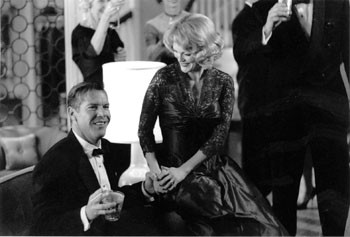
Julianne Moore plays Cathy Whitaker, a housewife in suburban Connecticut in the late 1950s. She has two children who are as perfectly kept and perfectly ignored as those in a sitcom: a girl taking ballet lessons and a son whose big problem in life is forgetting to wear a jacket outdoors. Her husband, Frank (Dennis Quaid), pushes himself too hard at work.

This elegant life starts to fray when Frank begins arriving late for dinner and drinking too much. As we follow him, we’re privy to his unspeakable secret: He’s drawn to other men. Frank wrestles with this “sickness” through booze and visits to a doctor. Meanwhile, Cathy befriends her gardener, Raymond (Dennis Haysbert), who is kind, strong, and thoughtful–and black. This friendship is much commented on by the neighbors. Raging gossip adds to Frank’s angst.

Sandy Powell’s costumes are glamorous but deliberately stiff. Films in the 1950s starred actors bred to uncomfortable clothes, as today’s performers aren’t. This discomfort–Moore always seems to be wearing a girdle–adds a layer of meaning to Far from Heaven, but it also adds a layer of rigidity.

All praise is due to Moore and Quaid. It’s a mark of Moore’s talent that you’re never tempted to laugh at her quaintness. Still, Haysbert faced the most difficult task–after all, he didn’t have old movies to model his character on. His Raymond is so effortlessly dignified, it’s as if he’s only heard of the existence of racism as a troubling rumor.

This is an extravagantly beautiful film, including exhaustive contributions by production designer Mark Friedberg, who worked on the similarly dense Ice Storm.

Despite all the remarkable craft, I found it impossible to be swept away on these torrents of unspoken emotion. It sure gives you a turn seeing the age you were born into treated as if it were as far away as Elizabethan England.

Haynes makes the past seem estranged. You’re meant to see Far from Heaven and think, “It’s been a long time since the 1950s; how the world has changed,” when actually the truer thought is that it’s been a long time since the existence of a world that never existed except on Hollywood sound stages. The crack between Haynes’ formalism and modern issues is always visible. You can see his point, but the point doesn’t pierce the heart.

‘Far from Heaven’ starts Friday, Nov. 15, at Rialto Cinemas Lakeside.

From the November 14-20, 2002 issue of the North Bay Bohemian.

© Metro Publishing Inc.

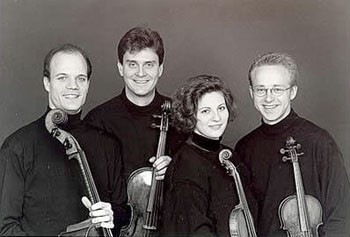
The Artemis Quartet

0

Click here to buy Osvaldo Golijov’s ‘Yiddishbbuk’ at Amazon.com

Bloodied and Bowed

Antiterror law snares cellist

By Greg Cahill

The USA Patriot Act, approved by Congress in the aftermath of the 9-11 attacks, is supposed to snare terrorists before they have a chance to enter the country. So it was something of a shock within the normally staid classical music world when Berlin-based Artemis Quartet cellist Eckart Runge, 35, was denied a visa under stricter new procedures requiring lengthy background checks of any foreign national with a criminal record.

Criminal record?

You bet. According to the New York Times, Runge had been charged with misdemeanor shoplifting of a 99-cent pair of tweezers in 1991. The embarrassing incident–which the cellist has called “an inexcusable mistake”–occurred in Colorado where Runge studied cello. At the time of the theft, he went to court and was ordered by a judge to pay the court costs. He never served any jail time.

However, the subsequent cost was much greater: due to Runge’s visa problems, the acclaimed quartet–which recently won the prestigious Diapason d’Or de l’Annee from the French music magazine The Diapason–was forced to cancel all of its 13 U.S. tour dates this fall, including its Oct. 29 concert for the Chamber Music in Napa Valley series at the newly renovated Napa Valley Opera House Cafe Theatre.

However, the quartet did salvage an Oct. 20 concert in Montreal, where tweezer-stealing cello students are not considered a national security risk.

“We are very sad,” Runge told the Times during a phone interview from Paris. “Of course, one makes mistakes in one’s younger years, and these mistakes are there to be learned from. But now I have paid the price a second time–not only me, but all the other people involved, which is completely disproportionate.”

The quartet hopes to reschedule its concerts later next year.

Meanwhile, Chamber Music in Napa Valley continues to mark its 23rd season with an impressive lineup of world-class talent. On Sunday, Nov. 17, Finnish soprano Karita Mattila (hailed by the press as “the Finnish Venus”) performs with San Francisco Opera music director Donald Runnicles, who will put down his baton to accompany Mattila on piano.

The rest of the 2002-2003 season is equally impressive. On Dec. 2, the fiery pianist Yefim Bronfman, the Russian-born Israeli and protégé of Isaac Stern, will perform a program that features works by Rachmaninoff and Prokofiev; a new work by Esa-Pekka Salonen; and Beethoven’s Piano Sonata no. 7 in D.

Other dates include Romanian pianist Radu Lupu’s program of Beethoven, Debussy, and Schubert (Feb. 3); the Academy of St. Martin in the Fields Chamber Ensemble performing the Mendelssohn Octet for strings, among other works (May 5); and the pianist Emanuel Ax, who will close out the season with a surprise program (May 6).

For additional program and ticket information, call 707.226.7372, ext. 205, or write to Chamber Music in Napa Valley, 4050 Spring Mountain Road, St. Helena, CA 94574.

Spin du Jour

After two acclaimed albums of classical string quartets–by Schumann and Tchaikovsky, respectively–the St. Lawrence String Quartet has issued an extraordinary disc of modern recordings by Osvaldo Golijov, the Argentinean composer best known for his work with the Kronos Quartet. When Golijov says in the liner notes that his first meeting in 1991 with the redoubtable St. Lawrence String Quartet was a life-defining moment, believe it–you’ll be hard-pressed to find a more dynamic collaboration between a living composer and a contemporary ensemble.

Yiddishbbuk (EMI Classics) is in all likelihood the most powerful piece of new music you will hear this year. Think Hebrew mysticism mixed with the visceral force of a piercing Astor Piazzolla street-fight motif and the soul-shattering existential angst of novelist Franz Kafka, and you’ll get an inkling of the intense emotions that this recording can stir.

From the November 14-20, 2002 issue of the North Bay Bohemian.

© Metro Publishing Inc.

Wine Country Video

0

Photograph by Michael Amsler

Contested Ownership

Brush off your essay skills–a Kenwood store could be yours

By Joy Lanzendorfer

With a flourish of the pen and some sound business sense, the only video store in Kenwood could be yours. The current owners of Wine Country Video want you to vie for their store, and all it takes is your best 500-word essay and a $150 entrance fee. Thanks to inspiration from a 1996 movie set in a remote town in Maine, husband and wife Ron Freberg and Sylvia West are giving the business away to the best applicant.

When Freberg and West started thinking about retiring, they considered the best way to find new owners for their store, which is located in central Kenwood. Though they could have sold it to the owner of a video store in Glen Ellen, they opted instead to go with the essay contest.

“We saw the movie The Spitfire Grill, which is about an essay contest for a restaurant, and we thought it was a wonderful idea,” says Freberg. “The great thing about the essay contest in the movie is that it was a chance for someone to take over the business that ordinarily couldn’t afford to. We’d like to give that to someone too.”

In the movie, an older woman played by Ellen Burstyn has had her restaurant for sale for more than 10 years, but no one in the remote town of Gilead, Maine, has bought the place. Thus, the essay contest is born. After advertising in places like New York and Chicago, the contest brings in more than 2,500 entrants.

In the movie, the entire town gets involved in the contest and the camera pans to show even the surliest Maine native reading the essays. In the end, the person who most needed a new chance in life got the restaurant.

In real life, however, running an essay contest is a little more complicated than putting ads in various newspapers and enlisting the neighbors to help you choose the best one. Freberg and West have hired a lawyer and marketing firm to promote the contest, opened a bank account for the entrance fees until the contest is over, and chosen three judges to pick the winner.

“The way the contest is set up, no one can ever say, ‘Ron knew so-and-so and let him win the video store,'” says Freberg. “I see none of the essays. The lawyer picks them up from the post office, cuts all the names off, and assigns a number so that even the judges won’t know who they are reading.”

The three judges are artist and playwright Randy Sue Watkins, movie producer and director Paul Martin, and Lucasfilm employee Kathy Tichenor.

The criteria for judging the contest are a little more complex than picking the most heart-rending essay. Participants are judged on their business skills, how community- and customer-minded they are, and their concept of what it takes to own and operate a store. And, yes, spelling and grammar do count.

“What we’re looking for is the most well-rounded essay,” says Watkins. “Not just why they want the store, but reasons why they’d be good at it. We needed criteria that were more objective than who most needed a change.”

The store itself is located in Kenwood’s only shopping center between the post office and the grocery store. It is the only video store in the area, which means virtually no competition. By itself, the business is worth more than $100,000.

The store is a popular place, Freberg says, with everyone in Kenwood stopping in at one time or another, especially in bad weather.

The winner will receive the video store, the lease paid up until Nov. 30, 2004, a library of more than 7,000 video titles, and all other supplies. In addition the winner will receive 30 days of training to learn the computer, billing, and other systems in the store.

Ron and Sylvia have owned the store for two years. Previously, they worked in real estate in Florida, operated a resort on the island of Antigua, and operated a bed and breakfast in Palo Alto. They plan to retire in Mexico, where the cost of living is more reasonable and it is beautiful–and they can still rent movies.

The deadline for the contest is Feb. 15, 2003. For more information, visit www.winecountryvideos.com.

From the November 14-20, 2002 issue of the North Bay Bohemian.

© Metro Publishing Inc.

Holiday Arts Guide

0

Survival Techniques

How to get through the holidays in one highly entertained piece

By Sara Bir

Dark at 5pm, lights strung up on trees, winter storms, chestnuts. The signs are clear: It’s holiday season. And along with the acorn squash and declining quality in tomatoes comes winter’s attendant events. Ballets, chorales, crafts fairs–it’s all there to get you in the spirit of whatever winter holiday you celebrate. So enjoy it while it lasts, because before long it will be spring again.

Spirited Ballet

”Twas the Night before Christmas’ The students of Healdsburg Ballet set Clement B. Moore’s story to dance with innovative choreography and updated music. Saturday, Dec. 7, 7:30pm; Sunday, Dec. 8, 2:30pm. Sonoma Country Day School’s Jackson Theater, 4400 Day School Place, Santa Rosa. $15 adults; $10 seniors and students. 707.431.7617.

‘Sophie and the Enchanted Toy Shop’ Sophie meets icicle and frost fairies, the Snow Prince and Princess, Valentina Ballerina, and the dancing bear. Then they dance, thanks to the cast and crew of the Marin Dance Theatre. Saturday, Dec. 14, 1 and 5pm. Marin Center’s Veterans Auditorium, 10 Avenue of Flags, San Rafael. $25 adults; $12.50 seniors and children under 12. Following the 1pm performance, have photos taken with the cast of characters at the Teddy Bear Tea Party in the Redwood Foyer. $8. 415.499.6800 or www.mdt.org.

Nutcrackers Galore

Ballet California’s Nutcracker is the only one in Sonoma County offering a live orchestra. Ballet: Dec. 13 at 8pm; Dec. 14 at 2pm and 7pm; Dec. 15 at 2pm. Luther Burbank Center for the Arts, 50 Mark West Springs Road, Santa Rosa. $14-$30. 707.546.3600. Nutcracker Breakfast: Sunday, Dec. 1, 9:30am-noon, Sonoma County Hilton, 3555 Round Barn Blvd., Santa Rosa. $20 adults; $15 children 10 years and under. 707.537.0140. Sugar Plum Parties: LBC’s Gold Room, Dec. 14 and 15 at 4:30pm. $12.

Marin Ballet’s Nutcracker, a 30-year tradition starring students from the dance school. Dec. 7-8, 1pm and 5pm. Marin Center’s Veterans Auditorium, 10 Avenue of Flags, San Rafael. $15-$26. 415.499.6800 or www.ticketmaster.com.

Ballet Califia’s staging features the choreography of David McNaughton, one of the brightest talents in ballet today. Dec. 20, 8pm; Dec. 21, 2:30pm and 8pm; Dec. 22, 2:30pm. Spreckels Performing Arts Center, 5409 Snyder Lane, Rohnert Park. $16 general; $12 youth and seniors. 707.588.3434 or www.spreckelsonline.com.

Stapleton School’s Nutcracker features a cast ages five to 18 years and original choreography by Virginia Stapleton. Dec. 20, 7:30pm; Dec. 21, 3pm and 7:30pm; Dec. 22, 1pm. Marin Center’s Veterans Auditorium, 10 Avenue of Flags, San Rafael. $21 general; $14 youth and seniors. 415.499.6800.

Merry Olde Chorale Concerts

Santa Rosa Symphonic Chorus’ ‘Mid-Winter Songs’ Under the direction of Dan Earl, the Santa Rosa Symphonic Chorus presents Mid-Winter Songs: An Evening of Morten Lauridsen. Nov. 23, 8pm, Santa Rosa High School, 1235 Mendocino Ave., Santa Rosa; Sunday, Nov. 24, 4pm, Our Lady of Guadeloupe Church, 8400 Old Redwood Hwy., Windsor. $10 general; $8 seniors and students. 707.579.6030.

Quire Quodlibet’s ‘Paens and Patronesses’ The newly reorganized Quire Quodlibet makes a joyful noise to celebrate St. Cecelia’s Day. Nov. 22, 8pm, Sebastopol United Methodist Church, 500 N. Main St., Sebastopol; Nov. 23, 8pm, Raven Theatre, 115 North St., Healdsburg; Nov. 24, 3pm, First United Methodist Church, 1551 Montgomery Drive, Santa Rosa. $15 adults; $10 seniors and students. 707.526.5787.

Russian State Chorus Recognized as one of the world’s leading vocal ensembles, the long-established Russian State Chorus performs on Sunday, Dec. 1, 3pm. $15-$25. Luther Burbank Center for the Arts, 50 Mark West Springs Road, Santa Rosa. 707.546.3600 or www.lbc.net.

Kitka at Russian River Chamber Music Ancient a cappella Balkan and Slavic village chants, as well as complex 20th-century choral works, make up the women’s choral group Kitka’s world-renowned holiday wintersong concert. Sunday, Dec. 1, 4pm. Healdsburg Community Church, 1100 University Ave., $20 general; $10 students. 707.524.8700.

The Edlos The weird guys of a cappella stitch together humor, costume changes, smoke machines, and extensive classical training into a holiday show of traditional and original numbers. Dec. 6, the Raven Theater, Healdsburg; Dec. 14, Santa Rosa High School, Santa Rosa (benefit); Dec. 21, Marin Center Showcase Theater, San Rafael; Dec. 23, COPIA, Napa. www.theedlos.com.

Sonoma Valley Chorale’s ‘Holiday to Remember’ SVC’s musical treats include Vaughan Williams’ Fantasia on English Christmas Carols and Randol Bass’ Gloria. Saturday, Dec. 7, 8pm; Sunday, Dec. 8, 2pm and 7:30pm. Sonoma Veterans Memorial Building, 126 First St., Sonoma. $15 adults; $12 seniors and children 16 and under. 707.935.1576 or www.sonomavalleychorale.org.

Light against the Darkness The Occidental Community Choir celebrates Hanukkah, Christmas, the solstice, and the coming of winter–a suitably ecumenical celebration. Under the direction of Doug Bowes, the choir will perform both classical pieces and choir originals. Saturday, Dec. 7, 8pm, Church of the Incarnation, Santa Rosa; Sunday, Dec. 8, 7pm and Sunday, Dec. 15, 3pm, St. Philip Center, Occidental; Friday, Dec. 13, 8pm, United Methodist Church, Sebastopol. $8. 707.547.0204 or www.occidentalchoir.org.

True Vine Gospel Choir Sonoma State’s well-received new choir, True Vine, holds its first Christmas Gospel Concert with East Bay Anointed Voices and the Kingdom Travelers. Sunday, Dec. 8, 5pm. Evert B. Person Theatre, SSU, 1801 E. Cotati Ave., Rohnert Park. $6. 707.664.2353.

Oakland Interfaith Gospel Choir Twenty-five Academy Award-winning voices soar in unison when the Oakland Interfaith Gospel Choir takes to the stage. In two performances the choir, led by the charismatic Terrance Kelly, will showcase the power of the voice. Saturday, Dec. 14, 4:30pm and 7:30pm. Bartholomew Park Winery, 1000 Vineyard Lane, Sonoma. $40. 707.935.9511.

Jarvis’ Annual Christmas Music Concert Napa’s Jarvis Conservatory invites three top high school choir ensembles from the area to perform, and the proceeds from the show go to the schools’ music programs. Saturday, Dec. 14, 7pm. Jarvis Conservatory, 1711 Main St., Napa. $30 adults; $15 students. 707.255.5445 or www.jarvisconservatory.com.

Petaluma Sings! The Petaluma Women’s Chorus joins up onstage with the Cinnabar Chamber Singers for a joyful holiday concert. Saturday, Dec. 14, 8pm. St. Vincent de Paul Church, 35 Liberty St., Petaluma. $12 general; $10 seniors and students; $6 children 12 and under. 707.763.8920.

San Francisco Gay Men’s Chorus’ ‘Home for the Holidays’ The 25th anniversary season of the San Francisco Gay Men’s Chorus begins with their popular Christmas show, Home for the Holidays. A benefit for Face to Face/Sonoma County AIDS Project, the concert usually sells out fast. Sunday, Dec. 15, 5pm (reception), 6pm (concert). Jackson Theater, Sonoma Country Day School, 4400 Day School Place, Santa Rosa. $20. 707.525.6229 or www.sfgmc.org.

Chanticleer Christmas Concert The highly acclaimed 12-man a cappella group Chanticleer continues their tradition of Bay Area Christmas choral performances with two shows in Petaluma. Tuesday, Dec. 17, 6pm and 8:30pm. St. Vincent de Paul Church, 35 Liberty St., Petaluma. $34-$37 reserved; $25 general. 800.407.1400 or www.chanticleer.org.

Redwood Empire Sing-Along Messiah Don’t know the words? No worry–the Baroque Sinfonia, solo vocalists, and a 100-voice choir can cover for you. Wednesday, Dec. 18, 7:30pm. Luther Burbank Center for the Arts, 50 Mark West Springs Road, Santa Rosa. $14 general; $10 students and seniors. 707.537.6809 or www.sing-along-messiah.org

Symphonic Seasons

Santa Rosa Symphony Dec. 7-9, Sonoma County Bach Choir and Sonoma County Honor Choir sing Brahms’ German Requiem. Jan. 11-13, Beethoven’s Egmont Overture, Korngold’s Violin Concerto, and Schumann’s Symphony no. 4. 707.546.8742 or www.santarosasymphony.com

Carols in the Caves Musical “improvisator” David Auerbach plays dulcimers, harps, psalteries, and more in this annual acoustic-in-the-caves concert. Dec. 7-8, 2pm, Hans Fahden Vineyards, 4855 Petrified Forest Road, Calistoga; Dec. 14-15, 2pm, Folie à Deux, 3070 Hwy. 29, St. Helena; Dec. 21-22, 2pm, Vine Cliff Winery, 7400 Silverado Trail, Yountville; Dec. 28, 8pm, Buena Vista Winery, 1800 Old Winery Road, Sonoma. $35. 925.866.9559 or www.carolsinthecaves.com.

Festival Consort’s Renaissance Christmas Founded in 1976, Festival Consort is the oldest early-music ensemble in the Bay Area, playing both Renaissance and Medieval music on historical instruments such as the cornett and crumhorn. Dec. 9, 12:15pm. Newman Auditorium, Emeritus Hall, Santa Rosa Junior College, 1501 Mendocino Ave., Santa Rosa; Wednesday, Dec. 11, 7:30pm, Herold Mahoney Library, Santa Rosa Junior College’s Petaluma Campus, 680 Sonoma Mountain Parkway, Petaluma. Free. 707.527.4372.

New Century Chamber Orchestra’s Baroque Christmas Warm the cold season with rich baroque selections by Vivaldi, Handel, and Corelli. Sunday, Dec. 22, 5pm. Osher Marin JCC, 200 N. San Pedro Road, San Rafael. $35. 415.357.1111 or www.ncco.org.

Twinkly Parades, Trees, & Houses

Petaluma Festival of Trees The Downtown Petaluma Association’s Festival of Trees promotion plants trees (not literally) in stores and restaurants for merchants to decorate. Each tree will then be auctioned off with funds going to local charities. Trees go on display Nov. 26-Dec. 6. Call 707.762.9348 for more info.

Yountville Festival of Lights Yountville goes all-out for a day of food, wine, and holiday. Santa arrives at noon aboard the famed Anheuser-Busch wagon. Other attractions include a gingerbread house competition and the Napa Valley Ice Art Championship. Friday, Nov. 29. 12:30pm, ice carving begins; 5-6pm, tree lighting. Downtown Yountville. Free. 707.944.0904.

City of Lights Driving Tour Take a self-guided tour of highly decked-out homes and businesses in Petaluma. Dec. 6-27. Free. For details, go to www.visitpetaluma.com or call 707.769.0429.

Light Up a Life Hospice of Petaluma’s annual fundraiser electrifies the Christmas tree in Center Park. Friday, Dec. 6, 6:30pm. Center Park, Petaluma Boulevard at B Street, Petaluma. Free. To sponsor a tree light, call 707.778.6242.

Russian River Parade of Lights Fifty floats, cars, horses, and such cruise through downtown Guerneville, all bedecked and alighted. Saturday, Dec. 7, 7pm. Main Street, Guerneville. Free. 887.644.9001.

Holiday Lighted Boat Parade The most luminous flotilla on earth parades around Petaluma’s waterfront. Saturday, Dec. 7, 6:30pm. Petaluma River Harbor, Petaluma. Free. 707.769.0429.

Luther Burbank Holiday Open House Visit the Burbank Home as it’s decked out in festive Victorian holiday style and stop in for tea and cookies in the Burbank Greenhouse. Dec. 7-8, 10am-4pm. Luther Burbank Home and Gardens, Santa Rosa and Sonoma avenues, Santa Rosa. Free. 707.524.5445.

Heritage Homes Holiday Parlor Tour Experience four Victorian parlors, plus the vintage holiday decorations at the Petaluma Museum. Sunday, Dec. 8, 6-9pm. Petaluma Historic Library and Museum, 20 Fourth St., Petaluma. $15. 707.762.3456.

Healdsburg Victorian Inns Tour Step back in time and get a peek at five of Healdsburg’s quaint Victorian inns: the Madrona Manor, Haydon Street Inn, Camellia Inn, Grape Leaf Inn, and Healdsburg Inn on the Plaza. All you need to do is pick up a map at your first stop of this self-guided tour. Sunday, Dec. 15, 2-4pm. Free. 707.433.6935 or 707.433.5228.

Napa Holiday Candlelight Tour Napa Landmark’s yearly tour of Victorian homes with costumed docents, plus wines and chocolate. Saturday, Dec. 14, 3-8pm. Various sites, First Street neighborhood, Napa. Advance: $25 adult; $10 ages three to 12. Day of event: $30 adults; $12 ages three to 12. 888.255.1836 or www.napacountylandmarks.org.

Santa Sightings

Direct from the North Pole via the Petaluma River, it’s Santa’s Riverboat Arrival and Antique Wagon and Horse Procession, when Santa and Mrs. Claus land at the Petaluma Riverfront to hand out candy canes. Then, the Antique Wagon and Horse Procession makes its way through downtown Petaluma (it’s also a holiday open house for downtown merchants). Saturday, Nov. 30. Santa’s arrival, noon; Wagon Procession, 1pm. Petaluma Riverfront, Western Avenue, Petaluma. Free. 707.769.0429.

A Very Merry Morning with Santa Infants to children six years of age are invited to visit Santa at the “North Pole” for the traditional rite-of-passage photo-op. Presale-only tickets go on sale Nov. 12. Saturday, Dec. 14, 9-9:45am, 10-10:45am, and 11-11:45am. Steele Lane Community Center, 415 Steele Lane, Santa Rosa. $5 per child. 707.543.3282 or 707.543.3737.

Ye Olde Craft Faires

Gifts ‘n’ Thyme Holiday Faire Eighty-two booths of fresh herbs–er, make that arts and crafts, plus baked goodies. Nov. 15-17. Friday, 11am-8pm; Saturday, 11am-6pm; Sunday, 11am-5pm. Chardonnay Hall, Napa Valley Exposition, 575 Third St., Napa. Free. 707.224.3207.

Petaluma Alternative Christmas Bazaar The gifts are handcrafted by Third-World artists; all proceeds support the artists and their families. Saturday, Nov. 16, 9am-3pm. Free. United Church of Christ, 825 Middleford Drive, Petaluma. 707.763.2454.

Holiday Jubilee A top-quality venue for juried artisans, Holiday Jubilee offers gift items, plus winetasting and sales, gingerbread house workshops and kits, gift-making workshops for kids, and home-decor craft workshops for adults. Nov. 22-23, 10am-5pm. Sonoma Country Day School, 4400 Day School Place, Santa Rosa. $5 adults; $2 children. Workshops: $40 each, adult; $18 each, children. 707.284.3281 or www.holidayjubilee.org.

Meet the Artists Twenty-two consignment artists whose work is featured at the Graton Gallery will appear in a “meet the artists” holiday gift show and reception. Saturday, Nov. 23, 3-6pm. Graton Gallery, 9048 Graton Road, Graton. Free. 707.829.8912 or www.gratongallery.com.

Spirit of Christmas Crafts Faire Three weekends long with 250 exhibits and ongoing entertainment for the family, the Spirit of Christmas Crafts Faire is now in its 26th year. Nov. 28-Dec. 1; Dec. 6-8; and Dec. 13-15. Fridays, noon-9pm; Saturdays and Sundays, 10am-6pm. Grace Pavilion, Sonoma County Fairgrounds, Santa Rosa. $4 general; $2 seniors and children ages six to 12. Fridays are half-price for everyone. 707.575.9355 or www.spiritofchristmasfaire.com.

Christmas Crafts Fair The 21st annual Christmas Crafts Fair, sponsored by the Russian River Watershed Protection Committee takes place Nov. 29-Dec. 1, 10am-5pm. Santa Rosa Veterans Memorial Building, 1351 Maple Ave., Santa Rosa. $1.50. 707.869.0054.

Winter Open Studios The Industrial Center Building in Sausalito houses a thriving group of artists–75, to be exact. This makes it very convenient for them to throw their Winter Open Studios. Opening reception: Friday, Dec. 6, 6-9pm. Open studios: Dec. 7-8, 11am-6pm. ICB, 480 Gate Five Road, Sausalito. Free. 415.332.1909. A few blocks away, Sausalito’s Schoonmaker building also opens up Dec. 7-8, 11am-6pm. 10 Liberty Ship Way, Sausalito. 415.331.6466.

Dickens of a Holiday Crafts Show Santa Rosa Recreation and Parks’ 28th annual crafts show has over 60 booths of handcrafted gifts. Saturday, Dec. 7, 9am-5pm; Sunday, Dec. 8, 10am-4pm. Finley Community Center, 2060 W. College Ave., Santa Rosa. Free. 707.43.3737.

Herbal Christmas Fair The Sonoma County Herb Association’s herb and craft sale puts an old-fashioned spin on seasonal crafts fairs with one-of-a-kind holiday gifts by herbal artisans and homemade cookies at a bake sale. Proceeds benefit SCHA. Sunday, Dec. 15, 10am-5pm. Lodge Room, Santa Rosa Veterans Building, 1351 Maple Ave., Santa Rosa. Free. 707.585.8575.

Dramatic Affairs

Cinnabar Theater Cinnabar brings us two shows for the holidays. First, Cinnabar Young Actors Repertory Company presents the world premiere of Christmas Comes to Cherrywood, a tale of a lost unicorn and an enchanted forest. Nov. 15, 16, 22, and 23 at 7:30pm; Nov. 17 and 24 at 2pm. Then, Young Actors Repertory makes the classic Capra movie It’s a Wonderful Life come alive in musical form. Dec. 6, 7, 13, 14, 20, and 21 at 7:30pm; Dec. 15 and 22 at 2pm. Tickets for both productions are $10 general; $6 ages 12 and under. Cinnabar Theater, 3333 Petaluma Blvd. N., Petaluma. 707.763.8920.

‘Holiday Memories’ Sonoma County Repertory Theatre offers an adaptation of “The Thanksgiving Visitor” and “A Christmas Memory,” probably Truman Capote’s warmest works. Nov. 22-23, 29-30, Dec. 5-7, 12-14, 19-21 at 8pm; Dec. 1 at 2pm. Sonoma County Repertory Theatre, 104 N. Main St., Sebastopol. $15. 707.823.0177 or www.sonoma-county-rep.com.

The 1940s Radio Hour A 10-piece orchestra adds to the madcap action of this nostalgic holiday treat, presented by Pacific Alliance Stage Company. Nov. 29-30, Dec. 6-7, 13-14 at 8pm; Dec. 1, 8, 15 at 2:30pm; Dec. 5 and 12 at 7:30pm. Spreckels Performing Arts Center, 5409 Snyder Lane, Rohnert Park. $22 adult; $18 youth and senior; $15 all seats. 707.588.3434 or www.spreckelsonline.com.

‘A Christmas Carol’ Dreamweavers Theatre stages the Christmas classic. Dec. 6-8, 13-15, 20-22, and 27-29. Fridays and Saturdays, 8pm; Sundays, 2pm. 1637 Imola Ave. (in the River Park Shopping Center), Napa. $15 general; $12 seniors and students. 707.255. LIVE.

An Imaginative ‘Christmas Carol’ Healdsburg’s Imagination Foundation, a new nonprofit theater for young actors, presents Dickens’ Christmas Carol with three holiday performances. Dec. 13 and 14, 8pm; Dec. 15, 3pm. Raven Theatre, 115 North St., Healdsburg. Advance: $10 adults; $5 children, students, and seniors. Door: $12 adults; $7 children, students, and seniors. 707.431.7ACT.

Festive Events

Chocolate and Carols Falkirk’s yearly Victorian holiday celebrates all things Dickens and Christmas-y. Carols, fine confections from local chocolatiers, and an authentic Father Christmas are all in store. Friday, Dec. 6, 6:30-9pm. Falkirk Cultural Center, 1408 Mission Ave., San Rafael. $8 adults; $5 members and children. 415.485.3328 or www.falkirkculturalcenter.org.

Madrigal Dinner Gualala’s art center gets the Olde English treatment and is transformed into the Great Hall of Sterling Castle for a six-course feast, complete with roast beef and Yorkshire pudding, with madrigal singing for dessert. Dec. 7-8, 6pm. Gualala Arts, 46501 Old State Hwy., off Highway One, Gualala. $65. 707.884.1138.

Annual Victorian Tea The Petaluma Women’s Club serves a proper English tea Upstairs, Downstairs-style. Benefits Petaluma Historical Library and Museum. Dec. 8-14, 11am, 2pm, and 5pm. Petaluma Women’s Club, 518 B St., Petaluma. $25 per seating. 707.762.4247.

Granny Bear’s Christmas Tea Party A traditional Victorian high tea meets the cuddly fuzziness of teddy bears with a live variety show, games, storytelling, and a souvenir photo with Granny Bear herself. Proceeds go to Story Bear Benefits. Saturday, Dec. 14, 11am and 2:30pm. Cotati Veterans Building, 8505 Park Ave., Cotati. $18-$40. 707.829.2494.

‘Fiddler on the Roof’ Sing-Along Sing, laugh, cry, and sing again. Come dressed as your favorite character, then watch the movie on the big screen and belt it out just like Zero Mostel. Lyrics provided. Register by Dec. 23–last year they sold out. Wed, Dec. 25, 11am-3pm. Osher Marin JCC, 200 N. San Pedro Road, San Rafael. $18 adult members; $22 adult public; $12 all children 12 and under. 415.444.8000 or www.marinjcc.org.

Hanukkah Celebrations

Latke Dinner Party Bring salad or dessert for four to this potluck and enjoy The Miracle of Chanukah, a professional multimedia musical puppet extravaganza. Reservations required. Tuesday, Dec. 3, 5:45pm. Congregation Beth Ami, Freedman Center, 4676 Mayette Ave., Santa Rosa. Members: $5 adults; $3 children. Nonmembers: $6 adults; $4 children. 707.545.4334.

Family Storytelling Family activities like making olive oil proceed a concert and storytelling by bestselling children’s musician Joanie Bartels and storyteller Joel ben Izzy. Sunday, Dec. 8, noon-3pm. Osher Marin JCC, 200 N. San Pedro Road, San Rafael. $6 members; $7 public. 415.444.8000 or www.marinjcc.org.

Kwanzaa

Sausalito’s Bay Area Discovery Museum goes global for its holiday celebration, bringing its fifth annual Kwanzaa celebration to the area. The seven guiding principles of Kwanzaa will be portrayed in the day-long event, as well as drumming, dancing, and crafts. Thursday, Dec. 26, noon-4pm. 557 McReynolds Road, Sausalito. 415.487.4398 or www.badm.org.

From the November 14-20, 2002 issue of the North Bay Bohemian.

© Metro Publishing Inc.

‘Bread!’

Bread Fever Renowned bread builder Joe Ortiz bakes up a yeasty musical By Sara Bir Bakers know that rye breads are tricky; the doughs are sticky and slow to rise, and the dense, complex, almost sour loaves they produce are not for everyone. The quest for the...

Thanksgiving Turkeys

Click here to buy 'The Complete Vegan Cookbook' at Amazon.com Flipping the Bird Desperately seeking a cruelty-free Thanksgiving By Tara Treasurefield Several years ago, Hope Fauna (her name means "hope for the animals") visited the Farm Sanctuary in Orland, Calif. While there, a refugee from a...

‘Psychopathia Sexualis’

Missing Kinks No socks equals no sex in 'Psychopathia Sexualis' By Patrick Sullivan It sounds like the title of a textbook about sexual derangement, the sort of lurid tome that would devote whole chapters to Jack the Ripper, the Marquis de Sade, Bill Clinton, etc. But the...

Medical Marijuana Clinics

Photograph by Rory McNamara Weed Killer Is the end near for Sonoma County's besieged medical marijuana clinics? By Patrick Sullivan "You're out of MMW?" The gray-haired woman gives a sigh of disappointment. "OK, well, let me smell that Peruvian. Oh, that looks funky!...

Chicken Soup

Chicken Soup for the Tummy Making chicken soup is as good for you as eating it By Sara Bir Let's talk about chicken soup seriously, because it is a serious matter. The distance we have put between ourselves and our food (purely circumstantial, of course) has created...

Les Blank

Click here to buy 'Burden of Dreams' at Amazon.com Blank but not forgotten: Filmmaker Les Blank focuses on the music, culture, and cuisine of Americans outside the mainstream. Celluloid Snacks Eight restored Les Blank films highlight the director's clear eye By On...

‘Far from Heaven’

Autumn Leaves If costume and art direction were everything, Todd Haynes' 'Far from Heaven' would be celestial By Fall has brought us a bumper crop of movies soaking in the era of the Hollywood studios--it's been film-geek city with the MGM chiffon of Punch-Drunk Love and...

The Artemis Quartet

Click here to buy Osvaldo Golijov's 'Yiddishbbuk' at Amazon.com Bloodied and Bowed Antiterror law snares cellist By Greg Cahill The USA Patriot Act, approved by Congress in the aftermath of the 9-11 attacks, is supposed to snare terrorists before they have a chance to enter the...

Wine Country Video

Photograph by Michael Amsler Contested Ownership Brush off your essay skills--a Kenwood store could be yours By Joy Lanzendorfer With a flourish of the pen and some sound business sense, the only video store in Kenwood could be yours. The current owners of Wine...

Holiday Arts Guide

Survival Techniques How to get through the holidays in one highly entertained piece By Sara Bir Dark at 5pm, lights strung up on trees, winter storms, chestnuts. The signs are clear: It's holiday season. And along with the acorn squash and declining quality in tomatoes comes winter's...
11,084FansLike
4,606FollowersFollow
6,928FollowersFollow