Wastewater Reuse Project

0

Far and Wide: A wastewater reuse project puts the already endangered Russian River Watershed at further risk.

Up a Creek

Wastewater reuse plan threatens watershed, wine industry

By Tara Treasurefield

Turtle Creek winds through Marty Griffin’s property in Healdsburg on its way to the Russian River. This creek, like many others in the Russian River Watershed, has suffered serious abuse. Gravel miners nearly destroyed it when they dug a huge pit at its mouth in the early 1960s. For 38 years, Griffin, whose property includes Hop Kiln Winery and who cofounded Friends of the Russian River, has been repairing the damage. Now, just as Turtle Creek is beginning to heal, there’s a new threat: A group of farmers, the city of Santa Rosa, and the Sonoma County Water Agency intend to use city wastewater for irrigation.

Three of the 17 reservoirs described in the plan would be in the headwaters of Turtle Creek. Reservoirs leak, says Griffin, and that’s a problem. “This wastewater is lethal to aquatic life. [Wastewater leakage from the reservoirs] would kill the little animals and plants that live in streams and creeks and the Russian River.” The plan also calls for five reservoirs next to the Bishop’s Ranch retreat center, just above water agency wells. “There must be better locations for wastewater storage than right in the watershed that feeds your drinking-water wells,” says Judith Olney of the Healdsburg Association for Responsible Citizenship.

Some of the proposed reservoirs are 120 feet high, and that presents other problems. “They want to put them in steep canyons with very unstable soil,” says Griffin. “They’re going to have to take out hundreds of thousands of cubic yards of soil. It will make a God-awful mess. If [the reservoirs] break–which is very likely, because this is a very active earthquake area–they would inundate parts of our ranches with a wall of water that would wipe out everything on the way down.” Bishop’s Ranch is also alarmed and is a plaintiff on three of the 19 lawsuits filed against the project.

Celebrate the Watershed: We are all part of the watershed.

Dan Carlson, capitol projects manager for the Santa Rosa Utilities Department, acknowledges that reservoirs leak, that Santa Rosa’s treated wastewater kills marine life, and that Healdsburg is prone to earthquakes. He says that environmental impact reports will evaluate all this, as well as mitigations that include lining reservoirs to prevent leakage, determining if the amount of leakage would significantly impact downstream users, and evaluating the effects of an earthquake. Pam Jeane, deputy chief engineer at the Sonoma County Water Agency, says, “Whoever proposes a project will have to do an environmental review. People will have a chance to comment at that time.” No specific project has been selected yet, she says.

But Griffin has no doubt that the plan to construct 17 wastewater reservoirs and 74 miles of distribution lines in North County is a done deal. It costs $875,000 to develop the plan and over $20 million to make the geysers’ pipeline large enough to accommodate wastewater for irrigation. Santa Rosa is also prepared to pay up to 100 percent of the cost of constructing reservoirs on private agricultural land. Acknowledging that all this amounts to a sizable investment in a project that hasn’t even gone through an environmental impact report yet, Carlson says, “I believe that [the Santa Rosa City Council and Board of Supervisors] believe that some part of that project will likely go ahead in the future, if not all of it.”

A major appeal of the project is that it will allow Santa Rosa to build affordable housing in the city center. Carlson says that though front yards and backyards are good places to dispose of wastewater, the new dwellings won’t have any yards. The wastewater has to go somewhere. Carlson says, “Why not use it for agriculture? Farmers already need it, and we want to make sure that if those areas want to use the water, we have it available to them.”

Tom Hobart at Clos du Bois Winery in Healdsburg supports the project because vineyards will be “at the bottom of the list” for fresh water as it becomes increasingly scarce. “Twenty or 25 years from now, this may be the most important thing we ever did,” he says. But as owner of a winery himself, Marty Griffin questions the wisdom of using wastewater to irrigate vineyards. “It may hurt the reputation of vineyards in North County,” he says. “It’s very hard to clean up, and there are a lot of chemicals left in the wastewater even after treatment.”

What’s really driving this project, says Griffin, is greed. “Sonoma County is a developer-controlled county, and Santa Rosa is a developer-controlled city. They’ll do anything to get rid of the wastewater, because it’s the only thing that’s holding up development. Sonoma County could end up like Los Angeles. I think they should slow down their growth, stop their growth. They should recycle all this wastewater in their own backyards and not ours. It’s a big rip-off for North County.”

Devoted as ever to Turtle Creek and the Russian River Watershed, Griffin says, “They’re going to build those reservoirs over our dead bodies.” On second thought, he adds, “I’ve never believed in lying down in front of bulldozers, because by then it’s too late. We have to stop them in the courts and in the court of public opinion.”

From the May 16-22, 2002 issue of the North Bay Bohemian.

© Metro Publishing Inc.

West County Watershed Day And Art Show

0

Land, trees, people, and bees. Creeks, fogs, fishes, and dogs. We are all part of the watershed!

By Tara Treasurefield

Come on out to the West County Watershed Day and Art Show. “We are going to present a great, free day of fun, rock-solid information, and most importantly, an opportunity for the entire watershed community to get together and celebrate,” says Kurt Erickson of Occidental Arts and Ecology Center.

Events will include games, a parade, poetry, food, live music, an art sale, kids’ watershed posters, videos, and speakers. Learn about wildlife-friendly fencing, Sudden Oak Death, watershed restoration, native plants, water rights and responsibilities, and more.

Saturday, May 18, 10am-4pm at Salmon Creek Middle School, 1935 Bohemian Hwy. (between Freestone and Occidental). Also, be sure not to miss the Watershed Stomp, Friday, May 17, at 8:30pm at the Powerhouse Brewery in Sebastopol. Admission is $10. Tickets are available at the door. For more information, call 707.874.2014.

From the May 16-22, 2002 issue of the North Bay Bohemian.

© Metro Publishing Inc.

Sustainability Tour

0


Photograph by Michael Amsler

Daily Acts: Trathen Heckman spreads the good word.

Tour of Duty

Sustainability Tour is home-grown ecotourism

By Sara Bir

Throwing some hot dogs on the grill and sitting back on the lawn chair, margarita in hand, might be fairly typical Memorial Day weekend festivities. An equally relaxing but much more proactive alternative is the Sustainability Tour taking place Saturday, May 25, which highlights local applications of permaculture.

“I started studying this because I wanted to get exposed to the doom and gloom and figure out what our lives cost,” says Trathen Heckman, the 31-year-old Monte Rio resident who organized the tour. “You get too focused on that and it gets kind of overwhelming, so I started studying what all the different solutions were.”

Heckman’s initial idea for the tour was inspired by the people he met while studying and volunteering with different organizations in the North Bay. One of those was the Permaculture Institute of Northern California, an educational and research organization in Point Reyes that promotes sustainable technologies and methodologies.

A contraction of “permanent agriculture” or “permanent culture,” permaculture “looks at what nature does and copies nature,” Heckman says. “Permaculture is not this crazy, labor-intensive thing; it’s just working within nature’s needs. You can keep the resources on your land. That’s a big aspect of it.”

Finding sites for the tour wasn’t difficult, Heckman says. “It was just looking at people who were already in my life and figuring out a way to showcase what they are doing.”

Because of the distance covered–the tour begins in Sebastopol and ends in Monte Rio–participants won’t be riding bikes but will be riding in alternative energy vehicles. “Bikes are obviously a lot better than cars, but if we were going to use cars, I figured we’d try to focus on alternative energy solutions, like electric and biodiesel and vegetable oil.”

The tour starts at Laguna Farms, a Community Supported Agriculture farm in Sebastopol. Participants will get a chance to pick a few veggies and reconnect with food at its source. “There’s some really great local organic food. Laguna Farms is also using solar energy and wind energy, and they just converted their tractors to run on vegetable oil. So they’re beyond organic,” says Heckman.

The next stop on the Sustainability Tour is right down the street. “Eric Ohlson has a permaculture site that’s an urban scale, so it’s what can you do in a backyard in the middle of downtown Santa Rosa, or anywhere. We’ll go through setting up a worm bin so you can compost your food scraps, different solutions that you can apply in a small space.

“From there we’ll go to Ocean Song outside of Occidental, to a naturalized conventional home with earth plasters and natural paints, and also some cob and straw-bale projects.”

The tour ends at Heckman’s home, where the focus will be on medicinal plants and erosion control. Heckman shored up his yard, a ferociously steep, shaded redwood hillside, with an attractively textured series of urbanite rock walls–broken recycled concrete. “To make concrete, first you have to break apart the earth, then you have to heat it to 2,500 degrees, so it’s really energy-intensive as far as global warming. To reuse it seems pretty ideal. The concrete is a thermal mass, so the sun heats it up and it draws extra heat for other plants to be able to make it here.”

Alternating with the steps that wind across the hillside are herbs and edible plants: arugula, lemon balm, rosemary, calendula, yarrow, chamomile, borage, huckleberries, blueberries, currants. “Two or three years ago I would have walked out here and thought, ‘Oh yeah, lots of flowers and rocks.’ Now I see food, medicine, . . . wonder.”

Heckman, formerly a full-time snowboarder and computer programmer, recently published the first issue of his zine, Ripples, which focuses on reclaiming daily acts and bringing greater awareness to our lives.

“Have you ever seen Willy Wonka and the Chocolate Factory?” he asks. “Willy Wonka says, ‘Come and live with me away from all the wangdoodles, snozzwangers, and rotten vicious kinits.’ We have nowhere to go–this is Wonkaland. I don’t see any rotten vicious kinits, I just see good people in a bad system. Sustainability, to me, is about helping heal that system and show fun, good alternatives.”

The Sustainability Tour runs 10am-4pm, Saturday, May 25. Bring a lunch. Reserve space by May 18 by e-mail (da*******@****sp.com) or mail (Daily Acts, Box 826, Monte Rio, CA 95462). $10-$20 donation. Call 707.865.2915 for information.

From the May 16-22, 2002 issue of the North Bay Bohemian.

© Metro Publishing Inc.
Spins

0

Spins

Little Cat
(Pandacide Records)
Little Cat

Somewhere between a rabid sequencer and the background music to Nick Jr.’s Blue’s Clues lies the domain of Little Cat, an alternately soothing and driving mix of Nintendo themes, video game blips, and New Age trance arcs. The Little Cat in question is Sonoma County’s Devon Rumrill, who has such a heavy penchant for lo-fi that he records on a VCR. While undeniably an electronic project (read: not live, no vocals), Little Cat contains enough endearing kinks–comic-book sound effects, fuzzed-out snippets of samples, and a subversive sense of melody–that what emerges is textured and distinctive, providing the listener with offbeat nooks and crannies to latch onto. The result is surprisingly sweet, the sort of digitized innocence you’d expect from someone claiming video game music as one of his biggest influences.

Little Cat may call to mind an equally serene but more upbeat Seefeel or a Scatter-Shot Theory minus the brooding. The CD’s 20 tracks hold tasty nuggets of traditional songwriting–“2nd Grade (Hi-5)” even has synthy echoes of early Cure. Little Cat is charming and refreshing but never dull. (This CD, tough to find in stores, is available from the Pandacide website at www.pandacide.com.)

-Sara Bir

Proud of You
(Music Makers)
Cindy Cohen and Peter Penhallow

Good Morning Sun, Goodnight Moon
(Rivertown)
James K

The North Bay hasn’t nurtured many prominent children’s music performers over the years, Marin County singer-songwriter Tim Cain being one notable exception. Two new and impressive recordings indicate that situation may be changing. Proud of You by Cindy Cohen and Peter Penhallow offers 16 festive tracks (including five holiday songs) aimed mostly at younger tykes. The CD features several original compositions and is an outgrowth of Music Makers in Mill Valley (www.music-makers.org), a program for children ages 18 months to six years that explores music through song, movement, finger plays, puppets, and games. Easy on the ears and easy on the eyes; acclaimed Marin children’s author and artist Karen Barbour contributed the fanciful cover art.

For older children, Petaluma singer-songwriter James K returns with his second self-produced CD of original songs appealing to elementary- and middle-school-aged kids. And, like his 1998 debut A Giggle Can Wiggle Its Way through a Wall, James K shows an easy command of musical styles, from Cajun to country, blues to show tunes. On this outing, he’s joined by a small children’s choir and a host of local musicians. These very listenable songs are filled with empowering messages of self-esteem and love, but James K knows how to keep it fun, whether he’s stalking the wild asparagus or riding the range. For information, visit www.jamesk.com.

-Greg Cahill

Eric Lindell
(Sparco Records)
Eric Lindell

Long a local favorite–he’s been playing local bars and clubs for years–Eric Lindell has a fair legion of fans awaiting his next release. He may have deserted Sonoma County for New Orleans, New York, and beyond, but it’s all for the best: Lindell’s latest self-titled release is a rollicking rock revival. The sound is distinctly New Orleans blues rock, an avalanche of sound dripping with horns and sax and shored up by Lindell’s scratchy, hoarse voice. Backup vocals from Delisha Adams and Raychell Richard tie up the sonic package with a bright, soulful bow while Lindell’s band keeps the rhythm going strong and tight.

-Davina Baum

From the May 16-22, 2002 issue of the North Bay Bohemian.

© Metro Publishing Inc.
Les Claypool

0

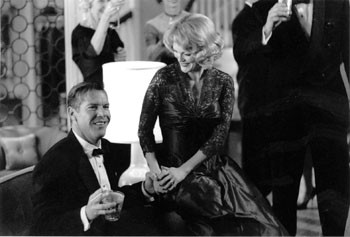
Prime Freakiness: Les Claypool is short on details, long on projects.


More of Les

Primus head honcho speaks out (sort of)

By Greg Cahill

Les Claypool couldn’t give a rat’s ass about publicizing his career. Then again, the bass virtuoso and irreverent songwriter did hire Shorefire Media–one of the best and biggest PR firms in the music biz and the guys that represent Bruce Springsteen, among others–to pay a publicist to bug me to bug Claypool (actually, it was a low pressure kinda deal).

So why is Claypool so tightlipped about his affairs? Maybe because he can afford to be. Speaking over the phone from his sprawling Sonoma County ranch, Claypool offers little insight into his upcoming solo album (no title, no label, no release date) or additional tour dates with Frog Brigade (after a two-week tour that ended at the New Orleans Jazz & Heritage Festival with a four-hour jam at Tipitina’s) or the fate of Primus, the groundbreaking punk-funk band he formed in the mid ’80s and put on hiatus three years ago. These days, Claypool is talking about the first two Primus albums–1989’s Suck on This, recorded live at the Berkeley Square punk emporium, and 1990’s Frizzle Fry, which includes studio versions of several tracks from Suck on This.

Both albums, out of print for a couple of years after a licensing deal with Caroline Records lapsed, were digitally remastered (Suck on This was pretty lo-fi) and reissued last month on Claypool’s own Prawn Song label. For hardcore Primus fans looking for a reason to buy the CDs a second time, Frizzle Fry contains a live medley of avant-popsters the Residents’ “Hello Skinny/Constantinople.”

“We decided to make ’em sound a little better,” explains Claypool. “When they first were released, we were young guys and didn’t have a lot of money, so they didn’t sound quite as full-spectrum as they could. Now, I’ve turned [remastering expert] Stephen Marcussen on them, and he’s made them sound huge and fat and full and punchy. It’s all good.”

Good, indeed. Together, Suck on This and Frizzle Fry have sold 750,000 copies–major sales figures for a couple of indie records.

Claypool, 37–born in Richmond and a boyhood friend of Metallica’s Kirk Hammett–is the driving force behind Primus and a seemingly endless string of spinoff projects that have blazed a path for a thousand copycat punk-funk bands. In 1991, Primus made their major label debut with the eccentric Sailing the Seas of Cheese (Interscope), which went gold a year after its release. The trio–Claypool, guitarist Larry LaLonde and drummer Tim “Herb” Alexander–went on that year to open for such varied acts as Public Enemy, Anthrax, U2, Fishbone, and Rush. Two years later, Primus scored a surprise Top 10 hit with “Pork Soda” and landed the coveted headlining spot on that year’s Lollapalooza festival tour, a move that the All Music Guide notes solidified “the band’s status as quirk rock’s undisputed kings.”

Several strong releases followed, culminating in 1999’s Antipop, which featured such guests as Tom Waits, Stewart Copeland of the Police, Fred Durst of Limp Bizkit, and Tom Morello of Rage Against the Machine, to name a few.

But Claypool shelved Primus after the album’s release, choosing to stretch out in projects that ranged from the jam band Oysterhead (with Copeland and Phish guitarist Trey Anastasio) to Les Claypool and the Holy Mackerel, and from Sausage (a reunion with the original Primus band members) to penning the theme song to TV’s South Park.

For the time being, Claypool says he has “zero plans for any Primus activity.” Meanwhile, Claypool is mixing his upcoming solo album, his first solo work since 1996’s Highball with the Devil (Interscope). Due for release “sometime in the fall,” the new solo album will have “a lot of different musicians, a lot of different types of musicians,” including Jay Layne of Sausage, Warren Haynes of Gov’t Mule, and Perry Farrell collaborator Lonnie Marshall. In addition, Claypool says, instrumentation will range from his patented funk-infused bass to tablas to vibes.

“It’s going to be a pretty eclectic record,” he says, declining to elaborate. “I’m having fun.”

As for live dates, Primus, er, Claypool fans can catch the Frog Brigade on Saturday, May 25, at the two-day Mountain Aire music festival at the Calaveras County Fairgrounds at Angels Camp.

From the May 16-22, 2002 issue of the North Bay Bohemian.

© Metro Publishing Inc.
Bike To Work Day

0


Hop On: Feel the wind through your hair.

Road Rush

Bike to Work Day gets the wheels of change turning

By James Knight

Here, in a place some would call the most beautiful on earth, cyclists seem to fall into two categories: after-work mountain bikers, and those who don’t seem to be employed at all. The sight of day-glo-clad groups of cyclists, their aerodynamically sculpted spandex butts in the air, is surely familiar to wine country drivers. And there must be thousands of miles of mountain bike tracks ripping up local park trails. But mostly these activities involve putting the bike on a car, driving it somewhere, then driving it back. And this isn’t mentioning those who drive to the gym to ride a stationary bicycle.

Fortunately, Bike to Work Day (May 16) has a lot more going for it than, say, Eat Your Brussels Sprouts Day. Not only is bicycling good for you and good for the environment, but people generally agree that it’s an enjoyable recreational activity.

Support for Bike to Work Day has been growing and growing. Steven Schmitz, who has run an “energizer station” in Sebastopol at the Joe Rodata Bike Trail head for the past seven years, says that while job-bound cyclists used to number about 15 to 20, last year saw more than 100. The energizer stations, open from 6:30am to 9am in at least 40 locations around Napa, Sonoma, and Marin counties, perform a “cheerleading” function, says Schmitz, who also heads the Sonoma County Bike and Pedestrian Advisory Committee.

Volunteers hand out bags of goodies donated by BTWD sponsors and disseminate maps and useful cycling information. The stations and other events that make up Bike to Work Week are sponsored by RIDES for Bay Area Commuters, which is funded by the Bay Area Air Quality Management District. More bicycles, less pollution.

Unfortunately, BTWD is held concurrently with Pollute Your Way to Work Day, an event of unprecedented success that has been held each day for nearly a century. The irony of the Lung Association’s sponsorship of BTWD is that cyclists probably get a bigger dose of exhaust in their faces than drivers. As anyone who has ridden outside the protected domain of parks or quiet neighborhood streets can tell you, getting from point A to point B in the North Bay is not such a carefree lark.

To the cyclist, the everyday routine of traffic transforms into a life-threatening world of hazards. Marked bike lanes suddenly disappear; pollution-belching vehicles whiz by your elbow; motorists blindly make right turns in front of you. The fatality statistics for bicyclists in this area are dismaying, among the highest in the state.

The Sonoma County Bicycle Coalition hopes to change that with its Share the Road campaign, funded by a $200,000 state grant. The campaign, targeted at bicyclists and motorists, will eventually include billboards, radio, and bilingual information. Schmitz hopes that this year’s BTWD will kick off the campaign and says he’s excited about the next year and a half. Share the Road will address the issues of cyclist vs. motorist, hoping to bring greater understanding between the two that will allow them, well, to share the road.

If this reporter were to bike to the Bohemian offices, he’d have to find side streets to get to the Luther Burbank Center, where the Bohemian is located. Mendocino Avenue, a road that passes through the center of Santa Rosa, numerous shopping centers, a high school, and one of the biggest community colleges in the state, has no bicycle lane. It’s exactly this kind of squeaking one’s way down the gutter of a busy street that puts a thorn in the tube of practical, everyday cycling.

Joan Moulthrop of Santa Rosa’s Transit and Parking Department, says that while there is no Mendocino route planned, in the near future bicyclists will have a lane on Santa Rosa Avenue all the way into downtown. To get an idea of other plans, and to find those elusive bike lanes, the city provides a detailed map. That in itself is a good sign. The Sonoma County Bicycle Coalition provides information on maps for other municipalities, as well.

So put on that helmet, get in gear, and visualize lanes. There are a lot of events to help you get going, including bicycle repair workshops in Santa Rosa and Sebastopol. Stop by the energizer stations and pick up a treat on the way to work. If enough people follow suit, the real reward may be far greater.

From the May 16-22, 2002 issue of the North Bay Bohemian.

© Metro Publishing Inc.

North Bay Sushi Listings

0

The Ultimate North Bay Sushi Listing

Santa Rosa

JoJo Sushi
$-$$. Hip downtown eatery features fresh sushi, sashimi, teriyaki, and innovative specials. Lunch and dinner, Monday-Saturday. 645 Fourth St. 707.569.8588.

Osake Sushi Bar & Grill
$$$. Gourmet nigiri and maki sushi, exotic seasoned seaweed salad, robata grill specialties, and premium sakes are the hallmarks of this chic Asian eatery. Lunch and dinner, Monday-Friday; karaoke lounge until 1:30am, Friday-Saturday. 2446 Patio Court. 707.542.8282.

Sakura
Open daily. 300 Coddingtown Center. 707.523.1916.

Sapporo
$$. Centrally located in Santa Rosa and featuring a variety of fresh fish daily, Sapporo is an excellent choice when the sushi urge hits. The partitioned dining room offers a number of seating options for groups large or small. Lunch and dinner, Monday-Saturday. 518 Seventh St. 707.575.0631

Shogun
Lunch, Tuesday-Saturday; dinner, Tuesday-Sunday. 2350 Midway Drive. 707.575.5557.

Yao-Kiku
$$-$$$. Fresh sushi with ingredients flown in from Japan steals the show in this popular neighborhood restaurant. Large selection of sushi and sashimi keeps the locals coming back. And don’t miss the salmon teriyaki. Open daily. 2700 Yulupa Ave. 707.578.8180.

Petaluma

Fuji
Lunch and dinner, Monday-Saturday. 253 McDowell Blvd. 707.778.8600.

Kabuki
Lunch, Tuesday-Friday; dinner, Friday-Sunday. 17 Petaluma Blvd. N. 707.773.3232.

Rohnert Park

Hana
$$$$. Hana is an oasis of cool tucked in the atmosphereless Doubletree Hotel complex. This expensive but highly prized sushi joint packs them in for both standard and unexpected delights. In addition to the standards, sushi options like sardines and foie gras keep the magic alive. Reservations are a must on the weekends. Lunch and dinner, Tuesday-Sunday. 101 Golf Course Drive. 707.586.0270.

Kyoto
Lunch and dinner daily. 5 Padre Parkway. 707.584.4204.

Sebastopol

Sushi Hana
$$. Clean, fresh sushi has locals running for this fairly large sushi bar and restaurant. Try the monkfish liver, a rich, delightful treat. Sit at the sushi bar and the chef might offer you a little something extra–a spicy pickled octopus on one occasion. What really brings them in is the dollar sushi on Wednesdays and Saturdays, when–though you may face a long wait–your favorites are deeply discounted with no discount in quality. Lunch and dinner daily. 6930 Burnett St. 707.823.3778.

Bodega Bay

Sushi Osaka
Dinner daily, except Wednesday. 1805 Highway One. 707.875.2550.

Napa

Fujiya
Lunch, Tuesday-Saturday; dinner, Tuesday-Sunday. 921 Factory Stores Dr. 707.257.0639.

Saketini Asian Diner & Lounge
$$. Sip a saketini cocktail “liquid appetizer” in this casual lively eatery that blends California and Asian cuisines to good result. Try the fresh fish from Hawaii or the Hunan barbecue ribs. Lunch and dinner daily. 3900 Bel Aire Plaza, Suite B. 707.255.7423.

Sushi Mamba
Lunch, Monday-Friday; dinner, Monday-Saturday. 1202 First St. 707.257.6604.

Larkspur

Sakura
578 Magnolia Ave. 415.924.3353.

Sushi Ko
Lunch, Monday-Friday; dinner daily. 1819 Larkspur Landing Circle. 415.461.8400.

Mill Valley

Restaurant Ino
25 Miller Ave. 415.383.7180.

Robata
Lunch, Monday-Friday; dinner daily. 591 Redwood Hwy. 415.381.8400.

Novato

Masa Sushi
Lunch, Monday-Friday; dinner, Monday-Saturday. 813 Grant Ave. 415.892.0081.

Matsuyama
Lunch, Monday-Friday; dinner, Sunday-Thursday. 185 San Marin Dr. 415.898.4711.

Taki
Lunch, Monday-Saturday; dinner daily. 452 Ignacio Blvd. 415.883.2423.

San Anselmo

Yahiro
$$$. A jewel of Marin County, offering very fresh traditional sushi. 69 Center Blvd. Dinner, Tuesday-Sunday. 415.459.1504.

San Rafael

Kamikaze Sushi Bar & Cuisine
223 Third St. 415.457.6776.

Tenkyu
Lunch, Monday-Saturday; dinner daily. 1317 Fourth St. 415.460.0207.

Sushi to Dai For
$$$. A temple of sushi cool, Sushi to Dai For exemplifies the high hipness quotient of simple fish and rice. Regulars rave about the rolls, in particular the dragon roll. Lunch, Monday-Thursday; dinner, Monday-Saturday. 869 Fourth St. 415.721.0392.

Sausalito

Sushi Ran
$$$$. This beautiful restaurant attracts locals and tourists with its fresh catches. A wide selection of nigiri, depending on what’s fresh. Unagi (grilled eel) is a sure thing; rolls are fairly standard, but be sure to check the specials. Lunch 11:45am-2:30pm, Monday-Friday; dinner 5:30-10:30, Monday-Saturday (5-10:30, Sunday). 107 Caledonia St. 415.332.3620.

From the May 16-22, 2002 issue of the North Bay Bohemian.

© Metro Publishing Inc.

‘Underground Zero’

0


Dear God: Jay Rosenblatt’s short film “Prayer” demonstrates the universality of prayer.

Visual Healing

‘Underground Zero’ looks at 9-11 through a different lens

By Sara Bir

After Sept. 11, the distance between lower Manhattan and California–or anywhere else, for that matter–seemed a lot shorter, but in the following months, clawing through the structural and emotional rubble strewn in its wake has not become any easier on either coast. One week following the attacks, San Francisco filmmakers Jay Rosenblatt and Caveh Zahedi decided to put out a call to filmmakers they knew, asking for submissions for a project that became “Underground Zero: Independent Filmmakers Respond to 9-11.” The resulting collection of 13 short films–which screens May 10-16 at the Rafael Film Center–is a deeply moving kaleidoscope of vantage points, all examining the abrasive dust of moral issues and painful losses that refuse to settle.

“What I like about ‘Underground Zero’ is the multiplicity of it; it’s not one view, it’s a lot of complicated angles on things that are all different and kind of create questions for the answers,” says the soft-spoken and pensive Zahedi, a video diarist known for his self-mocking autobiographical films such as 2001’s In the Bathtub of the World. Rosenblatt and Zahedi have known each other since they met at a film festival in Italy 10 years ago. They’ve worked on films together before, including the two-minute short “Worm” in 2001. Rosenblatt’s 1998 documentary, Human Remains, which examined the banal personal lives of Hitler, Stalin, Mao, and Mussolini, won a Sundance award. Both Rosenblatt and Zahedi have received Guggenheim Fellowships.

The two San Francisco residents originally conceived “Underground Zero” from their shock and grief after the attacks–and the frustration they felt from not being able to concentrate on their current projects because of it. The film soon took on a life of its own.

“The first idea was that I was going to make something, and then I talked to Jay about it and he suggested that we do something together,” recalls Zahedi. “Then I thought, ‘Yeah, that would be nice . . . but who would show it? Why don’t we do something with a bunch of people; that would increase the likelihood of getting it out into the world.’ We wanted to present an alternate voice to what the mainstream media was saying at the time.”

Zahedi and Rosenblatt sent out a letter to 150 filmmakers they knew, and in early December submissions began to come in. “I think [the response] was larger than we expected. We sent out 110 initially–there were 110 floors in the World Trade Center, we thought that was a good number–but we also didn’t want to exclude anybody.

“We had to really go through a lot of things. There’d be a film that I liked a lot that Jay hated, or vice versa. Some that might have worked really well by themselves didn’t work that well in context. It was actually a lot of work to agree on which ones to include,” says Zahedi.

The 13 shorts in “Underground Zero” compose a range of perspectives–unassuming child, frustrated teacher, weary traveler–voicing experiences that would otherwise be drowned out by boldface headlines and eternal text crawls. Rosenblatt’s “Prayer,” employing a “found footage” collage of black-and-white silent movies and educational films from the ’50s and ’60s, poetically juxtaposes faith with fear, and shows how the universality of prayer does not draw distinctions between religions.

Zahedi videotaped the film class he taught last fall at the San Francisco Art Institute and translated it into “The World Is a Classroom.” As the repercussions of Sept. 11 ripple through the class, Zahedi and one of his students find themselves locked in a conflict that, for its duration, becomes the focus of the class. “I feel like teaching demonstrates a very complicated power dynamic at work,” says Zahedi. “The film is kind of controversial, I guess, but I really like the way it creates an allegory for what was going on in the world. I think the U.S. is being tyrannical, the terrorists are being tyrannical. Everyone is human; we still can’t get rid of them, they can’t get rid of us, so how do we coexist? What is our own responsibility, and what can we do as individuals?”

Robert Edwards’ “The Voice of the Prophet” has an uncanny ghostliness to it. It’s a 1999 interview with Rick Rescorla, who was a veteran of three wars and head of security for Morgan Dean Stanley Witter. Filmed in Rescorla’s office on the 44th floor of the World Trade Center, the interview was originally intended for a documentary on the book We Were Soldiers but was not used. Resurrected in the context of “Underground Zero,” Rescorla’s insights on U.S. foreign policy resonate with tragic accuracy (Rescorla died in the Sept. 11 attacks).

David Driver’s “A Strange Mourning” records a busy Los Angeles intersection on Sept.14 where people gathered for an impromptu vigil whose bewildering pep-rally tone demonstrates how patriotism brings out the best and the worst qualities of a country.

The last short, Ira Sachs’ “Untitled,” is the collection’s most straightforward and hard-hitting: a silent progression of flyers posted by bereaved families after the attacks documents the faces and halted lives of missing fathers, wives, boyfriends, daughters, uncles, and best friends. It’s a timeless, striking reminder of how a mind-boggling death toll comes down to everyday individuals who led unassuming lives, just like the rest of us.

If “Underground Zero” offers a resolution, it is this: There never can be one. It only raises more questions, questions 24-hour news channels will never raise: Whose behavior is to blame for provoking the attacks? Would casualties of the World Trade Center attacks really want to be memorialized with a poster of an American flag-cum-shopping bag? What is the nature of 20th century warfare? Has our reaction as American citizens accomplished anything?

“I think it’s a lot more complicated than the media or the government acts like it is,” Zahedi says. “I inherently believe that violence leads to more violence. I’m absolutely sure about that.”

Jay Rosenblatt and Caveh Zahedi will appear at the North Bay premiere of ‘Underground Zero: Filmmakers Respond to 9-11’ on Sunday, May 12, at 7pm at the Rafael Film Center. ‘Underground Zero’ plays at the Rafael Film Center May 10-16. 1118 Fourth St., San Rafael. $8.50. 415.454.1222.

From the May 9-15, 2002 issue of the North Bay Bohemian.

© Metro Publishing Inc.
Chocolate And Child Slavery

0


Fruits Of Child Labor: Chocolate: rich, delicious, and completely unjust.

Blood and Chocolate

Are American candy companies sweetening their profits with child slavery?

It was hot for February. The sun was beating down on the sidewalk in front of the See’s candy store where I was about to pick up a pound of assorted truffles as a Valentine’s Day treat for my wife and kids. My mouth was already watering in anticipation of the Mom’s Apple Pie truffle I was planning to throw in as a little present to myself. Out on the sidewalk, just to the right of the store entrance, a threesome of smiling young people stood by the door, holding cameras and a big basket full of little paper hearts. As I approached, one of them said, “Happy Valentine’s Day,” and handed me a piece of paper. Assuming they were employees of See’s, I accepted the paper, expecting it to be a discount coupon or perhaps a list of Valentine’s Day specials.

Instead it turned out to be a protest flyer, emblazoned with the headline, “See’s Candies: Slavery and Exploitation Break Our Hearts!” Under that were the words, “We want Fair Trade not child slavery and poverty wages!” There was a photo of three emaciated boys sitting beside a pile of cocoa pods, staring blankly at their hands. Happy Valentine’s Day indeed.

This was no promotional campaign for See’s. The polite-as-punch trio was, in fact, standing out in the heat on behalf of Global Exchange, the remarkably well-organized political action alliance that puts pressure on companies engaging in questionable trading practices in regards to human rights and fair wages.

The flyer announced that 43 percent of the world’s cocoa comes from plantations on the Ivory Coast, a part of the planet where child slavery is very much in practice. In response to massive national poverty caused in part by the bottoming out of cocoa prices, parents there are taking cash in exchange for sending their children to work the plantations. In other cocoa-producing regions, those workers actually paid to harvest the cocoa earn such low wages their families are “on the brink of debt and starvation,” according to the flyer. Workers who try to escape are severely beaten, as are any who fall under the weight of the cocoa bags they’re forced to carry.

As for Global Exchange and today’s sidewalk campaign, the plan was to collect as many signed paper valentines as possible, each bearing a note asking See’s to support a chocolate industry agreement to end child slavery by 2005, and send them off to Charles N. Huggins, president of See’s Candies, Inc. I signed one of the hearts, spelling out my name and address to show I was a real person with legitimate concerns.

That accomplished, I went in and bought a dozen chocolates. (In my defense, I did forgo buying the Apple Pie truffle for myself. Take that, you oppressors of children!) I kept the flyer and, once Valentine’s Day was over and my kids’ sugar highs had subsided, I did a bit of research on the subject of child slavery in the chocolate industry.

Global cocoa prices have taken a serious tumble over the last ten years, with bulk cocoa currently trading at 40 to 50 cents a pound. With West and Central Africa already experiencing devastating levels of poverty, the lost profits in the local cocoa industry have pushed the population into a desperate crisis. According to a report published by CNN in April 2001, the rise in child-slave trafficking has a direct link to the levels of poverty in West and Central Africa. Facing starvation, many parents are handing their children over to traffickers, sometimes under the mistaken belief that they’ll be given an education and a better life, though frequently families are actually paid for their children, receiving between $1.50 and $14 per child.

UNICEF reports that over 200,000 children are traded each year. Most of the girls end up in the domestic or sex trades, while the boys get used as manual labor in a variety of trades such as coffee and cocoa.

Two weeks after Valentine’s Day, I received a letter from Charles N. Huggins himself.

“I am in receipt of your note regarding child slave labor in the farming of cocoa beans,” the letter began. “We do care deeply about the matter of child slavery in the Ivory Coast, which came to our attention several months ago.” According to Huggins, See’s has signed the Chocolate Manufacturer’s Association protocol to end child slavery and has been actively supporting efforts by the CMA, the World Cocoa Foundation, and the American Cocoa Research Institute to “strongly condemn” child-slavery practices and to cooperate with the antislavery efforts of the U.S. Department of Labor and the governments of cocoa-producing countries. “It is my belief,” the letter concludes, “that public response from concerned citizens such as yourself, along with the economic assistance of groups such as [the aforementioned organizations], will help to ensure that such practices are eliminated.

“Thank you for writing to me and for thinking of See’s.”

You’re welcome.

Though Mr. Huggins seems to be stating that See’s has done everything it can to stop the use of child labor on cocoa plantations–they’ve signed a petition, which, to be truthful, is pretty much all I’ve done–there are those who have another idea for See’s and every other major American chocolate company: Pay more money for the chocolate.

“We believe the $13 billion chocolate industry owes it to the cocoa farmers around the world to be paid fairly,” says Deborah James of Global Exchange, “and particularly to the West African farmers–some of which are, unfortunately, under conditions of actual child slavery–to be paid fairly. And obviously, not to be enslaved.”

Global Exchange is encouraging American candy companies to adopt Fair Trade Certification, essentially an agreement to pay cocoa farmers a guaranteed minimum price of $80 dollars per pound, which would, in theory, allow cocoa plantations to pay their workers a living wage. It would also boost the economy so that families would no longer be forced to sell their children.

“To accomplish this,” says James, “we need an international monitoring system that’s Fair Trade, to guarantee that farmers, organized into co-ops around the world, are paid a minimum price per pound.”

As for the rest of us, we can write more letters. We can even–I hate to say it–make it clear that we might buy less chocolate until something is done. As for me, if things haven’t improved by next Valentine’s Day, then, like it or not, my wife and kids are all getting flowers.

From the May 9-15, 2002 issue of the North Bay Bohemian.

© Metro Publishing Inc.
Labyrinths

0


The Earth Moved: Volunteers dig and hoe, creating the labyrinth outside the LBC.

Lost and Found

The sacred path of labyrinths leads to SMOVA

By Sara Bir

It looks like a freshly dug pile of dirt because, technically, it is-at least right now. But as grass grows and feet wear down the path between the low mounds of earth that leads through a winding series of turns and loops, the dirt pile at the Luther Burbank Center for the Arts will become a labyrinth, for a labyrinth does not mean anything until you walk through it. Otherwise, it’s just another landscaping project.

“What I was surprised with about the labyrinth was how powerful it really was,” says Dana Andersen, coordinator of the Sacred Art Symposium that accompanies the unveiling of the labyrinth, and curator of the Sonoma Museum of Visual Art’s “Centering: Ancient and Contemporary Expressions of Sacred Art.” “If you have attention and intention when you’re walking it, it enables you to go into a deep walking meditation. It’s partly the sacred geometry, the circuitry. They’re not like mazes-there’s no walls, per se. It’s built in a way that you can walk without paying too much attention.”

Labyrinths as an art form and a sacred symbol span centuries and cultures. “Sacred art is as old as art has ever been, because art began in that context,” Andersen points out. Some of the earliest forms of labyrinths are found in Greece, dating back to 2500Ð2000 b.c. Early Christian labyrinths go back to the fourth century, and in the Middle Ages, labyrinths were created on the floors of cathedrals, supposedly as a substitute for the pilgrimage to Jerusalem. Of these, the most famous is at Chartres Cathedral in France.

So why did the Luther Burbank Center decide to build a labyrinth on their grounds? The project began when LBC Executive Director David Fischer commissioned the labyrinth and asked fellow LBC residents Sonoma Academy and SMOVA to partner with the LBC to create it.

“It’s pretty outrageous, in a way, that David Fischer called for a labyrinth,” notes Andersen. “A labyrinth is a fantastic thing to have, but it’s a sacred site. The funny thing that’s happening in the modern world is that anything that had to do with sacred, you wouldn’t touch it with a 10-foot pole. You could have dead sharks floating in formaldehyde be the winning art piece of the Whitney [Museum of American Art] Biennial, but you couldn’t touch anything that had any resonance of something sacred.”

Sonoma Academy’s role in the labyrinth is no mere fleeting class project. In preparation for its construction, Andersen, architect Malcolm Yuill-Thornton, and architectural and set designer Jan Brady came into the classrooms for a week to present “what the labyrinth was about [and] explore what its essence was” before having students “create their own labyrinth designs,” says Andersen. Sonoma Academy is a college prep school, but it also has an emphasis on alternative ways of approaching learning. In its Connections program, students find ways to serve the community.

“On this, it was really natural-connect down the hallway with Sonoma Museum of Visual Art,” Andersen says. Four of the students’ labyrinth designs were then painted on floor-size canvasses that SMOVA displayed at the LBC.

During construction, Sonoma Academy parents and students worked with Alex Champion from the Mendocino-based Earthworks, a company that has designed many labyrinths in the Bay Area. “It took about two full 11-hour days of the major earth shaping,” says Andersen. “It’s hard work, but it’s also precise work. When you put the shovel in, you can’t do it willy-nilly. You have to actually carve the land. In a way, it’s like clay kneaded into a mound.”

The resulting earthwork will, barring asteroids or earthquakes, last for centuries. Sonoma Academy students will select, plant, and care for the labyrinth’s ground cover as part of a greenhouse course.

The LBC labyrinth is based on a “meander” pattern. The goal is in the middle, and when you reach it, you have only gone half the way; you need to turn around and walk out. Andersen explains: “As you are coming towards the center, it begins to become a kinesthetic embodiment of the journey to the soul. At times, you look like you’re coming right towards the center of the labyrinth, and you think, ‘I’m almost there!’ But then the path takes you away from it.

“In a way, the labyrinth is acting as a reference for our divine quest and the center of our being that we are trying to find. We’re all on a journey, and we’re all looking for home. And as the simple fairy tales tell you, it’s where you started from, and it’s within you.

“When you walk it with a group of people,” Anderson continues, “at one point you are walking toward each other, and then in the same direction, and then away from each other. It’s a metaphor for all of us, how our differences are against each other and with each other.”

There is no Minotaur lurking in a labyrinth, no spandex-sheathed David Bowie to trick you into making the wrong move. “We have a dichotomy with the labyrinth and the maze,” Andersen says. “In our language, ‘labyrinthine’ implies immediately that you’re lost in a maze. A maze is something for people to get lost in, and a labyrinth is something for people to get found in.”

More and more people have been looking to find themselves in the symbolic journey of a labyrinth’s path. Of the 1,500 labyrinths in the United States, a third were built in the past year. Churches, individuals, and schools around the world are incorporating labyrinths into their grounds for visitors to walk through and find solace. The idea of using the labyrinth as a walking meditation was introduced in America by Dr. Lauren Artress, canon at Grace Cathedral in San Francisco, when she copied the design of the Chartres Cathedral labyrinth onto a portable canvas floor covering.

“This labyrinth,” says Andersen, “will be a pilgrimage spot for people. I think 9-11 brought a shift, and people are saying, ‘Maybe I do want art with meaning, and if I want art with resonance of the human journey and the human soul, then I have to be able to take on the issues of sacred art.”

A public consecration of the labyrinth will include music, poetry readings by Sonoma Academy students with Sebastopol writer and activist Shepherd Bliss, and blessings by representatives from different faiths. The two-week symposium to follow features labyrinth scholar Virginia Westbury, mandala artist Susan St. Thomas, and world-renowned theologian Matthew Fox.

Andersen hopes the labyrinth, the exhibit, and the symposium will be a mark of what is to come for the LBC. “The LBC has been an unmined treasure for a long time. Having the exhibition spill out into the halls of the LBC-it’s expanding significantly the role of the arts in the center.”

“Centering” is a collection of works by artists from around the world who explore the depth, range, and vibrancy of contemporary sacred art. “The art exhibit calls out, ‘What’s happening with ancient art?'” says Andersen. “Is there such a thing as contemporary sacred art? It’s not simply a return to this old form. It’s a rediscovery. One of the things that’s happened in modern art as a whole is a false assumption that innovation is just whatever breaks the rule or pushes the boundary, and in the end that leaves you stuck on the periphery. Innovation isn’t originality anymore, because it’s become a game of shock value. What this type of movement does is one of many examples of people wanting to come back to the center and to realize that originality means ‘from the origin.'”

Just like a labyrinth.

The Sonoma Museum of Visual Art’s Sacred Art Symposium begins with the Labyrinth Consecration on Saturday, May 11, at 4pm. ‘Centering: Ancient and Contemporary Expressions of Sacred Art’ opens at 5:30pm the same day, followed by a slide lecture with Virginia Westbury, author of ‘Labyrinth: Ancient Paths of Wisdom and Peace.’ Additional symposium events continue until May 26. Sonoma Museum of Visual Art, 50 Mark West Springs Road, Santa Rosa. 707.527.0297.

From the May 9-15, 2002 issue of the North Bay Bohemian.

© Metro Publishing Inc.
Wastewater Reuse Project

Far and Wide: A wastewater reuse project puts the already endangered Russian River Watershed at further risk. Up a CreekWastewater reuse plan threatens watershed, wine industryBy Tara TreasurefieldTurtle Creek winds through Marty Griffin's property in Healdsburg on its way to the Russian River. This creek, like many others in the Russian River Watershed, has suffered serious abuse. Gravel miners...

West County Watershed Day And Art Show

Land, trees, people, and bees. Creeks, fogs, fishes, and dogs. We are all part of the watershed!By Tara TreasurefieldCome on out to the West County Watershed Day and Art Show. "We are going to present a great, free day of fun, rock-solid information, and most importantly, an opportunity for the entire watershed community to get together and celebrate," says...

Sustainability Tour

Photograph by Michael AmslerDaily Acts: Trathen Heckman spreads the good word.Tour of DutySustainability Tour is home-grown ecotourism By Sara BirThrowing some hot dogs on the grill and sitting back on the lawn chair, margarita in hand, might be fairly typical Memorial Day weekend festivities. An equally relaxing but much more proactive alternative is the Sustainability Tour taking place Saturday,...

Spins

SpinsLittle Cat(Pandacide Records)Little CatSomewhere between a rabid sequencer and the background music to Nick Jr.'s Blue's Clues lies the domain of Little Cat, an alternately soothing and driving mix of Nintendo themes, video game blips, and New Age trance arcs. The Little Cat in question is Sonoma County's Devon Rumrill, who has such a heavy penchant for lo-fi that...

Les Claypool

Prime Freakiness: Les Claypool is short on details, long on projects. More of LesPrimus head honcho speaks out (sort of)By Greg CahillLes Claypool couldn't give a rat's ass about publicizing his career. Then again, the bass virtuoso and irreverent songwriter did hire Shorefire Media--one of the best and biggest PR firms in the music biz and the...

Bike To Work Day

Hop On: Feel the wind through your hair.Road RushBike to Work Day gets the wheels of change turningBy James KnightHere, in a place some would call the most beautiful on earth, cyclists seem to fall into two categories: after-work mountain bikers, and those who don't seem to be employed at all. The sight of day-glo-clad groups of cyclists,...

North Bay Sushi Listings

The Ultimate North Bay Sushi ListingSanta Rosa JoJo Sushi$-$$. Hip downtown eatery features fresh sushi, sashimi, teriyaki, and innovative specials. Lunch and dinner, Monday-Saturday. 645 Fourth St. 707.569.8588.Osake Sushi Bar & Grill$$$. Gourmet nigiri and maki sushi, exotic seasoned seaweed salad, robata grill specialties, and premium sakes are the hallmarks of this chic Asian eatery. Lunch and dinner, Monday-Friday;...

‘Underground Zero’

Dear God: Jay Rosenblatt's short film "Prayer" demonstrates the universality of prayer. Visual Healing'Underground Zero' looks at 9-11 through a different lensBy Sara BirAfter Sept. 11, the distance between lower Manhattan and California--or anywhere else, for that matter--seemed a lot shorter, but in the following months, clawing through the structural and emotional rubble strewn in its wake has...

Chocolate And Child Slavery

Fruits Of Child Labor: Chocolate: rich, delicious, and completely unjust. Blood and ChocolateAre American candy companies sweetening their profits with child slavery? It was hot for February. The sun was beating down on the sidewalk in front of the See's candy store where I was about to pick up a pound of assorted truffles as a Valentine's Day treat...

Labyrinths

The Earth Moved: Volunteers dig and hoe, creating the labyrinth outside the LBC.Lost and FoundThe sacred path of labyrinths leads to SMOVABy Sara BirIt looks like a freshly dug pile of dirt because, technically, it is-at least right now. But as grass grows and feet wear down the path between the low mounds of earth that leads through a...
11,084FansLike
4,446FollowersFollow
6,928FollowersFollow