
Eat This

0

Buy ‘The Warrior Diet’ by Ori Hofmekler and Diana Holtzberg.


Artwork by Troy Kooper

Eat This

Why raw meat, urine, strawberries, and sunshine are so darn filling

By Gretchen Giles

Books almost without number have been written upon the subject treated in this work. Unfortunately, most of these works are utterly unreliable, being filled with gross misrepresentations and exaggerations, and being designed as advertising mediums for ignorant and unscrupulous charlatans, or worse than worthless patent nostrums.
Dr. John Harvey Kellogg, from the introduction to his ‘Plain Facts for Old and Young: Embracing the Natural History and Hygiene of Organic Life,’ 1895

Best known today for his inadvertent invention of corn flakes cereal–occurring when a pan of baking grain was left unattended during a medical emergency–Dr. John Harvey Kellogg was 43 years old when he wrote the above lines. He had never partaken of the connubial pleasures of his wife’s bed, believed masturbation to be a sin best cured through copious enema treatments, and sought to cure his patient’s ills through daily applications of yogurt–introduced at the body’s two ends–aided by colon-wracking machines that could ably pump 15 gallons of water into a hapless behind in just a few seconds.

A strict vegetarian and devotee of what he called the pure plainness of “biologic living,” Kellogg also briefly promoted “fletcherizing”–in which one’s food is chewed to a ghastly liquid before swallowing–the use of electric tools to aid digestion, and quick intestinal surgery should all else fail to render the bowel, as he liked to phrase it, “squeaky clean.”

Meats, dairy, and bad habits all conspire, Kellogg believed, to rid one of perfect health and a slim figure. The yeasty, odor-free bowel movement, he assured, was the key to health and happiness. Fruit and grains, he nodded, were the answer. While Kellogg was a celebrity of his day, even prompting lively bowel-movement discussions in middle-class drawing rooms, his name is now filed under “quack.”

Once largely derided, the redoubtable Dr. Robert Atkins, whose Diet Revolution praises meat and fats and assails grains and fruit as the hellish carbo-barrier to health and happiness, now seems to have the estimable New York Times on his side. But the fruitarians might have a word to say about that, as they eat only fruit in their quest for health and happiness.

Not so, say the Paleothin and Neanderthin proponents–raw meats and raw dairy are the way. Uh-uh, sigh the breatharians, a daily sun bath and the very air around you easily give all the essentials you need to live, provided you like the taste of your own urine.

What’s a health and happiness seeker to do? Food and its attendant waste have occupied civilized society for as long as we’ve had the leisure to sit around fretting about it. Splashy new diets are introduced with each book season, and serious fad seekers have found their Zones, urged their waists to Beverly Hills, and puckered an orchard’s worth of grapefruit.

Yet perfection can remain elusive, unless perhaps you’re willing to commit yourself to a particular cult–those food sects that are akin to food sex in devotion and passionate intensity. Herewith we offer a brief round up of food fanaticisms you may have yet to try.

Caveman Nibbles

Also known as the Paleothin or Neanderthin diet, the raw animal foods diet was introduced by Aajonus Vonderplanitz in his 1997 book, We Want to Live. Spurred by the near death of his son, Vonderplanitz turned to an all-raw, mostly meat and dairy diet as a way to both heal his son and eventually himself from cancers. He also believes that he cured himself of diabetes and that his diet will quickly clear up a host of other postmodern physical ills.

Positing that 10,000 years isn’t nearly enough time for the human body to evolve an adequate digestive system for cooked foods, Vonderplanitz promises that eating as a hunter-gatherer is healthiest for our systems. While running after mastodons surely kept early man active, what kept him healthy was the lack of Promethean influences on the beasts–that is, raw meat. Unpasteurized dairy foods, including raw milk and butter–which are illegal to sell in most states–make up the second largest component.

Vegetables, nuts, and fruits are consumed in smaller quantities, as our earliest ancestors were less likely to stumble across a carrot bunch next to an almond tree beside a berry patch than we are their equivalent in the local Safeway. As for grains, well, that sturdy nub of rice remains a food that is just simply better cooked–and is therefore verboten.

Raw eating, whether inclusive of meat and dairy, is reaching an extreme vogue right now. Larkspur’s Roxanne’s restaurant (which is vegan) stands in expensive testament to the potential beauty and damned hard work of such a seemingly simple notion. Roxanne’s chefs go to inordinately complex lengths to turn a length of raw zucchini into a strand of “pasta” or a hunk of “cheese.” The results are evidently stunning but technically beyond the humble grasp of most culinary cave-people.

The Internet is rife with raw-food carnivores expounding on the delicious health benefits of uncooked chicken, lovely hunks of raw beef, and the pure, primal pleasure of eating a goat’s heart fresh from the animal’s cavity. The fat in the accompanying dairy is believed to “seal” the possible toxins of the animal meat away from the body, acting as a kind of molecular gondola that serenely carries such badness toilet-bound.

As with all evangelicals, disagreements are bound to arise. Why, some want to know, is dairy recommended in such abundance when early man would have considered himself lucky to be able to grab a . . . a deer and milk it? How would he, should such a miracle occur, then know to churn the deer milk into some semblance of–ugh!–deer butter? Therefore dairy should be very limited, other cadres of raw carnivores logically affirm.

Perhaps the toughest aspect of this plan is that, aside from the occasional visit to a sushi or salad bar, 21st-century Neandereaters are most likely forced to dwell in their own high-rise caves at mealtimes. They can be spotted lugging Tupperware around with them to dinner parties or business lunches. Thanksgiving dinner isn’t to be eaten; the Christmas roast goose goes untouched, the diet adherent presumably pining for a slice of the plucked, white thing before it went into the pan. As with the earliest humans, Paleothinners are often forced to go it alone.

(It should be noted that any bias detected here stems from the unfortunate lunchtime sight of one Neanderthinner stabbing chunks of raw, wet steak into his mouth while chugging from a bottle of unpasteurized milk, resulting in a horrible Masai’s feast of milk and blood dribbling down his beard. Eating this diet in solitude may indeed be preferable.)

Food’s Lovewisdom

A fancy-pants moniker for what we now call plain old raw-food vegetarianism, vitarianism was propounded by the marvelously named Dr. Johnny Lovewisdom in his 1953 text, Spiritualizing Dietetics. Theorizing that a diet solely composed of those watery substances known as fruits and vegetables would allow the body’s processes to move more quickly, dispatching fluid and cellulose posthaste, Lovewisdom supposed that such elimination would cool the libido and free the mind. Thus both dulled and enlightened, one could spend more time on the potentials of brain and soul.

He is reportedly still living a monastic life atop an Andean peak in Ecuador, presumably unaware that he shares close connections to Dr. Kellogg in his fascination with the lower functions of bowels and vice.

Feeling Fruity

While a meatless diet is hardly news, the various striations of the vegetarian lifestyle are dizzying. There are, of course, the vegans, who eschew all animal products save breast milk and yet are still puzzlingly able to feast on those luscious-looking cakes at Whole Foods. There are the Rastafarian vegetarians, who, according to the New Zealand Ministry of Agriculture and Forestry, “in general exclude all red meat, milk, fats and oils of animal origin but may include fish depending on nationality.”

Polo-vegetarians eat chicken; pescos fish for food in the deep, briny sea; lactos enjoy milk; and lacto-ovos won’t eat red meat, fish, or chicken but don’t mind occasionally tucking into a three-egg cheese omelet, particularly in a strange town under an assumed name.

But fruitarians snub the lovely vegetable all together, solely consuming fruits in a riot of complex carbohydrates and sugars that must make Dr. Atkins reach desperately for another butter-besmirched lobster tail. Vegetables, some fruitarians aver, have feelings too, which possibly accounts for the sad appearance one encounters when the cauliflower’s been left too long in the fridge. The only way to tiptoe around the potential emotions of a celery stalk is to simply not consume it, maintaining a guilt-free savage enjoyment of the lowly strawberry instead.

But which is the veggiest veggie? The in-fighting abounds, with polos turning up their vaguely batter-fried noses at lacto-ovos, pescos rumored to hardly even be vegetarians, fruitarians enjoying the wild ride of glucose imbalance, and no one understanding the Rastafarians at all aside from the usual happy agreement regarding Bob Marley and ganja.

What Would Jesus Eat?

The broccoli-is-next-to-godliness air of the segregated food castes within the vegetarian world shouldn’t, however, earn them the derision displayed by those adherents of the Bible diet. Firmly convinced that the genesis of the meal plan is contained in the holy book, these followers believe–at least according to the illuminating, if tongue-in-cheek, Bible Diet Quiz existing on the Internet–that vegetarians are “weak heathens, worshipping other gods.” Not, one might murmur, a very Christian sentiment.

But God can be stern, and the Bible diet thunders such Old Testament sentiments as that evil people should be forced to eat human flesh, including their own and that of their children; that sinners should be made to bake excrement into their bread; flagons of urine must be drunk; no weasels may be consumed, yet locusts will make an acceptable alfresco meal; and that wine is fortunately encouraged, but roast vulture and steaming swan are not.

As if food and fat and body image and health concerns aren’t emotionally loaded enough, the Bible diet is pleased to reintroduce the concept of sin to the dinner table. Gluttony, you may remember, is one. In some, albeit smaller, traditions so too is asking for seconds, propping elbows on the table, taking napkins off the lap, not asking for seconds, and reaching “boarding house” style across the table for more butter, which in itself reflects the wayward aims of the gluttonous.

While some may secretly hope that the Bible diet consists mostly of bread and wine, its bare-bones structure–when stripped of dogma about evil people and cannibalism–preaches a sensible, sustainable spate of organic, unrefined, nonprocessed foods taken in moderation. Only those fish that swam with both fins and have scales may be consumed, pork and rabbit are absent (as are horse and dog), and tripe fares not well.

Otherwise, simply sleep well, exercise daily, fast once monthly, “Let the sun shine upon your skin,” and above all, be nice to others–even those heathen vegetarians. Thin thighs in 30 days must surely await, because God is never wrong.

Breatharians

Indeed, letting the sun shine upon your skin is more than just a pleasant Biblical admonition; it’s a full three square meals if you’re a breatharian. Asserting that water and sun, the occasional dollop of dried kelp, and–incredibly–a fast-food burger are enough sustenance for true believers, breatharians essentially claim an aerobic existence.

While there are more than a few disturbing stories of practitioners who began to vomit black liquid after 21 days and died–21 days being a mortal limit of sorts and black liquid a creepily unifying theme–there are enough people who claim to live this way to give the notion some strange credence.

Born from the ancient Chinese technique of Yan Xin Qigong, whose tenets inform such mainstream practices as feng shui, tai chi, and acupuncture, the idea of breatharianism has since been taken up by rich yachtsmen and Australian housewives alike. Some followers estimate that there are 5,000 of their ilk worldwide.

Claiming to “live on light,” breatharians tend to the randy side of the nutritional scale, though one wonders at the necessary stamina. Breatharian Wiley Brooks, age 66 and a former contestant on That’s Incredible!, told Colors magazine that his body is a “love machine” and that when he does break his air-and-light fast it is to consume such nutrients as are possibly contained in a Big Mac and Coke. It’s a homeopathic thing, he explains: He’s surrounded by junk culture and foods, so consuming them adds balance.

Juergen Buche, N.D., writes on his breatharian blog that he was out on his boat one day and just decided to stop eating. He sailed for three full weeks fueled by sunlight, fresh sea air, spring water, and generous draughts of his own life-giving urine. He claims now to eat only on Saturdays, mostly enjoying a sere spoonful of dried kelp, and to sip the occasional glass of wine with his fortifying meal of sunshine.

But the queen of the breatharian movement is Australian mother of two Ellen Greve, who goes by the name Jasmuheen. She came to world notice in 2000 when one of her followers allegedly reached the fatal 21-day-black-liquid limit, and the former Greve found herself rallied against by protesters upon arriving in London to lecture.

Jasmuheen claims not to have consumed more than the odd cup of tea since 1993, though a journalist on her flight did purportedly hear her dally with the steward about the possibility of getting one of those yummy airplane meals. There have been three documented deaths associated with breatharianism, which should be enough to make one look for one’s sunshine firmly on a plate.

Eat, Drink, Be Merry

Media doctor Dean Edell advises us all to relax. Have a little of this, a little of that, don’t smoke, make love, take a hike, be happy for chrissakes. But all of those who so passionately follow their particular food religions do so because it does make them happy–or so they hope. What’s striking about the above panoply is how the human body soldiers on, regardless of what it is or isn’t given for nourishment and/or punishment.

In The Warrior Diet, Ori Hofmekler assures that the best way to health and happiness is to starve all day and then feast after 8pm each night. He seems to look and feel all right. Zone author Peter J. D’Adamo asserts that it’s merely a matter of eating according to blood type. Fit for Life authors Harvey and Marilyn Diamond are certain that it’s all a matter of food combinations.

So who’s right? If these varied diet plans have proven anything at all, the answer can only be that you are, with each bite you take. After all, dinner is just a meal you eat at night.

From the February 13-19, 2003 issue of the North Bay Bohemian.
© Metro Publishing Inc.

Karry Walker

0

Buy Karry Walker’s ‘Lipsbury Pinfold.’


Photograph by Chris Sparks

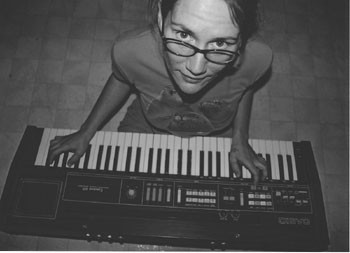
Cottage Industry: Karry Walker set up a studio in her bedroom and worked for over a year honing the sound for her new album.

Before the Maybelline Years

Karry Walker is Ultralash and Ultralash is Karry Walker

By Sara Bir

Karry Walker spent a year constructing a miniature sonic wonderland in her house, and when she was done, she wasn’t Karry Walker anymore– she was Ultralash.

Ultralash is the name of Walker’s new project, and it’s also the name of her first album since her 1999 debut, Lipsbury Pinfold. Those familiar with the Karry Walker of Lipsbury will still see some of the old Karry Walker in Ultralash–the singer-songwriter whose voice glimmers over songs tinted with electric ambiance–but there’s something new, a door opened or a lock busted off, that’s happened to Walker’s musical sensibility since then.

Ultralash is an exquisite collection of gently tweaked-out songs which, in their subtle way, begin to burrow under your skin with the first listen. It’s like an audio collage of an old photo album that was found in someone’s trash, with random tidbits from a handful of stranger’s lives.

Almost all of Ultralash was recorded in Walker’s home–she lived in Petaluma at the time–and it has that kind of deep bedroom sound to it, quiet and small and full of spooky noises.

“It took a year, a year and a half to do everything. I spent a lot of time writing and abandoning stuff. After the third song that I recorded, I realized that I was going in a direction soundwise, and I felt like I had dialed it in. I just totally took off after that; I was doing a lot of writing.”

Ultralash owes a lot of its character to Walker’s use of a small, ugly brown organ called an Optigan that spins clear, floppy plastic disks–about the size of an LP–which are optically encoded with looped, live recordings of real instruments. “It’s the first actual mechanical sampler ever made, and I got it from somebody who found it at the dump for $5,” Walker says. “It was made in 1970 as a toy organ, with a ‘Fun for the whole family!’ kind of image.”

By putting the disks upside down or playing them backwards, it’s possible to make a ghostly, proto-electronica backdrop with a frayed, dusty-attic sound. From the initial beats of Ultralash‘s opening track, “Kitchen Song,” Walker cleverly plants snippets of the Optigan throughout the album.

Lipsbury Pinfold came out on San Francisco’s Ubiquity Records and met with critical success, but it was not as out-there as the rougher, more pared-down new songs that Walker brought the label next.

After Lipsbury, Walker continued to work with Paul Scriver, the album’s producer. Walker’s post-Lipsbury demos with Scriver pleased neither Walker nor Ubiquity, who didn’t care for her noisier direction. Walker, meanwhile, thought the demos were “real poppy and just sort of Starbucks.” So Walker and Ubiquity parted ways.

“Their label is focused mostly toward real slick kind of dance stuff,” Walker says. “I was their first songwriter. They did a lot for me, but when I sent them the demo of the stuff that I did with Paul, they didn’t like it. We both agreed that it probably wouldn’t be a good idea for them to do the next record, and so I left.” Walker more or less abandoned the recordings she had done with Scriver, although she did wind up sampling some key sections, including a swirling psychedelic orchestral buildup on “Flying Colors.”

With her home studio, Walker didn’t need to worry about financing studio time, but once she had recorded all of Ultralash, she needed someone to mix the record for her. “I’m not an engineer,” she says. “I sent tracks on a lark to Roger Moutenot, who’s done Yo La Tengo and Sleater-Kinney . . . and he loved it. He called me and said, ‘What do you want to do?’ I said, ‘I want you to help me with this.'”

Walker flew to Nashville to mix down the record with Moutenot and formed an association that led Walker to her new label, Fictitious Records. “[Moutenot] told me that he was starting his own label for musicians that he felt really strongly about, and he asked me if I wanted to put it out on Fictitious. It’s real small, a little bedroom operation, financed by him–kind of a labor of love.”

At this point, Walker decided to switch to the moniker Ultralash. “I got kind of tired of being Karry Walker,” she says, “and that’s part of the whole change too, and realizing the possibilities in recording and becoming more of a producer. I’m just having a blast making music, and I want it to go into any direction that it wants to go. As a singer-songwriter, I felt really confined, and I decided to open it up a little bit.”

Walker’s participation in the Immersion Composition Society, a renegade group of avant-gardish musicians based in Oakland, played a large role in expanding Walker’s outlook as a songwriter. The collective of speed composers spend a day every two weeks independently pounding out as many songs as possible, and later that evening they meet up for listening parties to hear the day’s output. “We do our best to write as many songs as possible that day: write, track, record, and mix sound,” Walker says. “They’re not necessarily songs; they’re compositions. Sometimes it’s just three seconds of ‘Waaaaaaaaa!’ There’s a lot of crap, but some of it is really cool. Two of the songs on Ultralash are Immersion compositions. ‘Cabernet’ I wrote in 45 minutes.”

“Cabernet,” a song that trembles like a baby bunny in your hand, has a slip of a backwards-skipping record wash in the background (the Optigan again) against Walker’s enchantingly offhand lyrics, delivered in a soft singsong warble (“If you made a meal of me, / I’d taste like Brie and Cabernet Sauvignon”). It’s those 45 minutes out of Walker’s life frozen like a slide to be projected on the wall, a song that would have been destroyed in the scrutiny of more traditional songwriting.

What does Walker mean by Ultralash, anyway? The phrase pops up in “Flying Colors,” a song Walker wrote about a girl she’d see around Petaluma. “What I think of as perfectly ultralash is this girl that was riding right in front of my house–about 13, 12–and she was riding this lowrider bike that she had to sit way back on. It had a banana seat, and she was way too big for this bike. She had really pale skin and freckles and red hair that was streaming behind her.

“She was in this place in her life that I look back and remember as that place right when you’re standing on that precipice of becoming really, really self-conscious and worried about boys and makeup and you’re not happy inside your body. For me that happened around 10 years old, and before, I wasn’t like that; I was more like a boy. That’s that tender age that I call ultralash, as opposed to Maybelline–that’s when you start worrying about all that stuff, and you start doubting your own abilities and what you are supposed to be doing as a girl. Before that, you’re more like a supergirl.

“My mother was ultralash. She’s a professional golfer now. She was able to maintain that spirit without getting caught up in what people thought about her.” Walker shows me a black-and-white photo: a little girl in cowboy boots and hat, toy gun in hand, pointed straight at the camera. The girl is Walker’s mother, who taught her to play the guitar.

There’s more than bit of ultralash in Walker too. “I’ve always been a solo artist. It’s a control issue,” she laughs. “When I write something, I hear all of the parts.

“I’m just really grateful that I’ve had people that are willing to give me money to make a record or at least put it out. And I don’t mind working day jobs as long as I can do what I do and not have anybody else tell me what to do.”

Ultralash‘s CD release is on Sunday, Feb. 16, at 9pm at the Old Vic. Marin freak-pop quintet 20 Minute Loop play at 10pm. $3. 731 Fourth St., Santa Rosa. 707.571.7555. Ultralash plays Thursday, Feb. 27, at 7:30pm at Tall Toad Music, with Danny Pearson and his Oblivion Seekers. Tall Toad Music, 43 N. Petaluma Blvd., Petaluma. 707.765.6807.

From the February 13-19, 2003 issue of the North Bay Bohemian.
© Metro Publishing Inc.

‘How to Lose a Guy in 10 Days’

0

Buy ‘Road Comic: Heartbreak, Triumph and Obsession on the Comedy Circuit’ by Barry Friedman.

Buy ‘Chasing Rainbows: Collecting American Indian Trade & Camp Blankets’ by Barry Friedman.


Photograph by Michael Gibson

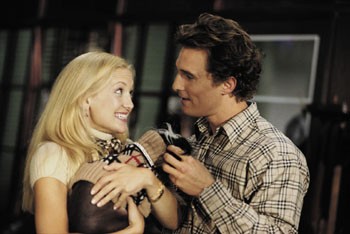
Boo-Boo Face: Kate Hudson consciously breaks all the rules in an attempt to drive Matthew McConaughey away.

Name Game

A comic discusses women, nicknames, and ‘How to Lose a Guy in 10 Days’

Writer David Templeton takes interesting people to interesting movies in his ongoing quest for the ultimate postfilm conversation. This is not a review; rather, it’s a freewheeling, tangential discussion of art, alternative ideas, and popular culture.

Barry Friedman is dying.

He’s just seen How to Lose a Guy in 10 Days, the new romantic comedy (read: chick flick) starring Matthew McConaughey and Kate Hudson. It’s about a bachelor (McConaughey) who, having bet his boss he can stay with any one woman for 10 days, unknowingly chooses the sexy writer (Hudson) whose latest assignment is to land a man and then scare him off by making all the classic mistakes–such bad moves as calling him her boyfriend on their second date, publicly chattering in high-decibel baby talk, and brazenly loading his medicine chest with tampons and (Jesus Christ!) vaginal creams.

In short, it’s the kind of movie that Friedman–and about a million other guys–would normally endeavor to stay at least 15,000 miles away from.

Which is precisely why Friedman, a Los Angeles-based writer and standup comic, is currently dying–of embarrassment. He’s been forced to admit that How to Lose a Guy was, damn it, kind of good.

“I hate myself for saying it,” says Friedman, “but it wasn’t nearly as hateful as I was prepared for, not nearly as despicable as I’d expected, and not nearly as lame as it could have been. It was smart and funny, kind of a modern miracle–a chick flick that won’t offend guys.”

Friedman, a staple of the L.A. comedy-club scene, is an award-winning syndicated columnist, a longtime writer of television comedies, and the author of two books: Road Comic: Heartbreak, Triumph and Obsession on the Comedy Circuit and Chasing Rainbows. The first is an autobiographical behind-the-scenes romp through the seedy hotels and comedy clubs that are a comic’s daily existence.

The second–the Rainbow book–is a big, expensively produced coffee-table job devoted to Friedman’s other, somewhat less likely obsession: American Indian blankets. He’s so filled with enthusiasm for the woven wonders that he keeps slipping little Indian-blanket remarks into his conversations.

It’s cute. Not unlike the way Kate Hudson keeps introducing the phrase “Boo-Boo Face” when addressing McConaughey in front of his buddies. In offering his chief criticisms of How to Lose a Guy, Friedman excitedly states, “Did you notice there wasn’t a single Indian blanket in the whole movie? Not a hint of a blanket draped over McConaughey’s furniture.

“On an Indian-blanket basis,” he adds, “this movie was a total failure.”

As for the film’s many insights into male-female relationships, Friedman was impressed by the hellish laundry list of assaults that Hudson deploys in trying to lose her guy. On the other hand, this is Kate Hudson, the very picture of adorable sexiness. Would any display of boo-boo talk or spontaneous weeping be enough to make a guy toss a hottie like Kate Hudson out of bed?

“The Celine Dion concert would have done it for me,” says Friedman. He’s referencing a scene in which Hudson tricks McConaughey into going to a Celine concert. Another funny moment comes when McConaughey realizes she’s given his penis a nickname: Princess Sophia.

“Not a name any guy wants his penis to have,” Friedman laughs. “And I know a lot of guys who’ve nicknamed their penises. A penis without a name is a very lonely penis. I have one friend who calls his ‘Mr. Hollywood.’ Best penis name I’ve ever heard.”

And what’s the worst penis name he could imagine?

“Other than ‘Princess Sophia?'” Friedman laughs. “How about ‘Celine Dion?’ Now that would be a lonely penis.”

Barry Friedman will be signing books–and talking about blankets–at the Marin Indian Art Show, Feb. 22-23, at the Marin Center Exhibit Hall in San Rafael. 415.472.3500.

From the February 13-19, 2003 issue of the North Bay Bohemian.
© Metro Publishing Inc.

‘A Dream in Hanoi’

0

Buy the ‘Midsummer Night’s Dream’ script by William Shakespeare.


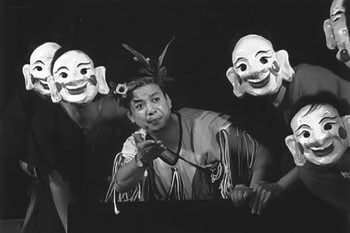
Perchance To Dream: Tuan Hai (center) plays Puck in the plagued production of ‘A Midsummer’s Night’s Dream,’ documented in ‘A Dream in Hanoi.’

Sharing the Stage

‘A Dream in Hanoi’ follows two theater companies’ onstage–and backstage–drama

By Sara Bir

“All the world’s a stage,” the old bard Shakespeare famously wrote, “and all the men and women merely players.” The subjects of Tom Weidlinger’s documentary A Dream in Hanoi probably mulled over this snippet in their heads as cameras filmed the rocky journey of two theater companies–one American, one Vietnamese–bringing A Midsummer Night’s Dream to the Vietnamese stage for the first time. The result is a story not only of a play coming to life but of cultural ideals sparring, meeting, and melding.

In the fall of 2000, the U.S. Embassy in Hanoi and the U.S. State Department, along with the Vietnam America Theater Exchange, set up a collaboration between the Central Dramatic Company of Hanoi and the Artists Repertory Theater of Portland, Ore. The play, produced in Hanoi, combined Western and Vietnamese theatrical traditions and was performed in both Vietnamese and English.

Besides the obvious language barrier, challenges were not short in arising. Co-director Doan Hoang Giang, one of the most respected directors in Vietnam, had some ideas that didn’t sit too well with his American co-director Allen Nause and dramatist and co-producer Lorelle Browning, including giving the fairy Puck a gang of six drumming, masked servant boys to trail him onstage.

Meanwhile, the American actor who played Lysander broke new theatrical ground by initiating kissing onstage–taboo in Vietnam, where public modesty prevails. Kirsten Martha Brown, who played Helena, found herself at odds with Giang and her Vietnamese co-star Do Ky; Brown envisioned her character as headstrong, loud, and graceless, while Do Ky maintained that in Vietnam “no man could fall in love with such a woman.”

Meanwhile, the play suddenly loses its opening-night venue, the grand Hanoi Opera House, and the Americans panic, feeling that the Vietnamese (for whom the slow-motion hurdles of dealing with their government are a fact of life) aren’t acting briskly enough. Then the cash-strapped company finds out that their opening-night ticket revenue won’t come through, because the government censors must first attend the play–and they must attend for free.

The bulk of the drama in this drama is backstage. It’s interesting that the tension between the collaborators is a result of everyone’s own commitment to a vision of quality. It’s that kind of tenacity that makes a great artist, but it’s that kind of tenacity that makes the realization of vastly different concepts from vastly different cultures so demanding.

Weidlinger’s viewpoint from behind the camera is objective, showing us tears of frustration and joy falling from both Vietnamese and American eyes. Equal screen time is given to triumphs as it is to the many tribulations. Weidlinger often cuts back to the dramatic action in the play itself throughout the film, making the proceedings a drama-within-a-drama that builds the film’s momentum toward opening night.

F. Murray Abraham’s narration is minimal and unobtrusive, and there’s plenty of evocative National Geographic-style shots of Hanoi street scenes to set the tone.

Anyone who has found herself in an intense, closed environment with strangers can easily identify with the dynamics of misunderstandings, compromises, petty arguments that become huge, and the strength of unlikely friendships. This film speaks volumes to any audience that’s been through a chaotic whirlwind of personalities and viewpoints and come out the better for it.

A Dream in Hanoi screens this week at the Sonoma Film Institute and Rialto Cinemas Lakeside. Maureen Gosling, the film’s editor, will appear at the SFI screening. See for showtimes.

From the February 6-12, 2003 issue of the North Bay Bohemian.
© Metro Publishing Inc.

Guy Clark

0

Buy Guy Clark’s ‘The Dark.’

Buy ‘The Essential Guy Clark,’ which contains both the ‘Old No. 1’ and ‘Texas Cookin’ ‘ albums.


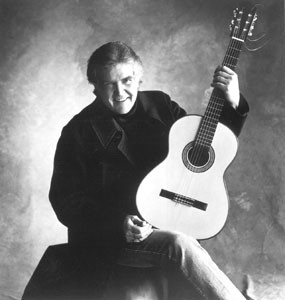
Weaving Tales: Guy Clark’s latest release, ‘The Dark,’ deals with loss, love, and friendship.

Lone Star State of Mind

Guy Clark joins songwriter’s circle at LBC

By Greg Cahill

“Growing up in West Texas, the first thing you get is a pocket knife and a whetstone,” says singer and songwriter Guy Clark in a soft, Southern drawl, sipping a morning cup of coffee during a phone interview as he explains his interest in guitar building. “All you need is the end of a fruit box, and you can make all your own toys.”

“During high school,” he adds, recalling his stint as a carpenter’s helper in the sweltering Gulf Coast town of Rockport, Texas, “I had a summer job at a shipyard, building the last big wooden shrimp boats that were made before they switched over to steel. Those guys were master craftsmen and carpenters. Just to watch them work was a life-changing experience–seeing the finesse and the way they went about it. Their attitude was ‘faster is not better.’ I try to take that same approach with my songs, with quality taking precedence over quantity.”

Sure enough, Clark–who has been hailed as everything from “the common man’s poet laureate” to “the 13th Apostle”–has recorded just a dozen albums in the past 28 years. His songs are front-porch simple, often tinged with sadness and resignation and just a hint of hope.

“He remains the kind of songwriter,” the All Music Guide notes, “whom young artists study and seasoned writers (and listeners) admire.”

Three of those seasoned songwriters–Lyle Lovett, John Hiatt, and Joe Ely–will join Clark onstage next week at two sold-out shows at the Luther Burbank Center in Santa Rosa.

While Clark isn’t exactly a household name, his songs–including “The Last Gunfighter Ballad,” “Desperados Waiting for a Train,” “Heartbroke,” and “Oklahoma Borderline”–have scored hits for such country luminaries as Ricky Skaggs, the Highwaymen, Vince Gill, and Rodney Crowell. Progressive country singers and songwriters like Crowell, Lovett, and Nanci Griffith often cite Clark as a major influence.

Few in the country genre have the same knack for storytelling as Clark, whose folksy vignettes and character studies often resonate with a gritty realism reminiscent of the novels of John Steinbeck. “A lot of my songs are based on real people, although there’s a certain amount of dramatic and poetic license, which I assume I’m entitled to take,” he explains with a laugh.

In the past, those songs often spoke longingly of broken lives and unfulfilled dreams. For instance, “Let Him Roll,” from his classic 1975 debut Old No. 1 (Sugar Hill), tells the story of a flophouse elevator operator and dying wino who’s been jilted by a Dallas whore. It was inspired by a salty merchant seaman named Sinbad whom Clark and fellow Texan Townes Van Zandt had once met in a Houston bar.

His most recent album, The Dark (Sugar Hill), is filled with sparsely produced, simple ruminations on a world-weary homeless veteran, the death of a beloved dog, and growing old gracefully. The lone cover song is “Rex’s Blues” by the late Van Zandt.

“I love his songs,” Clark offers. “I’ve always sung them, and I probably always will.”

The reflective nature and recurrent themes on The Dark–loss, love, and friendship–and the fact that the album was released on the first anniversary of the 9-11 terrorist attacks, has led some critics to assume that it’s a concept album inspired by the events of 9-11.

That surprises Clark.

“The title song is a little deceptive because it actually is a positive, upbeat song,” he says. “It’s about all the stuff you can see in the dark but never realize. Certainly there was no intent on my part to write a concept album. My approach to making albums is to get 12 good songs and record them. And the common denominator is me. My taste in songs is the thread.”

And his West Texas roots are close at hand. The source of that inspiration is the vast West Texas prairie, a spiritual touchstone where Clark visits families and friends and “savors the real barbecue” sold in local rib joints.

“Being a songwriter, there’s a certain independent stance you have to take–you’re not copying other people’s songs, you’re trying to create something of your own,” Clark says. “That’s the kind of thing you’re raised with in West Texas, or any other part of Texas–that you can do anything you put your mind to. After all, we’re just two or three generations away from being an independent nation in the Lone Star State. You’re imbued with that spirit growing up, and I think it spills over into songwriting as well as a lot of other fields of endeavor.

“You just can’t get rid of that.”

From the February 6-12, 2003 issue of the North Bay Bohemian.
© Metro Publishing Inc.

Suzanne Sterling

0

Buy Suzanne Sterling’s ‘Bhakti.’


Endless Devotion: Suzanne Sterling encourages community-building at her performances.

Breaking the Rules

Musician Suzanne Sterling finds her audience

By M. V. Wood

People don’t usually find themselves as a result of going to Los Angeles. Oh, perhaps they might find a part for themselves there–like, say, a new cleavage or something. But “finding oneself” on the deep philosophical and spiritual level is what folks from L.A. come to the Bay Area for, not the other way around.

Musician Suzanne Sterling has always been a creative free spirit who does things her own way. So when she left the North Bay and moved to L.A., she discovered yoga. That led to a deeper sense of spirituality. And that led to a new musical path. Instead of the folksy music she played with her former band, Sky Clad, she found her true voice in performing “devotional music,” she says.

This new voice didn’t find the most responsive audience in the typical venues of bars and nightclubs. “It’s not the kind of music best appreciated by a bunch of drunk, rowdy people,” she explains. So Sterling made her way back home to the North Bay where she could find more appropriate outlets for her devotional sound, which is influenced by Middle Eastern, Indian, and Celtic music. But because she sings in English instead of Sanskrit or Turkish or Persian, the lyrics are “unabashedly devotional and accessible,” she says.

On Saturday, Feb. 8, she and her band Bhakti (which means “the path of devotion” in the yogic tradition) will headline the Love and Justice II concert, which features over a dozen performers, including locals Copper Wimmin and Joanne Rand, plus San Francisco’s 87-year-old grand dame of folk music, Faith Petric. The show will benefit Equality Now (www.equalitynow.org), an international organization that works to end violence and discrimination against women and girls, including the practice of genital mutilation.

The evening begins with readings by contributing authors from That Takes Ovaries! Bold Females and Their Brazen Acts, a collection of stories from women and girls recounting times they pushed the boundaries and broke the rules. Audience members are invited to share their own true tales.

“I love playing at concerts like [Love and Justice], because the audience is open to this music,” Sterling says. Her sound might be reminiscent of New Age music, but these aren’t the kinds of songs you want to get a massage to. This is music for dancing.

Dance is important to Sterling because, in the same way that she believes spiritual paths need to be created and not simply followed, she thinks musical performances should be interactive. “I like to get away from that idea that a concert is something in which a bunch of people stare up at the performer.” Sterling instead tries to inspire interaction, dance, and ritual at her performances. And with a long history as a priestess for an earth-based religion (she doesn’t call it pagan or Neo-Pagan because that might be too limiting), Sterling has a lot of practice in rituals.

In the past, she’s had audience members come up onstage, walk around a cauldron, and announce their intentions for the future. Other times, she’s asked them to introduce themselves to their neighbors and have a chat. Sometimes she leads the crowd in a guided visualization.

“I can’t create the path for others, but I think I have a few tools I can give out to help people find their own direction,” Sterling says. “Hopefully, I can help others create their own magic.”

Sterling believes that finding one’s own path is a birthright many are claiming these days.

“People are becoming disillusioned with organized religion,” she says. “Not only in the sense that there’s a lot of power and corruption there, but people want to be their own spiritual authorities. I think most people are spiritual, and they don’t believe in anyone telling them what that spirituality is supposed to look like. And there’s really no precedence for that kind of free thinking on this large of a scale.”

Yet the desire to forge one’s own way doesn’t preclude the need for unity, she adds. “People are longing for that experience of connecting with others. And that’s what I try to inspire during a performance–that sense of community, of all of us being in it together.”

The Love and Justice II benefit runs 6pm-midnight Saturday, Feb. 8, at the Sebastopol Community Center, 390 Morris St. Suggested donation is $15 to $25 (no one turned away for lack of funds). Children under 15 are admitted free. 707.874.9459.

From the February 6-12, 2003 issue of the North Bay Bohemian.
© Metro Publishing Inc.

Family Values

0

Buy the ‘Princess Bride’ DVD (special edition).

Buy the Beach Boys’ ‘Pet Sounds,’ which includes ‘Wouldn’t It Be Nice.’

Buy Cyndi Lauper’s ‘She’s So Unusual.’

Buy Whitney Houston’s self-titled 1985 debut album.

Buy the ‘Funny Face’ DVD.


Family Values

With a firm thumb at tradition, marriage gets put on hold

By Davina Baum and Sara Bir

It’s not that true love has changed. True love probably never changes. It’s true, after all. It’s the accoutrements of true love that change. The gender expectations (how a girl and a boy behave; how two boys or two girls behave; indeed, how three girls and a boy behave), the sex, the registry list (an Amazon.com registry? Or REI?), the living situation.

As the impressive clergyman in the film version of The Princess Bride–tongue-tyingly played by Peter Cook–so eloquently said, “Mawidge . . . mawidge is what bwings us togewer today . . .”

It does, it brings us together. But it also separates us in how we approach it, compared to previous generations. As times change, so do traditions, and marriage, though not quite on the chopping block, isn’t the Holy Grail of true love that it once was. Here, for this rather introspective Valentine’s Day issue, we look at two perspectives on a girl’s big day, prolonged.

Prewedded Bliss, Part I: Living Together

Over the years, the naughtiness has shed from living in sin. In our present cultural climate, it’s not even sinful. Not that it matters much to begin with. For many couples, it’s just a fact of life, put into being by a series of circumstances–rent, careers, companionship, love. Ideally, love.

But what’s so bad about making it official? “When I was young, people just didn’t do that,” a relationship expert otherwise known as my mother reminds me. “A couple would never, ever just live together.” In forgoing the courtship for the convenience of cohabitation, she says, a couple misses out on that anticipation, the other side of the rainbow to come, the longing the Beach Boys expressed so sweetly and sincerely in “Wouldn’t It Be Nice.”

I can see her point: if two people are serious enough about each other to share their snoring habits, dirty underwear, and utility bills, why not get the papers to prove it? I can also see that in love and war, things are not always best done by the book.

There is more at stake in being married than . . . well, than just being married. To get married, a couple must first have a wedding, a wedding that is built up to be the opening of a door to a wonderland, a wonderland of fluffy monogrammed towels and gold-rimmed Noritake dinner service for 12 (used once a year, if that) and deluxe barbecue accessory sets.

Marriage, it seems, is a step that leads not only to the union of two souls but also to a jackpot of material goodies necessary for a refined middle-American life, and what follows it must be a small and brand-new starter house to hold all of it. Once again, my mother: “After your father and I first got married, we lived on the Air Force base in a little one-room A-frame cottage that had been built as temporary housing for the state fair. I cooked all of our meals in an electric skillet. Oh, it was a wonderful time.”

We, my mother and I, often rail against the excess of modern marriage. “You enjoy each other more when you have less,” she’ll say. Then I’ll say, “And you’ll have fewer credit problems and more time to spend with each other. Newlywed bliss!”

Living in sin eschews all of those burdensome material gains and puts an inversion on the delights of one couple, united, living on the cheap. Instead of first marrying and getting a little economy apartment together, my boyfriend and I moved me into his little apartment, so we get to revel uninterrupted in our prenuptial joy, making furniture out of asparagus crates and marveling in awe at the collective mass of our books, which make their home in piles on the floor along the wall.

We have one cereal bowl and four dinner plates, none of which match. Nor do any of our sheets. It’s lovely, and someday, after getting married, it won’t be like that, not as much. My parents went from their one-room A-frame to a three-bedroom house with a basement full of old dishes, pots, pans, Christmas decorations, computers, clothing, toys, model trains–you name it. They’d probably go back in time if they could, before my brother and I were around and both spare hours and crazy fun were in greater supply (and I guess they could, sort of, because all of the furniture and the electric skillet from the first years of their marriage is still in the basement).

I love living with my boyfriend; it’s so idyllic. We are not at that worn-in point with each other yet, and simple stuff, like deciding where to put up new posters, is still exciting. We have hours of sleeping in, only a few rooms to clean, dinners that are not rushed, someone always around to hold a nail that needs pounding into the wall–and no kids and no mortgage payments. Everything good is ahead of us, and everything good is happening now. Why would anyone want to rush out of this?

Marriage itself is not intimidating–it’s the ceremony of it, the wedding. Which is silly. A wedding is just one day, while a marriage lasts (theoretically) a lifetime. A marriage is a living, organic thing that demands an investment of self, and of time and love and understanding. As for a wedding, it can be seen as a one-off investment of cash and tedious planning, of agonizing decisions over which fonts to use on invitations and what color of bubble blowers to pass out to the guests.

Weddings are fun, especially when they are not yours. All you need to do is show up, eat the entrées from the chafing dishes at the buffet, drink midrange Chardonnay, and dance a little bit. Being a member of the wedding party is even better, if you have a short and witty toast, and a spare $150 for a periwinkle-blue dress you’ll never wear again, no matter how pretty it is.

It’s putting on the shebang that’s the big deal, a package deal of common yet senseless conventions. Like this wedding candle business. What does lighting a big, fat, white candle have to do with getting married? And vows: vows, important vows that will set the tone for the rest of your life, must be decided upon. Or written.

The violinist who will play a tasteful version of “Always” must be located, and the vocal soloist, and the terrible egotistical DJ who sees the wedding reception not as a wedding reception but as his own personal variety show. And thousands of dollars must be spent to provide a venue for a douche bag to play “Mony, Mony,” “I Will Survive” (what does that song have to do with weddings, anyway), and “The Chicken Dance.”

True, there are weddings replete with wedding candles, tedious vows, and bad DJs that are beautiful and perfect and moving. All of these things ultimately do not matter, because it’s about the couple, and if they really mean it, everything that’s awful or wonderful melts away and it’s just the bride and the groom and the significance of their commitment. As it should be. But it seems that some couples get married not to be married, but so they can have a wedding.

When my best friend and I were young, we played with our Barbies at every possible moment, and our Barbie dolls must have renewed their wedding vows with their Ken doll husbands a hundred times. It was one of our favorite Barbieland scenarios. We’d dress our Barbies up in their wedding gowns, do their hair, set up the Barbie Wedding Playset with the little plastic three-tiered cake, and march our dolls down the aisle.

After the ceremony, we’d put on the cassette tape of Cyndi Lauper’s She’s So Unusual, and they’d have a big dance party. Then they’d listen to the first Whitney Houston solo album and make sweet love all night long.

There’s no point in lying. Like many women, I enjoy fantasizing about my wedding, though it’s pretty vague except for a few clear details: I’m wearing the dress that Audrey Hepburn wore in Funny Face, the ceremony is short and sweet, and my boyfriend will have gotten a haircut just for the occasion. Everyone is glowing with smiles. The reception is a big party. We have simple, white cakes and a procession of lovely cream pies, both of which I will have made myself. Our friends’ band plays (a postrock wedding!), and all of the guests are happy, so happy. They go on drinking Veuve Clicquot and Pabst Blue Ribbon until dawn.

Joe and I spend our wedding night in the Caveman Room at the Madonna Inn in San Luis Obispo. Then we get back and everything is the same as before, only we have gold bands on our ring fingers and I sign my name differently.

Not for now, though; we’re not even engaged. Too poor, too cheap, too wishy-washy, too satisfied with the way things are. A wedding is scary. Sometimes I’d like there to be a wedding pill, and after taking it–poof!–you’d be married.

But that seems beside the point too–that if you are going to plunge into marriage, you need to do it full-on, wedding and all, because a wedding does change things, as they say, for better and for worse. Until then, I’ll be satisfied if, looking back on this sinful era someday, I will think of these years as happy and carefree. Which is what they feel like now, and hopefully will after my boyfriend and I get around to getting married.

–Sara Bir

Prewedded Bliss, Part II: Living Apart

We lived together once, and it was bliss. Then we got engaged. Soon after, I packed up my CDs and my cat, and moved out.

It wasn’t for some quixotic attempt at revirginization, though perhaps if I found religion, I would feel more at peace about the decision. It wasn’t because we argued or decided we needed more time or couldn’t deal with each other’s personal hygiene. In fact, we’re still engaged–but now I live 50 miles away. The wedding has been put off, and as a result, our life together is on hold.

Our lives apart are, however, rollickingly good. I chose my career over my fiancé, and it’s working out great.

It’s terribly practical, of course. A paying job in today’s economic climate is not something to take lightly. Nor is a career move and the opportunity to advance. But since when does practicality play a role in love and romance? Since I grew up.

This is new to me, the understanding that practicality and romance can exist at once. It is difficult, now, to understand why I thought that the mentally unstable and alcoholic carpenter made a good match for me. Or the Russian souvenir hawker who didn’t speak English and had an aversion to condoms.

It’s all so clear in hindsight, now that I’ve found the man I want to marry for real. I can’t imagine it being any other way.

Except for the niggling details of our living situation.

The reality of this modern world is that relationships and marriage are often relegated to the passenger seat while career sits hard-headedly in the driver’s seat. According to a recent “State of the Nation” report in The Atlantic Monthly, the paradigm of the single-earning household has been firmly jettisoned, and now, more often than not, a household consists of two workers.

While the two-earner household has deep repercussions for many aspects of our social and political safety net, it also speaks to the increased wage-earning role for women. Though this was established two decades ago, the changing paradigm now affects a new generation–namely, me.

Me, the terribly unambitious woman who had the opportunity to take on a great job at the expense of her relationship–and took it.

I thought at first that the compromise was obvious. His job wasn’t as good as mine; he wasn’t happy and I was. Therefore, my job wins and he moves here. It seemed practical at the time, resplendent in stark black and white–because, after all, how could we have a relationship if we only saw each other two days out of the week?

I scrambled to come up with job possibilities for him, and I presented them with great excitement. I made contacts and talked him up to his potential new employers. And he politely ignored me, plugging away at his beleaguered dotcom, barraging me with stories of how he was underappreciated and overworked. Then, somehow, the practicality kicked in.

Despite the problems, he loves what he does and he believes in the company. He loves the city: the sunny apartment that he’s lived in for seven years, biking to work, playing pickup basketball in the Mission. Is it fair of me to pull him away from that, to make him either quit his job or suffer the nightmare of commuting?

Financially, living apart is no good. We both pay separate rent, phone bills, utilities. We both spend too much on gas, a resource that, as any patriotic American knows, needs to be reserved for the military planes. I spend too much money on takeout, since I no longer have his kitchen prowess at my fingertips.

But it’s turning out OK. We have a city house and a country house–just like rich people! Though we spend most weekends in the North Bay, there’s always a house to crash at if we decide to go to the city for a night. Sunday nights, when he leaves, are lonely and depressing. But I know exactly what buttons to press to turn on the television, my surrogate lover. (My shame at this obvious weakness for empty entertainment is trumped, every so often, by my need for, well, empty entertainment in lieu of his unempty company.)

The truth is, if the standard paradigm of love and marriage doesn’t work, then it need not be applied. There are any number of ways that couples make do now–in these progressive times–that the dual shackles of morality and religion are loosened. Couples are living together longer, prolonging marriage and baby making, while ambition and career take precedence.

Though my East Coast friends started pounding the marriage drum themselves years ago and are now getting started on the babies, most people I know are waiting longer to get married. Statistics bear this out. The average age for a first marriage is creeping higher and higher as young professionals (urban or otherwise) focus on career before relationships.

It’s not ideal, by any means. But it’s livable for now, and–above all–it’s practical. The wedding, the gateway to our future life together (really together), sparkles in the distance.

I’m tired of being asked when he’s moving up here. I’m tired of having a fractured social life: single during the week, part of a couple during the short, short weekend. I’m tired of the implications that our relationship will not last if both of us remain romantic martyrs to our careers.

I think about the wedding often. It’s just as untraditional as our situation is now. I picture it as a huge party–no white dress, no walking down the aisle, just champagne and sun and friends and family.

I suppose I no longer see it as one or the other. The relationship is secure, though the distance is certainly a test. My panic attacks at not knowing where he is have abated somewhat. If a terrible accident took him away from me tomorrow, I doubt that I’d see my sacrificing my job for him as worthy (and learning not to think this way is part of the process). But, barring disaster, a girl’s got to do what a girl’s got to do. And that, if nothing else, can stand as a rallying cry for an unmarried generation.

–Davina Baum

From the February 6-12, 2003 issue of the North Bay Bohemian.

© Metro Publishing Inc.

Randy Hussong

0


Objects Of Affection: Randy Hussong’s work incorporates cars, beer, and bras–perfect fodder for a fetish show. Shown: ‘Bra for a Legend, or Does Madonna Drive an Acura?’ (1991)

Obsession

Artist Randy Hussong is inspired by the good things in life

By M. V. Wood

It’s not easy being a hot-rod-loving, beer-drinking kinda guy in Napa Valley. But if you put your mind to it, it can be a helluva lot of fun. Randy Hussong, one of nine artists whose works will appear in the di Rosa Preserve’s exhibit “Fetish: Objects of Power and Desire,” has been having a good time as the oddball artist of ritzy St. Helena. He says one of the best parts about living there is that, as a faculty member in UC Berkeley’s art department, he’s able to “get out of here three times a week and go to Berkeley. That’s my sanity.”

Nah, just kidding. Even though Hussong feels he doesn’t quite fit in, he likes his community and believes it’s a good place for him and his wife to raise their seven-year-old son. Plus, the wine-snob aspect of the area inspires lots of chuckles. And that’s a good thing, because Hussong considers his sense of humor to be one of the driving forces behind his art.

Take, for example, the concrete beer bottles he’s been handing out as gifts. “My wife and I kept getting invited to all these fancy parties, and everyone was showing up with these expensive bottles of wine,” he says. So Hussong created the cast beer-bottle sculptures and gave those out instead. As the bottles began appearing in the homes of the elite, gift shops and galleries took notice and began carrying the artwork.

Hussong has so far created over 700 beer bottles, and they’re strewn throughout the wine country. Sometimes he’ll drive by a house and see one as part of a flower-bed arrangement. He’s shown up at parties and seen his artwork proudly displayed on pedestals. Once, he came to the dinner party of someone who’d received a bottle as a gift from someone else and didn’t know who the artist was. “They were using it as a doorstop,” Hussong says with a laugh.

“I love that whole question of high art and low art. Is a concrete beer bottle high art or low? Should it be on a pedestal, or should it be a doorstop? Is winemaking high art? Is beermaking low art? I like to challenge people’s notions of what art can and cannot be.”

And the fact that the word “Clone” is cast on the bottles opens a whole new can of worms. Perhaps the word is there because, as Hussong says, “I make my own homemade beer, and you have to use one batch to pitch the next, like you would with sourdough bread, meaning that each batch is a clone of the last. So if you know anything about the art of beermaking, you know the word ‘clone’ could signify that.”

Or maybe the word is there because “all the snooty wine snobs like to talk about the wonderful complexities of wine, but in their eyes, all beer tastes the same. To them, beers are all clones of each other.”

Hussong’s work isn’t all about beer, though in general much of his art plays with multiple meanings. For example, his piece in the di Rosa show is called Bra for a Legend, or Does Madonna Drive an Acura? (1991).

First, he purchased from the manufacturer a car bra made specifically for an Acura Legend. (A car bra is a cover, usually made of black vinyl, which protects the front bumper.) Of course, the factory had embossed the accessory with their logo, so it says “Legend” in the middle.

Next, Hussong created two cone-shaped protrusions on each end of the bra and added some metal studs. Keep in mind, he made this particular piece during Madonna’s heyday. And who can forget that legend cavorting about onstage with those cone brassieres? A fetish if there ever was one.

A fetish is an object regarded with extreme reverence or devotion. The “Fetish” exhibit has it all: artworks that explore the fetishism of perverse sexual fixation, of consumer goods, and of sacred and secular devotional items. The show’s curator, di Rosa curatorial assistant Ben Cooper, says the show suggests “the fertile potential of our personal and cultural obsessions to become raw material for powerful and engaging art.”

The di Rosa Preserve has nine of Hussong’s works in its collection, and seven of them, including Bra for a Legend, have something to do with cars. “I’m California born and bred,” Hussong says. “I was raised in the ’60s, and my dad took me to all those drag races and car shows. Car culture is a big part of my life.” It’s also, by extension, a big part of his art. His conceptual sculptures are often marked by references to cars and car culture as a way of exploring popular culture in general.

Before Rene di Rosa ever heard of Randy Hussong, the artist had heard about him. “Back then I was living in San Francisco, and all us artists knew about Rene because there weren’t many serious collectors in the area,” Hussong recalls. “But he and Veronica [di Rosa’s late wife] hadn’t started the Preserve yet, so the collection was still private and not easy to get to see.”

One day Hussong learned that the di Rosas were throwing a political benefit. The $50 ticket included a viewing of the collection, so Hussong’s mother-in-law bought tickets for the artist and his wife.

“I felt so out of place at that thing,” Hussong recalls. “It wasn’t at all an art crowd. I just kind of kept quite and to myself most of the night. And then Rene pulled up in his Rhinocar and I thought, ‘What a hoot!'”

The 1976 Oldsmobile, which has the head of a rhino for a hood ornament, is covered with all types of knickknacks and is the work of Petaluma artist David Best.

Di Rosa then gave a short talk, Hussong says, and all the while he kept bending over and picking up nails that had fallen on the gravel during some earlier construction.

Later in the night, Hussong says, “Rene was pouring wine, and on the wall behind him, written in black crayon, was ‘The Act of Drinking Wine with Friends Is the Highest Form of Art.’ So I mentioned that that’s suppose to say ‘beer,’ not ‘wine’–‘The Act of Drinking Beer with Friends Is the Highest Form of Art.’ It’s something [conceptual artist] Tom Marioni created back in 1970. When I said that, Rene’s eyes lit up. I could tell he was thrilled to be able to talk with someone who knew something about art.”

What Hussong didn’t know is that di Rosa once felt as out of place in wine country as Hussong did. Growing up with a decidedly un-WASP-y name amid the East Coast prep schools, di Rosa ended up gravitating to the artists and bohemians on the other side of the tracks. Years later he moved to the Left Bank in Paris “and felt very much at home in the heart of bohemia,” he says. “I sat at the outdoor cafes and drank wine with [Jean Paul] Sartre and Simone de Beauvoir.”

But the twists and turns of life led di Rosa to Napa Valley. “And I missed the life I had. So I had to seek out new friends.” And that’s how he came to meet artists and then collect art. As he grew older and wealthier, di Rosa decided to use his time, money, and energy to encourage and sponsor artists in the region.

Right after that di Rosa benefit, Hussong went to the hardware store and bought some handlebars, a pole, some wires and tape, and a large magnet, and made a thank-you gift for the host. Around it he wrapped a note stating that di Rosa could use the contraption to pick up nails without bending over. The note was written on an invitation to a gallery show that Hussong was in.

“Rene went to the gallery before the show even opened and asked to see my work specifically. And he bought it on the spot,” Hussong says. “And ever since then, he’s gone to shows and purchased my work. He’s made a huge difference in my life.”

And all that because of a few words written in crayon upon a wall. It’s good to know something about art–and about beer.

‘Fetish: Objects of Power and Desire’ will be on display by appointment through March 4 at the di Rosa Preserve, 5200 Carneros Hwy. in Napa. On Wednesday, Feb. 12, there is a free reception from 5-7pm, with artists speaking at 6pm. Call for reservations. 707.226.5991.

From the February 6-12, 2003 issue of the North Bay Bohemian.
© Metro Publishing Inc.

Arianna Huffington

Buy ‘Pigs at the Trough: How Corporate Greed and Political Corruption Are Undermining America’ by Arianna Huffington.


Photograph by Michael Kelley

Tough Enough: Arianna Huffington has taken on the sacred cows of conservative politics in her Salon.com column.

Feeding Frenzy

Arianna Huffington shovels out the corporate pigsty

By Tara Treasurefield

If you want to take advantage of Bush’s $75,000 SUV tax break for a new Hummer, you’ll have to leave town. Though a few Sonoma County auto dealers sell used Hummers, none handle new models of the world’s largest domestic military vehicle.

That doesn’t mean Sonoma County is Hummerless: Arianna Huffington will feel right at home. The force behind a provocative anti-SUV ad campaign that links SUV drivers with foreign oil dependence and therefore with terrorists, Huffington will speak in Sonoma on Feb. 11, sponsored by the Praxis Peace Institute and Readers’ Books.

Georgia Kelly, director of Praxis, met Huffington “at a campaign finance reform meeting at her home in 1999,” says Kelly. “I invited her here because she puts the pieces together. We live in a world where most politicians, columnists, and TV newscasters compartmentalize the issues. When Arianna acknowledges the connections between SUVs and war for oil in Iraq, or deregulation and Enron executives’ plot to cheat Californians and make themselves rich, she is promoting holistic politics.”

Huffington’s topic in Sonoma will be her latest book, Pigs at the Trough, a pithy and riveting indictment of corporate criminals and the corporate government that rewards their psychopathic behavior. In a recent interview, I asked Huffington, once the wife of conservative Republican Michael Huffington, a few questions that aren’t addressed in Pigs.

What led you to switch from conservative to progressive politics?

I have always been interested in just one issue: how to help those left out of the good times, out of our prosperity. At the time when I was a Republican, I believed that the private sector would step up to the plate and provide a lot of the solutions for our social problems. Then I saw firsthand how truly difficult that was. It was much easier for me to raise money for an art show or fashionable museum than for a homeless shelter. It was this experience, as well as diving into political issues twice a week [for my column], that led to my political evolution.

I have always been a social moderate–pro-choice, pro-gun control, pro-gay rights. When I stopped being a Republican, I didn’t become a Democrat. I moved to being an independent with no allegiance to either political party. I believe that the political system is broken, and that we need people–individuals–to find leadership potential within themselves and begin to make a difference at the grass-roots level.

How do you feel about plans to escalate the war in Iraq?

I do not trust the administration’s reasoning or its intentions here. I believe that invading Iraq would increase our vulnerability to terrorist threats at home. I also believe that had it not been for the fact that Iraq has such massive oil reserves, we wouldn’t be contemplating invading Iraq. If North Korea had oil reserves, things would be very different.

What do the Democrats have to do to get back in the game?

If they’re going to bounce back in 2004, they need to stop living in denial and start accepting responsibility for their spectacular crash-and-burn. The problem was that they failed to have anyone out there on the campaign trail or in the House or Senate delivering any kind of galvanizing, opposing message. And it’s not as if there aren’t plenty of urgent issues to choose from: the limping economy, the soaring deficit, corporate corruption, an energy plan crafted by the oil industry, the undermining of virtually every regulatory agency, the insanity of Bush’s tax cuts.

Well, I guess that last one would have been a bit tricky since 12 Democratic senators sided with Bush on it, including those two former senators Jean Carnahan and Max Cleland, both of whom voted yes on the Iraq resolution. Pandering to the president didn’t seem to help them much.

Where is the Bush administration most politically vulnerable?

On the domestic front and in his treatment of people who have been left with no healthcare. We have over 2.5 million people who have lost their jobs since the century began. The domestic priorities are so askew–with unemployment, people losing billions in pension funds. In the context of this amount of suffering and turmoil, their chosen priority to end the double taxation of dividends is truly staggering.

Do you see any possibilities for an effective progressive coalition?

Yes. I am very optimistic about that. I think this is a promising moment. As we are confronted every day with the abuses of the public trust in Washington, public confidence and the public interest are being undermined. There is more and more engagement and the realization that we do have the power to change things. [For example], Kissinger is not chairman of the [9-11] truth-finding commission. That is not because of the Democrats. Trent Lott is no longer minority leader of the Senate. That’s because of the people, the Internet. There are many instances of success when the public really makes its voice heard.

Do you think it’s possible to have similar success regarding Iraq?

I think it’s incredibly encouraging that we have an antiwar movement growing before we have gone to war.

Who’s the strongest Democratic presidential candidate?

That’s not important right now. Over the next nine months, the real opportunity for reform is to change the context in which the political debate occurs. If that happens, the politicians are going to be singing a different tune.

In America, most of the great social reforms have not been initiated by politicians in Washington. Lyndon Johnson’s hand, for example, was forced by the Civil Rights movement. There is an enormous amount we can do. I’m heading out on a 12-college tour with my book, starting with Harvard. We need to galvanize young people, who don’t have mortgages to pay, who don’t have kids to put through college, and who have the time and energy to build a movement.

Arianna Huffington speaks at the Sonoma Valley Veterans Hall on Tuesday, Feb. 11, at 7:30pm. 126 First St. W., Sonoma. $15 general; $10 students. 707.939.2973 or 707.939.1779.

From the February 6-12, 2003 issue of the North Bay Bohemian.
© Metro Publishing Inc.

Champagne

0


Photograph by Stephen Cambouris

Pop the Cork: A little bubbly makes it all better.

They Go to Your Head

Simple, sophisticated, and romantic, champagne cocktails make the mundane marvelous

By Sara Bir

“I will drink champagne anywhere, anytime, with anyone,” a wine instructor I had back in my cooking-school days staunchly proclaimed to every single group of students that came through his classroom.

Those who have fallen under the glistening persuasion of champagne can understand that almost anything is better with champagne, so why resist? Swanky people like Noël Coward and Cole Porter drank champagne, and so can everyone else. So can you, anytime, anywhere, with that one person, the person who goes to your head and lingers like a haunting refrain as the bubbles in a glass of . . .

That’s right, this is a Valentine’s Day thing here. It’s the season of heart-shaped boxes of chocolates and red roses and package dinner deals for couples. All of those trappings, the sentiments of sentiment, are so exclusionary to people who don’t have that someone to be all mushy with. It’s unfair!

Drinks, though, they are for everyone, from the pie-eyed lovelorn to the beef-hearted cynics. Skip the bonbons and the châteaubriand in green peppercorn sauce and the fur-trimmed chemise from Victoria’s Secret, and get right down to the nitty-gritty with your lover or spouse or mutual friends. Have some champagne.

Ah, but not just any champagne–a champagne cocktail, a lovely thing whose time has come to return to fashion. Forget the palate-clubbing martinis, the frilly-sweet and too trendy lemon drops, the silly specialty tequila drinks marketed by some ex-Van Halen member. These things bludgeon the senses and dull the wit. Champagne cocktails are more genteel, and yet they are not any less alluring–mimosa, Bellini, Kir royale, pink slip (you can’t go wrong with a name like pink slip!). And they sparkle!

Now, now, you say, why dilute the goodness of champagne by adding syrupy liqueurs or smoothielike fruit purées? Isn’t that disgraceful, or something? Well, yes, if we are talking about a beautiful Iron Horse Brut Rose or a Schramsberg Reserve. But we are not. We’re not talking about Cook’s either, though.

The base of a good champagne cocktail needs to be good sparkling wine, but it does not need to be expensive. California sparkling wines (Mumm Cuvée Napa and Domaine Chandon will both do splendidly) and Spanish cavas like the trusty Freixenet make excellent and reasonably priced cocktails. If you really, really want to use a real French champagne, try Kritter, which is also easy to find and affordable.

Unless called for, use Brut, or dry, sparkling wine instead of sweet. Oftentimes, the liqueurs and fruit juices or purées added to champagne cocktails are sweet to begin with, so with a sweet sparkling wine, the result tastes more like an alcoholic Shirley Temple.

Always build champagne cocktails in tall, slender champagne flutes, not the saucerlike coupes, which, though modeled after Marie Antoinette’s breasts, tend to encourage the bubbles in the sparkling wine to escape. Add the sparkling wine last and for God’s sake, don’t stir unless you absolutely have to.

Some champagne cocktails call for crushed ice, which, as a semipurist, I am categorically opposed to, but I guess if you’re going to go around mucking up good bubbly with other stuff, it can’t make too much of a difference. The point, though, is that sparkling wine is not too precious to have fun with.

The classic champagne cocktail (called, fittingly enough, the “classic champagne cocktail”) exists in two versions. Its origin is unknown, but it’s been around in America at least since the late 1800s. Place one small sugar cube in a champagne flute, soak the cube with two dashes of Angostura bitters, and fill the glass with sparking wine. Version two adds an ounce of cognac. Sophisticated and subdued, both versions are worth checking out.

Probably the best-known champagne cocktail is the mimosa, a fixture of celebratory brunches, which after a long night of revelry is a fine way to ingest both vitamin C and the hair of the dog that bit you. Many people think a mimosa is just a vague mixture of orange juice and sparkling wine, but a true mimosa requires an all-important two dashes of Grand Marnier. Fill a champagne flute one-third full of freshly squeezed orange juice, add the Grand Marnier, and finish with sparkling wine. The sunny yellow shade of the result is similar to the yellow blossoms of the tropical flower the mimosa derives its name from.

Harry’s Bar in Venice, much lauded as a favorite haunt of Ernest Hemingway, is also the birthplace of the Bellini, a luscious concoction that bartender Guiseppi Cipriani created in honor of the Venetian painter Bellini, whose paintings had a glowing, luminous tone that Cipriani replicated by adding puréed white peaches to Champagne. (Only an Italian would name a drink after an artist because peach juice reminded him of a painting!)

Sadly, now is not the time of year for Bellinis, unless you have a cache of frozen, white peach purée from this summer or you really like overpriced, out-of-season, pithy peaches. But that’s fine, because there are plenty of other things to drink.

Like Kir royales. A deep, blushing pink-red shade, the Kir royale looks like a Valentine’s Day drink. These things will someday be my undoing. I could sip them all night long, because they are ripe and fruity without being too sticky-sweet. Originally made with still white wine and called simply a Kir (farm workers in Burgundy added cassis to wine to make it more drinkable), the drink’s name earned its regal promotion when the still wine was switched to sparkling. Add one-half ounce crème de cassis to a champagne flute, and fill up the balance with the good stuff.

Black velvet (also known as champagne velvet) came about in 1861, when England was mourning the death of Prince Albert, and a bartender at Brook’s Club in London felt that champagne should be in mourning too. So he added Guinness to champagne to make black velvet. (I tried one of these once, being a lover of both champagne and Guinness, and I can only say this drink is a tragic waste of both; some things were not meant to be mixed.)

There are other marvelous sparkling-wine-based drinks in all kinds of incarnations with all kinds of different names, so it’s fairly easy to say that the sky is the limit. A Kir royale marks what is the simple pattern for many champagne cocktails: liqueur X + sparkling wine = cocktail Y. Chambord, crème de menthe, Cointreau, B&B–anything sweet and fruity works well, as do aromatized aperitif wines like Lillet and Fernet-Branca. For the five of you out there who actually like the musty, medicinally bitter Campari, Campari and sparkling wine make a unique cocktail.

Ah, yes. With love in the air and frivolity in our drinks, the pressures of the world melt away, if only for a moment. Who needs the Bush administration? Who needs the axis of evil? Who needs a significant other? Who needs anything when there is the night and there is champagne–and if not champagne, at least sparkling wine–and there are stars to glimpse and old standards to listen to on the stereo. Anytime, anyplace, anywhere. But do yourself a favor and choose your guests wisely, because good drinks taste better in good company.

From the February 6-12, 2003 issue of the North Bay Bohemian.

© Metro Publishing Inc.

Eat This

Buy 'The Warrior Diet' by Ori Hofmekler and Diana Holtzberg.Artwork by Troy KooperEat ThisWhy raw meat, urine, strawberries, and sunshine are so darn fillingBy Gretchen GilesBooks almost without number have been written upon the subject treated in this work. Unfortunately, most of these works are utterly unreliable, being filled with gross misrepresentations and exaggerations, and being designed as advertising...

Karry Walker

Buy Karry Walker's 'Lipsbury Pinfold.'Photograph by Chris SparksCottage Industry: Karry Walker set up a studio in her bedroom and worked for over a year honing the sound for her new album. Before the Maybelline YearsKarry Walker is Ultralash and Ultralash is Karry WalkerBy Sara BirKarry Walker spent a year constructing a miniature sonic wonderland in her house, and when...

‘How to Lose a Guy in 10 Days’

Buy 'Road Comic: Heartbreak, Triumph and Obsession on the Comedy Circuit' by Barry Friedman.Buy 'Chasing Rainbows: Collecting American Indian Trade & Camp Blankets' by Barry Friedman.Photograph by Michael GibsonBoo-Boo Face: Kate Hudson consciously breaks all the rules in an attempt to drive Matthew McConaughey away.Name GameA comic discusses women, nicknames, and 'How to Lose a Guy in 10 Days'...

‘A Dream in Hanoi’

Buy the 'Midsummer Night's Dream' script by William Shakespeare.Perchance To Dream: Tuan Hai (center) plays Puck in the plagued production of 'A Midsummer's Night's Dream,' documented in 'A Dream in Hanoi.'Sharing the Stage'A Dream in Hanoi' follows two theater companies' onstage--and backstage--dramaBy Sara Bir"All the world's a stage," the old bard Shakespeare famously wrote, "and all the men and...

Guy Clark

Buy Guy Clark's 'The Dark.'Buy 'The Essential Guy Clark,' which contains both the 'Old No. 1' and 'Texas Cookin' ' albums.Weaving Tales: Guy Clark's latest release, 'The Dark,' deals with loss, love, and friendship.Lone Star State of MindGuy Clark joins songwriter's circle at LBCBy Greg Cahill"Growing up in West Texas, the first thing you get is a pocket knife...

Suzanne Sterling

Buy Suzanne Sterling's 'Bhakti.'Endless Devotion: Suzanne Sterling encourages community-building at her performances.Breaking the RulesMusician Suzanne Sterling finds her audienceBy M. V. Wood People don't usually find themselves as a result of going to Los Angeles. Oh, perhaps they might find a part for themselves there--like, say, a new cleavage or something. But "finding oneself" on the deep philosophical and...

Family Values

Buy the 'Princess Bride' DVD (special edition).Buy the Beach Boys' 'Pet Sounds,' which includes 'Wouldn't It Be Nice.'Buy Cyndi Lauper's 'She's So Unusual.'Buy Whitney Houston's self-titled 1985 debut album.Buy the 'Funny Face' DVD.Family ValuesWith a firm thumb at tradition, marriage gets put on holdBy Davina Baum and Sara BirIt's not that true love has changed. True love probably never...

Randy Hussong

Objects Of Affection: Randy Hussong's work incorporates cars, beer, and bras--perfect fodder for a fetish show. Shown: 'Bra for a Legend, or Does Madonna Drive an Acura?' (1991) ObsessionArtist Randy Hussong is inspired by the good things in lifeBy M. V. WoodIt's not easy being a hot-rod-loving, beer-drinking kinda guy in Napa Valley. But if you put your mind...

Arianna Huffington

Buy 'Pigs at the Trough: How Corporate Greed and Political Corruption Are Undermining America' by Arianna Huffington.Photograph by Michael KelleyTough Enough: Arianna Huffington has taken on the sacred cows of conservative politics in her Salon.com column.Feeding FrenzyArianna Huffington shovels out the corporate pigstyBy Tara TreasurefieldIf you want to take advantage of Bush's $75,000 SUV tax break for a new...

Champagne

Photograph by Stephen CambourisPop the Cork: A little bubbly makes it all better.They Go to Your HeadSimple, sophisticated, and romantic, champagne cocktails make the mundane marvelousBy Sara Bir"I will drink champagne anywhere, anytime, with anyone," a wine instructor I had back in my cooking-school days staunchly proclaimed to every single group of students that came through his classroom. Those...
11,084FansLike
4,606FollowersFollow
6,928FollowersFollow

