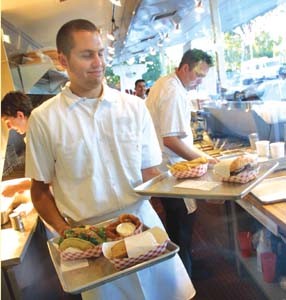
Wine Country Video

0

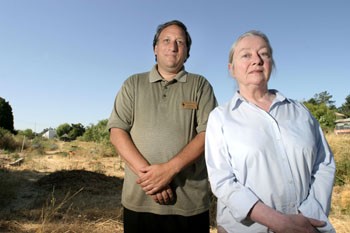
Photograph by Michael Amsler

Contested Ownership

Brush off your essay skills–a Kenwood store could be yours

By Joy Lanzendorfer

With a flourish of the pen and some sound business sense, the only video store in Kenwood could be yours. The current owners of Wine Country Video want you to vie for their store, and all it takes is your best 500-word essay and a $150 entrance fee. Thanks to inspiration from a 1996 movie set in a remote town in Maine, husband and wife Ron Freberg and Sylvia West are giving the business away to the best applicant.

When Freberg and West started thinking about retiring, they considered the best way to find new owners for their store, which is located in central Kenwood. Though they could have sold it to the owner of a video store in Glen Ellen, they opted instead to go with the essay contest.

“We saw the movie The Spitfire Grill, which is about an essay contest for a restaurant, and we thought it was a wonderful idea,” says Freberg. “The great thing about the essay contest in the movie is that it was a chance for someone to take over the business that ordinarily couldn’t afford to. We’d like to give that to someone too.”

In the movie, an older woman played by Ellen Burstyn has had her restaurant for sale for more than 10 years, but no one in the remote town of Gilead, Maine, has bought the place. Thus, the essay contest is born. After advertising in places like New York and Chicago, the contest brings in more than 2,500 entrants.

In the movie, the entire town gets involved in the contest and the camera pans to show even the surliest Maine native reading the essays. In the end, the person who most needed a new chance in life got the restaurant.

In real life, however, running an essay contest is a little more complicated than putting ads in various newspapers and enlisting the neighbors to help you choose the best one. Freberg and West have hired a lawyer and marketing firm to promote the contest, opened a bank account for the entrance fees until the contest is over, and chosen three judges to pick the winner.

“The way the contest is set up, no one can ever say, ‘Ron knew so-and-so and let him win the video store,'” says Freberg. “I see none of the essays. The lawyer picks them up from the post office, cuts all the names off, and assigns a number so that even the judges won’t know who they are reading.”

The three judges are artist and playwright Randy Sue Watkins, movie producer and director Paul Martin, and Lucasfilm employee Kathy Tichenor.

The criteria for judging the contest are a little more complex than picking the most heart-rending essay. Participants are judged on their business skills, how community- and customer-minded they are, and their concept of what it takes to own and operate a store. And, yes, spelling and grammar do count.

“What we’re looking for is the most well-rounded essay,” says Watkins. “Not just why they want the store, but reasons why they’d be good at it. We needed criteria that were more objective than who most needed a change.”

The store itself is located in Kenwood’s only shopping center between the post office and the grocery store. It is the only video store in the area, which means virtually no competition. By itself, the business is worth more than $100,000.

The store is a popular place, Freberg says, with everyone in Kenwood stopping in at one time or another, especially in bad weather.

The winner will receive the video store, the lease paid up until Nov. 30, 2004, a library of more than 7,000 video titles, and all other supplies. In addition the winner will receive 30 days of training to learn the computer, billing, and other systems in the store.

Ron and Sylvia have owned the store for two years. Previously, they worked in real estate in Florida, operated a resort on the island of Antigua, and operated a bed and breakfast in Palo Alto. They plan to retire in Mexico, where the cost of living is more reasonable and it is beautiful–and they can still rent movies.

The deadline for the contest is Feb. 15, 2003. For more information, visit www.winecountryvideos.com.

From the November 14-20, 2002 issue of the North Bay Bohemian.

© Metro Publishing Inc.

Holiday Arts Guide

0

Survival Techniques

How to get through the holidays in one highly entertained piece

By Sara Bir

Dark at 5pm, lights strung up on trees, winter storms, chestnuts. The signs are clear: It’s holiday season. And along with the acorn squash and declining quality in tomatoes comes winter’s attendant events. Ballets, chorales, crafts fairs–it’s all there to get you in the spirit of whatever winter holiday you celebrate. So enjoy it while it lasts, because before long it will be spring again.

Spirited Ballet

”Twas the Night before Christmas’ The students of Healdsburg Ballet set Clement B. Moore’s story to dance with innovative choreography and updated music. Saturday, Dec. 7, 7:30pm; Sunday, Dec. 8, 2:30pm. Sonoma Country Day School’s Jackson Theater, 4400 Day School Place, Santa Rosa. $15 adults; $10 seniors and students. 707.431.7617.

‘Sophie and the Enchanted Toy Shop’ Sophie meets icicle and frost fairies, the Snow Prince and Princess, Valentina Ballerina, and the dancing bear. Then they dance, thanks to the cast and crew of the Marin Dance Theatre. Saturday, Dec. 14, 1 and 5pm. Marin Center’s Veterans Auditorium, 10 Avenue of Flags, San Rafael. $25 adults; $12.50 seniors and children under 12. Following the 1pm performance, have photos taken with the cast of characters at the Teddy Bear Tea Party in the Redwood Foyer. $8. 415.499.6800 or www.mdt.org.

Nutcrackers Galore

Ballet California’s Nutcracker is the only one in Sonoma County offering a live orchestra. Ballet: Dec. 13 at 8pm; Dec. 14 at 2pm and 7pm; Dec. 15 at 2pm. Luther Burbank Center for the Arts, 50 Mark West Springs Road, Santa Rosa. $14-$30. 707.546.3600. Nutcracker Breakfast: Sunday, Dec. 1, 9:30am-noon, Sonoma County Hilton, 3555 Round Barn Blvd., Santa Rosa. $20 adults; $15 children 10 years and under. 707.537.0140. Sugar Plum Parties: LBC’s Gold Room, Dec. 14 and 15 at 4:30pm. $12.

Marin Ballet’s Nutcracker, a 30-year tradition starring students from the dance school. Dec. 7-8, 1pm and 5pm. Marin Center’s Veterans Auditorium, 10 Avenue of Flags, San Rafael. $15-$26. 415.499.6800 or www.ticketmaster.com.

Ballet Califia’s staging features the choreography of David McNaughton, one of the brightest talents in ballet today. Dec. 20, 8pm; Dec. 21, 2:30pm and 8pm; Dec. 22, 2:30pm. Spreckels Performing Arts Center, 5409 Snyder Lane, Rohnert Park. $16 general; $12 youth and seniors. 707.588.3434 or www.spreckelsonline.com.

Stapleton School’s Nutcracker features a cast ages five to 18 years and original choreography by Virginia Stapleton. Dec. 20, 7:30pm; Dec. 21, 3pm and 7:30pm; Dec. 22, 1pm. Marin Center’s Veterans Auditorium, 10 Avenue of Flags, San Rafael. $21 general; $14 youth and seniors. 415.499.6800.

Merry Olde Chorale Concerts

Santa Rosa Symphonic Chorus’ ‘Mid-Winter Songs’ Under the direction of Dan Earl, the Santa Rosa Symphonic Chorus presents Mid-Winter Songs: An Evening of Morten Lauridsen. Nov. 23, 8pm, Santa Rosa High School, 1235 Mendocino Ave., Santa Rosa; Sunday, Nov. 24, 4pm, Our Lady of Guadeloupe Church, 8400 Old Redwood Hwy., Windsor. $10 general; $8 seniors and students. 707.579.6030.

Quire Quodlibet’s ‘Paens and Patronesses’ The newly reorganized Quire Quodlibet makes a joyful noise to celebrate St. Cecelia’s Day. Nov. 22, 8pm, Sebastopol United Methodist Church, 500 N. Main St., Sebastopol; Nov. 23, 8pm, Raven Theatre, 115 North St., Healdsburg; Nov. 24, 3pm, First United Methodist Church, 1551 Montgomery Drive, Santa Rosa. $15 adults; $10 seniors and students. 707.526.5787.

Russian State Chorus Recognized as one of the world’s leading vocal ensembles, the long-established Russian State Chorus performs on Sunday, Dec. 1, 3pm. $15-$25. Luther Burbank Center for the Arts, 50 Mark West Springs Road, Santa Rosa. 707.546.3600 or www.lbc.net.

Kitka at Russian River Chamber Music Ancient a cappella Balkan and Slavic village chants, as well as complex 20th-century choral works, make up the women’s choral group Kitka’s world-renowned holiday wintersong concert. Sunday, Dec. 1, 4pm. Healdsburg Community Church, 1100 University Ave., $20 general; $10 students. 707.524.8700.

The Edlos The weird guys of a cappella stitch together humor, costume changes, smoke machines, and extensive classical training into a holiday show of traditional and original numbers. Dec. 6, the Raven Theater, Healdsburg; Dec. 14, Santa Rosa High School, Santa Rosa (benefit); Dec. 21, Marin Center Showcase Theater, San Rafael; Dec. 23, COPIA, Napa. www.theedlos.com.

Sonoma Valley Chorale’s ‘Holiday to Remember’ SVC’s musical treats include Vaughan Williams’ Fantasia on English Christmas Carols and Randol Bass’ Gloria. Saturday, Dec. 7, 8pm; Sunday, Dec. 8, 2pm and 7:30pm. Sonoma Veterans Memorial Building, 126 First St., Sonoma. $15 adults; $12 seniors and children 16 and under. 707.935.1576 or www.sonomavalleychorale.org.

Light against the Darkness The Occidental Community Choir celebrates Hanukkah, Christmas, the solstice, and the coming of winter–a suitably ecumenical celebration. Under the direction of Doug Bowes, the choir will perform both classical pieces and choir originals. Saturday, Dec. 7, 8pm, Church of the Incarnation, Santa Rosa; Sunday, Dec. 8, 7pm and Sunday, Dec. 15, 3pm, St. Philip Center, Occidental; Friday, Dec. 13, 8pm, United Methodist Church, Sebastopol. $8. 707.547.0204 or www.occidentalchoir.org.

True Vine Gospel Choir Sonoma State’s well-received new choir, True Vine, holds its first Christmas Gospel Concert with East Bay Anointed Voices and the Kingdom Travelers. Sunday, Dec. 8, 5pm. Evert B. Person Theatre, SSU, 1801 E. Cotati Ave., Rohnert Park. $6. 707.664.2353.

Oakland Interfaith Gospel Choir Twenty-five Academy Award-winning voices soar in unison when the Oakland Interfaith Gospel Choir takes to the stage. In two performances the choir, led by the charismatic Terrance Kelly, will showcase the power of the voice. Saturday, Dec. 14, 4:30pm and 7:30pm. Bartholomew Park Winery, 1000 Vineyard Lane, Sonoma. $40. 707.935.9511.

Jarvis’ Annual Christmas Music Concert Napa’s Jarvis Conservatory invites three top high school choir ensembles from the area to perform, and the proceeds from the show go to the schools’ music programs. Saturday, Dec. 14, 7pm. Jarvis Conservatory, 1711 Main St., Napa. $30 adults; $15 students. 707.255.5445 or www.jarvisconservatory.com.

Petaluma Sings! The Petaluma Women’s Chorus joins up onstage with the Cinnabar Chamber Singers for a joyful holiday concert. Saturday, Dec. 14, 8pm. St. Vincent de Paul Church, 35 Liberty St., Petaluma. $12 general; $10 seniors and students; $6 children 12 and under. 707.763.8920.

San Francisco Gay Men’s Chorus’ ‘Home for the Holidays’ The 25th anniversary season of the San Francisco Gay Men’s Chorus begins with their popular Christmas show, Home for the Holidays. A benefit for Face to Face/Sonoma County AIDS Project, the concert usually sells out fast. Sunday, Dec. 15, 5pm (reception), 6pm (concert). Jackson Theater, Sonoma Country Day School, 4400 Day School Place, Santa Rosa. $20. 707.525.6229 or www.sfgmc.org.

Chanticleer Christmas Concert The highly acclaimed 12-man a cappella group Chanticleer continues their tradition of Bay Area Christmas choral performances with two shows in Petaluma. Tuesday, Dec. 17, 6pm and 8:30pm. St. Vincent de Paul Church, 35 Liberty St., Petaluma. $34-$37 reserved; $25 general. 800.407.1400 or www.chanticleer.org.

Redwood Empire Sing-Along Messiah Don’t know the words? No worry–the Baroque Sinfonia, solo vocalists, and a 100-voice choir can cover for you. Wednesday, Dec. 18, 7:30pm. Luther Burbank Center for the Arts, 50 Mark West Springs Road, Santa Rosa. $14 general; $10 students and seniors. 707.537.6809 or www.sing-along-messiah.org

Symphonic Seasons

Santa Rosa Symphony Dec. 7-9, Sonoma County Bach Choir and Sonoma County Honor Choir sing Brahms’ German Requiem. Jan. 11-13, Beethoven’s Egmont Overture, Korngold’s Violin Concerto, and Schumann’s Symphony no. 4. 707.546.8742 or www.santarosasymphony.com

Carols in the Caves Musical “improvisator” David Auerbach plays dulcimers, harps, psalteries, and more in this annual acoustic-in-the-caves concert. Dec. 7-8, 2pm, Hans Fahden Vineyards, 4855 Petrified Forest Road, Calistoga; Dec. 14-15, 2pm, Folie à Deux, 3070 Hwy. 29, St. Helena; Dec. 21-22, 2pm, Vine Cliff Winery, 7400 Silverado Trail, Yountville; Dec. 28, 8pm, Buena Vista Winery, 1800 Old Winery Road, Sonoma. $35. 925.866.9559 or www.carolsinthecaves.com.

Festival Consort’s Renaissance Christmas Founded in 1976, Festival Consort is the oldest early-music ensemble in the Bay Area, playing both Renaissance and Medieval music on historical instruments such as the cornett and crumhorn. Dec. 9, 12:15pm. Newman Auditorium, Emeritus Hall, Santa Rosa Junior College, 1501 Mendocino Ave., Santa Rosa; Wednesday, Dec. 11, 7:30pm, Herold Mahoney Library, Santa Rosa Junior College’s Petaluma Campus, 680 Sonoma Mountain Parkway, Petaluma. Free. 707.527.4372.

New Century Chamber Orchestra’s Baroque Christmas Warm the cold season with rich baroque selections by Vivaldi, Handel, and Corelli. Sunday, Dec. 22, 5pm. Osher Marin JCC, 200 N. San Pedro Road, San Rafael. $35. 415.357.1111 or www.ncco.org.

Twinkly Parades, Trees, & Houses

Petaluma Festival of Trees The Downtown Petaluma Association’s Festival of Trees promotion plants trees (not literally) in stores and restaurants for merchants to decorate. Each tree will then be auctioned off with funds going to local charities. Trees go on display Nov. 26-Dec. 6. Call 707.762.9348 for more info.

Yountville Festival of Lights Yountville goes all-out for a day of food, wine, and holiday. Santa arrives at noon aboard the famed Anheuser-Busch wagon. Other attractions include a gingerbread house competition and the Napa Valley Ice Art Championship. Friday, Nov. 29. 12:30pm, ice carving begins; 5-6pm, tree lighting. Downtown Yountville. Free. 707.944.0904.

City of Lights Driving Tour Take a self-guided tour of highly decked-out homes and businesses in Petaluma. Dec. 6-27. Free. For details, go to www.visitpetaluma.com or call 707.769.0429.

Light Up a Life Hospice of Petaluma’s annual fundraiser electrifies the Christmas tree in Center Park. Friday, Dec. 6, 6:30pm. Center Park, Petaluma Boulevard at B Street, Petaluma. Free. To sponsor a tree light, call 707.778.6242.

Russian River Parade of Lights Fifty floats, cars, horses, and such cruise through downtown Guerneville, all bedecked and alighted. Saturday, Dec. 7, 7pm. Main Street, Guerneville. Free. 887.644.9001.

Holiday Lighted Boat Parade The most luminous flotilla on earth parades around Petaluma’s waterfront. Saturday, Dec. 7, 6:30pm. Petaluma River Harbor, Petaluma. Free. 707.769.0429.

Luther Burbank Holiday Open House Visit the Burbank Home as it’s decked out in festive Victorian holiday style and stop in for tea and cookies in the Burbank Greenhouse. Dec. 7-8, 10am-4pm. Luther Burbank Home and Gardens, Santa Rosa and Sonoma avenues, Santa Rosa. Free. 707.524.5445.

Heritage Homes Holiday Parlor Tour Experience four Victorian parlors, plus the vintage holiday decorations at the Petaluma Museum. Sunday, Dec. 8, 6-9pm. Petaluma Historic Library and Museum, 20 Fourth St., Petaluma. $15. 707.762.3456.

Healdsburg Victorian Inns Tour Step back in time and get a peek at five of Healdsburg’s quaint Victorian inns: the Madrona Manor, Haydon Street Inn, Camellia Inn, Grape Leaf Inn, and Healdsburg Inn on the Plaza. All you need to do is pick up a map at your first stop of this self-guided tour. Sunday, Dec. 15, 2-4pm. Free. 707.433.6935 or 707.433.5228.

Napa Holiday Candlelight Tour Napa Landmark’s yearly tour of Victorian homes with costumed docents, plus wines and chocolate. Saturday, Dec. 14, 3-8pm. Various sites, First Street neighborhood, Napa. Advance: $25 adult; $10 ages three to 12. Day of event: $30 adults; $12 ages three to 12. 888.255.1836 or www.napacountylandmarks.org.

Santa Sightings

Direct from the North Pole via the Petaluma River, it’s Santa’s Riverboat Arrival and Antique Wagon and Horse Procession, when Santa and Mrs. Claus land at the Petaluma Riverfront to hand out candy canes. Then, the Antique Wagon and Horse Procession makes its way through downtown Petaluma (it’s also a holiday open house for downtown merchants). Saturday, Nov. 30. Santa’s arrival, noon; Wagon Procession, 1pm. Petaluma Riverfront, Western Avenue, Petaluma. Free. 707.769.0429.

A Very Merry Morning with Santa Infants to children six years of age are invited to visit Santa at the “North Pole” for the traditional rite-of-passage photo-op. Presale-only tickets go on sale Nov. 12. Saturday, Dec. 14, 9-9:45am, 10-10:45am, and 11-11:45am. Steele Lane Community Center, 415 Steele Lane, Santa Rosa. $5 per child. 707.543.3282 or 707.543.3737.

Ye Olde Craft Faires

Gifts ‘n’ Thyme Holiday Faire Eighty-two booths of fresh herbs–er, make that arts and crafts, plus baked goodies. Nov. 15-17. Friday, 11am-8pm; Saturday, 11am-6pm; Sunday, 11am-5pm. Chardonnay Hall, Napa Valley Exposition, 575 Third St., Napa. Free. 707.224.3207.

Petaluma Alternative Christmas Bazaar The gifts are handcrafted by Third-World artists; all proceeds support the artists and their families. Saturday, Nov. 16, 9am-3pm. Free. United Church of Christ, 825 Middleford Drive, Petaluma. 707.763.2454.

Holiday Jubilee A top-quality venue for juried artisans, Holiday Jubilee offers gift items, plus winetasting and sales, gingerbread house workshops and kits, gift-making workshops for kids, and home-decor craft workshops for adults. Nov. 22-23, 10am-5pm. Sonoma Country Day School, 4400 Day School Place, Santa Rosa. $5 adults; $2 children. Workshops: $40 each, adult; $18 each, children. 707.284.3281 or www.holidayjubilee.org.

Meet the Artists Twenty-two consignment artists whose work is featured at the Graton Gallery will appear in a “meet the artists” holiday gift show and reception. Saturday, Nov. 23, 3-6pm. Graton Gallery, 9048 Graton Road, Graton. Free. 707.829.8912 or www.gratongallery.com.

Spirit of Christmas Crafts Faire Three weekends long with 250 exhibits and ongoing entertainment for the family, the Spirit of Christmas Crafts Faire is now in its 26th year. Nov. 28-Dec. 1; Dec. 6-8; and Dec. 13-15. Fridays, noon-9pm; Saturdays and Sundays, 10am-6pm. Grace Pavilion, Sonoma County Fairgrounds, Santa Rosa. $4 general; $2 seniors and children ages six to 12. Fridays are half-price for everyone. 707.575.9355 or www.spiritofchristmasfaire.com.

Christmas Crafts Fair The 21st annual Christmas Crafts Fair, sponsored by the Russian River Watershed Protection Committee takes place Nov. 29-Dec. 1, 10am-5pm. Santa Rosa Veterans Memorial Building, 1351 Maple Ave., Santa Rosa. $1.50. 707.869.0054.

Winter Open Studios The Industrial Center Building in Sausalito houses a thriving group of artists–75, to be exact. This makes it very convenient for them to throw their Winter Open Studios. Opening reception: Friday, Dec. 6, 6-9pm. Open studios: Dec. 7-8, 11am-6pm. ICB, 480 Gate Five Road, Sausalito. Free. 415.332.1909. A few blocks away, Sausalito’s Schoonmaker building also opens up Dec. 7-8, 11am-6pm. 10 Liberty Ship Way, Sausalito. 415.331.6466.

Dickens of a Holiday Crafts Show Santa Rosa Recreation and Parks’ 28th annual crafts show has over 60 booths of handcrafted gifts. Saturday, Dec. 7, 9am-5pm; Sunday, Dec. 8, 10am-4pm. Finley Community Center, 2060 W. College Ave., Santa Rosa. Free. 707.43.3737.

Herbal Christmas Fair The Sonoma County Herb Association’s herb and craft sale puts an old-fashioned spin on seasonal crafts fairs with one-of-a-kind holiday gifts by herbal artisans and homemade cookies at a bake sale. Proceeds benefit SCHA. Sunday, Dec. 15, 10am-5pm. Lodge Room, Santa Rosa Veterans Building, 1351 Maple Ave., Santa Rosa. Free. 707.585.8575.

Dramatic Affairs

Cinnabar Theater Cinnabar brings us two shows for the holidays. First, Cinnabar Young Actors Repertory Company presents the world premiere of Christmas Comes to Cherrywood, a tale of a lost unicorn and an enchanted forest. Nov. 15, 16, 22, and 23 at 7:30pm; Nov. 17 and 24 at 2pm. Then, Young Actors Repertory makes the classic Capra movie It’s a Wonderful Life come alive in musical form. Dec. 6, 7, 13, 14, 20, and 21 at 7:30pm; Dec. 15 and 22 at 2pm. Tickets for both productions are $10 general; $6 ages 12 and under. Cinnabar Theater, 3333 Petaluma Blvd. N., Petaluma. 707.763.8920.

‘Holiday Memories’ Sonoma County Repertory Theatre offers an adaptation of “The Thanksgiving Visitor” and “A Christmas Memory,” probably Truman Capote’s warmest works. Nov. 22-23, 29-30, Dec. 5-7, 12-14, 19-21 at 8pm; Dec. 1 at 2pm. Sonoma County Repertory Theatre, 104 N. Main St., Sebastopol. $15. 707.823.0177 or www.sonoma-county-rep.com.

The 1940s Radio Hour A 10-piece orchestra adds to the madcap action of this nostalgic holiday treat, presented by Pacific Alliance Stage Company. Nov. 29-30, Dec. 6-7, 13-14 at 8pm; Dec. 1, 8, 15 at 2:30pm; Dec. 5 and 12 at 7:30pm. Spreckels Performing Arts Center, 5409 Snyder Lane, Rohnert Park. $22 adult; $18 youth and senior; $15 all seats. 707.588.3434 or www.spreckelsonline.com.

‘A Christmas Carol’ Dreamweavers Theatre stages the Christmas classic. Dec. 6-8, 13-15, 20-22, and 27-29. Fridays and Saturdays, 8pm; Sundays, 2pm. 1637 Imola Ave. (in the River Park Shopping Center), Napa. $15 general; $12 seniors and students. 707.255. LIVE.

An Imaginative ‘Christmas Carol’ Healdsburg’s Imagination Foundation, a new nonprofit theater for young actors, presents Dickens’ Christmas Carol with three holiday performances. Dec. 13 and 14, 8pm; Dec. 15, 3pm. Raven Theatre, 115 North St., Healdsburg. Advance: $10 adults; $5 children, students, and seniors. Door: $12 adults; $7 children, students, and seniors. 707.431.7ACT.

Festive Events

Chocolate and Carols Falkirk’s yearly Victorian holiday celebrates all things Dickens and Christmas-y. Carols, fine confections from local chocolatiers, and an authentic Father Christmas are all in store. Friday, Dec. 6, 6:30-9pm. Falkirk Cultural Center, 1408 Mission Ave., San Rafael. $8 adults; $5 members and children. 415.485.3328 or www.falkirkculturalcenter.org.

Madrigal Dinner Gualala’s art center gets the Olde English treatment and is transformed into the Great Hall of Sterling Castle for a six-course feast, complete with roast beef and Yorkshire pudding, with madrigal singing for dessert. Dec. 7-8, 6pm. Gualala Arts, 46501 Old State Hwy., off Highway One, Gualala. $65. 707.884.1138.

Annual Victorian Tea The Petaluma Women’s Club serves a proper English tea Upstairs, Downstairs-style. Benefits Petaluma Historical Library and Museum. Dec. 8-14, 11am, 2pm, and 5pm. Petaluma Women’s Club, 518 B St., Petaluma. $25 per seating. 707.762.4247.

Granny Bear’s Christmas Tea Party A traditional Victorian high tea meets the cuddly fuzziness of teddy bears with a live variety show, games, storytelling, and a souvenir photo with Granny Bear herself. Proceeds go to Story Bear Benefits. Saturday, Dec. 14, 11am and 2:30pm. Cotati Veterans Building, 8505 Park Ave., Cotati. $18-$40. 707.829.2494.

‘Fiddler on the Roof’ Sing-Along Sing, laugh, cry, and sing again. Come dressed as your favorite character, then watch the movie on the big screen and belt it out just like Zero Mostel. Lyrics provided. Register by Dec. 23–last year they sold out. Wed, Dec. 25, 11am-3pm. Osher Marin JCC, 200 N. San Pedro Road, San Rafael. $18 adult members; $22 adult public; $12 all children 12 and under. 415.444.8000 or www.marinjcc.org.

Hanukkah Celebrations

Latke Dinner Party Bring salad or dessert for four to this potluck and enjoy The Miracle of Chanukah, a professional multimedia musical puppet extravaganza. Reservations required. Tuesday, Dec. 3, 5:45pm. Congregation Beth Ami, Freedman Center, 4676 Mayette Ave., Santa Rosa. Members: $5 adults; $3 children. Nonmembers: $6 adults; $4 children. 707.545.4334.

Family Storytelling Family activities like making olive oil proceed a concert and storytelling by bestselling children’s musician Joanie Bartels and storyteller Joel ben Izzy. Sunday, Dec. 8, noon-3pm. Osher Marin JCC, 200 N. San Pedro Road, San Rafael. $6 members; $7 public. 415.444.8000 or www.marinjcc.org.

Kwanzaa

Sausalito’s Bay Area Discovery Museum goes global for its holiday celebration, bringing its fifth annual Kwanzaa celebration to the area. The seven guiding principles of Kwanzaa will be portrayed in the day-long event, as well as drumming, dancing, and crafts. Thursday, Dec. 26, noon-4pm. 557 McReynolds Road, Sausalito. 415.487.4398 or www.badm.org.

From the November 14-20, 2002 issue of the North Bay Bohemian.

© Metro Publishing Inc.
‘Children of Abraham’

0

Talk is Cheap: Yitzak Green and Hanan Mogannam talk it out in their dialogue group.

Giving It a Chance

Here in Sonoma County, peace can be made. Why not elsewhere?

By Davina Baum

The latest Palestinian intifada has burned on for years now, and there is no resolution in sight. Here among Sonoma County’s Jews and Palestinians, it’s been about 10 months. Friends have been made, conflicts resolved. Seven thousand miles away from the Middle East, people with land of their own–holy land in its own way–can talk, cry, and attempt to heal. Their families in Ramallah, in Jerusalem, in the occupied territories, cannot.

For almost a year, a group of Jews and Palestinian Christians have embarked upon a quixotic journey into themselves–away from conflict, away from bombs and terrorism. They tell stories about their past, about their families and their misconceptions. They share coffee and tea.

Faced with brothers and sisters dying, imprisoned on their own land, terrified for their safety, what can one do? Mediators have accomplished very little. Anger compounds the issue. By looking into their own community, the participants in this dialogue group have found a solution that works for them. Not a solution to the conflict, but a solution to the daily anger and frustration that news of the conflict evokes. And perhaps more, always the hope for more.

In past months, the group, which calls itself Becoming Allies, has reached outside itself to encourage people to think about the issue as it relates to individuals. In July, an event at Sonoma State University brought together an Arab and an Israeli to talk about their stories, shared and otherwise. In conjunction with the Rialto theater, the group presented two nights of dialogue in August after screenings of the touching documentary Promises. And on Nov. 16, Becoming Allies will screen the film Children of Abraham at Santa Rosa Junior College, with a dialogue session to follow.

Yitzak Green, a healthcare consultant and mediator, is an organizer and participant in the dialogue group. “This is not a conflict between strange nations; these are cousins–our ancestors are brothers,” he says.

The group focuses on personal stories because, according to Green, “[People are] learning that the suffering in the families who left Palestine since the occupation is not unlike the suffering in the Jewish families after the Holocaust. They go through the same depression, anger, foisting it upon themselves, upon their family members, and then maybe come out of it, maybe not.”

One of Green’s cohorts in dialogue is Hanan Mogannam, a Palestinian Christian with relatives in Ramallah. Sitting with Green and Mogannam in Courthouse Square one morning, we have a dialogue of our own. In measured and fair terms Mogannam explains her interest in the project. It’s been difficult, she says, to find Palestinians–Muslim or otherwise–who will partake in the dialogue.

“It’s painful and it’s risky and it takes a lot of courage, and they don’t want to bother because what’s the use, is it going to do any good? I feel it on my own part with what I’m doing. I do it because I get something out of it and I think something good will come out of it for other people, but it takes a lot of emotion–there’s anger and frustration. Look at the situation, look what we’re hearing on the news.”

The group tries to avoid talking about what’s happening on the news, because it gets too disheartening. “I’m more encouraged to think that if we can somehow get people to speak to the emotional rather than the rational–the personal family stuff rather than the political-national stuff–we’re likely to at least become friends and be able to talk to one another. I think that can spread,” says Green.

Separating the emotional and the rational, however, when emotions rule over these two nations and their diasporas and rationality ceased to exist 10 years ago, is a challenge.

“It’s easy and it’s superficial to just say that, well, if Arafat only got unhooked or if Sharon got unhooked and if we had someone like Rabin or whatever . . . I’m tired of those conversations, they don’t go anywhere,” Green says.

In the dialogue process, though they share personal stories about their histories and personal lives, Green, Mogannam, and the others can’t avoid sharing their thoughts on how to resolve the conflict. They appear to be largely in sync: The settlements–Israelis reclaiming land within the Palestinian territories–must go; pre-1967 borders must be implemented.

“Settlements are a mistake,” says Mogannam. “The ones who want peace in Israel and are willing to get out of the settlements are not in control.” Green agrees: “On both sides, the extreme factions are in control.”

Outside their largely sympathetic dialogue group, however, all participants encounter opinions that mirror the brutal emotions felt across the world. Green explains, “I had this experience meeting with an elderly Jewish woman who’s filled with anger toward Palestinians, and it’s hard to talk to her without evoking her anger.” Green, employing his listening skills, didn’t counter her rage. “I said, you know, I want to give you all the space you need to say that, and I want to be here to see what we have to talk about after it gets out.

“So one of the things that we’re learning,” Green continues, “is that it takes some training to have the patience to listen to someone’s anger and pain, because we want to get beyond it. ‘How much land do you want? How much security are we going to get’–that’s a conversation that, if we’re in fear or in anger, is a very difficult one to have.”

When it comes down to it, although both groups have strong opinions about the governing bodies and their ineffectiveness, it is the stories that they return to.

“There are a lot of people with stories here–a lot of holocaust survivors, a lot of people who left since the occupation,” says Green. “What if we spent three or four months in churches, in temples, in movie theaters, wherever it is, and we heard from these people. And then those people went to their cousins and said, ‘You know what I heard?’ and then they say, ‘You know, I think I’ve heard something similar in my town.’ And then we hash it out over coffee.”

The emphasis is on humanizing the combatants, who–in the eyes of their enemies–are more often excoriated as animals. Terrorist animals, land-grabbing animals, murderous animals.

“Everybody’s ideology consists of wave the flag and throw some bombs and it will all be better,” says Green. “That’s only a way to immortalize those who have chosen to give their lives to this–I mean suicide bombers. It’s not like going out and meeting somewhere in the streets or in homes and saying, ‘Hello, I’m a human being and so are you, let’s have a cup of coffee.'”

Mogannam counters: “But right now, for you and I to do that, it’s not difficult. I’ll do it, and I don’t feel any hostility from you. I feel like we want the same thing for that part of the world. But for people over there, to say, ‘Hello, can I have a cup of coffee?’–there’s a lot of stuff you have to go through to get to that point. . . .”

The global-local link is utmost on their minds, because though they gain personally from their dialogues, all of the participants have a larger purpose in mind: peace. “I think it will spread out,” says Mogannam. “I think people have to get educated. Once they see that there are human beings here who’ve got stories [and that] there are injustices on both sides, they will stop and see that it’s not going anywhere, that there’s got to be another way. Because it’s got to change here before they change over there.”

Technology, of course, speeds the passage of good will. Green explains that while their small dialogue group may not seem to have great reach, “People are in e-mail connection with people who are there and I have an e-mail connection with a number of peace groups, and an idea that hasn’t been seeded starts someplace.”

That someplace could be Sonoma County. It could be anywhere–people in liberal pockets across the country are seeking resolution to a conflict that’s miles away but so closely tied to nation and religion, race and heritage.

“That’s why I think that maybe we’re in a really unique place,” says Green, “because we’re far enough from the bloodshed so that we feel comfortable enough to have that conversation. And maybe those who are closer to it and have difficulty reaching that point can hear about the fact that there are relatives here talking when it gets peaceful enough. And maybe they can put down their guns long enough to at least learn about these conversations.”

Mogannam says multiple times during our conversation that there is no choice: “You live side by side–isn’t that what everybody wants? They’ve done it in the past. Eventually it’s going to happen. It has to happen.”

The wisdom of distance is powerful, but are the emotions at the core of the conflict surmountable? Hope is all there is.

‘Children of Abraham,’ a film of the Compassionate Listening Project, screens at Newman Auditorium at SRJC on Saturday, Nov. 16, at 7:30pm. Dialogue will follow. 1501 Mendocino Ave., Santa Rosa. 707.793.2133.

From the November 14-20, 2002 issue of the North Bay Bohemian.

© Metro Publishing Inc.

‘Heaven’

Soul Power

Bald and penitent, Cate Blanchett stars in the arid ‘Heaven’

By

After a very fast and shallow hit titled Run Lola Run, the German director Tom Tykwer has headed for deeper, more rooted material. Heaven is based on a screenplay co-written by Poland’s Krzysztof Kieslowski. The story has the skeleton of an action movie, with a jailbreak, fugitives in love, and police chases, but it’s really about transgression and repentance.

Just like the celestial spot it’s named after, the film exists in a set of circumstances that would be hard for the average person to imagine. Philippa (Cate Blanchett), an English teacher living in Turin, Italy, uses a time bomb to blow up the office of a drug kingpin. But the drug lord isn’t injured. Because of a twist of blind fate–the random chance that so often intoxicates Tykwer–four passersby are blown to kingdom come. The police find and capture Philippa with remarkable speed and take her in for questioning.

We learn her reasons, but the police have no interest in them. Since the drug lord poisoned her husband and killed a little girl, she’s an honorable avenger, yet the police do nothing because they are on the criminal’s payroll. Philippa’s in misery because of the innocent blood on her hands. However, the police still think she’s a terrorist–a crafty one with a pretty odd story, admittedly.

When Philippa demands the right to testify in her own language, she is granted an interpreter, a young and angelic policeman named Filippo (Giovanni Ribisi) who volunteers for the task and quickly falls in love with the repentant woman. He decides to risk everything to help her escape.

Heaven‘s one part of a trilogy of screenplays Kieslowski co-wrote with Krzysztof Piesiewicz (co-author of the films Red, White, and Blue.) The late Polish director planned a sequence that when finished would have encompassed Heaven, Hell, and Purgatory. Watching this Heaven sequence suggests why the Hell sequence is everyone’s favorite part of Dante–Hell is more fascinating.

The purifying of the two lovers (Philippa and Filippo, two halves of the same person) begins after their passage through a railroad tunnel (like death) and arrival in a town removed from the world–a limbo. Together they reclaim a lost state of grace, from confession to contrition to penitence. The last stage is indicated by both leads shaving their heads, ostensibly to fool the police.

It never struck me previously how actors really use their hair as part of their masks; when their heads are bald, there’s so much less to act with. Ribisi, plump and with a puckered look from the sufferings of true, pure love, looks a little like a young John Lithgow. He’s better than he’s ever been. By contrast, the usually stunning Blanchett never gets her footing here.

Tykwer’s visual motif in the film involves plenty of aerial shots–“God’s eye” camera–including a love scene conducted in silhouette seen by helicopter. The same helicopter ultimately represents transubstantiation when it rises in the sky to a vanishing point–inspired, yes, and reverent too. Yet Heaven is as free from humor as a Jesuit’s argument. This film works through a system of symbolism so inflexible that this movie might as well be based on an algebra textbook.

‘Heaven’ plays at the Rafael Film Center.

From the November 7-13, 2002 issue of the North Bay Bohemian.

© Metro Publishing Inc.

Persimmons

0

First Bitten: The beautiful persimmon, that most fickle of fruits, pays off if you give it a chance.

The Waiting Game

Persimmons pay off for those who are patient

By Sara Bir

Persimmons are a cult fruit. It’s no small wonder, since they are wily, confounding things, too exotic to secure a prominent spot in Safeway’s produce section but common enough to fall in abundance from trees in our front yards.

Last year, my persimmon supply was cut off when I left my old job. Someone there had a persimmon tree and would bring in paper grocery sacks tearing under the strain of the tree’s generosity–for just as baseball-bat-sized zucchini become the gardener’s albatross in the summer, an intimidatingly hearty growing colony of persimmons descends in the fall upon those with a persimmon tree. The bags would go into the break room, where people would glance at the glossy orbs apprehensively and say, “Hey, aren’t those things the fruit that tastes like felt?”

And the answer is yes: a bite into the spiteful flesh of an underripe persimmon is indeed like sucking on a huge ball of felt or a mouthful of emery boards or a wad of soggy tea bags. A roly-poly and supple ripe persimmon is another creature altogether, though, transforming what was a shudder-inducing experience into a seductive seasonal obsession.

Persimmons are indigenous to America and were the first of native American fruits to be described by the early explorers. This variety–Diospyros virginiana–the Native Americans called putchamin, pasiminan, or pessamin. Walnut-sized and wild, these persimmons are not fully ripe until they fall off the tree, and they are highly coveted in the Midwest. Sadly, the little Diospyros virginianas are rarely seen west of eastern Kansas, and we cannot partake in the joys of the wild persimmons Native Americans used to dry and bake into loaves.

The two types of persimmons grown commercially here in California are both of the species Diospyros kaki, and were introduced here from Japan, though they originated in China. Fuyus are squat, smallish, yellow-orange, and can be enjoyed while still firm, making them much better suited for commercial farming, because they can be sold fully ripe without turning into a bruised, squishy pile of goo. Fuyus have a meaty flesh and mangolike flavor, and fare well sliced in both savory and fruit salads. In Japan, where they are prized, fuyus are sometimes served cold with the skin peeled back, topped with sake.

Hachiyas are, here in Northern California, the variety commonly growing in our backyards. Flame-orange and shiny with an elongated shape that tapers at the end, hachiyas have a sculptural beauty that’s perfect for still lifes or decorative fruit bowls. Because of the “felt factor,” though, people often fear crossing beyond this admiration from a distance. Hachiyas can blame their bad reputation on the highly astringent level of tannic acid (the same thing that makes red wine chalky) they have when underripe, but as the fruit itself softens, so do the tannins, and suddenly hachiyas become a different thing altogether.

A fully ripe hachiya persimmon is supple and yielding, like a breast, and the skin takes on a translucent hue. This is the time to get into the marmalade-like pulp inside. The easiest way is to cut the clean persimmon in half and, holding the fruit over a bowl, scoop out the flesh with your fingers (it’s messy, yes, but what good thing isn’t?).

Ripe persimmons, which can take up to a month to ripen in the first place, don’t like to wait. Either eat them right at this point–by cutting off the top and digging in with a spoon for Mother Nature’s jello cup–or remove the pulp for use in recipes.

Persimmons are very stubborn, and a group of them will often refuse to all ripen in one convenient bunch. If they ripen at different rates, you can freeze their pulp, persimmon by persimmon, to make a stash of purée for a pudding or cake. You can also pop whole ripe persimmons into the freezer to deal with at your leisure (this, by the way, makes an instant sorbet; peel back the skin to reveal a simple and divine single-serving treat).

For those of us with no persimmon tree (or persimmon-laden neighbors), hachiyas can be found at farmers markets and seasonally at some grocery stores from October to December. Look for bright orange fruit with no yellow patches (this indicates they were picked before maturity) and no breaks in the skin. Store them at room temperature; persimmons stored in the refrigerator deteriorate faster.

To expedite the ripening of hachiyas, place them in a paper bag with an apple or banana, fold the top down, and check in every day. There are those who advocate freezing and then thawing whole persimmons to ripen the fruit quickly, and although it does soften their texture, I have found it does not alter the astringency of their flesh.

The best strategy is to be patient.

Accumulated thusly, persimmon pulp is like gold, so use it wisely but not sparingly. The stuff is wonderfully versatile. As is, stir it into plain yogurt, blend it into smoothies, or whisk a tablespoon or so into salad dressings. The ripe fruit’s gelatinous quality lends itself beautifully to old-fashioned, elaborate molded gelatin desserts. Baking, however, best capitalizes persimmons’ sticky sweetness. Cakes, cookies, and custards turn out redolent with an autumnal, fruited heaviness that no other fruit can impart.

Persimmon pudding, a seasonal favorite, has attached itself to the hearts of many with its dense, brownielike intensity and velvety, custardy texture. With an unassuming simplicity that’s definitive of the most appealing American desserts, there is truly nothing quite like it, and it remains an underrated classic that could easily hold its own against any perfectly executed pumpkin pie.

It makes a fine addition to a Thanksgiving dessert spread, and it requires no fooling around with pastry, so it comes together remarkably quickly. Only plan ahead: to have enough persimmon pulp for a Thanksgiving pudding, you’ll have to start gathering persimmons now. Their ripeness may be elusive, but it’s rewarding.

Persimmon Pudding

This is based on Eva Powell’s recipe from the December 2000 issue of Saveur magazine. It’s fairly rich and serves eight to 10. Kept wrapped at room temperature, it keeps for about five days.

4 tbsp. butter, melted 1 1/2 c. all-purpose flour 1 tsp. baking powder 1/2 tsp. cinnamon 1/4 tsp. salt 2 c. puréed persimmon pulp 2 c. granulated sugar 2 large eggs 1 1/2 c. buttermilk 1/4 c. heavy cream

1. Heat oven to 350 degrees and position the rack in the lower third of the oven.

2. Grease a 9 by 13 inch baking dish with 1 tablespoon of the butter; set aside.

3. In a medium bowl, whisk together flour, baking powder, cinnamon, and salt. Set aside.

4. Beat persimmon pulp and sugar in a large bowl until well combined. Beat in eggs one at a time. Stir baking soda into buttermilk and add to pulp mixture; beat in heavy cream.

In three additions, add dry ingredients to pulp mixture, combining well but taking care not to over mix. Stir in remaining 3 tablespoons butter. The batter will be a lovely blushing salmon color, and its texture will be just barely foamy.

5. Pour batter into pan and bake about an hour, until a skewer inserted in the middle comes out clean. (The edges of the pudding will rise up and turn a deep amber; the rest will be sunken, with a shiny top, and the very center will still jiggle a teeny bit.)

Cool before serving. Garnish with whipped cream and a sprinkling of finely chopped walnuts or pecans if you are so inclined. Try whipped crème fraîche and a scattering of pomegranate seeds for a highly untraditional but lovely garnish that perfectly offsets the cloying sweetness of the pudding.

From the November 7-13, 2002 issue of the North Bay Bohemian.

© Metro Publishing Inc.

Mike Watt and the Secondmen / Eyes Adrift

0

Saving Grace: Mike Watt puts out fires.

Attention Adrift

Mike Watt and the Secondmen deliver what Eyes Adrift don’t

By Sara Bir

For a supergroup, Eyes Adrift were pretty mediocre. The curious audience of Nirvana-, Meat-Puppets-, and/or Sublime-lovin’ fans at New George’s in San Rafael last Saturday didn’t seem to mind too much, though it was easily apparent that no one was particularly enthralled during their performance.

A newish collaboration between bassist Krist Novoselic (Nirvana), guitarist Curt Kirkwood (Meat Puppets), and drummer Bud Gaugh (Sublime), Eyes Adrift came together when both Novoselic and Gaugh independently approached Kirkwood, who had been playing some solo shows, about jamming. So they did, and after discovering they all had an instant affinity for working with each other, Eyes Adrift toured for a month and went into the studio to record their self-titled debut album, which came out in September.

The critical reaction so far has been tepid, but go figure–their music itself is pretty tepid. Though the show was by no means bad, it was highly unremarkable. The crowd, an odd mix of old-school Meat Puppets and Minutemen devotees with pot bellies and thinning hair, and kids in their early 20s who probably listened to Sublime and Nirvana songs on the radio when they were in the eighth grade, gave off the feeling that people hadn’t come to see Eyes Adrift–they had come to see a real live member of Nirvana.

Or they had come to see opener Mike Watt and the Secondmen, who proved that it is indeed possible to create new and challenging material long after what the public will likely view as your glory days have passed. In Watt’s case, those glory days were in the legendary early-’80s punk-folk trio the Minutemen. But increasingly since the demise of the post-Minutemen trio fIREHOSE, Watt has conceived an inspired solo career as a professional Mike Watt. His joy at being onstage is contagious, and his approachability and musicianship inject whatever project he happens to be involved in with an irresistible vitality.

Even if, in the case of the Secondmen, that project is a bit much to digest. The bass-drum-organ trio makes for bottom-heavy music, and Pete Mazich’s jazzy free-form hammering away on a lovely vintage Hammond organ met up with Watt’s fluid bass in a busy manner that didn’t always gel. Most of their set came from their upcoming album, The Secondmen’s Middle Stand, an operatic song cycle inspired by Watt’s two-year battle with an abscess in his perineum that nearly left him dead.

It’s a pretty grandiose thing to tackle onstage before anyone’s had a chance to hear the album, though, and the Secondmen’s better moments in the show were drawn from Watt’s previous work. The highlight was actually a cover, a searing rendition of “She Don’t Know Why I’m Here,” a terrific nugget by the Last, a band in the late-’70s L.A. punk scene whose Hammond-heavy sound perfectly suited the Secondmen.

In the Secondmen’s less accessible moments, it was still amazing to watch Watt play bass. Once he gets going, his hands canvass the strings so nimbly it appears he’s not even touching them. The trio played themselves into a sweaty frenzy, the intensity of which wound up being more thrilling than the actual music.

Unlike Watt, whom fans look upon as a cool punk-rock uncle, no one member of Eyes Adrift delivered the sort of charisma that can salvage a so-so live performance. And unlike Novoselic’s former band mate Dave Grohl’s megaband the Foo Fighters, Eyes Adrift’s washed-out echoes of grungy Meat Puppets and Nirvana heydays never laid their own distinctive ground.

Even though Novoselic, Kirkwood, and Gough are all very experienced and capable musicians, Eyes Adrift turned out to be as forgettable as the name they chose for themselves. Kirkwood’s country-tinged guitar dominated their songs, as if the band were just a badly rehashed version of latter-day Meat Puppets.

They opened up with “Telescope,” a catchy enough song whose sing-along chorus marked a high point all too early. After that, the songs became flaccid and pokey, a trend that culminated in Novoselic’s childish playground vocals on “Inquiring Minds,” a song commenting on the tabloids’ obsession over JonBenet Ramsey.

Three songs into Eyes Adrift’s mountingly tiresome set, I overheard three people behind me: “This sucks and it’s boring. Let’s go,” one said. They left, and, man, did I ever want to follow them.

From the November 7-13, 2002 issue of the North Bay Bohemian.

© Metro Publishing Inc.

Phoenix Theater

0

Sound the Alarm

The Phoenix may never be the same

By Sara Bir

Weird! Wild! Wonderful! Weird again! Crazy, vibrant, and energetic bands play the Phoenix Theatre all of the time, but it is highly unlikely that the honorable yet weathered walls of Petaluma’s crusty punk emporium have yet housed a lineup as contrarian, volatile, and daring as the Rum Diary, Oxbow, and the Drop Science. With Oxbow’s confrontational theatrics, the Rum Diary’s lush dreamscapes, and the Drop Science’s nightmare scenarios, the audience won’t know whether to sit, stand, or run. It should make for a bumpy ride and a highly entertaining evening.

Cotati’s own Rum Diary (yes, named for the Hunter S. Thompson novel), aka the Cotati Sound Machine, are based out of a house off the Gravenstein Highway that’s full of sagging sofas and empty Olympia cans. They all met while attending Sonoma State University in the mid ’90s and have been playing together since 2000.

The Rum Diary’s music is not well-suited for impatient people. It builds slowly upon itself in layers of melodic bass, moog organ squiggles, drawn-out stretches of guitar feedback, and dual drumming. The band’s recently released EP, A Key to Slow Time, finds their songs reaching new planes of subtlety, creating arcs that curve from slow-motion tension to soothing resolution, all in one drawn-out transition. Some people call this kind of stuff space rock, and it is indeed conducive to leaving your head for a while, just to sit and listen–really listen.

It will be a big change of gear from Oxbow, a band that sounds the way it feels to turn over a smooth, clean rock in the woods and see all the millipedes, rotting leaves, and maggots underneath. Frontman Eugene Robinson’s vocals twist and screech incomprehensibly from yelps to screams to wails against a backwash of twitching guitars and tortured orchestral rumblings.

The Palo Alto band has been around for a dozen years or so, and they’ve built up a sizable European following that they will probably never achieve here in the States–Oxbow’s music is just too uncompromising and experimental. An Evil Heat, their latest album, rings with themes of sexual compulsion and religious implications of guilt.

Onstage, Robinson’s been known to cover his ears with duct tape and strip down. It’s all part of Oxbow’s highly confrontational live show, which, though it can’t replicate all the intricacies–string sections, saxophones, and jazz, blues, and classical samples–of their recorded albums, still makes up for it with an incomparable element of insane intensity.

And if Oxbow’s shows are unpredictable, it’s not because the audience expects them to be; it’s because Oxbow would not have it any other way. This is a truly independent band, in that their music will always be highly inaccessible.

And in that, the Drop Science and Oxbow are kindred spirits. The Drop Science have an angular, discombobulating, and prog-as-fuck sound that shares little in common with San Diego-native indie kin like Pinback or the Black Heart Procession. With push-and-tug singsong vocal trade-offs, paranoid guitar lines, and subversively hypnotic, plodding bass, the Drop Science put on a riveting live show and are one of the few bands that really, truly sound like no one else.

Their brand-new sophomore full-length, Dies Tonight, has few songs that run below 10 minutes, which I guess is what you get from a band full of Yes fanatics. It’s not music you put on to study to.

So who knows what an all-ages Oxbow show with the Drop Science and the Rum Diary will turn out like. This is going to be nothing like the tried-and-true punk rock that Phoenix regulars are used to seeing. “I am honored to say that Petaluma will never be the same after this show,” claims Jon Fee of the Rum Diary. And while that is probably a stretch, he could be on to something.

The Rum Diary, Oxbow, and the Drop Science play at the Phoenix Theatre on Saturday, Nov. 9, with the Set Up in the lobby. 8pm. The Phoenix Theatre, 201 Washington St., Petaluma. $6. 707.762.3565.

From the November 7-13, 2002 issue of the North Bay Bohemian.

© Metro Publishing Inc.

Temporary Aid to Needy Families

0

Power of the Pen: Hannah Schoenbech, a co-facilitator for the AFDC writing group, gives voice to her experiences.

Writing Wrongs

Welfare moms learn to tell it like it is

By Tara Treasurefield

“What do you do when you turn on the light in the middle of the night and see a sink full of cockroaches–and know you won’t have a place to live at all if you complain to the landlord or anyone else?”

An important question to ask, says Margie Alexander, who had the cockroach experience when she was raising her children in dire poverty. (To protect her privacy, we have changed her name.) A former welfare mom, Alexander is a “graduate” of Aid to Families with Dependent Children (now called Temporary Aid to Needy Families). Against overwhelming odds, she got herself and her children through that terrible time and is now fully self-supporting as a registered nurse.

But Margie Alexander is not about to forget where she came from. She’s on a crusade to help women who suffer as she once did. To that end, she’s inviting former AFDC moms, and current TANF moms, to meet each month for a year to write a book of their experiences, wisdom, and suggestions. Her intention is to publicize the harsh realities of being a mother on welfare. Along the way, she expects a clear picture of what it takes to achieve self-sufficiency to emerge. Alexander believes that this book will inspire the women who read it by letting them know that it is possible to climb out of poverty.

That’s not to say it’s easy. “[TANF] is the last level of survival for the poor,” says Alexander. “There are problems unique to people in these situations that really need to be addressed. . . . Women who live in the worst neighborhoods are surrounded by people who are predators, and they have no way to get out of it. It’s an ongoing struggle for women at the bottom level of poverty. The things that we do all the time that are part of our normal life are luxuries in impoverished neighborhoods.”

One of TANF’s many tools used in assisting the impoverished is the requirement that the able-bodied among them participate in Sonoma Works, a county program that offers classes in résumé writing, interviewing, and other job-hunting skills. Jerry Dunn, division director of employment and training for the Sonoma County Human Services Department, says that approximately 2,400 families in Sonoma County are currently enrolled in TANF. In fiscal year 2000-2001, Sonoma Works placed 988 people in jobs that paid an average of $8.78 an hour, and 31 percent of those who have left the program now exceed the county standard for self-sufficiency.

Impressive as this is, it still means that 69 percent are not self-sufficient. What’s more, says Johnetta Dedrick, program coordinator at Sonoma County People for Economic Opportunity, many welfare mothers who come to SCPEO do find work, and some earn as much as $14 an hour. However, that’s not enough to support a family. “The only way they’re going to make it is if they’re in subsidized housing,” she says.

In addition to the job-hunting requirement, TANF also sets a 60-month lifetime limit on aid for the parents in a family. “The net impact is that the grant is reduced [after 60 months],” says Dunn. “California is one of the few states where the children continue to be aided. In many states, the whole family is ineligible.”

Under any circumstances, TANF grants are meager. For a family of three, the amount is $728 a month if the recipient is unable to work and $679 a month if the recipient is able to work. A family of three with a monthly income of $1,500 earns too much to qualify for a TANF grant.

How do women on TANF manage to support their children? “Barely,” says Dedrick. “In our program, they can support them because we provide transitional housing and we hook them up with all kinds of other services in the community that subsidize their food, family connection programs, and other agencies. We provide housing and refer out for other needs.”

But even SCPEO can’t always help, says Dedrick. “We’re considering bringing a woman in whose income is $495 from TANF, but in our housing complex, the cost of a one-bedroom apartment is $475. To move her in and move her out in a month because she can’t afford it is a setup for failure.”

Margie Alexander and yoga teacher Hannah Schoenbech, Alexander’s co-facilitator for the writing group, don’t pretend that writing will solve all the problems that confront welfare moms. But they do expect it to help.

“There have been times in my life when I have not felt empowered,” says Schoenbech. “I want to give as many women as possible the opportunity to feel empowered. I found for myself that it helps me find my strength when I can either write or voice my experiences and what I have learned from them.

“I also think our book will be tremendously helpful to other women when it’s published, because it will help them find their own strength.”

Mothers can also help each other in very direct ways, says Alexander. “There have been times when I couldn’t fight for myself. But I’ve always been able to speak up for other people. In an apartment complex that I once lived in, one of my Hispanic neighbors was pregnant with her third child. When I learned that she had been washing dishes in the bathtub for two months because the manager refused to fix her kitchen sink, I confronted the manager. He still refused to do anything about it, so I called La Luz [Hispanic family service center in Sonoma]. La Luz made one phone call to the manager. Two days later, the sink was fixed.

“When there’s something you can do about a perceived wrong, you have a responsibility to do it. You can’t just walk past something. If you see something wrong and you have any ability to improve it, you have an obligation to improve it.”

The AFDC/TANF writing group is free of charge. For more information, please call 707.251.0217 or send an e-mail message to af******@*ol.com. The location of future meetings of the writing group depends on the location of interested parties.

From the November 7-13, 2002 issue of the North Bay Bohemian.

© Metro Publishing Inc.

‘Frida’

0

Renowned travel writer C.M Mayo on La Caza Azul, Trotsky’s ‘Death House,’ and other ‘haunted landmarks’ featured in ‘Frida’

Writer David Templeton takes interesting people to interesting movies in his ongoing quest for the ultimate postfilm conversation. This is not a review; rather, it’s a free-wheeling, tangential discussion of art, alternative ideas, and popular culture.

Down the street from the Bridge Theater in San Francisco, there is a tiny English pub called the Pig and Whistle. Visiting author Catherine Mayo–a Texas native who now resides in Mexico City–noticed the place earlier in the day and, she says, “I just can’t get over that name.” So it’s at the Pig and Whistle that we’ve landed for lunch, after catching an early matinee of the new movie Frida. Starring Salma Hayek and Alfred Molina, Frida is an ecstatically artsy biopic about the controversial Mexican painter Frida Kahlo and her scandal-plagued husband Diego Rivera.

Mayo liked it almost as much as she likes the words Pig and Whistle. “The film was brilliant,” she proclaims, as Frank Sinatra’s “Strangers in the Night” blares incongruously from the speaker above our heads (“Scooby-dooby-doo”) and plates of steaming fish-and-chips appear on the table before us. “Frida was a fabulous, wonderful film,” she says, “one of the best I’ve seen in years.”

Mayo is the editor of Tameme, an annual bilingual journal of new writing from North America. She is the author of Sky Over El Nido (Winner of the 1995 Flannery O’Connor Award for short fiction) and a brand-new collection of travel essays: Miraculous Air: Journey of a Thousand Miles Through Baja California, the Other Mexico (University of Utah Press, $24.95). For Mayo, today’s film was made all the more real by the fact that she’s a frequent visitor to the house where Frida Kahlo died in 1954. Known as La Caza Azul (The Blue House), Kahlo’s home–now a popular landmark and tourist attraction–is literally around the corner from Mayo’s own home, and, as a writer known for her fondness of those tiny, sharply observed details that create an authentic and tangibly visceral sense of place, it is no surprise that she is attracted to the distinctive vibe of Frida Kahlo’s house.

“When you are in Frida’s house, you really do get the feeling, the sense of Frida’s life,” she says. “It looks just like in the movie–the shocking cobalt blue of the walls, all the big papier mache jiguses standing around. You feel a lot of life there, a lot of personality, and also a lot of sadness. And then you see her bed, with the mirror at the top of the bed so that she could paint her full-body self-portraits, even after she was too ill to stand. You really feel her presence all through the place.”

On a certain level, the movie Frida plays like an oddball travelogue of notable Mexico City spots with those aforementioned “distinctive vibes.” Such landmarks include the various homes of Kahlo and Rivera, especially the unique Twin Studios in San Angel, where the epically contentious couple lived from 1932 to 1939. “Those two little houses where they lived and worked–one painted red and one painted blue–really are connected by that little bridge,” says Mayo. “It’s an interesting metaphor for their lives, and it’s also just neat to see, very visually interesting, very modern.” Not so modern is the massive National Palace, where Rivera’s murals still survive. “The Palace was built on the ruins of an ancient Aztec site where they once performed human sacrifices,” she reports, “and parts of it still feel really creepy. Seriously creepy. People do claim to hear voices there late at night.”

Then there are the towering Pyramids of Teotihuacan, North of Mexico City, where Kahlo and Rivera–both of them devoted Marxists–once went day tripping with banished Russian philosopher Leon Trotsky (played in the film by Geoffrey Rush), whose turbulent life ended in Mexico City.

“It feels great to be up there on top of those pyramids,” says Mayo. “I completely believe that Trotsky would say that he felt fabulous being up there. Though when I went there the first time–and it’s a long, steep way to the top–there was this guy up there, trying to sell me this little Onyx carving he said he’d found under a bush. Yeah, right. My gut sense is that when Trotsky and Frida Kahlo went there, the same guy–or maybe the great grandfather of the guy–was up there waiting to sell them something.”

Also depicted in the film is a place Mayo describes as simply “dripping with presence”: the room in which Trotsky was murdered, smashed in the head by an assassin with an ice pick. “The house where he lived was walking distance from Frida’s house,” Mayo says, “and the office where he was working, at his desk, when he was killed, you can walk in there and see it–and it does feel . . . icky.”

Icky? That’s the official travel-writer word for it?

“That’s the only word for it,” Mayo laughs. “It’s small and it’s dark–it’s icky. Even if you didn’t know someone was murdered in that room, you’d still get a bad feeling.”

Mayo’s advice, then, for those Frida-philes inspired enough by the movie to visit Mexico City in search of all these Kahlo-centric sites: if you do visit the Trotsky Death House, plan to follow it up with a brisk climb to the top of the Pyramids.

“Really,” she laughs, “You’ll feel so much better.”

Web extra to the November 7-13, 2002 issue of the North Bay Bohemian.

© Metro Publishing Inc.

Michael Moore

0

Michael & Me

How I was stood up by Michael Moore but conducted an interview anyway

It’s not really Michael Moore’s fault. The cancellation of our interview, long scheduled to take place last week at the Ritz Carlton Hotel on Nob Hill in San Francisco, was clearly not due to any breach of faith on Mr. Moore’s part. I realize that. After all, Michael Moore has no control over the speed and reliability of the airline industry. He surely couldn’t have foreseen that his flight from L.A. to San Francisco would be delayed, forcing him to cancel dozens of interviews all up and down his daily planner. So nobody’s blaming him.

Sure, he may be a bestselling author (Downsize This!; Stupid White Men); an immensely popular filmmaker (Roger & Me; The Big One); a certified television grand fromage (The Awful Truth; TV Nation); and a world-class rabble-rouser who strikes fear in the hearts of conservatives and greedy capitalists all over the country, but he’s not God, right? He can’t do all that and be expected to show up for every one of his interviews. I understand completely.

After all, Michael Moore is a very busy man, with an important, high-profile new movie out, Bowling for Columbine–about guns and fear and violence in modern America–and it’s had him hopping all over the country doing important and probably fairly exhausting things.

Still, I prepared some really good questions for Michael Moore, and the editorial staff of the Bohemian was really counting on running this interview, so we’ve decided to follow Michael Moore’s own example when in Roger & Me he finished the movie despite the fact that its main subject–General Motors chairman Roger Smith–never actually showed up. Who needed him anyway?

In that spirit, we present the following insightful Q&A with Michael Moore–minus the input of Michael Moore.

David Templeton: Michael Moore, thanks for taking the time out of your busy schedule. Let’s begin. First, I gotta tell you, Bowling for Columbine is an extraordinary film. Wow! May I just say thank you for taking on the difficult and controversial subject of guns and violence in America, and for doing it in such a compassionate and consistently entertaining manner. Once again, thank you.

Michael Moore:

DT: As usual, the film is a tour de force, in which you travel the country, looking for answers about why Americans are so violent, fearful, and addicted to guns. Actually, you travel to more than one country, don’t you, since you do that bit in Canada where you open a bunch of people’s front doors without asking, just to prove that Canadians don’t lock their houses like Americans do.

Along the way, you talk to a bunch of really spooky people, like the social misfit in the video parlor who proudly describes making napalm in his kitchen, and James Nichols, the brother of Oklahoma City co-bomber Terry Nichols, who goes all weird and nutty and puts a gun to his head during your interview. And of course there’s Charlton Heston, who gave me the willies.

Tell me, after spending so much of your career chasing after corporate presidents and CEOs, were you ever frightened or fearful of your life while hanging out with such dangerous people?

MM:

DT: Personally, I don’t known what freaked me out more, the pool-side interview with Charlton Heston or the backstage chat with Marilyn Manson. On the one hand, it was pretty disturbing watching Heston sitting there like an angry deer in the headlights, repeatedly sputtering the words “Constitutional rights! Constitutional rights!” and “From my cold, dead hands!” while obviously wanting to break your neck with his own presumably still-kinda-warm hands.

On the other hand, I was simply not prepared to see Marilyn Manson, sitting there in his dressing room talking like a normal person. Man, that was scary! He still looked like himself, all monstered out with the one pale eye and the Frankenstein makeup, but when you ask him about the Columbine shootings–for which he’s been partially blamed, since the shooters, Eric Harris and Dylan Klebold, were Marilyn Manson fans–and what he’d say to the students who survived the massacre, he says, “I wouldn’t say anything. I’d listen to what they have to say. It doesn’t seem like anyone has been doing that.”

Who’d have guessed that the most compassionate, thoughtful, and sensible remarks of the movie would come from the mouth of Marilyn Manson?

MM:

DT: The Columbine massacre, obviously, was a major inspiration for the film. The title of the movie comes from the odd revelation that Harris and Klebold went bowling just before heading off to school to launch their shooting spree. You even make fun of those social critics who’ve blamed Manson’s music for the shootings by pointing out that since the killers went bowling right before the event, maybe bowling was the actual cause of the violent tragedy. You’re kidding of course, but it made me think: Who hasn’t gone bowling and wanted to kill someone before the goddamn game was over?

MM:

DT: One of the most moving parts of the film is the sequence where you meet the two Columbine survivors. One of them is now in a wheelchair, having been disabled in the shooting; the other has bullets still lodged in his body, one right near his heart. After discussing the fact that those bullets were purchased at a Kmart store, you accompany the boys to the Kmart main headquarters, in Michigan, where the guys attempt to “return the merchandise.” You pointedly ask them to put an end to the sale of automatic weapons ammo.

The next day, a Kmart VIP shows up to announce that the chain will discontinue the selling of all ammunition at all of its stores, and you look like, well . . . you look like you’re about to cry. Is it true that, after dozens and dozens of similar actions you’ve attempted over the years, this was the first time one of your stunts had the desired effect?

MM:

DT: In the film, you repeatedly mention your NRA membership card. You even display it for Charlton Heston when you interview him at his house. Then you confront him about his NRA support, ripping into the NRA’s habit of staging rallies in communities where Columbine-like shootings have recently occurred. You ask him to apologize to those communities for the NRA’s callous behavior.

That’s when he goes all sideways on you.

So let me ask you this: I’ve read that you joined the NRA as a way to start some sort of revolution from the inside, to infect that community with a sense of liberal compassion. I know that it’s dawned on you that that was a hopelessly optimistic goal, which you have since abandoned. I even heard you say, during an NPR interview, that you kind of regret supporting the NRA with the $750 you paid for a lifetime membership. But isn’t it kind of hypocritical that you still keep the card? That you flash it around to gain access to people like Heston? How do you feel about that?

MM:

DT: Tell you what. Let me give you the opportunity, right here and now, to take out your membership card–and rip it into tiny little pieces. It’ll be your way of saying, “Hey NRA. You may have my $750, which you’ve already used to stage one of those offensive progun rallies in Columbine or even my own home town of Flint, Mich., where that six-year-old boy shot a six-year-old girl at school with his uncle’s constitutionally protected death machine. Maybe you do have my money, but you can’t make me carry your damn card anymore!”

Go on. Tear it up right now as a hard-hitting social statement. What do you say, Michael Moore?

MM:

DT: One last question. In the press notes supplied to those at the advance screening, you are described as having a sense of, and I quote, “savage empathy.” What exactly is savage empathy, and isn’t it weird that it sounds so much like Compassionate Conservatism? What’s with that?

MM:

‘Bowling for Columbine’ plays at Rialto Lakeside Cinemas.

From the November 7-13, 2002 issue of the North Bay Bohemian.

© Metro Publishing Inc.

Wine Country Video

Photograph by Michael Amsler Contested Ownership Brush off your essay skills--a Kenwood store could be yours By Joy Lanzendorfer With a flourish of the pen and some sound business sense, the only video store in Kenwood could be yours. The current owners of Wine...

Holiday Arts Guide

Survival Techniques How to get through the holidays in one highly entertained piece By Sara Bir Dark at 5pm, lights strung up on trees, winter storms, chestnuts. The signs are clear: It's holiday season. And along with the acorn squash and declining quality in tomatoes comes winter's...

‘Children of Abraham’

Talk is Cheap: Yitzak Green and Hanan Mogannam talk it out in their dialogue group. Giving It a Chance Here in Sonoma County, peace can be made. Why not elsewhere? By Davina Baum The latest Palestinian intifada has burned on for years...

‘Heaven’

Soul Power Bald and penitent, Cate Blanchett stars in the arid 'Heaven' By After a very fast and shallow hit titled Run Lola Run, the German director Tom Tykwer has headed for deeper, more rooted material. Heaven is based on a screenplay co-written by Poland's Krzysztof...

Persimmons

First Bitten: The beautiful persimmon, that most fickle of fruits, pays off if you give it a chance. The Waiting Game Persimmons pay off for those who are patient By Sara Bir Persimmons are a cult fruit. It's no small wonder, since they...

Mike Watt and the Secondmen / Eyes Adrift

Saving Grace: Mike Watt puts out fires. Attention Adrift Mike Watt and the Secondmen deliver what Eyes Adrift don't By Sara Bir For a supergroup, Eyes Adrift were pretty mediocre. The curious audience of Nirvana-, Meat-Puppets-, and/or Sublime-lovin' fans at New George's in...

Phoenix Theater

Sound the Alarm The Phoenix may never be the same By Sara Bir Weird! Wild! Wonderful! Weird again! Crazy, vibrant, and energetic bands play the Phoenix Theatre all of the time, but it is highly unlikely that the honorable yet weathered walls of Petaluma's crusty punk emporium...

Temporary Aid to Needy Families

Power of the Pen: Hannah Schoenbech, a co-facilitator for the AFDC writing group, gives voice to her experiences. Writing Wrongs Welfare moms learn to tell it like it is By Tara Treasurefield "What do you do when you turn on the light in...

‘Frida’

Renowned travel writer C.M Mayo on La Caza Azul, Trotsky's 'Death House,' and other 'haunted landmarks' featured in 'Frida' Writer David Templeton takes interesting people to interesting movies in his ongoing quest for the ultimate postfilm conversation. This is not a review; rather, it's a free-wheeling, tangential discussion of art, alternative ideas, and...

Michael Moore

Michael & Me How I was stood up by Michael Moore but conducted an interview anyway It's not really Michael Moore's fault. The cancellation of our interview, long scheduled to take place last week at the Ritz Carlton Hotel on Nob Hill in San Francisco, was...
11,084FansLike
4,446FollowersFollow
6,928FollowersFollow