Health-wise

0

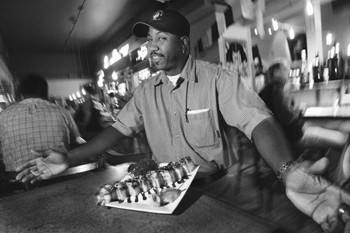
Solving the Problem: Mike Smith, an organizer of the healthcare crisis conference, wants to look deeper.

Health-wise

A conference tackles the troubling healthcare crisis

By Joy Lanzendorfer

In July, 600 more patients will find themselves scrambling for healthcare. As part of a $3 million budget shortfall, three mental health clinics in Guerneville, Cloverdale, and Petaluma will close. Though 10 clinics remain open and some in-home services will fill the gap, it’s likely that with the closures, many patients will not get the treatment they need.

The closures are the latest in the continuing erosion of Sonoma County’s healthcare services. Six hundred mentally ill people lose access to care here; 600 elderly people lose health services there; an abortion clinic closes here; employees can no longer afford higher insurance rates there. Each new problem is another cut into the already limping system, which continues to stumble forward like some gasping giant ready to fall.

“People in this county need to look at whether they want a First World or Third World healthcare system,” says Skip Robinson, Ph.D., a lecturer in psychology at Sonoma State University. “Sonoma County is among the top 10 richest counties in California. We can afford to do the right thing with our healthcare.”

But there seems no end in sight for healthcare troubles. Not only are the same problems still here–hospitals are struggling, personnel is hard to come by, costs are rising–but now the bad economy and state budget crisis are making things worse. In an effort to combat these problems, SSU and Santa Rosa Junior College will be holding a two-day healthcare conference May 9 and 10 at SSU. It will be a follow-up to the conference held at SRJC last October.

“At the first conference, we described the problems but didn’t go into how to solve them,” says Mike Smith, a conference organizer. “In this conference, we will go in-depth and look at possible solutions.”

A series of panels will cover the different issues. Speakers include legislators, medical professionals, labor representatives, professors, businesspeople, researchers, and others.

One panel will look at promoting prevention, one of the most cost-efficient practices in medicine. Many diseases can be lessened or avoided altogether through ongoing treatment and lifestyle changes. Though prevention can sometimes be expensive to set up or maintain, that cost is usually much lower than when health problems are left to fester.

For example, closing the three mental health clinics may decrease costs for the state now but may cost more in the long run if some mental illnesses go untreated. “It’s penny wise and pound foolish,” says Robinson. “If the board of supervisors did a study of the increased price of incarceration, legal proceedings, and hospital stays from untreated mental illnesses, they would find those costs to be much higher than running the clinics.”

The forum will also look at legislative solutions to the healthcare crisis, ranging from statewide or national healthcare systems to different taxes. Some of the local taxes that have been suggested include a sales or parcel tax to prevent the closing of the clinics, and a trauma tax to save emergency rooms and help small hospitals.

New taxes are notoriously difficult to pass. Still, some communities have taxed themselves to help their healthcare system. In 2002, Los Angeles passed a trauma tax by 73 percent to save their emergency rooms.

“Everyone said that tax wouldn’t pass, but it did,” says Smith. “Sometimes people will spend money to save healthcare.”

Another panel will look at improving healthcare access for the elderly. Sutter plans to close its Senior Center, which treats more than 600 patients. On top of that, the collapse of Health Plan of the Redwoods that led to huge increases in insurance rates and a reduction in Medicare benefits has deeply affected local seniors.

“Healthcare is the primary concern among the elderly,” says Shirlee Zane, executive director of the Council on Aging. “It’s getting harder to find good physicians who take on the elderly patients unless they have private insurance.”

The panel will discuss regulating major drug companies and the cost of medication and changing Sonoma County’s Medicare status from rural to urban so that Medicare reimbursement will rise, among other solutions.

Though everyone agrees it’s difficult to change parts of the healthcare system, it’s gotten to the point that something needs to be done.

“At this point, the state of our healthcare is a deep shame on our community,” says Robinson. “We have to go in these directions and ask these questions. It’s the moral thing to do.”

The Health Care Crisis in Sonoma County conference takes place May 9-10, 9am-5pm at the Cooperage on the Sonoma State University campus. The $10 donation includes lunch and refreshments. In addition to Zane, Robinson, and Smith, other speakers include Lynn Woolsey, Jack Burrows, Gil Ojeda, and Dale Iverson. For more information, call 800.464.7717 or visit www.sonoma.edu/programs/healthcrisis.

From the May 8-14, 2003 issue of the North Bay Bohemian.

© Metro Publishing Inc.

Marin Headlands Center for the Arts

0


Squirrely: ‘Untitled’ by Clare E. Rojas was started and finished within a week of the show’s opening.

By the See

Headlands Center for the Arts rocks the eye

By Gretchen Giles

A 21-year-old public arts institution shamefully neglected in these pages, the Marin Headlands Center for the Arts is an architectural marvel of shabby chic glory with pressed-tin roofs, ornate free-standing radiators, silled windows, fabulously ruined wood floors, and ages of old paint now sanded back to better illustrate the many coats of green and white once laid upon them.

One should certainly feel guilty about going all Martha about the four spare military buildings, each over 100 years old, that compose the center’s compound of studios and exhibition spaces at Ft. Barry on the Marin Headlands. Then again, one should have more to see in such a place than just the architecture. At the recent Spring Open House, some visitors were taking Polaroids of the walls–not what was on the walls, but literally the walls themselves, as they mostly upstaged what was hung upon them.

The work showcased veered wildly from the magnificent to the mundane to the simply outrageous, such as Nathan Lynch’s live performance piece “Where Is Your Wheel?” which on this day involved a film crew following the young man and his 2-foot-high pine-wheel-on-a-rope around the compound while he wore what the literature called his “signature” orange helmet. Stunts of this order are what make red-faced legislators demand fund cutting for the arts.

Clare E. Rojas and Siobhan Liddell, each working in the ballroomlike “Project Spaces,” have only just arrived to complete month-long residencies through late May. Each will give a talk on her respective work May 15.

Rojas, who appears almost shockingly youthful in person and who refused to give her age when asked, works the narrative landscape of the fairy tale in her small canvases. Using the multidisciplines of visual art, film, and music, she plans to create song cycles to accompany her flat paintings with their Russian-doll-like female characters–angry-faced, potato-bodied brunettes often sitting on beds or toting ladders–and to present a cinematic accompaniment. In the meantime, she’s run up a nice set of curtains for the front windows.

Liddell, who had only been onsite for two days in advance of the open house, works with the “nature of paper,” concentrating on “light, geology, yearning, energy, and absence,” according to her artist’s statement. Among the wonderful advantages of the Marin Headlands Center for the Arts is that Project Space artists have open studios five afternoons a week, so the unfolding of Rojas’ and Liddell’s vision can be publicly tracked.

Given glowing coverage in the January/ February issue of the art magazine Sculpture, Sanford Biggers’ artist-in-residence tenure at the center is hotly anticipated to produce some rough beauty. Melding such disparate interests as Buddhism, hip-hop culture, and the African diaspora, Biggers works with objects, dance, and video, and has lately been concerning himself with the Zen meditation on the circle.

Recent MFA graduates are also given quarter here, and the infinitesimal rock formations of Oakland sculptor John O’Malley offer that stomach-thrill of the real thing upon entering his cell-like studio. Using actual rocks, O’Malley appends tiny landscapes and figurines upon them, some of which can only be seen through magnification, to create huge evocations of other worlds upon the small plateaus that he’s plucked from the earth.

Up the road from the two main buildings, a storage depot has been superbly refitted by artist Leonard Hunter and architect Mark Cavagnero to accommodate affiliate artists who rent studio space at a greatly reduced price, providing them not only a terrific workspace but the benefit of a gathered community.

Choreographers, writers, and filmmakers also work here. For whatever reason–perhaps because they have to be established enough to pay for it?–the work exhibited by the affiliates is enormously stronger than that of the resident buildings.

For example, though sitting in a room all day sewing may have driven plenty of Victorian women mad, affiliate Anna Von Mertens’ textile sculpture shows a generous sanity. Concerned with the homey intimacy of the bed, Von Mertens stitches elaborate quilts depicting bird migration patterns, the dark map of astronomy, and even the dimensions of the earth’s surface.

Von Mertens purposefully uses no shortcuts, feeling that the labor involved to create her pieces imbues them with a further immediacy. Onsite through June, her work alone is worth the trip out to the Marin Headlands.

Clare E. Rojas and Siobhan Liddell discuss their work on Thursday, May 15, at 8pm on the second floor of Building 944. Project Spaces are open to the public Tuesday-Friday and Sunday, noon to 5pm. A salon evening with Sanford Biggers and photographer Susan Schwartzenberg is slated for Tuesday, May 27, at 8pm. Headlands Center for the Arts, 944 Fort Barry, Sausalito. These programs are free. For details, call 415.331.2787 or go to www.headlands.org.

arts etc.

Moving Days

By Sara Bir

Well, that’s it–the heart of downtown Santa Rosa has officially lost its soul. The Last Record Store, an institution for 20 years, is moving to 1899 Mendocino Ave. on June 1. “It’ll be us, Community Market, and Video Droid–three good organizations in a row,” says Hoyt Wilhelm, a familiar face to anyone who has bought music in downtown Santa Rosa. “Community Market knew we were going to move, so they called us and told us the space was available.”

The store had lost its lease at 739 Fourth St. in December (there’s a little matter of landlords Empire Property Management booting out neighbors the Old Vic that’s still very much a sore spot with Santa Rosa folk). “We knew it was just a matter of time, we’d better find a place or wind up like the Vic,” says Wilhelm. “It’s a sad day for downtown, but it’s a good day for Mendocino. There’s going to be no youth culture downtown.”

Now for some less poignant news: Exciting things are happening over at the Sonoma County Repertory Theatre. As part of a major expansion program, Jennifer King has been appointed executive director. She’ll be overseeing the “overall artistic vision and fiscal health of SCR.” King will coordinate the artistic effort with founder Jim dePriest, who continues as artistic director.

King comes from a solid theater background–from 1999 to the present, she worked with the Dallas Theater Center and California Shakespeare Theater in Berkeley and Orinda–and has a long history with SCR.

In addition to acting and directing in some of the company’s biggest hits, she helped develop the Young Actors Conservatory before leaving five years ago.

From the May 8-14, 2003 issue of the North Bay Bohemian.

© Metro Publishing Inc.

‘X2’

Dos Equis

‘X2’ offers top-of-the-line entertainment with a bit of a paranoid political edge

By

A quick introduction in X2 restates the plot of the first X-Men movie: the dreaded war between Homo sapiens and Homo superior is ready to break out. Only the dedicated efforts of Professor Charles Xavier (Patrick Stewart), the world’s most powerful psychic, can stave it off.

Xavier’s assistants are Storm, a weather witch (Halle Berry); the straight-laced preppy Scott Summers, known as Cyclops (James Marsden), who can fire a power ray from his eyes; the physician and telekinetic Jean Grey (Famke Janssen); and the energy vampire Rogue (Anna Paquin). In the background, we glimpse the brooding warrior Logan, known as Wolverine (Hugh Jackman).

After the pretitle intro, the first real dialogue quotes Abraham Lincoln’s first inaugural address. As in the better Civil War movies, we understand what both sides are fighting for. X2‘s writing and characterization pay tribute to the sturdy pulp fiction of comic-book writer Chris Claremont, who scripted the X-Men comics for Marvel during the series’ most worthwhile period, from 1979 to 1983. These stories, reflecting Reagan-era scoundrelry, are soaked in political paranoia.

Paranoid times are back; thus X2 is as zeitgeisty now as the Planet of the Apes series was in its time. The opening sequence of the White House under a one-mutant siege by the devilish Nightcrawler (Alan Cumming) is so satisfying that it’s practically a breach of the Patriot Act. The Nightcrawler’s assault unleashes the hawkish presidential adviser Stryker (Brian Cox), who has been torturing the secrets of the Xavier School for Gifted Children out of the imprisoned Magneto (Ian McKellen).

Stryker is determined to use Xavier’s technology to locate and liquidate the mutants of the world. Meanwhile, Magneto escapes and rallies a counterassault with the help of his former foes and of his consort, the blue-skinned chameleon Mystique (Rebecca Romijn-Stamos, greatly improving as an actress).

The film’s level of acting shames most superhero movies. Cox is ordinarily shuddery enough, but he’s especially fearful here, giving McKellen grounds to evolve from villain to antihero. Magneto becomes as indomitable as a general. One savors McKellen’s theatrical richness as he bends a wavering young mutant with wicked advice: “You are a god in a world of insects.” As for Jackman, it’s tempting to see him as a stockier Clint Eastwood, yet isn’t he better at the late-period, award-winning Eastwood–the guilty, haunted Eastwood–than Eastwood himself ever was?

While X2 is a metaphor for political discrimination against those who are gay or the wrong color, the film also features a sly but apt borrowing from Arthurian lore to flesh out the story. The film serves up a hell of an adventure, rich in all categories, with digital animation at a new peak of skill and with the fight sequences always having something at stake.

Director Bryan Singer has once again made a successful collaborator with composer and editor John Ottman (his partner on The Usual Suspects). What’s most important is that the thrilling action here hangs on a skeleton as sturdy as Wolverine’s adamantium bones.

‘X2’ opens Friday, May 2, throughout the North Bay.

From the May 1-7, 2003 issue of the North Bay Bohemian.

© Metro Publishing Inc.

School Budget Woes

0

School of Hard Knocks

Schools struggle to bridge the budget gap

By Joy Lanzendorfer

Montgomery High School librarian John Koetzner may not have a job after May 15. On that day, school districts all around the state will let employees know who will be keeping their jobs and who will be either moved to another position or out of work completely.

Koetzner knows his position is up for possible elimination because he received a preliminary notice on March 15 telling him so. State law requires all districts to inform anyone by that date if their position is being considered for termination.

The law also requires boards to inform employees of final decisions by May 15. This year, because of the uncertainty surrounding the budget crisis, schools were forced to prepare for the worst by sending notices to more people than they will lay off, leaving many employees in limbo.

Koetzner knows he won’t be laid off completely. With 27 years of teaching under his belt, his longevity ensures that he will still have some sort of position at Montgomery High. He might be in the library part-time, or, since he taught English for many years, he may be back in the classroom.

“If I move into a teaching position, it will probably bump some other younger teacher out of a job,” he says. “Either way, someone ends up losing out. And the lack of librarians will be hard on the students and other teachers. Librarians are a dynamic part of the school process.”

Piner High School’s librarian, Tony Sousa, also received notice that she may lose her job after May 15. But she may also keep her job or be moved to part-time status or to another department. She just doesn’t know.

“I hope the school board is working on behalf of the teachers and librarians,” she says. “I have to have faith that there are some people representing us. I’m not privy to the meetings between the unions and the school boards, so I don’t know. But I hope they are.”

While most school employees don’t blame the school administration, the uncertainty of their situations is still putting them in a difficult place emotionally.

“The people who received notices will be in limbo until at least May 15,” says David Stirrat, a teacher at Casa Grande High School who did not receive a temporary notice in March. “The human toll is the hard part. Teaching is a hard job, and it’s been a hard year anyway. For a teacher, getting a pink slip is like a slap in the face. Even if that person understands logically why the district had to do it this way, it still feels like you’re being told that you’re not wanted or needed.”

There’s no doubt about it: It’s a bleak time for education across the state. Every day there seems to be more bad news. Teachers, librarians, and counselors may lose their jobs; class sizes will probably increase; music and art programs might be cut; other programs, from school counseling to healthcare to reading programs, are on the chopping block. On top of that, some districts are losing students and, consequently, money.

Still, many are asking if there are other options besides cutting resources. Could more administration be cut, or could districts share more costs among each other? Are certain programs being overlooked that should be considered for cuts? Could some of Sonoma County’s 40 school districts be combined, eliminating excessive and duplicate administration and leading to a more efficient system overall?

Education is important; all the politicians say so. In 1998 Governor Gray Davis made education his “top priority,” saying he planned to “restore our public schools to greatness by raising our expectations of students, increasing funding, and requiring more parent-teacher-student interaction.” In 2002 it was his top priority again, with plans to “continue improving our schools by reducing class sizes, providing incentives for higher student performance.”

But a sluggish economy, the energy debacle, and other factors led to the current budget crisis, and now the governor has a $35 billion budget gap to fill. As a result, California schools are facing a $5.4 billion cut, which is large enough to trickle down to every public school in the state.

Local school districts are facing a variety of cuts depending on the size of their budget. Santa Rosa City Schools, for example, is looking at cutting between $9 million and $12 million from its $127 million budget. Petaluma City Schools will have to trim $2.6 million from its $55 million budget. Old Adobe Union School District will probably have to cut $900,000 from its $13.8 million budget.

Each district is preparing for the cuts in different ways, but some things are common among them. Since 75 percent to 85 percent of most school budgets are made up of personnel costs, most districts had to look at laying off teachers and other employees who work directly with students.

At this point, 344 teachers in Sonoma County have received lay-off warnings. In some cases, the cuts will just affect temporary teachers. In other cases, as in Santa Rosa City Schools, 50 teachers have opted for early retirement, reducing the number of teachers to be laid off, but most library and counselor positions might still be eliminated. Petaluma City Schools sent out notices to 74 teachers, including 49 in full-time positions, but will probably lay off closer to 10 to 20 teachers.

The problem is that even now no one really knows what’s going to happen. Generally, the state doesn’t allow schools much time to plan for budget problems because it waits until midyear to inform them about next year’s budget. This year is particularly bad because the state is requiring schools to have completed budgets by June 30, when the state itself may not have a budget by then. In other words, the law requires districts to make decisions based on information they do not have.

By March 15, most districts didn’t know how big the cuts would be or how they would handle the problem. But since they were required by law to inform anyone they might lay off by that date, they sent notices to more employees than necessary to cover the worst possible scenario.

“When it came to laying off the teachers, educators were saying to the state, ‘OK, give us some leeway on the March 15 deadline,'” says Sandy Hill, assistant superintendent of human resources for Petaluma City Schools. “But the state wouldn’t do it. It’s very difficult to make these decisions without the right information. And even now, there’s still some things we don’t know about, like whether the class size reduction is going to be in the budget or not, which will have a huge impact on the budget if it is.”

However reasonable the district’s actions, the layoffs have caused a lot of controversy as teachers and employees responded to their pink slips. Many were upset with how their district made its decisions. For example, when choosing which teachers to possibly lay off, Petaluma looked at whether the teacher had the CLAD certification, a state requirement that helps teachers with non-English-speaking students. Because CLAD certification is a new requirement, many teachers don’t have it yet and felt it was an unfair criterion.

“Some teachers with five years’ classroom experience without the CLAD were given notices, while others with two years’ classroom experience but have the CLAD were not,” says Stirrat. “It seems like the district sent notices to people with the CLAD and then realized their mistake and sent out more notices, and ended up compounding one mistake with another.”

The district admits that they sent out two batches of notices before March 15 but says it had nothing to do with the CLAD test.

While some are focusing on who may be laid off, others are questioning what the district is cutting in the first place and wondering if there are other options that have been overlooked.

“Everyone always says we should avoid impacting the classrooms,” says Koetzner. “But then you look around at what’s being cut, and it’s all things that affect the classroom, like reducing librarians, counselors, and teachers. It makes me wonder if the budget is being questioned enough.”

In the case of Santa Rosa City Schools, despite the budget cuts and plans to lay off personnel, some programs remain untouched and new ones may soon be created. But there seem to be good reasons for it all. For example, one program that is untouched is Project Achieve, which was designed to raise student academic achievement. Though the program adds additional testing on top of state-required testing, its costs are relatively minimal, only around $25,000-$30,000 per year.

Then there is Santa Rosa’s reorganization plan, which is in the beginning stages and includes many different proposals. Some of these include the new west-side middle school and the controversial “newcomer” school, a voluntary one-year program that would offer non-English-speaking students an opportunity for English-only instruction.

While a budget crisis may not seem the time to take on new projects, reorganization is important for the school district because students are leaving the district in droves. The district estimates that though some new students have entered the district, 1,400 students, particularly from the west side of Santa Rosa, have left for other districts or private schools. And each child that leaves means $4,000-$6,000 less in funding for the schools.

There are a number of reasons students are leaving the Santa Rosa district. Neighborhoods around some of the elementary schools are now “mature,” meaning that the children have grown up and left the area. And some of the test scores on the west side are lower than the county average, which has also resulted in less funding. But most commonly, the student flight has been attributed to parents reacting to the high number of non-English-speaking Hispanic students enrolled in the schools.

“Rightly or wrongly, the number of Hispanic students has created a concern in parents that the instruction will not be as good, especially on the elementary-school level,” says Santa Rosa School Board president Hugh Futrell. “It may be due to racial stereotypes.”

With students leaving and money diminishing, the district has had to look at creating new options to stop the problem. But since reorganization uses existing resources, it is little threat to the budget right now.

A number of ideas have been offered to mitigate the huge sums of money that need to be cut from school budgets. Santa Rosa school officials are proposing a parcel tax measure on the November ballot. More people are also asking why there aren’t more cuts in administration.

For instance, some have accused Santa Rosa City Schools of not cutting enough administration, since, according to the Press Democrat, only one school administration position will be cut, saving $116,000. School district officials, however, say that administration has been heavily cut.

“We’re trying to reduce administration costs to a minimum,” says Futrell. “But to begin with, it runs pretty lean. I can say that the percentage of administrative cuts has been much greater than the cuts to the educational program.”

When asked about administrative cuts in the budget, Santa Rosa Assistant Superintendent Doug Bower couldn’t say if the administrative cuts had been quantified, but by shuffling through the budget, he was able to count up $500,000.

But if individual administrative cuts either in districts or on school sites have been exhausted, what about combining some of the district administration to generate more money?

Sonoma County has 40 school districts ranging from one school with 11 students to 17 schools with 13,000 students. Of the 58 counties in California, Sonoma County has the fifth highest number of school districts, right behind Kern, Los Angeles, San Diego, and Tulare counties, according to the Superior Court of Sonoma County’s Grand Jury final report on the public school districts.

Napa County, by contrast, has five school districts, and Marin County has 16. The city of Santa Rosa, with a population of 160,000, has 10 districts alone.

“In the early 1900s, there were actually more school districts in Sonoma County than there [are] now,” says Sonoma County Superintendent Carl Wong. “Our county seems to have a cultural history that is community-centered and independent in spirit, which explains all the districts.”

And with 40 different sets of administration, it’s likely there are some job duplications among the schools. The Grand Jury found that while combining single-school districts would probably not save very much money–each school would still need two principals and separate sites–combining other districts could end up saving quite a chunk of money. Rincon Valley Union School District could save $500,000 if combined with another district, which is also the amount the district will be cutting from its budget next year.

District consolidation seems a good way for schools to save money without disrupting the classroom. The schools would stay basically the same, only management might change. The money that was funding duplicate administrative costs would go to the classrooms instead. And, contrary to popular belief, smaller districts don’t necessarily mean better test scores. Multischool districts actually rank higher in academic performance on the elementary school level, according to the Grand Jury.

But others are quick to point out that the larger districts are laying off even more school employees than the smaller districts. Combining districts could mean less innovative changes in education and might risk the loss of educator’s individual voices.

“It’s not just what is the most efficient way to use educational dollars, but what is the most effective way,” says Chris Rafanelli, Rincon Valley School Board member. “I’ve been a teacher for both large and small districts, and the smaller district was much more responsive to the needs of that specific group of students.”

But the debate over how much combining districts would help Sonoma County’s budget crisis almost becomes moot when you look at how difficult combining districts is in the first place. Letters of intent must be filed, studies must be conducted, subcommittees formed, reports written, and districts consulted, all before the question ever comes before the voters.

“I think it’s absurd that we have so many districts,” says Futrell. “Practically, however, it would be very difficult to consolidate the districts. Ideally, it would no doubt help reduce administration costs.”

But the Grand Jury is taking steps toward seriously considering consolidating some districts. In the meantime, the jury recommends more cost sharing among the districts.

“After school boards have done everything they can to save money, the local boards of education in this challenging budget climate might decide it’s time to talk to another district,” he says.

With attempts to trim some of the unnecessary bureaucracy slow in coming, there aren’t many options now for schools other than trying to avoid slashing classroom costs as much as possible. But it doesn’t look like the problem is going away soon.

“There’s nothing more disappointing and difficult for a school board than budget reductions like the ones we are currently making, which we know may affect the classrooms,” says Futrell. “It’s just something nobody wants to do.”

From the May 1-7, 2003 issue of the North Bay Bohemian.

© Metro Publishing Inc.

‘Identity’

0

Head Games

Corpse chronicler Mary Roach dissects the cadaver-packed fright flick ‘Identity’

Writer David Templeton takes interesting people to interesting movies in his ongoing quest for the ultimate postfilm conversation. This is not a review; rather, it’s a freewheeling, tangential discussion of life, alternative ideas, and popular culture.

“Bodies. Dead bodies! Oh my God!” cries author Mary Roach, standing atop a short, grassy knoll around which two dozen human shapes–most of them faced down, one or two faced up–are scattered about in every direction. “It’s a body farm!” yelps Roach, staring wide-eyed for a few seconds before trading that expression in for a wicked, happy grin as she adds, “But hey, it really doesn’t smell too bad.”

Thankfully, Roach is only kidding around. The splayed corpses we see are really just the sleeping bodies of sun-soaked recreationists, enjoying a quiet Sunday afternoon in the park. The day is sunny and quite warm, precisely why we’ve chosen this spot to sit and talk about Identity, a nifty new horror movie starring John Cusack and Ray Liotta.

Maybe it’s not too strange that Roach, a San Francisco-based science writer with a well-developed silly streak, would imagine that all the sleeping people around us are dead. After all, we’ve just seen a film in which 10 desperate people stranded in the rain at a desert motel take entertaining turns being beheaded, gutted, strangled, shot, smothered and, uh, toasted alive.

If that wasn’t enough to skew her view, Roach has just spent two years among the dead–whole and in parts–as research for her sensational new book, Stiff: The Curious Lives of Human Cadavers. As funny as it is, well, kind of creepy, Roach’s 12-chapter free-for-all is a study of the ways that dead human bodies, from ancient days to the present, have given their all in the pursuit of important scientific, medical, industrial, and philosophical knowledge.

In her research, Roach spent time with plastic surgeons as they practiced giving face-lifts to the sawed-off heads of recent body donors, and she visited a very real “body farm” in Tennessee, where scientists study the process of human decay. In other words, Roach really knows her way around the nonliving.

After we’ve settled down on the grass with our cups of coffee, I begin by saying, “First, I want to ask about one specific moment in the film.”

“The head?” she asks.

Yep. The head.

Early in the film, the gnarly noggin is discovered as it’s going through tumble-dry in the motel’s coin-operated clothes dryer.

“I knew it was a head banging around in there–ka-thunk! ka-thunk!” Roach smiles, kind of sweetly. “I guessed it was a head because of the weight. Because of this book, I now know how much a human head weighs. And that noise was way too heavy for a hand or a foot. What else could it be? A torso wouldn’t fit in that particular large appliance, so it pretty much had to be a head.”

“How much does a head weigh?” I have to ask.

“About 11 pounds,” Roach replies. “Roughly the same as a bowling ball or a large roaster chicken.”

Good to know. But why do severed heads freak us out so much? Even Shakespeare–who could melt an audience with his words–was not above tossing a few heads onstage when a play needed a bit of a jolt in the third act.

“Heads are difficult under any circumstances,” Roach muses. “When I was doing my research, the woman who was setting up the plastic-surgery practice lab–depositing each head in its own aluminum roasting pan–admitted that she only copes with her job by thinking of the heads as wax.

The head and the hands,” she continues, “across the board, are what people who work with dead bodies find the most difficult to deal with. The head and the hands are the parts we most often see of a person. It’s very hard to make heads or hands impersonal.”

“Why,” I ask her, “do you think the severed head has become such an effective horror-film cliché?”

“A head is the thing we recognize people by,” she says. “Remember that scene in Apocalypse Now, when Marlon Brando drops that guy’s head in Martin Sheen’s lap? ‘Here’s his head! Here’s his face! Auugghhh, it’s in my lap!’ It’s horrifying because a head is the brain, and it contains the personality of a person.

“A severed knee,” says Roach, smiling, “is just never going to have that same effect.”

From the May 1-7, 2003 issue of the North Bay Bohemian.

© Metro Publishing Inc.

Will Oldham

0

Master of Every Song

Will Oldham does not want you to see songs, only hear them

By Sara Bir

Palace Music, Palace, Palace Brothers, Bonnie “Prince” Billy–take your pick. Ultimately, it’s all Will Oldham, though that’s not what Oldham would likely believe himself or have you believe. Critics enthrone him, indie-rock hipster kids worship him, and the mainstream music outlets of America don’t recognize his name–er, names.

There’s a lot of pressure in writing about Oldham, because his fans are the sort who could easily pinpoint an ill-informed critic. The unlikely details of Oldham’s background are scattered over a trail of interviews in which Oldham affects record levels of squirreliness. Imagine, then, how it feels to be Oldham, to make music that’s so loved and fixated on–music whose identity the public cannot manage to extricate from the real Oldham himself, whoever he is.

But facts first: Will Oldham is undeniably a weird dude, and that can be distilled just from first glances at his trademark unkempt appearance. There’s not a lot of hair on the top of his head, but there’s plenty in the back and a bushy mess of it up front (usually, at least) in the form of a crazy-man, Walt Whitman-style beard.

Oldham’s background as an actor–in 1987, he played a leading role in the film Matewan–could account for his tendency to adopt a stable of personas for recording and performing. He’s released three albums under the Bonnie “Prince” Billy moniker: 1999’s I See a Darkness, 2001’s Ease down the Road, and this year’s Master and Everyone, which thematically walks the middle ground between the earlier two.

Prior to these, he put out one album under his given name but primarily worked under variations on the Palace Brothers name, often recording with his brothers Ned and Paul. Since the Palace days, Oldham’s songs have become more stripped-down, musically; Master and Everyone is bare-bones in its musical accompaniment, but its focus on the eternal conundrums of domestic issues has a lived-in feel that’s frequently mistaken for American roots music.

Oldham’s compositions are so evocative that they make listeners remember things they were never around to forget and recall feelings they never experienced firsthand. There’s a sense to his narratives that Oldham’s singing his own life stories straight up, even though he’s not, a gift the songwriter shares with such modern-day troubadours as Nick Cave and Tom Waits.

Oldham’s lyrics are often oddly sexual too–or sexual and odd; it’s hard to tell which. Erotic declarations and blunt desires crop up midverse from nowhere, though their presence is never as disruptive as it is placidly brazen. “She was a fine-looking lady / and she liked to go down on me / and I liked to go down on her, too” he sings with a wistful bluntness in “A King at Night.”

There’s a sincere fragility so clear in Oldham’s voice–almost mouselike at times–which, when sung over his narratives, makes the songs faraway and mysterious and familiar all at once.

Notoriously reticent during interviews, Oldham rarely consorts with the media these days; the notion of celebrity and its corrosive power upon an artist’s vision seem to sicken him. When he is available for public comment, the results can be befuddling and cryptic.

“What makes a record different has to do with people and time of year and weather and just time,” he was quoted in online magazine Neumu. And in a note printed on fancy letterhead that came with our Bonnie “Prince” Billy press pack, Oldham cryptically scribbled, “Nobody is supposed to see, ever, just hear, which is why we make records.”

That’s the enigma of Will Oldham. He’s a tough nut to crack, though with a seemingly endless chain of recordings to scrutinize, it’s impossible not to examine the evidence and try.

Bonnie ‘Prince’ Billy will play at the Old Western Saloon in Point Reyes Station, 11201 Hwy. 1, on Tuesday, May 6. Brightblack and the amazing harpist Joana Newson, who is very much worth checking out herself, open. Show starts at 8pm. $5. 415.663.1661.

From the May 1-7, 2003 issue of the North Bay Bohemian.

© Metro Publishing Inc.

Iris Stewart

0

Moving in the Spirit

Author-dancer Iris Stewart celebrates the power of divine motion

Talk about a women’s movement. In her 2000 book Sacred Woman, Sacred Dance, Petaluma author Iris Stewart masterfully chronicled the history of sacred dancing and its connection to women of all religions throughout the ages. The book struck a deep chord, resonating with women hungry to express their own spirituality in a way that connected to who they are as women. In the book, Stewart described an undeniably growing sacred dance renaissance, and predicted the continued rebirth of modern sacred dance and its spread throughout the country and the world.

Today, her book is as popular as ever, and the phenomenon of sacred dance is, as predicted, establishing ever stronger footholds–pardon the pun–in community centers and yoga classes, in dance studios and public parks (see sidebar), even within the very same churches and hallowed halls that once would have banned sacred dancing and burned the practitioners.

“They’re dancing in all the churches now,” Stewart says with a look of delighted, wide-eyed wonder and pride. “Methodists, Catholics, Protestants–they’re all dancing!”

Well, perhaps not all of them, but enough to create a sizable shock wave on the cultural-spiritual Richter scale. It’s undeniable: Though sacred dance has technically always been around, it’s suddenly around in a very big way.

Sacred dance, simply put, is dance as a form of prayer, a form of connecting with the rhythms of the Creator–or Creators or whatever and whomever you embrace as a higher power–and to creatively encourage the integration of mind, body, and spirit. In literature from the Sacred Dance Guild–actually founded in prehippie, pre-New Age 1958–dance is described as a “language of faith and celebration.”

Iris Stewart speaks that language fluently.

A self-described “refugee from the Southern Baptist Church,” Stewart abandoned spirituality at the age of 16, a response to Christianity’s condescending attitude toward her as a woman. For years, she believed in nothing beyond her own mind and her emerging feminist principles. Stewart’s spiritual healing, if that’s the right term, came about in the late 1980s, when, more or less on a lark, she enrolled in a belly-dancing class.

“I was having chronic fatigue syndrome,” she explains, “and I noticed that when I went to dance class, I came out feeling better–not depressed, not tired.” The second major influential event was one of those classic out-of-body experiences, one that occurred, predictably enough, while she was dancing.

“It was many years after I’d started dancing, and I was performing in an old church that had been turned into a cultural center,” Stewart says. “I was doing a veiled dance to Ravel’s Bolero. I was doing choreography that I’d done many times, the audience was there watching, but this time it was different. This time I just felt myself kind of floating up to the ceiling. I thought, ‘Oh, this is nice. I’d like to stay up here.'”

In the introduction to her book, Stewart describes the moment as one of profoundly spiritual peace, writing, “I didn’t know what was happening. I just knew I wanted to stay with the sensation I was experiencing. Of course, that was impossible, but I began to be able to call on that sense of peace more and more often on my journey to healing.”

Eager to learn more about what had happened, Stewart hit the books, quickly discovering countless tales of people who’d had intensely spiritual experiences while engaged in the act of dance. All of that led Iris Stewart to literally write the book on sacred dance.

She wasn’t the first, of course. Gabrielle Roth, a pioneer of the modern sacred-dance resurgence, has written extensively on the subject and produced numerous CDs of sacred-dance music. What Stewart brought was intellectual heft and anthropological oomph, producing a vigorously researched book that resembles a textbook, but makes you want to move your body while you read.

Since the publication of Sacred Woman, Sacred Dance, Stewart has become one of the country’s most sought-after lecturers on the subject of women and dance. Through her website (www.sacreddance.com), she’s reached a legion of sacred dancers from all four corners of the planet. “I hear from people from all over the world,” she says. “From England, Belgium, Brazil, and Japan. It’s just an amazing phenomenon.”

Stewart believes that there is a direct correlation between the recent reintroduction of dance into the practice of certain mainstream Christian churches and the fact that more women are being ordained and put into leadership positions within the previously all-male clergy. If it’s true that male clergy seldom recognized the value of dance as a spiritual practice and that it is the female church leaders who are now slipping the practice of sacred dance back before the altar, it would lead one to assume that women share an intimate connection to dance that men don’t–or can’t–have.

Stewart is careful not to draw so bold a distinction between men and women.

“I do think there is a strong spiritual connection between women and dance,” she says, “but there are men who are involved in sacred dance in the churches now. And certainly, men do need it. Sacred dance is a human experience. Men and women both can know the power of it.”

That said, the book makes a strong case for the notion that throughout history and across the globe, sacred dance has been a practice uniquely honored and passed down by women.

“The book was written to explore the history of women’s dance as an expression of spirituality,” she says. “It’s one way of tracing the history of women’s ways of expressing the divine. Women do have their own way of expressing the divine, and dance has been an important part of that.”

Good enough. But what exactly is sacred dance, and how does it work?

“For people who don’t understand sacred dance,” Stewart says, “for those who haven’t experienced it, I describe it as an easy high.

“And then,” she adds, “as you get more and more into it, you will begin to feel that there is an opening of the spirit, through the body. That’s what sacred dance is–an opening up of the spirit and the body. It’s been done that way for millennia, all over the world–and happily, it’s happening again, now, all over the world.”

Sacred Circle Dancing–Second and fourth Tuesdays of the month at 7:30pm at the Gravenstein Yoga and Movement Center, Gravenstein Highway South, Sebastopol. Call Richard Feather Anderson at 707.523.4364.

Dances of Universal Peace–The second and fourth Saturdays of the month at 7:15pm at the United Methodist Church in Sebastopol, corner of Healdsburg Avenue and High School Road. Check the website at http://sufisonoma.org

Dance for Body & Soul–Lead by Zuza Engler, an instructor in “Trance-formative Inner work,” Dance for Body and Soul takes place Wednesdays at 7:30pm at Kuk Sool Won School of Martial Arts, 348 Petaluma Blvd. N., Petaluma. Call Zuza Engler at 707.789.0809 for more information.

Gabrielle Roth’s ‘Sweat Your Prayers’–Takes place at two locations: the Sebastopol Community Center Youth Annex, the third Friday of the month, and in Mill Valley at the Moving Center, also on the third Friday of the month. For questions about the Sonoma County class, call Leslie King at 707.823.3963; call the Moving Center in Mill Valley at 415.288.0431.

PanEuRhythmy–Developed by the late Bulgarian teacher Peter Deunov, PanEuRhythmy is a sacred dance built around the principles of love, wisdom, and truth. Author and teacher Arddella Nathanael leads outdoor PanEuRhythmy sessions at various Marin and Sonoma County park locations. Call Arddella Nathanael for times and places. 415.499.8027.

The Planetary Dance with Anna Halprin–An all-day event–taking place concurrently at various spots around the globe–the North Bay’s Planetary Dance, with dance-alchemy legend Anna Halprin, will make its mighty magic on Mt. Tamalpais in Mill Valley on May 4. The free event is open to all. Call 415.461.5362 or check the website at www.annahalprin.org.

West Coast Circle Dance Camp–Takes place June 25-29 in the High Sierras. Call John Bear at 510.528.4253 or check the websites at www.farhorizons.org and http://circledance.tripod.com/info.

Sacred Dance Guild Festival–July 17-22 at Scripps College in Claremont, Calif. The annual festival–this year titled “Paths of Radiance”–features a week of classes and workshops devoted to the art or sacred dance. Check the website at www.sacreddanceguild.org.

From the May 1-7, 2003 issue of the North Bay Bohemian.

© Metro Publishing Inc.

Fish and Chips

0

Michael Amsler

Batter Up: Betty’s Fish and Chips is still going strong, as good as when this photo was taken.

Something’s Fishy

Seeking the lightest of fishes and chips

By Sara Bir

How many of you here are British? What, three? Great, then. We won’t be ruffling any feathers here. But we won’t be taking any cheap potshots at British cuisine either, because what’s the point? Trifle can be wonderful. And so can scones (real ones, not the mutated versions found at American bakeries), gigantic fatty roasted meats, and Branston Pickle. And fish and chips. Sometimes.

My favorite place to get fish and chips was the Old Vic, which was British, dingy, and Californian all at once. But the fish and chips themselves were excellent. Whenever I had a craving for fish and chips, it was for the Old Vic’s fish and chips.

Now that the Vic has come to rest, we must seek other sources for fish and chips. It’s been a bumpy road.

Before undertaking this damnation of my arteries, I telephoned a dear friend whose Scottish education and English husband would be of enormous informational wealth on this subject. “Tell me about fish and ships,” I said. “The real ones.”

“Hmm,” she replied. “Well, a proper chips shop–or chippy–is a hole in the wall. Open late, so you can eat there when you are drunk, though if they have beer, it’s probably just in cans. Décor: none. Like, none, nothing at all.”

“And the food?” I asked.

“The fish itself, yeah. Golden-brown, crispy batter. Chips, I dunno. Often the chips will be undercooked and mushy, all at once. Potatoes cut in all different sizes–some big, some small. Maybe not enough small ones.”

“So they are hunked up, just chipped up into random pieces?”

“Yes! A chipped-up potato. Usually I give them away.”

Hmm. “Any tartar sauce?”

“No,” she continued. “Tartar sauce would be too chichi. Malt vinegar, yes. Ketchup, maybe. If you ask for it, they’ll just squirt it all over the fish and chips for you. Same with brown sauce.”

Brown sauce, I learned, is like ketchup but less tangy and more peppery. And brown. “I don’t really know what it is,” my friend admitted.

The main difference between British fish and chips and American fish and chips is the chips; our chips are thinner and more frylike. Heretofore I will say “chips” but actually mean “chips/fries.” From my friend’s testimony, it seems that with our special American chips/fries, we are not missing out on much.

There are two other important differences: tartar sauce and coleslaw often appear with American fish and chips. And a lemon wedge, usually. I like to squeeze the lemon into my tartar sauce and dunk my chips in it.

Because we live in California, there is absolutely no sense in exactly replicating a British fish and chips shop here; adapting, yes. That is what Californians do: We adapt. My special adapted California criteria for good fish and chips are that they must (a) be cheap, (b) be tasty, and (c) furnish a dining experience not too far afield from the carefree, class-free origins of fish and chips. Oh, and beer is a huge plus.

My current favorite fish and chips are available in San Francisco at Edinburgh Castle, a Scottish pub in the Tenderloin that’s Scottish down to the surly bartenders. If you order fish and chips there, they call the Chinese-run fish and chips shop across the street. Minutes later, a tiny, stooped Chinese woman comes shuffling over bearing parcels of fish and chips wrapped in Chinese newspaper. The fish and chips will stink up the whole place, and everyone who didn’t order fish and chips will smell yours and stare at their half-empty pints and feel their half-empty stomachs tighten and wish that they, too, had ordered the fish and chips.

The Tenderloin is too damn far away, though. It was time to look elsewhere. I stopped in at the redundantly named Kitchen Avenue Kitchen and BBQ in Mill Valley. It’s a newish, funky little place– designed to be that way, and perhaps they’ve overdone it with the neon pig sign hanging in the back. I noticed they had fish and chips on the menu, an anomaly at a barbecue joint, but what the hey.

Ten dollars and 95 cents later, a plastic basket full of something remotely resembling fish and chips sat in front of me. First off, I smelled garlic–flash-sautéed chopped garlic and parsley scattered over the fish and chips. Everyone knows that garlic does not hang out with fish and chips! The tartar sauce was nicely lemony, and the watery coleslaw benefited from bits of pineapple here and there. But the fish: big loss.

Four fat, finger-sized pieces sat, dark brown and puffy, atop a greasy lettuce leaf. The batter had been applied too thickly, and its interior was thick, undercooked, and pasty. Plus, I detected the bite of cayenne pepper in the batter. Taking liberties with fish and chips is OK, but there has to be logic underlying it. For a meal presented in a plastic basket, $10.95 is way too much.

If you want cheap ($4.99 for a one-piece meal), go to Cape Cod Fish ‘N’ Chips in Cotati, right next to Oliver’s. It’s tiny, dark, and dingy. Ooh, very chippy. And the chips are actually chip-shaped, with a crisp coating of the texture and color of curly fries. Not trad, but edible.

The fish was OK, though the batter was overseasoned in an unplaceable, processed way. The coleslaw was gloppy and hunky and too raw. Plus, their brand of malt vinegar, Four Monks, is too mild–not nearly malty or piquant enough. Beer: none. Sigh.

Jasper O’ Farrell’s does have the beer, thank you, it being primarily a pub; hence it’s also dark, partially seedy, and full of mirrored things. At midday, a few crusty types were sitting at the bar, tucking into plates of fish and chips. Very soon, I joined them.

The $6.75 one-piece deal was, for bar food, priced reasonably. The food was comfortingly unremarkable: salty chips that could have been fried a bit longer and flaky white fish whose batter was leavened a little too much, imparting a flakiness to the coating. Their tartar sauce was chunkier than most, with possibly a hint of horseradish, and I swear to God their coleslaw had sesame oil in it. Unexpected but undisrupting, it added some spunk to the whole deal.

Jasper O’ Farrell’s is a cool place with a lot of character. You could get better fish and chips, but that’s not entirely the point.

Better chips can be had for sure at Market–An American Restaurant, a fancy, recently opened spot in downtown St. Helena. The restaurant has quite a pedigree–veterans from the French Laundry, Farallon, and Gary Danko restaurant are principals–but its menu’s focus is squarely on high-end comfort food. The champagne-battered fish and chips I had there ($11) were beautiful: three golden cod fillets, freshly borne from the deep fryer and yet grease-free. The chips were perfectly crisp and shoelace-skinny.

This is all a question of place. I do not want to go to, say, Le Cirque and order a hot dog, no matter how good that hot dog could possibly be, because it could never be as good as a $1 street-cart hot dog. As excellent as Market’s fish and chips are, I cannot bring myself to fully endorse them, because Market is way too nice a place to be a proper home to fish and chips.

There’s always Betty’s. Our former staff writer, Paula Harris, reviewed it in 1998. It hasn’t changed much since then, and her review (search for “Betty’s Fish and Chips” in the www.metrosiliconvalley.com archives) is still right-on.

Personally, I say the most promising fish and chips configuration would be to transfer the kitchen staff of Market to the premises of Cape Cod Fish ‘N’ Chips, and add a keg of Bass Ale. Something tells me that’s not going to happen.

Kitchen Avenue Kitchen and BBQ
72 E. Blithedale Ave., Mill Valley. 415.381.2936.

Cape Cod Fish ‘N’ Chips
548 E. Cotati Ave., Cotati. 707.792.0982.

Market–An American Restaurant
1374 Main St., St. Helena. 707.963.3799.

Jasper O’ Farrell’s
6957 Sebastopol Road, Sebastopol. 707.823.1389.

Betty’s Fish and Chips
4046 Sonoma Hwy., Santa Rosa. 707.539.0899.

From the May 1-7, 2003 issue of the North Bay Bohemian.

© Metro Publishing Inc.

Bob Dylan

0

The SACD edition of Bob Dylan’s ‘Blonde on Blonde’ (1966)

The ‘Blues on Blonde on Blonde’ tribute album (2003)

Tangled Up in Blues

Bob Dylan’s classic ‘Blonde on Blonde’ gets a makeover

By Greg Cahill

In this jaded been-there-done-that age, it’s hard to appreciate the impact Bob Dylan’s 1966 classic album Blonde on Blonde had on the rock world upon its release. Recorded in Nashville at a time when no rock musician would dare step foot there and with a core backup band that included guitarist Robbie Robertson and other members of the as-yet-unformed group known as the Band, as well as a host of top Music City session players (including guitarist Joe South), Blonde on Blonde combined intense music with often surreal wordplay in a manner that led more than one reviewer to deem the album nothing short of a revelation. Now the album is the subject of a new tribute CD and a much anticipated audiophile reissue.

Blonde on Blonde is the ultimate realization of Dylan’s association with the beat poets and marks the culmination of his groundbreaking electric rock and roll period that began with 1965’s Bringing It All Back Home and reached a fever pitch on Highway 61 Revisited.

“With rage and slangy playfulness, Dylan chewed up and spat out literary and folk traditions in a wild, inspired doggerel,” the Rolling Stone Encyclopedia of Rock & Roll noted of Blonde on Blonde. The album reached No. 9 on the pop charts and spawned the No. 2 single “Rainy Day Women #12 & 35,” the quintessential stoner anthem replete with boozy brass band. Dylan’s worldwide record sales topped 10 million that year, and his songs had been covered by at least 150 other artists.

At 62, Dylan–whose nonstop rock and roll circus makes its North Bay debut on July 25 at the Konocti Harbor Resort and Spa in Kelseyville–is still winning admirers. Case in point: Blues on Blonde on Blonde, a new tribute CD that recasts 12 of the 14 tracks from that classic LP as contemporary blues tunes.

The Telarc-label tribute turns the tables on Dylan, who has often turned to the blues for material and inspiration. Of course, you can’t compare this new tribute to the original, but for the most part these covers hold their own. Among the big names trying their hand at Dylan’s oeuvre are Joe Louis Walker (“Stuck Inside of Mobile with the Memphis Blues Again”), Duke Robillard (“Pledging My Time”), Cyril Neville of the Neville Brothers (“I Want You”), Eric Bibb (“Just Like a Woman”), and Deborah Coleman (“Temporary Like Achilles”).

Guitarist and singer Sue Foley turns in one of the album’s best performances with her raw interpretation of “Most Likely You Go Your Way and I’ll Go Mine,” and Zydeco heavyweight C. J. Chenier brings down the house with a red-hot rendition of “Absolutely Sweet Marie.”

Meanwhile, Columbia Records has issued a stereo super-audio compact disc version of Blonde on Blonde that is a must-have for completists. Like so many SACDs, this version (which can only be played on SACD players) sometimes suffers from excessive bass. But the new SACD dramatically enhances the, shall we say, haunting 3am quality of Blonde on Blonde, probably best captured on “Sad-Eyed Lady of the Low Lands.”

In July, Columbia Records is set to release 15 Dylan albums on digitally remastered, hybrid SACDs that should greatly improve the sound and which can be played on most CD players. Strangely, Blonde on Blonde won’t be one of those hybrids.

The reissues should stir plenty of media attention on the man recently named one of “The 50 Most Risk-taking, Quantum-leaping, Status Quo-shaking, Mind-bending, Soul-stirring, World-changing Innovative Americans Over Fifty” in the March/April issue of the American Association of Retired Persons membership magazine. “To dwell on his simple three chord sound and that foghorn of a voice would be missing the point,” the article notes, “because it’s not just about the music, it’s about the vision.”

The article goes on to laud “the rock sage”–who nearly died a few years ago from a heart infection–for singing about maturity, loss, and mortality, “things that rock and roll was never built to explore.”

From the May 1-7, 2003 issue of the North Bay Bohemian.

© Metro Publishing Inc.

‘Spirited Away’

0

‘The Castle of Cagliostro’ (1979)

‘Castle in the Sky’ (1986)

‘My Neighbor Totoro’ (1988)

‘Kiki’s Delivery Service’ (1989)

‘Princess Mononoke’ (1997)

‘Spirited Away’ (2001)

‘Spirited Away’/’Castle in the Sky’/’Kiki’s Delivery Service’ three-pack (2001/1986/1989)


Spirit World: Chihiro meets the mysterious creature who’s been following her in ‘Spirited Away.’

Fear and Wonder

‘Akiko’ creator gets ‘Spirited Away’ by the films of Hayao Miyazaki

Writer David Templeton takes interesting people to interesting movies in his ongoing quest for the ultimate postfilm conversation. This is not a review; rather, it’s a freewheeling, tangential discussion of life, alternative ideas, and popular culture.

Back in March, on Oscar Night, when Hayao Miyazaki’s animated oddity Spirited Away was awarded the Oscar for Best Animated Film–beating out Disney’s popular Lilo & Stitch and the 20th Century Fox megahit Ice Age–the majority of Oscar-watching Americans sat back and thought, “Spirited Away?” Till that moment, most Americans hadn’t heard of the film, in spite of the fact that it had already racked up worldwide grosses of over $250 million. To date, only about $8 million of that was earned by the dubbed version released in the States–and promptly rereleased in theaters immediately after the Academy Awards–and now in video stores.

One American who had heard of Spirited Away was Mark Crilley, who’d seen Miyazaki’s film in the original Japanese and who ranks himself as a major fan of the man behind such films as Princess Mononoke, Kiki’s Delivery Service, and My Neighbor Totoro.

“Hayao Miyazaki is huge in Japan!” enthuses Crilley, who lives in Detroit. “He’s like the Beatles, the guy we’re all waiting for to see what brilliant thing he comes out with next.”

Crilley, it should be said, rates as his own kind of national monument here in America–if you happen to be among the many fans of a certain loopy comic-book series about a super-smart Japanese girl who hangs out with people from the planet Smoo. Crilley is the creator of the insanely popular Akiko comic series, which just published its 50th issue, as well as the author of several bestselling spin-off novels, the latest of which is Akiko and the Alpha Centauri 5000.

I bumped into him at a book signing in California, where I promptly invited him to see the rereleased version of Spirited on the big screen. Though he prefers the Japanese-language version, Crilley was dazzled by the film all over again.

“I love the image of the subway train gliding across the surface of the water,” he says, recalling one of many memorable moments from the film. “The little flying pieces of paper–that can stalk you or cut you or just float around in air–there was such a magical quality to them.”

In the eerie and dreamlike film, a young girl named Chihiro is drawn into a magical realm of gods and spirits, where she is forced to work in a vast, spirit-world bathhouse in order to save her parents, who’ve been turned into pigs. “One of my favorite scenes in the whole movie,” says Crilley, “was when she gets to the guy with all those arms, operating the boiler that runs the bathhouse.

“The scene taps into that universal sense of being an outsider,” Crilley continues, “when you’re the new person in a school or a working environment. Chihiro is the new girl in this weird world, and she doesn’t know the rules yet. I think we all feel like that sometimes.”

Allowing that the film’s creepier aspects might be a turnoff to some viewers, Crilley says, “To anyone who sees this film and thinks, ‘Oh boy, this is not to my liking,’ I hope they won’t let this be the last Miyazaki film they see.

“If I had to pick one movie that I feel has been unjustly ignored, it would be My Neighbor Totoro. It is available on videotape, but the packaging suggests that it’s just another Japanese kids’ movie, so it’s never gotten the treatment that Mononoke and Spirited Away have gotten. I hope that people–and critics–will seek it out and reevaluate it, because I think it’s a flawless film on every level.”

Which brings Crilley to the one Miyazaki film he’d most like to see in the future.

“I’d love to see Hayao Miyazaki’s Akiko: The Movie,” he laughs. “If anyone can do my little stories right, he can.”

From the April 24-30, 2003 issue of the North Bay Bohemian.

© Metro Publishing Inc.

Health-wise

Solving the Problem: Mike Smith, an organizer of the healthcare crisis conference, wants to look deeper. Health-wiseA conference tackles the troubling healthcare crisisBy Joy LanzendorferIn July, 600 more patients will find themselves scrambling for healthcare. As part of a $3 million budget shortfall, three mental health clinics in Guerneville, Cloverdale, and Petaluma will close. Though 10 clinics remain open...

Marin Headlands Center for the Arts

Squirrely: 'Untitled' by Clare E. Rojas was started and finished within a week of the show's opening. By the SeeHeadlands Center for the Arts rocks the eyeBy Gretchen GilesA 21-year-old public arts institution shamefully neglected in these pages, the Marin Headlands Center for the Arts is an architectural marvel of shabby chic glory with pressed-tin roofs, ornate free-standing radiators,...

‘X2’

Dos Equis 'X2' offers top-of-the-line entertainment with a bit of a paranoid political edge By A quick introduction in X2 restates the plot of the first X-Men movie: the dreaded war between Homo sapiens and Homo superior is ready to break out. Only the dedicated efforts of...

School Budget Woes

School of Hard Knocks Schools struggle to bridge the budget gap By Joy Lanzendorfer Montgomery High School librarian John Koetzner may not have a job after May 15. On that day, school districts all around the state will let employees know who will be keeping their jobs...

‘Identity’

Head Games Corpse chronicler Mary Roach dissects the cadaver-packed fright flick 'Identity' Writer David Templeton takes interesting people to interesting movies in his ongoing quest for the ultimate postfilm conversation. This is not a review; rather, it's a freewheeling, tangential discussion of life, alternative...

Will Oldham

Master of Every Song Will Oldham does not want you to see songs, only hear them By Sara Bir Palace Music, Palace, Palace Brothers, Bonnie "Prince" Billy--take your pick. Ultimately, it's all Will Oldham, though that's not what Oldham would likely believe himself or have you...

Iris Stewart

Moving in the Spirit Author-dancer Iris Stewart celebrates the power of divine motion Talk about a women's movement. In her 2000 book Sacred Woman, Sacred Dance, Petaluma author Iris Stewart masterfully chronicled the history of sacred dancing and its connection to women of all religions...

Fish and Chips

Michael AmslerBatter Up: Betty's Fish and Chips is still going strong, as good as when this photo was taken. Something's FishySeeking the lightest of fishes and chipsBy Sara BirHow many of you here are British? What, three? Great, then. We won't be ruffling any feathers here. But we won't be taking any cheap potshots at British cuisine either, because...

Bob Dylan

The SACD edition of Bob Dylan's 'Blonde on Blonde' (1966) The 'Blues on Blonde on Blonde' tribute album (2003) Tangled Up in Blues Bob Dylan's classic 'Blonde on Blonde' gets a makeover By Greg Cahill In this jaded been-there-done-that age, it's hard to appreciate the impact...

‘Spirited Away’

'The Castle of Cagliostro' (1979)'Castle in the Sky' (1986)'My Neighbor Totoro' (1988)'Kiki's Delivery Service' (1989)'Princess Mononoke' (1997)'Spirited Away' (2001)'Spirited Away'/'Castle in the Sky'/'Kiki's Delivery Service' three-pack (2001/1986/1989)Spirit World: Chihiro meets the mysterious creature who's been following her in 'Spirited Away.'Fear and Wonder'Akiko' creator gets 'Spirited Away' by the films of Hayao Miyazaki Writer David Templeton takes interesting people to...
11,084FansLike
4,446FollowersFollow
6,928FollowersFollow