James Brown

0

Hit Machine: James Brown’s influence spreads far beyond minimall Muzak and oldies stations.

Getting Funky

Soul Brother No. 1 headlines the LBC

By Greg Cahill

Try going a day without bumping into James Brown. The hardest working man in show business is ubiquitous. This week alone I heard him singing about getting a brand new bag (and it wasn’t the paper or plastic variety) while I prowled the grocery aisles. I later heard him hawking cars on TV, funkin’ it up and letting us know that he’s got the feelin’ now. And I even caught him serenading commuters over oldies radio with the seemingly counter-productive plea to please, please, please, don’t go.

Forget Elvis. Forget Jacko. Forget the Beatles. This son of a Georgia sharecropper, who as a kid danced and sang on the street for pennies and earned his education at the Alto Reform School, has sold more than 50 million records and left an indelible mark on the planet with his groundbreaking sound. As the Rolling Stone Encyclopedia of Rock and Roll puts it, “[Brown’s] polyrhythmic funk vamps virtually reshaped dance music”–and, one might add, became a veritable one-stop shopping store for thieving DJs and beat-starved rappers.

And if that music lingers in the back of America’s collective consciousness thanks to TV, radio, and mall Muzak, it has at times taken on an almost spiritual meaning for certain African musicians.

Case in point: the newly released Ghana Soundz, a hip compilation of funk-influenced ’70s garage soul from the West African nation of Ghana. You might have heard about it this week during one of your frequent James Brown encounters; the CD was reviewed prominently on NPR radio, and Brown’s influence was duly noted.

This scintillating slice of Afro-beat sizzles with obscure underground bands that coexisted in a sort of musical parallel universe at the same time Western audiences, newly smitten by Jamaican reggae, were embracing the stony, lilting rhythms of such Nigerian highlife acts as King Sunny Adé and, to a lesser extent, the heavy politico Afro-pop of Fela Kuti.

Most of the music on Ghana Soundz was never heard outside of Africa–until now.

According to the Rough Guide, following the overthrow of Pan-African leader Kwame Nkrumah in 1966, Ghanaian culture went into decline and the golden age of big-band highlife music stagnated as many musicians left for Nigeria and Europe. In the United States, Britain, and especially France, that exodus fueled the growing hunger for world music.

Then in 1971, the Ghanaian capital of Accra got on the good foot when it hosted the Soul to Soul festival, which featured Ike and Tina Turner, Wilson Pickett, the Staple Singers, Santana, and Roberta Flack, among others. That, in turn, helped launch a new movement in which young Ghanaian musicians starting incorporating funk and R&B into highlife.

And those freshly enlightened Ghanaian funksters quickly became enthralled by the black pride and sweaty funk first pioneered by Brown and his jazz-educated cohorts Maceo Parker, Pee Wee Ellis, and the other members of the Famous Flames.

While the bands on the 14-track Ghana Soundz are wildly diverse in their own ways, they all share one thing in common: All were doin’ it to death to those irrepressible down-D, funky-D James Brown funk grooves. You can hear it loud and clear in Marijata’s “Mother Africa” and again on Honny and the Bees’ “Psychedelic Woman”–and yet again on funk-flavored songs by the Sweet Talks and the Ogyatanaa Show Band.

The brainchild of British record producer Miles Cleret, who spent two years collecting these rare dance tracks, Ghana Soundz already is proving so popular among Afro-beat revivalists that two more volumes are in the works.

Meanwhile, James Brown steps center-stage in the North Bay in a big way when he brings his nonstop rhythm and soul revue on Thursday, June 19, at 8pm to the Luther Burbank Center for the Performing Arts, 50 Mark West Springs Road, Santa Rosa. Tickets are $55-$125. 707.546.3600.

From the June 12-18, 2003 issue of the North Bay Bohemian.

© Metro Publishing Inc.

Health and Harmony Festival

0

Let the Spirit Move You: Debra Giusti-Rose sheds her role as organizer for a few moments during the festival, as she takes to the stage to dance.

A Goddess’ Journey

The Health and Harmony Festival is one of the North Bay’s premiere summer attractions. It didn’t get that way on its own.

By Sara Bir

It’s a performance space, an art gallery, a meditation center, a music festival, a health expo, a crafts marketplace, a forum for ideas and exchanges. It embraces counterculture, and yet it’s mainstream. It’s universal in scope, and it’s totally Sonoma County. Every year, the fairgrounds in Santa Rosa blossom into a beehive of positive energy as a sea of revelers young and old move from booth to booth and stage to stage.

Welcome to the Health and Harmony Festival, which this summer will celebrate its 25th anniversary. In human years, the weekend-long festival is now officially an adult. Like a child, it’s gone through demanding phases, adorable phases, and phases of gaining independence. Founder Debra Giusti-Rose has been with it through all of them–and like a mother, she came to a point where she realized the Health and Harmony Festival had to walk on its own two feet.

Giusti-Rose, a slender, composed woman
in her late 40s, was a 22-year-old Sonoma State graduate when she began the Health and Harmony Festival; her sandy brown hair was doubtlessly as long and flowing then as it is now. With this year’s festival right around the corner, she’s been putting in 16-hour workdays at the offices of the Association for the Creative Endeavor–formerly her west Santa Rosa home–though her calm, paced manner creates little impression that she’s at all harried.

“When I graduated from college, it was sort of the aftermath of the ’60s, so all of these ideas which have now matured and become part of a lifestyle were very passionate seed thoughts,” Giusti-Rose recalls. “And I was very much a part of that movement, even though I was in high school when the ’60s happened.”

Giusti-Rose grew up in Sebastopol, enthralled by the germination of progressive concepts that were sprouting up all around her. “I was definitely influenced here in Sonoma County. There were communes and spiritual teachers, so I was immersed in it. I remember asking in my own prayer and my own vision, ‘How can I serve this movement?'”

At that time, Sonoma State had its Spring Harmony Festival, “which was kind of the seed of Health and Harmony–it had music and crafts and that type of thing.” Giusti-Rose was part of the team that made the one-time event into an annual one. When Sonoma State decided not to do it anymore, Giusti-Rose and a partner took it to Sonoma County Fairgrounds and made it into a larger, public event.

Thus came about the first Health and Harmony Festival in 1978. “It was great and it was wild, free-spirited. We had a massage and healing center, and people were going naked getting a massage. . . . It was anything goes.”

The festival has expanded and refined itself just as society has expanded into the concepts that Health and Harmony celebrates. “When we started,” Giusti-Rose says, “eating health foods was weird, recycling was unheard of, world music was unusual. All of these things that we take for granted in our lifestyle were these weird, counterculture things. As time has gone on, we’ve seen these ideas seep into the mainstream, and all of a sudden it’s cool.

Sometimes even Giusti-Rose is surprised by how far-reaching the festival’s appeal is. “I go down the street to the mailing house and I see the little old lady who does the packaging, and she says ‘When’s that festival coming up?’ It’s really entered the hearts of a lot of people in this community. It kind of brings back the ’60s ideals, in terms of being creative and loving and having strong ideals for saving the planet and having a positive future. You kind of go back in time and also get renewed for what we can create now.”

By the 20th Health and Harmony, though, Giusti-Rose had come to the point where if she didn’t slow down, the festival would. After the first 10 years, her business partner had left, and Giusti-Rose was sacrificing her own personal life to keep the festival going. Nonstop work left no time for her to be her own person, and the discovery of a lump in her breast only solidified this reality.

“For my own spiritual health, I was just burned out, because there was so much juice going into [the festival],” Giusti-Rose says. So despite a terrific fear of speaking in front of crowds, she went onstage at the 1995 festival and announced that if members of the community wanted to keep the festival going, they would have to come together and make it happen.

“I’d raised [the festival] like a single mother would, put my heart and soul into it,” she says. “That’s a lot to hold for a singe person for 20 years, and it also does not allow for the vision of ‘Debra and her own life’ to have its own manifestation. So at that point I vowed to step away and let something else take over. I cut the umbilical cord.”

When a friend offered Giusti-Rose a nonprofit organization that she didn’t want anymore called the Association for the Creative Endeavor, the synchronicity was too much to pass up. Now independent of Giusti-Rose, the Health and Harmony Festival has been run by the Association for the Creative Endeavor since 1999. The organization has six full-time employees, six part-time employees, and a few dozen temporary employees who work around festival time, as well as a volunteer force of 300.

“Over a period of four years and now five years, people came forward. There was a renewed energy and vision within the organization. It’s really still my juice and energy that keeps it going, because you need that leader and that vision,” says Giusti-Rose. “But it’s got a lot of people pumping into it, which juices me up, because it’s not just about me. It’s like taking all of these paints of all these incredible ideas and then allowing them to go onto the canvas. That’s what inspires me now.”

Since letting go, Giusti-Rose has been able to see her creation come into its own through the ideas and efforts of others. The Eco-Village, the Goddess Temple, and a massage and healing center were added in the past few years. Last year, people came forward to coordinate four new attractions: a meditation garden, the yoga movement stage, a speak-your-piece soapbox, and a community art project. Giusti-Rose likens the latter to Burning Man in spirit.

And for this year, there’s another attraction to add to the list: the Green Business Arena, with prominent national and local green businesses that are involved in sustainable development, green economics, and social justice.

For the future, the Association for the Creative Endeavor is planning to make the Health and Harmony experience available beyond one big weekend in the summer. “It’s going to involve doing more events, taking pieces of the Health and Harmony festival and doing them throughout the year,” Giusti-Rose says. Part of that vision includes an expansion of the Health and Harmony website to include a community marketplace and a bulletin board where local groups can post their own events.

As showtime comes up for the festival this year, don’t expect Giusti-Rose to remain behind the scenes after all of that hard work. Sunday is her day off from organizing and facilitating, when she gets to observe and revel. “What I also do is I become a participant–I perform.”

As a dancer, Giusti-Rose has been able to reconnect with parts of her identity that she was forced to neglect in the days before she cut the umbilical cord. This year, she’ll perform a dance piece called Awakening of the Divine Feminine at the Goddess Temple.

“Sometimes I perform on the main stage with some of the performers–I danced with Taj Mahal last year. People see me with the cell phone and the clipboard and the headset, walking around like a robot. To see me totally let go of that and grow into spirit and creativity is a great demonstration of how we need to be holistic in our total lives, which is what Health and Harmony celebrates and amplifies.”

The 25th Health and Harmony Festival runs June 14-15 from 10am-7pm at the Sonoma County Fairgrounds in Santa Rosa. Tickets are $10-$23. 415.389.TIXX. www.harmonyfestival.com.

From the June 12-18, 2003 issue of the North Bay Bohemian.

© Metro Publishing Inc.
Ariel Gore

‘Atlas of the Human Heart’ by Ariel Gore.

Mother of the Year: Ariel Gore’s new book narrates both her physical and emotional journeys.

Coming of Age

Ariel Gore narrates her journey to Hip Mama fame

By Krista Reid-McLaughlin

For years Ariel Gore has counseled would-be’s, should-be’s and wannabe’s on everything from pregnancy and diaper debates to childcare and collection agents through her zine, Hip Mama, and her book The Hip Mama Survival Guide. An avatar of the practical, down-and-dirty mothering style that eschews designer strollers and embraces bringing the baby along to political demonstrations, Gore’s simple message is that there are no rules, and–more than anything else–what hip mamas need is to remember that, as she puts it, “we can only be who we are, after all, and we can give our children only what comes from our hearts.”

Now, Gore has released Atlas of the Human Heart (Seal Press; $14.95), a memoir that chronicles her journey from teenagedom to motherhood–and across Asia to Europe.

In previous writings, Portland-based Gore has revealed snippets of her earlier years, but in Atlas she reacquaints herself with that tumultuous time. Recalling her inspiration for the work, she says, “I’d just moved to Portland and got a residency teaching creative writing at Benson High School. Being around all those teenagers, reading their poems and stories, being on a high school campus–all that got me flashbacking to my own teen years, so I started writing a short story about being in high school. And after a couple of months, I realized I probably had a book on my hands.

“So that’s where we met, me now and my teenage me–we met at Benson High School in Portland.”

Gore refuses to categorize her book, saying that it is either fiction, “meaning it’s 76 percent true, or it’s a memoir, meaning it’s about 76 percent false.” But her story at its core is simple: a teenage girl seeking to escape the hell that is her adolescent life. She tries drugs, sleeps around, gets taken advantage of, and ends up pregnant.

The difference between this story of teenage angst and the many others that have come out recently is that Gore uses the world as her school and spans the globe searching for meaning everywhere–except at home in Palo Alto–to make sense of a time that was a cesspool of, as she puts it, “Money! Cocaine! Vanity! Marketing! Reagan! Sexual violence! Homelessness! AIDS!”

Gore’s prose is infused with her poetic, humorous voice. “In writing the story–and then the book–I tried very consciously to stay in my teenage voice,” she says. “It was important to me not to write a book ‘looking back’ on those years. I didn’t want to overlay an adult analysis or a feminist analysis or a maternal analysis on anything that had happened in those years. So that was the goal: To leave my present self out as much as possible.”

Atlas of the Human Heart begins simply enough at a place and time that we can all relate to: high school, a time of hormonal upheaval and angst, mixed with a bizarre sense of immortality. Here we find the 15-year-old Ariel Gore. Like many of her peers, Ariel is the product of ’60s hippie values, “raised with this sense of freedom and power and hope and love . . . with the idea that the world was my school.” She had a mentally ill and absent “bio-dad,” as she refers to him, and a mom with the uncommon child-rearing philosophy that children learn independence through neglect.

At home Gore is jerked around and dumped by her socially aware boyfriend, quietly raped without recourse, and unable to find time on her mother’s docket. Gore says that “one day I looked around at the world and I just wanted to run away. Everything seemed so shallow and messed up.

“I really had a little bit of a breakdown, and then I got it in my head that maybe there were places in the world not like that. Maybe I could travel to the places I saw in National Geographic and find some kind of a ‘home and youth of the soul’–someplace where I wouldn’t have to choose between remaining a child, which is impossible, and the only alternative I saw, which was psychic death.”

Here’s where the story veers off the familiar path. Instead of acting out at home or crashing a new BMW like many of her Bay Area peers, 15-year-old Gore’s disgust with life takes her to China–where she acts out internationally. It takes a certain inner resolve and fearlessness to leave the relative–if dystopic–comfort of American teenage life to travel abroad.

“There is fearlessness and then there is foolishness,” Gore says. “Having a well-developed sense of intuition–and the wherewithal to trust that intuition–is so important. But how do you develop intuition without getting into trouble?

“As a teenager, I just don’t think I cared that much about survival. Of course, the instinct to survive was there, but the wisdom that can border on paranoia didn’t come until much later.”

The world, Gore quickly discovers, is not the one she saw in National Geographic. In China she is warned from the beginning not to talk of politics, and yet when she persists, she finds that her actions could have devastating consequences for others and mean the loss of her own personal freedoms.

Gore moves on to a vibrantly hued and pungently scented Tibet where politics again touch her journey. She finds relief that she has missed a political massacre and notes, “This wasn’t my war.” In Katmandu, Gore befriends a young thief and explores her sexuality. When she runs out of money, she takes on some smuggling assignments that leave her stranded and penniless in Amsterdam.

Here she is mugged and becomes homeless until she falls in with a pot-smoking crowd squatting in an abandoned basement, and meets Lance, the man who will beat her, belittle her, and impregnate her. She prostitutes herself, living a downward spiral until she is placed in a hospital where she is “unable to give a clear account of her origin or destination.”

Gore’s story is centered on her efforts to escape the binds of Palo Alto, the United States, and teenagedom. She moves from place to place without making many conscious choices and ends up in a situation that binds her in one way or another to two human beings–her daughter and the daughter’s father–for the rest of her life.

When asked if she finds any irony in that, she responds, “For sure. Traveling, in the end, didn’t ‘free’ me in any traditional sense of that word. I don’t think I escaped any of the demons adolescence had in store for me. I could have done things more gracefully, maybe, but there are also some lessons you have to go to hell and back to learn.”

Those lessons are things that Gore has tried to pass on to her now 13-year-old daughter. “I think I learned to trust my intuition. And that’s something you can tell your children about, but unfortunately something they might have to learn for themselves. And I learned not to surrender my imagination to any school or government or dreary adult way of being.

“In some ways,” Gore adds, “that’s what adolescence is all about–the struggle not to surrender your imagination. . . . And in most people, the imagination gets buried for a time. The trick is not to let it get buried too deep.”

Gore exercises her imagination. Words as symbols, shelter, and refuge play a significant role in her journey, whether they are written on the body, a T-shirt, or in a book or journal. She seems to be piecing together the puzzle of self-expression, discovering writing as a right and a necessity.

“I wonder if I would have become a writer without those traveling years,” Gore ponders. “I might have, but I think that traveling, being alone a lot of the time, living in places where English was not the primary language, finding a kind of permanence in words and in poetry that I didn’t find anywhere else–all those things were so influential.

“As I was writing this book, there was a point where I became very conscious that I was writing a coming-of-age memoir about a writer–the story of how I got to be a writer.”

Ariel Gore will read from ‘Atlas of the Human Heart’ on June 16 at 7pm at Copperfield’s Books, 138 N. Main St., Sebastopol. 707.823.2618. Fisher poet Moe Bowstern, acoustic tunester Maria Fabulosa, and spoken-word artist Fern Capella will accompany her.

From the June 12-18, 2003 issue of the North Bay Bohemian.

© Metro Publishing Inc.

Ross Valley Brewing Company

0

Photograph by Michael Amsler

Suds N’ Grub: Executive chef James Lloyd of the Ross Valley Brewing Company brings a certain classiness to the brewpub menu.

In the Valley of the Brew

In a welcome inversion of the brewpub equation, Ross Valley Brewing Company’s food outdoes its beer

By Sara Bir

On a Monday around the very unfashionable hour of 6pm, you’d figure Ross Valley Brewing Company would be dead. That was my logic in planning a casual drop-in visit; I thought I’d just swing by. But the joint was jumping, throngs of thirtysomethings still in their business attire, clogging every conceivable surface–the bar, the tables, the floor between the tables and the bar. I panicked and goosed my way to the back door.

It was a disappointment. Visions of a heady pint of beer and a plate of pub food had danced in my head all day–only at Ross Valley Brewing Company, they call it “pub cuisine” on account of the fare being more on the 2003 Lexus SUV tip than the 1976 Chevy Custom Deluxe tip. Press clippings from their four-year history all seem to have a “worthwhile food at a brewpub” slant. Recently James Lloyd came in as the new executive chef, and his background at Auberge du Soleil, Gordon Biersch Brewery, and Zinsvalley Restaurant make him well-suited to dish out pub cuisine.

So for the next attempt, I decided to be formal about it, making reservations and inviting our home-brewer friend Matt along as an adviser. It’s hard to tell you are there until Ross Valley Brewing Company’s facade is right on top of you. There are a few tables for patio dining out front, near the hugest doors I’ve ever seen. These massive slabs of blond wood are as foreboding as the Florence Baptistery doors, just without the Ghiberti reliefs, and it’s not exactly clear that they’re the entrance to a brewpub.

As you walk in, rust-colored drapes obscure the dining area and the bar. We walked right past the area we were supposed to be walking into.

Matt, who was there already, flagged us down and reported that, even though I had made reservations for 6:30 two days before, no such reservation was recorded. But it was early still, so we were able to snag a table ASAP. In the dining room, it was peak family hour. I saw a little girl scribbling away with a bucket of crayons, while on the opposite side of the room, beer lovers socialized under the chrome accents of the bar.

The napkin rings are gaskets–maybe because gaskets are important in the brewing mechanisms, who knows. No such cutesiness permeates the remainder of the décor, with its warm earth tones and clean but not sleek lines. Along the far wall of the dining-room wall hang custom-painted panels depicting rustic folk brewing and drinking beer. It’s a charming notion, that tradition of beer as the common people’s manna, but it’s a little strange when juxtaposed against the well-off yuppie types who seem to populate brewpubs.

We ordered a round to get our Friday underway (pints are $3.75). The Fairfax Station Wheat, a light-bodied hefeweizen, was much less crisp, fruity, and aromatic than typical hefeweizen styles, though it was a fine starter beer. The clean, gold Kolsch reminded me of Hamm’s. “It’s like a high-quality classic American pilsner,” Matt opined. I agreed; even though Kolsch is an ale, it tasted like Hamm’s squared–that is, light and refreshing.

Matt scored with his glass of the Belgian abbey-style St. Marks Ale, a muddy brown puddle of an ale. Smooth and full in the mouth, with a long, fruity finish and subtle hop character, the St. Marks had great potential for food pairings.

Looking over the menu, some errant specks caught Matt’s eye. “There are some deposits here,” he said. My menu had a few petrified crusties, too. That’s fine for a Lyon’s, but when you’re paying $15 for an entrée, it would be nice to have a menu that doesn’t look like a soiled bib.

For a brewpub, the selection of beer-friendly, graze-friendly starters was thin. We ordered the quick-fried artichoke hearts, served with a lemon-garlic aioli and topped with grated parmesan cheese ($7.50). The light breading shattered under our teeth, its addition of cornmeal imparting a sweet crunch. The deep-frying rendered the artichoke hearts tender, meaty, and steamy. I fished the lemon wedge out of my hefeweizen to doctor up the not very lemony aioli.

We shared an organic Anjou pear salad with frisée, mizuna, spiced pecans, and Shaft blue cheese ($8.75). The slices of pear were thin and crisp and ripe, the spicing on the pecans was subtle and not overbearing, and the plentiful crumbles of blue cheese were creamy and mild.

Our entrées arrived at the table with bungled timing, and the table was getting cluttered with uncleared dishes. To her credit, our endearingly overapologetic server scrambled to quickly restore order.

Earlier, I had spied a plate of mashed potatoes and a huge slab of meat. “That’s what I’m getting,” I thought. The entrée turned out to be a pan-seared pork porterhouse ($15.95), a hefty chunk of pig indeed. Atop the creamy, golden mashed potatoes (which tasted like it was half butter, though they were also laced with roasted garlic) rested half a savory-sweet roasted pear smeared with whole grain mustard.

The pork chop itself, moist and flavorful and ringed by a strip of fat, sat under an overpowering amount of chopped fresh sage. I picked off the majority of it and thoroughly enjoyed the rest of the entrée, with its flavorful sage pan gravy and braised Swiss chard. It all went especially well with the St. Marks Ale.

Mr. Bir du Jour ordered a special, seared rock cod over mushrooms and fingerling potatoes with spinach and balsamic onions ($16.95). This was another winner. The cod was seared to a golden crunch on the outside and flaky-moist on the inside. I think mushrooms with cod is a little over the edge, but all of the components of the plate were prepared well and were full of flavor.

Matt tried the other special, a Cobb salad with prawns ($13.95). Ross Valley’s version had all of the classic components–hard boiled egg, blue cheese, substantial hunks of bacon–but it deviated with a sunny mango vinaigrette that brightened up the salad’s heavy-duty components. The prawns were a little tough, but they burst with citrus flavors.

To go with his salad, Matt got the Shakedown Stout (unconventional, yes, but the main thing in food and beverage pairing is to get what makes you happy, not what makes Robert Parker happy). The stout was respectable, but we felt it to be on the wussy side, like it was withholding something from us–not enough robust body, not enough rich bitter or sweet undertones. One thing I appreciated about Ross Valley’s beers was their restrained hoppiness. So many West Coast breweries seem to be engaged in a contest of bitter hoppy machismo.

The desserts (most items priced at $6) didn’t deviate from the simple comfort food of the dinner menu. We got the banana cream pie only to experience a rather baroque version once it arrived at the table: a graham cracker crust holding layers of ripe banana slices in a chocolate custard, topped with whipped cream and toasted, desiccated coconut. A ring of caramel sauce surrounded the whole works.

So what is pub cuisine? Pub food that’s not as sloppy? “Cuisine” removed of the snobbery? In Ross Valley’s case, it’s notable food that matches particularly well with decent to excellent beer, and not in a pizza-and-beer sense. A lot of brewpubs totally miss the mark in this aspect by not acknowledging that beer, in all of its fascinating permutations, was meant to be enjoyed with food.

Considering that Ross Valley offers a few Belgian-style beers, I’d like to see a Flemish-inspired entrée on the menu. It certainly would not be a deviation, for all of Ross Valley’s food is hearty, respectable grub of the highest order.

Ross Valley Brewing Company. 765 Center Blvd., Fairfax. Lunch, Saturday­Sunday; dinner daily. 415.485.1005. www.rossvalleybrewing.com.

From the June 12-18, 2003 issue of the North Bay Bohemian.

© Metro Publishing Inc. Maintained by Boulevards New Media.
Kate Pierson

0

tribute album (2003).


Outing the Lost Songs: Kate Pierson drops her B-52’s bouffant for a hairdo that more approximates the style of a Beatles tribute band.

Fab Forte

Tour celebrates the ‘lost’ songs of Lennon and McCartney

By Greg Cahill

At 15, Kate Pierson was a pimple-faced junior high school student living near Palisades Park, N.J., a big Bob Dylan fan, and a member of a local folk group that performed protest songs. Then the Beatles landed on U.S. shores and the future B-52’s singer got bit by the pop-music bug.

“I was completely infected with Beatlemania as soon as I saw them,” she recalls, describing her first encounter with the Fab Four during the media blitz that preceded the band’s breakthrough February 1964 TV appearance on the Ed Sullivan Show. “I became a total fan. I remember seeing them being interviewed on TV and was just wild about them. Of course, when the singles came, my best friend and I had big arguments about our favorite Beatle. I still have an ‘I Love John’ button from that time.”

Now Pierson has a critically acclaimed Beatles tribute to her credit as well. Pierson and an improbable group of collaborators that includes British pub-rocker Graham Parker and alt-rock guitarist Bill Janovitz of Buffalo Tom are the driving force behind From a Window: The Lost Songs of Lennon and McCartney. The newly released disc features a core band that includes country-soul guitarist Duke Levine, drummer Dave Mattacks of Fairport Convention (an esteemed veteran who has played with McCartney and George Harrison), and rockabilly bassist Paul Bryan.

The CD offers radical reinterpretations of 17 Lennon-McCartney songs that were never released commercially by the legendary mop tops but instead were parceled out by Beatles’ manager Brian Epstein to such pop acts as Cilla Black, Billy J. Kramer, and Peter and Gordon.

Pierson, Parker, and Janovitz bring their Beatles tribute to the Mystic Theatre on June 8.

“Lennon and McCartney were no slouches–these songs are unbelievably great and certainly are not in any way the castoffs,” Pierson says during a phone interview on the road somewhere between Boston and New York. “These guys really were churning out the hits back then and had lots of surplus material that was the essence of the Merseybeat sound. These songs are pop gems that are short and concise and so well-constructed.”

The project, conceived by producer Jim Sampras (best known for 2000’s Badlands: A Tribute to Bruce Springsteen’s Nebraska and a handful of beat-poet tributes), presented its own set of challenges. In keeping with the times, many of the 1960s originals were heavily produced and sometimes laden with string sections. Pierson and her cohorts have taken artistic license with the arrangements.

“We have made them our own, basically,” she says.

On From a Window, the newly revamped “Love of the Loved,” first recorded by British pop sensation Cilla Black and the first in a long string of hits for the vocalist, features jazz clarinetist Don Byron, who helped to funk up the session. Another Black track, “Step Inside Love,” gets a rave-up treatment with help from alt-pop stars Johnny Society.

The Peter and Gordon hit “Nobody I Know” now sounds like something the Carpenters might have recorded, and Parker has reinvented “Tip of My Tongue,” an obscure Tommy Quickly hit that originally featured a shagadelic Austin Powers arrangement, as a reggae song. And the title track, recorded by both ’60s pop acts Chad and Jeremy and Billy J. Kramer, has been transformed into a Stones-like rocker.

Onstage, Pierson, Parker, and Janovitz perform an additional “lost” Lennon-McCartney gem, “Catwalk,” a previously unreleased Beatles instrumental recently uncovered by Parker (“Flying,” from the Magical Mystery Tour album, was the Beatles only official instrumental).

So far, the lost Lennon-McCartney songs are delighting audiences and drawing rave concert reviews. “These songs are so much fun to sing–it’s upbeat and happy music that makes you feel good,” Pierson says. “We’re having a great time.”

And what’s next for Pierson? She and Parker will appear on an upcoming CD version of Dr. Sax and the Great World Snake, a Jack Kerouac screenplay newly discovered by Sampras, whose aunt was married to Kerouac. And the B-52’s are promising to get the party started once again with a summer tour.

“We’re doing a lot of shows this summer,” Pierson says. “It’s amazing, but now more than ever people are responding and dancing like crazy.”

The Lost Songs of Lennon and McCartney will be performed on Sunday, June 8, at 8pm at the Mystic Theatre, 21 Petaluma Blvd. N., Petaluma. Tickets are $18. 707.765.2121.

From the June 5-11, 2003 issue of the North Bay Bohemian.

© Metro Publishing Inc.
Pt. Reyes Bird Observatory

Photographs by Rory McNamara

Flight Risk: Kyle Wright extricates an American goldfinch from the net.

Skyward Bound

The Pt. Reyes Bird Observatory monitors the life of the skies

By Gretchen Giles

There was a time, not so very long ago, when the dominance of the dinosaurs was on the wane and the earth itself was up for grabs. The largest mammal then living was the size of a spaniel, but the biggest flying animal was, in the words of naturalist Sir David Attenborough, “immense.”

In his award-winning 1998 documentary The Life of Birds, Attenborough calls this creature the “Terror Bird,” and an animated sequence shows the thing materializing around him from the discovery of one enormous thigh bone. Massive and flightless, with huge jaw bones equipped with sharp, crushing teeth, the Terror Bird was nature’s prehistoric experiment with the oversized avian, the ostrich being a pale and distant undersized cousin of such majestic ancestry.

The Terror Bird had no reason to fly, but as mammals grew in population, species, and cunning, its fellows developed the necessity. Flight is born from the need to escape, and birds gradually lost their teeth and heavy jaws, their bones lightened, and what had been the keratinized scales of those granddaddies the reptiles became the keratinized feathers of an entirely new genus. They ceded the ground to the mammals and took to the air.

But in the firmament they have populated, birds rule an entire universe of mystery and passion parallel to that of the land. What’s more, their lives may be the best indicators we thick, heavy, and gravity-bound mortals have of our own chances for survival.

For the Birds

The springtime mating cycle finds birds at their most vulnerable and most visible. The skies seem to be full of small, angry Brewer’s blackbirds ferociously chasing large, hungry red-tailed hawks away from their nesting territories–and winning. The trees ring with outraged squawks when a predator is successful and a chick is snatched from the nest.

Yet such obvious specimens as hawks and blackbirds don’t begin to explain the phenomenon of bird watching–known to the initiated as “birding” and to the contemptuous as “listing”–in the United States. According to the Environmental Protection Agency’s latest report, some 63 million Americans spend $20 billion each year on this fast-growing hobby, their numbers increasing by as much as 30 percent annually as newcomers get increasingly hooked on scanning the skies. As many as 25 million people travel each year specifically to watch birds, and in 1991–the most recent year for which data is available–this movement generated 191,000 jobs and $895 million in tax and revenue nationally.

These numbers are encouraging to the field biologists working at the Pt. Reyes Bird Observatory’s Palomarin Field Station above Bolinas. Established in 1965, the PRBO is the oldest bird-data-collecting institution in the United States, with outposts on the Farallon Islands, Washington, Oregon, Nevada, Idaho, and Latin America.

With a $5 million annual budget, a full-time staff of 65, and 100 paid seasonal interns, it is also among the largest. Following a mandate to study and conserve birds’ ecosystems throughout the western United States, not only to protect the animals themselves but to learn how to better protect our own species, the PRBO makes important recommendations to the Bureau of Land Management, the USDA Forest Service, and the U.S. Geological Survey.

Some 4,000 visitors a year, most of them schoolchildren, come out to watch the collection of this information, discovering that such high-level scientific investigation usually involves a gingham cloth bag sewn up by someone’s wife and an old Bonnie Hubbard orange juice can.

Wings of Desire: An intern bands an American goldfinch.

Net Running

Three days a week at dawn, the interns and staff of the Palomarin Field Station haul up the ropes on seven sets of misting nets. Strung and pocketed with a tough yet ultrafine mesh nylon, these nets seem to disappear in the morning’s damp light, making them invisible to the birds swooping among this outpost’s coastal scrub. Once the nets are secured in place, the staff execute a dedicated sweep of them every 30 minutes, or every 15 minutes if it’s raining or stormy.

Their intention is to briefly capture a bird, band its leg or note its code if already banded, and to enter the particulars of age, sex, and weight into their records. Once this swift notation is completed, the bird is carried outside where it gratefully flaps quickly away.

On a brilliant April morning, intern Kyle Wright, a 20-year-old student at Virginia Technical University who has taken a semester’s leave from academic work for some hands-on study at PRBO, is gently untangling a chestnut-backed chickadee from a net. Interns must have three weeks of training before they’re even allowed to touch the nets, and Wright has never had the challenge of a chickadee before.

A sweet-faced youth with untied shoelaces, he works patiently to free the animal, a task not aided by the chickadee’s uncanny ability to swiftly re-entangle itself. After five long minutes of gentle concentration, Wright is successful and the bird is quickly cupped into an inside-out cloth bag with a thick white cord that he soon turns right side out, pulling the cord tight. The chirps immediately stop and the bird is calmed.

Farther along the net trail, PRBO education director Melissa Pitkin and intern Caroline Pakeltis, a postgraduate student from Ohio, have freed and bagged a golden-crowned sparrow. At yet another net, a California towhee complains and is taken. It’s been a good run and they are eager to catalogue their findings.

Hands-On Science

Back at the airy visitor’s center, with its interpretive exhibits in the back and large windows up front, hummingbirds gather outside to dip constantly at the feeder, and intern Jennifer Lousk awaits her colleagues’ return. Wright, Pitkin, and Pakeltis hang their bags by their cords on a pegboard, the occasional cloth-bound bump the only clue that wild creatures rest within. Gingerly loosening a bag and retrieving its contents, Wright holds his chickadee on the counter in what he terms a “bander’s grip,” somewhat akin to a Vulcan grip except that his intention is to secure the bird, not make it faint.

“Basically, we’re putting little aluminum bands on birds’ legs with a number on them so that we can keep track of individuals and also look at long-term population,” he explains as he works a small piece of metal. “This way we can keep track of birds migrating out of the country and possibly keep track of where they’re migrating to and see if they’re recaptured in other areas.”

Pitkin–who assures that the capture methods employed at the PRBO have “less than a 1 percent mortality rate, including those birds that we find already dead”–adds that the bands “fit more like a bracelet than a watch. They can move around but they’re not going to fall off or get caught.”

Of particular interest to the staff are those flyers that travel south each year. “[Scientists] are getting a bit more standardized down in Central America,” Pitkin says as she frowns in concentration over her sparrow, “and that’s what a lot of our work down in our Latin America program is focused on: training and engaging biologists there in the standardized methods so that they can be doing these types of monitoring programs that can be shared between countries, because we share the birds.”

When asked why that is important, Pitkin replies, “Birds are excellent indicators of ecosystem health. They’re a top-level predator; they feed on insects. They’re very sensitive to changes in environment and habitat quality, and that can range from land to ocean habitats. We have a whole program that just studies marine ecosystems. We study fish that are being eaten which is linked to ocean temperature, which can be linked to climate change and global warming, and we then relate that to fisheries.

“The same can be said of birds that occupy man’s habitats,” she continues. “If we notice that our data for a specific site is showing a decline of species, it begs the question why. We might notice then that some sort of human alteration is happening to the habitat. Maybe there’s been development, deforestation, grazing or who knows what–it depends on the site. We try to evaluate the response that we’re finding in our data of bird populations to whatever land use is going on there.”

Man and Nature: Kyle Wright observes an American goldfinch.

Lure of the Bird

The rift between recreational birding and scientific study is wide. Wright admits, “I’m coming from a different side from a lot of the people here in that I was originally a birder and now I’m getting into the biology of it,” Wright admits. “I know that a lot of people joke that I’m a ‘lister.'”

Pardon?

“Someone who goes to different places to see different birds”–and then lists their accomplishments, he explains.

The listers have a little respectability problem. Pitkin quickly jumps in. “While some people here might tease Kyle, probably every person here has a list of what they’ve seen and what they haven’t seen,” she says. “Even I do. It may not be a list written down on paper, but I certainly know when I’ve seen a new bird.

” ‘Listers’ is a term for people who are getting into it like a hobby or a game. Some people have a list of birds that they’ve seen per county. I think that it’s human nature to make a game of things, and,” she assures, “I’m all about having people connect with birds, however it is.”

Eggs Centric

Comforting to ordinary birders is the PRBO’s similar reliance on identification books, albeit poop-besmirched copies, as the staffers here are lucky enough to be holding the birds they’re identifying next to an illustration or description rather than catching brief glimpses of them in the sky.

After birds are banded, which is done first in the event that the bird needs to be immediately released or actually gets away, PRBO staffers seek other information. It’s almost pleasing to note that what’s in the books doesn’t always match up to reality. Lousk works on the towhee, which the guide assures should either be brown or glossy black for female or male, respectively. It’s actually a bit of both, so she carries it over to the door’s natural light to try to discern. Sometimes even a field biologist just can’t be sure.

Meanwhile, Pitkin, who visited the PRBO on a third-grade class trip before becoming an intern and then a staff member, is blowing back the feathers of her sparrow’s belly. A bird that is nest-sitting will have a “brood patch” on its stomach where the feathers have dropped off and the stomach veins have thickened to better emit heat to its eggs.

“Oh, man!” she cries. “This one is– omigod!–female; you can see the egg.”

And indeed, the extremely thin skin of the bird’s belly does reveal the press of the pure white ovoid shape of a small sparrow egg ready to drop.

“Sorry little thing, oh I’m sorry,” she coos as she shifts from conversational mode into the fast-working biologist that she is.

Not wanting to stress the mother, Pitkin decides not to weigh her, as it involves upending the bird into an orange-juice can. Hummingbirds are weighed in film canisters, other birds in the elegance of an empty container of flaky gold-fish food.

Vital statistics measured, Pitkin replaces the sparrow in a bag and walks her all the way back to release her near the net where she was found, in order to better facilitate her quick return to the nest, where other eggs must surely await given the size of her brood patch. At least Pitkin didn’t need a book to determine the sex of this one.

As she walks back to the visitor’s center, Pitkin is asked if it’s hard to leave here after a day’s work. Giving a merry laugh and referring to her long association with the place, she grins, “I never have.”

Which can only be good news for the emperors of the sky.

The Palomarin Field Station is open to the public Tuesday-Sunday, 15 minutes after dawn to six hours later. Free. For complete details, phone 415.868.0655 or visit www.prbo.org.

From the June 5-11, 2003 issue of the North Bay Bohemian.

© Metro Publishing Inc.
Open Mic

0


Goodbye, Jackalope

The Last Record Store packs its bags, and music lovers follow

By Lacey Graham

With many of our founding fathers of Fourth Street culture closed down or on their way out, the legacy of locally owned businesses–and some of downtown’s most friendly faces–are fading into history. We said goodbye to Chris and Maude Stokeld in March of this year as they closed the Old Vic. The Last Record store has announced its new location off the beaten path of Fourth Street. And rumors of Copperfield’s leaving its Fourth Street building have only recently been quelled. With the loss of some downtown cornerstones, what will become of the compelling draw of Fourth Street? Are the mall’s chain stores encroaching on sacred, once independent territory?

It started in 1994, when blueprints for a new bookstore became public controversy. The Rosenberg department store’s beautiful art deco building was slotted for conversion into a shiny new Barnes and Noble–directly across the street from Copperfield’s Books and just a few hundred feet away from Treehorn Books.

Conflicting opinions were voiced in local editorial pages, and anti-Barnes and Noble leaflets were abundant. But still the workmen came, the carpet was laid, the shelves installed, the Starbucks espresso machines delivered, and Barnes and Noble was open for business. In protest, an activist shattered one of Barnes and Noble’s storefront windows with a brick and pasted on one of the remaining intact panes a bumper sticker reading, “Support your local independent bookseller.”

Across the street, Copperfield’s has been heroic in its struggle to keep up. The rumors have flown fast and lingered defiantly, whispering what no one wanted to hear: Have you heard Copperfield’s is shutting down? Can’t compete with Barnes and Noble? Owners have repeatedly contested the rumors and state to have weathered the adjustment in stride. After almost a decade of side-by-side business, Copperfield’s is still standing.

However, rumor became fact when Copperfield’s announced that it was selling its building and searching for a smaller store. The company stopped short of condemning Barnes and Noble as having an effect, though Copperfield’s spokesman Tom Montan stated in the Press Democrat, “It makes sense for everyone.” Recently Copperfield’s made another announcement: Instead of moving out, the bookstore is teaming up with Peet’s Coffee, who will share the building’s space.

Peet’s–founded in 1966 in Berkeley–has enjoyed rapid expansion in recent years while maintaining its small-business aura. Though the multitude of places where Fourth Street offers a very fine cup of joe has grown to an almost ridiculous number, it’s encouraging for the business community that such a company views our humble downtown as a good market for their burgeoning coffee empire.

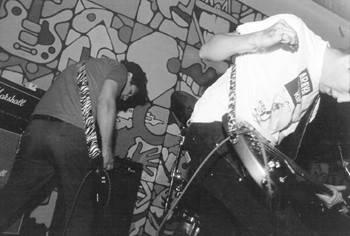
While book lovers sigh in relief, the smell of bangers and mash still wafts through the air, and strains of an off-key version of “Danny Boy” just barely tickles the ear. No more than a block east of Copperfield’s is where the Old Vic once stood. An English-style pub opened in 1988, the Old Vic hosted entertainment from dinner theater to fresh local bands to open mic nights, the last remaining live stage to grace Fourth Street.

Quiet afternoons of draft beer and authentic Irish cuisine morphed into nights of lively gatherings, all overseen by the charismatic Chris Stokeld. As shops and restaurants and after-hours clubs opened grandly and closed quietly around them, the Stokelds enjoyed a successful 15-year run downtown.

Apparently, the property manager believes a microbrewery twice the size of the Old Vic is what Fourth Street really needs. And maybe his wallet is needy, too. The Russian River Brewing Company will be taking over the Vic building as well as the neighboring property to the west.

With the passing of the Vic’s charm and spirit, we also lost a prominent spot for our community to draw together and enjoy live entertainment. The new brewery may satisfy a beer craving (as with coffee, though, there’s no lack of cold, hoppy beverages available on Fourth Street), but it won’t quench the people’s need for local acts and quirky performances.

Though the Old Vic closed its doors on March 31 after a wild weekend of goodbyes, Stokeld is not gone by a long shot. He’s already found a property in Occidental and will be hanging his hat in the spot where the Bohemian Cafe and Cafe Gio once stood. However, the bawdy entertainment that the Vic was known for will not continue at the new location; Stokeld is looking forward to operating a quiet English pub.

If you ambled past the skeleton that once was the Old Vic and past the haven for periodicals and Centro Coffee that is (and will most likely remain) Sawyer’s News, until recently you’d have come to a shop whose windows were blocked by an assortment of posters and flyers. Inside, a small staff that could take Rock and Roll Jeopardy by storm would have actually been able to find that song by that one guy who was in that movie that one time. Residing at 739 Fourth St. for some 20 years, the Last Record store has become a community name and common ground for local musicians.

Co-owner Doug Jayne has deep roots on Fourth Street and in the Santa Rosa community. Just two months ago his band, Stupid White People, took the stage at the closing weekend of the Old Vic. Jayne and Stokeld share a love for music, but they also share a property manager.

Feuding between the property manager and Jayne has been going on for a number of years. It got particularly contentious when the LRS needed a roof leak fixed and the request went unanswered until a stormy night when sections of the roof gave in, destroying thousands of dollars worth of precious records. Given the history with his business’ landlord, Jayne may not have been too surprised when the walking papers arrived.

As of this week, the LRS has tenderly kissed Fourth Street goodbye and opened its new doors on Mendocino Avenue. Right alongside the organic Community Market and its joint cafe, which is the host of regular live shows, a vacant space that was once a karate dojo will house the LRS’ motley crew. The new location is larger than the Fourth Street space, allowing for potential expansion and providing a less cramped setting for vinyl scavengers. What more could a record store ask for than a steady stream of college students?

Mendocino Avenue has slowly gathered quite an empire of eccentric businesses. With the obligatory Starbucks and the matronly Place That Sells Sewing Machines, the JC neighborhood is also the home of Brotherhood Board Shop, Video Droid, Glass Beetle Tattoo, Loops and Pierces, and Mombo’s Pizza.

With such a diversity of cultural merchants on hand, why would anyone need Fourth Street anymore? All I need is a short walk away from campus. I can study the process of translocation while munching pizza at Mombo’s and listening to a new CD, and then pick up a rare video for that evening on my way home. Of course, the small charming streets around Fourth are friendlier than the snarled traffic and rushing stream of cars on Mendo.

The spirit that exceptional community members like Doug Jayne and Chris Stokeld emitted will remain alive in their new venues and adventures. Fourth Street will never be replaced as the heart of downtown, but it looks like Mendocino Avenue may house the masterminds of Santa Rosa’s new cultural and entertainment mecca.

From the June 5-11, 2003 issue of the North Bay Bohemian.

© Metro Publishing Inc.
‘Finding Nemo’

0


Sea-son’s Greetings: ‘Finding Nemo’ takes the story of an overprotective dad and sets it in the deep, dark sea.

Fishy Story

Animation veteran rises to the challenge, helming Pixar Studio’s newest computer-crafted miracle

For Andrew Stanton, the well-seasoned yet boyish animator who’s co-written and co-directed both Toy Story movies, A Bug’s Life, and Monsters, Inc.–all from the legendary Oscar-winning Pixar Animation Studios–it was clearly only a matter of time until he took the plunge and directed one of his own. After all, Stanton was the second animator to join Pixar, way back in 1990.

He’s worked side by side all that time with pioneering animator John Lasseter–the director of Pixar’s first three films and one of the company’s longtime co-executive vice presidents–and Stanton had already seen fellow Pixarian Pete Docter step up to create 2001’s megahit Monsters, Inc. An Andrew Stanton-directed Pixar feature clearly had to happen sooner or later.

And now it has. In a well-appointed meeting room within Pixar’s plush studio campus in Emeryville, an upbeat Stanton kicks back a while to revel, deservedly enough, in the completion of his first directed film, the outstanding underwater fish flick, Finding Nemo.

Not bad for a first-timer.

“Uh, thanks. It was a long journey,” he smiles, sounding every bit as relieved as he is proud.

According to Stanton, the journey started back when he was working on Toy Story. A longtime scuba diver and ocean fan, Stanton recognized that with the powerful potential of computer graphics, the mysterious underwater world could be re-created on film more accurately and excitingly than it had ever been before.

“I’d been working at Pixar for two years,” he explains, “and I was still just learning what this medium was capable of, but I thought, ‘Jeez, there’s something about this CG stuff that might finally match all the fantasy things I believed about the ocean as a kid.”

Busy with other films, Stanton set the idea on the back burner but was never able to completely shake it off. “All through Toy Story and A Bug’s Life,” he laughs, “in my spare time, I’d be drawing little pictures of fish and whales.”

The actual story for Finding Nemo didn’t begin to surface until Pixar had completed A Bug’s Life and was gearing up for Toy Story 2. It was a very busy time for Stanton, who by then had become the father of two children.

“At work, we were just absolutely swamped,” he recalls, “and I felt like I’d had no time with my family. So I made this special ‘daddy time’ with my son to go to the park. But then I was walking him there, spending the whole time going, ‘Don’t touch that! You’re going to poke your eye out! Watch out for cars!’ I finally sort of stopped myself and said, ‘Wow! Here I’ve made all this effort to have this little moment with my son, and I’m just missing it because I’m so afraid of something happening to him.'”

From that experience, Stanton learned an important lesson about parenting and fear. “If you’re a fearful person,” he says, “even if you are a good parent, that fear can prevent you from being one.” Happily, there was another epiphany as well. Stanton suddenly saw a dramatic connection between his own parental paranoia and, as he calls it, “the vast unpredictability of the ocean.”

From this stew of realization emerged the story of a clown fish named Marlin, an overprotective father terrified of the ocean beyond his coral reef home, who is forced to journey into unimaginable danger after his son Nemo is captured by a scuba-diving dentist with a well-stocked aquarium. It was a natural for Pixar.

By the time Stanton pitched the concept to his boss–“He had me at the word ‘fish,'” Lasseter says–the story had become an epic underwater adventure, full of sharks, jellyfish, sea turtles, and a loony blue tang with short-term memory loss named Dory, who joins Marlin on his long-distance quest to find Nemo.

In the finished film, Marlin is voiced by Albert Brooks. Ellen DeGeneres–an inspired choice–is the voice of Dory.

“The idea of using Ellen just kind of fell from above, like Dory does in the movie,” admits Stanton. “I was writing an early draft, and with my typical male blindness I was thinking it would be a guy fish who helps Marlin through the ocean. As I was working, the TV was tuned to the Ellen show–which gives you an idea how many years ago this was–and I heard Ellen’s character change the subject five times in a single sentence. I thought, ‘Oh my gosh! That’s perfect for Dory!’ Why not change it to a female fish?”

From then on, whenever Stanton thought of Dory, she had Ellen DeGeneres’ voice. “I know the taboo rules,” he laughs. “Don’t write for a specific actor because if you can’t get them, you’re screwed! But the idea was working too well, so when I sent Ellen the first draft, the first thing I said to her on the phone was, ‘I am absolutely up a creek if you don’t take this.’ And she said, ‘All right then I’d better take it.’ That was the length of the entire conversation.”

DeGeneres, who’s also in the Pixar building this morning, chatting with reporters after meeting the other voice actors, is asked if she felt a greater than usual responsibility on this film, since the character of Dory was created especially for her.

“Well, when it’s a fish, it’s not so much a responsibility,” she jokes. “I can say this is certainly the first time someone has ever created a part specifically for me. That it’s a fish–I don’t know what that says, really.”

DeGeneres turned out to be an especially valuable choice when Stanton and company decided to add a scene–one of the funniest in the film–where Dory, spying a whale, attempts to communicate with it by improvising whale speak.

“Andrew just said, ‘If you can, we want you to speak whale here,'” DeGeneres remembers, adding, “It’s funny, years ago there was a woman who lived next to me, and she would do yoga to albums of whale song. Wafts of incense would come over to my house, and I would hear constant whale noises. So when Andrew said, ‘Speak whale,’ I knew exactly what to do.”

While the other animated characters are voiced by a diverse and celebrated cast including Geoffrey Rush, Allison Janney, Brad Garrett, Barry Humphries, John Ratzenberger, and Willem Dafoe (the latter appearing as a tough, aquarium-bound Moorish Idol fish), one of the film’s best characters–a surfer dude sea turtle named Crush–is charmingly voiced by Stanton himself, contributing his first feature-film acting performance along with all his other first-time writing and directing duties.

“I called myself on my cell and offered me the part,” he laughs, “so I took some time to consider it, and then I finally called myself back and said yes.”

And why not? Considering that Pixar has established a long-standing habit of giving juicy voice parts to worthy Pixarians, it was only a matter of time till Stanton tackled a little bit of that job, too.

Silver Screen

John Lasseter helps turn ‘a simple thing’ into a rich, fundraising tradition

Back in the fall of 1995, when Sonoma resident John Lasseter was preparing to unveil his animated film Toy Story–the first collaboration between Lasseter’s Pixar Animation Studios and Walt Disney Studios–the hard-working director had a sudden brainstorm.

“Actually,” he confesses with a laugh, “it was my wife Nancy’s brainstorm. I credit her with showing me the way.”

As a way of sharing their excitement–and a bit of the movie’s expected success–John and Nancy Lasseter gained Disney’s permission for an advanced screening of Toy Story in downtown Sonoma as a fundraiser for the Sonoma Valley Education Foundation. The event raised thousands of dollars, and struck a deep chord with Lasseter.

“It felt great helping,” he says, “and it started a tradition.” From then on, whenever Pixar has produced a new film, John and Nancy Lasseter have found a way to use it as a moneymaker for some local charity. For Toy Story 2 and Monsters, Inc., sneak previews, silent auctions, and signed posters were employed to raise funds for the Valley of the Moon Children’s Foundation. As the tradition grew, Lasseter went so far as negotiating with Disney to guarantee that he be allowed to continue exploiting–in a good way–the popularity of his films as a method of helping significant charities.

Then, a year and a half ago, when one of the Lasseter’s five sons, Sam, was diagnosed with juvenile diabetes, they were already in a well-practiced position to help others.

“We decided right away that when the next movie came out, we wanted to use it to raise money for diabetes research,” Lasseter says. With the upcoming release of Pixar-Disney’s Finding Nemo, almost a dozen charity events have already taken place around the country, many raising money for the Juvenile Diabetes Research Foundation. On May 10, Pixar studios was once again the site of a fundraising screening. At $500 a ticket, the event brought in upwards of a quarter-million dollars.

“We’re very fortunate with the successes we’ve had,” says Lasseter. “We’ve worked hard for it, but we are fortunate. And it feels good to use our success to help out where it’s needed most. It’s a simple thing, but it’s a neat thing.”

For more information about donating to the Greater Bay Area Chapter of the Juvenile Diabetes Research Foundation, call 415.977.0360, or visit www.jdrf.org.

From the June 5-11, 2003 issue of the North Bay Bohemian.

© Metro Publishing Inc.

‘Trailer Trash: The Musical’

0

Guns ‘n’ Ammo: l-r: Larry William, Bill Wright, and Dani Innocenti-Beem channel their inner trash.

Talkin’ Trash

Don’t let the ‘Rashomon’ flirtations of ‘Trailer Trash’ fool you–this musical sticks to its roots

By Sara Bir

You can find white trash anywhere in this country. It’s amazing, really. Of course there’s white trash in the South–the cradle of white-trash civilization–but in Manhattan you will find New York white trash, and in Amish country you can find Amish trash. Probably Eskimos have poor Eskimo trash, the people who have dog sleds up on ice blocks in front of their run-down igloos.

And admit it: Most of us have some trashy blood running through our family trees, which is why white-trash humor is alternately so embraced and mocked. White-trash culture fascinates, repulses, and delights us in spite of ourselves.

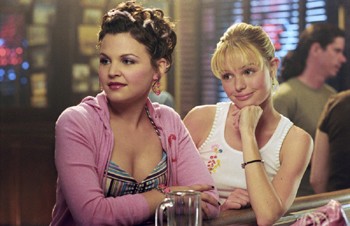
The folks at TheatreNow–who were responsible for last summer’s surprise hit Buck and Betty’s Chuck House of Fun–have returned with a brand-new musical goof paying homage to the trash in all of us. Written and directed by Larry Williams, who collaborated on the songs with assistant director Kayla Gold, Trailer Trash: The Musical transports us to Paradise Trailer Park, whose inspiration seems to be halfway between the pink flamingos of John Waters and the horrific sideline characters of David Lynch.

The staging makes the most of its outdoor setting in a meadow adjacent to Mary’s Apple Creek Cafe in Sebastopol. Hay bales compose half of the seating, and the trashy props strewn all over–an abandoned kitchen sink, a rusty lawn mover, cheap pink nylon lingerie stung up on clotheslines–are so convincing that you almost think that the theater has always been this trashy.

The musical opens with tragic news: Bart Blackhead (William Wright) was found dead in a nearby pond, impaled on a strange object. The no-nonsense Detective Sanders (Caylia Chaiken) and her handsome but dingy young assistant, Buzz (Bryan Hendon), arrive on the scene to get to the bottom of the case. Every witness–Bart’s best friend, his wife, the pool cleaner, and, miraculously, Bart himself–has a different account of the events leading up to Bart’s death.

Does the setup sound familiar? That’s because Trailer Trash was inspired by Rashomon, the 1950 Akira Kurosawa movie. Love, betrayal, ambition, jealousy, and shame all come into play as the colorful denizens of Paradise speculate over who the true culprit is. But the similarity in structure to Rashomon does not extend to tone, and Trailer Trash blithely proceeds through musical irreverence.

The trashy cast of characters includes a kindhearted, airheaded Jerry Springer devotee (Kim Williams, who must get cold in her scanty halter top and teeny tight shorts); a NASCAR fanatic who speaks “Dude”; and a Crocodile Hunter protégé with a terrible Australian accent. Targets include bowling, AC/DC, hair treatments, and mullets. Which is like shooting fish in a barrel, true; the humor isn’t so much inspired as it is inherent.

Still, the cast–particularly Dani Innocenti-Beem as the iron-hearted Sharon Blackhead, Gail Gongoll as the shyster psychic Gladys the Great, and Larry Williams as clueless greaser Floyd Carbuncle–tackle their lines and songs with winning enthusiasm.

The playful, lively visuals bring Trailer Trash alive. The costume, makeup, and prop folks must have had a field day scouring thrift stores in search of the most clashing lime-green leggings, bleached-out blue jeans, and tasteless-slogan T-shirts they could find.

The songs–the spot in musical comedies where killer lines are best showcased–are funny at best. Standouts include a musical ode to Jerry Springer and the manliness hymn “Man’s Man.” Carl Jordan’s choreography (which, yes, includes line dancing) helps keep the pace chugging along, though given the contagious energy of the cast, the production would benefit from a faster tempo to really hammer the madcap spirit. Live sound effects and musical asides, courtesy of the band Tom and the Cats, go a long way in achieving this.

That Trailer Trash was written, designed, and produced in a six-month span is very impressive. The amount of detail, hard work, and affection that TheatreNow poured into it is palpable, and it’s that element overall that makes the musical such a lighthearted pleasure. The belly laughs may be few and far between, but the appeal of Trailer Trash is as irresistible as the opening strains of “Sweet Home Alabama.”

‘Trailer Trash: The Musical’ plays June 7, 14, 21, and 28 at Mary’s Apple Creek Cafe, 9890 Bodega Hwy., Sebastopol. $20 adults; $10 seniors and students; $5 children five to 15; children five and under free. 415.453.9174.

From the June 5-11, 2003 issue of the North Bay Bohemian.

© Metro Publishing Inc.
‘Bruce Almighty’

0


Scoop Nisker wrestles with God, butt monkeys, and ‘Bruce Almighty’

By David Templeton

Writer David Templeton takes interesting people to interesting movies in his ongoing quest for the ultimate postfilm conversation. This is not a review; rather, it’s a freewheeling, tangential discussion of life, alternative ideas, and popular culture.

I think it’s healthy to have movies with jokey, humorous portrayals of God,” pronounces writer-performer Wes “Scoop” Nisker, smiling his wickedest smile, his voice a deep resonant rumble. “Even if those movies are shallow and weak, even if they get really smarmy. It all just helps to break open our whole religious uptightness, to poke a few holes in the solemnity and seriousness we tend to associate with religion.”

This is Nisker’s diplomatic way of giving Bruce Almighty its dubious due. We’ve just walked out on the end credits after catching an afternoon matinee of the film, an intermittently humorous comedy in which Jim Carrey plays a self-absorbed, mean-spirited television reporter named Bruce, who accuses God of not doing His job–an accusation God is very thin-skinned about, apparently.

The whiny mortal is subsequently given the chance to step into the mighty shoes of the Supreme One. In other words, he gets to “be God” for a few weeks. This, evidently, is meant to teach poor, deluded Bruce that being God is not that easy, that we should all give the Big Guy a break for not handling things as well as we imagine he ought to.

Or something like that.

What we mainly learn–up until a tacked-on ending so corny and forced and out of place it hurts to think about–is that a jerk with the powers of God is basically just a powerful jerk.

“Completely, completely,” laughs Nisker, Oakland-based author of the bestsellers Crazy Wisdom, Buddha’s Nature, and the recently published The Big Bang, the Buddha, and the Baby Boom. “It was just what you’d expect from an American male who becomes God. He lets everybody win the lottery, he gets himself a nice car, he gives his girlfriend (Jennifer Aniston) a great big orgasm, and he makes monkeys pop out of the butts of people he doesn’t like.”

All of this makes the real God (Morgan Freeman) laugh and roll his eyes. Bruce, you crazy man, you.

“I thought Bruce was going to be upbraided for all that by God,” Nisker admits, sipping a nice red wine at a bar around the corner from the theater. “But instead, when Bruce and God meet up at the end, when Bruce recognizes that he’s wasted his powers and says, ‘I want world peace and I want the hungry to be fed,’ God rebukes him for that! ‘Come on, let’s have a real prayer. What is it you really want?’ And when Bruce then prays for the woman he loves to be happy, God stands there and gets all misty-eyed. ‘Now that’s a prayer,’ he says.

“It’s so demeaning to those who compassionately wish and pray for the betterment of humanity,” Nisker grimaces, shaking his head. “It goes against every instinct of what being spiritual means.”

In The Big Bang, the Buddha, and the Baby Boom–a very funny, very personal exploration of the spiritual experiments of the 1960s and ’70s–Nisker suggests that the spiritual hunger of the boomer generations gave rise to a new understanding regarding religion.

“Gradually,” he says, “we began to consider that everybody’s god was equally good, is equally valid. I go to people’s houses now and they have a statue of the Buddha on their altar, and maybe a picture of Jesus or Mary Magdalene with a Native American Coyote fetish right alongside it. That’s saying, basically, that all of these gods are right, they’re all part of the great human imagination, that nobody’s got a lock on any one idea of God.

“I think we’re going to have to move in that direction if we’re going to survive these crazy holy wars that are still going on, that we’ll have to agree that everybody’s god is equally valid. My image is that someday the Heavens will open, we’ll all hear this voice booming from the sky, and it’ll say, ‘You all got my name wrong.’ And it’ll turn out that God’s real name is Spritzenfraffen or something. We’ll all become Spritzenfraffenists and live happily ever after. Though the prayers would be kind of difficult to say.”

So then if the great Spritzenfraffen traded places with Scoop Nisker for a week and he were given almighty control over the world, what ways would the writer-journalist use his newfound powers?

“First, I’d have the entire Bush administration resign,” he says. “My instinct is to go for the big problems first. Being a journalist, being a guy who always tries to see the big societal concerns of the world and to be a commentator about them, the next thing I’d do, if I were God, is to arrange for all the city governments to get together and ban the private automobile, putting tons of money into a great transportation system–stuff like that.

“Then I’d shuffle all the property around so that everybody had a little something. I’d make a rule that from now on, when somebody rich dies, they have to put the deed to their properties and assets into a big communal basket, so that others could have a little bit of that. And because I’m God, I’ll do it in a way so that everyone’s cool with it. It’ll just make so much sense that everybody’s going to want to redistribute their wealth. Basically, if I were God, I’d start over from scratch–and we’d all be happy with it.”

There’s another thing Nisker would do. He’d rid the world of fundamentalists, be they Spritzenfraffenist fundamentalists or otherwise.

“Fundamentalism is the scourge of the planet,” he says. “Anyone who believes they are divinely appointed to save the world or to save their country or to save their religion–to protect the righteous and screw the rest–that’s a dangerous person. Fundamentalism is a bad, bad thing.

“And,” he laughs, “you’d think God would know that.”

In Bruce Almighty, God doesn’t really know all that much. Despite being warm and fatherly and down-to-earth–with an unexplained fixation on mops and mopping–Morgan Freeman’s God is, if you think of it, kind of a wimp. The movie’s explanation for why God doesn’t answer every prayer? There are just too many calls for help to sort them all out.

“Let me get this straight,” says Nisker. “God has trouble answering prayers because of all those voices in his head? He can’t understand all of us praying at once! Poor, poor God. Let’s all just give the guy a break. Now that I think of it, God probably made this movie as a propaganda tool. Was that in the credits? Concept by . . . God? Maybe,” laughs Nisker, “we should have stayed till the end of the credits.”

Wes Nisker will be performing a one-man show this weekend at the Marsh, 1060 Valencia St., San Francisco. Based on ‘The Big Bang, the Buddha, and the Baby Boom,’ the show runs Thursday-Saturday at 8pm.

From the May 29-June 4, 2003 issue of the North Bay Bohemian.

© Metro Publishing Inc.
James Brown

Hit Machine: James Brown's influence spreads far beyond minimall Muzak and oldies stations.Getting FunkySoul Brother No. 1 headlines the LBCBy Greg CahillTry going a day without bumping into James Brown. The hardest working man in show business is ubiquitous. This week alone I heard him singing about getting a brand new bag (and it wasn't the paper or plastic...

Health and Harmony Festival

Let the Spirit Move You: Debra Giusti-Rose sheds her role as organizer for a few moments during the festival, as she takes to the stage to dance.A Goddess' JourneyThe Health and Harmony Festival is one of the North Bay's premiere summer attractions. It didn't get that way on its own.By Sara BirIt's a performance space, an art gallery, a...

Ariel Gore

'Atlas of the Human Heart' by Ariel Gore.Mother of the Year: Ariel Gore's new book narrates both her physical and emotional journeys. Coming of AgeAriel Gore narrates her journey to Hip Mama fame By Krista Reid-McLaughlinFor years Ariel Gore has counseled would-be's, should-be's and wannabe's on everything from pregnancy and diaper debates to childcare and collection agents through her...

Ross Valley Brewing Company

Photograph by Michael Amsler Suds N' Grub: Executive chef James Lloyd of the Ross Valley Brewing Company brings a certain classiness ...

Kate Pierson

tribute album (2003).Outing the Lost Songs: Kate Pierson drops her B-52's bouffant for a hairdo that more approximates the style of a Beatles tribute band.Fab ForteTour celebrates the 'lost' songs of Lennon and McCartneyBy Greg CahillAt 15, Kate Pierson was a pimple-faced junior high school student living near Palisades Park, N.J., a big Bob Dylan fan, and a member...

Pt. Reyes Bird Observatory

Photographs by Rory McNamaraFlight Risk: Kyle Wright extricates an American goldfinch from the net.Skyward Bound The Pt. Reyes Bird Observatory monitors the life of the skiesBy Gretchen GilesThere was a time, not so very long ago, when the dominance of the dinosaurs was on the wane and the earth itself was up for grabs. The largest mammal then living...

Open Mic

Goodbye, JackalopeThe Last Record Store packs its bags, and music lovers followBy Lacey GrahamWith many of our founding fathers of Fourth Street culture closed down or on their way out, the legacy of locally owned businesses--and some of downtown's most friendly faces--are fading into history. We said goodbye to Chris and Maude Stokeld in March of this year as...

‘Finding Nemo’

Sea-son's Greetings: 'Finding Nemo' takes the story of an overprotective dad and sets it in the deep, dark sea.Fishy StoryAnimation veteran rises to the challenge, helming Pixar Studio's newest computer-crafted miracle For Andrew Stanton, the well-seasoned yet boyish animator who's co-written and co-directed both Toy Story movies, A Bug's Life, and Monsters, Inc.--all from the legendary Oscar-winning Pixar Animation...

‘Trailer Trash: The Musical’

Guns 'n' Ammo: l-r: Larry William, Bill Wright, and Dani Innocenti-Beem channel their inner trash. Talkin' TrashDon't let the 'Rashomon' flirtations of 'Trailer Trash' fool you--this musical sticks to its rootsBy Sara BirYou can find white trash anywhere in this country. It's amazing, really. Of course there's white trash in the South--the cradle of white-trash civilization--but in Manhattan you...

‘Bruce Almighty’

Scoop Nisker wrestles with God, butt monkeys, and 'Bruce Almighty'By David TempletonWriter David Templeton takes interesting people to interesting movies in his ongoing quest for the ultimate postfilm conversation. This is not a review; rather, it's a freewheeling, tangential discussion of life, alternative ideas, and popular culture.I think it's healthy to have movies with jokey, humorous portrayals of God,"...
11,084FansLike
4,446FollowersFollow
6,928FollowersFollow


